
MenopauseHelp Ingredients & Drug Interactions
by Herbs SRA
What is this page for?
First and foremost: checking MenopauseHelp against your medications. The heart of this page is the interaction checker and the full interaction report — how this product’s ingredients may interact with prescription and over-the-counter medicines you may be taking.
Around that, we add a pharmacist’s high-level view of the product as a whole — what’s inside, the evidence for its stated use, how transparent the label is, and what safety data exists — so you can see the full picture in one place. It’s educational information from our licensed clinical databases and the clinical staff at HelloPharmacist — not medical advice — and we don’t sell or endorse products. Our editorial policy
MenopauseHelp is a dietary supplement by Herbs SRA with 3 active ingredients. Its ingredients are commonly taken for constipation, digestive upset, menopausal symptoms.Based on those ingredients, 914 medications have a known interaction with it, the most serious rated moderate. The ingredients most likely to interact are Siberian Rhubarb, Black Cohosh Extract. Use the checker below to test your specific medication, or read the full HelloPharmacist Interaction Report.
Check Your Meds Against MenopauseHelp by Herbs SRA
Ask about any prescription or over-the-counter medication and we check it for interactions with MenopauseHelp by Herbs SRA — and tell you which ingredient is responsible.
AI summaries are generated from our interaction database for education only — always confirm with your pharmacist. How we use AI
Ask the Pharmacist
A licensed pharmacist will answer your question by email — free, usually within 24 hours.
Got it — thank you!
A licensed pharmacist will answer within 24 hours. Keep an eye on your email (worth checking spam, just in case).
HelloPharmacist Scorecard of MenopauseHelp by Herbs SRA
Our pharmacy team’s full take, with four database checks built into the cards below — a summary of what is known, not a grade of the product itself.
What’s inside
Full disclosure
MenopauseHelp contains 3 active ingredients. Siberian Rhubarb — the root used medicinally — works as a stimulant laxative and has shown some promise for menopausal symptoms and pancreatitis.
Black Cohosh Extract is another herb traditionally used to address menopausal symptoms and appears to act on serotonin receptors in the brain. Soy Isoflavone Extract rounds out the formula; we hold no interaction or effectiveness data on file for this ingredient.
The capsule also contains cellulose as an inactive ingredient.
Does it work?
Moderate evidence
The two ingredients we have data for show mixed evidence. Siberian Rhubarb is rated possibly effective for menopausal symptoms and pancreatitis, but the evidence for constipation, appendicitis, nonalcoholic fatty liver disease, and nasopharyngeal cancer is rated insufficient to establish real benefit.
Black Cohosh Extract is rated possibly effective for menopausal symptoms — the main target of this product — but evidence for acne, sexual dysfunction, anxiety, and cancer-related hot flashes is insufficient. We have no effectiveness data on file for Soy Isoflavone Extract.
How safe is it?
Well-documented data
Siberian Rhubarb root is generally well tolerated in medicinal doses, but common side effects include cramps, diarrhea, gastrointestinal discomfort, nausea, and vomiting. Serious adverse effects are rare but can include anaphylaxis.
Chronic use or abuse can cause electrolyte loss — especially potassium — dehydration, and kidney problems; long-term use is not advised. Black Cohosh Extract is generally well tolerated at typical doses, with the most common side effects being breast tenderness, dizziness, gastrointestinal upset, headache, irritability, rash, and tiredness.
Rare serious adverse effects include liver damage and endometrial thickening, though data conflict on both. One case report linked black cohosh to serotonin syndrome when combined with certain antidepressants.
For pregnancy: Medicinal rhubarb root is rated possibly unsafe — it may stimulate the uterus and bowels, so supplement amounts should be avoided during pregnancy. Black cohosh safety data during pregnancy is insufficient; the product should be avoided out of caution.
For breastfeeding: Rhubarb laxative compounds may pass into breast milk, so medicinal use is best avoided. Safety data for black cohosh while breastfeeding has not been established, so it too is best avoided.
We hold no pregnancy or breastfeeding data for Soy Isoflavone Extract.
Meds to double-check
Moderate interaction found
Before taking this product, double-check with your pharmacist if you take medications that damage the kidneys or liver, drugs metabolized by the liver enzyme CYP2D6 (including many antidepressants and some beta-blockers), blood thinners like warfarin, the heart drug digoxin, the cholesterol drug atorvastatin, corticosteroids, diuretics, cyclosporine, cancer drugs like cisplatin, estrogen therapy, or serotonergic antidepressants. All of these carry documented Moderate interactions with one or both of the checked ingredients.
The bottom line
Scorecard at a glanceFully disclosed formula with some supporting evidence for its stated purpose. Moderate medication interactions have been identified, and safety information is well characterized.
MenopauseHelp may be worth considering if you're dealing with menopausal symptoms and have no kidney or liver concerns and aren't on medications that interact with rhubarb or black cohosh. If you take any prescription medications — especially blood thinners, heart drugs, cholesterol medications, immunosuppressants, cancer treatments, estrogen, or antidepressants — check with your pharmacist before starting.
Pregnant or breastfeeding women should skip this product.
Educational only — not medical advice; always confirm with your pharmacist. Our editorial policy · How we use AI
Assessment coverage: 2 of 3 active ingredients matched to our full ingredient reviews (monographs). Based on the product label dated Jul 25, 2024.
This Scorecard evaluates available label information, ingredient evidence, and known medication-safety considerations. It does not independently verify product identity, purity, potency, contamination, or manufacturing quality. How these ratings are computed
General information
Key facts about MenopauseHelp, straight from the product label.
| Brand | Herbs SRA |
|---|---|
| Net contents | 120 Vegetarian Capsule(s) |
| Market status | On market |
| Date entered into DSLD | Jul 25, 2024 |
| DSLD ID | 316183 |
| Product type | Other Combinations |
| Supplement form | Capsule |
| Dietary claims / uses | All Other, Structure/Function |
| Intended target group(s) | Adult Female (18 - 50 Years), Menopause, Seniors/Mature (>50 Years) - Women ONLY |
Everything in this section is reproduced from the manufacturer’s own product label — it’s the label speaking, not HelloPharmacist. We show it so you can see exactly what the maker states; we don’t verify or endorse those statements.
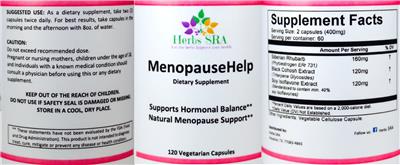
Supplement Facts
The label details for MenopauseHelp by Herbs SRA, sourced from the NIH Dietary Supplement Label Database.
Supplement Facts
| Ingredient | Amount | % DV |
|---|---|---|
| Siberian Rhubarb | 160 mg | -- |
| Black Cohosh Extract | 120 mg | -- |
| Soy Isoflavone Extract | 120 mg | -- |
Other ingredients: Cellulose
Tap any ingredient to jump to its full detail below.
These statements are the manufacturer’s wording, reproduced from the product label — the label is saying it, not HelloPharmacist. We don’t verify or endorse them.
Suggested/Recommended/Usage/Directions
Suggested Use: As a dietary supplement, take two (2) capsules twice daily. For best results, take capsules in the morning and the afternoon with 8 oz. of water.
Precautions
Caution: Do not exceed recommended dose.
Pregnant or nursing mothers, children under the age of 18 and individuals with a known medical condition should consult a physician before using this or any dietary supplement.
Pregnant or nursing mothers, children under the age of 18 and individuals with a known medical condition should consult a physician before using this or any dietary supplement. Keep out of the reach of children.
Do not use if safety seal is damaged or missing.
Storage
Store in a cool, dry place.
FDA Disclaimer Statement
These statements have not been evaluated by the FDA (Food and Drug Administration). This product is not intended to diagnose, treat, cure, mitigate or prevent any disease or health condition.
Brand IP Statement(s)
Herbs SRA Let the herbs improve your health
FDA Statement of Identity
Dietary Supplement
Formulation
Supports Hormonal Balance Natural Menopause Support
General Statements
Follow us: Facebook Herbs SRA
Is this label outdated? Report a formula or label change and our pharmacy team will review it.
MenopauseHelp by Herbs SRA label
The label scan from the NIH Dietary Supplement Label Database. Tap to enlarge.
Label images are published by the NIH Dietary Supplement Label Database for the version of this product on file. Always read your actual product label.
View the full label (PDF)The Ingredients in MenopauseHelp by Herbs SRA
These are the 3 active ingredients this product is made of. Select any to open its full monograph.
Serving size2 Vegetarian Capsule(s) Dosage formCapsule Servings per container60 Amounts shown are per serving.
Most supplement products combine several ingredients, and a medication can interact with the product through any one of them. Each ingredient below shows whether it has known drug interactions.
Siberian Rhubarb
Interacts with658 drugs
Rhubarb root has a long history of use as a laxative and in traditional Chinese medicine, and its edible stalks are a common food. Most medicinal clai...
Siberian Rhubarb monograph & interactionsBlack Cohosh Extract
Interacts with652 drugs
Black cohosh is a North American plant most often used to ease menopause symptoms like hot flashes, but the research is mixed and far from settled. It...
Black Cohosh Extract monograph & interactionsSoy Isoflavone Extract
Other (inactive) ingredients: Cellulose. These complete the product’s ingredient list but are not active constituents.
MenopauseHelp by Herbs SRA Drug Interactions
HelloPharmacist Interaction Report
MenopauseHelp by Herbs SRA contains two ingredients with documented interactions: Siberian Rhubarb and Black Cohosh Extract.
We could not check Soy Isoflavone Extract — we hold no interaction data for it.
Read the full breakdown — every affected drug type, severity by severity
Siberian Rhubarb's main concern is with drugs that damage the kidneys (nephrotoxic drugs). The anthraquinone compounds in rhubarb have shown kidney-damaging effects in animal studies, and combining them with other nephrotoxic medications could theoretically increase that risk.
Rhubarb also poses a Moderate risk with drugs that damage the liver (hepatotoxic drugs), and may worsen potassium loss when taken with corticosteroids, diuretics, or digoxin — all effects tied to its laxative action.
Additionally, rhubarb may increase bleeding risk with warfarin and could reduce the effectiveness of cyclosporine. When used together with other stimulant laxatives, it may compound fluid and electrolyte loss.
Black Cohosh Extract carries Moderate interactions with several drug types: medications that depend on the liver enzyme CYP2D6 (which it may inhibit), hepatotoxic drugs, the cholesterol drug atorvastatin, the cancer drug cisplatin, estrogen therapy, and serotonergic drugs like antidepressants. It also poses a Minor interaction with certain transport-dependent drugs.
Altogether, these interactions span 898 individual medications. Check your exact medications with the search tool on this page before starting.
Check your own medications below · Editorial policy · How we use AI
Want to check YOUR meds against MenopauseHelp?
Ask about interactions with your drugs in plain English — “Can I take it with lisinopril?” — and we find you the answer in seconds, ingredient by ingredient.
Go to the checkerIngredients driving the most interactions
Individual Drug Interactions
The ingredients in MenopauseHelp interact with 914 drugs. Click any drug to see the details.
2 of the 3 ingredients in MenopauseHelp interact with drugs. Each result below shows which ingredient is responsible. Siberian Rhubarb Black Cohosh Extract
6-mercaptopurinePurinethol
How 6-mercaptopurine interacts with MenopauseHelp — through 2 ingredients. Tap an ingredient for the detail:
Black Cohosh ExtractHepatotoxic Drugs Moderate
Interaction Summary
Theoretically, taking black cohosh with hepatotoxic drugs may increase the risk of liver damage.
Read the full Black Cohosh Extract + 6-mercaptopurine interactionSiberian RhubarbHepatotoxic Drugs Moderate
Interaction Summary
Theoretically, concomitant use of rhubarb with potentially hepatotoxic drugs might increase the risk of developing liver damage.
Read the full Siberian Rhubarb + 6-mercaptopurine interactionAbacavir Sulfate, Dolutegravir, LamivudineTriumeq
How Abacavir Sulfate, Dolutegravir, Lamivudine interacts with MenopauseHelp — through 2 ingredients. Tap an ingredient for the detail:
Siberian RhubarbHepatotoxic Drugs Moderate
Interaction Summary
Theoretically, concomitant use of rhubarb with potentially hepatotoxic drugs might increase the risk of developing liver damage.
Read the full Siberian Rhubarb + Abacavir Sulfate, Dolutegravir, Lamivudine interactionBlack Cohosh ExtractHepatotoxic Drugs Moderate
Interaction Summary
Theoretically, taking black cohosh with hepatotoxic drugs may increase the risk of liver damage.
Read the full Black Cohosh Extract + Abacavir Sulfate, Dolutegravir, Lamivudine interactionAbacavir, LamivudineEpzicom
How Abacavir, Lamivudine interacts with MenopauseHelp — through 2 ingredients. Tap an ingredient for the detail:
Black Cohosh ExtractHepatotoxic Drugs Moderate
Interaction Summary
Theoretically, taking black cohosh with hepatotoxic drugs may increase the risk of liver damage.
Read the full Black Cohosh Extract + Abacavir, Lamivudine interactionSiberian RhubarbHepatotoxic Drugs Moderate
Interaction Summary
Theoretically, concomitant use of rhubarb with potentially hepatotoxic drugs might increase the risk of developing liver damage.
Read the full Siberian Rhubarb + Abacavir, Lamivudine interactionAbiraterone
How Abiraterone interacts with MenopauseHelp — through 2 ingredients. Tap an ingredient for the detail:
Siberian RhubarbHepatotoxic Drugs Moderate
Interaction Summary
Theoretically, concomitant use of rhubarb with potentially hepatotoxic drugs might increase the risk of developing liver damage.
Read the full Siberian Rhubarb + Abiraterone interactionBlack Cohosh ExtractHepatotoxic Drugs Moderate
Interaction Summary
Theoretically, taking black cohosh with hepatotoxic drugs may increase the risk of liver damage.
Read the full Black Cohosh Extract + Abiraterone interactionAbiraterone AcetateYonsa, Zytiga
How Abiraterone Acetate interacts with MenopauseHelp — through 2 ingredients. Tap an ingredient for the detail:
Black Cohosh ExtractHepatotoxic Drugs Moderate
Interaction Summary
Theoretically, taking black cohosh with hepatotoxic drugs may increase the risk of liver damage.
Read the full Black Cohosh Extract + Abiraterone Acetate interactionSiberian RhubarbHepatotoxic Drugs Moderate
Interaction Summary
Theoretically, concomitant use of rhubarb with potentially hepatotoxic drugs might increase the risk of developing liver damage.
Read the full Siberian Rhubarb + Abiraterone Acetate interactionAcarboseGlucobay, Prandase, Precose
How Acarbose interacts with MenopauseHelp — through 2 ingredients. Tap an ingredient for the detail:
Black Cohosh ExtractHepatotoxic Drugs Moderate
Interaction Summary
Theoretically, taking black cohosh with hepatotoxic drugs may increase the risk of liver damage.
Read the full Black Cohosh Extract + Acarbose interactionSiberian RhubarbHepatotoxic Drugs Moderate
Interaction Summary
Theoretically, concomitant use of rhubarb with potentially hepatotoxic drugs might increase the risk of developing liver damage.
Read the full Siberian Rhubarb + Acarbose interactionAcebutololRhotral, Sectral
How Acebutolol interacts with MenopauseHelp — through 2 ingredients. Tap an ingredient for the detail:
Siberian RhubarbHepatotoxic Drugs Moderate
Interaction Summary
Theoretically, concomitant use of rhubarb with potentially hepatotoxic drugs might increase the risk of developing liver damage.
Read the full Siberian Rhubarb + Acebutolol interactionBlack Cohosh ExtractHepatotoxic Drugs Moderate
Interaction Summary
Theoretically, taking black cohosh with hepatotoxic drugs may increase the risk of liver damage.
Read the full Black Cohosh Extract + Acebutolol interactionAcetaminophenChildren's Tylenol, Children's Tylenol Meltaways, Tylenol, Tylenol Ex Strength
How Acetaminophen interacts with MenopauseHelp — through 2 ingredients. Tap an ingredient for the detail:
Black Cohosh ExtractHepatotoxic Drugs Moderate
Interaction Summary
Theoretically, taking black cohosh with hepatotoxic drugs may increase the risk of liver damage.
Read the full Black Cohosh Extract + Acetaminophen interactionSiberian RhubarbNephrotoxic Drugs, Hepatotoxic Drugs Moderate
Interaction Summary
Theoretically, long-term use of anthraquinones from rhubarb might increase the risk of nephrotoxicity when used with nephrotoxic drugs.
Read the full Siberian Rhubarb + Acetaminophen interactionAcetaminophen, AspirinGemnisyn
How Acetaminophen, Aspirin interacts with MenopauseHelp — through 2 ingredients. Tap an ingredient for the detail:
Siberian RhubarbHepatotoxic Drugs, Nephrotoxic Drugs Moderate
Interaction Summary
Theoretically, concomitant use of rhubarb with potentially hepatotoxic drugs might increase the risk of developing liver damage.
Read the full Siberian Rhubarb + Acetaminophen, Aspirin interactionBlack Cohosh ExtractHepatotoxic Drugs Moderate
Interaction Summary
Theoretically, taking black cohosh with hepatotoxic drugs may increase the risk of liver damage.
Read the full Black Cohosh Extract + Acetaminophen, Aspirin interactionAcetaminophen, Aspirin, CaffeineExcedrin, Excedrin Extra Strength, Excedrin Migraine
How Acetaminophen, Aspirin, Caffeine interacts with MenopauseHelp — through 2 ingredients. Tap an ingredient for the detail:
Siberian RhubarbNephrotoxic Drugs, Hepatotoxic Drugs Moderate
Interaction Summary
Theoretically, long-term use of anthraquinones from rhubarb might increase the risk of nephrotoxicity when used with nephrotoxic drugs.
Read the full Siberian Rhubarb + Acetaminophen, Aspirin, Caffeine interactionBlack Cohosh ExtractHepatotoxic Drugs Moderate
Interaction Summary
Theoretically, taking black cohosh with hepatotoxic drugs may increase the risk of liver damage.
Read the full Black Cohosh Extract + Acetaminophen, Aspirin, Caffeine interactionAcetaminophen, Brompheniramine, PhenylpropanolamineDimetapp Cold and Flu
How Acetaminophen, Brompheniramine, Phenylpropanolamine interacts with MenopauseHelp — through 2 ingredients. Tap an ingredient for the detail:
Black Cohosh ExtractHepatotoxic Drugs Moderate
Interaction Summary
Theoretically, taking black cohosh with hepatotoxic drugs may increase the risk of liver damage.
Read the full Black Cohosh Extract + Acetaminophen, Brompheniramine, Phenylpropanolamine interactionSiberian RhubarbNephrotoxic Drugs, Hepatotoxic Drugs Moderate
Interaction Summary
Theoretically, long-term use of anthraquinones from rhubarb might increase the risk of nephrotoxicity when used with nephrotoxic drugs.
Read the full Siberian Rhubarb + Acetaminophen, Brompheniramine, Phenylpropanolamine interactionAcetaminophen, ButalbitalAxocet, Bancap, Bucet, Butex Forte, Esgic CF, Orbivan CF +5 more
How Acetaminophen, Butalbital interacts with MenopauseHelp — through 2 ingredients. Tap an ingredient for the detail:
Siberian RhubarbHepatotoxic Drugs, Nephrotoxic Drugs Moderate
Interaction Summary
Theoretically, concomitant use of rhubarb with potentially hepatotoxic drugs might increase the risk of developing liver damage.
Read the full Siberian Rhubarb + Acetaminophen, Butalbital interactionBlack Cohosh ExtractHepatotoxic Drugs Moderate
Interaction Summary
Theoretically, taking black cohosh with hepatotoxic drugs may increase the risk of liver damage.
Read the full Black Cohosh Extract + Acetaminophen, Butalbital interactionAcetaminophen, Butalbital, CaffeineEsgic, Esgic Plus, Fiogesic, Fioricet, Repan, Tecnal +1 more
How Acetaminophen, Butalbital, Caffeine interacts with MenopauseHelp — through 2 ingredients. Tap an ingredient for the detail:
Siberian RhubarbNephrotoxic Drugs, Hepatotoxic Drugs Moderate
Interaction Summary
Theoretically, long-term use of anthraquinones from rhubarb might increase the risk of nephrotoxicity when used with nephrotoxic drugs.
Read the full Siberian Rhubarb + Acetaminophen, Butalbital, Caffeine interactionBlack Cohosh ExtractHepatotoxic Drugs Moderate
Interaction Summary
Theoretically, taking black cohosh with hepatotoxic drugs may increase the risk of liver damage.
Read the full Black Cohosh Extract + Acetaminophen, Butalbital, Caffeine interactionAcetaminophen, Butalbital, Caffeine, CodeineEsgic with Codeine, Fioricet w/ Codeine
How Acetaminophen, Butalbital, Caffeine, Codeine interacts with MenopauseHelp — through 2 ingredients. Tap an ingredient for the detail:
Black Cohosh ExtractHepatotoxic Drugs, Cytochrome P450 2d6 (cyp2d6) Substrates Moderate
Interaction Summary
Theoretically, taking black cohosh with hepatotoxic drugs may increase the risk of liver damage.
Read the full Black Cohosh Extract + Acetaminophen, Butalbital, Caffeine, Codeine interactionSiberian RhubarbNephrotoxic Drugs, Hepatotoxic Drugs Moderate
Interaction Summary
Theoretically, long-term use of anthraquinones from rhubarb might increase the risk of nephrotoxicity when used with nephrotoxic drugs.
Read the full Siberian Rhubarb + Acetaminophen, Butalbital, Caffeine, Codeine interactionAcetaminophen, Butalbital, CodeineBancap w/ Codeine
How Acetaminophen, Butalbital, Codeine interacts with MenopauseHelp — through 2 ingredients. Tap an ingredient for the detail:
Siberian RhubarbHepatotoxic Drugs, Nephrotoxic Drugs Moderate
Interaction Summary
Theoretically, concomitant use of rhubarb with potentially hepatotoxic drugs might increase the risk of developing liver damage.
Read the full Siberian Rhubarb + Acetaminophen, Butalbital, Codeine interactionBlack Cohosh ExtractHepatotoxic Drugs, Cytochrome P450 2d6 (cyp2d6) Substrates Moderate
Interaction Summary
Theoretically, taking black cohosh with hepatotoxic drugs may increase the risk of liver damage.
Read the full Black Cohosh Extract + Acetaminophen, Butalbital, Codeine interactionAcetaminophen, Butalbital, Codeine PhosphatePhrenilin #3
How Acetaminophen, Butalbital, Codeine Phosphate interacts with MenopauseHelp — through 2 ingredients. Tap an ingredient for the detail:
Black Cohosh ExtractCytochrome P450 2d6 (cyp2d6) Substrates, Hepatotoxic Drugs Moderate
Interaction Summary
Some research suggests that black cohosh might inhibit CYP2D6, but there is conflicting evidence.
Read the full Black Cohosh Extract + Acetaminophen, Butalbital, Codeine Phosphate interactionSiberian RhubarbNephrotoxic Drugs, Hepatotoxic Drugs Moderate
Interaction Summary
Theoretically, long-term use of anthraquinones from rhubarb might increase the risk of nephrotoxicity when used with nephrotoxic drugs.
Read the full Siberian Rhubarb + Acetaminophen, Butalbital, Codeine Phosphate interactionAcetaminophen, Caffeine, Chlorpheniramine, Hydrocodone, PhenylephrineHycomine Compound
How Acetaminophen, Caffeine, Chlorpheniramine, Hydrocodone, Phenylephrine interacts with MenopauseHelp — through 2 ingredients. Tap an ingredient for the detail:
Black Cohosh ExtractHepatotoxic Drugs, Cytochrome P450 2d6 (cyp2d6) Substrates Moderate
Interaction Summary
Theoretically, taking black cohosh with hepatotoxic drugs may increase the risk of liver damage.
Read the full Black Cohosh Extract + Acetaminophen, Caffeine, Chlorpheniramine, Hydrocodone, Phenylephrine interactionSiberian RhubarbNephrotoxic Drugs, Hepatotoxic Drugs Moderate
Interaction Summary
Theoretically, long-term use of anthraquinones from rhubarb might increase the risk of nephrotoxicity when used with nephrotoxic drugs.
Read the full Siberian Rhubarb + Acetaminophen, Caffeine, Chlorpheniramine, Hydrocodone, Phenylephrine interactionAcetaminophen, Caffeine, CodeineGesic C15, Gesic C30, Gesic C8, Lenoltec 1, Lenoltec 2, Lenoltec 3 +1 more
How Acetaminophen, Caffeine, Codeine interacts with MenopauseHelp — through 2 ingredients. Tap an ingredient for the detail:
Siberian RhubarbHepatotoxic Drugs, Nephrotoxic Drugs Moderate
Interaction Summary
Theoretically, concomitant use of rhubarb with potentially hepatotoxic drugs might increase the risk of developing liver damage.
Read the full Siberian Rhubarb + Acetaminophen, Caffeine, Codeine interactionBlack Cohosh ExtractHepatotoxic Drugs, Cytochrome P450 2d6 (cyp2d6) Substrates Moderate
Interaction Summary
Theoretically, taking black cohosh with hepatotoxic drugs may increase the risk of liver damage.
Read the full Black Cohosh Extract + Acetaminophen, Caffeine, Codeine interactionAcetaminophen, Caffeine, Codeine, SalicylamideCodalan No.1, Codalan No.2, Codalan No.3
How Acetaminophen, Caffeine, Codeine, Salicylamide interacts with MenopauseHelp — through 2 ingredients. Tap an ingredient for the detail:
Black Cohosh ExtractCytochrome P450 2d6 (cyp2d6) Substrates, Hepatotoxic Drugs Moderate
Interaction Summary
Some research suggests that black cohosh might inhibit CYP2D6, but there is conflicting evidence.
Read the full Black Cohosh Extract + Acetaminophen, Caffeine, Codeine, Salicylamide interactionSiberian RhubarbNephrotoxic Drugs, Hepatotoxic Drugs Moderate
Interaction Summary
Theoretically, long-term use of anthraquinones from rhubarb might increase the risk of nephrotoxicity when used with nephrotoxic drugs.
Read the full Siberian Rhubarb + Acetaminophen, Caffeine, Codeine, Salicylamide interactionAcetaminophen, Caffeine, DihydrocodeineDHC Plus, Panlor DC, Panlor SS
How Acetaminophen, Caffeine, Dihydrocodeine interacts with MenopauseHelp — through 2 ingredients. Tap an ingredient for the detail:
Black Cohosh ExtractHepatotoxic Drugs, Cytochrome P450 2d6 (cyp2d6) Substrates Moderate
Interaction Summary
Theoretically, taking black cohosh with hepatotoxic drugs may increase the risk of liver damage.
Read the full Black Cohosh Extract + Acetaminophen, Caffeine, Dihydrocodeine interactionSiberian RhubarbNephrotoxic Drugs, Hepatotoxic Drugs Moderate
Interaction Summary
Theoretically, long-term use of anthraquinones from rhubarb might increase the risk of nephrotoxicity when used with nephrotoxic drugs.
Read the full Siberian Rhubarb + Acetaminophen, Caffeine, Dihydrocodeine interactionAcetaminophen, Caffeine, IsomethepteneMigralam
How Acetaminophen, Caffeine, Isometheptene interacts with MenopauseHelp — through 2 ingredients. Tap an ingredient for the detail:
Siberian RhubarbHepatotoxic Drugs, Nephrotoxic Drugs Moderate
Interaction Summary
Theoretically, concomitant use of rhubarb with potentially hepatotoxic drugs might increase the risk of developing liver damage.
Read the full Siberian Rhubarb + Acetaminophen, Caffeine, Isometheptene interactionBlack Cohosh ExtractHepatotoxic Drugs Moderate
Interaction Summary
Theoretically, taking black cohosh with hepatotoxic drugs may increase the risk of liver damage.
Read the full Black Cohosh Extract + Acetaminophen, Caffeine, Isometheptene interactionAcetaminophen, Caffeine, PyrilamineMidol Max Strength Menstrual
How Acetaminophen, Caffeine, Pyrilamine interacts with MenopauseHelp — through 2 ingredients. Tap an ingredient for the detail:
Black Cohosh ExtractHepatotoxic Drugs Moderate
Interaction Summary
Theoretically, taking black cohosh with hepatotoxic drugs may increase the risk of liver damage.
Read the full Black Cohosh Extract + Acetaminophen, Caffeine, Pyrilamine interactionSiberian RhubarbNephrotoxic Drugs, Hepatotoxic Drugs +1 Moderate
Interaction Summary
Theoretically, long-term use of anthraquinones from rhubarb might increase the risk of nephrotoxicity when used with nephrotoxic drugs.
Read the full Siberian Rhubarb + Acetaminophen, Caffeine, Pyrilamine interactionAcetaminophen, Chlorpheniramine Maleate, Dextromethorphan HbrVicks Formula 44M Cough, Cold & Flu Relief
How Acetaminophen, Chlorpheniramine Maleate, Dextromethorphan Hbr interacts with MenopauseHelp — through 2 ingredients. Tap an ingredient for the detail:
Black Cohosh ExtractCytochrome P450 2d6 (cyp2d6) Substrates, Serotonergic Drugs +1 Moderate
Interaction Summary
Some research suggests that black cohosh might inhibit CYP2D6, but there is conflicting evidence.
Read the full Black Cohosh Extract + Acetaminophen, Chlorpheniramine Maleate, Dextromethorphan Hbr interactionSiberian RhubarbHepatotoxic Drugs, Nephrotoxic Drugs Moderate
Interaction Summary
Theoretically, concomitant use of rhubarb with potentially hepatotoxic drugs might increase the risk of developing liver damage.
Read the full Siberian Rhubarb + Acetaminophen, Chlorpheniramine Maleate, Dextromethorphan Hbr interactionAcetaminophen, Chlorpheniramine, Codeine, PhenylephrineColrex
How Acetaminophen, Chlorpheniramine, Codeine, Phenylephrine interacts with MenopauseHelp — through 2 ingredients. Tap an ingredient for the detail:
Black Cohosh ExtractCytochrome P450 2d6 (cyp2d6) Substrates, Hepatotoxic Drugs +1 Moderate
Interaction Summary
Some research suggests that black cohosh might inhibit CYP2D6, but there is conflicting evidence.
Read the full Black Cohosh Extract + Acetaminophen, Chlorpheniramine, Codeine, Phenylephrine interactionSiberian RhubarbNephrotoxic Drugs, Hepatotoxic Drugs Moderate
Interaction Summary
Theoretically, long-term use of anthraquinones from rhubarb might increase the risk of nephrotoxicity when used with nephrotoxic drugs.
Read the full Siberian Rhubarb + Acetaminophen, Chlorpheniramine, Codeine, Phenylephrine interactionAcetaminophen, Chlorpheniramine, DextromethorphanCoricidin II Extra Strength Cold and Flu
How Acetaminophen, Chlorpheniramine, Dextromethorphan interacts with MenopauseHelp — through 2 ingredients. Tap an ingredient for the detail:
Black Cohosh ExtractHepatotoxic Drugs, Serotonergic Drugs +1 Moderate
Interaction Summary
Theoretically, taking black cohosh with hepatotoxic drugs may increase the risk of liver damage.
Read the full Black Cohosh Extract + Acetaminophen, Chlorpheniramine, Dextromethorphan interactionSiberian RhubarbNephrotoxic Drugs, Hepatotoxic Drugs Moderate
Interaction Summary
Theoretically, long-term use of anthraquinones from rhubarb might increase the risk of nephrotoxicity when used with nephrotoxic drugs.
Read the full Siberian Rhubarb + Acetaminophen, Chlorpheniramine, Dextromethorphan interactionAcetaminophen, Chlorpheniramine, Dextromethorphan HydrobromideCoricidin HBP Maximum Strength Flu
How Acetaminophen, Chlorpheniramine, Dextromethorphan Hydrobromide interacts with MenopauseHelp — through 2 ingredients. Tap an ingredient for the detail:
Siberian RhubarbHepatotoxic Drugs, Nephrotoxic Drugs Moderate
Interaction Summary
Theoretically, concomitant use of rhubarb with potentially hepatotoxic drugs might increase the risk of developing liver damage.
Read the full Siberian Rhubarb + Acetaminophen, Chlorpheniramine, Dextromethorphan Hydrobromide interactionBlack Cohosh ExtractHepatotoxic Drugs, Cytochrome P450 2d6 (cyp2d6) Substrates +1 Moderate
Interaction Summary
Theoretically, taking black cohosh with hepatotoxic drugs may increase the risk of liver damage.
Read the full Black Cohosh Extract + Acetaminophen, Chlorpheniramine, Dextromethorphan Hydrobromide interactionAcetaminophen, Chlorpheniramine, Dextromethorphan, PhenylpropanolamineMulti Symptom Cold Relief
How Acetaminophen, Chlorpheniramine, Dextromethorphan, Phenylpropanolamine interacts with MenopauseHelp — through 2 ingredients. Tap an ingredient for the detail:
Siberian RhubarbHepatotoxic Drugs, Nephrotoxic Drugs Moderate
Interaction Summary
Theoretically, concomitant use of rhubarb with potentially hepatotoxic drugs might increase the risk of developing liver damage.
Read the full Siberian Rhubarb + Acetaminophen, Chlorpheniramine, Dextromethorphan, Phenylpropanolamine interactionBlack Cohosh ExtractSerotonergic Drugs, Cytochrome P450 2d6 (cyp2d6) Substrates +1 Moderate
Interaction Summary
Combining serotonergic drugs with black cohosh might cause additive serotonergic effects.
Read the full Black Cohosh Extract + Acetaminophen, Chlorpheniramine, Dextromethorphan, Phenylpropanolamine interactionAcetaminophen, Chlorpheniramine, Dextromethorphan, PseudoephedrineChildren's Tylenol Cold Plus Cough, Tylenol Cold Ex Strength
How Acetaminophen, Chlorpheniramine, Dextromethorphan, Pseudoephedrine interacts with MenopauseHelp — through 2 ingredients. Tap an ingredient for the detail:
Black Cohosh ExtractHepatotoxic Drugs, Serotonergic Drugs +1 Moderate
Interaction Summary
Theoretically, taking black cohosh with hepatotoxic drugs may increase the risk of liver damage.
Read the full Black Cohosh Extract + Acetaminophen, Chlorpheniramine, Dextromethorphan, Pseudoephedrine interactionSiberian RhubarbNephrotoxic Drugs, Hepatotoxic Drugs Moderate
Interaction Summary
Theoretically, long-term use of anthraquinones from rhubarb might increase the risk of nephrotoxicity when used with nephrotoxic drugs.
Read the full Siberian Rhubarb + Acetaminophen, Chlorpheniramine, Dextromethorphan, Pseudoephedrine interactionAcetaminophen, Chlorpheniramine, Guaifenesin, Phenylephrine, SalicylamideRhinogesic GG
How Acetaminophen, Chlorpheniramine, Guaifenesin, Phenylephrine, Salicylamide interacts with MenopauseHelp — through 2 ingredients. Tap an ingredient for the detail:
Siberian RhubarbHepatotoxic Drugs, Nephrotoxic Drugs Moderate
Interaction Summary
Theoretically, concomitant use of rhubarb with potentially hepatotoxic drugs might increase the risk of developing liver damage.
Read the full Siberian Rhubarb + Acetaminophen, Chlorpheniramine, Guaifenesin, Phenylephrine, Salicylamide interactionBlack Cohosh ExtractHepatotoxic Drugs, Serotonergic Drugs Moderate
Interaction Summary
Theoretically, taking black cohosh with hepatotoxic drugs may increase the risk of liver damage.
Read the full Black Cohosh Extract + Acetaminophen, Chlorpheniramine, Guaifenesin, Phenylephrine, Salicylamide interactionAcetaminophen, Chlorpheniramine, PhenylephrineAlka-Seltzer PLUS, Histex SR, Protid
How Acetaminophen, Chlorpheniramine, Phenylephrine interacts with MenopauseHelp — through 2 ingredients. Tap an ingredient for the detail:
Siberian RhubarbHepatotoxic Drugs, Nephrotoxic Drugs Moderate
Interaction Summary
Theoretically, concomitant use of rhubarb with potentially hepatotoxic drugs might increase the risk of developing liver damage.
Read the full Siberian Rhubarb + Acetaminophen, Chlorpheniramine, Phenylephrine interactionBlack Cohosh ExtractHepatotoxic Drugs, Serotonergic Drugs Moderate
Interaction Summary
Theoretically, taking black cohosh with hepatotoxic drugs may increase the risk of liver damage.
Read the full Black Cohosh Extract + Acetaminophen, Chlorpheniramine, Phenylephrine interactionEach ingredient & the kinds of drugs it affects
For each ingredient in MenopauseHelp with known interactions, here are the types of medications they can affect. Open any type for the detail — or search your exact drug in the checker above.
Siberian Rhubarb
Corticosteroids
Theoretically, frequent and high doses of rhubarb might increase the risk of hypokalemia when taken with corticosteroids.
Rhubarb has stimulant laxative effects. Overuse of rhubarb might compound corticosteroid-induced potassium loss.
Cyclosporine (Neoral, Sandimmune)
Theoretically, taking rhubarb with cyclosporine might reduce cyclosporine levels.
Animal research shows that co-administration of rhubarb decoction 0.25 or 1 gram/kg with cyclosporine 2.5 mg/kg, decreases cyclosporine maximum plasma concentration and overall exposure levels when compared with taking cyclosporine alone. The authors theorize that rhubarb might reduce cyclosporine bioavailability by inducing of P-glycoprotein and/or cytochrome P450 3A4. However, since rhubarb was administered as a single oral dose and enzyme induction usually occurs after multiple doses, it is possible that cyclosporine absorption was actually reduced via rhubarb's stimulant laxative effects. Also, the composition of the rhubarb decoction was not described.
Digoxin (Lanoxin)
Theoretically, overuse of rhubarb might increase the risk of adverse effects when taken with digoxin.
Rhubarb has stimulant laxative effects. Overuse of rhubarb might cause potassium depletion, increasing the risk of digoxin toxicity.
Diuretic Drugs
Theoretically, frequent and high doses of rhubarb might increase the risk of hypokalemia.
Rhubarb has stimulant laxative effects. Overuse of rhubarb might cause potassium depletion and compound diuretic-induced potassium loss.
Hepatotoxic Drugs
Theoretically, concomitant use of rhubarb with potentially hepatotoxic drugs might increase the risk of developing liver damage.
Some animal research suggests that anthraquinones in rhubarb might have hepatotoxic effects. Also, rhubarb use has been linked to at least 24 cases of liver injury, although details on the dose of rhubarb and duration of use in these cases is unclear.
Nephrotoxic Drugs
Theoretically, long-term use of anthraquinones from rhubarb might increase the risk of nephrotoxicity when used with nephrotoxic drugs.
The anthraquinone constituents of rhubarb have been shown to induce nephrotoxicity in animal research. Additionally, in a case report, a 23-year old female presented with kidney failure after taking 6 tablets of a proprietary slimming agent (found to contain the anthraquinones emodin and aloe-emodin from rhubarb) daily for 6 weeks and then adding diclofenac 25 mg 4 times daily for 2 days. The authors postulate that the anthraquinone constituents of rhubarb contributed to the renal dysfunction, and the addition of diclofenac, a nephrotoxic drug, led to renal failure. Until more is known, advise patients to avoid taking rhubarb if they are taking other potentially nephrotoxic drugs.
Stimulant Laxatives
Theoretically, rhubarb might increase the risk for fluid and electrolyte loss when taken with other stimulant laxatives.
Rhubarb has stimulant laxative effects. Concomitant use with stimulant laxatives might compound fluid and electrolyte loss.
Warfarin (Coumadin)
Theoretically, excessive use of rhubarb might increase the risk of bleeding when taken with warfarin.
Rhubarb has stimulant laxative effects and can cause diarrhea. Diarrhea can increase the effects of warfarin, increase international normalized ratio (INR), and increase the risk of bleeding. Advise patients who take warfarin not to take excessive amounts of rhubarb.
Black Cohosh Extract
Atorvastatin (Lipitor)
Taking black cohosh with atorvastatin might increase the risk for elevated liver function tests.
In one case report, a patient taking atorvastatin (Lipitor) developed significantly elevated liver function enzymes after starting black cohosh 100 mg four times daily. Liver enzymes returned to normal when black cohosh was discontinued. It is unclear whether the elevated liver enzymes were due to black cohosh itself or an interaction between atorvastatin and black cohosh.
Cisplatin (Platinol-Aq)
Theoretically, black cohosh may reduce the clinical effects of cisplatin.
Animal research suggests that black cohosh might decrease the cytotoxic effect of cisplatin on breast cancer cells.
Cytochrome P450 2D6 (Cyp2D6) Substrates
Some research suggests that black cohosh might inhibit CYP2D6, but there is conflicting evidence.
Some clinical research suggests that black cohosh might modestly inhibit CYP2D6 and increase levels of drugs metabolized by this enzyme. However, contradictory clinical research shows a specific black cohosh product (Remifemin, Enzymatic Therapy) 40 mg twice daily does not significantly inhibit metabolism of a CYP2D6 substrate in healthy study volunteers. Until more is known, use black cohosh cautiously in patients taking drugs metabolized by CYP2D6.
Estrogens
Theoretically, black cohosh may alter the effects of estrogen therapy.
Some research suggests that black cohosh has estrogenic effects. This may enhance or inhibit the effects of estrogen therapy.
Hepatotoxic Drugs
Theoretically, taking black cohosh with hepatotoxic drugs may increase the risk of liver damage.
There is concern that black cohosh might be linked to cases of liver failure and autoimmune hepatitis.
Serotonergic Drugs
Combining serotonergic drugs with black cohosh might cause additive serotonergic effects.
Black cohosh might increase the risk of serotonin syndrome when combined with other serotonergic drugs. Black cohosh acts as an agonist at several serotonin receptor subtypes and might interact with other serotonergic medications. In one case, a 55-year-old female who had been on stable treatment with sertraline 50 mg and duloxetine 60 mg daily developed serotonin syndrome after taking black cohosh extract 40 mg daily for 3 days.
Organic Anion-Transporting Polypeptide Substrates (Oatp)
Black cohosh may inhibit one form of OATP, OATP2B1, which could reduce the bioavailability and clinical effects of OATP2B1 substrates.
In vitro research shows that black cohosh modestly inhibits OATP2B1. OATPs are expressed in the small intestine and liver and are responsible for the uptake of drugs and other compounds into the body. Inhibition of OATP may reduce the bioavailability of oral drugs that are substrates of OATP.
Brand information
Manufacturer and brand details for MenopauseHelp, from the product label.
MenopauseHelp by Herbs SRA: Common Questions
Does MenopauseHelp by Herbs SRA interact with any medications?
How can one product interact with so many drugs?
Where does this information come from?
What is Siberian Rhubarb doing in a menopause supplement?
Can I take this if I'm on antidepressants?
Will this affect my birth control or hormone therapy?
What are the most common side effects I might notice?
Is this safe to take long-term?
Can I take this while pregnant or nursing?
Written and reviewed by the HelloPharmacist editorial staff. Our editorial policy
Not sure if MenopauseHelp is safe with your meds?
Our pharmacists answer your medication & supplement questions — free.
Label information is sourced from the NIH Dietary Supplement Label Database and reflects the product version on file; always read your actual product label. This page is for education only and is not a substitute for professional medical advice. Confirm with your pharmacist or doctor before combining supplements and medications.
The Full Monographs Behind MenopauseHelp’s Ingredients
Every ingredient we hold a full HelloPharmacist monograph for — uses, evidence, safety, and the complete interaction list.
Rhubarb
Interacts with 658 drugsRhubarb root has a long history of use as a laxative and in traditional Chinese medicine, and its edible stalks are a common food. Most medicinal claims are backed by limited or low-quality...
Read the full Rhubarb monograph → Herb & supplement monographBlack Cohosh
Interacts with 652 drugsBlack cohosh is a North American plant most often used to ease menopause symptoms like hot flashes, but the research is mixed and far from settled. It is generally well tolerated for short-t...
Read the full Black Cohosh monograph →Sources & How We Checked
MenopauseHelp's label data comes from the NIH Dietary Supplement Label Database; the ingredient interaction data is from the Natural Medicines database, reviewed by our pharmacists.
- NIH Dietary Supplement Label Database (DSLD) — The official product label on file for this supplement.
- Natural Medicines (Therapeutic Research Center) — Evidence-graded clinical reference behind the ingredient interaction data.
Content is written and reviewed by licensed HelloPharmacist pharmacists. See our data sources and editorial standards for how this information is built and checked.
The 88 references behind this product’s interaction data
Every citation that drives the interaction findings for this product’s ingredients, from the evidence-graded Natural Medicines (TRC Healthcare) database. Open an ingredient to browse its citations — links open the study on PubMed or the publisher’s site.
Rhubarb 20 references
- Blumenthal M, ed. The Complete German Commission E Monographs: Therapeutic Guide to Herbal Medicines. Trans. S. Klein. Boston, MA: American Botanical Council, 1998.
- McGuffin M, Hobbs C, Upton R, Goldberg A, eds. American Herbal Products Association's Botanical Safety Handbook. Boca Raton, FL: CRC Press, LLC 1997.
- Gruenwald J, Brendler T, Jaenicke C. PDR for Herbal Medicines. 1st ed. Montvale, NJ: Medical Economics Company, Inc., 1998.
- Brinker F. Herb Contraindications and Drug Interactions. 2nd ed. Sandy, OR: Eclectic Medical Publications, 1998.
- Nusko G, Schneider B, Schneider I, et al. Anthranoid laxative use is not a risk factor for colorectal neoplasia: results of a prospective case control study. Gut 2000;46:651-5. PubMed
- Kwan TH, Tong MK, Leung KT, et al. Acute renal failure associated with prolonged intake of slimming pills containing anthraquinones. Hong Kong Med J 2006;12:394-7.
- Fairbairn JW. The anthraquinone laxatives. Biological assay and its relation to chemical structure. Pharmacology 1976;14:48-61. PubMed
- Siegers, C. P., Hertzberg-Lottin, E., Otte, M., and Schneider, B. Anthranoid laxative abuse--a risk for colorectal cancer? Gut 1993;34(8):1099-1101. PubMed
- Fan, J. G. Evaluating the efficacy and safety of Danning Pian in the short-term treatment of patients with non-alcoholic fatty liver disease: a multicenter clinical trial. Hepatobiliary.Pancreat.Dis.Int 2004;3(3):375-380.
- Yan, M., Zhang, L. Y., Sun, L. X., Jiang, Z. Z., and Xiao, X. H. Nephrotoxicity study of total rhubarb anthraquinones on Sprague Dawley rats using DNA microarrays. J Ethnopharmacol. 4-15-2006; PubMed
- Zhang, J. H., Li, L. S., and Zhang, M. Clinical effects of rheum and captopril on preventing progression of chronic renal failure. Chin Med J (Engl.) 1990;103(10):788-793.
- Mitsuma, T., Yokozawa, T., Oura, H., and Terasawa, K. [Rhubarb therapy in patients with chronic renal failure (Part 2)]. Nippon Jinzo Gakkai Shi 1987;29(2):195-207.
- Wu, C. X. [A preliminary study on the effect of a single Rheum officinale in heavy doses in the treatment of acute icteric hepatitis]. Zhong.Xi.Yi.Jie.He.Za Zhi.(Chinese Journal of Modern Developments in Traditional Medicine) 1984;4(2):88-89.
- Jiao, D. H. [Clinical research on the hemostatic effect of rhubarb on peptic ulcer with acute bleeding]. Zhong.Xi.Yi.Jie.He.Za Zhi.(Chinese Journal of Modern Developments in Traditional Medicine) 1984;4(10):597-600, 579.
- Jiao, D. H., Ma, Y. H., Chen, S. J., Liu, C. T., Shu, H. N., and Chu, C. M. Resume of 400 cases of acute upper digestive tract bleeding treated by rhubarb alone. Pharmacology 1980;20 Suppl 1:128-130.
- Zhang, JH, Yao, XD, Song, Y, and et al. [Long-term treating effects of rhubarb and captopril in delaying the progression of renal failure]. Chinese Kidney Disease Journal 1993;9(4):197-201.
- Rehman H, Begum W, Anjum F, Tabasum H, Zahid S. Effect of rhubarb (Rheum emodi) in primary dysmenorrhoea: a single-blind randomized controlled trial. J Complement Integr Med. 2015 Mar;12(1):61-9.
- Yu CP, Lin HJ, Lin SP, Shia CS, Chang PH, Hou YC, Hsieh YW. Rhubarb decreased the systemic exposure of cyclosporine, a probe substrate of P-glycoprotein and CYP 3A. Xenobiotica. 2016 Aug;46(8):677-82. PubMed
- Byeon JH, Kil JH, Ahn YC, Son CG. Systematic review of published data on herb induced liver injury. J Ethnopharmacol 2019;233:190-6. PubMed
- Zhao D, Feng SX, Zhang HJ, et al. Pharmacokinetics, tissue distribution and excretion of five rhubarb anthraquinones in rats after oral administration of effective fraction of anthraquinones from rheum officinale. Xenobiotica. 2021;51(8):916-925. PubMed
Black Cohosh 68 references
- McFarlin BL, Gibson MH, O'Rear J, Harman P. A national survey of herbal preparation use by nurse-midwives for labor stimulation. Review of the literature and recommendations for practice. J Nurse Midwifery 1999;44:205-16. PubMed
- Whiting PW, Clouston A, Kerlin P. Black cohosh and other herbal remedies associated with acute hepatitis. Med J Aust 2002;177:440-3. PubMed
- Pepping J. Black cohosh: Cimicifuga racemosa. Am J Health Syst Pharm 1999;56:1400-2. PubMed
- Liske E. Therapeutic efficacy and safety of Cimicifuga racemosa for gynecologic disorders. Adv Ther 1998;15:45-53.
- Kruse SO, Lohning A, Pauli GF, et al. Fukiic and piscidic acid esters from the rhizome of Cimicifuga racemosa and the in vitro estrogenic activity of fukinolic acid. Planta Med 1999;65:763-4.
- Jacobson JS, Troxel AB, Evans J, et al. Randomized trial of black cohosh for the treatment of hot flashes among women with a history of breast cancer. J Clin Oncol 2001;19:2739-45. PubMed
- Gunn TR, Wright IM. The use of black and blue cohosh in labour. N Z Med J 1996;109:410-1.
- Baillie N, Rasmussen P. Black and blue cohosh in labour. N Z Med J 1997;110:20-1.
- Lontos S, Jones RM, Angus PW, Gow PJ. Acute liver failure associated with the use of herbal preparations containing black cohosh. Med J Aust 2003;179:390-1.. DOI
- Wuttke W, Seidlova-Wuttke D, Gorkow C. The Cimicifuga preparation BNO 1055 vs. conjugated estrogens in a double-blind placebo-controlled study: effects on menopause symptoms and bone markers. Maturitas 2003;44:S67-77. PubMed
- Huntley A, Ernst E. A systematic review of the safety of black cohosh. Menopause 2003;10:58-64.. DOI
- Cohen SM, O'Connor AM, Hart J, et al. Autoimmune hepatitis associated with the use of black cohosh: a case study. Menopause 2004;11:575-7. PubMed
- Vitetta L, Thomsen M, Sali A. Black cohosh and other herbal remedies associated with acute hepatitis. Med J Aust 2003;178:411-2.. PubMed
- Thomsen M, Vitetta L, Schmidt M, Sali A. Acute liver failure associated with the use of herbal preparations containing black cohosh. Med J Aust 2004;180:598-600.. DOI
- Cohen B, Schardt D. Center for Science in the Public Interest. Letter to Food and Drug Administration. Commissioner Mark McClellan, MD, PhD. March 4, 2004.
- Seidlova-Wuttke D, Hesse O, Jarry H, et al. Evidence for selective estrogen receptor modulator activity in a black cohosh (Cimicifuga racemosa) extract: comparison with estradiol-17beta. Eur J Endocrinol 2003;149:351-62. PubMed
- Rockwell S, Liu Y, Higgins SA. Alteration of the effects of cancer therapy agents on breast cancer cells by the herbal medicine black cohosh. Breast Cancer Res Treat 2005;90:233-9. PubMed
- Levitsky J, Alli TA, Wisecarver J, Sorrell MF. Fulminant liver failure associated with the use of black cohosh. Dig Dis Sci 2005;50:538-9. PubMed
- Cheong JL, Bucknall R. Retinal vein thrombosis associated with a herbal phytoestrogen preparation in a susceptible patient. Postgrad Med J 2005;81:266-7.. PubMed
- Nappi RE, Malavasi B, Brundu B, Facchinetti F. Efficacy of Cimicifuga racemosa on climacteric complaints: a randomized study versus low-dose transdermal estradiol. Gynecol Endocrinol 2005;20:30-5.
- Gurley BJ, Gardner SF, Hubbard MA, et al. In vivo effects of goldenseal, kava kava, black cohosh, and valerian on human cytochrome P450 1A2, 2D6, 2E1, and 3A4/5 phenotypes. Clin Pharmacol Ther 2005;77:415-26. PubMed
- Minciullo PL, Saija A, Patafi M, et al. Muscle damage induced by black cohosh (Cimicifuga racemosa). Phytomedicine 2006;13:115-8. PubMed
- Wuttke W, Gorkow C, Seidlova-Wuttke D. Effects of black cohosh (Cimicifuga racemosa) on bone turnover, vaginal mucosa, and various blood parameters in postmenopausal women: a double-blind, placebo-controlled, and conjugated estrogens-controlled study. Men PubMed
- MHRA. Black cohosh (Cimicifuga racemosa) - risk of liver problems. Herbal Safety News July 2006. Available at: http://www.mhra.gov.uk/home/idcplg?IdcService=SS_GET_PAGE&useSecondary= true&ssDocName=CON2024131&ssTargetNodeId=663.
- Dugoua JJ, Seely D, Perri D, et al. Safety and efficacy of black cohosh (cimicifuga racemosa) during pregnancy and lactation. Can J Clin Pharmacol 2006;13:e257-61.
- Raus K, Brucker C, Gorkow C, Wuttke W. First-time proof of endometrial safety of the special black cohosh extract (Actaea or Cimicifuga racemosa extract) CR BNO 1055. Menopause 2006;13:678-91. PubMed
- Lynch CR, Folkers ME, Hutson WR. Fulminant hepatic failure associated with the use of black cohosh: a case report. Liver Transpl 2006;12:989-92. PubMed
- Bai W, Henneicke-von Zepelin HH, Wang S, et al. Efficacy and tolerability of a medicinal product containing an isopropanolic black cohosh extract in Chinese women with menopausal symptoms: A randomized, double blind, parallel-controlled study versus tibol
- Meyer S, Vogt T, Obermann EC, et al. Cutaneous pseudolymphoma induced by Cimicifuga racemosa. Dermatology 2007;214:94-6.
- Gori L, Firenzuoli F. Is black cohosh a hepatotoxic medicinal herb? Forsch Komplementarmed 2007;14:109-10. PubMed
- Assessment of case reports connected to herbal medicinal products containing cimicifugae racemosa rhizoma (black cohosh, root). Doc. Ref. EMEA/269259/2006. Available at: www.emea.eu.int/pdfs/human/hmpc/26925806en.pdf (Accessed 30 November 2007).
- Chung DJ, Kim HY, Park KH, et al. Black cohosh and St. John's wort (GYNO-Plus) for climacteric symptoms. Yonsei Med J 2007;48:289-94. PubMed
- Chow ECY, Teo M, Ring JA, Chen JW. Liver failure associated with the use of black cohosh for menopausal symptoms. Med J Aust 2008;188:420-2. PubMed
- Mahady GB, Low Dog T, Barrett ML, et al. United States Pharmacopeia review of the black cohosh case reports of hepatotoxicity. Menopause 2008;15:628-38. PubMed
- Hepatotoxicity with black cohosh. Australian Adv Drug Reactions Bull 2006;25:6. Available at: www.tga.gov.au/adr/aadrb/aadr0604.htm#a1.
- Dunbar K, Solga SF. Black cohosh, safety, and public awareness. Liver Int 2007;27:1017. PubMed
- Patel NM, Derkits RM. Possible increase in liver enzymes secondary to atorvastatin and black cohosh administration. J Pharm Pract 2007;20:341-6. DOI
- Joy D, Joy J, Duane P. Black cohosh: a cause of abnormal postmenopausal liver function tests. Climacteric 2008;11:84-8. PubMed
- Australian Adverse Drug Reactions Advisory Committee. Black cohosh and liver toxicity - an update. Aust Adv Drug Reactions Bull 2007;26:11.
- Gurley BJ, Swain A, Hubbard MA, et al. Clinical assessement of CYP2D6-mediated herb-drug interactions in humans: Effects of milk-thistle, black cohosh, goldenseal, kava kava, St. John's wort, and Echinacea. Mol Nutr Food Res 2008;52:755-63.
- Spangler L, Newton KM, Grothaus LC, et al. The effects of black cohosh therapies on lipids, fibrinogen, glucose and insulin. Maturitas 2007;57:195-204. PubMed
- Teschke R, Bahre R, Genthner A, et al. Suspected black cohosh hepatotoxicity - challenges and pitfalls of causality assessment. Maturitas 2009;63:302-14. PubMed
- Brasky TM, Lampe JW, Potter JD, et al. Specialty supplements and breast cancer risk in the VITamins And Lifestyle (VITAL) cohort. Cancer Epidemiol Biomarkers Prev 2010;19:1696-708. PubMed
- Fuchikami H, Satoh H, Tsujimoto M, Ohdo S, Ohtani H, Sawada Y. Effects of herbal extracts on the function of human organic anion-transporting polypeptide OATP-B. Drug Metab Dispos 2006;34:577-82. PubMed
- Vermes G, Bánhidy F, Acs N. The effects of remifemin on subjective symptoms of menopause. Adv Ther 2005;22:148-54. PubMed
- Nuntanakorn, P., Jiang, B., Einbond, L. S., Yang, H., Kronenberg, F., Weinstein, I. B., and Kennelly, E. J. Polyphenolic constituents of Actaea racemosa. J Nat Prod 2006;69(3):314-318.
- Oktem M, Eroglu D, Karahan HB, Taskintuna N, Kuscu E, Zeyneloglu HB. Black cohosh and fluoxetine in the treatment of postmenopausal symptoms: a prospective, randomized trial. Adv Ther 2007;24:448-61. PubMed
- Briese V, Stammwitz U, Friede M, Henneicke-von Zepelin HH. Black cohosh with or without St. John's wort for symptom-specific climacteric treatment--results of a large-scale, controlled, observational study. Maturitas 2007;57:405-14. PubMed
- Naser, B. and Liske, E. Liver failure associated with the use of black cohosh for menopausal symptoms. Med J Aust. 1-19-2009;190(2):99. PubMed
- van de Meerendonk, H. W., van Hunsel, F. P., and van der Wiel, H. E. [Autoimmune hepatitis induced by Actaea racemosa. Side affects of an herb extract]. Ned.Tijdschr.Geneeskd. 2-7-2009;153(6):246-249.
- Wong, V. C., Lim, C. E., Luo, X., and Wong, W. S. Current alternative and complementary therapies used in menopause. Gynecol.Endocrinol. 2009;25(3):166-174. PubMed
- Pierard, S., Coche, J. C., Lanthier, P., Dekoninck, X., Lanthier, N., Rahier, J., and Geubel, A. P. Severe hepatitis associated with the use of black cohosh: a report of two cases and an advice for caution. Eur J Gastroenterol Hepatol. 2009;21(8):941-945 PubMed
- Vannacci, A., Lapi, F., Gallo, E., Vietri, M., Toti, M., Menniti-Ippolito, F., Raschetti, R., Firenzuoli, F., and Mugelli, A. A case of hepatitis associated with long-term use of Cimicifuga racemosa. Altern.Ther Health Med 2009;15(3):62-63.
- Zimmermann, R., Witte, A., Voll, R. E., Strobel, J., and Frieser, M. Coagulation activation and fluid retention associated with the use of black cohosh: a case study. Climacteric. 2010;13(2):187-191. PubMed
- Amsterdam JD, Yao Y, Mao JJ, Soeller I, Rockwell K, Shults J. Randomized, double-blind, placebo-controlled trial of Cimicifuga racemosa (black cohosh) in women with anxiety disorder due to menopause. J Clin Psychopharmacol 2009;29:478-83. PubMed
- Bai WP, Wang SY, Liu JL, Geng L, Hu LN, Zhang ZL, Chen SL, Zheng SR. [Efficacy and safety of remifemin compared to tibolone for controlling of perimenopausal symptoms]. Zhonghua Fu Chan Ke Za Zhi 2009;44:597-600.
- McKenzie, S. C. and Rahman, A. Bradycardia in a patient taking black cohosh. Med J Aust. 10-18-2010;193(8):479-481. PubMed
- Stolze H. [An alternative to treat menopausal complaints]. Gynecologie 1982;1:14-16.
- Guzman G, Kallwitz ER, Wojewoda C, et al. Liver Injury with Features Mimicking Autoimmune Hepatitis following the Use of Black Cohosh. Case Rep Med. 2009;2009:918156. PubMed
- Enbom ET, Le MD, Oesterich L, Rutgers J, French SW. Mechanism of hepatotoxicity due to black cohosh (Cimicifuga racemosa): histological, immunohistochemical and electron microscopy analysis of two liver biopsies with clinical correlation. Exp Mol Pathol. PubMed
- Sen A. Orobuccolingual dyskinesia after long-term use of black cohosh and ginseng. J Neuropsychiatry Clin Neurosci 2013 Fall;25(4):E50. PubMed
- Hoban CL, Byard RW, Musgrave IF. Analysis of spontaneous adverse drug reactions to echinacea, valerian, black cohosh and ginkgo in Australia from 2000 to 2015. J Integr Med. 2019;17(5):338-343. PubMed
- Pkhaladze L, Davidova N, Khomasuridze A, Shengelia R, Panossian AG. Actaea racemosa L. is more effective in combination with Rhodiola rosea L. for relief of menopausal symptoms: a randomized, double-blind, placebo-controlled study. Pharmaceuticals (Basel) PubMed
- Yalçin M, Oguz A, Bestepe EE, Saglam NGU, Ergelen M. Black cohosh associated mania in a patient with unipolar depression. Int J Psychiatry Med 2020 Sep 21:91217420961185. doi: 10.1177/0091217420961185. PubMed
- Brar HS, Marathi R. Case of cholestatic drug-induced liver injury (DILI) associated with black cohosh. BMJ Case Rep 2021;14(5):e240408. PubMed
- Castelo-Branco C, Navarro C, Beltrán E, Losa F, Camacho M; on the behalf of the Natural Products Study Group of the Spanish Menopause Society. Black cohosh efficacy and safety for menopausal symptoms. The Spanish Menopause Society statement. Gynecol Endoc PubMed
- Trant AA, Chagpar A, Wei W, et al. The Effect of Black Cohosh on Ki67 expression and Tumor Volume: A Pilot Study of Ductal Carcinoma in Situ Patients. Integr Cancer Ther 2022;21:15347354221137290. PubMed
- Dernbach MR, Carpenter JE, Shah N, Carter GB. Black Cohosh Interactions with Prescription Medications Associated with Serotonin Toxicity and Rhabdomyolysis: A Case Report. J Emerg Med 2024;66(5):e592-e596. PubMed
Parts of this content are provided by the Therapeutic Research Center, LLC.
DISCLAIMER: Currently this does not check for drug-drug interactions. This is not an all-inclusive comprehensive list of potential interactions and is for informational purposes only. Not all interactions are known or well-reported in the scientific literature, and new interactions are continually being reported. Input is needed from a qualified healthcare provider including a pharmacist before starting any therapy. Application of clinical judgment is necessary.
© 2021 Therapeutic Research Center, LLC