
Resveratrol & Pycnogenol Ingredients & Drug Interactions
What is this page for?
First and foremost: checking Resveratrol & Pycnogenol against your medications. The heart of this page is the interaction checker and the full interaction report — how this product’s ingredients may interact with prescription and over-the-counter medicines you may be taking.
Around that, we add a pharmacist’s high-level view of the product as a whole — what’s inside, the evidence for its stated use, how transparent the label is, and what safety data exists — so you can see the full picture in one place. It’s educational information from our licensed clinical databases and the clinical staff at HelloPharmacist — not medical advice — and we don’t sell or endorse products. Our editorial policy
Resveratrol & Pycnogenol is a dietary supplement by Puritan's Pride with 2 active ingredients. Its ingredients are commonly taken for heart and blood vessel health, antioxidant support, anti-aging.Based on those ingredients, 994 medications have a known interaction with it, the most serious rated moderate. The ingredients most likely to interact are Resveratrol, Pycnogenol. Use the checker below to test your specific medication, or read the full HelloPharmacist Interaction Report.
Check Your Meds Against Resveratrol & Pycnogenol by Puritan's Pride
Ask about any prescription or over-the-counter medication and we check it for interactions with Resveratrol & Pycnogenol by Puritan's Pride — and tell you which ingredient is responsible.
AI summaries are generated from our interaction database for education only — always confirm with your pharmacist. How we use AI
Ask the Pharmacist
A licensed pharmacist will answer your question by email — free, usually within 24 hours.
Got it — thank you!
A licensed pharmacist will answer within 24 hours. Keep an eye on your email (worth checking spam, just in case).
HelloPharmacist Scorecard of Resveratrol & Pycnogenol by Puritan's Pride
Our pharmacy team’s full take, with four database checks built into the cards below — a summary of what is known, not a grade of the product itself.
What’s inside
Full disclosure
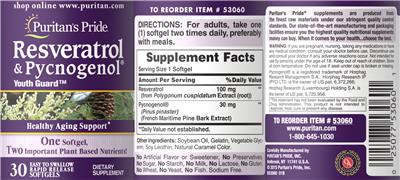
This product contains 2 active ingredients: resveratrol and pycnogenol (also called maritime pine bark extract). Resveratrol is a compound found naturally in grapes and some berries; pycnogenol is derived from the bark of French maritime pine trees.
Together they're intended to provide antioxidant support. The capsule itself is made from gelatin and filled with soybean oil, vegetable glycerin, soy lecithin, and natural caramel color.
Does it work?
Moderate evidence
Resveratrol is rated possibly effective for obesity and allergic rhinitis (hay fever), though the evidence is limited. It's rated possibly ineffective for cardiovascular disease and high cholesterol.
Pycnogenol is rated possibly effective for osteoarthritis, chronic venous insufficiency (poor blood flow in the legs), and asthma, but possibly ineffective for high cholesterol. These ratings mean the research so far is encouraging but not yet definitive — more study is needed to be sure.
How safe is it?
Well-documented data
Both ingredients are generally well tolerated at typical supplement doses. Resveratrol at higher doses can cause diarrhea, loose stools, and digestive discomfort; a few cases of headache, fatigue, and skin rash have been reported, though causality isn't certain.
Pycnogenol commonly causes gastrointestinal complaints, dizziness, and vertigo, with isolated reports of headache and chest pain in patients with heart disease history. Long-term safety for both is not fully established.
There isn't enough safety data to recommend either ingredient during pregnancy or while breastfeeding — talk it over with your doctor or pharmacist for personalized guidance.
Meds to double-check
Moderate interaction found
Check your medications against this product if you take blood thinners or antiplatelet drugs (like warfarin or aspirin) — both ingredients may increase bleeding risk. Also check if you're on diabetes medications, immunosuppressants, or any drug metabolized by CYP2C19, CYP1A2, CYP3A4, or CYP2E1 liver enzymes — resveratrol may raise their levels.
Use the interaction checker on this page or confirm with your pharmacist or doctor before starting.
The bottom line
Scorecard at a glanceFully disclosed formula with some supporting evidence behind its ingredients' uses. Moderate medication interactions have been identified, and safety information is well characterized.
If you're dealing with osteoarthritis, hay fever, poor leg circulation, or asthma, this combination might be worth exploring — the evidence is modest but present for those uses. However, you'll want to check it against your medications first, especially if you take blood thinners, diabetes drugs, or anything your liver has to break down.
Talk with your doctor or pharmacist before you start, and let them know if you notice digestive upset, dizziness, or unusual bleeding or bruising.
Educational only — not medical advice; always confirm with your pharmacist. Our editorial policy · How we use AI
Assessment coverage: 2 of 2 active ingredients matched to our full ingredient reviews (monographs). Based on the product label dated May 24, 2023.
This Scorecard evaluates available label information, ingredient evidence, and known medication-safety considerations. It does not independently verify product identity, purity, potency, contamination, or manufacturing quality. How these ratings are computed
General information
Key facts about Resveratrol & Pycnogenol, straight from the product label.
| Brand | Puritan's Pride |
|---|---|
| Barcode (UPC) | 025077530601 |
| Net contents | 30 Easy to Swallow Rapid Release Softgel(s) |
| Market status | On market |
| Date entered into DSLD | May 24, 2023 |
| DSLD ID | 286000 |
| Product type | Other Combinations |
| Supplement form | Softgel Capsule |
| Dietary claims / uses | All Other, Structure/Function |
| Intended target group(s) | Adult (18 - 50 Years), Gluten Free, Dairy Free, Sugar Free |
Everything in this section is reproduced from the manufacturer’s own product label — it’s the label speaking, not HelloPharmacist. We show it so you can see exactly what the maker states; we don’t verify or endorse those statements.
Supplement Facts
The label details for Resveratrol & Pycnogenol by Puritan's Pride, sourced from the NIH Dietary Supplement Label Database.
Supplement Facts
| Ingredient | Amount | % DV |
|---|---|---|
| Resveratrol | 100 mg | -- |
| Pycnogenol | 30 mg | -- |
Other ingredients: Soybean Oil, Gelatin, Vegetable Glycerin, Soy Lecithin, natural Caramel color
Tap any ingredient to jump to its full detail below.
These statements are the manufacturer’s wording, reproduced from the product label — the label is saying it, not HelloPharmacist. We don’t verify or endorse them.
General Statements
Shop online www.puritan.com
One softgel, two important plant based nutrients!
Puritan's Pride supplements are produced from the finest raw materials under our stringent quality control standards. Out state-of-the-art manufacturing and packaging facilities ensure you the highest quality nutritional supplements money can buy. When it comes to your health...choose the best.
To reorder item # 53060 www.puritan.com 1-800-645-1030
Formulation
Youth guard Healthy aging support
No artificial flavor or sweetener, no preservatives, no sugar, no starch, no milk, no lactose, no gluten, no wheat, no yeast, no fish. Sodium free.
FDA Statement of Identity
Dietary Supplement
Suggested/Recommended/Usage/Directions
Directions: For adults, take one (1) softgel two times daily, preferably with meals.
Precautions
Warning: If you are pregnant, nursing, taking any medications or have any medical condition, consult your doctor before use.
Discontinue use and consult your doctor if any adverse reactions occur.
Not intended for use by persons under the age of 18. Keep out of reach of children.
Do not use if seal under cap is broken or missing.
Storage
Store at room temperature.
Brand IP Statement(s)
Pycnogenol is a registered trademark of Horphag Research Management S.A.; Horphag Research IP (PYC) LTD. is the owner of US pat. 6,372,266; Horphag Research (Luxembourg) Holding S.A. is the ownder of US pat. 5,720,956.
Copyright 2015 Puritan's Pride, Inc.
FDA Disclaimer Statement
This statement has not been evaluated by the Food and Drug Administration. This product is not intended to diagnose, treat, cure or prevent any disease.
Seals/Symbols
QA Quality Assured
Is this label outdated? Report a formula or label change and our pharmacy team will review it.
Resveratrol & Pycnogenol by Puritan's Pride label
The label scan from the NIH Dietary Supplement Label Database. Tap to enlarge.
Label images are published by the NIH Dietary Supplement Label Database for the version of this product on file. Always read your actual product label.
View the full label (PDF)The Ingredients in Resveratrol & Pycnogenol by Puritan's Pride
These are the 2 active ingredients this product is made of. Select any to open its full monograph.
Serving size1 Softgel(s) Dosage formSoftgel Capsule Servings per container30 Amounts shown are per serving.
Most supplement products combine several ingredients, and a medication can interact with the product through any one of them. Each ingredient below shows whether it has known drug interactions.
Resveratrol
Interacts with822 drugs
Resveratrol is a plant compound found in red grapes, berries, and peanuts that is popular for heart health, anti-aging, and antioxidant support. While...
Resveratrol monograph & interactionsPycnogenol
Interacts with327 drugs
Maritime pine bark extract (often sold as Pycnogenol) is a plant-based antioxidant most studied for circulation, vein, and skin health. Some research...
Pycnogenol monograph & interactionsOther (inactive) ingredients: Soybean Oil, Gelatin, Vegetable Glycerin, Soy Lecithin, Natural Caramel color. These complete the product’s ingredient list but are not active constituents.
Resveratrol & Pycnogenol by Puritan's Pride Drug Interactions
HelloPharmacist Interaction Report
Resveratrol & Pycnogenol by Puritan's Pride has documented interactions through both of its active ingredients.
The most serious concern is with blood thinners (anticoagulants) and antiplatelet drugs — both resveratrol and pycnogenol may increase bleeding risk when combined with these medications.
Read the full breakdown — every affected drug type, severity by severity
Resveratrol can theoretically raise levels of several drug types metabolized by your liver's cytochrome P450 enzymes (CYP2C19, CYP1A2, CYP3A4, and CYP2E1). While lab studies suggest this effect, human studies are limited — one showed that even high-dose resveratrol (3,000 mg daily) didn't require dose adjustments to CYP3A4 medications, but the interaction remains theoretical for other enzyme types.
Pycnogenol adds a second concern: it may lower blood sugar (hypoglycemia) if you're taking diabetes medications, and theoretically might reduce how well immunosuppressant drugs work. Altogether, these interactions span 995 individual medications.
Before starting this product, run your exact prescriptions through the checker on this page or discuss it with your doctor or pharmacist — especially if you take blood thinners, diabetes medications, or drugs metabolized by liver enzymes.
Check your own medications below · Editorial policy · How we use AI
Want to check YOUR meds against Resveratrol & Pycnogenol?
Ask about interactions with your drugs in plain English — “Can I take it with lisinopril?” — and we find you the answer in seconds, ingredient by ingredient.
Go to the checkerIngredients driving the most interactions
Individual Drug Interactions
The ingredients in Resveratrol & Pycnogenol interact with 994 drugs. Click any drug to see the details.
2 of the 2 ingredients in Resveratrol & Pycnogenol interact with drugs. Each result below shows which ingredient is responsible. Resveratrol Pycnogenol
6-mercaptopurinePurinethol
How 6-mercaptopurine interacts with Resveratrol & Pycnogenol — through 1 ingredient. Tap an ingredient for the detail:
PycnogenolImmunosuppressants Moderate
Interaction Summary
Theoretically, maritime pine bark extract might decrease the effectiveness of immunosuppressant therapy.
Read the full Pycnogenol + 6-mercaptopurine interactionAdo-trastuzumab EmtansineKadcyla
How Ado-trastuzumab Emtansine interacts with Resveratrol & Pycnogenol — through 1 ingredient. Tap an ingredient for the detail:
ResveratrolCytochrome P450 3a4 (cyp3a4) Substrates Moderate
Interaction Summary
Theoretically, resveratrol might increase levels of drugs metabolized by CYP3A4.
Read the full Resveratrol + Ado-trastuzumab Emtansine interactionAbciximabReoPro
How Abciximab interacts with Resveratrol & Pycnogenol — through 2 ingredients. Tap an ingredient for the detail:
PycnogenolAnticoagulant/antiplatelet Drugs Moderate
Interaction Summary
Theoretically, maritime pine bark extract might increase the risk of bleeding when used with antiplatelet or anticoagulant drugs.
Read the full Pycnogenol + Abciximab interactionResveratrolAnticoagulant/antiplatelet Drugs Moderate
Interaction Summary
Resveratrol may have antiplatelet effects and may increase the risk of bleeding if used with anticoagulant or antiplatelet drugs.
Read the full Resveratrol + Abciximab interactionAbemaciclibVerzenio
How Abemaciclib interacts with Resveratrol & Pycnogenol — through 1 ingredient. Tap an ingredient for the detail:
ResveratrolCytochrome P450 3a4 (cyp3a4) Substrates Moderate
Interaction Summary
Theoretically, resveratrol might increase levels of drugs metabolized by CYP3A4.
Read the full Resveratrol + Abemaciclib interactionAbiraterone
How Abiraterone interacts with Resveratrol & Pycnogenol — through 1 ingredient. Tap an ingredient for the detail:
ResveratrolCytochrome P450 3a4 (cyp3a4) Substrates Moderate
Interaction Summary
Theoretically, resveratrol might increase levels of drugs metabolized by CYP3A4.
Read the full Resveratrol + Abiraterone interactionAbiraterone AcetateYonsa, Zytiga
How Abiraterone Acetate interacts with Resveratrol & Pycnogenol — through 1 ingredient. Tap an ingredient for the detail:
ResveratrolCytochrome P450 3a4 (cyp3a4) Substrates Moderate
Interaction Summary
Theoretically, resveratrol might increase levels of drugs metabolized by CYP3A4.
Read the full Resveratrol + Abiraterone Acetate interactionAbrocitinibCibinqo
How Abrocitinib interacts with Resveratrol & Pycnogenol — through 2 ingredients. Tap an ingredient for the detail:
ResveratrolAnticoagulant/antiplatelet Drugs, Cytochrome P450 2c19 (cyp2c19) Substrates Moderate
Interaction Summary
Resveratrol may have antiplatelet effects and may increase the risk of bleeding if used with anticoagulant or antiplatelet drugs.
Read the full Resveratrol + Abrocitinib interactionPycnogenolAnticoagulant/antiplatelet Drugs, Immunosuppressants Moderate
Interaction Summary
Theoretically, maritime pine bark extract might increase the risk of bleeding when used with antiplatelet or anticoagulant drugs.
Read the full Pycnogenol + Abrocitinib interactionAcalabrutinibCalquence
How Acalabrutinib interacts with Resveratrol & Pycnogenol — through 1 ingredient. Tap an ingredient for the detail:
ResveratrolCytochrome P450 3a4 (cyp3a4) Substrates Moderate
Interaction Summary
Theoretically, resveratrol might increase levels of drugs metabolized by CYP3A4.
Read the full Resveratrol + Acalabrutinib interactionAcarboseGlucobay, Prandase, Precose
How Acarbose interacts with Resveratrol & Pycnogenol — through 1 ingredient. Tap an ingredient for the detail:
PycnogenolAntidiabetes Drugs Moderate
Interaction Summary
Theoretically, maritime pine bark extract might increase the risk of hypoglycemia when used with antidiabetes drugs.
Read the full Pycnogenol + Acarbose interactionAcenocoumarolSintrom
How Acenocoumarol interacts with Resveratrol & Pycnogenol — through 2 ingredients. Tap an ingredient for the detail:
PycnogenolAnticoagulant/antiplatelet Drugs Moderate
Interaction Summary
Theoretically, maritime pine bark extract might increase the risk of bleeding when used with antiplatelet or anticoagulant drugs.
Read the full Pycnogenol + Acenocoumarol interactionResveratrolAnticoagulant/antiplatelet Drugs Moderate
Interaction Summary
Resveratrol may have antiplatelet effects and may increase the risk of bleeding if used with anticoagulant or antiplatelet drugs.
Read the full Resveratrol + Acenocoumarol interactionAcetaminophenChildren's Tylenol, Children's Tylenol Meltaways, Tylenol, Tylenol Ex Strength
How Acetaminophen interacts with Resveratrol & Pycnogenol — through 1 ingredient. Tap an ingredient for the detail:
ResveratrolCytochrome P450 2e1 (cyp2e1) Substrates, Cytochrome P450 1a2 (cyp1a2) Substrates Moderate
Interaction Summary
Resveratrol might increase levels of drugs metabolized by CYP2E1.
Read the full Resveratrol + Acetaminophen interactionAcetaminophen, AspirinGemnisyn
How Acetaminophen, Aspirin interacts with Resveratrol & Pycnogenol — through 2 ingredients. Tap an ingredient for the detail:
ResveratrolCytochrome P450 1a2 (cyp1a2) Substrates, Anticoagulant/antiplatelet Drugs +1 Moderate
Interaction Summary
Theoretically, resveratrol might increase levels of drugs metabolized by CYP1A2.
Read the full Resveratrol + Acetaminophen, Aspirin interactionPycnogenolAnticoagulant/antiplatelet Drugs Moderate
Interaction Summary
Theoretically, maritime pine bark extract might increase the risk of bleeding when used with antiplatelet or anticoagulant drugs.
Read the full Pycnogenol + Acetaminophen, Aspirin interactionAcetaminophen, Aspirin, CaffeineExcedrin, Excedrin Extra Strength, Excedrin Migraine
How Acetaminophen, Aspirin, Caffeine interacts with Resveratrol & Pycnogenol — through 2 ingredients. Tap an ingredient for the detail:
ResveratrolAnticoagulant/antiplatelet Drugs, Cytochrome P450 2e1 (cyp2e1) Substrates +2 Moderate
Interaction Summary
Resveratrol may have antiplatelet effects and may increase the risk of bleeding if used with anticoagulant or antiplatelet drugs.
Read the full Resveratrol + Acetaminophen, Aspirin, Caffeine interactionPycnogenolAnticoagulant/antiplatelet Drugs Moderate
Interaction Summary
Theoretically, maritime pine bark extract might increase the risk of bleeding when used with antiplatelet or anticoagulant drugs.
Read the full Pycnogenol + Acetaminophen, Aspirin, Caffeine interactionAcetaminophen, Brompheniramine, PhenylpropanolamineDimetapp Cold and Flu
How Acetaminophen, Brompheniramine, Phenylpropanolamine interacts with Resveratrol & Pycnogenol — through 1 ingredient. Tap an ingredient for the detail:
ResveratrolCytochrome P450 1a2 (cyp1a2) Substrates, Cytochrome P450 2e1 (cyp2e1) Substrates Moderate
Interaction Summary
Theoretically, resveratrol might increase levels of drugs metabolized by CYP1A2.
Read the full Resveratrol + Acetaminophen, Brompheniramine, Phenylpropanolamine interactionAcetaminophen, ButalbitalAxocet, Bancap, Bucet, Butex Forte, Esgic CF, Orbivan CF +5 more
How Acetaminophen, Butalbital interacts with Resveratrol & Pycnogenol — through 1 ingredient. Tap an ingredient for the detail:
ResveratrolCytochrome P450 2e1 (cyp2e1) Substrates, Cytochrome P450 1a2 (cyp1a2) Substrates Moderate
Interaction Summary
Resveratrol might increase levels of drugs metabolized by CYP2E1.
Read the full Resveratrol + Acetaminophen, Butalbital interactionAcetaminophen, Butalbital, CaffeineEsgic, Esgic Plus, Fiogesic, Fioricet, Repan, Tecnal +1 more
How Acetaminophen, Butalbital, Caffeine interacts with Resveratrol & Pycnogenol — through 1 ingredient. Tap an ingredient for the detail:
ResveratrolCytochrome P450 1a2 (cyp1a2) Substrates, Cytochrome P450 2e1 (cyp2e1) Substrates +1 Moderate
Interaction Summary
Theoretically, resveratrol might increase levels of drugs metabolized by CYP1A2.
Read the full Resveratrol + Acetaminophen, Butalbital, Caffeine interactionAcetaminophen, Butalbital, Caffeine, CodeineEsgic with Codeine, Fioricet w/ Codeine
How Acetaminophen, Butalbital, Caffeine, Codeine interacts with Resveratrol & Pycnogenol — through 1 ingredient. Tap an ingredient for the detail:
ResveratrolCytochrome P450 3a4 (cyp3a4) Substrates, Cytochrome P450 1a2 (cyp1a2) Substrates +1 Moderate
Interaction Summary
Theoretically, resveratrol might increase levels of drugs metabolized by CYP3A4.
Read the full Resveratrol + Acetaminophen, Butalbital, Caffeine, Codeine interactionAcetaminophen, Butalbital, CodeineBancap w/ Codeine
How Acetaminophen, Butalbital, Codeine interacts with Resveratrol & Pycnogenol — through 1 ingredient. Tap an ingredient for the detail:
ResveratrolCytochrome P450 2e1 (cyp2e1) Substrates, Cytochrome P450 1a2 (cyp1a2) Substrates Moderate
Interaction Summary
Resveratrol might increase levels of drugs metabolized by CYP2E1.
Read the full Resveratrol + Acetaminophen, Butalbital, Codeine interactionAcetaminophen, Butalbital, Codeine PhosphatePhrenilin #3
How Acetaminophen, Butalbital, Codeine Phosphate interacts with Resveratrol & Pycnogenol — through 1 ingredient. Tap an ingredient for the detail:
ResveratrolCytochrome P450 1a2 (cyp1a2) Substrates, Cytochrome P450 2e1 (cyp2e1) Substrates Moderate
Interaction Summary
Theoretically, resveratrol might increase levels of drugs metabolized by CYP1A2.
Read the full Resveratrol + Acetaminophen, Butalbital, Codeine Phosphate interactionAcetaminophen, Caffeine, Chlorpheniramine, Hydrocodone, PhenylephrineHycomine Compound
How Acetaminophen, Caffeine, Chlorpheniramine, Hydrocodone, Phenylephrine interacts with Resveratrol & Pycnogenol — through 1 ingredient. Tap an ingredient for the detail:
ResveratrolCytochrome P450 2e1 (cyp2e1) Substrates, Cytochrome P450 3a4 (cyp3a4) Substrates +1 Moderate
Interaction Summary
Resveratrol might increase levels of drugs metabolized by CYP2E1.
Read the full Resveratrol + Acetaminophen, Caffeine, Chlorpheniramine, Hydrocodone, Phenylephrine interactionAcetaminophen, Caffeine, CodeineGesic C15, Gesic C30, Gesic C8, Lenoltec 1, Lenoltec 2, Lenoltec 3 +1 more
How Acetaminophen, Caffeine, Codeine interacts with Resveratrol & Pycnogenol — through 1 ingredient. Tap an ingredient for the detail:
ResveratrolCytochrome P450 1a2 (cyp1a2) Substrates, Cytochrome P450 2e1 (cyp2e1) Substrates +1 Moderate
Interaction Summary
Theoretically, resveratrol might increase levels of drugs metabolized by CYP1A2.
Read the full Resveratrol + Acetaminophen, Caffeine, Codeine interactionAcetaminophen, Caffeine, Codeine, SalicylamideCodalan No.1, Codalan No.2, Codalan No.3
How Acetaminophen, Caffeine, Codeine, Salicylamide interacts with Resveratrol & Pycnogenol — through 1 ingredient. Tap an ingredient for the detail:
ResveratrolCytochrome P450 3a4 (cyp3a4) Substrates, Cytochrome P450 1a2 (cyp1a2) Substrates +1 Moderate
Interaction Summary
Theoretically, resveratrol might increase levels of drugs metabolized by CYP3A4.
Read the full Resveratrol + Acetaminophen, Caffeine, Codeine, Salicylamide interactionAcetaminophen, Caffeine, DihydrocodeineDHC Plus, Panlor DC, Panlor SS
How Acetaminophen, Caffeine, Dihydrocodeine interacts with Resveratrol & Pycnogenol — through 1 ingredient. Tap an ingredient for the detail:
ResveratrolCytochrome P450 2e1 (cyp2e1) Substrates, Cytochrome P450 3a4 (cyp3a4) Substrates +1 Moderate
Interaction Summary
Resveratrol might increase levels of drugs metabolized by CYP2E1.
Read the full Resveratrol + Acetaminophen, Caffeine, Dihydrocodeine interactionAcetaminophen, Caffeine, IsomethepteneMigralam
How Acetaminophen, Caffeine, Isometheptene interacts with Resveratrol & Pycnogenol — through 1 ingredient. Tap an ingredient for the detail:
ResveratrolCytochrome P450 1a2 (cyp1a2) Substrates, Cytochrome P450 2e1 (cyp2e1) Substrates +1 Moderate
Interaction Summary
Theoretically, resveratrol might increase levels of drugs metabolized by CYP1A2.
Read the full Resveratrol + Acetaminophen, Caffeine, Isometheptene interactionAcetaminophen, Caffeine, PyrilamineMidol Max Strength Menstrual
How Acetaminophen, Caffeine, Pyrilamine interacts with Resveratrol & Pycnogenol — through 1 ingredient. Tap an ingredient for the detail:
ResveratrolCytochrome P450 3a4 (cyp3a4) Substrates, Cytochrome P450 1a2 (cyp1a2) Substrates +1 Moderate
Interaction Summary
Theoretically, resveratrol might increase levels of drugs metabolized by CYP3A4.
Read the full Resveratrol + Acetaminophen, Caffeine, Pyrilamine interactionAcetaminophen, Chlorpheniramine Maleate, Dextromethorphan HbrVicks Formula 44M Cough, Cold & Flu Relief
How Acetaminophen, Chlorpheniramine Maleate, Dextromethorphan Hbr interacts with Resveratrol & Pycnogenol — through 1 ingredient. Tap an ingredient for the detail:
ResveratrolCytochrome P450 2e1 (cyp2e1) Substrates, Cytochrome P450 1a2 (cyp1a2) Substrates +1 Moderate
Interaction Summary
Resveratrol might increase levels of drugs metabolized by CYP2E1.
Read the full Resveratrol + Acetaminophen, Chlorpheniramine Maleate, Dextromethorphan Hbr interactionAcetaminophen, Chlorpheniramine, Codeine, PhenylephrineColrex
How Acetaminophen, Chlorpheniramine, Codeine, Phenylephrine interacts with Resveratrol & Pycnogenol — through 1 ingredient. Tap an ingredient for the detail:
ResveratrolCytochrome P450 3a4 (cyp3a4) Substrates, Cytochrome P450 1a2 (cyp1a2) Substrates +1 Moderate
Interaction Summary
Theoretically, resveratrol might increase levels of drugs metabolized by CYP3A4.
Read the full Resveratrol + Acetaminophen, Chlorpheniramine, Codeine, Phenylephrine interactionAcetaminophen, Chlorpheniramine, DextromethorphanCoricidin II Extra Strength Cold and Flu
How Acetaminophen, Chlorpheniramine, Dextromethorphan interacts with Resveratrol & Pycnogenol — through 1 ingredient. Tap an ingredient for the detail:
ResveratrolCytochrome P450 2e1 (cyp2e1) Substrates, Cytochrome P450 3a4 (cyp3a4) Substrates +1 Moderate
Interaction Summary
Resveratrol might increase levels of drugs metabolized by CYP2E1.
Read the full Resveratrol + Acetaminophen, Chlorpheniramine, Dextromethorphan interactionAcetaminophen, Chlorpheniramine, Dextromethorphan HydrobromideCoricidin HBP Maximum Strength Flu
How Acetaminophen, Chlorpheniramine, Dextromethorphan Hydrobromide interacts with Resveratrol & Pycnogenol — through 1 ingredient. Tap an ingredient for the detail:
ResveratrolCytochrome P450 1a2 (cyp1a2) Substrates, Cytochrome P450 2e1 (cyp2e1) Substrates +1 Moderate
Interaction Summary
Theoretically, resveratrol might increase levels of drugs metabolized by CYP1A2.
Read the full Resveratrol + Acetaminophen, Chlorpheniramine, Dextromethorphan Hydrobromide interactionAcetaminophen, Chlorpheniramine, Dextromethorphan, PhenylpropanolamineMulti Symptom Cold Relief
How Acetaminophen, Chlorpheniramine, Dextromethorphan, Phenylpropanolamine interacts with Resveratrol & Pycnogenol — through 1 ingredient. Tap an ingredient for the detail:
ResveratrolCytochrome P450 1a2 (cyp1a2) Substrates, Cytochrome P450 2e1 (cyp2e1) Substrates +1 Moderate
Interaction Summary
Theoretically, resveratrol might increase levels of drugs metabolized by CYP1A2.
Read the full Resveratrol + Acetaminophen, Chlorpheniramine, Dextromethorphan, Phenylpropanolamine interactionEach ingredient & the kinds of drugs it affects
For each ingredient in Resveratrol & Pycnogenol with known interactions, here are the types of medications they can affect. Open any type for the detail — or search your exact drug in the checker above.
Resveratrol
Anticoagulant/Antiplatelet Drugs
Resveratrol may have antiplatelet effects and may increase the risk of bleeding if used with anticoagulant or antiplatelet drugs.
Resveratrol seems to have antiplatelet effects.
Cytochrome P450 1A2 (Cyp1A2) Substrates
Theoretically, resveratrol might increase levels of drugs metabolized by CYP1A2.
In vitro research shows that resveratrol can inhibit CYP1A2 enzymes. However, this interaction has not been reported in humans.
Cytochrome P450 2C19 (Cyp2C19) Substrates
Theoretically, resveratrol might increase levels of drugs metabolized by CYP2C19.
In vitro research shows that resveratrol can inhibit CYP2C19 enzymes. However, this interaction has not been reported in humans.
Cytochrome P450 2E1 (Cyp2E1) Substrates
Resveratrol might increase levels of drugs metabolized by CYP2E1.
In vitro research suggests that resveratrol inhibits CYP2E1 isoenzyme. Also, a pharmacokinetic study shows that taking resveratrol 500 mg daily for 10 days prior to taking a single dose of chlorzoxazone 250 mg increases the maximum concentration of chlorzoxazone by about 54%, the area under the curve of chlorzoxazone by about 72%, and the half-life of chlorzoxazone by about 35%. Chlorzoxazone is used as a probe drug for CYP2E1.
Cytochrome P450 3A4 (Cyp3A4) Substrates
Theoretically, resveratrol might increase levels of drugs metabolized by CYP3A4.
In vitro research shows that resveratrol can inhibit the CYP3A4 enzyme. However, clinical research shows that taking resveratrol 3000 mg daily for 8 weeks does not necessitate dose adjustments to medications metabolized by CYP3A4.
Pycnogenol
Anticoagulant/Antiplatelet Drugs
Theoretically, maritime pine bark extract might increase the risk of bleeding when used with antiplatelet or anticoagulant drugs.
Clinical research suggests that maritime pine bark extract inhibits platelet aggregation. However, the clinical significance of this effect is unclear.
Antidiabetes Drugs
Theoretically, maritime pine bark extract might increase the risk of hypoglycemia when used with antidiabetes drugs.
One clinical study shows that maritime pine bark extract decreases blood sugar in patients with diabetes being treated with antidiabetes agents. Monitor blood glucose levels closely. Dose adjustments might be necessary.
Immunosuppressants
Theoretically, maritime pine bark extract might decrease the effectiveness of immunosuppressant therapy.
In vitro and animal research suggests that maritime pine bark extract has immunostimulant activity. This effect has not been reported in humans.
Brand information
Manufacturer and brand details for Resveratrol & Pycnogenol, from the product label.
Puritan's Pride
See all Puritan's Pride products- Name
- Puritan's Pride, Inc.
- City
- Holbrook
- State
- NY
- ZipCode
- 11741
- Phone Number
- 1-800-645-1030
- Web Address
- www.puritan.com
Resveratrol & Pycnogenol by Puritan's Pride: Common Questions
Does Resveratrol & Pycnogenol by Puritan's Pride interact with any medications?
How can one product interact with so many drugs?
Where does this information come from?
What is pycnogenol, and where does it come from?
Can I take this if I'm pregnant or breastfeeding?
What are the most common side effects?
Does this product actually work for heart disease?
Is this safe to take with my diabetes medication?
Written and reviewed by the HelloPharmacist editorial staff. Our editorial policy
Not sure if Resveratrol & Pycnogenol is safe with your meds?
Our pharmacists answer your medication & supplement questions — free.
Label information is sourced from the NIH Dietary Supplement Label Database and reflects the product version on file; always read your actual product label. This page is for education only and is not a substitute for professional medical advice. Confirm with your pharmacist or doctor before combining supplements and medications.
The Full Monographs Behind Resveratrol & Pycnogenol’s Ingredients
Every ingredient we hold a full HelloPharmacist monograph for — uses, evidence, safety, and the complete interaction list.
Resveratrol
Interacts with 822 drugsResveratrol is a plant compound found in red grapes, berries, and peanuts that is popular for heart health, anti-aging, and antioxidant support. While lab and animal studies are promising, s...
Read the full Resveratrol monograph → Herb & supplement monographMaritime Pine
Interacts with 327 drugsMaritime pine bark extract (often sold as Pycnogenol) is a plant-based antioxidant most studied for circulation, vein, and skin health. Some research is promising, but many studies are small...
Read the full Maritime Pine monograph →Sources & How We Checked
Resveratrol & Pycnogenol's label data comes from the NIH Dietary Supplement Label Database; the ingredient interaction data is from the Natural Medicines database, reviewed by our pharmacists.
- NIH Dietary Supplement Label Database (DSLD) — The official product label on file for this supplement.
- Natural Medicines (Therapeutic Research Center) — Evidence-graded clinical reference behind the ingredient interaction data.
Content is written and reviewed by licensed HelloPharmacist pharmacists. See our data sources and editorial standards for how this information is built and checked.
The 38 references behind this product’s interaction data
Every citation that drives the interaction findings for this product’s ingredients, from the evidence-graded Natural Medicines (TRC Healthcare) database. Open an ingredient to browse its citations — links open the study on PubMed or the publisher’s site.
Resveratrol 24 references
- Soleas GJ, Diamandis EP, Goldberg DM. Resveratrol: a molecule whose time has come? And gone? Clin Biochem 1997;30:91-113.
- Pace-Asciak CR, Rounova O, Hahn SE, et al. Wines and grape juices as modulators of platelet aggregation in healthy human subjects. Clin Chim Acta 1996;246:163-82. PubMed
- Bertelli AA, Giovannini L, Bernini W, et al. Antiplatelet activity of cis-resveratrol. Drugs Exp Clin Res 1996;22:61-3.
- Pace-Asciak CR, Hahn S, Diamandis EP, et al. The red wine phenolics trans-resveratrol and quercetin block human platelet aggregation and eicosanoid synthesis: implications for protection against coronary heart disease. Clin Chim Acta 1995;235:207-19.
- Bertelli A, Bertelli AA, Gozzini A, Giovannini L. Plasma and tissue resveratrol concentrations and pharmacological activity. Drugs Exp Clin Res 1998;24:133-8.
- Bertelli AA, Giovannini L, Giannessi D, et al. Antiplatelet activity of synthetic and natural resveratrol in red wine. Int J Tissue React 1995;17:1-3.
- Piver B, Berthou F, Dreano Y, Lucas D. Inhibition of CYP3A, CYP1A and CYP2E1 activities by resveratrol and other non volatile red wine components. Toxicol Lett 2001;125:83-91. PubMed
- Chang, T. K., Chen, J., and Lee, W. B. Differential inhibition and inactivation of human CYP1 enzymes by trans-resveratrol: evidence for mechanism-based inactivation of CYP1A2. J.Pharmacol.Exp.Ther. 2001;299(3):874-882.
- Dobrydneva, Y., Williams, R. L., and Blackmore, P. F. trans-Resveratrol inhibits calcium influx in thrombin-stimulated human platelets. Br.J.Pharmacol. 1999;128(1):149-157.
- Kirk, R. I., Deitch, J. A., Wu, J. M., and Lerea, K. M. Resveratrol decreases early signaling events in washed platelets but has little effect on platalet in whole food. Blood Cells Mol.Dis. 2000;26(2):144-150.
- Zbikowska, H. M. and Olas, B. Antioxidants with carcinostatic activity (resveratrol, vitamin E and selenium) in modulation of blood platelet adhesion. J Physiol Pharmacol. 2000;51(3):513-520.
- Olas, B., Wachowicz, B., Saluk-Juszczak, J., and Zielinski, T. Effect of resveratrol, a natural polyphenolic compound, on platelet activation induced by endotoxin or thrombin. Thromb.Res 8-15-2002;107(3-4):141-145. PubMed
- Yu, C., Shin, Y. G., Kosmeder, J. W., Pezzuto, J. M., and van Breemen, R. B. Liquid chromatography/tandem mass spectrometric determination of inhibition of human cytochrome P450 isozymes by resveratrol and resveratrol-3-sulfate. Rapid Commun.Mass Spectro PubMed
- Ma, Z. H. and Ma, Q. Y. Resveratrol: a medical drug for acute pancreatitis. World J Gastroenterol. 6-7-2005;11(21):3171-3174. PubMed
- la, Porte C., Voduc, N., Zhang, G., Seguin, I., Tardiff, D., Singhal, N., and Cameron, D. W. Steady-State pharmacokinetics and tolerability of trans-resveratrol 2000 mg twice daily with food, quercetin and alcohol (ethanol) in healthy human subjects. Cli PubMed
- Brown, V. A., Patel, K. R., Viskaduraki, M., Crowell, J. A., Perloff, M., Booth, T. D., Vasilinin, G., Sen, A., Schinas, A. M., Piccirilli, G., Brown, K., Steward, W. P., Gescher, A. J., and Brenner, D. E. Repeat dose study of the cancer chemopreventive
- Pendurthi, U. R., Williams, J. T., and Rao, L. V. Resveratrol, a polyphenolic compound found in wine, inhibits tissue factor expression in vascular cells : A possible mechanism for the cardiovascular benefits associated with moderate consumption of wine. PubMed
- Chachay VS, Macdonald GA, Martin JH, Whitehead JP, O'Moore-Sullivan TM, Lee P, Franklin M, Klein K, Taylor PJ, Ferguson M, Coombes JS, Thomas GP, Cowin GJ, Kirkpatrick CM, Prins JB, Hickman IJ. Resveratrol does not benefit patients with nonalcoholic fatty
- Bedada SK, Neerati P. Resveratrol Pretreatment Affects CYP2E1 Activity of Chlorzoxazone in Healthy Human Volunteers. Phytother Res. 2016;30(3):463-8. PubMed
- Lin CT, Sun XY, Lin AX. Supplementation with high-dose trans-resveratrol improves ultrafiltration in peritoneal dialysis patients: a prospective, randomized, double-blind study. Ren Fail. 2016;38(2):214-21. PubMed
- Li Q, Yang G, Xu H, Tang S, Lee WY. Effects of resveratrol supplementation on bone quality: a systematic review and meta-analysis of randomized controlled trials. BMC Complement Med Ther 2021;21(1):214. PubMed
- McCreary MR, Schnell PM, Rhoda DA. Randomized double-blind placebo-controlled proof-of-concept trial of resveratrol for outpatient treatment of mild coronavirus disease (COVID-19). Sci Rep 2022;12(1):10978. PubMed
- Abdelhaleem IA, Brakat AM, Adayel HM, Asla MM, Rizk MA, Aboalfetoh AY. The effects of resveratrol on glycemic control and cardiometabolic parameters in patients with T2DM: A systematic review and meta-analysis. Med Clin (Barc) 2022;158(12):576-585. PubMed
- Badaoui A. Allergic contact dermatitis to resveratrol and Scutellaria baicalensis root extract in a cosmetic product. Contact Dermatitis 2022.
Maritime Pine 14 references
- Rice-Evans CA, Packer L, eds. Flavonoids in Health and Disease. Manhattan, NY: Marcel Dekker, Inc., 1998.
- Liu FJ, Zhang YX, Lau BH. Pycnogenol enhances immune and haemopoietic functions in senescence-accelerated mice. Cell Mol Life Sci 1998;54:1168-72. PubMed
- Putter M, Grotemeyer KH, Wurthwein G, et al. Inhibition of smoking-induced platelet aggregation by aspirin and pycnogenol. Thromb Res 1999;95:155-61. PubMed
- Kohama T, Inoue M. Pycnogenol alleviates pain associated with pregnancy. Phytother Res 2006;20:232-4.
- Liu X, Zhou HJ, Rohdewald P. French maritime pine bark extract pycnogenol dose-dependently lowers glucose in type 2 diabetic patients (letter). Diabetes Care 2004;27:839. PubMed
- Liu X, Wei J, Tan F, et al. Antidiabetic effect of Pycnogenol French maritime pine bark extract in patients with diabetes type II. Life Sci 2004;75:2505-13. PubMed
- Wilson D, Evans M, Guthrie N et al. A randomized, double-blind, placebo-controlled exploratory study to evaluate the potential of pycnogenol for improving allergic rhinitis symptoms. Phytother Res 2010;24:1115-9.
- Araghi-Niknam, M., Hosseini, S., Larson, D., Rohdewald, P., and Watson, R. R. Pine bark extract reduces platelet aggregation. Integr.Med. 3-21-2000;2(2):73-77. PubMed
- Trebaticka, J., Kopasova, S., Hradecna, Z., Cinovsky, K., Skodacek, I., Suba, J., Muchova, J., Zitnanova, I., Waczulikova, I., Rohdewald, P., and Durackova, Z. Treatment of ADHD with French maritime pine bark extract, Pycnogenol. Eur.Child Adolesc.Psychi PubMed
- Suzuki, N., Uebaba, K., Kohama, T., Moniwa, N., Kanayama, N., and Koike, K. French maritime pine bark extract significantly lowers the requirement for analgesic medication in dysmenorrhea: a multicenter, randomized, double-blind, placebo-controlled study
- Cisar, P., Jany, R., Waczulikova, I., Sumegova, K., Muchova, J., Vojtassak, J., Durackova, Z., Lisy, M., and Rohdewald, P. Effect of pine bark extract (Pycnogenol) on symptoms of knee osteoarthritis. Phytother.Res. 2008;22(8):1087-1092.
- Enseleit, F., Sudano, I., Periat, D., Winnik, S., Wolfrum, M., Flammer, A. J., Frohlich, G. M., Kaiser, P., Hirt, A., Haile, S. R., Krasniqi, N., Matter, C. M., Uhlenhut, K., Hogger, P., Neidhart, M., Luscher, T. F., Ruschitzka, F., and Noll, G. Effects
- Schoonees, A., Visser, J., Musekiwa, A., and Volmink, J. Pycnogenol(R) (extract of French maritime pine bark) for the treatment of chronic disorders. Cochrane.Database.Syst.Rev. 2012;4:CD008294.
- Wang S, Tan D Zhao Y et al. The effect of pycnogenol on the microcirculation, platelet function and ischemic myocardium in patients with coronary artery diseases. Eur Bull Drug Res 1999;7:19-25.
Parts of this content are provided by the Therapeutic Research Center, LLC.
DISCLAIMER: Currently this does not check for drug-drug interactions. This is not an all-inclusive comprehensive list of potential interactions and is for informational purposes only. Not all interactions are known or well-reported in the scientific literature, and new interactions are continually being reported. Input is needed from a qualified healthcare provider including a pharmacist before starting any therapy. Application of clinical judgment is necessary.
© 2021 Therapeutic Research Center, LLC