
Tri-Chromium 500 mcg Ingredients & Drug Interactions
by NOW
What is this page for?
First and foremost: checking Tri-Chromium 500 mcg against your medications. The heart of this page is the interaction checker and the full interaction report — how this product’s ingredients may interact with prescription and over-the-counter medicines you may be taking.
Around that, we add a pharmacist’s high-level view of the product as a whole — what’s inside, the evidence for its stated use, how transparent the label is, and what safety data exists — so you can see the full picture in one place. It’s educational information from our licensed clinical databases and the clinical staff at HelloPharmacist — not medical advice — and we don’t sell or endorse products. Our editorial policy
Tri-Chromium 500 mcg is a dietary supplement by NOW with 2 active ingredients. Its ingredients are commonly taken for blood sugar support in type 2 diabetes, weight loss and appetite control, insulin sensitivity.Based on those ingredients, 523 medications have a known interaction with it, the most serious rated moderate. The ingredients most likely to interact are Cinnamon, Chromium. Use the checker below to test your specific medication, or read the full HelloPharmacist Interaction Report.
Check Your Meds Against Tri-Chromium 500 mcg by NOW
Ask about any prescription or over-the-counter medication and we check it for interactions with Tri-Chromium 500 mcg by NOW — and tell you which ingredient is responsible.
AI summaries are generated from our interaction database for education only — always confirm with your pharmacist. How we use AI
Ask the Pharmacist
A licensed pharmacist will answer your question by email — free, usually within 24 hours.
Got it — thank you!
A licensed pharmacist will answer within 24 hours. Keep an eye on your email (worth checking spam, just in case).
HelloPharmacist Scorecard of Tri-Chromium 500 mcg by NOW
Our pharmacy team’s full take, with four database checks built into the cards below — a summary of what is known, not a grade of the product itself.
What’s inside
Low disclosure
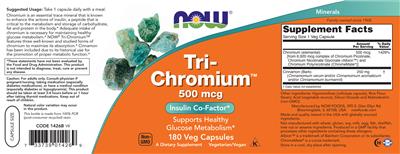
Tri-Chromium 500 mcg brings you four active ingredients. The main one is chromium itself, delivered in three different forms: chromium picolinate, Albion Chromium Nicotinate Glycinate (a branded chelated form), and ChromeMate (chromium polynicotinate).
Each form is absorbed a little differently in your body. You also get cinnamon, added for its potential blood-sugar support.
The capsule also contains inactive ingredients — rice flour, hypromellose (a plant-based capsule material), stearic acid, silicon dioxide, and maltodextrin — which help hold everything together and keep it shelf-stable.
Does it work?
Strong evidence
Chromium is likely effective for treating chromium deficiency, which is rare but can happen. For diabetes itself, the evidence is only possibly effective — some research suggests it may help, but it's not a proven treatment on its own.
For prediabetes (impaired glucose tolerance), schizophrenia, and high blood pressure, the evidence is currently rated as possibly ineffective, meaning we don't have solid proof it works for those uses. Cinnamon's effectiveness for any condition — from diabetes to cholesterol to the common cold — is not established in the data we hold; the evidence is either absent or insufficient.
How safe is it?
Well-documented data
Chromium is generally well tolerated at typical supplement doses. The most common side effects are mild: upset stomach, headaches, trouble sleeping, and mood changes.
Rare serious side effects — kidney or liver damage, muscle breakdown (rhabdomyolysis), and low platelet count — have been reported, mainly at much higher doses than this product. Skin rashes and contact dermatitis are possible, especially if you're allergic to chromium.
Cinnamon from food is considered safe, but supplement doses high in coumarin may stress the liver over time. At typical doses, both ingredients are generally tolerated, but high doses or long-term use may carry risks for some people.
Meds to double-check
Moderate interaction found
Before taking this product, double-check with us if you're on antidiabetes drugs (blood sugar medication), levothyroxine (thyroid hormone), insulin, NSAIDs or aspirin, or any liver-stressing drugs. Chromium may lower your blood sugar or reduce how much thyroid hormone your body absorbs, so timing and dose adjustments might matter.
The bottom line
Scorecard at a glanceFormula with limited ingredient disclosure with clinical evidence supporting its stated purpose. Moderate medication interactions have been identified, and safety information is well characterized.
Tri-Chromium 500 mcg is a reasonable choice if you want to support blood sugar with chromium — especially if you have a documented deficiency — but it's not a substitute for diabetes medication. If you take any diabetes drug, thyroid hormone, insulin, pain relievers, or aspirin, talk to us or your doctor before starting.
Pregnant or nursing? Small amounts from food are fine, but extra supplement doses should be avoided unless your doctor recommends it.
Educational only — not medical advice; always confirm with your pharmacist. Our editorial policy · How we use AI
Assessment coverage: 4 of 4 active ingredients matched to our full ingredient reviews (monographs). Based on the product label dated Sep 25, 2024.
This Scorecard evaluates available label information, ingredient evidence, and known medication-safety considerations. It does not independently verify product identity, purity, potency, contamination, or manufacturing quality. How these ratings are computed
General information
Key facts about Tri-Chromium 500 mcg, straight from the product label.
| Brand | NOW |
|---|---|
| Barcode (UPC) | 733739014269 |
| Net contents | 180 Veg Capsule(s) |
| Market status | On market |
| Date entered into DSLD | Sep 25, 2024 |
| DSLD ID | 314141 |
| Product type | Botanical With Nutrients |
| Supplement form | Capsule |
| Dietary claims / uses | Nutrient, All Other, Structure/Function |
| Intended target group(s) | Vegan, Vegetarian, Adult (18 - 50 Years), Kosher, Halal, Gluten Free |
Everything in this section is reproduced from the manufacturer’s own product label — it’s the label speaking, not HelloPharmacist. We show it so you can see exactly what the maker states; we don’t verify or endorse those statements.
Supplement Facts
The label details for Tri-Chromium 500 mcg by NOW, sourced from the NIH Dietary Supplement Label Database.
Supplement Facts
| Ingredient | Amount | % DV |
|---|---|---|
| Chromium | 500 mcg | 1429% |
| Chromium Picolinate | 0 NP | -- |
| Cinnamon | 250 mg | -- |
| Albion Chromium Nicotinate Glycinate | 0 NP | -- |
| Chromium Picolinate, Albion Chromium Nicotinate Glycinate, and Chromium Polynicotinate (ChromeMate) | 6920 mcg | -- |
| ChromeMate | 0 NP | -- |
Other ingredients: Hypromellose, Rice Flour, Stearic Acid, Silicon Dioxide, Maltodextrin
Tap any ingredient to jump to its full detail below.
These statements are the manufacturer’s wording, reproduced from the product label — the label is saying it, not HelloPharmacist. We don’t verify or endorse them.
Suggested/Recommended/Usage/Directions
Suggested Usage: Take 1 capsule daily with a meal.
Formula
Chromium is an essential trace mineral that is known to enhance the actions of insulin, a peptide that is critical to the metabolism and storage of carbohydrate, fat and protein in the body. Adequate intake of Chromium is necessary for maintaining healthy glucose metabolism. NOW Tri-Chromium features three well-known and studied forms of Chromium to maximize its absorption. Cinnamon has been included due to its historical use for the promotion of proper metabolic function.
Triangle K (Kosher)
Crescent H (Halal)
FDA Disclaimer Statement
These statements have not been evaluated by the Food and Drug Administration. This product is not intended to diagnose, treat, cure or prevent any disease.
Precautions
Caution: For adults only. Keep out of reach of children.
Consult physician if pregnant/nursing, taking medication (especially diabetes medications), or have a medical condition (especially diabetes or hypoglycemia) This product should be taken at least 3-4 hours before or 1 hour after taking thyroid medications.
Not manufactured with wheat, gluten, soy, milk, egg, fish, shellfish, tree nut or sesame ingredients. Produced in a GMP facility that processes other ingredients containing these allergens.
Formulation
Natural color variation may occur in this product.
Insulin Co-Factor Supports Healthy Glucose Metabolism
Non-GMO
Vegetarian/Vegan
Made and quality tested in the USA with globally sourced ingredients.
Not manufactured with wheat, gluten, soy, milk, egg, fish, shellfish, tree nut or sesame ingredients.
General Statements
This bottle is made from 100% PCR (post-consumer recycled) resin.
Minerals Family owned since 1968.
FDA Statement of Identity
A Dietary Supplement
Seals/Symbols
Triangle K (Kosher)
Crescent H (Halal) GMP Quality Assured
Brand IP Statement(s)
Albion is a trademark of Balchem Corporation or its subsidiaries. ChromeMate is a Lonza trademark.
Storage
Store in a cool, dry place after opening.
Is this label outdated? Report a formula or label change and our pharmacy team will review it.
Tri-Chromium 500 mcg by NOW label
The label scan from the NIH Dietary Supplement Label Database. Tap to enlarge.
Label images are published by the NIH Dietary Supplement Label Database for the version of this product on file. Always read your actual product label.
View the full label (PDF)The Ingredients in Tri-Chromium 500 mcg by NOW
These are the 2 active ingredients this product is made of. Select any to open its full monograph.
Serving size1 Veg Capsule(s) Dosage formCapsule Servings per container180 Amounts shown are per serving.
Most supplement products combine several ingredients, and a medication can interact with the product through any one of them. Each ingredient below shows whether it has known drug interactions.
Chromium
Interacts with178 drugs
Chromium is an essential trace mineral involved in how the body handles sugar and fat. Some studies suggest it may modestly help blood sugar control i...
Chromium monograph & interactionsCinnamon
Interacts with442 drugs
Cassia cinnamon is the common, inexpensive cinnamon used in cooking, and it is also taken as a supplement, most often for blood sugar support. The evi...
Cinnamon monograph & interactionsOther (inactive) ingredients: Hypromellose, Rice Flour, Stearic Acid, Silicon Dioxide, Maltodextrin. These complete the product’s ingredient list but are not active constituents.
Tri-Chromium 500 mcg by NOW Drug Interactions
HelloPharmacist Interaction Report
NOW's Tri-Chromium 500 mcg does interact with several medication types.
The most serious concern is with antidiabetes drugs (Moderate severity) — chromium may lower blood sugar on top of what your medication does, raising the risk of low blood sugar (hypoglycemia). This applies to both chromium picolinate and the other chromium forms in this product.
Read the full breakdown — every affected drug type, severity by severity
You'll also want to check levothyroxine (thyroid hormone, like Synthroid), insulin, NSAIDs (pain relievers like ibuprofen), and aspirin. Chromium can bind levothyroxine in your gut and cut how much your body absorbs it — clinical data shows a 17% drop in thyroid hormone levels.
Insulin carries the same low blood sugar risk as other diabetes drugs. NSAIDs and aspirin are listed as Minor-severity concerns; they may increase how much chromium your body holds on to.
Cinnamon in this blend theoretically has additive effects with antidiabetes drugs (Moderate) and hepatotoxic drugs — drugs that stress the liver. The cinnamon concern is mainly with high doses over time, since it contains coumarin, a compound that can affect the liver.
Altogether, these interactions span 506 individual medications. Use the medication checker below to verify your exact prescriptions before you start.
Check your own medications below · Editorial policy · How we use AI
Want to check YOUR meds against Tri-Chromium 500 mcg?
Ask about interactions with your drugs in plain English — “Can I take it with lisinopril?” — and we find you the answer in seconds, ingredient by ingredient.
Go to the checkerIngredients driving the most interactions
Individual Drug Interactions
The ingredients in Tri-Chromium 500 mcg interact with 523 drugs. Click any drug to see the details.
2 of the 2 ingredients in Tri-Chromium 500 mcg interact with drugs. Each result below shows which ingredient is responsible. Cinnamon Chromium
6-mercaptopurinePurinethol
How 6-mercaptopurine interacts with Tri-Chromium 500 mcg — through 1 ingredient. Tap an ingredient for the detail:
CinnamonHepatotoxic Drugs Moderate
Interaction Summary
Theoretically, large doses of cassia cinnamon might cause additive effects when used with hepatotoxic drugs.
Read the full Cinnamon + 6-mercaptopurine interactionAbacavir Sulfate, Dolutegravir, LamivudineTriumeq
How Abacavir Sulfate, Dolutegravir, Lamivudine interacts with Tri-Chromium 500 mcg — through 1 ingredient. Tap an ingredient for the detail:
CinnamonHepatotoxic Drugs Moderate
Interaction Summary
Theoretically, large doses of cassia cinnamon might cause additive effects when used with hepatotoxic drugs.
Read the full Cinnamon + Abacavir Sulfate, Dolutegravir, Lamivudine interactionAbacavir, LamivudineEpzicom
How Abacavir, Lamivudine interacts with Tri-Chromium 500 mcg — through 1 ingredient. Tap an ingredient for the detail:
CinnamonHepatotoxic Drugs Moderate
Interaction Summary
Theoretically, large doses of cassia cinnamon might cause additive effects when used with hepatotoxic drugs.
Read the full Cinnamon + Abacavir, Lamivudine interactionAbiraterone
How Abiraterone interacts with Tri-Chromium 500 mcg — through 1 ingredient. Tap an ingredient for the detail:
CinnamonHepatotoxic Drugs Moderate
Interaction Summary
Theoretically, large doses of cassia cinnamon might cause additive effects when used with hepatotoxic drugs.
Read the full Cinnamon + Abiraterone interactionAbiraterone AcetateYonsa, Zytiga
How Abiraterone Acetate interacts with Tri-Chromium 500 mcg — through 1 ingredient. Tap an ingredient for the detail:
CinnamonHepatotoxic Drugs Moderate
Interaction Summary
Theoretically, large doses of cassia cinnamon might cause additive effects when used with hepatotoxic drugs.
Read the full Cinnamon + Abiraterone Acetate interactionAcarboseGlucobay, Prandase, Precose
How Acarbose interacts with Tri-Chromium 500 mcg — through 2 ingredients. Tap an ingredient for the detail:
CinnamonAntidiabetes Drugs, Hepatotoxic Drugs Moderate
Interaction Summary
Theoretically, cassia cinnamon may have additive effects with antidiabetes drugs.
Read the full Cinnamon + Acarbose interactionChromemateAntidiabetes Drugs Moderate
Interaction Summary
Theoretically, chromium may have additive effects with antidiabetic agents and increase the risk of hypoglycemia.
Read the full Chromemate + Acarbose interactionAcebutololRhotral, Sectral
How Acebutolol interacts with Tri-Chromium 500 mcg — through 1 ingredient. Tap an ingredient for the detail:
CinnamonHepatotoxic Drugs Moderate
Interaction Summary
Theoretically, large doses of cassia cinnamon might cause additive effects when used with hepatotoxic drugs.
Read the full Cinnamon + Acebutolol interactionAcetaminophenChildren's Tylenol, Children's Tylenol Meltaways, Tylenol, Tylenol Ex Strength
How Acetaminophen interacts with Tri-Chromium 500 mcg — through 1 ingredient. Tap an ingredient for the detail:
CinnamonHepatotoxic Drugs Moderate
Interaction Summary
Theoretically, large doses of cassia cinnamon might cause additive effects when used with hepatotoxic drugs.
Read the full Cinnamon + Acetaminophen interactionAcetaminophen, AspirinGemnisyn
How Acetaminophen, Aspirin interacts with Tri-Chromium 500 mcg — through 2 ingredients. Tap an ingredient for the detail:
CinnamonHepatotoxic Drugs Moderate
Interaction Summary
Theoretically, large doses of cassia cinnamon might cause additive effects when used with hepatotoxic drugs.
Read the full Cinnamon + Acetaminophen, Aspirin interactionChromemateNonsteroidal Anti-inflammatory Drugs (nsaids), Aspirin Minor
Interaction Summary
NSAIDs might increase chromium levels in the body.
Read the full Chromemate + Acetaminophen, Aspirin interactionAcetaminophen, Aspirin, CaffeineExcedrin, Excedrin Extra Strength, Excedrin Migraine
How Acetaminophen, Aspirin, Caffeine interacts with Tri-Chromium 500 mcg — through 2 ingredients. Tap an ingredient for the detail:
CinnamonHepatotoxic Drugs Moderate
Interaction Summary
Theoretically, large doses of cassia cinnamon might cause additive effects when used with hepatotoxic drugs.
Read the full Cinnamon + Acetaminophen, Aspirin, Caffeine interactionChromemateNonsteroidal Anti-inflammatory Drugs (nsaids), Aspirin Minor
Interaction Summary
NSAIDs might increase chromium levels in the body.
Read the full Chromemate + Acetaminophen, Aspirin, Caffeine interactionAcetaminophen, Brompheniramine, PhenylpropanolamineDimetapp Cold and Flu
How Acetaminophen, Brompheniramine, Phenylpropanolamine interacts with Tri-Chromium 500 mcg — through 1 ingredient. Tap an ingredient for the detail:
CinnamonHepatotoxic Drugs Moderate
Interaction Summary
Theoretically, large doses of cassia cinnamon might cause additive effects when used with hepatotoxic drugs.
Read the full Cinnamon + Acetaminophen, Brompheniramine, Phenylpropanolamine interactionAcetaminophen, ButalbitalAxocet, Bancap, Bucet, Butex Forte, Esgic CF, Orbivan CF +5 more
How Acetaminophen, Butalbital interacts with Tri-Chromium 500 mcg — through 1 ingredient. Tap an ingredient for the detail:
CinnamonHepatotoxic Drugs Moderate
Interaction Summary
Theoretically, large doses of cassia cinnamon might cause additive effects when used with hepatotoxic drugs.
Read the full Cinnamon + Acetaminophen, Butalbital interactionAcetaminophen, Butalbital, CaffeineEsgic, Esgic Plus, Fiogesic, Fioricet, Repan, Tecnal +1 more
How Acetaminophen, Butalbital, Caffeine interacts with Tri-Chromium 500 mcg — through 1 ingredient. Tap an ingredient for the detail:
CinnamonHepatotoxic Drugs Moderate
Interaction Summary
Theoretically, large doses of cassia cinnamon might cause additive effects when used with hepatotoxic drugs.
Read the full Cinnamon + Acetaminophen, Butalbital, Caffeine interactionAcetaminophen, Butalbital, Caffeine, CodeineEsgic with Codeine, Fioricet w/ Codeine
How Acetaminophen, Butalbital, Caffeine, Codeine interacts with Tri-Chromium 500 mcg — through 1 ingredient. Tap an ingredient for the detail:
CinnamonHepatotoxic Drugs Moderate
Interaction Summary
Theoretically, large doses of cassia cinnamon might cause additive effects when used with hepatotoxic drugs.
Read the full Cinnamon + Acetaminophen, Butalbital, Caffeine, Codeine interactionAcetaminophen, Butalbital, CodeineBancap w/ Codeine
How Acetaminophen, Butalbital, Codeine interacts with Tri-Chromium 500 mcg — through 1 ingredient. Tap an ingredient for the detail:
CinnamonHepatotoxic Drugs Moderate
Interaction Summary
Theoretically, large doses of cassia cinnamon might cause additive effects when used with hepatotoxic drugs.
Read the full Cinnamon + Acetaminophen, Butalbital, Codeine interactionAcetaminophen, Butalbital, Codeine PhosphatePhrenilin #3
How Acetaminophen, Butalbital, Codeine Phosphate interacts with Tri-Chromium 500 mcg — through 1 ingredient. Tap an ingredient for the detail:
CinnamonHepatotoxic Drugs Moderate
Interaction Summary
Theoretically, large doses of cassia cinnamon might cause additive effects when used with hepatotoxic drugs.
Read the full Cinnamon + Acetaminophen, Butalbital, Codeine Phosphate interactionAcetaminophen, Caffeine, Chlorpheniramine, Hydrocodone, PhenylephrineHycomine Compound
How Acetaminophen, Caffeine, Chlorpheniramine, Hydrocodone, Phenylephrine interacts with Tri-Chromium 500 mcg — through 1 ingredient. Tap an ingredient for the detail:
CinnamonHepatotoxic Drugs Moderate
Interaction Summary
Theoretically, large doses of cassia cinnamon might cause additive effects when used with hepatotoxic drugs.
Read the full Cinnamon + Acetaminophen, Caffeine, Chlorpheniramine, Hydrocodone, Phenylephrine interactionAcetaminophen, Caffeine, CodeineGesic C15, Gesic C30, Gesic C8, Lenoltec 1, Lenoltec 2, Lenoltec 3 +1 more
How Acetaminophen, Caffeine, Codeine interacts with Tri-Chromium 500 mcg — through 1 ingredient. Tap an ingredient for the detail:
CinnamonHepatotoxic Drugs Moderate
Interaction Summary
Theoretically, large doses of cassia cinnamon might cause additive effects when used with hepatotoxic drugs.
Read the full Cinnamon + Acetaminophen, Caffeine, Codeine interactionAcetaminophen, Caffeine, Codeine, SalicylamideCodalan No.1, Codalan No.2, Codalan No.3
How Acetaminophen, Caffeine, Codeine, Salicylamide interacts with Tri-Chromium 500 mcg — through 1 ingredient. Tap an ingredient for the detail:
CinnamonHepatotoxic Drugs Moderate
Interaction Summary
Theoretically, large doses of cassia cinnamon might cause additive effects when used with hepatotoxic drugs.
Read the full Cinnamon + Acetaminophen, Caffeine, Codeine, Salicylamide interactionAcetaminophen, Caffeine, DihydrocodeineDHC Plus, Panlor DC, Panlor SS
How Acetaminophen, Caffeine, Dihydrocodeine interacts with Tri-Chromium 500 mcg — through 1 ingredient. Tap an ingredient for the detail:
CinnamonHepatotoxic Drugs Moderate
Interaction Summary
Theoretically, large doses of cassia cinnamon might cause additive effects when used with hepatotoxic drugs.
Read the full Cinnamon + Acetaminophen, Caffeine, Dihydrocodeine interactionAcetaminophen, Caffeine, IsomethepteneMigralam
How Acetaminophen, Caffeine, Isometheptene interacts with Tri-Chromium 500 mcg — through 1 ingredient. Tap an ingredient for the detail:
CinnamonHepatotoxic Drugs Moderate
Interaction Summary
Theoretically, large doses of cassia cinnamon might cause additive effects when used with hepatotoxic drugs.
Read the full Cinnamon + Acetaminophen, Caffeine, Isometheptene interactionAcetaminophen, Caffeine, PyrilamineMidol Max Strength Menstrual
How Acetaminophen, Caffeine, Pyrilamine interacts with Tri-Chromium 500 mcg — through 1 ingredient. Tap an ingredient for the detail:
CinnamonHepatotoxic Drugs Moderate
Interaction Summary
Theoretically, large doses of cassia cinnamon might cause additive effects when used with hepatotoxic drugs.
Read the full Cinnamon + Acetaminophen, Caffeine, Pyrilamine interactionAcetaminophen, Chlorpheniramine Maleate, Dextromethorphan HbrVicks Formula 44M Cough, Cold & Flu Relief
How Acetaminophen, Chlorpheniramine Maleate, Dextromethorphan Hbr interacts with Tri-Chromium 500 mcg — through 1 ingredient. Tap an ingredient for the detail:
CinnamonHepatotoxic Drugs Moderate
Interaction Summary
Theoretically, large doses of cassia cinnamon might cause additive effects when used with hepatotoxic drugs.
Read the full Cinnamon + Acetaminophen, Chlorpheniramine Maleate, Dextromethorphan Hbr interactionAcetaminophen, Chlorpheniramine, Codeine, PhenylephrineColrex
How Acetaminophen, Chlorpheniramine, Codeine, Phenylephrine interacts with Tri-Chromium 500 mcg — through 1 ingredient. Tap an ingredient for the detail:
CinnamonHepatotoxic Drugs Moderate
Interaction Summary
Theoretically, large doses of cassia cinnamon might cause additive effects when used with hepatotoxic drugs.
Read the full Cinnamon + Acetaminophen, Chlorpheniramine, Codeine, Phenylephrine interactionAcetaminophen, Chlorpheniramine, DextromethorphanCoricidin II Extra Strength Cold and Flu
How Acetaminophen, Chlorpheniramine, Dextromethorphan interacts with Tri-Chromium 500 mcg — through 1 ingredient. Tap an ingredient for the detail:
CinnamonHepatotoxic Drugs Moderate
Interaction Summary
Theoretically, large doses of cassia cinnamon might cause additive effects when used with hepatotoxic drugs.
Read the full Cinnamon + Acetaminophen, Chlorpheniramine, Dextromethorphan interactionAcetaminophen, Chlorpheniramine, Dextromethorphan HydrobromideCoricidin HBP Maximum Strength Flu
How Acetaminophen, Chlorpheniramine, Dextromethorphan Hydrobromide interacts with Tri-Chromium 500 mcg — through 1 ingredient. Tap an ingredient for the detail:
CinnamonHepatotoxic Drugs Moderate
Interaction Summary
Theoretically, large doses of cassia cinnamon might cause additive effects when used with hepatotoxic drugs.
Read the full Cinnamon + Acetaminophen, Chlorpheniramine, Dextromethorphan Hydrobromide interactionAcetaminophen, Chlorpheniramine, Dextromethorphan, PhenylpropanolamineMulti Symptom Cold Relief
How Acetaminophen, Chlorpheniramine, Dextromethorphan, Phenylpropanolamine interacts with Tri-Chromium 500 mcg — through 1 ingredient. Tap an ingredient for the detail:
CinnamonHepatotoxic Drugs Moderate
Interaction Summary
Theoretically, large doses of cassia cinnamon might cause additive effects when used with hepatotoxic drugs.
Read the full Cinnamon + Acetaminophen, Chlorpheniramine, Dextromethorphan, Phenylpropanolamine interactionAcetaminophen, Chlorpheniramine, Dextromethorphan, PseudoephedrineChildren's Tylenol Cold Plus Cough, Tylenol Cold Ex Strength
How Acetaminophen, Chlorpheniramine, Dextromethorphan, Pseudoephedrine interacts with Tri-Chromium 500 mcg — through 1 ingredient. Tap an ingredient for the detail:
CinnamonHepatotoxic Drugs Moderate
Interaction Summary
Theoretically, large doses of cassia cinnamon might cause additive effects when used with hepatotoxic drugs.
Read the full Cinnamon + Acetaminophen, Chlorpheniramine, Dextromethorphan, Pseudoephedrine interactionAcetaminophen, Chlorpheniramine, Guaifenesin, Phenylephrine, SalicylamideRhinogesic GG
How Acetaminophen, Chlorpheniramine, Guaifenesin, Phenylephrine, Salicylamide interacts with Tri-Chromium 500 mcg — through 1 ingredient. Tap an ingredient for the detail:
CinnamonHepatotoxic Drugs Moderate
Interaction Summary
Theoretically, large doses of cassia cinnamon might cause additive effects when used with hepatotoxic drugs.
Read the full Cinnamon + Acetaminophen, Chlorpheniramine, Guaifenesin, Phenylephrine, Salicylamide interactionAcetaminophen, Chlorpheniramine, PhenylephrineAlka-Seltzer PLUS, Histex SR, Protid
How Acetaminophen, Chlorpheniramine, Phenylephrine interacts with Tri-Chromium 500 mcg — through 1 ingredient. Tap an ingredient for the detail:
CinnamonHepatotoxic Drugs Moderate
Interaction Summary
Theoretically, large doses of cassia cinnamon might cause additive effects when used with hepatotoxic drugs.
Read the full Cinnamon + Acetaminophen, Chlorpheniramine, Phenylephrine interactionEach ingredient & the kinds of drugs it affects
For each ingredient in Tri-Chromium 500 mcg with known interactions, here are the types of medications they can affect. Open any type for the detail — or search your exact drug in the checker above.
Cinnamon
Antidiabetes Drugs
Theoretically, cassia cinnamon may have additive effects with antidiabetes drugs.
Cassia cinnamon may lower blood glucose levels, and have additive effects in patients treated with antidiabetic agents. Dose adjustments to diabetes medications might be necessary.
Hepatotoxic Drugs
Theoretically, large doses of cassia cinnamon might cause additive effects when used with hepatotoxic drugs.
There is some concern that ingesting large amounts of cassia cinnamon for an extended duration might cause hepatotoxicity in some people. Cassia cinnamon contains coumarin, which can cause hepatotoxicity in animal models. In humans, very high doses of coumarin from 50-7000 mg/day can result in hepatotoxicity that resolves when coumarin use is discontinued. Lower amounts might also cause liver problems in sensitive people, such as those with liver disease or those taking potentially hepatotoxic agents.
Chromium
Antidiabetes Drugs
Theoretically, chromium may have additive effects with antidiabetic agents and increase the risk of hypoglycemia.
Some research shows that taking chromium might lower blood glucose levels, especially in patients with poorly controlled type 2 diabetes.
Insulin
Theoretically, concomitant use of chromium and insulin might increase the risk of hypoglycemia.
In clinical research, chromium has been shown to increase insulin sensitivity,
Levothyroxine (Synthroid, Others)
Chromium might bind levothyroxine in the intestinal tract and decrease levothyroxine absorption.
Clinical research in healthy volunteers shows that taking chromium picolinate 1000 mcg with levothyroxine 1 mg decreases serum levels of levothyroxine by 17% when compared to taking levothyroxine alone. Advise patients to take levothyroxine at least 30 minutes before or 3-4 hours after taking chromium.
Aspirin
Theoretically, aspirin might increase chromium absorption.
Animal research suggests that aspirin may increase chromium absorption and chromium levels in the blood.
Nonsteroidal Anti-Inflammatory Drugs (Nsaids)
NSAIDs might increase chromium levels in the body.
Drugs that are prostaglandin inhibitors, such as NSAIDs, seem to increase chromium absorption and retention.
Brand information
Manufacturer and brand details for Tri-Chromium 500 mcg, from the product label.
NOW
See all NOW products- Name
- NOW FOODS
- Street Address
- 395 S. Glen Ellyn Rd.
- City
- Bloomingdale
- State
- IL
- ZipCode
- 60108
- Web Address
- nowfoods.com
Tri-Chromium 500 mcg by NOW: Common Questions
Does Tri-Chromium 500 mcg by NOW interact with any medications?
How can one product interact with so many drugs?
Where does this information come from?
Can I take this if I'm pregnant or breastfeeding?
What are the main side effects?
Will this actually help my blood sugar?
Why three forms of chromium in one product?
Is cinnamon in here doing anything?
Written and reviewed by the HelloPharmacist editorial staff. Our editorial policy
Not sure if Tri-Chromium 500 mcg is safe with your meds?
Our pharmacists answer your medication & supplement questions — free.
Label information is sourced from the NIH Dietary Supplement Label Database and reflects the product version on file; always read your actual product label. This page is for education only and is not a substitute for professional medical advice. Confirm with your pharmacist or doctor before combining supplements and medications.
The Full Monographs Behind Tri-Chromium 500 mcg’s Ingredients
Every ingredient we hold a full HelloPharmacist monograph for — uses, evidence, safety, and the complete interaction list.
Chromium
Interacts with 178 drugsChromium is an essential trace mineral involved in how the body handles sugar and fat. Some studies suggest it may modestly help blood sugar control in certain people with type 2 diabetes, b...
Read the full Chromium monograph → Herb & supplement monographCassia Cinnamon
Interacts with 442 drugsCassia cinnamon is the common, inexpensive cinnamon used in cooking, and it is also taken as a supplement, most often for blood sugar support. The evidence for its health benefits is mixed a...
Read the full Cassia Cinnamon monograph →Sources & How We Checked
Tri-Chromium 500 mcg's label data comes from the NIH Dietary Supplement Label Database; the ingredient interaction data is from the Natural Medicines database, reviewed by our pharmacists.
- NIH Dietary Supplement Label Database (DSLD) — The official product label on file for this supplement.
- Natural Medicines (Therapeutic Research Center) — Evidence-graded clinical reference behind the ingredient interaction data.
Content is written and reviewed by licensed HelloPharmacist pharmacists. See our data sources and editorial standards for how this information is built and checked.
The 73 references behind this product’s interaction data
Every citation that drives the interaction findings for this product’s ingredients, from the evidence-graded Natural Medicines (TRC Healthcare) database. Open an ingredient to browse its citations — links open the study on PubMed or the publisher’s site.
Chromium 53 references
- Cerulli J, Grabe DW, Gauthier I, et al. Chromium picolinate toxicity. Ann Pharmacother 1998;32:428-31. PubMed
- Urberg M, Zemel MB. Evidence for synergism between chromium and nicotinic acid in the control of glucose tolerance in elderly humans. Metabolism 1987;36:896-9. PubMed
- Mohamedshah FY, Moser-Veillon PB, Yamini S, et al. Distribution of a stable isotope of chromium (53Cr) in serum, urine, and breast milk in lactating women. Am J Clin Nutr 1998;67:1250-5. PubMed
- Wasser WG, Feldman NS, D'Agati VD. Chronic renal failure after ingestion of over-the-counter chromium picolinate. [letter]. Ann Intern Med 1997;126:410. PubMed
- Mertz W. Interaction of chromium with insulin: a progress report. Nutr Rev 1998;56:174-7. PubMed
- Anderson RA. Chromium, glucose intolerance and diabetes. J Am Coll Nutr 1998;17:548-55. PubMed
- McLeod MN, Gaynes BN, Golden RN. Chromium potentiation of antidepressant pharmacotherapy for dysthymic disorder in 5 patients. J Clin Psych 1999;60:237-40. PubMed
- Fowler JF Jr. Systemic contact dermatitis caused by oral chromium picolinate. Cutis 2000;65:116. DOI
- Trent LK, Thieding-Cancel D. Effects of chromium picolinate on body composition. J Sports Med Phys Fitness 1995;35:273-80.
- Food and Nutrition Board, Institute of Medicine. Dietary Reference Intakes for Vitamin A, Vitamin K, Arsenic, Boron, Chromium, Copper, Iodine, Iron, Manganese, Molybdenum, Nickel, Silicon, Vanadium, and Zinc. Washington, DC: National Academy Press, 2002.
- Rabinovitz H, Friedensohn A, Leibovitz A, et al. Effect of chromium supplementation on blood glucose and lipid levels in type 2 diabetes mellitus elderly patients. Int J Vitam Nutr Res 2004;74:178-82. PubMed
- Lanca S, Alves A, Vieira AI, et al. Chromium-induced toxic hepatitis. Eur J Intern Med 2002;13:518-20. PubMed
- Kockler DR, McCarthy MW, Lawson CL. Seizure activity and unresponsiveness after hydroxycut ingestion. Pharmacotherapy 2001;21:647-51.. PubMed
- Davidson JR, Abraham K, Connor KM, McLeod MN. Effectiveness of chromium in atypical depression: a placebo-controlled trial. Biol Psychiatry 2003;53:261-4.. PubMed
- Food Standards Agency. Medicines and Healthcare products Regulatory Agency (MHRA). Expert Group on Vitamins and Minerals. Available at: http://cot.food.gov.uk/sites/default/files/vitmin2003.pdf.
- Mouser JF, Hak EB, Helms RA, et al. Chromium and zinc concentrations in pediatric patients receiving long-term parenteral nutrition. Am J Health Syst Pharm 1999;56:1950-6. PubMed
- Stevens T, Qadri A, Zein NN. Two patients with acute liver injury associated with use of the herbal weight-loss supplement hydroxycut. Ann Intern Med 2005;142:477-8. PubMed
- Wani S, Weskamp C, Marple J, Spry L. Acute tubular necrosis associated with chromium picolinate-containing dietary supplement. Ann Pharmacother 2006;40:563-6. PubMed
- Kleefstra N, Houweling ST, Jansman FG, et al. Chromium treatment has no effect in patients with poorly controlled, insulin-treated type 2 diabetes in an obese Western population: a randomized, double-blind, placebo-controlled trial. Diabetes Care 2006;29: PubMed
- Martin J, Wang ZQ, Zhang XH, et al. Chromium picolinate supplementation attenuates body weight gain and increases insulin sensitivity in subjects with type 2 diabetes. Diabetes Care 2006;29:1826-32. PubMed
- Singer GM, Geohas J. The effect of chromium picolinate and biotin supplementation on glycemic control in poorly controlled patients with type 2 diabetes mellitus: a placebo-controlled, double-blinded, randomized trial. Diabetes Technol Ther 2006;8:636-43. PubMed
- John-Kalarickal J, Pearlman G, Carlson HE. New medications which decrease levothyroxine absorption. Thyroid 2007;17:763-5. PubMed
- Yazaki Y, Faridi Z, Ma Y, et al. A pilot study of chromium picolinate for weight loss. J Altern Complement Med 2010;16:291-9. PubMed
- Davis ML, Seaborn CD, and Stoecker BJ. Effects of over-the-counter drugs on chromium retention and urinary excretion in rats. Nutrition Research 1995;15(2):201-210.
- Young P, Turiansky G, Bonner M, and et al. Acute generalized exanthematous pustulosis induced by chromium picolinate. J.Am Acad.Dermatol. 1999;41(5 Pt 2):820-823. PubMed
- Gibb, H. J., Lees, P. S., Pinsky, P. F., and Rooney, B. C. Lung cancer among workers in chromium chemical production. Am J Ind.Med 2000;38(2):115-126. DOI
- Gibb, H. J., Lees, P. S., Pinsky, P. F., and Rooney, B. C. Clinical findings of irritation among chromium chemical production workers. Am J Ind.Med 2000;38(2):127-131. PubMed
- Pittler, M. H. and Ernst, E. Dietary supplements for body-weight reduction: a systematic review. Am.J.Clin Nutr. 2004;79(4):529-536. PubMed
- Pei, D., Hsieh, C. H., Hung, Y. J., Li, J. C., Lee, C. H., and Kuo, S. W. The influence of chromium chloride-containing milk to glycemic control of patients with type 2 diabetes mellitus: a randomized, double-blind, placebo-controlled trial. Metabolism 2 PubMed
- Hisatomi, K., Ishii, H., Hashiguchi, K., Seki, M., Ide, M., Sugiyama, K., Ishimoto, H., Nakayama, S., Mukae, H., and Kohno, S. Interstitial pneumonia caused by inhalation of fumes of nickel and chrome. Respirology. 2006;11(6):814-817. PubMed
- Kleefstra, N., Houweling, S. T., Bakker, S. J., Verhoeven, S., Gans, R. O., Meyboom-de Jong, B., and Bilo, H. J. Chromium treatment has no effect in patients with type 2 diabetes in a Western population: a randomized, double-blind, placebo-controlled tri DOI
- Parsons, A., Ingram, J., Inglis, J., Aveyard, P., Johnstone, E., Brown, K., Franklin, M., and Bermudez, I. A proof of concept randomised placebo controlled factorial trial to examine the efficacy of St John's wort for smoking cessation and chromium to pr
- Bagdon RE and Hazen RE. Skin permeation and cutaneous hypersensitivity as a basis for making risk assessments of chromium as a soil contaminant. Environ.Health Perspect. 1991;92:111-119. PubMed
- Bharmal, S. V., Moyes, V., Ahmed, S., and Grossman, A. Hypoglycaemia: possible mediation by chromium salt medication. Hormones.(Athens.) 2010;9(2):181-183. PubMed
- Krol, E., Krejpcio, Z., Byks, H., Bogdanski, P., and Pupek-Musialik, D. Effects of chromium brewer's yeast supplementation on body mass, blood carbohydrates, and lipids and minerals in type 2 diabetic patients. Biol.Trace Elem.Res. 2011;143(2):726-737.
- Unisa, S., Jagannath, P., Dhir, V., Khandelwal, C., Sarangi, L., and Roy, T. K. Population-based study to estimate prevalence and determine risk factors of gallbladder diseases in the rural Gangetic basin of North India. HPB (Oxford) 2011;13(2):117-125. PubMed
- Noda, S., Asano, Y., and Sato, S. Lichen planus in a patient with long-term exposure to chrome. Eur.J.Dermatol. 2011;21(3):417-418. PubMed
- Xiang, J., Sun, Z., and Huan, J. N. Intensive chromic acid burns and acute chromium poisoning with acute renal failure. Chin Med.J.(Engl.) 7-5-2011;124(13):2071-2073.
- Chhabra, D., Oda, K., Jagannath, P., Utsunomiya, H., Takekoshi, S., and Nimura, Y. Chronic heavy metal exposure and gallbladder cancer risk in India, a comparative study with Japan. Asian Pac.J.Cancer Prev. 2012;13(1):187-190. PubMed
- Huszonek, J. Over-the-counter chromium picolinate. Am J Psychiatry 1993;150(10):1560-1561. PubMed
- Bunner S and McGinnis R. Chromium-induced hypoglycemia. Psychosomatics 1998;39(3):298-299. PubMed
- Martin, W. R. and Fuller, R. E. Suspected chromium picolinate-induced rhabdomyolysis. Pharmacotherapy 1998;18(4):860-862. DOI
- Proctor, D. M., Fredrick, M. M., Scott, P. K., Paustenbach, D. J., and Finley, B. L. The prevalence of chromium allergy in the United States and its implications for setting soil cleanup: a cost-effectiveness case study. Regul.Toxicol Pharmacol 1998;28(1 PubMed
- De Marchi S, Cecchin E, De Marchi SU. Systemic allergic dermatitis resulting from oral administration of chromium with a food supplement. Contact Dermatitis 2014;70(2):123-5. PubMed
- Hedberg YS, Gumulka M, Lind ML, Matura M, Lidén C. Severe occupational chromium allergy despite cement legislation. Contact Dermatitis. 2014;70(5):321-3. PubMed
- Thyssen JP, Jellesen MS, Møller P, Menné T, Johansen JD. Allergic chromium dermatitis from wearing 'chromium-free' footwear. Contact Dermatitis 2014;70(3):185-7. PubMed
- Liu Y, Cotillard A, Vatier C, et al. A Dietary Supplement Containing Cinnamon, Chromium and Carnosine Decreases Fasting Plasma Glucose and Increases Lean Mass in Overweight or Obese Pre-Diabetic Subjects: A Randomized, Placebo-Controlled Trial. PLoS One.
- Jamilian M, Asemi Z. Chromium Supplementation and the Effects on Metabolic Status in Women with Polycystic Ovary Syndrome: A Randomized, Double-Blind, Placebo-Controlled Trial. Ann Nutr Metab. 2015;67(1):42-8. PubMed
- Guimarães MM, Carvalho AC, Silva MS. Effect of chromium supplementation on the glucose homeostasis and anthropometry of type 2 diabetic patients: Double blind, randomized clinical trial: Chromium, glucose homeostasis and anthropometry. J Trace Elem Med Bi PubMed
- Paiva AN, Lima JG, Medeiros AC, et al. Beneficial effects of oral chromium picolinate supplementation on glycemic control in patients with type 2 diabetes: A randomized clinical study. J Trace Elem Med Biol. 2015;32:66-72. PubMed
- Yin RV, Phung OJ. Effect of chromium supplementation on glycated hemoglobin and fasting plasma glucose in patients with diabetes mellitus. Nutr J. 2015;14:14. PubMed
- Jamilian M, Zadeh Modarres S, Amiri Siavashani M, et al. The influences of chromium supplementation on glycemic control, markers of cardio-metabolic risk, and oxidative stress in infertile polycystic ovary syndrome women candidate for in vitro fertilizati
- Alinaghi F, Thyssen JP, Zachariae C, Johansen JD. No immediate effect of regulatory reduction of chromium in leather among adult patients with chromium allergy. Contact Dermatitis 2021;85(5):514-522. PubMed
Cassia Cinnamon 20 references
- Electronic Code of Federal Regulations. Title 21. Part 182 -- Substances Generally Recognized As Safe. Available at: https://www.accessdata.fda.gov/scripts/cdrh/cfdocs/cfcfr/CFRSearch.cfm?CFRPart=182
- Khan A, Safdar M, Ali Khan M, et al. Cinnamon improves glucose and lipids of people with type 2 diabetes. Diabetes Care 2003;26:3215-8. PubMed
- De Benito V, Alzaga R. Occupational allergic contact dermatitis from cassia (Chinese cinnamon) as a flavouring agent in coffee. Contact Dermatitis 1999;40:165. PubMed
- Drake TE, Maibach HI. Allergic contact dermatitis and stomatitis caused by a cinnamic aldehyde-flavored toothpaste. Arch Dermatol 1976;112:202-3.
- Press release. Cinnamon capsules to reduce blood sugar are medicinal products! Efficacy has not been scientifically proven - some products contain high levels of coumarin. Federal Institute of Risk Assessment (BfM), Germany, November 11, 2006. Available a
- Felter SP, Vassallo JD, Carlton BD, Daston GP. A safety assessment of coumarin taking into account species-specificity of toxicokinetics. Food Chem Toxicol 2006;44:462-75. PubMed
- Crawford P. Effectiveness of cinnamon for lowering hemoglobin A1C in patients with type 2 diabetes: a randomized, controlled trial. J Am Board Fam Med 2009;22:507-12. PubMed
- Akilen, R., Tsiami, A., Devendra, D., and Robinson, N. Glycated haemoglobin and blood pressure-lowering effect of cinnamon in multi-ethnic Type 2 diabetic patients in the UK: a randomized, placebo-controlled, double-blind clinical trial. Diabet.Med. 2010; PubMed
- Lu T, Sheng H Wu J Cheng Y Zhu J Chen Y. Cinnamon extract improves fasting blood glucose and glycosylated hemoglobin level in Chinese patients with type 2 diabetes. Nutr Res. 2012;32(6):408-412. PubMed
- Choi, J., Lee, K. T., Ka, H., Jung, W. T., Jung, H. J., and Park, H. J. Constituents of the essential oil of the Cinnamomum cassia stem bark and the biological properties. Arch Pharm Res 2001;24(5):418-423.
- Altschuler JA, Casella SJ, MacKenzie TA, Curtis KM. The effect of cinnamon on A1C among adolescents with type 1 diabetes. Diabetes Care 2007;30(4):813-6. PubMed
- Stoecker BR, Zhan Z, Luo R, et al. Cinnamon extract lowers blood glucose in hyperglycemic subjects. FASEB J. 2010;22:722.1 (Abstract only). DOI
- Admani S, Hill H, Jacob SE. Cinnamon Sugar Scrub Dermatitis: "Natural" Is Not Always Best. Pediatr Dermatol. 2017;34(1):e42-e43. PubMed
- Isaac-Renton M, Li MK, Parsons LM. Cinnamon spice and everything not nice: many features of intraoral allergy to cinnamic aldehyde. Dermatitis. 2015;26(3):116-21. PubMed
- Vandersall A, Katta R. Eyelid dermatitis as a manifestation of systemic contact dermatitis to cinnamon. Dermatitis. 2015 Jul-Aug;26(4):189. PubMed
- Wickenberg J, Lindstedt S, Nilsson J, Hlebowicz J. Cassia cinnamon does not change the insulin sensitivity or the liver enzymes in subjects with impaired glucose tolerance. Nutr J 2014 Sep 24;13:96. PubMed
- Brancheau D, Patel B, Zughaib M. Do cinnamon supplements cause acute hepatitis? Am J Case Rep 2015;16:250-4. PubMed
- Shekarchizadeh-Esfahani P, Heydarpour F, Izadi F, Jalili C. The effect of cinnamon supplementation on liver enzymes in adults: A systematic review and meta-analysis of randomized controlled trials. Complement Ther Med 2021;58:102699. PubMed
- Bernaola J, Valverde-Monge M, Otal-Buesa M, Cullen D, Heras-Mendaza F. Cinnamon allergic contact cheilitis. Contact Dermatitis 2023;88(5):418-419. PubMed
- Patel K, Howard M, Tate B. Cheilitis caused by allergic contact dermatitis to cinnamon in chai tea: A case report. Contact Dermatitis 2023;88(3):239-240. PubMed
Parts of this content are provided by the Therapeutic Research Center, LLC.
DISCLAIMER: Currently this does not check for drug-drug interactions. This is not an all-inclusive comprehensive list of potential interactions and is for informational purposes only. Not all interactions are known or well-reported in the scientific literature, and new interactions are continually being reported. Input is needed from a qualified healthcare provider including a pharmacist before starting any therapy. Application of clinical judgment is necessary.
© 2021 Therapeutic Research Center, LLC