
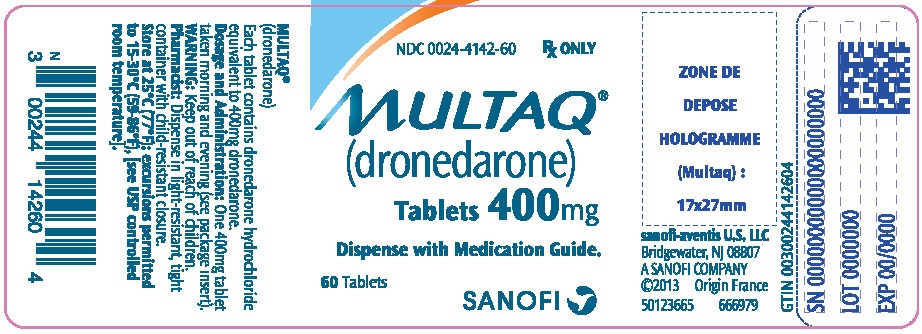
Multaq Dronedarone 400 mg Tablet, Film Coated, 6-count
🆔 Identity & classification
Where does this data come from?
🏷️ RxNorm drug class
This medicine belongs to the Antiarrhythmic class.
Where does this data come from?
🏭 Manufacturer & labeler
Where does this data come from?
🩺 Clinical
- Multaq is prescribed to help reduce your chances of ending up in the hospital because of atrial fibrillation — the irregular heart rhythm you've had in the past. It's used when you...
- What exactly is Multaq supposed to do for me?
- Yes — this one really matters. Taking Multaq with food dramatically increases how much of the drug your body actually absorbs. Without food, very little gets into your system. The...
- Does it matter if I take Multaq with food?
Patient education
Supplement & herbal interactions
Some supplements/herbs that may interact with Dronedarone — tap one for details:
Where does this data come from?
Ask a licensed pharmacist directly — free, answered by our team.
💊 What it looks like
Where does this data come from?
🧪 Inactive Ingredients / Excipients
Inactive ingredients, also called excipients, are components of the drug product other than the active ingredient. They may include fillers, dyes, coatings, preservatives, flavors, or other formulation ingredients.
💡 Tap an ingredient (hover on desktop) to see what it is and why it’s used.
-
UNII R12CBM0EIZ
A natural wax derived from a Brazilian palm tree, used as a coating and polish on tablets and capsules. It creates a smooth, shiny finish that protects the medicine and improves appearance.
-
UNII 68401960MK
Crospovidone is a synthetic polymer made from polyvinylpyrrolidone. It acts as a disintegrant, helping tablets break apart quickly in the stomach so the medicine dissolves and absorbs into the body.
-
UNII 3NXW29V3WO
Hypromellose is a plant-based thickener made from cellulose. It's used in medicines as a binder to hold ingredients together, a coating for tablets, and a thickener for liquids.
-
UNII EWQ57Q8I5X
Lactose monohydrate is a natural sugar derived from milk. It serves as a filler and binder in tablets and capsules, helping create the proper size, texture, and consistency of the medicine.
-
UNII 70097M6I30
Magnesium stearate is a salt made from magnesium and stearic acid, a fatty substance. It's used in tablets and capsules as a lubricant and glidant to help ingredients flow smoothly during manufacturing and prevent sticking.
-
UNII TUF2IVW3M2
Poloxamer 407 is a synthetic polymer made from ethylene oxide and propylene oxide. In medicines, it acts as a thickener, emulsifier, and solubilizer to help mix ingredients and create the right texture.
-
UNII 30IQX730WE
Polyethylene glycol 6000 is a synthetic polymer made from ethylene glycol units. It acts as a binder, filler, and solubilizer in medicines to help hold ingredients together, add bulk, and improve how well active drugs dissolve and absorb.
-
UNII ETJ7Z6XBU4
Silicon dioxide is a naturally occurring mineral used as a glidant and anti-caking agent. It helps powder ingredients flow smoothly and prevents clumping during manufacturing and storage.
-
UNII O8232NY3SJ
A plant-based carbohydrate derived from corn kernels. It acts as a filler to add bulk, a binder to hold ingredients together, and a disintegrant to help the tablet break apart in your stomach for absorption.
-
UNII 15FIX9V2JP
Titanium dioxide is a bright white mineral powder commonly used as a colorant and opacifying agent. It makes pills and tablets white or lighter in color and helps make coatings non-transparent.
10 inactive ingredients listed in the exact product block matched to this NDC.
Where does this data come from?
ingredient classCode="IACT" elements from the exact product block matched by this NDC. Label-section narrative from DailyMed / the openFDA label index is shown separately when available.Inactive ingredient FAQ
Are inactive ingredients the same for every manufacturer?
Why might an inactive ingredient be missing?
Can inactive ingredients matter?
💲 Pricing
A drug doesn't have one price. Each row is a different public payment system, and none is what you'd pay at the counter — that depends on your insurance. The ⓘ on each row explains what it measures.
| Price system | Per each | Per package |
|---|---|---|
| Retail pharmacies payNADAC · weekly | Not in the retail survey — common for institutional, discontinued, or low-volume packs. | |
| Medicaid paysCMS SDUD · 12 mo | No recent Medicaid claims on file for this NDC — rare and low-volume NDCs are suppressed in the public data. | |
| Medicare drug plans payPart D · Q2 2026 | $13.25 | $79.48 / 6 tablets |
Where does this data come from?
🔁 Therapeutic equivalents
| Product | Labeler | Pack | NADAC/unit | TE | Status | Price vs. this |
|---|---|---|---|---|---|---|
| Multaq 400 mgthis 00024-4142-00 | Sanofi-Aventis | 6 tablets | — | — | FDA listed | — |
| Multaq 400 mg 55154-8104-02 | Cardinal | 1260 tablets | — | — | FDA listed | — |
Where does this data come from?
⏳ Availability & generic status
The FDA lists approved generic versions of this medicine, but that does not always mean a pharmacy can get one today. Patent rules, launch agreements, supply and pricing can affect when generics actually arrive.
Why the date isn’t exact: Generic timing can change because patents may be challenged, settled, licensed, added, removed, or worked around with a narrower label — and FDA approval does not always mean a pharmacy can get the generic today.
🛈 What do these terms mean?
- Patent
- Legal protection listed in the Orange Book that may delay generic approval or launch. Issued by the U.S. Patent & Trademark Office.
- Substance patent
- Covers the active drug molecule itself — the hardest to design around. A generic generally can’t launch until it expires.
- Formulation (product) patent
- Covers a specific formulation or dosage form. A generic can sometimes work around it with a different formulation.
- Method-of-use patent
- A patent covering one specific approved use of the drug — not necessarily the whole molecule. A generic can sometimes launch with a “skinny label” that carves out the protected use and keeps the others.
- Skinny label
- A generic label that omits a still-patented use when the FDA allows it — letting a generic reach the market for the unprotected uses.
- Exclusivity
- FDA-granted marketing protection, separate from patents — e.g. 5-yr new chemical entity, 7-yr orphan drug, or a +6-month pediatric extension.
- Paragraph IV
- A generic applicant’s formal challenge to a listed patent. It can potentially lead to earlier generic entry, but often involves litigation or a settlement.
- RLD / RS
- Reference Listed Drug — the brand product the FDA uses as the reference for generic applications. Reference Standard — the product the FDA expects generics to compare against in bioequivalence testing.
- TE / AB rating
- FDA therapeutic-equivalence rating. An AB rating generally means the FDA considers a generic therapeutically equivalent to — and substitutable for — the brand.
- LOE (loss of exclusivity)
- The latest patent or exclusivity currently listed — the loss-of-exclusivity / latest-listed-protection date shown on this page. Paragraph-IV challenges and settlements can move the real date earlier; FDA approval and a manufacturer’s decision to market can move it later.
Built from the FDA Orange Book. The bars above are scaled to each protection’s expiry; the red LOE marker is the last one to lapse.
| Patent | Type | Use code | Expires |
|---|---|---|---|
| US 8410167 ↗ | Method of use | U-1387 | Apr 16, 2029 |
| US 9107900 ↗ | Method of use | U-1728 | Apr 16, 2029 |
| US 9107900 ↗ | Method of use | U-1726 | Apr 16, 2029 |
| US 8410167 ↗ | Method of use | U-1388 | Apr 16, 2029 |
| US 8602215 ↗ | Method of use | U-1473 | Jun 30, 2031 |
Is there a generic version of MULTAQ 400 MG TABLET?
The FDA approved a generic — why can’t I get it at my pharmacy yet?
Why do different websites show different generic release dates?
What does “FDA listed” mean?
What does a patent or protection date mean here?
What does “current Orange Book estimate” mean?
Can a generic come out before the last patent expires?
Can a generic come out after the listed dates?
What is the difference between patents and exclusivity?
Why are there multiple patent dates?
Where does this data come from?
💊 Medicaid utilization by pack size
📊 Medicare Part D spend CMS · PART D · 2026 (Q1)
🔬 Reported adverse events (FAERS)
Top reported reactions
Age at onset
Reporter sex
Where does this data come from?
📦 Packaging — all sizes for this product
| Package NDC | Description | Per unit | Per pack | Marketing start | Status |
|---|---|---|---|---|---|
| 00024-4142-06 | 8 BLISTER PACK in 1 BOX (0024-4142-06) / 6 TABLET, FILM COATED in 1 BLISTER PACK | — | — | 2009-07-01 | Active |
| 00024-4142-60 | 60 TABLET, FILM COATED in 1 BOTTLE (0024-4142-60) | $13.19 / ea | $791.25 | 2009-07-01 | Active |
| 00024-4142-00 You're viewing this | 6 TABLET, FILM COATED in 1 BLISTER PACK (0024-4142-00) | — | — | 2024-06-01 | Active |
This pack shows little to no recent Medicaid volume — the 60 tablets pack carries most fills. See all packs ↓
Pack size FAQ
What quantity is in NDC 00024-4142-00?
What is the difference between NDC 00024-4142-00 and NDC 00024-4142-60?
What NDC number is used to bill for this package of Multaq Dronedarone 400 mg Tablet, Film Coated?
Prices are the latest CMS NADAC pharmacy acquisition cost per NDC; per-pack figures are per-unit × pack quantity, shown only when the pack is denominated in the same measure NADAC prices.
🧭 About this NDC listing & data coverage
What data is (and isn’t) available for this NDC — tap to expand
| NDC identity (package / product / labeler codes) | ✓ Available |
| Labeler | ✓ Available |
| Product & package description | ✓ Available |
| Marketing category & status | ✓ Available |
| Active ingredient / dosage form / route | ✓ Available |
| FDA label (SPL via DailyMed) | ✓ Available |
| Package photos | ✓ Available |
| Inactive ingredients (structured) | ✓ Available |
| NADAC pharmacy acquisition price (CMS) | — Not published for this NDC CMS publishes NADAC only for NDCs reported in its retail-pharmacy survey. |
| Orange Book / therapeutic-equivalence data | ✓ Available |
| HCPCS J-code billing crosswalk | — Not published for this NDC Most self-administered / retail products have no J-code — that is normal. |
| Medicaid utilization (CMS SDUD) | — Not published for this NDC CMS reports utilization only for NDCs with Medicaid claims above its privacy threshold. |
Questions about this listing
Why is there no price listed?
Is the NDC printed on the package the same as the 11-digit billing NDC?
What do the three segments of this NDC mean?
Is this package still being marketed?
Does this product come in other package sizes?
Who lists this product with the FDA?
Do I need a prescription for this product?
Where does this data come from?
📄 Full prescribing information FDA SPL
🚨 Boxed Warning ▾
WARNING: INCREASED RISK OF DEATH, STROKE AND HEART FAILURE IN PATIENTS WITH DECOMPENSATED HEART FAILURE OR PERMANENT ATRIAL FIBRILLATION In patients with symptomatic heart failure and recent decompensation requiring hospitalization or NYHA Class IV heart failure, MULTAQ doubles the risk of death [see Clinical Studies (14.3) ] . MULTAQ is contraindicated in patients with symptomatic heart failure with recent decompensation requiring hospitalization or NYHA Class IV heart failure [see Contraindications (4) , Warnings and Precautions (5.1) ] .
In patients with permanent atrial fibrillation, MULTAQ doubles the risk of death, stroke and hospitalization for heart failure [see Clinical Studies (14.4) ] . MULTAQ is contraindicated in patients in atrial fibrillation (AF) who will not or cannot be cardioverted into normal sinus rhythm [see Contraindications (4) , Warnings and Precautions (5.2) ] . WARNING: INCREASED RISK OF DEATH, STROKE AND HEART FAILURE IN PATIENTS WITH DECOMPENSATED HEART FAILURE OR PERMANENT ATRIAL FIBRILLATION See full prescribing information for complete boxed warning.
MULTAQ is contraindicated in patients with symptomatic heart failure with recent decompensation requiring hospitalization or NYHA Class IV heart failure. MULTAQ doubles the risk of death in these patients. ( 4 , 5.1 , 14.3 ) MULTAQ is contraindicated in patients in atrial fibrillation (AF) who will not or cannot be cardioverted into normal sinus rhythm.
In patients with permanent AF, MULTAQ doubles the risk of death, stroke, and hospitalization for heart failure. ( 4 , 5.2 , 14.4 )
🎯 Indications and Usage ▾
1 INDICATIONS AND USAGE MULTAQ ® is indicated to reduce the risk of hospitalization for atrial fibrillation in patients in sinus rhythm with a history of paroxysmal or persistent atrial fibrillation (AF) [see Clinical Studies (14) ] . MULTAQ is an antiarrhythmic drug indicated to reduce the risk of hospitalization for atrial fibrillation (AF) in patients in sinus rhythm with a history of paroxysmal or persistent AF ( 1 , 14 ).
⏱️ Dosage and Administration ▾
2 DOSAGE AND ADMINISTRATION The recommended dosage of MULTAQ is 400 mg twice daily in adults. MULTAQ should be taken as one tablet with the morning meal and one tablet with the evening meal. Treatment with Class I or III antiarrhythmics (e.g., amiodarone, flecainide, propafenone, quinidine, disopyramide, dofetilide, sotalol) or drugs that are strong inhibitors of CYP3A (e.g., ketoconazole) must be stopped before starting MULTAQ [see Contraindications (4) ] .
Verify that females of reproductive potential are not pregnant prior to initiating MULTAQ [see Warnings and Precautions (5.10) , Use in Specific Populations (8.1 , 8.3) ]. One tablet of 400 mg twice a day with morning and evening meals ( 2 )
💊 Dosage Forms and Strengths ▾
3 DOSAGE FORMS AND STRENGTHS MULTAQ 400 mg tablets are provided as white film-coated tablets for oral administration, oblong-shaped, engraved with a double wave marking on one side and "4142" code on the other side. 400 mg film-coated tablets ( 3 )
⛔ Contraindications ▾
4 CONTRAINDICATIONS MULTAQ is contraindicated in patients with: Permanent atrial fibrillation (patients in whom normal sinus rhythm will not or cannot be restored) [see Boxed Warning , Warnings and Precautions (5.2) ] Symptomatic heart failure with recent decompensation requiring hospitalization or NYHA Class IV symptoms [see Boxed Warning , Warnings and Precautions (5.1) ] Second or third-degree atrioventricular (AV) block, or sick sinus syndrome (except when used in conjunction with a functioning pacemaker) Bradycardia <50 bpm Concomitant use of strong CYP3A inhibitors, such as ketoconazole, itraconazole, voriconazole, cyclosporine, telithromycin, clarithromycin, nefazodone, and ritonavir [see Drug Interactions (7.2) ] Concomitant use of erythromycin [see Clinical Pharmacology (12.3) ] Concomitant use of drugs or herbal products that prolong the QT interval and might increase the risk of torsade de pointes, such as phenothiazine antipsychotics, tricyclic antidepressants, certain oral macrolide antibiotics, and Class I and III antiarrhythmics Liver or lung toxicity related to the previous use of amiodarone QTc interval >500 ms or PR interval >280 ms Severe hepatic impairment Hypersensitivity to the active substance or to any of the excipients Permanent AF (patients in whom normal sinus rhythm will not or cannot be restored) ( Boxed Warning , 4 ) Recently decompensated heart failure requiring hospitalization or Class IV heart failure ( Boxed Warning , 4 ) Second or third-degree atrioventricular (AV) block or sick sinus syndrome (except when used in conjunction with a functioning pacemaker) ( 4 ) Bradycardia <50 bpm ( 4 ) Concomitant use of a strong CYP3A inhibitor ( 4 ) Concomitant use of erythromycin ( 4 ) Concomitant use of drugs or herbal products that prolong the QT interval and may induce torsade de pointes ( 4 ) Liver or lung toxicity related to the previous use of amiodarone ( 4 ) QTc interval >500 ms or PR interval >280 ms ( 4 ) Severe hepatic impairment ( 4 ) Hypersensitivity to the active substance or to any of the excipients ( 4 )
⚠️ Warnings and Cautions ▾
5 WARNINGS AND PRECAUTIONS Determine cardiac rhythm at least once every 3 months. If AF is detected discontinue MULTAQ or cardiovert. ( 5.2 ) Ensure appropriate antithrombotic therapy prior to and throughout MULTAQ use.
( 5.3 ) Liver injury: If hepatic injury is suspected, discontinue MULTAQ. ( 5.5 ) If pulmonary toxicity is confirmed, discontinue treatment. ( 5.6 ) Hypokalemia and hypomagnesemia: Maintain potassium and magnesium levels within the normal range.
( 5.7 ) Renal impairment: Monitor renal function periodically. ( 5.9 ) Embryofetal Toxicity: Based on animal data, MULTAQ may cause fetal harm when administered to a pregnant woman. Advise females of reproductive potential of the potential risk to a fetus and to use effective contraception while using MULTAQ.
( 5.10 )
5.1Cardiovascular Death in NYHA Class IV or Decompensated Heart Failure MULTAQ is contraindicated in patients with NYHA Class IV heart failure or symptomatic heart failure with recent decompensation requiring hospitalization because it doubles the risk of death.
5.2Cardiovascular Death and Heart Failure in Permanent AF MULTAQ doubles the risk of cardiovascular death (largely arrhythmic) and heart failure events in patients with permanent AF. Patients treated with dronedarone should undergo monitoring of cardiac rhythm no less often than every 3 months. Cardiovert patients who are in atrial fibrillation (if clinically indicated) or discontinue MULTAQ. MULTAQ offers no benefit in subjects in permanent AF.
5.3Increased Risk of Stroke in Permanent AF In a placebo-controlled study in patients with permanent atrial fibrillation, dronedarone was associated with an increased risk of stroke, particularly in the first two weeks of therapy [see Clinical Studies (14.4) ] . MULTAQ should only be initiated in patients in sinus rhythm who are receiving appropriate antithrombotic therapy [see Drug Interactions (7.3) ] .
5.4New Onset or Worsening Heart Failure New onset or worsening of heart failure has been reported during treatment with MULTAQ in the postmarketing setting. In a placebo-controlled study in patients with permanent AF increased rates of heart failure were observed in patients with normal left ventricular function and no history of symptomatic heart failure, as well as those with a history of heart failure or left ventricular dysfunction. Advise patients to consult a physician if they develop signs or symptoms of heart failure, such as weight gain, dependent edema, or increasing shortness of breath.
If heart failure develops or worsens and requires hospitalization, discontinue MULTAQ.
5.5Liver Injury Hepatocellular liver injury, including acute liver failure requiring transplant, has been reported in patients treated with MULTAQ in the postmarketing setting. Advise patients treated with MULTAQ to report immediately symptoms suggesting hepatic injury (such as anorexia, nausea, vomiting, fever, malaise, fatigue, right upper quadrant pain, jaundice, dark urine, or itching). Consider obtaining periodic hepatic serum enzymes, especially during the first 6 months of treatment, but it is not known whether routine periodic monitoring of serum enzymes will prevent the development of severe liver injury.
If hepatic injury is suspected, promptly discontinue MULTAQ and test serum enzymes, aspartate aminotransferase (AST), alanine aminotransferase (ALT) and alkaline phosphatase, as well as serum bilirubin, to establish whether there is liver injury. If liver injury is found, institute appropriate treatment and investigate the probable cause. Do not restart MULTAQ in patients without another explanation for the observed liver injury.
5.6Pulmonary Toxicity Cases of interstitial lung disease including pneumonitis and pulmonary fibrosis have been reported in patients treated with MULTAQ in the postmarketing setting [see Adverse Reactions (6.2) ] . Onset of dyspnea or non-productive cough may be related to pulmonary toxicity and patients should be carefully evaluated cl…
🤒 Adverse Reactions ▾
6 ADVERSE REACTIONS The following safety concerns are described elsewhere in the label: New or worsening heart failure [see Warnings and Precautions (5.4) ] Liver Injury [see Warnings and Precautions (5.5) ] Pulmonary toxicity [see Warnings and Precautions (5.6) ] Hypokalemia and hypomagnesemia with potassium-depleting diuretics [see Warnings and Precautions (5.7) ] QT prolongation [see Warnings and Precautions (5.8) ] Most common adverse reactions (≥2%) are diarrhea, nausea, abdominal pain, vomiting, dyspepsia, bradycardia, skin issues (rashes, pruritus, eczema, dermatitis, dermatitis allergic), and asthenia ( 6 ) To report SUSPECTED ADVERSE REACTIONS, contact sanofi-aventis U.S.
LLC at 1-800-633-1610 or FDA at 1-800-FDA-1088 or www.fda.gov/medwatch.
6.1Clinical Trials Experience The safety evaluation of dronedarone 400 mg twice daily in patients with AF or AFL is based on 5 placebo-controlled studies, ATHENA, EURIDIS, ADONIS, ERATO and DAFNE. In these studies, a total of 6285 patients were randomized and treated, 3282 patients with MULTAQ 400 mg twice daily, and 2875 with placebo. The mean exposure across studies was 12 months.
In ATHENA, the maximum follow-up was 30 months. In clinical trials, premature discontinuation because of adverse reactions occurred in 11.8% of the dronedarone-treated patients and in 7.7% of the placebo-treated group. The most common reasons for discontinuation of therapy with MULTAQ were gastrointestinal disorders (3.2% vs 1.8% in the placebo group) and QT prolongation (1.5% vs 0.5% in the placebo group).
The most frequent adverse reactions observed with MULTAQ 400 mg twice daily in the 5 studies were diarrhea, nausea, abdominal pain, vomiting, and asthenia. Table 1 displays adverse reactions more common with dronedarone 400 mg twice daily than with placebo in AF or AFL patients, presented by system organ class and by decreasing order of frequency. Adverse laboratory and ECG effects are presented separately in Table 2.
Table 1: Adverse Drug Reactions that Occurred in at Least 1% of Patients and were More Frequent than Placebo Placebo Dronedarone 400 mg twice daily (N=2875) (N=3282) Gastrointestinal Diarrhea 6% 9% Nausea 3% 5% Abdominal pain 3% 4% Vomiting 1% 2% Dyspeptic signs and symptoms 1% 2% General Asthenic conditions 5% 7% Cardiac Bradycardia 1% 3% Skin and subcutaneous tissue Including rashes (generalized, macular, maculo-papular, erythematous), pruritus, eczema, dermatitis, dermatitis allergic 3% 5% Photosensitivity reaction and dysgeusia have also been reported at an incidence less than 1% in patients treated with MULTAQ.
The following laboratory data/ECG parameters were reported with MULTAQ 400 mg twice daily. Table 2: Laboratory Data/ECG Parameters Not Necessarily Reported as Adverse Events Placebo MULTAQ 400 mg twice daily (N=2875) (N=3282) Early increases in creatinine ≥10% 21% 51% (N=2237) (N=2701) QTc prolonged 19% 28% Assessment of demographic factors such as gender or age on the incidence of treatment-emergent adverse events did not suggest an excess of adverse events in any particular subgroup. In randomized clinical trials of patients with paroxysmal or persistent atrial fibrillation, one case of torsade de pointes was reported in patients treated with MULTAQ (2301 patients) versus no cases of torsade de pointes in patients treated with placebo (2327) in the ATHENA study.
No cases of torsade de pointes were reported in patients treated with MULTAQ (828 patients) or placebo (409 patients) in the EURIDIS and ADONIS studies [see Clinical Studies (14) ] .
6.2Postmarketing Experience The following adverse reactions have been identified during postapproval use of MULTAQ. Because these reactions are reported voluntarily from a population of an unknown size, it is not always possible to reliably estimate their frequency or establish a causal relationship to drug exposure. Cardiac: New or worsening heart failure [see Warnings and Precautions (5.4) ] Atrial flutter with 1:1 atrioventricul…
🔄 Drug Interactions ▾
7 DRUG INTERACTIONS Dronedarone is metabolized by CYP3A and is a moderate inhibitor of CYP3A and CYP2D6 and has potentially important pharmacodynamic interactions ( 7 ) Class I or III antiarrhythmics: Contraindicated. ( 4 , 7.1 ) Digoxin: Consider discontinuation or halve dose of digoxin before treatment and monitor digoxin levels. ( 7.1 , 7.3 ) Calcium channel blockers (CCB): Initiate CCB with low dose and increase after ECG verification of tolerability.
( 7.1 , 7.2 , 7.3 ) Beta-blockers: May provoke excessive bradycardia. Initiate with low dose and increase after ECG verification of tolerability. ( 7.1 , 7.3 ) CYP3A inducers: Avoid concomitant use.
( 7.2 ) Grapefruit juice: Avoid concomitant use. ( 7.2 ) Statins: Avoid simvastatin doses greater than 10 mg daily. Follow label recommendations for concomitant use of other statins with a CYP3A and P-gp inhibitor like dronedarone.
( 7.3 ) CYP3A substrates with a narrow therapeutic index (e.g., sirolimus and tacrolimus): Monitor and adjust dosage of concomitant drug as needed when used with MULTAQ. ( 7.3 ) Warfarin: Monitor INR after initiating dronedarone in patients taking warfarin. ( 7.3 )
7.1Pharmacodynamic Interactions Drugs Prolonging the QT Interval (Inducing Torsade de Pointes) Coadministration of drugs prolonging the QT interval (such as certain phenothiazines, tricyclic antidepressants, certain macrolide antibiotics, and Class I and III antiarrhythmics) is contraindicated because of the potential risk of torsade de pointes–type ventricular tachycardia [see Contraindications (4) , Clinical Pharmacology (12.3) ] . Digoxin In the ANDROMEDA (patients with recently decompensated heart failure) and PALLAS (patients with permanent AF) trials baseline use of digoxin was associated with an increased risk of arrhythmic or sudden death in dronedarone-treated patients compared to placebo.
In patients not taking digoxin, no difference in risk of sudden death was observed in the dronedarone versus placebo groups [see Clinical Studies (14.3) ] . Digoxin can potentiate the electrophysiologic effects of dronedarone (such as decreased AV-node conduction). Dronedarone increases exposure to digoxin [see Drug Interactions (7.3) , Clinical Pharmacology (12.3) ] .
Consider discontinuing digoxin. If digoxin treatment is continued, halve the dose of digoxin, monitor serum levels closely, and observe for toxicity . Calcium Channel Blockers Calcium channel blockers with depressant effects on the sinus and AV nodes could potentiate dronedarone's effects on conduction.
Give a low dose of calcium channel blockers initially and increase only after ECG verification of good tolerability [see Drug Interactions (7.3) , Clinical Pharmacology (12.3) ] . Beta-Blockers In clinical trials, bradycardia was more frequently observed when dronedarone was given in combination with beta-blockers. Give a low dose of beta-blockers initially, and increase only after ECG verification of good tolerability [see Drug Interactions (7.3) , Clinical Pharmacology (12.3) ] .
7.2Effects of Other Drugs on Dronedarone Ketoconazole and Other Potent CYP3A Inhibitors Concomitant use of ketoconazole as well as other potent CYP3A inhibitors such as itraconazole, voriconazole, ritonavir, clarithromycin, and nefazodone is contraindicated because exposure to dronedarone is significantly increased [see Contraindications (4) , Clinical Pharmacology (12.3) ] . Grapefruit Juice Patients should avoid grapefruit juice beverages while taking MULTAQ because exposure to dronedarone is significantly increased [see Clinical Pharmacology (12.3) ] .
Rifampin and Other CYP3A Inducers Avoid rifampin or other CYP3A inducers such as phenobarbital, carbamazepine, phenytoin, and St. John's wort because they decrease exposure to dronedarone significantly [see Clinical Pharmacology (12.3) ] . Calcium Channel Blockers Verapamil and diltiazem are moderate CYP3A inhibitors and increase dronedarone exposure.
Give a low dose of calcium channel blockers initially…
👥 Use in Specific Populations ▾
8 USE IN SPECIFIC POPULATIONS Lactation: Do not breastfeed ( 8.2)
8.1Pregnancy Risk Summary MULTAQ may cause fetal harm when administered to a pregnant woman. In animal studies, dronedarone administered to pregnant rats and rabbits during the period of organogenesis caused multiple visceral (rats) and skeletal malformations (rats and rabbits) when administered at doses equivalent to or lower than the maximum recommended human dose (MRHD) (see Data ). There are no available data on dronedarone use in pregnant women to evaluate for a drug-associated risk of major birth defects or miscarriage or other adverse maternal or fetal outcomes.
Advise pregnant women of the potential risk to a fetus. The background risk of major birth defects and miscarriage for the indicated population is unknown. All pregnancies have a background risk of birth defect, loss, or other adverse outcomes.
In the U.S. general population, the estimated background risk of major birth defects and miscarriage in clinically recognized pregnancies is 2% to 4% and 15% to 20%, respectively. Data Animal data When pregnant rats in embryofetal development studies received dronedarone at oral doses greater than or equal to the MRHD (on a mg/m 2 basis) during organogenesis (gestational days 6 to 15) fetuses had increased rates of external, visceral and skeletal malformations (cranioschisis, cleft palate, incomplete evagination of pineal body, brachygnathia, partially fused carotid arteries, truncus arteriosus, abnormal lobation of the liver, partially duplicated inferior vena cava, brachydactyly, ectrodactyly, syndactyly, and anterior and/or posterior club feet).
When pregnant rabbits in embryofetal development studies received dronedarone, at a dose approximately half the MRHD (on a mg/m 2 basis) during organogenesis (gestational days 6 to 18), fetuses had an increased rate of skeletal abnormalities (anomalous ribcage and vertebrae, pelvic asymmetry) at doses ≥20 mg/kg (the lowest dose tested and approximately half the MRHD on a mg/m 2 basis). Actual animal doses: rat (≥80 mg/kg/day); rabbit (≥20 mg/kg)
8.2Lactation Risk Summary There are no available data on the presence of dronedarone in human milk, the effects on the breastfed infant, or the effect on milk production. Dronedarone and its metabolites are present in rat milk. During a prenatal and postnatal study in rats, maternal dronedarone administration was associated with minor reduced body-weight gain in the offspring.
When a drug is present in animal milk, it is likely that the drug will be present in human milk. Because of the potential for serious adverse reactions in breastfed infants from MULTAQ like the adverse effects in adults, (liver injury, and pulmonary toxicity), advise patients not to breastfeed during treatment with MULTAQ and for 5 days (about 6 half-lives) after the last dose.
8.3Females and Males of Reproductive Potential MULTAQ may cause fetal harm when administered to pregnant women [see Use in Specific Populations (8.1) ]. Pregnancy Testing Verify that females of reproductive potential are not pregnant prior to initiating MULTAQ. Contraception Advise female patients of reproductive potential to use effective contraception during treatment with MULTAQ and for 5 days after the final dose.
8.4Pediatric Use Safety and efficacy in children below the age of 18 years have not been established.
8.5Geriatric Use More than 4500 patients with AF or AFL aged 65 years or above were included in the MULTAQ clinical program (of whom more than 2000 patients were 75 years or older). Efficacy and safety were similar in elderly and younger patients.
8.6Renal Impairment Patients with renal impairment were included in clinical studies. Because renal excretion of dronedarone is minimal [see Clinical Pharmacology (12.3) ] , no dosing alteration is needed.
8.7Hepatic Impairment Dronedarone is extensively metabolized by the liver. There is little clinical experience with moderate hepatic impairment and none with…
🤰 Pregnancy ▾
8.1Pregnancy Risk Summary MULTAQ may cause fetal harm when administered to a pregnant woman. In animal studies, dronedarone administered to pregnant rats and rabbits during the period of organogenesis caused multiple visceral (rats) and skeletal malformations (rats and rabbits) when administered at doses equivalent to or lower than the maximum recommended human dose (MRHD) (see Data ). There are no available data on dronedarone use in pregnant women to evaluate for a drug-associated risk of major birth defects or miscarriage or other adverse maternal or fetal outcomes.
Advise pregnant women of the potential risk to a fetus. The background risk of major birth defects and miscarriage for the indicated population is unknown. All pregnancies have a background risk of birth defect, loss, or other adverse outcomes.
In the U.S. general population, the estimated background risk of major birth defects and miscarriage in clinically recognized pregnancies is 2% to 4% and 15% to 20%, respectively. Data Animal data When pregnant rats in embryofetal development studies received dronedarone at oral doses greater than or equal to the MRHD (on a mg/m 2 basis) during organogenesis (gestational days 6 to 15) fetuses had increased rates of external, visceral and skeletal malformations (cranioschisis, cleft palate, incomplete evagination of pineal body, brachygnathia, partially fused carotid arteries, truncus arteriosus, abnormal lobation of the liver, partially duplicated inferior vena cava, brachydactyly, ectrodactyly, syndactyly, and anterior and/or posterior club feet).
When pregnant rabbits in embryofetal development studies received dronedarone, at a dose approximately half the MRHD (on a mg/m 2 basis) during organogenesis (gestational days 6 to 18), fetuses had an increased rate of skeletal abnormalities (anomalous ribcage and vertebrae, pelvic asymmetry) at doses ≥20 mg/kg (the lowest dose tested and approximately half the MRHD on a mg/m 2 basis). Actual animal doses: rat (≥80 mg/kg/day); rabbit (≥20 mg/kg)
🧒 Pediatric Use ▾
8.4Pediatric Use Safety and efficacy in children below the age of 18 years have not been established.
🧓 Geriatric Use ▾
8.5Geriatric Use More than 4500 patients with AF or AFL aged 65 years or above were included in the MULTAQ clinical program (of whom more than 2000 patients were 75 years or older). Efficacy and safety were similar in elderly and younger patients.
🆘 Overdosage ▾
10 OVERDOSAGE In the event of overdosage, monitor the patient's cardiac rhythm and blood pressure. Treatment should be supportive and based on symptoms. It is not known whether dronedarone or its metabolites can be removed by dialysis (hemodialysis, peritoneal dialysis or hemofiltration). There is no specific antidote available.
🧬 Clinical Pharmacology ▾
12 CLINICAL PHARMACOLOGY
12.1Mechanism of Action The mechanism of action of dronedarone is unknown. Dronedarone has antiarrhythmic properties belonging to all four Vaughan-Williams classes, but the contribution of each of these activities to the clinical effect is unknown.
12.2Pharmacodynamics Electrophysiological Effects The effect of dronedarone on 12-lead ECG parameters was investigated in healthy subjects following repeated oral doses up to 1600 mg twice daily for 10 days. Concentration-dependent increases in QTcF and PR were observed and the estimated increases for 400 mg BID with food are 15 and 12 ms, respectively. The contribution of dronedarone and the N-debutyl metabolite to observed changes is unknown.
DAFNE Study DAFNE was a dose-response study in patients with recurrent AF, evaluating the effect of dronedarone in comparison with placebo in maintaining sinus rhythm. The doses of dronedarone in this study were 400, 600, and 800 mg twice a day. In this small study, doses above 400 mg were not more effective and were less well tolerated.
12.3Pharmacokinetics Dronedarone is extensively metabolized and has low systemic bioavailability; its bioavailability is increased by meals. Its elimination half-life is 13 to 19 hours. Absorption Because of presystemic first pass metabolism the absolute bioavailability of dronedarone without food is low, about 4%.
It increases to approximately 15% when dronedarone is administered with a high fat meal. After oral administration in fed conditions, peak plasma concentrations of dronedarone and the main circulating active metabolite (N-debutyl metabolite) are reached within 3 to 6 hours. After repeated administration of 400 mg twice daily, steady state is reached within 4 to 8 days of treatment and the mean accumulation ratio for dronedarone ranges from 2.6 to 4.5.
The steady-state C max and exposure of the main N-debutyl metabolite is similar to that of the parent compound. The pharmacokinetics of dronedarone and its N-debutyl metabolite both deviate moderately from dose proportionality: a doubling in dose results in approximately 2.5 to 3.0-fold the C max and AUC. Distribution The in vitro plasma protein binding of dronedarone and its N-debutyl metabolite is >98% and not saturable.
Both compounds bind mainly to albumin. After intravenous (IV) administration the volume of distribution at steady state is about 1400 L. Metabolism Dronedarone is extensively metabolized, mainly by CYP3A.
The initial metabolic pathway includes N-debutylation to form the active N-debutyl metabolite, oxidative deamination to form the inactive propanoic acid metabolite, and direct oxidation. The metabolites undergo further metabolism to yield over 30 uncharacterized metabolites. Monoamine oxidases contribute partially to the metabolism of the active metabolite of dronedarone.
Excretion/Elimination In a mass balance study with orally administered dronedarone ( 14 C-labeled) approximately 6% of the labeled dose was excreted in urine, mainly as metabolites (no unchanged compound excreted in urine), and 84% was excreted in feces, mainly as metabolites. Dronedarone and its N-debutyl active metabolite accounted for less than 15% of the resultant radioactivity in the plasma. After IV administration the plasma clearance of dronedarone ranges from 130 to 150 L/h.
The elimination half-life of dronedarone ranges from 13 to 19 hours. Special Populations Gender Dronedarone exposures are on average 30% higher in females than in males. Race Pharmacokinetic differences related to race were not formally assessed.
However, based on a cross study comparison, following single dose administration (400 mg), Asian males (Japanese) have about twice the exposure than Caucasian males. The pharmacokinetics of dronedarone in other races has not been assessed. Elderly Of the total number of subjects in clinical studies of dronedarone, 73% were 65 years of age and over and 34% were 75 and over.
In patients aged 65 years old and above, dr…
🧬 Mechanism of Action ▾
12.1Mechanism of Action The mechanism of action of dronedarone is unknown. Dronedarone has antiarrhythmic properties belonging to all four Vaughan-Williams classes, but the contribution of each of these activities to the clinical effect is unknown.
📦 How Supplied / Storage and Handling ▾
16 HOW SUPPLIED/STORAGE AND HANDLING MULTAQ 400-mg tablets are provided as white film-coated tablets for oral administration, oblong-shaped, engraved with a double wave marking on one side and "4142" code on the other side in: Bottles of 60 tablets, NDC 0024-4142-60 Store at room temperature between 68°F to 77°F (20°C to 25°C): excursions permitted to 59°F–86°F (15°C–30°C), [see USP controlled room temperature] .
📦 Storage and Handling ▾
Store at room temperature between 68°F to 77°F (20°C to 25°C): excursions permitted to 59°F–86°F (15°C–30°C), [see USP controlled room temperature] .
📋 Description ▾
11 DESCRIPTION Dronedarone HCl is a benzofuran derivative with the following chemical name: N -{2-butyl-3-[4-(3-dibutylaminopropoxy)benzoyl]benzofuran-5-yl} methanesulfonamide, hydrochloride. Dronedarone HCl is a white fine powder that is practically insoluble in water and freely soluble in methylene chloride and methanol. Its empirical formula is C 31 H 44 N 2 O 5 S, HCl with a relative molecular mass of 593.2.
Its structural formula is: MULTAQ is provided as tablets for oral administration. Each tablet of MULTAQ contains 400 mg of dronedarone (expressed as base). The inactive ingredients are: Core of the tablets: Colloidal silicon dioxide, crospovidone, hypromellose, lactose monohydrate, magnesium stearate, poloxamer 407, starch.
Coating/polishing of the tablets: Carnauba wax, hypromellose, polyethylene glycol 6000, titanium dioxide. Chemical Structure
💬 Information for Patients ▾
17 PATIENT COUNSELING INFORMATION Advise the patient to read the FDA-approved patient labeling (Medication Guide). Administration Instructions MULTAQ should be administered with a meal. Warn patients not to take MULTAQ with grapefruit juice.
If a dose is missed, patients should take the next dose at the regularly scheduled time and should not double the dose. Advise patients to consult a physician before stopping treatment with MULTAQ. New Onset or Worsening Heart Failure Advise patients to consult a physician if they develop signs or symptoms of heart failure such as acute weight gain, dependent edema, or increasing shortness of breath.
Advise patients to inform their physician of any history of heart failure, rhythm disturbance other than atrial fibrillation or flutter or predisposing conditions such as uncorrected hypokalemia. Liver Injury Advise patients to immediately report any symptoms of potential liver injury (such as anorexia, nausea, vomiting, fever, malaise, fatigue, right upper quadrant abdominal discomfort, jaundice, dark urine, or itching) to their physician. Drug Interactions MULTAQ may interact with some drugs; therefore, advise patients to report to their doctor the use of any other prescription, non-prescription medication or herbal products, particularly St.
John's wort. Embryo-fetal Toxicity MULTAQ may cause fetal harm. Advise female patients of reproductive potential to use effective contraception during treatment with MULTAQ and for 5 days after the final dose [see Use in Specific Populations (8.3) ].
Advise females to inform their healthcare provider of a known or suspected pregnancy [see Warnings and Precautions (5.10) and Use in Specific Populations (8.1) ]. Advise females not to breastfeed during treatment with MULTAQ and for 5 days after the final dose [see Use in Specific Populations (8.2) ].
💬 Medication Guide ▾
This Medication Guide has been approved by the U.S. Food and Drug Administration. Revised May 2025 MEDICATION GUIDE MULTAQ ® (MUL-tak) (dronedarone) tablets What is the most important information I should know about MULTAQ?
MULTAQ may cause serious side effects, including: Increased risk of death, stroke, and heart failure in people with: A certain type of heart failure called decompensated heart failure. Heart failure is when your heart does not pump blood through your body as well as it should. MULTAQ can cause new or worsening heart failure.
Do not take MULTAQ if you have symptoms of heart failure that recently worsened and you were hospitalized, or if you have severe heart failure. Call your healthcare provider right away if you develop any of the following signs or symptoms of heart failure during treatment with MULTAQ: shortness of breath or wheezing at rest wheezing, chest tightness or coughing up frothy sputum at rest, nighttime or after minor exercise trouble sleeping or waking up at night because of breathing problems using more pillows to prop yourself up at night so you can breathe more easily gaining more than 5 pounds quickly increasing swelling of feet or legs A certain type of irregular heartbeat (rhythm) called permanent atrial fibrillation (AF).
Permanent AF is when you and your healthcare provider decide not to try to change your heart rhythm back to a normal heart rhythm or your heart rhythm cannot be changed back to a normal rhythm. Do not take MULTAQ if you have permanent AF. Your healthcare provider should check your heart rhythm regularly to make sure your heart keeps a normal rhythm.
Call your healthcare provider right away if you develop any of the following signs or symptoms of AF during treatment with MULTAQ such as: fast or irregular heartbeat or pulse chest pain dizziness or lightheadedness tiredness or weakness reduced ability to exercise shortness of breath MULTAQ doubles your risk of dying if you have these conditions. Your healthcare provider may give you a medicine to help prevent blood clots and decrease your risk of stroke during treatment with MULTAQ. Tell your healthcare provider right away if you develop any of the following signs or symptoms of stroke during treatment with MULTAQ such as: numbness or weakness in the face, arms, or legs, especially on 1 side of the body confusion, trouble speaking, or difficulty understanding things trouble seeing in 1 or both eyes trouble walking, dizziness, loss of balance, or lack of coordination Liver problems.
MULTAQ may cause severe liver problems, including life-threatening liver failure. Do not take MULTAQ if you have severe liver problems. Your healthcare provider may order blood tests to check your liver before you start taking MULTAQ and during treatment.
Call your healthcare provider right away if you develop any of the following signs and symptoms of liver problems during treatment with MULTAQ: loss of appetite, nausea, vomiting fever, feeling unwell, unusual tiredness itching yellowing of the skin or the whites of the eyes (jaundice) unusual darkening of the urine right upper stomach area pain or discomfort What is MULTAQ? MULTAQ is a prescription medicine used to lower the chance of hospitalization for atrial fibrillation (AF) in people who currently have a normal heart rhythm and have had certain types of AF (paroxysmal or persistent AF) in the past.
It is not known if MULTAQ is safe and effective in children younger than age 18 years old. Who should not take MULTAQ? See " What is the most important information I should know about taking MULTAQ? " Do not take MULTAQ if: you have a certain type of heart problem called heart block, and you do not have an implanted pacemaker your heart rate is less than 50 beats each minute you have had liver or lung problems after using amiodarone you have a certain type of electrocardiogram (ECG) abnormality including QTc or PR interval prolongation you take certain medicines that can change the amount of…