
Premarin estrogens, conjugated 1.25 mg Tablet, Film Coated, 100-count — NDC 0046-1104-81 (Billing 00046-1104-81)
This is a package of 100 tablets of Premarin estrogens, conjugated 1.25 mg Tablet, Film Coated from Wyeth Pharmaceuticals LLC, a subsidiary of Pfizer Inc., marketed since Sep 2004 and currently FDA-listed; retail pharmacies pay about $6.95 per tablet (NADAC). It is the main listing for this product, which comes in 2 package sizes.
Identity & classification
Regulatory identifiers FDA, NLM and CMS codes for this package
Drug-database identifiers Medi-Span GPI and First Databank GCN / HICL / AHFS classification
- GSN (GCN sequence number): 003214
- GCN: 10945
- GPI-14 (Medi-Span): 24000015000330
- HICL (First Databank): 001424
- AHFS class code: 68:16.04.00
- RxCUI (RxNorm): 150840
Where does this data come from?
- FDA openFDA NDC Directory · synced Oct 1, 2026
- FDA label on DailyMed · label index refreshed Oct 1, 2026
- RxNorm (NLM RxNav) · catalog refreshed Oct 1, 2026
- Medi-Span GPI (licensed)
- First Databank (licensed) · refreshed Oct 1, 2026
RxNorm drug class
This medicine belongs to the Estrogen class.
Where does this data come from?
- RxClass (NLM) · catalog refreshed Oct 1, 2026
Clinical
Patient education
Supplement & herbal interactions
Where does this data come from?
- MedlinePlus (NLM) · refreshed Oct 1, 2026
- FDA label on DailyMed · label index refreshed Oct 1, 2026
Ask a licensed pharmacist directly — free, answered by our team.
Pricing
A drug doesn't have one price. Each row is a different public payment system, and none is what you'd pay at the counter — that depends on your insurance. The ⓘ on each row explains what it measures.
| Price system | Per ea | Per package |
|---|---|---|
| Retail pharmacies payNADAC · weekly | $6.954 | $695.37 / 100 tablets |
| Medicaid paysCMS SDUD · 12 mo | $6.96 | $696.11 / 100 tablets |
| Medicare drug plans payPart D · Q2 2026 | $7.03 | $702.71 / 100 tablets |
Where does this data come from?
- CMS NADAC weekly file · file of Sep 30, 2026
- CMS ASP pricing files · refreshed Sep 20, 2026
- CMS Medicaid State Drug Utilization Data · through Q1 2026
- CMS Part D plan pricing files · refreshed Sep 24, 2026
- VA National Acquisition Center price file
Packaging — all sizes for this product
| Package NDC | Description | Per unit | Per pack | Marketing start | Marketing end | Status |
|---|---|---|---|---|---|---|
| 00046-1104-81 You're viewing this Main listing | 100 TABLET, FILM COATED in 1 BOTTLE | $6.95 / ea | $695.37 | 2004-09-01 | — | Active |
| 00046-1104-91 0046-1104-91 | 1 BOTTLE in 1 CARTON / 1000 TABLET, FILM COATED in 1 BOTTLE | $6.95 / ea | $6,953.73 | 2004-09-01 | — | Active |
This pack has the lowest per-ea cost of the 2 priced pack sizes ($6.95 NADAC).
In Medicaid, this is the most-dispensed pack of this product — about 100% of fills over the last four reported quarters. See all packs ↓
Pack size FAQ
What quantity is in this package?
How does this package differ from NDC 00046-1104-91?
What NDC number is used to bill for this package of Premarin estrogens, conjugated 1.25 mg Tablet, Film Coated?
Prices are the latest CMS NADAC pharmacy acquisition cost per NDC; per-pack figures are per-unit × pack quantity, shown only when the pack is denominated in the same measure NADAC prices.
Therapeutic equivalents
| Product | Labeler | Pack | NADAC/unit | TE | Status | Price vs. this |
|---|---|---|---|---|---|---|
| estrogens, conjugated 1.25 mg 50742-0391-01 | Ingenus | 100 tablets | $5.477 | AB | Availability likely | save 21% |
| Conjugated Estrogens 1.25 mg 66993-0299-02 | Prasco | 100 tablets | $5.477 | AB | Availability likely | save 21% |
| Premarin 1.25 mgthis 00046-1104-81 | Wyeth | 100 tablets | $6.954 | AB | Availability likely | — |
Where does this data come from?
- FDA openFDA NDC Directory · synced Oct 1, 2026
- FDA Orange Book · refreshed Sep 3, 2026
- CMS NADAC weekly file · file of Sep 30, 2026
Availability & generic status
FDA-approved generic versions are listed, and recent pricing/market data suggests they may be available — see Therapeutic equivalents.
Where does this data come from?
- FDA Orange Book · refreshed Sep 3, 2026
What it looks like
Where does this data come from?
- FDA label on DailyMed · label index refreshed Oct 1, 2026
Inactive Ingredients / Excipients
Inactive ingredients, also called excipients, are components of the drug product other than the active ingredient. They may include fillers, dyes, coatings, preservatives, flavors, or other formulation ingredients.
💡 Tap an ingredient (hover on desktop) to see what it is and why it’s used.
-
UNII R12CBM0EIZ
A natural wax derived from a Brazilian palm tree, used as a coating and polish on tablets and capsules. It creates a smooth, shiny finish that protects the medicine and improves appearance.
-
UNII 35SW5USQ3G
A synthetic yellow dye used to color medicines. It helps make tablets, capsules, and liquids visually distinct so patients can easily identify their medication.
-
UNII H77VEI93A8
A synthetic yellow dye used to color medications. It helps identify the drug and make it visually distinctive, with no effect on how the medicine works.
-
UNII XM0M87F357
A dark iron oxide compound that gives medicines their black or dark color. It's used as a colorant in tablets and capsules to help identify the product and make it visually distinctive.
-
UNII RFW2ET671P
Hydroxypropyl cellulose is a plant-derived thickening agent made from cellulose. It acts as a binder to hold tablet ingredients together and as a film-former to coat tablets or control how fast the medicine releases.
-
UNII Z78RG6M2N2
Hypromellose 2208 is a plant-derived thickening agent used as a binder and film-coating material in tablets and capsules. It helps hold ingredients together and creates a protective coating that controls how quickly the medicine dissolves.
-
UNII 36SFW2JZ0W
Hypromellose 2910 is a plant-based thickening agent derived from cellulose. In medicines, it forms a protective coating on tablets or capsules and controls how quickly the drug dissolves and releases into your body.
-
UNII 0VUT3PMY82
Hypromellose 2910 is a plant-derived thickening agent made from cellulose. In medicines, it forms protective coatings on tablets or capsules, controls how fast the drug releases, and thickens liquid formulations.
-
UNII R75537T0T4
Hypromellose 2910 is a plant-derived thickening agent made from cellulose. It serves as a binder that holds tablet ingredients together, a film-coating for pills, and a viscosity controller in liquids.
-
UNII 1IVH67816N
Hypromellose 2910 is a plant-derived cellulose compound used as a thickener and film-former in medicines. It helps control how quickly the medication dissolves and creates protective coatings on tablets or capsules.
-
UNII 0WZ8WG20P6
Hypromellose 2910 is a plant-based cellulose derivative that acts as a thickener, binder, and film-coating agent. It helps control how quickly the medicine dissolves and protects the tablet or capsule from moisture and light.
-
UNII EWQ57Q8I5X
Lactose monohydrate is a natural sugar derived from milk. It serves as a filler and binder in tablets and capsules, helping create the proper size, texture, and consistency of the medicine.
-
UNII 70097M6I30
Magnesium stearate is a salt made from magnesium and stearic acid, a fatty substance. It's used in tablets and capsules as a lubricant and glidant to help ingredients flow smoothly during manufacturing and prevent sticking.
-
UNII OP1R32D61U
Microcrystalline cellulose is a purified form of cellulose, a natural fiber from plant sources. It acts as a binder and filler in tablets and capsules, helping hold ingredients together and give the medicine its shape and size.
-
UNII VH2XOU12IE
Polydextrose is a synthetic polymer made from dextrose (sugar) that acts as a bulking agent and filler in medicines. It helps give tablets and capsules proper volume and texture while often adding slight sweetness.
-
UNII B697894SGQ
Polyethylene glycol 400 is a clear, thick liquid made from petroleum-derived polymers. It acts as a solvent and humectant in medicines, helping dissolve active ingredients and retain moisture in the formulation.
-
UNII Q662QK8M3B
Polyethylene glycol 8000 is a synthetic polymer made from ethylene oxide. It acts as a binder and filler in tablets and capsules, helping hold ingredients together and add bulk to the medicine.
-
UNII SMD1X3XO9M
Powdered cellulose is a fine, plant-based powder made from purified wood fibers. In medicines, it acts as a filler to add bulk and volume, and helps tablets or capsules hold together during manufacturing and storage.
-
UNII C151H8M554
A natural sugar derived from sugar cane or sugar beets. It's used as a sweetener, filler, and binder to improve taste, add bulk, and help hold tablet or capsule ingredients together.
-
UNII 15FIX9V2JP
Titanium dioxide is a bright white mineral powder commonly used as a colorant and opacifying agent. It makes pills and tablets white or lighter in color and helps make coatings non-transparent.
-
UNII XHX3C3X673
Triacetin is a clear, oily liquid made from glycerin and acetic acid. It works as a plasticizer and solvent in medicines, helping soften coatings and improve how liquids mix together in formulations.
-
UNII 91D9GV0Z28
A mineral salt made from calcium and phosphate. It acts as a filler to add bulk to the tablet or capsule, and helps bind ingredients together so the medicine holds its shape.
22 inactive ingredients listed in the exact product block matched to this NDC.
Where does this data come from?
ingredient classCode="IACT" elements from the exact product block matched by this NDC. Label-section narrative from DailyMed / the openFDA label index is shown separately when available.- FDA label on DailyMed · label index refreshed Oct 1, 2026
- FDA openFDA NDC Directory · synced Oct 1, 2026
Inactive ingredient FAQ
Are inactive ingredients the same for every manufacturer?
Why might an inactive ingredient be missing?
Can inactive ingredients matter?
Manufacturer & labeler
Where does this data come from?
- FDA openFDA NDC Directory · synced Oct 1, 2026
- Drugs@FDA
Full prescribing information FDA SPL
🚨 Boxed Warning ▾
WARNING: ENDOMETRIAL CANCER, CARDIOVASCULAR DISORDERS, BREAST CANCER and PROBABLE DEMENTIA WARNING: ENDOMETRIAL CANCER, CARDIOVASCULAR DISORDERS, BREAST CANCER and PROBABLE DEMENTIA See full prescribing information for complete boxed warning. Estrogen-Alone Therapy • There is an increased risk of endometrial cancer in a woman with a uterus who uses unopposed estrogens ( 5.2 ) • Estrogen-alone therapy should not be used for the prevention of cardiovascular disease or dementia ( 5.1 , 5.3 ) • Women's Health Initiative (WHI) estrogen-alone substudy reported increased risks of stroke and deep vein thrombosis (DVT) ( 5.1 ) • The WHI Memory Study (WHIMS) estrogen-alone ancillary study of WHI reported an increased risk of probable dementia in postmenopausal women 65 years of age and older ( 5.3 ) Estrogen Plus Progestin Therapy • Estrogen plus progestin therapy should not be used for the prevention of cardiovascular disease or dementia ( 5.1 , 5.3 ) • The WHI estrogen plus progestin substudy reported increased risks of stroke, DVT, pulmonary embolism (PE), and myocardial infarction (MI) ( 5.1 ) • The WHI estrogen plus progestin substudy reported increased risks of invasive breast cancer ( 5.2 ) • The WHIMS estrogen plus progestin ancillary study of WHI reported an increased risk of probable dementia in postmenopausal women 65 years of age and older ( 5.3 ) Estrogen-Alone Therapy Endometrial Cancer There is an increased risk of endometrial cancer in a woman with a uterus who uses unopposed estrogens.
Adding a progestin to estrogen therapy has been shown to reduce the risk of endometrial hyperplasia, which may be a precursor to endometrial cancer. Adequate diagnostic measures, including directed or random endometrial sampling when indicated, should be undertaken to rule out malignancy in postmenopausal women with undiagnosed persistent or recurring abnormal genital bleeding [see Warnings and Precautions (5.2) ]. Cardiovascular Disorders and Probable Dementia Estrogen-alone therapy should not be used for the prevention of cardiovascular disease or dementia [see Warnings and Precautions (5.1, 5.3) , and Clinical Studies (14.5, 14.6) ] .
The Women's Health Initiative (WHI) estrogen-alone substudy reported increased risks of stroke and deep vein thrombosis (DVT) in postmenopausal women (50 to 79 years of age) during 7.1 years of treatment with daily oral conjugated estrogens (CE) (0.625 mg)‑alone, relative to placebo [see Warnings and Precautions (5.1) , and Clinical Studies (14.5) ]. The WHI Memory Study (WHIMS) estrogen-alone ancillary study of WHI reported an increased risk of developing probable dementia in postmenopausal women 65 years of age or older during 5.2 years of treatment with daily CE (0.625 mg)-alone, relative to placebo.
It is unknown whether this finding applies to younger postmenopausal women [see Warnings and Precautions (5.3) , Use in Specific Populations (8.5) , and Clinical Studies (14.6) ] . In the absence of comparable data, these risks should be assumed to be similar for other doses of CE and other dosage forms of estrogens. Estrogens with or without progestins should be prescribed at the lowest effective doses and for the shortest duration consistent with treatment goals and risks for the individual woman.
Estrogen Plus Progestin Therapy Cardiovascular Disorders and Probable Dementia Estrogen plus progestin therapy should not be used for the prevention of cardiovascular disease or dementia [see Warnings and Precautions (5.1, 5.3) , and Clinical Studies (14.5 , 14.6) ]. The WHI estrogen plus progestin substudy reported increased risks of DVT, pulmonary embolism (PE), stroke and myocardial infarction (MI) in postmenopausal women (50 to 79 years of age) during 5.6 years of treatment with daily oral CE (0.625 mg) combined with medroxyprogesterone acetate (MPA) [2.5 mg], relative to placebo [see Warnings and Precautions (5.1), and Clinical Studies (14.5) ] .
The WHIMS estrogen plus progestin ancillary study of the WHI… [Excerpted — this section continues on DailyMed.]
🎯 Indications and Usage ▾
1 INDICATIONS AND USAGE PREMARIN is a mixture of estrogens indicated for: • Treatment of Moderate to Severe Vasomotor Symptoms due to Menopause ( 1.1 ) • Treatment of Moderate to Severe Vulvar and Vaginal Atrophy due to Menopause ( 1.2 ) • Treatment of Hypoestrogenism due to Hypogonadism, Castration or Primary Ovarian Failure ( 1.3 ) • Treatment of Breast Cancer (for Palliation Only) in Appropriately Selected Women and Men with Metastatic Disease ( 1.4 ) • Treatment of Advanced Androgen-Dependent Carcinoma of the Prostate (for Palliation Only) ( 1.5 ) • Prevention of Postmenopausal Osteoporosis ( 1.6 )
1.1 Treatment of Moderate to Severe Vasomotor Symptoms due to Menopause
1.2Treatment of Moderate to Severe Symptoms of Vulvar and Vaginal Atrophy due to Menopause Limitations of Use When prescribing solely for the treatment of moderate to severe symptoms of vulvar and vaginal atrophy due to menopause, topical vaginal products should be considered.
1.3Treatment of Hypoestrogenism due to Hypogonadism, Castration or Primary Ovarian Failure
1.4Treatment of Breast Cancer (for Palliation Only) in Appropriately Selected Women and Men with Metastatic Disease
1.5Treatment of Advanced Androgen-Dependent Carcinoma of the Prostate (for Palliation Only)
1.6Prevention of Postmenopausal Osteoporosis Limitations of Use When prescribing solely for the prevention of postmenopausal osteoporosis, therapy should only be considered for women at significant risk of osteoporosis and non-estrogen medication should be carefully considered.
⏱️ Dosage and Administration ▾
2 DOSAGE AND ADMINISTRATION Generally, when estrogen therapy is prescribed for a postmenopausal woman with a uterus, a progestin should be considered to reduce the risk of endometrial cancer [see Boxed Warning ]. A woman without a uterus does not need progestin. In some cases, however, hysterectomized women with a history of endometriosis may need a progestin [see Warnings and Precautions (5.2, 5.16) ] .
Use of estrogen-alone, or in combination with a progestin, should be with the lowest effective dose and for the shortest duration consistent with treatment goals and risks for the individual woman. Postmenopausal women should be re-evaluated periodically as clinically appropriate to determine if treatment is still necessary. PREMARIN may be taken without regard to meals. • Daily administration of 0.3, 0.45, 0.625, 0.9, and 1.25 mg ( 2.1 , 2.2 , 2.3 , 2.5 , 2.6 ) • Cyclic administration of 0.3, 0.625, and 1.25 mg ( 2.1 , 2.2 , 2.3 )
2.1Treatment of Moderate to Severe Vasomotor Symptoms due to Menopause Patients should be treated with the lowest effective dose. Generally, women should be started at 0.3 mg PREMARIN daily. Subsequent dosage adjustment may be made based upon the individual patient response.
This dose should be periodically reassessed by the healthcare provider. PREMARIN therapy may be given continuously, with no interruption in therapy, or in cyclical regimens (regimens such as 25 days on drug followed by 5 days off drug), as is medically appropriate on an individual basis.
2.2Treatment of Moderate to Severe Symptoms of Vulvar and Vaginal Atrophy due to Menopause Patients should be treated with the lowest effective dose. Generally, women should be started at 0.3 mg PREMARIN daily. Subsequent dosage adjustment may be made based upon the individual patient response.
This dose should be periodically reassessed by the healthcare provider. PREMARIN therapy may be given continuously, with no interruption in therapy, or in cyclical regimens (regimens such as 25 days on drug followed by 5 days off drug), as is medically appropriate on an individual basis.
2.3Treatment of Hypoestrogenism due to Hypogonadism, Castration, or Primary Ovarian Failure PREMARIN therapy should be initiated and maintained with the lowest effective dose to achieve clinical goals. Female hypogonadism: 0.3 mg or 0.625 mg daily, administered cyclically (e.g., three weeks on and one week off). Doses are adjusted depending on the severity of symptoms and responsiveness of the endometrium [ see Clinical Studies (14.4) ].
Female castration or primary ovarian failure: 1.25 mg daily, cyclically. Adjust dosage, upward or downward, according to severity of symptoms and response of the patient. For maintenance, adjust dosage to lowest level that will provide effective control.
2.4Treatment of Breast Cancer (for Palliation Only) in Appropriately Selected Women and Men with Metastatic Disease Suggested dosage is 10 mg three times daily, for a period of at least three months.
2.5Treatment of Advanced Androgen-Dependent Carcinoma of the Prostate (for Palliation Only) 1.25 mg to 2 × 1.25 mg three times daily. The effectiveness of therapy can be judged by phosphatase determinations as well as by symptomatic improvement of the patient.
2.6Prevention of Postmenopausal Osteoporosis PREMARIN therapy may be given continuously, with no interruption in therapy, or in cyclical regimens (regimens such as 25 days on drug followed by 5 days off drug), as is medically appropriate on an individual basis. Patients should be treated with the lowest effective dose. Generally, women should be started at 0.3 mg PREMARIN daily.
Subsequent dosage adjustment may be made based upon the individual clinical and bone mineral density responses. This dose should be periodically reassessed by the healthcare provider.
💊 Dosage Forms and Strengths ▾
3 DOSAGE FORMS AND STRENGTHS PREMARIN (conjugated estrogens tablets, USP) Tablet Strength Tablet Shape/Color Imprint 0.3 mg oval/green PREMARIN 0.3 0.45 mg oval/blue PREMARIN 0.45 0.625 mg oval/maroon PREMARIN 0.625 0.9 mg oval/white PREMARIN 0.9 1.25 mg oval/yellow PREMARIN
1.25Tablets: 0.3, 0.45, 0.625, 0.9, and 1.25 mg ( 3 )
⛔ Contraindications ▾
4 CONTRAINDICATIONS PREMARIN therapy is contraindicated in individuals with any of the following conditions: • Undiagnosed abnormal genital bleeding [see Warnings and Precautions (5.2) ] • Breast cancer or a history of breast cancer except in appropriately selected patients being treated for metastatic disease [see Warnings and Precautions (5.2) ] • Estrogen-dependent neoplasia [see Warnings and Precautions (5.2) ] • Active DVT, PE, or a history of these conditions [see Warnings and Precautions (5.1) ] • Active arterial thromboembolic disease (for example stroke and MI), or a history of these conditions [see Warnings and Precautions (5.1) ] • Known anaphylactic reaction or angioedema with PREMARIN [see Warnings and Precautions (5.7 , 5.15 )] • Hepatic impairment or disease [see Warnings and Precautions (5.11) ] • Protein C, protein S or antithrombin deficiency, or other known thrombophilic disorders. • Undiagnosed abnormal genital bleeding ( 4 ) • Breast cancer or history of breast cancer except in appropriately selected patients being treated for metastatic diseases ( 4 , 5.2 ) • Estrogen-dependent neoplasia ( 4 , 5.2 ) • Active DVT, PE, or a history of these conditions ( 4 , 5.1 ) • Active arterial thromboembolic disease (for example, stroke and MI), or a history of these conditions ( 4 , 5.1 ) • Known anaphylactic reaction or angioedema with PREMARIN ( 5.7 , 5.15 ) • Hepatic impairment or disease ( 4 , 5.11 ) • Protein C, protein S, or antithrombin deficiency, or other known thrombophilic disorders ( 4 )
⚠️ Warnings and Cautions ▾
5 WARNINGS AND PRECAUTIONS • Estrogens increase the risk of gallbladder disease ( 5.4 ) • Discontinue estrogen if severe hypercalcemia, loss of vision, severe hypertriglyceridemia or cholestatic jaundice occurs ( 5.5 , 5.6 , 5.10 , 5.11 ) • Monitor thyroid function in patients on thyroid replacement therapy ( 5.12 , 5.19 )
5.1Cardiovascular Disorders An increased risk of stroke and DVT has been reported with estrogen-alone therapy. An increased risk of PE, DVT, stroke and MI has been reported with estrogen plus progestin therapy. Should any of these events occur or be suspected, estrogen with or without progestin therapy should be discontinued immediately.
Risk factors for arterial vascular disease (for example, hypertension, diabetes mellitus, tobacco use, hypercholesterolemia, and obesity) and/or venous thromboembolism (VTE) (for example, personal or family history of VTE, obesity, and systemic lupus erythematosus) should be managed appropriately. Stroke In the WHI estrogen-alone substudy, a statistically significant increased risk of stroke was reported in women 50 to 79 years of age receiving daily CE (0.625 mg)-alone compared to women in the same age group receiving placebo (45 versus 33 per 10,000 women-years).
The increase in risk was demonstrated in Year 1 and persisted [see Clinical Studies (14.5) ] . Should a stroke occur or be suspected, estrogen-alone therapy should be discontinued immediately. Subgroup analyses of women 50 to 59 years of age suggest no increased risk of stroke for those women receiving CE (0.625 mg)-alone versus those receiving placebo (18 versus 21 per 10,000 women-years).
1 In the WHI estrogen plus progestin substudy, a statistically significant increased risk of stroke was reported in women 50 to 79 years of age receiving daily CE (0.625 mg) plus MPA (2.5 mg) compared to women in the same age group receiving placebo (33 versus 25 per 10,000 women-years) [see Clinical Studies (14.5) ] . The increase in risk was demonstrated after the first year and persisted. 1 Should a stroke occur or be suspected, estrogen plus progestin therapy should be discontinued immediately.
Coronary Heart Disease In the WHI estrogen-alone substudy, no overall effect on coronary heart disease (CHD) events (defined as nonfatal MI, silent MI, or CHD death) was reported in women receiving estrogen-alone compared to placebo 2 [see Clinical Studies (14.5)] . Subgroup analyses of women 50 to 59 years of age suggest a statistically non-significant reduction in CHD events (CE [0.625 mg]-alone compared to placebo) in women with less than 10 years since menopause (8 versus 16 per 10,000 women-years). 1 In the WHI estrogen plus progestin substudy, there was a statistically non-significant increased risk of CHD events reported in women receiving daily CE (0.625 mg) plus MPA (2.5 mg) compared to women receiving placebo (41 versus 34 per 10,000 women-years).
1 An increase in relative risk was demonstrated in Year 1, and a trend toward decreasing relative risk was reported in years 2 through 5 [see Clinical Studies (14.5) ] . In postmenopausal women with documented heart disease (n = 2,763, average 66.7 years of age), in a controlled clinical trial of secondary prevention of cardiovascular disease (Heart and Estrogen/Progestin Replacement Study; HERS), treatment with daily CE (0.625 mg) plus MPA (2.5 mg) demonstrated no cardiovascular benefit. During an average follow-up of 4.1 years, treatment with CE plus MPA did not reduce the overall rate of CHD events in postmenopausal women with established CHD.
There were more CHD events in the CE plus MPA‑treated group than in the placebo group in Year 1, but not during the subsequent years. Two thousand, three hundred and twenty-one (2,321) women from the original HERS trial agreed to participate in an open label extension of HERS, HERS II. Average follow-up in HERS II was an additional 2.7 years, for a total of 6.8 years overall.
Rates of CHD events were comparable among women in the CE (0.6… [Excerpted — this section continues on DailyMed.]
🤒 Adverse Reactions ▾
6 ADVERSE REACTIONS The following serious adverse reactions are discussed elsewhere in labeling: • Cardiovascular Disorders [see Boxed Warning , Warnings and Precautions (5.1) ] • Malignant Neoplasms [see Boxed Warning , Warnings and Precautions (5.2) ] Most common adverse reactions (≥5%) are: abdominal pain, asthenia, pain, back pain, headache, flatulence, nausea, depression, insomnia, breast pain, endometrial hyperplasia, leucorrhea, vaginal hemorrhage, and vaginitis. ( 6.1 ) To report SUSPECTED ADVERSE REACTIONS, contact Pfizer Inc. at 1-800-438-1985 or FDA at 1-800-FDA-1088 or www.fda.gov/medwatch
6.1Clinical Study Experience Because clinical trials are conducted under widely varying conditions, adverse reaction rates observed in the clinical trials of a drug cannot be directly compared to rates in the clinical trials of another drug and may not reflect the rates observed in clinical practice. During the first year of a 2-year clinical trial with 2,333 postmenopausal women with a uterus between 40 and 65 years of age (88% Caucasian), 1,012 women were treated with CE, and 332 were treated with placebo. Table 1 summarizes treatment-related adverse reactions that occurred at a rate of ≥1% in any treatment group.
Table 1: Treatment-Related Adverse Reactions at a Frequency ≥1% PREMARIN 0.625 mg (n=348) PREMARIN 0.45 mg (n=338) PREMARIN 0.3 mg (n=326) Placebo (n=332) Body as a whole Abdominal pain 38 (11) 28 (8) 30 (9) 21 (6) Asthenia 16 (5) 8 (2) 14 (4) 3 (1) Back pain 18 (5) 11 (3) 13 (4) 4 (1) Chest pain 2 (1) 3 (1) 4 (1) 2 (1) Generalized edema 7 (2) 6 (2) 4 (1) 8 (2) Headache 45 (13) 47 (14) 44 (13) 46 (14) Moniliasis 5 (1) 4 (1) 4 (1) 1 (0) Pain 17 (5) 10 (3) 12 (4) 14 (4) Pelvic pain 10 (3) 9 (3) 8 (2) 4 (1) Cardiovascular system Hypertension 4 (1) 4 (1) 7 (2) 5 (2) Migraine 7 (2) 1 (0) 0 3 (1) Palpitation 3 (1) 3 (1) 3 (1) 4 (1) Vasodilatation 2 (1) 2 (1) 3 (1) 5 (2) Digestive system Constipation 7 (2) 6 (2) 4 (1) 3 (1) Diarrhea 4 (1) 5 (1) 5 (2) 8 (2) Dyspepsia 7 (2) 5 (1) 6 (2) 14 (4) Eructation 1 (0) 1 (0) 4 (1) 1 (0) Flatulence 22 (6) 18 (5) 13 (4) 8 (2) Increased appetite 4 (1) 1 (0) 1 (0) 2 (1) Nausea 16 (5) 10 (3) 15 (5) 16 (5) Metabolic and nutritional Hyperlipidemia 2 (1) 4 (1) 3 (1) 2 (1) Peripheral edema 5 (1) 2 (1) 4 (1) 3 (1) Weight gain 11 (3) 10 (3) 8 (2) 14 (4) Musculoskeletal system Arthralgia 6 (2) 3 (1) 2 (1) 5 (2) Leg cramps 10 (3) 5 (1) 9 (3) 4 (1) Myalgia 2 (1) 1 (0) 4 (1) 1 (0) Nervous system Anxiety 6 (2) 4 (1) 2 (1) 4 (1) Depression 17 (5) 15 (4) 10 (3) 17 (5) Dizziness 9 (3) 7 (2) 4 (1) 5 (2) Emotional lability 3 (1) 4 (1) 5 (2) 8 (2) Hypertonia 1 (0) 1 (0) 5 (2) 3 (1) Insomnia 16 (5) 10 (3) 13 (4) 14 (4) Nervousness 9 (3) 12 (4) 2 (1) 6 (2) Skin and appendages Acne 3 (1) 1 (0) 8 (2) 3 (1) Alopecia 6 (2) 6 (2) 5 (2) 2 (1) Hirsutism 4 (1) 2 (1) 1 (0) 0 Pruritus 11 (3) 11 (3) 10 (3) 3 (1) Rash 6 (2) 3 (1) 1 (0) 2 (1) Skin discoloration 4 (1) 2 (1) 0 1 (0) Sweating 4 (1) 1 (0) 3 (1) 4 (1) Urogenital system Breast disorder 6 (2) 3 (1) 3 (1) 6 (2) Breast enlargement 3 (1) 4 (1) 7 (2) 3 (1) Breast neoplasm 4 (1) 4 (1) 7 (2) 7 (2) Breast pain 37 (11) 39 (12) 24 (7) 26 (8) Cervix disorder 8 (2) 4 (1) 5 (2) 0 Dysmenorrhea 12 (3) 10 (3) 4 (1) 2 (1) Endometrial disorder 4 (1) 2 (1) 2 (1) 0 Endometrial hyperplasia 16 (5) 8 (2) 1 (0) 0 Leukorrhea 17 (5) 17 (5) 12 (4) 6 (2) Metrorrhagia 11 (3) 4 (1) 3 (1) 1 (0) Urinary tract infection 1 (0) 2 (1) 1 (0) 4 (1) Uterine fibroids enlarged 6 (2) 1 (0) 2 (1) 2 (1) Uterine spasm 11 (3) 5 (1) 3 (1) 2 (1) Vaginal dryness 1 (0) 2 (1) 1 (0) 6 (2) Vaginal hemorrhage 46 (13) 13 (4) 6 (2) 0 Vaginal moniliasis 14 (4) 10 (3) 12 (4) 5 (2) Vaginitis 18 (5) 7 (2) 9 (3) 1 (0)
6.2Postmarketing Experience The following additional adverse reactions have been identified during post-approval use of PREMARIN. Because these reactions are reported voluntarily from a population of uncertain size, it is not possible always to reliably estimate their frequency or establish a causal relati… [Excerpted — this section continues on DailyMed.]
🔄 Drug Interactions ▾
7 DRUG INTERACTIONS Data from a single-dose drug-drug interaction study involving CE and MPA indicate that the pharmacokinetic disposition of both drugs is not altered when the drugs are coadministered. No other clinical drug-drug interaction studies have been conducted with CE. Inducers and/or inhibitors of CYP3A4 may affect estrogen drug metabolism ( 7.1 )
7.1Metabolic Interactions In vitro and in vivo studies have shown that estrogens are metabolized partially by cytochrome P450 3A4 (CYP3A4). Therefore, inducers or inhibitors of CYP3A4 may affect estrogen drug metabolism. Inducers of CYP3A4, such as St.
John's Wort ( Hypericum perforatum ) preparations, phenobarbital, carbamazepine, and rifampin, may reduce plasma concentrations of estrogens, possibly resulting in a decrease in therapeutic effects and/or changes in the uterine bleeding profile. Inhibitors of CYP3A4, such as erythromycin, clarithromycin, ketoconazole, itraconazole, ritonavir and grapefruit juice, may increase plasma concentrations of estrogens and may result in side effects.
🔄 Drug / Laboratory Test Interactions ▾
5.19Drug-Laboratory Test Interactions • Accelerated prothrombin time, partial thromboplastin time, and platelet aggregation time; increased platelet count; increased factors II, VII antigen, VIII antigen, VIII coagulant activity, IX, X, XII, VII‑X complex, II-VII-X complex, and beta-thromboglobulin; decreased levels of anti-factor Xa and antithrombin III, decreased antithrombin III activity; increased levels of fibrinogen and fibrinogen activity; increased plasminogen antigen and activity. • Increased thyroid-binding globulin (TBG) levels leading to increased circulating total thyroid hormone levels as measured by protein-bound iodine (PBI), T 4 levels (by column or by radioimmunoassay) or T 3 levels by radioimmunoassay.
T 3 resin uptake is decreased, reflecting the elevated TBG. Free T 4 and free T 3 concentrations are unaltered. Patients on thyroid replacement therapy may require higher doses of thyroid hormone. • Other binding proteins may be elevated in serum, for example, corticosteroid binding globulin (CBG), sex hormone-binding globulin (SHBG), leading to increased total circulating corticosteroids and sex steroids, respectively.
Free hormone concentrations, such as testosterone and estradiol, may be decreased. Other plasma proteins may be increased (angiotensinogen/renin substrate, alpha‑1‑antitrypsin, ceruloplasmin). • Increased plasma high-density lipoprotein (HDL) and HDL 2 cholesterol subfraction, reduced low‑density lipoprotein (LDL) cholesterol, increased triglyceride levels. • Impaired glucose tolerance.
👥 Use in Specific Populations ▾
8 USE IN SPECIFIC POPULATIONS • Lactation: Estrogen administration to lactating women has been shown to decrease the quantity and quality of breast milk ( 8.2 ) • Geriatric Use: An increased risk of probable dementia in women over 65 years of age was reported in the Women's Health Initiative Memory ancillary studies of the Women's Health Initiative ( 5.3 , 8.5 )
8.1Pregnancy Risk Summary PREMARIN is not indicated for use during pregnancy. There are no data with the use of PREMARIN tablet in pregnant women; however, epidemiologic studies and meta-analyses have not found an increased risk of genital or nongenital birth defects (including cardiac anomalies and limb-reduction defects) following exposure to combined hormonal contraceptives (estrogen and progestins) before conception or during early pregnancy. In the U.S. general population, the estimated background risk of major birth defects and miscarriage in clinically recognized pregnancies is 2% to 4% and 15% to 20%, respectively.
8.2Lactation Risk Summary Estrogens and progestins and metabolites are present in human milk. These hormones can reduce milk production in breast-feeding women. This reduction can occur at any time but is less likely to occur once breast-feeding is well established.
The developmental and health benefits of breast‑feeding should be considered along with the mother’s clinical need for PREMARIN and any potential adverse effects on the breast-fed child from PREMARIN or from the underlying maternal condition.
8.4Pediatric Use Estrogen therapy has been used for the induction of puberty in adolescents with some forms of pubertal delay. Safety and effectiveness in pediatric patients have not otherwise been established. Large and repeated doses of estrogen over an extended time period have been shown to accelerate epiphyseal closure, which could result in short stature if treatment is initiated before the completion of physiologic puberty in normally developing children.
If estrogen is administered to patients whose bone growth is not complete, periodic monitoring of bone maturation and effects on epiphyseal centers is recommended during estrogen administration. Estrogen treatment of prepubertal girls also induces premature breast development and vaginal cornification, and may induce vaginal bleeding. In boys, estrogen treatment may modify the normal pubertal process and induce gynecomastia.
8.5Geriatric Use There have not been sufficient numbers of geriatric patients involved in studies utilizing PREMARIN to determine whether those over 65 years of age differ from younger subjects in their response to PREMARIN. The Women's Health Initiative Study In the WHI estrogen-alone substudy (daily CE 0.625 mg-alone versus placebo), there was a higher relative risk of stroke in women greater than 65 years of age [see Clinical Studies (14.5) ] . In the WHI estrogen plus progestin substudy (daily CE [0.625 mg] plus MPA [2.5 mg] versus placebo), there was a higher relative risk of nonfatal stroke and invasive breast cancer in women greater than 65 years of age [see Clinical Studies (14.5) ] .
The Women's Health Initiative Memory Study In the WHIMS ancillary studies of postmenopausal women 65 to 79 years of age, there was an increased risk of developing probable dementia in women receiving estrogen-alone or estrogen plus progestin when compared to placebo [see Warnings and Precautions (5.3) , and Clinical Studies (14.6) ] . Since both ancillary studies were conducted in women 65 to 79 years of age, it is unknown whether these findings apply to younger postmenopausal women 8 [see Warnings and Precautions (5.3) , and Clinical Studies (14.6) ].
8.6Renal Impairment The effect of renal impairment on the pharmacokinetics of PREMARIN has not been studied.
8.7Hepatic Impairment The effect of hepatic impairment on the pharmacokinetics of PREMARIN has not been studied.
🤰 Pregnancy ▾
8.1Pregnancy Risk Summary PREMARIN is not indicated for use during pregnancy. There are no data with the use of PREMARIN tablet in pregnant women; however, epidemiologic studies and meta-analyses have not found an increased risk of genital or nongenital birth defects (including cardiac anomalies and limb-reduction defects) following exposure to combined hormonal contraceptives (estrogen and progestins) before conception or during early pregnancy. In the U.S. general population, the estimated background risk of major birth defects and miscarriage in clinically recognized pregnancies is 2% to 4% and 15% to 20%, respectively.
🧒 Pediatric Use ▾
8.4Pediatric Use Estrogen therapy has been used for the induction of puberty in adolescents with some forms of pubertal delay. Safety and effectiveness in pediatric patients have not otherwise been established. Large and repeated doses of estrogen over an extended time period have been shown to accelerate epiphyseal closure, which could result in short stature if treatment is initiated before the completion of physiologic puberty in normally developing children.
If estrogen is administered to patients whose bone growth is not complete, periodic monitoring of bone maturation and effects on epiphyseal centers is recommended during estrogen administration. Estrogen treatment of prepubertal girls also induces premature breast development and vaginal cornification, and may induce vaginal bleeding. In boys, estrogen treatment may modify the normal pubertal process and induce gynecomastia.
🧓 Geriatric Use ▾
8.5Geriatric Use There have not been sufficient numbers of geriatric patients involved in studies utilizing PREMARIN to determine whether those over 65 years of age differ from younger subjects in their response to PREMARIN. The Women's Health Initiative Study In the WHI estrogen-alone substudy (daily CE 0.625 mg-alone versus placebo), there was a higher relative risk of stroke in women greater than 65 years of age [see Clinical Studies (14.5) ] . In the WHI estrogen plus progestin substudy (daily CE [0.625 mg] plus MPA [2.5 mg] versus placebo), there was a higher relative risk of nonfatal stroke and invasive breast cancer in women greater than 65 years of age [see Clinical Studies (14.5) ] .
The Women's Health Initiative Memory Study In the WHIMS ancillary studies of postmenopausal women 65 to 79 years of age, there was an increased risk of developing probable dementia in women receiving estrogen-alone or estrogen plus progestin when compared to placebo [see Warnings and Precautions (5.3) , and Clinical Studies (14.6) ] . Since both ancillary studies were conducted in women 65 to 79 years of age, it is unknown whether these findings apply to younger postmenopausal women 8 [see Warnings and Precautions (5.3) , and Clinical Studies (14.6) ].
🆘 Overdosage ▾
10 OVERDOSAGE Overdosage of estrogen may cause nausea, vomiting, breast tenderness, abdominal pain, drowsiness and fatigue, and withdrawal bleeding may occur in women. Treatment of overdose consists of discontinuation of PREMARIN therapy with institution of appropriate symptomatic care.
🧬 Clinical Pharmacology ▾
12 CLINICAL PHARMACOLOGY
12.1Mechanism of Action Endogenous estrogens are largely responsible for the development and maintenance of the female reproductive system and secondary sexual characteristics. Although circulating estrogens exist in a dynamic equilibrium of metabolic interconversions, estradiol is the principal intracellular human estrogen and is substantially more potent than its metabolites, estrone and estriol, at the receptor level. The primary source of estrogen in normally cycling adult women is the ovarian follicle, which secretes 70 to 500 mcg of estradiol daily, depending on the phase of the menstrual cycle.
After menopause, most endogenous estrogen is produced by conversion of androstenedione, secreted by the adrenal cortex, to estrone in the peripheral tissues. Thus, estrone and the sulfate-conjugated form, estrone sulfate, are the most abundant circulating estrogens in postmenopausal women. Estrogens act through binding to nuclear receptors in estrogen-responsive tissues.
To date, two estrogen receptors have been identified. These vary in proportion from tissue to tissue. Circulating estrogens modulate the pituitary secretion of the gonadotropins, luteinizing hormone (LH) and FSH, through a negative feedback mechanism.
Estrogens act to reduce the elevated levels of these gonadotropins seen in postmenopausal women.
12.2Pharmacodynamics There are no pharmacodynamic data for PREMARIN.
12.3Pharmacokinetics Absorption Conjugated estrogens are water-soluble and are absorbed from the gastrointestinal tract after release from the drug formulation. The PREMARIN tablet releases CE slowly over several hours. Table 2 summarizes the mean pharmacokinetic parameters for unconjugated and CE following administration of 1 × 0.625 mg and 1 × 1.25 mg tablets to healthy postmenopausal women.
Food effect: The pharmacokinetics of PREMARIN 0.45 mg and 1.25 mg tablets were assessed following a single dose with a high-fat breakfast and with fasting administration. The C max and AUC of estrogens were altered approximately 3–13%. The changes to C max and AUC are not considered clinically meaningful, therefore PREMARIN may be taken without regard to meals.
Table 2: Pharmacokinetic Parameters for PREMARIN Pharmacokinetic Profile of Unconjugated Estrogens Following a Dose of 1 × 0.625 mg PK Parameter Arithmetic Mean (%CV) C max (pg/mL) t max (h) t 1/2 (h) AUC (pg∙h/mL) Estrone 87 (33) 9.6 (33) 50.7 (35) 5557 (59) Baseline-adjusted estrone 64 (42) 9.6 (33) 20.2 (40) 1723 (52) Equilin 31 (38) 7.9 (32) 12.9 (112) 602 (54) Pharmacokinetic Profile of CE Following a Dose of 1 × 0.625 mg PK Parameter Arithmetic Mean (%CV) C max (ng/mL) t max (h) t 1/2 (h) AUC (ng∙h/mL) Total Estrone 2.7 (43) 6.9 (25) 26.7 (33) 75 (52) Baseline-adjusted total estrone 2.5 (45) 6.9 (25) 14.8 (35) 46 (48) Total Equilin 1.8 (56) 5.6 (45) 11.4 (31) 27 (56) Pharmacokinetic Profile of Unconjugated Estrogens Following a Dose of 1 × 1.25 mg PK Parameter Arithmetic Mean (%CV) C max (pg/mL) t max (h) t 1/2 (h) AUC (pg∙h/mL) Estrone 124 (30) 10.0 (32) 38.1 (37) 6332 (44) Baseline-adjusted estrone 102 (35) 10.0 (32) 19.7 (48) 3159 (53) Equilin 59 (43) 8.8 (36) 10.9 (47) 1182 (42) Pharmacokinetic Profile of CE Following a Dose of 1 × 1.25 mg PK Parameter Arithmetic Mean (%CV) C max (ng/mL) t max (h) t 1/2 (h) AUC (ng∙h/mL) Total Estrone 4.5 (39) 8.2 (58) 26.5 (40) 109 (46) Baseline-adjusted total estrone 4.3 (41) 8.2 (58) 17.5 (41) 87 (44) Total equilin 2.9 (42) 6.8 (49) 12.5 (34) 48 (51) Distribution The distribution of exogenous estrogens is similar to that of endogenous estrogens.
Estrogens are widely distributed in the body and are generally found in higher concentration in the sex hormone target organs. Estrogens circulate in the blood largely bound to SHBG and albumin. Metabolism Exogenous estrogens are metabolized in the same manner as endogenous estrogens.
Circulating estrogens exist in a dynamic equilibrium of metabolic interconversions. These transformations tak… [Excerpted — this section continues on DailyMed.]
🧬 Mechanism of Action ▾
12.1Mechanism of Action Endogenous estrogens are largely responsible for the development and maintenance of the female reproductive system and secondary sexual characteristics. Although circulating estrogens exist in a dynamic equilibrium of metabolic interconversions, estradiol is the principal intracellular human estrogen and is substantially more potent than its metabolites, estrone and estriol, at the receptor level. The primary source of estrogen in normally cycling adult women is the ovarian follicle, which secretes 70 to 500 mcg of estradiol daily, depending on the phase of the menstrual cycle.
After menopause, most endogenous estrogen is produced by conversion of androstenedione, secreted by the adrenal cortex, to estrone in the peripheral tissues. Thus, estrone and the sulfate-conjugated form, estrone sulfate, are the most abundant circulating estrogens in postmenopausal women. Estrogens act through binding to nuclear receptors in estrogen-responsive tissues.
To date, two estrogen receptors have been identified. These vary in proportion from tissue to tissue. Circulating estrogens modulate the pituitary secretion of the gonadotropins, luteinizing hormone (LH) and FSH, through a negative feedback mechanism.
Estrogens act to reduce the elevated levels of these gonadotropins seen in postmenopausal women.
📦 How Supplied / Storage and Handling ▾
16 HOW SUPPLIED/STORAGE AND HANDLING
16.1How Supplied PREMARIN® (conjugated estrogens tablets, USP) - Each oval green tablet contains 0.3 mg, in bottles of 100 (NDC 0046-1100-81) and 1,000 (NDC 0046-1100-91). - Each oval blue tablet contains 0.45 mg, in bottles of 100 (NDC 0046-1101-81). - Each oval maroon tablet contains 0.625 mg, in bottles of 100 (NDC 0046-1102-81) and 1,000 (NDC 0046-1102-91). - Each oval white tablet contains 0.9 mg, in bottles of 100 (NDC 0046-1103-81). - Each oval yellow tablet contains 1.25 mg, in bottles of 100 (NDC 0046-1104-81) and 1,000 (NDC 0046-1104-91).
The appearance of these tablets is a trademark of Wyeth LLC.
16.2Storage and Handling Store at 20° to 25°C (68° to 77°F); excursions permitted to 15° to 30°C (59° to 86°F) [see USP Controlled Room Temperature]. Dispense in a well-closed container, as defined in the USP.
📦 Storage and Handling ▾
16.2Storage and Handling Store at 20° to 25°C (68° to 77°F); excursions permitted to 15° to 30°C (59° to 86°F) [see USP Controlled Room Temperature]. Dispense in a well-closed container, as defined in the USP.
📋 Description ▾
11 DESCRIPTION PREMARIN ® (conjugated estrogens tablets, USP) for oral administration contains a mixture of CE purified from pregnant mares' urine and consists of the sodium salts of water-soluble estrogen sulfates blended to represent the average composition of material derived from pregnant mares' urine. It is a mixture of sodium estrone sulfate and sodium equilin sulfate. It contains concomitant components as sodium sulfate conjugates, 17α-dihydroequilin, 17α estradiol, and 17β-dihydroequilin.
Tablets for oral administration are available in 0.3 mg, 0.45 mg, 0.625 mg, 0.9 mg, and 1.25 mg strengths of CE. PREMARIN 0.3 mg, 0.45 mg, 0.625 mg, 0.9 mg, and 1.25 mg tablets also contain the following inactive ingredients: calcium phosphate tribasic, carnauba wax, hydroxypropyl cellulose, hypromellose, lactose monohydrate, magnesium stearate, microcrystalline cellulose, polyethylene glycol, powdered cellulose, sucrose, and titanium dioxide. Each tablet strength contains the following colors: Tablet strength Tablet color contains 0.3 mg D&C Yellow No.
10 and FD&C Blue No. 2 0.45 mg FD&C Blue No. 2 0.625 mg FD&C Blue No.
2 and FD&C Red No. 40 0.9 mg D&C Red No. 30 and D&C Red No.
7 1.25 mg Black iron oxide, D&C Yellow No. 10 and FD&C Yellow No. 6 PREMARIN tablets comply with USP Dissolution Test criteria, as outlined below: PREMARIN 1.25 mg tablets USP Dissolution Test 4 PREMARIN 0.3 mg, 0.45 mg and 0.625 mg tablets USP Dissolution Test 5 PREMARIN 0.9 mg tablets USP Dissolution Test 6
💬 Information for Patients ▾
17 PATIENT COUNSELING INFORMATION Advise the patients to read the FDA-approved patient labeling ( Patient Information ).
17.1Vaginal Bleeding Inform postmenopausal women of the importance of reporting vaginal bleeding to their healthcare provider as soon as possible [see Warnings and Precautions (5.2) ] .
17.2Possible Serious Adverse Reactions with Estrogens Inform postmenopausal women of possible serious adverse reactions of estrogen therapy including Cardiovascular Disorders, Malignant Neoplasms, and Probable Dementia [see Warnings and Precautions (5.1 , 5.2 , 5.3) ] .
17.3Possible Less Serious but Common Adverse Reactions with Estrogens Inform postmenopausal women of possible less serious but common adverse reactions of estrogen therapy such as headache, breast pain and tenderness, nausea and vomiting. This product’s labeling may have been updated. For the most recent prescribing information, please visit www.pfizer.com . LAB-0467-9.0 logo
🧬 Pharmacokinetics ▾
12.3Pharmacokinetics Absorption Conjugated estrogens are water-soluble and are absorbed from the gastrointestinal tract after release from the drug formulation. The PREMARIN tablet releases CE slowly over several hours. Table 2 summarizes the mean pharmacokinetic parameters for unconjugated and CE following administration of 1 × 0.625 mg and 1 × 1.25 mg tablets to healthy postmenopausal women.
Food effect: The pharmacokinetics of PREMARIN 0.45 mg and 1.25 mg tablets were assessed following a single dose with a high-fat breakfast and with fasting administration. The C max and AUC of estrogens were altered approximately 3–13%. The changes to C max and AUC are not considered clinically meaningful, therefore PREMARIN may be taken without regard to meals.
Table 2: Pharmacokinetic Parameters for PREMARIN Pharmacokinetic Profile of Unconjugated Estrogens Following a Dose of 1 × 0.625 mg PK Parameter Arithmetic Mean (%CV) C max (pg/mL) t max (h) t 1/2 (h) AUC (pg∙h/mL) Estrone 87 (33) 9.6 (33) 50.7 (35) 5557 (59) Baseline-adjusted estrone 64 (42) 9.6 (33) 20.2 (40) 1723 (52) Equilin 31 (38) 7.9 (32) 12.9 (112) 602 (54) Pharmacokinetic Profile of CE Following a Dose of 1 × 0.625 mg PK Parameter Arithmetic Mean (%CV) C max (ng/mL) t max (h) t 1/2 (h) AUC (ng∙h/mL) Total Estrone 2.7 (43) 6.9 (25) 26.7 (33) 75 (52) Baseline-adjusted total estrone 2.5 (45) 6.9 (25) 14.8 (35) 46 (48) Total Equilin 1.8 (56) 5.6 (45) 11.4 (31) 27 (56) Pharmacokinetic Profile of Unconjugated Estrogens Following a Dose of 1 × 1.25 mg PK Parameter Arithmetic Mean (%CV) C max (pg/mL) t max (h) t 1/2 (h) AUC (pg∙h/mL) Estrone 124 (30) 10.0 (32) 38.1 (37) 6332 (44) Baseline-adjusted estrone 102 (35) 10.0 (32) 19.7 (48) 3159 (53) Equilin 59 (43) 8.8 (36) 10.9 (47) 1182 (42) Pharmacokinetic Profile of CE Following a Dose of 1 × 1.25 mg PK Parameter Arithmetic Mean (%CV) C max (ng/mL) t max (h) t 1/2 (h) AUC (ng∙h/mL) Total Estrone 4.5 (39) 8.2 (58) 26.5 (40) 109 (46) Baseline-adjusted total estrone 4.3 (41) 8.2 (58) 17.5 (41) 87 (44) Total equilin 2.9 (42) 6.8 (49) 12.5 (34) 48 (51) Distribution The distribution of exogenous estrogens is similar to that of endogenous estrogens.
Estrogens are widely distributed in the body and are generally found in higher concentration in the sex hormone target organs. Estrogens circulate in the blood largely bound to SHBG and albumin. Metabolism Exogenous estrogens are metabolized in the same manner as endogenous estrogens.
Circulating estrogens exist in a dynamic equilibrium of metabolic interconversions. These transformations take place mainly in the liver. Estradiol is converted reversibly to estrone, and both can be converted to estriol, which is a major urinary metabolite.
Estrogens also undergo enterohepatic recirculation via sulfate and glucuronide conjugation in the liver, biliary secretion of conjugates into the intestine, and hydrolysis in the intestine followed by reabsorption. In postmenopausal women, a significant proportion of the circulating estrogens exist as sulfate conjugates, especially estrone sulfate, which serves as a circulating reservoir for the formation of more active estrogens. Excretion Estradiol, estrone, and estriol are excreted in the urine, along with glucuronide and sulfate conjugates.
Use in Specific Populations No pharmacokinetic studies were conducted with PREMARIN in specific populations, including patients with renal or hepatic impairment.
🧬 Pharmacodynamics ▾
12.2Pharmacodynamics There are no pharmacodynamic data for PREMARIN.
🔬 Clinical Studies ▾
14 CLINICAL STUDIES
14.1Effects on Vasomotor Symptoms In the first year of the Health and Osteoporosis, Progestin and Estrogen (HOPE) Study, a total of 2,805 postmenopausal women (average age 53.3 ± 4.9 years) were randomly assigned to one of eight treatment groups of either placebo or CE, with or without MPA. Efficacy for vasomotor symptoms was assessed during the first 12 weeks of treatment in a subset of symptomatic women (n = 241) who had at least seven moderate to severe hot flushes daily, or at least 50 moderate to severe hot flushes during the week before randomization.
PREMARIN (0.3 mg, 0.45 mg, and 0.625 mg tablets) was shown to be statistically better than placebo at weeks 4 and 12 for relief of both frequency and severity of moderate to severe vasomotor symptoms. Table 3 shows the adjusted mean number of hot flushes in the PREMARIN 0.3 mg, 0.45 mg, and 0.625 mg and placebo groups during the initial 12-week period. Table 3: Summary Tabulation of the Number of Hot Flushes Per Day – Mean Values and Comparisons Between the Active Treatment Groups and the Placebo Group: Patients with at Least 7 Moderate to Severe Flushes Per Day or at Least 50 Per Week at Baseline, Last Observation Carried Forward (LOCF) Treatment (No. of Patients) ---------------No. of Hot Flushes/Day--------------- Time Period (week) Baseline Mean ± SD Observed Mean ± SD Mean Change ± SD p-Values vs Placebo Based on analysis of covariance with treatment as factor and baseline as covariate.
0.625 mg CE (n = 27) 4 12.29 ± 3.89 1.95 ± 2.77 -10.34 ± 4.73 <0.001 12 12.29 ± 3.89 0.75 ± 1.82 -11.54 ± 4.62 <0.001 0.45 mg CE (n = 32) 4 12.25 ± 5.04 5.04 ± 5.31 -7.21 ± 4.75 <0.001 12 12.25 ± 5.04 2.32 ± 3.32 -9.93 ± 4.64 <0.001 0.3 mg CE (n = 30) 4 13.77 ± 4.78 4.65 ± 3.71 -9.12 ± 4.71 <0.001 12 13.77 ± 4.78 2.52 ± 3.23 -11.25 ± 4.60 <0.001 Placebo (n = 28) 4 11.69 ± 3.87 7.89 ± 5.28 -3.80 ± 4.71 - 12 11.69 ± 3.87 5.71 ± 5.22 -5.98 ± 4.60 -
14.2Effects on Vulvar and Vaginal Atrophy Results of vaginal maturation indexes at cycles 6 and 13 showed that the differences from placebo were statistically significant (p < 0.001) for all treatment groups. (CE alone and CE/MPA treatment groups).
14.3Effects on Bone Mineral Density Health and Osteoporosis, Progestin and Estrogen (HOPE) Study The HOPE study was a double-blind, randomized, placebo/active-drug-controlled, multicenter study of healthy postmenopausal women with an intact uterus. Subjects (mean age 53.3 ± 4.9 years) were 2.3 ± 0.9 years on average since menopause and took one 600 mg tablet of elemental calcium (Caltrate™) daily. Subjects were not given Vitamin D supplements.
They were treated with PREMARIN 0.625 mg, 0.45 mg, 0.3 mg, or placebo. Prevention of bone loss was assessed by measurement of bone mineral density (BMD), primarily at the anteroposterior lumbar spine (L 2 to L 4 ). Secondarily, BMD measurements of the total body, femoral neck, and trochanter were also analyzed.
Serum osteocalcin, urinary calcium, and N-telopeptide were used as bone turnover markers (BTM) at cycles 6, 13, 19, and 26. Intent-to-treat subjects All active treatment groups showed significant differences from placebo in each of the four BMD endpoints at cycles 6, 13, 19, and 26. The mean percent increases in the primary efficacy measure (L 2 to L 4 BMD) at the final on-therapy evaluation (cycle 26 for those who completed and the last available evaluation for those who discontinued early) were 2.46% with 0.625 mg, 2.26% with 0.45 mg, and 1.13% with 0.3 mg.
The placebo group showed a mean percent decrease from baseline at the final evaluation of 2.45%. These results show that the lower dosages of PREMARIN were effective in increasing L 2 to L 4 BMD compared with placebo, and therefore support the efficacy of the lower doses. The analysis for the other three BMD endpoints yielded mean percent changes from baseline in femoral trochanter that were generally larger than those seen for L 2 to L 4 , and changes in femoral neck and total… [Excerpted — this section continues on DailyMed.]
🧪 Nonclinical Toxicology ▾
13 NONCLINICAL TOXICOLOGY
13.1Carcinogenesis, Mutagenesis, Impairment of Fertility Long-term continuous administration of natural and synthetic estrogens in certain animal species increases the frequency of carcinomas of the breast, uterus, cervix, vagina, testis, and liver [see Warnings and Precautions (5.2) ] .
📄 Carcinogenesis, Mutagenesis, Impairment of Fertility ▾
13.1Carcinogenesis, Mutagenesis, Impairment of Fertility Long-term continuous administration of natural and synthetic estrogens in certain animal species increases the frequency of carcinomas of the breast, uterus, cervix, vagina, testis, and liver [see Warnings and Precautions (5.2) ] .
📚 References ▾
15 REFERENCES 1 Rossouw JE, et al. Postmenopausal Hormone Therapy and Risk of Cardiovascular Disease by Age and Years Since Menopause. JAMA .
2007;297:1465–1477. 2 Hsia J, et al. Conjugated Equine Estrogens and Coronary Heart Disease.
Arch Int Med . 2006;166:357–365. 3 Curb JD, et al.
Venous Thrombosis and Conjugated Equine Estrogen in Women Without a Uterus. Arch Int Med . 2006;166:772–780.
4 Cushman M, et al. Estrogen Plus Progestin and Risk of Venous Thrombosis. JAMA .
2004;292:1573–1580. 5 Stefanick ML, et al. Effects of Conjugated Equine Estrogens on Breast Cancer and Mammography Screening in Postmenopausal Women With Hysterectomy.
JAMA . 2006;295:1647–1657. 6 Chlebowski RT, et al.
Influence of Estrogen Plus Progestin on Breast Cancer and Mammography in Healthy Postmenopausal Women. JAMA . 2003;289:3234–3253.
7 Anderson GL, et al. Effects of Estrogen Plus Progestin on Gynecologic Cancers and Associated Diagnostic Procedures. JAMA .
2003;290:1739–1748. 8 Shumaker SA, et al. Conjugated Equine Estrogens and Incidence of Probable Dementia and Mild Cognitive Impairment in Postmenopausal Women.
JAMA. 2004;291:2947–2958. 9 Jackson RD, et al.
Effects of Conjugated Equine Estrogen on Risk of Fractures and BMD in Postmenopausal Women With Hysterectomy: Results From the Women's Health Initiative Randomized Trial. J Bone Miner Res . 2006;21:817–828.
10 Hendrix SL, et al. Effects of Conjugated Equine Estrogen on Stroke in the Women's Health Initiative. Circulation .
2006;113:2425–2434.
📄 Patient Package Insert ▾
PATIENT INFORMATION PREMARIN ® (prem-uh-rin) (Conjugated estrogen tablets) Read this PATIENT INFORMATION before you start taking PREMARIN and read what you get each time you refill your PREMARIN prescription. There may be new information. This information does not take the place of talking to your healthcare provider about your medical condition or your treatment.
WHAT IS THE MOST IMPORTANT INFORMATION I SHOULD KNOW ABOUT PREMARIN (AN ESTROGEN MIXTURE)? • Using estrogen-alone may increase your chance of getting cancer of the uterus (womb) Report any unusual vaginal bleeding right away while you are using PREMARIN. Vaginal bleeding after menopause may be a warning sign of cancer of the uterus (womb). Your healthcare provider should check any unusual vaginal bleeding to find the cause. • Do not use estrogen-alone to prevent heart disease, heart attacks, or dementia (decline of brain function) • Using estrogen-alone may increase your chances of getting strokes or blood clots • Using estrogen-alone may increase your chance of getting dementia, based on a study of women 65 years of age or older • Do not use estrogens with progestins to prevent heart disease, heart attacks, strokes, or dementia • Using estrogens with progestins may increase your chances of getting heart attacks, strokes, breast cancer, or blood clots • Using estrogens with progestins may increase your chance of getting dementia, based on a study of women 65 years of age or older • You and your healthcare provider should talk regularly about whether you still need treatment with PREMARIN What is PREMARIN?
PREMARIN is a medicine that contains a mixture of estrogen hormones. What is PREMARIN used for? PREMARIN is used after menopause to: • Reduce moderate to severe hot flushes Estrogens are hormones made by a woman's ovaries.
The ovaries normally stop making estrogens when a woman is between 45 and 55 years old. This drop in body estrogen levels causes the "change of life" or menopause (the end of monthly menstrual periods). Sometimes, both ovaries are removed during an operation before natural menopause takes place.
The sudden drop in estrogen levels causes "surgical menopause." When the estrogen levels begin dropping, some women get very uncomfortable symptoms, such as feelings of warmth in the face, neck, and chest, or sudden strong feelings of heat and sweating ("hot flushes"). In some women the symptoms are mild, and they will not need to take estrogens. In other women, symptoms can be more severe. • Treat menopausal changes in and around the vagina You and your healthcare provider should talk regularly about whether you still need treatment with PREMARIN to control these problems.
If you use PREMARIN only to treat your menopausal changes in and around your vagina, talk with your healthcare provider about whether a topical vaginal product would be better for you. • Help reduce your chances of getting osteoporosis (thin weak bones) Osteoporosis from menopause is a thinning of the bones that makes them weaker and easier to break. If you use PREMARIN only to prevent osteoporosis due to menopause, talk with your healthcare provider about whether a different treatment or medicine without estrogens might be better for you.
Weight-bearing exercise, like walking or running, and taking calcium (1500 mg/day of elemental calcium) and vitamin D (400–800 IU/day) supplements may also lower your chances of getting postmenopausal osteoporosis. It is important to talk about exercise and supplements with your healthcare provider before starting them. You and your healthcare provider should talk regularly about whether you still need treatment with PREMARIN.
PREMARIN is also used to: • Treat certain conditions in women before menopause if their ovaries do not make enough estrogen naturally. • Ease symptoms of certain cancers that have spread through the body, in men and women Who should not take PREMARIN? Do not take PREMARIN if you: • Have unusual vaginal bleeding • Currently have… [Excerpted — this section continues on DailyMed.]
📄 Package Label / Principal Display Panel ▾
PRINCIPAL DISPLAY PANEL - 0.45 mg Tablet Bottle Label NDC 0046-1101-81 Pfizer PREMARIN ® (conjugated estrogens tablets, USP) 0.45 mg 100 Tablets Rx only PRINCIPAL DISPLAY PANEL - 0.45 mg Tablet Bottle Label
PRINCIPAL DISPLAY PANEL - 0.625 mg Tablet Bottle Label NDC 0046-1102-91 Pfizer PREMARIN ® (conjugated estrogens tablets, USP) 0.625 mg Note: Dispense in child-resistant packaging. This package not for household use. 1,000 Tablets Rx only PRINCIPAL DISPLAY PANEL - 0.625 mg Tablet Bottle Label
PRINCIPAL DISPLAY PANEL - 0.625 mg Tablet Bottle Carton Pfizer NDC 0046-1102-91 PREMARIN ® (conjugated estrogens tablets, USP) 0.625 mg Note: Dispense in tight (USP), child-resistant containers. This package not for household use. 1,000 Tablets Rx only PRINCIPAL DISPLAY PANEL - 0.625 mg Tablet Bottle Carton
PRINCIPAL DISPLAY PANEL - 0.625 mg Tablet Blister Card NDC 0046-1102-52 PROFESSIONAL SAMPLE - NOT FOR SALE PREMARIN ® 0.625 mg (conjugated estrogens tablets, USP) Blister card contains five 0.625 mg tablets Rx only PRINCIPAL DISPLAY PANEL - 0.625 mg Tablet Blister Card
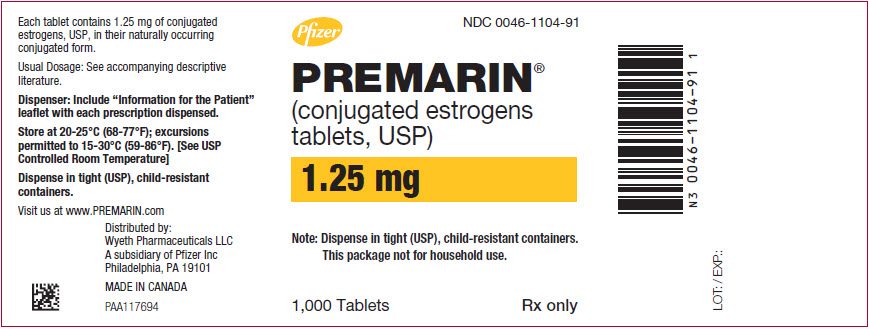
PRINCIPAL DISPLAY PANEL - 1.25 mg Tablet Bottle Label NDC 0046-1104-91 Pfizer PREMARIN ® (conjugated estrogens tablets, USP) 1.25 mg Note: Dispense in tight (USP), child-resistant containers. This package not for household use. 1,000 Tablets Rx only PRINCIPAL DISPLAY PANEL - 1.25 mg Tablet Bottle Label
PRINCIPAL DISPLAY PANEL - 1.25 mg Tablet Bottle Carton NDC 0046-1104-91 Pfizer PREMARIN ® (conjugated estrogens tablets, USP) 1.25 mg Note: Dispense in tight (USP), child-resistant containers. This package not for household use. 1,000 Tablets Rx only PRINCIPAL DISPLAY PANEL - 1.25 mg Tablet Bottle Carton
PRINCIPAL DISPLAY PANEL - 0.3 mg Tablet Bottle Label NDC 0046-1100-91 Pfizer PREMARIN ® (conjugated estrogens tablets, USP) 0.3 mg Note: Dispense in child-resistant packaging. This package not for household use. 1,000 Tablets Rx only PRINCIPAL DISPLAY PANEL - 0.3 mg Tablet Bottle Label
PRINCIPAL DISPLAY PANEL - 0.3 mg Tablet Bottle Carton Pfizer NDC 0046-1100-91 PREMARIN ® (conjugated estrogens tablets, USP) 0.3 mg Note: Dispense in tight (USP), child-resistant containers. This package not for household use. 1,000 Tablets Rx only PRINCIPAL DISPLAY PANEL - 0.3 mg Tablet Bottle Carton
PRINCIPAL DISPLAY PANEL - 0.3 mg Tablet Blister Card NDC 0046-1100-52 PROFESSIONAL SAMPLE - NOT FOR SALE PREMARIN ® 0.3 mg (conjugated estrogens tablets, USP) Blister card contains five 0.3 mg tablets Rx only PRINCIPAL DISPLAY PANEL - 0.3 mg Tablet Blister Card
PRINCIPAL DISPLAY PANEL - 0.9 mg Tablet Bottle Label NDC 0046-1103-81 Pfizer PREMARIN ® (conjugated estrogens tablets, USP) 0.9 mg 100 Tablets Rx only PRINCIPAL DISPLAY PANEL - 0.9 mg Tablet Bottle Label