
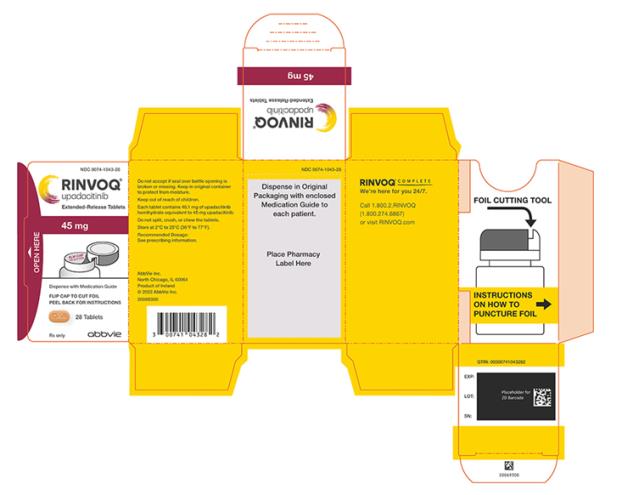
Rinvoq Upadacitinib 45 mg Tablet, Extended Release, 28-count — NDC 0074-1043-28 (Billing 00074-1043-28)
This is a package of 28 tablets of Rinvoq Upadacitinib 45 mg Tablet, Extended Release from AbbVie Inc., marketed since Aug 2019 and currently FDA-listed; retail pharmacies pay about $459.62 per tablet (NADAC). It is the main listing for this product, which comes in 2 package sizes.
NDC database record
One package, one record: these facts belong to NDC 0074-1043-28 alone.
- Record
- FDA NDC Directory package listing · Human prescription drug
- Code segments
- 0074 labeler · 1043 product · 28 package
- Package marketed since
- Mar 16, 2022
- Sample package
- No — commercial package
- Listing certified through
- Dec 31, 2027
- Billing quantity
- 28 EA per package
- Barcode (UPC-A, from the NDC)
- 3 0074104328 2
- Medicaid fills, this package
- 9,790 prescriptions in the last four reported quarters
- FDA record last changed
- Jul 24, 2026
Identity & classification
Regulatory identifiers FDA, NLM and CMS codes for this package
Drug-database identifiers Medi-Span GPI and First Databank GCN / HICL / AHFS classification
- GSN (GCN sequence number): 083196
- GCN: 52085
- GPI-14 (Medi-Span): 66603072007540
- HICL (First Databank): 045955
- AHFS class code: 90:24.12.92
- RxCUI (RxNorm): 2196894
Where does this data come from?
- FDA openFDA NDC Directory · synced Oct 8, 2026
- FDA label on DailyMed · label index refreshed Oct 8, 2026
- RxNorm (NLM RxNav) · catalog refreshed Oct 8, 2026
- Medi-Span GPI (licensed)
- First Databank (licensed) · refreshed Oct 8, 2026
RxNorm drug class
This medicine belongs to the Janus Kinase Inhibitor class.
Where does this data come from?
- RxClass (NLM) · catalog refreshed Oct 8, 2026
Clinical
Upadacitinib is used to treat: rheumatoid arthritis (a condition in which the body attacks its own joints causing pain, swelling, and loss of function) psoriatic arthritis (a condition that causes joint pain and swelling and scales on the skin) eczema (atopic dermatitis; a skin disease that causes the skin to be dry and itchy and to sometimes develop red, scaly rashes) ulcerative colitis (a condition that causes swelling and sores in the lining of the colon [large intestine] and rectum) Crohn's disease (a condition in which the body attacks the lining of the digestive tract, causing pa...
Read the full MedlinePlus article ↗- It treats several inflammatory conditions, including rheumatoid arthritis, psoriatic arthritis, atopic dermatitis, ulcerative colitis, Crohn’s disease, ankylosing spondylitis, and...
- Take it by mouth, with or without food. Swallow Rinvoq tablets whole without crushing, chewing, or splitting. If you use Rinvoq LQ oral solution, measure it with the syringe and ad...
- Common ones are colds and other upper respiratory infections, nausea, cough, fever, headache, acne, and cold sores or shingles. Let me know if they bother you or don’t go away.
- Call for signs of infection like fever, chills, or a cough that won’t quit. Also call for leg swelling or pain, sudden shortness of breath, chest pain, symptoms of stroke, swelling...
Patient education
Supplement & herbal interactions
Some supplements/herbs that may interact with Upadacitinib Hemihydrate — tap one for details:
Where does this data come from?
- MedlinePlus (NLM) · refreshed Oct 8, 2026
- FDA label on DailyMed · label index refreshed Oct 8, 2026
Ask a licensed pharmacist directly — free, answered by our team.
Pricing
A drug doesn't have one price. Each row is a different public payment system, and none is what you'd pay at the counter — that depends on your insurance. The ⓘ on each row explains what it measures.
| Price system | Per ea | Per package |
|---|---|---|
| Retail pharmacies payNADAC · weekly | $459.622 | $12,869.42 / 28 tablets |
| Medicaid paysCMS SDUD · 12 mo | $438.80 | $12,286.29 / 28 tablets |
| Medicare drug plans payPart D · Q2 2026 | $454.75 | $12,732.98 / 28 tablets |
Where does this data come from?
- CMS NADAC weekly file · file of Oct 7, 2026
- CMS ASP pricing files · refreshed Sep 20, 2026
- CMS Medicaid State Drug Utilization Data · through Q1 2026
- CMS Part D plan pricing files · refreshed Sep 24, 2026
- VA National Acquisition Center price file
Packaging — all sizes for this product
| Package NDC | Description | Per unit | Per pack | Marketing start | Marketing end | Status |
|---|---|---|---|---|---|---|
| 00074-1043-14 0074-1043-14 | 14 TABLET, EXTENDED RELEASE in 1 BOTTLE Sample | — | — | 2022-03-16 | — | Active |
| 00074-1043-28 You're viewing this Main listing | 28 TABLET, EXTENDED RELEASE in 1 BOTTLE | $459.62 / ea | $12,869.42 | 2022-03-16 | — | Active |
You're viewing the largest of 2 pack sizes for this product.
In Medicaid, this is the most-dispensed pack of this product — about 100% of fills over the last four reported quarters. See all packs ↓
Pack size FAQ
What quantity is in this package?
How does this package differ from NDC 00074-1043-14?
What NDC number is used to bill for this package of Rinvoq Upadacitinib 45 mg Tablet, Extended Release?
Prices are the latest CMS NADAC pharmacy acquisition cost per NDC; per-pack figures are per-unit × pack quantity, shown only when the pack is denominated in the same measure NADAC prices.
Therapeutic equivalents
| Product | Labeler | Pack | NADAC/unit | TE | Status | Price vs. this |
|---|---|---|---|---|---|---|
| Rinvoq 45 mgthis 00074-1043-28 | AbbVie | 28 tablets | $459.622 | — | Availability likely | — |
Where does this data come from?
- FDA openFDA NDC Directory · synced Oct 8, 2026
- FDA Orange Book · refreshed Oct 3, 2026
- CMS NADAC weekly file · file of Oct 7, 2026
Availability & generic status
We did not find an FDA-approved generic match for this exact strength, form and route. Patent/protection dates below may affect future generic timing.
Why the date isn’t exact: Generic timing can change because patents may be challenged, settled, licensed, added, removed, or worked around with a narrower label — and FDA approval does not always mean a pharmacy can get the generic today.
🛈 What do these terms mean?
- Patent
- Legal protection listed in the Orange Book that may delay generic approval or launch. Issued by the U.S. Patent & Trademark Office.
- Substance patent
- Covers the active drug molecule itself — the hardest to design around. A generic generally can’t launch until it expires.
- Formulation (product) patent
- Covers a specific formulation or dosage form. A generic can sometimes work around it with a different formulation.
- Method-of-use patent
- A patent covering one specific approved use of the drug — not necessarily the whole molecule. A generic can sometimes launch with a “skinny label” that carves out the protected use and keeps the others.
- Skinny label
- A generic label that omits a still-patented use when the FDA allows it — letting a generic reach the market for the unprotected uses.
- Exclusivity
- FDA-granted marketing protection, separate from patents — e.g. 5-yr new chemical entity, 7-yr orphan drug, or a +6-month pediatric extension.
- Paragraph IV
- A generic applicant’s formal challenge to a listed patent. It can potentially lead to earlier generic entry, but often involves litigation or a settlement.
- RLD / RS
- Reference Listed Drug — the brand product the FDA uses as the reference for generic applications. Reference Standard — the product the FDA expects generics to compare against in bioequivalence testing.
- TE / AB rating
- FDA therapeutic-equivalence rating. An AB rating generally means the FDA considers a generic therapeutically equivalent to — and substitutable for — the brand.
- LOE (loss of exclusivity)
- The latest patent or exclusivity currently listed — the loss-of-exclusivity / latest-listed-protection date shown on this page. Paragraph-IV challenges and settlements can move the real date earlier; FDA approval and a manufacturer’s decision to market can move it later.
Built from the FDA Orange Book. The bars above are scaled to each protection’s expiry; the red LOE marker is the last one to lapse.
| Patent | Type | Use code | Expires |
|---|---|---|---|
| US 8962629 ↗ | Drug substance | U-3371 | Jan 15, 2031 |
| US 10550126 ↗ | Method of use | U-3298 | Oct 17, 2036 |
| US 8962629 ↗ | Drug substance | U-3624 | Jan 15, 2031 |
| US 8962629 ↗ | Drug substance | U-3624 | Jan 15, 2031 |
| US 8962629 ↗ | Drug substance | U-3624 | Jan 15, 2031 |
| US 8962629 ↗ | Drug substance | U-3946 | Jan 15, 2031 |
| US 8962629 ↗ | Drug substance | U-3945 | Jan 15, 2031 |
| US 11512092 ↗ | Method of use | U-3946 | Oct 17, 2036 |
| US 11365198 ↗ | Method of use | U-3946 | Oct 17, 2036 |
| US 11773106 ↗ | Method of use | U-3946 | Oct 17, 2036 |
| US 11976077 ↗ | Method of use | U-3298 | Oct 17, 2036 |
| US 11524964 ↗ | Method of use | U-3371 | Oct 17, 2036 |
| US 11607411 ↗ | Method of use | U-4302 | Mar 9, 2038 |
| US 11607411 ↗ | Method of use | U-4302 | Mar 9, 2038 |
| US 11607411 ↗ | Method of use | U-4302 | Mar 9, 2038 |
| US 11564922 ↗ | Method of use | U-4303 | Mar 9, 2038 |
| US 11564922 ↗ | Method of use | U-4303 | Mar 9, 2038 |
| US 11564922 ↗ | Method of use | U-4303 | Mar 9, 2038 |
| US 11365198 ↗ | Method of use | U-3275 | Oct 17, 2036 |
| US 11607411 ↗ | Method of use | U-3341 | Mar 9, 2038 |
| US 11607411 ↗ | Method of use | U-3341 | Mar 9, 2038 |
| US 11607411 ↗ | Method of use | U-3341 | Mar 9, 2038 |
| US 11564922 ↗ | Method of use | U-3624 | Mar 9, 2038 |
| US 11512092 ↗ | Method of use | U-3275 | Oct 17, 2036 |
| US 11512092 ↗ | Method of use | U-3487 | Oct 17, 2036 |
| US 11512092 ↗ | Method of use | U-3371 | Oct 17, 2036 |
| US 11795175 ↗ | Method of use | U-3255 | Oct 17, 2036 |
| US 11535624 ↗ | Method of use | U-3255 | Oct 17, 2036 |
| US 11535625 ↗ | Method of use | U-3298 | Oct 17, 2036 |
| US 11535626 ↗ | Method of use | U-3298 | Oct 17, 2036 |
| US 11773106 ↗ | Method of use | U-3275 | Oct 17, 2036 |
| US 11773106 ↗ | Method of use | U-3487 | Oct 17, 2036 |
| US 11773106 ↗ | Method of use | U-3371 | Oct 17, 2036 |
| US 12365689 ↗ | Method of use | U-3945 | Oct 17, 2036 |
| US 11993605 ↗ | Method of use | U-3275 | Oct 17, 2036 |
| US 11993605 ↗ | Method of use | U-3946 | Oct 17, 2036 |
| US 11993606 ↗ | Method of use | U-3487 | Oct 17, 2036 |
| US 11767326 ↗ | Method of use | U-3298 | Oct 17, 2036 |
| US 11767326 ↗ | Method of use | U-3298 | Oct 17, 2036 |
| US 8962629 ↗ | Drug substance | U-3275 | Jan 15, 2031 |
| US 10995095 ↗ | Method of use | U-3298 | Oct 17, 2036 |
| US 8962629 ↗ | Drug substance | U-3255 | Jan 15, 2031 |
| US 10597400 ↗ | Method of use | U-3255 | Oct 17, 2036 |
| US 11564922 ↗ | Method of use | U-3624 | Mar 9, 2038 |
| US 11564922 ↗ | Method of use | U-3624 | Mar 9, 2038 |
| US 11780848 ↗ | Method of use | U-3371 | Oct 17, 2036 |
| US 8962629 ↗ | Drug substance | U-3341 | Jan 15, 2031 |
| US 8962629 ↗ | Drug substance | U-3341 | Jan 15, 2031 |
| US 8962629 ↗ | Drug substance | U-3341 | Jan 15, 2031 |
| US 12570664 ↗ | Method of use | U-4454 | Oct 17, 2036 |
| US RE47221 ↗ | Drug substance | — | Aug 16, 2033 |
| US 12110298 ↗ | Drug substance | — | Oct 17, 2036 |
| US 11661425 ↗ | Drug substance | — | Oct 17, 2036 |
| US 12091415 ↗ | Drug product | — | Oct 17, 2036 |
| US 10981924 ↗ | Drug product | — | Oct 17, 2036 |
| US 11198697 ↗ | Drug product | — | Oct 17, 2036 |
| US 11661425 ↗ | Drug substance | — | Oct 17, 2036 |
| US 10981923 ↗ | Drug substance | — | Oct 17, 2036 |
| US 12103933 ↗ | Drug product | — | Oct 17, 2036 |
| US 11718627 ↗ | Drug substance | — | Oct 17, 2036 |
| US 11198697 ↗ | Drug product | — | Oct 17, 2036 |
| US 10981923 ↗ | Drug substance | — | Oct 17, 2036 |
| US 10344036 ↗ | Drug product | — | Oct 17, 2036 |
| US 11186584 ↗ | Drug substance | — | Oct 17, 2036 |
| US 11773105 ↗ | Drug substance | — | Oct 17, 2036 |
| US 11680069 ↗ | Drug substance | — | Oct 17, 2036 |
| US 12110298 ↗ | Drug substance | — | Oct 17, 2036 |
| US 10202393 ↗ | Drug product | — | Oct 17, 2036 |
| US RE47221 ↗ | Drug substance | — | Aug 16, 2033 |
| US 11680069 ↗ | Drug substance | — | Oct 17, 2036 |
| US 10981924 ↗ | Drug product | — | Oct 17, 2036 |
| US 11773105 ↗ | Drug substance | — | Oct 17, 2036 |
| US 9951080 ↗ | Drug substance | — | Oct 17, 2036 |
| US 11773105 ↗ | Drug substance | — | Oct 17, 2036 |
| US 12134621 ↗ | Drug product | — | Oct 17, 2036 |
| US 11661425 ↗ | Drug substance | — | Oct 17, 2036 |
| US 12077545 ↗ | Drug product | — | Oct 17, 2036 |
| US RE47221 ↗ | Drug substance | — | Aug 16, 2033 |
| US 11787815 ↗ | Drug product | — | Oct 17, 2036 |
| US 12077545 ↗ | Drug product | — | Oct 17, 2036 |
| US 11780847 ↗ | Drug product | — | Oct 17, 2036 |
| US 9963459 ↗ | Drug product | — | Oct 17, 2036 |
| US 12116373 ↗ | Drug product | — | Oct 17, 2036 |
| US 10730883 ↗ | Drug product | — | Oct 17, 2036 |
| US 11718627 ↗ | Drug substance | — | Oct 17, 2036 |
| US 9951080 ↗ | Drug substance | — | Oct 17, 2036 |
| US 12077545 ↗ | Drug product | — | Oct 17, 2036 |
| US 11718627 ↗ | Drug substance | — | Oct 17, 2036 |
| US 11198697 ↗ | Drug product | — | Oct 17, 2036 |
| US 12110297 ↗ | Drug product | — | Oct 17, 2036 |
| US 9951080 ↗ | Drug substance | — | Oct 17, 2036 |
| US 10981923 ↗ | Drug substance | — | Oct 17, 2036 |
| US 12110298 ↗ | Drug substance | — | Oct 17, 2036 |
| US 11186584 ↗ | Drug substance | — | Oct 17, 2036 |
| US 11680069 ↗ | Drug substance | — | Oct 17, 2036 |
| US 11186584 ↗ | Drug substance | — | Oct 17, 2036 |
| US 10519164 ↗ | Drug product | — | Oct 17, 2036 |
| Code | What it grants | Expires |
|---|---|---|
| I-919 | New indication (3-year) | May 18, 2026 |
| I-946 | New indication (3-year) | Apr 26, 2027 |
| I-966 | New indication (3-year) | Apr 28, 2028 |
| NPP | New Patient Population | Apr 26, 2027 |
| ODE-481 | Orphan Drug Exclusivity (7-year) | Apr 26, 2031 |
| ODE-538 | Orphan Drug Exclusivity (7-year) | Apr 28, 2032 |
| I-919 | New indication (3-year) | May 18, 2026 |
| I-946 | New indication (3-year) | Apr 26, 2027 |
| NPP | New Patient Population | Apr 26, 2027 |
| ODE-481 | Orphan Drug Exclusivity (7-year) | Apr 26, 2031 |
| I-919 | New indication (3-year) | May 18, 2026 |
| I-946 | New indication (3-year) | Apr 26, 2027 |
| NPP | New Patient Population | Apr 26, 2027 |
| ODE-481 | Orphan Drug Exclusivity (7-year) | Apr 26, 2031 |
Is there a generic version of RINVOQ ER 45 MG TABLET?
The FDA approved a generic — why can’t I get it at my pharmacy yet?
Why do different websites show different generic release dates?
What does “FDA listed” mean?
What does a patent or protection date mean here?
What does “current Orange Book estimate” mean?
Can a generic come out before the last patent expires?
Can a generic come out after the listed dates?
What is the difference between patents and exclusivity?
Why are there multiple patent dates?
Where does this data come from?
- FDA Orange Book · refreshed Oct 3, 2026
What it looks like
Where does this data come from?
- FDA label on DailyMed · label index refreshed Oct 8, 2026
Inactive Ingredients / Excipients
Inactive ingredients, also called excipients, are components of the drug product other than the active ingredient. They may include fillers, dyes, coatings, preservatives, flavors, or other formulation ingredients.
🧪 Avoiding an ingredient? See Upadacitinib inactive ingredients by manufacturer: every current product's list side by side, so you can ask your pharmacy for the version that does not list it.
💡 Tap an ingredient (hover on desktop) to see what it is and why it’s used.
-
UNII 1K09F3G675
Ferric oxide red is an inorganic iron compound used as a colorant in medicines. It gives tablets, capsules, or other dosage forms a red or reddish tint for identification and appearance.
-
UNII EX438O2MRT
Ferric oxide yellow is a naturally occurring iron compound used as a colorant in medications. It gives tablets, capsules, and other forms a yellow or golden hue for identification and appearance.
-
UNII 3NXW29V3WO
Hypromellose is a plant-based thickener made from cellulose. It's used in medicines as a binder to hold ingredients together, a coating for tablets, and a thickener for liquids.
-
UNII 70097M6I30
Magnesium stearate is a salt made from magnesium and stearic acid, a fatty substance. It's used in tablets and capsules as a lubricant and glidant to help ingredients flow smoothly during manufacturing and prevent sticking.
-
UNII 3OWL53L36A
A natural sugar alcohol derived from seaweed or synthesized in the lab. It's used as a filler to add bulk, a sweetener in sugar-free formulas, and a disintegrant to help tablets break apart in the stomach.
-
UNII OP1R32D61U
Microcrystalline cellulose is a purified form of cellulose, a natural fiber from plant sources. It acts as a binder and filler in tablets and capsules, helping hold ingredients together and give the medicine its shape and size.
-
UNII 3WJQ0SDW1A
Polyethylene glycol is a synthetic liquid or solid polymer used in medicines as a solvent, lubricant, and humectant. It helps dissolve active ingredients, reduces friction during manufacturing, and retains moisture in the final product.
-
UNII 532B59J990
Polyvinyl alcohol is a synthetic polymer made from plant-derived materials. It's used as a binder to hold ingredients together, a film-former in coatings, and a thickener in liquid formulations.
-
UNII ETJ7Z6XBU4
Silicon dioxide is a naturally occurring mineral used as a glidant and anti-caking agent. It helps powder ingredients flow smoothly and prevents clumping during manufacturing and storage.
-
UNII 7SEV7J4R1U
A powder made from a naturally occurring mineral. In medicines, talc works as a glidant and anti-caking agent, helping tablets and capsules flow smoothly during manufacturing and preventing clumping.
-
UNII W4888I119H
Tartaric acid is a natural organic acid found in grapes and tamarinds. In medicines, it works as a buffer to control acidity, an antioxidant to prevent spoilage, and sometimes a flavoring or binding agent.
-
UNII 15FIX9V2JP
Titanium dioxide is a bright white mineral powder commonly used as a colorant and opacifying agent. It makes pills and tablets white or lighter in color and helps make coatings non-transparent.
12 inactive ingredients listed in the exact product block matched to this NDC.
Where does this data come from?
ingredient classCode="IACT" elements from the exact product block matched by this NDC. Label-section narrative from DailyMed / the openFDA label index is shown separately when available.- FDA label on DailyMed · label index refreshed Oct 8, 2026
- FDA openFDA NDC Directory · synced Oct 8, 2026
Inactive ingredient FAQ
Are inactive ingredients the same for every manufacturer?
Why might an inactive ingredient be missing?
Can inactive ingredients matter?
Manufacturer & labeler
More NDCs from AbbVie Inc. labeler code 00074
- Olaparib 100 mg Tablet, Film Coated NDC 0074-0668-99
- Olaparib 150 mg Tablet, Film Coated NDC 0074-0679-99
- Valproate Semisodium 125 mg Capsule NDC 0074-0805-22
- Humira Adalimumab Kit NDC 0074-0817-02
- Oriahnn Elagolix and Estradiol and Norethisterone Kit NDC 0074-1017-14
- Survanta Beractant 25 mg/mL Suspension NDC 0074-1040-04
- EMRELIS Telisotuzumab Vedotin 20 mg/mL Injection, Powder, Lyophilized, For Solution NDC 0074-1044-01
- Skyrizi risankizumab-rzaa 150 mg/mL Injection NDC 0074-1050-01
- EMRELIS Telisotuzumab Vedotin 100 mg/mL Injection, Powder, Lyophilized, For Solution NDC 0074-1055-01
- RISANKIZUMAB 150 mg/mL Injection, Solution NDC 0074-1058-00
- Risankizumab 6396 g/6396g Liquid NDC 0074-1059-99
- Skyrizi Risankizumab-rzaa Kit NDC 0074-1065-01
Where does this data come from?
- FDA openFDA NDC Directory · synced Oct 8, 2026
- Drugs@FDA
Full prescribing information FDA SPL
🚨 Boxed Warning ▾
WARNING: SERIOUS INFECTIONS, MORTALITY, MALIGNANCY, MAJOR ADVERSE CARDIOVASCULAR EVENTS, and THROMBOSIS SERIOUS INFECTIONS Patients treated with RINVOQ /RINVOQ LQ are at increased risk for developing serious infections that may lead to hospitalization or death [see Warnings and Precautions ( 5.1 ), Adverse Reactions ( 6.1 )]. Most patients who developed these infections were taking concomitant immunosuppressants such as methotrexate or corticosteroids. If a serious infection develops, interrupt RINVOQ /RINVOQ LQ until the infection is controlled.
Reported infections include: Active tuberculosis, which may present with pulmonary or extrapulmonary disease. Patients should be tested for latent tuberculosis before RINVOQ /RINVOQ LQ use and during therapy. Treatment for latent infection should be considered prior to RINVOQ /RINVOQ LQ use.
Invasive fungal infections, including cryptococcosis and pneumocystosis. Bacterial, viral, including herpes zoster, and other infections due to opportunistic pathogens. The risks and benefits of treatment with RINVOQ /RINVOQ LQ should be carefully considered prior to initiating therapy in patients with chronic or recurrent infection.
Patients should be closely monitored for the development of signs and symptoms of infection during and after treatment with RINVOQ /RINVOQ LQ , including the possible development of tuberculosis in patients who tested negative for latent tuberculosis infection prior to initiating therapy [see Warnings and Precautions ( 5.1 )]. MORTALITY In a large, randomized, postmarketing safety study in rheumatoid arthritis (RA) patients 50 years of age and older with at least one cardiovascular risk factor comparing another Janus kinase (JAK) inhibitor to tumor necrosis factor (TNF) blockers, a higher rate of all-cause mortality, including sudden cardiovascular death, was observed with the JAK inhibitor [see Warnings and Precautions ( 5.2 )] .
MALIGNANCIES Lymphoma and other malignancies have been observed in patients treated with RINVOQ . In RA patients treated with another JAK inhibitor, a higher rate of malignancies (excluding non-melanoma skin cancer (NMSC)) was observed when compared with TNF blockers. Patients who are current or past smokers are at additional increased risk [see Warnings and Precautions ( 5.3 )] .
MAJOR ADVERSE CARDIOVASCULAR EVENTS In RA patients 50 years of age and older with at least one cardiovascular risk factor treated with another JAK inhibitor, a higher rate of major adverse cardiovascular events (MACE) (defined as cardiovascular death, myocardial infarction, and stroke), was observed when compared with TNF blockers. Patients who are current or past smokers are at additional increased risk. Discontinue RINVOQ /RINVOQ LQ in patients that have experienced a myocardial infarction or stroke [see Warnings and Precautions ( 5.4 )] .
THROMBOSIS Thrombos e s, including deep venous thrombosis, pulmonary embolism, and arterial thrombosis , have occurred in patients treated for inflammatory conditions with J AK inhibitors , including RINVOQ . Many of these adverse events were serious and some resulted in death. In RA patients 50 years of age and older with at least one cardiovascular risk factor treated with another JAK inhibitor, a higher rate of thrombosis was observed when compared with TNF blockers.
Avoid RINVOQ /RINVOQ LQ in patients at risk. Patients with symptoms of thrombosis should discontinue RINVOQ /RINVOQ LQ and be promptly evaluated [see Warnings and Precautions ( 5.5 )]. WARNING: SERIOUS INFECTIONS, MORTALITY, MALIGNANCY, MAJOR ADVERSE CARDIOVASCULAR EVENTS (MACE), and THROMBOSIS See full prescribing information for complete boxed warning.
Increased risk of serious bacterial, fungal, viral, and opportunistic infections leading to hospitalization or death, including tuberculosis (TB). Interrupt treatment with RINVOQ / RINVOQ LQ if serious infection occurs until the infection is controlled. Test for latent TB before and during therapy; treat latent… [Excerpted — this section continues on DailyMed.]
🎯 Indications and Usage ▾
1 INDICATIONS AND USAGE RINVOQ/RINVOQ LQ is a Janus kinase (JAK) inhibitor. RINVOQ is indicated for the treatment of adults with moderately to severely active rheumatoid arthritis who have had an inadequate response or intolerance to one or more TNF blockers. ( 1.1 ) Limitations of Use RINVOQ is not recommended for use in combination with other JAK inhibitors, biologic DMARDs, or with potent immunosuppressants such as azathioprine and cyclosporine.
( 1.1 ) RINVOQ/RINVOQ LQ is indicated for the treatment of adults and pediatric patients 2 years of age and older with active psoriatic arthritis who have had an inadequate response or intolerance to one or more TNF blockers. ( 1.2 ) Limitation s of Use RINVOQ/RINVOQ LQ is not recommended for use in combination with other JAK inhibitors, biologic DMARDs, or with potent immunosuppressants such as azathioprine and cyclosporine. ( 1.2 ) RINVOQ is indicated for the treatment of adults and pediatric patients 12 years of age and older with refractory, moderate to severe atopic dermatitis whose disease is not adequately controlled with other systemic drug products, including biologics, or when use of those therapies are inadvisable.
( 1.3 ) Limitations of Use RINVOQ is not recommended for use in combination with other JAK inhibitors, biologic immunomodulators, or with other immunosuppressants. ( 1.3 ) RINVOQ is indicated for the treatment of adults with moderately to severely active ulcerative colitis (UC) who have had an inadequate response or intolerance to one or more TNF blockers. If TNF blockers are clinically inadvisable, patients should have received at least one approved systemic therapy prior to use of RINVOQ.
( 1.4 ) Limitations of Use RINVOQ is not recommended for use in combination with other JAK inhibitors, biological therapies for UC, or with potent immunosuppressants such as azathioprine and cyclosporine. ( 1.4 ) RINVOQ is indicated for the treatment of adults with moderately to severely active Crohn’s disease (CD) who have had an inadequate response or intolerance to one or more TNF blockers. If TNF blockers are clinically inadvisable, patients should have received at least one approved systemic therapy prior to use of RINVOQ.
( 1.5 ) Limitations of Use RINVOQ is not recommended for use in combination with other JAK inhibitors, biological therapies for CD, or with potent immunosuppressants such as azathioprine and cyclosporine. ( 1.5 ) RINVOQ is indicated for the treatment of adults with active ankylosing spondylitis who have had an inadequate response or intolerance to one or more TNF blockers. ( 1.6 ) Limitations of Use RINVOQ is not recommended for use in combination with other JAK inhibitors, biologic DMARDs, or with potent immunosuppressants such as azathioprine and cyclosporine.
( 1.6 ) RINVOQ is indicated for the treatment of adults with active non-radiographic axial spondyloarthritis with objective signs of inflammation who have had an inadequate response or intolerance to TNF blocker therapy. ( 1.7 ) Limitations of Use RINVOQ is not recommended for use in combination with other JAK inhibitors, biologic DMARDs, or with potent immunosuppressants such as azathioprine and cyclosporine. ( 1.7 ) RINVOQ/RINVOQ LQ is indicated for the treatment of patients 2 years of age and older with active polyarticular juvenile idiopathic arthritis who have had an inadequate response or intolerance to one or more TNF blockers.
( 1.8 ) Limitations of Use RINVOQ/RINVOQ LQ is not recommended for use in combination with other JAK inhibitors, biologic DMARDs, or with potent immunosuppressants such as azathioprine and cyclosporine. ( 1.8 ) RINVOQ is indicated for the treatment of adults with giant cell arteritis ( 1.9 ) Limitations of Use RINVOQ is not recommended for use in combination with other JAK inhibitors, biologic DMARDs, or with potent immunosuppressants such as azathioprine and cyclosporine. ( 1.9 )
1.1Rheumatoid Arthritis RINVOQ ® is indicated for the treatment of adults with mod… [Excerpted — this section continues on DailyMed.]
⏱️ Dosage and Administration ▾
2 DOSAGE AND ADMINISTRATION RINVOQ LQ oral solution is not substitutable with RINVOQ extended-release tablets ( 2.2 , 2.10 ). Changes between RINVOQ LQ oral solution and RINVOQ extended-release tablets should be made by the healthcare provider. Prior to treatment update immunizations and consider evaluating for active and latent tuberculosis, viral hepatitis, hepatic function, and pregnancy status ( 2.1 ) Avoid initiation or interrupt RINVOQ/RINVOQ LQ if absolute lymphocyte count is less than 500 cells/mm 3 , absolute neutrophil count is less than 1000 cells/mm 3 , or hemoglobin level is less than 8 g/dL.
( 2.1 , 2.14 ) Rheumatoid Arthritis , Ankylosing Spondylitis, and Non-radiographic Axial Spondyloarthritis Adults: The recommended dosage of RINVOQ is 15 mg once daily. ( 2.3 , 2.8 , 2.9 ) Psoriatic Arthritis Pediatric Patients 2 to less than 18 Years of Age Weighing at Least 10 kg: The recommended dosage is based on body weight ( 2.4 ) Adults: The recommended dosage of RINVOQ is 15 mg once daily. ( 2.4 ) Atopic Dermatitis Pediatric Patients 12 Years of Age and Older Weighing at Least 40 kg and Adults Less Than 65 Years of Age : Initiate treatment with RINVOQ 15 mg orally once daily.
If an adequate response is not achieved, consider increasing the dosage to 30 mg orally once daily. ( 2.5 ) Adults 65 Years of Age and Older : Recommended dosage of RINVOQ is 15 mg once daily. ( 2.5 ) Severe Renal Impairment : Recommended dosage of RINVOQ is 15 mg once daily.
( 2.12 ) Ulcerative Colitis Adults: The recommended induction dosage of RINVOQ is 45 mg once daily for 8 weeks. The recommended maintenance dosage of RINVOQ is 15 mg once daily. A maintenance dosage of 30 mg once daily may be considered for patients with refractory, severe, or extensive disease.
Discontinue RINVOQ if adequate therapeutic response is not achieved with the 30 mg dosage. Use the lowest effective dosage needed to maintain response. ( 2.6 ) See the Full Prescribing Information for the recommended dosage in patients with renal or hepatic impairment and for dosage modification due to drug interactions.
( 2.12 , 2.13 ) Crohn’s D isease Adults: The recommended induction dosage of RINVOQ is 45 mg once daily for 12 weeks. The recommended maintenance dosage of RINVOQ is 15 mg once daily. A maintenance dosage of 30 mg once daily may be considered for patients with refractory, severe, or extensive disease.
Discontinue RINVOQ if an adequate therapeutic response is not achieved with the 30 mg dosage. Use the lowest effective dosage needed to maintain response. ( 2.7 ) See the Full Prescribing Information for the recommended dosage in patients with renal or hepatic impairment and for dosage modification due to drug interactions.
( 2.12 , 2.13 ) Polyarticular Juvenile Idiopathic Arthritis The recommended dosage is based on body weight ( 2.10 ) Giant Cell Arteritis The recommended dosage of RINVOQ is 15 mg once daily in combination with a tapering course of corticosteroids. RINVOQ 15 mg once daily can be used as monotherapy following discontinuation of corticosteroids ( 2.11 )
2.1Recommended Evaluations and Immunizations Prior to Treatment Initiation Prior to RINVOQ/RINVOQ LQ treatment initiation, consider performing the following evaluations: Active and latent tuberculosis (TB) infection evaluation - If positive, treat for TB prior to RINVOQ/RINVOQ LQ use [see Warnings and Precautions ( 5.1 )] . Viral hepatitis screening in accordance with clinical guidelines – RINVOQ/RINVOQ LQ initiation is not recommended in patients with active hepatitis B or hepatitis C [see Warnings and Precautions ( 5.1 )] .
A complete blood count – RINVOQ/RINVOQ LQ initiation is not recommended in patients with an absolute lymphocyte count less than 500 cells/mm 3 , absolute neutrophil count less than 1000 cells/mm 3 , or hemoglobin level less than 8 g/dL [see Dosage and Administration ( 2.14 ) and Warnings and Precautions ( 5.9 )] . Baseline hepatic function: RINVOQ/RINVOQ LQ initiation is not recomm… [Excerpted — this section continues on DailyMed.]
💊 Dosage Forms and Strengths ▾
3 DOSAGE FORMS AND STRENGTHS RINVOQ extended-release tablets: 15 mg upadacitinib: purple, biconvex oblong, with dimensions of 14 x 8 mm, and debossed with ‘a15’ on one side. 30 mg upadacitinib: red, biconvex oblong, with dimensions of 14 x 8 mm, and debossed with ‘a30’ on one side. 45 mg upadacitinib: yellow to mottled yellow, biconvex oblong, with dimensions of 14 x 8 mm, and debossed with ‘a45’ on one side.
RINVOQ LQ oral solution: 1 mg/mL upadacitinib; clear, colorless to light yellow solution in bottle of 180 mL. RINVOQ extended-release tablets: 15 mg, 30 mg, and 45 mg ( 3 ) RINVOQ LQ oral solution: 1 mg/mL ( 3 )
⛔ Contraindications ▾
4 CONTRAINDICATIONS RINVOQ/RINVOQ LQ is contraindicated in patients with known hypersensitivity to upadacitinib or any of its excipients [see Warnings and Precautions ( 5.6 )] . Known hypersensitivity to upadacitinib or any of the excipients in RINVOQ/RINVOQ LQ. ( 4 , 5.6 )
⚠️ Warnings and Cautions ▾
5 WARNINGS AND PRECAUTIONS Serious Infections : Avoid use in patients with active, serious infection, including localized infections. ( 5.1 ) Hypersensitivity : Serious hypersensitivity reactions (e.g., anaphylaxis) have been reported. Discontinue if a serious hypersensitivity reaction occurs.
( 5.6 ) Gastrointestinal (GI) Perforations : Monitor patients at risk for GI perforations and promptly evaluate patients with symptoms. ( 5.7 ) Hypoglycemia in Patients with Diabetes: Consider increased monitoring of blood glucose; advise patients with diabetes to notify their healthcare provider if they develop signs or symptoms of hypoglycemia. ( 5.8 ) Laboratory Abnormalities : Monitoring recommended due to potential changes in lymphocytes, neutrophils, hemoglobin, liver enzymes and lipids.
( 5.9 ) Embryo-Fetal Toxicity : May cause fetal harm based on animal studies. Advise female patients of reproductive potential of the potential risk to a fetus and to use effective contraception. ( 5.10 , 8.1 , 8.3 ) Vaccinations : Avoid use with live vaccines.
( 5.11 ) Medication Residue in Stool : Observed in stool or ostomy output in patients with shortened GI transit times. Monitor patients clinically and consider alternative treatment if inadequate therapeutic response. ( 5.12 )
5.1Serious Infections Serious and sometimes fatal infections have been reported in patients receiving RINVOQ. The most frequent serious infections reported with RINVOQ included pneumonia and cellulitis [see Adverse Reactions ( 6.1 )] . Among opportunistic infections, tuberculosis, multidermatomal herpes zoster, oral/esophageal candidiasis, and cryptococcosis, were reported with RINVOQ.
A higher rate of serious infections was observed with RINVOQ 30 mg compared to RINVOQ 15 mg. Avoid use of RINVOQ/RINVOQ LQ in patients with an active, serious infection, including localized infections. Consider the risks and benefits of treatment prior to initiating RINVOQ/RINVOQ LQ in patients: with chronic or recurrent infection who have been exposed to tuberculosis with a history of a serious or an opportunistic infection who have resided or traveled in areas of endemic tuberculosis or endemic mycoses; or with underlying conditions that may predispose them to infection.
Closely monitor patients for the development of signs and symptoms of infection during and after treatment with RINVOQ/RINVOQ LQ. Interrupt RINVOQ/RINVOQ LQ if a patient develops a serious or opportunistic infection. A patient who develops a new infection during treatment with RINVOQ/RINVOQ LQ should undergo prompt and complete diagnostic testing appropriate for an immunocompromised patient; appropriate antimicrobial therapy should be initiated, the patient should be closely monitored, and RINVOQ/RINVOQ LQ should be interrupted if the patient is not responding to antimicrobial therapy.
RINVOQ/RINVOQ LQ may be resumed once the infection is controlled. Tuberculosis Evaluate and test patients for latent and active tuberculosis (TB) infection prior to administration of RINVOQ/RINVOQ LQ. Patients with latent TB should be treated with standard antimycobacterial therapy before initiating RINVOQ/RINVOQ LQ.
RINVOQ/RINVOQ LQ should not be given to patients with active TB. Consider anti-TB therapy prior to initiation of RINVOQ/RINVOQ LQ in patients with previously untreated latent TB or active TB in whom an adequate course of treatment cannot be confirmed, and for patients with a negative test for latent TB but who have risk factors for TB infection. Consultation with a physician with expertise in the treatment of TB is recommended to aid in the decision about whether initiating anti-TB therapy is appropriate for an individual patient.
During RINVOQ/RINVOQ LQ use, monitor patients for the development of signs and symptoms of TB, including patients who tested negative for latent TB infection prior to initiating therapy. Viral R eactivation Viral reactivation, including cases of herpes virus reactivation (e.g., herpes zoster) and… [Excerpted — this section continues on DailyMed.]
🤒 Adverse Reactions ▾
6 ADVERSE REACTIONS The following clinically significant adverse reactions are described elsewhere in the labeling: Serious Infections [see Warnings and Precautions ( 5.1 )] Mortality [see Warnings and Precautions ( 5.2 )] Malignancy and Lymphoproliferative Disorders [see Warnings and Precautions ( 5.3 )] Major Adverse Cardiovascular Events [see Warnings and Precautions ( 5.4 )] Thrombosis [see Warnings and Precautions ( 5.5 )] Hypersensitivity Reactions [see Warnings and Precautions ( 5.6 )] Gastrointestinal Perforations [see Warnings and Precautions ( 5.7 )] Hypoglycemia in Patients with Diabetes [see Warnings and Precautions ( 5.8 )] Laboratory Abnormalities [see Warnings and Precautions ( 5.9 )] Rheumatoid arthritis , psoriatic arthritis , ankylosi ng spondylitis , and n on-radiographic a xial s pondyloarthritis : Adverse reactions (≥ 1%) were: upper respiratory tract infections, herpes zoster, herpes simplex, bronchitis, nausea, cough, pyrexia, acne, and headache.
( 6.1 ) Giant cell arteritis : Adverse reactions (≥ 5%) are upper respiratory tract infections, headache, fatigue, peripheral edema, cough, anemia, rash, herpes zoster, and nausea. ( 6.1 ) Atopic d ermatitis : Adverse reactions (≥ 1%) are: upper respiratory tract infections, acne, herpes simplex, headache, blood creatine phosphokinase increased, cough, hypersensitivity, folliculitis, nausea, abdominal pain, pyrexia, increased weight, herpes zoster, influenza, fatigue, neutropenia, myalgia, and influenza like illness.
( 6.1 ) Ulcerative colitis : Adverse reactions (≥ 5%) reported during induction or maintenance are: upper respiratory tract infections, increased blood creatine phosphokinase, acne, neutropenia, elevated liver enzymes, pyrexia, and rash. ( 6.1 ) Crohn’s disease : Adverse reactions (≥ 5%) reported during induction or maintenance are: upper respiratory tract infections, anemia, pyrexia, acne, herpes zoster, and headache. ( 6.1 ) To report SUSPECTED ADVERSE REACTIONS, contact AbbVie Inc. at 1-800-633-9110 or FDA at 1-800-FDA-1088 or www.fda.gov/medwatch.
6.1Clinical Trials Experience Because clinical trials are conducted under widely varying conditions, adverse reaction rates observed in the clinical trials of a drug cannot be directly compared to rates in the clinical trials of another drug and may not reflect the rates observed in practice. Adverse Reactions in Patients with Rheumatoid Arthritis A total of 3833 adult patients with rheumatoid arthritis were treated with RINVOQ 15 mg or upadacitinib 30 mg tablets once daily in the Phase 3 clinical trials of whom 2806 were exposed for at least one year.
Patients could advance or switch to RINVOQ 15 mg from placebo, or be rescued to RINVOQ from active comparator or placebo from as early as Week 12 depending on the trial design. A total of 2630 patients received at least 1 dose of RINVOQ 15 mg, of whom 1860 were exposed for at least one year. In trials RA-I, RA-II, RA-III and RA-V, 1213 patients received at least 1 dose of RINVOQ 15 mg, of which 986 patients were exposed for at least one year, and 1203 patients received at least 1 dose of upadacitinib 30 mg, of which 946 were exposed for at least one year.
Table 4: Adverse Reactions Reported in ≥ 1% of Rheumatoid Arthritis Patients Treated with RINVOQ 15 mg in Placebo-controlled Trials Adverse Reaction Placebo RINVOQ 15 mg N = 1042 (%) N = 1035 (%) Upper respiratory tract infection (URTI)* 9.5
13.5Nausea 2.2
3.5Cough 1.0
2.2Pyrexia 0 1.2 *URTI includes: acute sinusitis, laryngitis, nasopharyngitis, oropharyngeal pain, pharyngitis, pharyngotonsillitis, rhinitis, sinusitis, tonsillitis, viral upper respiratory tract infection Other adverse reactions reported in less than 1% of patients in the RINVOQ 15 mg group and at a higher rate than in the placebo group through Week 12 included pneumonia, herpes zoster, herpes simplex (includes oral herpes), and oral candidiasis. Four integrated datasets are presented in the Specific Adverse Reaction section: Placeb… [Excerpted — this section continues on DailyMed.]
🔄 Drug Interactions ▾
7 DRUG INTERACTIONS Strong CYP3A4 Inhibitors : See the Full Prescribing Information for dosage modification for patients with atopic dermatitis, ulcerative colitis, and Crohn’s disease. ( 2.13 , 7.1 ) Strong CYP3A4 Inducers : Coadministration of RINVOQ/RINVOQ LQ with strong CYP3A4 inducers is not recommended. ( 7.2 )
7.1Strong CYP3A4 Inhibitors Upadacitinib exposure is increased when it is co-administered with a strong CYP3A4 inhibitor (such as ketoconazole, clarithromycin, and grapefruit), which may increase the risk of adverse reactions [see Clinical Pharmacology ( 12.3 )] . Monitor patients with rheumatoid arthritis, psoriatic arthritis, ankylosing spondylitis, non-radiographic axial spondylarthritis, pJIA, or giant cell arteritis closely for adverse reactions when co-administering RINVOQ/RINVOQ LQ with strong CYP3A4 inhibitors.
Food or drink containing grapefruit should be avoided during treatment with RINVOQ/RINVOQ LQ. For patients with atopic dermatitis, coadministration of RINVOQ 30 mg once daily with strong CYP3A4 inhibitors is not recommended. For patients with ulcerative colitis or Crohn’s disease taking strong CYP3A4 inhibitors, reduce the RINVOQ induction dosage to 30 mg once daily.
The recommended maintenance dosage is 15 mg once daily [see Dosage and Administration ( 2.13 )] .
7.2Strong CYP3A4 Inducers Upadacitinib exposure is decreased when it is co-administered with strong CYP3A4 inducers (such as rifampin), which may lead to reduced therapeutic effect [see Clinical Pharmacology ( 12.3 )] . Coadministration of RINVOQ/RINVOQ LQ with strong CYP3A4 inducers is not recommended.
👥 Use in Specific Populations ▾
8 USE IN SPECIFIC POPULATIONS Lactation : Advise not to breastfeed. ( 8.2 ) Hepatic Impairment : RINVOQ/RINVOQ LQ is not recommended in patients with severe hepatic impairment. ( 8.7 )
8.1Pregnancy Pregnancy Surveillance Program There is a pregnancy surveillance program for RINVOQ/RINVOQ LQ that monitors pregnancy outcomes in women exposed to RINVOQ/RINVOQ LQ. If RINVOQ/RINVOQ LQ exposure occurs during pregnancy, healthcare providers or patients should report the pregnancy by calling 1-800-633-9110. Risk Summary Available data from the pharmacovigilance safety database and postmarketing case reports on use of RINVOQ in pregnant women are not sufficient to evaluate a drug-associated risk for major birth defects or miscarriage.
Based on animal studies, RINVOQ/RINVOQ LQ has the potential to adversely affect a developing fetus. Advise patients of reproductive potential and pregnant patients of the potential risk to the fetus. In animal embryo-fetal development studies, oral upadacitinib administration to pregnant rats and rabbits at exposures equal to or greater than approximately 1.6 and 15 times the 15 mg tablet dose, 0.8 and 7.6 times the 30 mg tablet dose, and 0.6 and 5.6 times the maximum recommended human dose (MRHD) of 45 mg (on an AUC basis) resulted in dose-related increases in skeletal malformations (rats only), an increased incidence of cardiovascular malformations (rabbits only), increased post-implantation loss (rabbits only), and decreased fetal body weights in both rats and rabbits.
No developmental toxicity was observed in pregnant rats and rabbits treated with oral upadacitinib during organogenesis at exposures approximately 0.29 and 2.2 times the 15 mg dose, 0.15 times and 1.1 times the 30 mg dose, and at 0.11 and 0.82 times the MRHD (on an AUC basis). In a pre- and post-natal development study in pregnant female rats, oral upadacitinib administration at exposures approximately 3 times the 15 mg dose, 1.4 times the 30 mg dose, and the same as the MRHD (on an AUC basis) resulted in no maternal or developmental toxicity ( see Data ) .
The background risks of major birth defects and miscarriage for the indicated populations are unknown. All pregnancies have a background risk of birth defect, loss, or other adverse outcomes. In the U.S. general population, the estimated background risk of major birth defects and miscarriages are 2-4% and 15-20%, respectively.
Clinical Considerations Disease-Associated Maternal and/or Embryo/Fetal Risk Published data suggest that increased disease activity is associated with the risk of developing adverse pregnancy outcomes in women with rheumatoid arthritis or inflammatory bowel disease. Adverse pregnancy outcomes include preterm delivery (before 37 weeks of gestation), low birth weight (less than 2500 g) infants, and small for gestational age at birth. Data Animal Data In an oral embryo-fetal development study, pregnant rats received upadacitinib at doses of 5, 25, and 75 mg/kg/day during the period of organogenesis from gestation day 6 to 17.
Upadacitinib was teratogenic (skeletal malformations that consisted of misshapen humerus and bent scapula) at exposures equal to or greater than approximately 1.7 times the 15 mg tablet dose, 0.9 times the 30 mg tablet dose, and 0.6 times the MRHD (on an AUC basis at maternal oral doses of 5 mg/kg/day and higher). Additional skeletal malformations (bent forelimbs/hindlimbs and rib/vertebral defects) and decreased fetal body weights were observed in the absence of maternal toxicity at an exposure approximately 84 times the 15 mg dose, 43 times the 30 mg dose, and 31 times the MRHD (on an AUC basis at a maternal oral dose of 75 mg/kg/day).
In a second oral embryo-fetal development study, pregnant rats received upadacitinib at doses of 1.5 and 4 mg/kg/day during the period of organogenesis from gestation day 6 to 17. Upadacitinib was teratogenic (skeletal malformations that included bent humerus and scapula) at exposures approximately 1.6 times… [Excerpted — this section continues on DailyMed.]
🤰 Pregnancy ▾
8.1Pregnancy Pregnancy Surveillance Program There is a pregnancy surveillance program for RINVOQ/RINVOQ LQ that monitors pregnancy outcomes in women exposed to RINVOQ/RINVOQ LQ. If RINVOQ/RINVOQ LQ exposure occurs during pregnancy, healthcare providers or patients should report the pregnancy by calling 1-800-633-9110. Risk Summary Available data from the pharmacovigilance safety database and postmarketing case reports on use of RINVOQ in pregnant women are not sufficient to evaluate a drug-associated risk for major birth defects or miscarriage.
Based on animal studies, RINVOQ/RINVOQ LQ has the potential to adversely affect a developing fetus. Advise patients of reproductive potential and pregnant patients of the potential risk to the fetus. In animal embryo-fetal development studies, oral upadacitinib administration to pregnant rats and rabbits at exposures equal to or greater than approximately 1.6 and 15 times the 15 mg tablet dose, 0.8 and 7.6 times the 30 mg tablet dose, and 0.6 and 5.6 times the maximum recommended human dose (MRHD) of 45 mg (on an AUC basis) resulted in dose-related increases in skeletal malformations (rats only), an increased incidence of cardiovascular malformations (rabbits only), increased post-implantation loss (rabbits only), and decreased fetal body weights in both rats and rabbits.
No developmental toxicity was observed in pregnant rats and rabbits treated with oral upadacitinib during organogenesis at exposures approximately 0.29 and 2.2 times the 15 mg dose, 0.15 times and 1.1 times the 30 mg dose, and at 0.11 and 0.82 times the MRHD (on an AUC basis). In a pre- and post-natal development study in pregnant female rats, oral upadacitinib administration at exposures approximately 3 times the 15 mg dose, 1.4 times the 30 mg dose, and the same as the MRHD (on an AUC basis) resulted in no maternal or developmental toxicity ( see Data ) .
The background risks of major birth defects and miscarriage for the indicated populations are unknown. All pregnancies have a background risk of birth defect, loss, or other adverse outcomes. In the U.S. general population, the estimated background risk of major birth defects and miscarriages are 2-4% and 15-20%, respectively.
Clinical Considerations Disease-Associated Maternal and/or Embryo/Fetal Risk Published data suggest that increased disease activity is associated with the risk of developing adverse pregnancy outcomes in women with rheumatoid arthritis or inflammatory bowel disease. Adverse pregnancy outcomes include preterm delivery (before 37 weeks of gestation), low birth weight (less than 2500 g) infants, and small for gestational age at birth. Data Animal Data In an oral embryo-fetal development study, pregnant rats received upadacitinib at doses of 5, 25, and 75 mg/kg/day during the period of organogenesis from gestation day 6 to 17.
Upadacitinib was teratogenic (skeletal malformations that consisted of misshapen humerus and bent scapula) at exposures equal to or greater than approximately 1.7 times the 15 mg tablet dose, 0.9 times the 30 mg tablet dose, and 0.6 times the MRHD (on an AUC basis at maternal oral doses of 5 mg/kg/day and higher). Additional skeletal malformations (bent forelimbs/hindlimbs and rib/vertebral defects) and decreased fetal body weights were observed in the absence of maternal toxicity at an exposure approximately 84 times the 15 mg dose, 43 times the 30 mg dose, and 31 times the MRHD (on an AUC basis at a maternal oral dose of 75 mg/kg/day).
In a second oral embryo-fetal development study, pregnant rats received upadacitinib at doses of 1.5 and 4 mg/kg/day during the period of organogenesis from gestation day 6 to 17. Upadacitinib was teratogenic (skeletal malformations that included bent humerus and scapula) at exposures approximately 1.6 times the 15 mg dose, 0.8 times the 30 mg dose, and 0.6 times the MRHD (on an AUC basis at maternal oral doses of 4 mg/kg/day). No developmental toxicity was observed in rats at an exposure a… [Excerpted — this section continues on DailyMed.]
🧒 Pediatric Use ▾
8.4Pediatric Use Ankylosing Spondylitis , Non-radiographic Axial Spondyloarthritis , Ulcerative Colitis, and Crohn’s Disease The safety and effectiveness of RINVOQ/RINVOQ LQ in pediatric patients with ankylosing spondylitis, non-radiographic axial spondyloarthritis, ulcerative colitis, or Crohn’s disease have not been established. Polyarticular Juvenile Idiopathic Arthritis and Psoriatic Arthritis The safety and effectiveness of RINVOQ/RINVOQ LQ in pediatric patients 2 to less than 18 years of age with pJIA and psoriatic arthritis have been established.
The use of RINVOQ/RINVOQ LQ in these age groups is supported by evidence from well-controlled studies of RINVOQ in adults with rheumatoid arthritis and psoriatic arthritis, pharmacokinetic data from adult patients with rheumatoid arthritis and psoriatic arthritis and 51 pediatric patients with JIA with active polyarthritis, and safety data from 83 pediatric patients 2 to < 18 years of age with JIA with active polyarthritis. Upadacitinib plasma exposures in pediatric patients with pJIA and psoriatic arthritis at the recommended dosage are predicted to be comparable to those observed in adults with rheumatoid arthritis and psoriatic arthritis based on population pharmacokinetic modeling and simulation [see Dosage and Administration ( 2.4 , 2.10 ), Adverse Reactions ( 6.1 ), Clinical Pharmacology ( 12.3 ) and Clinical Studies ( 14.8 )] .
The safety and effectiveness of RINVOQ/RINVOQ LQ in pediatric patients less than 2 years of age with pJIA or psoriatic arthritis have not been established. Atopic Dermatitis The safety and effectiveness of RINVOQ in pediatric patients 12 years of age and older weighing at least 40 kg with atopic dermatitis have been established. A total of 344 pediatric patients aged 12 to 17 years with moderate to severe atopic dermatitis were randomized across three trials (AD-1, AD-2 and AD-3) to receive either RINVOQ 15 mg (N=114) or 30 mg (N=114) or matching placebo (N=116) in monotherapy or combination with topical corticosteroids.
Efficacy was consistent between the pediatric patients and adults [ see Clinical Studies ( 14.3 )] . The adverse reaction profile in the pediatric patients was similar to the adults [see Adverse Reactions ( 6.1 )]. The safety and effectiveness of RINVOQ in pediatric patients less than 12 years of age with atopic dermatitis have not been established.
The safety and effectiveness of RINVOQ LQ in pediatric patients with atopic dermatitis have not been established.
🧓 Geriatric Use ▾
8.5Geriatric Use Rheumatoid Arthritis and Psoriatic Arthritis Of the 4381 patients treated in the five clinical trials, a total of 906 rheumatoid arthritis patients were 65 years of age or older, including 146 patients 75 years and older. Of the 1827 patients treated in the two psoriatic arthritis Phase 3 clinical trials, a total of 274 patients were 65 years of age or older, including 34 patients 75 years and older. No differences in effectiveness were observed between these patients and younger patients; however, there was a higher rate of overall adverse events, including serious infections, in patients 65 years of age and older.
Atopic Dermatitis Of the 2583 patients treated in the three Phase 3 clinical trials, a total of 120 patients with atopic dermatitis were 65 years of age or older, including 6 patients 75 years of age. No differences in effectiveness were observed between these patients and younger patients; however, there was a higher rate of serious infections and malignancies in those patients 65 years of age or older in the 30 mg dosing group in the long-term trials. Ulcerative Colitis Of the 1097 patients treated in the controlled clinical trials, a total of 95 patients with ulcerative colitis were 65 years and older.
Clinical studies of RINVOQ did not include sufficient numbers of patients 65 years of age and older with ulcerative colitis to determine whether they respond differently from younger adult patients. Crohn’s Disease Of the 1021 patients who were treated in the controlled induction clinical trials, a total of 39 patients with Crohn’s disease were 65 years of age or older, and no patients were 75 years of age or older. Clinical studies of RINVOQ did not include sufficient numbers of patients 65 years of age and older with Crohn’s disease to determine whether they respond differently from younger adult patients.
Ankylosing Spondylitis Of the 607 patients treated in the controlled clinical trials, a total of 32 patients with ankylosing spondylitis were 65 years and older. Clinical studies of RINVOQ did not include sufficient numbers of patients 65 years of age and older with ankylosing spondylitis to determine whether they respond differently from younger adult patients. Non-radiographic Axial Spondyloarthritis Of the 313 patients treated in a phase 3 clinical trial, a total of 9 patients with non-radiographic axial spondyloarthritis were 65 years and older.
Clinical studies of RINVOQ did not include sufficient numbers of patients 65 years of age and older with non-radiographic axial spondyloarthritis to determine whether they respond differently from younger adult patients.
🧬 Clinical Pharmacology ▾
12 CLINICAL PHARMACOLOGY
12.1Mechanism of Action Upadacitinib is a Janus kinase (JAK) inhibitor. JAKs are intracellular enzymes which transmit signals arising from cytokine or growth factor-receptor interactions on the cellular membrane to influence cellular processes of hematopoiesis and immune cell function. Within the signaling pathway, JAKs phosphorylate and activate signal transducers and activators of transcription (STATs) which modulate intracellular activity including gene expression.
Upadacitinib modulates the signaling pathway at the point of JAKs, preventing the phosphorylation and activation of STATs. JAK enzymes transmit cytokine signaling through their pairing (e.g., JAK1/JAK2, JAK1/JAK3, JAK1/TYK2, JAK2/JAK2, JAK2/TYK2). In a cell-free isolated enzyme assay, upadacitinib had greater inhibitory potency at JAK1 and JAK2 relative to JAK3 and TYK2.
In human leukocyte cellular assays, upadacitinib inhibited cytokine-induced STAT phosphorylation mediated by JAK1 and JAK1/JAK3 more potently than JAK2/JAK2 mediated STAT phosphorylation. The relevance of inhibition of specific JAK enzymes to therapeutic effectiveness is not currently known.
12.2Pharmacodynamics Inhibition of IL-6 I nduced STAT3 and IL-7 I nduced STAT5 P hosphorylation In healthy volunteers, the administration of upadacitinib (immediate release formulation) resulted in a dose- and concentration-dependent inhibition of IL-6 (JAK1/JAK2)-induced STAT3 and IL-7 (JAK1/JAK3)-induced STAT5 phosphorylation in whole blood. The maximal inhibition was observed 1 hour after dosing which returned to near baseline by the end of dosing interval. Lymphocytes In patients with rheumatoid arthritis, treatment with upadacitinib was associated with a small, transient increase in mean ALC from baseline up to Week 36 which gradually returned to, at or near baseline levels with continued treatment.
Immunoglobulins In patients with rheumatoid arthritis, small decreases from baseline in mean IgG and IgM levels were observed with upadacitinib treatment in the controlled period; however, the mean values at baseline and at all visits were within the normal reference range. Cardiac Electrophysiology At 2.5 times the mean exposure of the maximum therapeutic dose, 45 mg once daily dose, there was no clinically relevant effect on the QTc interval.
12.3Pharmacokinetics Upadacitinib plasma exposures are proportional to dose over the therapeutic dose range. After a single dose administration of RINVOQ 15 mg, 30 mg, and 45 mg tablets under fasting condition in healthy subjects, mean C max was 31.6 ng/mL, 71.8 ng/mL, and 90.7 ng/mL, respectively, and mean AUC inf was 265 ng·h/mL, 543 ng·h/mL, and 752 ng·h/mL, respectively. Steady-state plasma concentrations are achieved within 4 days with minimal accumulation after once daily administration.
Following the administration of the recommended pediatric dosage ( Table 1 , Table 2 ) in pJIA and psoriatic arthritis patients, the mean steady-state C max is predicted to be 47.6 ng/mL and the mean steady-state AUC 0-24 is predicted to be 342 ng·h/mL. Upadacitinib pharmacokinetics are comparable between rheumatoid arthritis, psoriatic arthritis, atopic dermatitis, ulcerative colitis, Crohn’s disease, ankylosing spondylitis, non-radiographic axial spondyloarthritis, and giant cell arteritis patients. RINVOQ tablets and RINVOQ LQ are not bioequivalent; therefore, the 2 dosage forms are not interchangeable on a milligram-per-milligram basis [ see Dosage and Administration ( 2.2 )] .
Absorption Following oral administration of RINVOQ extended-release tablets, upadacitinib is absorbed with a median T max of 2 to 4 hours. Following oral administration of 6 mg RINVOQ LQ, upadacitinib is absorbed with a median T max of 1 hour. Coadministration of RINVOQ tablets with a high-fat/high-calorie meal had no clinically relevant effect on upadacitinib exposures (increased AUC inf by 29% and C max by 39% to 60%).
Coadministration of RINVOQ LQ with food is not expecte… [Excerpted — this section continues on DailyMed.]
🧬 Mechanism of Action ▾
12.1Mechanism of Action Upadacitinib is a Janus kinase (JAK) inhibitor. JAKs are intracellular enzymes which transmit signals arising from cytokine or growth factor-receptor interactions on the cellular membrane to influence cellular processes of hematopoiesis and immune cell function. Within the signaling pathway, JAKs phosphorylate and activate signal transducers and activators of transcription (STATs) which modulate intracellular activity including gene expression.
Upadacitinib modulates the signaling pathway at the point of JAKs, preventing the phosphorylation and activation of STATs. JAK enzymes transmit cytokine signaling through their pairing (e.g., JAK1/JAK2, JAK1/JAK3, JAK1/TYK2, JAK2/JAK2, JAK2/TYK2). In a cell-free isolated enzyme assay, upadacitinib had greater inhibitory potency at JAK1 and JAK2 relative to JAK3 and TYK2.
In human leukocyte cellular assays, upadacitinib inhibited cytokine-induced STAT phosphorylation mediated by JAK1 and JAK1/JAK3 more potently than JAK2/JAK2 mediated STAT phosphorylation. The relevance of inhibition of specific JAK enzymes to therapeutic effectiveness is not currently known.
📦 How Supplied / Storage and Handling ▾
16 HOW SUPPLIED/STORAGE AND HANDLING How Supplied RINVOQ extended-release tablets are supplied as: 15 mg: purple, biconvex oblong, with dimensions of 14 x 8 mm, and debossed with ‘a15’ on one side. 30 tablets in a bottle; NDC: 0074-2306-30 30 mg: red, biconvex oblong, with dimensions of 14 x 8 mm, and debossed with ‘a30’ on one side. 30 tablets in a bottle; NDC: 0074-2310-30 45 mg: yellow to mottled yellow, biconvex oblong, with dimensions of 14 x 8 mm, and debossed with ‘a45’ on one side.
28 tablets in a bottle; NDC: 0074-1043-28 RINVOQ LQ oral solution is supplied as: A 1 mg/mL oral solution in HDPE bottles with a child-resistant cap. Each bottle contains a labeled volume of 180 mL of clear, colorless to light yellow solution. The bottle is packaged in a carton with one press-in bottle adapter and one 10 mL oral dosing syringe; NDC: 0074-2320-01 Storage and Handling RINVOQ extended-release tablets Store at 2˚C to 25˚C (36˚F to 77˚F).
Store in the original bottle in order to protect from moisture. RINVOQ LQ oral solution Store between 2°C to 30°C (36°F to 86°F). Discard remaining oral solution 60 days after opening the bottle.
📋 Description ▾
11 DESCRIPTION RINVOQ and RINVOQ LQ are formulated with upadacitinib, a JAK inhibitor. Upadacitinib has the following chemical name: (3 S ,4 R )-3-Ethyl-4-(3 H -imidazo[1,2- a ]pyrrolo[2,3- e ]pyrazin-8-yl)- N -(2,2,2-trifluoroethyl)pyrrolidine-1-carboxamide hydrate (2:1). The strength of upadacitinib is based on anhydrous upadacitinib.
The solubility of upadacitinib in water is 38 to less than 0.2 mg/mL across a pH range of 2 to 9 at 37 o C. Upadacitinib has a molecular weight of 389.38 g/mol and a molecular formula of C 17 H 19 F 3 N 6 O • ½ H 2 O. The chemical structure of upadacitinib is: RINVOQ 15 mg extended-release tablets for oral administration are purple, biconvex oblong, with dimensions of 14 x 8 mm, and debossed with ‘a15’ on one side.
Each tablet contains the following inactive ingredients: colloidal silicon dioxide, ferrosoferric oxide, hypromellose, iron oxide red, magnesium stearate, mannitol, microcrystalline cellulose, polyvinyl alcohol, polyethylene glycol, talc, tartaric acid and titanium dioxide. RINVOQ 30 mg extended-release tablets for oral administration are red, biconvex oblong, with dimensions of 14 x 8 mm, and debossed with ‘a30’ on one side. Each tablet contains the following inactive ingredients: colloidal silicon dioxide, hypromellose, iron oxide red, magnesium stearate, mannitol, microcrystalline cellulose, polyvinyl alcohol, polyethylene glycol, talc, tartaric acid and titanium dioxide.
RINVOQ 45 mg extended-release tablets for oral administration are yellow to mottled yellow, biconvex oblong, with dimensions of 14 x 8 mm, and debossed with ‘a45’ on one side. Each tablet contains the following inactive ingredients: colloidal silicon dioxide, hypromellose, iron oxide yellow, iron oxide red, magnesium stearate, mannitol, microcrystalline cellulose, polyvinyl alcohol, polyethylene glycol, talc, tartaric acid and titanium dioxide. RINVOQ LQ oral solution for oral administration is a 1 mg/mL clear, colorless to light yellow solution.
Each 1 mL RINVOQ LQ contains 1 mg of upadacitinib as free base (equivalent to 1.02 mg upadacitinib hemihydrate) and the following inactive ingredients: citric acid anhydrous, purified water, sodium benzoate, sodium citrate dihydrate, and sucralose. upadacitinib-chem-structure
💬 Information for Patients ▾
17 PATIENT COUNSELING INFORMATION Advise the patient and caregiver to read the FDA-approved patient labeling ( Medication Guide and Instructions for Use ). Serious Infections Inform patients that they may be more likely to develop infections when taking RINVOQ/RINVOQ LQ. Instruct patients to contact their healthcare provider immediately during treatment if they develop any signs or symptoms of an infection [see Warnings and Precautions ( 5.1 ) ] .
Advise patients that the risk of herpes zoster is increased in patients taking RINVOQ/RINVOQ LQ and in some cases can be serious [see Warnings and Precautions ( 5.1 )] . Malignancies Inform patients that RINVOQ/RINVOQ LQ may increase their risk of certain cancers and that periodic skin examinations should be performed while using RINVOQ/RINVOQ LQ. Advise patients that exposure to sunlight and UV light should be limited by wearing protective clothing and using a broad-spectrum sunscreen [see Warnings and Precautions ( 5.3 )] .
Major Adverse Cardiovascular Events Inform patients that RINVOQ/RINVOQ LQ may increase their risk of major adverse cardiovascular events (MACE) including myocardial infarction, stroke, and cardiovascular death. Instruct all patients, especially current or past smokers or patients with other cardiovascular risk factors, to be alert for the development of signs and symptoms of cardiovascular events [see Warnings and Precautions ( 5.4 )]. Thrombosis Inform patients that events of deep venous thrombosis and pulmonary embolism have been reported in clinical trials with RINVOQ.
Instruct patients to seek immediate medical attention if they develop any signs or symptoms of a DVT or PE [see Warnings and Precautions ( 5.5 )] . Hypersensitivity Reactions Advise patients to discontinue RINVOQ/RINVOQ LQ and seek immediate medical attention if they develop any signs and symptoms of allergic reactions [see Warnings and Precautions ( 5.6 )]. Gastrointestinal Perforations Inform patients that gastrointestinal perforations have been reported in clinical trials with RINVOQ and that risk factors include the use of NSAIDs, corticosteroids, or history of diverticulitis.
Instruct patients to seek medical care immediately if they experience new onset of abdominal pain, fever, chills, nausea, or vomiting [see Warnings and P recautions ( 5.7 )] . Hypoglycemia in Patients with Diabetes Consider advising patients with diabetes to increase monitoring of blood glucose since hypoglycemia, including severe hypoglycemia, has been reported after starting RINVOQ/RINVOQ LQ. Advise patients with diabetes to notify their healthcare provider if they develop signs or symptoms of hypoglycemia [see Warnings and Precautions ( 5.8 )] .
Retinal Detachment Inform patients that retinal detachment has been reported in clinical trials with RINVOQ. Advise patients to immediately inform their healthcare provider if they develop any sudden changes in vision while receiving RINVOQ/RINVOQ LQ [see Adverse Reactions ( 6.1 )] . Laboratory Abnormalities Inform patients that RINVOQ/RINVOQ LQ may affect certain lab tests, and that blood tests are required before and during RINVOQ/RINVOQ LQ treatment [see Warnings and Precautions ( 5.9 )] .
Vaccinations Advise patients to avoid use of live vaccines with RINVOQ/RINVOQ LQ. Instruct patients to inform their healthcare practitioner that they are taking RINVOQ/RINVOQ LQ prior to a potential vaccination [see Warnings and Precautions ( 5.11 )] . Embryo-Fetal Toxicity Advise pregnant women and females of reproductive potential that exposure to RINVOQ/RINVOQ LQ during pregnancy may result in fetal harm.
Advise females to inform their healthcare provider of a known or suspected pregnancy [see Warnings and Precautions ( 5.10 ) and Use in Specific Populations ( 8.1 )] . Advise females of reproductive potential that effective contraception should be used during treatment and for 4 weeks following the final dose of RINVOQ/RINVOQ LQ [see Use in Specific Populations ( 8.3 )] . Advise wom… [Excerpted — this section continues on DailyMed.]
💬 Medication Guide ▾
MEDICATION GUIDE RINVOQ ® (RIN-VOKE) (upadacitinib) extended-release tablets, for oral use RINVOQ ® LQ (RIN-VOKE EL-CUE) (upadacitinib) oral solution What is the most important information I should know about RINVOQ/RINVOQ LQ? RINVOQ/RINVOQ LQ can cause serious side effects, including: 1. Serious Infections.
RINVOQ/RINVOQ LQ is a medicine that affects your immune system. RINVOQ/RINVOQ LQ can lower the ability of your immune system to fight infections. Some people have had serious infections while taking RINVOQ, including tuberculosis (TB), and infections caused by bacteria, fungi, or viruses that can spread throughout the body.
Some people have died from these infections. Your healthcare provider should test you for TB before starting treatment with RINVOQ/RINVOQ LQ. Your healthcare provider should watch you closely for signs and symptoms of TB during treatment with RINVOQ/RINVOQ LQ.
You should not start taking RINVOQ/RINVOQ LQ if you have any kind of infection unless your healthcare provider tells you it is okay. You may be at a higher risk of developing shingles (herpes zoster). Before starting RINVOQ/RINVOQ LQ, tell your healthcare provider if you : ○ are being treated for an infection. ○ have had an infection that does not go away or that keeps coming back. ○ have diabetes, chronic lung disease, HIV, or a weak immune system. ○ have TB or have been in close contact with someone with TB. ○ have had shingles (herpes zoster). ○ have or have had hepatitis B or C. ○ live or have lived, or have traveled to certain parts of the country (such as the Ohio and Mississippi River valleys and the Southwest) where there is an increased chance for getting certain kinds of fungal infections.
These infections may happen or become more severe if you use RINVOQ/RINVOQ LQ. Ask your healthcare provider if you do not know if you have lived in an area where these infections are common. ○ think you have an infection or have symptoms of an infection such as: fever, sweating, or chills shortness of breath warm, red, or painful skin or sores on your body muscle aches feeling tired blood in your phlegm diarrhea or stomach pain cough weight loss burning when you urinate or urinating more often than usual After starting RINVOQ/RINVOQ LQ, call your healthcare provider right away if you have any symptoms of an infection.
RINVOQ/RINVOQ LQ can make you more likely to get infections or make worse any infections that you have. If you get a serious infection, your healthcare provider may stop your treatment with RINVOQ/RINVOQ LQ until your infection is controlled. 2.
Increased risk of death in people 50 years of age and older who have at least 1 heart disease (cardiovascular) risk factor and are taking a medicine in the class of medicines called Janus kinase (JAK) inhibitors. RINVOQ /RINVOQ LQ is a JAK inhibitor medicine. 3.
Cancer and immune system problems. RINVOQ/RINVOQ LQ may increase your risk of certain cancers by changing the way your immune system works. Lymphoma and other cancers, including skin cancers can happen in people taking RINVOQ/RINVOQ LQ.
People taking a medicine in the class of medicines called Janus kinase (JAK) inhibitors have a higher risk of certain cancers including lymphoma and lung cancer, especially if you are a current or past smoker. Tell your healthcare provider if you have ever had any type of cancer. Follow your healthcare provider’s advice about having your skin checked for skin cancer during treatment with RINVOQ/RINVOQ LQ.
Limit the amount of time you spend in sunlight. Avoid using tanning beds or sunlamps. Wear protective clothing when you are in the sun and use a sunscreen with a high protection factor (SPF 30 and above).
This is especially important if your skin is very fair or if you have a family history of skin cancer. 4. Increased risk of major cardiovascular events such as heart attack, stroke or death in people 50 years of age and older who have at least 1 heart disease (cardiovascular) risk factor and taking a medi… [Excerpted — this section continues on DailyMed.]
🧬 Pharmacokinetics ▾
12.3Pharmacokinetics Upadacitinib plasma exposures are proportional to dose over the therapeutic dose range. After a single dose administration of RINVOQ 15 mg, 30 mg, and 45 mg tablets under fasting condition in healthy subjects, mean C max was 31.6 ng/mL, 71.8 ng/mL, and 90.7 ng/mL, respectively, and mean AUC inf was 265 ng·h/mL, 543 ng·h/mL, and 752 ng·h/mL, respectively. Steady-state plasma concentrations are achieved within 4 days with minimal accumulation after once daily administration.
Following the administration of the recommended pediatric dosage ( Table 1 , Table 2 ) in pJIA and psoriatic arthritis patients, the mean steady-state C max is predicted to be 47.6 ng/mL and the mean steady-state AUC 0-24 is predicted to be 342 ng·h/mL. Upadacitinib pharmacokinetics are comparable between rheumatoid arthritis, psoriatic arthritis, atopic dermatitis, ulcerative colitis, Crohn’s disease, ankylosing spondylitis, non-radiographic axial spondyloarthritis, and giant cell arteritis patients. RINVOQ tablets and RINVOQ LQ are not bioequivalent; therefore, the 2 dosage forms are not interchangeable on a milligram-per-milligram basis [ see Dosage and Administration ( 2.2 )] .
Absorption Following oral administration of RINVOQ extended-release tablets, upadacitinib is absorbed with a median T max of 2 to 4 hours. Following oral administration of 6 mg RINVOQ LQ, upadacitinib is absorbed with a median T max of 1 hour. Coadministration of RINVOQ tablets with a high-fat/high-calorie meal had no clinically relevant effect on upadacitinib exposures (increased AUC inf by 29% and C max by 39% to 60%).
Coadministration of RINVOQ LQ with food is not expected to have a clinically relevant effect on upadacitinib exposure [see Dosage and Administration ( 2.2 )] . Distribution Upadacitinib is 52% bound to plasma proteins. Upadacitinib partitions similarly between plasma and blood cellular components with a blood to plasma ratio of 1.0.
Elimination Metabolism Upadacitinib metabolism is mediated by mainly CYP3A4 with a potential minor contribution from CYP2D6. The pharmacologic activity of upadacitinib is attributed to the parent molecule. In a human radiolabeled study, unchanged upadacitinib accounted for 79% of the total radioactivity in plasma while the main metabolite detected (product of monooxidation followed by glucuronidation) accounted for 13% of the total plasma radioactivity.
No active metabolites have been identified for upadacitinib. Excretion Following single dose administration of [ 14 C]-upadacitinib immediate-release solution, upadacitinib was eliminated predominantly as the unchanged parent drug in urine (24%) and feces (38%). Approximately 34% of upadacitinib dose was excreted as metabolites.
Upadacitinib mean terminal elimination half-life ranged from 8 to 14 hours. Specific Populations Body Weight, Gender, and Race Body weight, gender, race, and ethnicity did not have a clinically meaningful effect on upadacitinib exposure in adult patient populations. Pediatric Patients In pediatric patients with JIA with active polyarthritis, upadacitinib clearance increased with increasing body weight.
Age (over the range of 2 to < 18 years old) had no additional effect on upadacitinib pharmacokinetics after accounting for the effect of body weight. Upadacitinib plasma exposures in pediatric patients with pJIA and psoriatic arthritis following the recommended pediatric dosage are predicted to be comparable to those observed in adult patients with rheumatoid arthritis and psoriatic arthritis, respectively. No meaningful difference in the systemic exposure of upadacitinib was observed in pediatric patients with atopic dermatitis 12 years of age and older weighing at least 40 kg compared to adults.
Geriatric Patients No clinically meaningful differences in the pharmacokinetics of upadacitinib were observed in geriatric patients (≥ 65 years of age) compared to younger adult patients. Patients with Renal Impairment Upadacitinib mean AUC inf afte… [Excerpted — this section continues on DailyMed.]
🧬 Pharmacodynamics ▾
12.2Pharmacodynamics Inhibition of IL-6 I nduced STAT3 and IL-7 I nduced STAT5 P hosphorylation In healthy volunteers, the administration of upadacitinib (immediate release formulation) resulted in a dose- and concentration-dependent inhibition of IL-6 (JAK1/JAK2)-induced STAT3 and IL-7 (JAK1/JAK3)-induced STAT5 phosphorylation in whole blood. The maximal inhibition was observed 1 hour after dosing which returned to near baseline by the end of dosing interval. Lymphocytes In patients with rheumatoid arthritis, treatment with upadacitinib was associated with a small, transient increase in mean ALC from baseline up to Week 36 which gradually returned to, at or near baseline levels with continued treatment.
Immunoglobulins In patients with rheumatoid arthritis, small decreases from baseline in mean IgG and IgM levels were observed with upadacitinib treatment in the controlled period; however, the mean values at baseline and at all visits were within the normal reference range. Cardiac Electrophysiology At 2.5 times the mean exposure of the maximum therapeutic dose, 45 mg once daily dose, there was no clinically relevant effect on the QTc interval.
🔬 Clinical Studies ▾
14 CLINICAL STUDIES Figure 1. Percent of Patients Achieving ACR20 in Trial RA-IV Figure 2. Percent of Patients Achieving ACR20 in Study PsA-II Figure 3: Proportion of Patients with Moderate to Severe AD with ≥4-point Improvement in the Worst Pruritus NRS in Monotherapy Trials Figure 4: Proportion of Patients with Moderate to Severe AD with ≥4-point Improvement in the Worst Pruritus NRS in Concomitant TCS Trial Figure 5.
Percent of Patients Achieving ASAS40 in Trial AS-II* Figure 6. Percent of Patients Achieving ASAS40*
14.1Rheumatoid Arthritis The efficacy and safety of RINVOQ 15 mg once daily were assessed in five Phase 3 randomized, double-blind, multicenter trials in patients with moderately to severely active rheumatoid arthritis and fulfilling the ACR/EULAR 2010 classification criteria. Patients 18 years of age and older were eligible to participate. The presence of at least 6 tender and 6 swollen joints and evidence of systemic inflammation based on elevation of hsCRP was required at baseline.
Although other doses have been studied, the recommended dosage of RINVOQ is 15 mg once daily. Trial RA-I (NCT02706873) was a 24-week monotherapy trial in 947 patients with moderately to severely active rheumatoid arthritis who were naïve to methotrexate (MTX). Patients received RINVOQ 15 mg or upadacitinib 30 mg orally once daily or MTX as monotherapy.
At Week 26, non-responding patients on upadacitinib could be rescued with the addition of MTX, while patients on MTX could be rescued with the addition of blinded RINVOQ 15 mg or upadacitinib 30 mg once daily. The primary endpoint was the proportion of patients who achieved an ACR50 response at Week 12. Key secondary endpoints included disease activity score (DAS28-CRP) ≤3.2 at Week 12, DAS28-CRP <2.6 at Week 24, change from baseline in HAQ-DI at Week 12, and change from baseline in van der Heijde-modified total Sharp Score (mTSS) at Week 24.
Trial RA-II (NCT02706951) was a 14-week monotherapy trial in 648 patients with moderately to severely active rheumatoid arthritis who had an inadequate response to MTX. Patients received RINVOQ 15 mg or upadacitinib 30 mg once daily monotherapy or continued their stable dose of MTX monotherapy. At Week 14, patients who were randomized to MTX were advanced to RINVOQ 15 mg or upadacitinib 30 mg once daily monotherapy in a blinded manner based on pre-determined assignment at baseline.
The primary endpoint was the proportion of patients who achieved an ACR20 response at Week 14. Key secondary endpoints included DAS28-CRP ≤3.2, DAS28-CRP <2.6, and change from baseline in HAQ-DI at Week 14. Trial RA-III (NCT02675426) was a 12-week trial in 661 patients with moderately to severely active rheumatoid arthritis who had an inadequate response to conventional disease modifying anti-rheumatic drugs (cDMARDs).
Patients received RINVOQ 15 mg or upadacitinib 30 mg once daily or placebo added to background cDMARD therapy. At Week 12, patients who were randomized to placebo were advanced to RINVOQ 15 mg or upadacitinib 30 mg once daily in a blinded manner based on pre-determined assignment at baseline. The primary endpoint was the proportion of patients who achieved an ACR20 response at Week 12.
Key secondary endpoints included DAS28-CRP ≤3.2, DAS28-CRP<2.6, and change from baseline in HAQ-DI at Week 12. Trial RA-IV (NCT02629159) was a 48-week trial in 1629 patients with moderately to severely active rheumatoid arthritis who had an inadequate response to MTX. Patients received RINVOQ 15 mg once daily, active comparator, or placebo added to background MTX.
From Week 14, non-responding patients on RINVOQ 15 mg could be rescued to active comparator in a blinded manner, and non-responding patients on active comparator or placebo could be rescued to RINVOQ 15 mg in a blinded manner. At Week 26, all patients randomized to placebo were switched to RINVOQ 15 mg once daily in a blinded manner. The primary endpoint was the proportion of patients who achieved an ACR20 resp… [Excerpted — this section continues on DailyMed.]
🧪 Nonclinical Toxicology ▾
13 NONCLINICAL TOXICOLOGY
13.1Carcinogenesis, Mutagenesis, Impairment of Fertility Carcinogenesis The carcinogenic potential of upadacitinib was evaluated in Sprague-Dawley rats and Tg.rasH2 mice. No evidence of tumorigenicity was observed in male or female rats that received upadacitinib for up to 101 weeks at oral doses up to 15 or 20 mg/kg/day, respectively (approximately 4 and 10 times the 15 mg tablet dose, 2 and 5 times the 30 mg tablet dose, and 1.6 and 4 times the maximum recommended human dose (MRHD) of 45 mg on an AUC basis, respectively).
No evidence of tumorigenicity was observed in male or female Tg.rasH2 mice that received upadacitinib for 26 weeks at oral doses up to 20 mg/kg/day. Mutagenesis Upadacitinib tested negative in the following genotoxicity assays: the in vitro bacterial mutagenicity assay (Ames assay), in vitro chromosome aberration assay in human peripheral blood lymphocytes, and in vivo rat bone marrow micronucleus assay. Impairment of Fertility Upadacitinib had no effect on fertility in male or female rats at oral doses up to 50 mg/kg/day in males and 75 mg/kg/day in females (approximately 42 and 84 times the 15 mg dose, 22 and 43 times the 30 mg dose, and 16 and 31 times the MRHD, respectively, on an AUC basis).
However, maintenance of pregnancy was adversely affected at oral doses of 25 mg/kg/day and 75 mg/kg/day based upon dose-related findings of increased post-implantation losses (increased resorptions) and decreased numbers of mean viable embryos per litter (approximately 22 and 84 times the 15 mg tablet dose, 11 and 43 times the 30 mg tablet dose, and 8 and 31 times the MRHD on an AUC basis, respectively). The number of viable embryos was unaffected in female rats that received upadacitinib at an oral dose of 5 mg/kg/day and were mated to males that received the same dose (approximately 2 times the 15 mg dose, 0.9 times the 30 mg dose, and at 0.6 times the MRHD on an AUC basis).
📄 Carcinogenesis, Mutagenesis, Impairment of Fertility ▾
13.1Carcinogenesis, Mutagenesis, Impairment of Fertility Carcinogenesis The carcinogenic potential of upadacitinib was evaluated in Sprague-Dawley rats and Tg.rasH2 mice. No evidence of tumorigenicity was observed in male or female rats that received upadacitinib for up to 101 weeks at oral doses up to 15 or 20 mg/kg/day, respectively (approximately 4 and 10 times the 15 mg tablet dose, 2 and 5 times the 30 mg tablet dose, and 1.6 and 4 times the maximum recommended human dose (MRHD) of 45 mg on an AUC basis, respectively).
No evidence of tumorigenicity was observed in male or female Tg.rasH2 mice that received upadacitinib for 26 weeks at oral doses up to 20 mg/kg/day. Mutagenesis Upadacitinib tested negative in the following genotoxicity assays: the in vitro bacterial mutagenicity assay (Ames assay), in vitro chromosome aberration assay in human peripheral blood lymphocytes, and in vivo rat bone marrow micronucleus assay. Impairment of Fertility Upadacitinib had no effect on fertility in male or female rats at oral doses up to 50 mg/kg/day in males and 75 mg/kg/day in females (approximately 42 and 84 times the 15 mg dose, 22 and 43 times the 30 mg dose, and 16 and 31 times the MRHD, respectively, on an AUC basis).
However, maintenance of pregnancy was adversely affected at oral doses of 25 mg/kg/day and 75 mg/kg/day based upon dose-related findings of increased post-implantation losses (increased resorptions) and decreased numbers of mean viable embryos per litter (approximately 22 and 84 times the 15 mg tablet dose, 11 and 43 times the 30 mg tablet dose, and 8 and 31 times the MRHD on an AUC basis, respectively). The number of viable embryos was unaffected in female rats that received upadacitinib at an oral dose of 5 mg/kg/day and were mated to males that received the same dose (approximately 2 times the 15 mg dose, 0.9 times the 30 mg dose, and at 0.6 times the MRHD on an AUC basis).
📖 Instructions for Use ▾
INSTRUCTIONS FOR USE RINVOQ ® LQ [RIN-VOKE EL-CUE] (upadacitinib) oral solution This Instructions for Use contains information on how to prepare and give a dose of RINVOQ LQ oral solution. Read this Instructions for Use before you give RINVOQ LQ to your child, and each time you get a refill. There may be new information.
This information does not take the place of talking to your healthcare provider about your child’s medical condition or treatment. Important Information You Need to Know Before Giving RINVOQ LQ Keep the bottle and supplies out of sight and reach of children. Only use the syringe provided.
Do not share the syringe with other people or use it with other medicines. Call your healthcare provider or 1-800-2-RINVOQ or 1-800-274-6867 if you need help or have any questions about how to give RINVOQ LQ the right way. Contact your healthcare provider if your child takes too much oral solution or does not receive the full dose.
Use RINVOQ LQ within 60 days of opening the bottle. To help you remember, write the date you opened the bottle on the carton. Do not open a new bottle of RINVOQ LQ until you have finished the previous bottle.
Use a new syringe when you open a new bottle. RINVOQ LQ oral solution is clear and colorless to light yellow in color. Keep these instructions and the carton your RINVOQ LQ oral solution and supplies came in for future use.
Supplies in Each Carton Figure A Disposal of RINVOQ LQ Dispose of (throw away) the syringe and the bottle when you have finished the bottle or 60 days after opening. Ask your pharmacist how to properly dispose of (throw away) any unused medicine. Rinse syringe then place in household trash.
Preparing RINVOQ LQ 1. Check the prescribed dose. a. Check your child’s prescribed dose in milliliters (mL) and find this mL marking on the syringe. b.
Only use the syringe provided to give the prescribed dose. 2. Check expiration date. a.
Check the bottle and make sure the expiration date has not passed (see Figure B ). Do not use RINVOQ LQ after the expiration date printed on the carton and the bottle after “EXP.” Figure B 3. Check supplies. a.
Check the supplies and make sure they are not damaged (see Figure C ). b. Only use the syringe if it is clean and dry. c. Make sure that the plunger is all the way in the syringe.
Do not use the supplies if they are wet, damaged, or appear to be tampered with. Figure C 4. Open the bottle. a.
Press down and twist the cap to remove it from the bottle (see Figure D ). Do not throw away the cap. Figure D 5.
Insert the adapter (first time only). a. While holding the bottle firmly, use your thumb to push the adapter all the way down to the rim of the bottle (see Figure E ). Note: You may need to apply pressure to the adapter.
Do not remove adapter after it is inserted. Figure E Measuring the Dose 6. Insert the syringe into the bottle then turn it upside down. a.
Insert the tip of the syringe into the adapter. b. With the syringe attached to the bottle, turn the bottle upside down (see Figure F ). Figure F 7.
Draw the oral solution into the syringe. a. Slowly pull the plunger down (see Figure G ). b. Check the syringe for air bubbles.
Note: You may feel pressure when pulling the plunger. Figure G 8. Remove large air bubbles (see Figure H). a.
While holding the bottle, flick the sides of the syringe to send large air bubbles to the tip. b. With the syringe attached to the bottle, move the plunger up and down to return air bubbles back into the bottle. c. Repeat Step 8 until any large air bubbles are gone.
Note: Small air bubbles are normal. Figure H 9. Measure the dose. a.
After any large air bubbles are removed, move the plunger until it is even with the marking of the dose (see Figure I ). Figure I 10. Turn the bottle upright, and then remove the syringe. a.
With the syringe attached to the bottle, turn the bottle upright. b. Hold the middle of the syringe and carefully remove it from the bottle (see Figure J ). Do not touch the plunger to avoid oral… [Excerpted — this section continues on DailyMed.]
📄 Recent Major Changes ▾
Indications and Usage ( 1.4 , 1.5 ) 10/2025 Warnings and Precautions ( 5.8 ) 6/2026
📄 Package Label / Principal Display Panel ▾
PRINCIPAL DISPLAY PANEL NDC 0074-2306-30 RINVOQ ® upadacitinib Extended-Release Tablets 15 mg RINVOQ and RINVOQ LQ are NOT substitutable Dispense in original packaging FLIP CAP TO CUT FOIL PEEL BACK FOR INSTRUCTIONS 30 Tablets Rx only abbvie NDC 0074-2306-30 RINVOQ® upadacitinib Extended-Release Tablets 15 mg RINVOQ and RINVOQ LQ are NOT substitutable Dispense in original packaging FLIP CAP TO CUT FOIL PEEL BACK FOR INSTRUCTIONS 30 Tablets Rx only abbvie
PRINCIPAL DISPLAY PANEL NDC 0074-2310-30 RINVOQ ® upadacitinib Extended-Release Tablets 30 mg RINVOQ and RINVOQ LQ are NOT substitutable Dispense in original packaging FLIP CAP TO CUT FOIL PEEL BACK FOR INSTRUCTIONS 30 Tablets Rx only abbvie NDC 0074-2310-30 RINVOQ® upadacitinib Extended-Release Tablets 30 mg RINVOQ and RINVOQ LQ are NOT substitutable Dispense in original packaging FLIP CAP TO CUT FOIL PEEL BACK FOR INSTRUCTIONS 30 Tablets Rx only abbvie
PRINCIPAL DISPLAY PANEL NDC 0074-1043-28 RINVOQ ® upadacitinib Extended-Release Tablets 45 mg RINVOQ and RINVOQ LQ are NOT substitutable Dispense with Medication Guide FLIP CAP TO CUT FOIL PEEL BACK FOR INSTRUCTIONS 28 Tablets Rx only abbvie PRINCIPAL DISPLAY PANEL NDC 0074-1043-28 RINVOQ® upadacitinib Extended-Release Tablets 45 mg RINVOQ and RINVOQ LQ are NOT substitutable Dispense with Medication Guide FLIP CAP TO CUT FOIL PEEL BACK FOR INSTRUCTIONS 28 Tablets Rx only abbvie
PRINCIPAL DISPLAY PANEL NDC 0074-2320-01 RINVOQ ® LQ Upadacitinib Oral Solution 1 mg/mL RINVOQ LQ and RINVOQ are NOT substitutable. Insert bottle adapter on first use. Do not remove after insertion.
180 mL per Bottle Rx Only abbvie PRINCIPAL DISPLAY PANEL NDC 0074-2320-01 RINVOQ®LQ Upadacitinib Oral Solution 1 mg/mL RINVOQ LQ and RINVOQ are NOT substitutable. Insert bottle adapter on first use. Do not remove after insertion.
180 mL per Bottle Rx Only abbvie