
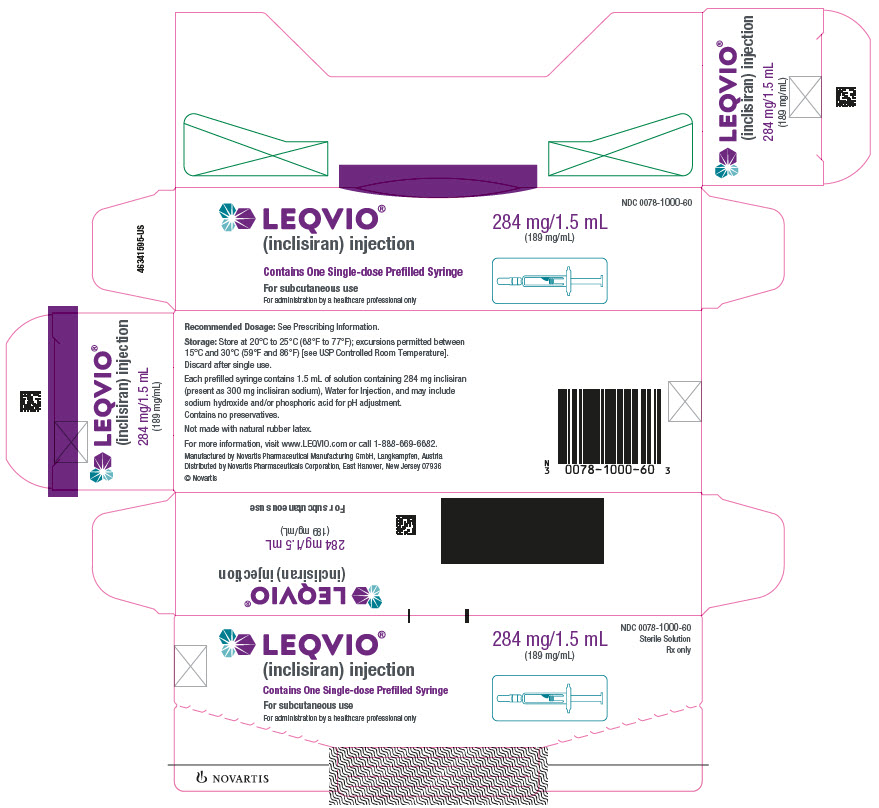
LEQVIO inclisiran 284 mg/1.5mL Injection, Solution, 1 syringe — NDC 0078-1000-60 (Billing 00078-1000-60)
This is a package of 1 syringe of LEQVIO inclisiran 284 mg/1.5mL Injection, Solution from Novartis Pharmaceuticals Corporation, marketed since Dec 2021 and currently FDA-listed. It is the main listing for this product, which comes in 2 package sizes.
NDC database record
One package, one record: these facts belong to NDC 0078-1000-60 alone.
- Record
- FDA NDC Directory package listing · Human prescription drug
- Code segments
- 0078 labeler · 1000 product · 60 package
- Package marketed since
- Dec 22, 2021
- Sample package
- No — commercial package
- Listing certified through
- Dec 31, 2027
- Barcode (UPC-A, from the NDC)
- 3 0078100060 3
- Medicaid fills, this package
- 2,972 prescriptions in the last four reported quarters
- FDA record last changed
- Sep 3, 2026
Identity & classification
Regulatory identifiers FDA, NLM and CMS codes for this package
Drug-database identifiers Medi-Span GPI and First Databank GCN / HICL / AHFS classification
- GSN (GCN sequence number): 082263
- GCN: 49618
- HICL (First Databank): 047350
- AHFS class code: 24:06.92.00
- RxCUI (RxNorm): 2588263
Where does this data come from?
- FDA openFDA NDC Directory · synced Oct 8, 2026
- FDA label on DailyMed · label index refreshed Oct 8, 2026
- RxNorm (NLM RxNav) · catalog refreshed Oct 8, 2026
- Medi-Span GPI (licensed)
- First Databank (licensed) · refreshed Oct 8, 2026
RxNorm drug class
This medicine belongs to the Other lipid modifying agents class.
Where does this data come from?
- RxClass (NLM) · catalog refreshed Oct 8, 2026
Clinical
Inclisiran injection is used to decrease the amount of cholesterol (a fat-like substance that can build up and clog blood vessels causing heart attacks or strokes or other health problems). Inclisiran injection is in a class of medications called proprotein convertase subtilisin kexin type 9 (PCSK9)-interfering mRNA. It lowers LDL (bad) cholesterol in the blood, which helps keep cholesterol from blocking blood flow to the heart, brain, and other parts of the body.
Read the full MedlinePlus article ↗- Leqvio is an injection that lowers LDL — the 'bad' type of cholesterol — by silencing a protein in your liver called PCSK9. When PCSK9 is blocked, your liver can grab more LDL out...
- What exactly is Leqvio and why did my doctor prescribe it for cholesterol?
- You'll need the first shot at your first appointment, another one 3 months later, and then just once every 6 months after that. So after the initial two doses, you're only coming i...
- How often do I need to come in for the injection?
Patient education
Supplement & herbal interactions
Where does this data come from?
- MedlinePlus (NLM) · refreshed Oct 8, 2026
- FDA label on DailyMed · label index refreshed Oct 8, 2026
Ask a licensed pharmacist directly — free, answered by our team.
Pricing
A drug doesn't have one price. Each row is a different public payment system, and none is what you'd pay at the counter — that depends on your insurance. The ⓘ on each row explains what it measures.
| Price system | Per mL | Per package |
|---|---|---|
| Retail pharmacies payNADAC · weekly | Not in the retail survey — common for institutional, discontinued, or low-volume packs. | |
| Medicaid paysCMS SDUD · 12 mo | $1,892.91 | $2,839.37 / 1.5 ml |
| Medicare drug plans payPart D · quarterly | No Part D plan price is available for this NDC in our data. | |
| Medicare Part B allowsASP · J1306 | $12.905 / J1306 unit | — |
Where does this data come from?
- CMS NADAC weekly file
- CMS ASP pricing files · refreshed Sep 20, 2026
- CMS Medicaid State Drug Utilization Data · through Q1 2026
- CMS Part D plan pricing files · refreshed Sep 24, 2026
- VA National Acquisition Center price file
Billing & reimbursement
Where does this data come from?
- CMS ASP NDC-HCPCS crosswalk · refreshed Sep 22, 2026
- DMEPDAC NDC-HCPCS crosswalk
- openFDA NSDE billing units · refreshed Oct 7, 2026
Packaging — all sizes for this product
| Package NDC | Description | Marketing start | Marketing end | Status |
|---|---|---|---|---|
| 00078-1000-60 You're viewing this Main listing | 1 SYRINGE, GLASS in 1 CARTON / 1.5 mL in 1 SYRINGE, GLASS | 2021-12-22 | — | Active |
| 00078-1000-98 0078-1000-98 | 1 SYRINGE, GLASS in 1 CARTON / 1.5 mL in 1 SYRINGE, GLASS Sample | 2023-02-17 | — | Active |
In Medicaid, this is the most-dispensed pack of this product — about 100% of fills over the last four reported quarters. See all packs ↓
Pack size FAQ
What quantity is in this package?
How does this package differ from NDC 00078-1000-98?
What NDC number is used to bill for this package of LEQVIO inclisiran 284 mg/1.5mL Injection, Solution?
Therapeutic equivalents
| Product | Labeler | Pack | NADAC/unit | TE | Status | Price vs. this |
|---|---|---|---|---|---|---|
| Leqvio 284 mg/1.5mLthis 00078-1000-60 | Novartis | 1 syringe | — | — | FDA listed | — |
Where does this data come from?
- FDA openFDA NDC Directory · synced Oct 8, 2026
- FDA Orange Book · refreshed Oct 9, 2026
- CMS NADAC weekly file
Availability & generic status
We did not find an FDA-approved generic match for this exact strength, form and route. Patent/protection dates below may affect future generic timing.
Why the date isn’t exact: Generic timing can change because patents may be challenged, settled, licensed, added, removed, or worked around with a narrower label — and FDA approval does not always mean a pharmacy can get the generic today.
Our estimate: sometime in 2036 sometime that year
How sure: Probable. More likely than not, but it can still move.
Why then: The patent fight is likely to end in an agreement that sets the launch. The terms are not public yet.
That is before the August 2036 date above, which is common: a court ruling or a deal with the brand’s maker often lets a generic in before the last patent runs out.
See the full forecast for generic Leqvio →🛈 What do these terms mean?
- Patent
- Legal protection listed in the Orange Book that may delay generic approval or launch. Issued by the U.S. Patent & Trademark Office.
- Substance patent
- Covers the active drug molecule itself — the hardest to design around. A generic generally can’t launch until it expires.
- Formulation (product) patent
- Covers a specific formulation or dosage form. A generic can sometimes work around it with a different formulation.
- Method-of-use patent
- A patent covering one specific approved use of the drug — not necessarily the whole molecule. A generic can sometimes launch with a “skinny label” that carves out the protected use and keeps the others.
- Skinny label
- A generic label that omits a still-patented use when the FDA allows it — letting a generic reach the market for the unprotected uses.
- Exclusivity
- FDA-granted marketing protection, separate from patents — e.g. 5-yr new chemical entity, 7-yr orphan drug, or a +6-month pediatric extension.
- Paragraph IV
- A generic applicant’s formal challenge to a listed patent. It can potentially lead to earlier generic entry, but often involves litigation or a settlement.
- RLD / RS
- Reference Listed Drug — the brand product the FDA uses as the reference for generic applications. Reference Standard — the product the FDA expects generics to compare against in bioequivalence testing.
- TE / AB rating
- FDA therapeutic-equivalence rating. An AB rating generally means the FDA considers a generic therapeutically equivalent to — and substitutable for — the brand.
- LOE (loss of exclusivity)
- The latest patent or exclusivity currently listed — the loss-of-exclusivity / latest-listed-protection date shown on this page. Paragraph-IV challenges and settlements can move the real date earlier; FDA approval and a manufacturer’s decision to market can move it later.
Built from the FDA Orange Book. The bars above are scaled to each protection’s expiry; the red LOE marker is the last one to lapse.
| Patent | Type | Use code | Expires |
|---|---|---|---|
| US 10125369 ↗ | Drug substance | U-4413 | Aug 18, 2034 |
| US 10125369 ↗ | Drug substance | U-4414 | Aug 18, 2034 |
| US 9370582 ↗ | Drug substance | U-4413 | Dec 4, 2028 |
| US 9370582 ↗ | Drug substance | U-4414 | Dec 4, 2028 |
| US 8828956 ↗ | Drug substance | U-4413 | Dec 4, 2028 |
| US 8828956 ↗ | Drug substance | U-4414 | Dec 4, 2028 |
| US 8809292 ↗ | Drug substance | U-4413 | May 10, 2027 |
| US 8809292 ↗ | Drug substance | U-4414 | May 10, 2027 |
| US 10851377 ↗ | Method of use | U-4413 | Aug 25, 2036 |
| US 10851377 ↗ | Method of use | U-4414 | Aug 25, 2036 |
| US 10131907 ↗ | Drug substance | U-4413 | Aug 24, 2028 |
| US 10125369 ↗ | Drug substance | U-4249 | Aug 18, 2034 |
| US 10851377 ↗ | Method of use | U-4249 | Aug 25, 2036 |
| US 10131907 ↗ | Drug substance | U-4249 | Aug 24, 2028 |
| US 9370582 ↗ | Drug substance | U-4249 | Dec 4, 2028 |
| US 8828956 ↗ | Drug substance | U-4249 | Dec 4, 2028 |
| US 8809292 ↗ | Drug substance | U-4249 | May 10, 2027 |
| US 8222222 ↗ | Method of use | U-4249 | Dec 29, 2027 |
| US 8106022 ↗ | Drug substance | U-4249 | Dec 12, 2029 |
| US 8222222 ↗ | Method of use | U-4413 | Dec 29, 2027 |
| US 8222222 ↗ | Method of use | U-4414 | Dec 29, 2027 |
| US 8106022 ↗ | Drug substance | U-4413 | Dec 12, 2029 |
| US 8106022 ↗ | Drug substance | U-4414 | Dec 12, 2029 |
| US 10131907 ↗ | Drug substance | U-4414 | Aug 24, 2028 |
| US 10806791 ↗ | Drug substance | — | Dec 4, 2028 |
| US 12460206 ↗ | Drug substance | — | Aug 18, 2034 |
| Code | What it grants | Expires |
|---|---|---|
| I-985 | New indication (3-year) | Feb 12, 2029 |
| NCE | New Chemical Entity (5-year) | Dec 22, 2026 |
| NPP | New Patient Population | Feb 12, 2029 |
| ODE-555 | Orphan Drug Exclusivity (7-year) | Feb 12, 2033 |
Is there a generic version of LEQVIO 284 MG/1.5 ML SYRINGE?
The FDA approved a generic — why can’t I get it at my pharmacy yet?
Why do different websites show different generic release dates?
What does “FDA listed” mean?
What does a patent or protection date mean here?
What does “current Orange Book estimate” mean?
Can a generic come out before the last patent expires?
Can a generic come out after the listed dates?
What is the difference between patents and exclusivity?
Why are there multiple patent dates?
Where does this data come from?
- FDA Orange Book · refreshed Oct 9, 2026
Inactive Ingredients / Excipients
Inactive ingredients, also called excipients, are components of the drug product other than the active ingredient. They may include fillers, dyes, coatings, preservatives, flavors, or other formulation ingredients.
🧪 Avoiding an ingredient? See Inclisiran injection inactive ingredients by manufacturer: every current product's list side by side, so you can ask your pharmacy for the version that does not list it.
💡 Tap an ingredient (hover on desktop) to see what it is and why it’s used.
-
UNII E4GA8884NN
Phosphoric acid is a weak mineral acid used in medicines as a buffer and pH adjuster. It helps stabilize the product and control its acidity level.
-
UNII 55X04QC32I
A strong alkaline chemical used to adjust and maintain the pH balance of liquid medicines. It helps keep the medicine stable and ensures it stays effective during storage.
-
UNII 059QF0KO0R
Water is a liquid solvent that dissolves and mixes ingredients together in liquid medicines, syrups, and injections. It helps distribute the active drug evenly throughout the product.
3 inactive ingredients listed in the exact product block matched to this NDC.
Where does this data come from?
ingredient classCode="IACT" elements from the exact product block matched by this NDC. Label-section narrative from DailyMed / the openFDA label index is shown separately when available.- FDA label on DailyMed · label index refreshed Oct 8, 2026
- FDA openFDA NDC Directory · synced Oct 8, 2026
Inactive ingredient FAQ
Are inactive ingredients the same for every manufacturer?
Why might an inactive ingredient be missing?
Can inactive ingredients matter?
Manufacturer & labeler
More NDCs from Novartis Pharmaceuticals Corporation labeler code 00078
- Tasigna nilotinib 50 mg Capsule NDC 0078-0951-66
- Kymriah tisagenlecleucel 60000000 1/1 Injection, Suspension NDC 0078-0958-19
- Gilenya Fingolimod hcl .25 mg Capsule NDC 0078-0965-89
- Promacta eltrombopag olamine 12.5 mg Powder, For Suspension NDC 0078-0972-61
- Mayzent siponimod .25 mg Tablet, Film Coated NDC 0078-0979-12
- Mayzent siponimod 2 mg Tablet, Film Coated NDC 0078-0986-15
- KESIMPTA ofatumumab 20 mg/.4mL Injection, Solution NDC 0078-1007-68
- Mayzent siponimod 1 mg Tablet, Film Coated NDC 0078-1014-15
- Vijoice alpelisib 50 mg Tablet NDC 0078-1021-84
- Vijoice alpelisib 125 mg Tablet NDC 0078-1028-84
- VIJOICE alpelisib Kit NDC 0078-1035-02
- Lamprene Clofazimine 50 mg Capsule, Liquid Filled NDC 0078-1049-05
Where does this data come from?
- FDA openFDA NDC Directory · synced Oct 8, 2026
- Drugs@FDA
Full prescribing information FDA SPL
🎯 Indications and Usage ▾
1 INDICATIONS AND USAGE LEQVIO ® is indicated as an adjunct to diet and exercise to reduce low-density lipoprotein cholesterol (LDL-C) in: adults with hypercholesterolemia. adults and pediatric patients aged 12 years and older with heterozygous familial hypercholesterolemia (HeFH). pediatric patients aged 12 years and older with homozygous familial hypercholesterolemia (HoFH). Cardiovascular outcomes trials have demonstrated that reducing LDL-C lowers the risk for major adverse cardiovascular events (MACE) in adults at increased risk when treated with statins or monoclonal antibody proprotein convertase subtilisin kexin type 9 (PCSK9) inhibitors as an add-on to statin therapy.
LEQVIO is a small interfering RNA (siRNA) directed to proprotein convertase subtilisin kexin type 9 (PCSK9) mRNA indicated as an adjunct to diet and exercise to reduce low-density lipoprotein cholesterol (LDL-C) in: adults with hypercholesterolemia. ( 1 ) adults and pediatric patients aged 12 years and older with heterozygous familial hypercholesterolemia (HeFH). ( 1 ) pediatric patients aged 12 years and older with homozygous familial hypercholesterolemia (HoFH).
( 1 ) Cardiovascular outcomes trials have demonstrated that reducing LDL-C lowers the risk for major adverse cardiovascular events (MACE) in adults at increased risk when treated with statins or monoclonal antibody PCSK9 inhibitors as an add-on to statin therapy. ( 1 )
⏱️ Dosage and Administration ▾
2 DOSAGE AND ADMINISTRATION The recommended dosage of LEQVIO for adults and pediatric patients aged 12 years and older is 284 mg administered as a single subcutaneous injection initially, again at 3 months, and then every 6 months. ( 2.1 ) LEQVIO should be administered by a healthcare professional. ( 2.2 ) Inject LEQVIO subcutaneously into the abdomen, upper arm, or thigh. ( 2.2 )
2.1Recommended Dosage The recommended dosage of LEQVIO for adults and pediatric patients aged 12 years and older is 284 mg administered as a single subcutaneous injection initially, again at 3 months, and then every 6 months. If a planned dose is missed by less than 3 months, administer LEQVIO and maintain dosing according to the patient’s original schedule. If a planned dose is missed by more than 3 months, restart with a new dosing schedule - administer LEQVIO initially, again at 3 months, and then every 6 months.
Assess LDL-C when clinically indicated. The LDL-lowering effect of LEQVIO may be measured as early as 30 days after initiation and anytime thereafter without regard to timing of the dose.
2.2Important Administration Instructions LEQVIO should be administered by a healthcare professional. Inject LEQVIO subcutaneously into the abdomen, upper arm, or thigh. Do not inject in areas of active skin disease or injury, such as sunburns, skin rashes, inflammation, or skin infections.
Inspect LEQVIO visually before use. It should appear clear and colorless to pale yellow. Do not use if particulate matter or discoloration is seen.
For more detailed instruction on administration of the prefilled syringe, see Instructions for Use.
💊 Dosage Forms and Strengths ▾
3 DOSAGE FORMS AND STRENGTHS Injection: 284 mg/1.5 mL (189 mg/mL) of inclisiran as a clear and colorless to pale yellow solution in a single-dose prefilled syringe. Injection: 284 mg/1.5 mL (189 mg/mL) in a single-dose prefilled syringe. ( 3 )
⛔ Contraindications ▾
4 CONTRAINDICATIONS LEQVIO is contraindicated in patients with a prior serious hypersensitivity reaction to inclisiran or any of the excipients in LEQVIO. Serious hypersensitivity reactions have included anaphylaxis and angioedema [see Adverse Reactions (6.2)] . Prior serious hypersensitivity reaction to inclisiran or any of the excipients in LEQVIO.
⚠️ Warnings and Cautions ▾
5 WARNINGS AND PRECAUTIONS Hypersensitivity Reactions: Have been reported in patients treated with LEQVIO. Advise patients on the signs and symptoms of hypersensitivity reactions and instruct patients to seek medical attention promptly. ( 5.1 )
5.1Hypersensitivity Reactions Hypersensitivity reactions, including anaphylaxis and angioedema, have been reported in patients treated with LEQVIO [see Adverse Reactions (6.2)] . Advise patients on the signs and symptoms of hypersensitivity reactions and instruct patients to seek medical attention promptly. LEQVIO is contraindicated in patients with a prior serious hypersensitivity reaction to inclisiran or any of the excipients in LEQVIO.
🤒 Adverse Reactions ▾
6 ADVERSE REACTIONS The following adverse reactions are also discussed in other sections of the label: Hypersensitivity Reactions [see Warnings and Precautions (5.1)] Common adverse reactions in clinical trials (≥ 3%): injection site reaction, arthralgia, and bronchitis. ( 6 ) To report SUSPECTED ADVERSE REACTIONS, contact Novartis Pharmaceuticals Corporation at 1-888-669-6682 or FDA at 1-800-FDA-1088 or www.fda.gov/medwatch.
6.1Clinical Trials Experience Because clinical trials are conducted under widely varying conditions, adverse reaction rates observed in the clinical trials of a drug cannot be directly compared to rates in the clinical trials of another drug and may not reflect the rates observed in practice. Adverse Reactions in Adults with Hypercholesterolemia The data in Table 1 are derived from 3 placebo-controlled trials that included 1,833 adults with hypercholesterolemia treated with LEQVIO, including 1,682 exposed for 18 months (median treatment duration of 77 weeks) [see Clinical Studies (14)] .
The mean age of the population was 64 years, 32% of the population were female, 92% were White, 6% were Black or African American, 1% were Asian, and < 1% were other races; 6% identified as Hispanic or Latino ethnicity. At baseline, 12% of patients had a diagnosis of HeFH and 85% had clinical atherosclerotic cardiovascular disease (ASCVD). Adverse reactions reported in at least 3% of LEQVIO-treated patients, and more frequently than in placebo-treated patients, are shown in Table 1.
Table 1: Adverse Reactions Occurring in Greater Than or Equal to 3% of LEQVIO-treated Adults with Hypercholesterolemia and More Frequently than with Placebo (Trials 1, 2, and 3) Adverse Reactions Placebo (N = 1,822) % LEQVIO (N = 1,833) % a includes related terms such as: injection site pain, erythema and rash Injection site reaction a 2 8 Arthralgia 4 5 Bronchitis 3 4 Adverse reactions led to discontinuation of treatment in 2.5% of patients treated with LEQVIO and 1.9% of patients treated with placebo. The most common adverse reactions leading to treatment discontinuation in patients treated with LEQVIO were injection site reactions (0.2% versus 0% for LEQVIO and placebo, respectively).
Adverse Reactions in Pediatric Patients with HeFH In a 24-month, two-part trial of 141 pediatric patients aged 12 years and older with HeFH (Trial 4), consisting of a 12-month randomized, double-blind, placebo-controlled part (Part 1/Year 1), followed by a 12-month open-label part (Part 2/Year 2), 93 patients received 284 mg of LEQVIO subcutaneously during Part 1 and 139 patients were treated with LEQVIO during Part 2 [see Clinical Studies (14)] . During Part 2, 91 patients continued LEQVIO treatment for a second year and 48 patients switched from placebo to LEQVIO for 1 year of treatment.
The safety profile reported in pediatric patients with HeFH was consistent with the description above for adult patients with hypercholesterolemia, with the exception of headache. In pediatric patients with HeFH, the incidence of headache was 6% among patients who received placebo versus 13% of LEQVIO-treated patients during the double-blind study period. Adverse Reactions in Pediatric Patients with HoFH In a 24-month, two-part trial of 13 pediatric patients aged 12 years and older with HoFH (Trial 5), consisting of a 12-month randomized, double-blind, placebo-controlled part (Part 1/Year 1), followed by a 12-month open-label part (Part 2/Year 2), 9 patients received 284 mg of LEQVIO administered subcutaneously during Part 1 and 13 patients were treated with LEQVIO during Part 2 [see Clinical Studies (14)] .
During Part 2, 9 patients continued LEQVIO treatment for a second year and 4 patients switched from placebo to LEQVIO for 1 year of treatment. The safety profile reported in pediatric patients was consistent with adult patients with hypercholesterolemia.
6.2Postmarketing Experience The following adverse reactions have been identified during post-approval use of LEQVIO.… [Excerpted — this section continues on DailyMed.]
👥 Use in Specific Populations ▾
8 USE IN SPECIFIC POPULATIONS
8.1Pregnancy Risk Summary Discontinue LEQVIO when pregnancy is recognized. Alternatively, consider the ongoing therapeutic needs of the individual patient. Inclisiran increases LDL-C uptake and lowers LDL-C levels in the circulation, thus decreasing cholesterol and possibly other biologically active substances derived from cholesterol; therefore, LEQVIO may cause fetal harm when administered to pregnant patients based on the mechanism of action [see Clinical Pharmacology (12.1)] .
In addition, treatment of hypercholesterolemia is not generally necessary during pregnancy. Atherosclerosis is a chronic process and the discontinuation of lipid-lowering drugs during pregnancy should have little impact on the outcome of long-term therapy of hypercholesterolemia for most patients. There are no available data on the use of LEQVIO in pregnant patients to evaluate for a drug-associated risk of major birth defects, miscarriage or adverse maternal or fetal outcomes.
In animal reproduction studies, no adverse developmental effects were observed in rats and rabbits with subcutaneous administration of inclisiran during organogenesis at doses up to 5 to 10 times the maximum recommended human dose (MRHD) based on body surface area (BSA) comparison ( see Data ). No adverse developmental outcomes were observed in offspring of rats administered inclisiran from organogenesis through lactation at 5 times the MRHD based on BSA comparison ( see Data ). The estimated background risk of major birth defects and miscarriage for the indicated population is unknown.
In the U.S. general population, the estimated background risk of major birth defects and miscarriage in clinically recognized pregnancies is 2%–4% and 15%–20%, respectively. There is a pregnancy safety study for LEQVIO. Report pregnancies by contacting Novartis at 1-888-669-6682 or [email protected].
Data Animal Data In embryo-fetal development studies conducted in Sprague-Dawley rats and New Zealand White rabbits, inclisiran was administered by subcutaneous injection at dose levels of 50, 100, and 150 mg/kg once daily during organogenesis (rats: Gestation Days 6 to 17; rabbits: Gestation Days 7 to 19). There was no evidence of embryo-fetal toxicity or teratogenicity at doses up to 5 and 10 times, respectively, the MRHD based on BSA comparison/dose. Inclisiran crosses the placenta and was detected in rat fetal plasma at concentrations that were 65 to 154 times lower than maternal levels.
In a pre- and postnatal development study conducted in Sprague-Dawley rats, inclisiran was administered once daily by subcutaneous injection at levels of 50, 100, and 150 mg/kg from Gestation Day 6 through Lactation Day 20. Inclisiran was well-tolerated in maternal rats, with no evidence of maternal toxicity and no effects on maternal performance. There were no effects on the development of the F1 generation, including survival, growth, physical and reflexological development, behavior, and reproductive performance at doses up to 5 times the MRHD, based on BSA comparison/dose.
8.2Lactation Risk Summary There is no information on the presence of inclisiran in human milk, the effects on the breastfed infant, or the effects on milk production. Inclisiran was present in the milk of lactating rats in all dose groups. When a drug is present in animal milk, it is likely that the drug will be present in human milk ( see Data ).
Oligonucleotide-based products typically have poor oral bioavailability; therefore, it is considered unlikely that low levels of inclisiran present in milk will adversely impact an infant’s development during lactation. The developmental and health benefits of breastfeeding should be considered along with the mother’s clinical need for LEQVIO and any potential adverse effects on the breastfed infant from LEQVIO or from the underlying maternal condition. Data In lactating rats, inclisiran was detected in milk at mean maternal plasma:milk ratios t… [Excerpted — this section continues on DailyMed.]
🤰 Pregnancy ▾
8.1Pregnancy Risk Summary Discontinue LEQVIO when pregnancy is recognized. Alternatively, consider the ongoing therapeutic needs of the individual patient. Inclisiran increases LDL-C uptake and lowers LDL-C levels in the circulation, thus decreasing cholesterol and possibly other biologically active substances derived from cholesterol; therefore, LEQVIO may cause fetal harm when administered to pregnant patients based on the mechanism of action [see Clinical Pharmacology (12.1)] .
In addition, treatment of hypercholesterolemia is not generally necessary during pregnancy. Atherosclerosis is a chronic process and the discontinuation of lipid-lowering drugs during pregnancy should have little impact on the outcome of long-term therapy of hypercholesterolemia for most patients. There are no available data on the use of LEQVIO in pregnant patients to evaluate for a drug-associated risk of major birth defects, miscarriage or adverse maternal or fetal outcomes.
In animal reproduction studies, no adverse developmental effects were observed in rats and rabbits with subcutaneous administration of inclisiran during organogenesis at doses up to 5 to 10 times the maximum recommended human dose (MRHD) based on body surface area (BSA) comparison ( see Data ). No adverse developmental outcomes were observed in offspring of rats administered inclisiran from organogenesis through lactation at 5 times the MRHD based on BSA comparison ( see Data ). The estimated background risk of major birth defects and miscarriage for the indicated population is unknown.
In the U.S. general population, the estimated background risk of major birth defects and miscarriage in clinically recognized pregnancies is 2%–4% and 15%–20%, respectively. There is a pregnancy safety study for LEQVIO. Report pregnancies by contacting Novartis at 1-888-669-6682 or [email protected].
Data Animal Data In embryo-fetal development studies conducted in Sprague-Dawley rats and New Zealand White rabbits, inclisiran was administered by subcutaneous injection at dose levels of 50, 100, and 150 mg/kg once daily during organogenesis (rats: Gestation Days 6 to 17; rabbits: Gestation Days 7 to 19). There was no evidence of embryo-fetal toxicity or teratogenicity at doses up to 5 and 10 times, respectively, the MRHD based on BSA comparison/dose. Inclisiran crosses the placenta and was detected in rat fetal plasma at concentrations that were 65 to 154 times lower than maternal levels.
In a pre- and postnatal development study conducted in Sprague-Dawley rats, inclisiran was administered once daily by subcutaneous injection at levels of 50, 100, and 150 mg/kg from Gestation Day 6 through Lactation Day 20. Inclisiran was well-tolerated in maternal rats, with no evidence of maternal toxicity and no effects on maternal performance. There were no effects on the development of the F1 generation, including survival, growth, physical and reflexological development, behavior, and reproductive performance at doses up to 5 times the MRHD, based on BSA comparison/dose.
🧒 Pediatric Use ▾
8.4Pediatric Use The safety and effectiveness of LEQVIO as an adjunct to diet and other LDL-C-lowering therapies for the treatment of HeFH have been established in pediatric patients aged 12 years and older. Use of LEQVIO for this indication is based on data from a 12-month, randomized, placebo-controlled, double-blind study in 141 pediatric patients with HeFH. This indication is also supported by evidence from an adequate and well-controlled study in adults with HeFH.
The safety profile reported in pediatric patients aged 12 years and older with HeFH was consistent with adult patients with hypercholesterolemia, with the exception of headache [see Adverse Reactions (6.1), Clinical Studies (14)] . The safety and effectiveness of LEQVIO as an adjunct to diet and other LDL-C-lowering therapies for the treatment of HoFH have been established in pediatric patients aged 12 years and older. Use of LEQVIO for this indication is based on data from a 12-month, randomized, placebo-controlled, double-blind study in 13 pediatric patients with HoFH [see Adverse Reactions (6.1), Clinical Studies (14)] .
The safety and effectiveness of LEQVIO have not been established in pediatric patients with HeFH or HoFH younger than 12 years of age. The safety and effectiveness of LEQVIO have not been established in pediatric patients with other types of hypercholesterolemia.
🧓 Geriatric Use ▾
8.5Geriatric Use Of the 1,833 patients treated with LEQVIO in clinical trials, 981 (54%) patients were 65 years of age and older, while 239 (13%) patients were 75 years of age and older. No overall differences in safety or effectiveness were observed between patients 65 years of age and older and younger adult patients.
🧬 Clinical Pharmacology ▾
12 CLINICAL PHARMACOLOGY
12.1Mechanism of Action Inclisiran is a double-stranded small interfering ribonucleic acid (siRNA), conjugated on the sense strand with triantennary N-Acetylgalactosamine (GalNAc) to facilitate uptake by hepatocytes. In hepatocytes, inclisiran utilizes the RNA interference mechanism and directs catalytic breakdown of mRNA for PCSK9. This increases LDL-C receptor recycling and expression on the hepatocyte cell surface, which increases LDL-C uptake and lowers LDL-C levels in the circulation.
12.2Pharmacodynamics Following a single subcutaneous administration of 284 mg of inclisiran, LDL-C reduction was apparent within 14 days post dose. Mean reductions of 38% to 51% for LDL-C were observed 30 to 180 days post dose. At Day 180, LDL-C levels were still reduced by approximately 53%.
Following a dose at Day 1 and Day 90 of 284 mg of inclisiran, mean serum PCSK9 levels were reduced by approximately 75% and 69% at Day 120, and Day 180, respectively. In the clinical trials, following four doses of LEQVIO at Day 1, Day 90 (3 months), Day 270 (~6 months) and Day 450 (~12 months), LDL-C, total cholesterol, ApoB, and non-HDL-C were reduced [see Clinical Studies (14)] . Cardiac Electrophysiology At a dose 3 times the maximum recommended dose, inclisiran does not prolong the QT interval to any clinically relevant extent.
12.3Pharmacokinetics Absorption Following a single subcutaneous administration, systemic exposure to inclisiran increased in a linear and dose proportional manner over a range from 25 mg to 800 mg of inclisiran sodium. At the recommended dosing regimen of 284 mg of LEQVIO, plasma concentrations reached peak in approximately 4 hours post dose with a mean C max of 509 ng/mL. Concentrations reached undetectable levels after 24 to 48 hours post dosing.
The mean area under the plasma concentration-time curve from dosing extrapolated to infinity was 7,980 ng*h/mL. Pharmacokinetic findings following multiple subcutaneous administrations of LEQVIO were similar to single-dose administration. Distribution Inclisiran is 87% protein bound in vitro at the relevant clinical plasma concentrations.
Following a single subcutaneous 284 mg dose of LEQVIO to healthy adults, the apparent volume of distribution is approximately 500 L. Inclisiran has been shown to have high uptake into, and selectively for the liver, the target organ for cholesterol lowering. Elimination The terminal elimination half-life of LEQVIO is approximately 9 hours, and no accumulation occurs with multiple dosing.
Metabolism Inclisiran is primarily metabolized by nucleases to shorter nucleotides of varying length. Inclisiran is not a substrate for CYP450 or transporters. Excretion Approximately 16% of LEQVIO is cleared through the kidney.
Specific Populations Male and Female Patients and Racial or Ethnic Groups A population pharmacodynamic analysis was conducted on data from 4,328 patients. Age, body weight, gender, race, and creatinine clearance were found not to significantly influence inclisiran pharmacokinetics. Pediatric Patients The pharmacokinetics of LEQVIO were evaluated in pediatric patients aged 12 years and older with HeFH (Trial 4) or HoFH (Trial 5) [see Use in Specific Populations (8.4), Clinical Studies (14)] .
Inclisiran plasma concentrations in pediatric patients at the clinically recommended dose were similar to adults. Patients with Renal Impairment Pharmacokinetic analysis of data from a dedicated renal impairment study reported increases in inclisiran C max and AUC of approximately 2.3 to 3.3-fold and 1.6 to 2.3-fold, respectively, in patients with mild, moderate or severe renal impairment, relative to patients with normal renal function. Despite the higher plasma exposures, reductions in LDL-C were similar across all groups based on renal function.
Patients with Hepatic Impairment Pharmacokinetic analysis of data from a dedicated hepatic impairment study reported increases in inclisiran C max and AUC of approximately 1.1- t… [Excerpted — this section continues on DailyMed.]
🧬 Mechanism of Action ▾
12.1Mechanism of Action Inclisiran is a double-stranded small interfering ribonucleic acid (siRNA), conjugated on the sense strand with triantennary N-Acetylgalactosamine (GalNAc) to facilitate uptake by hepatocytes. In hepatocytes, inclisiran utilizes the RNA interference mechanism and directs catalytic breakdown of mRNA for PCSK9. This increases LDL-C receptor recycling and expression on the hepatocyte cell surface, which increases LDL-C uptake and lowers LDL-C levels in the circulation.
📦 How Supplied / Storage and Handling ▾
16 HOW SUPPLIED/STORAGE AND HANDLING LEQVIO injection is a clear and colorless to pale yellow solution, 284 mg/1.5 mL (189 mg/mL) of inclisiran supplied as: Carton containing 1 single-dose prefilled syringe: NDC 0078-1000-60 Store LEQVIO at controlled room temperature 20°C to 25°C (68°F to 77°F) with allowable excursions between 15°C and 30°C (59°F and 86°F) [see USP, Controlled Room Temperature (CRT)].
📋 Description ▾
11 DESCRIPTION LEQVIO contains inclisiran sodium, a small interfering RNA (siRNA) directed to proprotein convertase subtilisin kexin type 9 (PCSK9) mRNA. Inclisiran contains a covalently linked ligand containing three N-acetylgalactosamine (GalNAc) residues to facilitate delivery to hepatocytes. With one exception, the 2'ribose moieties of the inclisiran sodium are present as 2'-F or 2'-OMe ribonucleotide.
In addition, six of the terminal phosphodiester backbones are present as phosphorothioate linkages as indicated below. The molecular formula of inclisiran sodium is C 529 H 664 F 12 N 176 Na 43 O 316 P 43 S 6 and its molecular weight is 17,284.72 g/mol. It has the following structural formula: Abbreviations: Af = adenine 2'-F ribonucleotide; Cf = cytosine 2'-F ribonucleotide; Gf = guanine 2'-F ribonucleotide; Am = adenine 2'-OMe ribonucleotide; Cm = cytosine 2'-OMe ribonucleotide; Gm = guanine 2'-OMe ribonucleotide; Um = uracil 2'-OMe ribonucleotide; L96 = triantennary GalNAc (N-acetyl-galactosamine) LEQVIO is a sterile, preservative-free, clear, and colorless to pale yellow solution for subcutaneous use in a prefilled syringe.
Each syringe contains 1.5 mL of solution containing the equivalent of 284 mg inclisiran (present as 300 mg inclisiran sodium salt). LEQVIO is formulated in Water for Injection and may also contain sodium hydroxide and/or phosphoric acid for pH adjustment to a target pH of 7.0. molecular formula of inclisiran sodium
💬 Information for Patients ▾
17 PATIENT COUNSELING INFORMATION Pregnancy Advise pregnant patients and patients who can become pregnant of the potential risk to a fetus. Advise patients to inform their healthcare provider of a known or suspected pregnancy to discuss if LEQVIO should be discontinued [see Use in Specific Populations (8.1)] . Advise women who are exposed to LEQVIO during pregnancy that there is a pregnancy safety study that monitors pregnancy outcomes.
Encourage these patients to report their pregnancy to Novartis at 1-888-669-6682 or [email protected] [see Use in Specific Populations (8.1)] . Hypersensitivity Inform patients that serious hypersensitivity reactions, including anaphylaxis and angioedema, have been reported in patients treated with LEQVIO. Advise patients on the signs and symptoms of hypersensitivity reactions and instruct them to seek medical advice promptly if such symptoms occur [see Warnings and Precautions (5.1)] .
Injection Site Reactions Advise patients that injection site reactions can occur with LEQVIO [see Adverse Reactions (6.1)] . Distributed by: Novartis Pharmaceuticals Corporation East Hanover, New Jersey 07936 For more information, visit www.leqvio.com or call 1-833-LEQVIO2 (1-833-537-8462). © Novartis T2026-34
🧬 Pharmacokinetics ▾
12.3Pharmacokinetics Absorption Following a single subcutaneous administration, systemic exposure to inclisiran increased in a linear and dose proportional manner over a range from 25 mg to 800 mg of inclisiran sodium. At the recommended dosing regimen of 284 mg of LEQVIO, plasma concentrations reached peak in approximately 4 hours post dose with a mean C max of 509 ng/mL. Concentrations reached undetectable levels after 24 to 48 hours post dosing.
The mean area under the plasma concentration-time curve from dosing extrapolated to infinity was 7,980 ng*h/mL. Pharmacokinetic findings following multiple subcutaneous administrations of LEQVIO were similar to single-dose administration. Distribution Inclisiran is 87% protein bound in vitro at the relevant clinical plasma concentrations.
Following a single subcutaneous 284 mg dose of LEQVIO to healthy adults, the apparent volume of distribution is approximately 500 L. Inclisiran has been shown to have high uptake into, and selectively for the liver, the target organ for cholesterol lowering. Elimination The terminal elimination half-life of LEQVIO is approximately 9 hours, and no accumulation occurs with multiple dosing.
Metabolism Inclisiran is primarily metabolized by nucleases to shorter nucleotides of varying length. Inclisiran is not a substrate for CYP450 or transporters. Excretion Approximately 16% of LEQVIO is cleared through the kidney.
Specific Populations Male and Female Patients and Racial or Ethnic Groups A population pharmacodynamic analysis was conducted on data from 4,328 patients. Age, body weight, gender, race, and creatinine clearance were found not to significantly influence inclisiran pharmacokinetics. Pediatric Patients The pharmacokinetics of LEQVIO were evaluated in pediatric patients aged 12 years and older with HeFH (Trial 4) or HoFH (Trial 5) [see Use in Specific Populations (8.4), Clinical Studies (14)] .
Inclisiran plasma concentrations in pediatric patients at the clinically recommended dose were similar to adults. Patients with Renal Impairment Pharmacokinetic analysis of data from a dedicated renal impairment study reported increases in inclisiran C max and AUC of approximately 2.3 to 3.3-fold and 1.6 to 2.3-fold, respectively, in patients with mild, moderate or severe renal impairment, relative to patients with normal renal function. Despite the higher plasma exposures, reductions in LDL-C were similar across all groups based on renal function.
Patients with Hepatic Impairment Pharmacokinetic analysis of data from a dedicated hepatic impairment study reported increases in inclisiran C max and AUC of approximately 1.1- to 2.1-fold and 1.3- to 2.0-fold, respectively, in patients with mild and moderate hepatic impairment, relative to patients with normal hepatic function. Despite the higher plasma inclisiran exposures, reductions in LDL-C were similar between the groups of patients administered inclisiran with normal hepatic function and mild hepatic impairment.
In patients with moderate hepatic impairment, baseline PCSK9 levels were lower and reductions in LDL-C were less than those observed in patients with normal hepatic function. LEQVIO has not been studied in patients with severe hepatic impairment. Drug Interaction Studies No formal clinical drug interaction studies have been performed.
The components of LEQVIO are not substrates, inhibitors or inducers of cytochrome P450 enzymes or transporters. In a population pharmacokinetic analysis, concomitant use of inclisiran did not have a clinically significant impact on atorvastatin or rosuvastatin concentrations. LEQVIO is not expected to cause drug-drug interactions or to be affected by inhibitors or inducers of cytochrome P450 enzymes or transporters.
🧬 Pharmacodynamics ▾
12.2Pharmacodynamics Following a single subcutaneous administration of 284 mg of inclisiran, LDL-C reduction was apparent within 14 days post dose. Mean reductions of 38% to 51% for LDL-C were observed 30 to 180 days post dose. At Day 180, LDL-C levels were still reduced by approximately 53%.
Following a dose at Day 1 and Day 90 of 284 mg of inclisiran, mean serum PCSK9 levels were reduced by approximately 75% and 69% at Day 120, and Day 180, respectively. In the clinical trials, following four doses of LEQVIO at Day 1, Day 90 (3 months), Day 270 (~6 months) and Day 450 (~12 months), LDL-C, total cholesterol, ApoB, and non-HDL-C were reduced [see Clinical Studies (14)] . Cardiac Electrophysiology At a dose 3 times the maximum recommended dose, inclisiran does not prolong the QT interval to any clinically relevant extent.
🔬 Clinical Studies ▾
14 CLINICAL STUDIES Adults with Primary Hypercholesterolemia or HeFH The efficacy of LEQVIO was investigated in three randomized, double-blind, placebo-controlled trials that enrolled 3,660 adults with HeFH, clinical ASCVD, or increased risk for ASCVD, who were taking maximally tolerated statin therapy and who required additional LDL-C lowering. Demographics and baseline disease characteristics were balanced between the treatment arms in all trials. Adults with Primary Hypercholesterolemia Trial 1 (ORION-10, NCT03399370) was a multicenter, double-blind, randomized, placebo-controlled 18-month trial in which 1,561 adults with ASCVD were randomized 1:1 to receive subcutaneous injections of either LEQVIO 284 mg (n = 781) or placebo (n = 780) on Day 1, Day 90, Day 270, and at Day 450.
Patients were taking a maximally tolerated dose of statin with or without other lipid modifying therapy and required additional LDL-C reduction. Patients were stratified by current use of statins or other lipid-modifying therapies. Patients taking PCSK9 inhibitors were excluded from the trial.
The mean age at baseline was 66 years (range: 35 to 90 years), 60% were ≥65 years old, 31% were female, 86% were White, 13% were Black or African American, 1% were Asian, and 14% identified as Hispanic or Latino ethnicity. Forty-five percent (45%) of patients had diabetes at baseline. The mean baseline LDL-C was 105 mg/dL.
At the time of randomization, 89% of patients were receiving statin therapy and 69% were receiving high-intensity statin therapy. The primary efficacy outcome measure in Trial 1 was the percent change from baseline to Day 510 in LDL-C. The difference between the LEQVIO and placebo groups in mean percentage change in LDL-C from baseline to Day 510 was -52% (95% CI: -56%, -49%; p < 0.0001).
For additional results, see Table 2 and Figure 1. Table 2: Changes in Lipid Parameters in Adults with Hypercholesterolemia and ASCVD on Maximally Tolerated Statin Therapy (Mean % Change from Baseline to Day 510 in Trial 1) Treatment Group LDL-C Total Cholesterol Non-HDL-C ApoB ApoB = apolipoprotein B; CI = confidence interval; HDL-C = high-density lipoprotein cholesterol; LDL-C = low-density lipoprotein cholesterol a 11.5% of subjects on LEQVIO and 14.6% of subjects on placebo had missing LDL-C data at primary endpoint (Day 510).
Missing data were imputed using a modified control-based multiple imputation to account for treatment adherence. Percent change from baseline in LDL-C was analyzed using analysis of covariance (ANCOVA) with fixed effect for treatment group and baseline LDL-C as a covariate. Other endpoints were analyzed using a mixed-effect model for repeated measure (MMRM) with fixed effects for treatment group, visit, interaction between treatment and visit, and baseline value.
Missing data were imputed using a control-based pattern-mixture model approach. Day 510 (mean percentage change from baseline) a Placebo (n = 780) 1 0 0 -2 LEQVIO (n = 781) -51 -34 -47 -45 Difference from placebo (LS Mean) (95% CI) -52 (-56, -49) -33 (-35, -31) -47 (-50, -44) -43 (-46, -41) Figure 1: Mean Percent Change from Baseline in LDL-C Over 18 Months in Adults with Hypercholesterolemia and ASCVD on Maximally Tolerated Statin Therapy (Trial 1) Trial 2 (ORION-11, NCT03400800) was a multicenter, double-blind, randomized, placebo-controlled 18-month trial in which 1,617 adults with ASCVD or increased risk for ASCVD were randomized 1:1 to receive subcutaneous injections of either LEQVIO 284 mg (n = 810) or placebo (n = 807) on Day 1, Day 90, Day 270, and at Day 450.
Patients were taking a maximally tolerated dose of statin with or without other lipid modifying therapy and required additional LDL-C reduction. Patients were stratified by country and by current use of statins or other lipid-modifying therapies. Patients taking PCSK9 inhibitors were excluded from the trial.
The mean age at baseline was 65 years (range: 20 to 88 years), 55% were ≥65 years old, 28% were female,… [Excerpted — this section continues on DailyMed.]
🧪 Nonclinical Toxicology ▾
13 NONCLINICAL TOXICOLOGY
13.1Carcinogenesis, Mutagenesis, Impairment of Fertility In a 2-year carcinogenicity study, Sprague-Dawley rats were administered subcutaneous doses of 40, 95, or 250 mg/kg inclisiran once every 28 days (1, 3, or 8 times the MRHD, based on BSA comparison/dose). Inclisiran was not carcinogenic up to the highest dose tested. In a 26-week study in RasH2Tg mice, subcutaneous doses of 300, 600, or 1,500 mg/kg once every 28 days were administered.
Inclisiran was not carcinogenic up to the highest dose tested. Inclisiran was not mutagenic or clastogenic in a standard battery of genotoxicity tests, including a bacterial mutagenicity assay, an in vitro chromosome aberration assay using human peripheral lymphocytes, and an in vivo bone marrow micronucleus assay in rats. Fertility and early embryonic-development studies were conducted in male and female rats.
In male rats, inclisiran was administered subcutaneously at dose levels of 10, 50, and 250 mg/kg every 2 weeks for 4 weeks before cohabitation through mating, and until termination between Days 64 and 67. In female rats, inclisiran was administered subcutaneously at dose levels of 10, 50, and 250 mg/kg once every 4 days beginning 14 days prior to cohabitation and through mating, followed by 10, 50, or 150 mg/kg once daily during the gestation period up to Gestation Day 7. There were no adverse effects on fertility up to the highest dose examined, corresponding to 8 times the MRHD, based on BSA comparison/dose.
📄 Carcinogenesis, Mutagenesis, Impairment of Fertility ▾
13.1Carcinogenesis, Mutagenesis, Impairment of Fertility In a 2-year carcinogenicity study, Sprague-Dawley rats were administered subcutaneous doses of 40, 95, or 250 mg/kg inclisiran once every 28 days (1, 3, or 8 times the MRHD, based on BSA comparison/dose). Inclisiran was not carcinogenic up to the highest dose tested. In a 26-week study in RasH2Tg mice, subcutaneous doses of 300, 600, or 1,500 mg/kg once every 28 days were administered.
Inclisiran was not carcinogenic up to the highest dose tested. Inclisiran was not mutagenic or clastogenic in a standard battery of genotoxicity tests, including a bacterial mutagenicity assay, an in vitro chromosome aberration assay using human peripheral lymphocytes, and an in vivo bone marrow micronucleus assay in rats. Fertility and early embryonic-development studies were conducted in male and female rats.
In male rats, inclisiran was administered subcutaneously at dose levels of 10, 50, and 250 mg/kg every 2 weeks for 4 weeks before cohabitation through mating, and until termination between Days 64 and 67. In female rats, inclisiran was administered subcutaneously at dose levels of 10, 50, and 250 mg/kg once every 4 days beginning 14 days prior to cohabitation and through mating, followed by 10, 50, or 150 mg/kg once daily during the gestation period up to Gestation Day 7. There were no adverse effects on fertility up to the highest dose examined, corresponding to 8 times the MRHD, based on BSA comparison/dose.
📖 Instructions for Use ▾
This Instructions for Use has been approved by the U.S. Food and Drug Administration. Revised: February 2026 INSTRUCTIONS FOR USE LEQVIO ® [leck' vee oh] (inclisiran) injection, for subcutaneous use 284 mg/1.5 mL single-dose Prefilled Syringe The following information is intended for healthcare professionals only.
This Instructions for Use contains information on how to inject LEQVIO using the prefilled syringe. Important Information You Need to Know Before Injecting LEQVIO: Do not use the prefilled syringe if any of the seals on the outer carton or the seal of the plastic tray are broken. Do not remove the needle cap until you are ready to inject.
Do not use if the prefilled syringe has been dropped after removing the needle cap. Do not try to re-use or take apart the prefilled syringe. Step 1.
Inspect the prefilled syringe It should appear clear and colorless to pale yellow. Do not use if particulate matter or discoloration is seen. You may see air bubbles in the liquid, which is normal.
Do not try to remove the air. Do not use the prefilled syringe if it looks damaged or if any of the solution for injection has leaked out of the prefilled syringe. Do not use the prefilled syringe after the expiration date (EXP), which is printed on the prefilled syringe label and carton.
Step 2. Select and prepare the injection site Choose an injection site in the abdomen, upper arm, or thigh ( see Figure A ). Do not inject in areas of active skin disease or injury, such as sunburns, skin rashes, inflammation, or skin infection.
Wipe the skin with an alcohol swab. Let the injection site dry before you inject the dose. Figure A Step 3.
Remove needle cap Firmly pull straight to remove the needle cap from the prefilled syringe ( see Figure B ). You may see a drop of liquid at the end of the needle. This is normal.
Do not put the needle cap back on. Throw it away. Note: Do not remove the needle cap until you are ready to inject.
Early removal of the needle cap prior to injection can lead to drying of the drug product within the needle, which can result in needle clogging. Figure B Step 4. Insert the needle Gently pinch the skin at the injection site and hold the pinch throughout the injection.
With the other hand insert the needle into the skin at an angle of approximately 45 degrees as shown ( see Figure C ). Figure C Step 5. Inject Continue to pinch the skin.
Slowly press the plunger as far as it will go ( see Figure D ). This will make sure that a full dose is injected. Note: If you cannot depress the plunger following insertion of the needle, use a new prefilled syringe.
Figure D Step 6. Complete injection and dispose of the prefilled syringe Remove the prefilled syringe from the injection site. Do not put the needle cap back on.
Dispose of the prefilled syringe in an FDA-cleared sharps disposal container right away after use. For more information, visit www.leqvio.com or call 1-833-LEQVIO2 (1-833-537-8462). Distributed by: Novartis Pharmaceuticals Corporation East Hanover, New Jersey 07936 © Novartis T2026-03 IFU image 1 Figure A Figure B Figure C Figure D
📄 Recent Major Changes ▾
Indications and Usage ( 1 ) 02/2026 Contraindications ( 4 ) 02/2026 Warnings and Precautions ( 5.1 ) 02/2026
📄 Package Label / Principal Display Panel ▾
PRINCIPAL DISPLAY PANEL LEQVIO ® (inclisiran) injection Contains One Single-dose Prefilled Syringe For subcutaneous use For administration by a healthcare professional only 284 mg/1.5 mL (189 mg/mL) NDC 0078-1000-60 Sterile Solution Rx only NOVARTIS PRINCIPAL DISPLAY PANEL LEQVIO® (inclisiran) injection Contains One Single-dose Prefilled Syringe For subcutaneous use For administration by a healthcare professional only 284 mg/1.5 mL (189 mg/mL) NDC 0078-1000-60 Sterile Solution Rx only NOVARTIS
Medicaid utilization & spend
Medicaid utilization by pack size
Medicare Part D spend CMS · PART D · 2026 (Q1)
About this NDC listing & data coverage
What data is (and isn’t) available for this NDC — tap to expand
| NDC identity (package / product / labeler codes) | ✓ Available |
| Labeler | ✓ Available |
| Product & package description | ✓ Available |
| Marketing category & status | ✓ Available |
| Active ingredient / dosage form / route | ✓ Available |
| FDA label (SPL via DailyMed) | ✓ Available |
| Package photos | ✓ Available |
| Inactive ingredients (structured) | ✓ Available |
| NADAC pharmacy acquisition price (CMS) | — Not published for this NDC CMS publishes NADAC only for NDCs reported in its retail-pharmacy survey. |
| Orange Book / therapeutic-equivalence data | ✓ Available |
| HCPCS J-code billing crosswalk | ✓ Available |
| Medicaid utilization (CMS SDUD) | ✓ Available |