
Acitretin 25 mg Capsule, 10,000-count — NDC 0093-1136-00 (Billing 00093-1136-00)
This is a package of 10,000 capsules of Acitretin 25 mg Capsule from Teva Pharmaceuticals USA, Inc., marketed since Jul 2013 and currently FDA-listed.
NDC database record
One package, one record: these facts belong to NDC 0093-1136-00 alone.
- Record
- FDA NDC Directory package listing · Human prescription drug
- Code segments
- 0093 labeler · 1136 product · 00 package
- Package marketed since
- Nov 1, 2021
- Listing certified through
- Dec 31, 2026
- Barcode (UPC)
- 0300931138569, 0300931135568
- FDA record last changed
- Jul 24, 2026
Identity & classification
Regulatory identifiers FDA, NLM and CMS codes for this package
Drug-database identifiers Medi-Span GPI and First Databank GCN / HICL / AHFS classification
- GSN (GCN sequence number): 019142
- GCN: 13481
- GPI-14 (Medi-Span): 90250510000125
- HICL (First Databank): 007827
- AHFS class code: 84:28.00.00
- RxCUI (RxNorm): 199689
Where does this data come from?
- FDA openFDA NDC Directory · synced Oct 8, 2026
- FDA label on DailyMed · label index refreshed Oct 8, 2026
- RxNorm (NLM RxNav) · catalog refreshed Oct 8, 2026
- Medi-Span GPI (licensed)
- First Databank (licensed) · refreshed Oct 8, 2026
RxNorm drug class
This medicine belongs to the Retinoid class.
Where does this data come from?
- RxClass (NLM) · catalog refreshed Oct 8, 2026
Clinical
Acitretin is used to treat severe psoriasis (abnormal growth of skin cells that causes red, thickened, or scaly skin). Acitretin is in a class of medications called retinoids. The way acitretin works is not known.
Read the full MedlinePlus article ↗- Acitretin is a type of medicine called a retinoid — it's related to vitamin A and works to help control the way your skin cells grow and shed. It's used for severe psoriasis when o...
- What exactly is acitretin and why did my doctor prescribe it for my psoriasis?
- Taking acitretin with your main meal makes a real difference — food helps your body absorb the medication much better. Your prescriber chose your dose based on studies where it was...
- This is one of the most important things to understand about acitretin. It is known to cause very serious, life-threatening birth defects, and this risk doesn't go away the moment...
Patient education
Supplement & herbal interactions
Some supplements/herbs that may interact with Acitretin — tap one for details:
Acitretin may be associated with lower levels of 1 nutrient — worth a chat with your pharmacist, not a cause for alarm.
Where does this data come from?
- MedlinePlus (NLM) · refreshed Oct 8, 2026
- FDA label on DailyMed · label index refreshed Oct 8, 2026
Ask a licensed pharmacist directly — free, answered by our team.
Pricing
A drug doesn't have one price. Each row is a different public payment system, and none is what you'd pay at the counter — that depends on your insurance. The ⓘ on each row explains what it measures.
| Price system | Per each | Per package |
|---|---|---|
| Retail pharmacies payNADAC · weekly | Not in the retail survey — common for institutional, discontinued, or low-volume packs. | |
| Medicaid paysCMS SDUD · 12 mo | No recent Medicaid claims on file for this NDC — rare and low-volume NDCs are suppressed in the public data. | |
| Medicare drug plans payPart D · quarterly | No Part D plan price is available for this NDC in our data. | |
Where does this data come from?
- CMS NADAC weekly file
- CMS ASP pricing files · refreshed Sep 20, 2026
- CMS Medicaid State Drug Utilization Data · refreshed Oct 9, 2026
- CMS Part D plan pricing files · refreshed Sep 24, 2026
- VA National Acquisition Center price file
Packaging — all sizes for this product
| Package NDC | Description | Per unit | Per pack | Marketing start | Marketing end | Status |
|---|---|---|---|---|---|---|
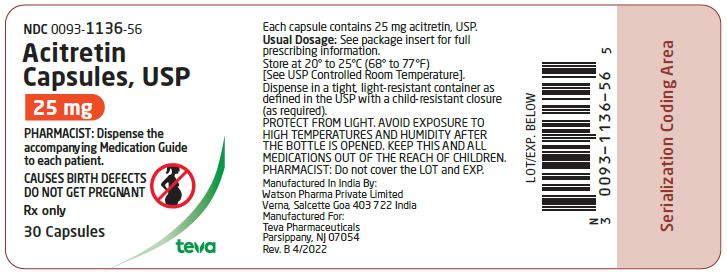
| 00093-1136-56 0093-1136-56 Main listing | 30 CAPSULE in 1 BOTTLE | $3.54 / ea | $106.27 | 2013-07-19 | — | Active |
| 00093-1136-00 You're viewing this | 10000 CAPSULE in 1 BOX | — | — | — | — | Active |
You're viewing the largest of 2 pack sizes for this product.
Pack size FAQ
What quantity is in this package?
How does this package differ from NDC 00093-1136-56?
What NDC number is used to bill for this package of Acitretin 25 mg Capsule?
Prices are the latest CMS NADAC pharmacy acquisition cost per NDC; per-pack figures are per-unit × pack quantity, shown only when the pack is denominated in the same measure NADAC prices.
Therapeutic equivalents
| Product | Labeler | Pack | NADAC/unit | TE | Status | Price vs. this |
|---|---|---|---|---|---|---|
| Acitretin 25 mg 00115-1753-08 | Amneal | 30 capsules | $3.542 | AB | Discontinued | — |
| Acitretin 25 mg 00378-7023-93 | Mylan | 30 capsules | $3.542 | AB | Availability likely | — |
| Acitretin 25 mg 42794-0083-08 | Sigmapharm | 30 capsules | $3.542 | AB | Availability likely | — |
| Acitretin 25 mg 62332-0743-30 | Alembic | 30 capsules | $3.542 | AB | Availability likely | — |
| Acitretin 25 mgthis 00093-1136-00 | Teva | 10000 capsules | — | AB | FDA listed | — |
| Acitretin 25 mg 42291-0088-30 | AvKARE | 30 capsules | — | AB | FDA listed | — |
| Acitretin 25 mg 46708-0743-30 | Alembic | 30 capsules | — | AB | FDA listed | — |
| Acitretin 25 mg 72162-2223-03 | Bryant | 30 capsules | — | AB | FDA listed | — |
Where does this data come from?
- FDA openFDA NDC Directory · synced Oct 8, 2026
- FDA Orange Book · refreshed Oct 3, 2026
- CMS NADAC weekly file
Availability & generic status
This product is an FDA-approved generic. Other versions of the same drug are listed under Therapeutic equivalents, least expensive first.
Where does this data come from?
- FDA Orange Book · refreshed Oct 3, 2026
What it looks like
Where does this data come from?
- FDA label on DailyMed · label index refreshed Oct 8, 2026
Inactive Ingredients / Excipients
Inactive ingredients, also called excipients, are components of the drug product other than the active ingredient. They may include fillers, dyes, coatings, preservatives, flavors, or other formulation ingredients.
🧪 Avoiding an ingredient? See Acitretin inactive ingredients by manufacturer: every current product's list side by side, so you can ask your pharmacy for the version that does not list it.
💡 Tap an ingredient (hover on desktop) to see what it is and why it’s used.
-
UNII 68401960MK
Crospovidone is a synthetic polymer made from polyvinylpyrrolidone. It acts as a disintegrant, helping tablets break apart quickly in the stomach so the medicine dissolves and absorbs into the body.
-
UNII 35SW5USQ3G
A synthetic yellow dye used to color medicines. It helps make tablets, capsules, and liquids visually distinct so patients can easily identify their medication.
-
UNII CQ3XH3DET6
D&C Yellow No. 10 Aluminum Lake is a yellow colorant made by combining a dye with aluminum salts. It's used in medicines to add color for product identification and visual appeal.
-
UNII H3R47K3TBD
FD&C Blue No. 1 is a synthetic blue dye approved for use in foods and medicines. It serves as a colorant to give the medication its distinctive appearance and help with product identification.
-
UNII J9EQA3S2JM
FD&C Blue No. 1 Aluminum Lake is a blue colorant made by combining FD&C Blue No. 1 dye with aluminum salts. It is used to color tablets, capsules, and other medicines for easy identification and appearance.
-
UNII 4AQJ3LG584
A synthetic blue dye combined with aluminum to create a stable colorant. It's used in medicines and supplements to add blue color or create specific shades for product identification and appearance.
-
UNII WZB9127XOA
A synthetic red dye used to color medications and make them easier to identify. It serves as a colorant in tablets, capsules, and liquid formulations.
-
UNII H77VEI93A8
A synthetic yellow dye used to color medications. It helps identify the drug and make it visually distinctive, with no effect on how the medicine works.
-
UNII XM0M87F357
A dark iron oxide compound that gives medicines their black or dark color. It's used as a colorant in tablets and capsules to help identify the product and make it visually distinctive.
-
UNII 2G86QN327L
Gelatin is a protein derived from animal collagen, commonly used in medicines as a gelling agent and capsule material. It helps create soft or hard capsule shells that hold and release medication, and can also thicken liquid formulations.
-
UNII OP1R32D61U
Microcrystalline cellulose is a purified form of cellulose, a natural fiber from plant sources. It acts as a binder and filler in tablets and capsules, helping hold ingredients together and give the medicine its shape and size.
-
UNII LQA7B6G8JG
A synthetic polymer made by combining water-soluble compounds. It acts as a surfactant and solubilizer to help mix oil and water-based ingredients, improving the medicine's texture and how active ingredients dissolve.
-
UNII RDH86HJV5Z
Povidone K90 is a synthetic polymer made from a chemical called vinyl pyrrolidone. It acts as a binder to hold pill ingredients together and as a dispersant to help the medicine break down and dissolve properly in your body.
-
UNII 6DC9Q167V3
Propylene glycol is a clear liquid derived from petroleum or vegetable sources. It acts as a solvent, humectant, and preservative in medicines, helping dissolve active ingredients and maintain product stability.
-
UNII 46N107B71O
Shellac is a natural resin secreted by the lac beetle. It's used as a coating on tablets and capsules to control how quickly the medicine dissolves and to improve appearance and stability.
-
UNII S033EH8359
Sodium ascorbate is a salt form of vitamin C. It serves as an antioxidant to prevent degradation of other ingredients and as a pH buffer to maintain stable acidity in the medicine.
-
UNII 368GB5141J
A detergent and foaming agent derived from coconut or palm oil. In medications, it helps break down and mix oil and water-based ingredients, aids in tablet disintegration, and improves how the drug dissolves and spreads in the mouth or digestive system.
-
UNII 15FIX9V2JP
Titanium dioxide is a bright white mineral powder commonly used as a colorant and opacifying agent. It makes pills and tablets white or lighter in color and helps make coatings non-transparent.
18 inactive ingredients listed in the exact product block matched to this NDC.
Where does this data come from?
ingredient classCode="IACT" elements from the exact product block matched by this NDC. Label-section narrative from DailyMed / the openFDA label index is shown separately when available.- FDA label on DailyMed · label index refreshed Oct 8, 2026
- FDA openFDA NDC Directory · synced Oct 8, 2026
Inactive ingredient FAQ
Are inactive ingredients the same for every manufacturer?
Why might an inactive ingredient be missing?
Can inactive ingredients matter?
Manufacturer & labeler
More NDCs from Teva Pharmaceuticals USA, Inc. labeler code 00093
- Cefprozil 500 mg Tablet, Film Coated NDC 0093-1078-53
- Cefaclor 500 mg Tablet, Film Coated, Extended Release NDC 0093-1087-01
- Teriparatide 250 ug/mL Injection, Solution NDC 0093-1106-16
- Etodolac 600 mg Tablet, Film Coated, Extended Release NDC 0093-1118-01
- Etodolac 400 mg Tablet, Film Coated, Extended Release NDC 0093-1122-01
- Acitretin 10 mg Capsule NDC 0093-1135-00
- Acitretin 17.5 mg Capsule NDC 0093-1138-00
- Penicillin V Potassium 250 mg Tablet NDC 0093-1172-01
- Penicillin V Potassium 500 mg Tablet NDC 0093-1174-01
- Neomycin Sulfate 500 mg Tablet NDC 0093-1177-01
- Warfarin Sodium 1 mg Tablet NDC 0093-1712-01
- Warfarin Sodium 2 mg Tablet NDC 0093-1713-01
Where does this data come from?
- FDA openFDA NDC Directory · synced Oct 8, 2026
- Drugs@FDA
Full prescribing information FDA SPL
🚨 Boxed Warning ▾
CONTRAINDICATIONS AND WARNINGS: Pregnancy Acitretin must not be used by females who are pregnant, or who intend to become pregnant during therapy or at any time for at least 3 years following discontinuation of therapy. Acitretin also must not be used by females who may not use reliable contraception while undergoing treatment and for at least 3 years following discontinuation of treatment. Acitretin is a metabolite of etretinate (TEGISON), and major human fetal abnormalities have been reported with the administration of acitretin and etretinate.
Potentially, any fetus exposed can be affected. Clinical evidence has shown that concurrent ingestion of acitretin and ethanol has been associated with the formation of etretinate, which has a significantly longer elimination half-life than acitretin. Because the longer elimination half-life of etretinate would increase the duration of teratogenic potential for female patients, ethanol must not be ingested by female patients of childbearing potential either during treatment with acitretin or for 2 months after cessation of therapy.
This allows for elimination of acitretin, thus removing the substrate for transesterification to etretinate. The mechanism of the metabolic process for conversion of acitretin to etretinate has not been fully defined. It is not known whether substances other than ethanol are associated with transesterification.
Acitretin has been shown to be embryotoxic and/or teratogenic in rabbits, mice, and rats at oral doses of 0.6, 3, and 15 mg per kg, respectively. These doses are approximately 0.2, 0.3, and 3 times the maximum recommended therapeutic dose, respectively, based on a mg-per-m 2 comparison. Major human fetal abnormalities associated with acitretin and/or etretinate administration have been reported including meningomyelocele; meningoencephalocele; multiple synostoses; facial dysmorphia; syndactyly; absence of terminal phalanges; malformations of hip, ankle, and forearm; low-set ears; high palate; decreased cranial volume; cardiovascular malformation; and alterations of the skull and cervical vertebrae.
Acitretin should be prescribed only by those who have special competence in the diagnosis and treatment of severe psoriasis, are experienced in the use of systemic retinoids, and understand the risk of teratogenicity. Because of the teratogenicity of acitretin, a program called the T.A.P.P. , T ake A ction to P revent P regnancy, has been developed to educate women of childbearing potential and their healthcare providers about the serious risks associated with acitretin and to help prevent pregnancies from occurring with the use of this drug and for 3 years after its discontinuation.
The T.A.P.P. program requirements are described below and program materials are available at www.TevaUSA.com/our-products/tevagenerics/acitretin or may be requested by calling 1-855-850-2138 (see also PRECAUTIONS section). Important Information for Women of Childbearing Potential Acitretin should be considered only for women with severe psoriasis unresponsive to other therapies or whose clinical condition contraindicates the use of other treatments. Females of reproductive potential must not be given a prescription for acitretin until pregnancy is excluded.
Acitretin is contraindicated in females of reproductive potential unless the patient meets ALL of the following conditions: Must have had 2 negative urine or serum pregnancy tests with a sensitivity of at least 25 mIU per mL before receiving the initial prescription for acitretin. The first test (a screening test) is obtained by the prescriber when the decision is made to pursue therapy with acitretin. The second pregnancy test (a confirmation test) should be done during the first 5 days of the menstrual period immediately preceding the beginning of therapy with acitretin.
For patients with amenorrhea, the second test should be done at least 11 days after the last act of unprotected sexual intercourse (without using 2 effec… [Excerpted — this section continues on DailyMed.]
🎯 Indications and Usage ▾
INDICATIONS AND USAGE Acitretin Capsules are indicated for the treatment of severe psoriasis in adults. Because of significant adverse effects associated with its use, Acitretin Capsules should be prescribed only by those knowledgeable in the systemic use of retinoids. In females of reproductive potential, Acitretin Capsules should be reserved for non-pregnant patients who are unresponsive to other therapies or whose clinical condition contraindicates the use of other treatments (see boxed CONTRAINDICATIONS AND WARNINGS — Acitretin Capsules can cause severe birth defects).
Most patients experience relapse of psoriasis after discontinuing therapy. Subsequent courses, when clinically indicated, have produced efficacy results similar to the initial course of therapy.
⏱️ Dosage and Administration ▾
DOSAGE AND ADMINISTRATION There is intersubject variation in the pharmacokinetics, clinical efficacy, and incidence of side effects with acitretin capsules. A number of the more common side effects are dose-related. Individualization of dosage is required to achieve sufficient therapeutic response while minimizing side effects.
Therapy with acitretin capsules should be initiated at 25 to 50 mg per day, given as a single dose with the main meal. Maintenance doses of 25 to 50 mg per day may be given dependent upon an individual patient’s response to initial treatment. Relapses may be treated as outlined for initial therapy.
When acitretin capsules are used with phototherapy, the prescriber should decrease the phototherapy dose, dependent on the patient’s individual response (see PRECAUTIONS ). Females who have taken TEGISON (etretinate) must continue to follow the contraceptive recommendations for TEGISON. TEGISON is no longer marketed in the U.S.; for information, call 1-888-838-2872.
Information for Pharmacists Acitretin capsules must only be dispensed in no more than a monthly supply. An acitretin capsules Medication Guide must be given to the patient each time acitretin capsules are dispensed, as required by law.
⛔ Contraindications ▾
CONTRAINDICATIONS (See boxed CONTRAINDICATIONS AND WARNINGS .) Acitretin is contraindicated in patients with severely impaired liver or kidney function and in patients with chronic abnormally elevated blood lipid values (see boxed WARNINGS , Hepatotoxicity ; WARNIN GS , Lipids and Possible Cardiovascular Effects ; and PRECAUTIONS ). An increased risk of hepatitis has been reported to result from combined use of methotrexate and etretinate. Consequently, the combination of methotrexate with acitretin is also contraindicated (see PRECAUTIONS , Drug Interactions ).
Since both acitretin and tetracyclines can cause increased intracranial pressure, their combined use is contraindicated (see WARNINGS , Pseudotumor Cerebri ). Acitretin is contraindicated in cases of hypersensitivity (e.g., angioedema, urticaria) to the preparation (acitretin or excipients) or to other retinoids.
⚠️ Warnings ▾
WARNINGS (See also boxed CONTRAINDICATIONS AND WARNINGS .) Hepatotoxicity Of the 525 subjects treated in U.S. clinical trials, 2 had clinical jaundice with elevated serum bilirubin and transaminases considered related to treatment with acitretin. Liver function test results in these subjects returned to normal after acitretin was discontinued. Two of the 1,289 subjects treated in European clinical trials developed biopsy-confirmed toxic hepatitis.
A second biopsy in one of these subjects revealed nodule formation suggestive of cirrhosis. One subject in a Canadian clinical trial of 63 subjects developed a 3-fold increase of transaminases. A liver biopsy of this subject showed mild lobular disarray, multifocal hepatocyte loss, and mild triaditis of the portal tracts compatible with acute reversible hepatic injury.
The subject’s transaminase levels returned to normal 2 months after acitretin was discontinued. The potential of therapy with acitretin to induce hepatotoxicity was prospectively evaluated using liver biopsies in an open-label trial of 128 subjects. Pretreatment and posttreatment biopsies were available for 87 subjects.
A comparison of liver biopsy findings before and after therapy revealed 49 (58%) subjects showed no change, 21 (25%) improved, and 14 (17%) subjects had a worsening of their liver biopsy status. For 6 subjects, the classification changed from class 0 (no pathology) to class I (normal fatty infiltration; nuclear variability and portal inflammation; both mild); for 7 subjects, the change was from class I to class II (fatty infiltration, nuclear variability, portal inflammation, and focal necrosis; all moderate to severe); and for 1 subject, the change was from class II to class IIIb (fibrosis, moderate to severe).
No correlation could be found between liver function test result abnormalities and the change in liver biopsy status, and no cumulative dose relationship was found. Elevations of AST (SGOT), ALT (SGPT), GGT (GGTP), or LDH have occurred in approximately 1 in 3 subjects treated with acitretin. Of the 525 subjects treated in clinical trials in the U.S., treatment was discontinued in 20 (3.8%) due to elevated liver function test results.
If hepatotoxicity is suspected during treatment with acitretin, the drug should be discontinued and the etiology further investigated. Ten of 652 subjects treated in U.S. clinical trials of etretinate, of which acitretin is the active metabolite, had clinical or histologic hepatitis considered to be possibly or probably related to etretinate treatment. There have been reports of hepatitis-related deaths worldwide; a few of these subjects had received etretinate for a month or less before presenting with hepatic symptoms or signs.
Skeletal Abnormalities In adults receiving long-term treatment with acitretin, appropriate examinations should be periodically performed in view of possible ossification abnormalities (see ADVERSE REACTIONS ). Because the frequency and severity of iatrogenic bony abnormality in adults is low, periodic radiography is only warranted in the presence of symptoms or long-term use of acitretin. If such disorders arise, the continuation of therapy should be discussed with the patient on the basis of a careful risk/benefit analysis.
In clinical trials with acitretin, subjects were prospectively evaluated for evidence of development or change in bony abnormalities of the vertebral column, knees, and ankles. Of 380 subjects treated with acitretin, 15% had preexisting abnormalities of the spine which showed new changes or progression of preexisting findings. Changes included degenerative spurs, anterior bridging of spinal vertebrae, diffuse idiopathic skeletal hyperostosis, ligament calcification, and narrowing and destruction of a cervical disc space.
De novo changes (formation of small spurs) were seen in 3 subjects after 1½ to 2½ years. Six of 128 subjects treated with acitretin showed abnormalities in the knees and ankles before treatment that pro… [Excerpted — this section continues on DailyMed.]
🤒 Adverse Reactions ▾
ADVERSE REACTIONS Hypervitaminosis A produces a wide spectrum of signs and symptoms primarily of the mucocutaneous, musculoskeletal, hepatic, neuropsychiatric, and central nervous systems. Many of the clinical adverse reactions reported to date with administration of acitretin resemble those of the hypervitaminosis A syndrome. Adverse Events/Postmarketing Reports In addition to the events listed in the tables for the clinical trials, the following adverse events have been identified during postapproval use of acitretin.
Because these events are reported voluntarily from a population of uncertain size, it is not always possible to reliably estimate their frequency or establish a causal relationship to drug exposure. Cardiovascular Acute myocardial infarction, thromboembolism (see WARNINGS ), stroke. Immune System Disorders Hypersensitivity, including angioedema and urticaria (see CONTRAINDICATIONS ).
Nervous System Myopathy with peripheral neuropathy has been reported during therapy with acitretin. Both conditions improved with discontinuation of the drug. Psychiatric Aggressive feelings and/or suicidal thoughts have been reported.
These events, including self-injurious behavior, have been reported in patients taking other systemically administered retinoids, as well as in patients taking acitretin. Since other factors may have contributed to these events, it is not known if they are related to acitretin (see PRECAUTIONS ). Reproductive Vulvo-vaginitis due to Candida albicans .
Skin and Appendages Thinning of the skin, skin fragility, and scaling may occur all over the body, particularly on the palms and soles; nail fragility is frequently observed. Madarosis and exfoliative dermatitis/erythroderma have been reported (see WARNINGS ). Vascular Disorders Capillary leak syndrome (see WARNINGS ).
Clinical Trials During clinical trials with acitretin, 513 of 525 (98%) subjects reported a total of 3,545 adverse events. One-hundred sixteen subjects (22%) left trials prematurely, primarily because of adverse experiences involving the mucous membranes and skin. Three subjects died.
Two of the deaths were not drug-related (pancreatic adenocarcinoma and lung cancer); the other subject died of an acute myocardial infarction, considered remotely related to drug therapy. In clinical trials, acitretin was associated with elevations in liver function test results or triglyceride levels and hepatitis. The tables below list by body system and frequency the adverse events reported during clinical trials of 525 subjects with psoriasis.
Table 3. Adverse Events Frequently Reported during Clinical Trials Percent of Subjects Reporting (N = 525) Body System > 75% 50% to 75% 25% to 50% 10% to 25% CNS Rigors Eye Disorders Xerophthalmia Mucous Membranes Cheilitis Rhinitis Dry mouth Epistaxis Musculoskeletal Arthralgia Spinal hyperostosis (progression of existing lesions) Skin and Appendages Alopecia Skin peeling Dry skin Nail disorder Pruritus Erythematous rash Hyperesthesia Paresthesia Paronychia Skin atrophy Sticky skin Table 4. Adverse Events Less Frequently Reported during Clinical Trials (Some of Which May Bear No Relationship to Therapy) Percent of Subjects Reporting (N = 525) Body System 1% to 10% < 1% Body as a Whole Anorexia Edema Fatigue Hot flashes Increased appetite Alcohol intolerance Dizziness Fever Influenza-like symptoms Malaise Moniliasis Muscle weakness Weight increase Cardiovascular Flushing Chest pain Cyanosis Increased bleeding time Intermittent claudication Peripheral ischemia CNS (also see Psychiatric) Headache Pain Abnormal gait Migraine Neuritis Pseudotumor cerebri (intracranial hypertension) Eye Disorders Abnormal/ blurred vision Blepharitis Conjunctivitis/ irritation Corneal epithelial abnormality Decreased night vision/night blindness Eye abnormality Eye pain Photophobia Abnormal lacrimation Chalazion Conjunctival hemorrhage Corneal ulceration Diplopia Ectropion Itchy eyes and lids Papilledema Recurrent sties Subepithelial corn… [Excerpted — this section continues on DailyMed.]
🔄 Drug Interactions ▾
Drug Interactions Ethanol Clinical evidence has shown that etretinate can be formed with concurrent ingestion of acitretin and ethanol (see boxed CONTRAINDICATIONS AND WARNINGS and CLINICAL PHARMACOLOGY , Pharmacokinetics ). Glyburide In a trial of 7 healthy male volunteers, acitretin treatment potentiated the blood glucose-lowering effect of glyburide (a sulfonylurea similar to chlorpropamide) in 3 of the 7 subjects. Repeating the trial with 6 healthy male volunteers in the absence of glyburide did not detect an effect of acitretin on glucose tolerance.
Careful supervision of diabetic patients under treatment with acitretin is recommended (see CLINICAL PHARMACOLOGY , Pharmacokinetics and DOSAGE AND ADMINISTRATION ). Hormonal Contraceptives It has not been established if there is a pharmacokinetic interaction between acitretin and combined oral contraceptives. However, it has been established that acitretin interferes with the contraceptive effect of microdosed progestin “minipill” preparations.
Microdosed “minipill” progestin preparations are not recommended for use with acitretin (see CLINICAL PHARMACOLOGY , Pharmacokinetic Drug Interactions ). It is not known whether other progestin-only contraceptives, such as implants and injectables, are adequate methods of contraception during acitretin therapy. Methotrexate An increased risk of hepatitis has been reported to result from combined use of methotrexate and etretinate.
Consequently, the combination of methotrexate with acitretin is also contraindicated (see CONTRAINDICATIONS ). Phenytoin If acitretin is given concurrently with phenytoin, the protein binding of phenytoin may be reduced. Tetracyclines Since both acitretin and tetracyclines can cause increased intracranial pressure, their combined use is contraindicated (see CONTRAINDICATIONS and WARNINGS , Pseudotumor Cerebri ).
Vitamin A and Oral Retinoids Concomitant administration of vitamin A and/or other oral retinoids with acitretin must be avoided because of the risk of hypervitaminosis A. Other There appears to be no pharmacokinetic interaction between acitretin and cimetidine, digoxin, or glyburide. Investigations into the effect of acitretin on the protein binding of anticoagulants of the coumarin type (warfarin) revealed no interaction.
🤰 Pregnancy ▾
Pregnancy Teratogenic Effects (See boxed CONTRAINDICATIONS AND WARNINGS ) . In a study in which acitretin was administered to male rats only at a dosage of 5 mg per kg per day for 10 weeks (approximate duration of one spermatogenic cycle) prior to and during mating with untreated female rats, no teratogenic effects were observed in the progeny (see boxed CONTRAINDICATIONS AND WARNINGS for information about male use of acitretin). Nonteratogenic Effects In rats dosed at 3 mg per kg per day (approximately one-half the maximum recommended therapeutic dose based on a mg-per-m 2 comparison), slightly decreased pup survival and delayed incisor eruption were noted.
At the next lowest dose tested, 1 mg per kg per day, no treatment-related adverse effects were observed.
🧒 Pediatric Use ▾
Pediatric Use Safety and effectiveness in pediatric patients have not been established. No clinical trials have been conducted in pediatric subjects. Ossification of interosseous ligaments and tendons of the extremities, skeletal hyperostoses, decreases in bone mineral density, and premature epiphyseal closure have been reported in children taking other systemic retinoids, including etretinate, a metabolite of acitretin.
A causal relationship between these effects and acitretin has not been established. While it is not known that these occurrences are more severe or more frequent in children, there is special concern in pediatric patients because of the implications for growth potential (see WARNINGS , Hyperostosis ).
🧓 Geriatric Use ▾
Geriatric Use Clinical trials of acitretin did not include sufficient numbers of subjects aged 65 and over to determine whether they respond differently than younger subjects. Other reported clinical experience has not identified differences in responses between the elderly and younger subjects. In general, dose selection for an elderly patient should be cautious, usually starting at the low end of the dosing range, reflecting the greater frequency of decreased hepatic, renal, or cardiac function, and of concomitant disease or other drug therapy.
A 2-fold increase in acitretin plasma concentrations was seen in healthy elderly subjects compared with young subjects, although the elimination half-life did not change (see CLINICAL PHARMACOLOGY , Special Populations ).
🆘 Overdosage ▾
OVERDOSAGE In the event of acute overdosage, acitretin must be withdrawn at once. Symptoms of overdose are identical to acute hypervitaminosis A (e.g., headache and vertigo). The acute oral toxicity (LD 50 ) of acitretin in both mice and rats was greater than 4,000 mg per kg.
In one reported case of overdose, a 32-year-old male with Darier’s disease took 21 x 25-mg capsules (525-mg single dose). He vomited several hours later but experienced no other ill effects. All female patients of childbearing potential who have taken an overdose of acitretin must: 1) Have a pregnancy test at the time of overdose; 2) Be counseled as per the boxed CONTRAINDICATIONS AND WARNINGS and PRECAUTIONS sections regarding birth defects and contraceptive use for at least 3 years’ duration after the overdose.
🧬 Clinical Pharmacology ▾
CLINICAL PHARMACOLOGY The mechanism of action of acitretin is unknown. Pharmacokinetics Absorption Oral absorption of acitretin is optimal when given with food. For this reason, acitretin was given with food in all of the following trials.
After administration of a single 50-mg oral dose of acitretin to 18 healthy subjects, maximum plasma concentrations ranged from 196 to 728 ng per mL (mean: 416 ng per mL) and were achieved in 2 to 5 hours (mean: 2.7 hours). The oral absorption of acitretin is linear and proportional with increasing doses from 25 to 100 mg. Approximately 72% (range: 47% to 109%) of the administered dose was absorbed after a single 50-mg dose of acitretin was given to 12 healthy subjects.
Distribution Acitretin is more than 99.9% bound to plasma proteins, primarily albumin. Metabolism (See Pharmacokinetic Drug Interactions , Ethanol .) Following oral absorption, acitretin undergoes extensive metabolism and interconversion by simple isomerization to its 13-cis form (cis-acitretin). The formation of cis-acitretin relative to parent compound is not altered by dose or fed/fast conditions of oral administration of acitretin.
Both parent compound and isomer are further metabolized into chain-shortened breakdown products and conjugates, which are excreted. Following multiple-dose administration of acitretin, steady-state concentrations of acitretin and cis-acitretin in plasma are achieved within approximately 3 weeks. Elimination The chain-shortened metabolites and conjugates of acitretin and cis-acitretin are ultimately excreted in the feces (34% to 54%) and urine (16% to 53%).
The terminal elimination half-life of acitretin following multiple-dose administration is 49 hours (range: 33 to 96 hours), and that of cis-acitretin under the same conditions is 63 hours (range: 28 to 157 hours). The accumulation ratio of the parent compound is 1.2; that of cis-acitretin is 6.6. Special Populations Psoriasis In an 8-week trial of acitretin pharmacokinetics in subjects with psoriasis, mean steady-state trough concentrations of acitretin increased in a dose-proportional manner with dosages ranging from 10 to 50 mg daily.
Acitretin plasma concentrations were nonmeasurable (< 4 ng per mL) in all subjects 3 weeks after cessation of therapy. Elderly In a multiple-dose trial in healthy young (n = 6) and elderly (n = 8) subjects, a 2-fold increase in acitretin plasma concentrations were seen in elderly subjects, although the elimination half-life did not change. Renal Failure Plasma concentrations of acitretin were significantly (59.3%) lower in subjects with end-stage renal failure (n = 6) when compared with age-matched controls, following single 50-mg oral doses.
Acitretin was not removed by hemodialysis in these subjects. Pharmacokinetic Drug Interactions (See also boxed CONTRAINDICATIONS AND WARNINGS and PRECAUTIONS , Drug Interactions ) In studies of in vivo pharmacokinetic drug interactions, no interaction was seen between acitretin and cimetidine, digoxin, phenprocoumon, or glyburide. Ethanol Clinical evidence has shown that etretinate (a retinoid with a much longer half-life, see below) can be formed with concurrent ingestion of acitretin and ethanol.
In a 2-way crossover trial, all 10 subjects formed etretinate with concurrent ingestion of a single 100-mg oral dose of acitretin during a 3-hour period of ethanol ingestion (total ethanol, approximately 1.4 g per kg body weight). A mean peak etretinate concentration of 59 ng per mL (range: 22 to 105 ng per mL) was observed, and extrapolation of AUC values indicated that the formation of etretinate in this trial was comparable to a single 5-mg oral dose of etretinate. There was no detectable formation of etretinate when a single 100-mg oral dose of acitretin was administered without concurrent ethanol ingestion, although the formation of etretinate without concurrent ethanol ingestion cannot be excluded (see boxed CONTRAINDICATIONS AND WARNINGS ).
Of 93 evaluable psoriatic subj… [Excerpted — this section continues on DailyMed.]
📦 How Supplied / Storage and Handling ▾
HOW SUPPLIED Acitretin Capsules USP are available as follows: 10 mg: Two-piece hard gelatin capsule with light green opaque cap and white opaque body filled with yellow powder, imprinted in black ink with TEVA on the cap and 1135 on the body, available in bottles of 30 capsules (NDC 0093-1135-56). 17.5 mg: Two-piece hard gelatin capsule with yellow opaque cap and yellow opaque body filled with yellow powder, imprinted in black ink with TEVA on the cap and 1138 on the body, available in bottles of 30 capsules (NDC 0093-1138-56).
25 mg: Two-piece hard gelatin capsule with light green opaque cap and yellow opaque body filled with yellow powder, imprinted in black ink with TEVA on the cap and 1136 on the body, available in bottles of 30 capsules (NDC 0093-1136-56). Store at 20° to 25°C (68° to 77°F) [See USP Controlled Room Temperature]. Dispense in a tight, light-resistant container as defined in the USP with a child-resistant closure (as required).
PROTECT FROM LIGHT. AVOID EXPOSURE TO HIGH TEMPERATURES AND HUMIDITY AFTER THE BOTTLE IS OPENED. KEEP THIS AND ALL MEDICATIONS OUT OF THE REACH OF CHILDREN.
📋 Description ▾
DESCRIPTION Acitretin, USP (micronized), a retinoid, is available in 10 mg, 17.5 mg, and 25 mg gelatin capsules for oral administration. Chemically, acitretin is all-trans-9-(4-methoxy-2,3,6-trimethylphenyl)-3,7-dimethyl-2,4,6,8-nonatetraenoic acid. It is a metabolite of etretinate and is related to both retinoic acid and retinol (vitamin A).
It is a yellow to greenish-yellow crystalline powder. The structural formula is: C 21 H 26 O 3 M.W. 326.43 Each capsule contains acitretin, USP (micronized) 10 mg, 17.5 mg, and 25 mg.
Inactive ingredients are crospovidone, microcrystalline cellulose, poloxamer, povidone, sodium ascorbate and sodium lauryl sulfate. The 10 mg, 17.5, and 25 mg gelatin capsule shells contain gelatin and titanium dioxide. The 10 mg and 25 mg capsule shells also contain D&C yellow no.
10, FD&C blue no. 1, and FD&C red no. 40.
The 17.5 mg capsule shells also contain red iron oxide and yellow iron oxide. The 25 mg gelatin capsule shells also contain FD&C yellow no. 6.
The edible imprinting ink contains black iron oxide, D&C yellow no. 10 aluminum lake, FD&C blue no. 1 aluminum lake, FD&C blue no.
2 aluminum lake, FD&C red no. 40 aluminum lake, propylene glycol and shellac glaze. Meets USP Dissolution Test 2 .
Acitretin Structural Formula
💬 Medication Guide ▾
Dispense with Medication Guide available at: www.tevausa.com/medguides MEDICATION GUIDE Acitretin (a " si tre′ tin) Capsules Read this Medication Guide carefully before you start taking acitretin capsules and read it each time you get more acitretin capsules. There may be new information. The first information in this Medication Guide is about birth defects and how to avoid pregnancy.
After this section there is important safety information about possible effects for any patient taking acitretin capsules. All patients should read this entire Medication Guide carefully. This information does not take the place of talking with your prescriber about your medical condition or treatment.
What is the most important information I should know about acitretin capsules? Acitretin capsules can cause serious side effects, including: Severe birth defects. If you are a female who can get pregnant, you should use acitretin capsules only if you are not pregnant now, can avoid becoming pregnant for at least 3 years, and other medicines do not work for your severe psoriasis or you cannot use other psoriasis medicines.
Information about effects on unborn babies and about how to avoid pregnancy is found in the next section: “ What are the important warnings and instructions for females taking acitretin capsules? ” Liver problems, including abnormal liver function tests and inflammation of your liver (hepatitis). Your prescriber should do blood tests to check how your liver is working before you start taking and during treatment with acitretin capsules. Stop taking acitretin capsules and call your prescriber right away if you have any of the following signs or symptoms of a serious liver problem: yellowing of your skin or the whites of your eyes nausea and vomiting loss of appetite dark urine What are the important warnings and instructions for females taking acitretin capsules?
Before you receive your first prescription for acitretin capsules, you should have discussed and signed a Patient Agreement/Informed Consent for Female Patients form with your prescriber. This is to help make sure you understand the risk of birth defects and how to avoid getting pregnant. If you did not talk to your prescriber about this and sign the form, contact your prescriber.
Important: If you are a female who can become pregnant: You must not take acitretin capsules if you are pregnant or might become pregnant during treatment or at any time for at least 3 years after you stop treatment because acitretin capsules can cause severe birth defects. During treatment with acitretin capsules and for 2 months after you stop treatment with acitretin capsules, you must avoid drinks, foods, and all medicines that contain alcohol. This includes over-the-counter products that contain alcohol.
Avoiding alcohol is very important, because alcohol changes acitretin capsules into a drug that may take longer than 3 years to leave your body. The chance of birth defects may last longer than 3 years if you swallow any form of alcohol during treatment with acitretin capsules and for 2 months after you stop taking acitretin capsules. You and your prescriber must be sure you are not pregnant before you start therapy with acitretin capsules.
You must have negative results from 2 pregnancy tests before you start treatment with acitretin capsules. A negative result shows you are not pregnant. Because it takes a few days after pregnancy begins for a test to show that you are pregnant, the first negative test may not ensure you are not pregnant.
Do not start acitretin capsules until you have negative results from 2 pregnancy tests. The first pregnancy test (urine or blood) will be done at the time you and your prescriber decide if acitretin capsules might be right for you. The second pregnancy test will usually be done during the first 5 days of your menstrual period.
You must start taking acitretin capsules within 7 days of when the urine or blood for the second pregnancy test is collected. Afte… [Excerpted — this section continues on DailyMed.]
⚠️ Precautions ▾
PRECAUTIONS A description of the T.A.P.P. materials is provided below. The main goals of the materials are to explain the program requirements, to reinforce the educational messages, and to assess program effectiveness. The T.A.P.P. booklet includes: The T.A.P.P.
Patient Brochure : information on the program requirements, risks of acitretin, and the types of contraceptive methods The Contraception Counseling Referral Form for female patients who want to receive free contraception counseling reimbursed by the manufacturer The Patient Agreement/Informed Consent for Female Patients form Medication Guide The T.A.P.P. program also includes a voluntary patient survey for women of childbearing potential to assess the effectiveness of the Acitretin Pregnancy Prevention Program T.A.P.P.
T.A.P.P. Program materials are available at www.TevaUSA.com/our-products/tevagenerics/acitretin or may be requested by calling 1-855-850-2138. Information for Patients ( See Medication Guide for all patients and Patient Agreement/Informed Consent for Female Patients at end of professional labeling.) Patients should be instructed to read the Medication Guide supplied as required by law when acitretin capsules are dispensed.
Females of Reproductive Potential Acitretin can cause severe birth defects. Female patients must not be pregnant when therapy with acitretin is initiated, they must not become pregnant while taking acitretin and for at least 3 years after stopping acitretin, so that the drug can be eliminated to below a blood concentration that would be associated with an increased incidence of birth defects. Because this threshold has not been established for acitretin in humans and because elimination rates vary among patients, the duration of posttherapy contraception to achieve adequate elimination cannot be calculated precisely (see boxed CONTRAINDICATIONS AND WARNINGS ).
Females of reproductive potential should also be advised that they must not ingest beverages or products containing ethanol while taking acitretin and for 2 months after acitretin has been discontinued. This allows for elimination of the acitretin which can be converted to etretinate in the presence of alcohol. Female patients should be advised that any method of birth control can fail, including tubal ligation, and that microdosed progestin “minipill” preparations are not recommended for use with acitretin (see CLINICAL PHARMACOLOGY , Pharmacokinetic Drug Interactions ).
Data from one patient who received a very low-dosed progestin contraceptive (levonorgestrel 0.03 mg) had a significant increase of the progesterone level after 3 menstrual cycles during acitretin treatment. 2 Female patients should be advised to contact their physician, women’s health centers, pharmacies, or hospital emergency rooms for information about how to obtain Emergency Contraception if sexual intercourse occurs without using 2 effective forms of contraception simultaneously. A 24-hour, toll-free number (1-855-850-2138) is also available for patients to receive automated birth control and emergency contraception information.
Female patients should sign a consent form prior to beginning therapy with acitretin (see boxed CONTRAINDICATIONS AND WARNINGS ). Nursing Mothers Studies on lactating rats have shown that etretinate is excreted in the milk. There is one prospective case report where acitretin is reported to be excreted in human milk.
Therefore, nursing mothers should not receive acitretin prior to or during nursing because of the potential for serious adverse reactions in nursing infants. All Patients Depression and/or other psychiatric symptoms such as aggressive feelings or thoughts of self-harm have been reported. These events, including self-injurious behavior, have been reported in patients taking other systemically administered retinoids, as well as in patients taking acitretin.
Since other factors may have contributed to these events, it is not known if they are related to acitretin. Patients… [Excerpted — this section continues on DailyMed.]
🍼 Nursing Mothers ▾
Nursing Mothers Studies on lactating rats have shown that etretinate is excreted in the milk. There is one prospective case report where acitretin is reported to be excreted in human milk. Therefore, nursing mothers should not receive acitretin prior to or during nursing because of the potential for serious adverse reactions in nursing infants.
🧬 Pharmacokinetics ▾
Pharmacokinetics Absorption Oral absorption of acitretin is optimal when given with food. For this reason, acitretin was given with food in all of the following trials. After administration of a single 50-mg oral dose of acitretin to 18 healthy subjects, maximum plasma concentrations ranged from 196 to 728 ng per mL (mean: 416 ng per mL) and were achieved in 2 to 5 hours (mean: 2.7 hours).
The oral absorption of acitretin is linear and proportional with increasing doses from 25 to 100 mg. Approximately 72% (range: 47% to 109%) of the administered dose was absorbed after a single 50-mg dose of acitretin was given to 12 healthy subjects. Distribution Acitretin is more than 99.9% bound to plasma proteins, primarily albumin.
Metabolism (See Pharmacokinetic Drug Interactions , Ethanol .) Following oral absorption, acitretin undergoes extensive metabolism and interconversion by simple isomerization to its 13-cis form (cis-acitretin). The formation of cis-acitretin relative to parent compound is not altered by dose or fed/fast conditions of oral administration of acitretin. Both parent compound and isomer are further metabolized into chain-shortened breakdown products and conjugates, which are excreted.
Following multiple-dose administration of acitretin, steady-state concentrations of acitretin and cis-acitretin in plasma are achieved within approximately 3 weeks. Elimination The chain-shortened metabolites and conjugates of acitretin and cis-acitretin are ultimately excreted in the feces (34% to 54%) and urine (16% to 53%). The terminal elimination half-life of acitretin following multiple-dose administration is 49 hours (range: 33 to 96 hours), and that of cis-acitretin under the same conditions is 63 hours (range: 28 to 157 hours).
The accumulation ratio of the parent compound is 1.2; that of cis-acitretin is 6.6.
Pharmacokinetic Drug Interactions (See also boxed CONTRAINDICATIONS AND WARNINGS and PRECAUTIONS , Drug Interactions ) In studies of in vivo pharmacokinetic drug interactions, no interaction was seen between acitretin and cimetidine, digoxin, phenprocoumon, or glyburide. Ethanol Clinical evidence has shown that etretinate (a retinoid with a much longer half-life, see below) can be formed with concurrent ingestion of acitretin and ethanol. In a 2-way crossover trial, all 10 subjects formed etretinate with concurrent ingestion of a single 100-mg oral dose of acitretin during a 3-hour period of ethanol ingestion (total ethanol, approximately 1.4 g per kg body weight).
A mean peak etretinate concentration of 59 ng per mL (range: 22 to 105 ng per mL) was observed, and extrapolation of AUC values indicated that the formation of etretinate in this trial was comparable to a single 5-mg oral dose of etretinate. There was no detectable formation of etretinate when a single 100-mg oral dose of acitretin was administered without concurrent ethanol ingestion, although the formation of etretinate without concurrent ethanol ingestion cannot be excluded (see boxed CONTRAINDICATIONS AND WARNINGS ).
Of 93 evaluable psoriatic subjects on acitretin therapy in several foreign trials (10 to 80 mg per day), 16% had measurable etretinate levels (>5 ng per mL). Etretinate has a much longer elimination half-life compared with that of acitretin. In one trial the apparent mean terminal half-life after 6 months of therapy was approximately 120 days (range: 84 to 168 days).
In another trial of 47 subjects treated chronically with etretinate, 5 had detectable serum drug levels (in the range of 0.5 to 12 ng per mL) 2.1 to 2.9 years after therapy was discontinued. The long half-life appears to be due to storage of etretinate in adipose tissue. Progestin-only Contraceptives It has not been established if there is a pharmacokinetic interaction between acitretin and combined oral contraceptives.
However, it has been established that acitretin interferes with the contraceptive effect of microdosed progestin preparations. 1 Microdosed “minipill” progestin… [Excerpted — this section continues on DailyMed.]
🔬 Clinical Studies ▾
CLINICAL STUDIES In 2 double-blind, placebo-controlled trials, acitretin was administered once daily to subjects with severe psoriasis (e.g., covering at least 10% to 20% of the body surface area). At 8 weeks (see Table 1) subjects treated in Trial A with 50 mg of acitretin per day showed significant improvements ( P ≤ 0.05) relative to baseline and to placebo in the physician’s global evaluation and in the mean ratings of severity of psoriasis (scaling, thickness, and erythema). In Trial B, differences from baseline and from placebo were statistically significant ( P ≤ 0.05) for all variables at both the 25-mg and 50-mg doses; it should be noted for Trial B that no statistical adjustment for multiplicity was carried out.
Table 1. Summary of the Efficacy Results of the 8-Week Double-Blind Phase of Trials A and B of Acitretin Efficacy Variables Trial A Trial B Total Daily Dose Total Daily Dose Placebo (N = 29) 50 mg (N = 29) Placebo (N = 72) 25 mg (N = 74) 50 mg (N = 71) Physician’s Global Evaluation Baseline 4.62 4.55 4.43 4.37
4.49Mean Change After 8 Weeks −0.29 −2.00 a −0.06 −1.06 a −1.57 a Scaling Baseline 4.10 3.76 3.97 4.11
4.10Mean Change After 8 Weeks −0.22 −1.62 a −0.21 −1.50 a −1.78 a Thickness Baseline 4.10 4.10 4.03 4.11
4.20Mean Change After 8 Weeks −0.39 −2.10 a −0.18 −1.43 a −2.11 a Erythema Baseline 4.21 4.59 4.42 4.24
4.45Mean Change After 8 Weeks −0.33 −2.10 a −0.37 −1.12 a −1.65 a a Values were statistically significantly different from placebo and from baseline ( P ≤ 0.05). No adjustment for multiplicity was done for Trial B. The efficacy variables consisted of: the mean severity rating of scale, lesion thickness, erythema, and the physician’s global evaluation of the current status of the disease.
Ratings of scaling, erythema, and lesion thickness, and the ratings of the global assessments were made using a 7-point scale (0 = none, 1 = trace, 2 = mild, 3 = mild-moderate, 4 = moderate, 5 = moderate-severe, 6 = severe). A subset of 141 subjects from both pivotal Trials A and B continued to receive acitretin in an open fashion for up to 24 weeks. At the end of the treatment period, all efficacy variables, as indicated in Table 2, were significantly improved ( P ≤ 0.01) from baseline, including extent of psoriasis, mean ratings of psoriasis severity, and physician’s global evaluation.
Table 2. Summary of the First Course of Therapy with Acitretin (24 Weeks) Variables Trial A Trial B Mean Total Daily Dose of Acitretin (mg) 42.8
43.1Mean Duration of Therapy (Weeks) 21.1
22.6Physician’s Global Evaluation N = 39 N = 98 Baseline 4.51
4.43Mean Change from Baseline −2.26 a −2.60 a Scaling N = 59 N = 132 Baseline 3.97
4.07Mean Change from Baseline −2.15 a −2.42 a Thickness N = 59 N = 132 Baseline 4.00
4.12Mean Change from Baseline −2.44 a −2.66 a Erythema N = 59 N = 132 Baseline 4.35
4.33Mean Change from Baseline −2.31 a −2.29 a a Indicates that the difference from baseline was statistically significant ( P ≤ 0.01). The efficacy variables consisted of: the mean severity rating of scale, lesion thickness, erythema, and the physician’s global evaluation of the current status of the disease. Ratings of scaling, erythema, and lesion thickness, and the ratings of the global assessments were made using a 7-point scale (0 = none, 1 = trace, 2 = mild, 3 = mild-moderate, 4 = moderate, 5 = moderate-severe, 6 = severe).
All efficacy variables improved significantly in a subset of 55 subjects from Trial A treated for a second, 6-month maintenance course of therapy (for a total of 12 months of treatment); a small subset of subjects (n = 4) from Trial A continued to improve after a third 6-month course of therapy (for a total of 18 months of treatment).
📄 Carcinogenesis, Mutagenesis, Impairment of Fertility ▾
Carcinogenesis, Mutagenesis, Impairment of Fertility Carcinogenesis A carcinogenesis study of acitretin in Wistar rats, at doses up to 2 mg per kg per day administered 7 days per week for 104 weeks, has been completed. There were no neoplastic lesions observed that were considered to have been related to treatment with acitretin. An 80-week carcinogenesis study in mice has been completed with etretinate, the ethyl ester of acitretin.
Blood level data obtained during this study demonstrated that etretinate was metabolized to acitretin and that blood levels of acitretin exceeded those of etretinate at all times studied. In the etretinate study, an increased incidence of blood vessel tumors (hemangiomas and hemangiosarcomas at several different sites) was noted in male, but not female, mice at doses approximately one-half the maximum recommended human therapeutic dose based on a mg-per-m 2 comparison. Mutagenesis Acitretin was evaluated for mutagenic potential in the Ames test, in the Chinese hamster (V79/HGPRT) assay, in unscheduled DNA synthesis assays using rat hepatocytes and human fibroblasts, and in an in vivo mouse micronucleus assay.
No evidence of mutagenicity of acitretin was demonstrated in any of these assays. Impairment of Fertility In a fertility study in rats, the fertility of treated animals was not impaired at the highest dosage of acitretin tested, 3 mg per kg per day (approximately one-half the maximum recommended therapeutic dose based on a mg-per-m 2 comparison). Chronic toxicity studies in dogs revealed testicular changes (reversible mild to moderate spermatogenic arrest and appearance of multinucleated giant cells) in the highest dosage group (50 then 30 mg per kg per day).
No decreases in sperm count or concentration and no changes in sperm motility or morphology were noted in 31 men (17 psoriatic subjects, 8 subjects with disorders of keratinization, and 6 healthy volunteers) given 30 to 50 mg per day of acitretin for at least 12 weeks. In these trials, no deleterious effects were seen on either testosterone production, LH, or FSH in any of the 31 men. 4-6 No deleterious effects were seen on the hypothalamic-pituitary axis in any of the 18 men where it was measured.
4,5
📚 References ▾
REFERENCES 1. Berbis Ph, et al.: Arch Dermatol Res (1988) 280:388-389. 2.
Maier H, Honigsmann H: Concentration of etretinate in plasma and subcutaneous fat after long-term acitretin. Lancet 348:1107, 1996. 3.
Geiger JM, Walker M: Is there a reproductive safety risk in male patients treated with acitretin (Neotigason/Soriatane)? Dermatology 205:105-107, 2002. 4.
Sigg C, et al.: Andrological investigations in patients treated with etretin. Dermatologica 175:48-49, 1987. 5.
Parsch EM, et al.: Andrological investigation in men treated with acitretin (Ro 10-1670). Andrologia 22:479-482, 1990. 6.
Kadar L, et al.: Spermatological investigations in psoriatic patients treated with acitretin. In: Pharmacology of Retinoids in the Skin; Reichert U. et al., ed, KARGER, Basel, vol. 3, pp 253-254, 1988.
Brands listed are the trademarks of their respective owners. Dispense with Medication Guide available at: www.tevausa.com/medguides Manufactured In India By: Watson Pharma Private Limited Verna, Salcette Goa 403 722 India Manufactured For: Teva Pharmaceuticals Parsippany, NJ 07054 Rev. E 5/2022
📄 Package Label / Principal Display Panel ▾
Package/Label Display Panel NDC 0093-1135-56 Acitretin Capsules, USP 10 mg PHARMACIST: Dispense the accompanying Medication Guide to each patient. CAUSES BIRTH DEFECTS DO NOT GET PREGNANT Rx only 30 Capsules 10 mg-30s
Package/Label Display Panel NDC 0093-1138-56 Acitretin Capsules, USP 17.5 mg PHARMACIST: Dispense the accompanying Medication Guide to each patient. CAUSES BIRTH DEFECTS DO NOT GET PREGNANT Rx only 30 Capsules 17.5mg-30s
Package/Label Display Panel NDC 0093-1136-56 Acitretin Capsules, USP 25 mg PHARMACIST: Dispense the accompanying Medication Guide to each patient. CAUSES BIRTH DEFECTS DO NOT GET PREGNANT Rx only 30 Capsules 25 mg-30s
Medicaid utilization by pack size
Medicare Part D spend CMS · PART D · 2026 (Q1)
About this NDC listing & data coverage
What data is (and isn’t) available for this NDC — tap to expand
| NDC identity (package / product / labeler codes) | ✓ Available |
| Labeler | ✓ Available |
| Product & package description | ✓ Available |
| Marketing category & status | ✓ Available |
| Active ingredient / dosage form / route | ✓ Available |
| FDA label (SPL via DailyMed) | ✓ Available |
| Package photos | ✓ Available |
| Inactive ingredients (structured) | ✓ Available |
| NADAC pharmacy acquisition price (CMS) | — Not published for this NDC CMS publishes NADAC only for NDCs reported in its retail-pharmacy survey. |
| Orange Book / therapeutic-equivalence data | ✓ Available |
| HCPCS J-code billing crosswalk | — Not published for this NDC Most self-administered / retail products have no J-code — that is normal. |
| Medicaid utilization (CMS SDUD) | — Not published for this NDC CMS reports utilization only for NDCs with Medicaid claims above its privacy threshold. |