
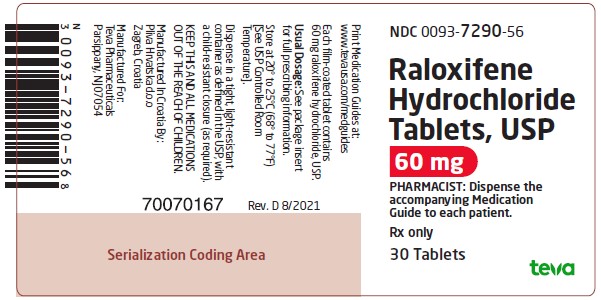
Raloxifene Hydrochloride 60 mg Tablet, Film Coated, 30-count — NDC 0093-7290-56 (Billing 00093-7290-56)
This is a package of 30 tablets of Raloxifene Hydrochloride 60 mg Tablet, Film Coated from Teva Pharmaceuticals USA, Inc., marketed since Mar 2014 and currently FDA-listed; retail pharmacies pay about $0.2235 per tablet (NADAC). It is the main listing for this product, which comes in 2 package sizes.
NDC database record
One package, one record: these facts belong to NDC 0093-7290-56 alone.
- Record
- FDA NDC Directory package listing · Human prescription drug
- Code segments
- 0093 labeler · 7290 product · 56 package
- Package marketed since
- Mar 28, 2014
- Sample package
- No — commercial package
- Listing certified through
- Dec 31, 2026
- Billing quantity
- 30 EA per package
- Barcode (UPC-A, from the NDC)
- 3 0093729056 8
- Medicaid fills, this package
- 490 prescriptions in the last four reported quarters
- FDA record last changed
- Jul 24, 2026
Identity & classification
Regulatory identifiers FDA, NLM and CMS codes for this package
Drug-database identifiers Medi-Span GPI and First Databank GCN / HICL / AHFS classification
- GSN (GCN sequence number): 037022
- GCN: 59011
- GPI-14 (Medi-Span): 30053060100320
- HICL (First Databank): 016917
- AHFS class code: 68:16.12.00
- RxCUI (RxNorm): 1490065
Where does this data come from?
- FDA openFDA NDC Directory · synced Oct 1, 2026
- FDA label on DailyMed · label index refreshed Oct 6, 2026
- RxNorm (NLM RxNav) · catalog refreshed Oct 1, 2026
- Medi-Span GPI (licensed)
- First Databank (licensed) · refreshed Oct 1, 2026
RxNorm drug class
This medicine belongs to the Estrogen Agonist/Antagonist class.
Where does this data come from?
- RxClass (NLM) · catalog refreshed Oct 1, 2026
Clinical
- It treats and prevents osteoporosis in women after menopause. It also lowers the risk of invasive breast cancer in postmenopausal women with osteoporosis or at high risk. It is not...
- Take it by mouth once a day, any time of day, with or without food. Pick a time you will remember. Follow your prescriber's directions, and ask whether you need calcium or vitamin...
- The most common are hot flashes, leg cramps, swelling in the legs or feet, flu-like symptoms, joint pain and sweating. Most are mild. Call your doctor if they bother you.
- Sudden leg pain or swelling, sudden shortness of breath, chest pain, sudden vision changes, or stroke signs like weakness or trouble speaking need emergency care. Raloxifene raises...
Patient education
Supplement & herbal interactions
Where does this data come from?
- MedlinePlus (NLM) · refreshed Oct 1, 2026
- FDA label on DailyMed · label index refreshed Oct 6, 2026
Ask a licensed pharmacist directly — free, answered by our team.
Pricing
A drug doesn't have one price. Each row is a different public payment system, and none is what you'd pay at the counter — that depends on your insurance. The ⓘ on each row explains what it measures.
| Price system | Per ea | Per package |
|---|---|---|
| Retail pharmacies payNADAC · weekly | $0.224 | $6.71 / 30 tablets |
| Medicaid paysCMS SDUD · 12 mo | $0.4936 | $14.81 / 30 tablets |
| Medicare drug plans payPart D · Q2 2026 | $0.4465 | $13.40 / 30 tablets |
Where does this data come from?
- CMS NADAC weekly file · file of Sep 30, 2026
- CMS ASP pricing files · refreshed Sep 20, 2026
- CMS Medicaid State Drug Utilization Data · through Q1 2026
- CMS Part D plan pricing files · refreshed Sep 24, 2026
- VA National Acquisition Center price file
Packaging — all sizes for this product
| Package NDC | Description | Per unit | Per pack | Marketing start | Marketing end | Status |
|---|---|---|---|---|---|---|
| 00093-7290-01 0093-7290-01 | 100 TABLET, FILM COATED in 1 BOTTLE | $0.2235 / ea | $22.35 | 2014-03-28 | — | Active |
| 00093-7290-56 You're viewing this Main listing | 30 TABLET, FILM COATED in 1 BOTTLE | $0.2235 / ea | $6.70 | 2014-03-28 | — | Active |
You're viewing the smallest of 2 pack sizes for this product.
This pack effectively ties for the lowest per-ea cost of the 2 priced pack sizes ($0.2235 NADAC).
In Medicaid, this is the most-dispensed pack of this product — about 96% of fills over the last four reported quarters. See all packs ↓
Pack size FAQ
What quantity is in this package?
How does this package differ from NDC 00093-7290-01?
What NDC number is used to bill for this package of Raloxifene Hydrochloride 60 mg Tablet, Film Coated?
Prices are the latest CMS NADAC pharmacy acquisition cost per NDC; per-pack figures are per-unit × pack quantity, shown only when the pack is denominated in the same measure NADAC prices.
Therapeutic equivalents
| Product | Labeler | Pack | NADAC/unit | TE | Status | Price vs. this |
|---|---|---|---|---|---|---|
| Raloxifene Hydrochloride 60 mgthis 00093-7290-56 | Teva | 30 tablets | $0.223 | AB | Availability likely | — |
| Raloxifene hydrochloride 60 mg 00904-6902-04 | Major | 1 tablet | $0.223 | AB | Availability likely | — |
| Raloxifene Hydrochloride 60 mg 16714-0213-01 | NorthStar | 30 tablets | $0.223 | AB | Availability likely | — |
| Raloxifene hydrochloride 60 mg 43598-0505-01 | Dr.Reddys | 100 tablets | $0.223 | AB | Availability likely | — |
| Raloxifene Hydrochloride 60 mg 50268-0694-15 | AvPAK | 1 tablet | $0.223 | AB | Availability likely | — |
| Raloxifene Hydrochloride 60 mg 60687-0266-21 | American | 30 tablets | $0.223 | AB | Availability likely | — |
| Raloxifene Hydrochloride 60 mg 65162-0057-03 | Amneal | 30 tablets | $0.223 | AB | Availability likely | — |
| Raloxifene Hydrochloride 60 mg 65862-0709-01 | Aurobindo | 100 tablets | $0.223 | AB | Availability likely | — |
| Raloxifene Hydrochloride 60 mg 69097-0825-02 | Cipla | 30 tablets | $0.223 | AB | Availability likely | — |
| Raloxifene hydrochloride 60 mg 72241-0010-05 | Modavar | 100 tablets | $0.223 | AB | Availability likely | — |
| Evista 60 mg 00002-4184-02 | Eli | 100 tablets | — | AB | FDA listed | — |
| Raloxifene hydrochloride 60 mg 50090-6177-01 | A-S | 90 tablets | — | AB | FDA listed | — |
| Raloxifene Hydrochloride 60 mg 50090-7073-01 | A-S | 90 tablets | — | AB | FDA listed | — |
| Raloxifene hydrochloride 60 mg 50228-0306-20 | ScieGen | 2000 tablets | — | AB | FDA listed | — |
| raloxifene hydrochloride 60 mg 68462-0393-01 | Glenmark | 100 tablets | — | AB | FDA listed | — |
| Raloxifene hydrochloride 60 mg 71209-0082-01 | Cadila | 30 tablets | — | AB | FDA listed | — |
| Raloxifene hydrochloride 60 mg 71335-1460-01 | Bryant | 60 tablets | — | AB | FDA listed | — |
| Raloxifene Hydrochloride 60 mg 71335-1715-01 | Bryant | 60 tablets | — | AB | FDA listed | — |
| Raloxifene Hydrochloride 60 mg 71335-2059-01 | Bryant | 60 tablets | — | AB | FDA listed | — |
| Raloxifene hydrochloride 60 mg 71610-0053-60 | Aphena | 90 tablets | — | AB | FDA listed | — |
| Raloxifene Hydrochloride 60 mg 71610-0524-60 | Aphena | 90 tablets | — | AB | FDA listed | — |
| Raloxifene hydrochloride 60 mg 72162-2418-00 | Bryant | 1000 tablets | — | AB | FDA listed | — |
| Raloxifene Hydrochloride 60 mg 76282-0256-01 | Exelan | 100 tablets | — | AB | FDA listed | — |
Where does this data come from?
- FDA openFDA NDC Directory · synced Oct 1, 2026
- FDA Orange Book · refreshed Oct 3, 2026
- CMS NADAC weekly file · file of Sep 30, 2026
Availability & generic status
This product is an FDA-approved generic. Other versions of the same drug are listed under Therapeutic equivalents, least expensive first.
Where does this data come from?
- FDA Orange Book · refreshed Oct 3, 2026
What it looks like
Where does this data come from?
- FDA label on DailyMed · label index refreshed Oct 6, 2026
Inactive Ingredients / Excipients
Inactive ingredients, also called excipients, are components of the drug product other than the active ingredient. They may include fillers, dyes, coatings, preservatives, flavors, or other formulation ingredients.
🧪 Avoiding an ingredient? See Raloxifene inactive ingredients by manufacturer: every current product's list side by side, so you can ask your pharmacy for the version that does not list it.
💡 Tap an ingredient (hover on desktop) to see what it is and why it’s used.
-
UNII OP1R32D61U
Microcrystalline cellulose is a purified form of cellulose, a natural fiber from plant sources. It acts as a binder and filler in tablets and capsules, helping hold ingredients together and give the medicine its shape and size.
-
UNII 36SFW2JZ0W
Hypromellose 2910 is a plant-based thickening agent derived from cellulose. In medicines, it forms a protective coating on tablets or capsules and controls how quickly the drug dissolves and releases into your body.
-
UNII 70097M6I30
Magnesium stearate is a salt made from magnesium and stearic acid, a fatty substance. It's used in tablets and capsules as a lubricant and glidant to help ingredients flow smoothly during manufacturing and prevent sticking.
-
UNII VH2XOU12IE
Polydextrose is a synthetic polymer made from dextrose (sugar) that acts as a bulking agent and filler in medicines. It helps give tablets and capsules proper volume and texture while often adding slight sweetness.
-
UNII 4R4HFI6D95
Polyethylene glycol 4000 is a synthetic polymer derived from petroleum. It serves as a binder, filler, and lubricant in solid dosage forms, and helps control how quickly the medicine dissolves.
-
UNII U725QWY32X
Povidone K30 is a synthetic polymer made from petroleum. It acts as a binder to hold tablet ingredients together and as a disintegrant to help the tablet break apart in the stomach so the medicine can be absorbed.
-
UNII ETJ7Z6XBU4
Silicon dioxide is a naturally occurring mineral used as a glidant and anti-caking agent. It helps powder ingredients flow smoothly and prevents clumping during manufacturing and storage.
-
UNII O8232NY3SJ
A plant-based carbohydrate derived from corn kernels. It acts as a filler to add bulk, a binder to hold ingredients together, and a disintegrant to help the tablet break apart in your stomach for absorption.
-
UNII 15FIX9V2JP
Titanium dioxide is a bright white mineral powder commonly used as a colorant and opacifying agent. It makes pills and tablets white or lighter in color and helps make coatings non-transparent.
9 inactive ingredients listed in the exact product block matched to this NDC.
Where does this data come from?
ingredient classCode="IACT" elements from the exact product block matched by this NDC. Label-section narrative from DailyMed / the openFDA label index is shown separately when available.- FDA label on DailyMed · label index refreshed Oct 6, 2026
- FDA openFDA NDC Directory · synced Oct 1, 2026
Inactive ingredient FAQ
Are inactive ingredients the same for every manufacturer?
Why might an inactive ingredient be missing?
Can inactive ingredients matter?
Manufacturer & labeler
More NDCs from Teva Pharmaceuticals USA, Inc. labeler code 00093
- Fluoxetine 40 mg Capsule NDC 0093-7198-01
- Pravastatin Sodium 20 mg Tablet NDC 0093-7201-10
- Pravastatin Sodium 40 mg Tablet NDC 0093-7202-10
- Pioglitazone 15 mg Tablet NDC 0093-7271-05
- Pioglitazone 30 mg Tablet NDC 0093-7272-05
- Pioglitazone 45 mg Tablet NDC 0093-7273-05
- Carvedilol 12.5 mg Tablet, Film Coated NDC 0093-7295-01
- Carvedilol 25 mg Tablet, Film Coated NDC 0093-7296-01
- Clopidogrel 75 mg Tablet, Film Coated NDC 0093-7314-05
- Mycophenolate Mofetil 250 mg Capsule NDC 0093-7334-01
- Lansoprazole 15 mg Capsule, Delayed Release NDC 0093-7350-56
- Lansoprazole 30 mg Capsule, Delayed Release NDC 0093-7351-56
Where does this data come from?
- FDA openFDA NDC Directory · synced Oct 1, 2026
- Drugs@FDA
Full prescribing information FDA SPL
🚨 Boxed Warning ▾
WARNING: INCREASED RISK OF VENOUS THROMBOEMBOLISM AND DEATH FROM STROKE Increased risk of deep vein thrombosis and pulmonary embolism have been reported with raloxifene hydrochloride [ see Warnings and Precautions ( 5.1 ) ]. Women with active or past history of venous thromboembolism should not take raloxifene hydrochloride [ see Contraindications ( 4.1 ) ]. Increased risk of death due to stroke occurred in a trial in postmenopausal women with documented coronary heart disease or at increased risk for major coronary events.
Consider risk-benefit balance in women at risk for stroke [ see Warnings and Precautions ( 5.2 ) and Clinical Studies ( 14.5 ) ] . WARNING: INCREASED RISK OF VENOUS THROMBOEMBOLISM AND DEATH FROM STROKE See full prescribing information for complete boxed warning . Increased risk of deep vein thrombosis and pulmonary embolism have been reported with raloxifene hydrochloride ( 5.1 ).
Women with active or past history of venous thromboembolism should not take raloxifene hydrochloride ( 4.1 ). Increased risk of death due to stroke occurred in a trial in postmenopausal women with documented coronary heart disease or at increased risk for major coronary events. Consider risk-benefit balance in women at risk for stroke ( 5.2 , 14.5 ).
🎯 Indications and Usage ▾
1 INDICATIONS AND USAGE Raloxifene hydrochloride tablets are an estrogen agonist/antagonist indicated for: Treatment and prevention of osteoporosis in postmenopausal women. ( 1.1 ) Reduction in risk of invasive breast cancer in postmenopausal women with osteoporosis. ( 1.2 ) Reduction in risk of invasive breast cancer in postmenopausal women at high risk for invasive breast cancer.
( 1.3 ) Important Limitations: Raloxifene hydrochloride tablets are not indicated for the treatment of invasive breast cancer, reduction of the risk of recurrence of breast cancer, or reduction of risk of noninvasive breast cancer. ( 1.3 )
1.1Treatment and Prevention of Osteoporosis in Postmenopausal Women Raloxifene hydrochloride tablets are indicated for the treatment and prevention of osteoporosis in postmenopausal women [ see Clinical Studies ( 14.1 , 14.2 ) ].
1.2Reduction in the Risk of Invasive Breast Cancer in Postmenopausal Women with Osteoporosis Raloxifene hydrochloride tablets are indicated for the reduction in risk of invasive breast cancer in postmenopausal women with osteoporosis [ see Clinical Studies ( 14.3 ) ].
1.3Reduction in the Risk of Invasive Breast Cancer in Postmenopausal Women at High Risk of Invasive Breast Cancer Raloxifene hydrochloride tablets are indicated for the reduction in risk of invasive breast cancer in postmenopausal women at high risk of invasive breast cancer [ see Clinical Studies ( 14.4 ) ]. The effect in the reduction in the incidence of breast cancer was shown in a study of postmenopausal women at high risk for breast cancer with a 5-year planned duration with a median follow-up of 4.3 years [ see Clinical Studies ( 14.4 ) ].
Twenty-seven percent of the participants received drug for 5 years. The long-term effects and the recommended length of treatment are not known. High risk of breast cancer is defined as at least one breast biopsy showing lobular carcinoma in situ (LCIS) or atypical hyperplasia, one or more first-degree relatives with breast cancer, or a 5-year predicted risk of breast cancer ≥1.66% (based on the modified Gail model).
Among the factors included in the modified Gail model are the following: current age, number of first-degree relatives with breast cancer, number of breast biopsies, age at menarche, nulliparity or age of first live birth. Healthcare professionals can obtain a Gail Model Risk Assessment Tool by dialing 1-800-545-5979. Currently, no single clinical finding or test result can quantify risk of breast cancer with certainty.
After an assessment of the risk of developing breast cancer, the decision regarding therapy with raloxifene hydrochloride tablets should be based upon an individual assessment of the benefits and risks. Raloxifene hydrochloride tablets do not eliminate the risk of breast cancer. Patients should have breast exams and mammograms before starting raloxifene hydrochloride tablets and should continue regular breast exams and mammograms in keeping with good medical practice after beginning treatment with raloxifene hydrochloride tablets.
Important Limitations of Use for Breast Cancer Risk Reduction There are no data available regarding the effect of raloxifene hydrochloride tablets on invasive breast cancer incidence in women with inherited mutations (BRCA1, BRCA2) to be able to make specific recommendations on the effectiveness of raloxifene hydrochloride tablets. Raloxifene hydrochloride tablets are not indicated for the treatment of invasive breast cancer or reduction of the risk of recurrence. Raloxifene hydrochloride tablets are not indicated for the reduction in the risk of noninvasive breast cancer.
⏱️ Dosage and Administration ▾
2 DOSAGE AND ADMINISTRATION 60 mg tablet orally once daily. ( 2.1 )
2.1Recommended Dosing The recommended dosage is one 60 mg raloxifene hydrochloride tablet daily, which may be administered any time of day without regard to meals [ see Clinical Pharmacology ( 12.3 ) ]. For the indications in risk of invasive breast cancer the optimum duration of treatment is not known [ see Clinical Studies ( 14.3 , 14.4 ) ].
2.2Recommendations for Calcium and Vitamin D Supplementation For either osteoporosis treatment or prevention, supplemental calcium and/or vitamin D should be added to the diet if daily intake is inadequate. Postmenopausal women require an average of 1500 mg/day of elemental calcium. Total daily intake of calcium above 1500 mg has not demonstrated additional bone benefits while daily intake above 2000 mg has been associated with increased risk of adverse effects, including hypercalcemia and kidney stones.
The recommended intake of vitamin D is 400 to 800 IU daily. Patients at increased risk for vitamin D insufficiency (e.g., over the age of 70 years, nursing home bound, or chronically ill) may need additional vitamin D supplements. Patients with gastrointestinal malabsorption syndromes may require higher doses of vitamin D supplementation and measurement of 25-hydroxyvitamin D should be considered.
💊 Dosage Forms and Strengths ▾
3 DOSAGE FORMS AND STRENGTHS 60 mg, white to off-white, capsule-shaped, film-coated tablets (not scored), debossed with “7290” on one side of the tablet, and “93” on the other. Tablets (not scored): 60 mg ( 3 )
⛔ Contraindications ▾
4 CONTRAINDICATIONS Active or past history of venous thromboembolism, including deep vein thrombosis, pulmonary embolism, and retinal vein thrombosis. ( 4.1 ) Pregnancy. ( 4.2 , 8.1 )
4.1Venous Thromboembolism Raloxifene hydrochloride tablets are contraindicated in women with active or past history of venous thromboembolism (VTE), including deep vein thrombosis, pulmonary embolism, and retinal vein thrombosis [ see Warnings and Precautions ( 5.1 ) ].
4.2Pregnancy Raloxifene hydrochloride tablets are contraindicated for use in pregnancy, as it may cause fetal harm [ see Use in Specific Populations ( 8.1 ) ].
⚠️ Warnings and Cautions ▾
5 WARNINGS AND PRECAUTIONS Venous Thromboembolism : Increased risk of deep vein thrombosis, pulmonary embolism, and retinal vein thrombosis. Discontinue use 72 hours prior to and during prolonged immobilization. ( 5.1 , 6.1 ) Death Due to Stroke : Increased risk of death due to stroke occurred in a trial in postmenopausal women with documented coronary heart disease or at increased risk for major coronary events.
No increased risk of stroke was seen in this trial. Consider risk-benefit balance in women at risk for stroke. ( 5.2 , 14.5 ) Cardiovascular Disease : Raloxifene hydrochloride should not be used for the primary or secondary prevention of cardiovascular disease.
( 5.3 , 14.5 ) Premenopausal Women : Use is not recommended. ( 5.4 ) Hepatic Impairment : Use with caution. ( 5.5 ) Concomitant Use with Systemic Estrogens : Not recommended.
( 5.6 ) Hypertriglyceridemia : If previous treatment with estrogen resulted in hypertriglyceridemia, monitor serum triglycerides. ( 5.7 )
5.1Venous Thromboembolism In clinical trials, raloxifene hydrochloride-treated women had an increased risk of venous thromboembolism (deep vein thrombosis and pulmonary embolism). Other venous thromboembolic events also could occur. A less serious event, superficial thrombophlebitis, also has been reported more frequently with raloxifene hydrochloride than with placebo.
The greatest risk for deep vein thrombosis and pulmonary embolism occurs during the first 4 months of treatment, and the magnitude of risk appears to be similar to the reported risk associated with use of hormone therapy. Because immobilization increases the risk for venous thromboembolic events independent of therapy, raloxifene hydrochloride should be discontinued at least 72 hours prior to and during prolonged immobilization (e.g., post-surgical recovery, prolonged bed rest), and raloxifene hydrochloride therapy should be resumed only after the patient is fully ambulatory.
In addition, women taking raloxifene hydrochloride should be advised to move about periodically during prolonged travel. The risk-benefit balance should be considered in women at risk of thromboembolic disease for other reasons, such as congestive heart failure, superficial thrombophlebitis, and active malignancy [ see Contraindications ( 4.1 ) and Adverse Reactions ( 6.1 ) ].
5.2Death Due to Stroke In a clinical trial of postmenopausal women with documented coronary heart disease or at increased risk for coronary events, an increased risk of death due to stroke was observed after treatment with raloxifene hydrochloride. During an average follow-up of 5.6 years, 59 (1.2%) raloxifene hydrochloride-treated women died due to a stroke compared to 39 (0.8%) placebo-treated women (22 versus 15 per 10,000 women-years; hazard ratio 1.49; 95% confidence interval, 1.00 to 2.24; p = 0.0499). There was no statistically significant difference between treatment groups in the incidence of stroke (249 in raloxifene hydrochloride [4.9%] versus 224 placebo [4.4%]).
Raloxifene hydrochloride had no significant effect on all-cause mortality. The risk-benefit balance should be considered in women at risk for stroke, such as prior stroke or transient ischemic attack (TIA), atrial fibrillation, hypertension, or cigarette smoking [ see Clinical Studies ( 14.5 ) ].
5.3Cardiovascular Disease Raloxifene hydrochloride should not be used for the primary or secondary prevention of cardiovascular disease. In a clinical trial of postmenopausal women with documented coronary heart disease or at increased risk for coronary events, no cardiovascular benefit was demonstrated after treatment with raloxifene for 5 years [ see Clinical Studies ( 14.5 ) ].
5.4Premenopausal Use There is no indication for premenopausal use of raloxifene hydrochloride. Safety of raloxifene hydrochloride in premenopausal women has not been established and its use is not recommended. Additionally, there is concern regarding inadvertent drug exposure in pregnancy in women of… [Excerpted — this section continues on DailyMed.]
🤒 Adverse Reactions ▾
6 ADVERSE REACTIONS Adverse reactions (>2% and more common than with placebo) include: hot flashes, leg cramps, peripheral edema, flu syndrome, arthralgia, sweating. ( 6.1 ) To report SUSPECTED ADVERSE REACTIONS, contact Teva at 1-888-838-2872 or FDA at 1-800-FDA-1088 or www.fda.gov/medwatch.
6.1Clinical Trials Experience Because clinical studies are conducted under widely varying conditions, adverse reaction rates observed in the clinical trials of a drug cannot be directly compared to rates in the clinical trials of another drug and may not reflect the rates observed in practice. The data described below reflect exposure to raloxifene hydrochloride in 8429 patients who were enrolled in placebo-controlled trials, including 6666 exposed for 1 year and 5685 for at least 3 years. Osteoporosis Treatment Clinical Trial (MORE) — The safety of raloxifene in the treatment of osteoporosis was assessed in a large (7705 patients) multinational, placebo-controlled trial.
Duration of treatment was 36 months, and 5129 postmenopausal women were exposed to raloxifene hydrochloride (2557 received 60 mg/day, and 2572 received 120 mg/day). The incidence of all-cause mortality was similar among groups: 23 (0.9%) placebo, 13 (0.5%) raloxifene hydrochloride-treated (raloxifene HCl 60 mg), and 28 (1.1%) raloxifene HCl 120 mg women died. Therapy was discontinued due to an adverse reaction in 10.9% of raloxifene hydrochloride-treated women and 8.8% of placebo-treated women.
Venous Thromboembolism: The most serious adverse reaction related to raloxifene hydrochloride was VTE (deep venous thrombosis, pulmonary embolism, and retinal vein thrombosis). During an average of study-drug exposure of 2.6 years, VTE occurred in about 1 out of 100 patients treated with raloxifene hydrochloride. Twenty-six raloxifene hydrochloride-treated women had a VTE compared to 11 placebo-treated women, the hazard ratio was 2.4 (95% confidence interval, 1.2, 4.5), and the highest VTE risk was during the initial months of treatment.
Common adverse reactions considered to be related to raloxifene hydrochloride therapy were hot flashes and leg cramps. Hot flashes occurred in about one in 10 patients on raloxifene hydrochloride and were most commonly reported during the first 6 months of treatment and were not different from placebo thereafter. Leg cramps occurred in about one in 14 patients on raloxifene hydrochloride.
Placebo-Controlled Osteoporosis Prevention Clinical Trials — The safety of raloxifene has been assessed primarily in 12 Phase 2 and Phase 3 studies with placebo, estrogen, and estrogen-progestin therapy control groups. The duration of treatment ranged from 2 to 30 months, and 2036 women were exposed to raloxifene HCl (371 patients received 10 to 50 mg/day, 828 received 60 mg/day, and 837 received from 120 to 600 mg/day). Therapy was discontinued due to an adverse reaction in 11.4% of 581 raloxifene hydrochloride-treated women and 12.2% of 584 placebo-treated women.
Discontinuation rates due to hot flashes did not differ significantly between raloxifene hydrochloride and placebo groups (1.7% and 2.2%, respectively). Common adverse reactions considered to be drug-related were hot flashes and leg cramps. Hot flashes occurred in about one in four patients on raloxifene hydrochloride versus about one in six on placebo.
The first occurrence of hot flashes was most commonly reported during the first 6 months of treatment. Table 1 lists adverse reactions occurring in either the osteoporosis treatment or in five prevention placebo-controlled clinical trials at a frequency ≥2.0% in either group and in more raloxifene hydrochloride-treated women than in placebo-treated women. Adverse reactions are shown without attribution of causality.
The majority of adverse reactions occurring during the studies were mild and generally did not require discontinuation of therapy. Table 1: Adverse Reactions Occurring in Placebo-Controlled Osteoporosis Clinical Trials at a Frequency ≥2.0%… [Excerpted — this section continues on DailyMed.]
🔄 Drug Interactions ▾
7 DRUG INTERACTIONS Cholestyramine : Use with raloxifene hydrochloride is not recommended. Reduces the absorption and enterohepatic cycling of raloxifene. ( 7.1 , 12.3 ) Warfarin : Monitor prothrombin time when starting or stopping raloxifene hydrochloride.
( 7.2 , 12.3 ) Highly Protein-Bound Drugs : Use with raloxifene hydrochloride with caution. Highly protein-bound drugs include diazepam, diazoxide, and lidocaine. Raloxifene hydrochloride is more than 95% bound to plasma proteins.
( 7.3 , 12.3 )
7.1Cholestyramine Concomitant administration of cholestyramine with raloxifene hydrochloride is not recommended. Although not specifically studied, it is anticipated that other anion exchange resins would have a similar effect. Raloxifene hydrochloride should not be co-administered with other anion exchange resins [ see Clinical Pharmacology ( 12.3 ) ].
7.2Warfarin If raloxifene hydrochloride is given concomitantly with warfarin or other warfarin derivatives, prothrombin time should be monitored more closely when starting or stopping therapy with raloxifene hydrochloride [ see Clinical Pharmacology ( 12.3 ) ].
7.3Other Highly Protein-Bound Drugs Raloxifene hydrochloride should be used with caution with certain other highly protein-bound drugs such as diazepam, diazoxide, and lidocaine. Although not examined, raloxifene hydrochloride might affect the protein binding of other drugs. Raloxifene is more than 95% bound to plasma proteins [ see Clinical Pharmacology ( 12.3 ) ].
7.4Systemic Estrogens The safety of concomitant use of raloxifene hydrochloride with systemic estrogens has not been established and its use is not recommended.
7.5Other Concomitant Medications Raloxifene hydrochloride can be concomitantly administered with ampicillin, amoxicillin, antacids, corticosteroids, and digoxin [ see Clinical Pharmacology ( 12.3 ) ]. The concomitant use of raloxifene hydrochloride and lipid-lowering agents has not been studied.
👥 Use in Specific Populations ▾
8 USE IN SPECIFIC POPULATIONS Pediatric Use: Safety and effectiveness not established. ( 8.4 )
8.1Pregnancy Risk Summary Raloxifene hydrochloride is contraindicated for use in pregnant women, and is not indicated for use in females of reproductive potential. Based on mechanism of action, raloxifene hydrochloride may block the important functions that estrogen has during all stages of pregnancy [ see Clinical Pharmacology ( 12.1 ) ]. Limited data with raloxifene hydrochloride use in pregnant women are insufficient to inform any drug associated risks for births defects or miscarriage.
In rabbits and rats dosed during organogenesis or during gestation and lactation, raloxifene hydrochloride produced multiple adverse reproductive and developmental effects, including abortion; fetal anomalies; and delayed or disrupted parturition leading to maternal and neonatal mortality, at doses less than or similar to the maximum recommended human dose (based on human body surface area comparison). Data Animal Data In the developmental and reproductive toxicity studies conducted with raloxifene hydrochloride, numerous adverse effects were observed in multiple animal species.
In rabbits dosed during organogenesis, abortion and a low rate of fetal heart anomalies (ventricular septal defects) occurred at doses ≥0.1 mg/kg (≥0.04 times the human dose based on surface area, mg/m 2 ). In rats dosed during organogenesis, retardation of fetal growth and developmental abnormalities (wavy ribs, kidney cavitation) occurred at doses ≥1 mg/kg (≥0.2 times the human dose based on surface area, mg/m 2 ). Treatment of rats during gestation and lactation with doses of 0.1 to 10 mg/kg (0.02 to 1.6 times the human dose based on surface area, mg/m 2 ) produced effects that included delayed and disrupted parturition, decreased neonatal survival and altered physical development, sex- and age-specific reductions in growth and changes in pituitary hormone content, and decreased lymphoid compartment size in offspring.
At 10 mg/kg, the disruption of parturition resulted in maternal and progeny morbidity and death. Effects in adult offspring (4 months of age) included uterine hypoplasia and reduced fertility; however, no ovarian or vaginal pathology was observed.
8.2Lactation Risk Summary Raloxifene hydrochloride is not indicated for use in females of reproductive potential. There is no information on the presence of raloxifene in human milk, the effects on the breastfed child, or the effects on milk production. However, based on mechanism of action, raloxifene hydrochloride may block the important functions that estrogen has in mammary tissue during lactation [ see Clinical Pharmacology ( 12.1 ) ].
8.4Pediatric Use Safety and effectiveness in pediatric patients have not been established.
8.5Geriatric Use Of the total number of patients in placebo-controlled clinical studies of raloxifene hydrochloride, 61% were 65 and over, while 15.5% were 75 and over. No overall differences in safety or effectiveness were observed between these subjects and younger subjects, and other reported clinical experience has not identified differences in responses between the elderly and younger patients, but greater sensitivity of some older individuals cannot be ruled out. Based on clinical trials, there is no need for dose adjustment for geriatric patients [ see Clinical Pharmacology ( 12.3 ) ].
8.6Renal Impairment Raloxifene hydrochloride should be used with caution in patients with moderate or severe renal impairment [ see Warnings and Precautions ( 5.8 ) and Clinical Pharmacology ( 12.3 ) ].
8.7Hepatic Impairment Raloxifene hydrochloride should be used with caution in patients with hepatic impairment [ see Warnings and Precautions ( 5.5 ) and Clinical Pharmacology ( 12.3 ) ].
🤰 Pregnancy ▾
8.1Pregnancy Risk Summary Raloxifene hydrochloride is contraindicated for use in pregnant women, and is not indicated for use in females of reproductive potential. Based on mechanism of action, raloxifene hydrochloride may block the important functions that estrogen has during all stages of pregnancy [ see Clinical Pharmacology ( 12.1 ) ]. Limited data with raloxifene hydrochloride use in pregnant women are insufficient to inform any drug associated risks for births defects or miscarriage.
In rabbits and rats dosed during organogenesis or during gestation and lactation, raloxifene hydrochloride produced multiple adverse reproductive and developmental effects, including abortion; fetal anomalies; and delayed or disrupted parturition leading to maternal and neonatal mortality, at doses less than or similar to the maximum recommended human dose (based on human body surface area comparison). Data Animal Data In the developmental and reproductive toxicity studies conducted with raloxifene hydrochloride, numerous adverse effects were observed in multiple animal species.
In rabbits dosed during organogenesis, abortion and a low rate of fetal heart anomalies (ventricular septal defects) occurred at doses ≥0.1 mg/kg (≥0.04 times the human dose based on surface area, mg/m 2 ). In rats dosed during organogenesis, retardation of fetal growth and developmental abnormalities (wavy ribs, kidney cavitation) occurred at doses ≥1 mg/kg (≥0.2 times the human dose based on surface area, mg/m 2 ). Treatment of rats during gestation and lactation with doses of 0.1 to 10 mg/kg (0.02 to 1.6 times the human dose based on surface area, mg/m 2 ) produced effects that included delayed and disrupted parturition, decreased neonatal survival and altered physical development, sex- and age-specific reductions in growth and changes in pituitary hormone content, and decreased lymphoid compartment size in offspring.
At 10 mg/kg, the disruption of parturition resulted in maternal and progeny morbidity and death. Effects in adult offspring (4 months of age) included uterine hypoplasia and reduced fertility; however, no ovarian or vaginal pathology was observed.
🧒 Pediatric Use ▾
8.4Pediatric Use Safety and effectiveness in pediatric patients have not been established.
🧓 Geriatric Use ▾
8.5Geriatric Use Of the total number of patients in placebo-controlled clinical studies of raloxifene hydrochloride, 61% were 65 and over, while 15.5% were 75 and over. No overall differences in safety or effectiveness were observed between these subjects and younger subjects, and other reported clinical experience has not identified differences in responses between the elderly and younger patients, but greater sensitivity of some older individuals cannot be ruled out. Based on clinical trials, there is no need for dose adjustment for geriatric patients [ see Clinical Pharmacology ( 12.3 ) ].
🆘 Overdosage ▾
10 OVERDOSAGE In an 8-week study of 63 postmenopausal women, a dose of raloxifene hydrochloride (HCl) 600 mg/day was safely tolerated. In clinical trials, no raloxifene overdose has been reported. In postmarketing spontaneous reports, raloxifene overdose has been reported very rarely (less than 1 out of 10,000 [<0.01%] patients treated).
The highest overdose has been approximately 1.5 grams. No fatalities associated with raloxifene overdose have been reported. Adverse reactions were reported in approximately half of the adults who took ≥180 mg raloxifene HCl and included leg cramps and dizziness.
Two 18-month-old children each ingested raloxifene HCl 180 mg. In these two children, symptoms reported included ataxia, dizziness, vomiting, rash, diarrhea, tremor, and flushing, as well as elevation in alkaline phosphatase. There is no specific antidote for raloxifene.
No mortality was seen after a single oral dose in rats or mice at 5000 mg/kg (810 times the human dose for rats and 405 times the human dose for mice based on surface area, mg/m 2 ) or in monkeys at 1000 mg/kg (80 times the AUC in humans).
🧬 Clinical Pharmacology ▾
12 CLINICAL PHARMACOLOGY
12.1Mechanism of Action Raloxifene is an estrogen agonist/antagonist, commonly referred to as a selective estrogen receptor modulator (SERM). The biological actions of raloxifene are largely mediated through binding to estrogen receptors. This binding results in activation of estrogenic pathways in some tissues (agonism) and blockade of estrogenic pathways in others (antagonism).
The agonistic or antagonistic action of raloxifene depends on the extent of recruitment of coactivators and corepressors to estrogen receptor (ER) target gene promoters. Raloxifene appears to act as an estrogen agonist in bone. It decreases bone resorption and bone turnover, increases bone mineral density (BMD) and decreases fracture incidence.
Preclinical data demonstrate that raloxifene is an estrogen antagonist in uterine and breast tissues. These results are consistent with findings in clinical trials, which suggest that raloxifene hydrochloride lacks estrogen-like effects on the uterus and breast tissue.
12.2Pharmacodynamics Decreases in estrogen levels after oophorectomy or menopause lead to increases in bone resorption and accelerated bone loss. Bone is initially lost rapidly because the compensatory increase in bone formation is inadequate to offset resorptive losses. In addition to loss of estrogen, this imbalance between resorption and formation may be due to age-related impairment of osteoblasts or their precursors.
In some women, these changes will eventually lead to decreased bone mass, osteoporosis, and increased risk for fractures, particularly of the spine, hip, and wrist. Vertebral fractures are the most common type of osteoporotic fracture in postmenopausal women. In both the osteoporosis treatment and prevention trials, raloxifene hydrochloride therapy resulted in consistent, statistically significant suppression of bone resorption and bone formation, as reflected by changes in serum and urine markers of bone turnover (e.g., bone-specific alkaline phosphatase, osteocalcin, and collagen breakdown products).
The suppression of bone turnover markers was evident by 3 months and persisted throughout the 36-month and 24-month observation periods. In a 31-week, open-label, radiocalcium kinetics study, 33 early postmenopausal women were randomized to treatment with once-daily raloxifene hydrochloride 60 mg, cyclic estrogen/progestin (0.625 mg conjugated estrogens daily with 5 mg medroxyprogesterone acetate daily for the first 2 weeks of each month [hormone therapy]), or no treatment. Treatment with either raloxifene hydrochloride or hormone therapy was associated with reduced bone resorption and a positive shift in calcium balance (-82 mg Ca/day and +60 mg Ca/day, respectively, for raloxifene hydrochloride and -162 mg Ca/day and +91 mg Ca/day, respectively, for hormone therapy).
There were small decreases in serum total calcium, inorganic phosphate, total protein, and albumin, which were generally of lesser magnitude than decreases observed during estrogen or hormone therapy. Platelet count was also decreased slightly and was not different from estrogen therapy.
12.3Pharmacokinetics The disposition of raloxifene has been evaluated in more than 3000 postmenopausal women in selected raloxifene osteoporosis treatment and prevention clinical trials, using a population approach. Pharmacokinetic data also were obtained in conventional pharmacology studies in 292 postmenopausal women. Raloxifene exhibits high within-subject variability (approximately 30% coefficient of variation) of most pharmacokinetic parameters.
Table 3 summarizes the pharmacokinetic parameters of raloxifene. Absorption — Raloxifene is absorbed rapidly after oral administration. Approximately 60% of an oral dose is absorbed, but presystemic glucuronide conjugation is extensive.
Absolute bioavailability of raloxifene is 2%. The time to reach average maximum plasma concentration and bioavailability are functions of systemic interconversion and enterohe… [Excerpted — this section continues on DailyMed.]
🧬 Mechanism of Action ▾
12.1Mechanism of Action Raloxifene is an estrogen agonist/antagonist, commonly referred to as a selective estrogen receptor modulator (SERM). The biological actions of raloxifene are largely mediated through binding to estrogen receptors. This binding results in activation of estrogenic pathways in some tissues (agonism) and blockade of estrogenic pathways in others (antagonism).
The agonistic or antagonistic action of raloxifene depends on the extent of recruitment of coactivators and corepressors to estrogen receptor (ER) target gene promoters. Raloxifene appears to act as an estrogen agonist in bone. It decreases bone resorption and bone turnover, increases bone mineral density (BMD) and decreases fracture incidence.
Preclinical data demonstrate that raloxifene is an estrogen antagonist in uterine and breast tissues. These results are consistent with findings in clinical trials, which suggest that raloxifene hydrochloride lacks estrogen-like effects on the uterus and breast tissue.
📦 How Supplied / Storage and Handling ▾
16 HOW SUPPLIED/STORAGE AND HANDLING
16.1How Supplied Raloxifene Hydrochloride Tablets, USP are available as follows: 60 mg - white to off-white, film-coated, capsule-shaped tablets (not scored), debossed with “7290” on one side of the tablet, and “93” on the other side, in bottles of 30 and 100. Bottle (count) NDC Number 30 NDC 0093-7290-56 100 NDC 0093-7290-01
16.2Storage and Handling Store at 20° to 25°C (68° to 77°F) [See USP Controlled Room Temperature]. Dispense in a tight, light-resistant container as defined in the USP with a child-resistant closure (as required). KEEP THIS AND ALL MEDICATIONS OUT OF THE REACH OF CHILDREN.
📦 Storage and Handling ▾
16.2Storage and Handling Store at 20° to 25°C (68° to 77°F) [See USP Controlled Room Temperature]. Dispense in a tight, light-resistant container as defined in the USP with a child-resistant closure (as required). KEEP THIS AND ALL MEDICATIONS OUT OF THE REACH OF CHILDREN.
📋 Description ▾
11 DESCRIPTION Raloxifene hydrochloride, USP is an estrogen agonist/antagonist, commonly referred to as a selective estrogen receptor modulator (SERM) that belongs to the benzothiophene class of compounds. The chemical structure is: C 28 H 27 NO 4 S•HCl M.W. 510.04 The chemical designation is methanone, [6-hydroxy-2-(4-hydroxyphenyl)benzo[ b ]thien-3-yl]-[4-[2-(1-piperidinyl)ethoxy]phenyl]-, hydrochloride.
Raloxifene HCl, USP is an off-white to pale-yellow solid that is very slightly soluble in water. Raloxifene hydrochloride, USP is supplied in a tablet dosage form for oral administration. Each Raloxifene Hydrochloride Tablet, USP contains 60 mg of raloxifene HCl, USP which is the molar equivalent of 55.71 mg of free base.
Inactive ingredients include colloidal silicon dioxide, hypromellose, magnesium stearate, microcrystalline cellulose, polydextrose, polyethylene glycol, povidone, pregelatinized corn starch, and titanium dioxide. Product meets USP Dissolution Test 2. 2
💬 Information for Patients ▾
17 PATIENT COUNSELING INFORMATION See FDA-approved Medication Guide. Physicians should instruct their patients to read the Medication Guide before starting therapy with raloxifene hydrochloride and to reread it each time the prescription is renewed.
17.1Osteoporosis Recommendations, Including Calcium and Vitamin D Supplementation For osteoporosis treatment or prevention, patients should be instructed to take supplemental calcium and/or vitamin D if intake is inadequate. Patients at increased risk for vitamin D insufficiency (e.g., over the age of 70 years, nursing home bound, chronically ill, or with gastrointestinal malabsorption syndromes) should be instructed to take additional vitamin D if needed. Weight-bearing exercises should be considered along with the modification of certain behavioral factors, such as cigarette smoking and/or excessive alcohol consumption, if these factors exist.
17.2Patient Immobilization Raloxifene hydrochloride should be discontinued at least 72 hours prior to and during prolonged immobilization (e.g., post-surgical recovery, prolonged bed rest), and patients should be advised to avoid prolonged restrictions of movement during travel because of the increased risk of venous thromboembolic events [ see Warnings and Precautions ( 5.1 ) ].
17.3Hot Flashes or Flushes Raloxifene hydrochloride may increase the incidence of hot flashes and is not effective in reducing hot flashes or flushes associated with estrogen deficiency. In some asymptomatic patients, hot flashes may occur upon beginning raloxifene hydrochloride therapy.
17.4Reduction in Risk of Invasive Breast Cancer in Postmenopausal Women with Osteoporosis or at High Risk of Invasive Breast Cancer Use of raloxifene hydrochloride is associated with the reduction of the risk of invasive breast cancer in postmenopausal women. Raloxifene hydrochloride has not been shown to reduce the risk of noninvasive breast cancer. When considering treatment, physicians need to discuss the potential benefits and risks of raloxifene hydrochloride treatment with the patient.
Raloxifene hydrochloride is not indicated for the treatment of invasive breast cancer or reduction of the risk of recurrence. Patients should have breast exams and mammograms before starting raloxifene hydrochloride and should continue regular breast exams and mammograms in keeping with good medical practice after beginning treatment with raloxifene hydrochloride. Dispense with Medication Guide available at: www.tevausa.com/medguides Manufactured In Croatia By: Pliva Hrvatska d.o.o.
Zagreb, Croatia Manufactured For: Teva Pharmaceuticals Parsippany, NJ 07054 Rev. G 8/2021
💬 Medication Guide ▾
MEDICATION GUIDE Dispense with Medication Guide available at: www.tevausa.com/medguides Raloxifene Hydrochloride (ral-OX-i-FEEN HYE-droe-KLOR-ide) Tablets, for oral use Read the Medication Guide that comes with raloxifene hydrochloride tablets before you start taking them and each time you refill your prescription. The information may have changed. This Medication Guide does not take the place of talking with your doctor about your medical condition or treatment.
Talk with your doctor about raloxifene hydrochloride tablets when you start taking them and at regular checkups. What is the most important information I should know about raloxifene hydrochloride tablets? Serious and life-threatening side effects can occur while taking raloxifene hydrochloride tablets.
These include blood clots and dying from stroke: Increased risk of blood clots in the legs (deep vein thrombosis) and lungs (pulmonary embolism) have been reported with raloxifene hydrochloride tablets. Women who have or have had blood clots in the legs, lungs, or eyes should not take raloxifene hydrochloride tablets. Women who have had a heart attack or are at risk for a heart attack may have an increased risk of dying from stroke when taking raloxifene hydrochloride tablets.
Before starting raloxifene hydrochloride tablets, tell your doctor if you have had blood clots in your legs, lungs, or eyes, a stroke, mini-stroke (transient ischemic attack), or have an irregular heartbeat. Stop taking raloxifene hydrochloride tablets and call your doctor if you have: leg pain or a feeling of warmth in the lower leg (calf). swelling of the legs, hands, or feet. sudden chest pain, shortness of breath, or coughing up blood. sudden change in your vision, such as loss of vision or blurred vision. Being still for a long time (such as sitting still during a long car or airplane trip or being in bed after surgery) can increase your risk of blood clots (see “ What should I avoid if I am taking raloxifene hydrochloride tablets? ”).
What are raloxifene hydrochloride tablets? Raloxifene hydrochloride tablets are a type of prescription medicine called a Selective Estrogen Receptor Modulator (SERM). Raloxifene hydrochloride tablets are for women after menopause, and have more than one use: Osteoporosis: Raloxifene hydrochloride tablets treat and prevent osteoporosis by helping make your bones stronger and less likely to break.
Invasive Breast Cancer: If you have osteoporosis or are at high risk for breast cancer, raloxifene hydrochloride tablets can be used to lower your chance of getting invasive breast cancer. Raloxifene hydrochloride tablets will not totally get rid of your chance of getting breast cancer. Your doctor can estimate your risk of breast cancer by asking you about risk factors, including: your age (getting older). family history of breast cancer in your mother, sister, or daughter. a history of any breast biopsy, especially an abnormal biopsy.
You and your doctor should talk about whether the possible benefit of raloxifene hydrochloride tablets in lowering your chance of getting invasive breast cancer is greater than its possible risks. Raloxifene hydrochloride tablets are not for use in premenopausal women (women who have not passed menopause). Who should not take raloxifene hydrochloride tablets?
Do not take raloxifene hydrochloride tablets if you: have or have had blood clots in your legs, lungs, or eyes. Taking raloxifene hydrochloride tablets may increase the risk of getting blood clots. are pregnant or could become pregnant. Raloxifene hydrochloride tablets could harm your unborn child. are nursing a baby.
It is not known if raloxifene hydrochloride passes into breast milk or what effect it might have on the baby. What should I tell my doctor before taking raloxifene hydrochloride tablets? Raloxifene hydrochloride tablets may not be right for you.
Before taking raloxifene hydrochloride tablets, tell your doctor about all your medical conditions, including if you: have h… [Excerpted — this section continues on DailyMed.]
🍼 Nursing Mothers ▾
8.2Lactation Risk Summary Raloxifene hydrochloride is not indicated for use in females of reproductive potential. There is no information on the presence of raloxifene in human milk, the effects on the breastfed child, or the effects on milk production. However, based on mechanism of action, raloxifene hydrochloride may block the important functions that estrogen has in mammary tissue during lactation [ see Clinical Pharmacology ( 12.1 ) ].
🧬 Pharmacokinetics ▾
12.3Pharmacokinetics The disposition of raloxifene has been evaluated in more than 3000 postmenopausal women in selected raloxifene osteoporosis treatment and prevention clinical trials, using a population approach. Pharmacokinetic data also were obtained in conventional pharmacology studies in 292 postmenopausal women. Raloxifene exhibits high within-subject variability (approximately 30% coefficient of variation) of most pharmacokinetic parameters.
Table 3 summarizes the pharmacokinetic parameters of raloxifene. Absorption — Raloxifene is absorbed rapidly after oral administration. Approximately 60% of an oral dose is absorbed, but presystemic glucuronide conjugation is extensive.
Absolute bioavailability of raloxifene is 2%. The time to reach average maximum plasma concentration and bioavailability are functions of systemic interconversion and enterohepatic cycling of raloxifene and its glucuronide metabolites. Administration of raloxifene HCl with a standardized, high-fat meal increases the absorption of raloxifene (C max 28% and AUC 16%), but does not lead to clinically meaningful changes in systemic exposure.
Raloxifene hydrochloride can be administered without regard to meals. Distribution — Following oral administration of single doses ranging from 30 to 150 mg of raloxifene HCl, the apparent volume of distribution is 2348 L/kg and is not dose dependent. Raloxifene and the monoglucuronide conjugates are highly (95%) bound to plasma proteins.
Raloxifene binds to both albumin and α1-acid glycoprotein, but not to sex-steroid binding globulin. Metabolism — Biotransformation and disposition of raloxifene in humans have been determined following oral administration of 14 C-labeled raloxifene. Raloxifene undergoes extensive first-pass metabolism to the glucuronide conjugates: raloxifene-4′-glucuronide, raloxifene-6-glucuronide, and raloxifene-6, 4′-diglucuronide.
No other metabolites have been detected, providing strong evidence that raloxifene is not metabolized by cytochrome P450 pathways. Unconjugated raloxifene comprises less than 1% of the total radiolabeled material in plasma. The terminal log-linear portions of the plasma concentration curves for raloxifene and the glucuronides are generally parallel.
This is consistent with interconversion of raloxifene and the glucuronide metabolites. Following intravenous administration, raloxifene is cleared at a rate approximating hepatic blood flow. Apparent oral clearance is
44.1L/kg•hr. Raloxifene and its glucuronide conjugates are interconverted by reversible systemic metabolism and enterohepatic cycling, thereby prolonging its plasma elimination half-life to 27.7 hours after oral dosing. Results from single oral doses of raloxifene predict multiple-dose pharmacokinetics.
Following chronic dosing, clearance ranges from 40 to 60 L/kg•hr. Increasing doses of raloxifene HCl (ranging from 30 to 150 mg) result in slightly less than a proportional increase in the area under the plasma time concentration curve (AUC). Excretion — Raloxifene is primarily excreted in feces, and less than 0.2% is excreted unchanged in urine.
Less than 6% of the raloxifene dose is eliminated in urine as glucuronide conjugates. Table 3: Summary of Raloxifene Pharmacokinetic Parameters in the Healthy Postmenopausal Woman C max 1 , 2 (ng/mL)/ (mg/kg) t ½ (hr) 1 AUC 0-∞ 1 , 2 (ng•hr/mL)/ (mg/kg) CL/F 1 (L/kg•hr) V/F 1 (L/kg) Single Dose Mean 0.50 27.7 27.2 44.1 2348 CV 1 (%) 52 10.7 to 273 3 44 46 52 Multiple Dose Mean 1.36 32.5 24.2 47.4 2853 CV 1 (%) 37 15.8 to 86.6 3 36 41 56 1. Abbreviations: C max = maximum plasma concentration, t ½ = half-life, AUC = area under the curve, CL = clearance, V = volume of distribution, F = bioavailability, CV = coefficient of variation.
2. Data normalized for dose in mg and body weight in kg. 3.
Range of observed half-life. Special Populations Pediatric — The pharmacokinetics of raloxifene has not been evaluated in a pediatric population [ see Use in Specific Populations… [Excerpted — this section continues on DailyMed.]
🧬 Pharmacodynamics ▾
12.2Pharmacodynamics Decreases in estrogen levels after oophorectomy or menopause lead to increases in bone resorption and accelerated bone loss. Bone is initially lost rapidly because the compensatory increase in bone formation is inadequate to offset resorptive losses. In addition to loss of estrogen, this imbalance between resorption and formation may be due to age-related impairment of osteoblasts or their precursors.
In some women, these changes will eventually lead to decreased bone mass, osteoporosis, and increased risk for fractures, particularly of the spine, hip, and wrist. Vertebral fractures are the most common type of osteoporotic fracture in postmenopausal women. In both the osteoporosis treatment and prevention trials, raloxifene hydrochloride therapy resulted in consistent, statistically significant suppression of bone resorption and bone formation, as reflected by changes in serum and urine markers of bone turnover (e.g., bone-specific alkaline phosphatase, osteocalcin, and collagen breakdown products).
The suppression of bone turnover markers was evident by 3 months and persisted throughout the 36-month and 24-month observation periods. In a 31-week, open-label, radiocalcium kinetics study, 33 early postmenopausal women were randomized to treatment with once-daily raloxifene hydrochloride 60 mg, cyclic estrogen/progestin (0.625 mg conjugated estrogens daily with 5 mg medroxyprogesterone acetate daily for the first 2 weeks of each month [hormone therapy]), or no treatment. Treatment with either raloxifene hydrochloride or hormone therapy was associated with reduced bone resorption and a positive shift in calcium balance (-82 mg Ca/day and +60 mg Ca/day, respectively, for raloxifene hydrochloride and -162 mg Ca/day and +91 mg Ca/day, respectively, for hormone therapy).
There were small decreases in serum total calcium, inorganic phosphate, total protein, and albumin, which were generally of lesser magnitude than decreases observed during estrogen or hormone therapy. Platelet count was also decreased slightly and was not different from estrogen therapy.
🔬 Clinical Studies ▾
14 CLINICAL STUDIES
14.1Treatment of Postmenopausal Osteoporosis Effect on Fracture Incidence The effects of raloxifene hydrochloride on fracture incidence and BMD in postmenopausal women with osteoporosis were examined at 3 years in a large randomized, placebo-controlled, double-blind, multinational osteoporosis treatment trial (MORE). All vertebral fractures were diagnosed radiographically; some of these fractures also were associated with symptoms (i.e., clinical fractures). The study population consisted of 7705 postmenopausal women with osteoporosis as defined by: a) low BMD (vertebral or hip BMD at least 2.5 standard deviations below the mean value for healthy young women) without baseline vertebral fractures or b) one or more baseline vertebral fractures.
Women enrolled in this study had a median age of 67 years (range 31 to 80) and a median time since menopause of 19 years. Effect on Bone Mineral Density Raloxifene hydrochloride, 60 mg administered once daily, increased spine and hip BMD by 2 to 3%. Raloxifene hydrochloride decreased the incidence of the first vertebral fracture from 4.3% for placebo to 1.9% for raloxifene hydrochloride (relative risk reduction = 55%) and subsequent vertebral fractures from 20.2% for placebo to 14.1% for raloxifene hydrochloride (relative risk reduction = 30%) ( see Table 4).
All women in the study received calcium (500 mg/day) and vitamin D (400 to 600 IU/day). Raloxifene hydrochloride reduced the incidence of vertebral fractures whether or not patients had a vertebral fracture upon study entry. The decrease in incidence of vertebral fracture was greater than could be accounted for by increase in BMD alone.
Table 4: Effect of Raloxifene Hydrochloride on Risk of Vertebral Fractures Number of Patients Absolute Risk Reduction (ARR) Relative Risk Reduction (95% CI) Raloxifene Hydrochloride Placebo Fractures diagnosed radiographically Patients with no baseline fracture 1 n=1401 n=1457 Number (%) of patients with ≥ 1 new vertebral fracture 27 (1.9%) 62 (4.3%) 2.4% 55% (29%, 71%) Patients with ≥ 1 baseline fracture 1 n=858 n=835 Number (%) of patients with ≥ 1 new vertebral fracture 121 (14.1%) 169 (20.2%) 6.1% 30% (14%, 44%) Symptomatic vertebral fractures All randomized patients n=2557 n=2576 Number (%) of patients with ≥ 1 new clinical (painful) vertebral fracture 47 (1.8%) 81 (3.1%) 1.3% 41% (17%, 59%) 1.
Includes all patients with baseline and at least one follow-up radiograph. The mean percentage change in BMD from baseline for raloxifene hydrochloride was statistically significantly greater than for placebo at each skeletal site ( see Table 5). Table 5: Raloxifene Hydrochloride- (60 mg Once Daily) Related Increases in BMD 1 for the Osteoporosis Treatment Study Expressed as Mean Percentage Increase vs.
Placebo 2 , 3 Site Time 12 Months % 24 Months % 36 Months % Lumbar Spine 2.0 2.6
2.6Femoral Neck 1.3 1.9
2.1 Ultradistal Radius ND 4
2.2 ND 4 Distal Radius ND 4
0.9 ND 4 Total Body ND 4
1.1ND 4 Note: all BMD increases were significant (p < 0.001). Intent-to-treat analysis; last observation carried forward. All patients received calcium and vitamin D.
ND = not done (total body and radius BMD were measured only at 24 months). Discontinuation from the study was required when excessive bone loss or multiple incident vertebral fractures occurred. Such discontinuation was statistically significantly more frequent in the placebo group (3.7%) than in the raloxifene hydrochloride group (1.1%).
Bone Histology Bone biopsies for qualitative and quantitative histomorphometry were obtained at baseline and after 2 years of treatment. There were 56 paired biopsies evaluable for all indices. In raloxifene hydrochloride-treated patients, there were statistically significant decreases in bone formation rate per tissue volume, consistent with a reduction in bone turnover.
Normal bone quality was maintained; specifically, there was no evidence of osteomalacia, marrow fibrosis, cellular toxicity, or woven… [Excerpted — this section continues on DailyMed.]
🧪 Nonclinical Toxicology ▾
13 NONCLINICAL TOXICOLOGY
13.1Carcinogenesis, Mutagenesis, Impairment of Fertility Carcinogenesis — In a 21-month carcinogenicity study in mice, there was an increased incidence of ovarian tumors in female animals given 9 to 242 mg/kg, which included benign and malignant tumors of granulosa/theca cell origin and benign tumors of epithelial cell origin. Systemic exposure (AUC) of raloxifene in this group was 0.3 to 34 times that in postmenopausal women administered a 60 mg dose. There was also an increased incidence of testicular interstitial cell tumors and prostatic adenomas and adenocarcinomas in male mice given 41 or 210 mg/kg (4.7 or 24 times the AUC in humans) and prostatic leiomyoblastoma in male mice given 210 mg/kg.
In a 2-year carcinogenicity study in rats, an increased incidence in ovarian tumors of granulosa/theca cell origin was observed in female rats given 279 mg/kg (approximately 400 times the AUC in humans). The female rodents in these studies were treated during their reproductive lives when their ovaries were functional and responsive to hormonal stimulation. Mutagenesis — Raloxifene HCl was not genotoxic in any of the following test systems: the Ames test for bacterial mutagenesis with and without metabolic activation, the unscheduled DNA synthesis assay in rat hepatocytes, the mouse lymphoma assay for mammalian cell mutation, the chromosomal aberration assay in Chinese hamster ovary cells, the in vivo sister chromatid exchange assay in Chinese hamsters, and the in vivo micronucleus test in mice.
Impairment of Fertility — When male and female rats were given daily doses ≥5 mg/kg (≥0.8 times the human dose based on surface area, mg/m 2 ) prior to and during mating, no pregnancies occurred. In male rats, daily doses up to 100 mg/kg (16 times the human dose based on surface area, mg/m 2 ) for at least 2 weeks did not affect sperm production or quality or reproductive performance. In female rats, at doses of 0.1 to 10 mg/kg/day (0.02 to 1.6 times the human dose based on surface area, mg/m 2 ), raloxifene disrupted estrous cycles and inhibited ovulation.
These effects of raloxifene were reversible. In another study in rats in which raloxifene was given during the preimplantation period at doses ≥0.1 mg/kg (≥0.02 times the human dose based on surface area, mg/m 2 ), raloxifene delayed and disrupted embryo implantation, resulting in prolonged gestation and reduced litter size. The reproductive and developmental effects observed in animals are consistent with the estrogen receptor activity of raloxifene.
13.2Animal Toxicology and/or Pharmacology The skeletal effects of raloxifene treatment were assessed in ovariectomized rats and monkeys. In rats, raloxifene prevented increased bone resorption and bone loss after ovariectomy. There were positive effects of raloxifene on bone strength, but the effects varied with time.
Cynomolgus monkeys were treated with raloxifene or conjugated estrogens for 2 years. In terms of bone cycles, this is equivalent to approximately 6 years in humans. Raloxifene and estrogen suppressed bone turnover and increased BMD in the lumbar spine and in the central cancellous bone of the proximal tibia.
In this animal model, there was a positive correlation between vertebral compressive breaking force and BMD of the lumbar spine. Histologic examination of bone from rats and monkeys treated with raloxifene showed no evidence of woven bone, marrow fibrosis, or mineralization defects. These results are consistent with data from human studies of radiocalcium kinetics and markers of bone metabolism, and are consistent with the action of raloxifene hydrochloride as a skeletal antiresorptive agent.
📄 Carcinogenesis, Mutagenesis, Impairment of Fertility ▾
13.1Carcinogenesis, Mutagenesis, Impairment of Fertility Carcinogenesis — In a 21-month carcinogenicity study in mice, there was an increased incidence of ovarian tumors in female animals given 9 to 242 mg/kg, which included benign and malignant tumors of granulosa/theca cell origin and benign tumors of epithelial cell origin. Systemic exposure (AUC) of raloxifene in this group was 0.3 to 34 times that in postmenopausal women administered a 60 mg dose. There was also an increased incidence of testicular interstitial cell tumors and prostatic adenomas and adenocarcinomas in male mice given 41 or 210 mg/kg (4.7 or 24 times the AUC in humans) and prostatic leiomyoblastoma in male mice given 210 mg/kg.
In a 2-year carcinogenicity study in rats, an increased incidence in ovarian tumors of granulosa/theca cell origin was observed in female rats given 279 mg/kg (approximately 400 times the AUC in humans). The female rodents in these studies were treated during their reproductive lives when their ovaries were functional and responsive to hormonal stimulation. Mutagenesis — Raloxifene HCl was not genotoxic in any of the following test systems: the Ames test for bacterial mutagenesis with and without metabolic activation, the unscheduled DNA synthesis assay in rat hepatocytes, the mouse lymphoma assay for mammalian cell mutation, the chromosomal aberration assay in Chinese hamster ovary cells, the in vivo sister chromatid exchange assay in Chinese hamsters, and the in vivo micronucleus test in mice.
Impairment of Fertility — When male and female rats were given daily doses ≥5 mg/kg (≥0.8 times the human dose based on surface area, mg/m 2 ) prior to and during mating, no pregnancies occurred. In male rats, daily doses up to 100 mg/kg (16 times the human dose based on surface area, mg/m 2 ) for at least 2 weeks did not affect sperm production or quality or reproductive performance. In female rats, at doses of 0.1 to 10 mg/kg/day (0.02 to 1.6 times the human dose based on surface area, mg/m 2 ), raloxifene disrupted estrous cycles and inhibited ovulation.
These effects of raloxifene were reversible. In another study in rats in which raloxifene was given during the preimplantation period at doses ≥0.1 mg/kg (≥0.02 times the human dose based on surface area, mg/m 2 ), raloxifene delayed and disrupted embryo implantation, resulting in prolonged gestation and reduced litter size. The reproductive and developmental effects observed in animals are consistent with the estrogen receptor activity of raloxifene.
📄 Package Label / Principal Display Panel ▾
Package/Label Display Panel NDC 0093-7290-56 Raloxifene Hydrochloride Tablets, USP 60 mg PHARMACIST: Dispense the accompanying Medication Guide to each patient. Rx only 30 TABLETS 1