
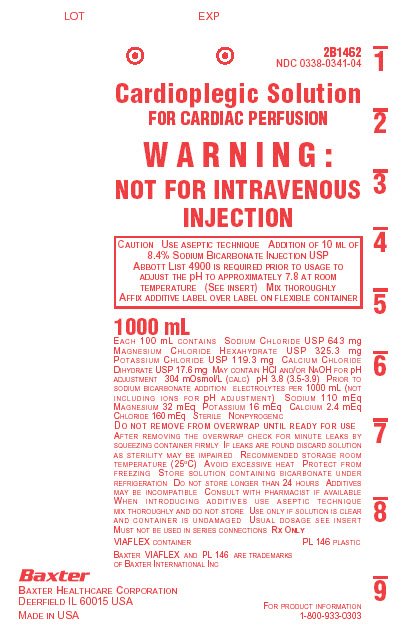
Cardioplegic Calcium Chloride, Magnesium Chloride, Potassium Chloride and Sodium 17.6 mg/100mL; 325.3 mg/100mL; 119.3 mg/100mL; 643 mg/100mL Solution — NDC 0338-0341-04 (Billing 00338-0341-04)
This is a package of Cardioplegic Calcium Chloride, Magnesium Chloride, Potassium Chloride and Sodium 17.6 mg/100mL; 325.3 mg/100mL; 119.3 mg/100mL; 643 mg/100mL Solution from Baxter Healthcare Corporation, marketed since Apr 2000 and currently FDA-listed. It is this product's only package size.
NDC database record
One package, one record: these facts belong to NDC 0338-0341-04 alone.
- Record
- FDA NDC Directory package listing · Human prescription drug
- Code segments
- 0338 labeler · 0341 product · 04 package
- Package marketed since
- Apr 21, 2000
- Sample package
- No — commercial package
- Listing certified through
- Dec 31, 2027
- Barcode (UPC-A, from the NDC)
- 3 0338034104 7
- FDA record last changed
- Oct 8, 2026
Identity & classification
Regulatory identifiers FDA, NLM and CMS codes for this package
Drug-database identifiers Medi-Span GPI and First Databank GCN / HICL / AHFS classification
- GSN (GCN sequence number): 047838
- GCN: 13179
- GPI-14 (Medi-Span): 40200010002000
- HICL (First Databank): 022057
- AHFS class code: 40:12.00.00
Where does this data come from?
- FDA openFDA NDC Directory · synced Oct 8, 2026
- FDA label on DailyMed · label index refreshed Oct 6, 2026
- RxNorm (NLM RxNav) · catalog refreshed Oct 1, 2026
- Medi-Span GPI (licensed)
- First Databank (licensed) · refreshed Oct 8, 2026
Clinical
Patient education
Supplement & herbal interactions
Where does this data come from?
- MedlinePlus (NLM) · refreshed Oct 1, 2026
- FDA label on DailyMed · label index refreshed Oct 6, 2026
Ask a licensed pharmacist directly — free, answered by our team.
Pricing
A drug doesn't have one price. Each row is a different public payment system, and none is what you'd pay at the counter — that depends on your insurance. The ⓘ on each row explains what it measures.
| Price system | Per mL | Per package |
|---|---|---|
| Retail pharmacies payNADAC · weekly | Not in the retail survey — common for institutional, discontinued, or low-volume packs. | |
| Medicaid paysCMS SDUD · 12 mo | No recent Medicaid claims on file for this NDC — rare and low-volume NDCs are suppressed in the public data. | |
| Medicare drug plans payPart D · quarterly | No Part D plan price is available for this NDC in our data. | |
Where does this data come from?
- CMS NADAC weekly file
- CMS ASP pricing files · refreshed Sep 20, 2026
- CMS Medicaid State Drug Utilization Data · refreshed Oct 8, 2026
- CMS Part D plan pricing files · refreshed Sep 24, 2026
- VA National Acquisition Center price file
Packaging — all sizes for this product
| Package NDC | Description | Marketing start | Marketing end | Status |
|---|---|---|---|---|
| 00338-0341-04 You're viewing this Main listing | 14 BAG in 1 CARTON / 1000 mL in 1 BAG | 2000-04-21 | — | Active |
Therapeutic equivalents
| Product | Labeler | Pack | NADAC/unit | TE | Status | Price vs. this |
|---|---|---|---|---|---|---|
| Cardioplegic 17.6 mg/100mL; 325.3 mg/100mL; 119.3 mg/100mL; 643 mg/100mLthis 00338-0341-04 | Baxter | 1000 ml | — | AT | FDA listed | — |
Where does this data come from?
- FDA openFDA NDC Directory · synced Oct 8, 2026
- FDA Orange Book · refreshed Oct 3, 2026
- CMS NADAC weekly file
Availability & generic status
This product is an FDA-approved generic. Other versions of the same drug are listed under Therapeutic equivalents, least expensive first.
Where does this data come from?
- FDA Orange Book · refreshed Oct 3, 2026
Inactive Ingredients / Excipients
Inactive ingredients, also called excipients, are components of the drug product other than the active ingredient. They may include fillers, dyes, coatings, preservatives, flavors, or other formulation ingredients.
💡 Tap an ingredient (hover on desktop) to see what it is and why it’s used.
-
UNII QTT17582CB
A strong acid used to adjust and maintain the proper pH level in liquid medicines, ensuring stability and preventing breakdown of active ingredients.
-
UNII 55X04QC32I
A strong alkaline chemical used to adjust and maintain the pH balance of liquid medicines. It helps keep the medicine stable and ensures it stays effective during storage.
-
UNII 059QF0KO0R
Water is a liquid solvent that dissolves and mixes ingredients together in liquid medicines, syrups, and injections. It helps distribute the active drug evenly throughout the product.
3 inactive ingredients listed in the exact product block matched to this NDC.
Where does this data come from?
ingredient classCode="IACT" elements from the exact product block matched by this NDC. Label-section narrative from DailyMed / the openFDA label index is shown separately when available.- FDA label on DailyMed · label index refreshed Oct 6, 2026
- FDA openFDA NDC Directory · synced Oct 8, 2026
Inactive ingredient FAQ
Are inactive ingredients the same for every manufacturer?
Why might an inactive ingredient be missing?
Can inactive ingredients matter?
Manufacturer & labeler
More NDCs from Baxter Healthcare Corporation labeler code 00338
- Plasma-Lyte A Sodium Chloride, Sodium Gluconate, Sodium Acetate, Potassium Chloride and Magnesium 526 mg/100mL; 502 mg/100mL; 368 mg/100mL; 37 mg/100mL; 30 mg/100mL Injection, Solution NDC 0338-0221-03
- Glycine 1.5 g/100mL Solution NDC 0338-0289-47
- Sorbitol 30 g/1000mL Irrigant NDC 0338-0295-47
- RECOTHROM thrombin topical recombinant Kit NDC 0338-0322-01
- RECOTHROM thrombin topical recombinant Kit NDC 0338-0326-01
- RECOTHROM thrombin topical recombinant Kit NDC 0338-0330-01
- Osmitrol Mannitol 10 g/100mL Injection, Solution NDC 0338-0353-03
- Osmitrol Mannitol 20 g/100mL Injection, Solution NDC 0338-0357-02
- Lidocaine Hydrochloride and Dextrose 4 mg/mL Injection, Solution NDC 0338-0409-02
- Lidocaine Hydrochloride and Dextrose 8 mg/mL Injection, Solution NDC 0338-0411-02
- HEPARIN SODIUM IN SODIUM CHLORIDE 200 [USP'U]/100mL Injection, Solution NDC 0338-0424-18
- HEPARIN SODIUM IN SODIUM CHLORIDE 200 [USP'U]/100mL Injection, Solution NDC 0338-0428-12
Where does this data come from?
- FDA openFDA NDC Directory · synced Oct 8, 2026
- Drugs@FDA
Full prescribing information FDA SPL
🎯 Indications and Usage ▾
INDICATIONS AND USAGE Baxter Cardioplegic Solution when suitably buffered in combination with ischemia and hypothermia is used to induce cardiac arrest during open heart surgery.
⏱️ Dosage and Administration ▾
DOSAGE AND ADMINISTRATION The following information is suggested as a guide and is subject to variation according to the preference and experience of the surgeon. It is required that 10 mL (840 mg) of 8.4% Sodium Bicarbonate Injection, USP (10 mEq each of sodium and bicarbonate) be added aseptically and thoroughly mixed with each 1000 mL of cardioplegic solution to adjust pH. Use 10 mL of Hospira 1 List 4900, 8.4% Sodium Bicarbonate Injection, USP, to achieve the approximate pH of 7.8 when measured at room temperature.
Use of any other Sodium Bicarbonate Injection may not achieve this pH due to the varying pH’s of Sodium Bicarbonate Injections. Due to its inherent instability with other components, sodium bicarbonate must be added just prior to administration. After this addition, the solution must be used within 24 hours.
The solution should be cooled to 4°C prior to use. Following institution of cardiopulmonary bypass at perfusate temperatures of 28° to 30°C, and after cross-clamping of the ascending aorta, the buffered solution is administered by rapid infusion into the aortic root. The initial rate of infusion may be 300 mL/m 2 /minute (about 540 mL/min in a 5’ 8”, 70 kg adult with 1.8 square meters of surface area) given for a period of two to four minutes.
Concurrent external cooling (regional hypothermia of the pericardium) may be accomplished by instilling a refrigerated (4°C) physiologic solution such as a Normosol® 2 -R (balanced electrolyte replacement solution) or Ringer's Injection, USP into the chest cavity. Should myocardial electromechanical activity persist or recur, the solution may be reinfused at a rate of 300 mL/m 2 /min for a period of two minutes. Reinfusion of the solution may be repeated every 20 to 30 minutes or sooner if myocardial temperature rises above 15° to 20°C or returning cardiac activity is observed.
The regional hypothermia solution around the heart also may be replenished continuously or periodically in order to maintain adequate hypothermia. Suction may be used to remove warmed infusates. An implanted thermistor probe may be used to monitor myocardial temperature.
The volumes of solution instilled into the aortic root may vary depending on the duration or type of open heart surgical procedure. Parenteral drug products should be inspected visually for particulate matter and discoloration prior to administration, whenever solution and container permit (See PRECAUTIONS ).
⛔ Contraindications ▾
CONTRAINDICATIONS Baxter Cardioplegic Solution must not be administered without the addition of 8.4% Sodium Bicarbonate Injection, USP, Hospira 1 List 4900. NOT FOR INTRAVENOUS INJECTION. This solution is only for instillation into cardiac vasculature after buffering with sodium bicarbonate.
⚠️ Warnings ▾
WARNINGS This solution should be used only by those trained to perform open heart surgery. This solution is intended only for use during cardiopulmonary bypass when the coronary circulation is isolated from the systemic circulation (See INDICATIONS AND USAGE ). Do not instill the solution into the coronary vasculature unless sodium bicarbonate has been added.
If large volumes of cardioplegic solution are infused and allowed to return to the heart lung machine without any venting from the right heart, then plasma magnesium and potassium levels may rise. Development of severe hypotension and metabolic acidosis while on bypass has been reported when large volumes (8 to 10 liters) of solution are instilled and allowed to enter the pump and then the systemic circulation. Right heart venting is therefore recommended.
The buffered solution with added sodium bicarbonate should be cooled to 4°C prior to administration and used within 24 hours of mixing.
🤒 Adverse Reactions ▾
ADVERSE REACTIONS Intraoperative and perioperative potential hazards of open heart surgery include myocardial infarction, electrocardiographic abnormalities, and arrhythmias, including ventricular fibrillation. Spontaneous recovery after cardioplegic cardiac arrest may be delayed or absent when circulation is restored. Defibrillation by electric shock may be required to restore normal cardiac function.
🔄 Drug Interactions ▾
Drug Interactions Additives may be incompatible. Consult with pharmacist, if available. When introducing additives, use aseptic technique, mix thoroughly and do not store (See INSTRUCTIONS FOR USE ).
Pregnancy: Animal reproduction studies have not been conducted with Cardioplegic Solution. It is also not known whether this solution can cause fetal harm when administered to a pregnant woman or can affect reproduction capacity. Cardioplegic Solution should be given to a pregnant woman only if clearly needed.
🧒 Pediatric Use ▾
Pediatric Use Safety and effectiveness in pediatric patients have not been established. Because of differences in structure, function, and metabolism, clinical myocardial protection strategies and Cardioplegia solutions that are effective in adult hearts may be less effective in the immature heart.
🧓 Geriatric Use ▾
Geriatric Use Clinical studies of cardioplegic solution did not include sufficient numbers of subjects aged 65 and over to determine whether they responded differently from younger subjects. Other reported clinical experience has not identified differences in responses between older and younger patients. In general, dose selection for an elderly patient should be cautious, usually starting at the low end of the dosage range reflecting the greater frequency of decreased hepatic, renal, or cardiac function, and of concomitant disease.
This product is unique in that there is no hepatic or renal excretion and specific adjustments for dosing in the elderly are not known.
🆘 Overdosage ▾
OVERDOSAGE Overzealous instillation of the solution may result in unnecessary dilatation of the myocardial vasculature and leakage into the perivascular myocardium, possibly causing tissue edema (See WARNINGS , PRECAUTIONS , and ADVERSE REACTIONS ).
🧬 Clinical Pharmacology ▾
CLINICAL PHARMACOLOGY Cardioplegic Solution with added sodium bicarbonate when cooled and instilled into the coronary artery vasculature, causes prompt arrest of cardiac electromechanical activity, combats intracellular ion losses and buffers ischemic acidosis. When used with hypothermia and ischemia, the action may be characterized as cold ischemic potassium-induced cardioplegia. This is conducive to providing the surgeon with a quiet, relaxed heart and bloodless field of operation.
Calcium (Ca ++ ) ion in low concentration is included in the solution to maintain integrity of cell membrane to ensure that there is no likelihood of calcium paradox during reperfusion. Magnesium (Mg ++ ) ion may help stabilize the myocardial membrane by inhibiting a myosin phosphorylase, which protects adenosine triphosphate (ATP) reserves for postischemic activity. The protective effects of magnesium and potassium have been shown to be additive.
Potassium (K + ) ion concentration is responsible for prompt cessation of mechanical myocardial contractile activity. The immediacy of the arrest thus preserves energy supplies for postischemic contractile activity in diastole. The chloride (Cl - ) and sodium (Na + ) ions have no specific role in the production of cardiac arrest.
Sodium is essential to maintain ionic integrity of myocardial tissue. The chloride ions are present to maintain the electroneutrality of the solution. Added bicarbonate (HCO 3 - ) anion is included as a buffer to render the solution slightly alkaline and compensate for the metabolic acidosis that accompanies ischemia.
Extemporaneous alternative buffering to the described formulation of this solution is not recommended.
📦 How Supplied / Storage and Handling ▾
HOW SUPPLIED Baxter Cardioplegic Solution is supplied (without sodium bicarbonate) in a single-dose 1000 mL flexible plastic container as follows: 2B1462 NDC 0338-0341-04 WARNING: Do not use flexible container in series connections. Exposure of pharmaceutical products to heat should be minimized. Avoid excessive heat.
Protect from freezing. It is recommended that the product be stored at room temperature (25°C); however, brief exposure up to 40°C does not adversely affect the product.
📋 Description ▾
DESCRIPTION Baxter Cardioplegic Solution is a sterile, nonpyrogenic, essentially isotonic, formulation of electrolytes in Water for Injection, USP. It is a “core solution” intended for use only after addition of sodium bicarbonate to adjust pH prior to administration. After buffering with sodium bicarbonate it is suitable for cardiac instillation (usually with hypothermia) to induce arrest during open heart surgery.
Other agents may be added to the solution prior to instillation (See INSTRUCTIONS FOR USE ). Each 100 mL of solution contains Calcium Chloride Dihydrate USP 17.6 mg, Magnesium Chloride, Hexahydrate USP 325.3 mg, Potassium Chloride USP 119.3 mg and Sodium Chloride USP 643 mg in Water for Injection, USP. May contain HCl and/or NaOH for pH adjustment.
Electrolyte content per liter (not including ions for pH adjustment): Calcium (Ca ++ ) 2.4 mEq; Magnesium (Mg ++ ) 32 mEq; Potassium (K + ) 16 mEq; Sodium (Na + ) 110 mEq; Chloride (Cl - ) 160 mEq. Osmolar concentration, 304 mOsmol/liter (calc.); pH 3.8 (3.5 to 3.9) prior to sodium bicarbonate addition. It is required that 10 mL (840 mg) of 8.4% Sodium Bicarbonate Injection, USP (10 mEq each of sodium and bicarbonate) be added aseptically and thoroughly mixed with each 1000 mL of cardioplegic solution to adjust pH.
Use 10 mL of Hospira 1 List 4900, 8.4% Sodium Bicarbonate Injection, USP, to achieve the approximate pH of 7.8 when measured at room temperature. Use of any other Sodium Bicarbonate Injection may not achieve this pH due to the varying pH’s of Sodium Bicarbonate Injections. Due to its inherent instability with other components, sodium bicarbonate must be added just prior to administration.
After this addition, the solution must be stored under refrigeration and be used within 24 hours. The buffered admixture contains the following electrolytes (per liter): Ca ++ 2.4 mEq, Mg ++ 32 mEq, K + 16 mEq, Na + 120 mEq, Cl - 160 mEq and bicarbonate (HCO 3 - ) 10 mEq; osmolar concentration, 324 mOsmol/liter (calc.); pH 7.8 (approx.). If other agents are added, these values may be altered.
The solution contains no bacteriostat, or antimicrobial agent and is intended only for use (after adjusting pH with sodium bicarbonate) in a single operative procedure. When smaller amounts are required, the unused portion should be discarded. Cardioplegic Solution with added sodium bicarbonate used as a coronary artery infusate induces cardiac arrest, combats ischemic ionic disturbances, buffers ischemic acidosis and protects energy sources for functional recovery after ischemia.
Calcium Chloride, USP is chemically designated calcium chloride, dihydrate (CaCl 2 • 2 H 2 O), white fragments or granules freely soluble in water. Magnesium Chloride, USP is chemically designated magnesium chloride, hexahydrate (MgCl 2 • 6 H 2 O), deliquescent flakes or crystals very soluble in water. Potassium Chloride, USP is chemically designated KCl, a white granular powder freely soluble in water.
Sodium Chloride, USP is chemically designated NaCl, a white crystalline powder freely soluble in water. Water for Injection, USP is chemically designated H 2 O. The flexible plastic container is fabricated from a specially formulated polyvinyl chloride.
Water can permeate from inside the container into the overwrap but not in amounts sufficient to affect the solution significantly. Solutions in contact with the plastic container may leach out certain chemical components from the plastic in very small amounts; however, biological testing was supportive of the safety of the plastic container materials. Exposure to temperatures above 25°C/77°F during transport and storage will lead to minor losses in moisture content.
Higher temperatures lead to greater losses. It is unlikely that these minor losses will lead to clinically significant changes within the expiration period.
⚠️ Precautions ▾
PRECAUTIONS Myocardial temperature should be monitored during surgery to maintain hypothermia. Continuous electrocardiogram monitoring is essential to detect changes in myocardial activity during the procedure. Appropriate equipment to defibrillate the heart following cardioplegia should be readily available.
Inotropic support drugs should be available during postoperative recovery. Do not administer unless solution is clear and container is undamaged. Discard unused portion.
Drug Interactions Additives may be incompatible. Consult with pharmacist, if available. When introducing additives, use aseptic technique, mix thoroughly and do not store (See INSTRUCTIONS FOR USE ).
Pregnancy: Animal reproduction studies have not been conducted with Cardioplegic Solution. It is also not known whether this solution can cause fetal harm when administered to a pregnant woman or can affect reproduction capacity. Cardioplegic Solution should be given to a pregnant woman only if clearly needed.
Pediatric Use Safety and effectiveness in pediatric patients have not been established. Because of differences in structure, function, and metabolism, clinical myocardial protection strategies and Cardioplegia solutions that are effective in adult hearts may be less effective in the immature heart. Geriatric Use Clinical studies of cardioplegic solution did not include sufficient numbers of subjects aged 65 and over to determine whether they responded differently from younger subjects.
Other reported clinical experience has not identified differences in responses between older and younger patients. In general, dose selection for an elderly patient should be cautious, usually starting at the low end of the dosage range reflecting the greater frequency of decreased hepatic, renal, or cardiac function, and of concomitant disease. This product is unique in that there is no hepatic or renal excretion and specific adjustments for dosing in the elderly are not known.
📄 Package Label / Principal Display Panel ▾
PACKAGE LABELING - PRINCIPAL DISPLAY PANEL Container Label Container Label LOT EXP 2B1462 NDC 0338-0341-04 Cardioplegic Solution FOR CARDIAC PERFUSION W A R N I N G : NOT FOR INTRAVENOUS INJECTION CAUTION USE ASEPTIC TECHNIQUE ADDITION OF 10 ML OF 8.4% SODIUM BICARBONATE INJECTION USP ABBOTT LIST 4900 IS REQUIRED PRIOR TO USAGE TO ADJUST THE pH TO APPROXIMATELY
7.8AT ROOM TEMPERATURE (SEE INSERT) MIX THOROUGHLY AFFIX ADDITIVE LABEL OVER LABEL ON FLEXIBLE CONTAINER 1000 mL EACH 100 mL CONTAINS SODIUM CHLORIDE USP 643 mg MAGNESIUM CHLORIDE HEXAHYDRATE USP 325.3 mg POTASSIUM CHLORIDE USP 119.3 mg CALCIUM CHLORIDE DIHYDRATE USP 17.6 mg MAY CONTAIN HCI AND/OR NAOH FOR pH ADJUSTMENT 304 mOsmol/L (CALC) pH 3.8 (3.5-3.9) PRIOR TO SODIUM BICARBONATE ADDITION ELECTROLYTES PER 1000 mL (NOT INCLUDING IONS FOR pH ADJUSTMENT) SODIUM 110 mEq MAGNESIUM 32 mEq POTASSIUM 16 mEq CALCIUM 2.4 mEq CHLORIDE 160 mEq STERILE NONPYROGENIC DO NOT REMOVE FROM OVERWRAP UNTIL READY FOR USE AFTER REMOVING THE OVERWRAP CHECK FOR MINUTE LEAKS BY SQUEEZING CONTAINER FIRMLY IF LEAKS ARE FOUND DISCARD SOLUTION AS STERILITY MAY BE IMPAIRED RECOMMENDED STORAGE ROOM TEMPERATURE (25 ° C) AVOID EXCESSIVE HEAT PROTECT FROM FREEZING STORE SOLUTION CONTAINING BICARBONATE UNDER REFRIGERATION DO NOT STORE LONGER THAN 24 HOURS ADDITIVES MAY BE INCOMPATIBLE CONSULT WITH PHARMACIST IF AVAILABLE WHEN INTRODUCING ADDITIVES USE ASEPTIC TECHNIQUE MIX THOROUGHLY AND DO NOT STORE USE ONLY IF SOLUTION IS CLEAR AND CONTAINER IS UNDAMAGED USUAL DOSAGE SEE INSERT MUST NOT BE USED IN SERIES CONNECTIONS Rx ONLY VIAFLEX CONTAINER PL 146 PLASTIC BAXTER VIAFLEX AND PL 146 ARE TRADEMARKS OF BAXTER INTERNATIONAL INC Baxter logo BAXTER HEALTHCARE CORPORATION DEERFIELD IL 60015 USA MADE IN USA FOR PRODUCT INFORMATION 1-800-933-0303 Cardioplegic Solution Representative Container Label
About this NDC listing & data coverage
What data is (and isn’t) available for this NDC — tap to expand
| NDC identity (package / product / labeler codes) | ✓ Available |
| Labeler | ✓ Available |
| Product & package description | ✓ Available |
| Marketing category & status | ✓ Available |
| Active ingredient / dosage form / route | ✓ Available |
| FDA label (SPL via DailyMed) | ✓ Available |
| Package photos | ✓ Available |
| Inactive ingredients (structured) | ✓ Available |
| NADAC pharmacy acquisition price (CMS) | — Not published for this NDC CMS publishes NADAC only for NDCs reported in its retail-pharmacy survey. |
| Orange Book / therapeutic-equivalence data | ✓ Available |
| HCPCS J-code billing crosswalk | — Not published for this NDC Most self-administered / retail products have no J-code — that is normal. |
| Medicaid utilization (CMS SDUD) | — Not published for this NDC CMS reports utilization only for NDCs with Medicaid claims above its privacy threshold. |