
ProSol Valine, Lysine, Histidine, Isoleucine, Leucine, Phenylalanine, Threonine, Methionine, Tryptophan, Alanine, Glycine, Arginine, Proline, Glutamic Acid, Serine, Aspartic Acid and Tyrosine 1.44 g/100mL; 1.35 g/100mL; 1.18 g/100mL; 1.08 g/100mL; 1.08 g/100mL; 1 g/100mL; 980 mg/100mL; 760 mg/100mL; 320 mg/100mL; 2.76 g/100mL; 2.06 Injection, Solution, 2000 mL — NDC 0338-0499-06 (Billing 00338-0499-06)
This is a package of 2,000 mL of ProSol Valine, Lysine, Histidine, Isoleucine, Leucine, Phenylalanine, Threonine, Methionine, Tryptophan, Alanine, Glycine, Arginine, Proline, Glutamic Acid, Serine, Aspartic Acid and Tyrosine 1.44 g/100mL; 1.35 g/100mL; 1.18 g/100mL; 1.08 g/100mL; 1.08 g/100mL; 1 g/100mL; 980 mg/100mL; 760 mg/100mL; 320 mg/100mL; 2.76 g/100mL; 2.06 Injection, Solution from Baxter Healthcare Corporation, marketed since Aug 1998 and currently FDA-listed. It is this product's only package size.
NDC database record
One package, one record: these facts belong to NDC 0338-0499-06 alone.
- Record
- FDA NDC Directory package listing · Human prescription drug
- Code segments
- 0338 labeler · 0499 product · 06 package
- Package marketed since
- Aug 26, 1998
- Sample package
- No — commercial package
- Listing certified through
- Dec 31, 2027
- Billing quantity
- 2,000 mL per package
- Barcode (UPC-A, from the NDC)
- 3 0338049906 9
- Medicaid fills, this package
- 6,987 prescriptions in the last four reported quarters
- FDA record last changed
- Oct 1, 2026
Identity & classification
Regulatory identifiers FDA, NLM and CMS codes for this package
Drug-database identifiers Medi-Span GPI and First Databank GCN / HICL / AHFS classification
- GSN (GCN sequence number): 063247
- GCN: 99000
- HICL (First Databank): 035084
- AHFS class code: 40:20.00.00
Where does this data come from?
- FDA openFDA NDC Directory · synced Oct 1, 2026
- FDA label on DailyMed · label index refreshed Oct 6, 2026
- RxNorm (NLM RxNav) · catalog refreshed Oct 1, 2026
- Medi-Span GPI (licensed)
- First Databank (licensed) · refreshed Oct 1, 2026
Clinical
Patient education
Supplement & herbal interactions
Where does this data come from?
- MedlinePlus (NLM) · refreshed Oct 1, 2026
- FDA label on DailyMed · label index refreshed Oct 6, 2026
Ask a licensed pharmacist directly — free, answered by our team.
Pricing
A drug doesn't have one price. Each row is a different public payment system, and none is what you'd pay at the counter — that depends on your insurance. The ⓘ on each row explains what it measures.
| Price system | Per mL | Per package |
|---|---|---|
| Retail pharmacies payNADAC · weekly | Not in the retail survey — common for institutional, discontinued, or low-volume packs. | |
| Medicaid paysCMS SDUD · 12 mo | $0.0478 | $95.60 / 2000 ml |
| Medicare drug plans payPart D · Q2 2026 | $0.0829 | $165.80 / 2000 ml |
Where does this data come from?
- CMS NADAC weekly file
- CMS ASP pricing files · refreshed Sep 20, 2026
- CMS Medicaid State Drug Utilization Data · through Q1 2026
- CMS Part D plan pricing files · refreshed Sep 24, 2026
- VA National Acquisition Center price file
Packaging — all sizes for this product
| Package NDC | Description | Marketing start | Marketing end | Status |
|---|---|---|---|---|
| 00338-0499-06 You're viewing this Main listing | 2000 mL in 1 BAG | 1998-08-26 | — | Active |
Therapeutic equivalents
| Product | Labeler | Pack | NADAC/unit | TE | Status | Price vs. this |
|---|---|---|---|---|---|---|
| ProSol 1.44 g/100mL; 1.35 g/100mL; 1.18 g/100mL; 1.08 g/100mL; 1.08 g/100mL; 1 g/100mL; 980 mg/100mL; 760 mg/100mL; 320 mg/100mL; 2.76 g/100mL; 2.06this 00338-0499-06 | Baxter | 2000 ml | — | — | FDA listed | — |
Where does this data come from?
- FDA openFDA NDC Directory · synced Oct 1, 2026
- FDA Orange Book · refreshed Oct 3, 2026
- CMS NADAC weekly file
Availability & generic status
We did not find an FDA-approved generic match for this exact strength, form and route.
Where does this data come from?
- FDA Orange Book · refreshed Oct 3, 2026
Inactive Ingredients / Excipients
Inactive ingredients, also called excipients, are components of the drug product other than the active ingredient. They may include fillers, dyes, coatings, preservatives, flavors, or other formulation ingredients.
💡 Tap an ingredient (hover on desktop) to see what it is and why it’s used.
-
UNII Q40Q9N063P
Acetic acid is a weak organic acid commonly used in medicines as a buffer and pH adjuster. It helps maintain the proper acidity level to ensure the drug remains stable and effective in its formulation.
-
UNII N762921K75
A colorless, odorless gas that makes up most of the air we breathe. In medicines, it's used as a packaging gas or propellant to protect products from oxidation and maintain freshness.
-
UNII 059QF0KO0R
Water is a liquid solvent that dissolves and mixes ingredients together in liquid medicines, syrups, and injections. It helps distribute the active drug evenly throughout the product.
3 inactive ingredients listed in the exact product block matched to this NDC.
Where does this data come from?
ingredient classCode="IACT" elements from the exact product block matched by this NDC. Label-section narrative from DailyMed / the openFDA label index is shown separately when available.- FDA label on DailyMed · label index refreshed Oct 6, 2026
- FDA openFDA NDC Directory · synced Oct 1, 2026
Inactive ingredient FAQ
Are inactive ingredients the same for every manufacturer?
Why might an inactive ingredient be missing?
Can inactive ingredients matter?
Manufacturer & labeler
More NDCs from Baxter Healthcare Corporation labeler code 00338
- Lidocaine Hydrochloride and Dextrose 4 mg/mL Injection, Solution NDC 0338-0409-02
- Lidocaine Hydrochloride and Dextrose 8 mg/mL Injection, Solution NDC 0338-0411-02
- HEPARIN SODIUM IN SODIUM CHLORIDE 200 [USP'U]/100mL Injection, Solution NDC 0338-0424-18
- HEPARIN SODIUM IN SODIUM CHLORIDE 200 [USP'U]/100mL Injection, Solution NDC 0338-0428-12
- HEPARIN SODIUM IN SODIUM CHLORIDE 200 [USP'U]/100mL Injection, Solution NDC 0338-0431-03
- HEPARIN SODIUM IN SODIUM CHLORIDE 200 [USP'U]/100mL Injection, Solution NDC 0338-0433-04
- Clinisol Lysine, Leucine, Phenylalanine, Valine, Histidine, Isoleucine, Methionine, Threonine, Tryptophan, Alanine, Arginine, Glycine, Proline, Glutamic Acid, Serine, Aspartic Acid, Tyrosine 1.18 g/100mL; 1.04 g/100mL; 1.04 g/100mL; 960 mg/100mL; 894 mg/100mL; 749 mg/100mL; 749 mg/100mL; 749 mg/100mL; 250 mg/100mL; 2.17 g/100mL; 1 Injection, Solution NDC 0338-0502-03
- Gentamicin Sulfate in Sodium Chloride 80 mg/100mL Injection, Solution NDC 0338-0503-48
- Gentamicin Sulfate in Sodium Chloride 100 mg/100mL Injection, Solution NDC 0338-0505-48
- Gentamicin Sulfate in Sodium Chloride 60 mg/50mL Injection, Solution NDC 0338-0507-41
- Gentamicin Sulfate in Sodium Chloride 80 mg/50mL Injection, Solution NDC 0338-0509-41
- Gentamicin Sulfate in Sodium Chloride 100 mg/50mL Injection, Solution NDC 0338-0511-41
Where does this data come from?
- FDA openFDA NDC Directory · synced Oct 1, 2026
- Drugs@FDA
Full prescribing information FDA SPL
🎯 Indications and Usage ▾
1 INDICATIONS AND USAGE PROSOL is indicated as a source of amino acids for patients requiring parenteral nutrition when oral or enteral nutrition is not possible, insufficient, or contraindicated. PROSOL may be used to treat negative nitrogen balance in patients. • PROSOL is indicated as a source of amino acids for patients requiring parenteral nutrition when oral or enteral nutrition is not possible, insufficient, or contraindicated. PROSOL may be used to treat negative nitrogen balance in patents.
( 1 )
⏱️ Dosage and Administration ▾
2 DOSAGE AND ADMINISTRATION • Pharmacy Bulk Package. Not for direct intravenous infusion. ( 2.1 ) • See full prescribing information for information on preparation, administration, instructions for use, dosing considerations, including the recommended dosage in adults and pediatrics, and dosage modifications in patients with renal impairment.
( 2.1 , 2.2 , 2.3 , 2.4 , 2.5 , 2.6 , 2.7 , 2.8 ) • Protect the admixed parenteral nutrition solution from light. ( 2.3 )
2.1Important Preparation Information PROSOL is supplied as a pharmacy bulk package for admixing only and is not for direct intravenous infusion . Prior to administration, PROSOL must be transferred to a separate parenteral nutrition container, diluted and used as an admixture with or without dextrose, electrolytes and/or lipid emulsion. • The key factor in preparation is careful aseptic technique to avoid inadvertent touch contamination during mixing of solutions and addition of other nutrients. • Do not remove container from overpouch until ready to use. • Tear protective overpouch across top at slit and remove solution container.
Small amounts of moisture may be found on the solution container from water permeating from inside the container. The amount of permeated water is insufficient to affect the solution significantly. If larger amounts of water are found, the container should be checked for tears or leaks. • Inspect PROSOL prior to use.
Some opacity of the plastic due to moisture absorption during the sterilization process may be observed. This is normal and does not affect the solution quality or safety. The opacity will diminish gradually.
Amino acid crystals may be present. Crystals will re-dissolve upon dilution during admixture compounding. Evaluate the following: o If the outlet port protector is damaged, detached, or not present, discard container as solution path sterility may be impaired. o Check to ensure the solution is clear, colorless or slightly yellow.
Discard if the solution is bright yellow or yellowish brown. o Check for minute leaks by squeezing inner container. If leaks are found, discard container. • PROSOL is intended for use in the preparation of sterile, intravenous admixtures. Because additives may be incompatible with PROSOL, evaluate all additions for compatibility.
2.2Administration Instructions PROSOL is for admixing use only. It is not for direct intravenous infusion. Prior to administration, PROSOL must be diluted with other compatible intravenous fluids or used as an admixture with or without dextrose, electrolytes and/or lipid emulsion. • PROSOL is to be used only in a suitable work area such as a laminar flow hood (or an equivalent clean air compounding area).
The key factor in the preparation is careful aseptic technique to avoid inadvertent touch contamination during mixing of solutions and addition of other nutrients. • PROSOL is for admixing with dextrose injection and/or lipid emulsions using a parenteral nutrition container. • When PROSOL is admixed with dextrose injection and/or lipid emulsion, the choice of a central or peripheral venous route should depend on the osmolarity of the final infusate. Solutions with greater than 5% dextrose or with osmolarity of 900 mOsm/L or greater must be infused through a central venous catheter [see Warnings and Precautions (5.6) ]. • Use a dedicated line for parenteral nutrition solutions. • Intravenous lipid emulsions can be infused concurrently into the same vein as PROSOL -dextrose solutions by a Y-connector located near the infusion site; flow rates of each solution should be controlled separately by infusion pumps. • For administration without lipid emulsion, use a 0.22 micron in-line filter.
If lipid emulsion is also administered, use a 1.2 micron in-line filter. • To prevent air embolism, use a non-vented infusion set or close the vent on a vented set, avoid multiple connections, do not connect flexible containers in series, fully evacuate residual gas in the container prior… [Excerpted — this section continues on DailyMed.]
💊 Dosage Forms and Strengths ▾
3 DOSAGE FORMS AND STRENGTHS PROSOL 20% is a sterile solution of 20 grams of amino acids per 100 mL (0.2 gram/mL) available in 2000 mL flexible containers. Table 3 describes the individual components of PROSOL. Table 3.
Ingredients per 100 mL of PROSOL Amino Acids 20.0 g Total Nitrogen 3.21 g Essential Amino Acids Valine 1.44 g Lysine (added as Lysine Acetate) 1.35 g Histidine 1.18 g Isoleucine 1.08 g Leucine 1.08 g Phenylalanine 1.00 g Threonine 980 mg Methionine 760 mg Tryptophan 320 mg Nonessential Amino Acids Alanine 2.76 g Glycine 2.06 g Arginine 1.96 g Proline 1.34 g Glutamic Acid 1.02 g Serine 1.02 g Aspartic Acid 600 mg Tyrosine 50 mg Anion profiles per liter Balanced by ions from amino acids. Acetate from Lysine Acetate and glacial acetic acid Derived from pH adjustment with glacial acetic acid.
140 mEq pH (Range); pH adjusted with glacial acetic acid 6.0 (5.5 to 6.5) Osmolarity (calc.) 1835 mOsmol/L • Injection: 20% (0.2 grams/mL), 20 grams of amino acids per 100 mL in 2000 mL flexible containers. ( 3 )
⛔ Contraindications ▾
4 CONTRAINDICATIONS The use of PROSOL is contraindicated in: • Patients with known hypersensitivity to one or more amino acids [see Warnings and Precautions (5.2) ]. • Patients with inborn errors of amino acid metabolism due to risk of severe metabolic or neurologic complications. • Patients with pulmonary edema or acidosis due to low cardiac output. • Known hypersensitivity to one or more amino acids ( 4 ) • Inborn errors of amino acid metabolism ( 4 ) • Patients with pulmonary edema or acidosis due to low cardiac output ( 4 )
⚠️ Warnings and Cautions ▾
5 WARNINGS AND PRECAUTIONS • Pulmonary Embolism due to Pulmonary Vascular Precipitates: if signs of pulmonary distress occur, stop the infusion and initiate a medical evaluation. ( 5.1 ) • Hypersensitivity Reactions: monitor for signs and symptoms and discontinue infusion if reactions occur. ( 5.2 ) • Risk of Infections, Refeeding Complications, and Hyperglycemia or Hyperosmolar Hyperglycemic State: monitor for signs and symptoms; monitor laboratory parameters.
( 5.3 , 5.4 , 5.5 ) • Vein Damage and Thrombosis: solutions with osmolarity of 900 mOsmol/L or more must be infused through a central catheter. ( 2.2 , 5.6 ) • Hepatobiliary Disorders: monitor liver function parameters and ammonia levels. ( 5.7 ) • Aluminum Toxicity: increased risk in patients with renal impairment, including preterm infants.
( 5.8 , 8.4 ) • Parenteral Nutrition Associated Liver Disease: increased risk in patients who receive parenteral nutrition for extended periods of time, especially preterm infants; monitor liver function tests, if abnormalities occur consider discontinuation or dosage reduction. ( 5.9 , 8.4 ) • Electrolyte Imbalance and Fluid Overload: patients with cardiac insufficiency or renal impairment may require adjustment of fluid, protein and electrolyte content. ( 5.10 , 8.4 )
5.1Pulmonary Embolism due to Pulmonary Vascular Precipitates Pulmonary vascular precipitates causing pulmonary vascular emboli and pulmonary distress have been reported in patients receiving parenteral nutrition. In some cases, fatal outcomes due to pulmonary embolism have occurred. PROSOL contains no added phosphorus.
Patients, especially those with hypophosphatemia, may require the addition of phosphate. To prevent hypocalcemia, calcium supplementation should always accompany phosphate administration. Excessive addition of calcium and phosphate increases the risk of the formation of calcium phosphate precipitates.
Precipitates have been reported even in the absence of phosphate salt in the solution. Precipitation following passage through an in-line filter and suspected in vivo precipitate formation has also been reported. If signs of pulmonary distress occur, stop the infusion and initiate a medical evaluation.
In addition to inspection of the solution [see Dosage and Administration (2.1 , 2.2 , 2.3 , 2.4 )] , the infusion set and catheter should also periodically be checked for precipitates.
5.2Hypersensitivity Reactions Hypersensitivity reactions including anaphylaxis have been reported with parenteral nutrition solutions containing PROSOL. Stop the infusion immediately and treat patient accordingly if any signs or symptoms of a hypersensitivity reaction develop. Signs or symptoms may include: hypotension, hypertension, peripheral cyanosis, tachycardia, dyspnea, vomiting, nausea, urticaria, rash, pruritus, erythema, hyperhidrosis, pyrexia, and chills.
5.3Risk of Infections Patients who require parenteral nutrition are at high risk of infections because the nutritional components of these solutions can support microbial growth. Infection and sepsis may also occur as a result of the use of intravenous catheters to administer parenteral nutrition. The risk of infection is increased in patients with malnutrition-associated immunosuppression, hyperglycemia exacerbated by dextrose infusion, long-term use and poor maintenance of intravenous catheters, or immunosuppressive effects of other concomitant conditions, drugs, or other components of the parenteral formulation (e.g., lipid emulsion).
To decrease the risk of infection, ensure aseptic technique in catheter placement and maintenance, as well as aseptic technique in the preparation and administration of the nutritional formula. Monitor for signs and symptoms (including fever and chills) of early infections, including laboratory test results (including leukocytosis and hyperglycemia) and frequent checks of the parenteral access device and insertion site for edema, redness and discharge.
5.4Refeeding Syndrome Re… [Excerpted — this section continues on DailyMed.]
🤒 Adverse Reactions ▾
6 ADVERSE REACTIONS The following serious adverse reactions are discussed in greater detail in other sections of the prescribing information. • Pulmonary embolism due to pulmonary vascular precipitates [see Warnings and Precautions (5.1) ] • Hypersensitivity reactions [see Warnings and Precautions (5.2) ] • Risk of infections [see Warnings and Precautions (5.3) ] • Refeeding syndrome [see Warnings and Precautions (5.4) ] • Hyperglycemia or hyperosmolar hyperglycemic state [see Warnings and Precautions (5.5) ] • Vein damage and thrombosis [see Warnings and Precautions (5.6) ] • Hepatobiliary disorders [see Warnings and Precautions (5.7) ] • Aluminum toxicity [see Warnings and Precautions (5.8) ] • Parenteral Nutrition Associated Liver Disease [see Warnings and Precautions (5.9) ] • Electrolyte imbalance and fluid overload [see Warnings and Precautions (5.10) ] The following adverse reactions from voluntary reports or clinical studies have been reported with parenteral amino acid products.
Because many of these reactions were reported voluntarily from a population of uncertain size, it is not always possible to reliably estimate their frequency or establish a causal relationship to drug exposure. • Metabolic acidosis • Alkalosis • Osmotic diuresis and dehydration • Rebound hypoglycemia • Hypo- and hyper-vitaminosis Adverse reactions include pulmonary vascular emboli, hypersensitivity reactions infection, refeeding syndrome, hyperglycemia and hyperosmolar hyperglycemic state, vein thrombosis, elevated liver function tests, hyperammonemia, electrolyte imbalances, and hypervolemia.
( 6 ) To report SUSPECTED ADVERSE REACTIONS, contact Baxter Healthcare Corporation at 1-866-888-2472 or FDA at 1-800-FDA-1088 or www.fda.gov/medwatch.
👥 Use in Specific Populations ▾
8 USE IN SPECIFIC POPULATIONS Pediatric Use: increased risk of hypoglycemia/hyperglycemia: monitor serum glucose concentrations. ( 8.4)
8.1Pregnancy Risk Summary Limited published data with injectable amino acids solutions, including PROSOL in pregnant women are not sufficient to inform a drug associated risk for adverse developmental outcomes. However, malnutrition in pregnant women is associated with adverse maternal and fetal outcomes [see Clinical Considerations ]. Animal reproduction studies have not been conducted with injectable amino acids solutions, including PROSOL.
The background risk of major birth defects and miscarriage for the indicated population is unknown. All pregnancies have a background risk of birth defect, loss, or other adverse outcomes. However, the background risk in the U.S. general population of major birth defects is 2 to 4% and of miscarriage is 15 to 20% of clinically recognized pregnancies.
Clinical Considerations Disease-Associated Maternal and/or Embryo-Fetal Risk Severe malnutrition in pregnant women is associated with preterm delivery, low birth weight, intrauterine growth restriction, congenital malformations and perinatal mortality. Parenteral nutrition should be considered if a pregnant woman’s nutritional requirements cannot be fulfilled by oral or enteral intake.
8.2Lactation Risk Summary There are no data available to assess the presence of injectable amino acids, including PROSOL in human milk, the effects of PROSOL on the breastfed infant or the effects on milk production. The lack of clinical data during lactation precludes a clear determination of the risk of PROSOL to a child during lactation; therefore, the developmental and health benefits of breastfeeding should be considered along with the mother’s clinical need for PROSOL and any potential adverse effects on the breastfed child from PROSOL or from the underlying maternal condition.
8.4Pediatric Use Neonates, especially premature infants with low birth weight, are at increased risk of developing hypo- or hyperglycemia and therefore need close monitoring during treatment with intravenous glucose solutions to ensure adequate glycemic control in order to avoid potential long term adverse effects [see Dosage and Administration (2.7) ]. Plasma electrolyte concentrations should be closely monitored in the pediatric patients who may have impaired ability to regulate fluids and electrolytes. Hyperammonemia is of special significance in infants (birth to two years).
This reaction appears to be related to a deficiency of the urea cycle amino acids of genetic or product origin. It is essential that blood ammonia be measured frequently in infants [see Warnings and Precautions (5.7) ]. Because of immature renal function, preterm infants receiving prolonged parenteral nutrition treatment with PROSOL may be at risk of aluminum toxicity [see Warnings and Precautions (5.8) ].
Patients, including pediatric patients, may be at risk for PNALD [see Warnings and Precautions (5.9) ].
8.5Geriatric Use Clinical studies with PROSOL have not been performed to determine whether subjects aged 65 and over respond differently from other younger subjects. Other reported clinical experience has not identified differences in responses between the elderly and younger patients. In general, dose selection for an elderly patient should be cautious, usually starting at the low end of the dosing range, reflecting the greater frequency of decreased hepatic, renal, or cardiac function, and of concomitant disease or drug therapy.
8.6Renal Impairment In patients with impaired renal function, parenteral nutrition solutions containing PROSOL should be administered with caution. Frequent clinical evaluation and laboratory tests to monitor renal function such as serum electrolytes (especially phosphate and potassium) and fluid balance should be conducted [see Dosage and Administration (2.6) , and Warnings and Precautions (5.10) ].
8.7Hepatic Impairment In patients wit… [Excerpted — this section continues on DailyMed.]
🤰 Pregnancy ▾
8.1Pregnancy Risk Summary Limited published data with injectable amino acids solutions, including PROSOL in pregnant women are not sufficient to inform a drug associated risk for adverse developmental outcomes. However, malnutrition in pregnant women is associated with adverse maternal and fetal outcomes [see Clinical Considerations ]. Animal reproduction studies have not been conducted with injectable amino acids solutions, including PROSOL.
The background risk of major birth defects and miscarriage for the indicated population is unknown. All pregnancies have a background risk of birth defect, loss, or other adverse outcomes. However, the background risk in the U.S. general population of major birth defects is 2 to 4% and of miscarriage is 15 to 20% of clinically recognized pregnancies.
Clinical Considerations Disease-Associated Maternal and/or Embryo-Fetal Risk Severe malnutrition in pregnant women is associated with preterm delivery, low birth weight, intrauterine growth restriction, congenital malformations and perinatal mortality. Parenteral nutrition should be considered if a pregnant woman’s nutritional requirements cannot be fulfilled by oral or enteral intake.
🧒 Pediatric Use ▾
8.4Pediatric Use Neonates, especially premature infants with low birth weight, are at increased risk of developing hypo- or hyperglycemia and therefore need close monitoring during treatment with intravenous glucose solutions to ensure adequate glycemic control in order to avoid potential long term adverse effects [see Dosage and Administration (2.7) ]. Plasma electrolyte concentrations should be closely monitored in the pediatric patients who may have impaired ability to regulate fluids and electrolytes. Hyperammonemia is of special significance in infants (birth to two years).
This reaction appears to be related to a deficiency of the urea cycle amino acids of genetic or product origin. It is essential that blood ammonia be measured frequently in infants [see Warnings and Precautions (5.7) ]. Because of immature renal function, preterm infants receiving prolonged parenteral nutrition treatment with PROSOL may be at risk of aluminum toxicity [see Warnings and Precautions (5.8) ].
Patients, including pediatric patients, may be at risk for PNALD [see Warnings and Precautions (5.9) ].
🧓 Geriatric Use ▾
8.5Geriatric Use Clinical studies with PROSOL have not been performed to determine whether subjects aged 65 and over respond differently from other younger subjects. Other reported clinical experience has not identified differences in responses between the elderly and younger patients. In general, dose selection for an elderly patient should be cautious, usually starting at the low end of the dosing range, reflecting the greater frequency of decreased hepatic, renal, or cardiac function, and of concomitant disease or drug therapy.
🆘 Overdosage ▾
10 OVERDOSAGE An increased infusion rate of parenteral nutrition can cause hypervolemia, electrolyte disturbances, acidosis and/or azotemia, hyperglycemia, hyperosmolality [see Warnings and Precautions (5.5 , 5.10 )]. Severe hyperglycemia and severe dilutional hyponatremia, and their complications, can be fatal. Discontinue infusion and institute appropriate corrective measures in the event of overhydration or solute overload during therapy, with particular attention to respiratory and cardiovascular systems.
For current information on the management of poisoning or overdosage, contact the National Poison Control Center at 1-800-222-1222 or www.poison.org .
🧬 Clinical Pharmacology ▾
12 CLINICAL PHARMACOLOGY
12.1Mechanism of Action PROSOL is used as a supplement of nutrition in patients, providing amino acids parenterally. The amino acids provide the structural units that make up proteins and are used to synthesize proteins and other biomolecules or are oxidized to urea and carbon dioxide as a source of energy.
🧬 Mechanism of Action ▾
12.1Mechanism of Action PROSOL is used as a supplement of nutrition in patients, providing amino acids parenterally. The amino acids provide the structural units that make up proteins and are used to synthesize proteins and other biomolecules or are oxidized to urea and carbon dioxide as a source of energy.
📦 How Supplied / Storage and Handling ▾
16 HOW SUPPLIED/STORAGE AND HANDLING PROSOL 20% (amino acids) injection is available in plastic Pharmacy Bulk Package flexible containers in the following size as shown in Table 5 below. Table 5. PROSOL Dosage Form Code Volume NDC Number 2B6186 2000 mL NDC 0338-0499-06 Minimize exposure of PROSOL to heat and avoid excessive heat.
Protect from freezing. Store PROSOL at room temperature (25ºC/77ºF). Brief exposure up to 40ºC/104ºF does not adversely affect the product.
Do not use if protective overpouch has been previously opened or damaged. For storage of admixed solutions [see Dosage and Administration (2.3) ].
📋 Description ▾
11 DESCRIPTION PROSOL 20% (amino acids) injection is a sterile, nonpyrogenic, hypertonic solution of essential and nonessential amino acids supplied in a flexible container as a Pharmacy Bulk Package. A Pharmacy Bulk Package is a container of a sterile preparation for parenteral use that contains many single doses. The contents are intended for use in a pharmacy admixture program [see Dosage and Administration (2.1) ].
PROSOL is not for direct intravenous infusion. The formulas for the individual amino acids found in PROSOL are provided in Table 4 . Table 4.
Formulas for Amino Acids Essential Amino Acids Leucine (CH 3 ) 2 CHCH 2 CH (NH 2 ) COOH Isoleucine CH 3 CH 2 CH (CH 3 ) CH (NH 2 ) COOH Lysine (added as the hydrochloride salt) H 2 N (CH 2 ) 4 CH (NH 2 ) COOH Valine (CH 3 ) 2 CHCH (NH 2 ) COOH Phenylalanine (C 6 H 5 ) CH 2 CH (NH 2 ) COOH Histidine (C 3 H 3 N 2 ) CH 2 CH (NH 2 ) COOH Threonine CH 3 CH (OH) CH (NH 2 ) COO Methionine CH 3 S (CH 2 )2 CH (NH 2 ) COOH Tryptophan (C 8 H 6 N) CH 2 CH (NH 2 ) COOH Nonessential Amino Acids Alanine CH 3 CH (NH 2 ) COOH Arginine H 2 NC (NH) NH (CH 2 )3 CH (NH 2 ) COOH Aspartic Acid HOOC CH 2 CH (NH 2 ) COOH Glutamic Acid HOOC (CH 2 ) 2 CH (NH 2 ) COOH Glycine H 2 NCH 2 COOH Proline [(CH 2 ) 3 NH CH] COOH Serine HOCH 2 CH (NH 2 ) COOH Tyrosine [C 6 H 4 (OH)] CH 2 CH (NH 2 ) COOH PROSOL contains no more than 25 mcg/L of aluminum.
💬 Information for Patients ▾
17 PATIENT COUNSELING INFORMATION Inform patients, caregivers, or home healthcare providers of the following risks of PROSOL: • Pulmonary embolism due to pulmonary vascular precipitates [see Warnings and Precautions (5.1) ] • Hypersensitivity reactions [see Warnings and Precautions (5.2) ] • Risk of infections [see Warnings and Precautions (5.3) ] • Refeeding syndrome [see Warnings and Precautions (5.4) ] • Hyperglycemia or hyperosmolar hyperglycemic state [see Warnings and Precautions (5.5) ] • Vein damage and thrombosis [see Warnings and Precautions (5.6) ] • Hepatobiliary disorders [see Warnings and Precautions (5.7) ] • Aluminum toxicity [see Warnings and Precautions (5.8) ] • Parenteral Nutrition Associated Liver Disease (PNALD) [see Warnings and Precautions (5.9) ] • Electrolyte imbalance and fluid overload [see Warnings and Precautions (5.10) ]
📚 References ▾
15 REFERENCES 1. Ayers P. et al. A.S.P.E.N. Parenteral Nutrition Handbook, 2nd ed. 2014 pg. 123 2. Mueller CM ed. The A.S.P.E.N. Nutrition Support Core Curriculum 3rd ed. 2017. Chapter 29 Sarav M, Kovesdy C. Renal Disease., pg. 565-586
📄 Recent Major Changes ▾
Dosage and Administration, Preparation Instructions for Admixing Using a Parenteral Nutrition Container ( 2.3 ) 09/2020
📄 Package Label / Principal Display Panel ▾
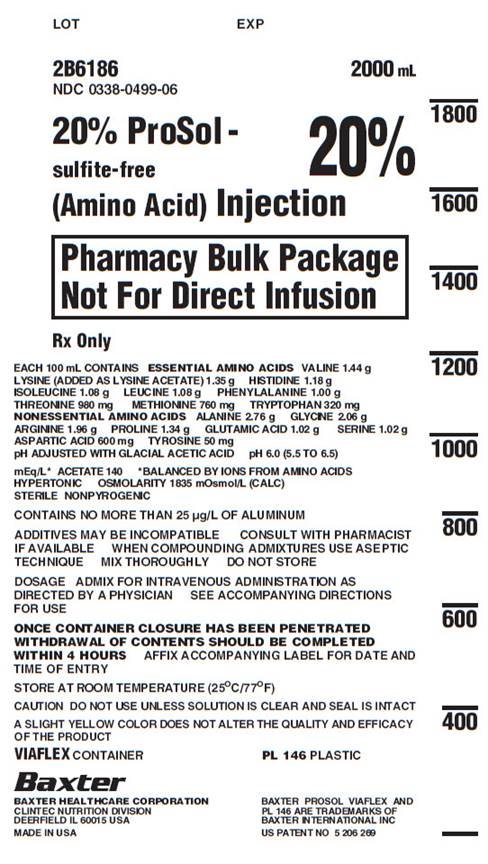
PACKAGE/LABEL PRINCIPAL DISPLAY PANEL Container Label LOT EXP 2B6186 2000 mL NDC 0338-0499-06 20% ProSol - sulfite-free 20% (Amino Acid) Injection Pharmacy Bulk Package Not For Direct Infusion Rx Only EACH 100 mL CONTAINS ESSENTIAL AMINO ACIDS VALINE 1.44 g LYSINE (ADDED AS LYSINE ACETATE) 1.35 g HISTIDINE 1.18 g ISOLEUCINE 1.08 g LEUCINE 1.08 g PHENYLALANINE 1.00 g THREONINE 980 mg METHIONINE 760 mg TRYPTOPHAN 320 mg NONESSENTIAL AMINO ACIDS ALANINE 2.76 g GLYCINE 2.06 g ARGININE 1.96 g PROLINE 1.34 g GLUTAMIC ACID 1.02 g SERINE 1.02 g ASPARTIC ACID 600 mg TYROSINE 50 mg pH ADJUSTED WITH GLACIAL ACETIC ACID pH 6.0 (5.5 TO 6.5) mEq/L* ACETATE 140 *BALANCED BY IONS FROM AMINO ACIDS HYPERTONIC OSMOLARITY 1835 mOsmol/L (CALC) STERILE NONPYROGENIC CONTAINS NO MORE THAN 25 μg/L OF ALUMINUM ADDITIVES MAY BE INCOMPATIBLE CONSULT WITH PHARMACIST IF AVAILABLE WHEN COMPOUNDING ADMIXTURES USE ASEPTIC TECHNIQUE MIX THOROUGHLY DO NOT STORE DOSAGE ADMIX FOR INTRAVENOUS ADMINISTRATION AS DIRECTED BY A PHYSICIAN SEE ACCOMPANYING DIRECTIONS FOR USE ONCE CONTAINER CLOSURE HAS BEEN PENETRATED WITHDRAWAL OF CONTENTS SHOULD BE COMPLETED WITHIN 4 HOURS AFFIX ACCOMPANYING LABEL FOR DATE AND TIME OF ENTRY STORE AT ROOM TEMPERATURE (25°C/77°F) CAUTION DO NOT USE UNLESS SOLUTION IS CLEAR AND SEAL IS INTACT A SLIGHT YELLOW COLOR DOES NOT ALTER THE QUALITY AND EFFICACY OF THE PRODUCT VIAFLEX CONTAINER PL 146 PLASTIC VIAFLEX CONTAINER PL 146 PLASTIC Baxter Logo BAXTER HEALTHCARE CORPORATION CLINTEC NUTRITION DIVISION DEERFIELD, IL 60015 USA MADE IN USA BAXTER, PROSOL, VIAFLEX AND PL 146 ARE TRADEMARKS OF BAXTER INTERNATIONAL INC US PATENT NO 5 206 269 1800 1600 1400 1200 1000 800 600 400 ProSol Representative Container Label NDC 0338-0499-06
Medicaid utilization & spend
Medicare Part D spend CMS · PART D · 2026 (Q1)
About this NDC listing & data coverage
What data is (and isn’t) available for this NDC — tap to expand
| NDC identity (package / product / labeler codes) | ✓ Available |
| Labeler | ✓ Available |
| Product & package description | ✓ Available |
| Marketing category & status | ✓ Available |
| Active ingredient / dosage form / route | ✓ Available |
| FDA label (SPL via DailyMed) | ✓ Available |
| Package photos | ✓ Available |
| Inactive ingredients (structured) | ✓ Available |
| NADAC pharmacy acquisition price (CMS) | — Not published for this NDC CMS publishes NADAC only for NDCs reported in its retail-pharmacy survey. |
| Orange Book / therapeutic-equivalence data | — Not published for this NDC Applies only to products approved under an NDA/ANDA; many listings are out of scope. |
| HCPCS J-code billing crosswalk | — Not published for this NDC Most self-administered / retail products have no J-code — that is normal. |
| Medicaid utilization (CMS SDUD) | ✓ Available |