
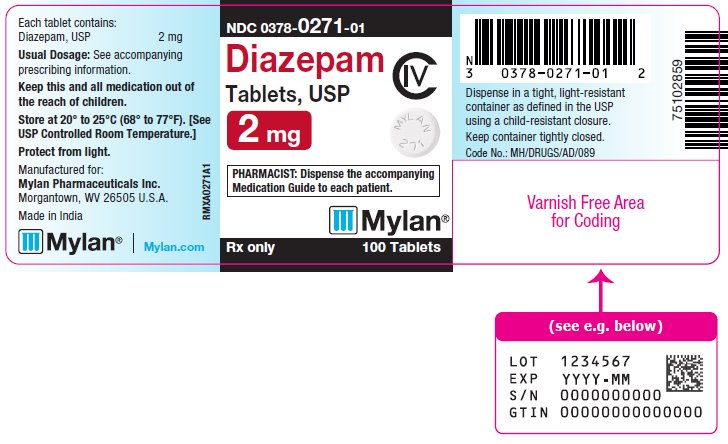
Diazepam 2 mg Tablet, 100-count — NDC 0378-0271-01 (Billing 00378-0271-01)
This is a package of 100 tablets of Diazepam 2 mg Tablet from Mylan Pharmaceuticals Inc., marketed since Sep 1985 and currently FDA-listed, this package's marketing is listed to end Aug 2028; retail pharmacies pay about $0.0212 per tablet (NADAC).
NDC database record
One package, one record: these facts belong to NDC 0378-0271-01 alone.
- Record
- FDA NDC Directory package listing · Human prescription drug
- Code segments
- 0378 labeler · 0271 product · 01 package
- Package marketed since
- Sep 4, 1985
- Package marketing ended
- Aug 31, 2028
- Sample package
- No — commercial package
- Listing certified through
- Dec 31, 2027
- Billing quantity
- 100 EA per package
- Barcode (UPC-A, from the NDC)
- 3 0378027101 2
- Medicaid fills, this package
- 10,860 prescriptions in the last four reported quarters
- FDA record last changed
- Oct 8, 2026
Identity & classification
Regulatory identifiers FDA, NLM and CMS codes for this package
Drug-database identifiers Medi-Span GPI and First Databank GCN / HICL / AHFS classification
- GSN (GCN sequence number): 003767
- GCN: 14221
- HICL (First Databank): 001615
- AHFS class code: 28:12.08.00
Where does this data come from?
- FDA openFDA NDC Directory · synced Oct 8, 2026
- FDA label on DailyMed · label index refreshed Oct 8, 2026
- RxNorm (NLM RxNav) · catalog refreshed Oct 1, 2026
- Medi-Span GPI (licensed)
- First Databank (licensed) · refreshed Oct 8, 2026
Clinical
Diazepam is used to relieve anxiety, control agitation caused by alcohol withdrawal, control muscle spasms and stiffness caused by certain nerve disorders, and to control seizures. Diazepam is in a class of medications called benzodiazepines. It works by calming abnormal overactivity in the brain.
Read the full MedlinePlus article ↗- It depends on the form. Tablets and oral solution are used for anxiety, alcohol withdrawal symptoms, muscle spasm, and as an add-on for seizure disorders. Valtoco nasal spray and r...
- No. Alcohol adds to the sedation and can slow your breathing. Avoid it while on diazepam.
- This combination is risky. It can cause extreme sleepiness, slowed breathing, coma, and death. Tell your prescriber about every opioid you take.
- Is it safe with my opioid pain medicine?
Patient education
Supplement & herbal interactions
Some supplements/herbs that may interact with Diazepam — tap one for details:
Diazepam may be associated with lower levels of 1 nutrient — worth a chat with your pharmacist, not a cause for alarm.
Where does this data come from?
- MedlinePlus (NLM) · refreshed Oct 8, 2026
- FDA label on DailyMed · label index refreshed Oct 8, 2026
Ask a licensed pharmacist directly — free, answered by our team.
Pricing
A drug doesn't have one price. Each row is a different public payment system, and none is what you'd pay at the counter — that depends on your insurance. The ⓘ on each row explains what it measures.
| Price system | Per ea | Per package |
|---|---|---|
| Retail pharmacies payNADAC · weekly | $0.021 | $2.12 / 100 tablets |
| Medicaid paysCMS SDUD · 12 mo | $0.2024 | $20.24 / 100 tablets |
| Medicare drug plans payPart D · Q2 2026 | $0.0767 | $7.67 / 100 tablets |
Where does this data come from?
- CMS NADAC weekly file · file of Oct 7, 2026
- CMS ASP pricing files · refreshed Sep 20, 2026
- CMS Medicaid State Drug Utilization Data · through Q1 2026
- CMS Part D plan pricing files · refreshed Sep 24, 2026
- VA National Acquisition Center price file
Packaging — all sizes for this product
| Package NDC | Description | Per unit | Per pack | Marketing start | Marketing end | Status |
|---|---|---|---|---|---|---|
| 00378-0271-01 You're viewing this | 100 TABLET in 1 BOTTLE, PLASTIC | $0.0212 / ea | $2.12 | 1985-09-04 | Aug 31, 2028 | Active |
| 00378-0271-05 0378-0271-05 Main listing | 500 TABLET in 1 BOTTLE, PLASTIC | $0.0212 / ea | $10.62 | 1985-09-04 | — | Active |
You're viewing the smallest of 2 pack sizes for this product.
This pack has the lowest per-ea cost of the 2 priced pack sizes ($0.0212 NADAC).
This pack accounts for about 48% of this product's recent Medicaid fills; most go to the 500 tablets pack. See all packs ↓
Pack size FAQ
What quantity is in this package?
How does this package differ from NDC 00378-0271-05?
What NDC number is used to bill for this package of Diazepam 2 mg Tablet?
Prices are the latest CMS NADAC pharmacy acquisition cost per NDC; per-pack figures are per-unit × pack quantity, shown only when the pack is denominated in the same measure NADAC prices.
Therapeutic equivalents
| Product | Labeler | Pack | NADAC/unit | TE | Status | Price vs. this |
|---|---|---|---|---|---|---|
| Diazepam 2 mg 00172-3925-60 | Teva | 100 tablets | $0.021 | AB | Availability likely | — |
| Diazepam 2 mgthis 00378-0271-01 | Mylan | 100 tablets | $0.021 | AB | Availability likely | — |
| Diazepam 2 mg 51079-0284-20 | Mylan | 100 tablets | $0.021 | AB | Availability likely | — |
| Diazepam 2 mg 59651-0652-01 | Aurobindo | 100 tablets | $0.021 | AB | Availability likely | — |
| Diazepam 2 mg 62135-0786-90 | Chartwell | 90 tablets | $0.021 | — | Availability likely | — |
| Valium 2 mg 00140-0004-01 | Roche | 100 tablets | — | AB | FDA listed | — |
| Diazepam 2 mg 11534-0202-01 | Sunrise | 100 tablets | — | AB | FDA listed | — |
| Diazepam 2 mg 43063-0840-30 | PD-Rx | 30 tablets | — | AB | FDA listed | — |
| Diazepam 2 mg 43353-0825-30 | Aphena | 30 tablets | — | AB | FDA listed | — |
| Diazepam 2 mg 48433-0027-20 | Safecor | 100 tablets | — | AB | FDA listed | — |
| Diazepam 2 mg 50090-0195-06 | A-S | 2 tablets | — | AB | FDA listed | — |
| Diazepam 2 mg 50090-3390-01 | A-S | 60 tablets | — | AB | FDA listed | — |
| Diazepam 2 mg 58118-3925-08 | Clinical | 30 tablets | — | AB | FDA listed | — |
| Diazepam 2 mg 63629-2948-01 | Bryant | 30 tablets | — | AB | FDA listed | — |
| Diazepam 2 mg 71335-2247-01 | Bryant | 30 tablets | — | AB | FDA listed | — |
| Diazepam 2 mg 72189-0570-30 | Direct_rx | 30 tablets | — | AB | FDA listed | — |
| Diazepam 2 mg 76420-0314-01 | ASCLEMED | 100 tablets | — | AB | FDA listed | — |
| Diazepam 2 mg 76420-0783-01 | Asclemed | 100 tablets | — | AB | FDA listed | — |
| Valium 2 mg 80725-0004-01 | Waylis | 100 tablets | — | AB | FDA listed | — |
Where does this data come from?
- FDA openFDA NDC Directory · synced Oct 8, 2026
- FDA Orange Book · refreshed Oct 3, 2026
- CMS NADAC weekly file · file of Oct 7, 2026
Availability & generic status
This product is an FDA-approved generic. Other versions of the same drug are listed under Therapeutic equivalents, least expensive first.
Where does this data come from?
- FDA Orange Book · refreshed Oct 3, 2026
What it looks like
Where does this data come from?
- FDA label on DailyMed · label index refreshed Oct 8, 2026
Inactive Ingredients / Excipients
Inactive ingredients, also called excipients, are components of the drug product other than the active ingredient. They may include fillers, dyes, coatings, preservatives, flavors, or other formulation ingredients.
🧪 Avoiding an ingredient? See Diazepam inactive ingredients by manufacturer: every current product's list side by side, so you can ask your pharmacy for the version that does not list it.
💡 Tap an ingredient (hover on desktop) to see what it is and why it’s used.
-
UNII 70097M6I30
Magnesium stearate is a salt made from magnesium and stearic acid, a fatty substance. It's used in tablets and capsules as a lubricant and glidant to help ingredients flow smoothly during manufacturing and prevent sticking.
-
UNII OP1R32D61U
Microcrystalline cellulose is a purified form of cellulose, a natural fiber from plant sources. It acts as a binder and filler in tablets and capsules, helping hold ingredients together and give the medicine its shape and size.
-
UNII ETJ7Z6XBU4
Silicon dioxide is a naturally occurring mineral used as a glidant and anti-caking agent. It helps powder ingredients flow smoothly and prevents clumping during manufacturing and storage.
-
UNII 368GB5141J
A detergent and foaming agent derived from coconut or palm oil. In medications, it helps break down and mix oil and water-based ingredients, aids in tablet disintegration, and improves how the drug dissolves and spreads in the mouth or digestive system.
-
UNII O8232NY3SJ
A plant-based carbohydrate derived from corn kernels. It acts as a filler to add bulk, a binder to hold ingredients together, and a disintegrant to help the tablet break apart in your stomach for absorption.
5 inactive ingredients listed in the exact product block matched to this NDC.
Where does this data come from?
ingredient classCode="IACT" elements from the exact product block matched by this NDC. Label-section narrative from DailyMed / the openFDA label index is shown separately when available.- FDA label on DailyMed · label index refreshed Oct 8, 2026
- FDA openFDA NDC Directory · synced Oct 8, 2026
Inactive ingredient FAQ
Are inactive ingredients the same for every manufacturer?
Why might an inactive ingredient be missing?
Can inactive ingredients matter?
Manufacturer & labeler
More NDCs from Mylan Pharmaceuticals Inc. labeler code 00378
- Chlorthalidone 25 mg Tablet NDC 0378-0222-01
- Atenolol 50 mg Tablet NDC 0378-0231-01
- Spironolactone 50 mg Tablet, Film Coated NDC 0378-0243-01
- Haloperidol 1 mg Tablet NDC 0378-0257-01
- Dabigatran Etexilate 75 mg Capsule NDC 0378-0265-91
- Dabigatran Etexilate 150 mg Capsule NDC 0378-0266-91
- Tamoxifen Citrate 20 mg Tablet NDC 0378-0274-93
- Chlordiazepoxide and Amitriptyline Hydrochloride 10 mg; 27.98 mg Tablet, Film Coated NDC 0378-0277-01
- Cimetidine 300 mg Tablet, Film Coated NDC 0378-0317-01
- Haloperidol 5 mg Tablet NDC 0378-0327-01
- Perphenazine and Amitriptyline Hydrochloride 2 mg; 10 mg Tablet, Film Coated NDC 0378-0330-01
- Haloperidol 10 mg Tablet NDC 0378-0334-01
Where does this data come from?
- FDA openFDA NDC Directory · synced Oct 8, 2026
- Drugs@FDA
Full prescribing information FDA SPL
🚨 Boxed Warning ▾
WARNING: RISKS FROM CONCOMITANT USE WITH OPIOIDS; ABUSE, MISUSE, AND ADDICTION; and DEPENDENCE AND WITHDRAWAL REACTIONS • Concomitant use of benzodiazepines and opioids may result in profound sedation, respiratory depression, coma, and death. Reserve concomitant prescribing of these drugs in patients for whom alternative treatment options are inadequate. Limit dosages and durations to the minimum required.
Follow patients for signs and symptoms of respiratory depression and sedation (see WARNINGS and PRECAUTIONS ). • The use of benzodiazepines, including diazepam tablets, exposes users to risks of abuse, misuse, and addiction, which can lead to overdose or death. Abuse and misuse of benzodiazepines commonly involve concomitant use of other medications, alcohol, and/or illicit substances, which is associated with an increased frequency of serious adverse outcomes. Before prescribing diazepam tablets and throughout treatment, assess each patient’s risk for abuse, misuse, and addiction (see WARNINGS ) . • The continued use of benzodiazepines, including diazepam tablets, may lead to clinically significant physical dependence.
The risks of dependence and withdrawal increase with longer treatment duration and higher daily dose. Abrupt discontinuation or rapid dosage reduction of diazepam tablets after continued use may precipitate acute withdrawal reactions, which can be life-threatening. To reduce the risk of withdrawal reactions, use a gradual taper to discontinue diazepam tablets or reduce the dosage (see DOSAGE AND ADMINISTRATION and WARNINGS ) .
🎯 Indications and Usage ▾
INDICATIONS AND USAGE Diazepam tablets are indicated for the management of anxiety disorders or for the short-term relief of the symptoms of anxiety. Anxiety or tension associated with the stress of everyday life usually does not require treatment with an anxiolytic. In acute alcohol withdrawal, diazepam tablets may be useful in the symptomatic relief of acute agitation, tremor, impending or acute delirium tremens and hallucinosis.
Diazepam tablets are a useful adjunct for the relief of skeletal muscle spasm due to reflex spasm to local pathology (such as inflammation of the muscles or joints, or secondary to trauma), spasticity caused by upper motor neuron disorders (such as cerebral palsy and paraplegia), athetosis, and stiff-man syndrome. Oral diazepam tablets may be used adjunctively in convulsive disorders, although it has not proved useful as the sole therapy. The effectiveness of diazepam tablets in long-term use, that is, more than 4 months, has not been assessed by systematic clinical studies.
The physician should periodically reassess the usefulness of the drug for the individual patient.
⏱️ Dosage and Administration ▾
DOSAGE AND ADMINISTRATION Dosage should be individualized for maximum beneficial effect. While the usual daily dosages given below will meet the needs of most patients, there will be some who may require higher doses. In such cases dosage should be increased cautiously to avoid adverse effects.
ADULTS: USUAL DAILY DOSE: Management of Anxiety Disorders and Relief of Symptoms of Anxiety. Depending upon severity of symptoms—2 mg to 10 mg, 2 to 4 times daily Symptomatic Relief in Acute Alcohol Withdrawal. 10 mg, 3 or 4 times during the first 24 hours, reducing to 5 mg, 3 or 4 times daily as needed.
Adjunctively for Relief of Skeletal Muscle Spasm. 2 mg to 10 mg, 3 or 4 times daily Adjunctively in Convulsive Disorders. 2 mg to 10 mg, 2 to 4 times daily Geriatric Patients, or in the presence of debilitating disease.
2 mg to 2.5 mg, 1 or 2 times daily initially; increase gradually as needed and tolerated. PEDIATRIC PATIENTS: Because of varied responses to CNS-acting drugs, initiate therapy with lowest dose and increase as required. Not for use in pediatric patients under 6 months.
1 mg to 2.5 mg, 3 or 4 times daily initially; increase gradually as needed and tolerated. Discontinuation or Dosage Reduction of Diazepam Tablets To reduce the risk of withdrawal reactions, use a gradual taper to discontinue diazepam tablets or reduce the dosage. If a patient develops withdrawal reactions, consider pausing the taper or increasing the dosage to the previous tapered dosage level.
Subsequently decrease the dosage more slowly (see WARNINGS: Dependence and Withdrawal Reactions and DRUG ABUSE AND DEPENDENCE: Dependence ).
⛔ Contraindications ▾
CONTRAINDICATIONS Diazepam tablets are contraindicated in patients with a known hypersensitivity to diazepam and, because of lack of sufficient clinical experience, in pediatric patients under 6 months of age. Diazepam tablets are also contraindicated in patients with myasthenia gravis, severe respiratory insufficiency, severe hepatic insufficiency, and sleep apnea syndrome. They may be used in patients with open-angle glaucoma who are receiving appropriate therapy, but is contraindicated in acute narrow-angle glaucoma.
⚠️ Warnings ▾
WARNINGS Risks from Concomitant Use with Opioids Concomitant use of benzodiazepiones, including diazepam tablets, and opioids may result in profound sedation, respiratory depression, coma, and death. Because of these risks, reserve concomitant prescribing of these drugs in patients for whom alternative treatment options are inadequate. Observational studies have demonstrated that concomitant use of opioid analgesics and benzodiazepines increases the risk of drug-related mortality compared to use of opioids alone.
If a decision is made to prescribe diazepam tablets concomitantly with opioids, prescribe the lowest effective dosages and minimum durations of concomitant use, and follow patients closely for signs and symptoms of respiratory depression and sedation. In patients already receiving an opioid analgesic, prescribe a lower initial dose of diazepam tablets than indicated in the absence of an opioid and titrate based on clinical response. If an opioid is initiated in a patient already taking diazepam tablets, prescribe a lower initial dose of the opioid and titrate based upon clinical response.
Advise both patients and caregivers about the risks of respiratory depression and sedation when diazepam tablets are used with opioids. Advise patients not to drive or operate heavy machinery until the effects of concomitant use with the opioid have been determined (see PRECAUTIONS: Drug Interactions ). Abuse, Misuse, and Addiction The use of benzodiazepines, including diazepam tablets, exposes users to the risks of abuse, misuse, and addiction, which can lead to overdose or death.
Abuse and misuse of benzodiazepines often (but not always) involve the use of doses greater than the maximum recommended dosage and commonly involve concomitant use of other medications, alcohol, and/or illicit substances, which is associated with an increased frequency of serious adverse outcomes, including respiratory depression, overdose, or death (see DRUG ABUSE AND DEPENDENCE: Abuse ). Before prescribing diazepam tablets and throughout treatment, assess each patient’s risk for abuse, misuse, and addiction (e.g., using a standardized screening tool).
Use of diazepam tablets, particularly in patients at elevated risk, necessitates counseling about the risks and proper use of diazepam tablets along with monitoring for signs and symptoms of abuse, misuse, and addiction. Prescribe the lowest effective dosage; avoid or minimize concomitant use of CNS depressants and other substances associated with abuse, misuse, and addiction (e.g., opioid analgesics, stimulants); and advise patients on the proper disposal of unused drug. If a substance use disorder is suspected, evaluate the patient and institute (or refer them for) early treatment, as appropriate.
Dependence and Withdrawal Reactions To reduce the risk of withdrawal reactions, use a gradual taper to discontinue diazepam tablets or reduce the dosage (a patient-specific plan should be used to taper the dose) (see DOSAGE AND ADMINISTRATION: Discontinuation or Dosage Reduction of Diazepam Tablets ). Patients at an increased risk of withdrawal adverse reactions after benzodiazepine discontinuation or rapid dosage reduction include those who take higher dosages, and those who have had longer durations of use. Acute Withdrawal Reactions The continued use of benzodiazepines, including diazepam tablets, may lead to clinically significant physical dependence.
Abrupt discontinuation or rapid dosage reduction of diazepam tablets after continued use, or administration of flumazenil (a benzodiazepine antagonist) may precipitate acute withdrawal reactions, which can be life-threatening (e.g., seizures) (see DRUG ABUSE AND DEPENDENCE: Dependence ). Protracted Withdrawal Syndrome In some cases, benzodiazepine users have developed a protracted withdrawal syndrome with withdrawal symptoms lasting weeks to more than 12 months (see DRUG ABUSE AND DEPENDENCE: Dependence ). Diazepam tablets are not recommended in the treatment… [Excerpted — this section continues on DailyMed.]
🤒 Adverse Reactions ▾
ADVERSE REACTIONS Side effects most commonly reported were drowsiness, fatigue, muscle weakness, and ataxia. The following have also been reported: Central Nervous System: confusion, depression, dysarthria, headache, slurred speech, tremor, vertigo Gastrointestinal System: constipation, nausea, gastrointestinal disturbances Special Senses: blurred vision, diplopia, dizziness Cardiovascular System: hypotension Psychiatric and Paradoxical Reactions: stimulation, restlessness, acute hyperexcited states, anxiety, agitation, aggressiveness, irritability, rage, hallucinations, psychoses, delusions, increased muscle spasticity, insomnia, sleep disturbances, and nightmares.
Inappropriate behavior and other adverse behavioral effects have been reported when using benzodiazepines. Should these occur, use of the drug should be discontinued. They are more likely to occur in children and in the elderly.
Urogenital System: incontinence, changes in libido, urinary retention Skin and Appendages: skin reactions Laboratories: elevated transaminases and alkaline phosphatase Other: changes in salivation, including dry mouth, hypersalivation Antegrade amnesia may occur using therapeutic dosages, the risk increasing at higher dosages. Amnestic effects may be associated with inappropriate behavior. Minor changes in EEG patterns, usually low-voltage fast activity, have been observed in patients during and after diazepam tablets therapy and are of no known significance.
Because of isolated reports of neutropenia and jaundice, periodic blood counts and liver function tests are advisable during long-term therapy. Postmarketing Experience Injury, Poisoning and Procedural Complications There have been reports of falls and fractures in benzodiazepine users. The risk is increased in those taking concomitant sedatives (including alcohol), and in the elderly.
🔄 Drug Interactions ▾
Drug Interactions Opioids The concomitant use of benzodiazepines and opioids increases the risk of respiratory depression because of actions at different receptor sites in the CNS that control respiration. Benzodiazepines interact at GABA A sites and opioids interact primarily at mu receptors. When benzodiazepines and opioids are combined, the potential for benzodiazepines to significantly worsen opioid-related respiratory depression exists.
Limit dosage and duration of concomitant use of benzodiazepines and opioids, and monitor patients closely for respiratory depression and sedation. Centrally Acting Agents If diazepam tablets are to be combined with other centrally acting agents, careful consideration should be given to the pharmacology of the agents employed particularly with compounds that may potentiate or be potentiated by the action of diazepam tablets, such as phenothiazines, antipsychotics, anxiolytics/sedatives, hypnotics, anticonvulsants, narcotic analgesics, anesthetics, sedative antihistamines, narcotics, barbiturates, MAO inhibitors and other antidepressants.
Alcohol Concomitant use with alcohol is not recommended due to enhancement of the sedative effect. Antacids Diazepam peak concentrations are 30% lower when antacids are administered concurrently. However, there is no effect on the extent of absorption.
The lower peak concentrations appear due to a slower rate of absorption, with the time required to achieve peak concentrations on average 20-25 minutes greater in the presence of antacids. However, this difference was not statistically significant. Compounds Which Inhibit Certain Hepatic Enzymes There is a potentially relevant interaction between diazepam and compounds which inhibit certain hepatic enzymes (particularly cytochrome P450 3A and 2C19).
Data indicate that these compounds influence the pharmacokinetics of diazepam and may lead to increased and prolonged sedation. At present, this reaction is known to occur with cimetidine, ketoconazole, fluvoxamine, fluoxetine, and omeprazole. Phenytoin There have also been reports that the metabolic elimination of phenytoin is decreased by diazepam.
🤰 Pregnancy ▾
Neonatal Sedation and Withdrawal Syndrome Use of diazepam tablets late in pregnancy can result in sedation (respiratory depression, lethargy, hypotonia) and/or withdrawal symptoms (hyperreflexia, irritability, restlessness, tremors, inconsolable crying, and feeding difficulties) in the neonate (see PRECAUTIONS: Pregnancy ). Monitor neonates exposed to diazepam during pregnancy or labor for signs of sedation and monitor neonates exposed to diazepam during pregnancy for signs of withdrawal; manage these neonates accordingly.
Pregnancy Advise pregnant females that use of diazepam tablets late in pregnancy can result in sedation (respiratory depression, lethargy, hypotonia) and/or withdrawal symptoms (hyperreflexia, irritability, restlessness, tremors, inconsolable crying, and feeding difficulties) in newborns (see WARNINGS: Neonatal Sedation and Withdrawal Syndrome and PRECAUTIONS: Pregnancy ). Instruct patients to inform their healthcare provider if they are pregnant. Advise patients that there is a pregnancy exposure registry that monitors pregnancy outcomes in women exposed to diazepam tablets during pregnancy (see Precautions , Pregnancy ).
Pregnancy Pregnancy Exposure Registry There is a pregnancy registry that monitors pregnancy outcomes in women exposed to psychiatric medications, including diazepam tablets, during pregnancy. Healthcare providers are encouraged to register patients by calling the National Pregnancy Registry for Psychiatric Medications at 1-866-961-2388 or visiting online at https://womensmentalhealth.org/pregnancyregistry/. Risk Summary Neonates born to mothers using benzodiazepines late in pregnancy have been reported to experience symptoms of sedation and/or neonatal withdrawal (see WARNINGS: Neonatal Sedation and Withdrawal Syndrome and Clinical Considerations ).
Available data from published observational studies of pregnant women exposed to benzodiazepines do not report a clear association with benzodiazepines and major birth defects (see Data ). Diazepam has been shown to be teratogenic in mice and hamsters when given orally at daily doses of 100 mg/kg or greater (approximately eight times the maximum recommended human dose [MRHD=1 mg/kg/day] or greater on a mg/m 2 basis). Cleft palate and encephalopathy are the most common and consistently reported malformations produced in these species by administration of high, maternally toxic doses of diazepam during organogenesis.
The background risk of major birth defects and miscarriage for the indicated population is unknown. All pregnancies have a background risk of birth defect, loss, or other adverse outcomes. In the U.S. general population, the estimated risk of major birth defects and of miscarriage in clinically recognized pregnancies is 2% to 4% and 15% to 20%, respectively.
Clinical Considerations Fetal/Neonatal Adverse Reactions Benzodiazepines cross the placenta and may produce respiratory depression, hypotonia and sedation in neonates. Monitor neonates exposed to diazepam during pregnancy and labor for signs of sedation, respiratory depression, hypotonia, and feeding problems. Monitor neonates exposed to diazepam during pregnancy for signs of withdrawal.
Manage these neonates accordingly (see WARNINGS: Neonatal Sedation and Withdrawal Syndrome ). Labor or Delivery Special care must be taken when diazepam tablets are used during labor and delivery, as high single doses may produce irregularities in the fetal heart rate and hypotonia, poor sucking, hypothermia, and moderate respiratory depression in the neonates. With newborn infants it must be remembered that the enzyme system involved in the breakdown of the drug is not yet fully developed (especially in premature infants).
Data Human Data Published data from observational studies on the use of benzodiazepines during pregnancy do not report a clear association with benzodiazepines and major birth defects. Although early studies reported an increased risk of congenital malformations with diazepa… [Excerpted — this section continues on DailyMed.]
🧒 Pediatric Use ▾
Pediatric Use Safety and effectiveness in pediatric patients below the age of 6 months have not been established.
🧓 Geriatric Use ▾
Geriatric Use In elderly patients, it is recommended that the dosage be limited to the smallest effective amount to preclude the development of ataxia or oversedation (2 mg to 2.5 mg once or twice daily, initially to be increased gradually as needed and tolerated). Extensive accumulation of diazepam and its major metabolite, desmethyldiazepam, has been noted following chronic administration of diazepam in healthy elderly male subjects. Metabolites of this drug are known to be substantially excreted by the kidney, and the risk of toxic reactions may be greater in patients with impaired renal function.
Because elderly patients are more likely to have decreased renal function, care should be taken in dose selection, and it may be useful to monitor renal function.
🆘 Overdosage ▾
OVERDOSAGE Overdosage of benzodiazepines is characterized by central nervous system depression ranging from drowsiness to coma. In mild to moderate cases, symptoms can include drowsiness, confusion, dysarthria, lethargy, hypnotic state, diminished reflexes, ataxia, and hypotonia. Rarely, paradoxical or disinhibitory reactions (including agitation, irritability, impulsivity, violent behavior, confusion, restlessness, excitement, and talkativeness) may occur.
In severe overdosage cases, patients may develop respiratory depression and coma. Overdosage of benzodiazepines in combination with other CNS depressants (including alcohol and opioids) may be fatal (see WARNINGS: Dependence and Withdrawal Reactions ). Markedly abnormal (lowered or elevated) blood pressure, heart rate, or respiratory rate raise the concern that additional drugs and/or alcohol are involved in the overdosage.
In managing benzodiazepine overdosage, employ general supportive measures, including intravenous fluids and airway management. Flumazenil, a specific benzodiazepine receptor antagonist, is indicated for the complete or partial reversal of the sedative effects of benzodiazepines in the management of benzodiazepine overdosage, can lead to withdrawal and adverse reactions, including seizures, particularly in the context of mixed overdosage with drugs that increase seizure risk (e.g., tricyclic and tetracyclic antidepressants) and in patients with long-term benzodiazepine use and physical dependency.
The risk of withdrawal seizures with flumazenil use may be increased in patients with epilepsy. Flumazenil is contraindicated in patients who have received a benzodiazepine for control of a potentially life-threatening condition (e.g., status epilepticus). If the decision is made to use flumazenil, it should be used as an adjunct to, not as a substitute for, supportive management of benzodiazepine overdosage.
See the flumazenil injection Prescribing Information. Consider contacting the Poison Help line (1-800-222-1222) or a medical toxicologist for additional overdosage management recommendations.
🧬 Clinical Pharmacology ▾
CLINICAL PHARMACOLOGY Diazepam is a benzodiazepine that exerts anxiolytic, sedative, muscle-relaxant, anticonvulsant and amnestic effects. Most of these effects are thought to result from a facilitation of the action of gamma aminobutyric acid (GABA), an inhibitory neurotransmitter in the central nervous system. Pharmacokinetics Absorption After oral administration > 90% of diazepam is absorbed and the average time to achieve peak plasma concentrations is 1-1.5 hours with a range of 0.25 to 2.5 hours.
Absorption is delayed and decreased when administered with a moderate fat meal. In the presence of food mean lag times are approximately 45 minutes as compared with 15 minutes when fasting. There is also an increase in the average time to achieve peak concentrations to about 2.5 hours in the presence of food as compared with 1.25 hours when fasting.
This results in an average decrease in C max of 20% in addition to a 27% decrease in AUC (range 15% to 50%) when administered with food. Distribution Diazepam and its metabolites are highly bound to plasma proteins (diazepam 98%). Diazepam and its metabolites cross the blood-brain and placental barriers and are also found in breast milk in concentrations approximately one tenth of those in maternal plasma (days 3 to 9 post-partum).
In young healthy males, the volume of distribution at steady-state is 0.8 to
1.0L/kg. The decline in the plasma concentration-time profile after oral administration is biphasic. The initial distribution phase has a half-life of approximately 1 hour, although it may range up to > 3 hours.
Metabolism Diazepam is N-demethylated by CYP3A4 and 2C19 to the active metabolite N-desmethyldiazepam, and is hydroxylated by CYP3A4 to the active metabolite temazepam. N-desmethyldiazepam and temazepam are both further metabolized to oxazepam. Temazepam and oxazepam are largely eliminated by glucuronidation.
Elimination The initial distribution phase is followed by a prolonged terminal elimination phase (half-life up to 48 hours). The terminal elimination half-life of the active metabolite N-desmethyldiazepam is up to 100 hours. Diazepam and its metabolites are excreted mainly in the urine, predominantly as their glucuronide conjugates.
The clearance of diazepam is 20 to 30 mL/min in young adults. Diazepam accumulates upon multiple dosing and there is some evidence that the terminal elimination half-life is slightly prolonged. Pharmacokinetics in Special Populations Children In children 3-8 years old the mean half-life of diazepam has been reported to be 18 hours.
Newborns In full term infants, elimination half-lives around 30 hours have been reported, with a longer average half-life of 54 hours reported in premature infants of 28-34 weeks gestational age and 8-81 days post-partum. In both premature and full term infants the active metabolite desmethyldiazepam shows evidence of continued accumulation compared to children. Longer half-lives in infants may be due to incomplete maturation of metabolic pathways.
Geriatric Elimination half-life increases by approximately 1 hour for each year of age beginning with a half-life of 20 hours at 20 years of age. This appears to be due to an increase in volume of distribution with age and a decrease in clearance. Consequently, the elderly may have lower peak concentrations, and on multiple dosing higher trough concentrations.
It will also take longer to reach steady-state. Conflicting information has been published on changes of plasma protein binding in the elderly. Reported changes in free drug may be due to significant decreases in plasma proteins due to causes other than simply aging.
Hepatic Insufficiency In mild and moderate cirrhosis, average half-life is increased. The average increase has been variously reported from 2-fold to 5-fold, with individual half-lives over 500 hours reported. There is also an increase in volume of distribution, and average clearance decreases by almost half.
Mean half-life is also prolonged with he… [Excerpted — this section continues on DailyMed.]
📦 How Supplied / Storage and Handling ▾
HOW SUPPLIED Diazepam Tablets, USP are available containing 2 mg, 5 mg or 10 mg of diazepam, USP. The 2 mg tablets are white to off-white, round, scored tablets debossed with MYLAN over 271 on one side and scored on the other side. They are available as follows: NDC 0378-0271-01 bottles of 100 tablets NDC 0378-0271-05 bottles of 500 tablets The 5 mg tablets are orange, round, scored tablets debossed with MYLAN over 345 on one side and scored on the other side.
They are available as follows: NDC 0378-0345-01 bottles of 100 tablets NDC 0378-0345-05 bottles of 500 tablets The 10 mg tablets are green, round, scored tablets debossed with MYLAN over 477 on one side and scored on the other side. They are available as follows: NDC 0378-0477-01 bottles of 100 tablets NDC 0378-0477-05 bottles of 500 tablets Storage: Store at 20° to 25°C (68° to 77°F). [See USP Controlled Room Temperature.] Protect from light. Dispense in a tight, light-resistant container as defined in the USP using a child-resistant closure.
PHARMACIST: Dispense a Medication Guide with each prescription.
📋 Description ▾
DESCRIPTION Diazepam is a benzodiazepine derivative. The chemical name of diazepam is 7-Chloro-1,3-dihydro-1-methyl-5-phenyl-2 H -1,4-benzodiazepin-2-one. It is a colorless to light yellow crystalline compound, insoluble in water.
The molecular formula is C 16 H 13 ClN 2 O and the molecular weight is 284.7. The structural formula is as follows: Diazepam is available for oral administration as tablets containing 2 mg, 5 mg or 10 mg diazepam, USP. In addition to the active ingredient diazepam, each tablet contains the following inactive ingredients: colloidal silicon dioxide, magnesium stearate, microcrystalline cellulose, pregelatinized starch (corn) and sodium lauryl sulfate.
The 5 mg tablets also contain FD&C Yellow No. 6 Aluminum Lake. The 10 mg tablets also contain D&C Yellow No.
10 Aluminum Lake and FD&C Blue No. 1 Aluminum Lake. structural formula
💬 Information for Patients ▾
Information for Patients Advise the patient to read the FDA-approved patient labeling ( Medication Guide ). Risks from Concomitant Use with Opioids Advise both patients and caregivers about the risks of potentially fatal respiratory depression and sedation when diazepam tablets are used with opioids and not to use such drugs concomitantly unless supervised by a health care provider. Advise patients not to drive or operate heavy machinery until the effects of concomitant use with the opioid have been determined (see WARNINGS: Risks from Concomitant Use with Opioids and PRECAUTIONS: Drug Interactions ).
Abuse, Misuse, and Addiction Inform patients that the use of diazepam tablets, even at recommended dosages, exposes users to risks of abuse, misuse, and addiction, which can lead to overdose and death, especially when used in combination with other medications (e.g., opioid analgesics), alcohol, and/or illicit substances. Inform patients about the signs and symptoms of benzodiazepine abuse, misuse, and addiction; to seek medical help if they develop these signs and/or symptoms; and on the proper disposal of unused drug (see WARNINGS: Abuse, Misuse, and Addiction and DRUG ABUSE AND DEPENDENCE ).
Withdrawal Reactions Inform patients that the continued use of diazepam tablets may lead to clinically significant physical dependence and that abrupt discontinuation or rapid dosage reduction of diazepam tablets may precipitate acute withdrawal reactions, which can be life-threatening. Inform patients that in some cases, patients taking benzodiazepines have developed a protracted withdrawal syndrome with withdrawal symptoms lasting weeks to more than 12 months. Instruct patients that discontinuation or dosage reduction of diazepam tablets may require a slow taper (see WARNINGS: Dependence and Withdrawal Reactions and DRUG ABUSE AND DEPENDENCE ).
Patients should be advised against the simultaneous ingestion of alcohol and other CNS-depressant drugs during diazepam tablets therapy. As is true of most CNS-acting drugs, patients receiving diazepam tablets should be cautioned against engaging in hazardous occupations requiring complete mental alertness, such as operating machinery or driving a motor vehicle. Pregnancy Advise pregnant females that use of diazepam tablets late in pregnancy can result in sedation (respiratory depression, lethargy, hypotonia) and/or withdrawal symptoms (hyperreflexia, irritability, restlessness, tremors, inconsolable crying, and feeding difficulties) in newborns (see WARNINGS: Neonatal Sedation and Withdrawal Syndrome and PRECAUTIONS: Pregnancy ).
Instruct patients to inform their healthcare provider if they are pregnant. Advise patients that there is a pregnancy exposure registry that monitors pregnancy outcomes in women exposed to diazepam tablets during pregnancy (see Precautions , Pregnancy ). Nursing Advise patients that breastfeeding is not recommended during treatment with diazepam tablets (see PRECAUTIONS: Nursing Mothers ).
💬 Medication Guide ▾
Medication Guide Diazepam Tablets, USP (dye az' e pam) What is the most important information I should know about diazepam tablets? • Diazepam tablets are a benzodiazepine medicine. Taking benzodiazepines with opioid medicines, alcohol, or other central nervous system (CNS) depressants (including street drugs) can cause severe drowsiness, breathing problems (respiratory depression), coma and death. Get emergency help right away if any of the following happens: o Shallow or slowed breathing, o Breathing stops (which may lead to the heart stopping), o Excessive sleepiness (sedation).
Do not drive or operate heavy machinery until you know how taking diazepam tablets with opioids affect you. • Risk of abuse, misuse, and addiction. There is a risk of abuse, misuse, and addiction with benzodiazepines, including diazepam tablets, which can lead to overdose and serious side effects including coma and death. o Serious side effects including coma and death have happened in people who have abused or misused benzodiazepines, including diazepam tablets. These serious side effects may also include delirium, paranoia, suicidal thoughts or actions, seizures, and difficulty breathing.
Call your healthcare provider or go to the nearest hospital emergency room right away if you get any of these serious side effects. o You can develop an addiction even if you take diazepam tablets exactly as prescribed by your healthcare provider. o Take diazepam tablets exactly as your healthcare provider prescribed. o Do not share your diazepam tablets with other people. o Keep diazepam tablets in a safe place and away from children. • Physical dependence and withdrawal reactions. Diazepam tablets can cause physical dependence and withdrawal reactions. o Do not suddenly stop taking diazepam tablets.
Stopping diazepam tablets suddenly can cause serious and life-threatening side effects, including, unusual movements, responses, or expressions, seizures, sudden and severe mental or nervous system changes, depression, seeing or hearing things that others do not see or hear, an extreme increase in activity or talking, losing touch with reality, and suicidal thoughts or actions. Call your healthcare provider or go to the nearest hospital emergency room right away if you get any of these symptoms. o Some people who suddenly stop benzodiazepines have symptoms that can last for several weeks to more than 12 months, including, anxiety, trouble remembering, learning, or concentrating, depression, problems sleeping, feeling like insects are crawling under your skin, weakness, shaking, muscle twitching, burning or prickling feeling in your hands, arms, legs or feet, and ringing in your ears. o Physical dependence is not the same as drug addiction.
Your healthcare provider can tell you more about the differences between physical dependence and drug addiction. o Do not take more diazepam tablets than prescribed or take diazepam tablets for longer than prescribed. What are diazepam tablets? • Diazepam tablets are a prescription medicine used: o to treat anxiety disorders o for the short-term relief of the symptoms of anxiety o to relieve the symptoms of alcohol withdrawal including agitation, shakiness (tremor), sudden and severe mental or nervous system changes (delirium tremens) and seeing or hearing things that others do not see or hear (hallucinations) o along with other medicines for the relief of muscle spasms o along with other medicines to treat seizure disorders. • Diazepam tablets are a federal controlled substance (C-IV) because they contain diazepam that can be abused or lead to dependence.
Keep diazepam tablets in a safe place to prevent misuse and abuse. Selling or giving away diazepam tablets may harm others, and is against the law. Tell your healthcare provider if you have abused or been dependent on alcohol, prescription medicines or street drugs. • It is not known if diazepam tablets are safe and effective in children under 6 months of age. • It is not known… [Excerpted — this section continues on DailyMed.]
⚠️ Precautions ▾
PRECAUTIONS General If diazepam tablets are to be combined with other psychotropic agents or anticonvulsant drugs, careful consideration should be given to the pharmacology of the agents to be employed - particularly with known compounds that may potentiate the action of diazepam, such as phenothiazines, narcotics, barbiturates, MAO inhibitors and other antidepressants (see Drug Interactions ). The usual precautions are indicated for severely depressed patients or those in whom there is any evidence of latent depression or anxiety associated with depression, particularly the recognition that suicidal tendencies may be present and protective measures may be necessary.
Psychiatric and paradoxical reactions are known to occur when using benzodiazepines (see ADVERSE REACTIONS ). Should this occur, use of the drug should be discontinued. These reactions are more likely to occur in children and the elderly.
A lower dose is recommended for patients with chronic respiratory insufficiency, due to the risk of respiratory depression. Benzodiazepines should be used with extreme caution in patients with a history of alcohol or drug abuse (see DRUG ABUSE AND DEPENDENCE ). In debilitated patients, it is recommended that the dosage be limited to the smallest effective amount to preclude the development of ataxia or oversedation (2 mg to 2.5 mg once or twice daily, initially, to be increased gradually as needed and tolerated).
Some loss of response to the effects of benzodiazepines may develop after repeated use of diazepam tablets for a prolonged time. Information for Patients Advise the patient to read the FDA-approved patient labeling ( Medication Guide ). Risks from Concomitant Use with Opioids Advise both patients and caregivers about the risks of potentially fatal respiratory depression and sedation when diazepam tablets are used with opioids and not to use such drugs concomitantly unless supervised by a health care provider.
Advise patients not to drive or operate heavy machinery until the effects of concomitant use with the opioid have been determined (see WARNINGS: Risks from Concomitant Use with Opioids and PRECAUTIONS: Drug Interactions ). Abuse, Misuse, and Addiction Inform patients that the use of diazepam tablets, even at recommended dosages, exposes users to risks of abuse, misuse, and addiction, which can lead to overdose and death, especially when used in combination with other medications (e.g., opioid analgesics), alcohol, and/or illicit substances.
Inform patients about the signs and symptoms of benzodiazepine abuse, misuse, and addiction; to seek medical help if they develop these signs and/or symptoms; and on the proper disposal of unused drug (see WARNINGS: Abuse, Misuse, and Addiction and DRUG ABUSE AND DEPENDENCE ). Withdrawal Reactions Inform patients that the continued use of diazepam tablets may lead to clinically significant physical dependence and that abrupt discontinuation or rapid dosage reduction of diazepam tablets may precipitate acute withdrawal reactions, which can be life-threatening.
Inform patients that in some cases, patients taking benzodiazepines have developed a protracted withdrawal syndrome with withdrawal symptoms lasting weeks to more than 12 months. Instruct patients that discontinuation or dosage reduction of diazepam tablets may require a slow taper (see WARNINGS: Dependence and Withdrawal Reactions and DRUG ABUSE AND DEPENDENCE ). Patients should be advised against the simultaneous ingestion of alcohol and other CNS-depressant drugs during diazepam tablets therapy.
As is true of most CNS-acting drugs, patients receiving diazepam tablets should be cautioned against engaging in hazardous occupations requiring complete mental alertness, such as operating machinery or driving a motor vehicle. Pregnancy Advise pregnant females that use of diazepam tablets late in pregnancy can result in sedation (respiratory depression, lethargy, hypotonia) and/or withdrawal symptoms (hyperreflexia, irritability,… [Excerpted — this section continues on DailyMed.]
🍼 Nursing Mothers ▾
Nursing Mothers Diazepam is present in breastmilk. There are reports of sedation, poor feeding, and poor weight gain in infants exposed to benzodiazepines through breast milk. Because of the potential for serious adverse reaction, including sedation and withdrawal symptoms in breastfed infants, advise patient that breastfeeding is not recommended during treatment with diazepam tablets.
🧬 Pharmacokinetics ▾
Pharmacokinetics Absorption After oral administration > 90% of diazepam is absorbed and the average time to achieve peak plasma concentrations is 1-1.5 hours with a range of 0.25 to 2.5 hours. Absorption is delayed and decreased when administered with a moderate fat meal. In the presence of food mean lag times are approximately 45 minutes as compared with 15 minutes when fasting.
There is also an increase in the average time to achieve peak concentrations to about 2.5 hours in the presence of food as compared with 1.25 hours when fasting. This results in an average decrease in C max of 20% in addition to a 27% decrease in AUC (range 15% to 50%) when administered with food. Distribution Diazepam and its metabolites are highly bound to plasma proteins (diazepam 98%).
Diazepam and its metabolites cross the blood-brain and placental barriers and are also found in breast milk in concentrations approximately one tenth of those in maternal plasma (days 3 to 9 post-partum). In young healthy males, the volume of distribution at steady-state is 0.8 to
1.0L/kg. The decline in the plasma concentration-time profile after oral administration is biphasic. The initial distribution phase has a half-life of approximately 1 hour, although it may range up to > 3 hours.
Metabolism Diazepam is N-demethylated by CYP3A4 and 2C19 to the active metabolite N-desmethyldiazepam, and is hydroxylated by CYP3A4 to the active metabolite temazepam. N-desmethyldiazepam and temazepam are both further metabolized to oxazepam. Temazepam and oxazepam are largely eliminated by glucuronidation.
Elimination The initial distribution phase is followed by a prolonged terminal elimination phase (half-life up to 48 hours). The terminal elimination half-life of the active metabolite N-desmethyldiazepam is up to 100 hours. Diazepam and its metabolites are excreted mainly in the urine, predominantly as their glucuronide conjugates.
The clearance of diazepam is 20 to 30 mL/min in young adults. Diazepam accumulates upon multiple dosing and there is some evidence that the terminal elimination half-life is slightly prolonged.
🔒 Drug Abuse and Dependence ▾
DRUG ABUSE AND DEPENDENCE Controlled Substance Diazepam tablets contain diazepam, a Schedule IV controlled substance. Abuse Diazepam tablets are a benzodiazepine and a CNS depressant with a potential for abuse and addiction. Abuse is the intentional, non-therapeutic use of a drug, even once, for its desirable psychological or physiological effects.
Misuse is the intentional use, for therapeutic purposes, of a drug by an individual in a way other than prescribed by a health care provider or for whom it was not prescribed. Drug addiction is a cluster of behavioral, cognitive, and physiological phenomena that may include a strong desire to take the drug, difficulties in controlling drug use (e.g., continuing drug use despite harmful consequences, giving a higher priority to drug use than other activities and obligations), and possible tolerance or physical dependence.
Even taking benzodiazepines as prescribed may put patients at risk for abuse and misuse of their medication. Abuse and misuse of benzodiazepines may lead to addiction. Abuse and misuse of benzodiazepines often (but not always) involve the use of doses greater than the maximum recommended dosage and commonly involve concomitant use of other medications, alcohol, and/or illicit substances, which is associated with an increased frequency of serious adverse outcomes, including respiratory depression, overdose, or death.
Benzodiazepines are often sought by individuals who abuse drugs and other substances, and by individuals with addictive disorders (see WARNINGS: Abuse, Misuse, and Addiction ). The following adverse reactions have occurred with benzodiazepine abuse and/or misuse: abdominal pain, amnesia, anorexia, anxiety, aggression, ataxia, blurred vision, confusion, depression, disinhibition, disorientation, dizziness, euphoria, impaired concentration and memory, indigestion, irritability, muscle pain, slurred speech, tremors, and vertigo.
The following severe adverse reactions have occurred with benzodiazepine abuse and/or misuse: delirium, paranoia, suicidal ideation and behavior, seizures, coma, breathing difficulty, and death. Death is more often associated with polysubstance use (especially benzodiazepines with other CNS depressants such as opioids and alcohol). Dependence Physical Dependence Diazepam tablets may produce physical dependence from continued therapy.
Physical dependence is a state that develops as a result of physiological adaptation in response to repeated drug use, manifested by withdrawal signs and symptoms after abrupt discontinuation or a significant dose reduction of a drug. Abrupt discontinuation or rapid dosage reduction of benzodiazepines or administration of flumazenil, a benzodiazepine antagonist, may precipitate acute withdrawal reactions, including seizures, which can be life-threatening. Patients at an increased risk of withdrawal adverse reactions after benzodiazepine discontinuation or rapid dosage reduction include those who take higher dosages (i.e., higher and/or more frequent doses), those who have had longer durations of use (see WARNINGS: Dependence and Withdrawal Reactions ).
To reduce the risk of withdrawal reactions, use a gradual taper to discontinue diazepam tablets or reduce the dosage (see DOSAGE and ADMINISTRATION: Discontinuation or Dosage Reduction of Diazepam Tablets and WARNINGS: Dependence and Withdrawal Reactions ). Acute Withdrawal Signs and Symptoms Acute withdrawal signs and symptoms associated with benzodiazepines have included abnormal involuntary movements, anxiety, blurred vision, depersonalization, depression, derealization, dizziness, fatigue, gastrointestinal adverse reactions (e.g., nausea, vomiting, diarrhea, weight loss, decreased appetite), headache, hyperacusis, hypertension, irritability, insomnia, memory impairment, muscle pain and stiffness, panic attacks, photophobia, restlessness, tachycardia, and tremor.
More severe acute withdrawal signs and symptoms, including life-threatening reactions, hav… [Excerpted — this section continues on DailyMed.]
🔒 Controlled Substance ▾
Controlled Substance Diazepam tablets contain diazepam, a Schedule IV controlled substance.
📄 Carcinogenesis, Mutagenesis, Impairment of Fertility ▾
Carcinogenesis, Mutagenesis, Impairment of Fertility In studies in which mice and rats were administered diazepam in the diet at a dose of 75 mg/kg/day (approximately 6 and 12 times, respectively, the maximum recommended human dose [MRHD = 1 mg/kg/day] on a mg/m 2 basis) for 80 and 104 weeks, respectively, an increased incidence of liver tumors was observed in males of both species. The data currently available are inadequate to determine the mutagenic potential of diazepam. Reproduction studies in rats showed decreases in the number of pregnancies and in the number of surviving offspring following administration of an oral dose of 100 mg/kg/day (approximately 16 times the MRHD on a mg/m 2 basis) prior to and during mating and throughout gestation and lactation.
No adverse effects on fertility or offspring viability were noted at a dose of 80 mg/kg/day (approximately 13 times the MRHD on a mg/m 2 basis).
📄 Package Label / Principal Display Panel ▾
PRINCIPAL DISPLAY PANEL - 2 mg NDC 0378-0271-01 Diazepam Tablets, USP CIV 2 mg PHARMACIST: Dispense the accompanying Medication Guide to each patient. Rx only 100 Tablets Each tablet contains: Diazepam, USP 2 mg Usual Dosage: See accompanying prescribing information. Keep this and all medication out of the reach of children.
Store at 20° to 25°C (68° to 77°F). [See USP Controlled Room Temperature.] Protect from light. Manufactured for: Mylan Pharmaceuticals Inc. Morgantown, WV 26505 U.S.A.
Made in India Mylan.com Dispense in a tight, light-resistant container as defined in the USP using a child-resistant closure. Keep container tightly closed. Code No.: MH/DRUGS/AD/089 RMXA0271A1 Diazepam Tablets, USP 2 mg Bottle Label
PRINCIPAL DISPLAY PANEL - 5 mg NDC 0378-0345-01 Diazepam Tablets, USP CIV 5 mg PHARMACIST: Dispense the accompanying Medication Guide to each patient. Rx only 100 Tablets Each tablet contains: Diazepam, USP 5 mg Usual Dosage: See accompanying prescribing information. Keep this and all medication out of the reach of children.
Store at 20° to 25°C (68° to 77°F). [See USP Controlled Room Temperature.] Protect from light. Manufactured for: Mylan Pharmaceuticals Inc. Morgantown, WV 26505 U.S.A.
Made in India Mylan.com Dispense in a tight, light-resistant container as defined in the USP using a child-resistant closure. Keep container tightly closed. Code No.: MH/DRUGS/AD/089 RMXA0345A1 Diazepam Tablets, USP 5 mg Bottle Label
PRINCIPAL DISPLAY PANEL - 10 mg NDC 0378-0477-01 Diazepam Tablets, USP CIV 10 mg PHARMACIST: Dispense the accompanying Medication Guide to each patient. Rx only 100 Tablets Each tablet contains: Diazepam, USP 10 mg Usual Dosage: See accompanying prescribing information. Keep this and all medication out of the reach of children.
Store at 20° to 25°C (68° to 77°F). [See USP Controlled Room Temperature.] Protect from light. Manufactured for: Mylan Pharmaceuticals Inc. Morgantown, WV 26505 U.S.A.
Made in India Mylan.com Dispense in a tight, light-resistant container as defined in the USP using a child-resistant closure. Keep container tightly closed. Code No.: MH/DRUGS/AD/089 RMXA0477A1 Diazepam Tablets, USP 10 mg Bottle Label