
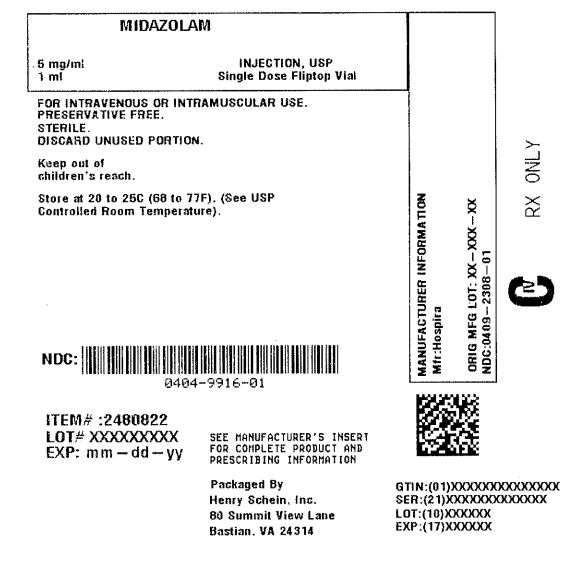
Midazolam Hydrochloride 5 mg/mL Injection, Solution — NDC 0404-9916-02 (Billing 00404-9916-02)
This is a package of Midazolam Hydrochloride 5 mg/mL Injection, Solution from Henry Schein, Inc., marketed since Jan 2022 and currently FDA-listed.
NDC database record
One package, one record: these facts belong to NDC 0404-9916-02 alone.
- Record
- FDA NDC Directory package listing · Human prescription drug
- Code segments
- 0404 labeler · 9916 product · 02 package
- Package marketed since
- Jan 17, 2022
- Sample package
- No — commercial package
- Listing certified through
- Dec 31, 2026
- Barcode (UPC-A, from the NDC)
- 3 0404991602 6
- FDA record last changed
- Jul 24, 2026
Identity & classification
Regulatory identifiers FDA, NLM and CMS codes for this package
- RxCUI (RxNorm): 1666814
Where does this data come from?
- FDA openFDA NDC Directory · synced Oct 8, 2026
- FDA label on DailyMed · label index refreshed Oct 6, 2026
- RxNorm (NLM RxNav) · catalog refreshed Oct 1, 2026
- Medi-Span GPI (licensed)
- First Databank (licensed) · refreshed Oct 8, 2026
RxNorm drug class
This medicine belongs to the Benzodiazepine class.
Where does this data come from?
- RxClass (NLM) · catalog refreshed Oct 1, 2026
Clinical
- It depends on the form. Injections and the children's syrup are used to calm you, ease anxiety and block memory around procedures or surgery. Injections are also used for anesthesi...
- Injections and the syrup are given by trained staff in monitored settings. The syrup is a single dose before a procedure, not for home use. Nayzilam is sprayed into one nostril, wi...
- Drowsiness, nausea, vomiting and trouble remembering things for several hours are common. Blood pressure may dip slightly. Slow or shallow breathing, severe sleepiness or agitation...
- No, avoid them unless your prescriber says otherwise. Alcohol and opioids can cause dangerously slow breathing, coma and death. Tell your team about every medicine you take, includ...
Patient education
Supplement & herbal interactions
Where does this data come from?
- MedlinePlus (NLM) · refreshed Oct 1, 2026
- FDA label on DailyMed · label index refreshed Oct 6, 2026
Ask a licensed pharmacist directly — free, answered by our team.
Pricing
A drug doesn't have one price. Each row is a different public payment system, and none is what you'd pay at the counter — that depends on your insurance. The ⓘ on each row explains what it measures.
| Price system | Per mL | Per package |
|---|---|---|
| Retail pharmacies payNADAC · weekly | Not in the retail survey — common for institutional, discontinued, or low-volume packs. | |
| Medicaid paysCMS SDUD · 12 mo | No recent Medicaid claims on file for this NDC — rare and low-volume NDCs are suppressed in the public data. | |
| Medicare drug plans payPart D · quarterly | No Part D plan price is available for this NDC in our data. | |
| Medicare Part B allowsASP · J2250 | $0.143 / J2250 unit | — |
Where does this data come from?
- CMS NADAC weekly file
- CMS ASP pricing files · refreshed Sep 20, 2026
- CMS Medicaid State Drug Utilization Data · refreshed Oct 8, 2026
- CMS Part D plan pricing files · refreshed Sep 24, 2026
- VA National Acquisition Center price file
Billing & reimbursement
Where does this data come from?
- CMS ASP NDC-HCPCS crosswalk · refreshed Sep 22, 2026
- DMEPDAC NDC-HCPCS crosswalk
- openFDA NSDE billing units · refreshed Oct 7, 2026
Packaging — all sizes for this product
| Package NDC | Description | Marketing start | Marketing end | Status |
|---|---|---|---|---|
| 00404-9916-01 0404-9916-01 Main listing | 1 VIAL, SINGLE-DOSE in 1 BAG / 1 mL in 1 VIAL, SINGLE-DOSE | 2022-01-17 | — | Active |
| 00404-9916-02 You're viewing this | 1 VIAL, SINGLE-DOSE in 1 BAG / 2 mL in 1 VIAL, SINGLE-DOSE | 2022-01-17 | — | Active |
Pack size FAQ
What quantity is in this package?
What NDC number is used to bill for this package of Midazolam Hydrochloride 5 mg/mL Injection, Solution?
Therapeutic equivalents
| Product | Labeler | Pack | NADAC/unit | TE | Status | Price vs. this |
|---|---|---|---|---|---|---|
| midazolam 5 mg/mL 25021-0661-10 | Sagent | 10 vials | $0.450 | AP | FDA listed | — |
| Midazolam 5 mg/mL 00409-2308-01 | Hospira, | 10 vials | $1.226 | AP | Availability likely | — |
| Midazolam hydrochloride 5 mg/mL 23155-0601-41 | Heritage | 10 vials | — | AP | FDA listed | — |
| Midazolam Hydrochloride 5 mg/mL 68083-0108-01 | Gland | 10 vials | — | AP | FDA listed | — |
| Midazolam 5 mg/mL 70069-0818-10 | SOMERSET | 10 vials | — | AP | FDA listed | — |
| Midazolam 5 mg/mL 82449-0205-02 | Steriscience | 10 vials | — | AP | Discontinued | — |
| Midazolam 5 mg/mL 82449-0206-02 | Steriscience | 10 vials | — | AP | Discontinued | — |
| Midazolam 5 mg/mL 82449-0208-02 | Steriscience | 10 vials | — | AP | FDA listed | — |
| Midazolam 5 mg/mL 82449-0209-02 | Steriscience | 10 vials | — | AP | FDA listed | — |
| Midazolam 5 mg/mL 63323-0412-02 | Fresenius | 10 vials | — | AP | FDA listed | — |
| Midazolam Hydrochloride 5 mg/mL 50090-5342-00 | A-S | 10 vials | — | AP | FDA listed | — |
| Midazolam Hydrochloride 5 mg/mL 62250-0111-10 | Belcher | 10 vials | — | AP | FDA listed | — |
| Midazolam 5 mg/mL 00409-2596-03 | Hospira, | 10 vials | — | AP | FDA listed | — |
| Midazolam Hydrochloride 5 mg/mL 86211-0111-10 | Jvet | 10 vials | — | AP | FDA listed | — |
| Midazolam 5 mg/mL 76045-0002-10 | Fresenius | 1 syringe | — | AP | FDA listed | — |
| Midazolam Hydrochloride 5 mg/mLthis 00404-9916-02 | Henry | 1 vial | — | AP | FDA listed | — |
| Midazolam 5 mg/mL 83270-0172-10 | Onesource | 10 vials | — | AP | FDA listed | — |
| Midazolam 5 mg/mL 83270-0173-10 | Onesource | 10 vials | — | AP | FDA listed | — |
| Midazolam 5 mg/mL 83270-0176-10 | Onesource | 10 vials | — | AP | FDA listed | — |
| Midazolam 5 mg/mL 83270-0175-10 | Onesource | 10 vials | — | AP | FDA listed | — |
Where does this data come from?
- FDA openFDA NDC Directory · synced Oct 8, 2026
- FDA Orange Book · refreshed Oct 3, 2026
- CMS NADAC weekly file
Availability & generic status
This product is an FDA-approved generic. Other versions of the same drug are listed under Therapeutic equivalents, least expensive first.
Where does this data come from?
- FDA Orange Book · refreshed Oct 3, 2026
Inactive Ingredients / Excipients
Inactive ingredients, also called excipients, are components of the drug product other than the active ingredient. They may include fillers, dyes, coatings, preservatives, flavors, or other formulation ingredients.
🧪 Avoiding an ingredient? See Midazolam inactive ingredients by manufacturer: every current product's list side by side, so you can ask your pharmacy for the version that does not list it.
Where does this data come from?
IACT rows and label-wide narrative are kept separate; availability and product-level specificity depend on the submitted label.- FDA label on DailyMed · label index refreshed Oct 6, 2026
- FDA openFDA NDC Directory · synced Oct 8, 2026
Inactive ingredient FAQ
Are inactive ingredients the same for every manufacturer?
Why might an inactive ingredient be missing?
Can inactive ingredients matter?
Manufacturer & labeler
More NDCs from Henry Schein, Inc. labeler code 00404
- Magnesium Sulfate 500 mg/mL Injection, Solution NDC 0404-9903-10
- Magnesium Sulfate 500 mg/mL Injection, Solution NDC 0404-9904-02
- Mannitol 12.5 g/50mL Injection, Solution NDC 0404-9905-50
- MARCAINE WITH EPINEPHRINE bupivacaine hydrochloride and epinephrine bitartrate 2.5 mg/mL; .0091 mg/mL Injection, Solution NDC 0404-9908-30
- Midazolam 1 mg/mL Injection NDC 0404-9913-05
- Midazolam 5 mg/mL Injection, Solution NDC 0404-9915-05
- Nalbuphine Hydrochloride 10 mg/mL Injection, Solution NDC 0404-9918-01
- Naloxone Hydrochloride .4 mg/mL Injection, Solution NDC 0404-9920-01
- NALOXONE HYDROCHLORIDE 1 mg/mL Injection NDC 0404-9922-02
- NALOXONE HYDROCHLORIDE .4 mg/mL Injection, Solution NDC 0404-9923-01
- NAROPIN ropivacaine hydrochloride 5 mg/mL Injection, Solution NDC 0404-9924-30
- Nitroglycerin 5 mg/mL Injection, Solution NDC 0404-9928-10
Where does this data come from?
- FDA openFDA NDC Directory · synced Oct 8, 2026
- Drugs@FDA
Full prescribing information FDA SPL
🚨 Boxed Warning ▾
Boxed Warning WARNINGS Personnel and Equipment for Monitoring and Resuscitation Adults and Pediatrics: Intravenous midazolam has been associated with respiratory depression and respiratory arrest, especially when used for sedation in noncritical care settings. In some cases, where this was not recognized promptly and treated effectively, death or hypoxic encephalopathy has resulted. Intravenous midazolam should be used only in hospital or ambulatory care settings, including physicians' and dental offices, that provide for continuous monitoring of respiratory and cardiac function, e.g., pulse oximetry.
Immediate availability of resuscitative drugs and age- and size-appropriate equipment for bag/valve/mask ventilation and intubation, and personnel trained in their use and skilled in airway management should be assured (see WARNINGS ). For deeply sedated pediatric patients, a dedicated individual, other than the practitioner performing the procedure, should monitor the patient throughout the procedure. Risks From Concomitant Use With Opioids Concomitant use of benzodiazepines and opioids may result in profound sedation, respiratory depression, coma, and death.
Monitor patients for respiratory depression and sedation (see WARNINGS and PRECAUTIONS ; Drug Interactions). Individualization of Dosage Midazolam must never be used without individualization of dosage. The initial intravenous dose for sedation in adult patients may be as little as 1 mg, but should not exceed 2.5 mg in a normal healthy adult.
Lower doses are necessary for older (over 60 years) or debilitated patients and in patients receiving concomitant narcotics or other central nervous system (CNS) depressants. The initial dose and all subsequent doses should always be titrated slowly; administer over at least 2 minutes and allow an additional 2 or more minutes to fully evaluate the sedative effect. The use of the 1 mg/mL formulation or dilution of the 1 mg/mL or 5 mg/mL formulation is recommended to facilitate slower injection.
Doses of sedative medications in pediatric patients must be calculated on a mg/kg basis, and initial doses and all subsequent doses should always be titrated slowly. The initial pediatric dose of midazolam for sedation/anxiolysis/amnesia is age, procedure, and route dependent (see DOSAGE AND ADMINISTRATION for complete dosing information). Neonates: Midazolam should not be administered by rapid injection in the neonatal population.
Severe hypotension and seizures have been reported following rapid intravenous administration, particularly with concomitant use of fentanyl (see DOSAGE AND ADMINISTRATION for complete information).
🎯 Indications and Usage ▾
Indications and Usage Midazolam injection is indicated: intramuscularly or intravenously for preoperative sedation/anxiolysis/amnesia; intravenously as an agent for sedation/anxiolysis/amnesia prior to or during diagnostic, therapeutic or endoscopic procedures, such as bronchoscopy, gastroscopy, cystoscopy, coronary angiography, cardiac catheterization, oncology procedures, radiologic procedures, suture of lacerations and other procedures either alone or in combination with other CNS depressants; intravenously for induction of general anesthesia, before administration of other anesthetic agents.
With the use of narcotic premedication, induction of anesthesia can be attained within a relatively narrow dose range and in a short period of time. Intravenous midazolam can also be used as a component of intravenous supplementation of nitrous oxide and oxygen (balanced anesthesia); continuous intravenous infusion for sedation of intubated and mechanically ventilated patients as a component of anesthesia or during treatment in a critical care setting.
⏱️ Dosage and Administration ▾
Dosage and Administration Midazolam injection is a potent sedative agent that requires slow administration and individualization of dosage. Clinical experience has shown midazolam to be 3 to 4 times as potent per mg as diazepam. BECAUSE SERIOUS AND LIFE-THREATENING CARDIORESPIRATORY ADVERSE EVENTS HAVE BEEN REPORTED, PROVISION FOR MONITORING, DETECTION AND CORRECTION OF THESE REACTIONS MUST BE MADE FOR EVERY PATIENT TO WHOM MIDAZOLAM INJECTION IS ADMINISTERED, REGARDLESS OF AGE OR HEALTH STATUS.
Excessive single doses or rapid intravenous administration may result in respiratory depression, airway obstruction and/or arrest. The potential for these latter effects is increased in debilitated patients, those receiving concomitant medications capable of depressing the CNS, and patients without an endotracheal tube but undergoing a procedure involving the upper airway such as endoscopy or dental (see Boxed WARNING and WARNINGS). Reactions such as agitation, involuntary movements, hyperactivity and combativeness have been reported in adult and pediatric patients.
Should such reactions occur, caution should be exercised before continuing administration of midazolam (see WARNINGS ). Midazolam injection should only be administered intramuscularly or intravenously (see WARNINGS ). Care should be taken to avoid intra-arterial injection or extravasation (see WARNINGS ).
Midazolam Injection may be mixed in the same syringe with the following frequently used premedications: morphine sulfate, meperidine, atropine sulfate or scopolamine. Midazolam, at a concentration of 0.5 mg/mL, is compatible with 5% dextrose in water and 0.9% sodium chloride for up to 24 hours and with lactated Ringer's solution for up to 4 hours. Both the 1 mg/mL and 5 mg/mL formulations of midazolam may be diluted with 0.9% sodium chloride or 5% dextrose in water.
Monitoring: Patient response to sedative agents, and resultant respiratory status, is variable. Regardless of the intended level of sedation or route of administration, sedation is a continuum; a patient may move easily from light to deep sedation, with potential loss of protective reflexes. This is especially true in pediatric patients.
Sedative doses should be individually titrated, taking into account patient age, clinical status and concomitant use of other CNS depressants. Continuous monitoring of respiratory and cardiac function is required (i.e., pulse oximetry). Adults and Pediatrics: Sedation guidelines recommend a careful presedation history to determine how a patient's underlying medical conditions or concomitant medications might affect their response to sedation/analgesia as well as a physical examination including a focused examination of the airway for abnormalities.
Further recommendations include appropriate presedation fasting. Titration to effect with multiple small doses is essential for safe administration. It should be noted that adequate time to achieve peak central nervous system effect (3 to 5 minutes) for midazolam should be allowed between doses to minimize the potential for oversedation.
Sufficient time must elapse between doses of concomitant sedative medications to allow the effect of each dose to be assessed before subsequent drug administration. This is an important consideration for all patients who receive intravenous midazolam. Immediate availability of resuscitative drugs and age- and size-appropriate equipment and personnel trained in their use and skilled in airway management should be assured (see WARNINGS ).
Pediatrics: For deeply sedated pediatric patients a dedicated individual, other than the practitioner performing the procedure, should monitor the patient throughout the procedure. Intravenous access is not thought to be necessary for all pediatric patients sedated for a diagnostic or therapeutic procedure because in some cases the difficulty of gaining intravenous access would defeat the purpose of sedating the child; rather, emphasis should be placed upon having the… [Excerpted — this section continues on DailyMed.]
⛔ Contraindications ▾
Contraindications Injectable midazolam is contraindicated in patients with a known hypersensitivity to the drug. Benzodiazepines are contraindicated in patients with acute narrow-angle glaucoma. Benzodiazepines may be used in patients with open-angle glaucoma only if they are receiving appropriate therapy.
Measurements of intraocular pressure in patients without eye disease show a moderate lowering following induction with midazolam; patients with glaucoma have not been studied.
⚠️ Warnings ▾
Warnings Personnel and Equipment for Monitoring and Resuscitation Prior to the intravenous administration of midazolam in any dose, the immediate availability of oxygen, resuscitative drugs, age- and size-appropriate equipment for bag/valve/mask ventilation and intubation, and skilled personnel for the maintenance of a patent airway and support of ventilation should be ensured. Patients should be continuously monitored for early signs of hypoventilation, airway obstruction, or apnea, with means readily available (e.g., pulse oximetry).
Hypoventilation, airway obstruction, and apnea can lead to hypoxia and/or cardiac arrest unless effective countermeasures are taken immediately. The immediate availability of specific reversal agents (flumazenil) is highly recommended. Vital signs should continue to be monitored during the recovery period.
Because intravenous midazolam can depress respiration (see CLINICAL PHARMACOLOGY ), especially when used concomitantly with opioid agonists and other sedatives (see DOSAGE AND ADMINISTRATION ), it should be used for sedation/anxiolysis/amnesia only in the presence of personnel skilled in early detection of hypoventilation, maintaining a patent airway and supporting ventilation. When used for sedation/anxiolysis/amnesia, midazolam should always be titrated slowly in adult or pediatric patients. Adverse hemodynamic events have been reported in pediatric patients with cardiovascular instability; rapid intravenous administration should also be avoided in this population (see DOSAGE AND ADMINISTRATION for complete information).
Risks from Concomitant Use With Opioids Concomitant use of benzodiazepines, including midazolam, and opioids may result in profound sedation, respiratory depression, coma, and death. If a decision is made to use midazolam concomitantly with opioids, monitor patients closely for respiratory depression and sedation (see PRECAUTIONS; Drug Interactions ). Risk of Respiratory Adverse Events Serious cardiorespiratory adverse events have occurred after administration of midazolam.
These have included respiratory depression, airway obstruction, oxygen desaturation, apnea, respiratory arrest and/or cardiac arrest, sometimes resulting in death or permanent neurologic injury. There have also been rare reports of hypotensive episodes requiring treatment during or after diagnostic or surgical manipulations particularly in adult or pediatric patients with hemodynamic instability. Hypotension occurred more frequently in the sedation studies in patients premedicated with a narcotic.
Individualization of Dosage Midazolam must never be used without individualization of dosage particularly when used with other medications capable of producing central nervous system depression. See DOSAGE AND ADMINISTRATION for complete information. Other Adverse Events Reactions such as agitation, involuntary movements (including tonic/clonic movements and muscle tremor), hyperactivity and combativeness have been reported in both adult and pediatric patients.
These reactions may be due to inadequate or excessive dosing or improper administration of midazolam; however, consideration should be given to the possibility of cerebral hypoxia or true paradoxical reactions. Should such reactions occur, the response to each dose of midazolam and all other drugs, including local anesthetics, should be evaluated before proceeding. Reversal of such responses with flumazenil has been reported in pediatric patients.
Concomitant Use of Central Nervous System Depressants Concomitant use of barbiturates, alcohol or other central nervous system depressants may increase the risk of hypoventilation, airway obstruction, desaturation, or apnea and may contribute to profound and/or prolonged drug effect. Narcotic premedication also depresses the ventilatory response to carbon dioxide stimulation. Debilitation and Comorbid Considerations Higher risk adult and pediatric surgical patients, elderly patients and debilitated adult and ped… [Excerpted — this section continues on DailyMed.]
🤒 Adverse Reactions ▾
Adverse Reactions See WARNINGS concerning serious cardiorespiratory events and possible paradoxical reactions. Fluctuations in vital signs were the most frequently seen findings following parenteral administration of midazolam in adults and included decreased tidal volume and/or respiratory rate decrease (23.3% of patients following intravenous and 10.8% of patients following intramuscular administration) and apnea (15.4% of patients following intravenous administration), as well as variations in blood pressure and pulse rate.
The majority of serious adverse effects, particularly those associated with oxygenation and ventilation, have been reported when midazolam is administered with other medications capable of depressing the central nervous system. The incidence of such events is higher in patients undergoing procedures involving the airway without the protective effect of an endotracheal tube, (e.g., upper endoscopy and dental procedures). Adults: The following additional adverse reactions were reported after intramuscular administration: Administration of intramuscular midazolam to elderly and/or higher risk surgical patients has been associated with rare reports of death under circumstances compatible with cardiorespiratory depression.
In most of these cases, the patients also received other central nervous system depressants capable of depressing respiration, especially narcotics (see DOSAGE AND ADMINISTRATION ). The following additional adverse reactions were reported subsequent to intravenous administration as a single sedative/anxiolytic/amnestic agent in adult patients: Pediatric Patients: The following adverse events related to the use of intravenous midazolam in pediatric patients were reported in the medical literature: desaturation 4.6%, apnea 2.8%, hypotension 2.7%, paradoxical reactions 2.0%, hiccough 1.2%, seizure-like activity 1.1% and nystagmus 1.1%.
The majority of airway-related events occurred in patients receiving other CNS depressing medications and in patients where midazolam was not used as a single sedating agent. Neonates: For information concerning hypotensive episodes and seizures following the administration of midazolam to neonates (see Boxed WARNING, CONTRAINDICATIONS, WARNINGS and PRECAUTIONS). Other adverse experiences, observed mainly following intravenous injection as a single sedative/anxiolytic/amnesia agent and occurring at an incidence of <1.0% in adult and pediatric patients, are as follows: Respiratory: Laryngospasm, bronchospasm, dyspnea, hyperventilation, wheezing, shallow respirations, airway obstruction, tachypnea Cardiovascular: Bigeminy, premature ventricular contractions, vasovagal episode, bradycardia, tachycardia, nodal rhythm Gastrointestinal: Acid taste, excessive salivation, retching CNS/Neuromuscular: Retrograde amnesia, euphoria, hallucination, confusion, argumentativeness, nervousness, anxiety, grogginess, restlessness, emergence delirium or agitation, prolonged emergence from anesthesia, dreaming during emergence, sleep disturbance, insomnia, nightmares, athetoid movements, seizure-like activity, ataxia, dizziness, dysphoria, slurred speech, dysphonia, paresthesia Special Senses: Blurred vision, diplopia, nystagmus, pinpoint pupils, cyclic movements of eyelids, visual disturbance, difficulty focusing eyes, ears blocked, loss of balance, light-headedness Integumentary: Hive-like elevation at injection site, swelling or feeling of burning, warmth or coldness at injection site Hypersensitivity: Allergic reactions including anaphylactoid reactions, hives, rash, pruritus Miscellaneous: Yawning, lethargy, chills, weakness, toothache, faint feeling, hematoma Image2.jpg Image3.jpg
🆘 Overdosage ▾
Overdosage Clinical Presentation Overdosage of benzodiazepines is characterized by central nervous system depression ranging from drowsiness to coma. In mild to moderate cases, symptoms can include drowsiness, confusion, dysarthria, lethargy, hypnotic state, diminished reflexes, ataxia, and hypotonia. Rarely, paradoxical or disinhibitory reactions (including agitation, irritability, impulsivity, violent behavior, confusion, restlessness, excitement, and talkativeness) may occur.
In severe overdosage cases, patients may develop respiratory depression and coma. Overdosage of benzodiazepines in combination with other CNS depressants (including alcohol and opioids) may be fatal (see WARNINGS: Risks from Concomitant Use With Opioids, and Concomitant Use of Central Nervous System Depressants). Markedly abnormal (lowered or elevated) blood pressure, heart rate, or respiratory rate raise the concern that additional drugs and/or alcohol are involved in the overdosage.
Management of Overdose In managing benzodiazepine overdosage, employ general supportive measures, including intravenous fluids and airway maintenance. Flumazenil, a specific benzodiazepine receptor antagonist indicated for the complete or partial reversal of the sedative effects of benzodiazepines in the management of benzodiazepine overdosage, can lead to withdrawal and adverse reactions, including seizures, particularly in the context of mixed overdosage with drugs that increase seizure risk (e.g., tricyclic and tetracyclic antidepressants) and in patients with long-term benzodiazepine use and physical dependency.
The risk of withdrawal seizures with flumazenil use may be increased in patients with epilepsy. Flumazenil is contraindicated in patients who have received a benzodiazepine for control of a potentially life-threatening condition (e.g., status epilepticus). If the decision is made to use flumazenil, it should be used as an adjunct to, not as a substitute for, supportive management of benzodiazepine overdosage.
See the flumazenil injection Prescribing Information. Consider contacting a poison center (1-800-222-1222), poisoncontrol.org, or a medical toxicologist for additional overdosage management recommendations.
🧬 Clinical Pharmacology ▾
Clinical Pharmacology Midazolam is a short-acting benzodiazepine central nervous system (CNS) depressant. Pharmacodynamics: The effects of midazolam on the CNS are dependent on the dose administered, the route of administration, and the presence or absence of other medications. Onset time of sedative effects after intramuscular administration in adults is 15 minutes, with peak sedation occurring 30 to 60 minutes following injection.
In one adult study, when tested the following day, 73% of the patients who received midazolam intramuscularly had no recall of memory cards shown 30 minutes following drug administration; 40% had no recall of the memory cards shown 60 minutes following drug administration. Onset time of sedative effects in the pediatric population begins within 5 minutes and peaks at 15 to 30 minutes depending upon the dose administered. In pediatric patients, up to 85% had no recall of pictures shown after receiving intramuscular midazolam compared with 5% of the placebo controls.
Sedation in adult and pediatric patients is achieved within 3 to 5 minutes after intravenous injection; the time of onset is affected by total dose administered and the concurrent administration of narcotic premedication. Seventy-one percent of the adult patients in endoscopy studies had no recall of introduction of the endoscope; 82% of the patients had no recall of withdrawal of the endoscope. In one study of pediatric patients undergoing lumbar puncture or bone marrow aspiration, 88% of patients had impaired recall vs 9% of the placebo controls.
In another pediatric oncology study, 91% of midazolam treated patients were amnestic compared with 35% of patients who had received fentanyl alone. When midazolam is given intravenous as an anesthetic induction agent, induction of anesthesia occurs in approximately 1.5 minutes when narcotic premedication has been administered and in 2 to 2.5 minutes without narcotic premedication or other sedative premedication. Some impairment in a test of memory was noted in 90% of the patients studied.
A dose response study of pediatric patients premedicated with 1 mg/kg intramuscular meperidine found that only 4 out of 6 pediatric patients who received 600 mcg/kg intravenous midazolam lost consciousness, with eye closing at 108 ± 140 seconds. This group was compared with pediatric patients who were given thiopental 5 mg/kg intravenous; 6 out of 6 closed their eyes at 20 ± 3.2 seconds. Midazolam did not dependably induce anesthesia at this dose despite concomitant opioid administration in pediatric patients.
Midazolam, used as directed, does not delay awakening from general anesthesia in adults. Gross tests of recovery after awakening (orientation, ability to stand and walk, suitability for discharge from the recovery room, return to baseline Trieger competency) usually indicate recovery within 2 hours but recovery may take up to 6 hours in some cases. When compared with patients who received thiopental, patients who received midazolam generally recovered at a slightly slower rate.
Recovery from anesthesia or sedation for procedures in pediatric patients depends on the dose of midazolam administered, coadministration of other medications causing CNS depression and duration of the procedure. In patients without intracranial lesions, induction of general anesthesia with intravenous midazolam is associated with a moderate decrease in cerebrospinal fluid pressure (lumbar puncture measurements), similar to that observed following intravenous thiopental. Preliminary data in neurosurgical patients with normal intracranial pressure but decreased compliance (subarachnoid screw measurements) show comparable elevations of intracranial pressure with midazolam and with thiopental during intubation.
No similar studies have been reported in pediatric patients. The usual recommended intramuscular premedicating doses of midazolam do not depress the ventilatory response to carbon dioxide stimulation to a clinically significa… [Excerpted — this section continues on DailyMed.]
📦 How Supplied / Storage and Handling ▾
How Supplied Package configurations containing preservative-free midazolam hydrochloride equivalent to 1 mg midazolam/ mL : Package configurations containing preservative-free midazolam hydrochloride equivalent to 5 mg midazolam/ mL : Store at 20 to 25°C (68 to 77°F) [see USP Controlled Room Temperature]. Discard unused portion. Product repackaged by: Henry Schein, Inc., Bastian, VA 24314 From Original Manufacturer/Distributor's NDC and Unit of Sale To Henry Schein Repackaged Product NDC and Unit of Sale Total Strength/Total Volume (Concentration) per unit NDC 0409-2308-01 Carton of 10 Single-dose Fliptop Vials NDC 0404-9916-01 1 1 mL Single-dose Fliptop Vial in a bag (Vial bears NDC 0409-2308-21) 5 mg/mL NDC 0409-2308-02 Carton of 10 Single-dose Fliptop Vials NDC 0404-9916-02 1 2 mL Single-dose Fliptop Vial in a bag (Vial bears NDC 0409-2308-22) 10 mg/2 mL (5 mg/mL) Image20.jpg Image21.jpg
📋 Description ▾
Description Midazolam hydrochloride injection is a water-soluble benzodiazepine available as a sterile, nonpyrogenic parenteral dosage form for intravenous or intramuscular injection. Each mL contains midazolam hydrochloride equivalent to 1 mg or 5 mg midazolam compounded with 0.8% sodium chloride. The pH is adjusted to approximately 3 with hydrochloric acid and, if necessary, sodium hydroxide.
Midazolam is a white to light yellow crystalline compound, insoluble in water. The hydrochloride salt of midazolam, which is formed in situ , is soluble in aqueous solutions. Chemically, midazolam HCl is 8-chloro-6-(2-fluorophenyl)-1-methyl-4H-imidazo[1,5-a][1,4]benzodiazepine hydrochloride.
Midazolam hydrochloride has the empirical formula C 18 H 13 ClFN 3 ∙HCl, a calculated molecular weight of 362.25 and the following structural formula: Under the acidic conditions required to solubilize midazolam in the product, midazolam is present as an equilibrium mixture (shown below) of the closed-ring form shown above and an open-ring structure formed by the acid-catalyzed ring opening of the 4,5-double bond of the diazepine ring. The amount of open-ring form is dependent upon the pH of the solution. At the specified pH of the product, the solution may contain up to about 25% of the open-ring compound.
At the physiologic conditions under which the product is absorbed (pH of 5 to 8) into the systemic circulation, any open-ring form present reverts to the physiologically active, lipophilic, closed-ring form (midazolam) and is absorbed as such. The following chart plots the percentage of midazolam present as the open-ring form as a function of pH in aqueous solutions. As indicated in the graph, the amount of open-ring compound present in solution is sensitive to changes in pH over the pH range specified for the product: 3.0 to 4.0 for the 1 mg/mL concentration and 3.0 to 3.6 for the 5 mg/mL concentration.
Above pH 5, at least 99% of the mixture is present in the closed-ring form. Formula1.jpg Formula2.jpg Image1.jpg
⚠️ Precautions ▾
Precautions General: Intravenous doses of midazolam should be decreased for elderly and for debilitated patients (see WARNINGS and DOSAGE AND ADMINISTRATION ). These patients will also probably take longer to recover completely after midazolam administration for the induction of anesthesia. Midazolam does not protect against the increase in intracranial pressure or against the heart rate rise and/or blood pressure rise associated with endotracheal intubation under light general anesthesia.
The efficacy and safety of midazolam in clinical use are functions of the dose administered, the clinical status of the individual patient, and the use of concomitant medications capable of depressing the CNS. Anticipated effects range from mild sedation to deep levels of sedation virtually equivalent to a state of general anesthesia where the patient may require external support of vital functions. Care must be taken to individualize and carefully titrate the dose of midazolam to the patient's underlying medical/surgical conditions, administer to the desired effect being certain to wait an adequate time for peak CNS effects of both midazolam and concomitant medications, and have the personnel and size-appropriate equipment and facilities available for monitoring and intervention (see BOXED WARNING, WARNINGS and DOSAGE AND ADMINISTRATION ).
Practitioners administering midazolam must have the skills necessary to manage reasonably foreseeable adverse effects, particularly skills in airway management. For information regarding withdrawal (see DRUG ABUSE AND DEPENDENCE ). Information for Patients: To assure safe and effective use of benzodiazepines, the following information and instructions should be communicated to the patient when appropriate: Inform your physician about any alcohol consumption and medicine you are now taking, especially blood pressure medication and antibiotics, including drugs you buy without a prescription.
Alcohol has an increased effect when consumed with benzodiazepines; therefore, caution should be exercised regarding simultaneous ingestion of alcohol during benzodiazepine treatment. Inform your physician if you are pregnant or are planning to become pregnant. Inform your physician if you are nursing.
Patients should be informed of the pharmacological effects of midazolam, such as sedation and amnesia, which in some patients may be profound. The decision as to when patients who have received injectable midazolam, particularly on an outpatient basis, may again engage in activities requiring complete mental alertness, operate hazardous machinery or drive a motor vehicle must be individualized. Patients receiving continuous infusion of midazolam in critical care settings over an extended period of time, may experience symptoms of withdrawal following abrupt discontinuation.
Effect of anesthetic and sedation drugs on early brain development: Studies conducted in young animals and children suggest repeated or prolonged use of general anesthetic or sedation drugs in children younger than 3 years may have negative effects on their developing brains. Discuss with parents and caregivers the benefits, risks, and timing and duration of surgery or procedures requiring anesthetic and sedation drugs. Pregnancy Advise pregnant females that use of midazolam late in pregnancy can result in sedation (respiratory depression, lethargy, hypotonia) and/or withdrawal symptoms (hyperreflexia, irritability, restlessness, tremors, inconsolable crying, and feeding difficulties) in newborns (see WARNINGS: Neonatal Sedation and Withdrawal Syndrome and PRECAUTIONS: Pregnancy ).
Instruct patients to inform their healthcare provider if they are pregnant. Nursing Instruct patients to notify their healthcare provider if they are breastfeeding or intend to breastfeed. Instruct breastfeeding patients receiving midazolam to monitor infants for excessive sedation, poor feeding, and poor weight gain, and to seek medical attention if they notice these signs.… [Excerpted — this section continues on DailyMed.]
🔒 Drug Abuse and Dependence ▾
Drug Abuse and Dependence Midazolam Injection contains midazolam a Schedule IV control substance. Midazolam was actively self-administered in primate models used to assess the positive reinforcing effects of psychoactive drugs. Midazolam produced physical dependence of a mild to moderate intensity in cynomolgus monkeys after 5 to 10 weeks of administration.
Available data concerning the drug abuse and dependence potential of midazolam suggest that its abuse potential is at least equivalent to that of diazepam. Withdrawal symptoms, similar in character to those noted with barbiturates and alcohol (convulsions, hallucinations, tremor, abdominal and muscle cramps, vomiting and sweating), have occurred following abrupt discontinuation of benzodiazepines, including midazolam. Abdominal distention, nausea, vomiting, and tachycardia are prominent symptoms of withdrawal in infants.
The more severe withdrawal symptoms have usually been limited to those patients who had received excessive doses over an extended period of time. Generally milder withdrawal symptoms (e.g., dysphoria and insomnia) have been reported following abrupt discontinuance of benzodiazepines taken continuously at therapeutic levels for several months. Consequently, after extended therapy, abrupt discontinuation should generally be avoided and a gradual dosage tapering schedule followed.
There is no consensus in the medical literature regarding tapering schedules; therefore, practitioners are advised to individualize therapy to meet patient's needs. In some case reports, patients who have had severe withdrawal reactions due to abrupt discontinuation of high-dose long-term midazolam, have been successfully weaned off of midazolam over a period of several days.
📄 Package Label / Principal Display Panel ▾
Sample Package Label Label1.jpg Label2.jpg
About this NDC listing & data coverage
What data is (and isn’t) available for this NDC — tap to expand
| NDC identity (package / product / labeler codes) | ✓ Available |
| Labeler | ✓ Available |
| Product & package description | ✓ Available |
| Marketing category & status | ✓ Available |
| Active ingredient / dosage form / route | ✓ Available |
| FDA label (SPL via DailyMed) | ✓ Available |
| Package photos | ✓ Available |
| Inactive ingredients (structured) | — Not published for this NDC The labeler did not submit a structured excipient list, or no SPL is available. |
| NADAC pharmacy acquisition price (CMS) | — Not published for this NDC CMS publishes NADAC only for NDCs reported in its retail-pharmacy survey. |
| Orange Book / therapeutic-equivalence data | ✓ Available |
| HCPCS J-code billing crosswalk | ✓ Available |
| Medicaid utilization (CMS SDUD) | — Not published for this NDC CMS reports utilization only for NDCs with Medicaid claims above its privacy threshold. |