
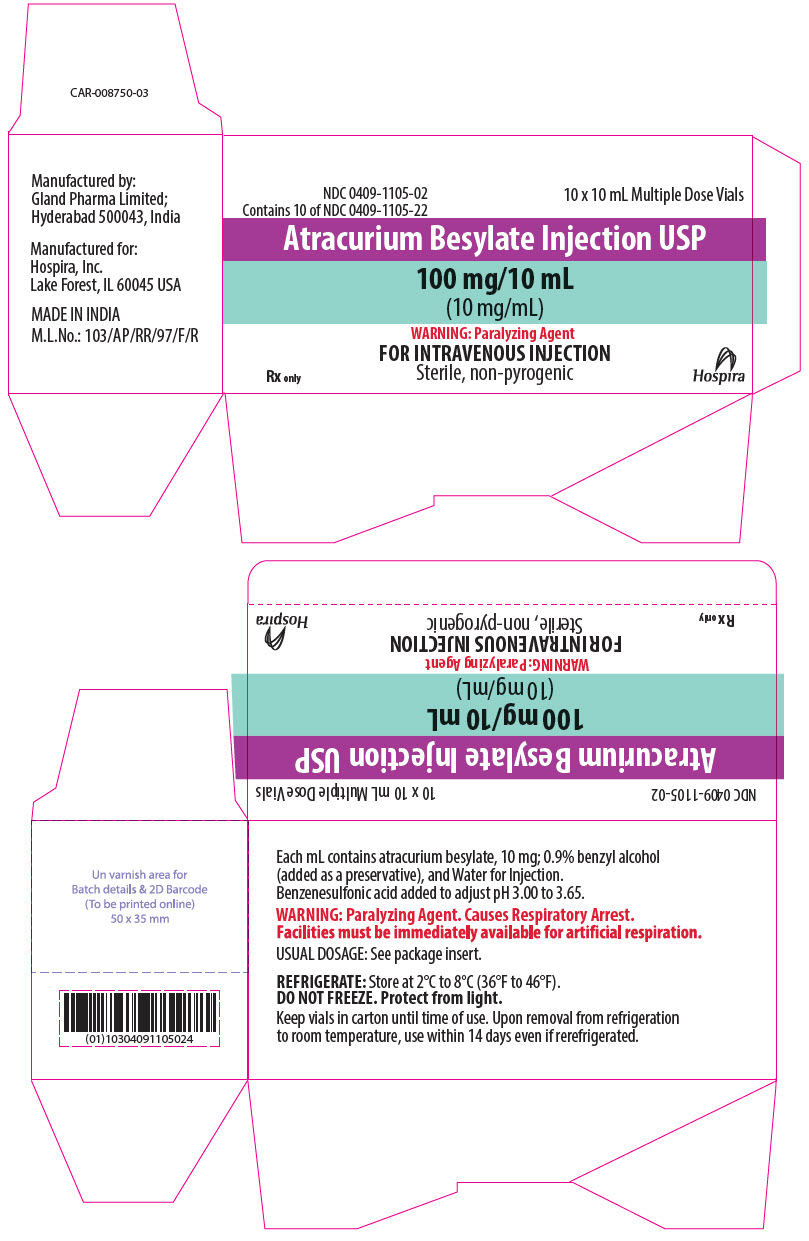
Atracurium Besylate 10 mg/mL Injection, Solution — NDC 0409-1105-02 (Billing 00409-1105-02)
This is a package of Atracurium Besylate 10 mg/mL Injection, Solution from Hospira, Inc., marketed since May 2013 and currently FDA-listed. It is this product's only package size.
NDC database record
One package, one record: these facts belong to NDC 0409-1105-02 alone.
- Record
- FDA NDC Directory package listing · Human prescription drug
- Code segments
- 0409 labeler · 1105 product · 02 package
- Package marketed since
- May 29, 2013
- Sample package
- No — commercial package
- Listing certified through
- Dec 31, 2026
- Barcode (UPC-A, from the NDC)
- 3 0409110502 7
- FDA record last changed
- Jul 24, 2026
Identity & classification
Regulatory identifiers FDA, NLM and CMS codes for this package
Drug-database identifiers Medi-Span GPI and First Databank GCN / HICL / AHFS classification
- GSN (GCN sequence number): 008400
- GCN: 23390
- GPI-14 (Medi-Span): 74200010102020
- HICL (First Databank): 003745
- AHFS class code: 12:20.20.00
- RxCUI (RxNorm): 966768
Where does this data come from?
- FDA openFDA NDC Directory · synced Oct 8, 2026
- FDA label on DailyMed · label index refreshed Oct 6, 2026
- RxNorm (NLM RxNav) · catalog refreshed Oct 1, 2026
- Medi-Span GPI (licensed)
- First Databank (licensed) · refreshed Oct 8, 2026
RxNorm drug class
This medicine belongs to the Nondepolarizing Neuromuscular Blocker class.
Where does this data come from?
- RxClass (NLM) · catalog refreshed Oct 1, 2026
Clinical
Patient education
Supplement & herbal interactions
Where does this data come from?
- MedlinePlus (NLM) · refreshed Oct 1, 2026
- FDA label on DailyMed · label index refreshed Oct 6, 2026
Ask a licensed pharmacist directly — free, answered by our team.
Pricing
A drug doesn't have one price. Each row is a different public payment system, and none is what you'd pay at the counter — that depends on your insurance. The ⓘ on each row explains what it measures.
| Price system | Per mL | Per package |
|---|---|---|
| Retail pharmacies payNADAC · weekly | Not in the retail survey — common for institutional, discontinued, or low-volume packs. | |
| Medicaid paysCMS SDUD · 12 mo | No recent Medicaid claims on file for this NDC — rare and low-volume NDCs are suppressed in the public data. | |
| Medicare drug plans payPart D · quarterly | No Part D plan price is available for this NDC in our data. | |
Where does this data come from?
- CMS NADAC weekly file
- CMS ASP pricing files · refreshed Sep 20, 2026
- CMS Medicaid State Drug Utilization Data · refreshed Oct 8, 2026
- CMS Part D plan pricing files · refreshed Sep 24, 2026
- VA National Acquisition Center price file
Packaging — all sizes for this product
| Package NDC | Description | Marketing start | Marketing end | Status |
|---|---|---|---|---|
| 00409-1105-02 You're viewing this Main listing | 10 VIAL, MULTI-DOSE in 1 CARTON / 10 mL in 1 VIAL, MULTI-DOSE | 2013-05-29 | — | Active |
Therapeutic equivalents
| Product | Labeler | Pack | NADAC/unit | TE | Status | Price vs. this |
|---|---|---|---|---|---|---|
| Atracurium Besylate 10 mg/mLthis 00409-1105-02 | Hospira, | 10 vials | — | AP | FDA listed | — |
| Atracurium Besylate 100 mg/10mL 55150-0217-10 | AuroMedics | 10 vials | — | — | FDA listed | — |
| Atracurium Besylate 10 mg/mL 71288-0702-10 | Meitheal | 10 vials | — | AP | FDA listed | — |
| Atracurium Besylate 10 mg/mL 00409-1109-01 | Hospira, | 10 vials | — | AP | FDA listed | — |
| Atracurium Besylate 10 mg/mL 71288-0701-05 | Meitheal | 10 vials | — | AP | FDA listed | — |
Where does this data come from?
- FDA openFDA NDC Directory · synced Oct 8, 2026
- FDA Orange Book · refreshed Oct 3, 2026
- CMS NADAC weekly file
Availability & generic status
This product is an FDA-approved generic. Other versions of the same drug are listed under Therapeutic equivalents, least expensive first.
Where does this data come from?
- FDA Orange Book · refreshed Oct 3, 2026
Inactive Ingredients / Excipients
Inactive ingredients, also called excipients, are components of the drug product other than the active ingredient. They may include fillers, dyes, coatings, preservatives, flavors, or other formulation ingredients.
💡 Tap an ingredient (hover on desktop) to see what it is and why it’s used.
-
UNII 685928Z18A
A synthetic organic acid used as a buffer and pH adjuster in medicines. It helps maintain the proper acidity level so the drug stays stable and works effectively in the formulation.
-
9 mg / 1 mL
UNII LKG8494WBH
Benzyl alcohol is a clear liquid used as a preservative and solvent in medicines. It helps prevent bacterial and fungal growth and dissolves other ingredients to create uniform liquid formulations.
2 inactive ingredients listed in the exact product block matched to this NDC.
Where does this data come from?
ingredient classCode="IACT" elements from the exact product block matched by this NDC. Label-section narrative from DailyMed / the openFDA label index is shown separately when available.- FDA label on DailyMed · label index refreshed Oct 6, 2026
- FDA openFDA NDC Directory · synced Oct 8, 2026
Inactive ingredient FAQ
Are inactive ingredients the same for every manufacturer?
Why might an inactive ingredient be missing?
Can inactive ingredients matter?
Manufacturer & labeler
More NDCs from Hospira, Inc. labeler code 00409
- Aztreonam 2 g Injection, Powder, Lyophilized, For Solution NDC 0409-0830-01
- Heparin Sodium 200 [USP'U]/100mL Injection, Solution NDC 0409-1005-20
- PEMETREXED 100 mg/4mL Injection, Solution, Concentrate NDC 0409-1045-01
- Cisatracurium Besylate 2 mg/mL Injection, Solution NDC 0409-1098-02
- Dobutamine in Dextrose 400 mg/100mL Injection, Solution NDC 0409-1100-10
- Cisatracurium Besylate 10 mg/mL Injection, Solution NDC 0409-1103-01
- Atracurium Besylate 10 mg/mL Injection, Solution NDC 0409-1109-01
- BUSULFAN 6 mg/mL Injection, Solution NDC 0409-1112-01
- SODIUM CHLORIDE 234 mg/mL Injection, Solution, Concentrate NDC 0409-1141-02
- Verapamil Hydrochloride 2.5 mg/mL Injection, Solution NDC 0409-1144-02
- BUPIVACAINE HYDROCHLORIDE 2.5 mg/mL Injection, Solution NDC 0409-1159-01
- Bupivacaine Hydrochloride 2.5 mg/mL Injection, Solution NDC 0409-1160-01
Where does this data come from?
- FDA openFDA NDC Directory · synced Oct 8, 2026
- Drugs@FDA
Full prescribing information FDA SPL
🎯 Indications and Usage ▾
INDICATIONS AND USAGE Atracurium besylate injection is indicated, as an adjunct to general anesthesia, to facilitate endotracheal intubation and to provide skeletal muscle relaxation during surgery or mechanical ventilation.
⏱️ Dosage and Administration ▾
DOSAGE AND ADMINISTRATION To avoid distress to the patient, atracurium should not be administered before unconsciousness has been induced. Atracurium should not be mixed in the same syringe, or administered simultaneously through the same needle, with alkaline solutions (e.g., barbiturate solutions). Atracurium besylate should be administered intravenously.
DO NOT GIVE ATRACURIUM BESYLATE BY INTRAMUSCULAR ADMINISTRATION. Intramuscular administration of atracurium besylate may result in tissue irritation and there are no clinical data to support this route of administration. As with other neuromuscular blocking agents, the use of a peripheral nerve stimulator will permit the most advantageous use of atracurium besylate, minimizing the possibility of overdosage or underdosage, and assist in the evaluation of recovery.
Bolus Doses for Intubation and Maintenance of Neuromuscular Block: Adults: An atracurium besylate dose of 0.4 to 0.5 mg/kg (1.7 to 2.2 times the ED 95 ), given as an intravenous bolus injection, is the recommended initial dose for most patients. With this dose, good or excellent conditions for nonemergency intubation can be expected in 2 to 2.5 minutes in most patients, with maximum neuromuscular block achieved approximately 3 to 5 minutes after injection. Clinically required neuromuscular block generally lasts 20 to 35 minutes under balanced anesthesia.
Under balanced anesthesia, recovery to 25% of control is achieved approximately 35 to 45 minutes after injection, and recovery is usually 95% complete approximately 60 minutes after injection. Atracurium is potentiated by isoflurane or enflurane anesthesia. The same initial atracurium besylate dose of 0.4 to 0.5 mg/kg may be used for intubation prior to administration of these inhalation agents; however, if atracurium is first administered under steady-state of isoflurane or enflurane, the initial atracurium besylate dose should be reduced by approximately one-third, i.e., to 0.25 to 0.35 mg/kg, to adjust for the potentiating effects of these anesthetic agents.
With halothane, which has only a marginal (approximately 20%) potentiating effect on atracurium, smaller dosage reductions may be considered. Atracurium besylate doses of 0.08 to 0.10 mg/kg are recommended for maintenance of neuromuscular block during prolonged surgical procedures. The first maintenance dose will generally be required 20 to 45 minutes after the initial atracurium besylate injection, but the need for maintenance doses should be determined by clinical criteria.
Because atracurium lacks cumulative effects, maintenance doses may be administered at relatively regular intervals for each patient, ranging approximately from 15 to 25 minutes under balanced anesthesia, slightly longer under isoflurane or enflurane. Higher atracurium doses (up to 0.2 mg/kg) permit maintenance dosing at longer intervals. Pediatric Patients: No atracurium dosage adjustments are required for pediatric patients two years of age or older.
An atracurium besylate dose of 0.3 to 0.4 mg/kg is recommended as the initial dose for infants (1 month to 2 years of age) under halothane anesthesia. Maintenance doses may be required with slightly greater frequency in infants and children than in adults. Special Considerations: An initial atracurium besylate dose of 0.3 to 0.4 mg/kg, given slowly or in divided doses over one minute, is recommended for adults, children, or infants with significant cardiovascular disease and for adults, children, or infants with any history (e.g., severe anaphylactoid reactions or asthma) suggesting a greater risk of histamine release.
Dosage reductions must be considered also in patients with neuromuscular disease, severe electrolyte disorders, or carcinomatosis in which potentiation of neuromuscular block or difficulties with reversal have been demonstrated. There has been no clinical experience with atracurium in these patients, and no specific dosage adjustments can be recommended. No atracurium dosage… [Excerpted — this section continues on DailyMed.]
⛔ Contraindications ▾
CONTRAINDICATIONS Atracurium besylate is contraindicated in patients known to have a hypersensitivity to it. Use of atracurium besylate from multiple dose vials containing benzyl alcohol as a preservative is contraindicated in patients with a known hypersensitivity to benzyl alcohol.
⚠️ Warnings ▾
WARNINGS ATRACURIUM SHOULD BE USED ONLY BY THOSE SKILLED IN AIRWAY MANAGEMENT AND RESPIRATORY SUPPORT. EQUIPMENT AND PERSONNEL MUST BE IMMEDIATELY AVAILABLE FOR ENDOTRACHEAL INTUBATION AND SUPPORT OF VENTILATION, INCLUDING ADMINISTRATION OF POSITIVE PRESSURE OXYGEN. ADEQUACY OF RESPIRATION MUST BE ASSURED THROUGH ASSISTED OR CONTROLLED VENTILATION.
ANTICHOLINESTERASE REVERSAL AGENTS SHOULD BE IMMEDIATELY AVAILABLE. DO NOT GIVE ATRACURIUM BESYLATE BY INTRAMUSCULAR ADMINISTRATION. Atracurium has no known effect on consciousness, pain threshold, or cerebration.
It should be used only with adequate anesthesia. Atracurium besylate injection, which has an acid pH, should not be mixed with alkaline solutions (e.g., barbiturate solutions) in the same syringe or administered simultaneously during intravenous infusion through the same needle. Depending on the resultant pH of such mixtures, atracurium may be inactivated and a free acid may be precipitated.
Atracurium besylate injection 10 mL multiple dose vials contain benzyl alcohol. In neonates, benzyl alcohol has been associated with an increased incidence of neurological and other complications which are sometimes fatal. Atracurium besylate 5 mL single use vials do not contain benzyl alcohol (see PRECAUTIONS: Pediatric Use ).
Anaphylaxis: Severe anaphylactic reactions to neuromuscular blocking agents, including atracurium besylate, have been reported. These reactions have in some cases been life-threatening and fatal. Due to the potential severity of these reactions, the necessary precautions, such as the immediate availability of appropriate emergency treatment, should be taken.
Precautions should also be taken in those individuals who have had previous anaphylactic reactions to other neuromuscular blocking agents since cross-reactivity between neuromuscular blocking agents, both depolarizing and non-depolarizing, has been reported in this class of drugs. Risk of Death due to Medication Errors: Administration of atracurium besylate results in paralysis, which may lead to respiratory arrest and death; this progression may be more likely to occur in a patient for whom it is not intended. Confirm proper selection of intended product and avoid confusion with other injectable solutions that are present in critical care and other clinical settings.
If another healthcare provider is administering the product, ensure that the intended dose is clearly labeled and communicated.
🤒 Adverse Reactions ▾
ADVERSE REACTIONS Observed in Controlled Clinical Studies: Atracurium was well tolerated and produced few adverse reactions during extensive clinical trials. Most adverse reactions were suggestive of histamine release. In studies including 875 patients, atracurium was discontinued in only one patient (who required treatment for bronchial secretions) and six other patients required treatment for adverse reactions attributable to atracurium (wheezing in one, hypotension in five).
Of the five patients who required treatment for hypotension, three had a history of significant cardiovascular disease. The overall incidence rate for clinically important adverse reactions, therefore, was 7/875 or 0.8%. Table 1 includes all adverse reaction reported attributable to atracurium during clinical trials with 875 patients.
TABLE 1: PERCENT OF PATIENTS REPORTING ADVERSE REACTIONS Adverse Reaction Initial Atracurium Dose (mg/kg) 0.00-0.30 (n=485) 0.31-0.50* (n=366) ≥0.60 (n=24) Total (n=875) Skin Flush 1.0% 8.7% 29.2% 5.0% Erythema 0.6% 0.5% 0% 0.6% Itching 0.4% 0% 0% 0.2% Wheezing/Bronchial Secretions 0.2% 0.3% 0% 0.2% Hives 0.2% 0% 0% 0.1% *Includes the recommended initial dosage range for most patients. Most adverse reactions were of little clinical significance unless they were associated with significant hemodynamic changes. Table 2 summarizes the incidences of substantial vital sign changes noted during atracurium clinical trials with 530 patients, without cardiovascular disease, in whom these parameters were assessed.
TABLE 2: PERCENT OF PATIENTS SHOWING >30% VITAL SIGN CHANGES FOLLOWING ADMINISTRATION OF ATRACURIUM Vital Sign Change Initial Atracurium Dose (mg/kg) 0.00-0.30 (n=365) 0.31-0.50* (n=144) ≥0.60 (n=21) Total (n=530) Mean Arterial Pressure Increase 1.9% 2.8% 0% 2.1% Decrease 1.1% 2.1% 14.3% 1.9% Heart Rate Increase 1.6% 2.8% 4.8% 2.1% Decrease 0.8% 0% 0% 0.6% *Includes the recommended initial dosage range for most patients. Observed in Clinical Practice: Based on initial clinical practice experience in approximately 3 million patients who received atracurium in the U.S. and in the United Kingdom, spontaneously reported adverse reactions were uncommon (approximately 0.01% to 0.02%).
The following adverse reactions are among the most frequently reported, but there are insufficient data to support an estimate of their incidence: General: Allergic reactions (anaphylactic or anaphylactoid responses) which, in rare instances, were severe (e.g., cardiac arrest) Musculoskeletal: Inadequate block, prolonged block Cardiovascular: Hypotension, vasodilatation (flushing), tachycardia, bradycardia Respiratory: Dyspnea, bronchospasm, laryngospasm Integumentary: Rash, urticaria, reaction at injection site There have been rare spontaneous reports of seizures in ICU patients following long-term infusion of atracurium to support mechanical ventilation.
There are insufficient data to define the contribution, if any, of atracurium and/or its metabolite laudanosine (See PRECAUTIONS: Long-Term Use in Intensive Care Unit [ICU] ). There have been post-marketing reports of severe allergic reactions (anaphylactic and anaphylactoid reactions) associated with use of neuromuscular blocking agents, including atracurium besylate. These reactions, in some cases, have been life-threatening and fatal.
Because these reactions were reported voluntarily from a population of uncertain size, it is not possible to reliably estimate their frequency (see WARNINGS and PRECAUTIONS ).
🆘 Overdosage ▾
OVERDOSAGE There has been limited experience with overdosage of atracurium besylate. The possibility of iatrogenic overdosage can be minimized by carefully monitoring muscle twitch response to peripheral nerve stimulation. Excessive doses of atracurium can be expected to produce enhanced pharmacological effects.
Overdosage may increase the risk of histamine release and cardiovascular effects, especially hypotension. If cardiovascular support is necessary, this should include proper positioning, fluid administration, and the use of vasopressor agents if necessary. The patient’s airway should be assured, with manual or mechanical ventilation maintained as necessary.
A longer duration of neuromuscular block may result from overdosage and a peripheral nerve stimulator should be used to monitor recovery. Recovery may be facilitated by administration of an anticholinesterase reversing agent such as neostigmine, edrophonium, or pyridostigmine, in conjunction with an anticholinergic agent such as atropine or glycopyrrolate. The appropriate package inserts should be consulted for prescribing information.
Three pediatric patients (3 weeks, 4 and 5 months of age) unintentionally received doses of 0.8 mg/kg to 1 mg/kg of atracurium besylate. The time to 25% recovery (50 to 55 minutes) following these doses, which were 5 to 6 times the ED 95 dose, was moderately longer than the corresponding time observed following doses 2 to 2.5 times the atracurium ED 95 dose in infants (22 to 36 minutes). Cardiovascular changes were minimal.
Nonetheless the possibility of cardiovascular changes must be considered in the case of overdose. An adult patient (17 years of age) unintentionally received an initial dose of 1.3 mg/kg of atracurium besylate. The time from injection to 25% recovery (83 minutes) was approximately twice that observed following maximum recommended doses in adults (35 to 45 minutes).
The patient experienced moderate hemodynamic changes (13% increase in mean arterial pressure and 27% increase in heart rate) which persisted for 40 minutes and did not require treatment. The intravenous LD 50 s determined in non-ventilated male and female albino mice and male Wistar rats were 1.9, 2.01 and 1.31 mg/kg, respectively. Deaths occurred within 2 minutes and were caused by respiratory paralysis.
The subcutaneous LD 50 determined in non-ventilated male Wistar rats was 282.8 mg/kg. Tremors, ptosis, loss of reflexes and respiratory failure preceded death which occurred 45 to 120 minutes after injection.
🧬 Clinical Pharmacology ▾
CLINICAL PHARMACOLOGY Atracurium besylate is a nondepolarizing skeletal muscle relaxant. Nondepolarizing agents antagonize the neurotransmitter action of acetylcholine by binding competitively with cholinergic receptor sites on the motor end-plate. This antagonism is inhibited, and neuromuscular block reversed, by acetylcholinesterase inhibitors such as neostigmine, edrophonium, and pyridostigmine.
Atracurium can be used most advantageously if muscle twitch response to peripheral nerve stimulation is monitored to assess degree of muscle relaxation. The duration of neuromuscular block produced by atracurium is approximately one-third to one-half the duration of block by d-tubocurarine, metocurine, and pancuronium at initially equipotent doses. As with other nondepolarizing neuromuscular blockers, the time to onset of paralysis decreases and the duration of maximum effect increases with increasing atracurium doses.
The ED 95 (dose required to produce 95% suppression of the muscle twitch response with balanced anesthesia) has averaged 0.23 mg/kg (0.11 to 0.26 mg/kg in various studies). An initial atracurium dose of 0.4 to 0.5 mg/kg generally produces maximum neuromuscular block within 3 to 5 minutes of injection, with good or excellent intubation conditions within 2 to 2.5 minutes in most patients. Recovery from neuromuscular block (under balanced anesthesia) can be expected to begin approximately 20 to 35 minutes after injection.
Under balanced anesthesia, recovery to 25% of control is achieved approximately 35 to 45 minutes after injection, and recovery is usually 95% complete approximately 60 to 70 minutes after injection. The neuromuscular blocking action of atracurium is enhanced in the presence of potent inhalation anesthetics. Isoflurane and enflurane increase the potency of atracurium and prolong neuromuscular block by approximately 35%; however, halothane’s potentiating effect (approximately 20%) is marginal (see DOSAGE AND ADMINISTRATION ).
Repeated administration of maintenance doses of atracurium has no cumulative effect on the duration of neuromuscular block if recovery is allowed to begin prior to repeat dosing. Moreover, the time needed to recover from repeat doses does not change with additional doses. Repeat doses can therefore be administered at relatively regular intervals with predictable results.
After an initial dose of 0.4 to 0.5 mg/kg under balanced anesthesia, the first maintenance dose (suggested maintenance dose is 0.08 to 0.10 mg/kg) is generally required within 20 to 45 minutes, and subsequent maintenance doses are usually required at approximately 15 to 25 minute intervals. Once recovery from atracurium’s neuromuscular blocking effects begins, it proceeds more rapidly than recovery from d-tubocurarine, metocurine, and pancuronium. Regardless of the atracurium dose, the time from start of recovery (from complete block) to complete (95%) recovery is approximately 30 minutes under balanced anesthesia, and approximately 40 minutes under halothane, enflurane or isoflurane.
Repeated doses have no cumulative effect on recovery rate. Reversal of neuromuscular block produced by atracurium can be achieved with an anti-cholinesterase agent such as neostigmine, edrophonium, or pyridostigmine, in conjunction with an anticholinergic agent such as atropine or glycopyrrolate. Under balanced anesthesia, reversal can usually be attempted approximately 20 to 35 minutes after an initial atracurium besylate dose of 0.4 to 0.5 mg/kg, or approximately 10 to 30 minutes after a 0.08 to 0.10 mg/kg maintenance dose, when recovery of muscle twitch has started.
Complete reversal is usually attained within 8 to 10 minutes of the administration of reversing agents. Rare instances of breathing difficulties, possibly related to incomplete reversal, have been reported following attempted pharmacologic antagonism of atracurium-induced neuromuscular block. As with other agents in this class, the tendency for residual neuromuscular bloc… [Excerpted — this section continues on DailyMed.]
📦 How Supplied / Storage and Handling ▾
HOW SUPPLIED Atracurium Besylate Injection USP, each mL containing 10 mg atracurium besylate, is supplied as follows: Unit of Sale Concentration NDC 0409-1109-01 Carton of 10 Single dose Vials 50 mg/5 mL (10 mg/mL) NDC 0409-1105-02 Contains benzyl alcohol (see WARNINGS ). Carton of 10 Multiple dose Vials 100 mg/10 mL (10 mg/mL) Atracurium Besylate Injection should be refrigerated at 2°C to 8°C (36°F to 46°F) to preserve potency. DO NOT FREEZE.
Protect from light. Keep vials in carton until time of use. Upon removal from refrigeration to room temperature storage conditions (25°C/77°F), use Atracurium Besylate Injection within 14 days even if rerefrigerated.
Manufactured by: Gland Pharma Limited; Hyderabad 500043, India Manufactured for: Hospira, Inc. Lake Forest, IL 60045 USA LAB-1214-4.0 Revised: 07/2021 Logo
📋 Description ▾
DESCRIPTION Atracurium besylate is an intermediate-duration, nondepolarizing, skeletal muscle relaxant for intravenous administration. Atracurium besylate is designated as 2-(2-Carboxyethyl)-1,2,3,4-tetrahydro-6,7-dimethoxy-2-methyl-1-veratrylisoquinolinium benzenesulfonate, pentamethylene ester. It has a molecular weight of 1243.49, and its molecular formula is C 65 H 82 N 2 O 18 S 2 .
The structural formula is: Atracurium besylate is a complex molecule containing four sites at which different stereochemical configurations can occur. The symmetry of the molecule, however, results in only ten, instead of sixteen, possible different isomers. The manufacture of atracurium besylate results in these isomers being produced in unequal amounts but with a consistent ratio.
Those molecules in which the methyl group attached to the quaternary nitrogen projects on the opposite side to the adjacent substituted-benzyl moiety predominate by approximately 3:1. Atracurium Besylate Injection USP is a sterile, non-pyrogenic aqueous solution. Each mL contains 10 mg atracurium besylate.
The pH is adjusted to 3.00 to 3.65 with benzenesulfonic acid. The multiple dose vial contains 0.9% benzyl alcohol added as a preservative. Atracurium besylate injection slowly loses potency with time at the rate of approximately 6% per year under refrigeration (5°C).
Atracurium besylate injection should be refrigerated at 2°C to 8°C (36°F to 46°F) to preserve potency. Rate of loss in potency increases to approximately 5% per month at 25°C (77°F). Upon removal from refrigeration to room temperature storage conditions (25°C / 77°F), use atracurium besylate injection within 14 days even if rerefrigerated.
Structural Formula Atracurium Besylate
⚠️ Precautions ▾
PRECAUTIONS Since allergic cross-reactivity has been reported in this class, request information from your patients about previous anaphylactic reactions to other neuromuscular blocking agents. In addition, inform your patients that severe anaphylactic reactions to neuromuscular blocking agents, including atracurium besylate have been reported. General: Although atracurium is a less potent histamine releaser than d-tubocurarine or metocurine, the possibility of substantial histamine release in sensitive individuals must be considered.
Special caution should be exercised in administering atracurium to patients in whom substantial histamine release would be especially hazardous (e.g., patients with clinically significant cardiovascular disease) and in patients with any history (e.g., severe anaphylactoid reactions or asthma) suggesting a greater risk of histamine release. In these patients, the recommended initial atracurium besylate dose is lower (0.3 to 0.4 mg/kg) than for other patients and should be administered slowly or in divided doses over one minute.
Since atracurium has no clinically significant effects on heart rate in the recommended dosage range, it will not counteract the bradycardia produced by many anesthetic agents or vagal stimulation. As a result, bradycardia during anesthesia may be more common with atracurium than with other muscle relaxants. Atracurium may have profound effects in patients with myasthenia gravis, Eaton-Lambert syndrome, or other neuromuscular diseases in which potentiation of nondepolarizing agents has been noted.
The use of a peripheral nerve stimulator is especially important for assessing neuromuscular block in these patients. Similar precautions should be taken in patients with severe electrolyte disorders or carcinomatosis. Multiple factors in anesthesia practice are suspected of triggering malignant hyperthermia (MH), a potentially fatal hypermetabolic state of skeletal muscle.
Halogenated anesthetic agents and succinylcholine are recognized as the principal pharmacologic triggering agents in MH-susceptible patients; however, since MH can develop in the absence of established triggering agents, the clinician should be prepared to recognize and treat MH in any patient scheduled for general anesthesia. Reports of MH have been rare in cases in which atracurium has been used. In studies of MH-susceptible animals (swine) and in a clinical study of MH-susceptible patients, atracurium did not trigger this syndrome.
Resistance to nondepolarizing neuromuscular blocking agents may develop in burn patients. Increased doses of nondepolarizing muscle relaxants may be required in burn patients and are dependent on the time elapsed since the burn injury and the size of the burn. The safety of atracurium has not been established in patients with bronchial asthma.
Long-Term Use in Intensive Care Unit (ICU): When there is a need for long-term mechanical ventilation, the benefits-to-risk ratio of neuromuscular block must be considered. The long-term (1 to 10 days) infusion of atracurium besylate during mechanical ventilation in the ICU has been evaluated in several studies. Average infusion rates of 11 to 13 mcg/kg per minute (range: 4.5 to 29.5) were required to achieve adequate neuromuscular block.
These data suggest that there is wide interpatient variability in dosage requirements. In addition, these studies have shown that dosage requirements may decrease or increase with time. Following discontinuation of infusion of atracurium besylate in these ICU studies, spontaneous recovery of four twitches in a train-of- four occurred in an average of approximately 30 minutes (range: 15 to 75 minutes) and spontaneous recovery to a train-of-four ratio >75% (the ratio of height of the fourth to the first twitch in a train-of-four) occurred in an average of approximately 60 minutes (range: 32 to 108 minutes).
Little information is available on the plasma levels and clinical consequences of atracurium metabolite… [Excerpted — this section continues on DailyMed.]
📄 Package Label / Principal Display Panel ▾
PRINCIPAL DISPLAY PANEL - 10 mL Vial Label NDC 0409-1105-22 Atracurium Besylate Injection USP 100 mg/10 mL (10 mg/mL) WARNING: Paralyzing Agent FOR INTRAVENOUS INJECTION Sterile, non-pyrogenic Rx only Hospira PRINCIPAL DISPLAY PANEL - 10 mL Vial Label
PRINCIPAL DISPLAY PANEL - 10 mL Vial Carton NDC 0409-1105-02 Contains 10 of NDC 0409-1105-22 10 x 10 mL Multiple Dose Vials Atracurium Besylate Injection USP 100 mg/10 mL (10 mg/mL) WARNING: Paralyzing Agent FOR INTRAVENOUS INJECTION Sterile, non-pyrogenic Rx only Hospira PRINCIPAL DISPLAY PANEL - 10 mL Vial Carton
PRINCIPAL DISPLAY PANEL - 5 mL Vial Label NDC 0409-1109-11 Atracurium Besylate Injection USP 50 mg/5 mL (10 mg/mL) WARNING: Paralyzing Agent FOR INTRAVENOUS INJECTION Sterile, non-pyrogenic Rx only Hospira PRINCIPAL DISPLAY PANEL - 5 mL Vial Label
PRINCIPAL DISPLAY PANEL - 5 mL Vial Carton NDC 0409-1109-01 Contains 10 of NDC 0409-1109-11 10 x 5 mL Single Dose Vials Atracurium Besylate Injection USP 50 mg/5 mL (10 mg/mL) WARNING: Paralyzing Agent FOR INTRAVENOUS INJECTION Sterile, non-pyrogenic Rx only Hospira PRINCIPAL DISPLAY PANEL - 5 mL Vial Carton
About this NDC listing & data coverage
What data is (and isn’t) available for this NDC — tap to expand
| NDC identity (package / product / labeler codes) | ✓ Available |
| Labeler | ✓ Available |
| Product & package description | ✓ Available |
| Marketing category & status | ✓ Available |
| Active ingredient / dosage form / route | ✓ Available |
| FDA label (SPL via DailyMed) | ✓ Available |
| Package photos | ✓ Available |
| Inactive ingredients (structured) | ✓ Available |
| NADAC pharmacy acquisition price (CMS) | — Not published for this NDC CMS publishes NADAC only for NDCs reported in its retail-pharmacy survey. |
| Orange Book / therapeutic-equivalence data | ✓ Available |
| HCPCS J-code billing crosswalk | — Not published for this NDC Most self-administered / retail products have no J-code — that is normal. |
| Medicaid utilization (CMS SDUD) | — Not published for this NDC CMS reports utilization only for NDCs with Medicaid claims above its privacy threshold. |