
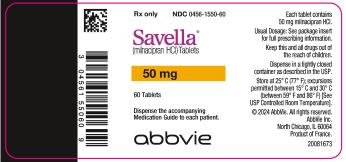
Savella milnacipran hydrochloride 50 mg Tablet, Film Coated, 60-count — NDC 0456-1550-60 (Billing 00456-1550-60)
This is a package of 60 tablets of Savella milnacipran hydrochloride 50 mg Tablet, Film Coated from Allergan, Inc., marketed since Apr 2009 and currently FDA-listed; retail pharmacies pay about $8.16 per tablet (NADAC). It is the main listing for this product, which comes in 2 package sizes.
NDC database record
One package, one record: these facts belong to NDC 0456-1550-60 alone.
- Record
- FDA NDC Directory package listing · Human prescription drug
- Code segments
- 0456 labeler · 1550 product · 60 package
- Package marketed since
- Apr 17, 2009
- Sample package
- No — commercial package
- Listing certified through
- Dec 31, 2027
- Billing quantity
- 60 EA per package
- Barcode (UPC-A, from the NDC)
- 3 0456155060 9
- Medicaid fills, this package
- 12,283 prescriptions in the last four reported quarters
- FDA record last changed
- Sep 10, 2026
Identity & classification
Regulatory identifiers FDA, NLM and CMS codes for this package
Drug-database identifiers Medi-Span GPI and First Databank GCN / HICL / AHFS classification
- GSN (GCN sequence number): 065089
- GCN: 22019
- HICL (First Databank): 021229
- AHFS class code: 28:16.04.16
- RxCUI (RxNorm): 833135
Where does this data come from?
- FDA openFDA NDC Directory · synced Oct 8, 2026
- FDA label on DailyMed · label index refreshed Oct 8, 2026
- RxNorm (NLM RxNav) · catalog refreshed Oct 8, 2026
- Medi-Span GPI (licensed)
- First Databank (licensed) · refreshed Oct 8, 2026
RxNorm drug class
This medicine belongs to the Serotonin and Norepinephrine Reuptake Inhibitor class.
Where does this data come from?
- RxClass (NLM) · catalog refreshed Oct 8, 2026
Clinical
- Great question, because it's a common source of confusion. Milnacipran belongs to a class of drugs called SNRIs, which are also used to treat depression — but milnacipran itself is...
- What exactly is milnacipran used for — is it an antidepressant?
- Yes, nausea is the most common side effect, but there's a practical tip: try taking your tablet with food. The label specifically notes that taking milnacipran with food can help i...
- Nausea seems really common with this medication — is there anything I can do about it?
Patient education
Supplement & herbal interactions
Where does this data come from?
- MedlinePlus (NLM) · refreshed Oct 8, 2026
- FDA label on DailyMed · label index refreshed Oct 8, 2026
Ask a licensed pharmacist directly — free, answered by our team.
Pricing
A drug doesn't have one price. Each row is a different public payment system, and none is what you'd pay at the counter — that depends on your insurance. The ⓘ on each row explains what it measures.
| Price system | Per ea | Per package |
|---|---|---|
| Retail pharmacies payNADAC · weekly | $8.159 | $489.52 / 60 tablets |
| Medicaid paysCMS SDUD · 12 mo | $8.26 | $495.89 / 60 tablets |
| Medicare drug plans payPart D · Q2 2026 | $8.55 | $512.85 / 60 tablets |
Where does this data come from?
- CMS NADAC weekly file · file of Oct 7, 2026
- CMS ASP pricing files · refreshed Sep 20, 2026
- CMS Medicaid State Drug Utilization Data · through Q1 2026
- CMS Part D plan pricing files · refreshed Sep 24, 2026
- VA National Acquisition Center price file
Packaging — all sizes for this product
| Package NDC | Description | Per unit | Per pack | Marketing start | Marketing end | Status |
|---|---|---|---|---|---|---|
| 00456-1550-60 You're viewing this Main listing | 60 TABLET, FILM COATED in 1 BOTTLE | $8.16 / ea | $489.52 | 2009-04-17 | — | Active |
| 00456-1550-63 0456-1550-63 | 10 BLISTER PACK in 1 BOX, UNIT-DOSE / 10 TABLET, FILM COATED in 1 BLISTER PACK | — | — | 2009-04-17 | — | Discontinued by firm |
In Medicaid, this is the most-dispensed pack of this product — about 100% of fills over the last four reported quarters. See all packs ↓
Pack size FAQ
What quantity is in this package?
What NDC number is used to bill for this package of Savella milnacipran hydrochloride 50 mg Tablet, Film Coated?
Prices are the latest CMS NADAC pharmacy acquisition cost per NDC; per-pack figures are per-unit × pack quantity, shown only when the pack is denominated in the same measure NADAC prices.
Therapeutic equivalents
| Product | Labeler | Pack | NADAC/unit | TE | Status | Price vs. this |
|---|---|---|---|---|---|---|
| Milnacipran Hydrochloride 50 mg 51991-0036-06 | Breckenridge | 60 tablets | $2.802 | AB | Availability likely | save 66% |
| Milnacipran Hydrochloride 50 mg 68462-0765-60 | Glenmark | 60 tablets | $2.802 | AB | Availability likely | save 66% |
| Savella 50 mgthis 00456-1550-60 | Allergan, | 60 tablets | $8.159 | AB | Availability likely | — |
| Milnacipran Hydrochloride 50 mg 31722-0848-32 | Camber | 10 tablets | — | AB | FDA listed | — |
| Savella 50 mg 55154-4626-08 | Cardinal | 1920 tablets | — | AB | FDA listed | — |
| Milnacipran Hydrochloride 50 mg 33342-0371-09 | Macleods | 60 tablets | — | — | FDA listed | — |
Where does this data come from?
- FDA openFDA NDC Directory · synced Oct 8, 2026
- FDA Orange Book · refreshed Oct 3, 2026
- CMS NADAC weekly file · file of Oct 7, 2026
Availability & generic status
FDA-approved generic versions are listed, and recent pricing/market data suggests they may be available — see Therapeutic equivalents.
Why the date isn’t exact: Generic timing can change because patents may be challenged, settled, licensed, added, removed, or worked around with a narrower label — and FDA approval does not always mean a pharmacy can get the generic today.
🛈 What do these terms mean?
- Patent
- Legal protection listed in the Orange Book that may delay generic approval or launch. Issued by the U.S. Patent & Trademark Office.
- Substance patent
- Covers the active drug molecule itself — the hardest to design around. A generic generally can’t launch until it expires.
- Formulation (product) patent
- Covers a specific formulation or dosage form. A generic can sometimes work around it with a different formulation.
- Method-of-use patent
- A patent covering one specific approved use of the drug — not necessarily the whole molecule. A generic can sometimes launch with a “skinny label” that carves out the protected use and keeps the others.
- Skinny label
- A generic label that omits a still-patented use when the FDA allows it — letting a generic reach the market for the unprotected uses.
- Exclusivity
- FDA-granted marketing protection, separate from patents — e.g. 5-yr new chemical entity, 7-yr orphan drug, or a +6-month pediatric extension.
- Paragraph IV
- A generic applicant’s formal challenge to a listed patent. It can potentially lead to earlier generic entry, but often involves litigation or a settlement.
- RLD / RS
- Reference Listed Drug — the brand product the FDA uses as the reference for generic applications. Reference Standard — the product the FDA expects generics to compare against in bioequivalence testing.
- TE / AB rating
- FDA therapeutic-equivalence rating. An AB rating generally means the FDA considers a generic therapeutically equivalent to — and substitutable for — the brand.
- LOE (loss of exclusivity)
- The latest patent or exclusivity currently listed — the loss-of-exclusivity / latest-listed-protection date shown on this page. Paragraph-IV challenges and settlements can move the real date earlier; FDA approval and a manufacturer’s decision to market can move it later.
Built from the FDA Orange Book. The bars above are scaled to each protection’s expiry; the red LOE marker is the last one to lapse.
| Patent | Type | Use code | Expires |
|---|---|---|---|
| US 7994220 ↗ | Method of use | U-819 | Sep 19, 2029 |
| US 7994220 ↗ | Method of use | U-819 | Sep 19, 2029 |
| US 7994220 ↗ | Method of use | U-819 | Sep 19, 2029 |
| US 7994220 ↗ | Method of use | U-819 | Sep 19, 2029 |
Is there a generic version of SAVELLA 50 MG TABLET?
The FDA approved a generic — why can’t I get it at my pharmacy yet?
Why do different websites show different generic release dates?
What does “FDA listed” mean?
What does a patent or protection date mean here?
What does “current Orange Book estimate” mean?
Can a generic come out before the last patent expires?
Can a generic come out after the listed dates?
What is the difference between patents and exclusivity?
Why are there multiple patent dates?
Where does this data come from?
- FDA Orange Book · refreshed Oct 3, 2026
What it looks like
Where does this data come from?
- FDA label on DailyMed · label index refreshed Oct 8, 2026
Inactive Ingredients / Excipients
Inactive ingredients, also called excipients, are components of the drug product other than the active ingredient. They may include fillers, dyes, coatings, preservatives, flavors, or other formulation ingredients.
🧪 Avoiding an ingredient? See Milnacipran inactive ingredients by manufacturer: every current product's list side by side, so you can ask your pharmacy for the version that does not list it.
💡 Tap an ingredient (hover on desktop) to see what it is and why it’s used.
-
UNII UTY7PDF93L
A plant-derived thickening agent made from cellulose. It acts as a binder to hold tablet ingredients together and as a disintegrant to help the tablet break apart in your stomach so the medicine can be absorbed.
-
UNII O7TSZ97GEP
A mineral compound that serves as a filler and binding agent in tablets and capsules. It adds bulk to the medicine and helps hold ingredients together during manufacturing.
-
UNII 70097M6I30
Magnesium stearate is a salt made from magnesium and stearic acid, a fatty substance. It's used in tablets and capsules as a lubricant and glidant to help ingredients flow smoothly during manufacturing and prevent sticking.
-
UNII 3WJQ0SDW1A
Polyethylene glycol is a synthetic liquid or solid polymer used in medicines as a solvent, lubricant, and humectant. It helps dissolve active ingredients, reduces friction during manufacturing, and retains moisture in the final product.
-
UNII 532B59J990
Polyvinyl alcohol is a synthetic polymer made from plant-derived materials. It's used as a binder to hold ingredients together, a film-former in coatings, and a thickener in liquid formulations.
-
UNII FZ989GH94E
Povidone is a synthetic polymer made from a plastic-like material. It acts as a binder to hold tablet ingredients together and as a disintegrant to help the tablet break apart in your stomach so the medicine can be absorbed.
-
UNII ETJ7Z6XBU4
Silicon dioxide is a naturally occurring mineral used as a glidant and anti-caking agent. It helps powder ingredients flow smoothly and prevents clumping during manufacturing and storage.
-
UNII 7SEV7J4R1U
A powder made from a naturally occurring mineral. In medicines, talc works as a glidant and anti-caking agent, helping tablets and capsules flow smoothly during manufacturing and preventing clumping.
-
UNII 15FIX9V2JP
Titanium dioxide is a bright white mineral powder commonly used as a colorant and opacifying agent. It makes pills and tablets white or lighter in color and helps make coatings non-transparent.
9 inactive ingredients listed in the exact product block matched to this NDC.
Where does this data come from?
ingredient classCode="IACT" elements from the exact product block matched by this NDC. Label-section narrative from DailyMed / the openFDA label index is shown separately when available.- FDA label on DailyMed · label index refreshed Oct 8, 2026
- FDA openFDA NDC Directory · synced Oct 8, 2026
Inactive ingredient FAQ
Are inactive ingredients the same for every manufacturer?
Why might an inactive ingredient be missing?
Can inactive ingredients matter?
Manufacturer & labeler
More NDCs from Allergan, Inc. labeler code 00456
- Savella milnacipran hydrochloride 100 mg Tablet, Film Coated NDC 0456-1510-60
- milnacipran hydrochloride 100 mg Tablet, Film Coated NDC 0456-1511-00
- Savella milnacipran hydrochloride 12.5 mg Tablet, Film Coated NDC 0456-1512-60
- milnacipran hydrochloride 12.5 mg Tablet, Film Coated NDC 0456-1513-00
- Savella milnacipran hydrochloride 25 mg Tablet, Film Coated NDC 0456-1525-60
- milnacipran hydrochloride 25 mg Tablet, Film Coated NDC 0456-1526-00
- milnacipran hydrochloride 50 mg Tablet, Film Coated NDC 0456-1551-00
- Lexapro ESCITALOPRAM 5 mg Tablet, Film Coated NDC 0456-2005-01
- Escitalopram Oxalate 5 mg Tablet, Film Coated NDC 0456-2006-00
- Lexapro ESCITALOPRAM 10 mg Tablet, Film Coated NDC 0456-2010-01
- Escitalopram Oxalate 10 mg Tablet, Film Coated NDC 0456-2011-00
- Lexapro ESCITALOPRAM 20 mg Tablet, Film Coated NDC 0456-2020-01
Where does this data come from?
- FDA openFDA NDC Directory · synced Oct 8, 2026
- Drugs@FDA
Full prescribing information FDA SPL
🚨 Boxed Warning ▾
WARNING: SUICIDALITY AND ANTIDEPRESSANT DRUGS SAVELLA is a selective serotonin and norepinephrine reuptake inhibitor (SNRI), similar to some drugs used for the treatment of depression and other psychiatric disorders. Antidepressants increased the risk compared to placebo of suicidal thinking and behavior (suicidality) in children, adolescents, and young adults in short-term studies of major depressive disorder (MDD) and other psychiatric disorders. Anyone considering the use of such drugs in a child, adolescent, or young adult must balance this risk with the clinical need.
Short-term studies did not show an increase in the risk of suicidality with antidepressants compared to placebo in adults beyond age 24; there was a reduction in risk with antidepressants compared to placebo in adults aged 65 and older. Depression and certain other psychiatric disorders are themselves associated with increases in the risk of suicide. Patients of all ages who are started on SAVELLA should be monitored appropriately and observed closely for clinical worsening, suicidality, or unusual changes in behavior.
Families and caregivers should be advised of the need for close observation and communication with the prescriber. SAVELLA is not approved for use in the treatment of major depressive disorder. SAVELLA is not approved for use in pediatric patients [see Indications and Usage ( 1 ), Warnings and Precautions ( 5.1 ), Use in Specific Populations ( 8.4 )].
WARNING: SUICIDALITY AND ANTIDEPRESSANT DRUGS See full prescribing information for complete boxed warning. Increased risk of suicidal ideation, thinking, and behavior in children, adolescents, and young adults taking antidepressants for major depressive disorder (MDD) and other psychiatric disorder s ( 5.1 ) . SAVELLA is not approved for use in pediatric patients ( 1 , 8.4 ).
🎯 Indications and Usage ▾
1 INDICATIONS AND USAGE SAVELLA is indicated for the management of fibromyalgia. SAVELLA is not approved for use in pediatric patients [see Use in Specific Populations ( 8.4 )] . SAVELLA ® is a selective serotonin and norepinephrine reuptake inhibitor (SNRI) indicated for the management of fibromyalgia ( 1 ). SAVELLA is not approved for use in pediatric patients ( 1 ).
⏱️ Dosage and Administration ▾
2 DOSAGE AND ADMINISTRATION SAVELLA is given orally with or without food. Taking SAVELLA with food may improve the tolerability of the drug. Administer SAVELLA in two divided doses per day ( 2.1 ).
Based on efficacy and tolerability, dosing may be titrated according to the following schedule ( 2.1 ): Day 1: 12.5 mg once Days 2-3: 25 mg/day (12.5 mg twice daily) Days 4-7: 50 mg/day (25 mg twice daily) After Day 7: 100 mg/day (50 mg twice daily) Recommended dose is 100 mg/day ( 2.1 ). May be increased to 200 mg/day based on individual patient response ( 2.1 ). Adjust dose in patients with severe renal impairment ( 2.2 ).
2.1Recommended Dosing The recommended dose of SAVELLA is 100 mg/day (50 mg twice daily). Based on efficacy and tolerability dosing may be titrated according to the following schedule: Day 1: 12.5 mg once Days 2-3: 25 mg/day (12.5 mg twice daily) Days 4-7: 50 mg/day (25 mg twice daily) After Day 7: 100 mg/day (50 mg twice daily) Based on individual patient response, the dose may be increased to 200 mg/day (100 mg twice daily). Doses above 200 mg/day have not been studied.
Taper SAVELLA and do not abruptly discontinue after extended use [see Dosage and Administration ( 2.4 ) , Warnings and Precautions ( 5.7 )] .
2.2Patients with Renal Insufficiency No dosage adjustment is necessary in patients with mild renal impairment. Use SAVELLA with caution in patients with moderate renal impairment. For patients with severe renal impairment (indicated by an estimated creatinine clearance of 5-29 mL/min), reduce the maintenance dose by 50% to 50 mg/day (25 mg twice daily).
Based on individual patient response, the dose may be increased to 100 mg/day (50 mg twice daily). SAVELLA is not recommended for patients with end-stage renal disease.
2.3Patients with Hepatic Insufficiency No dosage adjustment is necessary for patients with hepatic impairment. As with any drug, exercise caution in patients with severe hepatic impairment.
2.4Discontinuing SAVELLA Withdrawal symptoms have been observed in clinical trials following discontinuation of milnacipran, as with other serotonin and norepinephrine re-uptake inhibitors (SNRIs) and selective serotonin re-uptake inhibitors (SSRIs). Monitor patients for these symptoms when discontinuing treatment. Taper SAVELLA and do not abruptly discontinue after extended use [see Warnings and Precautions ( 5.7 )] .
2.5Switching a P atient to or from a Monoamine Oxidase Inhibitor (MAOI) Intended to Treat Psychiatric Disorders At least 14 days should elapse between discontinuation of a MAOI intended to treat psychiatric disorders and initiation of therapy with SAVELLA. Conversely, allow at least 5 days after stopping SAVELLA before starting a MAOI intended to treat psychiatric disorders [see Contraindications ( 4.1 )] .
2.6Use of SAVELLA with other MAOIs such as Linezolid or Methylene Blue Do not start SAVELLA in a patient being treated with linezolid or intravenous methylene blue because there is increased risk of serotonin syndrome. In a patient who requires more urgent treatment of a psychiatric condition, consider other interventions, including hospitalization [ see Contraindications ( 4.1 ) ] . In some cases, a patient already receiving SAVELLA therapy may require urgent treatment with linezolid or intravenous methylene blue.
If acceptable alternatives to linezolid or intravenous methylene blue treatment are not available and the potential benefits of linezolid or intravenous methylene blue treatment are judged to outweigh the risks of serotonin syndrome in a particular patient, discontinue SAVELLA promptly, and consider administering linezolid or intravenous methylene blue. Monitor the patient for symptoms of serotonin syndrome for 5 days or until 24 hours after the last dose of linezolid or intravenous methylene blue, whichever comes first.
Therapy with SAVELLA may be resumed 24 hours after the last dose of linezolid or intravenous methylene blue [ see Warnings and Precautions ( 5.2 )] . Th… [Excerpted — this section continues on DailyMed.]
💊 Dosage Forms and Strengths ▾
3 DOSAGE FORMS AND STRENGTHS Film-coated, immediate-release tablets in four strengths: 12.5 mg, 25 mg, 50 mg, and 100 mg of milnacipran hydrochloride. 12.5 mg tablets are round, blue, "F" on one side, "L" on the reverse side; 25 mg tablets are round, white, "FL" on one side, "25" on the reverse side; 50 mg tablets are oval, white, "FL" on one side, "50" on the reverse side; 100 mg tablets are oval, pink, "FL" on one side, "100" on the reverse side. Tablets: 12.5 mg, 25 mg, 50 mg, 100 mg ( 3 )
⛔ Contraindications ▾
4 CONTRAINDICATIONS Serotonin Syndrome and MAOIs: Do not use MAOIs intended to treat psychiatric disorders with SAVELLA or within 5 days of stopping treatment with SAVELLA. Do not use SAVELLA within 14 days of stopping an MAOI intended to treat psychiatric disorders. In addition, do not start SAVELLA in a patient who is being treated with linezolid or intravenous methylene blue ( 4.1 , 5.2 ).
4.1Monoamine Oxidase Inhibitors (MAOIs) The use of MAOIs intended to treat psychiatric disorders with SAVELLA or within 5 days of stopping treatment with SAVELLA is contraindicated because of an increased risk of serotonin syndrome. The use of SAVELLA within 14 days of stopping an MAOI intended to treat psychiatric disorders is also contraindicated [see Dosage and Administration ( 2.5 ), Warnings and Precautions ( 5.2 )] . Starting SAVELLA in a patient who is being treated with MAOIs such as linezolid or intravenous methylene blue is also contraindicated because of an increased risk of serotonin syndrome [see Dosage and Administration ( 2.6 ), Warnings and Precautions ( 5.2 )] .
⚠️ Warnings and Cautions ▾
5 WARNINGS AND PRECAUTIONS Suicidality : Monitor for worsening of depressive symptoms and suicide risk ( 5.1 ). Serotonin Syndrome : Increased risk when co-administered with other serotonergic agents, but also when taken alone. If it occurs, discontinue SAVELLA and any other serotonergic agents, and initiate supportive treatment ( 5.2 ).
Elevated B lood P ressure and H eart R ate : SAVELLA may increase blood pressure and heart rate. Measure blood pressure and heart rate prior to initiating treatment with SAVELLA and monitor periodically throughout treatment ( 5.3 , 5.4 ). Seizures : Cases have been reported with SAVELLA therapy.
Prescribe SAVELLA with care in patients with a history of seizure disorder ( 5.5 ). Hepatotoxicity : SAVELLA may cause elevations of ALT and AST. Avoid concomitant use of SAVELLA in patients with substantial alcohol use or chronic liver disease ( 5.6 ).
Discontinuation : Withdrawal symptoms have been reported in patients when discontinuing treatment with SAVELLA. A gradual dose reduction is recommended ( 5.7 ). Increased Risk of Bleeding : SAVELLA may increase the risk of bleeding events.
Caution patients about the risk of bleeding associated with the concomitant use of SAVELLA and NSAIDs, aspirin, or other drugs that affect coagulation ( 5.9 ). History of Dysuria : Male patients with a history of obstructive uropathies may experience higher rates of genitourinary adverse events ( 5.11 ). Sexual Dysfunction : SAVELLA use may cause symptoms of sexual dysfunction ( 5.12 ).
5.1Suicide Risk SAVELLA is a selective serotonin and norepinephrine re-uptake inhibitor (SNRI), similar to some drugs used for the treatment of depression and other psychiatric disorders. Patients, both adult and pediatric, with depression or other psychiatric disorders may experience worsening of their depression and/or the emergence of suicidal ideation and behavior (suicidality) or unusual changes in behavior, whether or not they are taking these medications, and this risk may persist until significant remission occurs.
Suicide is a known risk of depression and certain other psychiatric disorders, and these disorders themselves are the strongest predictors of suicide. There has been a long-standing concern, however, that antidepressants, including drugs that inhibit the reuptake of norepinephrine and/or serotonin, may have a role in inducing worsening of depression and the emergence of suicidality in certain patients during the early phases of treatment. In the placebo-controlled clinical trials of adults with fibromyalgia, among the patients who had a history of depression at treatment initiation, the incidence of suicidal ideation was 0.5% in patients treated with placebo, 0% in patients treated with SAVELLA 100 mg/day, and 1.3% in patients treated with SAVELLA 200 mg/day.
No suicides occurred in the short-term or longer-term (up to 1 year) fibromyalgia trials. Pooled analyses of short-term placebo-controlled trials of drugs used to treat depression (SSRIs and others) showed that these drugs increase the risk of suicidal thinking and behavior (suicidality) in children, adolescents, and young adults (ages 18-24) with major depressive disorder (MDD) and other psychiatric disorders. Short-term studies did not show an increase in the risk of suicidality with these drugs compared to placebo in adults beyond age 24; there was a reduction in suicidality risk with antidepressants compared to placebo in adults age 65 and older.
The pooled analyses of placebo-controlled trials in children and adolescents with MDD, obsessive compulsive disorder (OCD), or other psychiatric disorders included a total of 24 short-term trials of 9 drugs used to treat depression in over 4400 patients. The pooled analyses of placebo-controlled trials in adults with MDD or other psychiatric disorders included a total of 295 short-term trials (median duration of 2 months) of 11 antidepressant drugs in over 77,000 patients. There was considerable variation in risk o… [Excerpted — this section continues on DailyMed.]
🤒 Adverse Reactions ▾
6 ADVERSE REACTIONS The most frequently occurring adverse reactions (≥ 5% and greater than placebo) were nausea, headache, constipation, dizziness, insomnia, hot flush, hyperhidrosis, vomiting, palpitations, heart rate increased, dry mouth, and hypertension ( 6.1 ). To report SUSPECTED ADVERSE REACTIONS, contact AbbVie at 1-800-678-1605 or FDA at 1-800-FDA-1088 or www.fda.gov/medwatch.
6.1Clinical Trial s Experience Because clinical trials are conducted under widely varying conditions, adverse reaction rates observed in the clinical trials of a drug cannot be directly compared to rates in the clinical trials of another drug and may not reflect the rates observed in practice. Patient Exposure SAVELLA was evaluated in three double-blind placebo-controlled trials involving 2209 fibromyalgia patients (1557 patients treated with SAVELLA and 652 patients treated with placebo) for a treatment period up to 29 weeks.
The stated frequencies of adverse reactions represent the proportion of individuals who experienced, at least once, a treatment-emergent adverse reaction of the type listed. A reaction was considered treatment emergent if it occurred for the first time or worsened while receiving therapy following baseline evaluation. Adverse Reactions Leading to Discontinuation In placebo-controlled trials in patients with fibromyalgia, 23% of patients treated with SAVELLA 100 mg/day, 26% of patients treated with SAVELLA 200 mg/day discontinued prematurely due to adverse reactions, compared to 12% of patients treated with placebo.
The adverse reactions that led to withdrawal in ≥ 1% of patients in the SAVELLA treatment group and with an incidence rate greater than that in the placebo treatment group were nausea (milnacipran 6%, placebo 1%), palpitations (milnacipran 3%, placebo 1%), headache (milnacipran 2%, placebo 0%), constipation (milnacipran 1%, placebo 0%), heart rate increased (milnacipran 1%, placebo 0%), hyperhidrosis (milnacipran 1%, placebo 0%), vomiting (milnacipran 1%, placebo 0%), and dizziness (milnacipran 1% and placebo 0.5%).
Discontinuation due to adverse reactions was generally more common among patients treated with SAVELLA 200 mg/day compared to SAVELLA 100 mg/day. Most Common Adverse Reactions in Placebo Controlled Trials In the placebo-controlled fibromyalgia patient trials, the most frequently occurring adverse reaction in clinical trials was nausea. The most common adverse reactions (incidence ≥ 5% and twice placebo) in patients treated with SAVELLA were constipation, hot flush, hyperhidrosis, vomiting, palpitations, heart rate increased, dry mouth, and hypertension.
Table 4 lists all adverse reactions that occurred in at least 2% of patients treated with SAVELLA at either 100 or 200 mg/day and at an incidence greater than that of placebo. Table 4: Treatment-Emergent Adverse Reaction Incidence in Placebo Controlled Trials in Fibromyalgia Patients (Events Occurring in at Least 2% of All SAVELLA-Treated Patients and Occurring More Frequently in Either SAVELLA Treatment Group Than in the Placebo Treatment Group) System Organ Class– Preferred Term SAVELLA 100 mg/day (n = 623) % SAVELLA 200 mg/day (n = 934) % All SAVELLA (n = 1557) % Placebo (n = 652) % Cardiac Disorders Palpitations 8 7 7 2 Tachycardia 3 2 2 1 Eye Disorders Vision blurred 1 2 2 1 Gastrointestinal Disorders Nausea 35 39 37 20 Constipation 16 15 16 4 Vomiting 6 7 7 2 Dry mouth 5 5 5 2 Abdominal pain 3 3 3 2 General Disorders Chest pain 3 2 2 2 Chills 1 2 2 0 Chest discomfort 2 1 1 1 Infections Upper respiratory tract infection 7 6 6 6 Investigations Heart rate increased 5 6 6 1 Blood pressure increased 3 3 3 1 Metabolism and Nutrition Disorders Decreased appetite 1 2 2 0 Nervous System Disorders Headache 19 17 18 14 Dizziness 11 10 10 6 Migraine 6 4 5 3 Paresthesia 2 3 2 2 Tremor 2 2 2 1 Hypoesthesia 1 2 1 1 Tension headache 2 1 1 1 Psychiatric Disorders Insomnia 12 12 12 10 Anxiety 5 3 4 4 Respiratory Disorders Dyspnea 2 2 2 1 Skin Disorders Hyperhidr… [Excerpted — this section continues on DailyMed.]
🔄 Drug Interactions ▾
7 DRUG INTERACTIONS Milnacipran undergoes minimal CYP450 related metabolism, with the majority of the dose excreted unchanged in urine (55%) and has a low binding to plasma proteins (13%). In vitro and in vivo studies showed that SAVELLA is unlikely to be involved in clinically significant pharmacokinetic drug interactions [see Pharmacokinetics in Special Populations ( 12.3 )] . SAVELLA is unlikely to be involved in clinically significant pharmacokinetic drug interactions ( 7 ).
Pharmacodynamic interactions of SAVELLA with other drugs can occur ( 7 ).
7.1Monoamine Oxidase Inhibitors (MAOIs) The concomitant use of SSRIs and SNRIs, including SAVELLA, with MAOIs increases the risk of serotonin syndrome. The use of MAOIs intended to treat psychiatric disorders with SAVELLA or within 5 days of stopping treatment with SAVELLA is contraindicated. The use of SAVELLA within 14 days of stopping an MAOI intended to treat psychiatric disorders is also contraindicated.
In addition, do not initiate SAVELLA in a patient who is being treated with MAOIs such as linezolid or intravenous methylene blue. No reports involved the administration of methylene blue by other routes (such as oral tablets or local tissue injection). If it is necessary to initiate treatment with a MAOI such as linezolid or intravenous methylene blue in a patient taking SAVELLA, discontinue SAVELLA before initiating treatment with the MAOI [see Dosage and Administration ( 2.5 , 2.6 ), Contraindications ( 4 ), Drug Interactions ( 7.1 )] .
7.2Serotonergic Drugs Serotonin syndrome can occur with use of SAVELLA and other serotonergic drugs (other SNRIs, SSRIs, triptans, tricyclic antidepressants, opioids, lithium, tryptophan, buspirone, amphetamines, and St. John’s Wort), or with drugs that impair metabolism of serotonin (i.e., monoamine oxidase inhibitors). Advise patients of the signs and symptoms associated with serotonin syndrome and to seek medical care immediately if they experience these symptoms [ s ee Dosage and Administration ( 2.5 , 2.6 ), Warnings and Precautions ( 5.2 )] .
7.3Triptans There have been rare postmarketing reports of serotonin syndrome with use of an SSRI and a triptan. If concomitant treatment of SAVELLA with a triptan is clinically warranted, careful observation of the patient is advised, particularly during treatment initiation and dose increases [see Warnings and Precautions ( 5.2 )] .
7.4Catecholamines SAVELLA inhibits the reuptake of norepinephrine. Therefore, concomitant use of SAVELLA with epinephrine and norepinephrine may be associated with paroxysmal hypertension and possible arrhythmia [see Warnings and Precautions ( 5.3 , 5.4 )] .
7.5CNS-active drugs Given the primary CNS effects of SAVELLA, use caution when it is taken in combination with other centrally acting drugs, including those with a similar mechanism of action. Clomipramine: In a drug-drug interaction study, an increase in euphoria and postural hypotension was observed in patients who switched from clomipramine to SAVELLA.
7.6Clinically Important Interactions with Select Cardiovascular Agents Digoxin: Use of SAVELLA concomitantly with digoxin may be associated with potentiation of adverse hemodynamic effects. Postural hypotension and tachycardia have been reported in combination therapy with intravenously administered digoxin (1 mg). Avoid co-administration of SAVELLA and intravenous digoxin [see Warnings and Precautions ( 5.3 , 5.4 )] .
Clonidine: Because SAVELLA inhibits norepinephrine reuptake, co-administration with clonidine may inhibit clonidine’s anti-hypertensive effect.
7.7Drugs that Interfere with Hemostasis Concomitant use of SAVELLA with an antiplatelet or anticoagulant drug (e.g., NSAIDs, aspirin, and warfarin) may potentiate the risk of bleeding. This may be due to the effect of SAVELLA on the release of serotonin by platelets. Closely monitor for bleeding for patients receiving an antiplatelet or anticoagulant drug when SAVELLA is initiated or discontinued [… [Excerpted — this section continues on DailyMed.]
👥 Use in Specific Populations ▾
8 USE IN SPECIFIC POPULATIONS Pregnancy: Third trimester use may increase risk for symptoms of poor adaptation (respiratory distress, temperature instability, feeding difficulty, hypotonia, tremor, irritability) in the neonate ( 8.1 ).
8.1Pregnancy Risk Summary Based on data from published observational studies, exposure to SNRIs, particularly in the month before delivery, has been associated with a less than 2-fold increase in the risk of postpartum hemorrhage [see Warnings and Precautions ( 5.2 )] . The available data on SAVELLA use in pregnant women are insufficient to evaluate for a drug-associated risk of major birth defects, miscarriage, or adverse maternal or fetal outcomes. There are risks associated with exposure to serotonin and norepinephrine reuptake inhibitors (SNRIs) and selective-serotonin reuptake inhibitors (SSRIs), including SAVELLA, during pregnancy (see Clinical Considerations).
Animal reproduction studies have been performed in rats, rabbits and mice. Milnacipran was shown to increase embryofetal and perinatal lethality in rats and the incidence of a minor skeletal variation in rabbits at doses below (rat) or approximately equal to (rabbit) the maximum recommended human dose (MRHD) of 200 mg/day on a mg/m 2 basis. No effects were seen in mice when treated with milnacipran during the period of organogenesis at doses up to 3 times the MHRD on a mg/m 2 basis (see Data).
The estimated background risk of major birth defects and miscarriage for the indicated population is unknown. All pregnancies have a background risk of birth defect, loss, or other adverse outcomes. In the U.S. general population, the estimated background risk of major birth defects and miscarriage in clinically recognized pregnancies is 2%-4% and 15%-20%, respectively.
Clinical Consideration Maternal adverse reactions Use of SAVELLA in the month before delivery may be associated with an increased risk of postpartum hemorrhage [see Warnings and Precautions ( 5.9 )]. Fetal/Neonatal adverse reactions Neonates exposed to SNRIs or SSRIs, including SAVELLA, late in the third trimester have developed complications requiring prolonged hospitalization, respiratory support, and tube feeding. Such complications can arise immediately upon delivery.
Reported clinical findings have included respiratory distress, cyanosis, apnea, seizures, temperature instability, feeding difficulty, vomiting, hypoglycemia, hypotonia, hypertonia, hyperreflexia, tremor, jitteriness, irritability, and constant crying. These findings are consistent with either direct toxic effect of SSRIs and SNRIs or possibly, a drug discontinuation syndrome. It should be noted that, in some cases, the clinical picture is consistent with serotonin syndrome [see Warnings and Precautions ( 5.2 , 5.7 )].
Data Animal Data Studies were conducted in rats, rabbits and mice with dosing of milnacipran during the period of organogenesis. In rats, milnacipran was shown to increase embryofetal lethality at doses of 5 mg/kg/day (0.25 times the MRHD on a mg/m 2 basis). In rabbits, dose-dependent increases in the incidence of the skeletal variation of an extra single rib were observed in several pups from multiple litters in the absence of maternal toxicity at 15 mg/kg/day (1.5 times the MRHD on a mg/m 2 basis).
The clinical significance of this finding is unknown. In mice, no embryotoxic or teratogenic effects were seen at doses up to 125 mg/kg/day (3 times the MHRD on a mg/m 2 basis). With peri- and postnatal exposure to oral milnacipran in rats, decreases in viability and body weight were observed on Postpartum Day 4 at a dose of 5 mg/kg/day (approximately 0.25 times the MRHD on a mg/m 2 basis).
The no-effect dose for maternal and offspring toxicity was 2.5 mg/kg/day (approximately 0.1 times the MRHD on a mg/m 2 basis). 8. 2 Lactation Risk Summary Milnacipran is present in human milk [see Data] .
There are no reports on the effects of milnacipran on the breastfed child and on milk production/excretion.… [Excerpted — this section continues on DailyMed.]
🤰 Pregnancy ▾
8.1Pregnancy Risk Summary Based on data from published observational studies, exposure to SNRIs, particularly in the month before delivery, has been associated with a less than 2-fold increase in the risk of postpartum hemorrhage [see Warnings and Precautions ( 5.2 )] . The available data on SAVELLA use in pregnant women are insufficient to evaluate for a drug-associated risk of major birth defects, miscarriage, or adverse maternal or fetal outcomes. There are risks associated with exposure to serotonin and norepinephrine reuptake inhibitors (SNRIs) and selective-serotonin reuptake inhibitors (SSRIs), including SAVELLA, during pregnancy (see Clinical Considerations).
Animal reproduction studies have been performed in rats, rabbits and mice. Milnacipran was shown to increase embryofetal and perinatal lethality in rats and the incidence of a minor skeletal variation in rabbits at doses below (rat) or approximately equal to (rabbit) the maximum recommended human dose (MRHD) of 200 mg/day on a mg/m 2 basis. No effects were seen in mice when treated with milnacipran during the period of organogenesis at doses up to 3 times the MHRD on a mg/m 2 basis (see Data).
The estimated background risk of major birth defects and miscarriage for the indicated population is unknown. All pregnancies have a background risk of birth defect, loss, or other adverse outcomes. In the U.S. general population, the estimated background risk of major birth defects and miscarriage in clinically recognized pregnancies is 2%-4% and 15%-20%, respectively.
Clinical Consideration Maternal adverse reactions Use of SAVELLA in the month before delivery may be associated with an increased risk of postpartum hemorrhage [see Warnings and Precautions ( 5.9 )]. Fetal/Neonatal adverse reactions Neonates exposed to SNRIs or SSRIs, including SAVELLA, late in the third trimester have developed complications requiring prolonged hospitalization, respiratory support, and tube feeding. Such complications can arise immediately upon delivery.
Reported clinical findings have included respiratory distress, cyanosis, apnea, seizures, temperature instability, feeding difficulty, vomiting, hypoglycemia, hypotonia, hypertonia, hyperreflexia, tremor, jitteriness, irritability, and constant crying. These findings are consistent with either direct toxic effect of SSRIs and SNRIs or possibly, a drug discontinuation syndrome. It should be noted that, in some cases, the clinical picture is consistent with serotonin syndrome [see Warnings and Precautions ( 5.2 , 5.7 )].
Data Animal Data Studies were conducted in rats, rabbits and mice with dosing of milnacipran during the period of organogenesis. In rats, milnacipran was shown to increase embryofetal lethality at doses of 5 mg/kg/day (0.25 times the MRHD on a mg/m 2 basis). In rabbits, dose-dependent increases in the incidence of the skeletal variation of an extra single rib were observed in several pups from multiple litters in the absence of maternal toxicity at 15 mg/kg/day (1.5 times the MRHD on a mg/m 2 basis).
The clinical significance of this finding is unknown. In mice, no embryotoxic or teratogenic effects were seen at doses up to 125 mg/kg/day (3 times the MHRD on a mg/m 2 basis). With peri- and postnatal exposure to oral milnacipran in rats, decreases in viability and body weight were observed on Postpartum Day 4 at a dose of 5 mg/kg/day (approximately 0.25 times the MRHD on a mg/m 2 basis).
The no-effect dose for maternal and offspring toxicity was 2.5 mg/kg/day (approximately 0.1 times the MRHD on a mg/m 2 basis).
🧒 Pediatric Use ▾
8.4Pediatric Use Safety and effectiveness of SAVELLA in a fibromyalgia pediatric population below the age of 18 have not been established [see Boxed Warning , Indications and Usage ( 1 ), and Warnings and Precautions ( 5.1 )] . The use of SAVELLA is not recommended in pediatric patients.
🧓 Geriatric Use ▾
8.5Geriatric Use In controlled clinical studies of SAVELLA, 402 patients were 60 years or older, and no overall differences in safety and efficacy were observed between these patients and younger patients. In view of the predominant excretion of unchanged milnacipran via kidneys and the expected decrease in renal function with age, renal function should be considered prior to use of SAVELLA in the elderly [see Dosage and Administration ( 2.2 )] . SNRIs, SSRIs, and SAVELLA, have been associated with cases of clinically significant hyponatremia in elderly patients, who may be at greater risk for this adverse event [see Warnings and Precautions ( 5.8 )] .
🆘 Overdosage ▾
10 OVERDOSAGE Clinical Presentation There is limited clinical experience with SAVELLA overdose in humans. In clinical trials, cases of acute ingestions up to 1000 mg, alone or in combination with other drugs, were reported with none being fatal. In postmarketing experience, fatal outcomes have been reported for acute overdoses primarily involving multiple drugs but also with SAVELLA only.
The most common signs and symptoms included increased blood pressure, cardio-respiratory arrest, changes in the level of consciousness (ranging from somnolence to coma), confusional state, dizziness, and increased hepatic enzymes. Management of Overdose There is no specific antidote to SAVELLA, but if serotonin syndrome ensues, specific treatment (such as with cyproheptadine and/or temperature control) may be considered. In case of acute overdose, treatment should consist of those general measures employed in the management of overdose with any drug.
Ensure adequate airway, oxygenation, and ventilation and monitor cardiac rhythm and vital signs. Induction of emesis is not recommended. Gastric lavage with a large-bore orogastric tube with appropriate airway protection, if needed, may be indicated if performed soon after ingestion or in symptomatic patients.
Because there is no specific antidote for SAVELLA, consider symptomatic care and treatment with gastric lavage and activated charcoal as soon as possible for patients who experience a SAVELLA overdose. Due to the large volume of distribution of this drug, forced diuresis, dialysis, hemoperfusion, and exchange transfusion are unlikely to be beneficial. In managing overdose, consider the possibility of multiple drug involvement.
The physician should consider contacting a poison control center for additional information on the treatment of any overdose. Telephone numbers for certified poison control centers are listed in the Physicians’ Desk Reference (PDR).
🧬 Clinical Pharmacology ▾
12 CLINICAL PHARMACOLOGY
12.1Mechanism of Action The exact mechanism of the central pain inhibitory action of milnacipran and its ability to improve the symptoms of fibromyalgia in humans are unknown. Preclinical studies have shown that milnacipran is a potent inhibitor of neuronal norepinephrine and serotonin reuptake; milnacipran inhibits norepinephrine uptake with approximately 3-fold higher potency in vitro than serotonin without directly affecting the uptake of dopamine or other neurotransmitters. Milnacipran has no significant affinity for serotonergic (5-HT1-7), α- and β-adrenergic, muscarinic (M1-5), histamine (H1-4), dopamine (D1-5), opiate, benzodiazepine, and γ-aminobutyric acid (GABA) receptors in vitro.
Pharmacologic activity at these receptors is hypothesized to be associated with the various anticholinergic, sedative, and cardiovascular effects seen with other psychotropic drugs. Milnacipran has no significant affinity for Ca++, K+, Na+ and Cl– channels and does not inhibit the activity of human monoamine oxidases (MAO-A and MAO-B) or acetylcholinesterase.
12.2Pharmacodynamics Cardi ac Electrophysiology The effect of SAVELLA on the QTcF interval was measured in a double-blind placebo- and positive-controlled parallel study in 88 healthy subjects using 600 mg/day SAVELLA (3 to 6 times the recommended therapeutic dose for fibromyalgia). After baseline and placebo adjustment, the maximum mean QTcF change was 8 ms (2-sided 90% CI, 3-12 ms). This increase is not considered to be clinically significant.
12.3Pharmacokinetics Milnacipran is well absorbed after oral administration with an absolute bioavailability of approximately 85% to 90%. The exposure to milnacipran increased proportionally within the therapeutic dose range. It is excreted predominantly unchanged in urine (55%) and has a terminal elimination half-life of about 6 to 8 hours.
Steady-state levels are reached within 36 to 48 hours and can be predicted from single-dose data. The active enantiomer, d -milnacipran, has a longer elimination half-life (8-10 hours) than the l -enantiomer (4-6 hours). There is no interconversion between the enantiomers.
Absorption SAVELLA is absorbed following oral administration with maximum concentrations (C max ) reached within 2 to 4 hours post dose. Absorption of SAVELLA is not affected by food. The absolute bioavailability is approximately 85% to 90%.
Distribution The mean volume of distribution of milnacipran following a single intravenous dose to healthy subjects is approximately 400 L. Plasma protein binding is 13%. Elimination Metabolism Milnacipran and its metabolites are eliminated primarily by renal excretion.
Excretion Following oral administration of 14 C-milnacipran hydrochloride, approximately 55% of the dose was excreted in urine as unchanged milnacipran (24% as l -milnacipran and 31% as d -milnacipran). The l - milnacipran carbamoyl-O-glucuronide was the major metabolite excreted in urine and accounted for approximately 17% of the dose; approximately 2% of the dose was excreted in urine as d - milnacipran carbamoyl-O-glucuronide. Approximately 8% of the dose was excreted in urine as the N-desethyl milnacipran metabolite.
Specific Populations Geriatric Patients C max and AUC parameters of milnacipran were about 30% higher in elderly (> 65 years) subjects compared with young subjects due to age-related decreases in renal function. No dosage adjustment is necessary based on age unless renal function is severely impaired [ see Dosage and Administration ( 2.2 ) ] . Male and Female Patients C max and AUC parameters of milnacipran were about 20% higher in female subjects compared with male subjects.
Dosage adjustment based on gender is not necessary. Patients with Renal Impairment Milnacipran pharmacokinetics were evaluated following single oral administration of 50 mg SAVELLA to subjects with mild (creatinine clearance [CLcr] 50-80 mL/min), moderate (CLcr 30-49 mL/min), and severe (CLcr 5-29 mL/min) renal impairm… [Excerpted — this section continues on DailyMed.]
🧬 Mechanism of Action ▾
12.1Mechanism of Action The exact mechanism of the central pain inhibitory action of milnacipran and its ability to improve the symptoms of fibromyalgia in humans are unknown. Preclinical studies have shown that milnacipran is a potent inhibitor of neuronal norepinephrine and serotonin reuptake; milnacipran inhibits norepinephrine uptake with approximately 3-fold higher potency in vitro than serotonin without directly affecting the uptake of dopamine or other neurotransmitters. Milnacipran has no significant affinity for serotonergic (5-HT1-7), α- and β-adrenergic, muscarinic (M1-5), histamine (H1-4), dopamine (D1-5), opiate, benzodiazepine, and γ-aminobutyric acid (GABA) receptors in vitro.
Pharmacologic activity at these receptors is hypothesized to be associated with the various anticholinergic, sedative, and cardiovascular effects seen with other psychotropic drugs. Milnacipran has no significant affinity for Ca++, K+, Na+ and Cl– channels and does not inhibit the activity of human monoamine oxidases (MAO-A and MAO-B) or acetylcholinesterase.
📦 How Supplied / Storage and Handling ▾
16 HOW SUPPLIED/STORAGE AND HANDLING 12.5-mg tablets: Blue, round, film-coated tablets, debossed with “F” on one side and “L” on the reverse side Bottles of 60: NDC 0456-1512-60 10X10 Unit Dose: NDC 0456-1512-63 25-mg tablets: White, round, film-coated tablets, debossed with “FL” on one side and “25” on the reverse side Bottles of 60: NDC 0456-1525-60 10X10 Unit Dose: NDC 0456-1525-63 50-mg tablets: White, oval-shaped, film-coated tablets, debossed with “FL” on one side and “50” on the reverse side Bottles of 60: NDC 0456-1550-60 10X10 Unit Dose: NDC 0456-1550-63 100-mg tablets: Pink, oval-shaped, film-coated tablets, debossed with “FL” on one side and “100” on the reverse side Bottles of 60: NDC 0456-1510-60 10X10 Unit Dose: NDC 0456-1510-63 Titration Pack: 4-Week Titration Pack: NDC 0456-1500-55 Blister package containing 55 tablets: 5 x 12.5-mg tablets, 8 x 25-mg tablets, and 42 x 50 mg tablets.
Storage Store at 25°C (77°F); excursions permitted between 15°C and 30°C (between 59°F and 86°F) [See USP Controlled Room Temperature] .
📋 Description ▾
11 DESCRIPTION Milnacipran hydrochloride is a selective norepinephrine and serotonin reuptake inhibitor; it inhibits norepinephrine uptake with greater potency than serotonin. It is a racemic mixture with the chemical name: (±)-[1R(S),2S(R)]-2-(aminomethyl)-N,N-diethyl-1-phenylcyclopropanecarboxamide hydrochloride. The structural formula is: Milnacipran hydrochloride is a white to off-white crystalline powder with a melting point of 179°C.
It is freely soluble in water, methanol, ethanol, chloroform, and methylene chloride and sparingly soluble in diethyl ether. It has an empirical formula of C15H23ClN2O and a molecular weight of 282.8 g/mol. SAVELLA is available for oral administration as film-coated tablets containing 12.5 mg, 25 mg, 50 mg, and 100 mg milnacipran hydrochloride.
Each tablet also contains dibasic calcium phosphate, povidone, carboxymethylcellulose calcium, colloidal silicon dioxide, magnesium stearate, and talc as inactive ingredients. The film coat contains the following additional inactive ingredients: 12.5 mg: FD&C Blue #2 Aluminum Lake, polyvinyl alcohol, polyethylene glycol, titanium dioxide 25 mg: Polyvinyl alcohol, polyethylene glycol, titanium dioxide 50 mg: Polyvinyl alcohol, polyethylene glycol, titanium dioxide 100 mg: FD&C Red #40 Aluminum Lake, polyvinyl alcohol, polyethylene glycol, titanium dioxide The structural formula is Milnacipran hydrochloride is a selective norepinephrine and serotonin reuptake inhibitor; it inhibits norepinephrine uptake with greater potency than serotonin.
It is a racemic mixture with the chemical name: (±)-[1R(S),2S(R)]-2-(aminomethyl)-N,N-diethyl-1-phenylcyclopropanecarboxamide hydrochloride.
💬 Information for Patients ▾
17 PATIENT COUNSELING INFORMATION Advise the patient to read the FDA-approved patient labeling ( Medication Guide ). Advise patients of the following issues and to alert their prescriber if these occur while taking SAVELLA: Clinical Worsening and Suicide Risk Advise patients, their families, and their caregivers that patients with depression may be at increased risk for clinical worsening and/or suicidal ideation if they stop taking anti-depressant medication, change the dose, or start a new medication. Encourage patients, their families, and their caregivers to be alert to the emergence of anxiety, agitation, panic attacks, insomnia, irritability, hostility, aggressiveness, impulsivity, akathisia (psychomotor restlessness), hypomania, or other unusual changes in behavior, worsening of depression, and suicidal ideation, especially early during treatment with SAVELLA or other drugs that inhibit the reuptake of norepinephrine and/or serotonin, and when the dose is adjusted up or down.
Advise families and caregivers to observe for the emergence of such symptoms on a day-to-day basis, since changes may be abrupt and to report such symptoms to the patient’s prescriber or health professional, especially if they are severe, abrupt in onset, or were not part of the patient’s presenting symptoms [see Boxed Warning and Warnings and Precautions ( 5.1 )] . Serotonin Syndrome Inform patients about the risk of serotonin syndrome with use of SAVELLA as well as the increased risk when taken concomitantly with other serotonergic drugs including triptans, tricyclic antidepressants, opioids, lithium, tryptophan, buspirone, amphetamines and St.
John’s Wort, and with drugs that impair metabolism of serotonin (in particular MAOIs, both those intended to treat psychiatric disorders and also others, such as linezolid) [see Warnings and Precautions ( 5.2 ) , Drug Interactions ( 7.2 ) ] . Advise patients of the signs and symptoms associated with serotonin syndrome and to seek medical care immediately if they experience these symptoms. Elevated Blood Pressure and Heart Rate Advise patients that SAVELLA may increase their blood pressure and heart rate and that they should have their blood pressure and heart rate monitored at regular intervals when receiving treatment with SAVELLA [see Warnings and Precautions ( 5.3 , 5.4 )] .
Increased Risk of Bleeding Advise patients that the concomitant use of drugs that interfere with serotonin reuptake, including SAVELLA, and NSAIDs, aspirin, or anticoagulants has been associated with an increased risk of abnormal bleeding [see Warnings and Precautions ( 5.9 )] . Angle Closure Glaucoma Advise patients that taking SAVELLA can cause mild pupillary dilation which, in susceptible individuals, can lead to an episode of angle closure glaucoma. [see Warnings and Precautions ( 5.13 )] . Ability to Drive and Use Machinery Advise patients not to operate machinery or drive motor vehicles until they are reasonably certain that SAVELLA treatment does not affect their ability to engage in such activities.
Alcohol Inform patients of the risks associated with drinking alcohol while taking SAVELLA [see Warnings and Precautions ( 5.6 , 5.14 )] . Sexual Dysfunction Advise patients that use of SAVELLA may cause symptoms of sexual dysfunction in both male and female patients. Inform patients that they should discuss any changes in sexual function and potential management strategies with their healthcare provider [see Warnings and Precautions ( 5.12 )].
Discontinuation Advise patients that withdrawal symptoms can occur when discontinuing treatment with SAVELLA, particularly when discontinuation is abrupt [see Warnings and Precautions ( 5.7 )] . Missing a Dose Advise patients that if they miss a dose, they should skip the missed dose and take the next dose at their regular time. Pregnancy Advise pregnant women to notify their healthcare provider if they become pregnant or intend to become pregnant during treatment with SAVELLA.
Advise pati… [Excerpted — this section continues on DailyMed.]
💬 Medication Guide ▾
FDA-Approved Medication Guide MEDICATION GUIDE SAVELLA ® (Sa-vel-la) (milnacipran HCl) Tablets SAVELLA is not used to treat depression, but it acts like medicines that are used to treat depression (antidepressants) and other psychiatric disorders. Read the Medication Guide that comes with SAVELLA ® before you start taking it and each time you get a refill. There may be new information.
This Medication Guide does not take the place of talking to your healthcare provider about your medical condition or treatment. Talk with your healthcare provider if there is something you do not understand or want to learn more about. What is the most important information I should know about SAVELLA ?
SAVELLA and antidepressant medicines may cause serious side effects, including: 1. Suicidal thoughts or actions: SAVELLA and antidepressant medicines may increase suicidal thoughts or actions in some children, teenagers, and young adults within the first few months of treatment or when the dose is changed. Depression or other serious mental illnesses are the most important causes of suicidal thoughts or actions.
Watch for these changes and call your healthcare provider right away if you notice: New or sudden changes, in mood, behavior, thoughts, or feelings, especially if severe. Pay particular attention to such changes when SAVELLA is started or when the dose is changed. Keep all follow-up visits with your healthcare provider and call between visits if you are worried about symptoms.
Call your healthcare provider right away or go to the nearest hospital emergency room if you have any of the following symptoms, especially if they are new, worse, or worry you: • attempts to commit suicide • feeling agitated, restless, angry or irritable • acting on dangerous impulses • trouble sleeping (insomnia) • acting aggressive, being angry, or violent • an increase in activity or talking more than what is normal for you • thoughts about suicide or dying • other unusual changes in behavior or mood • new or worse depression • new or worse anxiety or panic attacks Call your healthcare provider right away or go to the nearest hospital emergency room if you have any symptoms of the serious side effects listed below: 2.
Serotonin Syndrome. This condition can be life-threatening, symptoms may include: agitation, hallucinations, coma or other changes in mental status coordination problems or muscle twitching (overactive reflexes) sweating or fever diarrhea muscle rigidity dizziness tremor Symptoms such as racing heartbeat, high or low blood pressure, nausea, vomiting, and flushing are common with SAVELLA. Call your healthcare provider right away if you get these symptoms and they are severe or if they happen with any of the symptoms of serotonin syndrome listed above.
3. Increase in blood pressure or heart rate: SAVELLA may increase your blood pressure or heart rate. Check your blood pressure and heart rate before you start and during treatment with SAVELLA.
Before taking SAVELLA, tell your healthcare provider if you have high blood pressure or problems with your heart or blood vessels (cardiovascular disease). 4. Seizures or convulsions.
5. Liver problems. Symptoms of liver problems may include: itching right upper abdominal pain dark urine yellowing of your skin or eyes enlarged liver increased liver enzymes 6.
Low salt (sodium) levels in the blood. Elderly people may be at greater risk for this. Symptoms may include: headache weakness or feeling unsteady confusion, problems concentrating or thinking or memory problems 7.
Abnormal bleeding: SAVELLA and other similar medicines (antidepressants) may increase your risk of bleeding or bruising, especially if you take the blood thinner warfarin (Coumadin, Jantoven), a nonsteroidal anti-inflammatory drug (NSAID), or aspirin. 8. Manic episodes greatly increased energy severe trouble sleeping racing thoughts reckless behavior unusually grand ideas excessive happiness or irritability talking more or faster than usual 9.
Pr… [Excerpted — this section continues on DailyMed.]
🧬 Pharmacokinetics ▾
12.3Pharmacokinetics Milnacipran is well absorbed after oral administration with an absolute bioavailability of approximately 85% to 90%. The exposure to milnacipran increased proportionally within the therapeutic dose range. It is excreted predominantly unchanged in urine (55%) and has a terminal elimination half-life of about 6 to 8 hours.
Steady-state levels are reached within 36 to 48 hours and can be predicted from single-dose data. The active enantiomer, d -milnacipran, has a longer elimination half-life (8-10 hours) than the l -enantiomer (4-6 hours). There is no interconversion between the enantiomers.
Absorption SAVELLA is absorbed following oral administration with maximum concentrations (C max ) reached within 2 to 4 hours post dose. Absorption of SAVELLA is not affected by food. The absolute bioavailability is approximately 85% to 90%.
Distribution The mean volume of distribution of milnacipran following a single intravenous dose to healthy subjects is approximately 400 L. Plasma protein binding is 13%. Elimination Metabolism Milnacipran and its metabolites are eliminated primarily by renal excretion.
Excretion Following oral administration of 14 C-milnacipran hydrochloride, approximately 55% of the dose was excreted in urine as unchanged milnacipran (24% as l -milnacipran and 31% as d -milnacipran). The l - milnacipran carbamoyl-O-glucuronide was the major metabolite excreted in urine and accounted for approximately 17% of the dose; approximately 2% of the dose was excreted in urine as d - milnacipran carbamoyl-O-glucuronide. Approximately 8% of the dose was excreted in urine as the N-desethyl milnacipran metabolite.
Specific Populations Geriatric Patients C max and AUC parameters of milnacipran were about 30% higher in elderly (> 65 years) subjects compared with young subjects due to age-related decreases in renal function. No dosage adjustment is necessary based on age unless renal function is severely impaired [ see Dosage and Administration ( 2.2 ) ] . Male and Female Patients C max and AUC parameters of milnacipran were about 20% higher in female subjects compared with male subjects.
Dosage adjustment based on gender is not necessary. Patients with Renal Impairment Milnacipran pharmacokinetics were evaluated following single oral administration of 50 mg SAVELLA to subjects with mild (creatinine clearance [CLcr] 50-80 mL/min), moderate (CLcr 30-49 mL/min), and severe (CLcr 5-29 mL/min) renal impairment and to healthy subjects (CLcr > 80 mL/min). The mean AUC 0-∞ increased by 16%, 52%, and 199%, and terminal elimination half-life increased by 38%, 41%, and 122% in subjects with mild, moderate, and severe renal impairment, respectively, compared with healthy subjects.
No dosage adjustment is necessary for patients with mild renal impairment. Exercise caution in patients with moderate renal impairment. Dose adjustment is necessary in severe renal impairment patients [ see Dosage and Administration ( 2.2 ) ] .
Patients with Hepatic Impairment Milnacipran pharmacokinetics were evaluated following single oral administration of 50 mg SAVELLA to subjects with mild (Child-Pugh A), moderate (Child-Pugh B), and severe (Child-Pugh C) hepatic impairment and to healthy subjects. AUC 0-∞ and T ½ were similar in healthy subjects and subjects with mild and moderate hepatic impairment. However, subjects with severe hepatic impairment had a 31% higher AUC 0-∞ and a 55% higher T ½ than healthy subjects.
Exercise caution in patients with severe hepatic impairment. Drug Interaction Studies In Vitro Studies: In general, milnacipran, at concentrations that were at least 25 times those attained in clinical trials, did not inhibit human CYP1A2, CYP2A6, CYP2C9, CYP2C19, CYP2D6, CYP2E1, and CYP3A4 or induce human CYP1A2, CYP2B6, CYP2C8, CYP2C9, CYP2C19, and CYP3A4/5 enzyme systems, indicating a low potential of interactions with drugs metabolized by these enzymes. In vitro studies have shown that the biotransformation rate of milnacipra… [Excerpted — this section continues on DailyMed.]
🧬 Pharmacodynamics ▾
12.2Pharmacodynamics Cardi ac Electrophysiology The effect of SAVELLA on the QTcF interval was measured in a double-blind placebo- and positive-controlled parallel study in 88 healthy subjects using 600 mg/day SAVELLA (3 to 6 times the recommended therapeutic dose for fibromyalgia). After baseline and placebo adjustment, the maximum mean QTcF change was 8 ms (2-sided 90% CI, 3-12 ms). This increase is not considered to be clinically significant.
🔬 Clinical Studies ▾
14 CLINICAL STUDIES Management of Fibromyalgia The efficacy of SAVELLA for the management of fibromyalgia was established in two double-blind, placebo-controlled, multicenter studies in adult patients (18-74 years of age). Enrolled patients met the American College of Rheumatology (ACR) criteria for fibromyalgia (a history of widespread pain for 3 months and pain present at 11 or more of the 18 specific tender point sites). Approximately 35% of patients had a history of depression.
Study 1 was six months in duration and Study 2 was three months in duration. A larger proportion of patients treated with SAVELLA than with placebo experienced a simultaneous reduction in pain from baseline of at least 30% (VAS) and also rated themselves as much improved or very much improved based on the patient global assessment (PGIC). In addition, a larger proportion of patients treated with SAVELLA met the criteria for treatment response, as measured by the composite endpoint that concurrently evaluated improvement in pain (VAS), physical function (SF-36 PCS), and patient global assessment (PGIC), in fibromyalgia as compared to placebo.
Study 1: This 6-month study compared total daily doses of SAVELLA 100 mg and 200 mg to placebo. Patients were enrolled with a minimum mean baseline pain score of ≥ 50 mm on a 100 mm visual analog scale (VAS) ranging from 0 (“no pain”) to 100 (“worst possible pain”). The mean baseline pain score in this trial was 69.
The efficacy results for Study 1 are summarized in Figure 1 . Figure 1 shows the proportion of patients achieving various degrees of improvement in pain from baseline to the 3-month time point and who concurrently rated themselves globally improved (PGIC score of 1 or 2). Patients who did not complete the 3-month assessment were assigned 0% improvement.
More patients in the SAVELLA treatment arms experienced at least a 30% reduction in pain from baseline (VAS) and considered themselves globally improved (PGIC) than did patients in the placebo arm. Treatment with SAVELLA 200 mg/day did not confer greater benefit than treatment with SAVELLA 100 mg/day. Figure 1 : Patients Achieving Various Levels of Pain Relief with Concurrent Ratings of Being Much or Very Much Improved on the PGIC ― Study 1 Study 2: This 3-month study compared total daily doses of SAVELLA 100 mg and 200 mg to placebo.
Patients were enrolled with a minimum mean baseline pain score of ≥ 40 mm on a 100-mm VAS ranging from 0 (“no pain”) to 100 (“worst possible pain”). The mean baseline pain score in this trial was 65. The efficacy results for Study 2 are summarized in Figure 2 .
Figure 2 shows the proportion of patients achieving various degrees of improvement in pain from baseline to the 3-month time point and who concurrently rated themselves globally improved (PGIC score of 1 or 2). Patients who did not complete the 3-month assessment were assigned 0% improvement. More patients in the SAVELLA treatment arms experienced at least a 30% reduction in pain from baseline (VAS) and considered themselves globally improved (PGIC) than did patients in the placebo arm.
Treatment with SAVELLA 200 mg/day did not confer greater benefit than treatment with SAVELLA 100 mg/day. Figure 2 : Patients Achieving Various Levels of Pain Relief with Concurrent Ratings of Being Much or Very Much Improved on the PGIC ― Study 2 In both studies, some patients who rated themselves as globally “much” or “very much” improved experienced a decrease in pain as early as week 1 of treatment with a stable dose of SAVELLA that persisted throughout these studies. Figure 1: Patients Achieving Various Levels of Pain Relief with Concurrent Ratings of Being Much or Very Much Improved on the PGIC ― Study 1 Figure 2 : Patients Achieving Various Levels of Pain Relief with Concurrent Ratings of Being Much or Very Much Improved on the PGIC ― Study 2
🔒 Drug Abuse and Dependence ▾
9 DRUG ABUSE AND DEPENDENCE
9.1Controlled Substance Milnacipran is not a controlled substance.
9.2Abuse Milnacipran did not produce behavioral signs indicative of abuse potential in animal or human studies.
9.3Dependence Milnacipran produces physical dependence, as evidenced by the emergence of withdrawal symptoms following drug discontinuation, similar to other SNRIs and SSRIs. These withdrawal symptoms can be severe. Thus, taper SAVELLA and do not abruptly discontinue after extended use [see Warnings and Precautions ( 5.7 )] .
🔒 Controlled Substance ▾
9.1Controlled Substance Milnacipran is not a controlled substance.
🧪 Nonclinical Toxicology ▾
13 NONCLINICAL TOXICOLOGY
13.1Carcinogenesis, Mutagenesis, Impairment of Fertility Carcinogenesis Dietary administration of milnacipran to rats at doses of 50 mg/kg/day (2 times the MRHD on a mg/m 2 basis) for 2 years caused a statistically significant increase in the incidence of thyroid C-cell adenomas and combined adenomas and carcinomas in males. A carcinogenicity study was conducted in Tg.rasH2 mice for 6 months at oral gavage doses of up to 125 mg/kg/day. Milnacipran did not induce tumors in Tg.rasH2 mice at any dose tested.
Mutagenesis Milnacipran was not mutagenic in the in vitro bacterial reverse mutation assay (Ames test) or in the L5178Y TK +/- mouse lymphoma forward mutation assay. Milnacipran was also not clastogenic in an in vitro chromosomal aberration test in human lymphocytes or in the in vivo mouse micronucleus assay. Impairment of Fertility Although administration of milnacipran to male and female rats had no statistically significant effect on mating or fertility at doses up to 80 mg/kg/day (4 times the MRHD on an mg/m 2 basis), there was an apparent dose-related decrease in the fertility index at clinically relevant doses based on body surface area.
13.2Animal Toxicology and/or Pharmacology Hepatic Effects Chronic administration (2 years) of milnacipran to rats at 15 mg/kg (0.6 times the MRHD on an mg/m 2 basis) and higher doses showed increased incidences of centrilobular vacuolation of the liver in male rats and eosinophilic foci in male and female rats in the absence of any change in hepatic enzymes. The clinical significance of the finding is not known. Chronic (1 year) administration in the primate at doses up to 25 mg/kg (2 times the MRHD on a mg/m 2 basis) did not demonstrate similar evidence of hepatic changes.
Ocular Effects Chronic (2 years) administration of milnacipran to rats at 15 mg/kg (0.6 times the MRHD on a mg/m 2 basis) and higher doses showed increased incidence of keratitis of the eye. One-year studies in the rat and primate did not show this response.
📄 Carcinogenesis, Mutagenesis, Impairment of Fertility ▾
13.1Carcinogenesis, Mutagenesis, Impairment of Fertility Carcinogenesis Dietary administration of milnacipran to rats at doses of 50 mg/kg/day (2 times the MRHD on a mg/m 2 basis) for 2 years caused a statistically significant increase in the incidence of thyroid C-cell adenomas and combined adenomas and carcinomas in males. A carcinogenicity study was conducted in Tg.rasH2 mice for 6 months at oral gavage doses of up to 125 mg/kg/day. Milnacipran did not induce tumors in Tg.rasH2 mice at any dose tested.
Mutagenesis Milnacipran was not mutagenic in the in vitro bacterial reverse mutation assay (Ames test) or in the L5178Y TK +/- mouse lymphoma forward mutation assay. Milnacipran was also not clastogenic in an in vitro chromosomal aberration test in human lymphocytes or in the in vivo mouse micronucleus assay. Impairment of Fertility Although administration of milnacipran to male and female rats had no statistically significant effect on mating or fertility at doses up to 80 mg/kg/day (4 times the MRHD on an mg/m 2 basis), there was an apparent dose-related decrease in the fertility index at clinically relevant doses based on body surface area.
📄 Package Label / Principal Display Panel ▾
PRINCIPAL DISPLAY PANEL Rx Only NDC 0456-1512-60 Savella ® (milnacipran HCI) Tablets 12.5 mg 60 Tablets Dispense the accompanying Medication Guide to each patient. abbvie PRINCIPAL DISPLAY PANEL Rx Only NDC 0456-1512-60 Savella® (milnacipran HCI) Tablets 12.5 mg 60 Tablets Dispense the accompanying Medication Guide to each patient. abbvie
PRINCIPAL DISPLAY PANEL Rx Only NDC 0456-1525-60 Savella ® (milnacipran HCI) Tablets 25 mg 60 Tablets Dispense the accompanying Medication Guide to each patient. abbvie PRINCIPAL DISPLAY PANEL Rx Only NDC 0456-1525-60 Savella® (milnacipran HCI) Tablets 25 mg 60 Tablets Dispense the accompanying Medication Guide to each patient. abbvie
PRINCIPAL DISPLAY PANEL Rx Only NDC 0456-1550-60 Savella ® (milnacipran HCI) Tablets 50 mg 60 Tablets Dispense the accompanying Medication Guide to each patient. abbvie PRINCIPAL DISPLAY PANEL Rx Only NDC 0456-1550-60 Savella® (milnacipran HCI) Tablets 50 mg 60 Tablets Dispense the accompanying Medication Guide to each patient. abbvie
PRINCIPAL DISPLAY PANEL Rx Only NDC 0456-1510-60 Savella ® (milnacipran HCI) Tablets 100 mg 60 Tablets Dispense the accompanying Medication Guide to each patient. abbvie PRINCIPAL DISPLAY PANEL Rx Only NDC 0456-1510-60 Savella® (milnacipran HCI) Tablets 100 mg 60 Tablets Dispense the accompanying Medication Guide to each patient. abbvie
PRINCIPAL DISPLAY PANEL NDC 0456-1500-55 Savella ® (milnacipran HCI) Tablets 4-week Titration Pack This 4-week titration pack of Savella includes the following: Five 12.5 mg tablets Eight 25 mg tablets Forty-two 50 mg tablets Dispense the enclosed Medication Guide to each patient. For additional information, visit www.savella.com Rx only abbvie PRINCIPAL DISPLAY PANEL NDC 0456-1500-55 Savella® (milnacipran HCI) Tablets 4-week Titration Pack This 4-week titration pack of Savella includes the following: • Five 12.5 mg tablets • Eight 25 mg tablets • Forty-two 50 mg tablets Dispense the enclosed Medication Guide to each patient.
For additional information, visit www.savella.com Rx only abbvie