
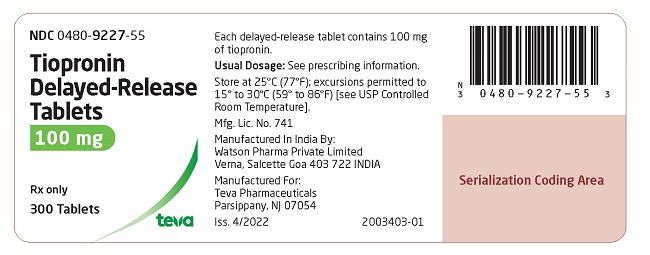
Tiopronin 100 mg Tablet, Delayed Release, 300-count — NDC 0480-9227-55 (Billing 00480-9227-55)
This is a package of 300 tablets of Tiopronin 100 mg Tablet, Delayed Release from Teva Pharmaceuticals, Inc., marketed since Oct 2024 and currently FDA-listed. It is this product's only package size.
Identity & classification
Regulatory identifiers FDA, NLM and CMS codes for this package
Drug-database identifiers Medi-Span GPI and First Databank GCN / HICL / AHFS classification
- GSN (GCN sequence number): 079977
- GCN: 46629
- HICL (First Databank): 003714
- AHFS class code: 92:92.00.00
- RxCUI (RxNorm): 2178075
Where does this data come from?
- FDA openFDA NDC Directory · synced Oct 1, 2026
- FDA label on DailyMed · label index refreshed Oct 1, 2026
- RxNorm (NLM RxNav) · catalog refreshed Oct 1, 2026
- Medi-Span GPI (licensed)
- First Databank (licensed) · refreshed Oct 1, 2026
RxNorm drug class
This medicine belongs to the Reducing and Complexing Thiol class.
Where does this data come from?
- RxClass (NLM) · catalog refreshed Oct 1, 2026
Clinical
- You have a condition called cystinuria, where your kidneys release too much cystine — a naturally occurring substance — into your urine. When cystine builds up, it forms painful ki...
- What exactly does tiopronin do, and why do I need it?
- Yes — and it depends on which product you have. If you're taking Thiola tablets or regular Tiopronin tablets, take them at least an hour before eating or two hours after a meal. If...
- Does it matter when I take it with food?
Patient education
Supplement & herbal interactions
Some supplements/herbs that may interact with Tiopronin — tap one for details:
Where does this data come from?
- MedlinePlus (NLM) · refreshed Oct 1, 2026
- FDA label on DailyMed · label index refreshed Oct 1, 2026
Ask a licensed pharmacist directly — free, answered by our team.
Pricing
A drug doesn't have one price. Each row is a different public payment system, and none is what you'd pay at the counter — that depends on your insurance. The ⓘ on each row explains what it measures.
| Price system | Per each | Per package |
|---|---|---|
| Retail pharmacies payNADAC · weekly | Not in the retail survey — common for institutional, discontinued, or low-volume packs. | |
| Medicaid paysCMS SDUD · 12 mo | No recent Medicaid claims on file for this NDC — rare and low-volume NDCs are suppressed in the public data. | |
| Medicare drug plans payPart D · Q2 2026 | $20.80 | $6,239.31 / 300 tablets |
Where does this data come from?
- CMS NADAC weekly file
- CMS ASP pricing files · refreshed Sep 20, 2026
- CMS Medicaid State Drug Utilization Data · refreshed Oct 3, 2026
- CMS Part D plan pricing files · refreshed Sep 24, 2026
- VA National Acquisition Center price file
Packaging — all sizes for this product
| Package NDC | Description | Marketing start | Marketing end | Status |
|---|---|---|---|---|
| 00480-9227-55 You're viewing this Main listing | 300 TABLET, DELAYED RELEASE in 1 BOTTLE | 2024-10-08 | — | Active |
Therapeutic equivalents
| Product | Labeler | Pack | NADAC/unit | TE | Status | Price vs. this |
|---|---|---|---|---|---|---|
| Thiola EC 100 mg 00178-0902-01 | Mission | 300 tablets | — | AB | FDA listed | — |
| Tiopronin 100 mg 00254-3034-30 | Par | 300 tablets | — | AB | FDA listed | — |
| Tiopronin 100 mgthis 00480-9227-55 | Teva | 300 tablets | — | AB | FDA listed | — |
| Tiopronin 100 mg 13668-0691-03 | Torrent | 300 tablets | — | AB | FDA listed | — |
| Tiopronin 100 mg 44523-0054-01 | BioComp | 300 tablets | — | AB | FDA listed | — |
| Venxxiva 100 mg 70709-0121-30 | Cycle | 300 tablets | — | AB | FDA listed | — |
Where does this data come from?
- FDA openFDA NDC Directory · synced Oct 1, 2026
- FDA Orange Book · refreshed Oct 3, 2026
- CMS NADAC weekly file
Availability & generic status
This product is an FDA-approved generic. Other versions of the same drug are listed under Therapeutic equivalents, least expensive first.
Where does this data come from?
- FDA Orange Book · refreshed Oct 3, 2026
What it looks like
Where does this data come from?
- FDA label on DailyMed · label index refreshed Oct 1, 2026
Inactive Ingredients / Excipients
Inactive ingredients, also called excipients, are components of the drug product other than the active ingredient. They may include fillers, dyes, coatings, preservatives, flavors, or other formulation ingredients.
Where does this data come from?
IACT rows and label-wide narrative are kept separate; availability and product-level specificity depend on the submitted label.- FDA label on DailyMed · label index refreshed Oct 1, 2026
- FDA openFDA NDC Directory · synced Oct 1, 2026
Inactive ingredient FAQ
Are inactive ingredients the same for every manufacturer?
Why might an inactive ingredient be missing?
Can inactive ingredients matter?
Manufacturer & labeler
Where does this data come from?
- FDA openFDA NDC Directory · synced Oct 1, 2026
- Drugs@FDA
Full prescribing information FDA SPL
🎯 Indications and Usage ▾
1 INDICATIONS AND USAGE Tiopronin delayed-release tablets are indicated, in combination with high fluid intake, alkali, and diet modification, for the prevention of cystine stone formation in adults and pediatric patients 9 years of age and older with severe homozygous cystinuria, who are not responsive to these measures alone. Additional pediatric use information is approved for Mission Pharmacal Company’s Thiola EC (tiopronin delayed-release ) tablets . However, due to Mission Pharmacal Company’s marketing exclusivity rights, this drug product is not labeled with that information.
Tiopronin delayed-release tablets are a reducing and complexing thiol indicated, in combination with high fluid intake, alkali, and diet modification, for the prevention of cystine stone formation in adults and pediatric patients 9 years of age and older with severe homozygous cystinuria, who are not responsive to these measures alone. ( 1 )
⏱️ Dosage and Administration ▾
2 DOSAGE AND ADMINISTRATION The recommended initial dosage in adult patients is 800 mg/day. In clinical studies, the average dosage was about 1,000 mg/day. ( 2.1 ) The recommended initial dosage in pediatric patients 9 years of age and older is 15 mg/kg/day.
Avoid dosages greater than 50 mg/kg per day in pediatric patients. ( 5.1 , 8.4 ) Measure urinary cystine 1 month after initiation of tiopronin delayed-release tablets and every 3 months thereafter ( 2.3 ) Administer tiopronin delayed-release tablets in 3 divided doses at the same times each day, without food. ( 2.1 )
2.1Recommended Dosage Adults : The recommended initial dosage in adult patients is 800 mg/day. In clinical studies, the average dosage was about 1,000 mg/day. Pediatrics : The recommended initial dosage in pediatric patients 9 years of age and older is 15 mg/kg/day.
Avoid dosages greater than 50 mg/kg per day in pediatric patients [see Warnings and Precautions ( 5.1 ), Use in Specific Populations ( 8.4 )] . Administer tiopronin delayed-release tablets in 3 divided doses at the same times each day, without food. Consider starting tiopronin delayed-release tablets at a lower dosage in patients with history of severe toxicity to d-penicillamine.
Additional pediatric use information is approved for Mission Pharmacal Company’s Thiola EC (tiopronin delayed-release ) tablets . However, due to Mission Pharmacal Company’s marketing exclusivity rights, this drug product is not labeled with that information.
2.3Monitoring Measure urinary cystine 1 month after starting tiopronin delayed-release tablets and every 3 months thereafter. Adjust tiopronin delayed-release tablets dosage to maintain urinary cystine concentration less than 250 mg/L. Assess for proteinuria before treatment and every 3 to 6 months during treatment [see Warnings and Precautions ( 5.1 )] .
Discontinue tiopronin delayed-release tablets in patients who develop proteinuria, and monitor urinary protein and renal function. Consider restarting tiopronin delayed-release tablets treatment at a lower dosage after resolution of proteinuria.
💊 Dosage Forms and Strengths ▾
3 DOSAGE FORMS AND STRENGTHS Tablets for oral use: 100 mg tablets: White to off-white, round, biconvex, film-coated tablets imprinted with “ R1 ” on one side in black ink. 300 mg tablets: White to off-white, round, biconvex, film-coated tablets imprinted with “ R3 ” on one side in black ink. Tablets: 100 mg and 300 mg ( 3 )
⛔ Contraindications ▾
4 CONTRAINDICATIONS Tiopronin delayed-release tablets are contraindicated in patients with hypersensitivity to tiopronin or any other components of tiopronin delayed-release tablets [see Warnings and Precautions ( 5.2 )] . Hypersensitivity to tiopronin or any component of tiopronin delayed-release tablets ( 4 )
⚠️ Warnings and Cautions ▾
5 WARNINGS AND PRECAUTIONS Proteinuria, including nephrotic syndrome, and membranous nephropathy, has been reported with tiopronin use. Pediatric patients receiving greater than 50 mg/kg of tiopronin per day may be at increased risk for proteinuria. ( 2.1 , 5.1 , 8.4 ) Hypersensitivity reactions have been reported during tiopronin treatment. ( 4 , 5.2 )
5.1Proteinuria Proteinuria, including nephrotic syndrome, and membranous nephropathy, have been reported with tiopronin use. Pediatric patients receiving greater than 50 mg/kg of tiopronin per day may be at increased risk for proteinuria [see Dosage and Administration ( 2.3 ), Adverse Reactions ( 6.1 , 6.2 ) Use in Specific Populations ( 8.4 )] . Monitor patients for the development of proteinuria and discontinue therapy in patients who develop proteinuria [see Dosage and Administration ( 2.3 )] .
5.2Hypersensitivity Reactions Hypersensitivity reactions (drug fever, rash, fever, arthralgia and lymphadenopathy) have been reported [see Contraindications ( 4 )] .
🤒 Adverse Reactions ▾
6 ADVERSE REACTIONS The following adverse reactions are discussed in greater detail in other sections of the labeling: Proteinuria [see Warnings and Precautions ( 5.1 )] Hypersensitivity [see Warnings and Precautions ( 5.2 )] Most common adverse reactions (≥10%) are nausea, diarrhea or soft stools, oral ulcers, rash, fatigue, fever, arthralgia, proteinuria, and emesis. ( 6 ) To report SUSPECTED ADVERSE REACTIONS, contact Teva at 1-888-838-2872 or FDA at 1-800-FDA-1088 or www.fda.gov/medwatch.
6.1Clinical Trials Experience Because clinical trials are conducted under widely varying conditions, the adverse reaction rates observed in the clinical trials of the drug cannot be directly compared to rates in the clinical trials of another drug and may not reflect the rates observed in practice. Adverse reactions occurring at an incidence of ≥5% in an uncontrolled trial in 66 patients with cystinuria age 9 to 68 years are shown in the table below. Patients in group 1 had previously been treated with d-penicillamine; those in group 2 had not.
Of those patients who had stopped taking d-penicillamine due to toxicity (34 out of 49 patients in group 1), 22 were able to continue treatment with tiopronin. In those without prior history of d-penicillamine treatment, 6% developed reactions of sufficient severity to require tiopronin withdrawal. Table 1 presents adverse reactions ≥5% in either treatment group occurring in this trial.
Table 1: Adverse Reactions Occurring in One or More Patients System Organ Class Adverse Reaction Group 1 Previously treated with d-penicillamine (N=49) Group 2 Naïve to d-penicillamine (N=17) Blood and Lymphatic System Disorders anemia 1 (2%) 1 (6%) Gastrointestinal Disorders nausea 12 (25%) 2 (12%) emesis 5 (10%) – diarrhea/soft stools 9 (18%) 1 (6%) abdominal pain – 1 (6%) oral ulcers 6 (12%) 3 (18%) General Disorders and Administration Site Conditions fever 4 (8%) – weakness 2 (4%) 2 (12%) fatigue 7 (14%) – peripheral (edema) 3 (6%) 1 (6%) chest pain – 1 (6%) Metabolism and Nutrition Disorders anorexia 4 (8%) – Musculoskeletal and Connective Tissue Disorders arthralgia – 2 (12%) Renal and Urinary Disorders proteinuria 5 (10%) 1 (6%) impotence – 1 (6%) Respiratory, Thoracic and Mediastinal Disorders cough – 1 (6%) Skin and Subcutaneous Tissue Disorders rash 7 (14%) 2 (12%) ecchymosis 3 (6%) – pruritus 2 (4%) 1 (6%) urticaria 4 (8%) – skin wrinkling 3 (6%) 1 (6%) Taste Disturbance A reduction in taste perception may develop.
It is believed to be the result of chelation of trace metals by tiopronin. Hypogeusia is often self-limited.
6.2Postmarketing Experience Adverse reactions have been reported from the literature, as well as during post-approval use of tiopronin. Because the post-approval reactions are reported voluntarily from a population of uncertain size, it is not always possible to reliably estimate their frequency or establish a causal relationship to tiopronin exposure. Adverse reactions reported during the postmarketing use of tiopronin are listed by body system in Table 2 .
Table 2: Adverse Reactions Reported for Tiopronin Pharmacovigilance by System Organ Class and Preferred Term System Organ Class Preferred Term Cardiac Disorders congestive heart failure Ear and Labyrinth Disorder vertigo Gastrointestinal Disorders abdominal discomfort; abdominal distension; abdominal pain; chapped lips; diarrhea; dry mouth; dyspepsia; eructation; flatulence; gastrointestinal disorder; gastroesophageal reflux disease; nausea; vomiting; jaundice; liver transaminitis General Disorders and Administration Site Conditions asthenia; chest pain; fatigue; malaise; pain; peripheral swelling; pyrexia; swelling Investigations glomerular filtration rate decreased; weight increased Metabolism and Nutrition Disorders decreased appetite; dehydration; hypophagia Musculoskeletal and Connective Tissue Disorders arthralgia; back pain; flank pain; joint swelling; limb discomfort; musculoskeletal discomfort; myalgia; neck pain; pain in… [Excerpted — this section continues on DailyMed.]
🔄 Drug Interactions ▾
7 DRUG INTERACTIONS
7.1Alcohol Tiopronin is released faster from tiopronin delayed-release tablets in the presence of alcohol and the risk for adverse events associated with tiopronin delayed-release tablets when taken with alcohol is unknown. Avoid alcohol consumption 2 hours before and 3 hours after taking tiopronin delayed-release tablets [see Clinical Pharmacology ( 12.3 )] .
👥 Use in Specific Populations ▾
8 USE IN SPECIFIC POPULATIONS Lactation: Breastfeeding is not recommended. ( 8.2 ) Geriatric: Choose dose carefully and monitor renal function in the elderly. ( 8.5) Additional pediatric use information is approved for Mission Pharmacal Company’s Thiola EC (tiopronin delayed-release ) tablets. However, due to Mission Pharmacal Company’s marketing exclusivity rights, this drug product is not labeled with that information.
8.1Pregnancy Risk Summary Available published case report data with tiopronin have not identified a drug-associated risk for major birth defects, miscarriage, or adverse maternal or fetal outcomes. Renal stones in pregnancy may result in adverse pregnancy outcomes (see Clinical Considerations) . In animal reproduction studies, there were no adverse developmental outcomes with oral administration of tiopronin to pregnant mice and rats during organogenesis at doses up to 2 times a 2 grams/day human dose (based on mg/m 2 ).
The estimated background risk of major birth defects and miscarriage for the indicated population is unknown. All pregnancies have a background risk of birth defect, loss, or other adverse outcomes. In the U.S. general population, the estimated background risk of major birth defects and miscarriage in clinically recognized pregnancies are 2% to 4% and 15% to 20%, respectively.
Clinical Considerations Disease-associated maternal and/or embryo/fetal risk Renal stones in pregnancy may increase the risk of adverse pregnancy outcomes, such as preterm birth and low birth weight. Data Animal Data No findings of fetal malformations could be attributed to the drug in reproduction studies in mice and rats at doses up to 2 times the highest recommended human dose of 2 grams/day (based on mg/m 2 ).
8.2Lactation Risk Summary There are no data on the presence of tiopronin in either human or animal milk or on the effects of the breastfed child. A published study suggests that tiopronin may suppress milk production. Because of the potential for serious adverse reactions, including nephrotic syndrome, advise patients that breastfeeding is not recommended during treatment with tiopronin delayed-release tablets.
8.4Pediatric Use Tiopronin delayed-release tablets are indicated in pediatric patients 9 years of age and older with severe homozygous cystinuria, in combination with high fluid intake, alkali, and diet modification, for the prevention of cystine stone formation who are not responsive to these measures alone. This indication is based on safety and efficacy data from a trial in patients 9 years to 68 years of age and clinical experience. Proteinuria, including nephrotic syndrome, has been reported in pediatric patients.
Pediatric patients receiving greater than 50 mg/kg tiopronin per day may be at greater risk [see Dosage and Administration ( 2.1 , 2.3 ), Warnings and Precautions ( 5.1 ) and Adverse Reactions ( 6.1 )] . Tiopronin delayed-release tablets are not approved for use in pediatric patients weighing less than 20 kg or in pediatric patients unable to swallow tablets [see Dosage and Administration ( 2.1 )] . Additional pediatric use information is approved for Mission Pharmacal Company’s Thiola EC (tiopronin delayed-release) tablets.
However, due to Mission Pharmacal Company’s marketing exclusivity rights, this drug product is not labeled with that information.
8.5Geriatric Use This drug is known to be substantially excreted by the kidney, and the risk of adverse reactions to this drug may be greater in patients with impaired renal function. Because elderly patients are more likely to have decreased renal function, care should be taken in dose selection, and it may be useful to monitor renal function.
🤰 Pregnancy ▾
8.1Pregnancy Risk Summary Available published case report data with tiopronin have not identified a drug-associated risk for major birth defects, miscarriage, or adverse maternal or fetal outcomes. Renal stones in pregnancy may result in adverse pregnancy outcomes (see Clinical Considerations) . In animal reproduction studies, there were no adverse developmental outcomes with oral administration of tiopronin to pregnant mice and rats during organogenesis at doses up to 2 times a 2 grams/day human dose (based on mg/m 2 ).
The estimated background risk of major birth defects and miscarriage for the indicated population is unknown. All pregnancies have a background risk of birth defect, loss, or other adverse outcomes. In the U.S. general population, the estimated background risk of major birth defects and miscarriage in clinically recognized pregnancies are 2% to 4% and 15% to 20%, respectively.
Clinical Considerations Disease-associated maternal and/or embryo/fetal risk Renal stones in pregnancy may increase the risk of adverse pregnancy outcomes, such as preterm birth and low birth weight. Data Animal Data No findings of fetal malformations could be attributed to the drug in reproduction studies in mice and rats at doses up to 2 times the highest recommended human dose of 2 grams/day (based on mg/m 2 ).
🧒 Pediatric Use ▾
8.4Pediatric Use Tiopronin delayed-release tablets are indicated in pediatric patients 9 years of age and older with severe homozygous cystinuria, in combination with high fluid intake, alkali, and diet modification, for the prevention of cystine stone formation who are not responsive to these measures alone. This indication is based on safety and efficacy data from a trial in patients 9 years to 68 years of age and clinical experience. Proteinuria, including nephrotic syndrome, has been reported in pediatric patients.
Pediatric patients receiving greater than 50 mg/kg tiopronin per day may be at greater risk [see Dosage and Administration ( 2.1 , 2.3 ), Warnings and Precautions ( 5.1 ) and Adverse Reactions ( 6.1 )] . Tiopronin delayed-release tablets are not approved for use in pediatric patients weighing less than 20 kg or in pediatric patients unable to swallow tablets [see Dosage and Administration ( 2.1 )] . Additional pediatric use information is approved for Mission Pharmacal Company’s Thiola EC (tiopronin delayed-release) tablets.
However, due to Mission Pharmacal Company’s marketing exclusivity rights, this drug product is not labeled with that information.
🧓 Geriatric Use ▾
8.5Geriatric Use This drug is known to be substantially excreted by the kidney, and the risk of adverse reactions to this drug may be greater in patients with impaired renal function. Because elderly patients are more likely to have decreased renal function, care should be taken in dose selection, and it may be useful to monitor renal function.
🆘 Overdosage ▾
10 OVERDOSAGE There is no information on overdosage with tiopronin.
🧬 Clinical Pharmacology ▾
12 CLINICAL PHARMACOLOGY
12.1Mechanism of Action The goal of therapy is to reduce urinary cystine concentration below its solubility limit. Tiopronin is an active reducing agent which undergoes thiol-disulfide exchange with cystine to form a mixed disulfide of tiopronin-cysteine. From this reaction, a water-soluble mixed disulfide is formed and the amount of sparingly soluble cystine is reduced.
12.2Pharmacodynamics The decrement in urinary cystine produced by tiopronin is generally proportional to the dose. A reduction in urinary cystine of 250 to 350 mg/day at tiopronin dosage of 1 g/day, and a decline of approximately 500 mg/day at a dosage of 2 g/day, might be expected. Tiopronin has a rapid onset and offset of action, showing a fall in cystine excretion on the first day of administration and a rise on the first day of drug withdrawal.
12.3Pharmacokinetics Absorption Tiopronin Delayed-Release Tablets When tiopronin immediate-release tablet and tiopronin delayed-release tablet single doses were given to fasted healthy subjects , the median time to peak plasma levels (T max ) was 1 (range: 0.5 to 2.1) and 3 (range: 1.0 to 6.0) hours, respectively. The peak exposure (C max ) and total exposure (AUC 0-t ) of tiopronin from tiopronin delayed-release tablets were decreased by 22% and 7% respectively compared to tiopronin immediate-release tablets. Elimination Excretion When tiopronin is given orally, up to 48% of dose appears in urine during the first 4 hours and up to 78% by 72 hours.
Drug Interactions Alcohol An in vitro dissolution study was conducted to evaluate the impact of alcohol (5, 10, 20, and 40%) on the dose dumping of tiopronin delayed-release tablets. The study results showed that the addition of alcohol to the dissolution media increases the dissolution rate of tiopronin delayed-release tablets in the acidic media of 0.1N HCl [see Drug Interactions ( 7.1 )] .
🧬 Mechanism of Action ▾
12.1Mechanism of Action The goal of therapy is to reduce urinary cystine concentration below its solubility limit. Tiopronin is an active reducing agent which undergoes thiol-disulfide exchange with cystine to form a mixed disulfide of tiopronin-cysteine. From this reaction, a water-soluble mixed disulfide is formed and the amount of sparingly soluble cystine is reduced.
📦 How Supplied / Storage and Handling ▾
16 HOW SUPPLIED/STORAGE AND HANDLING Tiopronin delayed-release tablets are available as follows: 100 mg: Each white to off-white, round, biconvex, film-coated tablet imprinted with “ R1 ” on one side in black ink contains 100 mg of tiopronin. Tablets are supplied in bottles of 300 (NDC 0480-9227-55). 300 mg: Each white to off-white, round, biconvex, film-coated tablet imprinted with “ R3 ” on one side in black ink contains 300 mg of tiopronin.
Tablets are supplied in bottles of 90 (NDC 0480-7824-98). Store at 25°C (77°F); excursions permitted to 15° to 30°C (59° to 86°F) [see USP Controlled Room Temperature].
📋 Description ▾
11 DESCRIPTION Tiopronin delayed-release tablets are a reducing and cystine-binding thiol drug (CBTD) for oral use. Tiopronin is N-(2-Mercaptopropionyl) glycine and has the following structure: Tiopronin has the empirical formula C 5 H 9 NO 3 S and a molecular weight of 163.20. In this drug product tiopronin exists as a dl racemic mixture.
Tiopronin is a white to off-white crystalline powder, which is freely soluble in water. Each tiopronin delayed-release tablet contains 100 mg or 300 mg of tiopronin. The inactive ingredients in tiopronin delayed-release tablets include ammonium hydroxide, black iron oxide, colloidal silicon dioxide, hydroxypropyl cellulose, hypromellose 2910, lactose monohydrate, low-substituted hydroxypropyl cellulose, magnesium stearate, methacrylic acid ethyl acrylate copolymer, propylene glycol, shellac glaze, talc, and triethyl citrate. new
💬 Information for Patients ▾
17 PATIENT COUNSELING INFORMATION Lactation Advise women that breastfeeding is not recommended during treatment with tiopronin delayed-release tablets [see Use in Specific Populations ( 8.2 )] . Manufactured In India By: Watson Pharma Private Limited Verna, Salcette Goa 403 722 INDIA Manufactured For: Teva Pharmaceuticals Parsippany, NJ 07054 Iss. 6/2024
🧬 Pharmacokinetics ▾
12.3Pharmacokinetics Absorption Tiopronin Delayed-Release Tablets When tiopronin immediate-release tablet and tiopronin delayed-release tablet single doses were given to fasted healthy subjects , the median time to peak plasma levels (T max ) was 1 (range: 0.5 to 2.1) and 3 (range: 1.0 to 6.0) hours, respectively. The peak exposure (C max ) and total exposure (AUC 0-t ) of tiopronin from tiopronin delayed-release tablets were decreased by 22% and 7% respectively compared to tiopronin immediate-release tablets. Elimination Excretion When tiopronin is given orally, up to 48% of dose appears in urine during the first 4 hours and up to 78% by 72 hours.
Drug Interactions Alcohol An in vitro dissolution study was conducted to evaluate the impact of alcohol (5, 10, 20, and 40%) on the dose dumping of tiopronin delayed-release tablets. The study results showed that the addition of alcohol to the dissolution media increases the dissolution rate of tiopronin delayed-release tablets in the acidic media of 0.1N HCl [see Drug Interactions ( 7.1 )] .
🧬 Pharmacodynamics ▾
12.2Pharmacodynamics The decrement in urinary cystine produced by tiopronin is generally proportional to the dose. A reduction in urinary cystine of 250 to 350 mg/day at tiopronin dosage of 1 g/day, and a decline of approximately 500 mg/day at a dosage of 2 g/day, might be expected. Tiopronin has a rapid onset and offset of action, showing a fall in cystine excretion on the first day of administration and a rise on the first day of drug withdrawal.
🧪 Nonclinical Toxicology ▾
13 NONCLINICAL TOXICOLOGY
13.1Carcinogenesis, Mutagenesis, Impairment of Fertility Carcinogenesis Long-term carcinogenicity studies in animals have not been performed. Mutagenesis Tiopronin was not genotoxic in the chromosomal aberration, sister chromatid exchange, and in vivo micronucleus assays. Impairment of Fertility High doses of tiopronin in experimental animals have been shown to interfere with maintenance of pregnancy and viability of the fetus.
In 2 published male fertility studies in rats, tiopronin at 20 mg/kg/day intramuscular (IM) for 60 days induced reductions in testis, epididymis, vas deferens, and accessory sex glands weights and in the count and motility of cauda epididymal sperm.
📄 Carcinogenesis, Mutagenesis, Impairment of Fertility ▾
13.1Carcinogenesis, Mutagenesis, Impairment of Fertility Carcinogenesis Long-term carcinogenicity studies in animals have not been performed. Mutagenesis Tiopronin was not genotoxic in the chromosomal aberration, sister chromatid exchange, and in vivo micronucleus assays. Impairment of Fertility High doses of tiopronin in experimental animals have been shown to interfere with maintenance of pregnancy and viability of the fetus.
In 2 published male fertility studies in rats, tiopronin at 20 mg/kg/day intramuscular (IM) for 60 days induced reductions in testis, epididymis, vas deferens, and accessory sex glands weights and in the count and motility of cauda epididymal sperm.
📄 Package Label / Principal Display Panel ▾
PACKAGE LABEL.PRINCIPAL DISPLAY PANEL NDC 0480-9227-55 Tiopronin Delayed-Release Tablets 100 mg Rx only 300 Tablets launch
PACKAGE LABEL.PRINCIPAL DISPLAY PANEL NDC 0480-7824-98 Tiopronin Delayed-Release Tablets 300 mg Rx only 90 Tablets launch
Medicare Part D spend CMS · PART D · 2026 (Q1)
Reported adverse events (FAERS)
Top reported reactions
Age at onset
Reporter sex
Serious outcomes
Where does this data come from?
About this NDC listing & data coverage
What data is (and isn’t) available for this NDC — tap to expand
| NDC identity (package / product / labeler codes) | ✓ Available |
| Labeler | ✓ Available |
| Product & package description | ✓ Available |
| Marketing category & status | ✓ Available |
| Active ingredient / dosage form / route | ✓ Available |
| FDA label (SPL via DailyMed) | ✓ Available |
| Package photos | ✓ Available |
| Inactive ingredients (structured) | — Not published for this NDC The labeler did not submit a structured excipient list, or no SPL is available. |
| NADAC pharmacy acquisition price (CMS) | — Not published for this NDC CMS publishes NADAC only for NDCs reported in its retail-pharmacy survey. |
| Orange Book / therapeutic-equivalence data | ✓ Available |
| HCPCS J-code billing crosswalk | — Not published for this NDC Most self-administered / retail products have no J-code — that is normal. |
| Medicaid utilization (CMS SDUD) | — Not published for this NDC CMS reports utilization only for NDCs with Medicaid claims above its privacy threshold. |