
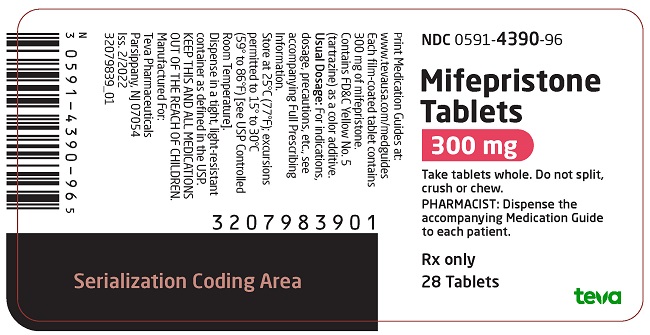
Mifepristone 300 mg Tablet, Film Coated, 28-count — NDC 0591-4390-96 (Billing 00591-4390-96)
This is a package of 28 tablets of Mifepristone 300 mg Tablet, Film Coated from Actavis Pharma, Inc., marketed since Jan 2024 and currently FDA-listed. It is this product's only package size.
NDC database record
One package, one record: these facts belong to NDC 0591-4390-96 alone.
- Record
- FDA NDC Directory package listing · Human prescription drug
- Code segments
- 0591 labeler · 4390 product · 96 package
- Package marketed since
- Jan 19, 2024
- Sample package
- No — commercial package
- Listing certified through
- Dec 31, 2026
- Billing quantity
- 28 EA per package
- Barcode (UPC)
- 0305914390965
- Medicaid fills, this package
- 12 prescriptions in the last four reported quarters
- FDA record last changed
- Jul 24, 2026
Identity & classification
Regulatory identifiers FDA, NLM and CMS codes for this package
Drug-database identifiers Medi-Span GPI and First Databank GCN / HICL / AHFS classification
- GSN (GCN sequence number): 068660
- GCN: 31485
- GPI-14 (Medi-Span): 27304050000330
- HICL (First Databank): 007325
- AHFS class code: 68:20.92.00
- RxCUI (RxNorm): 1245262
Where does this data come from?
- FDA openFDA NDC Directory · synced Oct 8, 2026
- FDA label on DailyMed · label index refreshed Oct 8, 2026
- RxNorm (NLM RxNav) · catalog refreshed Oct 1, 2026
- Medi-Span GPI (licensed)
- First Databank (licensed) · refreshed Oct 8, 2026
RxNorm drug class
This medicine belongs to the Progestin Antagonist class.
Where does this data come from?
- RxClass (NLM) · catalog refreshed Oct 1, 2026
Clinical
Mifepristone (Korlym) is used to treat hyperglycemia (high blood sugar) in people with a certain type of Cushing's syndrome in which the body makes too much cortisol (a hormone) and who have failed surgery or cannot have surgery to treat this condition. Mifepristone is in a class of medications called cortisol receptor blockers. It works by blocking the activity of cortisol. Mifepristone is also available as another product (Mifeprex) that is used alone or in combination with another medication to end an early pregnancy. This monograph only gives information about mifepristone (Korlym) used to...
Read the full MedlinePlus article ↗- Great question — this one confuses a lot of people. Mifepristone isn't a standard diabetes drug. It's only used when Cushing's syndrome is what's causing your blood sugar to be hig...
- Why is mifepristone being prescribed for my blood sugar if I already know I have diabetes?
- This is really important. Mifepristone blocks progesterone, which is the hormone your body needs to sustain a pregnancy — so if you became pregnant while taking it, the pregnancy w...
- I'm a woman of childbearing age. What do I need to know about birth control while on this?
Patient education
Supplement & herbal interactions
Some supplements/herbs that may interact with Mifepristone — tap one for details:
Where does this data come from?
- MedlinePlus (NLM) · refreshed Oct 8, 2026
- FDA label on DailyMed · label index refreshed Oct 8, 2026
Ask a licensed pharmacist directly — free, answered by our team.
Pricing
A drug doesn't have one price. Each row is a different public payment system, and none is what you'd pay at the counter — that depends on your insurance. The ⓘ on each row explains what it measures.
| Price system | Per each | Per package |
|---|---|---|
| Retail pharmacies payNADAC · weekly | Not in the retail survey — common for institutional, discontinued, or low-volume packs. | |
| Medicaid paysCMS SDUD · 12 mo | $597.89 | $16,740.89 / 28 tablets |
| Medicare drug plans payPart D · Q2 2026 | $539.53 | $15,106.78 / 28 tablets |
Where does this data come from?
- CMS NADAC weekly file
- CMS ASP pricing files · refreshed Sep 20, 2026
- CMS Medicaid State Drug Utilization Data · through Q1 2026
- CMS Part D plan pricing files · refreshed Sep 24, 2026
- VA National Acquisition Center price file
Packaging — all sizes for this product
| Package NDC | Description | Marketing start | Marketing end | Status |
|---|---|---|---|---|
| 00591-4390-96 You're viewing this Main listing | 28 TABLET, FILM COATED in 1 BOTTLE | 2024-01-19 | — | Active |
Therapeutic equivalents
| Product | Labeler | Pack | NADAC/unit | TE | Status | Price vs. this |
|---|---|---|---|---|---|---|
| Mifepristone 300 mgthis 00591-4390-96 | Actavis | 28 tablets | — | AB | FDA listed | — |
| Korlym 300 mg 76346-0073-01 | Corcept | 28 tablets | — | AB | FDA listed | — |
| Mifepristone 300 mg 76346-0654-03 | Corcept | 280 tablets | — | AB | FDA listed | — |
Where does this data come from?
- FDA openFDA NDC Directory · synced Oct 8, 2026
- FDA Orange Book · refreshed Oct 3, 2026
- CMS NADAC weekly file
Availability & generic status
This product is an FDA-approved generic. Other versions of the same drug are listed under Therapeutic equivalents, least expensive first.
Where does this data come from?
- FDA Orange Book · refreshed Oct 3, 2026
What it looks like
Where does this data come from?
- FDA label on DailyMed · label index refreshed Oct 8, 2026
Inactive Ingredients / Excipients
Inactive ingredients, also called excipients, are components of the drug product other than the active ingredient. They may include fillers, dyes, coatings, preservatives, flavors, or other formulation ingredients.
🧪 Avoiding an ingredient? See Mifepristone (Mifeprex) inactive ingredients by manufacturer: every current product's list side by side, so you can ask your pharmacy for the version that does not list it.
💡 Tap an ingredient (hover on desktop) to see what it is and why it’s used.
-
UNII H3R47K3TBD
FD&C Blue No. 1 is a synthetic blue dye approved for use in foods and medicines. It serves as a colorant to give the medication its distinctive appearance and help with product identification.
-
UNII JQ6BLH9FR7
FD&C Yellow No. 5 Aluminum Lake is a bright yellow colorant made by combining a synthetic dye with aluminum and other salts. It colors tablets and capsules to help identify the medication and make it visually distinctive.
-
UNII H77VEI93A8
A synthetic yellow dye used to color medications. It helps identify the drug and make it visually distinctive, with no effect on how the medicine works.
-
UNII UKE75GEA7F
Hydroxypropyl cellulose is a plant-based polymer used as a binder and thickener. It helps hold tablet ingredients together, controls how fast the medicine dissolves, and improves the texture of liquid formulations.
-
UNII 0WZ8WG20P6
Hypromellose 2910 is a plant-based cellulose derivative that acts as a thickener, binder, and film-coating agent. It helps control how quickly the medicine dissolves and protects the tablet or capsule from moisture and light.
-
UNII 70097M6I30
Magnesium stearate is a salt made from magnesium and stearic acid, a fatty substance. It's used in tablets and capsules as a lubricant and glidant to help ingredients flow smoothly during manufacturing and prevent sticking.
-
UNII OP1R32D61U
Microcrystalline cellulose is a purified form of cellulose, a natural fiber from plant sources. It acts as a binder and filler in tablets and capsules, helping hold ingredients together and give the medicine its shape and size.
-
UNII 6OZP39ZG8H
Polysorbate 80 is a synthetic emulsifier derived from sorbitol and oleic acid. It helps mix oil and water-based ingredients together in medications and improves how the product disperses in the body.
-
UNII 368GB5141J
A detergent and foaming agent derived from coconut or palm oil. In medications, it helps break down and mix oil and water-based ingredients, aids in tablet disintegration, and improves how the drug dissolves and spreads in the mouth or digestive system.
-
UNII 5856J3G2A2
A starch-based powder made from potatoes and processed with sodium. It acts as a disintegrant, helping the tablet or capsule break apart quickly in the stomach so the medicine can be absorbed.
-
UNII 15FIX9V2JP
Titanium dioxide is a bright white mineral powder commonly used as a colorant and opacifying agent. It makes pills and tablets white or lighter in color and helps make coatings non-transparent.
-
UNII XHX3C3X673
Triacetin is a clear, oily liquid made from glycerin and acetic acid. It works as a plasticizer and solvent in medicines, helping soften coatings and improve how liquids mix together in formulations.
12 inactive ingredients listed in the exact product block matched to this NDC.
Where does this data come from?
ingredient classCode="IACT" elements from the exact product block matched by this NDC. Label-section narrative from DailyMed / the openFDA label index is shown separately when available.- FDA label on DailyMed · label index refreshed Oct 8, 2026
- FDA openFDA NDC Directory · synced Oct 8, 2026
Inactive ingredient FAQ
Are inactive ingredients the same for every manufacturer?
Why might an inactive ingredient be missing?
Can inactive ingredients matter?
Manufacturer & labeler
More NDCs from Actavis Pharma, Inc. labeler code 00591
- Perphenazine 2 mg Tablet, Film Coated NDC 0591-4101-00
- Perphenazine 4 mg Tablet, Film Coated NDC 0591-4102-00
- Perphenazine 8 mg Tablet, Film Coated NDC 0591-4103-00
- Perphenazine 16 mg Tablet, Film Coated NDC 0591-4104-00
- Penicillamine 250 mg Capsule NDC 0591-4171-00
- Fosaprepitant 150 mg Injection, Powder, Lyophilized, For Solution NDC 0591-4385-79
- Doxycycline Hyclate 50 mg Tablet, Delayed Release NDC 0591-4550-22
- Doxycycline Hyclate 200 mg Tablet, Delayed Release NDC 0591-4575-60
- Amantadine Hydrochloride 100 mg Tablet NDC 0591-4920-01
- Prednisone 5 mg Tablet NDC 0591-5052-00
- Promethazine Hydrochloride 25 mg Tablet NDC 0591-5307-00
- Promethazine Hydrochloride 50 mg Tablet NDC 0591-5319-00
Where does this data come from?
- FDA openFDA NDC Directory · synced Oct 8, 2026
- Drugs@FDA
Full prescribing information FDA SPL
🚨 Boxed Warning ▾
WARNING: TERMINATION OF PREGNANCY Mifepristone is a potent antagonist of progesterone and cortisol via the progesterone and glucocorticoid (GR-II) receptors, respectively. The antiprogestational effects will result in the termination of pregnancy. Pregnancy must therefore be excluded before the initiation of treatment with mifepristone and prevented during treatment and for one month after stopping treatment by the use of a non-hormonal medically acceptable method of contraception unless the patient has had a surgical sterilization, in which case no additional contraception is needed.
Pregnancy must also be excluded if treatment is interrupted for more than 14 days in females of reproductive potential. WARNING: TERMINATION OF PREGNANCY See full prescribing information for complete boxed warning. Mifepristone has potent antiprogestational effects and will result in the termination of pregnancy.
Pregnancy must therefore be excluded before the initiation of treatment with mifepristone, or if treatment is interrupted for more than 14 days in females of reproductive potential.
🎯 Indications and Usage ▾
1 INDICATIONS AND USAGE Mifepristone is a cortisol receptor blocker indicated to control hyperglycemia secondary to hypercortisolism in adult patients with endogenous Cushing's syndrome who have type 2 diabetes mellitus or glucose intolerance and have failed surgery or are not candidates for surgery. LIMITATIONS OF USE: Mifepristone tablets should not be used in the treatment of patients with type 2 diabetes unless it is secondary to Cushing’s syndrome. Mifepristone is a cortisol receptor blocker indicated to control hyperglycemia secondary to hypercortisolism in adult patients with endogenous Cushing's syndrome who have type 2 diabetes mellitus or glucose intolerance and have failed surgery or are not candidates for surgery ( 1 ).
Important Limitations of Use: Do not use for the treatment of type 2 diabetes mellitus unrelated to endogenous Cushing’s syndrome.
⏱️ Dosage and Administration ▾
2 DOSAGE AND ADMINISTRATION Obtain a negative pregnancy test in females of reproductive potential prior to initiating treatment with mifepristone tablets or if treatment is interrupted for more than 14 days ( 2.1 ). Administer once daily orally with a meal ( 2.2 ). The recommended starting dose is 300 mg once daily ( 2.2 ).
Based on clinical response and tolerability, the dose may be increased in 300 mg increments to a maximum of 1,200 mg once daily. Do not exceed 20 mg/kg per day ( 2.2 ). Renal impairment: do not exceed 600 mg once daily ( 2.3 ).
Mild-to-moderate hepatic impairment: do not exceed 600 mg once daily. Do not use in severe hepatic impairment ( 2.4 ). Concomitant administration with strong CYP3A inhibitors: Do not exceed 900 mg once daily ( 2.5 ).
2.1Testing Prior to and During Mifepristone Administration Obtain a negative pregnancy test in females of reproductive potential prior to initiating treatment with mifepristone tablets or if treatment is interrupted for more than 14 days [see Contraindications ( 4 ), Warnings and Precautions ( 5.2 ), Use in Specific Populations ( 8.1 , 8.3 )].
2.2Adult Dosage The recommended starting dose is 300 mg orally once daily. Mifepristone tablets must be given as a single daily dose. Mifepristone tablets should always be taken with a meal.
Patients should swallow the tablet whole. Do not split, crush, or chew tablets. Dosing and titration The daily dose of mifepristone tablets may be increased in 300 mg increments.
The dose of mifepristone tablets may be increased to a maximum of 1,200 mg once daily but should not exceed 20 mg/kg per day. Increases in dose should not occur more frequently than once every 2 to 4 weeks. Decisions about dose increases should be based on a clinical assessment of tolerability and degree of improvement in Cushing’s syndrome manifestations.
Changes in glucose control, anti-diabetic medication requirements, insulin levels, and psychiatric symptoms may provide an early assessment of response (within 6 weeks) and may help guide early dose titration. Improvements in cushingoid appearance, acne, hirsutism, striae, and body weight occur over a longer period of time and, along with measures of glucose control, may be used to determine dose changes beyond the first 2 months of therapy. Careful and gradual titration of mifepristone tablets accompanied by monitoring for recognized adverse reactions [see Warnings and Precautions ( 5.1 ) and ( 5.2 )] may reduce the risk of severe adverse reactions.
Dose reduction or even dose discontinuation may be needed in some clinical situations. If mifepristone tablets treatment is interrupted, it should be reinitiated at the lowest dose (300 mg). If treatment was interrupted because of adverse reactions, the titration should aim for a dose lower than the one that resulted in treatment interruption.
2.3Dosing in Renal Impairment No change in initial dose of mifepristone tablets is required in renal impairment. The maximum dose should be limited to 600 mg [see Renal Impairment ( 8.6 ) and Clinical Pharmacology ( 12.3 )] .
2.4Dosing in Hepatic Impairment No change in the initial dose of mifepristone tablets is required in mild to moderate hepatic impairment. The maximum dose should be limited to 600 mg. Mifepristone tablets should not be used in severe hepatic impairment [see Hepatic Impairment ( 8.7 ) and Clinical Pharmacology ( 12.3 )] .
2.5Concomitant Administration with CYP3A Inhibitors Ketoconazole and other strong inhibitors of CYP3A, such as itraconazole, nefazodone, ritonavir, nelfinavir, indinavir, atazanavir, amprenavir and fosamprenavir, clarithromycin, conivaptan, lopinavir/ritonavir, posaconazole, saquinavir, telithromycin, or voriconazole may increase exposure to mifepristone. Mifepristone tablets should be used in combination with strong CYP3A inhibitors only when necessary [see Warnings and Precautions ( 5.6 ), Drug Interactions ( 7.2 )] .
Administration of mifepristone tablets to patients already being trea… [Excerpted — this section continues on DailyMed.]
💊 Dosage Forms and Strengths ▾
3 DOSAGE FORMS AND STRENGTHS Mifepristone tablets are for oral administration and available as follows: 300 mg – Each dark yellow to light brown, film-coated, oval-shaped tablet debossed with A33 on one side and plain on the other side contains 300 mg of mifepristone. Tablets: 300 mg ( 3 ).
⛔ Contraindications ▾
4 CONTRAINDICATIONS Mifepristone is contraindicated in: Pregnancy [See Dosage and Administration ( 2.1 ), Use in Specific Populations ( 8.1 , 8.3 )] Patients taking drugs metabolized by CYP3A such as simvastatin, lovastatin, and CYP3A substrates with narrow therapeutic ranges, such as cyclosporine, dihydroergotamine, ergotamine, fentanyl, pimozide, quinidine, sirolimus, and tacrolimus, due to an increased risk of adverse events. [See Drug Interactions ( 7.1 ) and Clinical Pharmacology ( 12.3 )] Patients receiving systemic corticosteroids for lifesaving purposes (e.g., immunosuppression after organ transplantation) because mifepristone antagonizes the effect of glucocorticoids.
Women with a history of unexplained vaginal bleeding or with endometrial hyperplasia with atypia or endometrial carcinoma. Patients with known hypersensitivity to mifepristone or to any of the product components. Pregnancy ( 4 , 8.1 ).
Patients taking drugs metabolized by CYP3A such as simvastatin, lovastatin, and CYP3A substrates with narrow therapeutic ranges ( 4 ). Patients receiving systemic corticosteroids for lifesaving purposes ( 4 ). Women with a history of unexplained vaginal bleeding or endometrial hyperplasia with atypia or endometrial carcinoma ( 4) .
Patients with known hypersensitivity to mifepristone or to any of the product components ( 4 ).
⚠️ Warnings and Cautions ▾
5 WARNINGS AND PRECAUTIONS Adrenal insufficiency : Patients should be closely monitored for signs and symptoms of adrenal insufficiency ( 5.1 ). Hypokalemia : Hypokalemia should be corrected prior to treatment and monitored for during treatment ( 5.2 ). Vaginal bleeding and endometrial changes : Women may experience endometrial thickening or unexpected vaginal bleeding.
Use with caution if patient also has a hemorrhagic disorder or is on anti-coagulant therapy ( 5.3 ). QT interval prolongation : Avoid use with QT interval-prolonging drugs, or in patients with potassium channel variants resulting in a long QT interval ( 5.4 ). Use of Strong CYP3A Inhibitors : Concomitant use can increase mifepristone plasma levels.
Use only when necessary and limit mifepristone dose to 900 mg ( 5.6 ).
5.1Adrenal Insufficiency Patients receiving mifepristone may experience adrenal insufficiency. Because serum cortisol levels remain elevated and may even increase during treatment with mifepristone, serum cortisol levels do not provide an accurate assessment of hypoadrenalism in patients receiving mifepristone. Patients should be closely monitored for signs and symptoms of adrenal insufficiency, including weakness, nausea, increased fatigue, hypotension, and hypoglycemia.
If adrenal insufficiency is suspected, discontinue treatment with mifepristone immediately and administer glucocorticoids without delay. High doses of supplemental glucocorticoids may be needed to overcome the glucocorticoid receptor blockade produced by mifepristone. Factors considered in deciding on the duration of glucocorticoid treatment should include the long half-life of mifepristone (85 hours).
Treatment with mifepristone at a lower dose can be resumed after resolution of adrenal insufficiency. Patients should also be evaluated for precipitating causes of hypoadrenalism (infection, trauma, etc.).
5.2Hypokalemia In a study of patients with Cushing’s syndrome, hypokalemia was observed in 44% of subjects during treatment with mifepristone. Hypokalemia should be corrected prior to initiating mifepristone. During mifepristone administration, serum potassium should be measured 1 to 2 weeks after starting or increasing the dose of mifepristone and periodically thereafter.
Hypokalemia can occur at any time during mifepristone treatment. Mifepristone-induced hypokalemia should be treated with intravenous or oral potassium supplementation based on event severity. If hypokalemia persists in spite of potassium supplementation, consider adding mineralocorticoid antagonists.
5.3Vaginal Bleeding and Endometrial Changes Being an antagonist of the progesterone receptor, mifepristone promotes unopposed endometrial proliferation that may result in endometrium thickening, cystic dilatation of endometrial glands, and vaginal bleeding. Mifepristone should be used with caution in women who have hemorrhagic disorders or are receiving concurrent anticoagulant therapy. Women who experience vaginal bleeding during mifepristone treatment should be referred to a gynecologist for further evaluation.
5.4QT Interval Prolongation Mifepristone and its metabolites block IKr. Mifepristone prolongs the QTc interval in a dose-related manner. There is little or no experience with high exposure, concomitant dosing with other QT- prolonging drugs, or potassium channel variants resulting in a long QT interval [see Warnings & Precautions ( 5.6 )] . To minimize risk, the lowest effective dose should always be used.
5.5Exacerbation/Deterioration of Conditions Treated with Corticosteroids Use of mifepristone in patients who receive corticosteroids for other conditions (e.g., autoimmune disorders) may lead to exacerbation or deterioration of such conditions, as mifepristone antagonizes the desired effects of glucocorticoid in these clinical settings. For medical conditions in which chronic corticosteroid therapy is lifesaving (e.g., immunosuppression in organ transplantation), mifepristone is contraindicated [see… [Excerpted — this section continues on DailyMed.]
🤒 Adverse Reactions ▾
6 ADVERSE REACTIONS Most common adverse reactions in Cushing’s syndrome (≥20%): nausea, fatigue, headache, decreased blood potassium, arthralgia, vomiting, peripheral edema, hypertension, dizziness, decreased appetite, endometrial hypertrophy ( 6 ). To report SUSPECTED ADVERSE REACTIONS, contact Teva at 1-888-838-2872 or FDA at 1-800-FDA-1088 or www.fda.gov/medwatch .
6.1Clinical Trials Experience Because clinical trials are conducted under widely varying conditions, the adverse reaction rates observed cannot be directly compared to rates in other clinical trials and may not reflect the rates observed in clinical practice. Safety data on the use of mifepristone are available from 50 patients with Cushing’s syndrome enrolled in an uncontrolled, open-label, multi-center trial (Study 400). Forty-three patients had Cushing’s disease and all except one had previously undergone pituitary surgery.
Four patients had ectopic ACTH secretion, and three had adrenal carcinoma. Patients were treated for up to 24 weeks. A dose of 300 mg per day was administered for the initial 14 days; thereafter, the dose could be escalated in increments of 300 mg per day based on assessments of tolerability and clinical response.
Doses were escalated up to 900 mg per day for patients <60 kg, or 1,200 mg per day for patients >60 kg. The most frequently reported adverse reactions (reported in ≥20% of patients, regardless of relationship to mifepristone) were nausea, fatigue, headache, decreased blood potassium, arthralgia, vomiting, peripheral edema, hypertension, dizziness, decreased appetite, and endometrial hypertrophy. Drug-related adverse events resulted in dose interruption or reduction in study drug in 40% of patients.
The adverse reactions that occurred in ≥10% of the Cushing’s syndrome patients receiving mifepristone, regardless of relationship to mifepristone, are shown in Table 2. Table 2. Treatment Emergent Adverse Events Occurring in ≥10% of Cushing’s Syndrome Patients Receiving Mifepristone B ody System/Adverse Reaction P ercent (%) of Patients Reporting E vent (n = 50) Gastrointestinal disorders Nausea 48 Vomiting 26 Dry mouth 18 Diarrhea 12 Constipation 10 General disorders and administration/site conditions Fatigue 48 Edema peripheral 26 Pain 14 N ervous system disorders Headache 44 Dizziness 22 Somnolence 10 M u sculoskeletal and connective tissue disorders Arthralgia 30 Back pain 16 Myalgia 14 Pain in extremity 12 Investigations Blood potassium decreased 34 Thyroid function test abnormal 18 Infections and infestations Sinusitis 14 Nasopharyngitis 12 M etabolism and nutrition disorders Decreased appetite 20 Anorexia 10 V ascular disorders Hypertension 24 R eproductive system and breast disorders Endometrial hypertrophy 38* R espiratory, thoracic, and mediastinal disorders Dyspnea 16 P sychiatric disorders Anxiety 10 *The denominator was 26 females who had baseline and end-of-trial transvaginal ultrasound Laboratory Tests Reductions in high density lipoprotein-cholesterol (HDL-C) levels have been observed following treatment with mifepristone.
In study subjects that experienced declines in HDL-C, levels returned to baseline following discontinuation of drug. The clinical significance of the treatment-related reduction in HDL-C levels in patients with Cushing’s syndrome is not known. In a study of patients with Cushing’s syndrome, hypokalemia was observed in 44% of subjects during treatment with mifepristone.
In these cases, hypokalemia responded to treatment with potassium supplementation and/or mineralocorticoid antagonist therapy (e.g., spironolactone or eplerenone). Hypokalemia should be corrected prior to initiating mifepristone [see Warnings and Precautions ( 5.2 )] . Elevations of thyroid-stimulating hormone (TSH) were seen in subjects treated with mifepristone.
Of the 42 subjects with detectable TSH at baseline, eight (19%) had increases in TSH above the normal range, while remaining asymptomatic. The TSH levels returned to normal in… [Excerpted — this section continues on DailyMed.]
🔄 Drug Interactions ▾
7 DRUG INTERACTIONS Based on the long terminal half-life of mifepristone after reaching steady state, at least 2 weeks should elapse after cessation of mifepristone before initiating or increasing the dose of any interacting concomitant medication. Drugs metabolized by CYP3A: Administer drugs that are metabolized by CYP3A at the lowest dose when used with mifepristone ( 7.1 ). CYP3A inhibitors: Caution should be used when mifepristone is used with strong CYP3A inhibitors.
Limit mifepristone dose to 900 mg per day when used with strong CYP3A inhibitors ( 7.2 ). CYP3A inducers: Do not use mifepristone with CYP3A inducers ( 7.3 ). Drugs metabolized by CYP2C8/2C9: Use the lowest dose of CYP2C8/2C9 substrates when used with mifepristone ( 7.4 ).
Drugs metabolized by CYP2B6: Use of mifepristone should be done with caution with bupropion and efavirenz ( 7.5 ). Hormonal contraceptives: Do not use with mifepristone ( 7.6 ).
7.1Drugs Metabolized by CYP3A Because mifepristone is an inhibitor of CYP3A, concurrent use of mifepristone with a drug whose metabolism is largely or solely mediated by CYP3A is likely to result in increased plasma concentrations of the drug. Discontinuation or dose reduction of such medications may be necessary with mifepristone coadministration. Mifepristone increased the exposure to simvastatin and simvastatin acid significantly in healthy subjects.
Concomitant use of simvastatin or lovastatin is contraindicated because of the increased risk of myopathy and rhabdomyolysis [see Contraindications ( 4.2 ), Clinical Pharmacology 12.3 ] . The exposure of other substrates of CYP3A with narrow therapeutic ranges, such as cyclosporine, dihydroergotamine, ergotamine, fentanyl, pimozide, quinidine, sirolimus, and tacrolimus, may be increased by concomitant administration with mifepristone. Therefore, the concomitant use of such CYP3A substrates with mifepristone is contraindicated [see Contraindications ( 4.2 )] .
Other drugs with similar high first pass metabolism in which CYP3A is the primary route of metabolism should be used with extreme caution if coadministered with mifepristone. The lowest possible dose and/or a decreased frequency of dosing must be used with therapeutic drug monitoring when possible. Use of alternative drugs without these metabolic characteristics is advised when possible with concomitant mifepristone.
If drugs that undergo low first pass metabolism by CYP3A or drugs in which CYP3A is not the major metabolic route are coadministered with mifepristone, use the lowest dose of concomitant medication necessary, with appropriate monitoring and follow-up [see Clinical Pharmacology ( 12.3 )] .
7.2CYP3A Inhibitors Medications that inhibit CYP3A could increase plasma mifepristone concentrations and dose reduction of mifepristone may be required. Ketoconazole and other strong inhibitors of CYP3A, such as itraconazole, nefazodone, ritonavir, nelfinavir, indinavir, atazanavir, amprenavir and fosamprenavir, clarithromycin, conivaptan, lopinavir/ritonavir, posaconazole, saquinavir, telithromycin, or voriconazole may increase exposure to mifepristone. Caution should be used when strong CYP3A inhibitors are prescribed in combination with mifepristone.
The benefit of concomitant use of these agents should be carefully weighed against the potential risks. The dose of mifepristone should be limited to 900 mg, and strong inhibitors of CYP3A should be used only when necessary [see Dosage and Administration ( 2.4 ), Warnings & Precautions ( 5.6 ), and Clinical Pharmacology ( 12.3 )] .
7.3CYP3A Inducers No medications that induce CYP3A have been studied when coadministered with mifepristone. Avoid coadministration of mifepristone and CYP3A inducers such as rifampin, rifabutin, rifapentin, phenobarbital, phenytoin, carbamazepine, and St. John’s wort.
7.4Drugs Metabolized by CYP2C8/2C9 Because mifepristone is an inhibitor of CYP2C8/2C9, concurrent use of mifepristone with a drug whose metabolism is largely or solely m… [Excerpted — this section continues on DailyMed.]
👥 Use in Specific Populations ▾
8 USE IN SPECIFIC POPULATIONS
8.1Pregnancy Risk Summary Mifepristone is contraindicated in pregnancy because the use of mifepristone results in pregnancy loss. There are no data that assess the risk of birth defects in women exposed to mifepristone during pregnancy. Available data limited to exposure following a single dose of mifepristone during pregnancy showed a higher rate of major birth defects compared to the general population comparator (See Data) .
Mifepristone administered to pregnant mice, rats, and rabbits during organogenesis caused pregnancy loss in all species at clinically relevant doses based on body surface area comparisons (See Data) .The inhibition of both endogenous and exogenous progesterone by mifepristone at the progesterone receptor results in pregnancy loss. If mifepristone is used during pregnancy or if the patient becomes pregnant while taking this drug, the patient should be apprised of the potential hazard to a fetus. [See Contraindications ( 4 )] The estimated risk of fetal loss is elevated in patients with active Cushing’s syndrome (24% to 30%), and the risk of major birth defects is unknown.
In the U.S. general population, the estimated background risks of major birth defects and miscarriage in clinically recognized pregnancies are 2% to 4% and 15% to 20%, respectively. Data Human Data There are no data on long term exposure to mifepristone in pregnancy. Available data are limited to exposure to a single dose of mifepristone for pregnancy termination.
In a prospective study in France of 46 pregnancies exposed to a single dose of mifepristone alone and 59 pregnancies exposed to a single dose of mifepristone and misoprostol, the overall major birth defect rate (4%) was greater than the general population background rate of 2% to 3% (2 birth defects in each group). There was no pattern of birth defects identified. Animal Data Reproductive studies were performed in mice, rats and rabbits at doses of 0.25 to 4.0 mg/kg (less than human exposure at the maximum clinical dose, based on body surface area).
Because of the anti-progestational activity of mifepristone, fetal losses were much higher than in control animals. Skull deformities were detected in rabbit studies at less than human exposure, although mifepristone did not cause any adverse developmental effects in rats or mice during organogenesis. These deformities were most likely due to the mechanical effects of uterine contractions resulting from antagonism of the progesterone receptor.
8.2Lactation Risk Summary Mifepristone is present in human milk, however, there are no data on the amount of mifepristone in human milk, the effects on the breastfed infant, or the effects on milk production during long term use of mifepristone (see Data) . The developmental and health benefits of breastfeeding should be considered along with the mother’s clinical need for mifepristone and any potential adverse effects on the breastfed child from mifepristone or from the underlying maternal condition. Clinical Considerations To minimize exposure to a breastfed infant, women who discontinue or interrupt mifepristone treatment may consider pumping and discarding milk during treatment and for 18 to 21 days (5 to 6 half-lives) after the last dose, before breastfeeding.
Data Available published data based on intake of a single dose of 600 mg of mifepristone in 10 breastfeeding women who were 6 to 12 months postpartum showed a small amount in breast milk (the estimated relative infant dose was 0.5%). The half-life of mifepristone is longer with repeat dosing compared to a single dose; therefore, there may be greater exposure with long term use.
8.3Females and Males of Reproductive Potential Pregnancy Testing Due to its anti-progestational activity, mifepristone causes pregnancy loss. Perform pregnancy testing before the initiation of treatment with mifepristone or if treatment is interrupted for more than 14 days in females of reproductive potential. Contraception R… [Excerpted — this section continues on DailyMed.]
🤰 Pregnancy ▾
8.1Pregnancy Risk Summary Mifepristone is contraindicated in pregnancy because the use of mifepristone results in pregnancy loss. There are no data that assess the risk of birth defects in women exposed to mifepristone during pregnancy. Available data limited to exposure following a single dose of mifepristone during pregnancy showed a higher rate of major birth defects compared to the general population comparator (See Data) .
Mifepristone administered to pregnant mice, rats, and rabbits during organogenesis caused pregnancy loss in all species at clinically relevant doses based on body surface area comparisons (See Data) .The inhibition of both endogenous and exogenous progesterone by mifepristone at the progesterone receptor results in pregnancy loss. If mifepristone is used during pregnancy or if the patient becomes pregnant while taking this drug, the patient should be apprised of the potential hazard to a fetus. [See Contraindications ( 4 )] The estimated risk of fetal loss is elevated in patients with active Cushing’s syndrome (24% to 30%), and the risk of major birth defects is unknown.
In the U.S. general population, the estimated background risks of major birth defects and miscarriage in clinically recognized pregnancies are 2% to 4% and 15% to 20%, respectively. Data Human Data There are no data on long term exposure to mifepristone in pregnancy. Available data are limited to exposure to a single dose of mifepristone for pregnancy termination.
In a prospective study in France of 46 pregnancies exposed to a single dose of mifepristone alone and 59 pregnancies exposed to a single dose of mifepristone and misoprostol, the overall major birth defect rate (4%) was greater than the general population background rate of 2% to 3% (2 birth defects in each group). There was no pattern of birth defects identified. Animal Data Reproductive studies were performed in mice, rats and rabbits at doses of 0.25 to 4.0 mg/kg (less than human exposure at the maximum clinical dose, based on body surface area).
Because of the anti-progestational activity of mifepristone, fetal losses were much higher than in control animals. Skull deformities were detected in rabbit studies at less than human exposure, although mifepristone did not cause any adverse developmental effects in rats or mice during organogenesis. These deformities were most likely due to the mechanical effects of uterine contractions resulting from antagonism of the progesterone receptor.
🧒 Pediatric Use ▾
8.4Pediatric Use Safety and effectiveness of mifepristone in pediatric patients have not been established.
🧓 Geriatric Use ▾
8.5Geriatric Use Clinical studies with mifepristone did not include sufficient numbers of patients aged 65 and over to determine whether they respond differently than younger people.
🆘 Overdosage ▾
10 OVERDOSAGE There is no experience with overdosage of mifepristone.
🧬 Clinical Pharmacology ▾
12 CLINICAL PHARMACOLOGY
12.1Mechanism of Action Mifepristone is a selective antagonist of the progesterone receptor at low doses and blocks the glucocorticoid receptor (GR-II) at higher doses. Mifepristone has high affinity for the GR-II receptor but little affinity for the GR-I (MR, mineralocorticoid) receptor. In addition, mifepristone appears to have little or no affinity for estrogen, muscarinic, histaminic, or monoamine receptors.
12.2Pharmacodynamics Because mifepristone acts at the receptor level to block the effects of cortisol, its antagonistic actions affect the hypothalamic-pituitary-adrenal (HPA) axis in such a way as to further increase circulating cortisol levels while, at the same time, blocking their effects. Mifepristone and the three active metabolites have greater affinity for the glucocorticoid receptor [100% (mifepristone), 61% (metabolite 1), 48% (metabolite 2), and 45% (metabolite 3)] than either dexamethasone (23%) or cortisol (9%).
12.3Pharmacokinetics Absorption Following oral administration, time to peak plasma concentrations of mifepristone occurred between 1 and 2 hours following single dose, and between 1 and 4 hours following multiple doses of 600 mg of mifepristone in healthy volunteers. Mean plasma concentrations of three active metabolites of mifepristone peak between 2 and 8 hours after multiple doses of 600 mg/day, and the combined concentrations of the metabolites exceed that of the parent mifepristone. Exposure to mifepristone is substantially less than dose proportional.
Time to steady state is within 2 weeks, and the mean (SD) half-life of the parent mifepristone was 85 (61) hours following multiple doses of 600 mg/day of mifepristone. Studies evaluating the effects of food on the pharmacokinetics of mifepristone demonstrate a significant increase in plasma levels of mifepristone when dosed with food. To achieve consistent plasma drug concentrations, patients should be instructed to always take their medication with meals.
Distribution Mifepristone is highly bound to alpha-1-acid glycoprotein (AAG) and approaches saturation at doses of 100 mg (2.5 µM) or more. Mifepristone and its metabolites also bind to albumin and are distributed to other tissues, including the central nervous system (CNS). As determined in vitro by equilibrium dialysis, binding of mifepristone and its three active metabolites to human plasma proteins was concentration-dependent.
Binding was approximately 99.2% for mifepristone, and ranged from 96.1% to 98.9% for the three active metabolites at clinically relevant concentrations. Metabolism Cytochrome P450 3A4 (CYP3A4) has been shown to be involved in mifepristone metabolism in human liver microsomes. Two of the known active metabolites are the product of demethylation (one monodemethylated and one di-demethylated), while a third active metabolite results from hydroxylation (monohydroxylated).
Elimination and Excretion Excretion is primarily (approximately 90%) via the fecal route. Specific Populations Renal Impairment The pharmacokinetics of mifepristone in subjects with severe renal impairment (creatinine clearance [CrCL] <30 mL/min, but not on dialysis) was evaluated following multiple doses of 1,200 mg mifepristone for 7 days. Mean exposure to mifepristone increased 31%, with similar or smaller increases in metabolite exposure as compared to subjects with normal renal function (CrCL ≥90 mL/min).
There was large variability in the exposure of mifepristone and its metabolites in subjects with severe renal impairment as compared to subjects with normal renal function (geometric least square mean ratio [CI] for AUC of mifepristone: 1.21 [0.71 to 2.06]; metabolite 1: 1.43 [0.84 to 2.44]; metabolite 2: 1.18 [0.64 to 2.17] and metabolite 3: 1.19 [0.71 to 1.99]). No change in the initial dose of mifepristone is needed for renal impairment; the maximum dose should not exceed 600 mg per day. Hepatic Impairment The pharmacokinetics of mifepristone in subjects with modera… [Excerpted — this section continues on DailyMed.]
🧬 Mechanism of Action ▾
12.1Mechanism of Action Mifepristone is a selective antagonist of the progesterone receptor at low doses and blocks the glucocorticoid receptor (GR-II) at higher doses. Mifepristone has high affinity for the GR-II receptor but little affinity for the GR-I (MR, mineralocorticoid) receptor. In addition, mifepristone appears to have little or no affinity for estrogen, muscarinic, histaminic, or monoamine receptors.
📦 How Supplied / Storage and Handling ▾
16 HOW SUPPLIED/STORAGE AND HANDLING Mifepristone tablets are supplied as follows: 300 mg – Each dark yellow to light brown, film-coated, oval-shaped tablet debossed with A33 on one side and plain on the other side contains 300 mg of mifepristone. Tablets are supplied in bottles of 28 (NDC 0591-4390-96) and bottles of 280 (NDC 0591-4390-35). Store at 25°C (77°F); excursions permitted to 15° to 30°C (59° to 86°F) [see USP Controlled Room Temperature].
Dispense in a tight, light-resistant container as defined in the USP.
📋 Description ▾
11 DESCRIPTION Mifepristone is a cortisol receptor blocker for oral administration. The chemical name of mifepristone is 11β-(4-dimethylaminophenyl)-17β-hydroxy-17α-(1-propynyl)-estra-4, 9-dien-3-one. The molecular formula is C 29 H 35 NO 2 ; the molecular weight is 429.60, and the structural formula is: Mifepristone demonstrates a pH-related solubility profile.
The greatest solubility is achieved in acidic media (~ 25 mg/mL at pH 1.5) and solubility declines rapidly as the pH is increased. At pH values above 2.5 the solubility of mifepristone is less than 1 mg/mL. Each mifepristone tablet for oral use contains 300 mg of mifepristone.
The inactive ingredients of mifepristone tablets are FD&C Blue #1 Brilliant Blue FCF Aluminum Lake, FD&C Yellow #5 (tartrazine) Aluminum Lake, FD&C Yellow #6 Sunset Yellow FCF Aluminum Lake, hydroxypropyl cellulose, hypromellose, magnesium stearate, polysorbate 80, microcrystalline cellulose, sodium lauryl sulfate, sodium starch glycolate type A, titanium dioxide, and triacetin. 1
💬 Information for Patients ▾
17 PATIENT COUNSELING INFORMATION As a part of patient counseling, doctors must review the mifepristone tablets Medication Guide with every patient.
17.1Importance of Preventing Pregnancy Advise patients that mifepristone tablets will cause termination of pregnancy. Mifepristone tablets are contraindicated in pregnant patients. Mifepristone tablets reduce the effectiveness of hormonal contraceptives.
Counsel females of reproductive potential regarding pregnancy prevention and planning with a non-hormonal contraceptive prior to use of mifepristone tablets and up to one month after the end of treatment. Instruct patients to contact their physician immediately if they suspect or confirm they are pregnant. Dispense with Medication Guide available at: www.tevausa.com/medguides Manufactured For: Teva Pharmaceuticals Parsippany, NJ 07054 Iss.
2/2022
💬 Medication Guide ▾
MEDICATION GUIDE Dispense with Medication Guide available at: www.tevausa.com/medguides Mifepristone (mifʺ e pris′ tone) Tablets What is the most important information I should know about mifepristone tablets? Mifepristone tablets can cause serious side effects, including: Loss of a pregnancy. Women who can become pregnant must: have a negative pregnancy test before starting mifepristone tablets have a negative pregnancy test before restarting mifepristone tablets if you stop taking it for more than 14 days use a non-hormonal form of birth control while taking mifepristone tablets and for 1 month after stopping mifepristone tablets.
Talk to your doctor about how to prevent pregnancy. Tell your doctor right away if you think you may be pregnant. What are mifepristone tablets?
Mifepristone tablets are a prescription medicine used to treat high blood sugar (hyperglycemia) caused by high cortisol levels in the blood (hypercortisolism) in adults with endogenous Cushing’s syndrome who have type 2 diabetes mellitus or glucose intolerance and have failed surgery or cannot have surgery. Mifepristone tablets are not for people who have type 2 diabetes mellitus not caused by Cushing’s syndrome. It is not known if mifepristone tablets are safe and effective in children.
Do not take mifepristone tablets if you: are pregnant. See “What is the most important information I should know about mifepristone tablets?” are taking: simvastatin (Zocor ® , Vytorin ® , Simcor ® ) lovastatin (Mevacor ® , Altoprev ® , Advicor ® ) cyclosporine (Gengraf ® , Neoral ® , Restasis ® , Sandimmune ® ) dihydroergotamine (Migranal ® ) ergotamine (Ergomar ® , Migergot ® ) fentanyl (Abstral ® , Actiq ® , Duragesic ® , Fentora ® , Lazanda ® , Onsolis ® , Sublimaze Preservative Free ® , Subsys ® ) pimozide (Orap ® ) quinidine (Nuedexta ® ) sirolimus (Rapamune ® , Torisel ® ) tacrolimus (Prograf ® , Protopic ® ) must take corticosteroid medicines for other serious medical problems are a woman who still has her uterus (womb) and have: unexplained bleeding from your vagina changes in the cells lining your uterus (endometrial hyperplasia) or cancer of the lining of your uterus (endometrial cancer) are allergic to mifepristone or any of the ingredients in mifepristone tablets.
See the end of this Medication Guide for a complete list of ingredients in mifepristone tablets. Talk to your doctor before taking mifepristone tablets if you have any of these conditions. What should I tell my doctor before taking mifepristone tablets?
Before taking mifepristone tablets, tell your doctor if you: are pregnant or plan to become pregnant have low potassium in your blood (hypokalemia) have or have had a bleeding problem or are taking medicines to thin your blood have or have had heart problems have had an organ transplant have been taking medicines called corticosteroids (cortisone, dexamethasone, methylprednisolone, prednisolone, prednisone) are breastfeeding or plan to breastfeed. Tell your doctor about all of the medicines you take, including prescription and nonprescription medicines, vitamins and herbal supplements.
Using mifepristone tablets with certain other medicines can affect each other. Using mifepristone tablets with other medicines can cause serious side effects. Especially tell your doctor if you take: medicines to treat: fungal infections (such as ketoconazole) depression HIV infection Hepatitis C infection certain bacterial infections high blood pressure steroid medicines such as prednisone thyroid hormones Ask your doctor or pharmacist for a list of these medicines if you are not sure.
Know the medicines you take. Keep a list of them to show to your doctor and pharmacist. How should I take mifepristone tablets?
Take mifepristone tablets exactly as your doctor tells you. Your doctor may change your dose if needed. Mifepristone tablets are usually taken 1 time each day.
Take mifepristone tablets with food. Swallow mifepristone tablets whole. Do not split, crush or chew m… [Excerpted — this section continues on DailyMed.]
🧬 Pharmacokinetics ▾
12.3Pharmacokinetics Absorption Following oral administration, time to peak plasma concentrations of mifepristone occurred between 1 and 2 hours following single dose, and between 1 and 4 hours following multiple doses of 600 mg of mifepristone in healthy volunteers. Mean plasma concentrations of three active metabolites of mifepristone peak between 2 and 8 hours after multiple doses of 600 mg/day, and the combined concentrations of the metabolites exceed that of the parent mifepristone. Exposure to mifepristone is substantially less than dose proportional.
Time to steady state is within 2 weeks, and the mean (SD) half-life of the parent mifepristone was 85 (61) hours following multiple doses of 600 mg/day of mifepristone. Studies evaluating the effects of food on the pharmacokinetics of mifepristone demonstrate a significant increase in plasma levels of mifepristone when dosed with food. To achieve consistent plasma drug concentrations, patients should be instructed to always take their medication with meals.
Distribution Mifepristone is highly bound to alpha-1-acid glycoprotein (AAG) and approaches saturation at doses of 100 mg (2.5 µM) or more. Mifepristone and its metabolites also bind to albumin and are distributed to other tissues, including the central nervous system (CNS). As determined in vitro by equilibrium dialysis, binding of mifepristone and its three active metabolites to human plasma proteins was concentration-dependent.
Binding was approximately 99.2% for mifepristone, and ranged from 96.1% to 98.9% for the three active metabolites at clinically relevant concentrations. Metabolism Cytochrome P450 3A4 (CYP3A4) has been shown to be involved in mifepristone metabolism in human liver microsomes. Two of the known active metabolites are the product of demethylation (one monodemethylated and one di-demethylated), while a third active metabolite results from hydroxylation (monohydroxylated).
Elimination and Excretion Excretion is primarily (approximately 90%) via the fecal route. Specific Populations Renal Impairment The pharmacokinetics of mifepristone in subjects with severe renal impairment (creatinine clearance [CrCL] <30 mL/min, but not on dialysis) was evaluated following multiple doses of 1,200 mg mifepristone for 7 days. Mean exposure to mifepristone increased 31%, with similar or smaller increases in metabolite exposure as compared to subjects with normal renal function (CrCL ≥90 mL/min).
There was large variability in the exposure of mifepristone and its metabolites in subjects with severe renal impairment as compared to subjects with normal renal function (geometric least square mean ratio [CI] for AUC of mifepristone: 1.21 [0.71 to 2.06]; metabolite 1: 1.43 [0.84 to 2.44]; metabolite 2: 1.18 [0.64 to 2.17] and metabolite 3: 1.19 [0.71 to 1.99]). No change in the initial dose of mifepristone is needed for renal impairment; the maximum dose should not exceed 600 mg per day. Hepatic Impairment The pharmacokinetics of mifepristone in subjects with moderate hepatic impairment (Child-Pugh Class B) was evaluated in a single- and multiple-dose study (600 mg for 7 days).
The pharmacokinetics in subjects with moderate hepatic impairment was similar to those with normal hepatic function. There was large variability in the exposure of mifepristone and its metabolites in subjects with moderate hepatic impairment as compared to subjects with normal hepatic function (geometric least square mean ratio [CI] for AUC of mifepristone: 1.02 [0.59 to 1.76]; metabolite 1: 0.95 [0.52 to 1.71]; metabolite 2: 1.37 [0.71 to 2.62] and metabolite 3: 0.62 [0.33 to 1.16]). Due to limited information on safety in patients with mild-to-moderate hepatic impairment, the maximum dose should not exceed 600 mg per day.
The pharmacokinetics of mifepristone in patients with severe hepatic disease has not been studied. Mifepristone is not recommended in patients with severe hepatic disease. Drug-Drug Interactions In Vitro Assessment of Drug Inte… [Excerpted — this section continues on DailyMed.]
🧬 Pharmacodynamics ▾
12.2Pharmacodynamics Because mifepristone acts at the receptor level to block the effects of cortisol, its antagonistic actions affect the hypothalamic-pituitary-adrenal (HPA) axis in such a way as to further increase circulating cortisol levels while, at the same time, blocking their effects. Mifepristone and the three active metabolites have greater affinity for the glucocorticoid receptor [100% (mifepristone), 61% (metabolite 1), 48% (metabolite 2), and 45% (metabolite 3)] than either dexamethasone (23%) or cortisol (9%).
🔬 Clinical Studies ▾
14 CLINICAL STUDIES
14.1Cushing’s Syndrome An uncontrolled, open-label, 24-week, multicenter clinical study was conducted to evaluate the safety and efficacy of mifepristone in the treatment of endogenous Cushing’s syndrome. The study enrolled 50 subjects with clinical and biochemical evidence of hypercortisolemia despite prior surgical treatment and radiotherapy. The reasons for medical treatment were failed surgery, recurrence of disease, and poor medical candidate for surgery.
Forty-three patients (86%) had Cushing’s disease, four patients (8%) had ectopic ACTH secretion, and three (6%) had adrenal carcinoma. Baseline characteristics included: mean age of 45 years (range 26 to 71), mean BMI of 36 kg/m 2 (range 24 to 66), mean weight 100 kg (range 61 to 199), and mean waist circumference was 119 cm (range 89 to 178); 70% were female; 84% were white and 16% were black or African American. Baseline mean urinary free cortisol level was 365 mcg per 24 hr.
Patients belonged to one of two cohorts: a “diabetes” cohort (29 patients, 26 with type 2 diabetes and 3 with glucose intolerance), and a “hypertension” cohort (21 patients). Efficacy was evaluated separately in the two cohorts. Mifepristone treatment was started in all patients at a dose of 300 mg once a day.
The study protocol allowed an increase in dose to 600 mg after 2 weeks, and then by additional 300 mg increments every 4 weeks to a maximum of 900 mg per day for patients <60 kg, or 1,200 mg per day for patients >60 kg, based on clinical tolerance and clinical response. Results in the diabetes cohort Patients in the diabetes cohort underwent standard oral glucose tolerance tests at baseline and periodically during the clinical study. Anti-diabetic medications were allowed but had to be kept stable during the trial and patients had to be on stable anti-diabetic regimens prior to enrollment.
The primary efficacy analysis for the diabetes cohort was an analysis of responders. A responder was defined as a patient who had a ≥25% reduction from baseline in glucose AUC. The primary efficacy analysis was conducted in the modified intent-to-treat population (n=25) defined as all patients who received a minimum of 30 days on mifepristone.
Fifteen of 25 patients (60%) were treatment responders (95% CI: 39%, 78%). Mean HbA1c was 7.4% in the 24 patients with HbA1c values at baseline and Week 24. For these 24 patients mean reduction in HbA1c was 1.1% (95% CI -1.6, -0.7) from baseline to the end of the trial.
Fourteen of 24 patients had above normal HbA1c levels at baseline, ranging between 6.7% and 10.4%; all of these patients had reductions in HbA1c by the end of the study (range -0.4 to -4.4%) and eight of 14 patients (57%) normalized HbA1c levels at trial end. Antidiabetic medications were reduced in 7 of the 15 DM subjects taking antidiabetic medication and remained constant in the others. Results in the hypertension cohort There were no changes in mean systolic and diastolic blood pressures at the end of the trial relative to baseline in the modified intent-to-treat population (n=21).
Signs and symptoms of Cushing’s syndrome in both cohorts Individual patients showed varying degrees of improvement in Cushing's syndrome manifestations such as cushingoid appearance, acne, hirsutism, striae, psychiatric symptoms, and excess total body weight. Because of the variability in clinical presentation and variability of response in this open label trial, it is uncertain whether these changes could be ascribed to the effects of mifepristone.
🧪 Nonclinical Toxicology ▾
13 NONCLINICAL TOXICOLOGY
13.1Carcinogenesis, Mutagenesis, Impairment of Fertility Mifepristone was evaluated for carcinogenicity potential in rats and mice. Rats were dosed for up to two years at doses of 5 mg/kg, 25 mg/kg, and 125 mg/kg of mifepristone. The high dose was the maximum tolerated dose, but exposure at all doses was below exposure at the maximum clinical dose based on AUC comparison.
Female rats had a statistically significant increase in follicular cell adenomas/carcinomas and liver adenomas. It is plausible that these tumors are due to drug-induced enzyme metabolism, a mechanism not considered clinically relevant, but studies confirming this mechanism were not conducted with mifepristone. Mice were also tested for up to 2 years at mifepristone doses up to the maximum tolerated dose of 125 mg/kg, which provided exposure below the maximum clinical dose based on AUC.
No drug-related tumors were seen in mice. Mifepristone was not genotoxic in a battery of bacterial, yeast, and mammalian in vitro assays, and an in vivo micronucleus study in mice. The pharmacological activity of mifepristone disrupts the estrus cycle of adult rats at a dose of 0.3 mg/kg (less than human exposure at the maximum clinical dose, based on body surface area).
However, following withdrawal of treatment and subsequent resumption of the estrus cycle, there was no effect on reproductive function when mated. A single subcutaneous dose of mifepristone (up to 100 mg/kg) to rats on the first day after birth did not adversely affect future reproductive function in males or females, although the onset of puberty was slightly premature in dosed females. Repeated doses of mifepristone (1 mg every other day) to neonatal rats resulted in potentially adverse fertility effects, including oviduct and ovary malformations in females, delayed male puberty, deficient male sexual behavior, reduced testicular size, and lowered ejaculation frequency.
📄 Carcinogenesis, Mutagenesis, Impairment of Fertility ▾
13.1Carcinogenesis, Mutagenesis, Impairment of Fertility Mifepristone was evaluated for carcinogenicity potential in rats and mice. Rats were dosed for up to two years at doses of 5 mg/kg, 25 mg/kg, and 125 mg/kg of mifepristone. The high dose was the maximum tolerated dose, but exposure at all doses was below exposure at the maximum clinical dose based on AUC comparison.
Female rats had a statistically significant increase in follicular cell adenomas/carcinomas and liver adenomas. It is plausible that these tumors are due to drug-induced enzyme metabolism, a mechanism not considered clinically relevant, but studies confirming this mechanism were not conducted with mifepristone. Mice were also tested for up to 2 years at mifepristone doses up to the maximum tolerated dose of 125 mg/kg, which provided exposure below the maximum clinical dose based on AUC.
No drug-related tumors were seen in mice. Mifepristone was not genotoxic in a battery of bacterial, yeast, and mammalian in vitro assays, and an in vivo micronucleus study in mice. The pharmacological activity of mifepristone disrupts the estrus cycle of adult rats at a dose of 0.3 mg/kg (less than human exposure at the maximum clinical dose, based on body surface area).
However, following withdrawal of treatment and subsequent resumption of the estrus cycle, there was no effect on reproductive function when mated. A single subcutaneous dose of mifepristone (up to 100 mg/kg) to rats on the first day after birth did not adversely affect future reproductive function in males or females, although the onset of puberty was slightly premature in dosed females. Repeated doses of mifepristone (1 mg every other day) to neonatal rats resulted in potentially adverse fertility effects, including oviduct and ovary malformations in females, delayed male puberty, deficient male sexual behavior, reduced testicular size, and lowered ejaculation frequency.
📄 Package Label / Principal Display Panel ▾
Package Label Principal Display Panel NDC 0591-4390-96 Mifepristone Tablets 300 mg Take tablets whole. Do not split, crush or chew. PHARMACIST: Dispense the accompanying Medication Guide to each patient. Rx only 28 Tablets 1
Medicaid utilization & spend
Medicare Part D spend CMS · PART D · 2026 (Q1)
Reported adverse events (FAERS)
Top reported reactions
Reporter sex
Where does this data come from?
About this NDC listing & data coverage
What data is (and isn’t) available for this NDC — tap to expand
| NDC identity (package / product / labeler codes) | ✓ Available |
| Labeler | ✓ Available |
| Product & package description | ✓ Available |
| Marketing category & status | ✓ Available |
| Active ingredient / dosage form / route | ✓ Available |
| FDA label (SPL via DailyMed) | ✓ Available |
| Package photos | ✓ Available |
| Inactive ingredients (structured) | ✓ Available |
| NADAC pharmacy acquisition price (CMS) | — Not published for this NDC CMS publishes NADAC only for NDCs reported in its retail-pharmacy survey. |
| Orange Book / therapeutic-equivalence data | ✓ Available |
| HCPCS J-code billing crosswalk | — Not published for this NDC Most self-administered / retail products have no J-code — that is normal. |
| Medicaid utilization (CMS SDUD) | ✓ Available |