
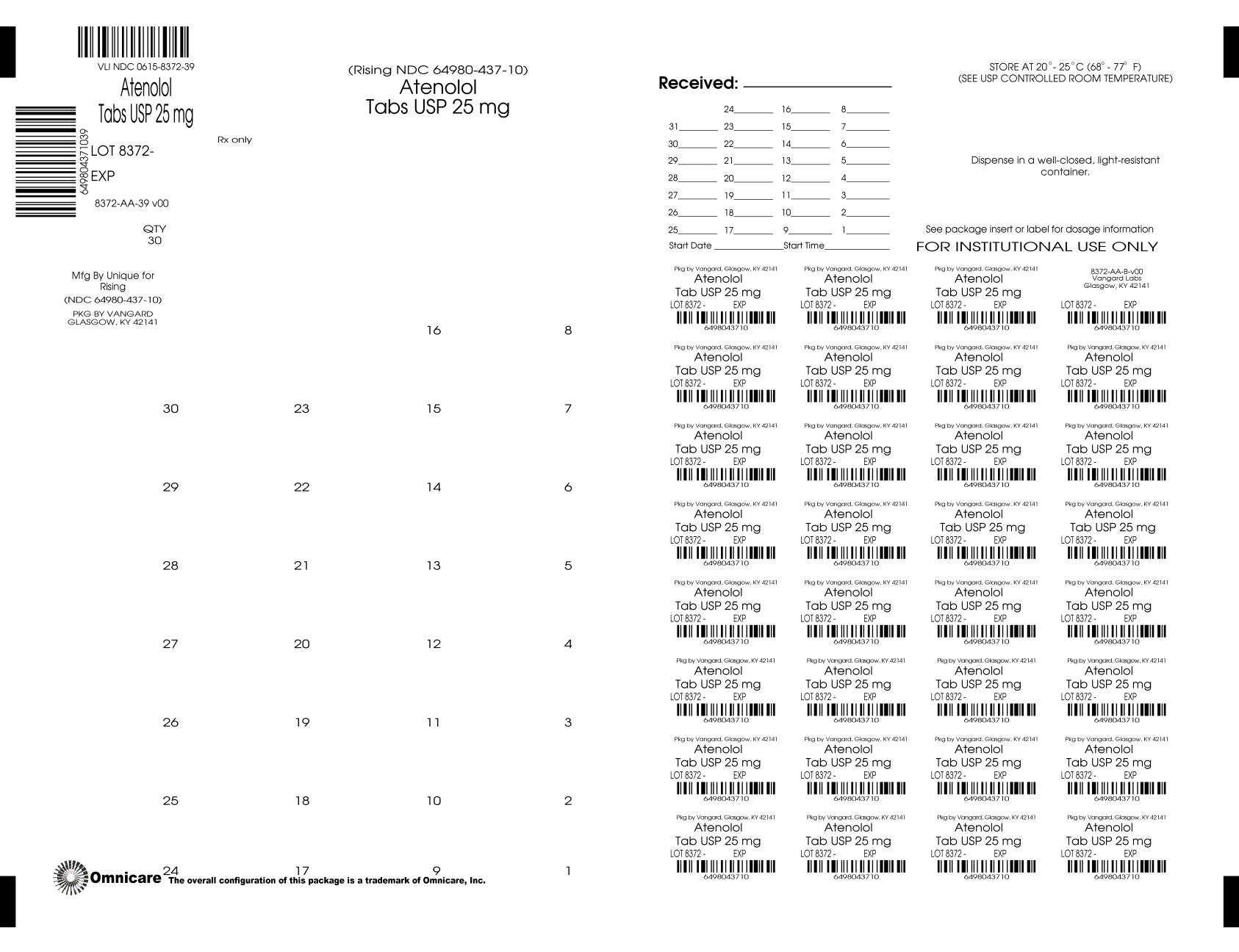
Atenolol 25 mg Tablet, 30-count — NDC 0615-8372-30 (Billing 00615-8372-30)
This is a package of 30 tablets of Atenolol 25 mg Tablet from NCS HealthCare of KY, LLC dba Vangard Labs, no longer marketed (first marketed Jun 2010), no longer in the FDA NDC Directory.
Identity & classification
Regulatory identifiers FDA, NLM and CMS codes for this package
- RxCUI (RxNorm): 197380
Where does this data come from?
- FDA openFDA NDC Directory · synced Oct 1, 2026
- FDA label on DailyMed · label index refreshed Oct 1, 2026
- RxNorm (NLM RxNav) · catalog refreshed Oct 1, 2026
- Medi-Span GPI (licensed)
- First Databank (licensed) · refreshed Oct 1, 2026
RxNorm drug class
This medicine belongs to the beta-Adrenergic Blocker class.
Where does this data come from?
- RxClass (NLM) · catalog refreshed Oct 1, 2026
Clinical
Atenolol is used to treat high blood pressure, angina (chest pain) and improve survival after a heart attack. Atenolol is in a class of medications called beta blockers. It works by relaxing blood vessels and slowing heart rate to improve blood flow and decrease blood pressure.
Read the full MedlinePlus article ↗- It treats high blood pressure and helps manage long-term angina. It is also used in people who are stable after a definite or suspected heart attack to lower the risk of death from...
- Atenolol tablets are swallowed by mouth, usually once a day. Take it as your prescriber and the label direct. Your doctor may adjust the dose based on how you respond.
- Please don't stop it suddenly. Stopping abruptly can make angina worse and has led to heart attacks and dangerous heart rhythms. Talk to your doctor first so they can guide you.
- Tiredness, dizziness, cold hands and feet, and a slower heartbeat are the more common ones. Most are mild and pass. Call your doctor for fainting, wheezing, swelling, worsening bre...
Patient education
Supplement & herbal interactions
Some supplements/herbs that may interact with Atenolol — tap one for details:
Atenolol may be associated with lower levels of 1 nutrient — worth a chat with your pharmacist, not a cause for alarm.
Where does this data come from?
- MedlinePlus (NLM) · refreshed Oct 1, 2026
- FDA label on DailyMed · label index refreshed Oct 1, 2026
Ask a licensed pharmacist directly — free, answered by our team.
Pricing
A drug doesn't have one price. Each row is a different public payment system, and none is what you'd pay at the counter — that depends on your insurance. The ⓘ on each row explains what it measures.
| Price system | Per each | Per package |
|---|---|---|
| Retail pharmacies payNADAC · weekly | Not in the retail survey — common for institutional, discontinued, or low-volume packs. | |
| Medicaid paysCMS SDUD · 12 mo | No recent Medicaid claims on file for this NDC — rare and low-volume NDCs are suppressed in the public data. | |
| Medicare drug plans payPart D · quarterly | No Part D plan price is available for this NDC in our data. | |
Where does this data come from?
- CMS NADAC weekly file
- CMS ASP pricing files · refreshed Sep 20, 2026
- CMS Medicaid State Drug Utilization Data · refreshed Oct 3, 2026
- CMS Part D plan pricing files · refreshed Sep 24, 2026
- VA National Acquisition Center price file
Packaging — all sizes for this product
| Package NDC | Description | Marketing start | Marketing end | Status |
|---|---|---|---|---|
| 00615-8372-05 0615-8372-05 Main listing | 15 TABLET in 1 BLISTER PACK | 2021-01-05 | — | Active |
| 00615-8372-30 You're viewing this | 6 BLISTER PACK in 1 BOX, UNIT-DOSE / 5 TABLET in 1 BLISTER PACK | 2020-12-31 | — | Discontinued by firm |
| 00615-8372-39 0615-8372-39 | 30 TABLET in 1 BLISTER PACK | 2021-01-05 | — | Active |
Pack size FAQ
What quantity is in this package?
How does this package differ from NDC 00615-8372-05?
What NDC number is used to bill for this package of Atenolol 25 mg Tablet?
Therapeutic equivalents
| Product | Labeler | Pack | NADAC/unit | TE | Status | Price vs. this |
|---|---|---|---|---|---|---|
| Atenolol 25 mg 00093-0787-01 | Teva | 100 tablets | $0.022 | AB | Availability likely | — |
| Atenolol 25 mg 00378-0218-01 | Mylan | 100 tablets | $0.022 | AB | Availability likely | — |
| Atenolol 25 mg 00904-7187-61 | Major | 100 tablets | $0.022 | AB | Availability likely | — |
| Atenolol 25 mg 29300-0410-01 | Unichem | 100 tablets | $0.022 | AB | Availability likely | — |
| Atenolol 25 mg 51079-0759-20 | Mylan | 100 tablets | $0.022 | AB | Availability likely | — |
| Atenolol 25 mg 60687-0605-01 | American | 100 tablets | $0.022 | AB | Availability likely | — |
| Atenolol 25 mg 64980-0437-01 | Rising | 100 tablets | $0.022 | AB | Availability likely | — |
| Atenolol 25 mg 65862-0168-01 | Aurobindo | 100 tablets | $0.022 | AB | Availability likely | — |
| Atenolol 25 mg 68382-0022-01 | Zydus | 100 tablets | $0.022 | AB | Availability likely | — |
| Atenolol 25 mg 83980-0022-01 | Ipca | 100 tablets | $0.022 | AB | Availability likely | — |
| Tenormin 25 mg 24979-0244-07 | Upsher-Smith | 90 tablets | $12.753 | AB | FDA listed | — |
| Atenolol 25 mgthis 00615-8372-30 | NCS | 30 tablets | — | AB | Discontinued | — |
| Atenolol 25 mg 43063-0805-01 | PD-Rx | 100 tablets | — | AB | FDA listed | — |
| Atenolol 25 mg 43063-0952-30 | PD-Rx | 30 tablets | — | AB | FDA listed | — |
| Atenolol 25 mg 48433-0004-20 | Safecor | 100 tablets | — | AB | FDA listed | — |
| Atenolol 25 mg 50090-6241-00 | A-S | 30 tablets | — | AB | FDA listed | — |
| Atenolol 25 mg 50090-6935-00 | A-S | 90 tablets | — | AB | FDA listed | — |
| Atenolol 25 mg 50090-7603-00 | A-S | 90 tablets | — | AB | FDA listed | — |
| Atenolol 25 mg 51655-0491-25 | Northwind | 60 tablets | — | AB | FDA listed | — |
| Atenolol 25 mg 51655-0533-25 | Northwind | 60 tablets | — | AB | FDA listed | — |
| Atenolol 25 mg 51655-0709-26 | Northwind | 90 tablets | — | AB | FDA listed | — |
| Atenolol 25 mg 55154-5511-00 | Cardinal | 10 tablets | — | AB | FDA listed | — |
| Atenolol 25 mg 60429-0027-10 | Golden | 1000 tablets | — | AB | FDA listed | — |
| Atenolol 25 mg 60760-0437-90 | St. | 90 tablets | — | AB | FDA listed | — |
| Atenolol 25 mg 63187-0537-10 | Proficient | 10 tablets | — | AB | FDA listed | — |
| Atenolol 25 mg 65841-0022-01 | Zydus | 100 tablets | — | AB | FDA listed | — |
| Atenolol 25 mg 67046-0663-03 | Coupler | 30 tablets | — | AB | FDA listed | — |
| Atenolol 25 mg 68071-4526-03 | NuCare | 30 tablets | — | AB | FDA listed | — |
| Atenolol 25 mg 68071-4538-03 | NuCare | 30 tablets | — | AB | FDA listed | — |
| Atenolol 25 mg 68788-7876-01 | Preferred | 100 tablets | — | AB | FDA listed | — |
| Atenolol 25 mg 68788-8527-01 | Preferred | 100 tablets | — | AB | FDA listed | — |
| Atenolol 25 mg 68788-8739-01 | Preferred | 100 tablets | — | AB | FDA listed | — |
| Atenolol 25 mg 70518-3531-00 | REMEDYREPACK | 90 tablets | — | AB | FDA listed | — |
| Atenolol 25 mg 70518-4287-00 | REMEDYREPACK | 30 tablets | — | AB | FDA listed | — |
| Atenolol 25 mg 71205-0096-10 | Proficient | 10 tablets | — | AB | FDA listed | — |
| Atenolol 25 mg 71335-1535-01 | Bryant | 30 tablets | — | AB | Discontinued | — |
| Atenolol 25 mg 71335-1616-01 | Bryant | 30 tablets | — | AB | FDA listed | — |
| Atenolol 25 mg 71335-9611-01 | Bryant | 30 tablets | — | AB | FDA listed | — |
| Atenolol 25 mg 71610-0658-30 | Aphena | 30 tablets | — | AB | FDA listed | — |
| Atenolol 25 mg 71610-0857-30 | Aphena | 30 tablets | — | AB | FDA listed | — |
| Atenolol 25 mg 72162-2324-00 | Bryant | 1000 tablets | — | AB | FDA listed | — |
| Atenolol 25 mg 72189-0146-30 | direct | 30 tablets | — | AB | FDA listed | — |
| Atenolol 25 mg 72189-0396-90 | Direct_Rx | 90 tablets | — | AB | FDA listed | — |
| Atenolol 25 mg 87063-0177-01 | ASCLEMED | 100 tablets | — | AB | FDA listed | — |
| Atenolol 25 mg 50090-3411-00 | A-S | 30 tablets | — | AB | FDA listed | — |
Where does this data come from?
- FDA openFDA NDC Directory · synced Oct 1, 2026
- FDA Orange Book · refreshed Sep 3, 2026
- CMS NADAC weekly file
Availability & generic status
This product is an FDA-approved generic. Other versions of the same drug are listed under Therapeutic equivalents, least expensive first.
Where does this data come from?
- FDA Orange Book · refreshed Sep 3, 2026
What it looks like
Where does this data come from?
- FDA label on DailyMed · label index refreshed Oct 1, 2026
Inactive Ingredients / Excipients
Inactive ingredients, also called excipients, are components of the drug product other than the active ingredient. They may include fillers, dyes, coatings, preservatives, flavors, or other formulation ingredients.
Where does this data come from?
IACT rows and label-wide narrative are kept separate; availability and product-level specificity depend on the submitted label.- FDA label on DailyMed · label index refreshed Oct 1, 2026
- FDA openFDA NDC Directory · synced Oct 1, 2026
Inactive ingredient FAQ
Are inactive ingredients the same for every manufacturer?
Why might an inactive ingredient be missing?
Can inactive ingredients matter?
Manufacturer & labeler
Where does this data come from?
- FDA openFDA NDC Directory · synced Oct 1, 2026
- Drugs@FDA
Full prescribing information FDA SPL
🚨 Boxed Warning ▾
Cessation of Therapy with Atenolol Patients with coronary artery disease, who are being treated with atenolol, should be advised against abrupt discontinuation of therapy. Severe exacerbation of angina and the occurrence of myocardial infarction and ventricular arrhythmias have been reported in angina patients following the abrupt discontinuation of therapy with beta blockers. The last two complications may occur with or without preceding exacerbation of the angina pectoris.
As with other beta blockers, when discontinuation of atenolol is planned, the patients should be carefully observed and advised to limit physical activity to a minimum. If the angina worsens or acute coronary insufficiency develops, it is recommended that atenolol be promptly reinstituted, at least temporarily. Because coronary artery disease is common and may be unrecognized, it may be prudent not to discontinue atenolol therapy abruptly even in patients treated only for hypertension.
(See Dosage and administration ).
🎯 Indications and Usage ▾
INDICATIONS & USAGE Atenolol tablets USP are indicated for the treatment of hypertension, to lower blood pressure. Lowering blood pressure lowers the risk of fatal and non-fatal cardiovascular events, primarily strokes and myocardial infarctions. These benefits have been seen in controlled trials of antihypertensive drugs from a wide variety of pharmacologic classes including atenolol.
Control of high blood pressure should be part of comprehensive cardiovascular risk management, including, as appropriate, lipid control, diabetes management, antithrombotic therapy, smoking cessation, exercise, and limited sodium intake. Many patients will require more than 1 drug to achieve blood pressure goals. For specific advice on goals and management, see published guidelines, such as those of the National High Blood Pressure Education Program's Joint National Committee on Prevention, Detection, Evaluation, and Treatment of High Blood Pressure (JNC).
Numerous antihypertensive drugs, from a variety of pharmacologic classes and with different mechanisms of action, have been shown in randomized controlled trials to reduce cardiovascular morbidity and mortality, and it can be concluded that it is blood pressure reduction, and not some other pharmacologic property of the drugs, that is largely responsible for those benefits. The largest and most consistent cardiovascular outcome benefit has been a reduction in the risk of stroke, but reductions in myocardial infarction and cardiovascular mortality also have been seen regularly.
Elevated systolic or diastolic pressure causes increased cardiovascular risk, and the absolute risk increase per mmHg is greater at higher blood pressures, so that even modest reductions of severe hypertension can provide substantial benefit. Relative risk reduction from blood pressure reduction is similar across populations with varying absolute risk, so the absolute benefit is greater in patients who are at higher risk independent of their hypertension (for example, patients with diabetes or hyperlipidemia), and such patients would be expected to benefit from more aggressive treatment to a lower blood pressure goal.
Some antihypertensive drugs have smaller blood pressure effects (as monotherapy) in black patients, and many antihypertensive drugs have additional approved indications and effects (e.g., on angina, heart failure, or diabetic kidney disease). These considerations may guide selection of therapy. Atenolol tablets USP may be administered with other antihypertensive agents.
Angina Pectoris Due to Coronary Atherosclerosis: Atenolol is indicated for the long-term management of patients with angina pectoris. Acute Myocardial Infarction: Atenolol is indicated in the management of hemodynamically stable patients with definite or suspected acute myocardial infarction to reduce cardiovascular mortality. Treatment can be initiated as soon as the patient's clinical condition allows.
(See DOSAGE AND ADMNISTRATION , CONTRAINDICATIONS and WARNINGS ). In general, there is no basis for treating patients like those who were excluded from the ISIS-1 trial (blood pressure less than 100 mm Hg systolic, heart rate less than 50 bpm) or have other reasons to avoid beta-blockade. As noted above, some subgroups (e.g., elderly patients with systolic blood pressure below 120 mm Hg) seemed less likely to benefit.
⏱️ Dosage and Administration ▾
DOSAGE & ADMINISTRATION Hypertension The initial dose of atenolol is 50 mg given as one tablet a day either alone or added to diuretic therapy. The full effect of this dose will usually be seen within one to two weeks. If an optimal response is not achieved, the dosage should be increased to atenolol 100 mg given as one tablet a day.
Increasing the dosage beyond 100 mg a day is unlikely to produce any further benefit. Atenolol may be used alone or concomitantly with other antihypertensive agents including thiazide-type diuretics, hydralazine, prazosin, and alpha-methyldopa. Angina Pectoris The initial dose of atenolol is 50 mg given as one tablet a day.
If an optimal response is not achieved within one week, the dosage should be increased to atenolol 100 mg given as one tablet a day. Some patients may require a dosage of 200 mg once a day for optimal effect. Twenty-four hour control with once daily dosing is achieved by giving doses larger than necessary to achieve an immediate maximum effect.
The maximum early effect on exercise tolerance occurs with doses of 50 to 100 mg, but at these doses the effect at 24 hours is attenuated, averaging about 50% to 75% of that observed with once a day oral doses of 200 mg. Acute Myocardial Infarction In patients with definite or suspected acute myocardial infarction, treatment with atenolol I.V. Injection should be initiated as soon as possible after the patient’s arrival in the hospital and after eligibility is established.
Such treatment should be initiated in a coronary care or similar unit immediately after the patient’s hemodynamic condition has stabilized. Treatment should begin with the intravenous administration of 5 mg atenolol over 5 minutes followed by another 5 mg intravenous injection 10 minutes later. Atenolol I.V.
Injection should be administered under carefully controlled conditions including monitoring of blood pressure, heart rate, and electrocardiogram. Dilutions of atenolol I.V. Injection in Dextrose Injection USP, Sodium Chloride Injection USP, or Sodium Chloride and Dextrose Injection may be used.
These admixtures are stable for 48 hours if they are not used immediately. In patients who tolerate the full intravenous dose (10 mg), atenolol tablets 50 mg should be initiated 10 minutes after the last intravenous dose followed by another 50 mg oral dose 12 hours later. Thereafter, atenolol can be given orally either 100 mg once daily or 50 mg twice a day for a further 6-9 days or until discharge from the hospital.
If bradycardia or hypotension requiring treatment or any other untoward effects occur, atenolol should be discontinued. (See full prescribing information prior to initiating therapy with atenolol tablets.) Data from other beta-blocker trials suggest that if there is any question concerning the use of IV beta-blocker or clinical estimate that there is a contraindication, the IV beta-blocker may be eliminated and patients fulfilling the safety criteria may be given atenolol tablets 50 mg twice daily or 100 mg once a day for at least seven days (if the IV dosing is excluded).
Although the demonstration of efficacy of atenolol is based entirely on data from the first seven postinfarction days, data from other beta-blocker trials suggest that treatment with beta-blockers that are effective in the postinfarction setting may be continued for one to three years if there are no contraindications. Atenolol is an additional treatment to standard coronary care unit therapy. Elderly Patients or Patients with Renal Impairment Atenolol is excreted by the kidneys; consequently dosage should be adjusted in cases of severe impairment of renal function.
In general, dose selection for an elderly patient should be cautious, usually starting at the low end of the dosing range, reflecting greater frequency of decreased hepatic, renal, or cardiac function, and of concomitant disease or other drug therapy. Evaluation of patients with hypertension or myocardial infarction should always i… [Excerpted — this section continues on DailyMed.]
⛔ Contraindications ▾
CONTRAINDICATIONS Atenolol is contraindicated in sinus bradycardia, heart block greater than first degree, cardiogenic shock, and overt cardiac failure (see WARNINGS ). Atenolol is contraindicated in those patients with a history of hypersensitivity to the atenolol or any of the drug product's components
⚠️ Warnings ▾
WARNINGS Cardiac Failure Sympathetic stimulation is necessary in supporting circulatory function in congestive heart failure, and beta-blockade carries the potential hazard of further depressing myocardial contractility and precipitating more severe failure. In patients with acute myocardial infarction, cardiac failure which is not promptly and effectively controlled by 80 mg of intravenous furosemide or equivalent therapy is a contraindication to beta-blocker treatment. In Patients Without a History of Cardiac Failure Continued depression of the myocardium with beta-blocking agents over a period of time can, in some cases, lead to cardiac failure.
At the first sign or symptom of impending cardiac failure, patients should be treated appropriately according to currently recommended guidelines, and the response observed closely. If cardiac failure continues despite adequate treatment, atenolol should be withdrawn (see DOSAGE AND ADMNISTRATION ).
🤒 Adverse Reactions ▾
ADVERSE REACTIONS Most adverse effects have been mild and transient. The frequency estimates in the following table were derived from controlled studies in hypertensive patients in which adverse reactions were either volunteered by the patient (U.S. studies) or elicited, e.g., by checklist (foreign studies). The reported frequency of elicited adverse effects was higher for both atenolol and placebo-treated patients than when these reactions were volunteered.
Where frequency of adverse effects of atenolol and placebo is similar, causal relationship to atenolol is uncertain. Volunteered (US Studies) Total-Volunteered and Elicited (Foreign + U.S. Studies) Atenolol (n = 164) % Placebo (n = 206) % Atenolol (n = 339) % Placebo (n = 407) % CARDIOVASCULAR Bradycardia 3 0 3 0 Cold Extremities 0 0.5 12 5 Postural Hypotension 2 1 4 5 Leg Pain 0 0.5 3 1 CENTRAL NERVOUS SYSTEM/ NEUROMUSCULAR Dizziness 4 1 13 6 Vertigo 2 0.5 2
0.2 Lightheadedness 1 0 3
0.7Tiredness 0.6 0.5 26 13 Fatigue 3 1 6 5 Lethargy 1 0 3
0.7Drowsiness 0.6 0 2
0.5Depression 0.6 0.5 12 9 Dreaming 0 0 3 1 GASTROINTESTINAL Diarrhea 2 0 3 2 Nausea 4 1 3 1 RESPIRATORY (see WARNINGS ) Wheeziness 0 0 3 3 Dyspnea 0.6 1 6 4 Acute Myocardial Infarction In a series of investigations in the treatment of acute myocardial infarction, bradycardia and hypotension occurred more commonly, as expected for any beta-blocker, in atenolol-treated patients than in control patients. However, these usually responded to atropine and/or to withholding further dosage of atenolol. The incidence of heart failure was not increased by atenolol.
Inotropic agents were infrequently used. The reported frequency of these and other events occurring during these investigations is given in the following table. In a study of 477 patients, the following adverse events were reported during either intravenous and/or oral atenolol administration: Conventional Therapy Plus Atenolol (n = 244) Conventional Therapy Alone (n = 233) Bradycardia 43 (18%) 24 (10%) Hypotension 60 (25%) 34 (15%) Bronchospasm 3 (1.2%) 2 (0.9%) Heart Failure 46 (19%) 56 (24%) Heart Block 11 (4.5%) 10 (4.3%) BBB + Major Axis Deviation 16 (6.6%) 28 (12%) Supraventricular Tachycardia 28 (11.5%) 45 (19%) Atrial Fibrillation 12 (5%) 29 (11%) Atrial Flutter 4 (1.6%) 7 (3%) Ventricular Tachycardia 39 (16%) 52 (22%) Cardiac Reinfarction 0 (0%) 6 (2.6%) Total Cardiac Arrests 4 (1.6%) 16 (6.9%) Nonfatal Cardiac Arrests 4 (1.6%) 12 (5.1%) Deaths 7 (2.9%) 16 (6.9%) Cardiogenic Shock 1 (0.4%) 4 (1.7%) Development of Ventricular Septal Defect 0 (0%) 2 (0.9%) Development of MitralRegurgitation 0 (0%) 2 (0.9%) Renal Failure 1 (0.4%) 0 (0%) Pulmonary Emboli 3 (1.2%) 0 (0%) In the subsequent International Study of Infarct Survival (ISIS-1) including over 16,000 patients of whom 8,037 were randomized to receive atenolol treatment, the dosage of intravenous and subsequent oral atenolol was either discontinued or reduced for the following reasons: Reasons for Reduced Dosage IV Atenolol Reduced Dose (< 5 mg)* Oral Partial Dose Hypotension/Bradycardia 105 (1.3%) 1168 (14.5%) Cardiogenic Shock 4 (0.04%) 35 (0.44%) Reinfarction 0 (0%) 5 (0.06%) Cardiac Arrest 5 (0.06%) 28 (0.34%) Heart Block (> first degree) 5 (0.06%) 143 (1.7%) Cardiac Failure 1 (0.01%) 233 (2.9%) Arrhythmias 3 (0.04%) 22 (0.27%) Bronchospasm 1 (0.01%) 50 (0.62%) *Full dosage was 10 mg and some patients received less than 10 mg but more than 5 mg.
During postmarketing experience with atenolol, the following have been reported in temporal relationship to the use of the drug: elevated liver enzymes and/or bilirubin, hallucinations, headache, impotence, Peyronie’s disease, postural hypotension which may be associated with syncope, psoriasiform rash or exacerbation of psoriasis, psychoses, purpura, reversible alopecia, thrombocytopenia, visual disturbance, sick sinus syndrome, and dry mouth. Atenolol, like other beta-blockers, has been associated with the development of antinuclear antibodies (ANA), l… [Excerpted — this section continues on DailyMed.]
🆘 Overdosage ▾
OVERDOSAGE Overdosage with atenolol has been reported with patients surviving acute doses as high as 5 g. One death was reported in a man who may have taken as much as 10 g acutely. The predominant symptoms reported following atenolol overdose are lethargy, disorder of respiratory drive, wheezing, sinus pause and bradycardia.
Additionally, common effects associated with overdosage of any beta-adrenergic blocking agent and which might also be expected in atenolol overdose are congestive heart failure, hypotension, bronchospasm and/or hypoglycemia. Treatment of overdose should be directed to the removal of any unabsorbed drug by induced emesis, gastric lavage, or administration of activated charcoal. Atenolol can be removed from the general circulation by hemodialysis.
Other treatment modalities should be employed at the physician’s discretion and may include: BRADYCARDIA: Atropine intravenously. If there is no response to vagal blockade, give isoproterenol cautiously. In refractory cases, a transvenous cardiac pacemaker may be indicated.
HEART BLOCK (SECOND OR THIRD DEGREE): Isoproterenol or transvenous cardiac pacemaker. CARDIAC FAILURE: Digitalize the patient and administer a diuretic. Glucagon has been reported to be useful.
HYPOTENSION: Vasopressors such as dopamine or norepinephrine (levarterenol). Monitor blood pressure continuously. BRONCHOSPASM: A beta2 stimulant such as isoproterenol or terbutaline and/or aminophylline.
HYPOGLYCEMIA: Intravenous glucose. Based on the severity of symptoms, management may require intensive support care and facilities for applying cardiac and respiratory support.
🧬 Clinical Pharmacology ▾
CLINICAL PHARMACOLOGY Atenolol is a beta 1 -selective (cardioselective) beta-adrenergic receptor blocking agent without membrane stabilizing or intrinsic sympathomimetic (partial agonist) activities. This preferential effect is not absolute, however, and at higher doses, atenolol inhibits beta 2 -adrenoreceptors, chiefly located in the bronchial and vascular musculature. Pharmacokinetics and Metabolism In man, absorption of an oral dose is rapid and consistent but incomplete.
Approximately 50% of an oral dose is absorbed from the gastrointestinal tract, the remainder being excreted unchanged in the feces. Peak blood levels are reached between two (2) and four (4) hours after ingestion. Unlike propranolol or metoprolol, but like nadolol, atenolol undergoes little or no metabolism by the liver, and the absorbed portion is eliminated primarily by renal excretion.
Over 85% of an intravenous dose is excreted in urine within 24 hours compared with approximately 50% for an oral dose. Atenolol also differs from propranolol in that only a small amount (6% to 16%) is bound to proteins in the plasma. This kinetic profile results in relatively consistent plasma drug levels with about a fourfold interpatient variation.
The elimination half-life of oral atenolol is approximately 6 to 7 hours, and there is no alteration of the kinetic profile of the drug by chronic administration. Following intravenous administration, peak plasma levels are reached within 5 minutes. Declines from peak levels are rapid (5- to 10-fold) during the first 7 hours; thereafter, plasma levels decay with a half-life similar to that of orally administered drug.
Following oral doses of 50 mg or 100 mg, both beta-blocking and antihypertensive effects persist for at least 24 hours. When renal function is impaired, elimination of atenolol is closely related to the glomerular filtration rate; significant accumulation occurs when the creatinine clearance falls below 35 mL/min/1.73 m 2 . (See DOSAGE AND ADMINISTRATION .) Pharmacodynamics In standard animal or human pharmacological tests, beta-adrenoreceptor blocking activity of atenolol has been demonstrated by: (1) reduction in resting and exercise heart rate and cardiac output, (2) reduction of systolic and diastolic blood pressure at rest and on exercise, (3) inhibition of isoproterenol induced tachycardia, and (4) reduction in reflex orthostatic tachycardia.
A significant beta-blocking effect of atenolol, as measured by reduction of exercise tachycardia, is apparent within one hour following oral administration of a single dose. This effect is maximal at about 2 to 4 hours, and persists for at least 24 hours. Maximum reduction in exercise tachycardia occurs within 5 minutes of an intravenous dose.
For both orally and intravenously administered drug, the duration of action is dose related and also bears a linear relationship to the logarithm of plasma atenolol concentration. The effect on exercise tachycardia of a single 10 mg intravenous dose is largely dissipated by 12 hours, whereas beta-blocking activity of single oral doses of 50 mg and 100 mg is still evident beyond 24 hours following administration. However, as has been shown for all beta-blocking agents, the antihypertensive effect does not appear to be related to plasma level.
In normal subjects, the beta1 selectivity of atenolol has been shown by its reduced ability to reverse the beta2-mediated vasodilating effect of isoproterenol as compared to equivalent beta-blocking doses of propranolol. In asthmatic patients, a dose of atenolol producing a greater effect on resting heart rate than propranolol resulted in much less increase in airway resistance. In a placebo controlled comparison of approximately equipotent oral doses of several beta-blockers, atenolol produced a significantly smaller decrease of FEV1 than nonselective beta-blockers such as propranolol and, unlike those agents, did not inhibit bronchodilation in response to isoproterenol.
Consistent with it… [Excerpted — this section continues on DailyMed.]
📦 How Supplied / Storage and Handling ▾
HOW SUPPLIED Atenolol Tablets USP: Tablets of 25 mg atenolol, NDC 64980-437-01 (circular, biconvex, film coated white to offwhite tablets identified with "ATN" engraved on one side and 25 engraved on the other side). Tablets of 25 mg atenolol, NDC 64980-437-10 (circular, biconvex, film coated white to offwhite tablets identified with "ATN" engraved on one side and 25 engraved on the other side) are supplied in blistercards of 30, 15 and Unit-dose boxes of 30 tablets. Tablets of 50 mg atenolol, NDC 64980-438-01 (circular, biconvex, film coated white to offwhite tablets identified with "ATN" and "50" engraved on one side and lip like score engraved on the other side).
Tablets of 50 mg atenolol, NDC 64980-438-10 (circular, biconvex, film coated white to offwhite tablets identified with "ATN" and "50" engraved on one side and lip like score engraved on the other side) are supplied in blistercards of 30, 15 and Unit-dose boxes of 30 tablets. Tablets of 100 mg atenolol, NDC 64980-439-01 (circular, biconvex, film coated white to offwhite tablets identified with "ATN" and "100" engraved on one side and lip like score engraved on the other side). Tablets of 100 mg atenolol, NDC 64980-439-10 (circular, biconvex, film coated white to offwhite tablets identified with "ATN" and "100" engraved on one side and lip like score engraved on the other side).
Store at controlled room temperature 20°-25°C (68°-77°F). [See USP]. Dispense in a well-closed, light-resistant containers. Manufactured by : Unique Pharmaceutical Laboratories (A Div. of J.
B. Chemicals & Pharmaceuticals Ltd.) Mumbai 400 030, India Distributed by: Rising Pharmaceuticals, Inc. Saddle Brook, NJ 07663 Jul.
1018
📋 Description ▾
DESCRIPTION Atenolol, a synthetic, beta 1 -selective (cardioselective) adrenoreceptor blocking agent, may be chemically described as benzeneacetamide, 4 -[2’-hydroxy-3’-[(1- methylethyl) amino] propoxy]-. The molecular and structural formulas are: Atenolol (free base) has a molecular weight of 266. It is a relatively polar hydrophilic compound with a water solubility of 26.5 mg/mL at 37°C and a log partition coefficient (octanol/water) of 0.23.
It is freely soluble in 1N HCl (300 mg/mL at 25°C) and less soluble in chloroform (3 mg/mL at 25°C). Atenolol tablets, USP is available as 25, 50 and 100 mg tablets for oral administration. Inactive Ingredients: Magnesium stearate, microcrystalline cellulose, povidone, sodium starch glycolate, hydroxypropyl methylcellulose, titanium dioxide and glycerine Atenolol Structure
⚠️ Precautions ▾
PRECAUTIONS General Patients already on a beta-blocker must be evaluated carefully before atenolol is administered. Initial and subsequent atenolol dosages can be adjusted downward depending on clinical observations including pulse and blood pressure. Atenolol may aggravate peripheral arterial circulatory disorders.
Impaired Renal Function The drug should be used with caution in patients with impaired renal function (see DOSAGE AND ADMINISTRATION ). Drug Interactions Catecholamine-depleting drugs (e.g., reserpine) may have an additive effect when given with beta-blocking agents. Patients treated with atenolol plus a catecholamine depletor should therefore be closely observed for evidence of hypotension and/or marked bradycardia which may produce vertigo, syncope, or postural hypotension.
Calcium channel blockers may also have an additive effect when given with atenolol (see WARNINGS ). Disopyramide is a Type I antiarrhythmic drug with potent negative inotropic and chronotropic effects. Disopyramide has been associated with severe bradycardia, asystole and heart failure when administered with beta-blockers.
Amiodarone is an antiarrhythmic agent with negative chronotropic properties that may be additive to those seen with beta-blockers. Beta-blockers may exacerbate the rebound hypertension which can follow the withdrawal of clonidine. If the two drugs are coadministered, the beta-blocker should be withdrawn several days before the gradual withdrawal of clonidine.
If replacing clonidine by beta-blocker therapy, the introduction of beta-blockers should be delayed for several days after clonidine administration has stopped. Concomitant use of prostaglandin synthase inhibiting drugs, e.g., indomethacin, may decrease the hypotensive effects of beta-blockers. Information on concurrent usage of atenolol and aspirin is limited.
Data from several studies, i.e., TIMI-II, ISIS-2, currently do not suggest any clinical interaction between aspirin and beta-blockers in the acute myocardial infarction setting. While taking beta-blockers, patients with a history of anaphylactic reaction to a variety of allergens may have a more severe reaction on repeated challenge, either accidental, diagnostic or therapeutic. Such patients may be unresponsive to the usual doses of epinephrine used to treat the allergic reaction.
Both digitalis glycosides and beta-blockers slow atrioventricular conduction and decrease heart rate. Concomitant use can increase the risk of bradycardia. Carcinogenesis, Mutagenesis, Impairment of Fertility Two long-term (maximum dosing duration of 18 or 24 months) rat studies and one long-term (maximum dosing duration of 18 months) mouse study, each employing dose levels as high as 300 mg/kg/day or 150 times the maximum recommended human antihypertensive dose*, did not indicate a carcinogenic potential of atenolol.
A third (24 month) rat study, employing doses of 500 and 1,500 mg/kg/day (250 and 750 times the maximum recommended human antihypertensive dose*) resulted in increased incidences of benign adrenal medullary tumors in males and females, mammary fibroadenomas in females, and anterior pituitary adenomas and thyroid parafollicular cell carcinomas in males. No evidence of a mutagenic potential of atenolol was uncovered in the dominant lethal test (mouse), in vivo cytogenetics test (Chinese hamster) or Ames test (S typhimurium).
Fertility of male or female rats (evaluated at dose levels as high as 200 mg/kg/day or 100 times the maximum recommended human dose*) was unaffected by atenolol administration. Animal Toxicology Chronic studies employing oral atenolol performed in animals have revealed the occurrence of vacuolation of epithelial cells of Brunner’s glands in the duodenum of both male and female dogs at all tested dose levels of atenolol (starting at 15 mg/kg/day or 7.5 times the maximum recommended human antihypertensive dose*) and increased incidence of atrial degeneration of hearts of male rats at 300 but not 150 mg at… [Excerpted — this section continues on DailyMed.]
📄 Package Label / Principal Display Panel ▾
25 mg- PACKAGE LABEL.PRINCIPAL DISPLAY PANEL Atenolol 25mg Tab bingo card label
25 mg UD- PACKAGE LABEL.PRINCIPAL DISPLAY PANEL ATENOLOL 25MG UNIT DOSE LABEL
50 mg - PACKAGE LABEL.PRINCIPAL DISPLAY PANEL ATENOLOL 50MG TABLET BINGO CARD LABEL
50 mg UD- PACKAGE LABEL.PRINCIPAL DISPLAY PANEL ATENOLOL 50MG UNIT DOSE LABEL
Medicare Part D spend CMS · PART D · 2026 (Q1)
About this NDC listing & data coverage
What data is (and isn’t) available for this NDC — tap to expand
| NDC identity (package / product / labeler codes) | ✓ Available |
| Labeler | ✓ Available |
| Product & package description | ✓ Available |
| Marketing category & status | ✓ Available |
| Active ingredient / dosage form / route | ✓ Available |
| FDA label (SPL via DailyMed) | ✓ Available |
| Package photos | ✓ Available |
| Inactive ingredients (structured) | — Not published for this NDC The labeler did not submit a structured excipient list, or no SPL is available. |
| NADAC pharmacy acquisition price (CMS) | — Not published for this NDC CMS publishes NADAC only for NDCs reported in its retail-pharmacy survey. |
| Orange Book / therapeutic-equivalence data | ✓ Available |
| HCPCS J-code billing crosswalk | — Not published for this NDC Most self-administered / retail products have no J-code — that is normal. |
| Medicaid utilization (CMS SDUD) | — Not published for this NDC CMS reports utilization only for NDCs with Medicaid claims above its privacy threshold. |