
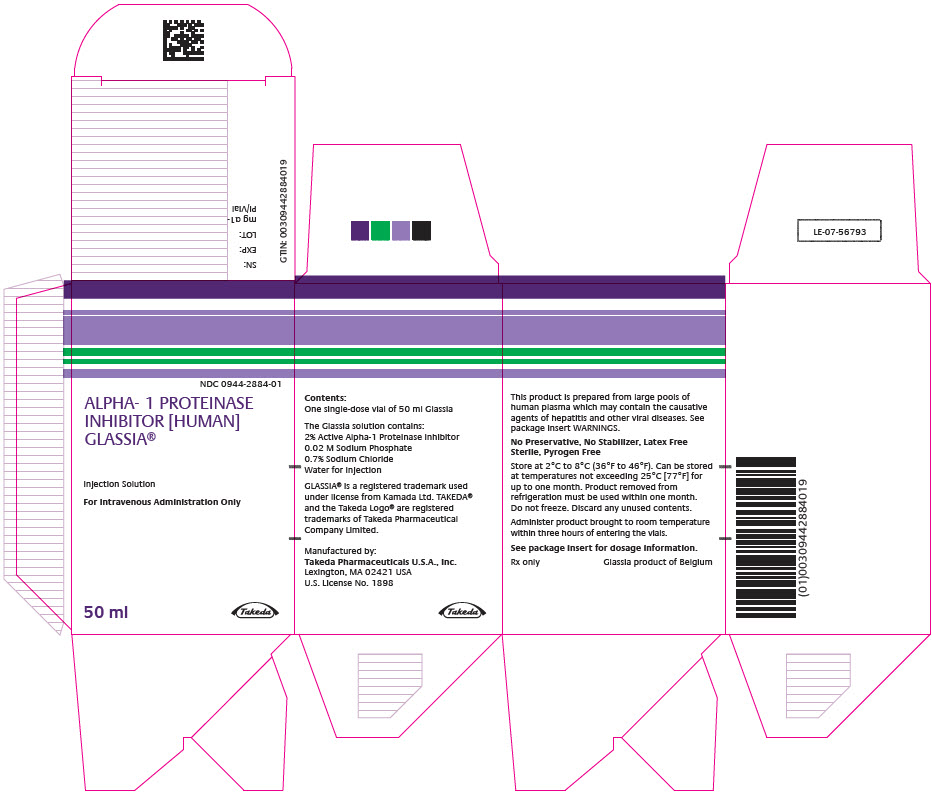
GLASSIA ALPHA.1-PROTEINASE INHIBITOR HUMAN 1 g/50mL Injection, Solution — NDC 0944-2884-01 (Billing 00944-2884-01)
This is a package of GLASSIA ALPHA.1-PROTEINASE INHIBITOR HUMAN 1 g/50mL Injection, Solution from Takeda Pharmaceuticals America, Inc., marketed since Jul 2010 and currently FDA-listed. It is the main listing for this product, which comes in 3 package sizes.
NDC database record
One package, one record: these facts belong to NDC 0944-2884-01 alone.
- Record
- FDA NDC Directory package listing · Plasma derivative
- Code segments
- 0944 labeler · 2884 product · 01 package
- Package marketed since
- Jul 1, 2010
- Sample package
- No — commercial package
- Listing certified through
- Dec 31, 2026
- Barcode (UPC-A, from the NDC)
- 3 0944288401 9
- Medicaid fills, this package
- 966 prescriptions in the last four reported quarters
- FDA record last changed
- Oct 8, 2026
Identity & classification
Regulatory identifiers FDA, NLM and CMS codes for this package
Drug-database identifiers Medi-Span GPI and First Databank GCN / HICL / AHFS classification
- GSN (GCN sequence number): 066706
- GCN: 29069
- GPI-14 (Medi-Span): 45100010102020
- HICL (First Databank): 004529
- AHFS class code: 16:00.00.00
Where does this data come from?
- FDA openFDA NDC Directory · synced Oct 8, 2026
- FDA label on DailyMed · label index refreshed Oct 8, 2026
- RxNorm (NLM RxNav) · catalog refreshed Oct 1, 2026
- Medi-Span GPI (licensed)
- First Databank (licensed) · refreshed Oct 8, 2026
Clinical
Alpha-1-proteinase inhibitor is used in people with symptoms of emphysema (a lung disease) and alpha-1 antitrypsin deficiency (AATD). AATD is an inherited condition in which the body does not make enough of a protein (alpha-1 antitrypsin) needed to protect the lungs from smoke, dust, or pollution. Alpha-1-proteinase inhibitor is in a class of medications called blood derivatives. It works by increasing the levels of alpha-1 antitrypsin protein in your blood and lungs.
Read the full MedlinePlus article ↗Patient education
Supplement & herbal interactions
Where does this data come from?
- MedlinePlus (NLM) · refreshed Oct 8, 2026
- FDA label on DailyMed · label index refreshed Oct 8, 2026
Ask a licensed pharmacist directly — free, answered by our team.
Pricing
A drug doesn't have one price. Each row is a different public payment system, and none is what you'd pay at the counter — that depends on your insurance. The ⓘ on each row explains what it measures.
| Price system | Per mL | Per package |
|---|---|---|
| Retail pharmacies payNADAC · weekly | Not in the retail survey — common for institutional, discontinued, or low-volume packs. | |
| Medicaid paysCMS SDUD · 12 mo | $0.5681 | $28.41 / 50 ml |
| Medicare drug plans payPart D · Q2 2026 | $0.6461 | $32.31 / 50 ml |
| Medicare Part B allowsASP · J0257 | $5.583 / J0257 unit | — |
Where does this data come from?
- CMS NADAC weekly file
- CMS ASP pricing files · refreshed Sep 20, 2026
- CMS Medicaid State Drug Utilization Data · through Q1 2026
- CMS Part D plan pricing files · refreshed Sep 24, 2026
- VA National Acquisition Center price file
Billing & reimbursement
Where does this data come from?
- CMS ASP NDC-HCPCS crosswalk · refreshed Sep 22, 2026
- DMEPDAC NDC-HCPCS crosswalk
- openFDA NSDE billing units · refreshed Oct 7, 2026
Packaging — all sizes for this product
| Package NDC | Description | Marketing start | Marketing end | Status |
|---|---|---|---|---|
| 00944-2884-01 You're viewing this Main listing | 1 VIAL, GLASS in 1 CARTON / 50 mL in 1 VIAL, GLASS | 2010-07-01 | — | Active |
| 00944-2884-03 0944-2884-03 | 1 VIAL, GLASS in 1 CARTON / 200 mL in 1 VIAL, GLASS | 2010-07-01 | — | Active |
| 00944-2884-05 0944-2884-05 | 1 VIAL, GLASS in 1 CARTON / 250 mL in 1 VIAL, GLASS | 2010-07-01 | — | Active |
In Medicaid, this is the most-dispensed pack of this product — about 96% of fills over the last four reported quarters. See all packs ↓
Pack size FAQ
What quantity is in this package?
What NDC number is used to bill for this package of GLASSIA ALPHA.1-PROTEINASE INHIBITOR HUMAN 1 g/50mL Injection, Solution?
Therapeutic equivalents
| Product | Labeler | Pack | NADAC/unit | TE | Status | Price vs. this |
|---|---|---|---|---|---|---|
| Glassia 1 g/50mLthis 00944-2884-01 | Takeda | 1 vial | — | — | FDA listed | — |
Where does this data come from?
- FDA openFDA NDC Directory · synced Oct 8, 2026
- FDA Purple Book · refreshed Oct 5, 2026
- CMS NADAC weekly file
Availability & biosimilar status
Biologics have no small-molecule generics; biosimilar competition is tracked in the FDA Purple Book.
Why the date isn’t exact: Biosimilar timing can change because patents may be challenged, settled, licensed, added or removed, and litigation can move the real date earlier or later.
🛈 What do these terms mean?
- Biologic patent
- A patent the reference product’s maker has publicly listed. A biosimilar generally can’t launch until these expire — unless they’re invalidated or resolved in a settlement.
- Reference-product exclusivity
- A flat 12 years of FDA market protection from the biologic’s first licensure (the BPCIA). No biosimilar can be licensed before it ends, regardless of patents.
- Interchangeable exclusivity
- The first interchangeable biosimilar can earn a period as the only interchangeable version (pharmacists can substitute it without the prescriber).
- Earliest biosimilar (LOE)
- The latest of all the dates above — the soonest a biosimilar can realistically reach the market. Litigation and settlements can move it earlier.
Biologics have no small-molecule “generics” — competition comes from FDA-licensed biosimilars, tracked in the FDA Purple Book.
| Code | What it grants | Expires |
|---|---|---|
| RefProduct | Reference-product exclusivity (12-year, BPCIA) — no biosimilar can be licensed before this date | Jul 1, 2022 |
Is there a biosimilar for GLASSIA 1 GM/50 ML VIAL?
Why do different websites show different biosimilar dates?
Can a biosimilar launch before the last patent expires?
What does “current Purple Book estimate” mean?
What does “FDA listed” mean?
What does a patent or protection date mean here?
Where does this data come from?
- FDA Purple Book · refreshed Oct 5, 2026
Inactive Ingredients / Excipients
Inactive ingredients, also called excipients, are components of the drug product other than the active ingredient. They may include fillers, dyes, coatings, preservatives, flavors, or other formulation ingredients.
💡 Tap an ingredient (hover on desktop) to see what it is and why it’s used.
-
UNII 451W47IQ8X
Sodium chloride is common table salt. It's used in medicines as a buffer to maintain proper pH, as a filler to add bulk, or to adjust the osmotic balance in liquid formulations.
-
UNII 5QWK665956
A salt derived from phosphoric acid and sodium, used primarily as a buffer to control the acidity or pH of a medication, helping keep it stable during storage and use.
-
UNII 059QF0KO0R
Water is a liquid solvent that dissolves and mixes ingredients together in liquid medicines, syrups, and injections. It helps distribute the active drug evenly throughout the product.
3 inactive ingredients listed in the exact product block matched to this NDC.
Where does this data come from?
ingredient classCode="IACT" elements from the exact product block matched by this NDC. Label-section narrative from DailyMed / the openFDA label index is shown separately when available.- FDA label on DailyMed · label index refreshed Oct 8, 2026
- FDA openFDA NDC Directory · synced Oct 8, 2026
Inactive ingredient FAQ
Are inactive ingredients the same for every manufacturer?
Why might an inactive ingredient be missing?
Can inactive ingredients matter?
Manufacturer & labeler
More NDCs from Takeda Pharmaceuticals America, Inc. labeler code 00944
- RECOMBINATE antihemophilic factor recombinant Kit NDC 0944-2841-10
- RECOMBINATE antihemophilic factor recombinant Kit NDC 0944-2842-10
- RECOMBINATE antihemophilic factor recombinant Kit NDC 0944-2843-10
- RECOMBINATE antihemophilic factor recombinant Kit NDC 0944-2844-10
- RECOMBINATE antihemophilic factor recombinant Kit NDC 0944-2845-10
- CUVITRU Immune Globulin Subcutaneous (Human) 200 mg/mL Injection, Solution NDC 0944-2850-01
- Rixubis Coagulation Factor Ix (RECOMBINANT) Kit NDC 0944-3026-02
- Rixubis Coagulation Factor Ix (RECOMBINANT) Kit NDC 0944-3028-02
- Rixubis Coagulation Factor Ix (RECOMBINANT) Kit NDC 0944-3030-02
- Rixubis Coagulation Factor Ix (RECOMBINANT) Kit NDC 0944-3032-02
- Rixubis Coagulation Factor Ix (RECOMBINANT) Kit NDC 0944-3034-02
- ADVATE Antihemophilic Factor (Recombinant) Kit NDC 0944-3045-10
Where does this data come from?
- FDA openFDA NDC Directory · synced Oct 8, 2026
- Drugs@FDA
Full FDA label FDA SPL
🎯 Indications and Usage ▾
1 INDICATIONS AND USAGE Alpha-1-Proteinase Inhibitor (Human), GLASSIA is indicated for chronic augmentation and maintenance therapy in individuals with emphysema due to congenital deficiency of alpha 1 -proteinase inhibitor (Alpha 1 -PI), also known as alpha 1 -antitrypsin (AAT) deficiency. The effect of augmentation therapy with GLASSIA or any Alpha 1 -PI product on pulmonary exacerbations and on the progression of emphysema in Alpha 1 -PI deficiency has not been demonstrated in randomized, controlled clinical trials.
Clinical data demonstrating the long-term effects of chronic augmentation and maintenance therapy of individuals with GLASSIA are not available. GLASSIA is not indicated as therapy for lung disease in patients in whom severe Alpha 1 -PI deficiency has not been established. GLASSIA is an alpha 1 -proteinase inhibitor that is indicated for chronic augmentation and maintenance therapy in adults with emphysema due to congenital deficiency of alpha 1 -proteinase inhibitor (Alpha 1 -PI), also known as alpha 1 -antitrypsin deficiency ( 1 ).
The effect of augmentation therapy with any alpha 1 -proteinase inhibitor on pulmonary exacerbations and on the progression of emphysema in Alpha 1 -PI deficiency has not been demonstrated in randomized, controlled clinical trials ( 1 ). Clinical data demonstrating the long-term effects of chronic augmentation and maintenance therapy of individuals with GLASSIA are not available ( 1 ). GLASSIA is not indicated as therapy for lung disease in patients in whom severe Alpha 1 -PI deficiency has not been established ( 1 ).
⏱️ Dosage and Administration ▾
2 DOSAGE AND ADMINISTRATION For Intravenous Use Only. Use aseptic technique for all preparation and administration steps. Administer GLASSIA alone; do not mix with other agents or diluting solutions.
Administer product brought to room temperature within three hours of entering the vials. For intravenous use only ( 2 ). Do not mix with other agents or diluting solutions ( 2 ).
Dose = 60 mg/kg body weight once weekly ( 2.1 ). Dose ranging studies using efficacy endpoints have not been performed ( 2.1 ). Use filter needle as indicated in the "Preparation" section ( 2.2 ).
The infusion rate should not exceed 0.04 mL/kg body weight per minute ( 2.3 ). If adverse events occur, reduce the rate or interrupt the infusion until the symptoms subside. You may then resume the infusion at a rate tolerated by the patient ( 2.3 ).
2.1Treatment of Congenital Alpha 1 -Proteinase Inhibitor Deficiency The recommended dosage of GLASSIA is 60 mg/kg body weight administered once weekly by intravenous infusion. Dose ranging studies using efficacy endpoints have not been performed.
2.2Preparation Inspect the vial of GLASSIA. The solution should be clear and colorless to yellow-green and may contain a few protein particles. Do not use if the product is cloudy.
Infusion can be made directly from the vial or alternatively, vials may be pooled in an empty, sterile intravenous container. When infusing directly from the vial, use a vented spike adapter and a 5 micron in-line filter (neither is supplied). When infusing from a sterile intravenous container, attach an appropriate intravenous administration set to the intravenous container.
Use a vent filter (not supplied) to withdraw the material from the vial and then use the supplied 5 micron filter needle to transfer the product into the infusion container. In addition, during infusion, it is recommended to use a 5 micron in-line filter (not supplied). Administer intravenously to the patient as described in section 2.3.
2.3Administration Inspect parenteral products visually for particulate matter and discoloration prior to administration whenever solution and container permit. Administer GLASSIA within three hours of entering the vials to avoid the potential ill effect of any inadvertent microbial contamination. Administer GLASSIA at room temperature through an appropriate intravenous administration set at a rate not greater than 0.04 mL/kg body weight per minute.
The recommended dosage of 60 mg/kg takes approximately 60-80 minutes to infuse. Monitor the infusion rate closely during administration and observe the patient for signs of infusion related reactions. If infusion related adverse reactions occur, reduce the rate or interrupt the infusion until the symptoms subside.
You may then resume the infusion at a rate tolerated by the patient. Following administration, discard all open vials, unused solution and administration equipment.
💊 Dosage Forms and Strengths ▾
3 DOSAGE FORMS AND STRENGTHS GLASSIA is available as a single-use vial containing 1 gram of functional Alpha 1 -PI in 50 mL of ready to use solution. Single use vial containing 1 gram of functional Alpha 1 -PI in 50 mL of ready to use solution ( 3 ).
⛔ Contraindications ▾
4 CONTRAINDICATIONS GLASSIA is contraindicated in immunoglobulin A (IgA) deficient patients with antibodies against IgA. GLASSIA is contraindicated in individuals with a history of severe immediate hypersensitivity reactions, including anaphylaxis, to Alpha 1 -PI products. IgA deficient patients with antibodies against IgA ( 4 ). History of severe immediate hypersensitivity reactions, including anaphylaxis, to Alpha 1 -PI products ( 4 ).
⚠️ Warnings and Cautions ▾
5 WARNINGS AND PRECAUTIONS IgA deficient patients with antibodies against IgA may develop severe hypersensitivity and anaphylactic reactions ( 5.1 ). May carry a risk of transmitting infectious agents such as viruses and theoretically, the Creutzfeldt-Jakob disease (CJD) agent, despite manufacturing steps designed to minimize the risk of viral transmission ( 5.2 , 11 ).
5.1Hypersensitivity to IgA GLASSIA may contain trace amounts of IgA. Patients with selective or severe IgA deficiency and with known antibodies to IgA, have a greater risk of developing severe hypersensitivity and anaphylactic reactions. Monitor vital signs continuously and observe the patient carefully throughout the infusion.
IF ANAPHYLACTIC OR SEVERE ANAPHYLACTOID REACTIONS OCCUR, DISCONTINUE THE INFUSION IMMEDIATELY . Have epinephrine and other appropriate supportive therapy available for the treatment of any acute anaphylactic or anaphylactoid reaction.
5.2Transmissible Infectious Agents Because this product is made from human plasma, it may carry a risk of transmitting infectious agents, such as viruses, and theoretically, the Creutzfeldt-Jakob disease (CJD) agent. The risk of transmitting an infectious agent has been minimized by screening plasma donors for prior exposure to certain viruses, by testing for the presence of certain current virus infections and by inactivating and removing certain viruses during the manufacturing process (see Description [ 11 ] for viral reduction measures).
Despite these measures, such products may still potentially transmit human pathogenic agents. There is also the possibility that unknown infectious agents may be present in such products. The physician should weigh the risks and benefits of the use of this product and discuss the risks and benefits with the patient.
All infections thought by a physician possibly to have been transmitted by this product should be reported by the physician or other healthcare provider to Kamada Ltd. at 1-866-GLASSIA or FDA at 1-800-FDA-1088 or www.fda.gov/medwatch. No seroconversions for hepatitis B or C (HBV or HCV) or human immunodeficiency virus (HIV) or any other known infectious agent were reported with the use of GLASSIA during the clinical studies.
🤒 Adverse Reactions ▾
6 ADVERSE REACTIONS Two serious adverse reactions observed on two separate occasions during clinical studies with GLASSIA were cholangitis and exacerbation of chronic obstructive pulmonary disease (COPD). The most common drug-related adverse reactions considered by the investigator to be at least possibly related to GLASSIA administration observed at a rate of >3% in subjects receiving GLASSIA were headache and dizziness. The most common product-related adverse reactions (>3%) in clinical studies were headache and dizziness ( 6.1 ).
To report SUSPECTED ADVERSE REACTIONS, contact Kamada Ltd. at 1-866-GLASSIA or FDA at 1-800-FDA-1088 or www.fda.gov/medwatch.
6.1Clinical Studies Experience Because clinical trials are conducted under widely varying conditions, adverse reaction rates observed in the clinical trials of a drug cannot be directly compared to rates in the clinical trials of another drug and may not reflect the rates observed in clinical practice. A total of 65 subjects have received treatment with intravenous GLASSIA in two clinical studies, both performed in the US. Three subjects participated in both studies.
However, because of the large temporal difference between studies (> 5 years) and major difference in study designs, each study was analyzed separately without excluding these three subjects who participated in both trials from either study analysis. Thus, safety and efficacy of GLASSIA are reported on all 18 subjects in a Phase I study and all 50 subjects who received GLASSIA in a Phase II/III study, for a total of 68 subjects, representing 65 unique subjects. In an open label, Phase I non-parallel, dose-escalation study, 18 subjects received a single infusion of GLASSIA at dosages of 30, 60 or 120 mg/kg.
In a randomized, Phase II/III double-blind, active-control study, 50 subjects were scheduled to receive weekly infusions of GLASSIA or the comparator Alpha 1 -PI product, Prolastin, at a dosage of 60 mg/kg for a total of 12 doses after which all subjects remaining in the study were treated for another 12 weeks with GLASSIA only. Overall, 17 subjects received 12 doses and 21 subjects received 24 doses of GLASSIA during the study. Eleven subjects received either 22 or 23 doses and one subject did not receive any treatment with GLASSIA during the last 12 weeks of the study.
The population treated with GLASSIA in these two studies was 40-74 years old, 54% male, 100% Caucasian and had congenital Alpha 1 -PI deficiency with clinical evidence of emphysema. Table 1 compares the adverse events reported during the initial 12 weeks (double-blind portion) of the Phase II/III study occurring in all subjects treated with GLASSIA with events in the concurrent Prolastin control group. Table 1: Number of Subjects/Infusions/Adverse Events Occurring during the First 12 Weeks of Treatment GLASSIA Prolastin No. of subjects treated 33 17 No. of infusions 393 190 No. of subjects with adverse events regardless of causality (%) 27 (82%) 16 (94%) No. of subjects with related adverse events according to investigator causality assessment(%) 6 (18%) 6 (35%) No. of subjects with related serious adverse events 0 0 No. of subjects experiencing an adverse event within 24 hours of infusion, regardless of causality (%) 19 (58%) 14 (82%) No. of adverse events regardless of causality (mean rate of adverse events per infusion) 70 (0.18) 46 (0.24) No. of adverse events, regardless of causality, occurring within 24 hours of infusion (% of all adverse events) 35 (50%) 30 (65%) No. of infusions associated with adverse events occurring within 24 hours of infusion, regardless of causality (% of infusions) 32 (8%) 28 (15%) Table 2: Adverse Events Occurring in > 5% of Subjects during the First 12 Weeks of Treatment (Irrespective of Investigator Causality Assessment) GLASSIA No. of subjects: 33 Prolastin No. of subjects: 17 Adverse Event (AE) No. of subjects with AE (percentage of all subjects) No. of subjects with AE (percentage of all subjects) Cough 5… [Excerpted — this section continues on DailyMed.]
👥 Use in Specific Populations ▾
8 USE IN SPECIFIC POPULATIONS Pregnancy: No human or animal data. Use only if clearly needed ( 8.1 ).
8.1Pregnancy Pregnancy Category C Animal reproduction studies have not been conducted with GLASSIA. It is also not known whether GLASSIA can cause fetal harm when administered to pregnant women or can affect reproductive capacity. GLASSIA should be given to a pregnant woman only if clearly needed.
8.3Nursing Mothers It is not known whether Alpha 1 -PI is excreted in human milk. Because many drugs are excreted in human milk, caution should be exercised when GLASSIA is administered to a nursing woman.
8.4Pediatric Use Safety and effectiveness in pediatric patients have not been established.
8.5Geriatric Use Clinical studies of GLASSIA included 11 subjects of 65 years of age or older. This number of subjects was not sufficient to determine whether they respond differently from younger subjects. As for all patients, dosing for geriatric patients should be appropriate to their overall situation. Safety and effectiveness in patients over 65 years of age have not been established.
🤰 Pregnancy ▾
8.1Pregnancy Pregnancy Category C Animal reproduction studies have not been conducted with GLASSIA. It is also not known whether GLASSIA can cause fetal harm when administered to pregnant women or can affect reproductive capacity. GLASSIA should be given to a pregnant woman only if clearly needed.
🧒 Pediatric Use ▾
8.4Pediatric Use Safety and effectiveness in pediatric patients have not been established.
🧓 Geriatric Use ▾
8.5Geriatric Use Clinical studies of GLASSIA included 11 subjects of 65 years of age or older. This number of subjects was not sufficient to determine whether they respond differently from younger subjects. As for all patients, dosing for geriatric patients should be appropriate to their overall situation. Safety and effectiveness in patients over 65 years of age have not been established.
🧬 Clinical Pharmacology ▾
12 CLINICAL PHARMACOLOGY
12.1Mechanism of Action Alpha 1 -PI deficiency is a chronic, autosomal, co-dominant hereditary disorder characterized by reduced levels of Alpha 1 -PI in the blood and lungs ( 1, 2 ). Smoking is an important risk factor for the development of emphysema in patients with Alpha 1 -PI deficiency ( 3 ). Because emphysema affects many, but not all individuals with the more severe genetic variants of Alpha 1 -PI deficiency (AAT deficiency), augmentation therapy with Alpha 1 -Proteinase Inhibitor (Human) is indicated only in patients with severe Alpha 1 -PI deficiency who have clinically evident emphysema.
A large number of phenotypic variants of Alpha 1 -PI deficiency exist, not all of which are associated with the clinical disease. Approximately 95% of identified Alpha 1 -PI deficient individuals have the PiZZ variant, typically characterized by Alpha 1 -PI serum levels < 35% of normal. Individuals with the Pi(null)(null) variant have no Alpha 1 -PI protein in their serum ( 2, 3 ).
Individuals with the lack of, or low, endogenous serum levels of Alpha 1 -PI, i.e., below 11 μM, manifest a significantly increased risk for development of emphysema above the general population background risk ( 4, 5 ). In addition, PiSZ individuals, whose serum Alpha 1 -PI levels range from approximately 9 to 23 μM are considered to have moderately increased risk for developing emphysema, regardless of whether their serum Alpha 1 -PI levels are above or below 11 μM ( 6 ). Augmenting the levels of functional protease inhibitor by intravenous infusion is an approach to therapy for patients with Alpha 1 -PI deficiency.
However, the efficacy of augmentation therapy in affecting the progression of emphysema has not been demonstrated in randomized, controlled clinical trials. The intended theoretical goal is to provide protection to the lower respiratory tract by correcting the imbalance between neutrophil elastase and protease inhibitors. Whether augmentation therapy with GLASSIA or any Alpha 1 -PI product actually protects the lower respiratory tract from progressive emphysematous changes has not been demonstrated in adequately powered, randomized controlled clinical trials.
Although the maintenance of blood serum levels of Alpha 1 -PI (antigenically measured) above 11 μM has been historically postulated to provide therapeutically relevant anti-neutrophil elastase protection, this has not been proven. Individuals with severe Alpha 1 -PI deficiency have been shown to have increased neutrophil and neutrophil elastase concentrations in lung epithelial lining fluid compared to normal PiMM individuals, and some PiSZ individuals with Alpha 1 -PI above 11 μM have emphysema attributed to Alpha 1 -PI deficiency.
These observations underscore the uncertainty regarding the appropriate therapeutic target serum level of Alpha 1 -PI during augmentation therapy.
12.2Pharmacodynamics Administration of GLASSIA to patients with Alpha 1 -PI deficiency augments the level of the deficient protein. Normal individuals have levels of Alpha 1 -PI greater than 22 μM. The clinical benefit of the increased blood levels of Alpha 1 -PI at the recommended dose has not been established.
12.3Pharmacokinetics A prospective, open-label, uncontrolled multicenter pharmacokinetic study was conducted in 7 females and 11 males with Alpha 1 -PI deficiency, ranging in age from 40 to 69 years. Subjects with congenital Alpha 1 -PI deficiency received a single dose of GLASSIA either 30 mg/kg, 60 mg/kg or 120 mg/kg. Blood samples for pharmacokinetic study were taken prior to and within 5 minutes of completion of the infusion, and then at 1 hour, 6 hours, 12 hours, 24 hours, 3 days and 7 days.
The mean results for pharmacokinetic parameters in the 60 mg/kg dosage group are shown in Table 7 . The pharmacokinetics of GLASSIA were linear over the dose range of 30-120 mg/kg. Table 7: Pharmacokinetic Parameters for Functional Alpha 1 -PI (Dosage 60 mg/kg; n=6) Pharmacokinetic Para… [Excerpted — this section continues on DailyMed.]
🧬 Mechanism of Action ▾
12.1Mechanism of Action Alpha 1 -PI deficiency is a chronic, autosomal, co-dominant hereditary disorder characterized by reduced levels of Alpha 1 -PI in the blood and lungs ( 1, 2 ). Smoking is an important risk factor for the development of emphysema in patients with Alpha 1 -PI deficiency ( 3 ). Because emphysema affects many, but not all individuals with the more severe genetic variants of Alpha 1 -PI deficiency (AAT deficiency), augmentation therapy with Alpha 1 -Proteinase Inhibitor (Human) is indicated only in patients with severe Alpha 1 -PI deficiency who have clinically evident emphysema.
A large number of phenotypic variants of Alpha 1 -PI deficiency exist, not all of which are associated with the clinical disease. Approximately 95% of identified Alpha 1 -PI deficient individuals have the PiZZ variant, typically characterized by Alpha 1 -PI serum levels < 35% of normal. Individuals with the Pi(null)(null) variant have no Alpha 1 -PI protein in their serum ( 2, 3 ).
Individuals with the lack of, or low, endogenous serum levels of Alpha 1 -PI, i.e., below 11 μM, manifest a significantly increased risk for development of emphysema above the general population background risk ( 4, 5 ). In addition, PiSZ individuals, whose serum Alpha 1 -PI levels range from approximately 9 to 23 μM are considered to have moderately increased risk for developing emphysema, regardless of whether their serum Alpha 1 -PI levels are above or below 11 μM ( 6 ). Augmenting the levels of functional protease inhibitor by intravenous infusion is an approach to therapy for patients with Alpha 1 -PI deficiency.
However, the efficacy of augmentation therapy in affecting the progression of emphysema has not been demonstrated in randomized, controlled clinical trials. The intended theoretical goal is to provide protection to the lower respiratory tract by correcting the imbalance between neutrophil elastase and protease inhibitors. Whether augmentation therapy with GLASSIA or any Alpha 1 -PI product actually protects the lower respiratory tract from progressive emphysematous changes has not been demonstrated in adequately powered, randomized controlled clinical trials.
Although the maintenance of blood serum levels of Alpha 1 -PI (antigenically measured) above 11 μM has been historically postulated to provide therapeutically relevant anti-neutrophil elastase protection, this has not been proven. Individuals with severe Alpha 1 -PI deficiency have been shown to have increased neutrophil and neutrophil elastase concentrations in lung epithelial lining fluid compared to normal PiMM individuals, and some PiSZ individuals with Alpha 1 -PI above 11 μM have emphysema attributed to Alpha 1 -PI deficiency.
These observations underscore the uncertainty regarding the appropriate therapeutic target serum level of Alpha 1 -PI during augmentation therapy.
📦 How Supplied / Storage and Handling ▾
16 HOW SUPPLIED/STORAGE AND HANDLING Each carton of GLASSIA contains a single use vial containing 1gram of functional Alpha 1 -PI in 50 mL of solution and a sterile filter needle (NDC 0944-2884-01). Store GLASSIA at 2-8 °C (36-46 °F). Do not freeze.
Stability data support short and moderate temperature excursions similar to those that may be encountered when using this product. Keep vial in carton until required for use. Do not use after the expiration date printed on the label.
GLASSIA contains no preservatives and no latex.
📋 Description ▾
11 DESCRIPTION GLASSIA is a sterile, ready to use, liquid preparation of purified human alpha 1 -proteinase inhibitor (Alpha 1 -PI), also known as alpha 1 -antitrypsin (AAT). The solution contains 2% active Alpha 1 -PI in a phosphate-buffered saline solution. GLASSIA is prepared from human plasma obtained from US-licensed plasma collection centers by a modified version of the cold ethanol fractionation process and the Alpha 1 -PI is then purified using chromatographic methods.
Individual plasma units used for production of GLASSIA are tested using FDA- licensed serological assays for hepatitis B surface antigen (HBsAg) and for antibodies to hepatitis C virus (HCV) and human immunodeficiency virus types 1 and 2 (HIV-1/2), as well as by FDA-licensed Nucleic Acid Testing (NAT) for HCV and HIV-1. Each plasma unit must be non-reactive (negative) in all tests. Plasma is also tested by in-process NAT procedures for parvovirus B19 and the limit for B19 DNA in the manufacturing pool is set not to exceed 10 4 IU per mL.
To reduce the risk of viral transmission, the manufacturing process for GLASSIA includes two steps specifically designed to remove or inactivate viruses. The first of these is nanofiltration (NF) through a 15 nm filter which can remove both enveloped and non–enveloped viral agents and the second is solvent/detergent (S/D) treatment with a mixture of tri-(n-butyl) phosphate (TNBP) and Polysorbate 80 (Tween 80) which inactivates enveloped viral agents such as HIV, HBV and HCV. The effectiveness of the S/D treatment and nanofiltration procedures for reducing virus content has been assessed using a series of viruses with a range of physico-chemical characteristics.
The results of the viral challenge studies are summarized in Table 6 . Table 6: Log 10 Virus Reduction during Manufacture of GLASSIA N/A - Not Applicable. The S/D treatment is not relevant for non-enveloped viruses.
ND - Not Done HIV-1 Human immunodeficiency virus Type 1 WNV West Nile virus PRV Pseudorabies virus HAV Hepatitis A virus BVDV Bovine viral diarrhea virus PPV Porcine parvovirus Enveloped Viruses Non-enveloped Viruses Process Step HIV-1 PRV BVDV WNV HAV PPV Nanofiltration > 5.59 > 5.57 >
5.74ND > 4.99
4.04S/D treatment > 6.41 > 6.14 > 5.61 >
6.32N/A N/A Global Reduction Factor > 12.00 > 11.71 > 11.35 > 6.32 > 4.99 4.04
💬 Information for Patients ▾
17 PATIENT COUNSELING INFORMATION Inform patients of the early signs of hypersensitivity reactions, including hives, generalized urticaria, chest tightness, dyspnea, wheezing, faintness, hypotension, and anaphylaxis. Advise patients to discontinue use of the product and contact their physician and/or seek immediate emergency care, depending on the severity of the reaction, if these symptoms occur. Inform patients that GLASSIA is made from human plasma and may contain infectious agents that can cause disease (e.g., viruses and, theoretically, the CJD agent).
Explain that the risk of GLASSIA transmitting an infectious agent has been reduced by screening the plasma donors, by testing the donated plasma for certain virus infections, and by a process demonstrated to inactivate and/or remove certain viruses during manufacturing (see Warnings and Precautions [ 5.2 ] ). Symptoms of a possible virus infection include headache, fever, nausea, vomiting, weakness, malaise, diarrhea, or, in the case of hepatitis, jaundice. Inform patients that administration of GLASSIA has been demonstrated to raise the plasma level of Alpha 1 -PI, but that the effect of this augmentation on the frequency of pulmonary exacerbations and on the rate of progression of emphysema has not been established by clinical trials.
Manufactured by: Kamada Ltd. Beit Kama MP Negev 85325 Israel U.S. License No.
1826 Distributed by: Baxter Healthcare Corporation Westlake Village, CA 91362 USA
🍼 Nursing Mothers ▾
8.3Nursing Mothers It is not known whether Alpha 1 -PI is excreted in human milk. Because many drugs are excreted in human milk, caution should be exercised when GLASSIA is administered to a nursing woman.
🧬 Pharmacokinetics ▾
12.3Pharmacokinetics A prospective, open-label, uncontrolled multicenter pharmacokinetic study was conducted in 7 females and 11 males with Alpha 1 -PI deficiency, ranging in age from 40 to 69 years. Subjects with congenital Alpha 1 -PI deficiency received a single dose of GLASSIA either 30 mg/kg, 60 mg/kg or 120 mg/kg. Blood samples for pharmacokinetic study were taken prior to and within 5 minutes of completion of the infusion, and then at 1 hour, 6 hours, 12 hours, 24 hours, 3 days and 7 days.
The mean results for pharmacokinetic parameters in the 60 mg/kg dosage group are shown in Table 7 . The pharmacokinetics of GLASSIA were linear over the dose range of 30-120 mg/kg. Table 7: Pharmacokinetic Parameters for Functional Alpha 1 -PI (Dosage 60 mg/kg; n=6) Pharmacokinetic Parameter 60 mg/kg Dose Group * Any assessment of the clinical relevance of half-life in this study should be viewed with caution, due to the short duration of blood sampling.
Terminal Half-Life (h) * 111 ± 33 Area under the curve (0-168 h) (mg⋅h/mL) 89 ± 10 Clearance (mL/h/kg) 0.68 ±
0.1Volume of Distribution (L) 3.2 ± 0.3
🧬 Pharmacodynamics ▾
12.2Pharmacodynamics Administration of GLASSIA to patients with Alpha 1 -PI deficiency augments the level of the deficient protein. Normal individuals have levels of Alpha 1 -PI greater than 22 μM. The clinical benefit of the increased blood levels of Alpha 1 -PI at the recommended dose has not been established.
🔬 Clinical Studies ▾
14 CLINICAL STUDIES A Phase II/III randomized, double-blind study with a partial cross-over was conducted to compare GLASSIA to a commercially available preparation of Alpha 1 -PI (Prolastin) in 50 Alpha 1 -PI -deficient subjects. The study objectives were to demonstrate that the pharmacokinetics of antigenic and/or functional Alpha 1 -PI in GLASSIA were not inferior to those of the control product, to determine whether GLASSIA maintained antigenic and/or functional plasma levels of at least 11 μM (57 mg/dL) and to compare Alpha 1 -PI trough levels (antigenic and functional) over 6 infusions.
For inclusion in the study, subjects were required to have lung disease related to Alpha 1 -PI deficiency and ‘at-risk' alleles associated with Alpha 1 -PI plasma levels < 11 μM. Subjects already receiving Alpha 1 -PI therapy were required to undergo a 5-week wash-out period of exogenous Alpha 1 -PI prior to dosing. Fifty subjects received either GLASSIA (33 subjects) or the comparator product (17 subjects) at a dose of 60 mg/kg intravenously per week for 12 consecutive weeks.
From Week 13 to Week 24 all subjects received open-label weekly infusions of GLASSIA at a dose of 60 mg/kg. Trough levels of functional and antigenic Alpha 1 -PI were measured prior to treatment, at baseline and throughout the study until Week 24. The median trough Alpha 1 -PI values for Weeks 7-12 for subjects receiving GLASSIA were 14.5 μM (range: 11.6 to 18.5 μM) for antigenic and 11.8 μM (range: 8.2 to 16.9 μM) for functional Alpha 1 -PI.
Eleven of 33 subjects (33.3%) receiving GLASSIA had mean steady-state functional Alpha 1 -PI levels below 11 μM. GLASSIA was shown to be non-inferior to the comparator product. Serum Alpha 1 -PI trough levels rose substantially in all subjects by Week 2 and were comparatively stable during Weeks 7 to 12.
All subjects receiving GLASSIA had mean serum trough antigenic Alpha 1 -PI levels greater than 11 μM during Weeks 7-12. A subset of subjects in both treatment groups (n = 7 for subjects receiving GLASSIA) underwent broncho-alveolar lavage (BAL) and were shown to have increased levels of antigenic Alpha 1 -PI and Alpha 1 -PI - neutrophil elastase complexes in the epithelial lining fluid at Week 10-12 over levels found at baseline, demonstrating the ability of the product to reach the lung. An additional study is planned to evaluate changes in functional Alpha 1 -PI levels in epithelial lining fluid following administration of GLASSIA and a control Alpha 1 -PI product.
The clinical efficacy of GLASSIA in influencing the course of pulmonary emphysema or the frequency, duration, or severity of pulmonary exacerbations has not been demonstrated in randomized, controlled clinical trials.
🧪 Nonclinical Toxicology ▾
13 NONCLINICAL TOXICOLOGY No toxicological effects due to the solvent detergent reagents, TNBP and Tween 80, used in the virus inactivation procedure are expected since the residual levels are less than 5 and 20 ppm, respectively.
13.1Carcinogenesis, Mutagenesis, Impairment of Fertility Long-term studies in animals to evaluate carcinogenesis, mutagenesis or impairment of fertility have not been conducted.
13.2Animal Toxicology and/or Pharmacology GLASSIA was evaluated in two single dose general toxicology studies in Sprague-Dawley rats and New Zealand White rabbits and one repeated dose study in New Zealand White rabbits. In single dose studies, one intravenous dose of 0, 60 and 600 mg/kg (rabbits) or 640 mg/kg (rats) was administered and the animals were observed for 14 days. There were no changes in body weight, clinical chemistry, hematology and gross pathology that could be attributed to GLASSIA administration.
In the repeated dose study, New Zealand White rabbits received 300 mg/kg GLASSIA once daily for 5 consecutive days. Animals were monitored for changes in clinical signs, body weight, clinical chemistry, hematology, necropsy and histopathology on day 1 or 14 after the last administration. A minor increase in group mean neutrophils was measured on day 1 after the last GLASSIA administration.
Recovery was observed after 14 days.
📄 Carcinogenesis, Mutagenesis, Impairment of Fertility ▾
13.1Carcinogenesis, Mutagenesis, Impairment of Fertility Long-term studies in animals to evaluate carcinogenesis, mutagenesis or impairment of fertility have not been conducted.
📚 References ▾
15 REFERENCES WHO. "α 1 -Antitrypsin deficiency." Memorandum from a WHO meeting. 1997;75: 397-415. Stoller JK, et al.
Augmentation therapy with α 1 -antitrypsin: patterns of use and adverse events. Chest 2003;123:1425-34. Cox DW. α 1 -Antitrypsin Deficiency.
In: Scriver C, Sly W, eds. The Metabolic and Molecular Bases of Inherited Disease. New York: McGraw Hill; 2002:5559-78.
Crystal RG, et al. The alpha 1 -antitrypsin gene and its mutations. Clinical consequences and strategies for therapy.
Chest 1989;95:196-208. Crystal RG. α 1 -Antitrypsin deficiency: pathogenesis and treatment. Hosp Pract (Off Ed) 1991;26:81-4, 8-9, 93-4.
Turino GM, et al. Clinical features of individuals with PI*SZ phenotype of α 1 -antitrypsin deficiency. Am J Respir Crit Care Med 1996;154:1718-25.
📄 Package Label / Principal Display Panel ▾
Principle display panel GLASSIA 50 mL unit carton ALPHA-1 PROTEINASE INHIBITOR (HUMAN) GLASSIA TM Injection Solution For Intravenous Administration Only 50 mL NDC 0944-2884-01 KAMADA GLASSIA 50 mL vial label ALPHA-1 PROTEINASE INHIBITOR (HUMAN) GLASSIA TM For Intravenous Administration Only Injection Solution 50 mL Glassia 50 mL unit carton Glassia 50 mL vial label
Medicaid utilization & spend
Medicaid utilization by pack size
Medicare Part D spend CMS · PART D · 2026 (Q1)
About this NDC listing & data coverage
What data is (and isn’t) available for this NDC — tap to expand
| NDC identity (package / product / labeler codes) | ✓ Available |
| Labeler | ✓ Available |
| Product & package description | ✓ Available |
| Marketing category & status | ✓ Available |
| Active ingredient / dosage form / route | ✓ Available |
| FDA label (SPL via DailyMed) | ✓ Available |
| Package photos | ✓ Available |
| Inactive ingredients (structured) | ✓ Available |
| NADAC pharmacy acquisition price (CMS) | — Not published for this NDC CMS publishes NADAC only for NDCs reported in its retail-pharmacy survey. |
| Orange Book / therapeutic-equivalence data | ✓ Available |
| HCPCS J-code billing crosswalk | ✓ Available |
| Medicaid utilization (CMS SDUD) | ✓ Available |