
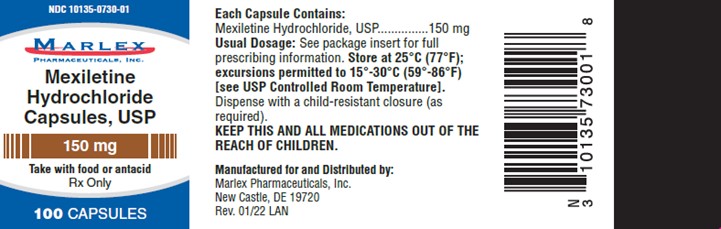
Mexiletine Hydrochloride 150 mg Capsule, 100-count
🆔 Identity & classification
Where does this data come from?
🏭 Manufacturer & labeler
Where does this data come from?
🩺 Clinical
Mexiletine is used to treat certain types of ventricular arrhythmias (abnormal heart rhythms). Mexiletine is in a class of medications called antiarrhythmics. It works by blocking certain electrical signals in the heart to stabilize the heart rhythm.
Read the full MedlinePlus article ↗- Mexiletine is prescribed specifically for serious, life-threatening heart rhythm problems that originate in the lower chambers of the heart — a condition called a ventricular arrhy...
- What exactly is mexiletine being used for — why did my doctor prescribe it?
- Always take mexiletine with food or an antacid — this is one of the most practical things you can do. Nausea, heartburn, and vomiting are among the most common side effects, and ta...
- Should I take it with food or on an empty stomach?
Patient education
Supplement & herbal interactions
Where does this data come from?
Ask a licensed pharmacist directly — free, answered by our team.
💊 What it looks like
Where does this data come from?
🧪 Inactive Ingredients / Excipients
Inactive ingredients, also called excipients, are components of the drug product other than the active ingredient. They may include fillers, dyes, coatings, preservatives, flavors, or other formulation ingredients.
💡 Tap an ingredient (hover on desktop) to see what it is and why it’s used.
-
UNII 5138Q19F1X
Ammonia is a colorless gas made from nitrogen and hydrogen. It's used in medicines as a pH buffer to maintain the correct acidity level and help keep the product stable.
-
UNII H77VEI93A8
A synthetic yellow dye used to color medications. It helps identify the drug and make it visually distinctive, with no effect on how the medicine works.
-
UNII 1K09F3G675
Ferric oxide red is an inorganic iron compound used as a colorant in medicines. It gives tablets, capsules, or other dosage forms a red or reddish tint for identification and appearance.
-
UNII EX438O2MRT
Ferric oxide yellow is a naturally occurring iron compound used as a colorant in medications. It gives tablets, capsules, and other forms a yellow or golden hue for identification and appearance.
-
UNII XM0M87F357
A dark iron oxide compound that gives medicines their black or dark color. It's used as a colorant in tablets and capsules to help identify the product and make it visually distinctive.
-
UNII 2G86QN327L
Gelatin is a protein derived from animal collagen, commonly used in medicines as a gelling agent and capsule material. It helps create soft or hard capsule shells that hold and release medication, and can also thicken liquid formulations.
-
UNII 70097M6I30
Magnesium stearate is a salt made from magnesium and stearic acid, a fatty substance. It's used in tablets and capsules as a lubricant and glidant to help ingredients flow smoothly during manufacturing and prevent sticking.
-
UNII 6DC9Q167V3
Propylene glycol is a clear liquid derived from petroleum or vegetable sources. It acts as a solvent, humectant, and preservative in medicines, helping dissolve active ingredients and maintain product stability.
-
UNII 46N107B71O
Shellac is a natural resin secreted by the lac beetle. It's used as a coating on tablets and capsules to control how quickly the medicine dissolves and to improve appearance and stability.
-
UNII ETJ7Z6XBU4
Silicon dioxide is a naturally occurring mineral used as a glidant and anti-caking agent. It helps powder ingredients flow smoothly and prevents clumping during manufacturing and storage.
-
UNII O8232NY3SJ
A plant-based carbohydrate derived from corn kernels. It acts as a filler to add bulk, a binder to hold ingredients together, and a disintegrant to help the tablet break apart in your stomach for absorption.
-
UNII 15FIX9V2JP
Titanium dioxide is a bright white mineral powder commonly used as a colorant and opacifying agent. It makes pills and tablets white or lighter in color and helps make coatings non-transparent.
12 inactive ingredients listed in the exact product block matched to this NDC.
Where does this data come from?
ingredient classCode="IACT" elements from the exact product block matched by this NDC. Label-section narrative from DailyMed / the openFDA label index is shown separately when available.Inactive ingredient FAQ
Are inactive ingredients the same for every manufacturer?
Why might an inactive ingredient be missing?
Can inactive ingredients matter?
💲 Pricing
A drug doesn't have one price. Each row is a different public payment system, and none is what you'd pay at the counter — that depends on your insurance. The ⓘ on each row explains what it measures.
| Price system | Per each | Per package |
|---|---|---|
| Retail pharmacies payNADAC · weekly | Not in the retail survey — common for institutional, discontinued, or low-volume packs. | |
| Medicaid paysCMS SDUD · 12 mo | No recent Medicaid claims on file for this NDC — rare and low-volume NDCs are suppressed in the public data. | |
| Medicare drug plans payPart D · quarterly | No Part D plan price is available for this NDC in our data. | |
Where does this data come from?
🔁 Therapeutic equivalents
| Product | Labeler | Pack | NADAC/unit | TE | Status | Price vs. this |
|---|---|---|---|---|---|---|
| Mexiletine Hydrochloride 150 mg 00093-8739-01 | Teva | 100 capsules | $0.222 | — | Availability likely | — |
| Mexiletine Hydrochloride 150 mg 00527-4107-37 | Lannett | 100 capsules | $0.222 | AB | Discontinued | — |
| Mexiletine hydrochloride 150 mg 31722-0036-01 | Camber | 100 capsules | $0.222 | AB | Availability likely | — |
| Mexiletine Hydrochloride 150 mg 50742-0239-01 | Ingenus | 100 capsules | $0.222 | AB | Availability likely | — |
| Mexiletine hydrochloride 150 mg 60687-0778-21 | American | 30 capsules | $0.222 | AB | Availability likely | — |
| Mexiletine Hydrochloride 150 mg 62559-0820-01 | ANI | 100 capsules | $0.222 | AB | Availability likely | — |
| Mexiletine Hydrochloride 150 mg 62756-0955-01 | Sun | 100 capsules | $0.222 | AB | Availability likely | — |
| Mexiletine Hydrochloride 150 mg 64980-0666-01 | Rising | 100 capsules | $0.222 | AB | Availability likely | — |
| Mexiletine Hydrochloride 150 mg 33342-0555-11 | Macleods | 100 capsules | — | AB | FDA listed | — |
| Mexiletine Hydrochloride 150 mg 42291-0624-01 | AvKARE | 100 capsules | — | AB | FDA listed | — |
| Mexiletine Hydrochloride 150 mg 51407-0379-01 | Golden | 100 capsules | — | AB | FDA listed | — |
| Mexiletine Hydrochloride 150 mg 63629-2145-01 | Bryant | 100 capsules | — | AB | FDA listed | — |
| Mexiletine Hydrochloride 150 mg 63629-9179-01 | Bryant | 100 capsules | — | AB | FDA listed | — |
| Mexiletine Hydrochloride 150 mg 71335-2922-01 | Bryant | 100 capsules | — | AB | FDA listed | — |
| Mexiletine Hydrochloride 150 mg 72162-1772-01 | Bryant | 100 capsules | — | AB | FDA listed | — |
| Mexiletine Hydrochloride 150 mg 72162-1782-01 | Bryant | 100 capsules | — | AB | FDA listed | — |
| Mexiletine Hydrochloride 150 mg 82012-0027-04 | Senores | 100 capsules | — | — | FDA listed | — |
| Mexiletine Hydrochloride 150 mgthis 10135-0730-01 | Marlex | 100 capsules | — | AB | Discontinued | — |
Where does this data come from?
⏳ Availability & generic status
This product is an FDA-approved generic. Other versions of the same drug are listed under Therapeutic equivalents, least expensive first.
Where does this data come from?
🔬 Reported adverse events (FAERS)
Top reported reactions
Age at onset
Reporter sex
Serious outcomes
Where does this data come from?
📦 Packaging — all sizes for this product
| Package NDC | Description | Marketing start | Status |
|---|---|---|---|
| 10135-0730-01 You're viewing this | 100 CAPSULE in 1 BOTTLE (10135-730-01) | 2022-02-01 | Inactivated by FDA |
🧭 About this NDC listing & data coverage
What data is (and isn’t) available for this NDC — tap to expand
| NDC identity (package / product / labeler codes) | ✓ Available |
| Labeler | ✓ Available |
| Product & package description | ✓ Available |
| Marketing category & status | ✓ Available |
| Active ingredient / dosage form / route | ✓ Available |
| FDA label (SPL via DailyMed) | ✓ Available |
| Package photos | ✓ Available |
| Inactive ingredients (structured) | ✓ Available |
| NADAC pharmacy acquisition price (CMS) | — Not published for this NDC CMS publishes NADAC only for NDCs reported in its retail-pharmacy survey. |
| Orange Book / therapeutic-equivalence data | ✓ Available |
| HCPCS J-code billing crosswalk | — Not published for this NDC Most self-administered / retail products have no J-code — that is normal. |
| Medicaid utilization (CMS SDUD) | — Not published for this NDC CMS reports utilization only for NDCs with Medicaid claims above its privacy threshold. |
Questions about this listing
Why is there no price listed?
What does the discontinued status mean for this NDC?
Is the NDC printed on the package the same as the 11-digit billing NDC?
What do the three segments of this NDC mean?
Who lists this product with the FDA?
Do I need a prescription for this product?
Where does this data come from?
📄 Full prescribing information FDA SPL
🚨 Boxed Warning ▾
BOXED WARNING WARNINGS Mortality In the National Heart, Lung and Blood Institute's Cardiac Arrhythmia Suppression Trial (CAST), a long-term, multicentered, randomized, double-blind s tudy in patients with asymptomatic non-life-threatening ventricular arrhythmias who had a myocardial infarction more than six days but less than two years previously, an excessive mortality or non-fatal cardiac arrest rate (7.7%) was seen in patients treated with encainide or flecainide compared with that seen in patients assigned to carefully matched placebo-treated groups (3.0%).
The average duration of treatment with encainide or flecainide in this study was ten months. The applicability of the CAST results to other populations (e.g., those without recent myocardial infarction) is uncertain. Considering the known proarrhythmic properties of mexiletine and the lack of evidence of improved survival for any antiarrhythmic drug in patients without life-threatening arrhythmias, the use of mexiletine as well as other antiarrhythmic agents should be reserved for patients with life-threatening ventricular arrhythmia.
Acute Liver Injury In postmarketing experience abnormal liver function tests have been reported, some in the first few weeks of therapy with mexiletine hydrochloride. Most of these have been observed in the setting of congestive heart failure or is chemia and their relationship to mexiletine hydrochloride has not been established.
🎯 Indications and Usage ▾
INDICATIONS AND USAGE Mexiletine hydrochloride capsules, USP are indicated for the treatment of documented ventricular arrhythmias, such as sustained ventricular tachycardia, that, in the judgement of the physician, are life- threatening. Because of the proarrhythmic effects of mexiletine, its use with lesser arrhythmias is generally not recommended. Treatment of patients with asymptomatic ventricular premature contractions should be avoided.
Initiation of mexiletine treatment, as with other antiarrhythmic agents used to treat life-threatening arrhythmias, should be carried out in the hospital. Antiarrhythmic drugs have not been shown to enhance survival in patients with ventricular arrhythmias.
⏱️ Dosage and Administration ▾
DOSAGE AND ADMINISTRATION The dosage of mexiletine hydrochloride must be individualized on the basis of response and tolerance, both of which are dose-related. Administration with food or antacid is recommended. Initiate mexiletine therapy with 200 mg every eight hours when rapid control of arrhythmia is not essential.
A minimum of two to three days between dose adjustments is recommended. Dose may be adjusted in 50 or 100 mg increments up or down. As with any antiarrhythmic drug, clinical and electrocardiographic evaluation (including Holter monitoring if necessary for evaluation) are needed to determine whether the desired antiarrhythmic effect has been obtained and to guide titration and dose adjustment.
Satisfactory control can be achieved in most patients by 200 to 300 mg given every eight hours with food or antacid. If satisfactory response has not been achieved at 300 mg q8h, and the patient tolerates mexiletine well, a dose of 400 mg q8h may be tried. As the severity of CNS side effects increases with total daily dose, the dose should not exceed 1,200 mg/day.
In general, patients with renal failure will require the usual doses of mexiletine hydrochloride. Patients with severe liver disease, however, may require lower doses and must be monitored closely. Similarly, marked right-sided congestive heart failure can reduce hepatic metabolism and reduce the needed dose.
Plasma level may also be affected by certain concomitant drugs (see PRECAUTIONS: Drug Interactions). Loading Dose When rapid control of ventricular arrhythmia is essential, an initial loading dose of 400 mg of mexiletine hydrochloride may be administered, followed by a 200 mg dose in eight hours. Onset of therapeutic effect is usually observed within 30 minutes to two hours.
Q12H Dosage Schedule Some patients responding to mexiletine may be transferred to a 12-hour dosage schedule to improve convenience and compliance. If adequate suppression is achieved on a mexiletine hydrochloride dose of 300 mg or less every eight hours, the same total daily dose may be given in divided doses every 12 hours while carefully monitoring the degree of suppression of ventricular ectopy. This dose may be adjusted up to a maximum of 450 mg every 12 hours to achieve the desired response.
Transferring to Mexiletine Hydrochloride The following dosage schedule, based on theoretical considerations rather than experimental data, is suggested for transferring patients from other Class I oral antiarrhythmic agents to mexiletine. Mexiletine hydrochloride treatment may be initiated with a 200 mg dose, and titrated to response as described above, 6-12 hours after the last dose of quinidine sulfate, 3-6 hours after the last dose of procainamide, 6-12 hours after the last dose of disopyramide or 8-12 hours after the last dose of tocainide.
In patients in whom withdrawal of the previous antiarrhythmic agent is likely to produce life-threatening arrhythmias, hospitalization of the patient is recommended. When transferring from lidocaine to mexiletine, the lidocaine infusion should be stopped when the first oral dose of mexiletine hydrochloride is administered. The infusion line should be left open until suppression of the arrhythmia appears to be satisfactorily maintained.
Consideration should be given to the similarity of the adverse effects of lidocaine and mexiletine and the possibility that they may be additive.
⛔ Contraindications ▾
CONTRAINDICATIONS Mexiletine hydrochloride capsules are contraindicated in the presence of cardiogenic shock or pre-existing second- or third-degree AV block (if no pacemaker is present).
⚠️ Warnings ▾
WARNINGS BOXED WARNING WARNINGS Mortality In the National Heart, Lung and Blood Institute's Cardiac Arrhythmia Suppression Trial (CAST), a long-term, multicentered, randomized, double-blind s tudy in patients with asymptomatic non-life-threatening ventricular arrhythmias who had a myocardial infarction more than six days but less than two years previously, an excessive mortality or non-fatal cardiac arrest rate (7.7%) was seen in patients treated with encainide or flecainide compared with that seen in patients assigned to carefully matched placebo-treated groups (3.0%).
The average duration of treatment with encainide or flecainide in this study was ten months. The applicability of the CAST results to other populations (e.g., those without recent myocardial infarction) is uncertain. Considering the known proarrhythmic properties of mexiletine and the lack of evidence of improved survival for any antiarrhythmic drug in patients without life-threatening arrhythmias, the use of mexiletine as well as other antiarrhythmic agents should be reserved for patients with life-threatening ventricular arrhythmia.
Acute Liver Injury In postmarketing experience abnormal liver function tests have been reported, some in the first few weeks of therapy with mexiletine hydrochloride. Most of these have been observed in the setting of congestive heart failure or is chemia and their relationship to mexiletine hydrochloride has not been established. Drug Reactions with Eosinophilia and Systemic Symptoms (DRESS) Drug reactions with eosinophilia and systemic symptoms (DRESS) have been reported in patients taking mexiletine.
DRESS typically presents with eosinophilia, fever, rash, and/or lymphadenopathy in association with other organ involvement, such as hepatitis, nephritis, hematologic abnormalities, myocarditis, or myositis, sometimes resembling an acute viral infection. Discontinue mexiletine if DRESS is suspected.
Drug Reactions with Eosinophilia and Systemic Symptoms (DRESS) Drug reactions with eosinophilia and systemic symptoms (DRESS) have been reported in patients taking mexiletine. DRESS typically presents with eosinophilia, fever, rash, and/or lymphadenopathy in association with other organ involvement, such as hepatitis, nephritis, hematologic abnormalities, myocarditis, or myositis, sometimes resembling an acute viral infection. Discontinue mexiletine if DRESS is suspected.
🤒 Adverse Reactions ▾
ADVERSE REACTIONS Mexiletine hydrochloride commonly produces reversible gastrointestinal and nervous system adverse reactions but is otherwise well tolerated. Mexiletine has been evaluated in 483 patients in one-month and three-month controlled studies and in over 10,000 patients in a large compassionate use program. Dosages in the controlled studies ranged from 600-1,200 mg/day; some patients (8%) in the compassionate use program were treated with higher daily doses (1,600-3,200 mg/day).
In the three- month controlled trials comparing mexiletine to quinidine, procainamide and disopyramide, the most frequent adverse reactions were upper gastrointestinal distress (41%), lightheadedness (10.5%), tremor (12.6%) and coordination difficulties (10.2%). Similar frequency and incidence were observed in the one-month placebo-controlled trial. Although these reactions were generally not serious, and were dose-related and reversible with a reduction in dosage, by taking the drug with food or antacid or by therapy discontinuation, they led to therapy discontinuation in 40% of patients in the controlled trials.
Table 1 presents the adverse events reported in the one-month placebo-controlled trial. Table 1 : Comparative Incidence (%) of Adverse Events Among Patients Treated with Mexiletine and Placebo in the 4-Week, Double-blind Crossover Trial Mexiletine N=53 Placebo N=49 Cardiovascular Palpitations 7.5
10.2Chest Pain 7.5
4.1Increased Ventricular Arrhythmia /PVC's 1.9 - Digestive Nausea/Vomiting/Heartburn 39.6
6.1Central Nervous System Dizziness/Lightheadedness 26.4
14.3Tremor 13.2 — Nervousness 11.3
6.1Coordination Difficulties 9.4 — Changes in Sleep Habits 7.5
16.3Paresthesias/Numbness 3.8
2.0Weakness 1.9
4.1Fatigue 1.9
2.0Tinnitus 1.9
4.1Confusion/Clouded Sensorium 1.9
2.0Other Headache 7.5
6.1Blurred Vision/Visual Disturbances 7.5
2.0Dyspnea/Respiratory 5.7
10.2Rash 3.8
2.0Non-specific Edema 3.8 — Table 2: Comparative Incidence (%) of Adverse Events Among Patients Treated with Mexiletine or Control Drugs in the 12-Week Double-blind Trials Table 2 presents the adverse reactions occurring in one percent or more of patients in the three-month controlled studies. Mexiletine N = 430 Quinidine N = 262 Procainamide N = 78 Disopyramide N = 69 Cardiovascular Palpitations 4.3 4.6 1.3
5.8Chest Pain 2.6 3.4 1.3
2.9Angina/Angina-like Pain 1.7 1.9 2.6
2.9Increased Ventricular Arrhythmias/PVC's 1.0 2.7 2.6 — Digestive Nausea/Vomiting/Heartburn 39.3 21.4 33.3
14.5Diarrhea 5.2 33.2 2.6
8.7Constipation 4.0 — 6.4
11.6Changes in Appetite 2.6 1.9 — — Abdominal Pain/Cramps/Discomfort 1.2 1.5 —
1.4Central Nervous System Dizziness/Lightheadedness 18.9 14.1 14.1
2.9Tremor 13.2 2.3 3.8
1.4Coordination Difficulties 9.7 1.1 1.3 — Changes in Sleep Habits 7.1 2.7 11.5
8.7Weakness 5.0 5.3 7.7
2.9Nervousness 5.0 1.9 6.4
5.8Fatigue 3.8 5.7 5.1
1.4Speech Difficulties 2.6 0.4 — — Confusion/Clouded Sensorium 2.6 — 3.8 — Paresthesias/Numbness 2.4 2.3 2.6 — Tinnitus 2.4 1.5 — — Depression 2.4 1.1 1.3
1.4Other Blurred Vision/Visual Disturbances 5.7 3.1 5.1
7.2Headache 5.7 6.9 7.7
4.3Rash 4.2 3.8 10.3
1.4Dyspnea/ Respiratory 3.3 3.1 5.1
2.9Dry Mouth 2.8 1.9 5.1
14.5Arthralgia 1.7 2.3 5.1
1.4Fever 1.2 3.1 2.6 — An additional group of over 10,000 patients has been treated in a program allowing administration of mexiletine hydrochloride under compassionate use circumstances. These patients were seriously ill with the large majority on multiple drug therapy. Twenty-four percent of the patients continued in the program for one year or longer.
Adverse reactions leading to therapy discontinuation occurred in 15 percent of patients (usually upper gastrointestinal system or nervous system effects). In general, the more common adverse reactions were similar to those in the controlled trials. Less common adverse events possibly related to mexiletine use include:Less than 1%: Syncope, edema, hot flashes, hypertension, short-term memory loss, loss of co…
🔄 Drug Interactions ▾
Drug Interactions Since mexiletine hydrochloride is a substrate for the metabolic pathways involving CYP2D6 and CYP1A2 enzymes, inhibition or induction of either of these enzymes would be expected to alter mexiletine plasma concentrations. In a formal, single-dose interaction study (n = 6 males) the clearance of mexiletine was decreased by 38% following the coadministration of fluvoxamine, an inhibitor of CYP1A2. In another formal study (n = 8 extensive and n = 7 poor metabolizers of CYP2D6), coadministration of propafenone did not alter the kinetics of mexiletine in the poor CYP2D6 metabolizer group.
However, the metabolic clearance of mexiletine in the extensive metabolizer phenotype decreased by about 70% making the poor and extensive metabolizer groups indistinguishable. In this crossover steady state study, the pharmacokinetics of propafenone were unaffected in either phenotype by the coadministration of mexiletine. Addition of mexiletine to propafenone did not lead to further electrocardiographic parameters changes of QRS, QTc, RR, and PR intervals than propafenone alone.
When concomitant administration of either of these two drugs is initiated with mexiletine, the dose of mexiletine should be slowly titrated to desired effect. In a large compassionate use program mexiletine has been used concurrently with commonly employed antianginal, antihypertensive, and anticoagulant drugs without observed interactions. A variety of antiarrhythmics such as quinidine or propranolol were also added, sometimes with improved control of ventricular ectopy.
When phenytoin or other hepatic enzyme inducers such as rifampin and phenobarbital have been taken concurrently with mexiletine, lowered mexiletine plasma levels have been reported. Monitoring of mexiletine plasma levels is recommended during such concurrent use to avoid ineffective therapy. In a formal study, benzodiazepines were shown not to affect mexiletine plasma concentrations.
ECG intervals (PR, QRS, and QT) were not affected by concurrent mexiletine and digoxin, diuretics, or propranolol. Concurrent administration of cimetidine and mexiletine has been reported to increase, decrease, or leave unchanged mexiletine plasma levels; therefore patients should be followed carefully during concurrent therapy. Mexiletine does not alter serum digoxin levels but magnesium-aluminum hydroxide, when used to treat gastrointestinal symptoms due to mexiletine, has been reported to lower serum digoxin levels.
Concurrent use of mexiletine and theophylline may lead to increased plasma theophylline levels. One controlled study in eight normal subjects showed a 72% mean increase (range 35%-136%) in plasma theophylline levels. This increase was observed at the first test point which was the second day after starting mexiletine.
Theophylline plasma levels returned to pre-mexiletine values within 48 hours after discontinuing mexiletine. If mexiletine and theophylline are to be used concurrently, theophylline blood levels should be monitored, particularly when the mexiletine dose is changed. An appropriate adjustment in theophylline dose should be considered.
Additionally, in one controlled study in five normal subjects and seven patients, the clearance of caffeine was decreased 50% following the administration of mexiletine.
🤰 Pregnancy ▾
Pregnancy Teratogenic Effects Reproduction studies performed with mexiletine in rats, mice and rabbits at doses up to four times the maximum human oral dose (24 mg/kg in a 50 kg patient) revealed no evidence of teratogenicity or impaired fertility but did show an increase in fetal resorption. There are no adequate and well- controlled studies in pregnant women; this drug should be used in pregnancy only if the potential benefit justifies the potential risk to the fetus.
🧒 Pediatric Use ▾
Pediatric Use Safety and effectiveness in pediatric patients have not been established.
🆘 Overdosage ▾
OVERDOSAGE Clinical findings associated with mexiletine overdosage have included drowsiness, confusion, nausea, hypotension, sinus bradycardia, paresthesia, seizures, bundle branch block, AV heart block, asystole, ventricular tachyarrhythmia, including ventricular fibrillation, cardiovascular collapse and coma. The lowest known dose in a fatality case was 4.4 g with postmortem serum mexiletine level of 34-37 mcg/mL (Jequier P. et al., Lancet 1976: 1 (7956): 429). Patients have recovered from ingestion of 4 g to 18 g of mexiletine (Frank S.
E. et al., Am J Emerg Med 1991: 9:43-48). There is no specific antidote for mexiletine. Management of mexiletine overdosage includes general supportive measures, close observation and monitoring of vital signs.
In addition, the use of pharmacologic interventions (e.g., pressor agents, atropine or anticonvulsants) or transvenous cardiac pacing is suggested, depending on the patient's clinical condition.
🧬 Clinical Pharmacology ▾
CLINCAL PHARMACOLOGY Mechanism of Action Mexiletine hydrochloride is a local anesthetic, antiarrhythmic agent, structurally similar to lidocaine, but orally active. In animal studies, mexiletine has been shown to be effective in the suppression of induced ventricular arrhythmias, including those induced by glycoside toxicity and coronary artery ligation. Mexiletine, like lidocaine, inhibits the inward sodium current, thus reducing the rate of rise of the action potential, Phase 0.
Mexiletine decreased the effective refractory period (ERP) in Purkinje fibers. The decrease in ERP was of lesser magnitude than the decrease in action potential duration (APD), with a resulting increase in the ERP/APD ratio. Electrophysiology in Man Mexiletine is a Class 1B antiarrhythmic compound with electrophysiologic properties in man similar to those of lidocaine, but dissimilar from quinidine, procainamide, and disopyramide.
In patients with normal conduction systems, mexiletine has a minimal effect on cardiac impulse generation and propagation. In clinical trials, no development of second-degree or third-degree AV block was observed. Mexiletine did not prolong ventricular depolarization (QRS duration) or repolarization (QT intervals) as measured by electrocardiography.
Theoretically, therefore, mexiletine may be useful in the treatment of ventricular arrhythmias associated with a prolonged QT interval. In patients with pre-existing conduction defects, depression of the sinus rate, prolongation of sinus node recovery time, decreased conduction velocity and increased effective refractory period of the intraventricular conduction system have occasionally been observed. The antiarrhythmic effect of mexiletine has been established in controlled comparative trials against placebo, quinidine, procainamide and disopyramide.
Mexiletine hydrochloride, at doses of 200-400 mg q8h, produced a significant reduction of ventricular premature beats, paired beats, and episodes of non- sustained ventricular tachycardia compared to placebo and was similar in effectiveness to the active agents. Among all patients entered into the studies, about 30% in each treatment group had a 70% or greater reduction in PVC count and about 40% failed to complete the 3-month studies because of adverse effects. Follow-up of patients from the controlled trials has demonstrated continued effectiveness of mexiletine in long-term use.
Hemodynamics Hemodynamic studies in a limited number of patients, with normal or abnormal myocardial function, following oral administration of mexiletine hydrochloride, have shown small, usually not statistically significant, decreases in cardiac output and increases in systemic vascular resistance, but no significant negative inotropic effect. Blood pressure and pulse rate remain essentially unchanged. Mild depression of myocardial function, similar to that produced by lidocaine, has occasionally been observed following intravenous mexiletine therapy in patients with cardiac disease.
Pharmacokinetics Mexiletine is well absorbed (~90%) from the gastrointestinal tract. Unlike lidocaine, its first-pass metabolism is low. Peak blood levels are reached in two to three hours.
In normal subjects, the plasma elimination half-life of mexiletine is approximately 10-12 hours. It is 50-60% bound to plasma protein, with a volume of distribution of 5-7 liters/kg. Mexiletine is mainly metabolized in the liver, the primary pathway being CYP2D6 metabolism, although it is also a substrate for CYP1A2.
With involvement of CYP2D6, there can be either poor or extensive metabolizer phenotypes. Since approximately 90% of mexiletine hydrochloride is metabolized in the liver into inactive metabolites, pathological changes in the liver can restrict hepatic clearance of mexiletine hydrochloride and its metabolites. The metabolic degradation proceeds via various pathways including aromatic and aliphatic hydroxylation, dealkylation, deamination and N-oxidation.
Several of the resul…
🧬 Mechanism of Action ▾
Mechanism of Action Mexiletine hydrochloride is a local anesthetic, antiarrhythmic agent, structurally similar to lidocaine, but orally active. In animal studies, mexiletine has been shown to be effective in the suppression of induced ventricular arrhythmias, including those induced by glycoside toxicity and coronary artery ligation. Mexiletine, like lidocaine, inhibits the inward sodium current, thus reducing the rate of rise of the action potential, Phase 0.
Mexiletine decreased the effective refractory period (ERP) in Purkinje fibers. The decrease in ERP was of lesser magnitude than the decrease in action potential duration (APD), with a resulting increase in the ERP/APD ratio.
📦 How Supplied / Storage and Handling ▾
HOW SUPPLIED Mexiletine hydrochloride capsules, USP are is supplied in bottles of 100 hard gelatin capsules containing 150 mg, 200 mg or 250 mg of mexiletine hydrochloride: Mexiletine hydrochloride capsules, USP, 150 mg have an orange body and caramel cap with the marking "150" in black ink on the cap. Capsules contain white or almost white powder. (NDC 10135-0730-01).
Mexiletine hydrochloride capsules, USP, 200 mg have an orange body and orange cap with the marking "200" in black ink on the cap. Capsules contain white or almost white powder. (NDC 10135-0731-01).
Mexiletine hydrochloride capsules, USP, 250 mg have an orange body and green cap with the marking "250" in black ink on the cap. Capsules contain white or almost white powder. (NDC 10135-0732-01).
Store at 25°C (77°F); excursions permitted to 15–30°C (59–86°F) [see USP Controlled Room Temperature]. Dispense with a child-resistant closure (as required).
📋 Description ▾
DESCRIPTION Mexiletine hydrochloride, USP is an orally active antiarrhythmic agent. It is a white to off-white crystalline powder with slightly bitter taste, freely soluble in water and in alcohol. Mexiletine hydrochloride, USP has a pKa of 9.2.
The chemical name of mexiletine hydrochloride, USP is 1- methyl-2-(2,6-xylyloxy)ethylamine hydrochloride and its structural formula is: C 11 H 17 NO·HCl Mol. Wt. 215.72 Each capsule for oral administration, contains 150 mg, 200 mg, or 250 mg of mexiletine hydrochloride, USP.
100 mg of mexiletine hydrochloride, USP is equivalent to 83.31 mg of mexiletine base. In addition, each capsule contains the following excipients: colloidal silicon dioxide, magnesium stearate and pregelatinized corn starch. The capsule shell contains: FD&C Yellow #6, gelatin and titanium dioxide.
The 150 mg capsule also contains: yellow iron oxide, red iron oxide and black iron oxide. The 250 mg capsule also contains: FD&C Blue #1 and D&C Yellow #10. The imprinting ink contains: ammonium hydroxide, black iron oxide, propylene glycol and shellac. structure