
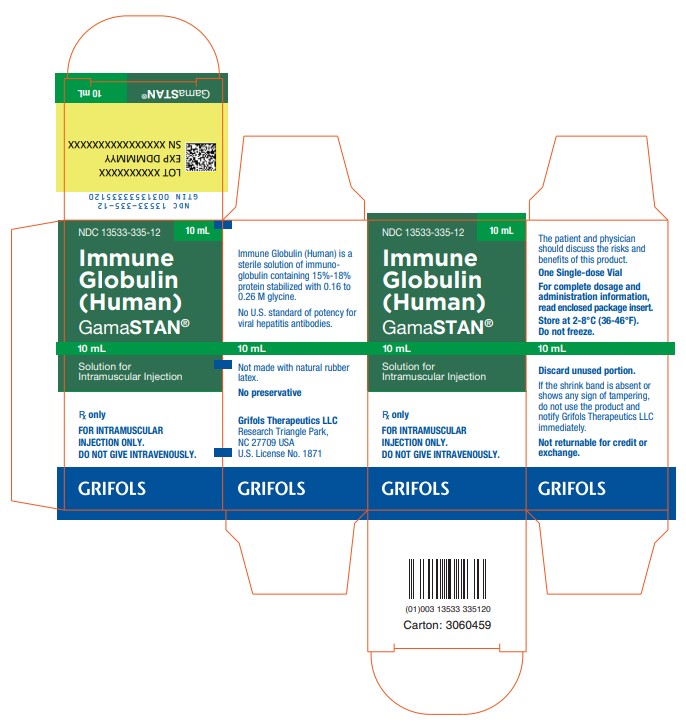
GAMASTAN IMMUNE GLOBULIN (HUMAN) .165 g/mL Injection, Solution — NDC 13533-635-04 (Billing 13533-0635-04)
This is a package of GAMASTAN IMMUNE GLOBULIN (HUMAN) .165 g/mL Injection, Solution from GRIFOLS USA, LLC, marketed since Aug 1996 and currently FDA-listed. It is the main listing for this product, which comes in 2 package sizes.
NDC database record
One package, one record: these facts belong to NDC 13533-635-04 alone.
- Record
- FDA NDC Directory package listing · Plasma derivative
- Code segments
- 13533 labeler · 635 product · 04 package
- Package marketed since
- Aug 14, 1996
- Sample package
- No — commercial package
- Listing certified through
- Dec 31, 2026
- Barcode (UPC-A, from the NDC)
- 3 1353363504 6
- FDA record last changed
- Oct 8, 2026
Identity & classification
Regulatory identifiers FDA, NLM and CMS codes for this package
Drug-database identifiers Medi-Span GPI and First Databank GCN / HICL / AHFS classification
- GSN (GCN sequence number): 030790
- GCN: 43712
- GPI-14 (Medi-Span): 19100020002200
- HICL (First Databank): 041855
- AHFS class code: 80:04.00.00
Where does this data come from?
- FDA openFDA NDC Directory · synced Oct 8, 2026
- FDA label on DailyMed · label index refreshed Oct 6, 2026
- RxNorm (NLM RxNav) · catalog refreshed Oct 1, 2026
- Medi-Span GPI (licensed)
- First Databank (licensed) · refreshed Oct 8, 2026
Clinical
- Think of it as a collection of protective proteins — called antibodies — that healthy donors have built up against many different germs. If your immune system can't make enough of...
- What exactly is human immunoglobulin G and why do I need it?
- It depends on the specific product your doctor prescribed. The IV versions — like Privigen, Asceniv, Qivigy, and Gammaplex — are infused into a vein, usually every 3 to 4 weeks. Hi...
- How is it given, and how often will I need infusions?
Patient education
Supplement & herbal interactions
Where does this data come from?
- MedlinePlus (NLM) · refreshed Oct 1, 2026
- FDA label on DailyMed · label index refreshed Oct 6, 2026
Ask a licensed pharmacist directly — free, answered by our team.
Pricing
A drug doesn't have one price. Each row is a different public payment system, and none is what you'd pay at the counter — that depends on your insurance. The ⓘ on each row explains what it measures.
| Price system | Per mL | Per package |
|---|---|---|
| Retail pharmacies payNADAC · weekly | Not in the retail survey — common for institutional, discontinued, or low-volume packs. | |
| Medicaid paysCMS SDUD · 12 mo | No recent Medicaid claims on file for this NDC — rare and low-volume NDCs are suppressed in the public data. | |
| Medicare drug plans payPart D · quarterly | No Part D plan price is available for this NDC in our data. | |
| Medicare Part B allowsASP · J1460 | $48.874 / J1460 unit | — |
Where does this data come from?
- CMS NADAC weekly file
- CMS ASP pricing files · refreshed Sep 20, 2026
- CMS Medicaid State Drug Utilization Data · refreshed Oct 8, 2026
- CMS Part D plan pricing files · refreshed Sep 24, 2026
- VA National Acquisition Center price file
Billing & reimbursement
Where does this data come from?
- CMS ASP NDC-HCPCS crosswalk · refreshed Sep 22, 2026
- DMEPDAC NDC-HCPCS crosswalk
- openFDA NSDE billing units · refreshed Oct 7, 2026
Packaging — all sizes for this product
| Package NDC | Description | Marketing start | Marketing end | Status |
|---|---|---|---|---|
| 13533-0635-04 You're viewing this Main listing | 1 VIAL in 1 CARTON / 2 mL in 1 VIAL | 1996-08-14 | — | Active |
| 13533-0635-12 13533-635-12 | 1 VIAL in 1 CARTON / 10 mL in 1 VIAL | 1996-08-14 | — | Active |
Pack size FAQ
What quantity is in this package?
What NDC number is used to bill for this package of GAMASTAN IMMUNE GLOBULIN (HUMAN) .165 g/mL Injection, Solution?
Therapeutic equivalents
| Product | Labeler | Pack | NADAC/unit | TE | Status | Price vs. this |
|---|---|---|---|---|---|---|
| Gamastan .165 g/mLthis 13533-0635-04 | GRIFOLS | 1 vial | — | — | FDA listed | — |
| GamaSTAN .165 g/mL 13533-0335-04 | GRIFOLS | 1 vial | — | — | FDA listed | — |
Where does this data come from?
- FDA openFDA NDC Directory · synced Oct 8, 2026
- FDA Purple Book · refreshed Oct 5, 2026
- CMS NADAC weekly file
Availability & biosimilar status
Biologics have no small-molecule generics; biosimilar competition is tracked in the FDA Purple Book.
Where does this data come from?
- FDA Purple Book · refreshed Oct 5, 2026
What it looks like
Where does this data come from?
- FDA label on DailyMed · label index refreshed Oct 6, 2026
Inactive Ingredients / Excipients
Inactive ingredients, also called excipients, are components of the drug product other than the active ingredient. They may include fillers, dyes, coatings, preservatives, flavors, or other formulation ingredients.
🧪 Avoiding an ingredient? See Human Immunoglobulin G inactive ingredients by manufacturer: every current product's list side by side, so you can ask your pharmacy for the version that does not list it.
💡 Tap an ingredient (hover on desktop) to see what it is and why it’s used.
-
UNII TE7660XO1C
Glycine is an amino acid used in medicines as a buffer to help stabilize pH and improve taste. It may also serve as a filler or binder to give the product proper form and consistency.
-
UNII 059QF0KO0R
Water is a liquid solvent that dissolves and mixes ingredients together in liquid medicines, syrups, and injections. It helps distribute the active drug evenly throughout the product.
2 inactive ingredients listed in the exact product block matched to this NDC.
Where does this data come from?
ingredient classCode="IACT" elements from the exact product block matched by this NDC. Label-section narrative from DailyMed / the openFDA label index is shown separately when available.- FDA label on DailyMed · label index refreshed Oct 6, 2026
- FDA openFDA NDC Directory · synced Oct 8, 2026
Inactive ingredient FAQ
Are inactive ingredients the same for every manufacturer?
Why might an inactive ingredient be missing?
Can inactive ingredients matter?
Manufacturer & labeler
More NDCs from GRIFOLS USA, LLC labeler code 13533
- Thrombate Iii Antithrombin Iii (HUMAN) Kit NDC 13533-603-20
- Thrombate Iii Antithrombin Iii (HUMAN) Kit NDC 13533-606-12
- Plasmanate Plasma Protein Fraction (Human) 2.5 g/50mL Solution NDC 13533-613-20
- HYPERRAB S/D RABIES IMMUNE GLOBULIN (HUMAN) 150 [iU]/mL Injection NDC 13533-618-02
- HYPERRHO FULL DOSE RHO(D) IMMUNE GLOBULIN (HUMAN) 1500 [iU]/mL Solution NDC 13533-631-02
- HyperTET Tetanus Immune Globulin (Human) 250 [iU]/mL Injection NDC 13533-634-02
- HYPERHEP B HEPATITIS B IMMUNE GLOBULIN (HUMAN) 220 [iU]/mL Injection NDC 13533-636-01
- HYPERRHO MINI-DOSE RHO(D) IMMUNE GLOBULIN (HUMAN) 250 [iU]/mL Solution NDC 13533-661-06
- Plasbumin Albumin (Human) 2.5 g/50mL Solution NDC 13533-690-20
- Plasbumin Albumin (Human) 10 g/50mL Solution NDC 13533-691-20
- Plasbumin Albumin (Human) 5 g/20mL Solution NDC 13533-692-16
- Prolastin-C ALPHA-1-PROTEINASE Inhibitor (HUMAN) Kit NDC 13533-700-02
Where does this data come from?
- FDA openFDA NDC Directory · synced Oct 8, 2026
- Drugs@FDA
Full FDA label FDA SPL
🎯 Indications and Usage ▾
INDICATIONS AND USAGE Hepatitis A The prophylactic value of Gama STAN S/D is greatest when given before or soon after exposure to hepatitis A. Gama STAN S/D is not indicated in persons with clinical manifestations of hepatitis A or in those exposed more than 2 weeks previously. Measles (Rubeola) Gama STAN S/D should be given to prevent or modify measles in a susceptible person exposed fewer than 6 days previously.
(7) A susceptible person is one who has not been vaccinated and has not had measles previously. Gama STAN S/D may be especially indicated for susceptible household contacts of measles patients, particularly contacts under 1 year of age, for whom the risk of complications is highest. (7) GamaSTAN S/D and measles vaccine should not be given at the same time.
(7) If a child is older than 12 months and has received Gama STAN S/D, he should be given measles vaccine about 3 months later when the measles antibody titer will have disappeared. If a susceptible child exposed to measles is immunocompromised, Gama STAN S/D should be given immediately. (8) Children who are immunocompromised should not receive measles vaccine or any other live viral vaccine.
Varicella Passive immunization against varicella in immunosuppressed patients is best accomplished by use of Varicella-Zoster Immune Globulin (Human) [VZIG]. If VZIG is unavailable, Gama STAN S/D, promptly given, may also modify varicella. (5) Rubella The routine use of Gama STAN S/D for prophylaxis of rubella in early pregnancy is of dubious value and cannot be justified.
(6) Some studies suggest that the use of Gama STAN S/D in exposed, susceptible women can lessen the likelihood of infection and fetal damage; therefore, Gama STAN S/D may benefit those women who will not consider a therapeutic abortion. (4) Immunoglobulin Deficiency In patients with immunoglobulin deficiencies, Gama STAN S/D may prevent serious infection. However, Gama STAN S/D may not prevent chronic infections of the external secretory tissues such as the respiratory and gastrointestinal tract.
Prophylactic therapy, especially against infections due to encapsulated bacteria, is effective in Bruton-type, sex-linked, congenital agammaglobulinemia, agammaglobulinemia associated with thymoma, and acquired agammaglobulinemia.
⏱️ Dosage and Administration ▾
DOSAGE AND ADMINISTRATION Gama STAN S/D is administered intramuscularly (see PRECAUTIONS ), preferably in the anterolateral aspects of the upper thigh and the deltoid muscle of the upper arm. The gluteal region should not be used as an injection site because of the risk of injury to the sciatic nerve. (10) Doses over 10 mL should be divided and injected into several muscle sites to reduce local pain and discomfort.
An individual decision as to which muscle is injected must be made for each patient based on the volume of material to be administered. Parenteral drug products should be inspected visually for particulate matter and discoloration prior to administration, whenever solution and container permit. A number of factors could reduce the efficacy of this product or even result in an ill effect following its use.
These include improper storage and handling of the product after it leaves our hands, diagnosis, dosage, method of administration, and biological differences in individual patients. Because of these factors, it is important that this product be stored properly and that the directions be followed carefully during use. Hepatitis A Gama STAN S/D in a dose of 0.01 mL/lb (0.02 mL/kg) is recommended for household and institutional hepatitis A case contacts.
The following doses of Gama STAN S/D are recommended for persons who plan to travel in areas where hepatitis A is common. (3) Length of Stay Dose Volume Less than 3 months 0.02 mL/kg 3 months or longer 0.06 mL/kg (repeat every 4–6 months) Measles (Rubeola) Gama STAN S/D should be given in a dose of 0.11 mL/lb (0.25 mL/kg) to prevent or modify measles in a susceptible person exposed fewer than 6 days previously. (7) A susceptible child who is exposed to measles and who is immunocompromised should receive a dose of 0.5 mL/kg (maximum dose, 15 mL) of Gama STAN S/D immediately.
(8) Varicella If Varicella-Zoster Immune Globulin (Human) is unavailable, Gama STAN S/D at a dose of 0.6 to 1.2 mL/kg, promptly given, may also modify varicella. (5) Rubella Some studies suggest that the use of Gama STAN S/D in exposed, susceptible women can lessen the likelihood of infection and fetal damage; therefore, Gama STAN S/D at a dose of 0.55 mL/kg may benefit those women who will not consider a therapeutic abortion. (4) Immunoglobulin Deficiency Gama STAN S/D may prevent serious infection in patients with immunoglobulin deficiencies if circulating IgG levels of approximately 200 mg/100 mL plasma are maintained.
The recommended dosage is 0.66 mL/kg (at least 100 mg/kg) given every 3 to 4 weeks. (6) A double dose is given at onset of therapy; some patients may require more frequent injections.
⛔ Contraindications ▾
CONTRAINDICATIONS Gama STAN S/D should not be given to persons with isolated immunoglobulin A (IgA) deficiency. Such persons have the potential for developing antibodies to IgA and could have anaphylactic reactions to subsequent administration of blood products that contain IgA. (9) Gama STAN S/D should not be administered to patients who have severe thrombocytopenia or any coagulation disorder that would contraindicate intramuscular injections.
⚠️ Warnings ▾
WARNINGS GamaSTAN S/D is made from human plasma. Products made from human plasma may contain infectious agents, such as viruses, and, theoretically, the Creutzfeldt-Jakob Disease (CJD) agent that can cause disease. The risk that such products will transmit an infectious agent has been reduced by screening plasma donors for prior exposure to certain viruses, by testing for the presence of certain current virus infections, and by inactivating and/or removing certain viruses.
Despite these measures, such products can still potentially transmit disease. There is also the possibility that unknown infectious agents may be present in such products. Individuals who receive infusions of blood or plasma products may develop signs and/or symptoms of some viral infections, particularly hepatitis C.
ALL infections thought by a physician possibly to have been transmitted by this product should be reported by the physician or other healthcare provider to Talecris Biotherapeutics, Inc. [1-800-520-2807]. The physician should discuss the risks and benefits of this product with the patient, before prescribing or administering it to the patient. Gama STAN S/D should be given with caution to patients with a history of prior systemic allergic reactions following the administration of human immunoglobulin preparations.
(9)
🤒 Adverse Reactions ▾
ADVERSE REACTIONS Local pain and tenderness at the injection site, urticaria, and angioedema may occur. Anaphylactic reactions, although rare, have been reported following the injection of human immune globulin preparations. (6,9) Anaphylaxis is more likely to occur if Gama STAN S/D is given intravenously; therefore, Gama STAN S/D must be administered only intramuscularly.
🤰 Pregnancy ▾
Pregnancy Category C Animal reproduction studies have not been conducted with Gama STAN S/D. It is also not known whether Gama STAN S/D can cause fetal harm when administered to a pregnant woman or can affect reproduction capacity. Gama STAN S/D should be given to a pregnant woman only if clearly needed.
🧒 Pediatric Use ▾
Pediatric Use Safety and effectiveness in the pediatric population have not been established.
🧬 Clinical Pharmacology ▾
CLINICAL PHARMACOLOGY Peak levels of immunoglobulin G are obtained approximately 2 days after intramuscular injection of Gama STAN S/D. (1) The half-life of IgG in the circulation of individuals with normal IgG levels is 23 days. (2) Passive immunization with Gama STAN S/D modifies hepatitis A, prevents or modifies measles, and provides replacement therapy in persons with hypogammaglobulinemia or agammaglobulinemia.
Gama STAN S/D is not standardized with respect to antibody titers against hepatitis B surface antigen (HBsAg) and should not be used for prophylaxis of viral hepatitis type B. Prophylactic treatment to prevent hepatitis B can best be accomplished with use of Hepatitis B Immune Globulin (Human), often in combination with Hepatitis B Vaccine. (3) Gama STAN S/D may be of benefit in women who have been exposed to rubella in the first trimester of pregnancy and who will not consider a therapeutic abortion.
(4) Gama STAN S/D may also be considered for use in immunocompromised patients for passive immunization against varicella if Varicella-Zoster Immune Globulin (Human) is not available. (5) Immune Globulin (Human) is not indicated for routine prophylaxis or treatment of rubella, poliomyelitis, mumps, or varicella. It is not indicated for allergy or asthma in patients who have normal levels of immunoglobulin.
(6) In a clinical study in eight healthy human adults receiving another hyperimmune immune globulin product treated with solvent/detergent, Rabies Immune Globulin (Human), Hyper RAB ™ S/D, prepared by the same manufacturing process, detectable passive antibody titers were observed in the serum of all subjects by 24 hours post injection and persisted through the 21 day study period. These results suggest that passive immunization with immune globulin products is not affected by the solvent/detergent treatment.
📦 How Supplied / Storage and Handling ▾
HOW SUPPLIED Gama STAN S/D is supplied in 2 mL and 10 mL single dose vials. Gama STAN S/D is preservative-free and latex-free. NDC Number Size 13533-635-02 2 mL vial (10 pack) 13533-635-04 2 mL vial 13533-635-10 10 mL vial (10 pack) 13533-635-12 10 mL vial
📦 Storage and Handling ▾
STORAGE Store at 2–8°C (36–46°F). Do not freeze. Do not use after expiration date.
📋 Description ▾
DESCRIPTION Immune Globulin (Human) — Gama STAN ™ S/D treated with solvent/detergent is a sterile solution of immune globulin for intramuscular administration; it is preservative-free and latex-free. Gama STAN S/D is prepared by cold ethanol fractionation from human plasma. The immune globulin is isolated from solubilized Cohn fraction II.
The fraction II solution is adjusted to a final concentration of 0.3% tri-n-butyl phosphate (TNBP) and 0.2% sodium cholate. After the addition of solvent (TNBP) and detergent (sodium cholate), the solution is heated to 30°C and maintained at that temperature for not less than 6 hours. After the viral inactivation step, the reactants are removed by precipitation, filtration and finally ultrafiltration and diafiltration.
Gama STAN S/D is formulated as a 15–18% protein solution at a pH of 6.4–7.2 in 0.21–0.32 M glycine. Gama STAN S/D is then incubated in the final container for 21–28 days at 20–27°C. The removal and inactivation of spiked model enveloped and non-enveloped viruses during the manufacturing process for Gama STAN S/D has been validated in laboratory studies.
Human Immunodeficiency Virus, Type 1 (HIV-1), was chosen as the relevant virus for blood products; Bovine Viral Diarrhea Virus (BVDV) was chosen to model Hepatitis C virus; Pseudorabies virus (PRV) was chosen to model Human Herpes viruses and other large enveloped DNA viruses; and Reo virus type 3 (Reo) was chosen to model non-enveloped viruses and for its resistance to physical and chemical inactivation. Significant removal of model enveloped and non-enveloped viruses is achieved at two steps in the Cohn fractionation process leading to the collection of Cohn Fraction II: the precipitation and removal of Fraction III in the processing of Fraction II + IIIW suspension to Effluent III and the filtration step in the processing of Effluent III to Filtrate III.
Significant inactivation of enveloped viruses is achieved at the time of treatment of solubilized Cohn Fraction II with TNBP/sodium cholate. Additionally, the manufacturing process was investigated for its capacity to decrease the infectivity of an experimental agent of transmissible spongiform encephalopathy (TSE), considered as a model for the vCJD and CJD agents. (11-14) Studies of the Gama STAN S/D manufacturing process demonstrate that TSE clearance is achieved during the Pooled Plasma to Effluent III Fractionation Process (6.7 log 10 ).
These studies provide reasonable assurance that low levels of CJD/vCJD agent infectivity, if present in the starting material, would be removed.
⚠️ Precautions ▾
PRECAUTIONS General Immune Globulin (Human) should not be administered intravenously because of the potential for serious reactions. Injections should be made intramuscularly, and care should be taken to draw back on the plunger of the syringe before injection in order to be certain that the needle is not in a blood vessel. Skin tests should not be done.
In most human beings the intradermal injection of concentrated gamma globulin solution with its buffers causes a localized area of inflammation which can be misinterpreted as a positive allergic reaction. In actuality, this does not represent an allergy; rather, it is localized tissue irritation of a chemical nature. Misinterpretation of the results of such tests can lead the physician to withhold badly needed human immunoglobulin from a patient who is not actually allergic to this material.
True allergic responses to human gamma globulin given in the prescribed intramuscular manner are rare. Although systemic reactions to intramuscularly administered immunoglobulin preparations are rare, epinephrine should be available for treatment of acute allergic symptoms. Clinical and Laboratory Tests None required.
Clinically Significant Product Interactions Antibodies in the globulin preparation may interfere with the response to live viral vaccines such as measles, mumps, polio and rubella. Therefore, use of such vaccines should be deferred until approximately 3 months after Immune Globulin (Human) — Gama STAN ™ S/D administration. No interactions with other products are known.
Pregnancy Category C Animal reproduction studies have not been conducted with Gama STAN S/D. It is also not known whether Gama STAN S/D can cause fetal harm when administered to a pregnant woman or can affect reproduction capacity. Gama STAN S/D should be given to a pregnant woman only if clearly needed.
Pediatric Use Safety and effectiveness in the pediatric population have not been established.
📚 References ▾
REFERENCES Smith GN, Griffiths B, Mollison D, et al: Uptake of IgG after intramuscular and subcutaneous injection. Lancet 1(7762): 1208-12, 1972. Waldmann TA, Strober W, Blaese RM: Variations in the metabolism of immunoglobulins measured by turnover rates.
In Merler E (ed.): Immunoglobulins: biologic aspects and clinical uses. Washington DC, Nat Acad Sci, 1970, pp 33-51. Recommendation of the Immunization Practices Advisory Committee (ACIP): Postexposure prophylaxis of hepatitis B.
MMWR 33(21): 285-90, 1984. American Academy of Pediatrics, Committee on Infectious Diseases: Report. ed. 19.
Evanston, 1982, p 231. Gershon AA, Piomelli S, Karpatkin M, et al: Antibody to varicella-zoster virus after passive immunization against chickenpox. J Clin Microbiol 8(6): 733-5, 1978.
American Academy of Pediatrics, Committee on Infectious Diseases: Report. ed. 19. Evanston, 1982, pp 134-5.
Recommendation of the Public Health Service Advisory Committee on Immunization Practices: Measles prevention. MMWR 27(44): 427-30; 435-7, 1978. American Academy of Pediatrics, Committee on Infectious Diseases: Report. ed.
19. Evanston, 1982, pp 34-6. Fudenberg HH: Sensitization to immunoglobulins and hazards of gamma globulin therapy.
In: Merler E (ed.): Immunoglobulins: biologic aspects and clinical uses. Washington DC, Nat Acad Sci, 1970, pp 211-20. Recommendations of the Advisory Committee on Immunization Practices (ACIP) and the American Academy of Family Physicians (AAFP): General recommendations on immunization.
MMWR 2002: 51(RR02), 1-36. Stenland CJ, Lee DC, Brown P, et al. Partitioning of human and sheep forms of the pathogenic prion protein during the purification of therapeutic proteins from human plasma.
Transfusion 2002. 42(11):1497-500. Lee DC, Stenland CJ, Miller JL, et al.
A direct relationship between the partitioning of the pathogenic prion protein and transmissible spongiform encephalopathy infectivity during the purification of plasma proteins. Transfusion 2001. 41(4):449-55.
Lee DC, Stenland CJ, Hartwell RC, et al. Monitoring plasma processing steps with a sensitive Western blot assay for the detection of the prion protein. J Virol Methods 2000.
84(1):77-89. Cai K, Miller JL, Stenland CJ, et al. Solvent-dependent precipitation of prion protein.
Biochim Biophys Acta 2002. 1597(1):28-35. Talecris Biotherapeutics, Inc.
Research Triangle Park, NC 27709 USA U.S. License No. 1716 08938813 (Rev.
March 2008)
📄 Package Label / Principal Display Panel ▾
PACKAGE LABEL Immune Globulin (Human) Gama STAN ™ S/D Solvent/Detergent Treated Preservative-free, latex-free 2 mL One Single Dose Vial NDC 13533-635-04 Talecris BIOTHERAPEUTICS The patient and physician should discuss the risks and benefits of this product. FOR INTRAMUSCULAR INJECTION ONLY. DO NOT GIVE INTRAVENOUSLY For complete dosage and administration information, read enclosed package insert.
Store at 2-8°C (36-46°F). Do not freeze. If the shrink band is absent or shows any sign of tamper- ing, do not use the product and notify Talecris Biothera- peutics, Inc. immediately.
Not returnable for credit or exchange. Rx only CAUTION: U.S. federal law prohibits dispensing without prescription. Immune Globulin (Human) is a sterile solution of immuno- globulin containing 15%-18% protein stabilized with 0.21-0.32 M glycine.
The pH is adjusted with sodium carbonate. No U.S. standard of potency for viral hepatitis antibodies. 08938404 Talecris Biotherapeutics, Inc.
Research Triangle Park, NC 27709 USA U.S. License No. 1716 Immune Globulin (Human) Gama STAN™ S/D 2 mL Solvent/Detergent Treated The patient and Talecris physician should discuss Biotherapeutics, Inc . the risks and benefits RTP, NC 27709 USA of this product.
Dosage & U.S. License No. 1716 Administration: See insert.
Lot Exp. 08907504 Immune Globulin (Human) Gama STAN™ S/D Solvent/Detergent Treated Lot Exp. NDC 13533-635-02 The patient and physician should discuss the risks and benefits of this product.
Immune Globulin (Human) is a sterile solution of immunoglobulin containing 15%-18% protein stablilized with 0.21-0.32 M glycine. The pH is adjusted with sodium carbonate. No U.S. standard of potency for viral hepatitis antibodies.
For complete dosage and administration information, read enclosed package insert. For intramuscular injection only. Do not give intravenously.
No preservative. If the shrink band is absent or shows any sign of tampering, do not use the product and notify Talecris Biothreapeutics, Inc. immediately. Rx only CAUTION: U.S. federal law prohibits dispensing without prescription.
Immune Globulin (Human) Gama STAN™ S/D 2 mL Solvent/Detergent Treated Store at 2-8°C (36-46°F) Do not freeze 2 mL per Vial 10 Vials per Carton Talecris BIOTHERAPEUTICS Manufactured by: Talecris Biotherapeutics, Inc. Research Triangle Park, NC 27709 USA U.S. License No.
1716 NDC 13533-635-02
Medicare Part D spend CMS · PART D · 2026 (Q1)
About this NDC listing & data coverage
What data is (and isn’t) available for this NDC — tap to expand
| NDC identity (package / product / labeler codes) | ✓ Available |
| Labeler | ✓ Available |
| Product & package description | ✓ Available |
| Marketing category & status | ✓ Available |
| Active ingredient / dosage form / route | ✓ Available |
| FDA label (SPL via DailyMed) | ✓ Available |
| Package photos | ✓ Available |
| Inactive ingredients (structured) | ✓ Available |
| NADAC pharmacy acquisition price (CMS) | — Not published for this NDC CMS publishes NADAC only for NDCs reported in its retail-pharmacy survey. |
| Orange Book / therapeutic-equivalence data | — Not published for this NDC Applies only to products approved under an NDA/ANDA; many listings are out of scope. |
| HCPCS J-code billing crosswalk | ✓ Available |
| Medicaid utilization (CMS SDUD) | — Not published for this NDC CMS reports utilization only for NDCs with Medicaid claims above its privacy threshold. |