
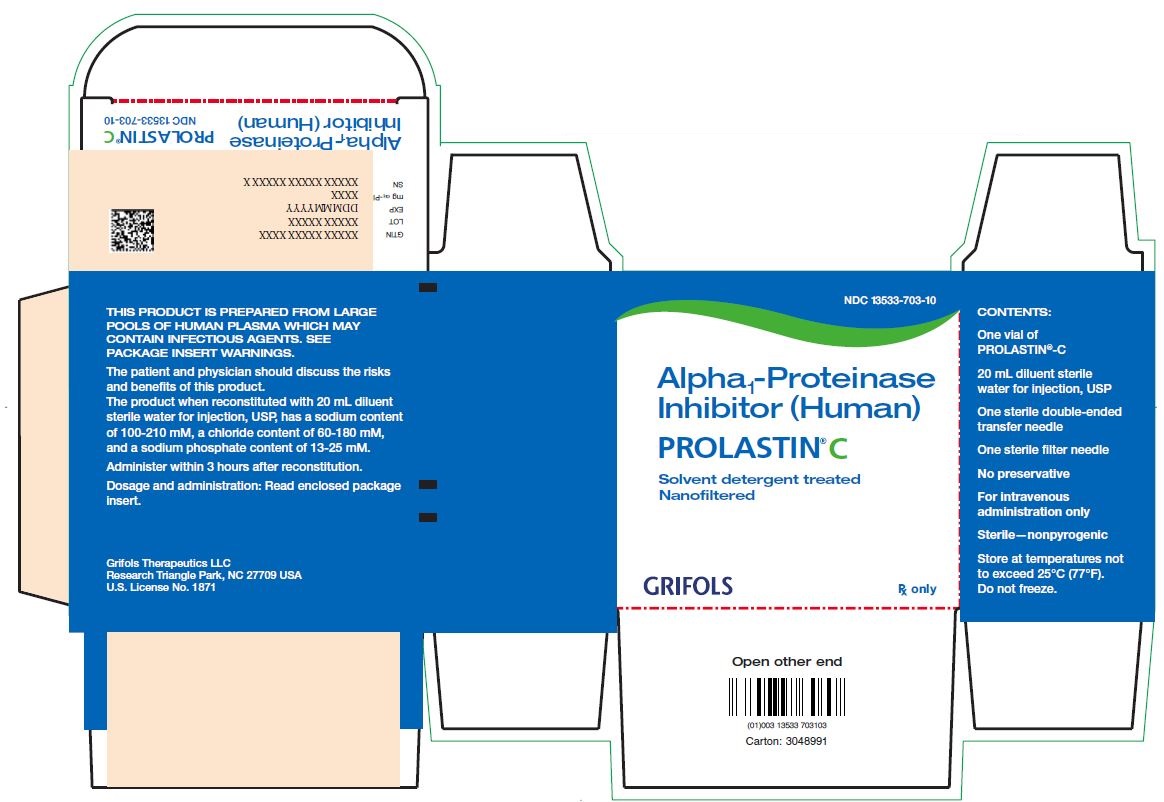
Prolastin-C ALPHA-1-PROTEINASE Inhibitor (HUMAN) Kit — NDC 13533-700-02 (Billing 13533-0700-02)
This is a package of Prolastin-C ALPHA-1-PROTEINASE Inhibitor (HUMAN) Kit from GRIFOLS USA, LLC, marketed since Dec 1987 and currently FDA-listed. It is this product's only package size.
NDC database record
One package, one record: these facts belong to NDC 13533-700-02 alone.
- Record
- FDA NDC Directory package listing · Plasma derivative
- Code segments
- 13533 labeler · 700 product · 02 package
- Package marketed since
- Dec 2, 1987
- Sample package
- No — commercial package
- Listing certified through
- Dec 31, 2026
- Barcode (UPC-A, from the NDC)
- 3 1353370002 7
- FDA record last changed
- Oct 2, 2026
Identity & classification
Regulatory identifiers FDA, NLM and CMS codes for this package
Drug-database identifiers Medi-Span GPI and First Databank GCN / HICL / AHFS classification
- GSN (GCN sequence number): 011700
- GCN: 47571
- GPI-14 (Medi-Span): 45100010102120
- HICL (First Databank): 004529
- AHFS class code: 16:00.00.00
Where does this data come from?
- FDA openFDA NDC Directory · synced Oct 1, 2026
- FDA label on DailyMed · label index refreshed Oct 6, 2026
- RxNorm (NLM RxNav) · catalog refreshed Oct 1, 2026
- Medi-Span GPI (licensed)
- First Databank (licensed) · refreshed Oct 1, 2026
Clinical
Alpha-1-proteinase inhibitor is used in people with symptoms of emphysema (a lung disease) and alpha-1 antitrypsin deficiency (AATD). AATD is an inherited condition in which the body does not make enough of a protein (alpha-1 antitrypsin) needed to protect the lungs from smoke, dust, or pollution. Alpha-1-proteinase inhibitor is in a class of medications called blood derivatives. It works by increasing the levels of alpha-1 antitrypsin protein in your blood and lungs.
Read the full MedlinePlus article ↗Patient education
Supplement & herbal interactions
Where does this data come from?
- MedlinePlus (NLM) · refreshed Oct 1, 2026
- FDA label on DailyMed · label index refreshed Oct 6, 2026
Ask a licensed pharmacist directly — free, answered by our team.
Pricing
A drug doesn't have one price. Each row is a different public payment system, and none is what you'd pay at the counter — that depends on your insurance. The ⓘ on each row explains what it measures.
| Price system | Per each | Per package |
|---|---|---|
| Retail pharmacies payNADAC · weekly | Not in the retail survey — common for institutional, discontinued, or low-volume packs. | |
| Medicaid paysCMS SDUD · 12 mo | No recent Medicaid claims on file for this NDC — rare and low-volume NDCs are suppressed in the public data. | |
| Medicare drug plans payPart D · quarterly | No Part D plan price is available for this NDC in our data. | |
| Medicare Part B allowsASP · J0256 | $5.133 / J0256 unit | — |
Where does this data come from?
- CMS NADAC weekly file
- CMS ASP pricing files · refreshed Sep 20, 2026
- CMS Medicaid State Drug Utilization Data · refreshed Oct 7, 2026
- CMS Part D plan pricing files · refreshed Sep 24, 2026
- VA National Acquisition Center price file
Billing & reimbursement
Where does this data come from?
- CMS ASP NDC-HCPCS crosswalk · refreshed Sep 22, 2026
- DMEPDAC NDC-HCPCS crosswalk
- openFDA NSDE billing units · refreshed Sep 7, 2026
Packaging — all sizes for this product
| Package NDC | Description | Marketing start | Marketing end | Status |
|---|---|---|---|---|
| 13533-0700-02 You're viewing this Main listing | 1 KIT in 1 CARTON * 20 mL in 1 VIAL, SINGLE-DOSE * 20 mL in 1 VIAL, SINGLE-DOSE | 1987-12-02 | — | Active |
Therapeutic equivalents
| Product | Labeler | Pack | NADAC/unit | TE | Status | Price vs. this |
|---|---|---|---|---|---|---|
| Prolastin-Cthis 13533-0700-02 | GRIFOLS | 1 kit | — | — | FDA listed | — |
| Prolastin-C 13533-0703-10 | GRIFOLS | 1 kit | — | — | FDA listed | — |
| Prolastin-C 13533-0706-22 | GRIFOLS | 1 kit | — | — | FDA listed | — |
| Aralast NP 00944-2814-01 | Takeda | 1 kit | — | — | FDA listed | — |
| Aralast NP 00944-2815-01 | Takeda | 1 kit | — | — | FDA listed | — |
Where does this data come from?
- FDA openFDA NDC Directory · synced Oct 1, 2026
- FDA Purple Book · refreshed Oct 5, 2026
- CMS NADAC weekly file
Availability & biosimilar status
Biologics have no small-molecule generics; biosimilar competition is tracked in the FDA Purple Book.
Where does this data come from?
- FDA Purple Book · refreshed Oct 5, 2026
What it looks like
Where does this data come from?
- FDA label on DailyMed · label index refreshed Oct 6, 2026
Inactive Ingredients / Excipients
Inactive ingredients, also called excipients, are components of the drug product other than the active ingredient. They may include fillers, dyes, coatings, preservatives, flavors, or other formulation ingredients.
Where does this data come from?
IACT rows and label-wide narrative are kept separate; availability and product-level specificity depend on the submitted label.- FDA label on DailyMed · label index refreshed Oct 6, 2026
- FDA openFDA NDC Directory · synced Oct 1, 2026
Inactive ingredient FAQ
Are inactive ingredients the same for every manufacturer?
Why might an inactive ingredient be missing?
Can inactive ingredients matter?
Manufacturer & labeler
More NDCs from GRIFOLS USA, LLC labeler code 13533
- GAMASTAN IMMUNE GLOBULIN (HUMAN) .165 g/mL Injection, Solution NDC 13533-635-04
- HYPERHEP B HEPATITIS B IMMUNE GLOBULIN (HUMAN) 220 [iU]/mL Injection NDC 13533-636-01
- HYPERRHO MINI-DOSE RHO(D) IMMUNE GLOBULIN (HUMAN) 250 [iU]/mL Solution NDC 13533-661-06
- Plasbumin Albumin (Human) 2.5 g/50mL Solution NDC 13533-690-20
- Plasbumin Albumin (Human) 10 g/50mL Solution NDC 13533-691-20
- Plasbumin Albumin (Human) 5 g/20mL Solution NDC 13533-692-16
- Prolastin-C ALPHA-1-PROTEINASE Inhibitor (HUMAN) Kit NDC 13533-703-10
- Prolastin-C Liquid Alpha1-Proteinase Inhibitor (Human) 1000 mg/20mL Injection, Solution NDC 13533-705-01
- Prolastin-C ALPHA-1-PROTEINASE Inhibitor (HUMAN) Kit NDC 13533-706-22
- Gamunex-C Immune Globulin (Human) 10 g/100mL Injection NDC 13533-800-12
- Gamunex-C Immune Globulin (Human) 10 g/100mL Injection NDC 13533-805-01
- XEMBIFY immune globulin subcutaneous, human-klhw 200 mg/mL Solution NDC 13533-810-05
Where does this data come from?
- FDA openFDA NDC Directory · synced Oct 1, 2026
- Drugs@FDA
Full FDA label FDA SPL
🎯 Indications and Usage ▾
1 INDICATIONS AND USAGE PROLASTIN-C is a preparation of alpha 1 -proteinase inhibitor that is indicated for chronic augmentation and maintenance therapy in adults with emphysema due to deficiency of alpha 1 -proteinase inhibitor (Alpha 1 -PI, alpha 1 -antitrypsin deficiency). The effect of augmentation therapy with any Alpha 1 -PI product on pulmonary exacerbations and on the progression of emphysema in alpha 1 -antitrypsin deficiency has not been demonstrated in adequately powered, randomized, controlled, clinical trials.
PROLASTIN-C is not indicated as therapy for lung disease in patients in whom severe Alpha 1 -PI deficiency has not been established. PROLASTIN-C is an alpha 1 -proteinase inhibitor that is indicated for chronic augmentation and maintenance therapy in adults with emphysema due to deficiency of alpha 1 -proteinase inhibitor (alpha 1 -antitrypsin deficiency). (1) The effect of augmentation therapy with any alpha 1 -proteinase inhibitor (Alpha 1 -PI) on pulmonary exacerbations and on the progression of emphysema in alpha 1 -antitrypsin deficiency has not been demonstrated in randomized, controlled clinical trials.
PROLASTIN-C is not indicated as therapy for lung disease in patients in whom severe Alpha 1 -PI deficiency has not been established. PROLASTIN-C Reconstitution Method PROLASTIN-C Figure 1
⏱️ Dosage and Administration ▾
2 DOSAGE AND ADMINISTRATION For intravenous use only. The recommended dose of PROLASTIN-C is 60 mg/kg body weight administered once weekly. Dose ranging studies using efficacy endpoints have not been performed with any alpha 1 -proteinase inhibitor product.
Each vial of PROLASTIN-C contains the labeled amount of functionally active Alpha 1 -PI in milligrams (as determined by the capacity to neutralize porcine pancreatic elastase) as stated on the label. PROLASTIN-C should be given intravenously at a rate of approximately 0.08 mL/kg/min as determined by the response and comfort of the patient. The recommended dosage of 60 mg/kg takes approximately 15 minutes to infuse.
The recommended dose of PROLASTIN-C is 60 mg/kg body weight administered once weekly. Dose ranging studies using efficacy endpoints have not been performed with any alpha 1 -proteinase inhibitor product. Administer PROLASTIN-C intravenously at a rate of approximately 0.08 mL/kg/min as determined by the response and comfort of the patient.
(2)
2.1Preparation and Handling Do not freeze. Breakage of the diluent bottle may occur. PROLASTIN-C and diluent should be at room temperature before reconstitution.
Inspect reconstituted PROLASTIN-C visually for particulate matter and discoloration prior to pooling and use. PROLASTIN-C should be kept at room temperature after reconstitution and should be administered within 3 hours. PROLASTIN-C should be given alone, without mixing with other agents or diluting solutions.
Reconstituted product from several vials may be pooled into an empty, sterile IV solution container by using aseptic technique. Do not use after expiration date.
2.2Administration Each product package contains one PROLASTIN-C single use vial, one 20 mL vial of Sterile Water for Injection (diluent), one color-coded sterile transfer needle, and one sterile filter needle. Administer within three hours after reconstitution. Reconstitution Use aseptic technique.
PROLASTIN-C and diluent should be at room temperature before reconstitution. Remove the plastic flip tops from each vial. Swab the exposed stopper surfaces with alcohol and allow surface to dry.
Remove the plastic cover from the short end of the transfer needle. Insert the exposed end of the needle through the center of the stopper in the DILUENT vial. Remove the cover at the other end of the transfer needle by twisting it carefully.
Invert the DILUENT vial and insert the attached needle into the PRODUCT vial at a 45° angle ( Figure A below). This will direct the stream of diluent against the wall of the product vial and minimize foaming. The vacuum will draw the diluent into the PRODUCT vial.
Remove the DILUENT bottle and transfer needle. Immediately after adding the diluent, swirl vigorously for 10-15 seconds to thoroughly break up cake then swirl continuously until the powder is completely dissolved ( Figure B below). Some foaming will occur, but does not affect the quality of the product.
Inspect the vial visually for particulate matter and discoloration prior to pooling and administration. A few small particles may occasionally remain after reconstitution. If particles are visible, remove by passage through a sterile filter (e.g., 15 micron filter) used for administering blood products (not supplied).
Reconstituted product from several vials may be pooled into an empty, sterile IV solution container by using aseptic technique. A sterile filter needle is provided for this purpose. Described here is one acceptable method of reconstitution.
The product could also be reconstituted with other appropriate devices according to the manufacturer’s accepted procedure. Shelf Life PROLASTIN-C should be stored at temperatures not to exceed 25°C (77°F) for the period indicated by the expiration date on its label. Special Precautions for Storage Freezing should be avoided as breakage of the diluent bottle might occur.
💊 Dosage Forms and Strengths ▾
3 DOSAGE FORMS AND STRENGTHS PROLASTIN-C is supplied in 1000 mg single use vials with a separate 20 mL vial of Sterile Water for Injection, USP. PROLASTIN-C is supplied in 1000 mg single use vials with a separate 20 mL Sterile Water for Injection, USP. (3)
⛔ Contraindications ▾
4 CONTRAINDICATIONS PROLASTIN-C is contraindicated in IgA deficient patients with antibodies against IgA, due to the risk of severe hypersensitivity. IgA deficient patients with antibodies against IgA. (4)
⚠️ Warnings and Cautions ▾
5 WARNINGS AND PRECAUTIONS IgA deficient patients with antibodies against IgA are at greater risk of developing severe hypersensitivity and anaphylactic reactions. (5.1) This product is made from human plasma and may contain infectious agents, e.g., viruses and, theoretically, the Creutzfeldt-Jakob disease agent. (5.2)
5.1Sensitivity Hypersensitivity reactions may occur. Should evidence of an acute hypersensitivity reaction be observed, the infusion should be stopped promptly and appropriate countermeasures and supportive therapy should be administered. (See Patient Counseling Information [17] ) PROLASTIN-C may contain trace amounts of IgA.
Patients with known antibodies to IgA, which can be present in patients with selective or severe IgA deficiency, have a greater risk of developing potentially severe hypersensitivity and anaphylactic reactions. PROLASTIN-C is contraindicated in patients with antibodies against IgA.
5.2Viral Clearance Products made from human plasma may carry a risk of transmitting infectious agents, e.g., viruses, and, theoretically, the Creutzfeldt-Jakob disease (CJD) agent. In each of 2 randomized, double-blind studies in which the predecessor product, PROLASTIN ® (Alpha1-Proteinase Inhibitor [Human]), was compared to other Alpha 1 products, there was a single case of parvovirus B19 seroconversion in the PROLASTIN arms of each trial. In each case, it could not be determined whether parvovirus B19 had been acquired from PROLASTIN or from the community.
However, during clinical studies with PROLASTIN-C, there were no reported treatment emergent cases of hepatitis B, hepatitis C, HIV or parvovirus B19 viral infections. Furthermore, the PROLASTIN-C process incorporates additional plasma safety and virus reduction measures that minimize the residual risk of virus transmission (See Description [11] ) . The physician should discuss the risks and benefits of this product with the patient, before prescribing or administering it to a patient.
(See Patient Counseling Information [17] ) . All infections thought by a physician possibly to have been transmitted by this product should be reported by the physician or other healthcare provider to Talecris Biotherapeutics, Inc. [1-800-520-2807].
🤒 Adverse Reactions ▾
6 ADVERSE REACTIONS The most serious adverse reaction observed during clinical studies with PROLASTIN-C was an abdominal and extremity rash in one subject. The rash resolved subsequent to outpatient treatment with antihistamines and steroids. Two instances of a less severe, pruritic abdominal rash were observed upon rechallenge despite continued antihistamine and steroid treatment, which led to withdrawal of the subject from the trial.
The most common drug-related adverse reactions observed at a rate of ≥ 1% in subjects receiving PROLASTIN-C were chills, malaise, headache, rash, hot flush and pruritus. The most common drug related adverse reactions during clinical trials in ≥ 1% of subjects were chills, malaise, headache, rash, hot flush, and pruritus. (6.1) To report SUSPECTED ADVERSE REACTIONS, contact Talecris Biotherapeutics, Inc. at 1-800-520-2807 or FDA at 1-800-FDA-1088 or www.fda.gov/medwatch .
6.1Clinical Trials Experience Because clinical studies are conducted under widely varying conditions, adverse reaction rates observed cannot be directly compared to rates in other clinical trials and may not reflect the rates observed in practice. Two separate clinical studies were conducted with PROLASTIN-C: (1) A 20 week, open-label, single arm safety study in 38 subjects, and (2) A 16 week, randomized, double-blind, crossover pharmacokinetic comparability study vs. PROLASTIN in 24 subjects, followed by an 8 week open-label treatment with PROLASTIN-C.
Thus, 62 subjects were exposed to PROLASTIN-C in clinical trials. Adverse reactions considered drug related by the investigators occurring in 1.6% of subjects (one subject each) treated with PROLASTIN-C were malaise, headache, rash, hot flush, and pruritus. Drug related chills occurred in 3.2% (2 subjects) of PROLASTIN-C subjects.
Adverse events occurring irrespective of causality in ≥ 5% of subjects in the first 8 weeks of treatment are shown in Table 1 . Adverse events which occurred in the first 8 weeks of treatment are shown in the table in order to control for the differing treatment durations of the safety and PK studies (20 weeks vs. two 8 week periods). Table 1: Adverse Events Occurring in ≥ 5% of Subjects in the First 8 Weeks of Treatment Irrespective of Causality PROLASTIN ® -C No. of subjects: 62 PROLASTIN ® No. of subjects: 24 Adverse Event No. of subjects with AE (percentage of all subjects) No. of subjects with AE (percentage of all subjects) Source: studies 11815 and 11816 Nausea 4 (6.5%) 0 Urinary Tract Infection 4 (6.5%) 0 Headache 3 (4.8%) 2 (8.3%) Arthralgia 2 (3.2%) 2 (8.3%) Table 2 below displays the overall adverse rate (> 0.5%), irrespective of causality, as a percentage of infusions received.
Table 2: Adverse Event Frequency as a % of all infusions (> 0.5%) Irrespective of Causality PROLASTIN ® -C No. of infusions: 1132 PROLASTIN ® No. of infusions: 192 Adverse Event No. of AE (percentage of all infusions) No. of AE (percentage of all infusions) Source: studies 11815 and 11816 Upper respiratory tract infection 9 (0.8%) 1 (0.5%) Urinary tract infection 8 (0.7%) 0 Nausea 7 (0.6%) 0 Headache 4 (0.4%) 3 (1.6%) Arthralgia 2 (0.2%) 2 (1.0%) Table 3 below displays the overall rates of adverse events (≥ 5%), in the first eight weeks of treatment, that began during or within 72 hours of the end of an infusion of PROLASTIN-C or PROLASTIN.
Table 3: Adverse Events Occurring in ≥ 5% of Subjects during or within 72 hours of the end of an infusion, in the First 8 Weeks of Treatment Irrespective of Causality PROLASTIN ® -C No. of subjects: 62 PROLASTIN ® No. of subjects: 24 Adverse Event No. of subjects with AE (percentage of all subjects) No. of subjects with AE (percentage of all subjects) Source: studies 11815 and 11816 Urinary Tract Infection 4 (6.5%) 0 Headache 3 (4.8%) 2 (8.3%) Ten exacerbations of chronic obstructive pulmonary disease were reported by 8 subjects in the 24 week pharmacokinetic crossover study.
During the 16 week double-blind crossover phase, 4 subj… [Excerpted — this section continues on DailyMed.]
🔄 Drug Interactions ▾
7 DRUG INTERACTIONS PROLASTIN-C should be given alone, without mixing with other agents or diluting solutions.
👥 Use in Specific Populations ▾
8 USE IN SPECIFIC POPULATIONS Pregnancy: No human or animal data. Use only if clearly needed (8.1)
8.1Pregnancy Pregnancy Category C. Animal reproduction studies have not been conducted with PROLASTIN-C. It is not known whether PROLASTIN-C can cause fetal harm when administered to a pregnant woman or can affect reproduction capacity. PROLASTIN-C should be given to a pregnant woman only if clearly needed.
8.3Nursing Mothers It is not known whether PROLASTIN-C is excreted in human milk. Because many drugs are excreted in human milk, caution should be exercised when PROLASTIN-C is administered to a nursing woman.
8.4Pediatric Use Safety and effectiveness in the pediatric population have not been established.
8.5Geriatric Use Clinical studies of PROLASTIN-C did not include sufficient numbers of subjects aged 65 and over to determine whether they respond differently from younger subjects. As for all patients, dosing for geriatric patients should be appropriate to their overall situation.
🤰 Pregnancy ▾
8.1Pregnancy Pregnancy Category C. Animal reproduction studies have not been conducted with PROLASTIN-C. It is not known whether PROLASTIN-C can cause fetal harm when administered to a pregnant woman or can affect reproduction capacity. PROLASTIN-C should be given to a pregnant woman only if clearly needed.
🧒 Pediatric Use ▾
8.4Pediatric Use Safety and effectiveness in the pediatric population have not been established.
🧓 Geriatric Use ▾
8.5Geriatric Use Clinical studies of PROLASTIN-C did not include sufficient numbers of subjects aged 65 and over to determine whether they respond differently from younger subjects. As for all patients, dosing for geriatric patients should be appropriate to their overall situation.
🧬 Clinical Pharmacology ▾
12 CLINICAL PHARMACOLOGY Alpha 1 -proteinase inhibitor (Alpha 1 -PI) deficiency (AAT deficiency) is an autosomal, co-dominant, hereditary disorder characterized by low serum and lung levels of Alpha 1 -PI (2-5) . Smoking is an important risk factor for the development of emphysema in patients with alpha 1 -proteinase inhibitor deficiency (6) . Because emphysema affects many, but not all individuals with the more severe genetic variants of Alpha 1 -PI deficiency, augmentation therapy with Alpha 1 -Proteinase Inhibitor (Human) is indicated only in patients with severe Alpha 1 -PI deficiency who have clinically evident emphysema.
Only some Alpha 1 -PI alleles are associated with clinically apparent AAT deficiency (7,8) . Approximately 95% of all severely AAT deficient patients are homozygous for the PiZ allele (8) . Individuals with the PiZZ variant typically have serum Alpha 1 -PI levels less than 35% of the average normal level (2,4) .
Individuals with the Pi(null)(null) variant have undetectable Alpha 1 -PI protein in their serum (2,3) . Individuals with these low serum Alpha 1 -PI levels, i.e., less than 11 µM, have a markedly increased risk for developing emphysema over their lifetimes. In addition, PiSZ individuals, whose serum Alpha 1 -PI levels range from approximately 9 to 23 µM (9) , are considered to have moderately increased risk for developing emphysema, regardless of whether their serum Alpha 1 -PI levels are above or below 11 µM.
Augmenting the levels of functional protease inhibitor by intravenous infusion is an approach to therapy for patients with AAT deficiency. The intended theoretical goal is to provide protection to the lower respiratory tract by correcting the imbalance between neutrophil elastase and protease inhibitors. Whether augmentation therapy with any Alpha 1 -PI product actually protects the lower respiratory tract from progressive emphysematous changes has not been demonstrated in adequately powered, randomized controlled, clinical trials.
Although the maintenance of blood serum levels of Alpha 1 -PI (antigenically measured) above 11 µM has been historically postulated to provide therapeutically relevant anti-neutrophil elastase protection (10) , this has not been proven. Individuals with severe Alpha 1 -PI deficiency have been shown to have increased neutrophil and neutrophil elastase concentrations in lung epithelial lining fluid compared to normal PiMM individuals, and some PiSZ individuals with Alpha 1 -PI above 11 µM have emphysema attributed to Alpha 1 -PI deficiency.
These observations underscore the uncertainty regarding the appropriate therapeutic target serum level of Alpha 1 -PI during augmentation therapy.
12.1Mechanism of Action The pathogenesis of emphysema is understood to evolve as described in the “protease-antiprotease imbalance” model (11) . Alpha 1 -PI is understood to be the primary antiprotease in the lower respiratory tract, where it inhibits neutrophil elastase (NE) (12) . Normal healthy individuals produce sufficient Alpha 1 -PI to control the NE produced by activated neutrophils and are thus able to prevent inappropriate proteolysis of the lung tissue by NE.
Conditions that increase neutrophil accumulation and activation in the lung, such as respiratory infection and smoking, will in turn increase levels of NE. However, individuals who are severely deficient in endogenous Alpha 1 -PI are unable to maintain an appropriate antiprotease defense, and, in addition, they have been shown to have increased lung epithelial lining fluid neutrophil and NE concentrations. Because of these factors, many (but not all) individuals who are severely deficient in endogenous Alpha 1 -PI are subject to more rapid proteolysis of the alveolar walls leading to chronic lung disease.
PROLASTIN ® -C (Alpha1-Proteinase Inhibitor [Human]) serves as Alpha 1 -PI augmentation therapy in the patient population with severe Alpha 1 -PI deficiency and emphysema, acting to increase and maintain serum and l… [Excerpted — this section continues on DailyMed.]
🧬 Mechanism of Action ▾
12.1Mechanism of Action The pathogenesis of emphysema is understood to evolve as described in the “protease-antiprotease imbalance” model (11) . Alpha 1 -PI is understood to be the primary antiprotease in the lower respiratory tract, where it inhibits neutrophil elastase (NE) (12) . Normal healthy individuals produce sufficient Alpha 1 -PI to control the NE produced by activated neutrophils and are thus able to prevent inappropriate proteolysis of the lung tissue by NE.
Conditions that increase neutrophil accumulation and activation in the lung, such as respiratory infection and smoking, will in turn increase levels of NE. However, individuals who are severely deficient in endogenous Alpha 1 -PI are unable to maintain an appropriate antiprotease defense, and, in addition, they have been shown to have increased lung epithelial lining fluid neutrophil and NE concentrations. Because of these factors, many (but not all) individuals who are severely deficient in endogenous Alpha 1 -PI are subject to more rapid proteolysis of the alveolar walls leading to chronic lung disease.
PROLASTIN ® -C (Alpha1-Proteinase Inhibitor [Human]) serves as Alpha 1 -PI augmentation therapy in the patient population with severe Alpha 1 -PI deficiency and emphysema, acting to increase and maintain serum and lung epithelial lining fluid levels of Alpha 1 -PI.
📦 How Supplied / Storage and Handling ▾
16 HOW SUPPLIED/STORAGE AND HANDLING PROLASTIN-C is supplied in single-use vials with the total Alpha 1 -PI functional activity, in milligrams, stated on the label of each vial. Each product package contains a single vial of PROLASTIN-C, one 20 mL vial of Sterile Water for Injection, USP, a transfer needle, and a filter needle. PROLASTIN-C is supplied in the following size: NDC Number Approximate Alpha 1 -PI Functional Activity Diluent 13533-700-01 1000 mg 20 mL PROLASTIN-C should be stored at temperatures not to exceed 25°C (77°F) for the period indicated by the expiration date on its label.
Freezing should be avoided as breakage of the diluent bottle might occur.
📋 Description ▾
11 DESCRIPTION Alpha 1 -Proteinase Inhibitor (Human), PROLASTIN-C, is a sterile, stable, lyophilized preparation of purified human alpha 1 -proteinase inhibitor (Alpha 1 -PI), also known as alpha 1 -antitrypsin. PROLASTIN-C is intended for use in therapy for patients with emphysema due to congenital alpha 1 -antitrypsin deficiency. PROLASTIN-C is produced through modifications of the PROLASTIN process that result in improved product purity and a higher concentration of the same active substance, Alpha 1 -PI, in the reconstituted product.
PROLASTIN-C is supplied as a sterile, white to beige, lyophilized powder. The specific activity of PROLASTIN-C is ≥ 0.7 mg functional Alpha 1 -PI per mg of total protein. PROLASTIN-C has a purity of ≥ 90% Alpha 1 -PI.
Each vial contains approximately 1000 mg of functionally active Alpha 1 -PI. When reconstituted with 20 mL of Sterile Water for Injection, USP, PROLASTIN-C has a pH of 6.6–7.4, a sodium content of 100–210 mM, a chloride content of 60–180 mM and a sodium phosphate content of 15–25 mM. Each vial of PROLASTIN-C contains the labeled amount of functionally active Alpha 1 -PI in milligrams per vial (mg/vial), as determined by capacity to neutralize porcine pancreatic elastase.
PROLASTIN-C contains no preservative and must be administered by the intravenous route. PROLASTIN-C is prepared by cold ethanol fractionation of pooled human plasma based on modifications and refinements of the Cohn method (1) using purification by polyethylene glycol (PEG) precipitation, anion exchange chromatography, and cation exchange chromatography. All source plasma used in the manufacture of this product is non-reactive (negative) by FDA-licensed serological test methods for hepatitis B surface antigen (HBsAg) and antibodies to hepatitis C virus (HCV) and human immunodeficiency virus types 1 and 2 and negative by FDA-licensed Nucleic Acid Technologies (NAT) for HCV and human immunodeficiency virus type 1 (HIV-1).
In addition, all source plasma is negative for hepatitis B virus (HBV) by either an FDA-licensed or investigational NAT assay. The goal of the investigational HBV NAT test is to detect low levels of viral nucleic acid; however, the significance of a negative result for the investigational HBV NAT test has not been established. By in-process NAT, all source plasma is negative for hepatitis A virus (HAV).
As a final plasma safety step, all plasma manufacturing pools are tested by serological test methods and NAT. To provide additional assurance of the virus safety profile of PROLASTIN-C, in vitro studies have been conducted to validate the capacity of the manufacturing process to reduce the infectious titer of a wide range of viruses with diverse physicochemical properties. These studies evaluated the inactivation/removal of clinically relevant viruses, including human immunodeficiency virus type 1 (HIV-1) and hepatitis A virus (HAV), as well as the following model viruses: bovine viral diarrhea virus (BVDV), a surrogate for hepatitis C virus; pseudorabies virus (PRV), a surrogate for large enveloped DNA viruses (e.g., herpes viruses); vesicular stomatitis virus (VSV), a model for enveloped viruses; reovirus type 3 (Reo3), a non-specific model for non-enveloped viruses; and porcine parvovirus (PPV), a model for human parvovirus B19.
The PROLASTIN-C manufacturing process has several steps (Cold Ethanol Fractionation, PEG Precipitation, and Depth Filtration) that are important for purifying Alpha 1 -PI as well as removing potential virus contaminants. Two additional steps, Solvent/Detergent Treatment and 15 nm Virus Removal Nanofiltration, are included in the process as dedicated pathogen reduction steps. The Solvent/Detergent Treatment step effectively inactivates enveloped viruses (such as HIV-1, VSV, HBV, and HCV).
The 15 nm Virus Removal Nanofiltration step has been implemented to reduce the risk of transmission of enveloped and non-enveloped viruses as small as 18 nm. The table below presents the… [Excerpted — this section continues on DailyMed.]
💬 Information for Patients ▾
17 PATIENT COUNSELING INFORMATION Inform patients of the signs of hypersensitivity reactions including hives, generalized urticaria, tightness of the chest, dyspnea, wheezing, faintness, hypotension, and anaphylaxis. Patients should be advised to discontinue use of the product and contact their physician and/or seek immediate emergency care, depending on the severity of the reaction, if these symptoms occur. Inform patients that PROLASTIN-C is made from human plasma and may contain infectious agents that can cause disease (e.g., viruses and, theoretically, the CJD agent).
Inform patients of the risk that PROLASTIN-C may transmit an infectious agent, but that this risk has been reduced by screening plasma donors for prior exposure to certain viruses, by testing the donated plasma for certain virus infections and by inactivating and/or removing certain viruses during manufacturing. (See Warnings and Precautions [5.2] ) . Inform patients that administration of PROLASTIN-C has been demonstrated to raise the plasma level of Alpha 1 -PI, but that the effect of this augmentation on pulmonary exacerbations and on the rate of progression of emphysema has not been demonstrated in adequately powered, randomized, controlled clinical trials for any Alpha 1 -PI product.
Manufactured by: Talecris Biotherapeutics, Inc. Research Triangle Park, NC 27709 USA U.S. License No.
1716
🍼 Nursing Mothers ▾
8.3Nursing Mothers It is not known whether PROLASTIN-C is excreted in human milk. Because many drugs are excreted in human milk, caution should be exercised when PROLASTIN-C is administered to a nursing woman.
🧬 Pharmacokinetics ▾
12.3Pharmacokinetics The pharmacokinetic (PK) study was a randomized, double-blind, crossover trial comparing PROLASTIN-C to PROLASTIN conducted in 24 adult subjects age 40 to 72 with severe AAT deficiency. Ten subjects were male and 14 subjects were female. Twelve subjects were randomized to each treatment sequence.
All but one subject had the PiZZ genotype and the remaining subject had PiSZ. All subjects had received prior Alpha 1 -PI therapy with PROLASTIN for at least 1 month. Study subjects were randomly assigned to receive either 60 mg/kg body weight of functional PROLASTIN-C or PROLASTIN weekly by IV infusion during the first 8 week treatment period.
Following the last dose in the first 8-week treatment period, subjects underwent serial blood sampling for PK analysis and then crossed over to the alternate treatment for the second 8-week treatment period. Following the last treatment in the second 8-week treatment period, subjects underwent serial blood sampling for PK analysis. In addition, blood samples were drawn for trough levels before infusion at Weeks 6, 7, and 8, as well as before infusion at Weeks 14, 15, and 16.
In the 8-week open-label treatment phase that followed the crossover period, all subjects received 60 mg/kg body weight of functional PROLASTIN-C. The pharmacokinetic parameters of Alpha 1 -PI in plasma, based on functional activity assays, showed comparability between PROLASTIN-C treatment and PROLASTIN treatment, as shown in Table 5 . Table 5: Pharmacokinetic parameters of Alpha 1 -PI in plasma Treatment AUC 0-7 days (hr*mg/mL) Mean (%CV) C max (mg/mL) Mean (%CV) t 1/2 (hr) Mean (%CV) PROLASTIN ® -C (n=22 or 23) 155.9 (17%) 1.797 (10%) 146.3 (16%) PROLASTIN ® (n=22 or 23) 152.4 (16%) 1.848 (15%) 139.3 (18%) The key pharmacokinetic parameter was the area under the plasma concentration-time curve (AUC 0-7days ) following 8 weeks of treatment with PROLASTIN-C or PROLASTIN.
The 90% confidence interval (0.97-1.09) for the ratio of AUC 0-7days for PROLASTIN-C and PROLASTIN indicated that the 2 products are pharmacokinetically equivalent. Figure 1 shows the concentration (functional activity) vs. time curves of Alpha 1 -PI after intravenous administration of PROLASTIN-C and PROLASTIN. Figure 1: Mean Plasma Alpha 1 -PI Concentration (functional activity) vs.
Time Curves Following Treatment with PROLASTIN-C or PROLASTIN Trough levels measured during the PK study via an antigenic content assay showed PROLASTIN-C treatment resulted in a mean trough of 16.9 ± 2.3 µM and PROLASTIN resulted in a mean trough of 16.7 ± 2.7 µM. Using the functional activity assay, PROLASTIN-C resulted in a mean trough of 11.8 ± 2.2 µM and PROLASTIN resulted in a mean trough of 11.0 ± 2.2 µM.
🧬 Pharmacodynamics ▾
12.2Pharmacodynamics Chronic augmentation therapy with the predecessor product, PROLASTIN ® (Alpha1-Proteinase Inhibitor [Human]), administered weekly at a dose of 60 mg/kg body weight, results in significantly increased levels of Alpha 1 -PI and functional anti-neutrophil elastase capacity in the epithelial lining fluid of the lower respiratory tract of the lung, as compared to levels prior to commencing therapy with PROLASTIN (11-13) . However, the clinical benefit of the increased levels at the recommended dose has not been demonstrated in adequately powered, randomized, controlled clinical trials for any Alpha 1 -PI product.
🔬 Clinical Studies ▾
14 CLINICAL STUDIES A total of 62 unique subjects were studied in 2 clinical studies. In addition to the pharmacokinetic study described in [12.3] , a multi-center, open-label single arm safety study was conducted to evaluate the safety and tolerability of PROLASTIN-C. In this study, 38 subjects were treated with weekly IV infusions of 60 mg/kg body weight of PROLASTIN-C for 20 weeks.
Half the subjects were naïve to previous Alpha 1 -PI augmentation prior to study entry and the other half were receiving augmentation with PROLASTIN prior to entering the study. A diagnosis of severe AAT deficiency was confirmed by the demonstration of the PiZZ genotype in 32 of 38 (84.2%) subjects, and 6 of 38 (15.8%) subjects presented with other alleles known to result in severe AAT deficiency. These groups were distributed evenly between the naïve and non-naïve cohorts.
Results from the study are discussed in [6.2] . The clinical efficacy of PROLASTIN-C or any Alpha 1 -PI product in influencing the course of pulmonary emphysema or pulmonary exacerbations has not been demonstrated in adequately powered, randomized, controlled clinical trials.
📚 References ▾
15 REFERENCES Coan MH, Brockway WJ, Eguizabal H, et al: Preparation and properties of alpha 1 -proteinase inhibitor concentrate from human plasma. Vox Sang 48(6):333-42, 1985. Brantly M, Nukiwa T, Crystal RG: Molecular basis of alpha-1-antitrypsin deficiency.
Am J Med 84(Suppl 6A):13-31, 1988. Crystal RG, Brantly ML, Hubbard RC, Curiel DT, et al: The alpha1-antitrypsin gene and its mutations: Clinical consequences and strategies for therapy. Chest 95:196-208, 1989.
Hutchison DCS: Natural history of alpha-1-protease inhibitor deficiency. Am J Med 84(Suppl 6A):3-12, 1988. Hubbard RC, Crystal RG: Alpha-1-antitrypsin augmentation therapy for alpha-1-antitrypsin deficiency.
Am J Med 84(Suppl 6A):52-62, 1988. American Thoracic Society/European Respiratory Society Statement: Standards for the diagnosis and management of individuals with alpha-1 antitrypsin deficiency. Am J Respir Crit Care Med 168:818-900, 2003.
Crystal RG: α 1 -Antitrypsin deficiency, emphysema, and liver disease; genetic basis and strategies for therapy. J Clin Invest 85:1343-52, 1990. World Health Organization: Alpha-1-antitrypsin deficiency: Memorandum from a WHO meeting.
Bull World Health Organ 75:397-415, 1997. Turino GM, Barker, AF, Brantly, ML et al: Clinical features of individuals with PI*SZ phenotype of α 1 -antitrypsin deficiency. Am J Respir Crit Care Med 154: 1718-25, 1996.
American Thoracic Society: Guidelines for the approach to the patient with severe hereditary alpha-1-antitrypsin deficiency. Am Rev Respir Dis 140:1494-7, 1989. Stockley RA: Neutrophils and protease/antiprotease imbalance.
Am J Respir Crit Care Med 160:S49-S52, 1999. Gadek JE, Fells GA, Zimmerman RL, Rennard SI, Crystal RG: Antielastases of the human alveolar structures; Implications for the protease-antiprotease theory of emphysema. J Clin Invest 68:889-98, 1981.
Gadek JE, Crystal RG: Alpha 1 -antitrypsin deficiency. In: Stanbury JB, Wyngaarden JB, Frederickson DS, et al, eds.: The Metabolic Basis of Inherited Disease. 5th ed.
New York, McGraw-Hill, 1983, p.1450-67.
📄 Recent Major Changes ▾
Dosage and Administration, Administration, Reconstitution (2.2) 10/2009
📄 Package Label / Principal Display Panel ▾
18 PACKAGE LABEL.PRINCIPAL DISPLAY PANEL NDC 13533-700-01 Alpha 1 -Proteinase Inhibitor (Human) PROLASTIN® C Solvent detergent treated Nanofiltered Talecris Biotherapeutics The patient and physician should discuss the risks and benefits of this product. No preservative For intravenous administration only Sterile—nonpyrogenic Reconstitute with 20 mL diluent sterile water for injection, USP. Store at temperatures not to exceed 25°C (77°F).
Do not freeze. Dosage and administration: Read package insert. Rx only Talecris Biotherapeutics, Inc.
Research Triangle Park, NC 27709 USA U.S. License No. 1716 Alpha 1 -Proteinase Inhibitor (Human) Prolastin® C Sovent detergent treated Nanofiltered Dosage and administration: Read enclosed package insert.
Store at temperatures not to exceed not to exceed 25(degrees)C (77(degrees)F. Do not freeze. Talecris Biotherapeutics NDC 13533-700-01
Medicare Part D spend CMS · PART D · 2026 (Q1)
About this NDC listing & data coverage
Kit / multi-component package
This NDC identifies a kit — a package containing more than one component. Structured data (pricing, ingredients, equivalents) is often reported per component rather than for the kit NDC itself, which can make this page look thinner than the components' own pages.
What data is (and isn’t) available for this NDC — tap to expand
| NDC identity (package / product / labeler codes) | ✓ Available |
| Labeler | ✓ Available |
| Product & package description | ✓ Available |
| Marketing category & status | ✓ Available |
| Active ingredient / dosage form / route | ✓ Available |
| FDA label (SPL via DailyMed) | ✓ Available |
| Package photos | ✓ Available |
| Inactive ingredients (structured) | — Not published for this NDC The labeler did not submit a structured excipient list, or no SPL is available. |
| NADAC pharmacy acquisition price (CMS) | — Not published for this NDC CMS publishes NADAC only for NDCs reported in its retail-pharmacy survey. |
| Orange Book / therapeutic-equivalence data | — Not published for this NDC Applies only to products approved under an NDA/ANDA; many listings are out of scope. |
| HCPCS J-code billing crosswalk | ✓ Available |
| Medicaid utilization (CMS SDUD) | — Not published for this NDC CMS reports utilization only for NDCs with Medicaid claims above its privacy threshold. |