
Gamunex-C Immune Globulin (Human) 10 g/100mL Injection — NDC 13533-800-15 (Billing 13533-0800-15)
This is a package of Gamunex-C Immune Globulin (Human) 10 g/100mL Injection from GRIFOLS USA, LLC, marketed since Oct 2010 and currently FDA-listed.
NDC database record
One package, one record: these facts belong to NDC 13533-800-15 alone.
- Record
- FDA NDC Directory package listing · Plasma derivative
- Code segments
- 13533 labeler · 800 product · 15 package
- Package marketed since
- Oct 13, 2010
- Sample package
- No — commercial package
- Listing certified through
- Dec 31, 2026
- Barcode (UPC-A, from the NDC)
- 3 1353380015 4
- Medicaid fills, this package
- 135 prescriptions in the last four reported quarters
- FDA record last changed
- Oct 8, 2026
Identity & classification
Regulatory identifiers FDA, NLM and CMS codes for this package
Drug-database identifiers Medi-Span GPI and First Databank GCN / HICL / AHFS classification
- GSN (GCN sequence number): 066882
- GCN: 29306
- GPI-14 (Medi-Span): 19100020302060
- HICL (First Databank): 043712
- AHFS class code: 80:04.00.00
Where does this data come from?
- FDA openFDA NDC Directory · synced Oct 8, 2026
- FDA label on DailyMed · label index refreshed Oct 6, 2026
- RxNorm (NLM RxNav) · catalog refreshed Oct 1, 2026
- Medi-Span GPI (licensed)
- First Databank (licensed) · refreshed Oct 8, 2026
Clinical
- Think of it as a collection of protective proteins — called antibodies — that healthy donors have built up against many different germs. If your immune system can't make enough of...
- What exactly is human immunoglobulin G and why do I need it?
- It depends on the specific product your doctor prescribed. The IV versions — like Privigen, Asceniv, Qivigy, and Gammaplex — are infused into a vein, usually every 3 to 4 weeks. Hi...
- How is it given, and how often will I need infusions?
Patient education
Supplement & herbal interactions
Where does this data come from?
- MedlinePlus (NLM) · refreshed Oct 1, 2026
- FDA label on DailyMed · label index refreshed Oct 6, 2026
Ask a licensed pharmacist directly — free, answered by our team.
Pricing
A drug doesn't have one price. Each row is a different public payment system, and none is what you'd pay at the counter — that depends on your insurance. The ⓘ on each row explains what it measures.
| Price system | Per each | Per package |
|---|---|---|
| Retail pharmacies payNADAC · weekly | Not in the retail survey — common for institutional, discontinued, or low-volume packs. | |
| Medicaid paysCMS SDUD · 12 mo | $6.25 | $6.25 / 1 vial |
| Medicare drug plans payPart D · quarterly | No Part D plan price is available for this NDC in our data. | |
| Medicare Part B allowsASP · J1561 | $49.014 / J1561 unit | — |
Where does this data come from?
- CMS NADAC weekly file
- CMS ASP pricing files · refreshed Sep 20, 2026
- CMS Medicaid State Drug Utilization Data · through Q1 2026
- CMS Part D plan pricing files · refreshed Sep 24, 2026
- VA National Acquisition Center price file
Billing & reimbursement
Where does this data come from?
- CMS ASP NDC-HCPCS crosswalk · refreshed Sep 22, 2026
- DMEPDAC NDC-HCPCS crosswalk
- openFDA NSDE billing units · refreshed Oct 7, 2026
Packaging — all sizes for this product
| Package NDC | Description | Marketing start | Marketing end | Status |
|---|---|---|---|---|
| 13533-0800-12 13533-800-12 | 1 VIAL, GLASS in 1 CARTON / 10 mL in 1 VIAL, GLASS | 2010-10-13 | — | Active |
| 13533-0800-15 You're viewing this | 1 VIAL, GLASS in 1 CARTON / 25 mL in 1 VIAL, GLASS | 2010-10-13 | — | Active |
| 13533-0800-20 13533-800-20 | 1 VIAL, GLASS in 1 CARTON / 50 mL in 1 VIAL, GLASS | 2010-10-13 | — | Active |
| 13533-0800-24 13533-800-24 Main listing | 1 VIAL, GLASS in 1 CARTON / 200 mL in 1 VIAL, GLASS | 2010-10-13 | — | Active |
| 13533-0800-40 13533-800-40 | 1 VIAL, GLASS in 1 CARTON / 400 mL in 1 VIAL, GLASS | 2010-10-13 | — | Active |
| 13533-0800-71 13533-800-71 | 1 VIAL, GLASS in 1 CARTON / 100 mL in 1 VIAL, GLASS | 2010-10-13 | — | Active |
This pack accounts for about 0.5% of this product's recent Medicaid fills; the largest share goes to a different pack size. See all packs ↓
Pack size FAQ
What quantity is in this package?
What NDC number is used to bill for this package of Gamunex-C Immune Globulin (Human) 10 g/100mL Injection?
Therapeutic equivalents
| Product | Labeler | Pack | NADAC/unit | TE | Status | Price vs. this |
|---|---|---|---|---|---|---|
| Gamunex-C 10 g/100mLthis 13533-0800-15 | GRIFOLS | 1 vial | — | — | FDA listed | — |
| Gammaked 10 g/100mL 76125-0900-01 | KEDRION | 1 vial | — | — | FDA listed | — |
Where does this data come from?
- FDA openFDA NDC Directory · synced Oct 8, 2026
- FDA Purple Book · refreshed Oct 5, 2026
- CMS NADAC weekly file
Availability & biosimilar status
Biologics have no small-molecule generics; biosimilar competition is tracked in the FDA Purple Book.
Where does this data come from?
- FDA Purple Book · refreshed Oct 5, 2026
What it looks like
Where does this data come from?
- FDA label on DailyMed · label index refreshed Oct 6, 2026
Inactive Ingredients / Excipients
Inactive ingredients, also called excipients, are components of the drug product other than the active ingredient. They may include fillers, dyes, coatings, preservatives, flavors, or other formulation ingredients.
🧪 Avoiding an ingredient? See Human Immunoglobulin G inactive ingredients by manufacturer: every current product's list side by side, so you can ask your pharmacy for the version that does not list it.
💡 Tap an ingredient (hover on desktop) to see what it is and why it’s used.
-
UNII TE7660XO1C
Glycine is an amino acid used in medicines as a buffer to help stabilize pH and improve taste. It may also serve as a filler or binder to give the product proper form and consistency.
-
UNII 059QF0KO0R
Water is a liquid solvent that dissolves and mixes ingredients together in liquid medicines, syrups, and injections. It helps distribute the active drug evenly throughout the product.
2 inactive ingredients listed in the exact product block matched to this NDC.
Where does this data come from?
ingredient classCode="IACT" elements from the exact product block matched by this NDC. Label-section narrative from DailyMed / the openFDA label index is shown separately when available.- FDA label on DailyMed · label index refreshed Oct 6, 2026
- FDA openFDA NDC Directory · synced Oct 8, 2026
Inactive ingredient FAQ
Are inactive ingredients the same for every manufacturer?
Why might an inactive ingredient be missing?
Can inactive ingredients matter?
Manufacturer & labeler
More NDCs from GRIFOLS USA, LLC labeler code 13533
- Plasbumin Albumin (Human) 10 g/50mL Solution NDC 13533-691-20
- Plasbumin Albumin (Human) 5 g/20mL Solution NDC 13533-692-16
- Prolastin-C ALPHA-1-PROTEINASE Inhibitor (HUMAN) Kit NDC 13533-700-02
- Prolastin-C ALPHA-1-PROTEINASE Inhibitor (HUMAN) Kit NDC 13533-703-10
- Prolastin-C Liquid Alpha1-Proteinase Inhibitor (Human) 1000 mg/20mL Injection, Solution NDC 13533-705-01
- Prolastin-C ALPHA-1-PROTEINASE Inhibitor (HUMAN) Kit NDC 13533-706-22
- Gamunex-C Immune Globulin (Human) 10 g/100mL Injection NDC 13533-805-01
- XEMBIFY immune globulin subcutaneous, human-klhw 200 mg/mL Solution NDC 13533-810-05
Where does this data come from?
- FDA openFDA NDC Directory · synced Oct 8, 2026
- Drugs@FDA
Full FDA label FDA SPL
🚨 Boxed Warning ▾
WARNING: RENAL DYSFUNCTION AND ACUTE RENAL FAILURE Renal dysfunction, acute renal failure, osmotic nephrosis, and death may occur with immune globulin intravenous (IGIV) products in predisposed patients. Patients predisposed to renal dysfunction include those with any degree of pre-existing renal insufficiency, diabetes mellitus, age greater than 65, volume depletion, sepsis, paraproteinemia, or patients receiving known nephrotoxic drugs. Renal dysfunction and acute renal failure occur more commonly in patients receiving IGIV products containing sucrose. [ 1 ] GAMUNEX-C does not contain sucrose.
For patients at risk of renal dysfunction or failure, administer GAMUNEX-C at the minimum concentration available and the minimum infusion rate practicable. ( see Warnings and Precautions [5.2] ) WARNING: RENAL DYSFUNCTION and ACUTE RENAL FAILURE See full prescribing information for complete boxed warning. Renal dysfunction, acute renal failure, osmotic nephrosis, and death may occurr with immune globulin intravenous (Human) (IGIV) products in predisposed patients.
Renal dysfunction and acute renal failure occur more commonly in patients receiving IGIV products containing sucrose. GAMUNEX-C does not contain sucrose. For patients at risk of renal dysfunction or failure, administer Gamunex-C at the minimum concentration available and the minimum infusion rate practicable.
( 5.2 )
🎯 Indications and Usage ▾
1 INDICATIONS AND USAGE GAMUNEX-C is an immune globulin injection (human) 10% liquid that is indicated for the treatment of: GAMUNEX-C is an immune globulin injection (human), 10% liquid indicated for treatment of: Primary Humoral Immunodeficiency (PI) ( 1.1 ) Idiopathic Thrombocytopenic Purpura (ITP) ( 1.2 ) Chronic Inflammatory Demyelinating Polyneuropathy (CIDP) ( 1.3 )
1.1Primary Humoral Immunodeficiency (PI) GAMUNEX-C is indicated as replacement therapy of primary humoral immunodeficiency. This includes, but is not limited to, congenital agammaglobulinemia, common variable immunodeficiency, X-linked agammaglobulinemia, Wiskott-Aldrich syndrome, and severe combined immunodeficiencies. [2-5]
1.2Idiopathic Thrombocytopenic Purpura (ITP) GAMUNEX-C is indicated for the treatment of patients with Idiopathic Thrombocytopenic Purpura to raise platelet counts to prevent bleeding or to allow a patient with ITP to undergo surgery [6-7] .
1.3Chronic Inflammatory Demyelinating Polyneuropathy (CIDP) GAMUNEX-C is indicated for the treatment of CIDP to improve neuromuscular disability and impairment and for maintenance therapy to prevent relapse.
⏱️ Dosage and Administration ▾
2 DOSAGE AND ADMINISTRATION GAMUNEX-C consists of 9%–11% protein in 0.16–0.24 M glycine. The buffering capacity of GAMUNEX-C is 35.0 mEq/L (0.35 mEq/g protein). A dose of 1 g/kg body weight therefore represents an acid load of 0.35 mEq/kg body weight.
The total buffering capacity of whole blood in a normal individual is 45–50 mEq/L of blood, or 3.6 mEq/kg body weight. Thus, the acid load delivered with a dose of 1 g/kg of GAMUNEX-C would be neutralized by the buffering capacity of whole blood alone, even if the dose was infused instantaneously. Intravenous Administration Only: ITP and CIDP Indication Dose Initial Infusion Rate Mainenance Infusion Rate (if tolerated) ITP (2.3) 2 g/kg 1 mg/kg/min 8 mg/kg/min CIDP (2.4) loading dose 2 g/kg maintenance dose 1 g/kg 2 mg/kg/min 8 mg/kg/min Every 3 weeks Ensure that patients with pre-existing renal insufficiency are not volume depleted; discontinue GAMUNEX-C if renal function deteriorates.
( 5.2 ) For patients at risk of renal dysfunction or thrombotic events, administer GAMUNEX-C at the minimum infusion rate practicable. ( 5.2 , 5.5 ) Intravenous or Subcutaneous Administration: PI ( 2.2 ) DO NOT ADMINISTER SUBCUTANEOUSLY FOR ITP PATIENTS ( 5.3 ) Route of Administration Dose See section
2.2Infusion Rate Mainenance infusion rate (if tolerated) Intravenous (IV) 300-600 mg/kg 1 mg/kg/min 8 mg/kg/min Every 3-4 weeks Subcutaneous (SC) 1.37 x current IV dose in mg/kg/IV dose interval in weeks 20 mL/hr/site Not determined during the clinical study
2.1Preparation and Handling GAMUNEX-C should be inspected visually for particulate matter and discoloration prior to administration, whenever solution and container permit. Do not use if turbid. Do not freeze.
Solutions that have been frozen should not be used. The GAMUNEX-C vial is for single use only. GAMUNEX-C contains no preservative.
Any vial that has been entered should be used promptly. Partially used vials should be discarded. GAMUNEX-C should be infused using a separate line by itself, without mixing with other intravenous fluids or medications the subject might be receiving.
GAMUNEX-C is not compatible with saline. If dilution is required, GAMUNEX-C may be diluted with 5% dextrose in water (D5/W). No other drug interactions or compatibilities have been evaluated.
Content of vials may be pooled under aseptic conditions into sterile infusion bags and infused within 8 hours after pooling. Do not mix with immune globulin intravenous (IGIV) products from other manufacturers. Do not use after expiration date.
2.2Treatment of Primary Humoral Immunodeficiency As there are significant differences in the half-life of IgG among patients with primary humoral immunodeficiencies, the frequency and amount of immunoglobulin therapy may vary from patient to patient. The proper amount can be determined by monitoring clinical response. Intravenous (IV) The dose of GAMUNEX-C for patients with PI is 300 to 600 mg/kg body weight (3-6 mL/kg) administered every 3 to 4 weeks.
The dosage may be adjusted over time to achieve the desired trough levels and clinical responses. The recommended initial infusion rate is 1 mg/kg/min (0.01 mL/kg/min). If the infusion is well-tolerated, the rate may be gradually increased to a maximum of 8 mg/kg/min (0.08 mL/kg/min).
For patients judged to be at risk for renal dysfunction or thrombotic events, administer GAMUNEX-C at the minimum infusion rate practicable. ( see Warnings and Precautions [5.2 , 5.5] ) If a patient routinely receives a dose of less than 400 mg/kg of GAMUNEX-C every 3 to 4 weeks (less than 4 mL/kg), and is at risk of measles exposure (i.e., traveling to a measles endemic area), administer a dose of at least 400 mg/kg (4 mL/kg) just prior to the expected measles exposure. If a patient has been exposed to measles, a dose of 400 mg/kg (4 mL/kg) should be administered as soon as possible after exposure.
Subcutaneous (SC) The dose should be individualized based on the patient’s clinical response to GAMUNEX-C the… [Excerpted — this section continues on DailyMed.]
💊 Dosage Forms and Strengths ▾
3 DOSAGE FORMS AND STRENGTHS GAMUNEX-C is supplied in 1 g, 2.5 g, 5 g, 10 g, or 20 g single use bottles. 1 g protein in 10 mL solution 2.5 g protein in 25 mL solution 5 g protein in 50 mL solution 10 g protein in 100 mL solution 20 g protein in 200 mL solution GAMUNEX-C is supplied in 1 g, 2.5 g, 5 g, 10 g, or 20 g single use bottles. ( 3 ) 1 g 10 mL 2.5 g 25 mL 5 g 50 mL 10 g 100 mL 20 g 200 mL
⛔ Contraindications ▾
4 CONTRAINDICATIONS Anaphylactic or severe systemic reactions to human immunoglobulin ( 4.1 ) IgA deficient patients with antibodies against IgA and a history of hypersensitivity ( 4.2 )
4.1Hypersensitivity reaction to immune globulins GAMUNEX-C is contraindicated in patients who have had an anaphylactic or severe systemic reaction to the administration of human immune globulin.
4.2IgA sensitive patients with history of hypersensitivity reaction GAMUNEX-C is contraindicated in IgA deficient patients with antibodies against IgA and history of hypersensitivity.
⚠️ Warnings and Cautions ▾
5 WARNINGS AND PRECAUTIONS IgA deficient patients with antibodies against IgA are at greater risk of developing severe hypersensitivity and anaphylactic reactions. Have epinephrine available immediately to treat any acute severe hypersensitivity reactions.( 5.1 ) Monitor renal function, including blood urea nitrogen, serum creatinine, and urine output in patients at risk of developing acute renal failure. ( 5.2 ) GAMUNEX-C is not approved for subcutaneous use in ITP patients.
Due to a potential risk of hematoma formation, do not administer GAMUNEX-C subcutaneously in patients with ITP. ( 5.3 ) Hyperproteinemia, with resultant changes in serum viscosity and electrolyte imbalances may occur in patients receiving IGIV therapy. ( 5.4 ) Thrombotic events have occurred in patients receiving IGIV therapy.
Monitor patients with known risk factors for thrombotic events; consider baseline assessment of blood viscosity for those at risk of hyperviscosity. ( 5.5 ) Aseptic Meningitis Syndrome (AMS) has been reported with GAMUNEX-C and other IGIV treatments, especially with high doses or rapid infusion. ( 5.6 ) Hemolytic anemia can develop subsequent to IGIV therapy due to enhanced RBC sequestration.
Monitor patients for hemolysis and hemolytic anemia. ( 5.7 ) Monitor patients for pulmonary adverse reactions (transfusion-related acute lung injury [TRALI]). ( 5.8 ) Volume overload ( 5.9 ) GAMUNEX-C is made from human plasma and may contain infectious agents, e.g. viruses and, theoretically, the Creutzfeldt-Jakob disease agent.
( 5.10 ) Passive transfer of antibodies may confound serologic testing. ( 5.11)
5.1Hypersensitivity Severe hypersensitivity reactions may occur with IGIV products, including GAMUNEX-C. In case of hypersensitivity, discontinue GAMUNEX-C infusion immediately and institute appropriate treatment. Medications such as epinephrine should be available for immediate treatment of acute hypersensitivity reaction.
GAMUNEX-C contains trace amounts of IgA (average 46 micrograms/mL). Patients with known antibodies to IgA may have a greater risk of developing potentially severe hypersensitivity and anaphylactic reactions. It is contraindicated in IgA deficient patients with antibodies against IgA and history of hypersensitivity reaction.
(see Contraindications [4] )
5.2Renal Failure Assure that patients are not volume depleted prior to the initiation of the infusion of GAMUNEX-C. Periodic monitoring of renal function and urine output is particularly important in patients judged to have a potential increased risk for developing acute renal failure. Assess renal function, including measurement of blood urea nitrogen (BUN)/serum creatinine, prior to the initial infusion of GAMUNEX-C and again at appropriate intervals thereafter.
If renal function deteriorates, consider discontinuation of GAMUNEX-C. (see Patient Counseling Information [17] ) For patients judged to be at risk for developing renal dysfunction, including patients with any degree of pre-existing renal insufficiency, diabetes mellitus, age greater than 65, volume depletion, sepsis, paraproteinemia, or patients receiving known nephrotoxic drugs, administer GAMUNEX-C at the minimum infusion rate practicable [less than 8 mg IG/kg/min (0.08 mL/kg/min)]. (see Dosage and Administration [2.5] )
5.3Hematoma Formation Do not administer GAMUNEX-C subcutaneously in patients with ITP because of the risk of hematoma formation.
5.4Hyperproteinemia, Increased Serum Viscosity, and Hyponatremia Hyperproteinemia, increased serum viscosity and hyponatremia may occur in patients receiving IGIV treatment, including GAMUNEX-C. It is clinically critical to distinguish true hyponatremia from a pseudohyponatremia that is associated with concomitant decreased calculated serum osmolality or elevated osmolar gap, because treatment aimed at decreasing serum free water in patients with pseudohyponatremia may lead to volume depletion, a further increase in serum viscosity and a possible predisposition t… [Excerpted — this section continues on DailyMed.]
🤒 Adverse Reactions ▾
6 ADVERSE REACTIONS The most common adverse reactions observed at a rate ≥5% in subjects treated with IV GAMUNEX-C for PI were headache, cough, injection site reaction, nausea, pharyngitis and urticaria. The most common adverse reactions observed at a rate ≥5% of subjects treated with SC GAMUNEX-C for PI were infusion site reactions, headache, fatigue, arthralgia and pyrexia. The most common adverse reactions observed at a rate ≥5% in subjects treated with GAMUNEX-C for ITP were headache, vomiting, fever, nausea, back pain and rash.
The most common adverse reactions observed at a rate ≥5% in subjects with GAMUNEX-C for CIDP were headache, fever, chills, hypertension, rash, nausea and asthenia. PI - The most common adverse reactions (≥5%) with intravenous use of GAMUNEX-C were headache, cough, injection site reaction, nausea, pharyngitis and urticaria. The most common adverse reactions (≥5%) with subcutaneous use of GAMUNEX-C were infusion site reactions, headache, fatigue, arthralgia and pyrexia.
( 6.1 ) ITP - The most common adverse reactions during clinical trials (reported in ≥5% of subjects) were headache, vomiting, fever, nausea, back pain and rash. ( 6.1 ) CIDP - The most common adverse reactions during clinical trials (reported in ≥5% of subjects) were headache, fever, chills, hypertension, rash, nausea and asthenia. ( 6.1 ) To report SUSPECTED ADVERSE REACTIONS, contact Talecris Biotherapeutics, Inc. at 1-800-520-2807 or FDA at 1-800-FDA-1088 or www.fda.gov/medwatch.
6.1Clinical Trials Experience Because clinical studies are conducted under widely varying conditions, adverse reaction rates observed in the clinical trials of one drug cannot be directly compared to rates in other clinical trials of another drug and may not reflect the rates observed in clinical practice. Treatment of Primary Humoral Immunodeficiency by the Intravenous Route The most serious adverse event observed in clinical study subjects receiving GAMUNEX-C IV for PI was an exacerbation of autoimmune pure red cell aplasia in one subject.
In four different clinical trials to study PI, out of 157 subjects treated with GAMUNEX-C, 4 subjects discontinued due to the following adverse events: Coombs negative hypochromic anemia, Autoimmune pure red cell aplasia, arthralgia/hyperhidrosis/fatigue/myalgia/nausea and migraine. In a study of 87 subjects, 9 subjects in each treatment group were pretreated with non-steroidal medication prior to infusion, such as diphenhydramine and acetaminophen. Table 2 lists all adverse events occurring in greater than 10% of subjects irrespective of the causality assessment.
Table 2: Adverse Events Occurring in >10% of Subjects Irrespective of Causality Adverse Event GAMUNEX-C ® GAMIMUNE ® N, 10% No. of subjects: 87 No. of subjects: 85 No. of subjects with AE No. of subjects with AE (percentage of all subjects) (percentage of all subjects) Cough increased 47 (54%) 46 (54%) Rhinitis 44 (51%) 45 (53%) Pharyngitis 36 (41%) 39 (46%) Headache 22 (25%) 28 (33%) Fever 24 (28%) 27 (32%) Diarrhea 24 (28%) 27 (32%) Asthma 25 (29%) 17 (20%) Nausea 17 (20%) 22 (26%) Ear Pain 16 (18%) 12 (14%) Asthenia 9 (10%) 13 (15%) Table 3 lists the adverse reactions reported by at least 5% of subjects during the 9-month treatment.
Table 3: Adverse Reactions Occurring in ≥5% of Subjects Adverse Reactions GAMUNEX-C ® GAMIMUNE ® N, 10% No. of subjects: 87 No. of subjects: 85 No. of subjects with adverse reaction No. of subjects with adverse reaction (percentage of all subjects) (percentage of all subjects) Headache 7 (8%) 8 (9%) Cough increased 6 (7%) 4 (5%) Injection site reaction 4 (5%) 7 (8%) Nausea 4 (5%) 4 (5%) Pharyngitis 4 (5%) 3 (4%) Urticaria 4 (5%) 1 (1%) Table 4 lists the frequency of adverse reactions, which were reported by at least 5% of subjects, and their relationship to infusions administered.
Table 4: Adverse Experience Frequency GAMUNEX ® -C GAMIMUNE ® N, 10% Adverse Experience No. of infusions: 825 No. of infusions: 865 Number (percenta… [Excerpted — this section continues on DailyMed.]
🔄 Drug Interactions ▾
7 DRUG INTERACTIONS GAMUNEX-C may be diluted with 5% dextrose in water (D5/W). Admixtures of GAMUNEX-C with other drugs and intravenous solutions have not been evaluated. It is recommended that GAMUNEX-C be administered separately from other drugs or medications which the patient may be receiving.
The product should not be mixed with IGIVs from other manufacturers. The infusion line may be flushed before and after administration of GAMUNEX-C with D5/W. Various passively transferred antibodies in immunoglobulin preparations can confound the results of serological testing.
Passive transfer of antibodies may transiently interfere with the immune response to live virus vaccines such as measles, mumps, rubella and varicella. Inform the immunizing physician of recent therapy with GAMUNEX-C so that appropriate measures may be taken. ( see Patient Counseling Information [17] ) The passive transfer of antibodies may transiently interfere with the response to live viral vaccines, such as measles, mumps and rubella ( 7 ).
Passive transfer of antibodies may confound serologic testing. ( 5.11 )
👥 Use in Specific Populations ▾
8 USE IN SPECIFIC POPULATIONS Pregnancy: no human or animal data. Use only if clearly needed. ( 8.1 ) Geriatric: In patients over 65 years of age do not exceed the recommended dose, and infuse GAMUNEX-C at the minimum infusion rate practicable. ( 8.5 )
8.1Pregnancy Pregnancy Category C. Animal reproduction studies have not been conducted with GAMUNEX-C. It is not known whether GAMUNEX-C can cause fetal harm when administered to a pregnant woman or can affect reproduction capacity. GAMUNEX-C should be given to a pregnant woman only if clearly needed. Immunoglobulins cross the placenta from maternal circulation increasingly after 30 weeks of gestation. [18-19]
8.3Nursing Mothers Use of GAMUNEX-C has not been evaluated in nursing mothers.
8.4Pediatric Use Treatment of Primary Humoral Immunodeficiency IV GAMUNEX-C was evaluated in 18 pediatric subjects (age range 0-16 years). Twenty-one percent of PI subjects exposed to GAMUNEX-C were children. Pharmacokinetics, safety and efficacy were similar to those in adults with the exception that vomiting was more frequently reported in pediatrics (3 of 18 subjects).
No pediatric-specific dose requirements were necessary to achieve serum IgG levels. SC SC GAMUNEX-C was evaluated in only three pediatric subjects (age range 13-15) with PI. This number of pediatric subjects was too small for separate evaluation of pharmacokinetics and safety to determine whether they respond differently from adults.
( see Clinical Studies [14] ) Efficacy and safety in pediatric patients using the SC route of administration have not been established. Treatment of Idiopathic Thrombocytopenic Purpura For treatment of ITP, GAMUNEX-C must be administered by the intravenous route. GAMUNEX-C was evaluated in 12 pediatric subjects with acute ITP.
Twenty-five percent of the acute ITP subjects exposed to GAMUNEX-C were children. Pharmacokinetics, safety and efficacy were similar to those in adults with the exception that fever was more frequently reported in pediatrics (6 of 12 subjects). No pediatric-specific dose requirements were necessary to achieve serum IgG levels.
One subject, a 10-year-old boy, died suddenly from myocarditis 50 days after his second infusion of GAMUNEX-C. The death was judged to be unrelated to GAMUNEX-C. Treatment of Chronic Inflammatory Demyelinating Polyneuropathy The safety and effectiveness of GAMUNEX-C has not been established in pediatric subjects with CIDP.
8.5Geriatric Use Use caution when administering GAMUNEX-C to patients age 65 and over who are judged to be at increased risk for developing thromboembolic events or renal insufficiency. (see Boxed Warning , Warnings and Precautions [5.2] ) Do not exceed recommended doses, and administer GAMUNEX-C at the minimum infusion rate practicable. Clinical studies of GAMUNEX-C did not include sufficient numbers of subjects aged 65 and over to determine whether they respond differently from younger subjects.
🤰 Pregnancy ▾
8.1Pregnancy Pregnancy Category C. Animal reproduction studies have not been conducted with GAMUNEX-C. It is not known whether GAMUNEX-C can cause fetal harm when administered to a pregnant woman or can affect reproduction capacity. GAMUNEX-C should be given to a pregnant woman only if clearly needed. Immunoglobulins cross the placenta from maternal circulation increasingly after 30 weeks of gestation. [18-19]
🧒 Pediatric Use ▾
8.4Pediatric Use Treatment of Primary Humoral Immunodeficiency IV GAMUNEX-C was evaluated in 18 pediatric subjects (age range 0-16 years). Twenty-one percent of PI subjects exposed to GAMUNEX-C were children. Pharmacokinetics, safety and efficacy were similar to those in adults with the exception that vomiting was more frequently reported in pediatrics (3 of 18 subjects).
No pediatric-specific dose requirements were necessary to achieve serum IgG levels. SC SC GAMUNEX-C was evaluated in only three pediatric subjects (age range 13-15) with PI. This number of pediatric subjects was too small for separate evaluation of pharmacokinetics and safety to determine whether they respond differently from adults.
( see Clinical Studies [14] ) Efficacy and safety in pediatric patients using the SC route of administration have not been established. Treatment of Idiopathic Thrombocytopenic Purpura For treatment of ITP, GAMUNEX-C must be administered by the intravenous route. GAMUNEX-C was evaluated in 12 pediatric subjects with acute ITP.
Twenty-five percent of the acute ITP subjects exposed to GAMUNEX-C were children. Pharmacokinetics, safety and efficacy were similar to those in adults with the exception that fever was more frequently reported in pediatrics (6 of 12 subjects). No pediatric-specific dose requirements were necessary to achieve serum IgG levels.
One subject, a 10-year-old boy, died suddenly from myocarditis 50 days after his second infusion of GAMUNEX-C. The death was judged to be unrelated to GAMUNEX-C. Treatment of Chronic Inflammatory Demyelinating Polyneuropathy The safety and effectiveness of GAMUNEX-C has not been established in pediatric subjects with CIDP.
🧓 Geriatric Use ▾
8.5Geriatric Use Use caution when administering GAMUNEX-C to patients age 65 and over who are judged to be at increased risk for developing thromboembolic events or renal insufficiency. (see Boxed Warning , Warnings and Precautions [5.2] ) Do not exceed recommended doses, and administer GAMUNEX-C at the minimum infusion rate practicable. Clinical studies of GAMUNEX-C did not include sufficient numbers of subjects aged 65 and over to determine whether they respond differently from younger subjects.
🧬 Clinical Pharmacology ▾
12 CLINICAL PHARMACOLOGY
12.1Mechanism of Action Treatment of Primary Humoral Immunodeficiency GAMUNEX-C supplies a broad spectrum of opsonic and neutralizing IgG antibodies against bacteria, viral, parasitic, mycoplasma agents, and their toxins. The mechanism of action in PI has not been fully elucidated. Treatment of Idiopathic Thrombocytopenic Purpura The mechanism of action of high doses of immunoglobulins in the treatment of ITP has not been fully elucidated.
Treatment of Chronic Inflammatory Demyelinating Polyneuropathy The precise mechanism of action in CIDP has not been fully elucidated.
12.2Pharmacodynamics Immunoglobulins are fractionated blood products made from pooled human plasma. Immunoglobulins are endogenous proteins produced by B lymphocyte cells. The main component of GAMUNEX-C is IgG (≥98%) with a sub-class distribution of IgG1, IgG2, IgG3 and IgG4 of approximately 62.8%, 29.7%, 4.8% and 2.7% respectively.
12.3Pharmacokinetics Intravenous Administration: Two randomized pharmacokinetic crossover trials were carried out with GAMUNEX-C in 38 subjects with Primary Humoral Immunodeficiencies given 3 infusions 3 or 4 weeks apart of test product at a dose of 100-600 mg/kg body weight per infusion. One trial compared the pharmacokinetic characteristics of GAMUNEX-C to GAMIMUNE N, 10% and the other trial compared the pharmacokinetics of GAMUNEX-C (10% strength) with a 5% concentration of this product. The ratio of the geometric least square means for dose-normalized IgG peak levels of GAMUNEX-C and GAMIMUNE N, 10% was 0.996.
The corresponding value for the dose-normalized area under the curve (AUC) of IgG levels was 0.990. The results of both PK parameters were within the pre-established limits of 0.080 and 1.25. Similar results were obtained in the comparison of GAMUNEX-C 10% to a 5% concentration of GAMUNEX-C.
The main pharmacokinetic parameters of GAMUNEX-C, measured as total IgG in study 100152 are displayed below: Table 13: PK Parameters of GAMUNEX ® -C and GAMIMUNE ® N, 10% GAMUNEX ® -C GAMIMUNE ® N, 10% N Mean SD Median N Mean SD Median Cmax (mg/mL) 17 19.04 3.06 19.71 17 19.31 4.17
19.30Cmax-norm (kg/mL) 17 0.047 0.007 0.046 17 0.047 0.008 0.047 AUC(0-tn) Partial AUC: defined as pre-dose concentration to the last concentration common across both treatment periods in the same patient. (mg*hr/mL) 17 6746.48 1348.13 6949.47 17 6854.17 1425.08 7119.86 AUC(0-tn) norm (kg*hr/mL) 17 16.51 1.83 16.95 17 16.69 2.04
16.99T 1/2 Only 15 subjects were valid for the analysis of T 1/2 . (days) 16 35.74 8.69 33.09 16 34.27 9.28
31.88The two pharmacokinetic trials with GAMUNEX-C show the IgG concentration/time curve follows a biphasic slope with a distribution phase of about 5 days characterized by a fall in serum IgG levels to about 65-75% of the peak levels achieved immediately post-infusion. This phase is followed by the elimination phase with a half-life of approximately 35 days. IgG trough levels were measured over nine months in the therapeutic equivalence trial.
Mean trough levels were 7.8 ± 1.9 mg/mL for the GAMUNEX-C treatment group and 8.2 ± 2.0 mg/mL for the GAMIMUNE N, 10% control group. Subcutaneous Administration Treatment of Primary Humoral Immunodeficiency by the Subcutaneous (SC) Route In a single sequence, open-label, crossover trial, the pharmacokinetics, safety, and tolerability of SC administered GAMUNEX-C in subjects with PI were evaluated. A total of 32 and 26 subjects received GAMUNEX-C as IV or SC for PK study, respectively.
Subjects received GAMUNEX-C 200-600 mg/kg IV every 3-4 weeks for at least 3 months, at which time they entered the IV phase of the study. Subjects were crossed over to weekly SC infusions. The weekly SC dose was determined by multiplying the total IV dose by 1.37 and dividing the resultant new total dose by 3 or 4 depending on the previous IV interval.
The PK endpoint parameter (AUC of total plasma IgG) following IV and SC administration is summarized below in Table 14 . The… [Excerpted — this section continues on DailyMed.]
🧬 Mechanism of Action ▾
12.1Mechanism of Action Treatment of Primary Humoral Immunodeficiency GAMUNEX-C supplies a broad spectrum of opsonic and neutralizing IgG antibodies against bacteria, viral, parasitic, mycoplasma agents, and their toxins. The mechanism of action in PI has not been fully elucidated. Treatment of Idiopathic Thrombocytopenic Purpura The mechanism of action of high doses of immunoglobulins in the treatment of ITP has not been fully elucidated.
Treatment of Chronic Inflammatory Demyelinating Polyneuropathy The precise mechanism of action in CIDP has not been fully elucidated.
📦 How Supplied / Storage and Handling ▾
16 HOW SUPPLIED/STORAGE AND HANDLING GAMUNEX-C is supplied in single-use, tamper evident vials (shrink band) containing the labeled amount of functionally active IgG. The three larger vial size labels incorporate integrated hangers. The components used in the packaging for GAMUNEX-C are latex-free.
GAMUNEX-C is supplied in the following sizes: NDC Number Size Grams Protein 13533-800-12 10 mL 1.0 13533-800-15 25 mL 2.5 13533-800-20 50 mL 5.0 13533-800-71 100 mL 10.0 13533-800-24 200 mL
20.0Do not freeze GAMUNEX-C may be stored for 36 months at 2 - 8°C (36 - 46°F) from the date of manufacture, AND product may be stored at temperatures not to exceed 25°C (77°F) for up to 6 months anytime during the 36 month shelf life, after which the product must be immediately used or discarded. Do not use after expiration date.
📋 Description ▾
11 DESCRIPTION GAMUNEX-C is a ready-to-use sterile solution of human immune globulin protein for intravenous and subcutaneous (PI indication only) administration. GAMUNEX-C consists of 9%–11% protein in 0.16–0.24 M glycine. Not less than 98% of the protein has the electrophoretic mobility of gamma globulin.
GAMUNEX-C contains trace levels of fragments, IgA (average 0.046 mg/mL), and IgM. The distribution of IgG subclasses is similar to that found in normal serum. GAMUNEX-C doses of 1 g/kg correspond to a glycine dose of 0.15 g/kg.
While toxic effects of glycine administration have been reported, the doses and rates of administration were 3 – 4 fold greater than those for GAMUNEX-C. In another study it was demonstrated that intravenous bolus doses of 0.44 g/kg glycine were not associated with serious adverse effects. [20] Caprylate is a saturated medium-chain (C8) fatty acid of plant origin. Medium chain fatty acids are considered to be essentially non-toxic.
Human subjects receiving medium chain fatty acids parenterally have tolerated doses of 3.0 to 9.0 g/kg/day for periods of several months without adverse effects. [21] Residual caprylate concentrations in the final container are no more than 0.216 g/L (1.3 mmol/L).The measured buffer capacity is 35 mEq/L and the osmolality is 258 mOsmol/kg solvent, which is close to physiological osmolality (285-295 mOsmol/kg). The pH of GAMUNEX-C is 4.0 – 4.5. GAMUNEX-C contains no preservative and is latex-free.
GAMUNEX-C is made from large pools of human plasma by a combination of cold ethanol fractionation, caprylate precipitation and filtration, and anion-exchange chromatography. Isotonicity is achieved by the addition of glycine. GAMUNEX-C is incubated in the final container (at the low pH of 4.0 – 4.3).
The product is intended for intravenous administration and may be administered subcutaneously in treatment of PI. The capacity of the manufacturing process to remove and/or inactivate enveloped and non-enveloped viruses has been validated by laboratory spiking studies on a scaled down process model, using the following enveloped and non-enveloped viruses: human immunodeficiency virus, type I (HIV-1) as the relevant virus for HIV-1 and HIV–2; bovine viral diarrhea virus (BVDV) as a model for hepatitis C virus; pseudorabies virus (PRV) as a model for large DNA viruses (e.g. herpes viruses); Reo virus type 3 (Reo) as a model for non-enveloped viruses and for its resistance to physical and chemical inactivation; hepatitis A virus (HAV) as relevant non-enveloped virus, and porcine parvovirus (PPV) as a model for human parvovirus B19.
Overall virus reduction was calculated only from steps that were mechanistically independent from each other and truly additive. In addition, each step was verified to provide robust virus reduction across the production range for key operating parameters. Table 12: Log 10 Virus Reduction Process Step Log 10 Virus Reduction Enveloped Viruses Non-enveloped Viruses HIV PRV BVDV Reo HAV PPV Caprylate Precipitation/Depth Filtration C/I C/I - Interference by caprylate precluded determination of virus reduction for this step.
Although removal of viruses is likely to occur at the caprylate precipitation/depth filtration step, BVDV is the only enveloped virus for which reduction is claimed. The presence of caprylate prevents detection of other, less resistant enveloped viruses and therefore their removal cannot be assessed. C/I 2.7 ≥ 3.5 ≥ 3.6
4.0Caprylate Incubation ≥ 4.5 ≥ 4.6 ≥
4.5NA Not Applicable - This step has no effect on non-enveloped viruses. NA NA Depth Filtration Some mechanistic overlap occurs between depth filtration and other steps. Therefore, Talecris Biotherapeutics, Inc. has chosen to exclude this step from the global virus reduction calculations. CAP CAP - The presence of caprylate in the process at this step prevents detection of enveloped viruses, and their removal cannot be assessed. CAP CAP ≥ 4.3 ≥ 2.0
3.3Column Chromatography ≥ 3.0 ≥ 3.3 4.0… [Excerpted — this section continues on DailyMed.]
💬 Information for Patients ▾
17 PATIENT COUNSELING INFORMATION (see Boxed Warning and Warnings and Precautions Sections) Inform patients to immediately report the following signs and symptoms to their healthcare provider: Decreased urine output, sudden weight gain, fluid retention/edema, and/or shortness of breath (s ee Warnings and Precautions [5.2] ) Acute chest pain, shortness of breath, leg pain, and swelling of the legs/feet ( see Warnings and Precautions [5.5] ) Severe headache, neck stiffness, drowsiness, fever, sensitivity to light, painful eye movements, nausea, and vomiting ( see Warnings and Precautions [5.6] ) .
Increased heart rate, fatigue, yellowing of the skin or eyes, and dark-colored urine ( see Warnings and Precautions [5.7] ) Trouble breathing, chest pain, blue lips or extremities, and fever. ( see Warnings and Precautions [5.8] ) Inform patients that GAMUNEX-C is made from human plasma and may contain infectious agents that can cause disease. While the risk GAMUNEX-C can transmit an infectious agent has been reduced by screening plasma donors for prior exposure, testing donated plasma, and by inactivating or removing certain viruses during manufacturing, patients should report any symptoms that concern them.
( see Warnings and Precautions [5.10] ) Inform patients that GAMUNEX-C can interfere with their immune response to live viral vaccines such as measles, mumps and rubella. Inform patients to notify their healthcare professional of this potential interaction when they are receiving vaccinations. ( see Drug Interaction [7] ) Home Treatment for Primary Humoral Immunodeficiency with Subcutaneous Infusion Provide the patient with instructions on subcutaneous infusion for home treatment, if the physician believes that home administration is appropriate for the patient.
Include the type of equipment to be used along with its maintenance, proper infusion techniques, selection of appropriate infusion sites (e.g., abdomen, thighs, upper arms, and/or lateral hip), maintenance of a treatment diary, and measures to be taken in case of adverse reactions in the patient instructions. Rx only Manufactured by: Talecris BIOTHERAPEUTICS Talecris Biotherapeutics, Inc. Research Triangle Park, NC 27709 USA U.S.
License No. 1716 08939771 (Rev. October 2010) GAMUNEX ® -C Immune Globulin Injection (Human), 10% Caprylate/Chromatography Purified Subcutaneous Infusion for Primary Humoral Immunodeficiency Information for Patients Please read this information about GAMUNEX-C carefully before using this medicine.
This information does not take the place of talking with your healthcare professional, and it does not include all of the important information about GAMUNEX-C. If you have any questions after reading this, contact your healthcare professional. What is the most important information I should know about GAMUNEX-C ?
GAMUNEX-C should be infused under your skin (in the subcutaneous tissue). DO NOT inject GAMUNEX-C into a blood vessel or directly into a muscle. What is GAMUNEX-C?
GAMUNEX-C (Găm-yōō-nĕx) is an immunoglobulin used to treat primary immune deficiency (PI). Immunoglobulin is another name for the purified antibodies from human plasma that defend the body against infections such as viruses and bacteria. People with PI lack the healthy antibodies needed to fight off these infections.
GAMUNEX-C provides those healthy antibodies and will help lower the number and severity of infections you could get. Who should NOT take GAMUNEX-C? Do not take GAMUNEX-C if you have known severe allergic reactions or a severe response to Immune Globulin (Human).
Tell your doctor if you have had a serious reaction to other medicines that contain immune globulin. Also tell your doctor if you have an immunoglobulin A (IgA) deficiency. How should I take GAMUNEX-C?
You will take GAMUNEX-C through infusions given just below the skin (in the subcutaneous tissue). As directed by your physician, one or more injection sites on your body will be selected. The number and location of… [Excerpted — this section continues on DailyMed.]
🍼 Nursing Mothers ▾
8.3Nursing Mothers Use of GAMUNEX-C has not been evaluated in nursing mothers.
🧬 Pharmacokinetics ▾
12.3Pharmacokinetics Intravenous Administration: Two randomized pharmacokinetic crossover trials were carried out with GAMUNEX-C in 38 subjects with Primary Humoral Immunodeficiencies given 3 infusions 3 or 4 weeks apart of test product at a dose of 100-600 mg/kg body weight per infusion. One trial compared the pharmacokinetic characteristics of GAMUNEX-C to GAMIMUNE N, 10% and the other trial compared the pharmacokinetics of GAMUNEX-C (10% strength) with a 5% concentration of this product. The ratio of the geometric least square means for dose-normalized IgG peak levels of GAMUNEX-C and GAMIMUNE N, 10% was 0.996.
The corresponding value for the dose-normalized area under the curve (AUC) of IgG levels was 0.990. The results of both PK parameters were within the pre-established limits of 0.080 and 1.25. Similar results were obtained in the comparison of GAMUNEX-C 10% to a 5% concentration of GAMUNEX-C.
The main pharmacokinetic parameters of GAMUNEX-C, measured as total IgG in study 100152 are displayed below: Table 13: PK Parameters of GAMUNEX ® -C and GAMIMUNE ® N, 10% GAMUNEX ® -C GAMIMUNE ® N, 10% N Mean SD Median N Mean SD Median Cmax (mg/mL) 17 19.04 3.06 19.71 17 19.31 4.17
19.30Cmax-norm (kg/mL) 17 0.047 0.007 0.046 17 0.047 0.008 0.047 AUC(0-tn) Partial AUC: defined as pre-dose concentration to the last concentration common across both treatment periods in the same patient. (mg*hr/mL) 17 6746.48 1348.13 6949.47 17 6854.17 1425.08 7119.86 AUC(0-tn) norm (kg*hr/mL) 17 16.51 1.83 16.95 17 16.69 2.04
16.99T 1/2 Only 15 subjects were valid for the analysis of T 1/2 . (days) 16 35.74 8.69 33.09 16 34.27 9.28
31.88The two pharmacokinetic trials with GAMUNEX-C show the IgG concentration/time curve follows a biphasic slope with a distribution phase of about 5 days characterized by a fall in serum IgG levels to about 65-75% of the peak levels achieved immediately post-infusion. This phase is followed by the elimination phase with a half-life of approximately 35 days. IgG trough levels were measured over nine months in the therapeutic equivalence trial.
Mean trough levels were 7.8 ± 1.9 mg/mL for the GAMUNEX-C treatment group and 8.2 ± 2.0 mg/mL for the GAMIMUNE N, 10% control group. Subcutaneous Administration Treatment of Primary Humoral Immunodeficiency by the Subcutaneous (SC) Route In a single sequence, open-label, crossover trial, the pharmacokinetics, safety, and tolerability of SC administered GAMUNEX-C in subjects with PI were evaluated. A total of 32 and 26 subjects received GAMUNEX-C as IV or SC for PK study, respectively.
Subjects received GAMUNEX-C 200-600 mg/kg IV every 3-4 weeks for at least 3 months, at which time they entered the IV phase of the study. Subjects were crossed over to weekly SC infusions. The weekly SC dose was determined by multiplying the total IV dose by 1.37 and dividing the resultant new total dose by 3 or 4 depending on the previous IV interval.
The PK endpoint parameter (AUC of total plasma IgG) following IV and SC administration is summarized below in Table 14 . The lower bound of the 90% confidence interval for the geometric mean ratio of AUC (SC vs. IV) was 0.861, therefore, meeting the pre-specified non-inferiority margin between the two modes of administration.
Table 14: Summary of PK Endpoint of AUC Route of Administration Statistics AUC 0- τ,IV (mg*h/mL) AUC 0- τ,SC (mg*h/mL) AUC 0- τ,SC Adj. AUC 0-τSC. : Adjusted steady-state area under the concentration vs. time curve following SC administration based on IV dosing schedule, calculated as AUC 0-τ,SC multiplied by 3 or 4 for subjects on every-3-week or every-4-week IV dosing schedule, respectively. (mg*h/mL) IV (n = 32) Mean 7640 NA NA %CV
15.9Range 5616-10400 SC (n = 26) Mean NA 1947 6858 %CV 20.4
18.1Range 1300-2758 5169-10364 CV, coefficient of variation; NA, not applicable The mean trough concentration ( mean C trough ) of plasma total IgG following IV and SC administration are presented in Table 15 . Table 15: Mean Plasma Tro… [Excerpted — this section continues on DailyMed.]
🧬 Pharmacodynamics ▾
12.2Pharmacodynamics Immunoglobulins are fractionated blood products made from pooled human plasma. Immunoglobulins are endogenous proteins produced by B lymphocyte cells. The main component of GAMUNEX-C is IgG (≥98%) with a sub-class distribution of IgG1, IgG2, IgG3 and IgG4 of approximately 62.8%, 29.7%, 4.8% and 2.7% respectively.
🔬 Clinical Studies ▾
14 CLINICAL STUDIES
14.1Treatment of Primary Humoral Immunodeficiency by the Intravenous (IV) Route In a randomized, double-blind, parallel group clinical trial with 172 subjects with primary humoral immunodeficiencies GAMUNEX-C was demonstrated to be at least as efficacious as GAMIMUNE N, 10% in the prevention of any infection, i.e., validated plus clinically defined, non-validated infections of any organ system, during a nine month treatment period. Twenty-six subjects were excluded from the Per Protocol analysis (2 due to non-compliance and 24 due to protocol violations).
The analysis for efficacy was based on the annual rate of bacterial infections pneumonia, acute sinusitis and acute exacerbations of chronic sinusitis. Table 16: Efficacy Results per Protocol Analysis GAMUNEX ® -C GAMIMUNE ® N, 10% Mean Difference p-Value (n=73) (n=73) (90% confidence interval) No. of subjects with No. of subjects with at least one infection at least one infection Validated Infections 9 (12%) 17 (23%) -0.117 0.06 (-0.220, -0.015) Acute Sinusitis 4 (5%) 10 (14%) Exacerbation of Chronic Sinusitis 5 (7%) 6 (8%) Pneumonia 0 (0%) 2 (3%) Any Infection 56 (77%) 57 (78%) -0.020 0.78 (Validated plus (-0.135, 0.096) Clinically defined non-validated Infections) The annual rate of validated infections (Number of Infection/year/subject) was 0.18 in the group treated with GAMUNEX-C and 0.43 in the group treated with GAMIMUNE N, 10% (p=0.023).
The annual rates for any infection (validated plus clinically-defined, non-validated infections of any organ system) were 2.88 and 3.38, respectively (p=0.300).
14.2Treatment of Idiopathic Thrombocytopenic Purpura A double-blind, randomized, parallel group clinical trial with 97 ITP subjects was carried out to prove the hypothesis that GAMUNEX-C was at least as effective as GAMIMUNE N, 10% in raising platelet counts from less than or equal to 20 x10 9 /L to more than 50 x10 9 /L within 7 days after treatment with 2 g/kg IGIV. Twenty-four percent of the subjects were less than or equal to 16 years of age. GAMUNEX-C was demonstrated to be at least as effective as GAMIMUNE N, 10% in the treatment of adults and children with acute or chronic ITP.
Table 17: Platelet Response of Per Protocol Analysis GAMUNEX ®-C GAMIMUNE ® N, 10% Mean Difference (n=39) (n=42) (90% confidence interval) By Day 7 35 (90%) 35 (83%) 0.075 (-0.037, 0.186) By Day 23 35 (90%) 36 (86%) 0.051 (-0.058, 0.160) Sustained for 7 days 29 (74%) 25 (60%) 0.164 (0.003, 0.330) A trial was conducted to evaluate the clinical response to rapid infusion of GAMUNEX-C in patients with ITP. The study involved 28 chronic ITP subjects, wherein the subjects received 1 g/kg GAMUNEX-C on three occasions for treatment of relapses.
The infusion rate was randomly assigned to 0.08, 0.11, or 0.14 mL/kg/min (8, 11 or 14 mg/kg/min). Pre-medication with corticosteroids to alleviate infusion-related intolerability was not permitted. Pre-treatment with antihistamines, anti-pyretics and analgesics was permitted.
The average dose was approximately 1 g/kg body weight at all three prescribed rates of infusion (0.08, 0.11 and 0.14 mL/kg/min). All patients were administered each of the three planned infusions except seven subjects. Based on 21 patients per treatment group, the a posteriori power to detect twice as many drug-related adverse events between groups was 23%.
Of the seven subjects that did not complete the study, five did not require additional treatment, one withdrew because he refused to participate without concomitant medication (prednisone) and one experienced an adverse event (hives); however, this was at the lowest dose rate level (0.08 mL/kg/min).
14.3Treatment of Chronic Inflammatory Demyelinating Polyneuropathy A multi-center, randomized, double-blind, Placebo-controlled trial (The Immune Globulin Intravenous (Human), 10% Caprylate/Chromatography Purified CIDP Efficacy or ICE study) was conducted with GAMUNEX-C. [ 27 ] This study included two separately randomiz… [Excerpted — this section continues on DailyMed.]
📚 References ▾
15 REFERENCES Cayco AV, Perazella MA, Hayslett JP. Renal insufficiency after intravenous immune globulin therapy: a report of two cases and an analysis of the literature. J Am Soc Nephrol , 1997.
8(11): p. 1788-94. Buckley RH, Schiff RI.
The use of intravenous immune globulin in immunodeficiency diseases. N Engl J Med , 1991. 325(2): p.
110-7. Cunningham-Rundles C, Bodian C. Common variable immunodeficiency: clinical and immunological features of 248 patients.
Clin Immunol , 1999. 92(1): p. 34-48.
Pruzanski W, et al. Relationship of the dose of intravenous gammaglobulin to the prevention of infections in adults with common variable immunodeficiency. Inflammation , 1996.
20(4): p. 353-9. Stephan JL, et al.
Severe combined immunodeficiency: a retrospective single-center study of clinical presentation and outcome in 117 patients. J Pediatr , 1993. 123(4): p.
564-72. Blanchette VS, Kirby MA, and Turner C. Role of intravenous immunoglobulin G in autoimmune hematologic disorders.
Semin Hematol , 1992. 29(3 Suppl 2): p. 72-82.
Lazarus AH, Freedman J, Semple JW. Intravenous immunoglobulin and anti-D in idiopathic thrombocytopenic purpura (ITP): mechanisms of action. Transfus Sci , 1998.
19(3): p. 289-94. Steinberger BA, Ford SM, Coleman TA.
Intravenous Immunoglobulin Therapy Results in Post-infusional Hyperproteinemia, Increased Serum Viscosity, and Pseudohyponatremia. Am J Hematol 73:97-100 (2003). Dalakas MC.
High-dose intravenous Immunoglobulin and serum viscosity: risk of precipitating thromboembolic events. Neurology , 44:223-226. Woodruff RK, Grigg AP, Firkin FC, Smith IL.
Fatal thrombotic events during treatment of autoimmune thrombocytopenia with intravenous immunoglobulin in elderly patients. Lancet 1986;2:217-218. Wolberg AS, Kon RH, Monroe DM, Hjoffman M.
Coagulation factor XI is a contaminant in intravenous immunoglobulin preparations. Am J Hematol 2000; 65,30-34. Copelan EA, Stohm PL, Kennedy MS, Tutschka PJ.
Hemolysis following intravenous immune globulin therapy. Transfusion 1986;26:410-412. Thomas MJ, Misbah SA, Chapel HM, Jones M, Elrington G, Newsom-Davis J.
Hemolysis after high-dose intravenous Ig. Blood 1993;15:3789. Wilson JR, Bhoopalam N, Fisher M.
Hemolytic anemia associated with intravenous immunoglobulin. Muscle & Nerve 1997; 20:1142-1145. Kessary-Shoham H, Levy Y, Shoenfeld Y, Lorber M, Gershon H.
In vivo administration of intravenous immunoglobulin (IVIg) can lead to enhanced erythrocyte sequestration. J Autoimmune 1999; 13:129-135. Rizk A, Gorson KC, Kenney L, Weinstein R.
Transfusion-related acute lung injury after the infusion of IVIG. Transfusion 2001:41:264-268. Pierce LR, Jain N.
Risks associated with the use of intravenous immunoglobulin. Trans Med Rev 2003; 17,241-251. Hammarstrom L, Smith CIE.
Placental transfer of intravenous immunoglobulin. Lancet 1986: 1:681. Sidiropoulos D, Herrmann U, Morell A, von Muralt G, Barandun S.
Transplacental passage of intravenous immunoglobulin in the last trimester of pregnancy. J Pediatr 1986; 109:505-508. Tai VM, M.E., Lee-Brotherton V, Manley JJ, Nestmann ER, Daniels JM.
Safety Evaluation of Intravenous Glycine in Formulation Development. in J Pharm Pharmaceut Sci . 2000. Traul KA, et al.
Review of the toxicologic properties of medium-chain triglycerides. Food Chem Toxicol , 2000. 38(1): p.
79-98. Stenland CJ, Lee DC, Brown P, et al. Partitioning of human and sheep forms of the pathogenic prion protein during the purification of therapeutic proteins from human plasma.
Transfusion 2002. 42(11):1497-500. Lee DC, Stenland CJ, Miller JL, et al.
A direct relationship between the partitioning of the pathogenic prion protein and transmissible spongiform encephalopathy infectivity during the purification of plasma proteins. Transfusion 2001. 41(4):449-55.
Lee DC, Stenland CJ, Hartwell RC, et al. Monitoring plasma processing steps with a sensitive Western blot assay for the detection of the prion protein. J Virol Methods 2000.
84(1):77-89. Cai K, Miller JL, Stenland CJ, e… [Excerpted — this section continues on DailyMed.]
📄 Recent Major Changes ▾
Dosage and Administration, Subcutaneous administration for Primary Humoral Immunodeficiency ( 2.2 , 2.5 ) 10/2010 Warnings and Precautions: Do not administer subcutaneously for ITP treatment due to risk of hematoma ( 5.3 ) 10/2010
📄 Package Label / Principal Display Panel ▾
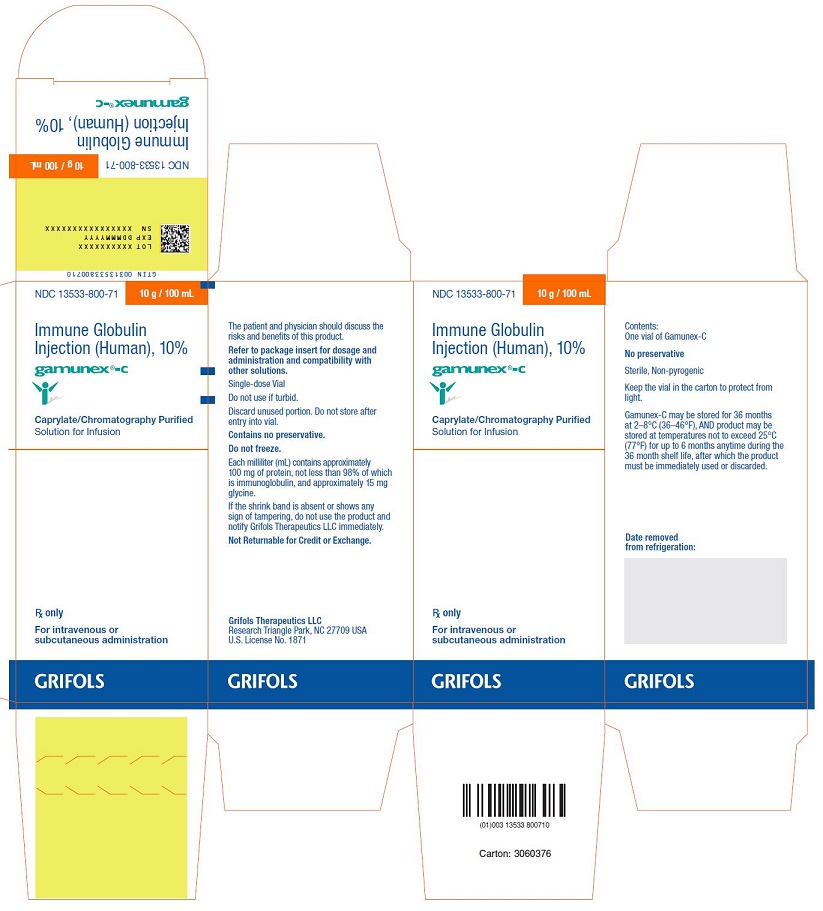
PACKAGE LABEL Immune Globulin Injection (Human), 10% gamunex ® -c Caprylate/Chromatography Purified Solution for Infusion NDC 13533-800-12 1 Gram Protein in 10 ml Talecris BIOTHERAPEUTICS Contents: One bottle of Gamunex-C No preservative Sterile, Non-pyrogenic Gamunex-C may be stored for 36 months at 2–8°C (36–46°F), AND product may be stored at temperatures not to exceed 25°C (77°F) for up to 6 months anytime during the 36 month shelf life, after which the product must be immediately used or discarded. Date removed from refrigeration: The patient and physician should discuss the risks and benefits of this product.
FOR INTRAVENOUS OR SUBCUTANEOUS ADMINISTRATION. Refer to package insert for dosage and administration and compatibility with other solutions. Single Dose Vial Do not use if turbid.
Discard unused portion. Do not store after entry into bottle. Contains no preservative Do not freeze.
Each milliliter (mL) contains approximately 100 mg of protein, not less than 98% of which is immunoglobulin, and approximately 15 mg glycine. If the shrink band is absent or shows any sign of tampering, do not use the product and notify Talecris Biotherapeutics, Inc. immediately. Not Returnable for Credit or Exchange Rx only 08939777 Talecris Biotherapeutics, Inc.
Research Triangle Park, NC 27709 USA U.S. License No. 1716 NDC 13533-800-12 Immune Globulin Injection (Human), 10% gamunex ® -c Caprylate/Chromatography Purified Talecris Biotherapeutics, Inc.
Research Triangle Park, NC 27709 USA U.S. License No. 1716 Gamunex-C, 1 g Protein in 10 mL Lot Lot Exp:
Medicaid utilization & spend
Medicaid utilization by pack size
Medicare Part D spend CMS · PART D · 2026 (Q1)
Reported adverse events (FAERS)
Top reported reactions
Reporter sex
Serious outcomes
Where does this data come from?
About this NDC listing & data coverage
What data is (and isn’t) available for this NDC — tap to expand
| NDC identity (package / product / labeler codes) | ✓ Available |
| Labeler | ✓ Available |
| Product & package description | ✓ Available |
| Marketing category & status | ✓ Available |
| Active ingredient / dosage form / route | ✓ Available |
| FDA label (SPL via DailyMed) | ✓ Available |
| Package photos | ✓ Available |
| Inactive ingredients (structured) | ✓ Available |
| NADAC pharmacy acquisition price (CMS) | — Not published for this NDC CMS publishes NADAC only for NDCs reported in its retail-pharmacy survey. |
| Orange Book / therapeutic-equivalence data | — Not published for this NDC Applies only to products approved under an NDA/ANDA; many listings are out of scope. |
| HCPCS J-code billing crosswalk | ✓ Available |
| Medicaid utilization (CMS SDUD) | ✓ Available |