
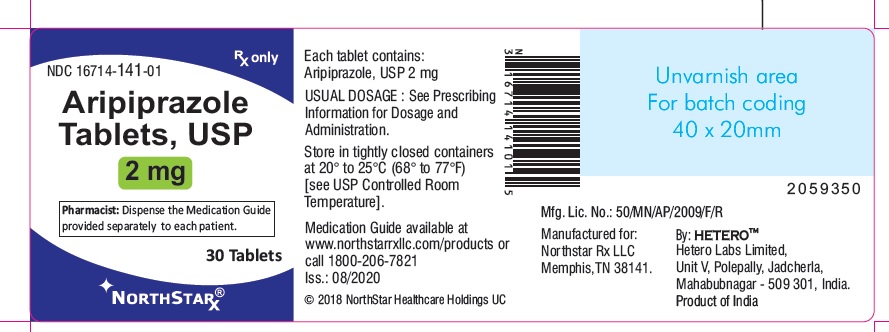
Aripiprazole 2 mg Tablet, 30-count — NDC 16714-141-01 (Billing 16714-0141-01)
This is a package of 30 tablets of Aripiprazole 2 mg Tablet from NorthStar RxLLC, marketed since Oct 2020 and currently FDA-listed; retail pharmacies pay about $0.1146 per tablet (NADAC). It is this product's only package size.
NDC database record
One package, one record: these facts belong to NDC 16714-141-01 alone.
- Record
- FDA NDC Directory package listing · Human prescription drug
- Code segments
- 16714 labeler · 141 product · 01 package
- Package marketed since
- Oct 1, 2020
- Sample package
- No — commercial package
- Listing certified through
- Dec 31, 2026
- Billing quantity
- 30 EA per package
- Barcode (UPC-A, from the NDC)
- 3 1671414101 5
- Medicaid fills, this package
- 68,400 prescriptions in the last four reported quarters
- FDA record last changed
- Jul 24, 2026
Other active recalls for Aripiprazole (different manufacturers) — 6 · tap to view
Identity & classification
Regulatory identifiers FDA, NLM and CMS codes for this package
Drug-database identifiers Medi-Span GPI and First Databank GCN / HICL / AHFS classification
- GSN (GCN sequence number): 060225
- GCN: 26305
- GPI-14 (Medi-Span): 59250015000305
- HICL (First Databank): 024551
- AHFS class code: 28:16.08.04
- RxCUI (RxNorm): 349490
Where does this data come from?
- FDA openFDA NDC Directory · synced Oct 1, 2026
- FDA label on DailyMed · label index refreshed Oct 6, 2026
- RxNorm (NLM RxNav) · catalog refreshed Oct 1, 2026
- Medi-Span GPI (licensed)
- First Databank (licensed) · refreshed Oct 1, 2026
RxNorm drug class
This medicine belongs to the Atypical Antipsychotic class.
Where does this data come from?
- RxClass (NLM) · catalog refreshed Oct 1, 2026
Clinical
Aripiprazole is used to treat: schizophrenia (a mental illness that affects how a person thinks, feels and behaves) bipolar disorder (a disease that causes depression, mania, and other abnormal moods) major depressive disorder irritability symptoms (aggression, temper tantrums, mood changes) in those with autistic disorder (a developmental problem that affects how individuals communicate, learn and behave) Tourette's disorder (a condition causing involuntary, repetitive movements or sounds) Aripiprazole is in a class of medications called atypical antipsychotics. It works by changing th...
Read the full MedlinePlus article ↗- It treats schizophrenia, bipolar I disorder, add-on treatment of major depressive disorder, irritability with autistic disorder, and Tourette's disorder. Which of these a product i...
- Oral forms are taken by mouth once a day, with or without food. The long-acting injections are given by a healthcare professional. Follow your prescriber's directions.
- Common ones include nausea, headache, dizziness, restlessness, trouble sleeping and sleepiness. Tell your doctor if they bother you.
- Call right away for fever with stiff muscles or confusion, uncontrolled movements, fainting, seizures, new gambling urges, or worsening mood or suicidal thoughts.
Patient education
Supplement & herbal interactions
Some supplements/herbs that may interact with Aripiprazole — tap one for details:
Where does this data come from?
- MedlinePlus (NLM) · refreshed Oct 1, 2026
- FDA label on DailyMed · label index refreshed Oct 6, 2026
Ask a licensed pharmacist directly — free, answered by our team.
Pricing
A drug doesn't have one price. Each row is a different public payment system, and none is what you'd pay at the counter — that depends on your insurance. The ⓘ on each row explains what it measures.
| Price system | Per ea | Per package |
|---|---|---|
| Retail pharmacies payNADAC · weekly | $0.115 | $3.44 / 30 tablets |
| Medicaid paysCMS SDUD · 12 mo | $0.4000 | $12.00 / 30 tablets |
| Medicare drug plans payPart D · Q2 2026 | $0.3773 | $11.32 / 30 tablets |
Where does this data come from?
- CMS NADAC weekly file · file of Sep 30, 2026
- CMS ASP pricing files · refreshed Sep 20, 2026
- CMS Medicaid State Drug Utilization Data · through Q1 2026
- CMS Part D plan pricing files · refreshed Sep 24, 2026
- VA National Acquisition Center price file
Packaging — all sizes for this product
| Package NDC | Description | Marketing start | Marketing end | Status |
|---|---|---|---|---|
| 16714-0141-01 You're viewing this Main listing | 30 TABLET in 1 BOTTLE | 2020-10-01 | — | Active |
Therapeutic equivalents
| Product | Labeler | Pack | NADAC/unit | TE | Status | Price vs. this |
|---|---|---|---|---|---|---|
| Aripiprazole 2 mg 00904-7366-04 | Major | 30 tablets | $0.115 | AB | Availability likely | — |
| Aripiprazole 2 mgthis 16714-0141-01 | NorthStar | 30 tablets | $0.115 | AB | Availability likely | — |
| Aripiprazole 2 mg 27241-0051-03 | Ajanta | 30 tablets | $0.115 | AB | Availability likely | — |
| Aripiprazole 2 mg 33342-0122-07 | Macleods | 30 tablets | $0.115 | AB | Availability likely | — |
| Aripiprazole 2 mg 43547-0302-03 | Solco | 30 tablets | $0.115 | AB | Availability likely | — |
| Aripiprazole 2 mg 43547-0884-03 | Solco | 30 tablets | $0.115 | AB | Availability likely | — |
| Aripiprazole 2 mg 50268-0087-12 | AvPAK | 20 tablets | $0.115 | AB | Availability likely | — |
| Aripiprazole 2 mg 60687-0157-21 | American | 30 tablets | $0.115 | AB | Availability likely | — |
| Aripiprazole 2 mg 65162-0896-03 | Amneal | 30 tablets | $0.115 | AB | Availability likely | — |
| Aripiprazole 2 mg 82009-0088-05 | Quallent | 500 tablets | $0.115 | AB | Availability likely | — |
| Aripiprazole 2 mg 16729-0278-01 | Accord | 100 tablets | $0.168 | AB | FDA listed | +46% |
| Abilify 2 mg 59148-0006-13 | Otsuka | 30 tablets | $18.656 | AB | Availability likely | +16176% |
| Aripiprazole 2 mg 00615-8524-39 | NCS | 30 tablets | — | AB | FDA listed | — |
| aripiprazole 2 mg 13668-0216-01 | Torrent | 100 tablets | — | AB | FDA listed | — |
| Aripiprazole 2 mg 29300-0175-01 | Unichem | 100 tablets | — | AB | FDA listed | — |
| Aripiprazole 2 mg 31722-0819-01 | Camber | 100 tablets | — | AB | FDA listed | — |
| Aripiprazole 2 mg 31722-0919-01 | Camber | 100 tablets | — | AB | FDA listed | — |
| Aripiprazole 2 mg 43598-0554-05 | Dr.Reddys | 500 tablets | — | AB | FDA listed | — |
| Aripiprazole 2 mg 43598-0965-05 | Dr.Reddys | 500 tablets | — | AB | FDA listed | — |
| Aripiprazole 2 mg 46708-0254-10 | Alembic | 100 tablets | — | AB | FDA listed | — |
| Aripiprazole 2 mg 50090-7105-00 | A-S | 30 tablets | — | AB | FDA listed | — |
| Aripiprazole 2 mg 50090-7564-00 | A-S | 30 tablets | — | AB | FDA listed | — |
| Aripiprazole 2 mg 50228-0324-10 | ScieGen | 1000 tablets | — | AB | FDA listed | — |
| Aripiprazole 2 mg 50228-0475-10 | ScieGen | 1000 tablets | — | AB | FDA listed | — |
| Aripiprazole 2 mg 62332-0097-10 | Alembic | 100 tablets | — | AB | FDA listed | — |
| Aripiprazole 2 mg 63187-0965-30 | Proficient | 30 tablets | — | AB | FDA listed | — |
| Aripiprazole 2 mg 65862-0661-01 | Aurobindo | 100 tablets | — | AB | FDA listed | — |
| Aripiprazole 2 mg 67046-1638-03 | Coupler | 30 tablets | — | AB | FDA listed | — |
| Aripiprazole 2 mg 67877-0430-01 | Ascend | 100 tablets | — | AB | FDA listed | — |
| Aripiprazole 2 mg 68071-3725-03 | NuCare | 30 tablets | — | AB | FDA listed | — |
| Aripiprazole 2 mg 68788-7733-01 | Preferred | 100 tablets | — | AB | FDA listed | — |
| aripiprazole 2 mg 70518-2584-00 | REMEDYREPACK | 30 tablets | — | AB | Discontinued | — |
| Aripiprazole 2 mg 70518-2736-00 | REMEDYREPACK | 30 tablets | — | AB | FDA listed | — |
| Aripiprazole 2 mg 70518-3090-00 | REMEDYREPACK | 30 tablets | — | AB | FDA listed | — |
| Aripiprazole 2 mg 71205-0480-30 | Proficient | 30 tablets | — | AB | FDA listed | — |
| Aripiprazole 2 mg 71335-1682-01 | Bryant | 30 tablets | — | AB | FDA listed | — |
| Aripiprazole 2 mg 71335-1892-01 | Bryant | 30 tablets | — | AB | FDA listed | — |
| Aripiprazole 2 mg 71335-1980-01 | Bryant | 30 tablets | — | AB | FDA listed | — |
| Aripiprazole 2 mg 72189-0466-30 | Direct_Rx | 30 tablets | — | AB | FDA listed | — |
| Aripiprazole 2 mg 72865-0153-05 | XLCare | 500 tablets | — | AB | FDA listed | — |
| Aripiprazole 2 mg 72865-0180-05 | XLCare | 500 tablets | — | AB | FDA listed | — |
| Aripiprazole 2 mg 76282-0044-01 | Exelan | 100 tablets | — | AB | FDA listed | — |
| Aripiprazole 2 mg 67046-1052-03 | Coupler | 30 tablets | — | AB | FDA listed | — |
Where does this data come from?
- FDA openFDA NDC Directory · synced Oct 1, 2026
- FDA Orange Book · refreshed Oct 3, 2026
- CMS NADAC weekly file · file of Sep 30, 2026
Availability & generic status
This product is an FDA-approved generic. Other versions of the same drug are listed under Therapeutic equivalents, least expensive first.
Where does this data come from?
- FDA Orange Book · refreshed Oct 3, 2026
What it looks like
Where does this data come from?
- FDA label on DailyMed · label index refreshed Oct 6, 2026
Inactive Ingredients / Excipients
Inactive ingredients, also called excipients, are components of the drug product other than the active ingredient. They may include fillers, dyes, coatings, preservatives, flavors, or other formulation ingredients.
🧪 Avoiding an ingredient? See Aripiprazole inactive ingredients by manufacturer: every current product's list side by side, so you can ask your pharmacy for the version that does not list it.
💡 Tap an ingredient (hover on desktop) to see what it is and why it’s used.
-
UNII OP1R32D61U
Microcrystalline cellulose is a purified form of cellulose, a natural fiber from plant sources. It acts as a binder and filler in tablets and capsules, helping hold ingredients together and give the medicine its shape and size.
-
UNII L06K8R7DQK
A synthetic blue dye approved by the FDA for use in medications and foods. It serves as a colorant to make pills and liquids visually distinct and easier to identify.
-
UNII 1K09F3G675
Ferric oxide red is an inorganic iron compound used as a colorant in medicines. It gives tablets, capsules, or other dosage forms a red or reddish tint for identification and appearance.
-
UNII EX438O2MRT
Ferric oxide yellow is a naturally occurring iron compound used as a colorant in medications. It gives tablets, capsules, and other forms a yellow or golden hue for identification and appearance.
-
UNII 3NXW29V3WO
Hypromellose is a plant-based thickener made from cellulose. It's used in medicines as a binder to hold ingredients together, a coating for tablets, and a thickener for liquids.
-
UNII EWQ57Q8I5X
Lactose monohydrate is a natural sugar derived from milk. It serves as a filler and binder in tablets and capsules, helping create the proper size, texture, and consistency of the medicine.
-
UNII 70097M6I30
Magnesium stearate is a salt made from magnesium and stearic acid, a fatty substance. It's used in tablets and capsules as a lubricant and glidant to help ingredients flow smoothly during manufacturing and prevent sticking.
-
UNII O8232NY3SJ
A plant-based carbohydrate derived from corn kernels. It acts as a filler to add bulk, a binder to hold ingredients together, and a disintegrant to help the tablet break apart in your stomach for absorption.
8 inactive ingredients listed in the exact product block matched to this NDC.
Where does this data come from?
ingredient classCode="IACT" elements from the exact product block matched by this NDC. Label-section narrative from DailyMed / the openFDA label index is shown separately when available.- FDA label on DailyMed · label index refreshed Oct 6, 2026
- FDA openFDA NDC Directory · synced Oct 1, 2026
Inactive ingredient FAQ
Are inactive ingredients the same for every manufacturer?
Why might an inactive ingredient be missing?
Can inactive ingredients matter?
Manufacturer & labeler
More NDCs from NorthStar RxLLC labeler code 16714
- Chlorthalidone 25 mg Tablet NDC 16714-128-01
- Chlorthalidone 50 mg Tablet NDC 16714-129-01
- Triamcinolone Acetonide 40 mg/mL Injection, Suspension NDC 16714-130-01
- Irinotecan hydrochloride 20 mg/mL Injection NDC 16714-131-01
- Paclitaxel 6 mg/mL Injection, Solution NDC 16714-137-01
- Triamcinolone Acetonide 200 mg/5mL Injection, Suspension NDC 16714-140-01
- Aripiprazole 5 mg Tablet NDC 16714-142-01
- Aripiprazole 10 mg Tablet NDC 16714-143-01
- Aripiprazole 15 mg Tablet NDC 16714-144-01
- Aripiprazole 20 mg Tablet NDC 16714-145-01
- Aripiprazole 30 mg Tablet NDC 16714-146-01
- Triamcinolone Acetonide 400 mg/10mL Injection, Suspension NDC 16714-150-01
Where does this data come from?
- FDA openFDA NDC Directory · synced Oct 1, 2026
- Drugs@FDA
Full prescribing information FDA SPL
🚨 Boxed Warning ▾
WARNING: INCREASED MORTALITY IN ELDERLY PATIENTS WITH DEMENTIA-RELATED PSYCHOSIS; AND SUICIDAL THOUGHTS AND BEHAVIORS WITH ANTIDEPRESSANT DRUGS Elderly patients with dementia-related psychosis treated with antipsychotic drugs are at an increased risk of death. Aripiprazole tablets are not approved for the treatment of patients with dementia-related psychosis [see Warnings and Precautions ( 5.1 )] . Antidepressants increased the risk of suicidal thoughts and behavior in children, adolescents, and young adults in short-term studies.
These studies did not show an increase in the risk of suicidal thoughts and behavior with antidepressant use in patients over age 24 years; there was a reduction in risk with antidepressant use in patients aged 65 years and older [see Warnings and Precautions ( 5.3 )] . In patients of all ages who are started on antidepressant therapy, monitor closely for worsening, and for emergence of suicidal thoughts and behaviors. Advise families and caregivers of the need for close observation and communication with the prescriber [see Warnings and Precautions ( 5.3 )] .
See full prescribing information for complete boxed warning. • Elderly patients with dementia-related psychosis treated with antipsychotic drugs are at an increased risk of death. Aripiprazole tablets are not approved for the treatment of patients with dementia-related psychosis. ( 5.1 ) • Increased risk of suicidal thinking and behavior in children, adolescents, and young adults taking antidepressants.
Monitor for worsening and emergence of suicidal thoughts and behaviors. ( 5.3 )
🎯 Indications and Usage ▾
1 INDICATIONS AND USAGE Aripiprazole oral tablets are indicated for the treatment of: Schizophrenia [see Clinical Studies (14.1) ] Treatment of Tourette’s Disorder Aripiprazole tablets are an atypical antipsychotic. The oral formulations are indicated for: Schizophrenia ( 14.1 ) Treatment of Tourette’s disorder ( 14.5 )
⏱️ Dosage and Administration ▾
2 DOSAGE AND ADMINISTRATION Initial Dose Recommended Dose Maximum Dose Schizophrenia – adults (2.1) 10 to 15 mg/day 10 to 15 mg/day 30 mg/day Schizophrenia – adolescents (2.1) 2 mg/day 10 mg/day 30 mg/day Tourette’s disorder – (2.5) Patients < 50kg 2 mg/day 5 mg/day 10 mg/day Patients > 50kg 2 mg/day 10 mg/day 20 mg/day • Oral formulations: Administer once daily without regard to meals ( 2 ) • Known CYP2D6 poor metabolizers: Half of the usual dose ( 2.7 )
2.1Schizophrenia Adults The recommended starting and target dose for aripiprazole tablets is 10 or 15 mg/day administered on a once-a-day schedule without regard to meals. Aripiprazole tablets have been systematically evaluated and shown to be effective in a dose range of 10 to 30 mg/day, when administered as the tablet formulation; however, doses higher than 10 or 15 mg/day were not more effective than 10 or 15 mg/day. Dosage increases should generally not be made before 2 weeks, the time needed to achieve steady-state [see Clinical Studies ( 14.1 )] .
Maintenance Treatment: Maintenance of efficacy in schizophrenia was demonstrated in a trial involving patients with schizophrenia who had been symptomatically stable on other antipsychotic medications for periods of 3 months or longer. These patients were discontinued from those medications and randomized to either aripiprazole tablets 15 mg/day or placebo, and observed for relapse [see Clinical Studies ( 14.1 )] . Patients should be periodically reassessed to determine the continued need for maintenance treatment.
Adolescents The recommended target dose of aripiprazole tablets is 10 mg/day. Aripiprazole was studied in adolescent patients 13 to 17 years of age with schizophrenia at daily doses of 10 mg and 30 mg. The starting daily dose of the tablet formulation in these patients was 2 mg, which was titrated to 5 mg after 2 days and to the target dose of 10 mg after 2 additional days.
Subsequent dose increases should be administered in 5 mg increments. The 30 mg/day dose was not shown to be more efficacious than the 10 mg/day dose. Aripiprazole tablets can be administered without regard to meals [see Clinical Studies ( 14.1 )] .
Patients should be periodically reassessed to determine the need for maintenance treatment. Switching from Other Antipsychotics There are no systematically collected data to specifically address switching patients with schizophrenia from other antipsychotics to aripiprazole tablets or concerning concomitant administration with other antipsychotics. While immediate discontinuation of the previous antipsychotic treatment may be acceptable for some patients with schizophrenia, more gradual discontinuation may be most appropriate for others.
In all cases, the period of overlapping antipsychotic administration should be minimized.
2.5Tourette’s Disorder Pediatric Patients (6 to 18 years) The recommended dosage range for Tourette’s Disorder is 5 to 20 mg/day. For patients weighing less than 50 kg, dosing should be initiated at 2 mg/day with a target dose of 5 mg/day after 2 days. The dose can be increased to 10 mg/day in patients who do not achieve optimal control of tics.
Dosage adjustments should occur gradually at intervals of no less than one week. For patients weighing 50 kg or more, dosing should be initiated at 2 mg/day for 2 days, and then increased to 5 mg/day for 5 days, with a target dose of 10 mg/day on Day 8. The dose can be increased up to 20 mg/day for patients who do not achieve optimal control of tics.
Dosage adjustments should occur gradually in increments of 5 mg/day at intervals of no less than one week [see Clinical Studies ( 14.5 )]. Patients should be periodically reassessed to determine the continued need for maintenance treatment.
2.7Dosage Adjustments for Cytochrome P450 Considerations Dosage adjustments are recommended in patients who are known CYP2D6 poor metabolizers and in patients taking concomitant CYP3A4 inhibitors or CYP2D6 inhibitors or strong CYP3A4 inducers (see Table… [Excerpted — this section continues on DailyMed.]
💊 Dosage Forms and Strengths ▾
3 DOSAGE FORMS AND STRENGTHS Aripiprazole tablets, USP are available as described in 3. Table 3: Aripiprazole Tablet Presentations Tablet Strength Tablet Color/Shape Tablet Markings 2 mg Light green to green modified rectangle “I” and “94” 5 mg Light blue to blue modified rectangle “I” and “95” 10 mg Light pink to pink modified rectangle “I” and “96” 15 mg Light yellow to yellow round “I” and “97” 20 mg White to off white round “I” and “98” 30 mg Light pink to pink round “I ” and “99” Tablets: 2 mg, 5 mg, 10 mg, 15 mg, 20 mg, and 30 mg ( 3 )
⛔ Contraindications ▾
4 CONTRAINDICATIONS Aripiprazole tablets are contraindicated in patients with a history of a hypersensitivity reaction to aripiprazole. Reactions have ranged from pruritus/urticaria to anaphylaxis [see Adverse Reactions ( 6.2 )] . Known to aripiprazole tablets ( 4 )
⚠️ Warnings and Cautions ▾
5 WARNINGS AND PRECAUTIONS Cerebrovascular Adverse Reactions in Elderly Patients with Dementia-Related Psychosis: Increased incidence of cerebrovascular adverse reactions (e.g., stroke, transient ischemic attack, including fatalities) ( 5.2 ) Neuroleptic Malignant Syndrome: Manage with immediate discontinuation and close monitoring ( 5.4 ) Tardive Dyskinesia: Discontinue if clinically appropriate ( 5.5 ) Metabolic Changes: Atypical antipsychotic drugs have been associated with metabolic changes that include hyperglycemia/diabetes mellitus, dyslipidemia, and body weight gain ( 5.6 ) Hyperglycemia/Diabetes Mellitus: Monitor glucose regularly in patients with and at risk for diabetes ( 5.6 ) Dyslipidemia: Undesirable alterations in lipid levels have been observed in patients treated with atypical antipsychotics ( 5.6 ) Weight Gain: Weight gain has been observed with atypical antipsychotic use.
Monitor weight ( 5.6 ) Pathological Gambling and Other Compulsive Behaviors: Consider dose reduction or discontinuation ( 5.7 ) Orthostatic Hypotension: Monitor heart rate and blood pressure and warn patients with known cardiovascular or cerebrovascular disease, and risk of dehydration or syncope ( 5.8 ) Leukopenia, Neutropenia, and Agranulocytosis: have been reported with antipsychotics including aripiprazole tablets. Patients with a history of a clinically significant low white blood cell count (WBC) or a drug-induced leukopenia/neutropenia should have their complete blood count (CBC) monitored frequently during the first few months of therapy and discontinuation of aripiprazole tablets should be considered at the first sign of a clinically significant decline in WBC in the absence of other causative factors ( 5.10 ) Seizures/Convulsions : Use cautiously in patients with a history of seizures or with conditions that lower the seizure threshold ( 5.11 ) Potential for Cognitive and Motor Impairment: Use caution when operating machinery ( 5.12 ) Suicide: The possibility of a suicide attempt is inherent in schizophrenia.
Closely supervise high-risk patients ( 5.14 )
5.1Increased Mortality in Elderly Patients with Dementia-Related Psychosis Increased Mortality Elderly patients with dementia-related psychosis treated with antipsychotic drugs are at an increased risk of death. Aripiprazole is not approved for the treatment of patients with dementia-related psychosis [see Boxed Warning ]. Safety Experience in Elderly Patients with Psychosis Associated with Alzheimer’s Disease In three, 10 week, placebo-controlled studies of aripiprazole tablets in elderly patients with psychosis associated with Alzheimer’s disease (n=938; mean age: 82.4 years; range: 56 to 99 years), the adverse reactions that were reported at an incidence of ≥3% and aripiprazole tablets incidence at least twice that for placebo were lethargy [placebo 2%, aripiprazole tablets 5%], somnolence (including sedation) [placebo 3%, aripiprazole tablets 8%], and incontinence (primarily, urinary incontinence) [placebo 1%, aripiprazole tablets 5%], excessive salivation [placebo 0%, aripiprazole tablets 4%], and lightheadedness [placebo 1%, aripiprazole tablets 4%].
The safety and efficacy of aripiprazole in the treatment of patients with psychosis associated with dementia have not been established. If the prescriber elects to treat such patients with aripiprazole, assess for the emergence of difficulty swallowing or excessive somnolence, which could predispose to accidental injury or aspiration [see Boxed Warning ].
5.2Cerebrovascular Adverse Events, Including Stroke In placebo-controlled clinical studies (two flexible dose and one fixed dose study) of dementia-related psychosis, there was an increased incidence of cerebrovascular adverse events (e.g., stroke, transient ischemic attack), including fatalities, in aripiprazole-treated patients (mean age: 84 years; range: 78 to 88 years). In the fixed-dose study, there was a statistically significant dose response relationship for cerebrova… [Excerpted — this section continues on DailyMed.]
🤒 Adverse Reactions ▾
6 ADVERSE REACTIONS Because clinical trials are conducted under widely varying conditions, adverse reaction rates observed in the clinical trials of a drug cannot be directly compared to rates in the clinical trials of another drug and may not reflect the rates observed in practice. The following adverse reactions are discussed in more detail in other sections of the labeling: • Increased Mortality in Elderly Patients with Dementia-Related Psychosis [see Boxed Warning and Warnings and Precautions (5.1 )] • Cerebrovascular Adverse Events, Including Stroke [see Warnings and Precautions (5.2)] • Suicidal Thoughts and Behaviors in Children, Adolescents, and Young Adults [see Boxed Warning and Warnings Precautions (5.3 )] • Neuroleptic Malignant Syndrome (NMS) [see Warnings and Precautions ( 5.4 )] • Tardive Dyskinesia [see Warnings and Precautions ( 5.5) ] • Metabolic Changes [see Warnings and Precautions ( 5.6 )] • Pathological Gambling and Other Compulsive Behaviors [see Warnings and Precautions ( 5.7 )] • Orthostatic Hypotension [see Warnings and Precautions ( 5.8 )] • Falls [see Warnings and Precautions ( 5.9 )] • Leukopenia, Neutropenia, and Agranulocytosis [see Warnings and Precautions ( 5.10 )] • Seizures/Convulsions [see Warnings and Precautions ( 5.11 )] • Potential for Cognitive and Motor Impairment [see Warnings and Precautions ( 5.12 )] • Body Temperature Regulation [see Warnings and Precautions ( 5.13 )] • Suicide [see Warnings and Precautions ( 5.14 )] • Dysphagia [see Warnings and Precautions ( 5.15 )] The most common adverse reactions in adult patients in clinical trials (≥10%) were nausea, vomiting, constipation, headache, dizziness, akathisia, anxiety, insomnia, and restlessness.
The most common adverse reactions in the pediatric clinical trials (≥10%) were somnolence, headache, vomiting, extrapyramidal disorder, fatigue, increased appetite, insomnia, nausea, nasopharyngitis, and weight increased. Aripiprazole has been evaluated for safety in 13543 adult patients who participated in multiple-dose, clinical trials in schizophrenia, other indications, Dementia of the Alzheimer’s type, Parkinson’s disease, and alcoholism, and who had approximately 7619 patient-years of exposure to oral aripiprazole.
A total of 3390 patients were treated with oral aripiprazole for at least 180 days and 1933 patients treated with oral aripiprazole had at least 1 year of exposure. Aripiprazole has been evaluated for safety in 1686 patients (6 to 18 years) who participated in multiple-dose, clinical trials in schizophrenia, or other indications and who had approximately 1342 patient-years of exposure to oral aripiprazole. A total of 959 pediatric patients were treated with oral aripiprazole for at least 180 days and 556 pediatric patients treated with oral aripiprazole had at least one year of exposure.
The conditions and duration of treatment with aripiprazole included (in overlapping categories) double-blind, comparative and noncomparative open-label studies, inpatient and outpatient studies, fixed- and flexible-dose studies, and short- and longer-term exposure. Commonly observed adverse reactions (incidence ≥5% and at least twice that for placebo) were ( 6.1 ): Adult patients with schizophrenia: akathisia Pediatric patients (13 to 17 years) with schizophrenia: extrapyramidal disorder, somnolence, and tremor Pediatric patients (6 to 18 years) with Tourette’s disorder: sedation, somnolence, nausea, headache, nasopharyngitis, fatigue, increased appetite To report SUSPECTED ADVERSE REACTIONS, contact NorthStar Rx LLC at 1-800-206-7821 or FDA at 1-800-FDA-1088 or www.fda.gov/medwatch.
6.1Clinical Trials Experience Adult Patients with Schizophrenia The following findings are based on a pool of five placebo-controlled trials (four 4-week and one 6-week) in which oral aripiprazole was administered in doses ranging from 2 to 30 mg/day. Commonly Observed Adverse Reactions The only commonly observed adverse reaction associated with the use of… [Excerpted — this section continues on DailyMed.]
🔄 Drug Interactions ▾
7 DRUG INTERACTIONS Dosage adjustment due to drug interactions ( 7.1 ) : Factors Dosage Adjustments for Aripiprazole Tablets Known CYP2D6 Poor Metabolizers Administer half of usual dose Known CYP2D6 Poor Metabolizers and strong CYP3A4 inhibitors Administer a quarter of usual dose Strong CYP2D6 or CYP3A4 inhibitors Administer half of usual dose Strong CYP2D6 and CYP3A4 inhibitors Administer a quarter of usual dose Strong CYP3A4 inducers Double usual dose over 1 to 2 weeks
7.1Drugs Having Clinically Important Interactions with Aripiprazole Tablets Table 25: Clinically Important Drug Interactions with Aripiprazole: Concomitant Drug Name or Drug Class Clinical Rationale Clinical Recommendation Strong CYP3A4 Inhibitors (e.g., itraconazole, clarithromycin) or strong CYP2D6 inhibitors (e.g., quinidine, fluoxetine, paroxetine) The concomitant use of aripiprazole with strong CYP 3A4 or CYP2D6 inhibitors increased the exposure of aripiprazole compared to the use of aripiprazole alone [see Clinical Pharmacology (12.3 )].
With concomitant use of aripiprazole with a strong CYP3A4 inhibitor or CYP2D6 inhibitor, reduce the aripiprazole dosage [see Dosage and Administration (2.7 )]. Strong CYP3A4 Inducers (e.g., carbamazepine, rifampin) The concomitant use of aripiprazole and carbamazepine decreased the exposure of aripiprazole compared to the use of aripiprazole alone [see Clinical Pharmacology (12.3) ]. With concomitant use of aripiprazole with a strong CYP3A4 inducer, consider increasing the aripiprazole dosage [see Dosage and Administration (2.7) ].
Antihypertensive Drugs Due to its alpha adrenergic antagonism, aripiprazole has the potential to enhance the effect of certain antihypertensive agents. Monitor blood pressure and adjust dose accordingly [see Warnings and Precautions (5.8) ]. Benzodiazepines (e.g., lorazepam) The intensity of sedation was greater with the combination of oral aripiprazole and lorazepam as compared to that observed with aripiprazole alone.
The orthostatic hypotension observed was greater with the combination as compared to that observed with lorazepam alone [see Warnings and Precautions (5.8) ]. Monitor sedation and blood pressure. Adjust dose accordingly.
7.2Drugs Having No Clinically Important Interactions with Aripiprazole Tablets Based on pharmacokinetic studies, no dosage adjustment of aripiprazole is required when administered concomitantly with famotidine, valproate, lithium, lorazepam. In addition, no dosage adjustment is necessary for substrates of CYP2D6 (e.g., dextromethorphan, fluoxetine, paroxetine, or venlafaxine), CYP2C9 (e.g., warfarin), CYP2C19 (e.g., omeprazole, warfarin, escitalopram), or CYP3A4 (e.g., dextromethorphan) when co-administered with aripiprazole.
Additionally, no dosage adjustment is necessary for valproate, lithium, lamotrigine, lorazepam, or sertraline when co-administered with aripiprazole [see Clinical Pharmacology (12.3) ].
👥 Use in Specific Populations ▾
8 USE IN SPECIFIC POPULATIONS Pregnancy: May cause extrapyramidal and/or withdrawal symptoms in neonates with third trimester exposure ( 8.1 )
8.1Pregnancy Pregnancy Exposure Registry There is a pregnancy exposure registry that monitors pregnancy outcomes in women exposed to atypical antipsychotics, including aripiprazole, during pregnancy. Healthcare providers are encouraged to register patients by contacting the National Pregnancy Registry for Atypical Antipsychotics at 1-866-961-2388 or visit http://womensmentalhealth.org/clinical-and-research-programs/pregnancyregistry/. Risk Summary Neonates exposed to antipsychotic drugs, including aripiprazole, during the third trimester of pregnancy are at risk for extrapyramidal and/or withdrawal symptoms following delivery (see Clinical Considerations) .
Overall available data from published epidemiologic studies of pregnant women exposed to aripiprazole have not established a drug-associated risk of major birth defects, miscarriage, or adverse maternal or fetal outcomes (see Data) . There are risks to the mother associated with untreated schizophrenia, and with exposure to antipsychotics, including aripiprazole, during pregnancy (see Clinical Considerations). In animal reproduction studies, oral and intravenous aripiprazole administration during organogenesis in rats and/or rabbits at doses 10 and 19 times, respectively, the maximum recommended human dose (MRHD) of 30 mg/day based on mg/m2 body surface area, produced fetal death, decreased fetal weight, undescended testicles, delayed skeletal ossification, skeletal abnormalities, and diaphragmatic hernia.
Oral and intravenous aripiprazole administration during the pre- and post-natal period in rats at doses 10 times the MRHD based on mg/m2 body surface area, produced prolonged gestation, stillbirths, decreased pup weight, and decreased pup survival (see Data) . The estimated background risk of major birth defects and miscarriage for the indicated population is unknown. All pregnancies have a background risk of birth defect, loss, or other adverse outcomes.
In the U.S. general population, the estimated background risk of major birth defects and miscarriage in clinically recognized pregnancies is 2 to 4% and 15 to 20%, respectively. Clinical Considerations Disease-associated maternal and/or embryo/fetal risk There is a risk to the mother from untreated schizophrenia including increased risk of relapse, hospitalization, and suicide. Schizophrenia is associated with increased adverse perinatal outcomes, including preterm birth.
It is not known if this is a direct result of the illness or other comorbid factors. A prospective, longitudinal study followed 201 pregnant women with a history of major depressive disorder who were euthymic and taking antidepressants at the beginning of pregnancy. The women who discontinued antidepressants during pregnancy were more likely to experience a relapse of major depression than women who continued antidepressants.
Consider the risk of untreated depression when discontinuing or changing treatment with antidepressant medication during pregnancy and postpartum. Fetal/Neonatal Adverse Reactions Extrapyramidal and/or withdrawal symptoms, including agitation, hypertonia, hypotonia, tremor, somnolence, respiratory distress, and feeding disorder have been reported in neonates who were exposed to antipsychotic drugs (including aripiprazole) during the third trimester of pregnancy. These symptoms have varied in severity.
Monitor neonates for extrapyramidal and/or withdrawal symptoms and manage symptoms appropriately. Some neonates recovered within hours or days without specific treatment; others required prolonged hospitalization. Data Human data Published data from observational studies, birth registries, and case reports on the use of atypical antipsychotics during pregnancy do not report a clear association with antipsychotics and major birth defects.
A retrospective study from a Medicaid database of 9258 w… [Excerpted — this section continues on DailyMed.]
🤰 Pregnancy ▾
8.1Pregnancy Pregnancy Exposure Registry There is a pregnancy exposure registry that monitors pregnancy outcomes in women exposed to atypical antipsychotics, including aripiprazole, during pregnancy. Healthcare providers are encouraged to register patients by contacting the National Pregnancy Registry for Atypical Antipsychotics at 1-866-961-2388 or visit http://womensmentalhealth.org/clinical-and-research-programs/pregnancyregistry/. Risk Summary Neonates exposed to antipsychotic drugs, including aripiprazole, during the third trimester of pregnancy are at risk for extrapyramidal and/or withdrawal symptoms following delivery (see Clinical Considerations) .
Overall available data from published epidemiologic studies of pregnant women exposed to aripiprazole have not established a drug-associated risk of major birth defects, miscarriage, or adverse maternal or fetal outcomes (see Data) . There are risks to the mother associated with untreated schizophrenia, and with exposure to antipsychotics, including aripiprazole, during pregnancy (see Clinical Considerations). In animal reproduction studies, oral and intravenous aripiprazole administration during organogenesis in rats and/or rabbits at doses 10 and 19 times, respectively, the maximum recommended human dose (MRHD) of 30 mg/day based on mg/m2 body surface area, produced fetal death, decreased fetal weight, undescended testicles, delayed skeletal ossification, skeletal abnormalities, and diaphragmatic hernia.
Oral and intravenous aripiprazole administration during the pre- and post-natal period in rats at doses 10 times the MRHD based on mg/m2 body surface area, produced prolonged gestation, stillbirths, decreased pup weight, and decreased pup survival (see Data) . The estimated background risk of major birth defects and miscarriage for the indicated population is unknown. All pregnancies have a background risk of birth defect, loss, or other adverse outcomes.
In the U.S. general population, the estimated background risk of major birth defects and miscarriage in clinically recognized pregnancies is 2 to 4% and 15 to 20%, respectively. Clinical Considerations Disease-associated maternal and/or embryo/fetal risk There is a risk to the mother from untreated schizophrenia including increased risk of relapse, hospitalization, and suicide. Schizophrenia is associated with increased adverse perinatal outcomes, including preterm birth.
It is not known if this is a direct result of the illness or other comorbid factors. A prospective, longitudinal study followed 201 pregnant women with a history of major depressive disorder who were euthymic and taking antidepressants at the beginning of pregnancy. The women who discontinued antidepressants during pregnancy were more likely to experience a relapse of major depression than women who continued antidepressants.
Consider the risk of untreated depression when discontinuing or changing treatment with antidepressant medication during pregnancy and postpartum. Fetal/Neonatal Adverse Reactions Extrapyramidal and/or withdrawal symptoms, including agitation, hypertonia, hypotonia, tremor, somnolence, respiratory distress, and feeding disorder have been reported in neonates who were exposed to antipsychotic drugs (including aripiprazole) during the third trimester of pregnancy. These symptoms have varied in severity.
Monitor neonates for extrapyramidal and/or withdrawal symptoms and manage symptoms appropriately. Some neonates recovered within hours or days without specific treatment; others required prolonged hospitalization. Data Human data Published data from observational studies, birth registries, and case reports on the use of atypical antipsychotics during pregnancy do not report a clear association with antipsychotics and major birth defects.
A retrospective study from a Medicaid database of 9258 women exposed to antipsychotics during pregnancy did not indicate an overall increased risk for major birth defects. Animal Data In animal studi… [Excerpted — this section continues on DailyMed.]
🧒 Pediatric Use ▾
8.4Pediatric Use The pharmacokinetics of aripiprazole and dehydro-aripiprazole in pediatric patients, 10 to 17 years of age, were similar to those in adults after correcting for the differences in body weight [see Clinical Pharmacology (12.3 )] . Schizophrenia Safety and effectiveness in pediatric patients with schizophrenia were established in a 6 week, placebo-controlled clinical trial in 202 pediatric patients aged 13 to 17 years [see Dosage and Administration (2.1 ), Adverse Reactions (6.1 ), and Clinical Studies (14.1 )].
Although maintenance efficacy in pediatric patients has not been systematically evaluated, maintenance efficacy can be extrapolated from adult data along with comparisons of aripiprazole pharmacokinetic parameters in adult and pediatric patients. Tourette’s Disorder Safety and effectiveness of aripiprazole in pediatric patients with Tourette’s Disorder were established in one 8 week (aged 7 to 17 years) and one 10 week trial (aged 6 to 18 years) in 194 pediatric patients [see Dosage and Administration (2.5 ), Adverse Reactions (6.1 ), and Clinical Studies (14.5) ].
Maintenance efficacy in pediatric patients has not been systematically evaluated. Juvenile Animal Studies Aripiprazole in juvenile rats caused mortality, CNS clinical signs, impaired memory and learning, and delayed sexual maturation when administered at oral doses of 10, 20, 40 mg/kg/day from weaning (21 days old) through maturity (80 days old). At 40 mg/kg/day, mortality, decreased activity, splayed hind limbs, hunched posture, ataxia, tremors and other CNS signs were observed in both genders.
In addition, delayed sexual maturation was observed in males. At all doses and in a dose-dependent manner, impaired memory and learning, increased motor activity, and histopathology changes in the pituitary (atrophy), adrenals (adrenocortical hypertrophy), mammary glands (hyperplasia and increased secretion), and female reproductive organs (vaginal mucification, endometrial atrophy, decrease in ovarian corpora lutea) were observed. The changes in female reproductive organs were considered secondary to the increase in prolactin serum levels.
A No Observed Adverse Effect Level (NOAEL) could not be determined and, at the lowest tested dose of 10 mg/kg/day, there is no safety margin relative to the systemic exposures (AUC0 to 24) for aripiprazole or its major active metabolite in adolescents at the maximum recommended pediatric dose of 15 mg/day. All drug-related effects were reversible after a 2 month recovery period, and most of the drug effects in juvenile rats were also observed in adult rats from previously conducted studies. Aripiprazole in juvenile dogs (2 months old) caused CNS clinical signs of tremors, hypoactivity, ataxia, recumbency and limited use of hind limbs when administered orally for 6 months at 3, 10, 30 mg/kg/day.
Mean body weight and weight gain were decreased up to 18% in females in all drug groups relative to control values. A NOAEL could not be determined and, at the lowest tested dose of 3 mg/kg/day, there is no safety margin relative to the systemic exposures (AUC0 to 24) for aripiprazole or its major active metabolite in adolescents at the maximum recommended pediatric dose of 15 mg/day. All drug-related effects were reversible after a 2 month recovery period.
🧓 Geriatric Use ▾
8.5Geriatric Use No dosage adjustment is recommended for elderly patients [see Boxed Warning , Warnings and Precautions (5.1 ), and Clinical Pharmacology (12.3) ] . Of the 13,543 patients treated with oral aripiprazole in clinical trials, 1,073 (8%) were ≥65 years old and 799 (6%) were ≥75 years old. Placebo-controlled studies of oral aripiprazole in schizophrenia or other indications did not include sufficient numbers of patients aged 65 and over to determine whether they respond differently from younger patients.
Aripiprazole is not approved for the treatment of patients with psychosis associated with Alzheimer’s disease [see Boxed Warning and Warnings and Precautions (5.1) ].
🆘 Overdosage ▾
10 OVERDOSAGE MedDRA terminology has been used to classify the adverse reactions.
10.1Human Experience In clinical trials and in postmarketing experience, adverse reactions of deliberate or accidental overdosage with oral aripiprazole have been reported worldwide. These include overdoses with oral aripiprazole alone and in combination with other substances. No fatality was reported with aripiprazole alone.
The largest known dose with a known outcome involved acute ingestion of 1,260 mg of oral aripiprazole (42 times the maximum recommended daily dose) by a patient who fully recovered. Deliberate or accidental overdosage was also reported in children (age 12 years and younger) involving oral aripiprazole tablet ingestions up to 195 mg with no fatalities. Common adverse reactions (reported in at least 5% of all overdose cases) reported with oral aripiprazole overdosage (alone or in combination with other substances) include vomiting, somnolence, and tremor.
Other clinically important signs and symptoms observed in one or more patients with aripiprazole overdoses (alone or with other substances) include acidosis, aggression, aspartate aminotransferase increased, atrial fibrillation, bradycardia, coma, confusional state, convulsion, blood creatine phosphokinase increased, depressed level of consciousness, hypertension, hypokalemia, hypotension, lethargy, loss of consciousness, QRS complex prolonged, QT prolonged, pneumonia aspiration, respiratory arrest, status epilepticus, and tachycardia.
10.2Management of Overdosage No specific information is available on the treatment of overdose with aripiprazole. An electrocardiogram should be obtained in case of overdosage and if QT interval prolongation is present, cardiac monitoring should be instituted. Otherwise, management of overdose should concentrate on supportive therapy, maintaining an adequate airway, oxygenation and ventilation, and management of symptoms.
Close medical supervision and monitoring should continue until the patient recovers. Charcoal: In the event of an overdose of aripiprazole, an early charcoal administration may be useful in partially preventing the absorption of aripiprazole. Administration of 50 g of activated charcoal, one hour after a single 15 mg oral dose of aripiprazole, decreased the mean AUC and Cmax of aripiprazole by 50%.
Hemodialysis: Although there is no information on the effect of hemodialysis in treating an overdose with aripiprazole, hemodialysis is unlikely to be useful in overdose management since aripiprazole is highly bound to plasma proteins.
🧬 Clinical Pharmacology ▾
12 CLINICAL PHARMACOLOGY
12.1Mechanism of Action The mechanism of action of aripiprazole in schizophrenia is unclear. However, the efficacy of aripiprazole in the listed indications could be mediated through a combination of partial agonist activity at D2 and 5-HT1A receptors and antagonist activity at 5-HT2A receptors
12.2Pharmacodynamics Aripiprazole exhibits high affinity for dopamine D2 and D3, serotonin 5-HT1A and 5-HT2A receptors (Ki values of 0.34 nM, 0.8 nM, 1.7 nM, and 3.4 nM, respectively), moderate affinity for dopamine D4, serotonin 5-HT2C and 5-HT7, alpha1-adrenergic and histamine H1 receptors (Ki values of 44 nM, 15 nM, 39 nM, 57 nM, and 61 nM, respectively), and moderate affinity for the serotonin reuptake site (Ki=98 nM). Aripiprazole has no appreciable affinity for cholinergic muscarinic receptors (IC50 >1000 nM).
12.3Pharmacokinetics Aripiprazole activity is presumably primarily due to the parent drug, aripiprazole, and to a lesser extent, to its major metabolite, dehydro-aripiprazole, which has been shown to have affinities for D2 receptors similar to the parent drug and represents 40% of the parent drug exposure in plasma. The mean elimination half-lives are about 75 hours and 94 hours for aripiprazole and dehydroaripiprazole, respectively. Steady-state concentrations are attained within 14 days of dosing for both active moieties.
Aripiprazole accumulation is predictable from single-dose pharmacokinetics. At steady-state, the pharmacokinetics of aripiprazole is dose-proportional. Elimination of aripiprazole is mainly through hepatic metabolism involving two P450 isozymes, CYP2D6 and CYP3A4.
For CYP2D6 poor metabolizers, the mean elimination half-life for aripiprazole is about 146 hours. Oral administration Absorption Tablet: Aripiprazole is well absorbed after administration of the tablet, with peak plasma concentrations occurring within 3 hours to 5 hours; the absolute oral bioavailability of the tablet formulation is 87%. Aripiprazole can be administered with or without food.
Administration of a 15 mg aripiprazole tablet with a standard high-fat meal did not significantly affect the C max or AUC of aripiprazole or its active metabolite, dehydro-aripiprazole, but delayed T max by 3 hours for aripiprazole and 12 hours for dehydro-aripiprazole. Distribution The steady-state volume of distribution of aripiprazole following intravenous administration is high (404 L or
4.9L/kg), indicating extensive extravascular distribution. At therapeutic concentrations, aripiprazole and its major metabolite are greater than 99% bound to serum proteins, primarily to albumin. In healthy human volunteers administered 0.5 to 30 mg/day aripiprazole for 14 days, there was dose-dependent D2 receptor occupancy indicating brain penetration of aripiprazole in humans.
Elimination Metabolism Aripiprazole is metabolized primarily by three biotransformation pathways: dehydrogenation, hydroxylation, and N-dealkylation. Based on in vitro studies, CYP3A4 and CYP2D6 enzymes are responsible for dehydrogenation and hydroxylation of aripiprazole, and N-dealkylation is catalyzed by CYP3A4. Aripiprazole is the predominant drug moiety in the systemic circulation.
At steady-state, dehydro-aripiprazole, the active metabolite, represents about 40% of aripiprazole AUC in plasma. Excretion Following a single oral dose of [ 14 C]-labeled aripiprazole, approximately 25% and 55% of the administered radioactivity was recovered in the urine and feces, respectively. Less than 1% of unchanged aripiprazole was excreted in the urine and approximately 18% of the oral dose was recovered unchanged in the feces.
Drug Interaction Studies Effect of other drugs on the exposures of aripiprazole and dehydro-aripiprazole are summarized in Figure 1 and Figure 2, respectively. Based on simulation, a 4.5 fold increase in mean Cmax and AUC values at steady-state is expected when extensive metabolizers of CYP2D6 are administered with both strong CYP2D6 and CYP3A4 inhibito… [Excerpted — this section continues on DailyMed.]
🧬 Mechanism of Action ▾
12.1Mechanism of Action The mechanism of action of aripiprazole in schizophrenia is unclear. However, the efficacy of aripiprazole in the listed indications could be mediated through a combination of partial agonist activity at D2 and 5-HT1A receptors and antagonist activity at 5-HT2A receptors
📦 How Supplied / Storage and Handling ▾
16 HOW SUPPLIED/STORAGE AND HANDLING
16.1How Supplied Aripiprazole tablets, USP 2 mg are light green to green, modified rectangular, bevel edged biconvex plain to mottled tablets debossed with ‘I’ on one side and ‘94’ on other side. Bottles of 30 Tablets NDC 16714-141-01 Aripiprazole tablets, USP 5 mg are light blue to blue, modified rectangular, bevel edged biconvex tablets debossed with ‘I’ on one side and ‘95’ on other side. Bottles of 30 Tablets NDC 16714-142-01 Aripiprazole tablets, USP 10 mg are light pink to pink, modified rectangular, bevel edged biconvex plain to mottled tablets debossed with ‘I’ on one side and ‘96’ on other side.
Bottles of 30 Tablets NDC 16714-143-01 Aripiprazole tablets, USP 15 mg are light yellow to yellow, round, bevel edged biconvex plain to mottled tablets debossed with ‘I’ on one side and ‘97’ on other side. Bottles of 30 Tablets NDC 16714-144-01 Aripiprazole tablets, 20 mg are white to off-white, round, bevel edged biconvex tablets debossed with ‘I’ on one side and ‘98’ on other side. Bottles of 30 Tablets NDC 16714-145-01 Aripiprazole tablets, USP 30 mg are light pink to pink, round, bevel edged biconvex plain to mottled tablets debossed with ‘I’ on one side and ‘99’ on other side.
Bottles of 30 Tablets NDC 16714-146-01
16.2Storage Store at 20º to 25º C (68º to 77ºF) [see USP Controlled Room Temperature].
📋 Description ▾
11 DESCRIPTION Aripiprazole is a psychotropic drug that is available as aripiprazole tablets. Aripiprazole tablets, USP are chemically designated as 7-[4-[4-(2,3-Dichlorophenyl)-1-piperazinyl]butoxy]-3,4-dihydro-2(1H)-quinolinone. The molecular formula is C23H27Cl2N3O2, and molecular weight is 448.39.
The chemical structure is as follows: Aripiprazole tablets, USP are available in 2 mg, 5 mg, 10 mg, 15 mg, 20 mg, and 30 mg strengths. Inactive ingredients include corn starch, FD&C Blue #2/Indigo Carmine Al, ferric oxide red, ferric oxide yellow, hydroxypropyl cellulose, lactose monohydrate, magnesium stearate and microcrystalline cellulose. FDA approved dissolution test specifications differ from USP aripiprazolestructure
💬 Information for Patients ▾
17 PATIENT COUNSELING INFORMATION Advise the patient to read the FDA-approved patient labeling (Medication Guide). Discuss the following issues with patients prescribed aripiprazole tablets: Clinical Worsening of Depression and Suicide Risk Patients, their families, and their caregivers should be encouraged to be alert to the emergence of anxiety, agitation, panic attacks, insomnia, irritability, hostility, aggressiveness, impulsivity, akathisia (psychomotor restlessness), hypomania, mania, other unusual changes in behavior, worsening of depression, and suicidal ideation, especially early during antidepressant treatment and when the dose is adjusted up or down.
Families and caregivers of patients should be advised to look for the emergence of such symptoms on a day-to-day basis, since changes may be abrupt. Such symptoms should be reported to the patient’s prescriber or health professional, especially if they are severe, abrupt in onset, or were not part of the patient’s presenting symptoms. Symptoms such as these may be associated with an increased risk for suicidal thinking and behavior and indicate a need for very close monitoring and possibly changes in the medication [see Warnings and Precautions (5.3) ] .
Prescribers or other health professionals should inform patients, their families, and their caregivers about the benefits and risks associated with treatment with aripiprazole tablets and should counsel them in its appropriate use. A patient Medication Guide including information about “Antidepressant Medicines, Depression and other Serious Mental Illness, and Suicidal Thoughts or Actions” is available for aripiprazole tablets. The prescriber or health professional should instruct patients, their families, and their caregivers to read the Medication Guide and should assist them in understanding its contents.
Patients should be given the opportunity to discuss the contents of the Medication Guide and to obtain answers to any questions they may have. It should be noted that aripiprazole tablets are not approved as a single agent for treatment of depression and has not been evaluated in pediatric major depressive disorder. Pathological Gambling and Other Compulsive Behaviors Advise patients and their caregivers of the possibility that they may experience compulsive urges to shop, intense urges to gamble, compulsive sexual urges, binge eating and/or other compulsive urges and the inability to control these urges while taking aripiprazole.
In some cases, but not all, the urges were reported to have stopped when the dose was reduced or stopped [see Warnings and Precautions (5.7) ]. Interference with Cognitive and Motor Performance Because aripiprazole tablets may have the potential to impair judgment, thinking, or motor skills, patients should be cautioned about operating hazardous machinery, including automobiles, until they are reasonably certain that aripiprazole therapy does not affect them adversely [see Warnings and Precautions (5.12)]. Concomitant Medication Patients should be advised to inform their physicians if they are taking, or plan to take, any prescription or over-the-counter drugs, since there is a potential for interactions [see Drug Interactions (7) ] .
Heat Exposure and Dehydration Patients should be advised regarding appropriate care in avoiding overheating and dehydration [see Warnings and Precautions (5.13) ] . Pregnancy Advise patients to notify their healthcare provider if they become pregnant or intend to become pregnant during treatment with aripiprazole. Advise patients that aripiprazole may cause extrapyramidal and/or withdrawal symptoms (agitation, hypertonia, hypotonia, tremor, somnolence, respiratory distress, and feeding disorder) in a neonate.
Advise patients that there is a pregnancy registry that monitors pregnancy outcomes in women exposed to aripiprazole during pregnancy [see Use in Specific Populations (8.1) ]. ABILIFY ® is a trademark of Otsuka Pharmaceutical Company. Manufactured for: N… [Excerpted — this section continues on DailyMed.]
💬 Medication Guide ▾
MEDICATION GUIDE Aripiprazole Tablets USP (ar'' i pip' ra zole) What is the most important information I should know about aripiprazole tablets? (For other side effects, also see “What are the possible side effects of aripiprazole tablets?”) Serious side effects may happen when you take aripiprazole tablets, including: • Increased risk of death in elderly patients with dementia-related psychosis: Medicines like aripiprazole tablets can raise the risk of death in elderly people who have lost touch with reality (psychosis) due to confusion and memory loss (dementia).
Aripiprazole tablets are not approved for the treatment of patients with dementia-related psychosis. • Risk of suicidal thoughts or actions: Antidepressant medicines, depression and other serious mental illnesses, and suicidal thoughts or actions: • Antidepressant medicines may increase suicidal thoughts or actions in some children, teenagers, and young adults within the first few months of treatment. • Depression and other serious mental illnesses are the most important causes of suicidal thoughts and actions. Some people may have a particularly high risk of having suicidal thoughts or actions.
These include people who have (or have a family history of) suicidal thoughts or actions. • How can I watch for and try to prevent suicidal thoughts and actions in myself or a family member? • Pay close attention to any changes, especially sudden changes, in mood, behaviors, thoughts, or feelings. This is very important when an antidepressant medicine is started or when the dose is changed. Call the healthcare provider right away to report new or sudden changes in mood, behavior, thoughts, or feelings. • Keep all follow-up visits with the healthcare provider as scheduled.
Call the healthcare provider between visits as needed, especially if you have concerns about symptoms. Call a healthcare provider right away if you or your family member has any of the following symptoms, especially if they are new, worse, or worry you: • thoughts about suicide or dying • attempts to commit suicide • new or worse depression • new or worse anxiety • feeling very agitated or restless • panic attacks • trouble sleeping (insomnia) • new or worse irritability • acting aggressive, being angry, or violent • acting on dangerous impulses • an extreme increase in activity and talking (mania) • other unusual changes in behavior or mood What else do I need to know about antidepressant medicines? • Never stop an antidepressant medicine without first talking to a healthcare provider.
Stopping an antidepressant medicine suddenly can cause other symptoms. • Antidepressants are medicines used to treat depression and other illnesses. It is important to discuss all the risks of treating depression and also the risks of not treating it. Patients and their families or other caregivers should discuss all treatment choices with the healthcare provider, not just the use of antidepressants. • Antidepressant medicines have other side effects.
Talk to the healthcare provider about the side effects of the medicine prescribed for you or your family member. • Antidepressant medicines can interact with other medicines. Know all of the medicines that you or your family member takes. Keep a list of all medicines to show the healthcare provider.
Do not start new medicines without first checking with your healthcare provider. • Not all antidepressant medicines prescribed for children are FDA approved for use in children. Talk to your child’s healthcare provider for more information. What are aripiprazole tablets? • Aripiprazole tablets are prescription medicine used to treat: • Schizophrenia • Tourette’s disorder It is not known if aripiprazole tablets are safe or effective in children: • under 13 years of age with schizophrenia • under 6 years of age with Tourette’s disorder Do not take aripiprazole tablets if you are allergic to aripiprazole or any of the ingredients in aripiprazole tablets.
See the end of this Medication… [Excerpted — this section continues on DailyMed.]
🧬 Pharmacokinetics ▾
12.3Pharmacokinetics Aripiprazole activity is presumably primarily due to the parent drug, aripiprazole, and to a lesser extent, to its major metabolite, dehydro-aripiprazole, which has been shown to have affinities for D2 receptors similar to the parent drug and represents 40% of the parent drug exposure in plasma. The mean elimination half-lives are about 75 hours and 94 hours for aripiprazole and dehydroaripiprazole, respectively. Steady-state concentrations are attained within 14 days of dosing for both active moieties.
Aripiprazole accumulation is predictable from single-dose pharmacokinetics. At steady-state, the pharmacokinetics of aripiprazole is dose-proportional. Elimination of aripiprazole is mainly through hepatic metabolism involving two P450 isozymes, CYP2D6 and CYP3A4.
For CYP2D6 poor metabolizers, the mean elimination half-life for aripiprazole is about 146 hours. Oral administration Absorption Tablet: Aripiprazole is well absorbed after administration of the tablet, with peak plasma concentrations occurring within 3 hours to 5 hours; the absolute oral bioavailability of the tablet formulation is 87%. Aripiprazole can be administered with or without food.
Administration of a 15 mg aripiprazole tablet with a standard high-fat meal did not significantly affect the C max or AUC of aripiprazole or its active metabolite, dehydro-aripiprazole, but delayed T max by 3 hours for aripiprazole and 12 hours for dehydro-aripiprazole. Distribution The steady-state volume of distribution of aripiprazole following intravenous administration is high (404 L or
4.9L/kg), indicating extensive extravascular distribution. At therapeutic concentrations, aripiprazole and its major metabolite are greater than 99% bound to serum proteins, primarily to albumin. In healthy human volunteers administered 0.5 to 30 mg/day aripiprazole for 14 days, there was dose-dependent D2 receptor occupancy indicating brain penetration of aripiprazole in humans.
Elimination Metabolism Aripiprazole is metabolized primarily by three biotransformation pathways: dehydrogenation, hydroxylation, and N-dealkylation. Based on in vitro studies, CYP3A4 and CYP2D6 enzymes are responsible for dehydrogenation and hydroxylation of aripiprazole, and N-dealkylation is catalyzed by CYP3A4. Aripiprazole is the predominant drug moiety in the systemic circulation.
At steady-state, dehydro-aripiprazole, the active metabolite, represents about 40% of aripiprazole AUC in plasma. Excretion Following a single oral dose of [ 14 C]-labeled aripiprazole, approximately 25% and 55% of the administered radioactivity was recovered in the urine and feces, respectively. Less than 1% of unchanged aripiprazole was excreted in the urine and approximately 18% of the oral dose was recovered unchanged in the feces.
Drug Interaction Studies Effect of other drugs on the exposures of aripiprazole and dehydro-aripiprazole are summarized in Figure 1 and Figure 2, respectively. Based on simulation, a 4.5 fold increase in mean Cmax and AUC values at steady-state is expected when extensive metabolizers of CYP2D6 are administered with both strong CYP2D6 and CYP3A4 inhibitors. A 3 fold increase in mean Cmax and AUC values at steady-state is expected in poor metabolizers of CYP2D6 administered with strong CYP3A4 inhibitors.
Figure 1: The Effect of Other Drugs on Aripiprazole Pharmacokinetics Figure 2: The Effect of Other Drugs on Dehydro-Aripiprazole Pharmacokinetics The effect of aripiprazole on the exposures of other drugs are summarized in Figure 3. Figure 3: The Effect of Aripiprazole on Pharmacokinetics of Other Drugs Specific Populations Exposure of aripiprazole and dehydro-aripiprazole in specific populations are summarized in Figure 4 and Figure 5, respectively. In addition, in pediatric patients (10 to 17 years of age) administered with aripiprazole (20 mg to 30 mg), the body weight corrected aripiprazole clearance was similar to the adults.
Figure 4: Effect of Intrinsic Factors on Aripiprazole… [Excerpted — this section continues on DailyMed.]
🧬 Pharmacodynamics ▾
12.2Pharmacodynamics Aripiprazole exhibits high affinity for dopamine D2 and D3, serotonin 5-HT1A and 5-HT2A receptors (Ki values of 0.34 nM, 0.8 nM, 1.7 nM, and 3.4 nM, respectively), moderate affinity for dopamine D4, serotonin 5-HT2C and 5-HT7, alpha1-adrenergic and histamine H1 receptors (Ki values of 44 nM, 15 nM, 39 nM, 57 nM, and 61 nM, respectively), and moderate affinity for the serotonin reuptake site (Ki=98 nM). Aripiprazole has no appreciable affinity for cholinergic muscarinic receptors (IC50 >1000 nM).
🔬 Clinical Studies ▾
14 CLINICAL STUDIES Efficacy of the oral formulations of aripiprazole was established in the following adequate and well-controlled trials: • Four short-term trials and one maintenance trial in adult patients and one short-term trial in adolescents (ages 13 to 17 years) with schizophrenia [see clinical studies (14.1) ] • Two short-term trials in pediatric patients (ages 6 to 18 years) with Tourette’s disorder [see Clinical Studies (14.5) ]
14.1Schizophrenia Adults The efficacy of aripiprazole in the treatment of schizophrenia was evaluated in five short-term (4 week and 6 week), placebo-controlled trials of acutely relapsed inpatients who predominantly met DSM-III/IV criteria for schizophrenia. Four of the five trials were able to distinguish aripiprazole tablets from placebo, but one study, the smallest, did not. Three of these studies also included an active control group consisting of either risperidone (one trial) or haloperidol (two trials), but they were not designed to allow for a comparison of aripiprazole and the active comparators.
In the four positive trials for aripiprazole, four primary measures were used for assessing psychiatric signs and symptoms. Efficacy was evaluated using the total score on the Positive and Negative Syndrome Scale (PANSS). The PANSS is a 30 item scale that measures positive symptoms of schizophrenia (7 items), negative symptoms of schizophrenia (7 items), and general psychopathology (16 items), each rated on a scale of 1 (absent) to 7 (extreme); total PANSS scores range from 30 to 210.
The Clinical Global Impression (CGI) assessment reflects the impression of a skilled observer, fully familiar with the manifestations of schizophrenia, about the overall clinical state of the patient. In a 4 week trial (n=414) comparing two fixed doses of aripiprazole (15 or 30 mg/day) to placebo, both doses of aripiprazole were superior to placebo in the PANSS total score (Study 1 in Table 26), PANSS positive subscale, and CGI-severity score. In addition, the 15 mg dose was superior to placebo in the PANSS negative subscale.
In a 4 week trial (n=404) comparing two fixed doses of aripiprazole (20 or 30 mg/day) to placebo, both doses of aripiprazole were superior to placebo in the PANSS total score (Study 2 in Table 26), PANSS positive subscale, PANSS negative subscale, and CGI-severity score. In a 6 week trial (n=420) comparing three fixed doses of aripiprazole (10, 15, or 20 mg/day) to placebo, all three doses of aripiprazole were superior to placebo in the PANSS total score (Study 3 in Table 26), PANSS positive subscale, and the PANSS negative subscale.
In a 6 week trial (n=367) comparing three fixed doses of aripiprazole (2, 5, or 10 mg/day) to placebo, the 10 mg dose of aripiprazole was superior to placebo in the PANSS total score (Study 4 in Table 26), the primary outcome measure of the study. The 2 and 5 mg doses did not demonstrate superiority to placebo on the primary outcome measure. Thus, the efficacy of 10, 15, 20, and 30 mg daily doses was established in two studies for each dose.
Among these doses, there was no evidence that the higher dose groups offered any advantage over the lowest dose group of these studies. An examination of population subgroups did not reveal any clear evidence of differential responsiveness on the basis of age, gender, or race. A longer-term trial enrolled 310 inpatients or outpatients meeting DSM-IV criteria for schizophrenia who were, by history, symptomatically stable on other antipsychotic medications for periods of 3 months or longer.
These patients were discontinued from their antipsychotic medications and randomized to aripiprazole 15 mg/day or placebo for up to 26 weeks of observation for relapse. Relapse during the double-blind phase was defined as CGI-Improvement score of ≥5 (minimally worse), scores ≥5 (moderately severe) on the hostility or uncooperativeness items of the PANSS, or ≥20% increase in the PANSS total score. Patients receiving aripiprazole tablets… [Excerpted — this section continues on DailyMed.]
🔒 Drug Abuse and Dependence ▾
9 DRUG ABUSE AND DEPENDENCE
9.1Controlled Substance Aripiprazole is not a controlled substance.
9.2Abuse Aripiprazole has not been systematically studied in humans for its potential for abuse, tolerance, or physical dependence. Consequently, patients should be evaluated carefully for a history of drug abuse, and such patients should be observed closely for signs of aripiprazole misuse or abuse (e.g., development of tolerance, increases in dose, drug-seeking behavior).
9.3Dependence In physical dependence studies in monkeys, withdrawal symptoms were observed upon abrupt cessation of dosing. While the clinical trials did not reveal any tendency for any drug-seeking behavior, these observations were not systematic and it is not possible to predict on the basis of this limited experience the extent to which a CNS-active drug will be misused, diverted, and/or abused once marketed
🔒 Controlled Substance ▾
9.1Controlled Substance Aripiprazole is not a controlled substance.
🧪 Nonclinical Toxicology ▾
13 NONCLINICAL TOXICOLOGY
13.1Carcinogenesis, Mutagenesis, Impairment of Fertility Carcinogenesis Lifetime carcinogenicity studies were conducted in ICR mice, F344 rats, and Sprague-Dawley (SD) rats. Aripiprazole was administered for 2 years in the diet at doses of 1, 3, 10, and 30 mg/kg/day to ICR mice and 1, 3, and 10 mg/kg/day to F344 rats (0.2, 0.5, 2 and 5 times and 0.3, 1 and 3 times the MRHD of 30 mg/day based on mg/m2 body surface area, respectively). In addition, SD rats were dosed orally for 2 years at 10, 20, 40, and 60 mg/kg/day, which are 3, 6, 13 and 19 times the MRHD based on mg/m2 body surface area.
Aripiprazole did not induce tumors in male mice or male rats. In female mice, the incidences of pituitary gland adenomas and mammary gland adenocarcinomas and adenoacanthomas were increased at dietary doses of 3 to 30 mg/kg/day (0.5 to 5 times the MRHD). In female rats, the incidence of mammary gland fibroadenomas was increased at a dietary dose of 10 mg/kg/day (3 times the MRHD); and the incidences of adrenocortical carcinomas and combined adrenocortical adenomas/carcinomas were increased at an oral dose of 60 mg/kg/day (19 times the MRHD).
An increase in mammary, pituitary, and endocrine pancreas neoplasms has been found in rodents after chronic administration of other antipsychotic drugs and is considered to be mediated by prolonged dopamine D2-receptor antagonism and hyperprolactinemia. Serum prolactin was not measured in the aripiprazole carcinogenicity studies. However, increases in serum prolactin levels were observed in female mice in a 13 week dietary study at the doses associated with mammary gland and pituitary tumors.
Serum prolactin was not increased in female rats in 4week and 13 week dietary studies at the dose associated with mammary gland tumors. The relevance for human risk of the findings of prolactin-mediated endocrine tumors in rodents is unclear. Mutagenesis The mutagenic potential of aripiprazole was tested in the in vitro bacterial reverse-mutation assay, the in vitro bacterial DNA repair assay, the in vitro forward gene mutation assay in mouse lymphoma cells, the in vitro chromosomal aberration assay in Chinese hamster lung (CHL) cells, the in vivo micronucleus assay in mice, and the unscheduled DNA synthesis assay in rats.
Aripiprazole and a metabolite (2,3-DCPP) were clastogenic in the in vitro chromosomal aberration assay in CHL cells with and without metabolic activation. The metabolite, 2,3-DCPP, increased numerical aberrations in the in vitro assay in CHL cells in the absence of metabolic activation. A positive response was obtained in the in vivo micronucleus assay in mice; however, the response was due to a mechanism not considered relevant to humans.
Impairment of Fertility Female rats were treated orally with aripiprazole from 2 weeks prior to mating through gestation Day 7 at doses of 2, 6, and 20 mg/kg/day, which are 0.6, 2, and 6 times the MRHD of 30 mg/day based on mg/m2 body surface area. Estrus cycle irregularities and increased corpora lutea were seen at all doses, but no impairment of fertility was seen. Increased pre-implantation loss was seen at 2 and 6 times the MRHD, and decreased fetal weight was seen at 6 times the MRHD.
Male rats were treated orally with aripiprazole from 9 weeks prior to mating through mating at doses of 20, 40, and 60 mg/kg/day, which are 6, 13, and 19 times the MRHD of 30 mg/day based on mg/m2 body surface area. Disturbances in spermatogenesis were seen at 19 times the MRHD and prostate atrophy was seen at 13 and 19 times the MRHD without impairment of fertility.
13.2Animal Toxicology and/or Pharmacology Aripiprazole produced retinal degeneration in albino rats in a 26week chronic toxicity study at a dose of 60 mg/kg/day and in a 2year carcinogenicity study at doses of 40 and 60 mg/kg/day which are 13 and 19 times the MRHD of 30 mg/day based on mg/m2 body surface area. Evaluation of the retinas of albino mice and of monkeys did not reveal eviden… [Excerpted — this section continues on DailyMed.]
📄 Carcinogenesis, Mutagenesis, Impairment of Fertility ▾
13.1Carcinogenesis, Mutagenesis, Impairment of Fertility Carcinogenesis Lifetime carcinogenicity studies were conducted in ICR mice, F344 rats, and Sprague-Dawley (SD) rats. Aripiprazole was administered for 2 years in the diet at doses of 1, 3, 10, and 30 mg/kg/day to ICR mice and 1, 3, and 10 mg/kg/day to F344 rats (0.2, 0.5, 2 and 5 times and 0.3, 1 and 3 times the MRHD of 30 mg/day based on mg/m2 body surface area, respectively). In addition, SD rats were dosed orally for 2 years at 10, 20, 40, and 60 mg/kg/day, which are 3, 6, 13 and 19 times the MRHD based on mg/m2 body surface area.
Aripiprazole did not induce tumors in male mice or male rats. In female mice, the incidences of pituitary gland adenomas and mammary gland adenocarcinomas and adenoacanthomas were increased at dietary doses of 3 to 30 mg/kg/day (0.5 to 5 times the MRHD). In female rats, the incidence of mammary gland fibroadenomas was increased at a dietary dose of 10 mg/kg/day (3 times the MRHD); and the incidences of adrenocortical carcinomas and combined adrenocortical adenomas/carcinomas were increased at an oral dose of 60 mg/kg/day (19 times the MRHD).
An increase in mammary, pituitary, and endocrine pancreas neoplasms has been found in rodents after chronic administration of other antipsychotic drugs and is considered to be mediated by prolonged dopamine D2-receptor antagonism and hyperprolactinemia. Serum prolactin was not measured in the aripiprazole carcinogenicity studies. However, increases in serum prolactin levels were observed in female mice in a 13 week dietary study at the doses associated with mammary gland and pituitary tumors.
Serum prolactin was not increased in female rats in 4week and 13 week dietary studies at the dose associated with mammary gland tumors. The relevance for human risk of the findings of prolactin-mediated endocrine tumors in rodents is unclear. Mutagenesis The mutagenic potential of aripiprazole was tested in the in vitro bacterial reverse-mutation assay, the in vitro bacterial DNA repair assay, the in vitro forward gene mutation assay in mouse lymphoma cells, the in vitro chromosomal aberration assay in Chinese hamster lung (CHL) cells, the in vivo micronucleus assay in mice, and the unscheduled DNA synthesis assay in rats.
Aripiprazole and a metabolite (2,3-DCPP) were clastogenic in the in vitro chromosomal aberration assay in CHL cells with and without metabolic activation. The metabolite, 2,3-DCPP, increased numerical aberrations in the in vitro assay in CHL cells in the absence of metabolic activation. A positive response was obtained in the in vivo micronucleus assay in mice; however, the response was due to a mechanism not considered relevant to humans.
Impairment of Fertility Female rats were treated orally with aripiprazole from 2 weeks prior to mating through gestation Day 7 at doses of 2, 6, and 20 mg/kg/day, which are 0.6, 2, and 6 times the MRHD of 30 mg/day based on mg/m2 body surface area. Estrus cycle irregularities and increased corpora lutea were seen at all doses, but no impairment of fertility was seen. Increased pre-implantation loss was seen at 2 and 6 times the MRHD, and decreased fetal weight was seen at 6 times the MRHD.
Male rats were treated orally with aripiprazole from 9 weeks prior to mating through mating at doses of 20, 40, and 60 mg/kg/day, which are 6, 13, and 19 times the MRHD of 30 mg/day based on mg/m2 body surface area. Disturbances in spermatogenesis were seen at 19 times the MRHD and prostate atrophy was seen at 13 and 19 times the MRHD without impairment of fertility.
📄 Package Label / Principal Display Panel ▾
PACKAGE LABEL.PRINCIPAL DISPLAY PANEL 2 mg 30s Count Container Label 5 mg 30s Count Container Label 10 mg 30s Count Container Label 15 mg 30s Count Container Label 20 mg 30s Count Container Label 30 mg 30s Count Container Label aripiprazole2mg30s aripiprazole5mg30s aripiprazole10mg30s aripiprazole15mg30s aripiprazole20mg30s aripiprazole30mg30s