
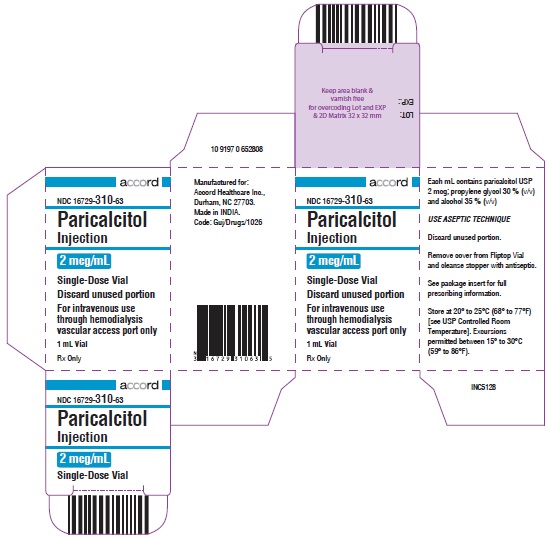
Paricalcitol 2 ug/mL Injection, Solution, 25 vials — NDC 16729-310-08 (Billing 16729-0310-08)
This is a package of 25 vials of Paricalcitol 2 ug/mL Injection, Solution from Accord Healthcare, Inc., marketed since Mar 2016 and currently FDA-listed. It is the main listing for this product, which comes in 2 package sizes.
Identity & classification
Regulatory identifiers FDA, NLM and CMS codes for this package
Drug-database identifiers Medi-Span GPI and First Databank GCN / HICL / AHFS classification
- GSN (GCN sequence number): 073092
- GCN: 37416
- GPI-14 (Medi-Span): 30905070002010
- HICL (First Databank): 018250
- AHFS class code: 88:16.00.00
- RxCUI (RxNorm): 200321
Where does this data come from?
- FDA openFDA NDC Directory · synced Oct 1, 2026
- FDA label on DailyMed · label index refreshed Oct 1, 2026
- RxNorm (NLM RxNav) · catalog refreshed Oct 1, 2026
- Medi-Span GPI (licensed)
- First Databank (licensed) · refreshed Oct 1, 2026
RxNorm drug class
This medicine belongs to the Vitamin D Analog class.
Where does this data come from?
- RxClass (NLM) · catalog refreshed Oct 1, 2026
Clinical
- It treats and prevents secondary hyperparathyroidism, which is high PTH caused by chronic kidney disease. It works like vitamin D to bring PTH down. Capsules and injection are used...
- Capsules are swallowed, either daily or three times a week depending on your plan. You can take them with or without food. The injection is given during dialysis through your acces...
- Diarrhea, nausea, vomiting, dizziness, high blood pressure and swelling are among the most common. Mention anything that bothers you or does not go away.
- Watch for tiredness, trouble thinking clearly, poor appetite, nausea, vomiting, constipation, increased thirst or urination, and weight loss. Call your doctor if these appear or wo...
Patient education
Supplement & herbal interactions
Some supplements/herbs that may interact with Paricalcitol — tap one for details:
Where does this data come from?
- MedlinePlus (NLM) · refreshed Oct 1, 2026
- FDA label on DailyMed · label index refreshed Oct 1, 2026
Ask a licensed pharmacist directly — free, answered by our team.
Pricing
A drug doesn't have one price. Each row is a different public payment system, and none is what you'd pay at the counter — that depends on your insurance. The ⓘ on each row explains what it measures.
| Price system | Per mL | Per package |
|---|---|---|
| Retail pharmacies payNADAC · weekly | Not in the retail survey — common for institutional, discontinued, or low-volume packs. | |
| Medicaid paysCMS SDUD · 12 mo | $185.57 | $4,639.28 / 25 ml |
| Medicare drug plans payPart D · quarterly | No Part D plan price is available for this NDC in our data. | |
| Medicare Part B allowsASP · J2501 | $0.899 / J2501 unit | — |
Where does this data come from?
- CMS NADAC weekly file
- CMS ASP pricing files · refreshed Sep 20, 2026
- CMS Medicaid State Drug Utilization Data · through Q1 2026
- CMS Part D plan pricing files · refreshed Sep 24, 2026
- VA National Acquisition Center price file
Billing & reimbursement
Where does this data come from?
- CMS ASP NDC-HCPCS crosswalk · refreshed Sep 22, 2026
- DMEPDAC NDC-HCPCS crosswalk
- openFDA NSDE billing units · refreshed Sep 7, 2026
Packaging — all sizes for this product
| Package NDC | Description | Marketing start | Marketing end | Status |
|---|---|---|---|---|
| 16729-0310-08 You're viewing this Main listing | 25 VIAL, SINGLE-DOSE in 1 CARTON / 1 mL in 1 VIAL, SINGLE-DOSE | 2016-03-24 | — | Active |
| 16729-0310-63 16729-310-63 | 1 VIAL, SINGLE-DOSE in 1 CARTON / 1 mL in 1 VIAL, SINGLE-DOSE | 2016-03-24 | — | Active |
In Medicaid, this is the most-dispensed pack of this product — about 71% of fills over the last four reported quarters. See all packs ↓
Pack size FAQ
What quantity is in this package?
How does this package differ from NDC 16729-0310-63?
What NDC number is used to bill for this package of Paricalcitol 2 ug/mL Injection, Solution?
Therapeutic equivalents
| Product | Labeler | Pack | NADAC/unit | TE | Status | Price vs. this |
|---|---|---|---|---|---|---|
| Zemplar 2 ug/mL 00074-4637-01 | AbbVie | 25 vials | — | AP | FDA listed | — |
| Paricalcitol 2 ug/mL 00143-9625-25 | West-Ward | 25 vials | — | — | FDA listed | — |
| Paricalcitol 2 ug/mLthis 16729-0310-08 | Accord | 25 vials | — | AP | FDA listed | — |
| Paricalcitol 2 ug/mL 55150-0212-01 | Eugia | 25 vials | — | — | FDA listed | — |
| Paricalcitol 2 ug/mL 70121-1033-05 | Amneal | 25 vials | — | AP | FDA listed | — |
Where does this data come from?
- FDA openFDA NDC Directory · synced Oct 1, 2026
- FDA Orange Book · refreshed Sep 3, 2026
- CMS NADAC weekly file
Availability & generic status
The FDA lists approved generic versions of this medicine, but that does not always mean a pharmacy can get one today. Patent rules, launch agreements, supply and pricing can affect when generics actually arrive.
Where does this data come from?
- FDA Orange Book · refreshed Sep 3, 2026
Inactive Ingredients / Excipients
Inactive ingredients, also called excipients, are components of the drug product other than the active ingredient. They may include fillers, dyes, coatings, preservatives, flavors, or other formulation ingredients.
Where does this data come from?
IACT rows and label-wide narrative are kept separate; availability and product-level specificity depend on the submitted label.- FDA label on DailyMed · label index refreshed Oct 1, 2026
- FDA openFDA NDC Directory · synced Oct 1, 2026
Inactive ingredient FAQ
Are inactive ingredients the same for every manufacturer?
Why might an inactive ingredient be missing?
Can inactive ingredients matter?
Manufacturer & labeler
Where does this data come from?
- FDA openFDA NDC Directory · synced Oct 1, 2026
- Drugs@FDA
Full prescribing information FDA SPL
🎯 Indications and Usage ▾
1 INDICATIONS AND USAGE Paricalcitol Injection is indicated for the prevention and treatment of secondary hyperparathyroidism in patients 5 years of age and older with chronic kidney disease (CKD) on dialysis. Paricalcitol Injection is a vitamin D analog indicated for the prevention and treatment of secondary hyperparathyroidism in patients 5 years of age and older with chronic kidney disease on dialysis.
⏱️ Dosage and Administration ▾
2 DOSAGE AND ADMINISTRATION Ensure serum calcium is not above the upper limit of normal before initiating. ( 2.1 ) Administer Paricalcitol Injection intravenously through a hemodialysis vascular access at any time during dialysis. ( 2.1 ) Do not inject Paricalcitol Injection directly into a vein ( 2.1 ).
Adult Dose: Initiate at 0.04 mcg/kg to 0.1 mcg/kg (2.8 mcg to 7 mcg) no more frequently than every other day. ( 2.2 ) Target maintenance dose to intact parathyroid hormone (PTH) levels within the desired therapeutic range and serum calcium within normal limits. ( 2.2 ) Monitor serum calcium frequently (e.g., twice weekly) and intact PTH levels every 2 to 4 weeks after dose initiation or adjustment.
( 2.2 ) See Table 1 in the full prescribing information for titration recommendations based upon intact PTH levels. ( 2.2 ) Suspend or decrease the dose for persistent abnormally low intact PTH or serum calcium consistently above the normal range. ( 2.2 ) Pediatric Dose: Initiate Paricalcitol Injection as an intravenous bolus dose of: 0.04 mcg/kg if baseline intact PTH is less than 500 pg/mL, or 0.08 mcg/kg if baseline intact PTH is 500 pg/mL or greater.
( 2.3 ) Target maintenance dose to intact PTH levels within the desired therapeutic range and serum calcium within normal limits. ( 2.3 ) Monitor serum calcium frequently (e.g., twice weekly) and intact PTH levels every 2 to 4 weeks after dose initiation or adjustment. ( 2.3 ) See Table 2 in the full prescribing information for titration recommendations based upon intact PTH levels.
( 2.3 ) Suspend or decrease the dose for persistent abnormally low intact PTH or serum calcium consistently above the normal range. ( 2.3 )
2.1Important Administration Information Ensure serum calcium is not above the upper limit of normal before initiating treatment [see Warnings and Precautions (5.1) ] . Administer Paricalcitol Injection intravenously through a hemodialysis vascular access port at any time during dialysis. Do not inject Paricalcitol Injection directly into a vein.
Inspect Paricalcitol Injection visually prior to administration; the solution should appear clear and colorless. Do not use if the solution is not clear or particles are present. Discard unused portion of 2 mcg/mL and 5 mcg/mL single-dose vials.
2.2Starting Dose and Dose Titration in Adults Initiate Paricalcitol Injection as an intravenous bolus dose of 0.04 mcg/kg to 0.1 mcg/kg (2.8 mcg to 7 mcg) no more frequently than every other day at any time during dialysis. Target the maintenance dose of Paricalcitol Injection to intact parathyroid hormone (PTH) levels within the desired therapeutic range and serum calcium within normal limits. Monitor serum calcium frequently (e.g., twice weekly) and intact PTH levels every 2 to 4 weeks after initiation of therapy or dose adjustment.
Titrate the dose of Paricalcitol Injection based on intact PTH (see Table 1). Prior to raising the dose, ensure serum calcium is within normal limits. The maximum daily adult dose is 0.24 mcg/kg.
Suspend or decrease the dose if intact PTH is persistently and abnormally low to reduce the risk of adynamic bone disease [see Warnings and Precautions (5.3) ] or if serum calcium is consistently above the normal range to reduce the risk of hypercalcemia [see Warnings and Precautions (5.1) ] . If dose suspension is necessary, restart at a reduced dose after laboratory values have normalized. Table 1: Recommended Paricalcitol Injection Adult Dose Titration Based Upon intact PTH Intact PTH Level At Follow-up Visit Dosage Adjustment Above target and intact PTH increased Increase* by 2 mcg to 4 mcg every 2 to 4 weeks Above target and intact PTH decreased by less than 30% Increase* by 2 mcg to 4 mcg every 2 to 4 weeks Above target and intact PTH decreased by 30% to 60% No Change Above target and intact PTH decreased by more than 60% Decrease per clinical judgement At target and intact PTH stable No Change * The maximum daily adult dose is 0.24 mcg/kg
2.3Starting D… [Excerpted — this section continues on DailyMed.]
💊 Dosage Forms and Strengths ▾
3 DOSAGE FORMS AND STRENGTHS Injection: clear, colorless solution available as follows: 2 mcg/mL single-dose vial 5 mcg/mL single-dose vial 10 mcg/2 mL (5 mcg/mL) multiple-dose vial Paricalcitol Injection is available as : Injection: 2 mcg/mL single-dose vial Injection: 5 mcg/mL single-dose vial Injection: 10 mcg/2 mL (5 mcg/mL) multiple-dose vial
⛔ Contraindications ▾
4 CONTRAINDICATIONS Paricalcitol Injection is contraindicated in patients with: Hypercalcemia [see Warnings and Precautions (5.1) ] Vitamin D toxicity [see Warnings and Precautions (5.1) ] Known hypersensitivity to paricalcitol or any of the inactive ingredients in Paricalcitol Injection. Hypersensitivity adverse reactions have been reported [e.g., angioedema (including laryngeal edema) and urticaria] [see Adverse Reactions (6.2) ] . Hypercalcemia ( 4 ) Vitamin D toxicity ( 4 ) Known hypersensitivity to paricalcitol or any other inactive ingredient.
( 4 )
⚠️ Warnings and Cautions ▾
5 WARNINGS AND PRECAUTIONS Hypercalcemia: Can occur during treatment with Paricalcitol Injection and can lead to cardiac arrhythmias and seizures. Severe hypercalcemia may require emergency attention. The risk may be increased when Paricalcitol Injection is used concomitantly with high dose calcium preparations, thiazide diuretics, or vitamin D compounds.
Inform patients about symptoms of hypercalcemia and monitor serum calcium prior to initiation and during treatment and adjust dose accordingly ( 2 , 5.1 ). Digitalis Toxicity: Risk increases with hypercalcemia. In patients using digitalis compounds, monitor both serum calcium and patients for signs and symptoms of digitalis toxicity.
Monitor more frequently when initiating or adjusting the dose of Paricalcitol Injection ( 5.2 ). Adynamic Bone Disease: May develop and increase risk of fractures if intact PTH levels are suppressed to abnormally low levels. Monitor intact PTH levels and adjust dose if needed ( 5.3 ).
5.1Hypercalcemia Hypercalcemia may occur during Paricalcitol Injection treatment. Acute hypercalcemia may increase the risk of cardiac arrhythmias and seizures and may potentiate the effect of digitalis on the heart [see Warnings and Precautions (5.2) ] . Chronic hypercalcemia can lead to generalized vascular calcification and other soft-tissue calcification.
Severe hypercalcemia may require emergency attention. Hypercalcemia may be exacerbated by concomitant administration of high doses of calcium-containing preparations, thiazide diuretics, or other vitamin D compounds [see Drug Interactions (7) ] . In addition, high intake of calcium and phosphate concomitantly with vitamin D compounds may lead to hypercalciuria and hyperphosphatemia.
Patients with a history of hypercalcemia prior to initiating therapy may be at increased risk for development of hypercalcemia with Paricalcitol Injection. In these circumstances, frequent serum calcium monitoring and Paricalcitol Injection dose adjustments may be required. When initiating Paricalcitol Injection or adjusting Paricalcitol Injection dose, measure serum calcium frequently (e.g., twice weekly).
Once a maintenance dose has been established, measure serum calcium at least monthly. If hypercalcemia occurs, reduce the dose or discontinue Paricalcitol Injection until serum calcium is normal [see Dosage and Administration (2.2 , 2.3 )] . Inform patients about the symptoms of elevated calcium (feeling tired, difficulty thinking clearly, loss of appetite, nausea, vomiting, constipation, increased thirst, increased urination and weight loss) and instruct them to report new or worsening symptoms when they occur.
5.2Digitalis Toxicity Paricalcitol Injection can cause hypercalcemia [see Warnings and Precautions (5.1) ] which increases the risk of digitalis toxicity. In patients using Paricalcitol Injection concomitantly with digitalis compounds, monitor serum calcium and patients for signs and symptoms of digitalis toxicity. Increase the frequency of monitoring when initiating or adjusting the dose of Paricalcitol Injection [see Drug Interactions (7) ] .
5.3Adynamic Bone Disease Adynamic bone disease with subsequent increased risk of fractures may develop if intact PTH levels are suppressed by Paricalcitol Injection to abnormally low levels. Monitor intact PTH levels to avoid over suppression and adjust Paricalcitol Injection dose, if needed [see Dosage and Administration (2.2 , 2.3 )] .
🤒 Adverse Reactions ▾
6 ADVERSE REACTIONS The following serious adverse reactions are described below and elsewhere in the labeling: Hypercalcemia [see Warnings and Precautions (5.1) ] Adynamic Bone Disease [see Warnings and Precautions (5.3) ] The most common adverse reactions (> 5% and more frequent than placebo) are nausea, vomiting and edema. ( 6.1 ) To report SUSPECTED ADVERSE REACTIONS, contact Accord Healthcare Inc. at 1-866-941-7875 or FDA at 1-800-FDA-1088 or www.fda.gov/medwatch.
6.1Clinical Trials Experience Because clinical studies are conducted under widely varying conditions, adverse reaction rates observed in the clinical studies of a drug cannot be directly compared to rates in the clinical studies of another drug and may not reflect the rates observed in practice. The safety of Paricalcitol Injection has been established from adequate and well-controlled studies of another paricalcitol injection product [see Clinical Studies (14) ] . Below is a display of the adverse reactions of paricalcitol injection in these adequate and well-controlled studies.
Four placebo-controlled, double-blind, multicenter studies were conducted in 113 patients (51% male, 10% Caucasian, 81% African-American and 9% Hispanic, ranging in age from 18 to 90 years). Sixty-two patients were exposed to paricalcitol injection and the average dose at the end of treatment was 0.12 mcg/kg/dose with a mean number of 55 days of dosing across the studies. Discontinuation of therapy due to any adverse reaction occurred in 6.5% of patients treated with paricalcitol injection and 2.0% of patients treated with placebo.
Adverse reactions occurring with greater frequency in the paricalcitol injection group and at a frequency of 2% or greater are presented in Table 3. Table 3: Adverse Reactions Occurring at a Rate of 2% or Greater in Patients with CKD on Dialysis in Four Placebo-Controlled Studies Adverse Reaction Placebo (n = 51) % Paricalcitol Injection (n = 62) % Nausea 8 13 Vomiting 6 8 Edema 0 7 Gastrointestinal Hemorrhage 2 5 Chills 2 5 Pyrexia 2 5 Pneumonia 0 5 Sepsis 2 5 Influenza 4 5 Arthralgia 4 5 Palpitations 0 3 Dry Mouth 2 3 Malaise 0 3 Other Adverse Reactions The following adverse reactions occurred in less than 2% of the paricalcitol injection treated patients in the above mentioned studies and in additional double-blind, active-controlled and open-label studies: Blood and Lymphatic System Disorders: Anemia, lymphadenopathy Cardiac Disorders: Arrhythmia, atrial flutter, irregular heart rate, cardiac arrest, chest discomfort, chest pain, edema peripheral Ear and Labyrinth Disorders: Ear discomfort Endocrine Disorders: Hypoparathyroidism Eye Disorders: Conjunctivitis, glaucoma, ocular hyperemia Gastrointestinal Disorders: Abdominal discomfort, constipation, diarrhea, dysphagia, gastritis, intestinal ischemia, rectal hemorrhage General Disorders: Asthenia, condition aggravated, fatigue, feeling abnormal, pain, swelling Infections: Nasopharyngitis, upper respiratory tract infection, vaginal infection Injection site reactions: Injection site extravasation, injection site pain Laboratory abnormalities: Hypercalcemia, hyperkalemia, hyperphosphatemia, hypocalcemia, increased aspartate aminotransferase, prolonged bleeding time Metabolism and Nutrition Disorders: Decreased appetite, thirst, decreased weight Musculoskeletal and Connective Tissue Disorders: Joint stiffness, muscle twitching, myalgia Neoplasms Benign, Malignant and Unspecified: Breast cancer Nervous System Disorders: Cerebrovascular accident, dizziness, dysgeusia, headache, hypoesthesia, myoclonus, paresthesia, syncope, unresponsive to stimuli, gait disturbance Psychiatric Disorders: Agitation, confusional state, delirium, insomnia, nervousness, restlessness Reproductive System and Breast Disorders: Breast pain, erectile dysfunction Respiratory, Thoracic and Mediastinal Disorders: Cough, dyspnea, orthopnea, pulmonary edema, wheezing Skin and Subcutaneous Tissue Disorders: Alopecia, blister, hirsutism, night… [Excerpted — this section continues on DailyMed.]
🔄 Drug Interactions ▾
7 DRUG INTERACTIONS Table 4 includes clinically significant drug interactions with Paricalcitol Injection. Table 4: Clinically Significant Drug Interactions with Paricalcitol Injection Drugs that May Increase the risk of Hypercalcemia Clinical Impact Concomitant administration of high doses of calcium-containing preparations or other vitamin D compounds may increase the risk of hypercalcemia. Thiazide diuretics are known to induce hypercalcemia by reducing excretion of calcium in the urine.
Examples Calcium-containing products, other vitamin D compounds or thiazide diuretics Intervention Monitor calcium more frequently and adjust Paricalcitol Injection dose as needed [see Warnings and Precautions (5.1) ] . Digitalis Compounds Clinical Impact Paricalcitol Injection can cause hypercalcemia which can potentiate the risk of digitalis toxicity. Intervention Monitor patients for signs and symptoms of digitalis toxicity and increase frequency of serum calcium monitoring when initiating or adjusting the dose of Paricalcitol Injection in patients receiving digitalis compounds [see Warnings and Precautions (5.2) ] .
Strong CYP3A Inhibitors Clinical Impact Paricalcitol Injection is partially metabolized by CYP3A. Exposure of Paricalcitol Injection will increase upon coadministration with strong CYP3A inhibitors [see Clinical Pharmacology (12.3) ] . Examples Clarithromycin, conivaptan, grapefruit juice, indinavir, itraconazole, ketoconazole, lopinavir/ritonavir, mibefradil, nefazodone, nelfinavir, posaconazole, ritonavir, saquinavir, and voriconazole Intervention If a patient initiates or discontinues therapy with a strong CYP3A4 inhibitor, dose adjustment of Paricalcitol Injection may be necessary.
Monitor intact PTH and serum calcium concentrations closely. Strong CYP3A Inhibitors: Co-administration with strong CYP3A inhibitors (e.g., ketoconazole) increases Paricalcitol Injection exposure. Dose adjustment may be necessary.
Closely monitor intact PTH and serum calcium. ( 2.4 , 7 )
👥 Use in Specific Populations ▾
8 USE IN SPECIFIC POPULATIONS
8.1Pregnancy Risk Summary Limited data with Paricalcitol Injection in pregnant women are insufficient to inform a drug-associated risk for major birth defects and miscarriage. There are risks to the mother and fetus associated with chronic kidney disease in pregnancy (see Clinical Considerations) . In animal reproduction studies, slightly increased embryofetal loss was observed in pregnant rats and rabbits administered paricalcitol intravenously during the period of organogenesis at doses 2 and 0.5 times, respectively, a human dose of 14 mcg (equivalent to 0.24 mcg/kg), based on body surface area (mg/m 2 ).
Adverse reproductive outcomes were observed at doses that caused maternal toxicity (see Data) . The estimated background risk of major birth defects and miscarriage for the indicated population is unknown. In the U.S. general population, the estimated background risk of major birth defects and miscarriage in clinically recognized pregnancies is 2% to 4% and 15% to 20%, respectively.
Clinical Considerations Disease-Associated Maternal and/or Embryo/Fetal Risk Chronic kidney disease in pregnancy increases the risk for maternal hypertension and preeclampsia, miscarriage, preterm delivery, polyhydramnios, still birth, and low birth weight infants. Data Animal Data Pregnant rats and rabbits were treated with paricalcitol by once-daily intravenous injection during the period of organogenesis (in rats, from gestation day (GD) 6 to 17; in rabbits, from GD 6 to 18). Rats were dosed at 0, 0.3, 1 or 3 mcg/kg/day and rabbits at 0, 0.03, 0.1 or 0.3 mcg/kg/day, representing up to 2 or 0.5 times, respectively, a human dose of 0.24 mcg/kg, based on body surface area (mg/m 2 ).
Slightly decreased fetal viability was observed in both studies at the highest doses representing 2 and 0.5 times, respectively, a human dose of 0.24 mcg/kg, in the presence of maternal toxicity (decreased body weight and food consumption). Pregnant rats were administered paricalcitol by intravenous injection three times per week at doses of 0, 0.3, 3 or 20 mcg/kg/day throughout gestation, parturition and lactation (GD 6 to lactation day (LD) 20) representing exposures up to 13 times a human dose of 0.24 mcg/kg. A small increase in stillbirths and pup deaths from parturition to LD 4 were observed at the high dose when compared to the control group (9.2% versus 3.3% in controls) at 13 times a human dose of 0.24 mcg/kg, which occurred at a maternally toxic dose known to cause hypercalcemia in rats.
Surviving pups were not adversely affected; body weight gains, developmental landmarks, reflex ontogeny, learning indices, and locomotor activity were all within normal parameters. F1 reproductive capacity was unaffected.
8.2Lactation Risk Summary There is no information available on the presence of paricalcitol in human milk, the effects of the drug on the breastfed infant or the effects of the drug on milk production. Studies in rats have shown that paricalcitol and/or its metabolites are present in the milk of lactating rats. When a drug is present in animal milk, it is likely that the drug will be present in human milk (see Data) .
Infants exposed to Paricalcitol Injection through breast milk should be monitored for signs and symptoms of hypercalcemia (see Clinical Considerations) . The developmental and health benefits of breastfeeding should be considered along with the mother’s clinical need for Paricalcitol Injection and any potential adverse effects on the breast-fed child from Paricalcitol Injection or from the underlying maternal condition. Clinical Considerations Infants exposed to Paricalcitol Injection through breast milk should be monitored for signs and symptoms of hypercalcemia, including seizures, vomiting, constipation and weight loss.
Monitoring of serum calcium in the infant should be considered. Data Following a single oral administration of 20 mcg/kg of radioactive [ 3 H] paricalcitol to lactating rats, the concentration… [Excerpted — this section continues on DailyMed.]
🤰 Pregnancy ▾
8.1Pregnancy Risk Summary Limited data with Paricalcitol Injection in pregnant women are insufficient to inform a drug-associated risk for major birth defects and miscarriage. There are risks to the mother and fetus associated with chronic kidney disease in pregnancy (see Clinical Considerations) . In animal reproduction studies, slightly increased embryofetal loss was observed in pregnant rats and rabbits administered paricalcitol intravenously during the period of organogenesis at doses 2 and 0.5 times, respectively, a human dose of 14 mcg (equivalent to 0.24 mcg/kg), based on body surface area (mg/m 2 ).
Adverse reproductive outcomes were observed at doses that caused maternal toxicity (see Data) . The estimated background risk of major birth defects and miscarriage for the indicated population is unknown. In the U.S. general population, the estimated background risk of major birth defects and miscarriage in clinically recognized pregnancies is 2% to 4% and 15% to 20%, respectively.
Clinical Considerations Disease-Associated Maternal and/or Embryo/Fetal Risk Chronic kidney disease in pregnancy increases the risk for maternal hypertension and preeclampsia, miscarriage, preterm delivery, polyhydramnios, still birth, and low birth weight infants. Data Animal Data Pregnant rats and rabbits were treated with paricalcitol by once-daily intravenous injection during the period of organogenesis (in rats, from gestation day (GD) 6 to 17; in rabbits, from GD 6 to 18). Rats were dosed at 0, 0.3, 1 or 3 mcg/kg/day and rabbits at 0, 0.03, 0.1 or 0.3 mcg/kg/day, representing up to 2 or 0.5 times, respectively, a human dose of 0.24 mcg/kg, based on body surface area (mg/m 2 ).
Slightly decreased fetal viability was observed in both studies at the highest doses representing 2 and 0.5 times, respectively, a human dose of 0.24 mcg/kg, in the presence of maternal toxicity (decreased body weight and food consumption). Pregnant rats were administered paricalcitol by intravenous injection three times per week at doses of 0, 0.3, 3 or 20 mcg/kg/day throughout gestation, parturition and lactation (GD 6 to lactation day (LD) 20) representing exposures up to 13 times a human dose of 0.24 mcg/kg. A small increase in stillbirths and pup deaths from parturition to LD 4 were observed at the high dose when compared to the control group (9.2% versus 3.3% in controls) at 13 times a human dose of 0.24 mcg/kg, which occurred at a maternally toxic dose known to cause hypercalcemia in rats.
Surviving pups were not adversely affected; body weight gains, developmental landmarks, reflex ontogeny, learning indices, and locomotor activity were all within normal parameters. F1 reproductive capacity was unaffected.
🧒 Pediatric Use ▾
8.4Pediatric Use The safety and efficacy of Paricalcitol Injection for the prevention and treatment of secondary hyperparathyroidism associated with CKD have been established in pediatric patients 5 years of age and older with CKD on dialysis. Use of Paricalcitol Injection for this indication is supported by evidence from an adequate and well-controlled study of another paricalcitol injection product in 29 patients, 5 to 19 years of age, with CKD on hemodialysis [see Clinical Studies (14) ] . The safety and efficacy of Paricalcitol Injection have not been established in pediatric patients less than 5 years old.
🧓 Geriatric Use ▾
8.5Geriatric Use Clinical studies of paricalcitol injection did not include sufficient numbers of subjects aged 65 and over to determine whether they respond differently from younger subjects. Other reported clinical experience has not identified differences in responses between the elderly and younger patients. In general, dose selection for an elderly patient should be cautious, usually starting at the low end of the dosing range, reflecting the greater frequency of decreased hepatic or cardiac function, and of concomitant disease or other drug therapy.
🆘 Overdosage ▾
10 OVERDOSAGE Overdosage of Paricalcitol Injection may lead to hypercalcemia, hypercalciuria, and hyperphosphatemia [see Warnings and Precautions (5.1) ] . The treatment of acute overdosage should consist of supportive measures and discontinuation of drug administration. Serum calcium levels should be measured until normal. Paricalcitol is not significantly removed by dialysis.
🧬 Clinical Pharmacology ▾
12 CLINICAL PHARMACOLOGY
12.1Mechanism of Action Paricalcitol is a synthetic, biologically active vitamin D 2 analog. Preclinical and in vitro studies have demonstrated that paricalcitol's biological actions are mediated through binding of the vitamin D receptor (VDR), which results in the selective activation of vitamin D responsive pathways. Vitamin D and paricalcitol have been shown to reduce PTH levels by inhibiting PTH synthesis and secretion.
12.3Pharmacokinetics Within two hours after administering paricalcitol injection intravenous doses ranging from 0.04 to 0.24 mcg/kg, concentrations of paricalcitol decreased rapidly; thereafter, concentrations of paricalcitol declined log-linearly. No accumulation of paricalcitol was observed with three times a week dosing. Distribution Paricalcitol is extensively bound to plasma proteins (≥99.8%).
In healthy subjects, the steady-state volume of distribution is approximately
23.8L. The mean volume of distribution following a 0.24 mcg/kg dose of paricalcitol in CKD Stage 5 subjects requiring hemodialysis (HD) and peritoneal dialysis (PD) is between 31 and 35 L. Elimination Metabolism After intravenous administration of a 0.48 mcg/kg dose of 3 H-paricalcitol, parent drug was extensively metabolized, with only about 2% of the dose eliminated unchanged in the feces and no parent drug found in the urine.
Several metabolites were detected in both the urine and feces. Most of the systemic exposure was from the parent drug. Two minor metabolites, relative to paricalcitol, were detected in human plasma.
One metabolite was identified as 24(R)-hydroxy paricalcitol, while the other metabolite was unidentified. The 24(R)-hydroxy paricalcitol is less active than paricalcitol in an in vivo rat model of PTH suppression. In vitro data suggest that paricalcitol is metabolized by multiple hepatic and non-hepatic enzymes, including mitochondrial CYP24, as well as CYP3A4 and UGT1A4.
The identified metabolites include the product of 24(R)-hydroxylation (present at low levels in plasma), as well as 24,26- and 24,28-dihydroxylation and direct glucuronidation. Excretion Paricalcitol is excreted primarily by hepatobiliary excretion. Approximately 63% of the radioactivity was eliminated in the feces and 19% was recovered in the urine in healthy subjects.
In healthy subjects, the mean elimination half-life of paricalcitol is about five to seven hours over the studied dose range of 0.04 to 0.16 mcg/kg. The pharmacokinetics of paricalcitol has been studied in CKD patients requiring hemodialysis (HD) and peritoneal dialysis (PD). The mean elimination half-life of paricalcitol after administration of 0.24 mcg/kg paricalcitol IV bolus dose in CKD HD and PD patients is 13.9 and 15.4 hours, respectively (Table 5).
Table 5: Mean ± SD Paricalcitol Pharmacokinetic Parameters in CKD Patients on Dialysis Following Single 0.24 mcg/kg Intravenous Bolus Dose CKD –HD (n=14) CKD –PD (n=8) C max (ng/mL) 1.680 ± 0.511 1.832 ± 0.315 AUC 0-∞ (ng·h/mL) 14.51 ± 4.12 16.01 ± 5.98 β (1/h) 0.050 ± 0.023 0.045 ± 0.026 t 1/2 (h)* 13.9 ± 7.3 15.4 ±
10.5CL (L/h) 1.49 ± 0.60 1.54 ±
0.95Vdβ (L) 30.8 ± 7.5 34.9 ± 9.5 * harmonic mean ± pseudo standard deviation, HD: hemodialysis, PD: peritoneal dialysis. The degree of accumulation was consistent with the half-life and dosing frequency. Specific Populations The pharmacokinetics of paricalcitol has not been investigated in geriatric and pediatric patients.
Male and Female Patients The pharmacokinetics of paricalcitol were gender independent. Patients with Hepatic Impairment The disposition of paricalcitol (0.24 mcg/kg) was compared in patients with mild (n=5) and moderate (n=5) hepatic impairment (as indicated by the Child-Pugh method) and subjects with normal hepatic function (n=10). The pharmacokinetics of unbound paricalcitol were similar across the range of hepatic function evaluated in this study.
The influence of severe hepatic impairment on the pharmacokinetics of paricalcitol has no… [Excerpted — this section continues on DailyMed.]
🧬 Mechanism of Action ▾
12.1Mechanism of Action Paricalcitol is a synthetic, biologically active vitamin D 2 analog. Preclinical and in vitro studies have demonstrated that paricalcitol's biological actions are mediated through binding of the vitamin D receptor (VDR), which results in the selective activation of vitamin D responsive pathways. Vitamin D and paricalcitol have been shown to reduce PTH levels by inhibiting PTH synthesis and secretion.
📦 How Supplied / Storage and Handling ▾
16 HOW SUPPLIED/STORAGE AND HANDLING Paricalcitol Injection is a clear, colorless solution available as follows: Table 7. Paricalcitol Injection Presentations – Carton of 1 vial Total Strength per Total Volume Strength per mL Total Vial Volume and Vial Type NDC 2 mcg/mL 2 mcg/mL 1 mL single-dose vial 16729-310-63 5 mcg/mL 5 mcg/mL 1 mL single-dose vial 16729-311-63 10 mcg/2 mL 5 mcg/mL 2 mL multiple-dose vial 16729-311-30 Table 8. Paricalcitol Injection Presentations – Carton of 25 vials Total Strength per Total Volume Strength per mL Total Vial Volume and Vial Type NDC 2 mcg/mL 2 mcg/mL 1 mL single-dose vial 16729-310-08 5 mcg/mL 5 mcg/mL 1 mL single-dose vial 16729-311-08 10 mcg/2 mL 5 mcg/mL 2 mL multiple-dose vial 16729-311-93 Storage Store at 20° to 25°C (68° to 77°F) [see USP Controlled Room Temperature].
Excursions permitted between 15° to 30°C (59° to 86°F). Discard unused portion of the single-dose vial. The opened (in use) multiple-dose vial should be stored at room temperature 20°C to 25°C (68° to 77°F) and protected from light.
Discard seven days after opening.
📋 Description ▾
11 DESCRIPTION Paricalcitol, USP, is a synthetically manufactured active vitamin D analog. It is a white powder chemically designated as 19-nor-1α,3β,25-trihydroxy-9,10-secoergosta-5(Z),7(E),22(E)-triene and has the following structural formula: Molecular formula is C 27 H 44 O 3 . Molecular weight is 416.64.
Paricalcitol Injection is a sterile, clear, colorless, aqueous solution for intravenous use. Each mL contains paricalcitol, 2 mcg or 5 mcg and the following inactive ingredients: alcohol, 35% (v/v) and propylene glycol, 30% (v/v). 1
💬 Information for Patients ▾
17 PATIENT COUNSELING INFORMATION Hypercalcemia Advise patients to contact a health care provider if they develop symptoms of elevated calcium (e.g. feeling tired, difficulty thinking clearly, loss of appetite, nausea, vomiting, constipation, increased thirst, increased urination and weight loss) [see Warnings and Precautions (5.1) ] . Monitoring Inform patients that they will need routine monitoring of laboratory parameters such as calcium and intact PTH while receiving Paricalcitol Injection. Inform patients that more frequent monitoring is necessary during the initiation of therapy, following dose changes or when potentially interacting medications are started or discontinued [see Dosage and Administration (2) , Drug Interactions (7) ] .
Drug Interactions Advise patients to inform their physician of all medications, including prescription and nonprescription drugs, and supplements they are taking. Advise patients to also inform their physician that they are receiving Paricalcitol Injection if a new medication is prescribed [see Drug Interactions (7) ] . Manufactured For: Accord Healthcare, Inc., 8041 Arco Corporate Drive, Suite 200, Raleigh, NC 27617, USA.
Manufactured By: Intas Pharmaceuticals Limited, Plot No. : 457, 458, Village – Matoda, Bavla Road, Ta.- Sanand, Dist. Ahmedabad - 382 210, India. 10 0246 2 6027315 Issued December, 2023
🧬 Pharmacokinetics ▾
12.3Pharmacokinetics Within two hours after administering paricalcitol injection intravenous doses ranging from 0.04 to 0.24 mcg/kg, concentrations of paricalcitol decreased rapidly; thereafter, concentrations of paricalcitol declined log-linearly. No accumulation of paricalcitol was observed with three times a week dosing. Distribution Paricalcitol is extensively bound to plasma proteins (≥99.8%).
In healthy subjects, the steady-state volume of distribution is approximately
23.8L. The mean volume of distribution following a 0.24 mcg/kg dose of paricalcitol in CKD Stage 5 subjects requiring hemodialysis (HD) and peritoneal dialysis (PD) is between 31 and 35 L. Elimination Metabolism After intravenous administration of a 0.48 mcg/kg dose of 3 H-paricalcitol, parent drug was extensively metabolized, with only about 2% of the dose eliminated unchanged in the feces and no parent drug found in the urine.
Several metabolites were detected in both the urine and feces. Most of the systemic exposure was from the parent drug. Two minor metabolites, relative to paricalcitol, were detected in human plasma.
One metabolite was identified as 24(R)-hydroxy paricalcitol, while the other metabolite was unidentified. The 24(R)-hydroxy paricalcitol is less active than paricalcitol in an in vivo rat model of PTH suppression. In vitro data suggest that paricalcitol is metabolized by multiple hepatic and non-hepatic enzymes, including mitochondrial CYP24, as well as CYP3A4 and UGT1A4.
The identified metabolites include the product of 24(R)-hydroxylation (present at low levels in plasma), as well as 24,26- and 24,28-dihydroxylation and direct glucuronidation. Excretion Paricalcitol is excreted primarily by hepatobiliary excretion. Approximately 63% of the radioactivity was eliminated in the feces and 19% was recovered in the urine in healthy subjects.
In healthy subjects, the mean elimination half-life of paricalcitol is about five to seven hours over the studied dose range of 0.04 to 0.16 mcg/kg. The pharmacokinetics of paricalcitol has been studied in CKD patients requiring hemodialysis (HD) and peritoneal dialysis (PD). The mean elimination half-life of paricalcitol after administration of 0.24 mcg/kg paricalcitol IV bolus dose in CKD HD and PD patients is 13.9 and 15.4 hours, respectively (Table 5).
Table 5: Mean ± SD Paricalcitol Pharmacokinetic Parameters in CKD Patients on Dialysis Following Single 0.24 mcg/kg Intravenous Bolus Dose CKD –HD (n=14) CKD –PD (n=8) C max (ng/mL) 1.680 ± 0.511 1.832 ± 0.315 AUC 0-∞ (ng·h/mL) 14.51 ± 4.12 16.01 ± 5.98 β (1/h) 0.050 ± 0.023 0.045 ± 0.026 t 1/2 (h)* 13.9 ± 7.3 15.4 ±
10.5CL (L/h) 1.49 ± 0.60 1.54 ±
0.95Vdβ (L) 30.8 ± 7.5 34.9 ± 9.5 * harmonic mean ± pseudo standard deviation, HD: hemodialysis, PD: peritoneal dialysis. The degree of accumulation was consistent with the half-life and dosing frequency. Specific Populations The pharmacokinetics of paricalcitol has not been investigated in geriatric and pediatric patients.
Male and Female Patients The pharmacokinetics of paricalcitol were gender independent. Patients with Hepatic Impairment The disposition of paricalcitol (0.24 mcg/kg) was compared in patients with mild (n=5) and moderate (n=5) hepatic impairment (as indicated by the Child-Pugh method) and subjects with normal hepatic function (n=10). The pharmacokinetics of unbound paricalcitol were similar across the range of hepatic function evaluated in this study.
The influence of severe hepatic impairment on the pharmacokinetics of paricalcitol has not been evaluated. Patients with Renal Impairment The pharmacokinetics of paricalcitol have been studied in CKD patients requiring hemodialysis (HD) and peritoneal dialysis (PD). Hemodialysis procedure has essentially no effect on paricalcitol elimination.
However, compared to healthy subjects, CKD patients on dialysis showed a decreased CL and increased half-life. Drug Interaction Studies An in vitro study indicates that paricalcitol is not an inhibi… [Excerpted — this section continues on DailyMed.]
🔬 Clinical Studies ▾
14 CLINICAL STUDIES The safety and efficacy of Paricalcitol Injection have been established based on adult studies of another paricalcitol injection product in patients with CKD on hemodialysis. Below is a display of the results of these studies of paricalcitol injection. Adult Studies in CKD on Dialysis Three 12-week, placebo-controlled studies were conducted in 78 patients with CKD on hemodialysis.
In these studies, patients ranged in age from 22 to 90 years, 51% were males, 13% were Caucasian, 79% were African-American, and 8% were Hispanic. The most common causes of renal failure were hypertension and diabetes. The dose of paricalcitol injection was started at 0.04 mcg/kg 3 times per week intravenously.
The dose was increased by 0.04 mcg/kg every 2 weeks until intact PTH levels were decreased at least 30% from baseline or a fifth escalation brought the dose to 0.24 mcg/kg, or intact PTH fell to less than 100 pg/mL, or the Ca × P product was greater than 75 within any 2 week period, or serum calcium became greater than 11.5 mg/dL at any time. Patients treated with paricalcitol injection achieved a mean intact PTH reduction of 30% within 6 weeks. The results from these studies are as follows: Table 6: Mean Changes from Baseline to Final Evaluation in intact PTH, Alkaline Phosphatase, Phosphorus and Calcium × Phosphorus Product in Adult Patients with CKD on Dialysis in Three 12-Week Placebo-Controlled Studies Group (No. of Pts.) Baseline Mean (Range) Mean (SE) Change From Baseline to Final Evaluation intact PTH (pg/mL) Paricalcitol Injection (n = 40) 783 (291 - 2076) -379 (43.7) placebo (n = 38) 745 (320 - 1671) -69.6 (44.8) Alkaline Phosphatase (U/L) Paricalcitol Injection (n = 31) 150 (40 - 600) -41.5 (10.6) placebo (n = 34) 169 (56 - 911) +2.6 (10.1) Phosphorus (mg/dL) Paricalcitol Injection (n = 40) 5.8 (3.7 - 10.2) +0.47 (0.3) placebo (n = 38) 6.0 (2.8 - 8.8) -0.47 (0.3) Calcium × Phosphorus Product Paricalcitol Injection (n = 40) 54 (32 - 106) +7.9 (2.2) placebo (n = 38) 54 (26 - 77) -3.9 (2.3) Pediatric Study in CKD on Dialysis Paricalcitol Injection was evaluated in a 12-week randomized, double-blind, placebo-controlled study of 29 pediatric patients, aged 5 to 19 years, with CKD on hemodialysis; nearly all had received some form of vitamin D prior to the study.
Of the 29 patients, 76% were male, 52% were Caucasian and 45% were African-American. The initial dose of paricalcitol injection was 0.04 mcg/kg 3 times per week, based on baseline intact PTH level of less than 500 pg/mL, or 0.08 mcg/kg 3 times per week, based on baseline intact PTH level of 500 pg/mL or greater. The dose of paricalcitol injection was adjusted in 0.04 mcg/kg increments based on the levels of serum intact PTH, calcium and Ca × P.
The mean baseline levels of intact PTH were 841 pg/mL for the 15 patients treated with paricalcitol injection and 740 pg/mL for the 14 placebo-treated patients. The mean dose of paricalcitol injection administered was 4.6 mcg (range: 0.8 mcg to 9.6 mcg). Sixty-seven percent of the patients treated with paricalcitol injection and 14% of the placebo-treated patients completed the trial.
Seventy-one percent of the placebo-treated patients discontinued due to excessive elevations in intact PTH levels, as defined by 2 consecutive intact PTH levels greater than 700 pg/mL and greater than baseline after 4 weeks of treatment. The primary efficacy analysis demonstrated that 60% of patients treated with paricalcitol injection and 21% of placebo-treated patients achieved two consecutive greater than or equal to 30% reductions from baseline in intact PTH.
🧪 Nonclinical Toxicology ▾
13 NONCLINICAL TOXICOLOGY
13.1Carcinogenesis, Mutagenesis and Impairment of Fertility In a 104-week carcinogenicity study in CD-1 mice, an increased incidence of uterine leiomyoma and leiomyosarcoma was observed at subcutaneous doses of 1, 3, 10 mcg/kg administered 3 times per week (2 to 15 times the AUC at a human dose of 14 mcg, equivalent to 0.24 mcg/kg based on AUC). The incidence rate of uterine leiomyoma was significantly different than the control group at the highest dose of 10mcg/kg. In a 104-week carcinogenicity study in rats, there was an increased incidence of benign adrenal pheochromocytoma at subcutaneous doses of 0.15, 0.5, 1.5 mcg/kg administered 3 times per week (at less than clinical exposure to 7 times the exposure following a human dose of 14 mcg, equivalent to 0.24 mcg/kg based on AUC).
The increased incidence of pheochromocytomas in rats may be related to the alteration of calcium homeostasis by paricalcitol. Paricalcitol did not exhibit genetic toxicity in vitro with or without metabolic activation in the microbial mutagenesis assay (Ames Assay), mouse lymphoma mutagenesis assay (L5178Y), or a human lymphocyte cell chromosomal aberration assay. There was also no evidence of genetic toxicity in an in vivo mouse micronucleus assay.
Paricalcitol had no effect on fertility (male or female) in rats at intravenous doses up to 20 mcg/kg/dose (13 times a human dose of 14 mcg, equivalent to 0.24 mcg/kg based on surface area, mg/m 2 ).
📄 Carcinogenesis, Mutagenesis, Impairment of Fertility ▾
13.1Carcinogenesis, Mutagenesis and Impairment of Fertility In a 104-week carcinogenicity study in CD-1 mice, an increased incidence of uterine leiomyoma and leiomyosarcoma was observed at subcutaneous doses of 1, 3, 10 mcg/kg administered 3 times per week (2 to 15 times the AUC at a human dose of 14 mcg, equivalent to 0.24 mcg/kg based on AUC). The incidence rate of uterine leiomyoma was significantly different than the control group at the highest dose of 10mcg/kg. In a 104-week carcinogenicity study in rats, there was an increased incidence of benign adrenal pheochromocytoma at subcutaneous doses of 0.15, 0.5, 1.5 mcg/kg administered 3 times per week (at less than clinical exposure to 7 times the exposure following a human dose of 14 mcg, equivalent to 0.24 mcg/kg based on AUC).
The increased incidence of pheochromocytomas in rats may be related to the alteration of calcium homeostasis by paricalcitol. Paricalcitol did not exhibit genetic toxicity in vitro with or without metabolic activation in the microbial mutagenesis assay (Ames Assay), mouse lymphoma mutagenesis assay (L5178Y), or a human lymphocyte cell chromosomal aberration assay. There was also no evidence of genetic toxicity in an in vivo mouse micronucleus assay.
Paricalcitol had no effect on fertility (male or female) in rats at intravenous doses up to 20 mcg/kg/dose (13 times a human dose of 14 mcg, equivalent to 0.24 mcg/kg based on surface area, mg/m 2 ).
📄 Package Label / Principal Display Panel ▾
PRINCIPAL DISPLAY PANEL Paricalcitol Injection 2mcg/ml-Label Paricalcitol Injection 2mcg/ml- 1 vial Carton Paricalcitol Injection 2mcg/ml- 25 vial Carton Paricalcitol Injection 5mcg/ml-Label Paricalcitol Injection 5mcg/ml- 1 vial Carton Paricalcitol Injection 5mcg/ml- 25 vial Carton Paricalcitol Injection 10mcg/2ml-Label Paricalcitol Injection 10mcg/2ml- 1 vial Carton Paricalcitol Injection 10mcg/2ml- 25 vial Carton 2mcg per mL vial label 2mcg per mL, 1 vial carton 2mcg per mL, 25 vial carton 5mcg per mL vial label 5mcg per mL, 1 vial carton 5mcg per mL, 25 vial carton 10mcg per 2mL vial label 10mcg per 2mL, 1 vial carton 10mcg per 2mL, 25 vial carton
Medicaid utilization & spend
Medicaid utilization by pack size
Medicare Part D spend CMS · PART D · 2026 (Q1)
About this NDC listing & data coverage
What data is (and isn’t) available for this NDC — tap to expand
| NDC identity (package / product / labeler codes) | ✓ Available |
| Labeler | ✓ Available |
| Product & package description | ✓ Available |
| Marketing category & status | ✓ Available |
| Active ingredient / dosage form / route | ✓ Available |
| FDA label (SPL via DailyMed) | ✓ Available |
| Package photos | ✓ Available |
| Inactive ingredients (structured) | — Not published for this NDC The labeler did not submit a structured excipient list, or no SPL is available. |
| NADAC pharmacy acquisition price (CMS) | — Not published for this NDC CMS publishes NADAC only for NDCs reported in its retail-pharmacy survey. |
| Orange Book / therapeutic-equivalence data | ✓ Available |
| HCPCS J-code billing crosswalk | ✓ Available |
| Medicaid utilization (CMS SDUD) | ✓ Available |