
Tacrolimus .3 mg/g Ointment — NDC 16729-421-01 (Billing 16729-0421-01)
This is a package of Tacrolimus .3 mg/g Ointment from Accord Healthcare Inc., marketed since May 2019 and currently FDA-listed; retail pharmacies pay about $0.5924 per g (NADAC).
NDC database record
One package, one record: these facts belong to NDC 16729-421-01 alone.
- Record
- FDA NDC Directory package listing · Human prescription drug
- Code segments
- 16729 labeler · 421 product · 01 package
- Package marketed since
- Jun 5, 2019
- Sample package
- No — commercial package
- Listing certified through
- Dec 31, 2026
- Barcode (UPC-A, from the NDC)
- 3 1672942101 0
- Medicaid fills, this package
- 194 prescriptions in the last four reported quarters
- FDA record last changed
- Jul 24, 2026
Other active recalls for Tacrolimus (different manufacturers) — 3 · tap to view
Identity & classification
Regulatory identifiers FDA, NLM and CMS codes for this package
Drug-database identifiers Medi-Span GPI and First Databank GCN / HICL / AHFS classification
- GSN (GCN sequence number): 047346
- GCN: 12289
- GPI-14 (Medi-Span): 90784075004210
- HICL (First Databank): 020974
- AHFS class code: 84:06.28.00
- RxCUI (RxNorm): 313189
Where does this data come from?
- FDA openFDA NDC Directory · synced Oct 8, 2026
- FDA label on DailyMed · label index refreshed Oct 8, 2026
- RxNorm (NLM RxNav) · catalog refreshed Oct 1, 2026
- Medi-Span GPI (licensed)
- First Databank (licensed) · refreshed Oct 8, 2026
RxNorm drug class
This medicine belongs to the Calcineurin Inhibitor Immunosuppressant class.
Where does this data come from?
- RxClass (NLM) · catalog refreshed Oct 1, 2026
Clinical
Tacrolimus ointment is used to treat the symptoms of eczema (atopic dermatitis; a skin disease that causes the skin to be dry and itchy and to sometimes develop red, scaly rashes) in patients who cannot use other medications for their condition or whose eczema has not responded to another medication. Tacrolimus is in a class of medications called topical calcineurin inhibitors. It works by stopping the immune system from producing substances that may cause eczema.
Read the full MedlinePlus article ↗- Most forms help prevent your body from rejecting a transplanted kidney, liver, heart or lung, always alongside other immune-suppressing medicines. Which organs are covered depends...
- Take it the same way every day. Immediate-release capsules are taken consistently with or without food. Extended-release products are taken once daily on an empty stomach, and Asta...
- No. Grapefruit can raise tacrolimus levels and increase the risk of serious side effects. Avoid alcohol too if you take Astagraf XL, extended-release capsules or Envarsus XR.
- Tremor, headache, diarrhea, nausea, trouble sleeping and high blood pressure are common. Call right away for fever or signs of infection, seizures or confusion, little urine, a fas...
Patient education
Supplement & herbal interactions
Some supplements/herbs that may interact with Tacrolimus — tap one for details:
Tacrolimus may be associated with lower levels of 1 nutrient — worth a chat with your pharmacist, not a cause for alarm.
Where does this data come from?
- MedlinePlus (NLM) · refreshed Oct 8, 2026
- FDA label on DailyMed · label index refreshed Oct 8, 2026
Ask a licensed pharmacist directly — free, answered by our team.
Pricing
A drug doesn't have one price. Each row is a different public payment system, and none is what you'd pay at the counter — that depends on your insurance. The ⓘ on each row explains what it measures.
| Price system | Per g | Per package |
|---|---|---|
| Retail pharmacies payNADAC · weekly | $0.592 | $59.24 / 100 g |
| Medicaid paysCMS SDUD · 12 mo | $0.8596 | $85.96 / 100 g |
| Medicare drug plans payPart D · Q2 2026 | $1.59 | $158.71 / 100 g |
Where does this data come from?
- CMS NADAC weekly file · file of May 20, 2026
- CMS ASP pricing files · refreshed Sep 20, 2026
- CMS Medicaid State Drug Utilization Data · through Q1 2026
- CMS Part D plan pricing files · refreshed Sep 24, 2026
- VA National Acquisition Center price file
Packaging — all sizes for this product
| Package NDC | Description | Per unit | Per pack | Marketing start | Marketing end | Status |
|---|---|---|---|---|---|---|
| 16729-0421-01 You're viewing this | 1 TUBE in 1 CARTON / 100 g in 1 TUBE | $0.5924 / g | $59.24 | 2019-06-05 | — | Active |
| 16729-0421-10 16729-421-10 | 1 TUBE in 1 CARTON / 30 g in 1 TUBE | $0.8073 / g | $24.22 | 2019-05-31 | — | Active |
| 16729-0421-12 16729-421-12 Main listing | 1 TUBE in 1 CARTON / 60 g in 1 TUBE | $0.9075 / g | $54.45 | 2019-05-31 | — | Active |
This pack has the lowest per-g cost of the 3 priced pack sizes ($0.5924 NADAC).
This pack accounts for about 20% of this product's recent Medicaid fills; most go to a different pack size. See all packs ↓
Pack size FAQ
What quantity is in this package?
What NDC number is used to bill for this package of Tacrolimus .3 mg/g Ointment?
Prices are the latest CMS NADAC pharmacy acquisition cost per NDC; per-pack figures are per-unit × pack quantity, shown only when the pack is denominated in the same measure NADAC prices.
Therapeutic equivalents
| Product | Labeler | Pack | NADAC/unit | TE | Status | Price vs. this |
|---|---|---|---|---|---|---|
| Tacrolimus .3 mg/gthis 16729-0421-01 | Accord | 1 tube | $0.592 | AB | Availability likely | — |
| Tacrolimus .3 mg/g 00168-0417-30 | E. | 1 tube | $0.927 | AB | Availability likely | +56% |
| Tacrolimus .3 mg/g 45802-0390-00 | Padagis | 1 tube | $0.927 | AB | Availability likely | +56% |
| Tacrolimus .3 mg/g 68462-0881-35 | Glenmark | 1 tube | $0.927 | AB | Availability likely | +56% |
Where does this data come from?
- FDA openFDA NDC Directory · synced Oct 8, 2026
- FDA Orange Book · refreshed Oct 3, 2026
- CMS NADAC weekly file · file of May 20, 2026
Availability & generic status
This product is an FDA-approved generic. Other versions of the same drug are listed under Therapeutic equivalents, least expensive first.
Where does this data come from?
- FDA Orange Book · refreshed Oct 3, 2026
Inactive Ingredients / Excipients
Inactive ingredients, also called excipients, are components of the drug product other than the active ingredient. They may include fillers, dyes, coatings, preservatives, flavors, or other formulation ingredients.
🧪 Avoiding an ingredient? See Tacrolimus inactive ingredients by manufacturer: every current product's list side by side, so you can ask your pharmacy for the version that does not list it.
💡 Tap an ingredient (hover on desktop) to see what it is and why it’s used.
-
UNII T5L8T28FGP
Mineral oil is a clear, odorless liquid derived from crude oil. It acts as a lubricant and emollient in medications, helping pills slide smoothly during manufacturing and aiding moisture retention in topical products.
-
UNII I9O0E3H2ZE
Paraffin is a waxy, petroleum-derived substance used as a coating, lubricant, and hardening agent in tablets and capsules. It helps protect the medicine from moisture and gives pills a smooth finish.
-
UNII 4T6H12BN9U
Petrolatum is a purified mineral oil-based jelly derived from petroleum. In medicines, it acts as an emollient, lubricant, and moisture barrier to soften skin, reduce friction, and help prevent water loss from formulations.
-
UNII 8D08K3S51E
Propylene carbonate is a clear liquid solvent derived from propylene. It helps dissolve or suspend active ingredients in liquid medicines and can improve how well the product flows and mixes.
-
UNII 7G1J5DA97F
White wax is a refined, bleached plant-based or mineral wax that serves as a coating and hardening agent in medicines. It helps control how fast the drug dissolves and improves the product's texture and appearance.
5 inactive ingredients listed in the exact product block matched to this NDC.
Where does this data come from?
ingredient classCode="IACT" elements from the exact product block matched by this NDC. Label-section narrative from DailyMed / the openFDA label index is shown separately when available.- FDA label on DailyMed · label index refreshed Oct 8, 2026
- FDA openFDA NDC Directory · synced Oct 8, 2026
Inactive ingredient FAQ
Are inactive ingredients the same for every manufacturer?
Why might an inactive ingredient be missing?
Can inactive ingredients matter?
Manufacturer & labeler
More NDCs from Accord Healthcare Inc. labeler code 16729
- Teriflunomide 7 mg Tablet, Film Coated NDC 16729-399-10
- Teriflunomide 14 mg Tablet, Film Coated NDC 16729-400-10
- Doxazosin 2 mg Tablet NDC 16729-414-01
- Doxazosin 8 mg Tablet NDC 16729-415-01
- Dimethyl Fumarate 120 mg Capsule, Delayed Release NDC 16729-416-04
- Dimethyl Fumarate 240 mg Capsule, Delayed Release NDC 16729-417-12
- Tacrolimus 1 mg/g Ointment NDC 16729-422-01
- ARGATROBAN 1 mg/mL Injection NDC 16729-430-11
- Ezetimibe 10 mg Tablet NDC 16729-433-10
- Daptomycin 350 mg/7mL Injection, Powder, Lyophilized, For Solution NDC 16729-434-05
- DAPTOMYCIN 500 mg/10mL Injection, Powder, Lyophilized, For Solution NDC 16729-435-05
- FULVESTRANT 250 mg/5mL Injection NDC 16729-436-30
Where does this data come from?
- FDA openFDA NDC Directory · synced Oct 8, 2026
- Drugs@FDA
Full prescribing information FDA SPL
🚨 Boxed Warning ▾
WARNING Long-term Safety of Topical Calcineurin Inhibitors Has Not Been Established Although a causal relationship has not been established, rare cases of malignancy (e.g., skin and lymphoma) have been reported in patients treated with topical calcineurin inhibitors, including tacrolimus ointment. Therefore: Continuous long-term use of topical calcineurin inhibitors, including tacrolimus ointment, in any age group should be avoided, and application limited to areas of involvement with atopic dermatitis. Tacrolimus ointment is not indicated for use in children less than 2 years of age.
Only 0.03% tacrolimus ointment is indicated for use in children 2 to 15 years of age.
🎯 Indications and Usage ▾
INDICATIONS AND USAGE Tacrolimus ointment, both 0.03% and 0.1% for adults, and only 0.03% for children aged 2 to 15 years, is indicated as second-line therapy for the short-term and non-continuous chronic treatment of moderate to severe atopic dermatitis in non-immunocompromised adults and children who have failed to respond adequately to other topical prescription treatments for atopic dermatitis, or when those treatments are not advisable. Tacrolimus ointment is not indicated for children younger than 2 years of age (see boxed WARNING , WARNINGS and PRECAUTIONS : Pediatric Use ).
⏱️ Dosage and Administration ▾
DOSAGE AND ADMINISTRATION ADULT Tacrolimus ointment 0.03% and 0.1% Apply a thin layer of tacrolimus ointment to the affected skin twice daily. The minimum amount should be rubbed in gently and completely to control signs and symptoms of atopic dermatitis. Stop using when signs and symptoms of atopic dermatitis resolve.
If signs and symptoms (e.g. itch, rash, and redness) do not improve within 6 weeks, patients should be re-examined by their healthcare provider to confirm the diagnosis of atopic dermatitis. Continuous long-term use of topical calcineurin inhibitors, including tacrolimus ointment should be avoided, and application should be limited to areas of involvement with atopic dermatitis. The safety of tacrolimus ointment under occlusion, which may promote systemic exposure, has not been evaluated.
Tacrolimus ointment should not be used with occlusive dressings. PEDIATRIC – FOR CHILDREN 2 to 15 YEARS Tacrolimus ointment 0.03% Apply a thin layer of tacrolimus ointment, 0.03% to the affected skin twice daily. The minimum amount should be rubbed in gently and completely to control signs and symptoms of atopic dermatitis.
Stop using when signs and symptoms of atopic dermatitis resolve. If signs and symptoms (e.g. itch, rash, and redness) do not improve within 6 weeks, patients should be re-examined by their healthcare provider to confirm the diagnosis of atopic dermatitis. Continuous long-term use of topical calcineurin inhibitors, including tacrolimus ointment should be avoided, and application should be limited to areas of involvement with atopic dermatitis.
The safety of tacrolimus ointment under occlusion, which may promote systemic exposure, has not been evaluated. Tacrolimus ointment should not be used with occlusive dressings.
⛔ Contraindications ▾
CONTRAINDICATIONS Tacrolimus ointment is contraindicated in patients with a history of hypersensitivity to tacrolimus or any other component of the ointment.
⚠️ Warnings ▾
WARNINGS WARNING Long-term Safety of Topical Calcineurin Inhibitors Has Not Been Established Although a causal relationship has not been established, rare cases of malignancy (e.g., skin and lymphoma) have been reported in patients treated with topical calcineurin inhibitors, including tacrolimus ointment. Therefore: Continuous long-term use of topical calcineurin inhibitors, including tacrolimus ointment, in any age group should be avoided, and application limited to areas of involvement with atopic dermatitis. Tacrolimus ointment is not indicated for use in children less than 2 years of age.
Only 0.03% tacrolimus ointment is indicated for use in children 2 to 15 years of age. Prolonged systemic use of calcineurin inhibitors for sustained immunosuppression in animal studies and transplant patients following systemic administration has been associated with an increased risk of infections, lymphomas, and skin malignancies. These risks are associated with the intensity and duration of immunosuppression.
Based on the information above and the mechanism of action, there is a concern about potential risk with the use of topical calcineurin inhibitors, including tacrolimus ointment. While a causal relationship has not been established, rare cases of skin malignancy and lymphoma have been reported in patients treated with topical calcineurin inhibitors, including tacrolimus ointment. Therefore: Tacrolimus ointment should not be used in immunocompromised adults and children.
If signs and symptoms of atopic dermatitis do not improve within 6 weeks, patients should be re-examined by their healthcare provider and their diagnosis be confirmed (see PRECAUTIONS : General). The safety of tacrolimus ointment has not been established beyond one year of non-continuous use. (See CLINICAL PHARMACOLOGY , boxed WARNING , INDICATIONS AND USAGE , and DOSAGE AND ADMINISTRATION ).
🤒 Adverse Reactions ▾
ADVERSE REACTIONS No phototoxicity and no photoallergenicity were detected in clinical studies with 12 and 216 normal volunteers, respectively. One out of 198 normal volunteers showed evidence of sensitization in a contact sensitization study. In three 12 week randomized vehicle-controlled studies and four safety studies, 655 and 9,163 patients respectively, were treated with tacrolimus ointment.
The duration of follow-up for adult and pediatric patients in the safety studies is tabulated below. Duration of Follow-up in Four Open-label Safety Studies Time on Study Adult Pediatrics Total < 1 year 4682 4481 9163 ≥ 1 year 1185 1349 2534 ≥ 2 years 200 275 475 ≥ 3 years 118 182 300 The following table depicts the adjusted incidence of adverse events pooled across the 3 identically designed 12-week controlled studies for patients in vehicle, tacrolimus ointment 0.03%, and tacrolimus ointment 0.1% treatment groups.
The table also depicts the unadjusted incidence of adverse events in four safety studies, regardless of relationship to study drug. Incidence of Treatment Emergent Adverse Events 12-Week, Randomized, Double-Blind, Phase 3 Studies 12-Week Adjusted Incidence Rate (%) Open-Label Studies (up to 3 years) 0.1% and 0.03% Tacrolimus Ointment Incidence Rate (%) Adult Pediatric Adult Pediatric Total Vehicle (n=212) % 0.03% Tacrolimus Ointment (n=210) % 0.1% Tacrolimus Ointment (n=209) % Vehicle (n=116) % 0.03% Tacrolimus Ointment (n=118) % (n=4682)% (n=4481)% (n=9163) % Skin Burning May be reasonably associated with the use of this drug product 26 46 58 29 43 28 20 24 Pruritus 37 46 46 27 41 25 19 22 Flu-like symptoms 19 23 31 25 28 22 34 28 Allergic Reaction 8 12 6 8 4 9 13 11 Skin Erythema 20 25 28 13 12 12 7 9 Headache 11 20 19 8 5 13 9 11 Skin Infection 11 12 5 14 10 9 16 12 Fever 4 4 1 13 21 2 14 8 Infection 1 1 2 9 7 6 10 8 Cough Increased 2 1 1 14 18 3 10 6 Asthma 4 6 4 6 6 4 13 8 Herpes Simplex 4 4 4 2 0 4 3 3 Eczema Herpeticum 0 1 1 0 2 0 0 0 Pharyngitis 3 3 4 11 6 4 12 8 Accidental Injury 4 3 6 3 6 6 8 7 Pustular Rash 2 3 4 3 2 2 7 5 Folliculitis 1 6 4 0 2 4 2 3 Rhinitis 4 3 2 2 6 2 4 3 Otitis Media 4 0 1 6 12 2 11 6 Sinusitis 1 4 2 8 3 6 7 6 Diarrhea 3 3 4 2 5 2 4 3 Urticaria 3 3 6 1 1 3 4 4 Lack of Drug Effect 1 1 0 1 1 6 6 6 Bronchitis 0 2 2 3 3 4 4 4 Vomiting 0 1 1 7 6 1 4 3 Maculopapular Rash 2 2 2 3 0 2 1 1 Rash 1 5 2 4 2 2 3 3 Abdominal Pain 3 1 1 2 3 1 3 2 Fungal Dermatitis 0 2 1 3 0 2 4 3 Gastroenteritis 1 2 2 3 0 2 4 3 Alcohol Intolerance 0 3 7 0 0 4 0 2 Acne 2 4 7 1 0 3 2 3 Sunburn 1 2 1 0 0 2 1 1 Skin Disorder 2 2 1 1 4 2 2 2 Conjunctivitis 0 2 2 2 1 3 3 3 Pain 1 2 1 0 1 2 1 2 Vesiculobullous Rash 3 3 2 0 4 2 1 1 Lymphadenopathy 2 2 1 0 3 1 2 1 Nausea 4 3 2 0 1 2 1 2 Skin Tingling 2 3 8 1 2 2 1 1 Face Edema 2 2 1 2 1 1 1 1 Dyspepsia 1 1 4 0 0 2 2 2 Dry Skin 7 3 3 0 1 1 1 1 Hyperesthesia 1 3 7 0 0 2 0 1 Skin Neoplasm Benign Generally “warts”.
1 1 1 0 0 1 2 2 Back Pain 0 2 2 1 1 3 0 2 Peripheral Edema 2 4 3 0 0 2 0 1 Varicella Zoster/Herpes Zoster All the herpes zoster cases in the pediatric 12-week study and the majority of cases in the open-label pediatric studies were reported as chicken pox. 0 1 0 0 5 1 2 2 Contact Dermatitis 1 3 3 3 4 2 2 2 Asthenia 1 2 3 0 0 1 0 1 Pneumonia 0 1 1 2 0 1 3 2 Eczema 2 2 2 0 0 1 0 1 Insomnia 3 4 3 1 1 2 0 1 Exfoliative Dermatitis 3 3 1 0 0 0 1 0 Dysmenorrhea 2 4 4 0 0 2 1 1 Periodontal Abscess 1 0 1 0 0 1 1 1 Myalgia 0 3 2 0 0 2 1 1 Cyst 0 1 3 0 0 1 0 1 Cellulitis 1 1 1 0 0 1 1 1 Exacerbation of Untreated Area 1 0 1 1 0 1 1 1 Procedural Complication 1 0 0 1 0 1 1 1 Hypertension 0 0 1 0 0 2 0 1 Tooth Disorder 0 1 1 1 0 2 1 1 Arthralgia 1 1 3 2 0 2 1 2 Depression 1 2 1 0 0 1 0 1 Paresthesia 1 3 3 0 0 2 1 2 Alopecia 0 1 1 0 0 1 1 1 Urinary Tract Infection 0 0 1 0 0 2 1 2 Ear Pain 1 0 1 0 1 0 1 1 Other adverse events which occurred at an incidence between 0.2% and less than 1% in clinical studies in the above table include: abnormal vision, abscess, anaphylactoid reaction, anemia,… [Excerpted — this section continues on DailyMed.]
🔄 Drug Interactions ▾
Drug Interactions Formal topical drug interaction studies with tacrolimus ointment have not been conducted. Based on its extent of absorption, interactions of tacrolimus ointment with systemically administered drugs are unlikely to occur but cannot be ruled out (see CLINICAL PHARMACOLOGY ). The concomitant administration of known CYP3A4 inhibitors in patients with widespread and/or erythrodermic disease should be done with caution.
Some examples of such drugs are erythromycin, itraconazole, ketoconazole, fluconazole, calcium channel blockers and cimetidine.
🤰 Pregnancy ▾
Pregnancy Teratogenic Effects There are no adequate and well-controlled studies of topically administered tacrolimus in pregnant women. The experience with tacrolimus ointment when used by pregnant women is too limited to permit assessment of the safety of its use during pregnancy. Reproduction studies were carried out with systemically administered tacrolimus in rats and rabbits.
Adverse effects on the fetus were observed mainly at oral dose levels that were toxic to dams. Tacrolimus at oral doses of 0.32 and 1.0 mg/kg (0.04X to 0.12X MRHD based on BSA) during organogenesis in rabbits was associated with maternal toxicity as well as an increase in incidence of abortions. At the higher dose only, an increased incidence of malformations and developmental variations was also seen.
Tacrolimus, at oral doses of 3.2 mg/kg during organogenesis in rats, was associated with maternal toxicity and caused an increase in late resorptions, decreased numbers of live births, and decreased pup weight and viability. Tacrolimus, given orally at 1.0 and 3.2 mg/kg (0.04X to 0.12X MRHD based on BSA) to pregnant rats after organogenesis and during lactation, was associated with reduced pup weights. No reduction in male or female fertility was evident.
There are no adequate and well-controlled studies of systemically administered tacrolimus in pregnant women. Tacrolimus is transferred across the placenta. The use of systemically administered tacrolimus during pregnancy has been associated with neonatal hyperkalemia and renal dysfunction.
Tacrolimus ointment should be used during pregnancy only if the potential benefit to the mother justifies a potential risk to the fetus. Nursing Mothers Although systemic absorption of tacrolimus following topical applications of tacrolimus ointment is minimal relative to systemic administration, it is known that tacrolimus is excreted in human milk. Because of the potential for serious adverse reactions in nursing infants from tacrolimus, a decision should be made whether to discontinue nursing or to discontinue the drug, taking into account the importance of the drug to the mother.
🧒 Pediatric Use ▾
Pediatric Use Tacrolimus ointment is not indicated for children less than 2 years of age. Only the lower concentration, 0.03%, of tacrolimus ointment is recommended for use as a second-line therapy for short-term and non-continuous chronic treatment of moderate to severe atopic dermatitis in non-immunocompromised children 2 to 15 years of age who have failed to respond adequately to other topical prescription treatments for atopic dermatitis, or when those treatments are not advisable. The long-term safety and effects of tacrolimus ointment on the developing immune system are unknown (see boxed WARNING , WARNINGS and INDICATIONS AND USAGE ).
Four studies were conducted involving a total of about 4,400 patients 2 to 15 years of age: one 12-week randomized vehicle-controlled study and three open-label safety studies of one to three years duration. About 2,500 of these patients were 2 to 6 years of age. The most common adverse events from these studies associated with tacrolimus ointment application in pediatric patients were skin burning and pruritus (see ADVERSE REACTIONS ).
In addition to skin burning and pruritus, the less common events (< 5%) of varicella zoster (mostly chicken pox), and vesiculobullous rash were more frequent in patients treated with tacrolimus ointment 0.03% compared to vehicle. In the open-label safety studies, the incidence of adverse events, including infections, did not increase with increased duration of study drug exposure or amount of ointment used. In about 4,400 pediatric patients treated with tacrolimus ointment, 24 (0.5%) were reported with eczema herpeticum.
Since the safety and efficacy of tacrolimus ointment have not been established in pediatric patients below 2 years of age, its use in this age group is not recommended. In an open-label study, immune response to a 23-valent pneumococcal polysaccharide vaccine was assessed in 23 children 2 to 12 years old with moderate to severe atopic dermatitis treated with tacrolimus ointment 0.03%. Protective antibody titers developed in all patients.
Similarly, in a seven-month, double-blind trial, the vaccination response to meningococcal serogroup C was equivalent in children 2 to 11 years old with moderate to severe atopic dermatitis treated with tacrolimus ointment 0.03% (n=121), a hydrocortisone ointment regimen (n=111), or normal children (n=44).
🧓 Geriatric Use ▾
Geriatric Use Four hundred and four (404) patients ≥ 65 years old received tacrolimus ointment in phase 3 studies. The adverse event profile for these patients was consistent with that for other adult patients.
🆘 Overdosage ▾
OVERDOSAGE Tacrolimus ointment is not for oral use. Oral ingestion of tacrolimus ointment may lead to adverse effects associated with systemic administration of tacrolimus. If oral ingestion occurs, medical advice should be sought.
🧬 Clinical Pharmacology ▾
CLINICAL PHARMACOLOGY Mechanism of Action The mechanism of action of tacrolimus in atopic dermatitis is not known. While the following have been observed, the clinical significance of these observations in atopic dermatitis is not known. It has been demonstrated that tacrolimus inhibits T-lymphocyte activation by first binding to an intracellular protein, FKBP-12.
A complex of tacrolimus-FKBP-12, calcium, calmodulin, and calcineurin is then formed and the phosphatase activity of calcineurin is inhibited. This effect has been shown to prevent the dephosphorylation and translocation of nuclear factor of activated T-cells (NF-AT), a nuclear component thought to initiate gene transcription for the formation of lymphokines (such as interleukin-2, gamma interferon). Tacrolimus also inhibits the transcription for genes which encode IL-3, IL-4, IL-5, GM-CSF, and TNF-α, all of which are involved in the early stages of T-cell activation.
Additionally, tacrolimus has been shown to inhibit the release of pre-formed mediators from skin mast cells and basophils, and to down regulate the expression of FcεRI on Langerhans cells. Pharmacokinetics Absorption The pooled results from three pharmacokinetic studies in 88 adult atopic dermatitis patients indicate that tacrolimus is minimally absorbed after the topical application of tacrolimus ointment. Peak tacrolimus blood concentrations ranged from undetectable to 20 ng/mL after single or multiple doses of 0.03% and 0.1% tacrolimus ointment, with 85% (75/88) of the patients having peak blood concentrations less than 2 ng/mL.
In general as treatment continued, systemic exposure declined as the skin returned to normal. In clinical studies with periodic blood sampling, a similar distribution of tacrolimus blood levels was also observed in adult patients, with 90% (1253/1391) of patients having a blood concentration less than 2 ng/mL. The absolute bioavailability of tacrolimus from tacrolimus ointment in atopic dermatitis patients is approximately 0.5%.
In adults with an average of 53% BSA treated, exposure (AUC) of tacrolimus from tacrolimus ointment is approximately 30-fold less than that seen with oral immunosuppressive doses in kidney and liver transplant patients. Mean peak tacrolimus blood concentrations following oral administration (0.3 mg/kg/day) in adult kidney transplant (n=26) and liver transplant (n=17) patients are 24.2±15.8 ng/mL and 68.5±30.0 ng/mL, respectively. The lowest tacrolimus blood level at which systemic effects (e.g., immunosuppression) can be observed is not known.
Systemic levels of tacrolimus have also been measured in pediatric patients (see Special Populations: Pediatrics ). Distribution The plasma protein binding of tacrolimus is approximately 99% and is independent of concentration over a range of 5 to 50 ng/mL. Tacrolimus is bound mainly to albumin and alpha-1-acid glycoprotein, and has a high level of association with erythrocytes.
The distribution of tacrolimus between whole blood and plasma depends on several factors, such as hematocrit, temperature at the time of plasma separation, drug concentration, and plasma protein concentration. In a US study, the ratio of whole blood concentration to plasma concentration averaged 35 (range 12 to 67). There was no evidence based on blood concentrations that tacrolimus accumulates systemically upon intermittent topical application for periods of up to 1 year.
As with other topical calcineurin inhibitors, it is not known whether tacrolimus is distributed into the lymphatic system. Metabolism Tacrolimus is extensively metabolized by the mixed-function oxidase system, primarily the cytochrome P-450 system (CYP3A). A metabolic pathway leading to the formation of 8 possible metabolites has been proposed.
Demethylation and hydroxylation were identified as the primary mechanisms of biotransformation in vitro. The major metabolite identified in incubations with human liver microsomes is 13-demethyl tacrolimus. In in vitro studies,… [Excerpted — this section continues on DailyMed.]
📦 How Supplied / Storage and Handling ▾
HOW SUPPLIED Tacrolimus ointment 0.03% NDC 16729-421-10 30 gram laminate tube NDC 16729-421-12 60 gram laminate tube 16729-421-01 100 gram laminate tube Tacrolimus ointment 0.1% NDC 16729-422-10 30 gram laminate tube NDC 16729-422-12 60 gram laminate tube NDC 16729-422-01 100 gram laminate tube Store at 25°C (77°F): excursions permitted to 15°C to 30°C (59°F to 86°F) [See USP Controlled Room Temperature.] Manufactured for: Accord Healthcare, Inc., 8041 Arco Corporate Drive, Suite 200, Raleigh, NC 27617, USA. Manufactured by: Intas Pharmaceuticals Limited, Plot No.:457/458-Matoda/ Plot No.191/218P-Chacharwadi, Sarkhej-Bavla Highway, Taluka - Sanand, Matoda, Ahmedabad, Gujarat 382210, India.
10 2400 2 6031391 Issued July 2024
📋 Description ▾
DESCRIPTION Tacrolimus ointment contains tacrolimus, a macrolide immunosuppressant produced by Streptomyces tsukubaensis . It is for topical dermatologic use only. Chemically, tacrolimus is designated as [3 S -[3 R *[ E (1 S *,3 S *,4 S *)],4 S *,5 R *,8 S *,9 E ,12 R *,14 R *,15 S *,16 R *,18 S *,19 S *,26a R *]]-5,6,8,11,12,13,14,15,16,17,18,19,24,25,26,26a-hexadecahydro-5,19-dihydroxy-3-[2-(4-hydroxy-3-methoxycyclohexyl)-1-methylethenyl]-14,16-dimethoxy-4,10, 12,18-tetramethyl-8-(2-propenyl)-15,19-epoxy-3H-pyrido[2,1- c ][1,4] oxaazacyclotricosine-1,7,20,21(4H,23H)-tetrone,monohydrate.
It has the following structural formula: Tacrolimus has an empirical formula of C 44 H 69 NO 12 •H 2 O and a formula weight of 822.03. Each gram of tacrolimus ointment contains (w/w) either 0.03% or 0.1% of tacrolimus in a base of mineral oil, paraffin, propylene carbonate, white petrolatum and white wax. structure
💬 Information for Patients ▾
Information for Patients (See Medication Guide ) Patients using tacrolimus ointment should receive and understand the information in the Medication Guide. Please refer to the Medication Guide for providing instruction and information to the patient. What is the most important information patients should know about tacrolimus ointment?
The safety of using tacrolimus ointment for a long period of time is not known. A very small number of people who have used tacrolimus ointment have had cancer (for example, skin or lymphoma). However, a link with tacrolimus ointment has not been shown.
Because of this concern, instruct patients: Do not use tacrolimus ointment continuously for a long time. Use tacrolimus ointment only on areas of skin that have eczema. Do not use tacrolimus ointment on a child under 2 years old.
Tacrolimus ointment comes in two strengths: Only tacrolimus ointment 0.03% is for use on children aged 2 to 15 years. Either tacrolimus ointment 0.03% or 0.1% can be used by adults and children 16 years and older. Advise patients to talk to their prescriber for more information.
How should tacrolimus ointment be used? Advise patients to: Use tacrolimus ointment exactly as prescribed. Use tacrolimus ointment only on areas of skin that have eczema.
Use tacrolimus ointment for short periods, and if needed, treatment may be repeated with breaks in between. Stop tacrolimus ointment when the signs and symptoms of eczema, such as itching, rash, and redness go away, or as directed. Follow their doctor’s advice if symptoms of eczema return after treatment with tacrolimus ointment.
Call their doctor if: Their symptoms get worse with tacrolimus ointment. They get an infection on their skin. Their symptoms do not improve after 6 weeks of treatment.
Sometimes other skin diseases can look like eczema. To apply tacrolimus ointment: Advise patients: Wash their hands before applying tacrolimus ointment. Apply a thin layer of tacrolimus ointment twice daily to the areas of skin affected by eczema.
Use the smallest amount of tacrolimus ointment needed to control the signs and symptoms of eczema. If they are a caregiver applying tacrolimus ointment to a patient, or if they are a patient who is not treating their hands, wash their hands with soap and water after applying tacrolimus ointment. This should remove any ointment left on the hands.
Do not bathe, shower, or swim right after applying tacrolimus ointment. This could wash off the ointment. Moisturizers can be used with tacrolimus ointment.
Make sure they check with their doctor first about the products that are right for them. Because the skin of patients with eczema can be very dry, it is important to keep up good skin care practices. If they use moisturizers, apply them after tacrolimus ointment.
What should patients avoid while using tacrolimus ointment? Advise patients: Do not use ultraviolet light therapy, sun lamps, or tanning beds during treatment with tacrolimus ointment. Limit sun exposure during treatment with tacrolimus ointment even when the medicine is not on their skin.
If patients need to be outdoors after applying tacrolimus ointment, wear loose fitting clothing that protects the treated area from the sun. Doctors should advise what other types of protection from the sun patients should use. Do not cover the skin being treated with bandages, dressings or wraps.
Patients can wear normal clothing. Avoid getting tacrolimus ointment in the eyes or mouth. Do not swallow tacrolimus ointment.
Patients should call their doctor if they swallow tacrolimus ointment.
💬 Medication Guide ▾
MEDICATION GUIDE Tacrolimus (ta kroe' li mus) Ointment, 0.03% and 0.1% Read the Medication Guide every time you or a family member gets tacrolimus ointment. There may be new information. This Medication Guide does not take the place of talking to your doctor about your medical condition or treatment.
If you have questions about tacrolimus ointment, ask your doctor or pharmacist. What is the most important information I should know about tacrolimus ointment? The safety of using tacrolimus ointment for a long period of time is not known.
A very small number of people who have used tacrolimus ointment have had cancer (for example, skin or lymphoma). However, a link with tacrolimus ointment has not been shown. Because of this concern: Do not use tacrolimus ointment continuously for a long time.
Use tacrolimus ointment only on areas of your skin that have eczema. Do not use tacrolimus ointment on a child under 2 years old. Tacrolimus ointment comes in two strengths: Only tacrolimus ointment 0.03% is for use on children aged 2 to 15 years.
Either tacrolimus ointment 0.03% or 0.1% can be used by adults and children 16 years and older. Talk to your doctor for more information. What is tacrolimus ointment?
Tacrolimus ointment is a prescription medicine used on the skin (topical) to treat eczema (atopic dermatitis). Tacrolimus ointment is in a class of medicines called topical calcineurin inhibitors. It is for adults and children 2 years of age and older who do not have a weakened immune system.
Tacrolimus ointment is used on the skin for short periods, and if needed, treatment may be repeated with breaks in between. Tacrolimus ointment is for use after other prescription medicines have not worked for you, or if your doctor recommends that other prescription medicines should not be used. Who should not use tacrolimus ointment?
Tacrolimus ointment should not be used: on children younger than 2 years of age. if you are allergic to tacrolimus ointment or anything in it. See the end of this Medication Guide for a complete list of ingredients. What should I tell my doctor before starting tacrolimus ointment?
Before you start using tacrolimus ointment, you and your doctor should talk about all of your medical conditions, including if you: have a skin disease called Netherton’s syndrome (a rare inherited condition). have any infection on your skin including chicken pox or herpes. have been told you have a weakened immune system. are pregnant, breastfeeding, or planning to become pregnant. Tell your doctor about all the medicines you take and skin products you use including prescription and nonprescription medicines, vitamins, and herbal supplements.
Know the medicines you take. Keep a list of them with you to show your doctor and pharmacist each time you get a new medicine. How should I use tacrolimus ointment?
Use tacrolimus ointment exactly as prescribed. Use tacrolimus ointment only on areas of your skin that have eczema. Use tacrolimus ointment for short periods, and if needed, treatment may be repeated with breaks in between.
Stop tacrolimus ointment when the signs and symptoms of eczema, such as itching, rash, and redness go away, or as directed by your doctor. Follow your doctor’s advice if symptoms of eczema return after treatment with tacrolimus ointment. Call your doctor if : your symptoms get worse with tacrolimus ointment. you get an infection on your skin. your symptoms do not improve after 6 weeks of treatment.
Sometimes other skin diseases can look like eczema. To apply tacrolimus ointment: Wash your hands before applying tacrolimus ointment. Apply a thin layer of tacrolimus ointment twice daily to the areas of skin affected by eczema.
Use the smallest amount of tacrolimus ointment needed to control the signs and symptoms of eczema. If you are a caregiver applying tacrolimus ointment to a patient, or if you are a patient who is not treating your hands, wash your hands with soap and water after applying tacrolimus ointment. This… [Excerpted — this section continues on DailyMed.]
⚠️ Precautions ▾
PRECAUTIONS General The use of tacrolimus ointment should be avoided on pre-malignant and malignant skin conditions. Some malignant skin conditions, such as cutaneous T-cell lymphoma (CTCL), may mimic atopic dermatitis. The use of tacrolimus ointment is not recommended in patients having skin conditions with a skin barrier defect where there is the potential for increased systemic absorption of tacrolimus, including but not limited to, Netherton's syndrome, lamellar ichthyosis, generalized erythroderma or cutaneous Graft Versus Host Disease.
Oral application is also not recommended. Post-marketing cases of increased tacrolimus blood level have been reported in these conditions. The use of tacrolimus ointment may cause local symptoms such as skin burning (burning sensation, stinging, soreness) or pruritus.
Localized symptoms are most common during the first few days of tacrolimus ointment application and typically improve as the lesions of atopic dermatitis resolve. With tacrolimus ointment 0.1%, 90% of the skin burning events had a duration between 2 minutes and 3 hours (median 15 minutes). 90% of the pruritus events had a duration between 3 minutes and 10 hours (median 20 minutes) (see ADVERSE REACTIONS ).
Bacterial and Viral Skin Infections Before commencing treatment with tacrolimus ointment, cutaneous bacterial or viral infections at treatment sites should be resolved. Studies have not evaluated the safety and efficacy of tacrolimus ointment in the treatment of clinically infected atopic dermatitis. While patients with atopic dermatitis are predisposed to superficial skin infections including eczema herpeticum (Kaposi’s varicelliform eruption), treatment with tacrolimus ointment may be independently associated with an increased risk of varicella zoster virus infection (chicken pox or shingles), herpes simplex virus infection, or eczema herpeticum.
Patients with Lymphadenopathy In clinical studies, 112/13494 (0.8%) cases of lymphadenopathy were reported and were usually related to infections (particularly of the skin) and noted to resolve upon appropriate antibiotic therapy. Of these 112 cases, the majority had either a clear etiology or were known to resolve. Transplant patients receiving immunosuppressive regimens (e.g., systemic tacrolimus) are at increased risk for developing lymphoma; therefore, patients who receive tacrolimus ointment and who develop lymphadenopathy should have the etiology of their lymphadenopathy investigated.
In the absence of a clear etiology for the lymphadenopathy, or in the presence of acute infectious mononucleosis, tacrolimus ointment should be discontinued. Patients who develop lymphadenopathy should be monitored to ensure that the lymphadenopathy resolves. Sun Exposure During the course of treatment, patients should minimize or avoid natural or artificial sunlight exposure, even while tacrolimus ointment is not on the skin.
It is not known whether tacrolimus ointment interferes with skin response to ultraviolet damage. Immunocompromised Patients The safety and efficacy of tacrolimus ointment in immunocompromised patients have not been studied. Renal Insufficiency Rare post-marketing cases of acute renal failure have been reported in patients treated with tacrolimus ointment.
Systemic absorption is more likely to occur in patients with epidermal barrier defects especially when tacrolimus ointment is applied to large body surface areas. Caution should also be exercised in patients predisposed to renal impairment. Information for Patients (See Medication Guide ) Patients using tacrolimus ointment should receive and understand the information in the Medication Guide.
Please refer to the Medication Guide for providing instruction and information to the patient. What is the most important information patients should know about tacrolimus ointment? The safety of using tacrolimus ointment for a long period of time is not known.
A very small number of people who have used tacrolimus ointment have ha… [Excerpted — this section continues on DailyMed.]
🍼 Nursing Mothers ▾
Nursing Mothers Although systemic absorption of tacrolimus following topical applications of tacrolimus ointment is minimal relative to systemic administration, it is known that tacrolimus is excreted in human milk. Because of the potential for serious adverse reactions in nursing infants from tacrolimus, a decision should be made whether to discontinue nursing or to discontinue the drug, taking into account the importance of the drug to the mother.
🧬 Pharmacokinetics ▾
Pharmacokinetics Absorption The pooled results from three pharmacokinetic studies in 88 adult atopic dermatitis patients indicate that tacrolimus is minimally absorbed after the topical application of tacrolimus ointment. Peak tacrolimus blood concentrations ranged from undetectable to 20 ng/mL after single or multiple doses of 0.03% and 0.1% tacrolimus ointment, with 85% (75/88) of the patients having peak blood concentrations less than 2 ng/mL. In general as treatment continued, systemic exposure declined as the skin returned to normal.
In clinical studies with periodic blood sampling, a similar distribution of tacrolimus blood levels was also observed in adult patients, with 90% (1253/1391) of patients having a blood concentration less than 2 ng/mL. The absolute bioavailability of tacrolimus from tacrolimus ointment in atopic dermatitis patients is approximately 0.5%. In adults with an average of 53% BSA treated, exposure (AUC) of tacrolimus from tacrolimus ointment is approximately 30-fold less than that seen with oral immunosuppressive doses in kidney and liver transplant patients.
Mean peak tacrolimus blood concentrations following oral administration (0.3 mg/kg/day) in adult kidney transplant (n=26) and liver transplant (n=17) patients are 24.2±15.8 ng/mL and 68.5±30.0 ng/mL, respectively. The lowest tacrolimus blood level at which systemic effects (e.g., immunosuppression) can be observed is not known. Systemic levels of tacrolimus have also been measured in pediatric patients (see Special Populations: Pediatrics ).
Distribution The plasma protein binding of tacrolimus is approximately 99% and is independent of concentration over a range of 5 to 50 ng/mL. Tacrolimus is bound mainly to albumin and alpha-1-acid glycoprotein, and has a high level of association with erythrocytes. The distribution of tacrolimus between whole blood and plasma depends on several factors, such as hematocrit, temperature at the time of plasma separation, drug concentration, and plasma protein concentration.
In a US study, the ratio of whole blood concentration to plasma concentration averaged 35 (range 12 to 67). There was no evidence based on blood concentrations that tacrolimus accumulates systemically upon intermittent topical application for periods of up to 1 year. As with other topical calcineurin inhibitors, it is not known whether tacrolimus is distributed into the lymphatic system.
Metabolism Tacrolimus is extensively metabolized by the mixed-function oxidase system, primarily the cytochrome P-450 system (CYP3A). A metabolic pathway leading to the formation of 8 possible metabolites has been proposed. Demethylation and hydroxylation were identified as the primary mechanisms of biotransformation in vitro.
The major metabolite identified in incubations with human liver microsomes is 13-demethyl tacrolimus. In in vitro studies, a 31-demethyl metabolite has been reported to have the same activity as tacrolimus. Excretion The mean clearance following IV administration of tacrolimus is 0.040, 0.083 and 0.053 L/hr/kg in healthy volunteers, adult kidney transplant patients and adult liver transplant patients, respectively.
In man, less than 1% of the dose administered is excreted unchanged in urine. In a mass balance study of IV administered radiolabeled tacrolimus to 6 healthy volunteers, the mean recovery of radiolabel was 77.8 ± 12.7%. Fecal elimination accounted for 92.4 ± 1.0% and the elimination half-life based on radioactivity was 48.1 ± 15.9 hours whereas it was 43.5 ± 11.6 hours based on tacrolimus concentrations.
The mean clearance of radiolabel was 0.029 ± 0.015 L/hr/kg and clearance of tacrolimus was 0.029 ± 0.009 L/hr/kg. When administered PO, the mean recovery of the radiolabel was 94.9 ± 30.7%. Fecal elimination accounted for 92.6 ± 30.7%, urinary elimination accounted for 2.3 ± 1.1% and the elimination half-life based on radioactivity was 31.9 ± 10.5 hours whereas it was 48.4 ± 12.3 hours based on tacrolimus concentrations.
Th… [Excerpted — this section continues on DailyMed.]
🔬 Clinical Studies ▾
CLINICAL STUDIES Three randomized, double-blind, vehicle-controlled, multi-center, phase 3 studies were conducted to evaluate tacrolimus ointment for the treatment of patients with moderate to severe atopic dermatitis. One (Pediatric) study included 351 patients 2 to 15 years of age, and the other two (Adult) studies included a total of 632 patients 15 to 79 years of age. Fifty-five percent (55%) of the patients were women and 27% were black.
At baseline, 58% of the patients had severe disease and the mean body surface area (BSA) affected was 46%. Over 80% of patients had atopic dermatitis affecting the face and/or neck region. In these studies, patients applied either tacrolimus ointment 0.03%, tacrolimus ointment 0.1%, or vehicle ointment twice daily to 10% to 100% of their BSA for up to 12 weeks.
In the pediatric study, a significantly greater (p < 0.001) percentage of patients achieved at least 90% improvement based on the physician’s global evaluation of clinical response (the pre-defined primary efficacy endpoint) in the tacrolimus ointment 0.03% treatment group compared to the vehicle treatment group, but there was insufficient evidence that tacrolimus ointment 0.1% provided more efficacy than tacrolimus ointment 0.03%. In both adult studies, a significantly greater (p < 0.001) percentage of patients achieved at least 90% improvement based on the physician’s global evaluation of clinical response in the tacrolimus ointment 0.03% and tacrolimus ointment 0.1% treatment groups compared to the vehicle treatment group.
There was evidence that tacrolimus ointment 0.1% may provide more efficacy than tacrolimus ointment 0.03%. The difference in efficacy between tacrolimus ointment 0.1% and 0.03% was particularly evident in adult patients with severe disease at baseline, adults with extensive BSA involvement, and black adults. Response rates for each treatment group are shown below by age groups.
Because the two adult studies were identically designed, the results from these studies were pooled in this table. Global Improvement over Baseline at the End-Of-Treatment in Three Phase 3 Studies Physician’s Global Evaluation of Clinical Response (% Improvement) Pediatric Study (2-15 Years of Age) Adult Studies Vehicle ointment N = 116 Tacrolimus ointment 0.03% N = 117 Vehicle ointment N = 212 Tacrolimus ointment 0.03% N = 211 Tacrolimus ointment 0.1% N = 209 100% 4 (3%) 14 (12%) 2 (1%) 21 (10%) 20 (10%) ≥ 90% 8 (7%) 42 (36%) 14 (7%) 58 (28%) 77 (37%) ≥ 75% 18 (16%) 65 (56%) 30 (14%) 97 (46%) 117 (56%) ≥ 50% 31 (27%) 85 (73%) 42 (20%) 130 (62%) 152 (73%) A statistically significant difference in the percentage of adult patients with ≥ 90% improvement was achieved by week 1 for those treated with tacrolimus ointment 0.1%, and by week 3 for those treated with tacrolimus ointment 0.03%.
A statistically significant difference in the percentage of pediatric patients with ≥ 90% improvement was achieved by week 2 for those treated with tacrolimus ointment 0.03%. In adult patients who had achieved ≥ 90% improvement at the end of treatment, 35% of those treated with tacrolimus ointment 0.03% and 41% of those treated with tacrolimus ointment 0.1%, regressed from this state of improvement at 2 weeks after end-of-treatment. In pediatric patients who had achieved ≥ 90% improvement, 54% of those treated with tacrolimus ointment 0.03% regressed from this state of improvement at 2 weeks after end-of-treatment.
Because patients were not followed for longer than 2 weeks after end-of-treatment, it is not known how many additional patients regressed at periods longer than 2 weeks after cessation of therapy. In both tacrolimus ointment treatment groups in adults and in the tacrolimus ointment 0.03% treatment group in pediatric patients, a significantly greater improvement compared to vehicle (p < 0.001) was observed in the secondary efficacy endpoints of percent body surface area involved, patient evaluation of pruritus, erythema, edema, excoriation, oozin… [Excerpted — this section continues on DailyMed.]
📄 Carcinogenesis, Mutagenesis, Impairment of Fertility ▾
Carcinogenesis, Mutagenesis, Impairment of Fertility No evidence of genotoxicity was seen in bacterial ( Salmonella and E. coli ) or mammalian (Chinese hamster lung-derived cells) in vitro assays of mutagenicity, the in vitro CHO/HGPRT assay of mutagenicity, or in vivo clastogenicity assays performed in mice. Tacrolimus did not cause unscheduled DNA synthesis in rodent hepatocytes. Oral (feed) carcinogenicity studies have been carried out with systemically administered tacrolimus in male and female rats and mice.
In the 80-week mouse study and in the 104-week rat study no relationship of tumor incidence to tacrolimus dosage was found at daily doses up to 3 mg/kg [9X the Maximum Recommended Human Dose (MRHD) based on AUC comparisons] and 5 mg/kg (3X the MRHD based on AUC comparisons), respectively. A 104-week dermal carcinogenicity study was performed in mice with tacrolimus ointment (0.03% to 3%), equivalent to tacrolimus doses of 1.1 to 118 mg/kg/day or 3.3 to 354 mg/m 2 /day. In the study, the incidence of skin tumors was minimal and the topical application of tacrolimus was not associated with skin tumor formation under ambient room lighting.
However, a statistically significant elevation in the incidence of pleomorphic lymphoma in high dose male (25/50) and female animals (27/50) and in the incidence of undifferentiated lymphoma in high dose female animals (13/50) was noted in the mouse dermal carcinogenicity study. Lymphomas were noted in the mouse dermal carcinogenicity study at a daily dose of 3.5 mg/kg (0.1% tacrolimus ointment) (26X MRHD based on AUC comparisons). No drug-related tumors were noted in the mouse dermal carcinogenicity study at a daily dose of 1.1 mg/kg (0.03% tacrolimus ointment) (10X MRHD based on AUC comparisons).
In a 52-week photocarcinogenicity study, the median time to onset of skin tumor formation was decreased in hairless mice following chronic topical dosing with concurrent exposure to UV radiation (40 weeks of treatment followed by 12 weeks of observation) with tacrolimus ointment at ≥0.1% tacrolimus. Reproductive toxicology studies were not performed with topical tacrolimus. In studies of oral tacrolimus no impairment of fertility was seen in male and female rats.
Tacrolimus, given orally at 1.0 mg/kg (0.12X MRHD based on body surface area [BSA]) to male and female rats, prior to and during mating, as well as to dams during gestation and lactation, was associated with embryolethality and with adverse effects on female reproduction. Effects on female reproductive function (parturition) and embryolethal effects were indicated by a higher rate of pre-implantation loss and increased numbers of undelivered and nonviable pups. When given at 3.2 mg/kg (0.43X MRHD based on BSA), tacrolimus was associated with maternal and paternal toxicity as well as reproductive toxicity including marked adverse effects on estrus cycles, parturition, pup viability, and pup malformations.
📄 Package Label / Principal Display Panel ▾
PRINCIPAL DISPLAY PANEL Tacrolimus Ointment 0.1% 30g Tacrolimus Ointment-0.1%-30g Foil
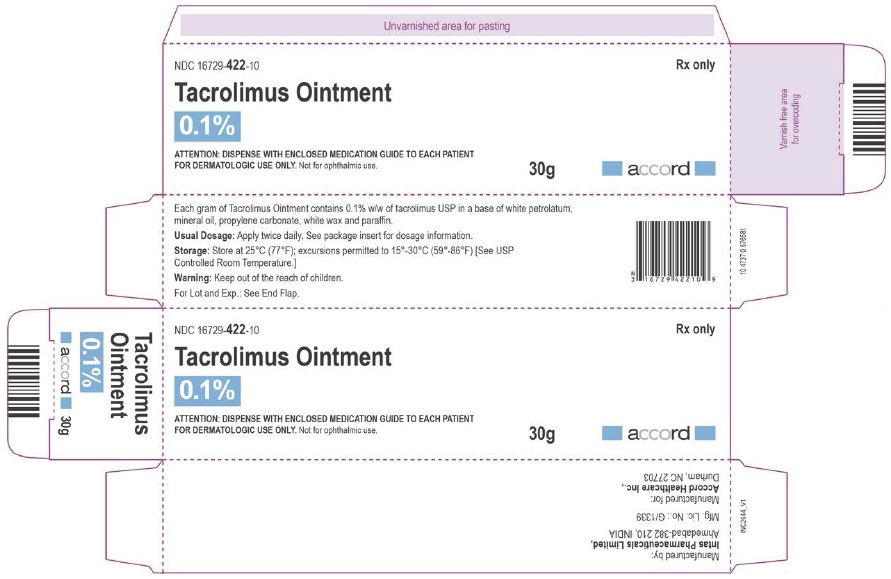
PRINCIPAL DISPLAY PANEL Tacrolimus Ointment 0.1% 30g Tacrolimus Ointment-0.1%-30g Box
PRINCIPAL DISPLAY PANEL Tacrolimus Ointment 0.1% 60g Tacrolimus Ointment-0.1%-60g Foil
PRINCIPAL DISPLAY PANEL Tacrolimus Ointment 0.1% 60g Tacrolimus Ointment-0.1%-60g Box
PRINCIPAL DISPLAY PANEL Tacrolimus Ointment 0.1% 100g Tacrolimus Ointment-0.1%-100g Foil
PRINCIPAL DISPLAY PANEL Tacrolimus Ointment 0.1% 100g Tacrolimus Ointment-0.1%-100g Box
PRINCIPAL DISPLAY PANEL Tacrolimus Ointment 0.03% 30g Tacrolimus Ointment-0.03%-30g Foil
PRINCIPAL DISPLAY PANEL Tacrolimus Ointment 0.03% 30g Tacrolimus Ointment-0.03%-30g Box
PRINCIPAL DISPLAY PANEL Tacrolimus Ointment 0.03% 60g Tacrolimus Ointment-0.03%-60g Foil
PRINCIPAL DISPLAY PANEL Tacrolimus Ointment 0.03% 60g Tacrolimus Ointment-0.03%-60g Box
PRINCIPAL DISPLAY PANEL Tacrolimus Ointment 0.03% 100g Tacrolimus Ointment-0.03%-100g Foil
PRINCIPAL DISPLAY PANEL Tacrolimus Ointment 0.03% 100g Tacrolimus Ointment-100g Box