
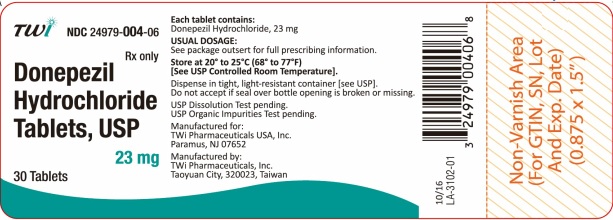
Donepezil Hydrochloride 23 mg Tablet, Film Coated, 90-count — NDC 24979-004-07 (Billing 24979-0004-07)
This is a package of 90 tablets of Donepezil Hydrochloride 23 mg Tablet, Film Coated from Upsher-Smith Laboratories, LLC, marketed since Mar 2015 and currently FDA-listed; retail pharmacies pay about $0.7354 per tablet (NADAC).
NDC database record
One package, one record: these facts belong to NDC 24979-004-07 alone.
- Record
- FDA NDC Directory package listing · Human prescription drug
- Code segments
- 24979 labeler · 004 product · 07 package
- Package marketed since
- Sep 22, 2015
- Sample package
- No — commercial package
- Listing certified through
- Dec 31, 2027
- Billing quantity
- 90 EA per package
- Barcode (UPC)
- 0324979004068, 0324979004075
- Medicaid fills, this package
- 568 prescriptions in the last four reported quarters
- FDA record last changed
- Jul 24, 2026
Identity & classification
Regulatory identifiers FDA, NLM and CMS codes for this package
Drug-database identifiers Medi-Span GPI and First Databank GCN / HICL / AHFS classification
- GSN (GCN sequence number): 066533
- GCN: 28828
- GPI-14 (Medi-Span): 62051025100330
- HICL (First Databank): 012259
- AHFS class code: 12:04.00.00
- RxCUI (RxNorm): 1100184
Where does this data come from?
- FDA openFDA NDC Directory · synced Oct 8, 2026
- FDA label on DailyMed · label index refreshed Oct 8, 2026
- RxNorm (NLM RxNav) · catalog refreshed Oct 1, 2026
- Medi-Span GPI (licensed)
- First Databank (licensed) · refreshed Oct 8, 2026
RxNorm drug class
This medicine belongs to the Cholinesterase Inhibitor class.
Where does this data come from?
- RxClass (NLM) · catalog refreshed Oct 1, 2026
Clinical
Donepezil is used to treat Alzheimer's disease (AD; a brain disease that affects memory, thinking, and behavior). Donepezil is in a class of medications called cholinesterase inhibitors. It works by increasing the amount of a certain naturally occurring substance in the brain that play a role in mental function.
Read the full MedlinePlus article ↗- Unfortunately, no — donepezil doesn't cure Alzheimer's disease, and it won't stop the disease from progressing over time. What it can do is help manage symptoms like memory and thi...
- Will donepezil cure my family member's Alzheimer's disease?
- You should take donepezil once a day in the evening, just before going to bed. Food doesn't affect how well it's absorbed, so you can take it with or without a meal — whatever work...
- When should I take donepezil, and does it matter if I take it with food?
Patient education
Supplement & herbal interactions
Where does this data come from?
- MedlinePlus (NLM) · refreshed Oct 8, 2026
- FDA label on DailyMed · label index refreshed Oct 8, 2026
Ask a licensed pharmacist directly — free, answered by our team.
Pricing
A drug doesn't have one price. Each row is a different public payment system, and none is what you'd pay at the counter — that depends on your insurance. The ⓘ on each row explains what it measures.
| Price system | Per ea | Per package |
|---|---|---|
| Retail pharmacies payNADAC · weekly | $0.735 | $66.19 / 90 tablets |
| Medicaid paysCMS SDUD · 12 mo | $1.19 | $107.29 / 90 tablets |
| Medicare drug plans payPart D · Q2 2026 | $0.4470 | $40.23 / 90 tablets |
Where does this data come from?
- CMS NADAC weekly file · file of Oct 7, 2026
- CMS ASP pricing files · refreshed Sep 20, 2026
- CMS Medicaid State Drug Utilization Data · through Q4 2025
- CMS Part D plan pricing files · refreshed Sep 24, 2026
- VA National Acquisition Center price file
Packaging — all sizes for this product
| Package NDC | Description | Per unit | Per pack | Marketing start | Marketing end | Status |
|---|---|---|---|---|---|---|
| 24979-0004-06 24979-004-06 Main listing | 30 TABLET, FILM COATED in 1 BOTTLE | $0.7354 / ea | $22.06 | 2015-03-01 | — | Active |
| 24979-0004-07 You're viewing this | 90 TABLET, FILM COATED in 1 BOTTLE | $0.7354 / ea | $66.19 | 2015-09-22 | — | Active |
You're viewing the largest of 2 pack sizes for this product.
This pack effectively ties for the lowest per-ea cost of the 2 priced pack sizes ($0.7354 NADAC).
This pack accounts for about 26% of this product's recent Medicaid fills; most go to the 30 tablets pack. See all packs ↓
Pack size FAQ
What quantity is in this package?
How does this package differ from NDC 24979-0004-06?
What NDC number is used to bill for this package of Donepezil Hydrochloride 23 mg Tablet, Film Coated?
Prices are the latest CMS NADAC pharmacy acquisition cost per NDC; per-pack figures are per-unit × pack quantity, shown only when the pack is denominated in the same measure NADAC prices.
Therapeutic equivalents
| Product | Labeler | Pack | NADAC/unit | TE | Status | Price vs. this |
|---|---|---|---|---|---|---|
| Donepezil Hydrochloride 23 mgthis 24979-0004-07 | Upsher-Smith | 90 tablets | $0.735 | AB | Availability likely | — |
| Donepezil Hydrochloride 23 mg 33342-0061-07 | Macleods | 30 tablets | $0.735 | AB | Discontinued | — |
| Donepezil hydrochloride 23 mg 42799-0954-01 | Edenbridge | 30 tablets | $0.735 | AB | Availability likely | — |
| Donepezil Hydrochloride 23 mg 68180-0527-06 | Lupin | 30 tablets | $0.794 | — | FDA listed | +8% |
| Aricept 23 mg 62856-0247-30 | Eisai | 30 tablets | $14.386 | AB | FDA listed | +1856% |
| Donepezil Hydrochloride 23 mg 51407-0320-30 | Golden | 30 tablets | — | AB | FDA listed | — |
| Donepezil hydrochloride 23 mg 55111-0302-05 | Dr. | 500 tablets | — | AB | FDA listed | — |
| Donepezil Hydrochloride 23 mg 62756-0194-18 | Sun | 1000 tablets | — | — | FDA listed | — |
| Donepezil Hydrochloride 23 mg 63629-8483-01 | Bryant | 30 tablets | — | AB | FDA listed | — |
| Donepezil Hydrochloride 23 mg 71205-0948-00 | Proficient | 100 tablets | — | AB | FDA listed | — |
| Donepezil Hydrochloride 23 mg 72162-1276-03 | Bryant | 30 tablets | — | AB | FDA listed | — |
Where does this data come from?
- FDA openFDA NDC Directory · synced Oct 8, 2026
- FDA Orange Book · refreshed Oct 3, 2026
- CMS NADAC weekly file · file of Oct 7, 2026
Availability & generic status
This product is an FDA-approved generic. Other versions of the same drug are listed under Therapeutic equivalents, least expensive first.
Where does this data come from?
- FDA Orange Book · refreshed Oct 3, 2026
What it looks like
Where does this data come from?
- FDA label on DailyMed · label index refreshed Oct 8, 2026
Inactive Ingredients / Excipients
Inactive ingredients, also called excipients, are components of the drug product other than the active ingredient. They may include fillers, dyes, coatings, preservatives, flavors, or other formulation ingredients.
🧪 Avoiding an ingredient? See Donepezil inactive ingredients by manufacturer: every current product's list side by side, so you can ask your pharmacy for the version that does not list it.
💡 Tap an ingredient (hover on desktop) to see what it is and why it’s used.
-
UNII XM0M87F357
A dark iron oxide compound that gives medicines their black or dark color. It's used as a colorant in tablets and capsules to help identify the product and make it visually distinctive.
-
UNII RFW2ET671P
Hydroxypropyl cellulose is a plant-derived thickening agent made from cellulose. It acts as a binder to hold tablet ingredients together and as a film-former to coat tablets or control how fast the medicine releases.
-
UNII 39J80LT57T
Hypromellose 2208 is a plant-derived thickening agent used as a binder and film-coating material. It helps hold tablet ingredients together and creates a protective coating on pills to control how quickly medicine dissolves.
-
UNII EWQ57Q8I5X
Lactose monohydrate is a natural sugar derived from milk. It serves as a filler and binder in tablets and capsules, helping create the proper size, texture, and consistency of the medicine.
-
UNII 70097M6I30
Magnesium stearate is a salt made from magnesium and stearic acid, a fatty substance. It's used in tablets and capsules as a lubricant and glidant to help ingredients flow smoothly during manufacturing and prevent sticking.
-
UNII NX76LV5T8J
A synthetic plastic polymer made from methacrylic acid and ethyl acrylate. It's used as a coating or binder to control how and where the medicine dissolves in your digestive system.
-
UNII 3WJQ0SDW1A
Polyethylene glycol is a synthetic liquid or solid polymer used in medicines as a solvent, lubricant, and humectant. It helps dissolve active ingredients, reduces friction during manufacturing, and retains moisture in the final product.
-
UNII 532B59J990
Polyvinyl alcohol is a synthetic polymer made from plant-derived materials. It's used as a binder to hold ingredients together, a film-former in coatings, and a thickener in liquid formulations.
-
UNII 6DC9Q167V3
Propylene glycol is a clear liquid derived from petroleum or vegetable sources. It acts as a solvent, humectant, and preservative in medicines, helping dissolve active ingredients and maintain product stability.
-
UNII 55X04QC32I
A strong alkaline chemical used to adjust and maintain the pH balance of liquid medicines. It helps keep the medicine stable and ensures it stays effective during storage.
-
UNII 7SEV7J4R1U
A powder made from a naturally occurring mineral. In medicines, talc works as a glidant and anti-caking agent, helping tablets and capsules flow smoothly during manufacturing and preventing clumping.
-
UNII 15FIX9V2JP
Titanium dioxide is a bright white mineral powder commonly used as a colorant and opacifying agent. It makes pills and tablets white or lighter in color and helps make coatings non-transparent.
-
UNII 8Z96QXD6UM
Triethyl citrate is a clear liquid derived from citric acid. It acts as a plasticizer and solvent in tablet coatings and film formulations, helping the coating remain flexible and adhere properly to the medicine.
13 inactive ingredients listed in the exact product block matched to this NDC.
Where does this data come from?
ingredient classCode="IACT" elements from the exact product block matched by this NDC. Label-section narrative from DailyMed / the openFDA label index is shown separately when available.- FDA label on DailyMed · label index refreshed Oct 8, 2026
- FDA openFDA NDC Directory · synced Oct 8, 2026
Inactive ingredient FAQ
Are inactive ingredients the same for every manufacturer?
Why might an inactive ingredient be missing?
Can inactive ingredients matter?
Manufacturer & labeler
More NDCs from Upsher-Smith Laboratories, LLC labeler code 24979
- Dexlansoprazole delayed release 30 mg Capsule, Delayed Release NDC 24979-001-06
- Dexlansoprazole delayed release 60 mg Capsule, Delayed Release NDC 24979-002-06
- Nifedipine 90 mg Tablet, Extended Release NDC 24979-009-01
- Nifedipine 60 mg Tablet, Extended Release NDC 24979-010-01
- Nifedipine 30 mg Tablet, Film Coated, Extended Release NDC 24979-011-01
- Diltiazem Hydrochloride 120 mg Capsule, Extended Release NDC 24979-026-00
- Diltiazem Hydrochloride 180 mg Capsule, Extended Release NDC 24979-027-00
- Diltiazem Hydrochloride 240 mg Capsule, Extended Release NDC 24979-028-00
Where does this data come from?
- FDA openFDA NDC Directory · synced Oct 8, 2026
- Drugs@FDA
Full prescribing information FDA SPL
🎯 Indications and Usage ▾
1 INDICATIONS AND USAGE Donepezil hydrochloride tablets are indicated for the treatment of dementia of the Alzheimer’s type. Efficacy has been demonstrated in patients with mild, moderate, and severe Alzheimer’s disease. Donepezil hydrochloride tablets are acetylcholinesterase inhibitor indicated for the treatment of dementia of the Alzheimer’s type. Efficacy has been demonstrated in patients with mild, moderate, and severe Alzheimer’s Disease ( 1 )
⏱️ Dosage and Administration ▾
2 DOSAGE AND ADMINISTRATION Mild to Moderate Alzheimer’s Disease: 5 mg to 10 mg once daily ( 2.1 ) Moderate to Severe Alzheimer’s Disease: 10 mg to 23 mg once daily ( 2.2 )
2.1Dosing in Mild to Moderate Alzheimer’s Disease The recommended starting dosage of donepezil hydrochloride tablets is 5 mg administered once per day in the evening, just prior to retiring. The maximum recommended dosage of donepezil hydrochloride tablets in patients with mild to moderate Alzheimer’s disease is 10 mg per day. A dose of 10 mg should not be administered until patients have been on a daily dose of 5 mg for 4 to 6 weeks.
2.2Dosing in Moderate to Severe Alzheimer’s Disease The recommended starting dosage of donepezil hydrochloride tablets is 5 mg administered once per day in the evening, just prior to retiring. The maximum recommended dosage of donepezil hydrochloride tablets in patients with moderate to severe Alzheimer’s disease is 23 mg per day. A dose of 10 mg should not be administered until patients have been on a daily dose of 5 mg for 4 to 6 weeks.
A dose of 23 mg per day should not be administered until patients have been on a daily dose of 10 mg for at least 3 months.
2.3Administration Information Donepezil hydrochloride tablets should be taken in the evening, just prior to retiring. Donepezil hydrochloride tablets can be taken with or without food. The donepezil hydrochloride 23 mg tablet should not be split, crushed, or chewed.
2.1Dosing in Mild to Moderate Alzheimer’s Disease The recommended starting dosage of donepezil hydrochloride tablets is 5 mg administered once per day in the evening, just prior to retiring. The maximum recommended dosage of donepezil hydrochloride tablets in patients with mild to moderate Alzheimer’s disease is 10 mg per day. A dose of 10 mg should not be administered until patients have been on a daily dose of 5 mg for 4 to 6 weeks.
2.2Dosing in Moderate to Severe Alzheimer’s Disease The recommended starting dosage of donepezil hydrochloride tablets is 5 mg administered once per day in the evening, just prior to retiring. The maximum recommended dosage of donepezil hydrochloride tablets in patients with moderate to severe Alzheimer’s disease is 23 mg per day. A dose of 10 mg should not be administered until patients have been on a daily dose of 5 mg for 4 to 6 weeks.
A dose of 23 mg per day should not be administered until patients have been on a daily dose of 10 mg for at least 3 months.
2.3Administration Information Donepezil hydrochloride tablets should be taken in the evening, just prior to retiring. Donepezil hydrochloride tablets can be taken with or without food. The donepezil hydrochloride 23 mg tablet should not be split, crushed, or chewed.
💊 Dosage Forms and Strengths ▾
3 DOSAGE FORMS AND STRENGTHS Donepezil hydrochloride tablets, USP are supplied as film-coated, round tablets containing 23 mg of donepezil hydrochloride. The 23 mg film coated tablets are white, printed with “T004” in black ink on one side and plain on the other side. Tablets: 23 mg ( 3 )
⛔ Contraindications ▾
4 CONTRAINDICATIONS Donepezil hydrochloride tablets are contraindicated in patients with known hypersensitivity to donepezil hydrochloride or to piperidine derivatives. Known hypersensitivity to donepezil hydrochloride or to piperidine derivatives ( 4 )
⚠️ Warnings and Cautions ▾
5 WARNINGS AND PRECAUTIONS Cholinesterase inhibitors are likely to exaggerate succinylcholine-type muscle relaxation during anesthesia ( 5.1 ) Cholinesterase inhibitors may have vagotonic effects on the sinoatrial and atrioventricular nodes manifesting as bradycardia or heart block ( 5.2 ) Donepezil hydrochloride tablets can cause vomiting. Patients should be observed closely at initiation of treatment and after dose increases ( 5.3 ) Patients should be monitored closely for symptoms of active or occult gastrointestinal (GI) bleeding, especially those at increased risk for developing ulcers ( 5.4 ) The use of donepezil hydrochloride tablets in a dose of 23 mg once daily is associated with weight loss ( 5.5 ) Cholinomimetics may cause bladder outflow obstructions ( 5.6 ) Cholinomimetics are believed to have some potential to cause generalized convulsions ( 5.7 ) Cholinesterase inhibitors should be prescribed with care to patients with a history of asthma or obstructive pulmonary disease ( 5.8 )
5.1Anesthesia Donepezil hydrochloride tablets, as a cholinesterase inhibitor, are likely to exaggerate succinylcholine-type muscle relaxation during anesthesia.
5.2Cardiovascular Conditions Because of their pharmacological action, cholinesterase inhibitors may have vagotonic effects on the sinoatrial and atrioventricular nodes. This effect may manifest as bradycardia or heart block in patients both with and without known underlying cardiac conduction abnormalities. Syncopal episodes have been reported in association with the use of donepezil hydrochloride tablets.
5.3Nausea and Vomiting Donepezil hydrochloride tablets, as a predictable consequence of its pharmacological properties, have been shown to produce diarrhea, nausea, and vomiting. These effects, when they occur, appear more frequently with the 10 mg/day dose than with the 5 mg/day dose, and more frequently with the 23 mg dose than with the 10 mg dose. Specifically, in a controlled trial that compared a dose of 23 mg/day to 10 mg/day in patients who had been treated with donepezil 10 mg/day for at least three months, the incidence of nausea in the 23 mg group was markedly greater than in the patients who continued on 10 mg/day (11.8% vs.
3.4%, respectively), and the incidence of vomiting in the 23 mg group was markedly greater than in the 10 mg group (9.2% vs. 2.5%, respectively). The percent of patients who discontinued treatment due to vomiting in the 23 mg group was markedly higher than in the 10 mg group (2.9% vs.
0.4%, respectively). Although in most cases, these effects have been transient, sometimes lasting one to three weeks, and have resolved during continued use of donepezil hydrochloride tablets, patients should be observed closely at the initiation of treatment and after dose increases.
5.4Peptic Ulcer Disease and GI Bleeding Through their primary action, cholinesterase inhibitors may be expected to increase gastric acid secretion due to increased cholinergic activity. Therefore, patients should be monitored closely for symptoms of active or occult gastrointestinal bleeding, especially those at increased risk for developing ulcers, e.g., those with a history of ulcer disease or those receiving concurrent nonsteroidal anti-inflammatory drugs (NSAIDs). Clinical studies of donepezil hydrochloride tablets in a dose of 5 mg/day to 10 mg/day have shown no increase, relative to placebo, in the incidence of either peptic ulcer disease or gastrointestinal bleeding.
Results of a controlled clinical study with 23 mg/day showed an increase, relative to 10 mg/day, in the incidence of peptic ulcer disease (0.4% vs. 0.2%) and gastrointestinal bleeding from any site (1.1% vs. 0.6%).
5.5Weight Loss Weight loss was reported as an adverse reaction in 4.7% of patients assigned to donepezil hydrochloride tablets in a dose of 23 mg/day compared to 2.5% of patients assigned to 10 mg/day. Compared to their baseline weights, 8.4% of patients taking 23 mg/day were found to have a weight d… [Excerpted — this section continues on DailyMed.]
🤒 Adverse Reactions ▾
6 ADVERSE REACTIONS The following serious adverse reactions are described below and elsewhere in the labeling: Cardiovascular Conditions [see Warnings and Precautions ( 5.2 )] Nausea and Vomiting [see Warnings and Precautions ( 5.3 )] Peptic Ulcer Disease and GI Bleeding [see Warnings and Precautions ( 5.4 )] Weight Loss [see Warnings and Precautions ( 5.5 )] Genitourinary Conditions [see Warnings and Precautions ( 5.6 )] Neurological Conditions: Seizures [see Warnings and Precautions ( 5.7 )] Pulmonary Conditions [see Warnings and Precautions ( 5.8 )] Most common adverse reactions in clinical studies of donepezil hydrochloride tablets are nausea, diarrhea, insomnia, vomiting, muscle cramps, fatigue, and anorexia ( 6.1 ) To report SUSPECTED ADVERSE REACTIONS, contact Upsher-Smith Laboratories, LLC at 1-855-899-9180 or FDA at 1-800-FDA-1088 or www.fda.gov/medwatch .
6.1Clinical Trials Experience Because clinical trials are conducted under widely varying conditions, adverse reaction rates observed in the clinical trials of a drug cannot be directly compared to rates in the clinical trials of another drug and may not reflect the rates observed in practice. Donepezil hydrochloride tablets have been administered to over 1,700 individuals during clinical trials worldwide. Approximately 1200 of these patients have been treated for at least 3 months and more than 1,000 patients have been treated for at least 6 months.
Controlled and uncontrolled trials in the United States included approximately 900 patients. In regards to the highest dose of 10 mg/day, this population includes 650 patients treated for 3 months, 475 patients treated for 6 months, and 116 patients treated for over 1 year. The range of patient exposure is from 1 to 1,214 days.
Mild to Moderate Alzheimer’s Disease Adverse Reactions Leading to Discontinuation The rates of discontinuation from controlled clinical trials of donepezil hydrochloride tablets due to adverse reactions for the donepezil hydrochloride tablets 5 mg/day treatment groups were comparable to those of placebo treatment groups at approximately 5%. The rate of discontinuation of patients who received 7-day escalations from 5 mg/day to 10 mg/day was higher at 13%. The most common adverse reactions leading to discontinuation, defined as those occurring in at least 2% of patients and at twice or more the incidence seen in placebo patients, are shown in Table 1.
Table 1. Most Common Adverse Reactions Leading to Discontinuation in Patients with Mild to Moderate Alzheimer’s Disease Adverse Reaction Placebo (n=355) % 5 mg/day Donepezil Hydrochloride Tablets (n=350) % 10 mg/day Donepezil Hydrochloride Tablets (n=315) % Nausea 1 1 3 Diarrhea 0 <1 3 Vomiting <1 <1 2 The most common adverse reactions, defined as those occurring at a frequency of at least 5% in patients receiving 10 mg/day and twice the placebo rate, are largely predicted by donepezil hydrochloride tablets’ cholinomimetic effects.
These include nausea, diarrhea, insomnia, vomiting, muscle cramp, fatigue, and anorexia. These adverse reactions were often transient, resolving during continued donepezil hydrochloride tablets treatment without the need for dose modification. There is evidence to suggest that the frequency of these common adverse reactions may be affected by the rate of titration.
An open-label study was conducted with 269 patients who received placebo in the 15-and 30-week studies. These patients were titrated to a dose of 10 mg/day over a 6-week period. The rates of common adverse reactions were lower than those seen in patients titrated to 10 mg/day over one week in the controlled clinical trials and were comparable to those seen in patients on 5 mg/day.
See Table 2 for a comparison of the most common adverse reactions following one and six week titration regimens. Table 2. Comparison of Rates of Adverse Reactions in Mild to Moderate Patients Titrated to 10 mg/day over 1 and 6 Weeks No titration One week titration Six week titration Ad… [Excerpted — this section continues on DailyMed.]
🔄 Drug Interactions ▾
7 DRUG INTERACTIONS Cholinesterase inhibitors have the potential to interfere with the activity of anticholinergic medications ( 7.1 ) A synergistic effect may be expected with concomitant administration of succinylcholine, similar neuromuscular blocking agents, or cholinergic agonists ( 7.2 )
7.1Use with Anticholinergics Because of their mechanism of action, cholinesterase inhibitors have the potential to interfere with the activity of anticholinergic medications.
7.2Use with Cholinomimetics and Other Cholinesterase Inhibitors A synergistic effect may be expected when cholinesterase inhibitors are given concurrently with succinylcholine, similar neuromuscular blocking agents, or cholinergic agonists such as bethanechol.
7.1Use with Anticholinergics Because of their mechanism of action, cholinesterase inhibitors have the potential to interfere with the activity of anticholinergic medications.
7.2Use with Cholinomimetics and Other Cholinesterase Inhibitors A synergistic effect may be expected when cholinesterase inhibitors are given concurrently with succinylcholine, similar neuromuscular blocking agents, or cholinergic agonists such as bethanechol.
👥 Use in Specific Populations ▾
8 USE IN SPECIFIC POPULATIONS Pregnancy: Based on animal data, donepezil hydrochloride tablets may cause fetal harm ( 8.1 )
8.1Pregnancy Risk Summary There are no adequate data on the developmental risks associated with the use of donepezi hydrochloride tablets in pregnant women. In animal studies, developmental toxicity was not observed when donepezil was administered to pregnant rats and rabbits during organogenesis, but administration to rats during the latter part of pregnancy and throughout lactation resulted in increased stillbirths and decreased offspring survival at clinically relevant doses [see Data]. In the U.S. general population, the estimated background risks of major birth defects and miscarriage in clinically recognized pregnancies are 2% to 4% and 15% to 20%, respectively.
The background risks of major birth defects and miscarriage for the indicated population are unknown. Data Animal Data Oral administration of donepezil to pregnant rats and rabbits during the period of organogenesis did not produce any teratogenic effects at doses up to 16 mg/kg/day (approximately 6 times the maximum recommended human dose [MRHD] of 23 mg/day on a mg/m 2 basis) and 10 mg/kg/day (approximately 7 times the MRHD on a mg/m 2 basis), respectively. Oral administration of donepezil (1, 3, 10 mg/kg/day) to rats during late gestation and throughout lactation to weaning produced an increase in stillbirths and reduced offspring survival through postpartum day 4 at the highest dose.
The no-effect dose of 3 mg/kg/day is approximately equal to the MRHD on a mg/m 2 basis.
8.2Lactation Risk Summary There are no data on the presence of donepezil or its metabolites in human milk, the effects on the breastfed infant, or on milk production. The developmental and health benefits of breastfeeding should be considered along with the mother’s clinical need for donepezil hydrochloride tablets and any potential adverse effects on the breastfed infant from donepezil hydrochloride tablets or from the underlying maternal condition.
8.4Pediatric Use The safety and effectiveness in pediatric patients have not been established.
8.5Geriatric Alzheimer’s disease is a disorder occurring primarily in individuals over 55 years of age. The mean age of patients enrolled in the clinical studies with donepezil hydrochloride tablets was 73 years; 80% of these patients were between 65 and 84 years old, and 49% of patients were at or above the age of 75. The efficacy and safety data presented in the clinical trials section were obtained from these patients.
There were no clinically significant differences in most adverse reactions reported by patient groups ≥ 65 years old and < 65 years old.
8.6Lower Weight Individuals In the controlled clinical trial, among patients in the donepezil hydrochloride tablets 23 mg treatment group, those patients weighing < 55 kg reported more nausea, vomiting, and decreased weight than patients weighing 55 kg or more. There were more withdrawals due to adverse reactions as well. This finding may be related to higher plasma exposure associated with lower weight.
8.1Pregnancy Risk Summary There are no adequate data on the developmental risks associated with the use of donepezi hydrochloride tablets in pregnant women. In animal studies, developmental toxicity was not observed when donepezil was administered to pregnant rats and rabbits during organogenesis, but administration to rats during the latter part of pregnancy and throughout lactation resulted in increased stillbirths and decreased offspring survival at clinically relevant doses [see Data]. In the U.S. general population, the estimated background risks of major birth defects and miscarriage in clinically recognized pregnancies are 2% to 4% and 15% to 20%, respectively.
The background risks of major birth defects and miscarriage for the indicated population are unknown. Data Animal Data Oral administration of donepezil to pregnant rats and rabbits during the period of organog… [Excerpted — this section continues on DailyMed.]
🆘 Overdosage ▾
10 OVERDOSAGE Because strategies for the management of overdose are continually evolving, it is advisable to contact a Poison Control Center to determine the latest recommendations for the management of an overdose of any drug. As in any case of overdose, general supportive measures should be utilized. Overdosage with cholinesterase inhibitors can result in cholinergic crisis characterized by severe nausea, vomiting, salivation, sweating, bradycardia, hypotension, respiratory depression, collapse, and convulsions.
Increasing muscle weakness is a possibility and may result in death if respiratory muscles are involved. Tertiary anticholinergics such as atropine may be used as an antidote for donepezil hydrochloride tablets overdosage. Intravenous atropine sulfate titrated to effect is recommended: an initial dose of 1.0 to 2.0 mg IV with subsequent doses based upon clinical response.
Atypical responses in blood pressure and heart rate have been reported with other cholinomimetics when co-administered with quaternary anticholinergics such as glycopyrrolate. It is not known whether donepezil hydrochloride tablets and/or its metabolites can be removed by dialysis (hemodialysis, peritoneal dialysis, or hemofiltration). Dose-related signs of toxicity in animals included reduced spontaneous movement, prone position, staggering gait, lacrimation, clonic convulsions, depressed respiration, salivation, miosis, tremors, fasciculation, and lower body surface temperature.
🧬 Clinical Pharmacology ▾
12 CLINICAL PHARMACOLOGY
12.1Mechanism of Action Current theories on the pathogenesis of the cognitive signs and symptoms of Alzheimer’s disease attribute some of them to a deficiency of cholinergic neurotransmission. Donepezil hydrochloride is postulated to exert its therapeutic effect by enhancing cholinergic function. This is accomplished by increasing the concentration of acetylcholine through reversible inhibition of its hydrolysis by acetylcholinesterase.
There is no evidence that donepezil alters the course of the underlying dementing process.
12.3Pharmacokinetics Pharmacokinetics of donepezil are linear over a dose range of 1-10 mg given once daily. The rate and extent of absorption of donepezil hydrochloride tablets are not influenced by food. Based on population pharmacokinetic analysis of plasma donepezil concentrations measured in patients with Alzheimer’s disease, following oral dosing, peak plasma concentration is achieved for donepezil hydrochloride 23 mg tablets in approximately 8 hours, compared with 3 hours for donepezil hydrochloride 10 mg tablets.
Peak plasma concentrations were about 2-fold higher for donepezil hydrochloride 23 mg tablets than donepezil hydrochloride 10 mg tablets. Donepezil hydrochloride ODT 5 mg and 10 mg are bioequivalent to donepezil hydrochloride 5 mg and 10 mg tablets, respectively. A food effect study has not been conducted with donepezil hydrochloride ODT; however, the effect of food with donepezil hydrochloride ODT is expected to be minimal.
Donepezil hydrochloride ODT can be taken without regard to meals. The elimination half life of donepezil is about 70 hours, and the mean apparent plasma clearance (Cl/F) is 0.13-0.19 L/hr/kg. Following multiple dose administration, donepezil accumulates in plasma by 4-7 fold, and steady state is reached within 15 days.
The steady state volume of distribution is 12-16 L/kg. Donepezil is approximately 96% bound to human plasma proteins, mainly to albumins (about 75%) and alpha1 -acid glycoprotein (about 21%) over the concentration range of 2-1000 ng/mL. Donepezil is both excreted in the urine intact and extensively metabolized to four major metabolites, two of which are known to be active, and a number of minor metabolites, not all of which have been identified.
Donepezil is metabolized by CYP 450 isoenzymes 2D6 and 3A4 and undergoes glucuronidation. Following administration of 14 C-labeled donepezil, plasma radioactivity, expressed as a percent of the administered dose, was present primarily as intact donepezil (53%) and as 6-O-desmethyl donepezil (11%), which has been reported to inhibit AChE to the same extent as donepezil in vitro and was found in plasma at concentrations equal to about 20% of donepezil. Approximately 57% and 15% of the total radioactivity was recovered in urine and feces, respectively, over a period of 10 days, while 28% remained unrecovered, with about 17% of the donepezil dose recovered in the urine as unchanged drug.
Examination of the effect of CYP2D6 genotype in Alzheimer’s patients showed differences in clearance values among CYP2D6 genotype subgroups. When compared to the extensive metabolizers, poor metabolizers had a 31.5% slower clearance and ultra-rapid metabolizers had a 24% faster clearance. Hepatic Disease In a study of 10 patients with stable alcoholic cirrhosis, the clearance of donepezil hydrochloride tablets was decreased by 20% relative to 10 healthy age-and sex-matched subjects.
Renal Disease In a study of 11 patients with moderate to severe renal impairment (ClC < 18 mL/min/1.73 m 2 ) the clearance of donepezil hydrochloride tablets did not differ from 11 age-and sex-matched healthy subjects. Age No formal pharmacokinetic study was conducted to examine age-related differences in the pharmacokinetics of donepezil hydrochloride tablets. Population pharmacokinetic analysis suggested that the clearance of donepezil in patients decreases with increasing age.
When compared with 65-year old, subjects, 90-yea… [Excerpted — this section continues on DailyMed.]
📦 How Supplied / Storage and Handling ▾
16 HOW SUPPLIED/STORAGE AND HANDLING
16.1Donepezil Hydrochloride Tablets USP Supplied as film-coated, round tablets containing 23 mg of donepezil hydrochloride. The 23 mg film-coated tablets are white, printed with “T004” in black ink on one side and plain on the other side. Bottles of 30 (NDC# 24979-004-06) Bottles of 90 (NDC# 24979-004-07) Storage Store at 20° to 25°C (68° to 77°F) [see USP Controlled Room Temperature].
16.1Donepezil Hydrochloride Tablets USP Supplied as film-coated, round tablets containing 23 mg of donepezil hydrochloride. The 23 mg film-coated tablets are white, printed with “T004” in black ink on one side and plain on the other side. Bottles of 30 (NDC# 24979-004-06) Bottles of 90 (NDC# 24979-004-07) Storage Store at 20° to 25°C (68° to 77°F) [see USP Controlled Room Temperature].
📋 Description ▾
11 DESCRIPTION Donepezil hydrochloride tablets USP are a reversible inhibitor of the enzyme acetylcholinesterase, known chemically as (±)-2, 3-dihydro-5, 6-dimethoxy-2-[[1-(phenylmethyl)-4-piperidinyl]methyl]-1H-inden-1-one hydrochloride. Donepezil hydrochloride is commonly referred to in the pharmacological literature as E2020. It has an empirical formula of C 24 H 29 NO 3 HCl and a molecular weight of 415.96.
Donepezil hydrochloride is a white crystalline powder and is freely soluble in chloroform, soluble in water and in glacial acetic acid, slightly soluble in ethanol and in acetonitrile, and practically insoluble in ethyl acetate and in n-hexane. Donepezil hydrochloride tablets USP are available for oral administration in film-coated tablets containing 23 mg of donepezil hydrochloride. Inactive ingredients in 23 mg tablets include hypromellose, hydroxypropyl cellulose, lactose monohydrate, magnesium stearate, methacrylic acid copolymer, polyvinyl alcohol, polyethylene glycol, titanium dioxide, talc, sodium hydroxide, triethyl citrate, iron oxide black, and propylene glycol.
USP Dissolution Test pending. USP Organic Impurities Test pending. 01
💬 Information for Patients ▾
17 PATIENT COUNSELING INFORMATION Advise the patient to read the FDA-approved patient labeling (Patient Information). Instruct patients and caregivers to take donepezil hydrochloride tablets only once per day, as prescribed. Instruct patients and caregivers that donepezil hydrochloride tablets can be taken with or without food.
Donepezil hydrochloride tablets 23 mg tablets should be swallowed whole without the tablets being split, crushed or chewed. Advise patients and caregivers that donepezil hydrochloride tablets may cause nausea, diarrhea, insomnia, vomiting, muscle cramps, fatigue, and decreased appetite. Advise patients to notify their healthcare provider if they are pregnant or plan to become pregnant.
Patient Package Insert Donepezil Hydrochloride (doe nep′ e zil hye″ droe klor′ ide) Tablets Read this Patient Information that comes with donepezil hydrochloride tablets before you start taking it and each time you get a refill. There may be new information. This leaflet does not take the place of talking with your doctor about Alzheimer’s disease or treatment for it.
If you have questions, ask the doctor or pharmacist. What is Donepezil Hydrochloride Tablets? Donepezil hydrochloride comes as donepezil hydrochloride film-coated tablets in dosage strengths of 23 mg.
Donepezil hydrochloride tablets are prescription medicines to treat mild, moderate, and severe Alzheimer’s disease. Donepezil hydrochloride tablets can help with mental function and with doing daily tasks. Donepezil hydrochloride tablets do not work the same in all people.
Some people may: Seem much better Get better in small ways or stay the same Get worse over time but slower than expected Not change and then get worse as expected Donepezil hydrochloride tablets do not cure Alzheimer’s disease. All patients with Alzheimer’s disease get worse over time, even if they take donepezil hydrochloride tablets. Donepezil hydrochloride tablets have not been approved as a treatment for any medical condition in children.
Who should not take donepezil hydrochloride tablets? Do not take donepezil hydrochloride tablets if you are allergic to any of the ingredients in donepezil hydrochloride tablets or to medicines that contain piperidines. Ask your doctor if you are not sure.
See the end of this leaflet for a list of ingredients in donepezil hydrochloride tablets. What should I tell my doctor before taking donepezil hydrochloride tablets? Tell the doctor about all of your present or past health problems and conditions.
Include: Any heart problems including problems with irregular, slow, or fast heartbeats Asthma or lung problems A seizure Stomach ulcers Difficulty passing urine Liver or kidney problems Trouble swallowing tablets Present pregnancy or plans to become pregnant. It is not known if donepezil hydrochloride tablets can harm an unborn baby. Present breast-feeding.
It is not known if donepezil hydrochloride tablets pass into breast milk. Talk to your doctor about the best way to feed your baby if you take donepezil hydrochloride tablets. Tell the doctor about all the medicines you take, including prescription and non-prescription medicines, vitamins, and herbal products.
Donepezil hydrochloride tablets and other medicines may affect each other. Be particularly sure to tell the doctor if you take aspirin or medicines called nonsteroidal anti-inflammatory drugs (NSAIDs). There are many NSAID medicines, both prescription and non-prescription.
Ask the doctor or pharmacist if you are not sure if any of your medicines are NSAIDs. Taking NSAIDs and donepezil hydrochloride tablets together may make you more likely to get stomach ulcers. Donepezil hydrochloride tablets taken with certain medicines used for anesthesia may cause side effects.
Tell the responsible doctor or dentist that you take donepezil hydrochloride tablets before you have: surgery medical procedures dental surgery or procedures. Know the medicines that you take. Keep a list of all your medicines.
Show it to… [Excerpted — this section continues on DailyMed.]
🔬 Clinical Studies ▾
14 CLINICAL STUDIES
14.1Mild to Moderate Alzheimer’s Disease The effectiveness of donepezil hydrochloride tablets as a treatment for mild to moderate Alzheimer’s disease is demonstrated by the results of two randomized, double-blind, placebo-controlled clinical investigations in patients with Alzheimer’s disease (diagnosed by NINCDS and DSM III-R criteria, Mini-Mental State Examination ≥ 10 and ≤ 26 and Clinical Dementia Rating of 1 or 2). The mean age of patients participating in donepezil hydrochloride tablets trials was 73 years with a range of 50 to 94.
Approximately 62% of patients were women and 38% were men. The racial distribution was white 95%, black 3%, and other races 2%. The higher dose of 10 mg did not provide a statistically significantly greater clinical benefit than 5 mg.
There is a suggestion, however, based upon order of group mean scores and dose trend analyses of data from these clinical trials, that a daily dose of 10 mg of donepezil hydrochloride tablets might provide additional benefit for some patients. Accordingly, whether or not to employ a dose of 10 mg is a matter of prescriber and patient preference. Study Outcome Measures In each study, the effectiveness of treatment with donepezil hydrochloride tablets was evaluated using a dual outcome assessment strategy.
The ability of donepezil hydrochloride tablets to improve cognitive performance was assessed with the cognitive subscale of the Alzheimer’s Disease Assessment Scale (ADAS-cog), a multi-item instrument that has been extensively validated in longitudinal cohorts of Alzheimer’s disease patients. The ADAS-cog examines selected aspects of cognitive performance including elements of memory, orientation, attention, reasoning, language, and praxis. The ADAS-cog scoring range is from 0 to 70, with higher scores indicating greater cognitive impairment.
Elderly normal adults may score as low as 0 or 1, but it is not unusual for non-demented adults to score slightly higher. The patients recruited as participants in each study had mean scores on the ADAS-cog of approximately 26 points, with a range from 4 to 61. Experience based on longitudinal studies of ambulatory patients with mild to moderate Alzheimer’s disease suggest that scores on the ADAS-cog increase (worsen) by 6-12 points per year.
However, smaller changes may be seen in patients with very mild or very advanced disease since the ADAS-cog is not uniformly sensitive to change over the course of the disease. The annualized rate of decline in the placebo patients participating in donepezil hydrochloride tablets trials was approximately 2 to 4 points per year. The ability of donepezil hydrochloride tablets to produce an overall clinical effect was assessed using a Clinician’s Interview-Based Impression of Change that required the use of caregiver information, the CIBIC-plus.
The CIBIC-plus is not a single instrument and is not a standardized instrument like the ADAS-cog. Clinical trials for investigational drugs have used a variety of CIBIC formats, each different in terms of depth and structure. As such, results from a CIBIC-plus reflect clinical experience from the trial or trials in which it was used and cannot be compared directly with the results of CIBIC-plus evaluations from other clinical trials.
The CIBIC-plus used in donepezil hydrochloride tablets trials was a semi-structured instrument that was intended to examine four major areas of patient function: General, Cognitive, Behavioral, and Activities of Daily Living. It represents the assessment of a skilled clinician based upon his/her observations at an interview with the patient, in combination with information supplied by a caregiver familiar with the behavior of the patient over the interval rated. The CIBIC-plus is scored as a seven-point categorical rating, ranging from a score of 1, indicating “markedly improved,” to a score of 4, indicating “no change” to a score of 7, indicating “markedly worse.” The CIBIC-plus has not been syste… [Excerpted — this section continues on DailyMed.]
🧪 Nonclinical Toxicology ▾
13 NONCLINICAL TOXICOLOGY
13.1Carcinogenesis, Mutagenesis, Impairment of Fertility No evidence of carcinogenic potential was obtained in an 88-week carcinogenicity study of donepezil conducted in mice at oral doses up to 180 mg/kg/day (approximately 40 times the maximum recommended human dose [MRHD] of 23 mg/day on a mg/m 2 basis), or in a 104-week carcinogenicity study in rats at oral doses up to 30 mg/kg/day (approximately 13 times the MRHD on a mg/m 2 basis). Donepezil was negative in a battery of genotoxicity assays ( in vitro bacterial reverse mutation, in vitro mouse lymphoma tk , in vitro chromosomal aberration, and in vivo mouse micronucleus).
Donepezil had no effect on fertility in rats at oral doses up to 10 mg/kg/day (approximately 4 times the MRHD on a mg/m 2 basis) when administered to males and females prior to and during mating and continuing in females through implantation.
13.2Animal Toxicology and/or Pharmacology In an acute dose neurotoxicity study in female rats, oral administration of donepezil and memantine in combination resulted in increased incidence, severity, and distribution of neurodegeneration compared with memantine alone. The no-effect levels of the combination were associated with clinically relevant plasma donepezil and memantine levels. The relevance of this finding to humans is unknown.
13.1Carcinogenesis, Mutagenesis, Impairment of Fertility No evidence of carcinogenic potential was obtained in an 88-week carcinogenicity study of donepezil conducted in mice at oral doses up to 180 mg/kg/day (approximately 40 times the maximum recommended human dose [MRHD] of 23 mg/day on a mg/m 2 basis), or in a 104-week carcinogenicity study in rats at oral doses up to 30 mg/kg/day (approximately 13 times the MRHD on a mg/m 2 basis). Donepezil was negative in a battery of genotoxicity assays ( in vitro bacterial reverse mutation, in vitro mouse lymphoma tk , in vitro chromosomal aberration, and in vivo mouse micronucleus).
Donepezil had no effect on fertility in rats at oral doses up to 10 mg/kg/day (approximately 4 times the MRHD on a mg/m 2 basis) when administered to males and females prior to and during mating and continuing in females through implantation.
13.2Animal Toxicology and/or Pharmacology In an acute dose neurotoxicity study in female rats, oral administration of donepezil and memantine in combination resulted in increased incidence, severity, and distribution of neurodegeneration compared with memantine alone. The no-effect levels of the combination were associated with clinically relevant plasma donepezil and memantine levels. The relevance of this finding to humans is unknown.
📄 Package Label / Principal Display Panel ▾
PACKAGE LABEL 16 17 image description image description