
Zafirlukast 10 mg Tablet, Film Coated — NDC 31722-007-01 (Billing 31722-0007-01)
This is a package of Zafirlukast 10 mg Tablet, Film Coated from Camber Pharmaceuticals, Inc., marketed since Sep 2020 and currently FDA-listed.
NDC database record
One package, one record: these facts belong to NDC 31722-007-01 alone.
- Record
- FDA NDC Directory package listing · Human prescription drug
- Code segments
- 31722 labeler · 007 product · 01 package
- Package marketed since
- Sep 10, 2020
- Sample package
- No — commercial package
- Listing certified through
- Dec 31, 2026
- Barcode (UPC)
- 0331722007603, 0331722008600
- FDA record last changed
- Jul 24, 2026
Identity & classification
Regulatory identifiers FDA, NLM and CMS codes for this package
Drug-database identifiers Medi-Span GPI and First Databank GCN / HICL / AHFS classification
- GSN (GCN sequence number): 043557
- GCN: 52271
- GPI-14 (Medi-Span): 44505080000310
- HICL (First Databank): 011815
- AHFS class code: 48:10.24.00
- RxCUI (RxNorm): 199655
Where does this data come from?
- FDA openFDA NDC Directory · synced Oct 8, 2026
- FDA label on DailyMed · label index refreshed Oct 8, 2026
- RxNorm (NLM RxNav) · catalog refreshed Oct 1, 2026
- Medi-Span GPI (licensed)
- First Databank (licensed) · refreshed Oct 8, 2026
RxNorm drug class
This medicine belongs to the Leukotriene Receptor Antagonist class.
Where does this data come from?
- RxClass (NLM) · catalog refreshed Oct 1, 2026
Clinical
Zafirlukast is used to prevent asthma symptoms. Zafirlukast is in a class of medications called leukotriene receptor antagonists (LTRAs). It works by blocking the action of certain natural substances that cause swelling and tightening of the airways.
Read the full MedlinePlus article ↗- No, it's quite different from a rescue inhaler. Zafirlukast is a daily tablet that works in the background to prevent asthma symptoms by blocking chemicals in your body called leuk...
- What exactly does zafirlukast do — is it the same as an inhaler?
- Timing really does matter here. Food can reduce how much zafirlukast your body actually absorbs by about 40%, which means it could be a lot less effective if you take it with a mea...
- Does it matter when I take it — can I just take it with breakfast?
Patient education
Supplement & herbal interactions
Some supplements/herbs that may interact with Zafirlukast — tap one for details:
Where does this data come from?
- MedlinePlus (NLM) · refreshed Oct 8, 2026
- FDA label on DailyMed · label index refreshed Oct 8, 2026
Ask a licensed pharmacist directly — free, answered by our team.
Pricing
A drug doesn't have one price. Each row is a different public payment system, and none is what you'd pay at the counter — that depends on your insurance. The ⓘ on each row explains what it measures.
| Price system | Per each | Per package |
|---|---|---|
| Retail pharmacies payNADAC · weekly | Not in the retail survey — common for institutional, discontinued, or low-volume packs. | |
| Medicaid paysCMS SDUD · 12 mo | No recent Medicaid claims on file for this NDC — rare and low-volume NDCs are suppressed in the public data. | |
| Medicare drug plans payPart D · Q2 2026 | $0.9746 | $97.46 / 100 tablets |
Where does this data come from?
- CMS NADAC weekly file
- CMS ASP pricing files · refreshed Sep 20, 2026
- CMS Medicaid State Drug Utilization Data · refreshed Oct 8, 2026
- CMS Part D plan pricing files · refreshed Sep 24, 2026
- VA National Acquisition Center price file
Packaging — all sizes for this product
| Package NDC | Description | Per unit | Per pack | Marketing start | Marketing end | Status |
|---|---|---|---|---|---|---|
| 31722-0007-01 You're viewing this | 10 BLISTER PACK in 1 CARTON / 10 TABLET, FILM COATED in 1 BLISTER PACK | — | — | 2020-09-10 | — | Active |
| 31722-0007-05 31722-007-05 | 500 TABLET, FILM COATED in 1 BOTTLE | — | — | 2020-09-10 | — | Active |
| 31722-0007-60 31722-007-60 Main listing | 60 TABLET, FILM COATED in 1 BOTTLE | $0.5169 / ea | $31.01 | 2020-09-10 | — | Active |
Pack size FAQ
What quantity is in this package?
What NDC number is used to bill for this package of Zafirlukast 10 mg Tablet, Film Coated?
Prices are the latest CMS NADAC pharmacy acquisition cost per NDC; per-pack figures are per-unit × pack quantity, shown only when the pack is denominated in the same measure NADAC prices.
Therapeutic equivalents
| Product | Labeler | Pack | NADAC/unit | TE | Status | Price vs. this |
|---|---|---|---|---|---|---|
| Zafirlukast 10 mg 59651-0291-60 | Aurobindo | 60 tablets | $0.517 | — | Availability likely | — |
| Zafirlukast 10 mg 64380-0187-01 | Strides | 60 tablets | $0.517 | AB | Availability likely | — |
| Zafirlukast 10 mgthis 31722-0007-01 | Camber | 10 tablets | — | AB | FDA listed | — |
| Zafirlukast 10 mg 42291-0970-60 | AvKARE | 60 tablets | — | AB | FDA listed | — |
| Zafirlukast 10 mg 55111-0625-01 | Dr. | 100 tablets | — | AB | FDA listed | — |
Where does this data come from?
- FDA openFDA NDC Directory · synced Oct 8, 2026
- FDA Orange Book · refreshed Oct 3, 2026
- CMS NADAC weekly file
Availability & generic status
This product is an FDA-approved generic. Other versions of the same drug are listed under Therapeutic equivalents, least expensive first.
Where does this data come from?
- FDA Orange Book · refreshed Oct 3, 2026
What it looks like
Where does this data come from?
- FDA label on DailyMed · label index refreshed Oct 8, 2026
Inactive Ingredients / Excipients
Inactive ingredients, also called excipients, are components of the drug product other than the active ingredient. They may include fillers, dyes, coatings, preservatives, flavors, or other formulation ingredients.
🧪 Avoiding an ingredient? See Zafirlukast inactive ingredients by manufacturer: every current product's list side by side, so you can ask your pharmacy for the version that does not list it.
💡 Tap an ingredient (hover on desktop) to see what it is and why it’s used.
-
UNII M28OL1HH48
Croscarmellose sodium is a plant-based substance derived from cellulose. It acts as a disintegrant, helping tablets and capsules break down quickly in the digestive system so the medicine can be absorbed.
-
UNII 0WZ8WG20P6
Hypromellose 2910 is a plant-based cellulose derivative that acts as a thickener, binder, and film-coating agent. It helps control how quickly the medicine dissolves and protects the tablet or capsule from moisture and light.
-
UNII EWQ57Q8I5X
Lactose monohydrate is a natural sugar derived from milk. It serves as a filler and binder in tablets and capsules, helping create the proper size, texture, and consistency of the medicine.
-
UNII 70097M6I30
Magnesium stearate is a salt made from magnesium and stearic acid, a fatty substance. It's used in tablets and capsules as a lubricant and glidant to help ingredients flow smoothly during manufacturing and prevent sticking.
-
UNII OP1R32D61U
Microcrystalline cellulose is a purified form of cellulose, a natural fiber from plant sources. It acts as a binder and filler in tablets and capsules, helping hold ingredients together and give the medicine its shape and size.
-
UNII U725QWY32X
Povidone K30 is a synthetic polymer made from petroleum. It acts as a binder to hold tablet ingredients together and as a disintegrant to help the tablet break apart in the stomach so the medicine can be absorbed.
-
UNII 15FIX9V2JP
Titanium dioxide is a bright white mineral powder commonly used as a colorant and opacifying agent. It makes pills and tablets white or lighter in color and helps make coatings non-transparent.
7 inactive ingredients listed in the exact product block matched to this NDC.
Where does this data come from?
ingredient classCode="IACT" elements from the exact product block matched by this NDC. Label-section narrative from DailyMed / the openFDA label index is shown separately when available.- FDA label on DailyMed · label index refreshed Oct 8, 2026
- FDA openFDA NDC Directory · synced Oct 8, 2026
Inactive ingredient FAQ
Are inactive ingredients the same for every manufacturer?
Why might an inactive ingredient be missing?
Can inactive ingredients matter?
Manufacturer & labeler
More NDCs from Camber Pharmaceuticals, Inc. labeler code 31722
- lamivudine 100 mg Tablet, Film Coated NDC 31722-001-02
- Venlafaxine Hydrochloride 37.5 mg Capsule, Extended Release NDC 31722-002-01
- Venlafaxine Hydrochloride 75 mg Capsule, Extended Release NDC 31722-003-01
- Venlafaxine Hydrochloride 150 mg Capsule, Extended Release NDC 31722-004-01
- Mesalamine 1000 mg Suppository NDC 31722-005-30
- Itraconazole 10 mg/mL Solution NDC 31722-006-31
- Zafirlukast 20 mg Tablet, Film Coated NDC 31722-008-01
- vigabatrin for oral solution 50 mg/mL Powder, For Solution NDC 31722-009-50
- Droxidopa 300 mg Capsule NDC 31722-010-90
- Deferasirox 90 mg Tablet, Film Coated NDC 31722-011-30
- Deferasirox 180 mg Tablet, Film Coated NDC 31722-012-30
- Deferasirox 360 mg Tablet, Film Coated NDC 31722-013-30
Where does this data come from?
- FDA openFDA NDC Directory · synced Oct 8, 2026
- Drugs@FDA
Full prescribing information FDA SPL
🎯 Indications and Usage ▾
INDICATIONS AND USAGE Zafirlukast is indicated for the prophylaxis and chronic treatment of asthma in adults and children 5 years of age and older.
⏱️ Dosage and Administration ▾
DOSAGE AND ADMINISTRATION Because food can reduce the bioavailability of zafirlukast, zafirlukast should be taken at least 1 hour before or 2 hours after meals. Adults and Children 12 years of age and older The recommended dose of zafirlukast in adults and children 12 years and older is 20 mg twice daily. Pediatric Patients 5 through 11 years of age The recommended dose of zafirlukast in children 5 through 11 years of age is 10 mg twice daily.
Elderly Patients Based on cross-study comparisons, the clearance of zafirlukast is reduced in elderly patients (65 years of age and older), such that C max and AUC are approximately twice those of younger adults. In clinical trials, a dose of 20 mg twice daily was not associated with an increase in the overall incidence of adverse events or withdrawals because of adverse events in elderly patients. Patients with Hepatic Impairment Zafirlukast is contraindicated in patients with hepatic impairment including hepatic cirrhosis (see Contraindications).
The clearance of zafirlukast is reduced in patients with stable alcoholic cirrhosis such that the C max and AUC are approximately 50 to 60% greater than those of normal adults. Zafirlukast has not been evaluated in patients with hepatitis or in long-term studies of patients with cirrhosis. Patients with Renal Impairment Dosage adjustment is not required for patients with renal impairment.
⛔ Contraindications ▾
CONTRAINDICATIONS Zafirlukast is contraindicated in patients who are hypersensitive to zafirlukast or any of its inactive ingredients. Zafirlukast is contraindicated in patients with hepatic impairment including hepatic cirrhosis.
⚠️ Warnings ▾
WARNINGS Hepatotoxicity Cases of life-threatening hepatic failure have been reported in patients treated with zafirlukast. Cases of liver injury without other attributable cause have been reported from post-marketing adverse event surveillance of patients who have received the recommended dose of zafirlukast (40 mg/day). In most, but not all post-marketing reports, the patient’s symptoms abated and the liver enzymes returned to normal or near normal after stopping zafirlukast.
In rare cases, patients have either presented with fulminant hepatitis or progressed to hepatic failure, liver transplantation and death. In extremely rare post-marketing cases, no clinical symptoms or signs suggestive of liver dysfunction were reported to precede the latter observations. Physicians may consider the value of liver function testing.
Periodic serum transaminase testing has not proven to prevent serious injury but it is generally believed that early detection of drug-induced hepatic injury along with immediate withdrawal of the suspect drug enhances the likelihood for recovery. Patients should be advised to be alert for signs and symptoms of liver dysfunction (eg, right upper quadrant abdominal pain, nausea, fatigue, lethargy, pruritus, jaundice, flu-like symptoms, and anorexia) and to contact their physician immediately if they occur. Ongoing clinical assessment of patients should govern physician interventions, including diagnostic evaluations and treatment.
If liver dysfunction is suspected based upon clinical signs or symptoms (eg, right upper quadrant abdominal pain, nausea, fatigue, lethargy, pruritus, jaundice, flu-like symptoms, anorexia, and enlarged liver), zafirlukast should be discontinued. Liver function tests, in particular serum ALT, should be measured immediately and the patient managed accordingly. If liver function tests are consistent with hepatic dysfunction, zafirlukast therapy should not be resumed.
Patients in whom zafirlukast was withdrawn because of hepatic dysfunction where no other attributable cause is identified should not be re-exposed to zafirlukast (see PRECAUTIONS , Information for Patients and ADVERSE REACTIONS ). Bronchospasm Zafirlukast is not indicated for use in the reversal of bronchospasm in acute asthma attacks, including status asthmaticus. Therapy with zafirlukast can be continued during acute exacerbations of asthma.
Concomitant Warfarin Administration Coadministration of zafirlukast with warfarin results in a clinically significant increase in prothrombin time (PT). Patients on oral warfarin anticoagulant therapy and zafirlukast should have their prothrombin times monitored closely and anticoagulant dose adjusted accordingly (see PRECAUTIONS , Drug Interactions ).
🤒 Adverse Reactions ▾
ADVERSE REACTIONS Adults and Children 12 years of age and older The safety database for zafirlukast consists of more than 4,000 healthy volunteers and patients who received zafirlukast, of which 1,723 were asthmatics enrolled in trials of 13 weeks duration or longer. A total of 671 patients received zafirlukast for 1 year or longer. The majority of the patients were 18 years of age or older; however, 222 patients between the age of 12 and 18 years received zafirlukast.
A comparison of adverse events reported by ≥1% of zafirlukast-treated patients, and at rates numerically greater than in placebo-treated patients, is shown for all trials in the table below. Adverse Event Zafirlukast N=4,058 PLACEBO N=2,032 Headache 12.9% 11.7% Infection 3.5% 3.4% Nausea 3.1% 2.0% Diarrhea 2.8% 2.1% Pain (generalized) 1.9% 1.7% Asthenia 1.8% 1.6% Abdominal Pain 1.8% 1.1% Accidental Injury 1.6% 1.5% Dizziness 1.6% 1.5% Myalgia 1.6% 1.5% Fever 1.6% 1.1% Back Pain 1.5% 1.2% Vomiting 1.5% 1.1% SGPT Elevation 1.5% 1.1% Dyspepsia 1.3% 1.2% The frequency of less common adverse events was comparable between zafirlukast and placebo.
Rarely, elevations of one or more liver enzymes have occurred in patients receiving Zafirlukast in controlled clinical trials. In clinical trials, most of these have been observed at doses four times higher than the recommended dose. The following hepatic events (which have occurred predominantly in females) have been reported from postmarketing adverse event surveillance of patients who have received the recommended dose of zafirlukast (40 mg/day): cases of symptomatic hepatitis (with or without hyperbilirubinemia) without other attributable cause; and rarely, hyperbilirubinemia without other elevated liver function tests.
In most, but not all postmarketing reports, the patient’s symptoms abated and the liver enzymes returned to normal or near normal after stopping zafirlukast. In rare cases, patients have presented with fulminant hepatitis or progressed to hepatic failure, liver transplantation and death (see WARNINGS , Hepatotoxicity and PRECAUTIONS , Information for Patients ). In clinical trials, an increased proportion of zafirlukast patients over the age of 55 years reported infections as compared to placebo-treated patients.
A similar finding was not observed in other age groups studied. These infections were mostly mild or moderate in intensity and predominantly affected the respiratory tract. Infections occurred equally in both sexes, were dose-proportional to total milligrams of zafirlukast exposure, and were associated with coadministration of inhaled corticosteroids.
The clinical significance of this finding is unknown. In rare cases, patients with asthma on zafirlukast may present with systemic eosinophilia, eosinophilic pneumonia, or clinical features of vasculitis consistent with Churg-Strauss syndrome, a condition which is often treated with systemic steroid therapy. Physicians should be alert to eosinophilia, vasculitic rash, worsening pulmonary symptoms, cardiac complications, and/or neuropathy presenting in their patients.
These events have usually, but not always, been associated with reductions and/or withdrawal of steroid therapy. The possibility that zafirlukast may be associated with emergence of Churg-Strauss syndrome can neither be excluded nor established (see PRECAUTIONS , Eosinophilic Conditions ). Neuropsychiatric adverse events, including insomnia and depression, have been reported in association with zafirlukast therapy (see PRECAUTIONS , Neuropsychiatric Events ).
Hypersensitivity reactions, including urticaria, angioedema and rashes, with or without blistering, have also been reported in association with zafirlukast therapy. Additionally, there have been reports of patients experiencing agranulocytosis, bleeding, bruising, or edema, arthralgia, myalgia, malaise, and pruritus in association with zafirlukast therapy. Rare cases of patients experiencing increased theophylline levels with or wit… [Excerpted — this section continues on DailyMed.]
🔄 Drug Interactions ▾
Drug Interactions In a drug interaction study in 16 healthy male volunteers, coadministration of multiple doses of zafirlukast (160 mg/day) to steady-state with a single 25 mg dose of warfarin resulted in a significant increase in the mean AUC (+ 63%) and half-life (+36%) of S-warfarin. The mean prothrombin time (PT) increased by approximately 35%. This interaction is probably due to an inhibition by zafirlukast of the cytochrome P450 2C9 isoenzyme system.
Patients on oral warfarin anticoagulant therapy and zafirlukast should have their prothrombin times monitored closely and anticoagulant dose adjusted accordingly (see WARNINGS , Concomitant Warfarin Administration ). No formal drug-drug interaction studies with zafirlukast and other drugs known to be metabolized by the cytochrome P450 2C9 isoenzyme (eg, tolbutamide, phenytoin, carbamazepine) have been conducted; however, care should be exercised when zafirlukast is coadministered with these drugs. In a drug interaction study in 11 asthmatic patients, coadministration of a single dose of zafirlukast (40 mg) with erythromycin (500 mg three times daily for 5 days) to steady-state resulted in decreased mean plasma levels of zafirlukast by approximately 40% due to a decrease in zafirlukast bioavailability.
Coadministration of zafirlukast (20 mg/day) or placebo at steady-state with a single dose of sustained release theophylline preparation (16 mg/kg) in 16 healthy boys and girls (6 through 11 years of age) resulted in no significant differences in the pharmacokinetic parameters of theophylline. Coadministration of zafirlukast (80 mg/day) at steady-state with a single dose of a liquid theophylline preparation (6 mg/kg) in 13 asthmatic patients, 18 to 44 years of age, resulted in decreased mean plasma levels of zafirlukast by approximately 30%, but no effect on plasma theophylline levels was observed.
Rare cases of patients experiencing increased theophylline levels with or without clinical signs or symptoms of theophylline toxicity after the addition of zafirlukast to an existing theophylline regimen have been reported. The mechanism of the interaction between zafirlukast and theophylline in these patients is unknown (see ADVERSE REACTIONS ). Coadministration of zafirlukast (40 mg/day) with aspirin (650 mg four times daily) resulted in mean increased plasma levels of zafirlukast by approximately 45%.
In a single-blind, parallel-group, 3-week study in 39 healthy female subjects taking oral contraceptives, 40 mg twice daily of zafirlukast had no significant effect on ethinyl estradiol plasma concentrations or contraceptive efficacy. Coadministration of zafirlukast with fluconazole, a moderate CYP2C9 inhibitor, resulted in increased plasma levels of zafirlukast, by approximately 58% (90% CI:28, 95). The clinical significance of this interaction is unknown.
Zafirlukast exposure is likely to be increased by other moderate and strong CYP2C9 inhibitors. Coadministration of zafirlukast with itraconazole, a strong CYP3A4 inhibitor, caused no change in plasma levels of zafirlukast. No other formal drug-drug interaction studies between zafirlukast and marketed drugs known to be metabolized by the P450 3A4 (CYP3A4) isoenzyme (eg, dihydropyridine calcium-channel blockers, cyclosporin, cisapride) have been conducted.
As zafirlukast is known to be an inhibitor of CYP3A4 in vitro, it is reasonable to employ appropriate clinical monitoring when these drugs are coadministered with zafirlukast.
🧒 Pediatric Use ▾
Pediatric Use The safety of zafirlukast at doses of 10 mg twice daily has been demonstrated in 205 pediatric patients 5 through 11 years of age in placebo-controlled trials lasting up to six weeks and with 179 patients in this age range participating in 52 weeks of treatment in an open-label extension. The effectiveness of zafirlukast for the prophylaxis and chronic treatment of asthma in pediatric patients 5 through 11 years of age is based on an extrapolation of the demonstrated efficacy of zafirlukast in adults with asthma and the likelihood that the disease course, and pathophysiology and the drug’s effect are substantially similar between the two populations.
The recommended dose for the patients 5 through 11 years of age is based upon a cross-study comparison of the pharmacokinetics of zafirlukast in adults and pediatric subjects, and on the safety profile of zafirlukast in both adult and pediatric patients at doses equal to or higher than the recommended dose. The safety and effectiveness of zafirlukast for pediatric patients less than 5 years of age has not been established. The effect of zafirlukast on growth in children has not been determined.
🧓 Geriatric Use ▾
Geriatric Use Based on cross-study comparison, the clearance of zafirlukast is reduced in patients 65 years of age and older such that C max and AUC are approximately 2- to 3-fold greater than those of younger patients (see DOSAGE AND ADMINISTRATION and CLINICAL PHARMACOLOGY ). A total of 8094 patients were exposed to zafirlukast in North American and European short-term placebo-controlled clinical trials. Of these, 243 patients were elderly (age 65 years and older).
No overall difference in adverse events was seen in the elderly patients, except for an increase in the frequency of infections among zafirlukast-treated elderly patients compared to placebo-treated elderly patients (7.0% vs. 2.9%). The infections were not severe, occurred mostly in the lower respiratory tract, and did not necessitate withdrawal of therapy.
An open-label, uncontrolled, 4-week trial of 3,759 asthma patients compared the safety and efficacy of zafirlukast 20 mg given twice daily in three patient age groups, adolescents (12 to 17 years), adults (18 to 65 years), and elderly (greater than 65 years). A higher percentage of elderly patients (n=384) reported adverse events when compared to adults and adolescents. These elderly patients showed less improvement in efficacy measures.
In the elderly patients, adverse events occurring in greater than 1% of the population included headache (4.7%), diarrhea and nausea (1.8%), and pharyngitis (1.3%). The elderly reported the lowest percentage of infections of all three age groups in this study.
🆘 Overdosage ▾
OVERDOSAGE No deaths occurred at oral zafirlukast doses of 2,000 mg/kg in mice (approximately 210 times the maximum recommended daily oral dose in adults and children on a mg/m2 basis), 2,000 mg/kg in rats (approximately 420 times the maximum recommended daily oral dose in adults and children on a mg/m2 basis), and 500 mg/kg in dogs (approximately 350 times the maximum recommended daily oral dose in adults and children on a mg/m2 basis). Overdosage with zafirlukast has been reported in four patients surviving reported doses as high as 200 mg.
The predominant symptoms reported following zafirlukast overdose were rash and upset stomach. There were no acute toxic effects in humans that could be consistently ascribed to the administration of zafirlukast. It is reasonable to employ the usual supportive measures in the event of an overdose; eg, remove unabsorbed material from the gastrointestinal tract, employ clinical monitoring, and institute supportive therapy, if required.
🧬 Clinical Pharmacology ▾
CLINICAL PHARMACOLOGY Mechanism of Action Zafirlukast is a selective and competitive receptor antagonist of leukotriene D 4 and E 4 (LTD 4 and LTE 4 ), components of slow-reacting substance of anaphylaxis (SRSA). Cysteinyl leukotriene production and receptor occupation have been correlated with the pathophysiology of asthma, including airway edema, smooth muscle constriction, and altered cellular activity associated with the inflammatory process, which contribute to the signs and symptoms of asthma. Patients with asthma were found in one study to be 25 to 100 times more sensitive to the bronchoconstricting activity of inhaled LTD 4 than nonasthmatic subjects.
In vitro studies demonstrated that zafirlukast antagonized the contractile activity of three leukotrienes (LTC 4 , LTD 4 and LTE 4 ) in conducting airway smooth muscle from laboratory animals and humans. Zafirlukast prevented intradermal LTD 4 -induced increases in cutaneous vascular permeability and inhibited inhaled LTD 4 -induced influx of eosinophils into animal lungs. Inhalational challenge studies in sensitized sheep showed that zafirlukast suppressed the airway responses to antigen; this included both the early-and late-phase response and the nonspecific hyperresponsiveness.
In humans, zafirlukast inhibited bronchoconstriction caused by several kinds of inhalational challenges. Pretreatment with single oral doses of zafirlukast inhibited the bronchoconstriction caused by sulfur dioxide and cold air in patients with asthma. Pretreatment with single doses of zafirlukast attenuated the early-and late-phase reaction caused by inhalation of various antigens such as grass, cat dander, ragweed, and mixed antigens in patients with asthma.
Zafirlukast also attenuated the increase in bronchial hyperresponsiveness to inhaled histamine that followed inhaled allergen challenge. Clinical Pharmacokinetics and Bioavailability Absorption Zafirlukast is rapidly absorbed following oral administration. Peak plasma concentrations are generally achieved 3 hours after oral administration.
The absolute bioavailability of zafirlukast is unknown. In two separate studies, one using a high fat and the other a high protein meal, administration of zafirlukast with food reduced the mean bioavailability by approximately 40%. Distribution Zafirlukast is more than 99% bound to plasma proteins, predominantly albumin.
The degree of binding was independent of concentration in the clinically relevant range. The apparent steady-state volume of distribution (Vss/F) is approximately 70 L, suggesting moderate distribution into tissues. Studies in rats using radiolabeled zafirlukast indicate minimal distribution across the blood-brain barrier.
Metabolism Zafirlukast is extensively metabolized. The most common metabolic products are hydroxylated metabolites which are excreted in the feces. The metabolites of zafirlukast identified in plasma are at least 90 times less potent as LTD 4 receptor antagonists than zafirlukast in a standard in vitro test of activity.
In vitro studies using human liver microsomes showed that the hydroxylated metabolites of zafirlukast excreted in the feces are formed through the cytochrome P450 2C9 (CYP2C9) pathway. Additional in vitro studies utilizing human liver microsomes show that zafirlukast inhibits the cytochrome P450 CYP3A4 and CYP2C9 isoenzymes at concentrations close to the clinically achieved total plasma concentrations ( see Drug Interactions ). Excretion The apparent oral clearance (CL/f) of zafirlukast is approximately 20 L/h.
Studies in the rat and dog suggest that biliary excretion is the primary route of excretion. Following oral administration of radiolabeled zafirlukast to volunteers, urinary excretion accounts for approximately 10% of the dose and the remainder is excreted in feces. Zafirlukast is not detected in urine.
In the pivotal bioequivalence study, the mean terminal half-life of zafirlukast is approximately 10 hours in both normal adult subjects and pati… [Excerpted — this section continues on DailyMed.]
📦 How Supplied / Storage and Handling ▾
HOW SUPPLIED Zafirlukast Tablets 10 mg: White to off-white, round, biconvex, film coated tablets debossed with ‘V’ on one side and ‘16’ on the other side. Bottle of 60 Tablets NDC 31722-007-60 Bottle of 500 Tablets NDC 31722-007-05 Carton of 100 (10 x 10) unit-dose Tablets NDC 31722-007-01 Zafirlukast Tablets 20 mg: White to off-white, round, biconvex, film coated tablets debossed with ‘V’ on one side and ‘17’ on the other side. Bottle of 60 Tablets NDC 31722-008-60 Bottle of 500 Tablets NDC 31722-008-05 Carton of 100 (10 x 10) unit-dose Tablets NDC 31722-008-01 Store at 20° to 25°C (68° to 77°F) [see USP Controlled Room Temperature].
Protect from light and moisture. Dispense in the original air-tight container. Manufactured for: Camber Pharmaceuticals, Inc.
Piscataway, NJ 08854 By: Annora Pharma Pvt. Ltd. Sangareddy - 502313, Telangana, India.
Revised: 08/2020 camber
📋 Description ▾
DESCRIPTION Zafirlukast is a synthetic, selective peptide leukotriene receptor antagonist (LTRA), with the chemical name N-[3-[[2-Methoxy-4-[[[(2-methylphenyl) sulfonyl]amino]carbonyl] phenyl]methyl]-1-methyl-1H-1H-indol-5-yl]carbamic acid cyclopentyl ester; The molecular weight of zafirlukast is 575.67 and the structural formula is: The empirical formula is: C 31 H 33 N 3 O 6 S Zafirlukast, a white to pale yellow colour powder, is soluble in tetrahydrofuran, slightly soluble in dimethyl sulphoxide, dimethyl formamide and practically insoluble in water.
Zafirlukast is supplied as 10 mg and 20 mg tablets for oral administration. Inactive Ingredients: Film-coated tablets containing croscarmellose sodium, lactose monohydrate, magnesium stearate, microcrystalline cellulose, povidone K30, hypromellose, and titanium dioxide. zafirlukaststructure
💬 Information for Patients ▾
Information for Patients Patients should be told that a rare side effect of zafirlukast is hepatic dysfunction, and to contact their physician immediately if they experience symptoms of hepatic dysfunction (eg. right upper quadrant abdominal pain, nausea, fatigue, lethargy, pruritus, jaundice, flu-like symptoms, and anorexia). Liver failure resulting in liver transplantation and death has occurred in patients taking zafirlukast (see WARNINGS , Hepatotoxicity and ADVERSE REACTIONS ). Zafirlukast is indicated for the chronic treatment of asthma and should be taken regularly as prescribed, even during symptom-free periods.
Zafirlukast is not a bronchodilator and should not be used to treat acute episodes of asthma. Patients receiving zafirlukast should be instructed not to decrease the dose or stop taking any other antiasthma medications unless instructed by a physician. Patients should be instructed to notify their physician if neuropsychiatric events occur while using zafirlukast (see PRECAUTIONS , Neuropsychiatric Events ).
Women who are breast-feeding should be instructed not to take zafirlukast (see PRECAUTIONS , Nursing Mothers ). Alternative antiasthma medication should be considered in such patients. The bioavailability of zafirlukast may be decreased when taken with food.
Patients should be instructed to take zafirlukast at least 1 hour before or 2 hours after meals.
⚠️ Precautions ▾
PRECAUTIONS Information for Patients Patients should be told that a rare side effect of zafirlukast is hepatic dysfunction, and to contact their physician immediately if they experience symptoms of hepatic dysfunction (eg. right upper quadrant abdominal pain, nausea, fatigue, lethargy, pruritus, jaundice, flu-like symptoms, and anorexia). Liver failure resulting in liver transplantation and death has occurred in patients taking zafirlukast (see WARNINGS , Hepatotoxicity and ADVERSE REACTIONS ). Zafirlukast is indicated for the chronic treatment of asthma and should be taken regularly as prescribed, even during symptom-free periods.
Zafirlukast is not a bronchodilator and should not be used to treat acute episodes of asthma. Patients receiving zafirlukast should be instructed not to decrease the dose or stop taking any other antiasthma medications unless instructed by a physician. Patients should be instructed to notify their physician if neuropsychiatric events occur while using zafirlukast (see PRECAUTIONS , Neuropsychiatric Events ).
Women who are breast-feeding should be instructed not to take zafirlukast (see PRECAUTIONS , Nursing Mothers ). Alternative antiasthma medication should be considered in such patients. The bioavailability of zafirlukast may be decreased when taken with food.
Patients should be instructed to take zafirlukast at least 1 hour before or 2 hours after meals. Eosinophilic Conditions In rare cases, patients with asthma on zafirlukast may present with systemic eosinophilia, eosinophilic pneumonia, or clinical features of vasculitis consistent with Churg-Strauss syndrome, a condition which is often treated with systemic steroid therapy. Physicians should be alert to eosinophilia, vasculitic rash, worsening pulmonary symptoms, cardiac complications, and/or neuropathy presenting in their patients.
These events have usually, but not always, been associated with reductions and/or withdrawal of steroid therapy. The possibility that zafirlukast may be associated with emergence of Churg-Strauss syndrome can neither be excluded nor established (see ADVERSE REACTIONS ). Neuropsychiatric Events Neuropsychiatric events have been reported in adult, adolescent and pediatric patients taking zafirlukast.
Post-marketing reports with zafirlukast include insomnia and depression. The clinical details of some post-marketing reports involving zafirlukast appear consistent with a drug-induced effect. Patients and prescribers should be alert for neuropsychiatric events.
Patients should be instructed to notify their prescriber if these changes occur. Prescribers should carefully evaluate the risks and benefits of continuing treatment with zafirlukast if such events occur (see ADVERSE REACTIONS ). Drug Interactions In a drug interaction study in 16 healthy male volunteers, coadministration of multiple doses of zafirlukast (160 mg/day) to steady-state with a single 25 mg dose of warfarin resulted in a significant increase in the mean AUC (+ 63%) and half-life (+36%) of S-warfarin.
The mean prothrombin time (PT) increased by approximately 35%. This interaction is probably due to an inhibition by zafirlukast of the cytochrome P450 2C9 isoenzyme system. Patients on oral warfarin anticoagulant therapy and zafirlukast should have their prothrombin times monitored closely and anticoagulant dose adjusted accordingly (see WARNINGS , Concomitant Warfarin Administration ).
No formal drug-drug interaction studies with zafirlukast and other drugs known to be metabolized by the cytochrome P450 2C9 isoenzyme (eg, tolbutamide, phenytoin, carbamazepine) have been conducted; however, care should be exercised when zafirlukast is coadministered with these drugs. In a drug interaction study in 11 asthmatic patients, coadministration of a single dose of zafirlukast (40 mg) with erythromycin (500 mg three times daily for 5 days) to steady-state resulted in decreased mean plasma levels of zafirlukast by approximately 40% due to a decrease in zafirlukas… [Excerpted — this section continues on DailyMed.]
🍼 Nursing Mothers ▾
Nursing Mothers Zafirlukast is excreted in breast milk. Following repeated 40 mg twice-a-day dosing in healthy women, average steady-state concentrations of zafirlukast in breast milk were 50 ng/mL compared to 255 ng/mL in plasma. Because of the potential for tumorigenicity shown for zafirlukast in mouse and rat studies and the enhanced sensitivity of neonatal rats and dogs to the adverse effects of zafirlukast, zafirlukast should not be administered to mothers who are breast-feeding.
📄 Carcinogenesis, Mutagenesis, Impairment of Fertility ▾
Carcinogenesis, Mutagenesis, Impairment of Fertility In two-year carcinogenicity studies, zafirlukast was administered at dietary doses of 10, 100, and 300 mg/kg to mice and 40, 400, and 2,000 mg/kg to rats. Male mice at an oral dose of 300 mg/kg/day (approximately 30 times the maximum recommended daily oral dose in adults and in children on a mg/m2 basis) showed an increased incidence of hepatocellular adenomas; female mice at this dose showed a greater incidence of whole body histocytic sarcomas. Male and female rats at an oral dose of 2,000 mg/kg/day (resulting in approximately 160 times the exposure to drug plus metabolites from the maximum recommended daily oral dose in adults and in children based on a comparison of the plasma area-under the curve [AUC] values) of zafirlukast showed an increased incidence of urinary bladder transitional cell papillomas.
Zafirlukast was not tumorigenic at oral doses up to 100 mg/kg (approximately 10 times the maximum recommended daily oral dose in adults and in children on a mg/m2 basis) in mice and at oral doses up to 400 mg/kg (resulting in approximately 140 times the exposure to drug plus metabolites from the maximum recommended daily oral dose in adults and in children based on a comparison of the plasma AUC values) in rats. The clinical significance of these findings for the long-term use of Zafirlukast is unknown. Zafirlukast showed no evidence of mutagenic potential in the reverse microbial assay, in 2 forward point mutation (CHO-HGPRT and mouse lymphoma) assays or in two assays for chromosomal aberrations (the in vitro human peripheral blood lymphocyte clastogenic assay and the in vivo rat bone marrow micronucleus assay).
No evidence of impairment of fertility and reproduction was seen in male and female rats treated with zafirlukast at oral doses up to 2,000 mg/kg (approximately 410 times the maximum recommended daily oral dose in adults on a mg/m2 basis). No teratogenicity was observed at oral doses up to 1,600 mg/kg/day in mice (approximately 160 times the maximum recommended daily oral dose in adults on a mg/m2 basis), up to 2,000 mg/kg/day in rats (approximately 410 times the maximum recommended daily oral dose in adults on a mg/m2 basis) and up to 2,000 mg/kg/day in cynomolgus monkeys (which resulted in approximately 20 times the exposure to drug plus metabolites compared to that from the maximum recommended daily oral dose in adults based on comparison of the AUC values).
At an oral dose of 2,000 mg/kg/day in rats, maternal toxicity and deaths were seen with increased incidence of early fetal resorption. Spontaneous abortions occurred in cynomolgus monkeys at the maternally toxic oral dose of 2,000 mg/kg/day. There are no adequate and well-controlled trials in pregnant women.
Because animal reproductive studies are not always predictive of human response, zafirlukast should be used during pregnancy only if clearly needed.
📄 Patient Package Insert ▾
SPL PATIENT PACKAGE INSERT PATIENT INFORMATION Zafirlukast Tablets (za-FIR-loo-kast) Read the Patient Information leaflet before you start taking zafirlukast tablets and each time you get a refill. There may be new information. This information does not take the place of talking to your healthcare provider about your medical condition or your treatment.
What is zafirlukast tablets? Zafirlukast tablets are a prescription medicine used to help prevent asthma attacks and for the long-term treatment of asthma symptoms in adults and children 5 years and older. It is not known if zafirlukast tablets are safe and effective when used in children under 5 years old.
The effect of zafirlukast tablets on growth in children has not been determined. Do not take zafirlukast tablets if you need relief right away for a sudden asthma attack. If you get an asthma attack, you should follow the instructions your healthcare provider gave you for treating asthma attacks.
Who should not take zafirlukast tablets? Do not take zafirlukast tablets if you; • are allergic to zafirlukast or any of the ingredients in zafirlukast tablets. See the end of this leaflet for a complete list of ingredients in zafirlukast tablets. • have problems with your liver.
What should I tell my healthcare provider before taking zafirlukast tablets? Before you take zafirlukast tablets, tell your healthcare provider if you: • have liver problems • have any other medical conditions • are pregnant or plan to become pregnant. It is not known if zafirlukast tablets will harm your unborn baby.
Talk to your healthcare provider if you are pregnant or plan to become pregnant. • are breastfeeding or plan to breastfeed. Zafirlukast can pass into your milk; it is not known whether zafirlukast tablets may harm your baby. Women who are breastfeeding should not take zafirlukast tablets.
Tell your healthcare provider about all the medicines you take, including prescription and nonprescription medicines, vitamins, and herbal supplements. Zafirlukast tablets may affect the way other medicines work, and other medicines may affect how zafirlukast tablets work. Especially tell your healthcare provider if you take: • warfarin sodium (Coumadin, Jantoven) • erythromycin (ERYC, ERY-TAB, PCE) • theophylline (Elixophyllin, Theo-24, Theochron, Theolair, Uniphyl) • fluconazole (Diflucan) Know the medicines you take.
Keep a list of them to show your healthcare provider and pharmacist when you get a new medicine. How should I take zafirlukast tablets? • Take zafirlukast tablets exactly as your healthcare provider tells you to take it. • Take zafirlukast tablets regularly, even if you do not have asthma symptoms. Do not change your dose or stop taking zafirlukast tablets without talking to your healthcare provider. • Do not stop taking or change the dose of your other asthma medicines unless your healthcare provider tells you to. • Take your prescribed dose of zafirlukast tablets by mouth at least 1 hour before or 2 hours after meals. • Zafirlukast tablets does not treat the symptoms of a sudden asthma attack.
Always have a short-acting beta2-agonist medicine (rescue inhaler) with you to treat sudden symptoms. If you do not have a rescue inhaler medicine, talk to your healthcare provider to have one prescribed for you. • If you take too much zafirlukast, call your healthcare provider or go to the nearest hospital emergency room right away. What are the possible side effects of zafirlukast tablets?
Zafirlukast tablets may cause serious side effects, including : • Severe liver problems. In some cases, these liver problems can lead to liver failure, the need for a liver transplant or death. Tell your healthcare provider right away if you have: • pain or tenderness in the right upper side of your stomach area (abdomen) • nausea • tiredness • itchiness • yellowing of your skin or the whites of your eyes • flu-like symptoms • loss of appetite • dark (tea colored) urine • Inflammation of your blood vessels.
Rarely,… [Excerpted — this section continues on DailyMed.]
📄 Package Label / Principal Display Panel ▾
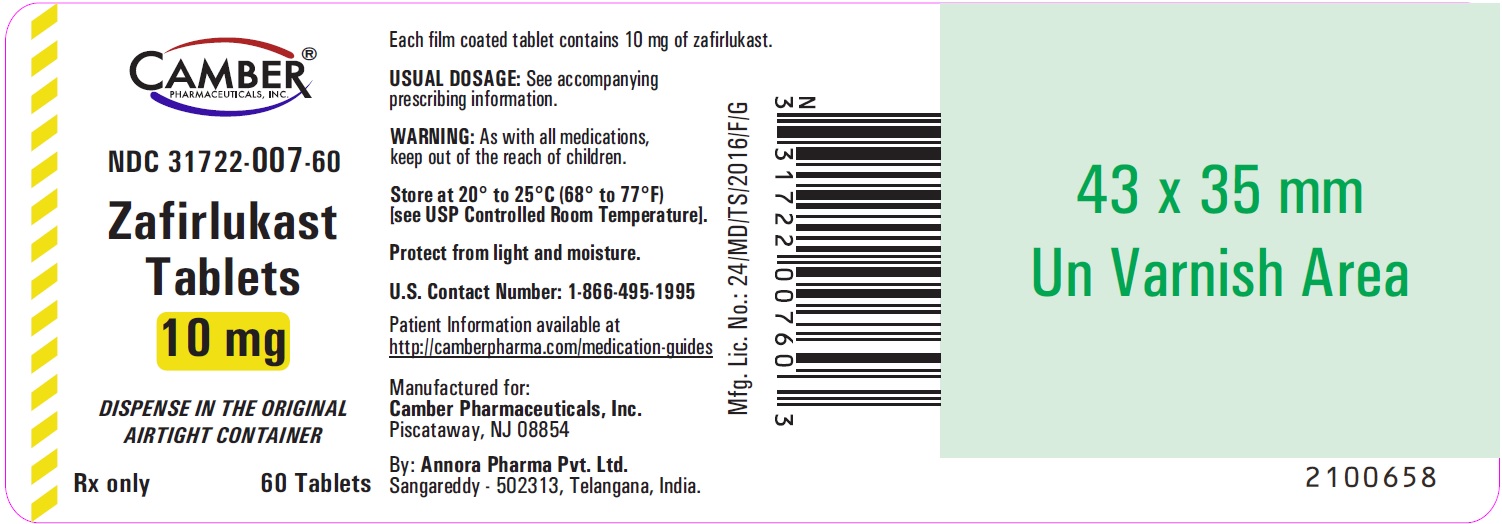
PACKAGE LABEL.PRINCIPAL DISPLAY PANEL zafirlukast tablets 10 mg 60s count container label zafirlukast tablets 20 mg 60s count container label 10 mg 20 mg
Medicaid utilization by pack size
Medicare Part D spend CMS · PART D · 2026 (Q1)
About this NDC listing & data coverage
What data is (and isn’t) available for this NDC — tap to expand
| NDC identity (package / product / labeler codes) | ✓ Available |
| Labeler | ✓ Available |
| Product & package description | ✓ Available |
| Marketing category & status | ✓ Available |
| Active ingredient / dosage form / route | ✓ Available |
| FDA label (SPL via DailyMed) | ✓ Available |
| Package photos | ✓ Available |
| Inactive ingredients (structured) | ✓ Available |
| NADAC pharmacy acquisition price (CMS) | — Not published for this NDC CMS publishes NADAC only for NDCs reported in its retail-pharmacy survey. |
| Orange Book / therapeutic-equivalence data | ✓ Available |
| HCPCS J-code billing crosswalk | — Not published for this NDC Most self-administered / retail products have no J-code — that is normal. |
| Medicaid utilization (CMS SDUD) | — Not published for this NDC CMS reports utilization only for NDCs with Medicaid claims above its privacy threshold. |