
Gemfibrozil 600 mg Tablet, 60-count — NDC 31722-128-60 (Billing 31722-0128-60)
This is a package of 60 tablets of Gemfibrozil 600 mg Tablet from Camber Pharmaceuticals, Inc., marketed since Jan 2021 and currently FDA-listed; retail pharmacies pay about $0.1038 per tablet (NADAC).
NDC database record
One package, one record: these facts belong to NDC 31722-128-60 alone.
- Record
- FDA NDC Directory package listing · Human prescription drug
- Code segments
- 31722 labeler · 128 product · 60 package
- Package marketed since
- Jan 20, 2021
- Sample package
- No — commercial package
- Listing certified through
- Dec 31, 2026
- Billing quantity
- 60 EA per package
- Barcode (UPC)
- 0331722128056
- Medicaid fills, this package
- 12,334 prescriptions in the last four reported quarters
- FDA record last changed
- Jul 24, 2026
Identity & classification
Regulatory identifiers FDA, NLM and CMS codes for this package
Drug-database identifiers Medi-Span GPI and First Databank GCN / HICL / AHFS classification
- GSN (GCN sequence number): 006416
- GCN: 25540
- GPI-14 (Medi-Span): 39200030000310
- HICL (First Databank): 002766
- AHFS class code: 24:06.06.00
- RxCUI (RxNorm): 310459
Where does this data come from?
- FDA openFDA NDC Directory · synced Oct 1, 2026
- FDA label on DailyMed · label index refreshed Oct 6, 2026
- RxNorm (NLM RxNav) · catalog refreshed Oct 1, 2026
- Medi-Span GPI (licensed)
- First Databank (licensed) · refreshed Oct 1, 2026
RxNorm drug class
This medicine belongs to the Peroxisome Proliferator-activated Receptor alpha Agonist class.
Where does this data come from?
- RxClass (NLM) · catalog refreshed Oct 1, 2026
Clinical
- It's used with diet to treat very high triglycerides, especially when they raise your risk of pancreatitis. It's also used in a narrow group of people to lower the risk of coronary...
- Take it by mouth twice a day, 30 minutes before breakfast and dinner. Follow your prescriber's directions and your label.
- Stomach issues like indigestion, belly pain, diarrhea and nausea are the most common. Fatigue, rash, vertigo and headache can also occur. Let me know if they bother you.
- Call promptly for muscle pain, tenderness or weakness, ongoing or severe belly pain, yellow skin or eyes, or signs of allergic reaction like swelling or trouble breathing.
Patient education
Supplement & herbal interactions
Some supplements/herbs that may interact with Gemfibrozil — tap one for details:
Gemfibrozil may be associated with lower levels of 1 nutrient — worth a chat with your pharmacist, not a cause for alarm.
Where does this data come from?
- MedlinePlus (NLM) · refreshed Oct 1, 2026
- FDA label on DailyMed · label index refreshed Oct 6, 2026
Ask a licensed pharmacist directly — free, answered by our team.
Pricing
A drug doesn't have one price. Each row is a different public payment system, and none is what you'd pay at the counter — that depends on your insurance. The ⓘ on each row explains what it measures.
| Price system | Per ea | Per package |
|---|---|---|
| Retail pharmacies payNADAC · weekly | $0.104 | $6.23 / 60 tablets |
| Medicaid paysCMS SDUD · 12 mo | $0.1993 | $11.96 / 60 tablets |
| Medicare drug plans payPart D · Q2 2026 | $0.2303 | $13.82 / 60 tablets |
Where does this data come from?
- CMS NADAC weekly file · file of Sep 30, 2026
- CMS ASP pricing files · refreshed Sep 20, 2026
- CMS Medicaid State Drug Utilization Data · through Q1 2026
- CMS Part D plan pricing files · refreshed Sep 24, 2026
- VA National Acquisition Center price file
Packaging — all sizes for this product
| Package NDC | Description | Per unit | Per pack | Marketing start | Marketing end | Status |
|---|---|---|---|---|---|---|
| 31722-0128-05 31722-128-05 Main listing | 500 TABLET in 1 BOTTLE | $0.1038 / ea | $51.88 | 2021-01-20 | — | Active |
| 31722-0128-60 You're viewing this | 60 TABLET in 1 BOTTLE | $0.1038 / ea | $6.23 | 2021-01-20 | — | Active |
You're viewing the smallest of 2 pack sizes for this product.
This pack effectively ties for the lowest per-ea cost of the 2 priced pack sizes ($0.1038 NADAC).
This pack accounts for about 14% of this product's recent Medicaid fills; most go to the 500 tablets pack. See all packs ↓
Pack size FAQ
What quantity is in this package?
How does this package differ from NDC 31722-0128-05?
What NDC number is used to bill for this package of Gemfibrozil 600 mg Tablet?
Prices are the latest CMS NADAC pharmacy acquisition cost per NDC; per-pack figures are per-unit × pack quantity, shown only when the pack is denominated in the same measure NADAC prices.
Therapeutic equivalents
| Product | Labeler | Pack | NADAC/unit | TE | Status | Price vs. this |
|---|---|---|---|---|---|---|
| Gemfibrozil 600 mg 75834-0131-05 | Nivagen | 500 tablets | $0.103 | AB | Discontinued | save 1% |
| Gemfibrozil 600 mg 16571-0784-06 | Rising | 60 tablets | $0.104 | AB | Availability likely | — |
| Gemfibrozil 600 mg 16714-0101-02 | Northstar | 60 tablets | $0.104 | AB | Availability likely | — |
| Gemfibrozil 600 mgthis 31722-0128-60 | Camber | 60 tablets | $0.104 | AB | Availability likely | — |
| Gemfibrozil 600 mg 50268-0350-15 | AvPAK | 50 tablets | $0.104 | AB | Availability likely | — |
| Gemfibrozil 600 mg 60687-0224-01 | American | 100 tablets | $0.104 | AB | Availability likely | — |
| Gemfibrozil 600 mg 65862-0624-05 | Aurobindo | 500 tablets | $0.104 | — | Availability likely | — |
| Gemfibrozil 600 mg 69097-0821-03 | Cipla | 60 tablets | $0.104 | AB | Availability likely | — |
| Gemfibrozil 600 mg 72603-0206-01 | NorthStar | 60 tablets | $0.104 | AB | Availability likely | — |
| Gemfibrozil 600 mg 76282-0225-05 | Exelan | 500 tablets | $0.104 | AB | Availability likely | — |
| Lopid 600 mg 00071-0737-20 | Parke-Davis | 60 tablets | — | AB | FDA listed | — |
| Gemfibrozil 600 mg 00615-8354-39 | NCS | 30 tablets | — | AB | FDA listed | — |
| Gemfibrozil 600 mg 43063-0745-60 | PD-Rx | 60 tablets | — | AB | FDA listed | — |
| Gemfibrozil 600 mg 50090-5808-00 | A-S | 60 tablets | — | AB | FDA listed | — |
| Gemfibrozil 600 mg 50090-6913-00 | A-S | 60 tablets | — | AB | FDA listed | — |
| Gemfibrozil 600 mg 50090-6939-00 | A-S | 90 tablets | — | AB | FDA listed | — |
| Gemfibrozil 600 mg 50090-7233-00 | A-S | 60 tablets | — | AB | FDA listed | — |
| Gemfibrozil 600 mg 50090-7234-00 | A-S | 90 tablets | — | AB | FDA listed | — |
| Gemfibrozil 600 mg 50090-7809-00 | A-S | 90 tablets | — | AB | FDA listed | — |
| Gemfibrozil 600 mg 51655-0143-26 | Northwind | 90 tablets | — | AB | FDA listed | — |
| Gemfibrozil 600 mg 62135-0160-31 | Chartwell | 300 tablets | — | AB | FDA listed | — |
| Gemfibrozil 600 mg 63187-0772-30 | Proficient | 30 tablets | — | AB | FDA listed | — |
| Gemfibrozil 600 mg 66267-0436-30 | NuCare | 30 tablets | — | AB | FDA listed | — |
| Gemfibrozil 600 mg 67046-0233-03 | Coupler | 30 tablets | — | AB | FDA listed | — |
| Gemfibrozil 600 mg 68071-1733-06 | NuCare | 60 tablets | — | AB | FDA listed | — |
| Gemfibrozil 600 mg 68071-2387-03 | NuCare | 30 tablets | — | AB | FDA listed | — |
| Gemfibrozil 600 mg 68382-0553-01 | Zydus | 100 tablets | — | — | FDA listed | — |
| Gemfibrozil 600 mg 68788-7964-03 | Preferred | 30 tablets | — | AB | FDA listed | — |
| Gemfibrozil 600 mg 70518-1563-00 | REMEDYREPACK | 45 tablets | — | AB | Discontinued | — |
| Gemfibrozil 600 mg 70518-4305-00 | REMEDYREPACK | 180 tablets | — | AB | FDA listed | — |
| Gemfibrozil 600 mg 70771-1431-00 | Zydus | 1000 tablets | — | — | FDA listed | — |
| Gemfibrozil 600 mg 71209-0008-03 | Cadila | 60 tablets | — | AB | FDA listed | — |
| Gemfibrozil 600 mg 71335-0051-01 | Bryant | 60 tablets | — | AB | FDA listed | — |
| Gemfibrozil 600 mg 71335-0971-01 | Bryant | 60 tablets | — | AB | Discontinued | — |
| Gemfibrozil 600 mg 71335-1902-01 | Bryant | 60 tablets | — | AB | FDA listed | — |
| Gemfibrozil 600 mg 71335-1996-01 | Bryant | 60 tablets | — | AB | FDA listed | — |
| Gemfibrozil 600 mg 71335-2025-01 | Bryant | 60 tablets | — | AB | FDA listed | — |
| Gemfibrozil 600 mg 71610-0107-53 | Aphena | 60 tablets | — | AB | FDA listed | — |
| Gemfibrozil 600 mg 71610-0200-60 | Aphena | 90 tablets | — | AB | FDA listed | — |
| Gemfibrozil 600 mg 71610-0601-53 | Aphena | 60 tablets | — | AB | FDA listed | — |
| Gemfibrozil 600 mg 71610-0824-30 | Aphena | 30 tablets | — | AB | FDA listed | — |
| Gemfibrozil 600 mg 72162-2119-06 | Bryant | 60 tablets | — | AB | FDA listed | — |
| Gemfibrozil 600 mg 72578-0066-01 | Viona | 100 tablets | — | — | FDA listed | — |
| Gemfibrozil 600 mg 72865-0186-05 | XLCare | 500 tablets | — | AB | FDA listed | — |
| Gemfibrozil 600 mg 82804-0221-90 | Proficient | 90 tablets | — | AB | FDA listed | — |
| Gemfibrozil 600 mg 70518-4764-00 | REMEDYREPACK | 30 tablets | — | AB | FDA listed | — |
Where does this data come from?
- FDA openFDA NDC Directory · synced Oct 1, 2026
- FDA Orange Book · refreshed Oct 3, 2026
- CMS NADAC weekly file · file of Sep 30, 2026
Availability & generic status
This product is an FDA-approved generic. Other versions of the same drug are listed under Therapeutic equivalents, least expensive first.
Where does this data come from?
- FDA Orange Book · refreshed Oct 3, 2026
What it looks like
Where does this data come from?
- FDA label on DailyMed · label index refreshed Oct 6, 2026
Inactive Ingredients / Excipients
Inactive ingredients, also called excipients, are components of the drug product other than the active ingredient. They may include fillers, dyes, coatings, preservatives, flavors, or other formulation ingredients.
🧪 Avoiding an ingredient? See Gemfibrozil inactive ingredients by manufacturer: every current product's list side by side, so you can ask your pharmacy for the version that does not list it.
Where does this data come from?
IACT rows and label-wide narrative are kept separate; availability and product-level specificity depend on the submitted label.- FDA label on DailyMed · label index refreshed Oct 6, 2026
- FDA openFDA NDC Directory · synced Oct 1, 2026
Inactive ingredient FAQ
Are inactive ingredients the same for every manufacturer?
Why might an inactive ingredient be missing?
Can inactive ingredients matter?
Manufacturer & labeler
More NDCs from Camber Pharmaceuticals, Inc. labeler code 31722
- hydromorphone hydrochloride 16 mg Tablet, Extended Release NDC 31722-121-01
- hydromorphone hydrochloride 32 mg Tablet, Extended Release NDC 31722-122-01
- Venlafaxine Hydrochloride 37.5 mg Tablet, Extended Release NDC 31722-123-30
- Venlafaxine Hydrochloride 75 mg Tablet, Extended Release NDC 31722-124-30
- Venlafaxine Hydrochloride 150 mg Tablet, Extended Release NDC 31722-125-30
- Venlafaxine Hydrochloride 225 mg Tablet, Extended Release NDC 31722-126-30
- Potassium Citrate 5 meq Tablet, Extended Release NDC 31722-129-01
- Potassium Citrate 10 meq Tablet, Extended Release NDC 31722-130-01
- Dutasteride .5 mg Capsule, Liquid Filled NDC 31722-131-30
- Potassium Citrate 15 meq Tablet, Extended Release NDC 31722-132-01
- Potassium Chloride 750 mg Tablet, Extended Release NDC 31722-133-01
- Potassium Chloride 1125 mg Tablet, Extended Release NDC 31722-134-01
Where does this data come from?
- FDA openFDA NDC Directory · synced Oct 1, 2026
- Drugs@FDA
Full prescribing information FDA SPL
🎯 Indications and Usage ▾
INDICATIONS AND USAGE Gemfibrozil Tablets are indicated as adjunctive therapy to diet for: Treatment of adult patients with very high elevations of serum triglyceride levels (Types IV and V hyperlipidemia) who present a risk of pancreatitis and who do not respond adequately to a determined dietary effort to control them. Patients who present such risk typically have serum triglycerides over 2000 mg/dL and have elevations of VLDL-cholesterol as well as fasting chylomicrons (Type V hyperlipidemia). Subjects who consistently have total serum or plasma triglycerides below 1000 mg/dL are unlikely to present a risk of pancreatitis.
Gemfibrozil therapy may be considered for those subjects with triglyceride elevations between 1000 and 2000 mg/dL who have a history of pancreatitis or of recurrent abdominal pain typical of pancreatitis. It is recognized that some Type IV patients with triglycerides under 1000 mg/dL may, through dietary or alcoholic indiscretion, convert to a Type V pattern with massive triglyceride elevations accompanying fasting chylomicronemia, but the influence of gemfibrozil therapy on the risk of pancreatitis in such situations has not been adequately studied.
Drug therapy is not indicated for patients with Type I hyperlipoproteinemia, who have elevations of chylomicrons and plasma triglycerides, but who have normal levels of very low density lipoprotein (VLDL). Inspection of plasma refrigerated for 14 hours is helpful in distinguishing Types I, IV, and V hyperlipoproteinemia. Reducing the risk of developing coronary heart disease only in Type IIb patients without history of or symptoms of existing coronary heart disease who have had an inadequate response to weight loss, dietary therapy, exercise, and other pharmacologic agents (such as bile acid sequestrants and nicotinic acid, known to reduce LDL- and raise HDL-cholesterol) and who have the following triad of lipid abnormalities: low HDL-cholesterol levels in addition to elevated LDL-cholesterol and elevated triglycerides (see WARNINGS, PRECAUTIONS , and CLINICAL PHARMACOLOGY ).
The National Cholesterol Education Program has defined a serum HDL-cholesterol value that is consistently below 35 mg/dL as constituting an independent risk factor for coronary heart disease. Patients with significantly elevated triglycerides should be closely observed when treated with gemfibrozil. In some patients with high triglyceride levels, treatment with gemfibrozil is associated with a significant increase in LDL-cholesterol.
BECAUSE OF POTENTIAL TOXICITY SUCH AS MALIGNANCY, GALLBLADDER DISEASE, ABDOMINAL PAIN LEADING TO APPENDECTOMY AND OTHER ABDOMINAL SURGERIES, AN INCREASED INCIDENCE IN NON-CORONARY MORTALITY, AND THE 44% RELATIVE INCREASE DURING THE TRIAL PERIOD IN AGE-ADJUSTED ALL-CAUSE MORTALITY SEEN WITH THE CHEMICALLY AND PHARMACOLOGICALLY RELATED DRUG, CLOFIBRATE, THE POTENTIAL BENEFIT OF GEMFIBROZIL IN TREATING TYPE IIA PATIENTS WITH ELEVATIONS OF LDL-CHOLESTEROL ONLY IS NOT LIKELY TO OUTWEIGH THE RISKS. GEMFIBROZIL IS ALSO NOT INDICATED FOR THE TREATMENT OF PATIENTS WITH LOW HDL-CHOLESTEROL AS THEIR ONLY LIPID ABNORMALITY.
In a subgroup analysis of patients in the Helsinki Heart Study with above-median HDL-cholesterol values at baseline (greater than 46.4 mg/dL), the incidence of serious coronary events was similar for gemfibrozil and placebo subgroups (see Table I). The initial treatment for dyslipidemia is dietary therapy specific for the type of lipoprotein abnormality. Excess body weight and excess alcohol intake may be important factors in hypertriglyceridemia and should be managed prior to any drug therapy.
Physical exercise can be an important ancillary measure, and has been associated with rises in HDL-cholesterol. Diseases contributory to hyperlipidemia such as hypothyroidism or diabetes mellitus should be looked for and adequately treated. Estrogen therapy is sometimes associated with massive rises in plasma triglycerides, especially in subjects with familial… [Excerpted — this section continues on DailyMed.]
⏱️ Dosage and Administration ▾
DOSAGE AND ADMINISTRATION The recommended dose for adults is 1200 mg administered in two divided doses 30 minutes before the morning and evening meals (see CLINICAL PHARMACOLOGY ).
⛔ Contraindications ▾
CONTRAINDICATIONS 1. Hepatic or severe renal dysfunction, including primary biliary cirrhosis. 2.
Preexisting gallbladder disease (see WARNINGS ). 3. Hypersensitivity to gemfibrozil.
4. Combination therapy of gemfibrozil with simvastatin (see WARNINGS and PRECAUTIONS ). 5.
Combination therapy of gemfibrozil with repaglinide (see PRECAUTIONS ). 6. Combination therapy of gemfibrozil with dasabuvir (see PRECAUTIONS ).
7. Combination therapy of gemfibrozil with selexipag (see PRECAUTIONS ).
⚠️ Warnings ▾
WARNINGS 1. Because of chemical, pharmacological, and clinical similarities between gemfibrozil and clofibrate, the adverse findings with clofibrate in two large clinical studies may also apply to gemfibrozil. In the first of those studies, the Coronary Drug Project, 1000 subjects with previous myocardial infarction were treated for five years with clofibrate.
There was no difference in mortality between the clofibrate-treated subjects and 3000 placebo-treated subjects, but twice as many clofibrate-treated subjects developed cholelithiasis and cholecystitis requiring surgery. In the other study, conducted by the World Health Organization (WHO), 5000 subjects without known coronary heart disease were treated with clofibrate for five years and followed one year beyond. There was a statistically significant (44%) higher age-adjusted total mortality in the clofibrate-treated group than in a comparable placebo-treated control group during the trial period.
The excess mortality was due to a 33% increase in non-cardiovascular causes, including malignancy, post-cholecystectomy complications, and pancreatitis. The higher risk of clofibrate-treated subjects for gallbladder disease was confirmed. Because of the more limited size of the Helsinki Heart Study, the observed difference in mortality from any cause between the gemfibrozil and placebo groups is not statistically significantly different from the 29% excess mortality reported in the clofibrate group in the separate WHO study at the nine year follow-up (see CLINICAL PHARMACOLOGY ).
Noncoronary heart disease related mortality showed an excess in the group originally randomized to gemfibrozil primarily due to cancer deaths observed during the open-label extension. During the five year primary prevention component of the Helsinki Heart Study, mortality from any cause was 44 (2.2%) in the gemfibrozil group and 43 (2.1%) in the placebo group; including the 3.5 year follow-up period since the trial was completed, cumulative mortality from any cause was 101 (4.9%) in the gemfibrozil group and 83 (4.1%) in the group originally randomized to placebo (hazard ratio 1:20 in favor of placebo).
Because of the more limited size of the Helsinki Heart Study, the observed difference in mortality from any cause between the gemfibrozil and placebo groups at Year-5 or at Year-8.5 is not statistically significantly different from the 29% excess mortality reported in the clofibrate group in the separate WHO study at the nine year follow-up. Noncoronary heart disease related mortality showed an excess in the group originally randomized to gemfibrozil at the 8.5 year follow-up (65 gemfibrozil versus 45 placebo noncoronary deaths).
The incidence of cancer (excluding basal cell carcinoma) discovered during the trial and in the 3.5 years after the trial was completed was 51 (2.5%) in both originally randomized groups. In addition, there were 16 basal cell carcinomas in the group originally randomized to gemfibrozil and 9 in the group originally randomized to placebo (p=0.22). There were 30 (1.5%) deaths attributed to cancer in the group originally randomized to gemfibrozil and 18 (0.9%) in the group originally randomized to placebo (p=0.11).
Adverse outcomes, including coronary events, were higher in gemfibrozil patients in a corresponding study in men with a history of known or suspected coronary heart disease in the secondary prevention component of the Helsinki Heart Study (see CLINICAL PHARMACOLOGY ). A comparative carcinogenicity study was also done in rats comparing three drugs in this class: fenofibrate (10 and 60 mg/kg; 0.3 and 1.6 times the human dose, respectively), clofibrate (400 mg/kg; 1.6 times the human dose), and gemfibrozil (250 mg/kg; 1.7 times the human dose).
Pancreatic acinar adenomas were increased in males and females on fenofibrate; hepatocellular carcinoma and pancreatic acinar adenomas were increased in males and hepatic neoplastic nodules in females treated with clofibrate; hepatic… [Excerpted — this section continues on DailyMed.]
🤒 Adverse Reactions ▾
ADVERSE REACTIONS In the double-blind controlled phase of the primary prevention component of the Helsinki Heart Study, 2046 patients received gemfibrozil for up to five years. In that study, the following adverse reactions were statistically more frequent in subjects in the gemfibrozil group: Gallbladder surgery was performed in 0.9% of gemfibrozil and 0.5% of placebo subjects in the primary prevention component, a 64% excess, which is not statistically different from the excess of gallbladder surgery observed in the clofibrate group compared to the placebo group of the WHO study.
Gallbladder surgery was also performed more frequently in the gemfibrozil group compared to the placebo group (1.9% versus 0.3%, p=0.07) in the secondary prevention component. A statistically significant increase in appendectomy in the gemfibrozil group was seen also in the secondary prevention component (6 on gemfibrozil versus 0 on placebo, p=0.014). Nervous system and special senses adverse reactions were more common in the gemfibrozil group.
These included hypesthesia, paresthesias, and taste perversion. Other adverse reactions that were more common among gemfibrozil treatment group subjects but where a causal relationship was not established include cataracts, peripheral vascular disease, and intracerebral hemorrhage. From other studies it seems probable that gemfibrozil is causally related to the occurrence of MUSCULOSKELETAL SYMPTOMS (see WARNINGS ), and to ABNORMAL LIVER FUNCTION TESTS and HEMATOLOGIC CHANGES (see PRECAUTIONS ).
Reports of viral and bacterial infections (common cold, cough, urinary tract infections) were more common in gemfibrozil treated patients in other controlled clinical trials of 805 patients. Additional adverse reactions that have been reported for gemfibrozil are listed below by system. These are categorized according to whether a causal relationship to treatment with gemfibrozil is probable or not established: Additional adverse reactions that have been reported include cholecystitis and cholelithiasis ( see WARNINGS).
Adverse Reactions Additional Adverse Reactions
🆘 Overdosage ▾
OVERDOSAGE There have been reported cases of overdosage with gemfibrozil. In one case, a 7-year-old child recovered after ingesting up to 9 grams of gemfibrozil. Symptoms reported with overdosage were abdominal cramps, abnormal liver function tests, diarrhea, increased CPK, joint and muscle pain, nausea and vomiting. Symptomatic supportive measures should be taken, should an overdose occur.
🧬 Clinical Pharmacology ▾
CLINICAL PHARMACOLOGY Gemfibrozil is a lipid regulating agent which decreases serum triglycerides and very low density lipoprotein (VLDL) cholesterol, and increases high density lipoprotein (HDL) cholesterol. While modest decreases in total and low density lipoprotein (LDL) cholesterol may be observed with gemfibrozil therapy, treatment of patients with elevated triglycerides due to Type IV hyperlipoproteinemia often results in a rise in LDL-cholesterol. LDL-cholesterol levels in Type IIb patients with elevations of both serum LDL-cholesterol and triglycerides are, in general, minimally affected by gemfibrozil treatment; however, gemfibrozil usually raises HDL-cholesterol significantly in this group.
Gemfibrozil increases levels of high density lipoprotein (HDL) subfractions HDL 2 and HDL 3 , as well as apolipoproteins AI and AII. Epidemiological studies have shown that both low HDL-cholesterol and high LDL-cholesterol are independent risk factors for coronary heart disease. In the primary prevention component of the Helsinki Heart Study, in which 4081 male patients between the ages of 40 and 55 were studied in a randomized, double-blind, placebo-controlled fashion, gemfibrozil therapy was associated with significant reductions in total plasma triglycerides and a significant increase in high density lipoprotein cholesterol.
Moderate reductions in total plasma cholesterol and low density lipoprotein cholesterol were observed for the gemfibrozil treatment group as a whole, but the lipid response was heterogeneous, especially among different Fredrickson types. The study involved subjects with serum non-HDL-cholesterol of over 200 mg/dL and no previous history of coronary heart disease. Over the five-year study period, the gemfibrozil group experienced a 1.4% absolute (34% relative) reduction in the rate of serious coronary events (sudden cardiac deaths plus fatal and nonfatal myocardial infarctions) compared to placebo, p=0.04 (see Table I).
There was a 37% relative reduction in the rate of nonfatal myocardial infarction compared to placebo, equivalent to a treatment-related difference of 13.1 events per thousand persons. Deaths from any cause during the double-blind portion of the study totaled 44 (2.2%) in the gemfibrozil randomization group and 43 (2.1%) in the placebo group. Among Fredrickson types, during the 5-year double-blind portion of the primary prevention component of the Helsinki Heart Study, the greatest reduction in the incidence of serious coronary events occurred in Type IIb patients who had elevations of both LDL-cholesterol and total plasma triglycerides.
This subgroup of Type IIb gemfibrozil group patients had a lower mean HDL-cholesterol level at baseline than the Type IIa subgroup that had elevations of LDL-cholesterol and normal plasma triglycerides. The mean increase in HDL-cholesterol among the Type IIb patients in this study was 12.6% compared to placebo. The mean change in LDL-cholesterol among Type IIb patients was –4.1% with gemfibrozil compared to a rise of 3.9% in the placebo subgroup.
The Type IIb subjects in the Helsinki Heart Study had 26 fewer coronary events per thousand persons over five years in the gemfibrozil group compared to placebo. The difference in coronary events was substantially greater between gemfibrozil and placebo for that subgroup of patients with the triad of LDL-cholesterol >175 mg/dL (>4.5 mmol), triglycerides >200 mg/dL (>2.2 mmol), and HDL-cholesterol <35 mg/dL (<0.90 mmol) (see Table I). Further information is available from a 3.5 year (8.5 year cumulative) follow-up of all subjects who had participated in the Helsinki Heart Study.
At the completion of the Helsinki Heart Study, subjects could choose to start, stop, or continue to receive gemfibrozil; without knowledge of their own lipid values or double-blind treatment, 60% of patients originally randomized to placebo began therapy with gemfibrozil and 60% of patients originally randomized to gemfibrozil continued medicat… [Excerpted — this section continues on DailyMed.]
📦 How Supplied / Storage and Handling ▾
HOW SUPPLIED Gemfibrozil Tablets, USP are supplied as: White to off white, film coated, oval tablets, debossed with “1” with two partial bisects on one side and two partial bisects on other side, each containing 600 mg gemfibrozil, USP are available as follows: NDC 31722-128-60; Bottles of 60 NDC 31722-128-05; Bottles of 500 Store at controlled room temperature 20° – 25°C (68° – 77°F) [see USP]. Protect from light and humidity. Manufactured by: Ascent Pharmaceuticals, Inc.
Central Islip, NY 11722 Manufactured for: Camber Pharmaceuticals, Inc. Piscataway, NJ 08854 Rev: 08/21
📋 Description ▾
DESCRIPTION Gemfibrozil, USP is a lipid regulating agent. It is available as tablets for oral administration. Each tablet contains 600 mg gemfibrozil.
Each tablet also contains the following inactive ingredients: pregelatinized starch, microcrystalline cellulose, povidone, colloidal silicon dioxide, polysorbate, croscarmellose sodium, calcium stearate, hydroxypropyl cellulose, and talc. The chemical name is 5-(2,5-dimethylphenoxy)-2,2-dimethylpentanoic acid, with the following structural formula: The empirical formula is C 15 H 22 O 3 and the molecular weight is 250.35; the solubility in water and acid is 0.0019% and in dilute base it is greater than 1%. The melting point is 58° – 61°C.
Gemfibrozil is a white solid which is stable under ordinary conditions. Struct
⚠️ Precautions ▾
PRECAUTIONS 1. Initial Therapy - Laboratory studies should be done to ascertain that the lipid levels are consistently abnormal. Before instituting gemfibrozil therapy, every attempt should be made to control serum lipids with appropriate diet, exercise, weight loss in obese patients, and control of any medical problems such as diabetes mellitus and hypothyroidism that are contributing to the lipid abnormalities.
2. Continued Therapy - Periodic determination of serum lipids should be obtained, and the drug withdrawn if lipid response is inadequate after three months of therapy. 3.
Drug Interactions (A) HMG-CoA Reductase Inhibitors: The concomitant administration of gemfibrozil with simvastatin is contraindicated (see CONTRAINDICATIONS and WARNINGS ). Avoid concomitant use of gemfibrozil with rosuvastatin. If concomitant use cannot be avoided, initiate rosuvastatin at 5 mg once daily.
The dose of rosuvastatin should not exceed 10 mg once daily. The risk of myopathy and rhabdomyolysis is increased with combined gemfibrozil and HMG-CoA reductase inhibitor therapy. Myopathy or rhabdomyolysis with or without acute renal failure have been reported as early as three weeks after initiation of combined therapy or after several months (see WARNINGS ).
There is no assurance that periodic monitoring of creatine kinase will prevent the occurrence of severe myopathy and kidney damage. (B) Anticoagulants: CAUTION SHOULD BE EXERCISED WHEN WARFARIN IS GIVEN IN CONJUNCTION WITH GEMFIBROZIL. THE DOSAGE OF WARFARIN SHOULD BE REDUCED TO MAINTAIN THE PROTHROMBIN TIME AT THE DESIRED LEVEL TO PREVENT BLEEDING COMPLICATIONS.
FREQUENT PROTHROMBIN DETERMINATIONS ARE ADVISABLE UNTIL IT HAS BEEN DEFINITELY DETERMINED THAT THE PROTHROMBIN LEVEL HAS STABILIZED. (C) CYP2C8 Substrates: Gemfibrozil is a strong inhibitor of CYP2C8 and may increase exposure of drugs mainly metabolized by CYP2C8 (e.g., dabrafenib, enzalutamide, loperamide, montelukast, paclitaxel, pioglitazone, rosiglitazone). Therefore, dosing reduction of drugs that are mainly metabolized by CYP2C8 enzyme may be required when gemfibrozil is used concomitantly (see WARNINGS ).
Repaglinide: In healthy volunteers, co-administration with gemfibrozil (600 mg twice daily for 3 days) resulted in an 8.1-fold (range 5.5- to 15.0- fold) higher repaglinide AUC and a 28.6-fold (range 18.5- to 80.1-fold) higher repaglinide plasma concentration 7 hours after the dose. In the same study, gemfibrozil (600 mg twice daily for 3 days) + itraconazole (200 mg in the morning and 100 mg in the evening at Day 1, then 100 mg twice daily at Day 2–3) resulted in a 19.4- (range 12.9- to 24.7-fold) higher repaglinide AUC and a 70.4-fold (range 42.9- to 119.2-fold) higher repaglinide plasma concentration 7 hours after the dose.
In addition, gemfibrozil alone or gemfibrozil + itraconazole prolonged the hypoglycemic effects of repaglinide. Co-administration of gemfibrozil and repaglinide increases the risk of severe hypoglycemia and is contraindicated (see CONTRAINDICATIONS ). Dasabuvir: Co-administration of gemfibrozil with dasabuvir increased dasabuvir AUC and C max (ratios: 11.3 and 2.01, respectively) due to CYP2C8 inhibition.
Increased dasabuvir exposure may increase the risk of QT prolongation, therefore, co-administration of gemfibrozil with dasabuvir is contraindicated (see CONTRAINDICATIONS ). Selexipag: Co-administration of gemfibrozil with selexipag doubled exposure to selexipag and increased exposure to the active metabolite by approximately 11-fold. Concomitant administration of gemfibrozil with selexipag is contraindicated (see CONTRAINDICATIONS ).
Enzalutamide: In healthy volunteers given a single 160 mg dose of enzalutamide after gemfibrozil 600 mg twice daily, the AUC of enzalutamide plus active metabolite (N-desmethyl enzalutamide) was increased by 2.2 fold and corresponding C max was decreased by 16%. Increased enzalutamide exposure may increase the risk of seizures. If co-administration is considered neces… [Excerpted — this section continues on DailyMed.]
📄 Package Label / Principal Display Panel ▾
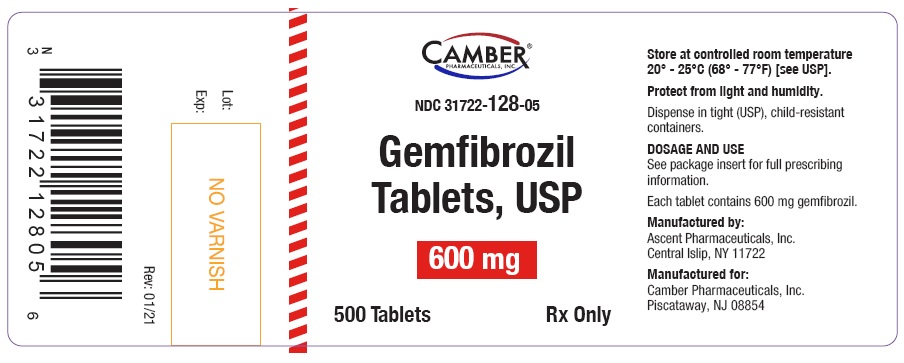
600 mg- 500s count