
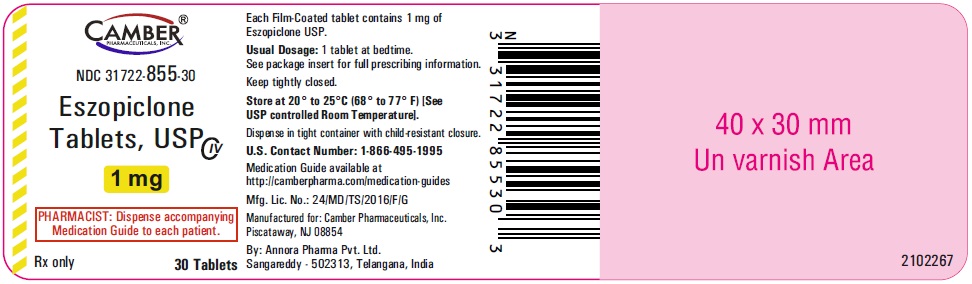
Eszopiclone 1 mg Tablet, Film Coated, 30-count — NDC 31722-855-30 (Billing 31722-0855-30)
This is a package of 30 tablets of Eszopiclone 1 mg Tablet, Film Coated from Camber Pharmaceuticals, Inc., marketed since Jan 2024 and currently FDA-listed; retail pharmacies pay about $0.0993 per tablet (NADAC). It is the main listing for this product, which comes in 2 package sizes.
Other active recalls for Eszopiclone (different manufacturers) — 1 · tap to view
Identity & classification
Regulatory identifiers FDA, NLM and CMS codes for this package
Drug-database identifiers Medi-Span GPI and First Databank GCN / HICL / AHFS classification
- GSN (GCN sequence number): 058484
- GCN: 23927
- GPI-14 (Medi-Span): 60204035000320
- HICL (First Databank): 026791
- AHFS class code: 28:24.44.00
- RxCUI (RxNorm): 485440
Where does this data come from?
- FDA openFDA NDC Directory · synced Oct 1, 2026
- FDA label on DailyMed · label index refreshed Oct 1, 2026
- RxNorm (NLM RxNav) · catalog refreshed Oct 1, 2026
- Medi-Span GPI (licensed)
- First Databank (licensed) · refreshed Oct 1, 2026
RxNorm drug class
This medicine belongs to the Benzodiazepine related drugs class.
Where does this data come from?
- RxClass (NLM) · catalog refreshed Oct 1, 2026
Clinical
- It treats insomnia. In studies it helped people fall asleep faster and stay asleep. It is meant to be taken right at bedtime.
- Take it by mouth right before bed, when you can get a full 7 to 8 hours of sleep. Avoid taking it with or right after a heavy, high-fat meal, since that can slow it down. Follow yo...
- The most common are an unpleasant taste in your mouth, headache, sleepiness, dizziness, and dry mouth. Some people feel drowsy the next day, so be careful driving until you know ho...
- If you sleep-walk, sleep-drive, or do things like eat or make calls while not fully awake, stop it and call your doctor. Also get help right away for swelling of the tongue or thro...
Patient education
Supplement & herbal interactions
Some supplements/herbs that may interact with Eszopiclone — tap one for details:
Where does this data come from?
- MedlinePlus (NLM) · refreshed Oct 1, 2026
- FDA label on DailyMed · label index refreshed Oct 1, 2026
Ask a licensed pharmacist directly — free, answered by our team.
Pricing
A drug doesn't have one price. Each row is a different public payment system, and none is what you'd pay at the counter — that depends on your insurance. The ⓘ on each row explains what it measures.
| Price system | Per ea | Per package |
|---|---|---|
| Retail pharmacies payNADAC · weekly | $0.099 | $2.98 / 30 tablets |
| Medicaid paysCMS SDUD · 12 mo | $0.4984 | $14.95 / 30 tablets |
| Medicare drug plans payPart D · Q2 2026 | $0.1735 | $5.21 / 30 tablets |
Where does this data come from?
- CMS NADAC weekly file · file of Sep 30, 2026
- CMS ASP pricing files · refreshed Sep 20, 2026
- CMS Medicaid State Drug Utilization Data · through Q1 2026
- CMS Part D plan pricing files · refreshed Sep 24, 2026
- VA National Acquisition Center price file
Packaging — all sizes for this product
| Package NDC | Description | Per unit | Per pack | Marketing start | Marketing end | Status |
|---|---|---|---|---|---|---|
| 31722-0855-01 31722-855-01 | 100 TABLET, FILM COATED in 1 BOTTLE | $0.0993 / ea | $9.93 | 2024-01-04 | — | Active |
| 31722-0855-30 You're viewing this Main listing | 30 TABLET, FILM COATED in 1 BOTTLE | $0.0993 / ea | $2.98 | 2024-01-04 | — | Active |
You're viewing the smallest of 2 pack sizes for this product.
This pack effectively ties for the lowest per-ea cost of the 2 priced pack sizes ($0.0993 NADAC).
In Medicaid, this is the most-dispensed pack of this product — about 69% of fills over the last four reported quarters. See all packs ↓
Pack size FAQ
What quantity is in this package?
How does this package differ from NDC 31722-0855-01?
What NDC number is used to bill for this package of Eszopiclone 1 mg Tablet, Film Coated?
Prices are the latest CMS NADAC pharmacy acquisition cost per NDC; per-pack figures are per-unit × pack quantity, shown only when the pack is denominated in the same measure NADAC prices.
Therapeutic equivalents
| Product | Labeler | Pack | NADAC/unit | TE | Status | Price vs. this |
|---|---|---|---|---|---|---|
| Eszopiclone 1 mg 00093-5537-56 | Teva | 30 tablets | $0.099 | AB | Availability likely | — |
| Eszopiclone 1 mg 00378-5270-01 | Mylan | 100 tablets | $0.099 | AB | Availability likely | — |
| Eszopiclone 1 mgthis 31722-0855-30 | Camber | 30 tablets | $0.099 | AB | Availability likely | — |
| Eszopiclone 1 mg 33342-0299-07 | Macleods | 30 tablets | $0.099 | AB | Availability likely | — |
| Eszopiclone 1 mg 65862-0967-01 | Aurobindo | 100 tablets | $0.099 | — | Availability likely | — |
| Eszopiclone 1 mg 68462-0382-01 | Glenmark | 100 tablets | $0.099 | AB | Availability likely | — |
| Eszopiclone 1 mg 69452-0347-13 | Bionpharma | 30 tablets | $0.099 | AB | Availability likely | — |
| Eszopiclone 1 mg 68180-0322-01 | Lupin | 100 tablets | $0.145 | — | FDA listed | +46% |
| Eszopiclone 1 mg 47335-0586-08 | Sun | 100 tablets | — | AB | FDA listed | — |
| Eszopiclone 1 mg 50090-7744-00 | A-S | 30 tablets | — | AB | FDA listed | — |
| Eszopiclone 1 mg 55111-0629-01 | Dr. | 100 tablets | — | AB | FDA listed | — |
| Eszopiclone 1 mg 55700-0621-30 | Lake | 30 tablets | — | AB | Discontinued | — |
| Eszopiclone 1 mg 60429-0632-01 | Golden | 100 tablets | — | AB | Discontinued | — |
| Eszopiclone 1 mg 63187-0817-30 | Proficient | 30 tablets | — | AB | FDA listed | — |
| Eszopiclone 1 mg 68788-7667-00 | Preferred | 100 tablets | — | AB | FDA listed | — |
| Eszopiclone 1 mg 68788-8387-03 | Preferred | 30 tablets | — | AB | FDA listed | — |
| Eszopiclone 1 mg 68788-8826-03 | Preferred | 30 tablets | — | AB | FDA listed | — |
| Eszopiclone 1 mg 71205-0384-30 | Proficient | 30 tablets | — | AB | FDA listed | — |
| Eszopiclone 1 mg 71205-0581-30 | Proficient | 30 tablets | — | AB | FDA listed | — |
| Eszopiclone 1 mg 71335-0574-01 | Bryant | 30 tablets | — | AB | FDA listed | — |
| Eszopiclone 1 mg 71335-0598-01 | Bryant | 30 tablets | — | AB | FDA listed | — |
| Eszopiclone 1 mg 71335-9659-01 | Bryant | 30 tablets | — | AB | FDA listed | — |
| Eszopiclone 1 mg 72189-0099-30 | DIRECT | 30 tablets | — | — | FDA listed | — |
| Eszopiclone 1 mg 76420-0026-01 | Asclemed | 100 tablets | — | AB | FDA listed | — |
| Eszopiclone 1 mg 76420-0352-00 | Asclemed | 1000 tablets | — | AB | FDA listed | — |
| Eszopiclone 1 mg 80425-0098-01 | Advanced | 60 tablets | — | — | FDA listed | — |
| Eszopiclone 1 mg 80425-0168-02 | Advanced | 60 tablets | — | AB | FDA listed | — |
| Eszopiclone 1 mg 80425-0407-01 | Advanced | 30 tablets | — | AB | FDA listed | — |
| Lunesta 1 mg 80725-0010-30 | Waylis | 30 tablets | — | AB | FDA listed | — |
| Eszopiclone 1 mg 82804-0159-30 | Proficient | 30 tablets | — | AB | FDA listed | — |
Where does this data come from?
- FDA openFDA NDC Directory · synced Oct 1, 2026
- FDA Orange Book · refreshed Sep 3, 2026
- CMS NADAC weekly file · file of Sep 30, 2026
Availability & generic status
This product is an FDA-approved generic. Other versions of the same drug are listed under Therapeutic equivalents, least expensive first.
Where does this data come from?
- FDA Orange Book · refreshed Sep 3, 2026
What it looks like
Where does this data come from?
- FDA label on DailyMed · label index refreshed Oct 1, 2026
Inactive Ingredients / Excipients
Inactive ingredients, also called excipients, are components of the drug product other than the active ingredient. They may include fillers, dyes, coatings, preservatives, flavors, or other formulation ingredients.
💡 Tap an ingredient (hover on desktop) to see what it is and why it’s used.
-
UNII L11K75P92J
A mineral salt made from calcium and phosphate. It acts as a filler and binder in tablets to add bulk and help hold the medicine together in solid form.
-
UNII M28OL1HH48
Croscarmellose sodium is a plant-based substance derived from cellulose. It acts as a disintegrant, helping tablets and capsules break down quickly in the digestive system so the medicine can be absorbed.
-
UNII L06K8R7DQK
A synthetic blue dye approved by the FDA for use in medications and foods. It serves as a colorant to make pills and liquids visually distinct and easier to identify.
-
UNII 0WZ8WG20P6
Hypromellose 2910 is a plant-based cellulose derivative that acts as a thickener, binder, and film-coating agent. It helps control how quickly the medicine dissolves and protects the tablet or capsule from moisture and light.
-
UNII EWQ57Q8I5X
Lactose monohydrate is a natural sugar derived from milk. It serves as a filler and binder in tablets and capsules, helping create the proper size, texture, and consistency of the medicine.
-
UNII 70097M6I30
Magnesium stearate is a salt made from magnesium and stearic acid, a fatty substance. It's used in tablets and capsules as a lubricant and glidant to help ingredients flow smoothly during manufacturing and prevent sticking.
-
UNII PNR0YF693Y
A plant-based powder made from purified wood cellulose. It acts as a filler to add bulk, a binder to hold ingredients together, and a disintegrant to help the tablet break apart in the stomach.
-
UNII G2M7P15E5P
Polyethylene glycol 3350 is a synthetic polymer used as a solvent, humectant, and thickening agent in medicines. It helps dissolve other ingredients, retain moisture in the product, and achieve the desired consistency.
-
UNII ETJ7Z6XBU4
Silicon dioxide is a naturally occurring mineral used as a glidant and anti-caking agent. It helps powder ingredients flow smoothly and prevents clumping during manufacturing and storage.
-
UNII 15FIX9V2JP
Titanium dioxide is a bright white mineral powder commonly used as a colorant and opacifying agent. It makes pills and tablets white or lighter in color and helps make coatings non-transparent.
-
UNII XHX3C3X673
Triacetin is a clear, oily liquid made from glycerin and acetic acid. It works as a plasticizer and solvent in medicines, helping soften coatings and improve how liquids mix together in formulations.
11 inactive ingredients listed in the exact product block matched to this NDC.
Where does this data come from?
ingredient classCode="IACT" elements from the exact product block matched by this NDC. Label-section narrative from DailyMed / the openFDA label index is shown separately when available.- FDA label on DailyMed · label index refreshed Oct 1, 2026
- FDA openFDA NDC Directory · synced Oct 1, 2026
Inactive ingredient FAQ
Are inactive ingredients the same for every manufacturer?
Why might an inactive ingredient be missing?
Can inactive ingredients matter?
Manufacturer & labeler
Where does this data come from?
- FDA openFDA NDC Directory · synced Oct 1, 2026
- Drugs@FDA
Full prescribing information FDA SPL
🚨 Boxed Warning ▾
WARNING: COMPLEX SLEEP BEHAVIORS WARNING: COMPLEX SLEEP BEHAVIORS Complex sleep behaviors including sleep-walking, sleep-driving, and engaging in other activities while not fully awake may occur following use of eszopiclone tablets. Some of these events may result in serious injuries, including death. Discontinue eszopiclone tablets immediately if a patient experiences a complex sleep behavior [see Contraindications (4) and Warnings and Precautions (5.1) ].
WARNING: COMPLEX SLEEP BEHAVIOUR See full prescribing information for complete boxed warning. Complex sleep behaviors including sleep-walking, sleep-driving, and engaging in other activities while not fully awake may occur following use of eszopiclone tablets. Some of these events may result in serious injuries, including death.
Discontinue eszopiclone tablets immediately if a patient experiences a complex sleep behavior ( 4 , 5.1 ).
🎯 Indications and Usage ▾
1 INDICATIONS & USAGE Eszopiclone tablets are indicated for the treatment of insomnia. In controlled outpatient and sleep laboratory studies, eszopiclone tablets administered at bedtime decreased sleep latency and improved sleep maintenance. The clinical trials performed in support of efficacy were up to 6 months in duration.
The final formal assessments of sleep latency and maintenance were performed at 4 weeks in the 6-week study (adults only), at the end of both 2-week studies (elderly only) and at the end of the 6-month study (adults only). Eszopiclone tablets are indicated for the treatment of insomnia. Eszopiclone tablets has been shown to decrease sleep latency and improve sleep maintenance ( 1 )
⏱️ Dosage and Administration ▾
2 DOSAGE & ADMINISTRATION Use the lowest effective dose for the patient. • Use the lowest dose effective for the patient ( 2 ) • Recommended initial dose is 1 mg, immediately before bedtime, with at least 7 to 8 hours remaining before the planned time of awakening. May increase dose if clinically indicated, to a maximum of 3 mg ( 2.1 ) • Geriatric or debilitated patients: Dose should not exceed 2 mg ( 2.2 ) • Patients with severe hepatic impairment, or taking potent CYP3A4 inhibitors: Dose should not exceed 2 mg ( 2.3 ) • Do not take with or immediately after a meal ( 2.5 )
2.1Dosage in Adults The recommended starting dose is 1 mg. Dosing can be raised to 2 mg or 3 mg if clinically indicated. In some patients, the higher morning blood levels of eszopiclone tablets following use of the 2 mg or 3 mg dose increase the risk of next day impairment of driving and other activities that require full alertness [ see Warnings and Precautions (5.1) ].
The total dose of eszopiclone tablets should not exceed 3 mg, once daily immediately before bedtime [ see Warnings and Precautions (5.6) ].
2.2Geriatric or Debilitated Patients The total dose of eszopiclone tablets should not exceed 2 mg in elderly or debilitated patients.
2.3Patients with Severe Hepatic Impairment, or Taking Potent CYP3A4 Inhibitors In patients with severe hepatic impairment, or in patients coadministered eszopiclone tablets with potent CYP3A4 inhibitors, the total dose of eszopiclone tablets should not exceed 2 mg [ see Warnings and Precautions (5.7) ].
2.4Use with CNS Depressants Dosage adjustments may be necessary when eszopiclone tablets are combined with othercentral nervous system (CNS) depressant drugs because of the potentially additive effects [ see Warnings and Precautions (5.1) ].
2.5Administration with Food Taking eszopiclone tablets with or immediately after a heavy, high-fat meal results in slower absorption and would be expected to reduce the effect of eszopiclone tablets on sleep latency [see Clinical Pharmacology (12.3) ].
💊 Dosage Forms and Strengths ▾
3 DOSAGE FORMS & STRENGTHS Eszopiclone tablets, USP are available in 1 mg, 2 mg and 3 mg strengths for oral administration. Eszopiclone tablets USP, 3 mg are dark blue to blue, round, biconvex, film-coated tablets debossed with ‘H’ on one side and ‘E16’ on the other side. Eszopiclone tablets USP, 2 mg are white to off-white, round, biconvex, film-coated tablets debossed with ‘H’ on one side and ‘E15’ on the other side.
Eszopiclone tablets USP, 1 mg are light blue, round, biconvex, film-coated tablets debossed with ‘H’ on one side and ‘E14’ on the other side. Tablets: 1 mg, 2 mg, and 3 mg ( 3 )
⛔ Contraindications ▾
4 CONTRAINDICATIONS • Eszopiclonetablet is contraindicated in patients who have experienced complex sleep behaviors after taking eszopiclone tablets [see Warnings and Precautions (5.1) ]. • Eszopiclone tablet is contraindicated in patients with known hypersensitivity to eszopiclone. Hypersensitivity reactions include anaphylaxis and angioedema [see Warnings and Precautions (5.3) ]. • Patients who have experienced complex sleep behaviors after taking eszopiclone tablets ( 4 ) • Known hypersensitivity to eszopiclone ( 4 )
⚠️ Warnings and Cautions ▾
5 WARNINGS AND PRECAUTIONS • CNS Depressant Effects Impaired alertness and motor coordination, including risk of morning impairment. Risk increases with dose and use with other CNS depressants and alcohol. Caution patients taking 3 mg dose against driving and against activities requiring complete mental alertness during the morning after use.
( 5.2 ) • Evaluate for Comborbid Diagnoses Reevaluate if insomnia persists after 7 to 10 days of use ( 5.3 ) • Severe Anaphylactic/Anaphylactoid Reactions (angioedema and anaphylaxis have been reported): Do not rechallenge if such reactions occur ( 5.4 ) • Abnormal Thinking amd Behavioral Changes including decreased inhibition, bizarre behavior, agitation and depersonalization have been reported. Immediately evaluate any new onset of behavioral changes ( 5.5 ) • Worsening of Depression or Suicidal Thinking may occur: Prescribe the least number of tablets feasible to avoid intentional overdose ( 5.5 , 5.8 ) • Withdrawal Effects Symptoms may occur with rapid dose reduction or discontinuation ( 5.6 , 9.3 ) • Elderly Patients Use lower dose due to impaired motor, cognitive performance and increased sensitivity ( 2.2 , 5.8 ) • Patients with Hepatic Impairment, Impaired Respiratory Function, Impaired Drug Metabolism or Hemodynamic Responses Use with caution ( 5.8 )
5.1Complex Sleep Behaviours Complex sleepbehaviors including sleep-walking, sleep-driving, and engaging in other activities while not fully awake may occur following the first or any subsequent use of eszopiclone tablet. Patients can be seriously injured or injure others during complex sleep behaviors. Such injuries may result in a fatal outcome.
Other complex sleep behaviors (e.g., preparing and eating food, making phone calls, or having sex) have also been reported. Patients usually do not remember these events. Post-marketing reports have shown that complex sleep behaviors may occur with eszopiclone alone at recommended dosages, with or without the concomitant use of alcohol or other CNS depressants [see Drug Interactions (7.1) ].
Discontinue eszopiclone immediately if a patient experiences a complex sleep behavior.
5.2CNS Depressant Effects and Next-Day Impairment Eszopiclone tablet is a CNS depressant and can impair daytime function in some patients at the higher doses (2 mg or 3 mg), even when used as prescribed. Prescribers should monitor for excess depressant effects, but impairment can occur in the absence of symptoms (or even with subjective improvement), and impairment may not be reliably detected by ordinary clinical exam (i.e., less than formal psychomotor testing). While pharmacodynamic tolerance or adaptation to some adverse depressant effects of eszopiclone tablets may develop, patients using 3 mg eszopiclone tablets should be cautioned against driving or engaging in other hazardous activities or activities requiring complete mental alertness the day after use.
Additive effects occur with concomitant use of other CNS depressants (e.g., benzodiazepines, opioids, tricyclic antidepressants, alcohol), including daytime use. Downward dose adjustment of eszopiclone tablets and concomitant CNS depressants should be considered [see Dosage and Administration (2.4) ]. The use of eszopiclone tablets with other sedative-hypnotics at bedtime or the middle of the night is not recommended.
The risk of next-day psychomotor impairment is increased if eszopiclone tablets are taken with less than a full night of sleep remaining (7- to 8 hours); if higher than the recommended dose is taken; if co-administered with other CNS depressants; or coadministered with other drugs that increase the blood levels of eszopiclone [see Dosage and Administration (2.3) and Clinical Studies (14.3) ]. Becauseeszopiclone tablets can cause drowsiness and a decreased level of consciousness, patients, particularly the elderly, are at higher risk of falls.
5.3Need to Evaluate for Comborbid Diagnoses Because sleep disturbances may be the presenting manifestat… [Excerpted — this section continues on DailyMed.]
🤒 Adverse Reactions ▾
6 ADVERSE REACTIONS The following are described in more detail in the Warnings and Precautions section of the label: • Complex Sleep Behaviors [see Boxed Warning and Warnings and Precautions (5.1) ] • CNS Depressant Effects and Next-Day Impairment [see Warnings and Precautions (5.2) ] • Need to Evaluate for Comorbid Diagnoses [see Warnings and Precautions (5.3) ] • Severe Anaphylactic and Anaphylactoid Reactions [see Warnings and Precautions (5.4) ] • Abnormal Thinking and Behavioral Changes [see Warnings and Precautions (5.5) ] • Withdrawal Effects [see Warnings and Precautions (5.6) ] • Timing of Drug Administration [see Warnings and Precautions (5.7) ] • Special Populations [see Warnings and Precautions (5.8) ] Because clinical trials are conducted under widely varying conditions, adverse reaction rates observed in the clinical trials of a drug cannot be directly compared to rates in the clinical trials of another drug and may not reflect the rates observed in clinical practice.
The premarketing development program for eszopiclone tablets included eszopiclone exposures in patients and/or normal subjects from two different groups of studies: approximately 400 normal subjects in clinical pharmacology/pharmacokinetic studies, and approximately 1550 patients in placebo-controlled clinical effectiveness studies, corresponding to approximately 263 patient-exposure years. The conditions and duration of treatment with eszopiclone tablets varied greatly and included (in overlapping categories) open-label and double-blind phases of studies, inpatients and outpatients, and short-term and longer-term exposure.
Adverse reactions were assessed by collecting adverse events, results of physical examinations, vital signs, weights, laboratory analyses, and ECGs. The stated frequencies of adverse reactions represent the proportion of individuals who experienced, at least once, adverse reaction of the type listed. A reaction was considered treatment-emergent if it occurred for the first time or worsened while the patient was receiving therapy following baseline evaluation.
Most commonly observed adverse reactions (incidence ≥2%) were unpleasant taste, headache, somnolence, respiratory infection, dizziness, dry mouth, rash, anxiety, hallucinations, and viral infections ( 6.1 ) To report SUSPECTED ADVERSE REACTIONS, contact Annora Pharma Private Limited at 1-866-495-1995 or FDA at 1-800-FDA-1088 or ww.fda.gov/medwatch.
6.1Clinical Trials Experience Adverse Reactions Resulting in Discontinuation of Treatment In placebo-controlled, parallel-group clinical trials in the elderly, 3.8% of 208 patients who received placebo, 2.3% of 215 patients who received 2 mg eszopiclone tablets, and 1.4% of 72 patients who received 1 mg eszopiclone tablets discontinued treatment due to an adverse reaction. In the 6-week parallel-group study in adults, no patients in the 3 mg arm discontinued because of an adverse reaction. In the long-term 6-month study in adult insomnia patients, 7.2% of 195 patients who received placebo and 12.8% of 593 patients who received 3 mg eszopiclone tablets discontinued due to an adverse reaction.
No reaction that resulted in discontinuation occurred at a rate of greater than 2%. Adverse Reactions Observed at an Incidence of ≥2% in Controlled Trials Table 1 shows the incidence of adverse reactions from a Phase 3 placebo-controlled study of eszopiclone tablets at doses of 2 or 3 mg in nonelderly adults. Treatment duration in this trial was 44 days.
The table includes only reactions that occurred in 2% or more of patients treated with eszopiclone tablets 2 mg or 3 mg in which the incidence in patients treated with eszopiclone was greater than the incidence in placebo-treated patients. Table 1: Incidence (%) of Adverse Reactions in a 6-Week Placebo-Controlled Study in Nonelderly Adults with Eszopiclone Tablets 1 Adverse Reaction Placebo (n=99) Eszopiclone tablets 2 mg (n=104) Eszopiclone tablets 3 mg (n=105) Body as a Whole Headache 13 21… [Excerpted — this section continues on DailyMed.]
🔄 Drug Interactions ▾
7 DRUG INTERACTIONS • CNS Depressants Additive CNS-depressant effects with combination use. Use with ethanol causes additive psychomotor impairment ( 7.1 ) • Rifampicin Combination use may decrease exposure and effects of eszopiclone tablets ( 7.2 ) • Ketoconazole Combination use increases exposure and effect of eszopiclone tablets. Dose reduction of eszopiclone tablet is needed ( 7.2 )
7.1CNS Active Drugs Ethanol: An additive effect on psychomotor performance was seen with coadministration of eszopiclone and ethanol [see Warnings and Precautions (5.1 , 5.2) ]. Olanzapine: Coadministration of eszopiclone and olanzapine produced a decrease in DSST scores. The interaction was pharmacodynamic; there was no alteration in the pharmacokinetics of either drug.
7.2Drugs that Inhibit or Induce CYP3A4 Drugs that Inhibit CYP3A4 (Ketoconazole) CYP3A4 is a major metabolic pathway for elimination of eszopiclone. The exposure of eszopiclone was increased by coadministration of ketoconazole, a potent inhibitor of CYP3A4. Other strong inhibitors of CYP3A4 (e.g., itraconazole, clarithromycin, nefazodone, troleandomycin, ritonavir, nelfinavir) would be expected to behave similarly.
Dose reduction of eszopiclone tablet is needed for patient co-administered eszopiclone tablets with potent CYP3A4 inhibitors [see Dosage and Administration (2.3) ] . Drugs that Induce CYP3A4 (Rifampicin) Racemic zopiclone exposure was decreased 80% by concomitant use of rifampicin, a potent inducer of CYP3A4. A similar effect would be expected with eszopiclone.
Combination use with CYP3A4 inducer may decrease the exposure and effects of eszopiclone tablets.
👥 Use in Specific Populations ▾
8 USE IN SPECIFIC POPULATIONS • Pediatric Use Safety and effectiveness not established. Dizziness, dysgeusia, hallucinations, suicidal ideation reported ( 8.4 )
8.1Pregnancy Risk Summary Available pharmacovigilance data with eszopiclone use in pregnant women are insufficient to identify a drug-associated risk of major birth defects, miscarriage, or adverse maternal or fetal outcomes. In animal reproduction studies conducted in pregnant rats and rabbits throughout organogenesis, there was no evidence of teratogenicity. Administration of eszopiclone to rats throughout pregnancy and lactation resulted in offspring toxicities at all doses tested; the lowest dose was approximately 200 times the maximum recommended human dose (MRHD) of 3 mg/day based on mg/m 2 body surface area (See Data).
The estimated background risk of major birth defects and miscarriage for the indicated population is unknown. All pregnancies have a background risk of birth defect, loss, or other adverse outcomes. In the U.S. general population, the estimated background risk of major birth defects and miscarriage in clinically recognized pregnancies is 2 to 4% and 15 to 20%, respectively.
Data Animal Data Oral administration of eszopiclone to pregnant rats (62.5, 125, or 250 mg/kg/day) and rabbits (4, 8, or 16 mg/kg/day) throughout organogenesis showed no evidence of teratogenicity up to the highest doses tested. In rats, reduced fetal weight and increased incidences of skeletal variations and/or delayed ossification were observed at the mid and high doses. The no-observed-effect dose for adverse effects on embryofetal development is 200 times the maximum recommended human dose (MRHD) of 3 mg/day on a mg/m 2 basis.
No effects on embryofetal development were observed in rabbits; the highest dose tested is approximately 100 times the MRHD on a mg/m 2 basis. Oral administration of eszopiclone (60, 120, or 180 mg/kg/day) to pregnant rats throughout the pregnancy and lactation resulted in increased post-implantation loss, decreased postnatal pup weights and survival, and increased pup startle response at all doses. The lowest dose tested is approximately 200 times the MRHD on a mg/m 2 basis.
Eszopiclone had no effects on other developmental measures or reproductive function in the offspring.
8.2Lactation Risk Summary There are no data on the presence of eszopiclone in either human or animal milk, the effects on the breastfed infant, or the effects on milk production. The developmental and health benefits of breastfeeding should be considered along with the mother’s clinical need for eszopiclone and any potential adverse effects on the breastfed infant from eszopiclone or from the underlying maternal condition.
8.4Pediatric Use Safety and effectiveness of eszopiclone tablets have not been established in pediatric patients. Eszopiclone tablets failed to demonstrate efficacy in controlled clinical studies of pediatric patients with Attention-Deficit/Hyperactivity (ADHD) associated insomnia. In a 12–week controlled study, 483 pediatric patients (aged 6 to17 years) with insomnia associated with ADHD (with 65% of the patients using concomitant ADHD treatments) were treated with oral tablets of eszopiclone (1, 2 or 3 mg tablets, n=323), or placebo (n=160).
Eszopiclone did not significantly decrease latency to persistent sleep, compared to placebo, as measured by polysomnography after 12 weeks of treatment. Psychiatric and nervous system disorders comprised the most frequent treatment-emergent adverse reactions observed with eszopiclone versus placebo and included dysgeusia (9% vs.1%), dizziness (6% vs. 2%), hallucinations (2% vs.
0%) and suicidal ideation (0.3% vs. 0%). Nine patients on eszopiclone (3%) discontinued treatment due to an adverse reaction compared to 3 patients on placebo (2%).
In studies in which eszopiclone (2 to 300 mg/kg/day) was orally administered to young rats from weaning through sexual maturity, neurobehavioral impairment (altered auditory startle… [Excerpted — this section continues on DailyMed.]
🤰 Pregnancy ▾
8.1Pregnancy Risk Summary Available pharmacovigilance data with eszopiclone use in pregnant women are insufficient to identify a drug-associated risk of major birth defects, miscarriage, or adverse maternal or fetal outcomes. In animal reproduction studies conducted in pregnant rats and rabbits throughout organogenesis, there was no evidence of teratogenicity. Administration of eszopiclone to rats throughout pregnancy and lactation resulted in offspring toxicities at all doses tested; the lowest dose was approximately 200 times the maximum recommended human dose (MRHD) of 3 mg/day based on mg/m 2 body surface area (See Data).
The estimated background risk of major birth defects and miscarriage for the indicated population is unknown. All pregnancies have a background risk of birth defect, loss, or other adverse outcomes. In the U.S. general population, the estimated background risk of major birth defects and miscarriage in clinically recognized pregnancies is 2 to 4% and 15 to 20%, respectively.
Data Animal Data Oral administration of eszopiclone to pregnant rats (62.5, 125, or 250 mg/kg/day) and rabbits (4, 8, or 16 mg/kg/day) throughout organogenesis showed no evidence of teratogenicity up to the highest doses tested. In rats, reduced fetal weight and increased incidences of skeletal variations and/or delayed ossification were observed at the mid and high doses. The no-observed-effect dose for adverse effects on embryofetal development is 200 times the maximum recommended human dose (MRHD) of 3 mg/day on a mg/m 2 basis.
No effects on embryofetal development were observed in rabbits; the highest dose tested is approximately 100 times the MRHD on a mg/m 2 basis. Oral administration of eszopiclone (60, 120, or 180 mg/kg/day) to pregnant rats throughout the pregnancy and lactation resulted in increased post-implantation loss, decreased postnatal pup weights and survival, and increased pup startle response at all doses. The lowest dose tested is approximately 200 times the MRHD on a mg/m 2 basis.
Eszopiclone had no effects on other developmental measures or reproductive function in the offspring.
🧒 Pediatric Use ▾
8.4Pediatric Use Safety and effectiveness of eszopiclone tablets have not been established in pediatric patients. Eszopiclone tablets failed to demonstrate efficacy in controlled clinical studies of pediatric patients with Attention-Deficit/Hyperactivity (ADHD) associated insomnia. In a 12–week controlled study, 483 pediatric patients (aged 6 to17 years) with insomnia associated with ADHD (with 65% of the patients using concomitant ADHD treatments) were treated with oral tablets of eszopiclone (1, 2 or 3 mg tablets, n=323), or placebo (n=160).
Eszopiclone did not significantly decrease latency to persistent sleep, compared to placebo, as measured by polysomnography after 12 weeks of treatment. Psychiatric and nervous system disorders comprised the most frequent treatment-emergent adverse reactions observed with eszopiclone versus placebo and included dysgeusia (9% vs.1%), dizziness (6% vs. 2%), hallucinations (2% vs.
0%) and suicidal ideation (0.3% vs. 0%). Nine patients on eszopiclone (3%) discontinued treatment due to an adverse reaction compared to 3 patients on placebo (2%).
In studies in which eszopiclone (2 to 300 mg/kg/day) was orally administered to young rats from weaning through sexual maturity, neurobehavioral impairment (altered auditory startle response) and reproductive toxicity (adverse effects on male reproductive organ weights and histopathology) were observed at doses ≥5 mg/kg/day. Delayed sexual maturation was noted in males and females at ≥10 mg/kg/day. The no-effect dose (2 mg/kg) was associated with plasma exposures (AUC) for eszopiclone and metabolite (S)-desmethylzopiclone [(S)-DMZ] approximately 2 times plasma exposures in humans at the MRHD in adults (3 mg/day).
When eszopiclone (doses from 1 to 50 mg/kg/day) was orally administered to young dogs from weaning through sexual maturity, neurotoxicity (convulsions) was observed at doses ≥ 5 mg/kg/day. Hepatotoxicity (elevated liver enzymes and hepatocellular vacuolation and degeneration) and reproductive toxicity (adverse effects on male reproductive organ weights and histopathology) were noted at dose ≥10 mg/kg/day. The no-effect dose (1 mg/kg) was associated with plasma exposures (AUC) to eszopiclone and (S)-DMZ approximately 3 and 2 times, respectively, plasma exposures in humans at the MRHD in adults.
🧓 Geriatric Use ▾
8.5Geriatric Use A total of 287 subjects in double-blind, parallel-group, placebo-controlled clinical trials who received eszopiclone were 65 to 86 years of age. The overall pattern of adverse events for elderly subjects (median age = 71 years) in 2-week studies with nighttime dosing of 2 mg eszopiclone was not different from that seen in younger adults [see Adverse Reactions (6) ]. Eszopiclone tablets 2 mg exhibited significant reduction in sleep latency and improvement in sleep maintenance in the elderly population.
Compared with nonelderly adults, subjects 65 years and older had longer elimination and higher total exposure to eszopiclone. Therefore, dose reduction is recommended in elderly patients [see Dosage and Administration (2.2) , Clinical Pharmacology (12.3) ] .
🆘 Overdosage ▾
10 OVERDOSAGE In clinical trials with eszopiclone, one case of overdose with up to 36 mg of eszopiclone was reported in which the subject fully recovered. Since commercial marketing began, spontaneous cases of eszopiclone overdoses up to 270 mg (90 times the maximum recommended dose of eszopiclone) have been reported, in which patients have recovered. Fatalities related to eszopiclone tablets overdoses were reported only in combination with other CNS drugs or alcohol.
10.1Signs and Symptoms Signs and symptoms of overdose effects of CNS depressants can be expected to present as exaggerations of the pharmacological effects noted in preclinical testing. Impairment of consciousness ranging from somnolence to coma has been described. Rare individual instances of fatal outcomes following overdose with racemic zopiclone have been reported in European postmarketing reports, most often associated with overdose with other CNS-depressant agents.
Methemoglobinemia in association with overdoses of racemic zopiclone has been reported.
10.2Recommended Treatment General symptomatic and supportive measures should be used along with immediate gastric lavage where appropriate. Intravenous fluids should be administered as needed. Flumazenil may be useful.
As in all cases of drug overdose, respiration, pulse, blood pressure, and other appropriate signs should be monitored and general supportive measures employed. Hypotension and CNS depression should be monitored and treated by appropriate medical intervention. Consider monitoring methemoglobin in the setting of high-dose overdosage.
The value of dialysis in the treatment of overdosage has not been determined. As with the management of all overdosage, the possibility of multiple drug ingestion should be considered. The physician may wish to consider contacting a poison control center for up-to-date information on the management of hypnotic drug product overdosage.
🧬 Clinical Pharmacology ▾
12 CLINICAL PHARMACOLOGY
12.1Mechanism of Action The mechanism of action of eszopiclone as a hypnotic is unclear; however, its effect could be related to its interaction with GABA-receptor complexes at binding domains located close to or allosterically coupled to benzodiazepine receptors.
12.3Pharmacokinetics The pharmacokinetics of eszopiclone have been investigated in healthy subjects (adult and elderly) and in patients with hepatic disease or renal disease. In healthy subjects, the pharmacokinetic profile was examined after single doses of up to 7.5 mg and after once-daily administration of 1, 3, and 6 mg for 7 days. Eszopiclone is rapidly absorbed, with a time to peak concentration (t max) of approximately 1 hour and a terminal-phase elimination half-life (t 1/2 ) of approximately 6 hours.
In healthy adults, eszopiclone tablets does not accumulate with once-daily administration, and its exposure is dose-proportional over the range of 1 to 6 mg. Absorption and Distribution Eszopiclone is rapidly absorbed following oral administration. Peak plasma concentrations are achieved within approximately 1 hour after oral administration.
Eszopiclone is weakly bound to plasma protein (52 to 59%). The large free fraction suggests that eszopiclone disposition should not be affected by drug-drug interactions caused by protein binding. The blood-to-plasma ratio for eszopiclone is less than one, indicating no selective uptake by red blood cells.
Metabolism Following oral administration, eszopiclone is extensively metabolized by oxidation and demethylation. The primary plasma metabolites are ( S )-zopiclone-N-oxide and ( S )-N-desmethyl zopiclone; the latter compound binds to GABA receptors with substantially lower potency than eszopiclone, and the former compound shows no significant binding to this receptor. In vitro studies have shown that CYP3A4 and CYP2E1 enzymes are involved in the metabolism of eszopiclone.
Eszopiclone did not show any inhibitory potential on CYP450 1A2, 2A6, 2C9, 2C19, 2D6, 2E1, and 3A4 in cryopreserved human hepatocytes. Elimination After oral administration, eszopiclone is eliminated with a mean t 1/2 of approximately 6 hours. Up to 75% of an oral dose of racemic zopiclone is excreted in the urine, primarily as metabolites.
A similar excretion profile would be expected for eszopiclone, the S-isomer of racemic zopiclone. Less than 10% of the orally administered eszopiclone dose is excreted in the urine as parent drug. Effect of Food In healthy adults, administration of a 3 mg dose of eszopiclone after a high-fat meal resulted in no change in AUC, a reduction in mean C max of 21%, and delayed t max by approximately 1 hour.
The half-life remained unchanged, approximately 6 hours. The effects of eszopiclone tablets on sleep onset may be reduced if it is taken with or immediately after a high-fat/heavy meal. Specific Populations Age Compared with nonelderly adults, subjects 65 years and older had an increase of 41% in total exposure (AUC) and a slightly prolonged elimination of eszopiclone (t 1/2 approximately 9 hours).
C max was unchanged. Therefore, in elderly patients the dose should not exceed 2 mg. Gender The pharmacokinetics of eszopiclone in men and women are similar.
Race In an analysis of data on all subjects participating in Phase 1 studies of eszopiclone, the pharmacokinetics for all races studied appeared similar. Hepatic Impairment Pharmacokinetics of a 2 mg eszopiclone dose were assessed in 16 healthy volunteers and in 8 subjects with mild, moderate, and severe liver disease. Exposure was increased 2-fold in severely impaired patients compared with the healthy volunteers.
C max and t max were unchanged. No dose adjustment is necessary for patients with mild-to-moderate hepatic impairment. Dose reduction is recommended for patients with severe hepatic impairment.
Eszopiclone tablets should be used with caution in patients with hepatic impairment [see Dosage and Administration (2.3) ]. Renal Impairment Th… [Excerpted — this section continues on DailyMed.]
🧬 Mechanism of Action ▾
12.1Mechanism of Action The mechanism of action of eszopiclone as a hypnotic is unclear; however, its effect could be related to its interaction with GABA-receptor complexes at binding domains located close to or allosterically coupled to benzodiazepine receptors.
📦 How Supplied / Storage and Handling ▾
16 HOW SUPPLIED/STORAGE AND HANDLING Eszopiclone tablets USP, 3 mg are dark blue to blue, round, biconvex, film-coated tablets debossed with ‘H’ on one side and ‘E16’ on the other side. Bottles of 30 tablets NDC 31722-857-30 Bottles of 100 tablets NDC 31722-857-01 Eszopiclone tablets USP, 2 mg are white to off-white, round, biconvex, film-coated tablets debossed with ‘H’ on one side and ‘E15’ on the other side. Bottles of 30 tablets NDC 31722-856-30 Bottles of 100 tablets NDC 31722-856-01 Eszopiclone tablets USP, 1 mg are light blue, round, biconvex, film-coated tablets debossed with ‘H’ on one side and ‘E14’ on the other side.
Bottles of 30 tablets NDC 31722-855-30 Bottles of 100 tablets NDC 31722-855-01 Store at 20° to 25° C (68° to 77° F) [see USP Controlled Room Temperature].
📋 Description ▾
11 DESCRIPTION Eszopiclone is a hypnotic agent/nonbenzodiazepine hypnotic agent that is a pyrrolopyrazine derivative of the cyclopyrrolone class. The chemical name of eszopiclone is (+)-4-Methyl-1-piperazinecarboxylic acid 6-(5-chloro-2-pyridinyl)-6,7-dihydro-7-oxo-5 H pyrrolo[3,4- b ]pyrazin-5-(S)-yl ester. Its molecular weight is 388.81, and its molecular formula is C 17 H 17 ClN 6 O 3 .
Eszopiclone has a single chiral center with an ( S )-configuration. It has the following chemical structure: Eszopiclone USP is a white to slight yellowish powder. Eszopiclone USP is soluble in methylene chloride and dilute hydrochloric acid; practically insoluble in water and in alcohol.
Eszopiclone is formulated as film-coated tablets for oral administration. Eszopiclone tablets, USP contain 1 mg, 2 mg, or 3 mg eszopiclone USP and the following inactive ingredients: anhydrous dibasic calcium phosphate, croscarmellose sodium, colloidal silicon dioxide, hypromellose lactose monohydrate, magnesium stearate, microcrystalline cellulose, polyethylene glycol, titanium dioxide, and triacetin. In addition, both the 1 mg and 3 mg tablets contain FD&C Blue #2/indigo carmine aluminium lake. eszopiclonestructure
💬 Information for Patients ▾
17 PATIENT COUNSELING INFORMATION See FDA-approved patient labeling ( Medication Guide ). Inform patients and their families about the benefits and risks of treatment with eszopiclone tablets. Inform patients of the availability of a Medication Guide and instruct them to read the Medication Guide prior to initiating treatment with eszopiclone tablets and with each prescription refill.
Review the eszopiclone tablets Medication Guide with every patient prior to initiation of treatment. Instruct patients or caregivers that eszopiclone tablets should be taken only as prescribed. Complex Sleep Behaviors Instruct patients and their families that ESZOPICLONE TABLETS may cause complex sleep behaviors, including sleep-walking, sleep-driving, preparing and eating food, making phone calls, or having sex while not being fully awake.
Serious injuries and death have occurred during complex sleep behavior episodes. Tell patients to discontinue ESZOPICLONE TABLETS and notify their healthcare provider immediately if they develop any of these symptoms [see Boxed Warning , Warnings and Precautions (5.1) ]. CNS Depressant Effects and Next-Day Impairment Tell patients that eszopiclone tablets can cause next-day impairment even when used as prescribed, and that this risk is increased if dosing instructions are not carefully followed.
Caution patients taking the 3 mg dose against driving and other activities requiring complete mental alertness the day after use. Inform patients that impairment can be present despite feeling fully awake. Advise patients that increased drowsiness and decreased consciousness may increase the risk of falls in some patients [see Warnings and Precautions (5.2) ].
Severe Anaphylactic and Anaphylactoid Reactions Inform patients that severe anaphylactic and anaphylactoid reactions have occurred with eszopiclone. Describe the signs/symptoms of these reactions and advise patients to seek medical attention immediately if any of them occur [see Warnings and Precautions (5.4) ]. Suicide Tell patients to immediately report any suicidal thoughts.
Alcohol and Other Drugs Ask patients about alcohol consumption, medicines they are taking, and drugs they may be taking without a prescription. Advise patients not to use eszopiclone tablets if they drank alcohol that evening or before bed. Tolerance, Abuse, and Dependence Tell patients not to increase the dose of eszopiclone tablets on their own, and to inform you if they believe the drug "does not work.” Administration Instructions Patients should be counseled to take eszopiclone tablets right before they get into bed and only when they are able to stay in bed a full night (7 to 8 hours) before being active again.
Eszopiclone tablets should not be taken with or immediately after a meal. Advise patients NOT to take eszopiclone tablets if they drank alcohol that evening. Manufactured for: Camber Pharmaceuticals, Inc.
Piscataway, NJ 08854 By: Annora Pharma Pvt. Ltd. Sangareddy - 502313, Telangana, India.
Revised: 01/2023 camberlogo
🍼 Nursing Mothers ▾
8.2Lactation Risk Summary There are no data on the presence of eszopiclone in either human or animal milk, the effects on the breastfed infant, or the effects on milk production. The developmental and health benefits of breastfeeding should be considered along with the mother’s clinical need for eszopiclone and any potential adverse effects on the breastfed infant from eszopiclone or from the underlying maternal condition.
🧬 Pharmacokinetics ▾
12.3Pharmacokinetics The pharmacokinetics of eszopiclone have been investigated in healthy subjects (adult and elderly) and in patients with hepatic disease or renal disease. In healthy subjects, the pharmacokinetic profile was examined after single doses of up to 7.5 mg and after once-daily administration of 1, 3, and 6 mg for 7 days. Eszopiclone is rapidly absorbed, with a time to peak concentration (t max) of approximately 1 hour and a terminal-phase elimination half-life (t 1/2 ) of approximately 6 hours.
In healthy adults, eszopiclone tablets does not accumulate with once-daily administration, and its exposure is dose-proportional over the range of 1 to 6 mg. Absorption and Distribution Eszopiclone is rapidly absorbed following oral administration. Peak plasma concentrations are achieved within approximately 1 hour after oral administration.
Eszopiclone is weakly bound to plasma protein (52 to 59%). The large free fraction suggests that eszopiclone disposition should not be affected by drug-drug interactions caused by protein binding. The blood-to-plasma ratio for eszopiclone is less than one, indicating no selective uptake by red blood cells.
Metabolism Following oral administration, eszopiclone is extensively metabolized by oxidation and demethylation. The primary plasma metabolites are ( S )-zopiclone-N-oxide and ( S )-N-desmethyl zopiclone; the latter compound binds to GABA receptors with substantially lower potency than eszopiclone, and the former compound shows no significant binding to this receptor. In vitro studies have shown that CYP3A4 and CYP2E1 enzymes are involved in the metabolism of eszopiclone.
Eszopiclone did not show any inhibitory potential on CYP450 1A2, 2A6, 2C9, 2C19, 2D6, 2E1, and 3A4 in cryopreserved human hepatocytes. Elimination After oral administration, eszopiclone is eliminated with a mean t 1/2 of approximately 6 hours. Up to 75% of an oral dose of racemic zopiclone is excreted in the urine, primarily as metabolites.
A similar excretion profile would be expected for eszopiclone, the S-isomer of racemic zopiclone. Less than 10% of the orally administered eszopiclone dose is excreted in the urine as parent drug. Effect of Food In healthy adults, administration of a 3 mg dose of eszopiclone after a high-fat meal resulted in no change in AUC, a reduction in mean C max of 21%, and delayed t max by approximately 1 hour.
The half-life remained unchanged, approximately 6 hours. The effects of eszopiclone tablets on sleep onset may be reduced if it is taken with or immediately after a high-fat/heavy meal. Specific Populations Age Compared with nonelderly adults, subjects 65 years and older had an increase of 41% in total exposure (AUC) and a slightly prolonged elimination of eszopiclone (t 1/2 approximately 9 hours).
C max was unchanged. Therefore, in elderly patients the dose should not exceed 2 mg. Gender The pharmacokinetics of eszopiclone in men and women are similar.
Race In an analysis of data on all subjects participating in Phase 1 studies of eszopiclone, the pharmacokinetics for all races studied appeared similar. Hepatic Impairment Pharmacokinetics of a 2 mg eszopiclone dose were assessed in 16 healthy volunteers and in 8 subjects with mild, moderate, and severe liver disease. Exposure was increased 2-fold in severely impaired patients compared with the healthy volunteers.
C max and t max were unchanged. No dose adjustment is necessary for patients with mild-to-moderate hepatic impairment. Dose reduction is recommended for patients with severe hepatic impairment.
Eszopiclone tablets should be used with caution in patients with hepatic impairment [see Dosage and Administration (2.3) ]. Renal Impairment The pharmacokinetics of eszopiclone were studied in 24 patients with mild, moderate, or severe renal impairment. AUC and C max were similar in the patients compared with demographically matched healthy control subjects.
No dose adjustment is necessary in patients with renal impairment, since… [Excerpted — this section continues on DailyMed.]
🔬 Clinical Studies ▾
14 CLINICAL STUDIES The effect of eszopiclone tablets on reducing sleep latency and improving sleep maintenance was established in studies with 2100 subjects (ages 18 to 86) with chronic and transient insomnia in six placebo-controlled trials of up to 6 months’ duration. Two of these trials were in elderly patients (n=523). Overall, at the recommended adult dose (2 to 3 mg) and elderly dose (1 to 2 mg), eszopiclone tablets significantly decreased sleep latency and improved measures of sleep maintenance (objectively measured as wake time after sleep onset [WASO] and subjectively measured as total sleep time).
14.1Transient Insomnia Healthy adults were evaluated in a model of transient insomnia (n=436) in a sleep laboratory in a double-blind, parallel-group, single-night trial comparing two doses of eszopiclone and placebo. Eszopiclone tablets 3 mg was superior to placebo on measures of sleep latency and sleep maintenance, including polysomnographic (PSG) parameters of latency to persistent sleep (LPS) and WASO.
14.2Chronic Insomnia (Adults and Elderly) The effectiveness of eszopiclone tablets was established in five controlled studies in chronic insomnia. Three controlled studies were in adult subjects, and two controlled studies were in elderly subjects with chronic insomnia. Adults In the first study, adults with chronic insomnia (n=308) were evaluated in a double-blind, parallel-group trial of 6 weeks’ duration comparing eszopiclone tablets 2 mg and 3 mg with placebo.
Objective endpoints were measured for 4 weeks. Both 2 mg and 3 mg were superior to placebo on LPS at 4 weeks. The 3 mg dose was superior to placebo on WASO.
In the second study, adults with chronic insomnia (n=788) were evaluated using subjective measures in a double-blind, parallel-group trial comparing the safety and efficacy of eszopiclone tablets 3 mg with placebo administered nightly for 6 months. Eszopiclone tablets was superior to placebo on subjective measures of sleep latency, total sleep time, and WASO. In addition, a 6-period crossover PSG study evaluating eszopiclone doses of 1 to 3 mg, each given over a 2-day period, demonstrated effectiveness of all doses on LPS, and of 3 mg on WASO.
In this trial, the response was dose related. Elderly Elderly subjects (ages 65 to 86 years) with chronic insomnia were evaluated in two double-blind, parallel-group trials of 2 weeks duration. One study (n=231) compared the effects of eszopiclone tablets with placebo on subjective outcome measures, and the other (n=292) on objective and subjective outcome measures.
The first study compared 1 mg and 2 mg of eszopiclone tablets with placebo, while the second study compared 2 mg of eszopiclone tablets with placebo. All doses were superior to placebo on measures of sleep latency. In both studies, 2 mg of eszopiclone tablets was superior to placebo on measures of sleep maintenance.
14.3Studies Pertinent to Safety Concerns for Sedative Hypnotic Drugs Next-Day Residual Effects In a double-blind study of 91 healthy adults age 25-to 40 years, the effects of eszopiclone tablets 3 mg on psychomotor function were assessed between 7.5 and 11.5 hours the morning after dosing. Measures included tests of psychomotor coordination that are correlated with ability to maintain a motor vehicle in the driving lane, tests of working memory, and subjective perception of sedation and coordination. Compared with placebo, eszopiclone tablets 3 mg was associated with next-morning psychomotor and memory impairment that was most severe at 7.5 hours, but still present and potentially clinically meaningful at 11.5 hours.
Subjective perception of sedation and coordination from eszopiclone tablets 3 mg was not consistently different from placebo, even though subjects were objectively impaired. In a 6-month double-blind, placebo-controlled trial of nightly administered eszopiclone tablets 3 mg, memory impairment was reported by 1.3% (8/593) of subjects treated with eszopiclone tablets 3 mg compared… [Excerpted — this section continues on DailyMed.]
🔒 Drug Abuse and Dependence ▾
9 DRUG ABUSE AND DEPENDENCE
9.1Controlled Substance Eszopiclone tablet is a Schedule IV controlled substance under the Controlled Substances Act. Other substances under the same classification are benzodiazepines and the nonbenzodiazepine hypnotics zaleplon and zolpidem. While eszopiclone is a hypnotic agent with a chemical structure unrelated to benzodiazepines, it shares some of the pharmacologic properties of the benzodiazepines.
9.2Abuse Abuse and addiction are separate and distinct from physical dependence and tolerance. Abuse is characterized by misuse of the drug for nonmedical purposes, often in combination with other psychoactive substances. Physical dependence is a state of adaptation that is manifested by a specific withdrawal syndrome that can be produced by abrupt cessation, rapid dose reduction, decreasing blood level of the drug and/or administration of an antagonist.
Tolerance is a state of adaptation in which exposure to a drug induces changes that result in a diminution of one or more of the drug’s effects over time. Tolerance may occur to both the desired and undesired effects of drugs and may develop at different rates for different effects. Addiction is a primary, chronic, neurobiological disease with genetic, psychosocial, and environmental factors influencing its development and manifestations.
It is characterized by behaviors that include one or more of the following: impaired control over drug use, compulsive use, continued use despite harm, and craving. Drug addiction is a treatable disease, utilizing a multidisciplinary approach, but relapse is common. In a study of abuse liability conducted in individuals with known histories of benzodiazepine abuse, eszopiclone at doses of 6 and 12 mg produced euphoric effects similar to those of diazepam 20 mg.
In this study, at doses 2-fold or greater than the maximum recommended doses, a dose-related increase in reports of amnesia and hallucinations was observed for both eszopiclone tablets and diazepam.
9.3Dependence The clinical trial experience with eszopiclone tablets revealed no evidence of a serious withdrawal syndrome. Nevertheless, the following adverse events included in DSM-IV criteria for uncomplicated sedative/hypnotic withdrawal were reported during clinical trials following placebo substitution occurring within 48 hours following the last eszopiclone tablets treatment: anxiety, abnormal dreams, nausea, and upset stomach. These reported adverse events occurred at an incidence of 2% or less.
Use of benzodiazepines and similar agents may lead to physical and psychological dependence. The risk of abuse and dependence increases with the dose and duration of treatment and concomitant use of other psychoactive drugs. The risk is also greater for patients who have a history of alcohol or drug abuse or history of psychiatric disorders.
These patients should be under careful surveillance when receiving eszopiclone tablets or any other hypnotic.
9.4Tolerance Some loss of efficacy to the hypnotic effect of benzodiazepines and benzodiazepine-like agents may develop after repeated use of these drugs for a few weeks. No development of tolerance to any parameter of sleep measurement was observed over six months. Tolerance to the efficacy of eszopiclone tablets 3 mg was assessed by 4-week objective and 6-week subjective measurements of time to sleep onset and sleep maintenance for eszopiclone tablets in a placebo-controlled 44-day study, and by subjective assessments of time to sleep onset and wake time after sleep onset (WASO) in a placebo-controlled study for 6 months.
🔒 Controlled Substance ▾
9.1Controlled Substance Eszopiclone tablet is a Schedule IV controlled substance under the Controlled Substances Act. Other substances under the same classification are benzodiazepines and the nonbenzodiazepine hypnotics zaleplon and zolpidem. While eszopiclone is a hypnotic agent with a chemical structure unrelated to benzodiazepines, it shares some of the pharmacologic properties of the benzodiazepines.
🧪 Nonclinical Toxicology ▾
13 NONCLINICAL TOXICOLOGY
13.1Carcinogenesis & Mutagenesis & Impairment Of Fertility Carcinogenesis In a carcinogenicity study in rats, oral administration of eszopiclone for 97 (males) or 104 (females) weeks resulted in no increases in tumors; plasma levels (AUC) of eszopiclone at the highest dose tested (16 mg/kg/day) are approximately 80 (females) and 20 (males) times those in humans at the MRHD of 3 mg/day. However, in a 2-year carcinogenicity study in rats, oral administration of racemic zopiclone (1, 10, or 100 mg/kg/day) resulted in increases in mammary gland adenocarcinomas (females) and thyroid gland follicular cell adenomas and carcinomas (males) at the highest dose tested.
Plasma levels of eszopiclone at this dose are approximately 150 (females) and 70 (males) times those in humans at the MRHD of eszopiclone. The mechanism for the increase in mammary adenocarcinomas is unknown. The increase in thyroid tumors is thought to be due to increased levels of TSH secondary to increased metabolism of circulating thyroid hormones, a mechanism not considered relevant to humans.
In a 2-year carcinogenicity study in mice, oral administration of racemic zopiclone (1, 10, or 100 mg/kg/day) produced increases in pulmonary carcinomas and carcinomas plus adenomas (females) and skin fibromas and sarcomas (males) at the highest dose tested. The skin tumors were due to skin lesions induced by aggressive behavior, a mechanism not relevant to humans. A carcinogenicity study of eszopiclone was conducted in mice at oral doses up to 100 mg/kg/day.
Although this study did not reach a maximum tolerated dose, and was thus inadequate for overall assessment of carcinogenic potential, no increases in either pulmonary or skin tumors were seen at doses producing plasma levels of eszopiclone approximately 90 times those in humans at the MRHD of eszopiclone (and 12 times the exposure in the racemate study). Eszopiclone did not increase tumors in a p53 transgenic mouse bioassay at oral doses up to 300 mg/kg/day. Mutagenesis Eszopiclone was clastogenic in in vitro (mouse lymphoma and chromosomal aberration) assays in mammalian cells.
Eszopiclone was negative in the in vitro bacterial gene mutation (Ames) assay and in an in vivo micronucleus assay. ( S )-N-desmethyl zopiclone, a metabolite of eszopiclone, was positive in in vitro chromosomal aberration assays in mammalian cells. ( S )-N-desmethyl zopiclone was negative in the in vitro bacterial gene mutation (Ames) assay and in an in vivo chromosomal aberration and micronucleus assay.
Impairment of Fertility Oral administration of eszopiclone to rats prior to and during mating, and continuing in females to day 7 of gestation (doses up to 45 mg/kg/day to males and females or up to 180 mg/kg/day to females only) resulted in decreased fertility, with no pregnancy at the highest dose tested when both males and females were treated. In females, there was an increase in abnormal estrus cycles at the highest dose tested. In males, decreases in sperm number and motility and increases in morphologically abnormal sperm were observed at the mid and high doses.
The no-effect dose for adverse effects on fertility (5 mg/kg/day) is 16 times the MRHD on a mg/m 2 basis.
📄 Carcinogenesis, Mutagenesis, Impairment of Fertility ▾
13.1Carcinogenesis & Mutagenesis & Impairment Of Fertility Carcinogenesis In a carcinogenicity study in rats, oral administration of eszopiclone for 97 (males) or 104 (females) weeks resulted in no increases in tumors; plasma levels (AUC) of eszopiclone at the highest dose tested (16 mg/kg/day) are approximately 80 (females) and 20 (males) times those in humans at the MRHD of 3 mg/day. However, in a 2-year carcinogenicity study in rats, oral administration of racemic zopiclone (1, 10, or 100 mg/kg/day) resulted in increases in mammary gland adenocarcinomas (females) and thyroid gland follicular cell adenomas and carcinomas (males) at the highest dose tested.
Plasma levels of eszopiclone at this dose are approximately 150 (females) and 70 (males) times those in humans at the MRHD of eszopiclone. The mechanism for the increase in mammary adenocarcinomas is unknown. The increase in thyroid tumors is thought to be due to increased levels of TSH secondary to increased metabolism of circulating thyroid hormones, a mechanism not considered relevant to humans.
In a 2-year carcinogenicity study in mice, oral administration of racemic zopiclone (1, 10, or 100 mg/kg/day) produced increases in pulmonary carcinomas and carcinomas plus adenomas (females) and skin fibromas and sarcomas (males) at the highest dose tested. The skin tumors were due to skin lesions induced by aggressive behavior, a mechanism not relevant to humans. A carcinogenicity study of eszopiclone was conducted in mice at oral doses up to 100 mg/kg/day.
Although this study did not reach a maximum tolerated dose, and was thus inadequate for overall assessment of carcinogenic potential, no increases in either pulmonary or skin tumors were seen at doses producing plasma levels of eszopiclone approximately 90 times those in humans at the MRHD of eszopiclone (and 12 times the exposure in the racemate study). Eszopiclone did not increase tumors in a p53 transgenic mouse bioassay at oral doses up to 300 mg/kg/day. Mutagenesis Eszopiclone was clastogenic in in vitro (mouse lymphoma and chromosomal aberration) assays in mammalian cells.
Eszopiclone was negative in the in vitro bacterial gene mutation (Ames) assay and in an in vivo micronucleus assay. ( S )-N-desmethyl zopiclone, a metabolite of eszopiclone, was positive in in vitro chromosomal aberration assays in mammalian cells. ( S )-N-desmethyl zopiclone was negative in the in vitro bacterial gene mutation (Ames) assay and in an in vivo chromosomal aberration and micronucleus assay.
Impairment of Fertility Oral administration of eszopiclone to rats prior to and during mating, and continuing in females to day 7 of gestation (doses up to 45 mg/kg/day to males and females or up to 180 mg/kg/day to females only) resulted in decreased fertility, with no pregnancy at the highest dose tested when both males and females were treated. In females, there was an increase in abnormal estrus cycles at the highest dose tested. In males, decreases in sperm number and motility and increases in morphologically abnormal sperm were observed at the mid and high doses.
The no-effect dose for adverse effects on fertility (5 mg/kg/day) is 16 times the MRHD on a mg/m 2 basis.
📄 Recent Major Changes ▾
Boxed Warning 08/2019 Contraindications ( 4 ) 08/2019 Warnings and Precautions, Complex Sleep Behaviors ( 5.1 ) 08/2019 Warnings and Precautions, CNS Depressant Effects and Next-Day Impairment ( 5.2 ) 12/2018
📄 Package Label / Principal Display Panel ▾
PACKAGE LABEL.PRINCIPAL DISPLAY PANEL 1 mg-30's count container label 2 mg-30's count container label 3 mg-30's count container label eszopiclone1mg30count eszopiclone2mg30count eszopiclone3mg30count