
Fluoxetine 10 mg Capsule, 100-count — NDC 42543-725-01 (Billing 42543-0725-01)
This is a package of 100 capsules of Fluoxetine 10 mg Capsule from Vensun Pharmaceuticals, Inc., marketed since Mar 2015 and currently FDA-listed; retail pharmacies pay about $0.0348 per capsule (NADAC). It is the main listing for this product, which comes in 4 package sizes.
Identity & classification
Regulatory identifiers FDA, NLM and CMS codes for this package
Drug-database identifiers Medi-Span GPI and First Databank GCN / HICL / AHFS classification
- GSN (GCN sequence number): 046213
- GCN: 16353
- GPI-14 (Medi-Span): 58160040000110
- HICL (First Databank): 001655
- AHFS class code: 28:16.04.20
- RxCUI (RxNorm): 310384
Where does this data come from?
- FDA openFDA NDC Directory · synced Oct 1, 2026
- FDA label on DailyMed · label index refreshed Oct 1, 2026
- RxNorm (NLM RxNav) · catalog refreshed Oct 1, 2026
- Medi-Span GPI (licensed)
- First Databank (licensed) · refreshed Oct 1, 2026
RxNorm drug class
This medicine belongs to the Serotonin Reuptake Inhibitor class.
Where does this data come from?
- RxClass (NLM) · catalog refreshed Oct 1, 2026
Clinical
Fluoxetine is used to treat depression, obsessive-compulsive disorder (bothersome thoughts that won't go away and the need to perform certain actions over and over), some eating disorders, and panic attacks (sudden, unexpected attacks of extreme fear and worry about these attacks). Fluoxetine is also used to relieve the symptoms of premenstrual dysphoric disorder. It is also used along with olanzapine to treat depression and episodes of depression in people with bipolar I disorder (manic-depressive disorder; a disease that causes episodes of depression, episodes of mania, and other abnormal mo...
Read the full MedlinePlus article ↗- Fluoxetine is an SSRI antidepressant. Most products treat major depressive disorder, OCD, bulimia nervosa and panic disorder. Some products, like the delayed-release capsules, are...
- Take it by mouth, usually once a day in the morning, with or without food. Follow the directions on your label. Don't stop suddenly without talking to your prescriber.
- Common ones are nausea, headache, trouble sleeping, nervousness, diarrhea, dry mouth, sleepiness and sweating. Sexual side effects can also happen. Call your doctor if they bother...
- Call for new or worse depression, suicidal thoughts, agitation or unusual behavior changes, especially early on or after dose changes. Also get help for a rash, unusual bleeding, f...
Patient education
Supplement & herbal interactions
Fluoxetine may be associated with lower levels of 1 nutrient — worth a chat with your pharmacist, not a cause for alarm.
Where does this data come from?
- MedlinePlus (NLM) · refreshed Oct 1, 2026
- FDA label on DailyMed · label index refreshed Oct 1, 2026
Ask a licensed pharmacist directly — free, answered by our team.
Pricing
A drug doesn't have one price. Each row is a different public payment system, and none is what you'd pay at the counter — that depends on your insurance. The ⓘ on each row explains what it measures.
| Price system | Per ea | Per package |
|---|---|---|
| Retail pharmacies payNADAC · weekly | $0.035 | $3.48 / 100 capsules |
| Medicaid paysCMS SDUD · 12 mo | No recent Medicaid claims on file for this NDC — rare and low-volume NDCs are suppressed in the public data. | |
| Medicare drug plans payPart D · Q2 2026 | $0.1010 | $10.10 / 100 capsules |
Where does this data come from?
- CMS NADAC weekly file · file of Nov 23, 2022
- CMS ASP pricing files · refreshed Sep 20, 2026
- CMS Medicaid State Drug Utilization Data · refreshed Oct 2, 2026
- CMS Part D plan pricing files · refreshed Sep 24, 2026
- VA National Acquisition Center price file
Packaging — all sizes for this product
| Package NDC | Description | Per unit | Per pack | Marketing start | Marketing end | Status |
|---|---|---|---|---|---|---|
| 42543-0725-01 You're viewing this Main listing | 100 CAPSULE in 1 BOTTLE | $0.0348 / ea | $3.48 | 2015-03-16 | — | Active |
| 42543-0725-05 42543-725-05 | 500 CAPSULE in 1 BOTTLE | — | — | 2015-03-16 | — | Active |
| 42543-0725-10 42543-725-10 | 1000 CAPSULE in 1 BOTTLE | $0.0348 / ea | $34.81 | 2015-03-16 | — | Active |
| 42543-0725-30 42543-725-30 | 30 CAPSULE in 1 BOTTLE | — | — | 2015-03-16 | — | Active |
You're viewing one of 4 pack sizes for this product.
This pack has the lowest per-ea cost of the 2 priced pack sizes ($0.0348 NADAC).
Pack size FAQ
What quantity is in this package?
How does this package differ from NDC 42543-0725-30?
What NDC number is used to bill for this package of Fluoxetine 10 mg Capsule?
Prices are the latest CMS NADAC pharmacy acquisition cost per NDC; per-pack figures are per-unit × pack quantity, shown only when the pack is denominated in the same measure NADAC prices.
Therapeutic equivalents
| Product | Labeler | Pack | NADAC/unit | TE | Status | Price vs. this |
|---|---|---|---|---|---|---|
| Fluoxetine 10 mgthis 42543-0725-01 | Vensun | 100 capsules | $0.035 | AB1 | FDA listed | — |
| Fluoxetine 10 mg 00904-7345-61 | Major | 100 capsules | $0.035 | AB1 | Availability likely | +1% |
| Fluoxetine 10 mg 16714-0720-02 | NorthStar | 100 capsules | $0.035 | AB1 | Availability likely | +1% |
| Fluoxetine 10 mg 23155-0028-01 | Heritage | 100 capsules | $0.035 | AB1 | Availability likely | +1% |
| Fluoxetine 10 mg 49483-0701-01 | TIME | 100 capsules | $0.035 | AB1 | Availability likely | +1% |
| Fluoxetine 10 mg 50111-0647-01 | Teva | 100 capsules | $0.035 | AB1 | Availability likely | +1% |
| Fluoxetine 10 mg 50228-0113-01 | ScieGen | 100 capsules | $0.035 | AB1 | Availability likely | +1% |
| Fluoxetine 10 mg 59651-0898-00 | Aurobindo | 100 capsules | $0.035 | — | Availability likely | +1% |
| Fluoxetine Hydrochloride 10 mg 65862-0192-01 | Aurobindo | 100 capsules | $0.035 | — | Availability likely | +1% |
| Fluoxetine 10 mg 68001-0399-00 | BluePoint | 100 capsules | $0.035 | AB1 | Availability likely | +1% |
| Fluoxetine 10 mg 68001-0670-00 | BluePoint | 100 capsules | $0.035 | AB1 | Availability likely | +1% |
| Fluoxetine 10 mg 68645-0131-54 | Legacy | 30 capsules | $0.035 | AB1 | Availability likely | +1% |
| Fluoxetine 10 mg 69367-0235-01 | Westminster | 100 capsules | $0.035 | AB1 | Discontinued | +1% |
| Fluoxetine 10 mg 72241-0007-05 | Modavar | 100 capsules | $0.035 | AB1 | Availability likely | +1% |
| Fluoxetine 10 mg 72603-0488-01 | NorthStar | 100 capsules | $0.035 | AB1 | Availability likely | +1% |
| Fluoxetine 10 mg 82009-0100-10 | QUALLENT | 1000 capsules | $0.035 | AB1 | Availability likely | +1% |
| Prozac 10 mg 00777-3104-02 | Dista | 100 capsules | $13.589 | — | Availability likely | +38938% |
| Fluoxetine 10 mg 00615-8093-39 | NCS | 30 capsules | — | AB1 | FDA listed | — |
| Fluoxetine 10 mg 17224-0171-21 | Calvin | 21 capsules | — | AB1 | FDA listed | — |
| Fluoxetine 10 mg 25000-0147-03 | MARKSANS | 30 capsules | — | AB1 | FDA listed | — |
| Fluoxetine 10 mg 42571-0387-01 | Micro | 100 capsules | — | AB1 | Discontinued | — |
| Fluoxetine 10 mg 43063-0570-21 | PD-Rx | 21 capsules | — | AB1 | FDA listed | — |
| Fluoxetine 10 mg 46708-0271-30 | Alembic | 30 capsules | — | AB1 | FDA listed | — |
| Fluoxetine 10 mg 50090-6065-00 | A-S | 30 capsules | — | AB1 | FDA listed | — |
| Fluoxetine 10 mg 50090-6193-00 | A-S | 30 capsules | — | AB1 | FDA listed | — |
| Fluoxetine 10 mg 50090-6702-00 | A-S | 30 capsules | — | AB1 | FDA listed | — |
| Fluoxetine 10 mg 51655-0314-26 | Northwind | 90 capsules | — | AB1 | FDA listed | — |
| Fluoxetine 10 mg 51655-0750-26 | Northwind | 90 capsules | — | AB1 | FDA listed | — |
| Fluoxetine 10 mg 62332-0022-30 | Alembic | 30 capsules | — | AB1 | FDA listed | — |
| Fluoxetine 10 mg 63187-0081-30 | Proficient | 30 capsules | — | AB1 | FDA listed | — |
| Fluoxetine 10 mg 63187-0233-90 | Proficient | 90 capsules | — | AB1 | FDA listed | — |
| Fluoxetine 10 mg 63629-1609-01 | Bryant | 30 capsules | — | AB1 | FDA listed | — |
| Fluoxetine 10 mg 67046-2083-03 | Coupler | 30 capsules | — | AB1 | FDA listed | — |
| Fluoxetine 10 mg 68071-2275-03 | NuCare | 30 capsules | — | AB1 | FDA listed | — |
| Fluoxetine 10 mg 68071-4606-03 | NuCare | 30 capsules | — | AB1 | FDA listed | — |
| Fluoxetine 10 mg 68788-7817-03 | Preferred | 30 capsules | — | AB1 | FDA listed | — |
| Fluoxetine 10 mg 70518-1174-00 | REMEDYREPACK | 90 capsules | — | AB1 | Discontinued | — |
| Fluoxetine 10 mg 70518-3483-00 | REMEDYREPACK | 30 capsules | — | AB1 | FDA listed | — |
| Fluoxetine 10 mg 70518-3752-00 | REMEDYREPACK | 30 capsules | — | AB1 | FDA listed | — |
| Fluoxetine 10 mg 70518-4611-00 | REMEDYREPACK | 50 capsules | — | AB1 | FDA listed | — |
| Fluoxetine 10 mg 71205-0974-00 | Proficient | 100 capsules | — | AB1 | FDA listed | — |
| Fluoxetine 10 mg 71209-0040-01 | Cadila | 30 capsules | — | AB1 | FDA listed | — |
| Fluoxetine 10 mg 71335-1033-01 | Bryant | 30 capsules | — | AB1 | FDA listed | — |
| Fluoxetine 10 mg 71335-1048-01 | Bryant | 30 capsules | — | AB1 | Discontinued | — |
| Fluoxetine 10 mg 71335-1548-01 | Bryant | 30 capsules | — | AB1 | Discontinued | — |
| Fluoxetine 10 mg 71610-0683-60 | Aphena | 90 capsules | — | AB1 | FDA listed | — |
| Fluoxetine 10 mg 72789-0557-30 | PD-Rx | 30 capsules | — | AB1 | FDA listed | — |
| Fluoxetine 10 mg 77771-0113-01 | RADHA | 100 capsules | — | AB1 | FDA listed | — |
| Fluoxetine 10 mg 82868-0105-30 | Northwind | 30 capsules | — | AB1 | FDA listed | — |
| Fluoxetine 10 mg 83209-0192-10 | Boswell | 10 capsules | — | AB1 | FDA listed | — |
Where does this data come from?
- FDA openFDA NDC Directory · synced Oct 1, 2026
- FDA Orange Book · refreshed Sep 3, 2026
- CMS NADAC weekly file · file of Nov 23, 2022
Availability & generic status
This product is an FDA-approved generic. Other versions of the same drug are listed under Therapeutic equivalents, least expensive first.
Where does this data come from?
- FDA Orange Book · refreshed Sep 3, 2026
What it looks like
Where does this data come from?
- FDA label on DailyMed · label index refreshed Oct 1, 2026
Inactive Ingredients / Excipients
Inactive ingredients, also called excipients, are components of the drug product other than the active ingredient. They may include fillers, dyes, coatings, preservatives, flavors, or other formulation ingredients.
💡 Tap an ingredient (hover on desktop) to see what it is and why it’s used.
-
UNII 5138Q19F1X
Ammonia is a colorless gas made from nitrogen and hydrogen. It's used in medicines as a pH buffer to maintain the correct acidity level and help keep the product stable.
-
UNII H3R47K3TBD
FD&C Blue No. 1 is a synthetic blue dye approved for use in foods and medicines. It serves as a colorant to give the medication its distinctive appearance and help with product identification.
-
UNII PN2ZH5LOQY
A synthetic red dye approved by the FDA for use in foods, medicines, and cosmetics. It serves as a colorant to make tablets, capsules, and liquids visually distinctive for product identification.
-
UNII H77VEI93A8
A synthetic yellow dye used to color medications. It helps identify the drug and make it visually distinctive, with no effect on how the medicine works.
-
UNII XM0M87F357
A dark iron oxide compound that gives medicines their black or dark color. It's used as a colorant in tablets and capsules to help identify the product and make it visually distinctive.
-
UNII 2G86QN327L
Gelatin is a protein derived from animal collagen, commonly used in medicines as a gelling agent and capsule material. It helps create soft or hard capsule shells that hold and release medication, and can also thicken liquid formulations.
-
UNII WZH3C48M4T
Potassium hydroxide is a strong alkaline chemical used in medicines to adjust and maintain the pH level of liquid formulations, helping keep the product stable and the active ingredients effective.
-
UNII 6DC9Q167V3
Propylene glycol is a clear liquid derived from petroleum or vegetable sources. It acts as a solvent, humectant, and preservative in medicines, helping dissolve active ingredients and maintain product stability.
-
UNII 46N107B71O
Shellac is a natural resin secreted by the lac beetle. It's used as a coating on tablets and capsules to control how quickly the medicine dissolves and to improve appearance and stability.
-
UNII ETJ7Z6XBU4
Silicon dioxide is a naturally occurring mineral used as a glidant and anti-caking agent. It helps powder ingredients flow smoothly and prevents clumping during manufacturing and storage.
-
UNII 368GB5141J
A detergent and foaming agent derived from coconut or palm oil. In medications, it helps break down and mix oil and water-based ingredients, aids in tablet disintegration, and improves how the drug dissolves and spreads in the mouth or digestive system.
-
UNII O8232NY3SJ
A plant-based carbohydrate derived from corn kernels. It acts as a filler to add bulk, a binder to hold ingredients together, and a disintegrant to help the tablet break apart in your stomach for absorption.
-
UNII 15FIX9V2JP
Titanium dioxide is a bright white mineral powder commonly used as a colorant and opacifying agent. It makes pills and tablets white or lighter in color and helps make coatings non-transparent.
13 inactive ingredients listed in the exact product block matched to this NDC.
Where does this data come from?
ingredient classCode="IACT" elements from the exact product block matched by this NDC. Label-section narrative from DailyMed / the openFDA label index is shown separately when available.- FDA label on DailyMed · label index refreshed Oct 1, 2026
- FDA openFDA NDC Directory · synced Oct 1, 2026
Inactive ingredient FAQ
Are inactive ingredients the same for every manufacturer?
Why might an inactive ingredient be missing?
Can inactive ingredients matter?
Manufacturer & labeler
Where does this data come from?
- FDA openFDA NDC Directory · synced Oct 1, 2026
- Drugs@FDA
Full prescribing information FDA SPL
🚨 Boxed Warning ▾
WARNING: SUICIDAL THOUGHTS AND BEHAVIORS Antidepressants increased the risk of suicidal thoughts and behavior in children, adolescents, and young adults in short-term studies. These studies did not show an increase in the risk of suicidal thoughts and behavior with antidepressant use in patients over age 24; there was a reduction in risk with antidepressant use in patients aged 65 and older [see Warnings and Precautions (5.1) ] . In patients of all ages who are started on antidepressant therapy, monitor closely for worsening and for emergence of suicidal thoughts and behaviors.
Advise families and caregivers of the need for close observation and communication with the prescriber [see Warnings and Precautions (5.1) ] . Fluoxetine is not approved for use in children less than 7 years of age [see Warnings and Precautions (5.1) and Use in Specific Populations (8.4) ] . When using fluoxetine and olanzapine in combination, also refer to Boxed Warning section of the package insert for Symbyax.
WARNING: SUICIDAL THOUGHTS AND BEHAVIORS See full prescribing information for complete boxed warning. Increased risk of suicidal thinking and behavior in children, adolescents, and young adults taking antidepressants ( 5.1 ). Monitor for worsening and emergence of suicidal thoughts and behaviors ( 5.1 ).
When using fluoxetine and olanzapine in combination, also refer to Boxed Warning section of the package insert for Symbyax.
If you take fluoxetine capsules, you should not take any other medicines that contain fluoxetine hydrochloride including : Symbyax Sarafem Prozac Weekly
🎯 Indications and Usage ▾
1 INDICATIONS AND USAGE Fluoxetine is indicated for the treatment of: Acute and maintenance treatment of Major Depressive Disorder [see Clinical Studies (14.1) ] . Acute and maintenance treatment of obsessions and compulsions in patients with Obsessive Compulsive Disorder (OCD) [see Clinical Studies (14.2) ] . Acute and maintenance treatment of binge-eating and vomiting behaviors in patients with moderate to severe Bulimia Nervosa [see Clinical Studies (14.3) ] .
Acute treatment of Panic Disorder, with or without agoraphobia [see Clinical Studies (14.4) ] . Fluoxetine and Olanzapine in Combination is indicated for the treatment of: Acute treatment of depressive episodes associated with Bipolar I Disorder. Fluoxetine monotherapy is not indicated for the treatment of depressive episodes associated with Bipolar I Disorder.
When using Fluoxetine and olanzapine in combination, also refer to the Clinical Studies section of the package insert for Symbyax ® . Fluoxetine capsules are a selective serotonin reuptake inhibitor indicated for: Acute and maintenance treatment of Major Depressive Disorder (MDD) ( 1 ) Acute and maintenance treatment of Obsessive Compulsive Disorder (OCD) ( 1 ) Acute and maintenance treatment of Bulimia Nervosa ( 1 ) Acute treatment of Panic Disorder, with or without agoraphobia ( 1 ) Fluoxetine capsules and olanzapine in combination for treatment of: Acute Depressive Episodes Associated with Bipolar I Disorder ( 1 )
⏱️ Dosage and Administration ▾
2 DOSAGE AND ADMINISTRATION Indication Adult Pediatric MDD ( 2.1 ) 20 mg/day in am (initial dose) 10 to 20 mg/day (initial dose) OCD ( 2.2 ) 20 mg/day in am (initial dose) 10 mg/day (initial dose) Bulimia Nervosa ( 2.3 ) 60 mg/day in am Panic Disorder ( 2.4 ) 10 mg/day (initial dose) Depressive Episodes Associated with Bipolar I Disorder ( 2.5 ) Oral in combination with olanzapine: 5 mg of oral olanzapine and 20 mg of fluoxetine once daily (initial dose) Oral in combination with olanzapine: 2.5 mg of oral olanzapine and 20 mg of fluoxetine once daily (initial dose) A lower or less frequent dosage should be used in patients with hepatic impairment, the elderly, and for patients with concurrent disease or on multiple concomitant medications ( 2.7 ) Fluoxetine capsules and olanzapine in combination: Dosage adjustments should be made with the individual components according to efficacy and tolerability ( 2.5 ) Fluoxetine monotherapy is not indicated for the treatment of Depressive Episodes associated with Bipolar I Disorder ( 2.5 ) Safety of the coadministration of doses above 18 mg olanzapine with 75 mg fluoxetine has not been evaluated in adults.
( 2.5 ) Safety of the coadministration of doses above 12 mg olanzapine with 50 mg fluoxetine has not been evaluated in children and adolescents ages 10 to 17 ( 2.5 )
2.1Major Depressive Disorder Initial Treatment Adult — Initiate fluoxetine 20 mg/day orally in the morning. Consider a dose increase after several weeks if insufficient clinical improvement is observed. Administer doses above 20 mg/day once daily in the morning or twice daily (i.e., morning and noon).
The maximum fluoxetine dose should not exceed 80 mg/day. In controlled trials used to support the efficacy of fluoxetine, patients were administered morning doses ranging from 20 to 80 mg/day. Studies comparing fluoxetine 20, 40, and 60 mg/day to placebo indicate that 20 mg/day is sufficient to obtain a satisfactory response in Major Depressive Disorder in most cases [see Clinical Studies (14.1) ] .
Pediatric (children and adolescents) — Initiate Fluoxetine 10 or 20 mg/day. After 1 week at 10 mg/day, increase the dose to 20 mg/day. However, due to higher plasma levels in lower weight children, the starting and target dose in this group may be 10 mg/day.
Consider a dose increase to 20 mg/day after several weeks if insufficient clinical improvement is observed. In the short-term (8 to 9 week) controlled clinical trials of fluoxetine supporting its effectiveness in the treatment of Major Depressive Disorder, patients were administered fluoxetine doses of 10 to 20 mg/day [see Clinical Studies (14.1) ] . All patients — As with other drugs effective in the treatment of Major Depressive Disorder, the full effect may be delayed until 4 weeks of treatment or longer.
Periodically reassess to determine the need for maintenance treatment. Switching Patients to a Tricyclic Antidepressant (TCA) — Dosage of a TCA may need to be reduced, and plasma TCA concentrations may need to be monitored temporarily when fluoxetine is coadministered or has been recently discontinued [see Warnings and Precautions (5.2) and Drug Interactions (7.7) ] .
2.2Obsessive Compulsive Disorder Initial Treatment Adult — Initiate fluoxetine 20 mg/day, orally in the morning. Consider a dose increase after several weeks if insufficient clinical improvement is observed. The full therapeutic effect may be delayed until 5 weeks of treatment or longer.
Administer doses above 20 mg/day once daily in the morning or twice daily (i.e., morning and noon). A dose range of 20 to 60 mg/day is recommended; however, doses of up to 80 mg/day have been well tolerated in open studies of OCD. The maximum fluoxetine dose should not exceed 80 mg/day.
In the controlled clinical trials of fluoxetine supporting its effectiveness in the treatment of OCD, patients were administered fixed daily doses of 20, 40, or 60 mg of fluoxetine or placebo [see Clinical Studies (14.2) ] . In one of these s… [Excerpted — this section continues on DailyMed.]
💊 Dosage Forms and Strengths ▾
3 DOSAGE FORMS AND STRENGTHS • Fluoxetine capsules, USP 10 mg** are white to off white powder filled in size “4” hard gelatin capsules with opaque light blue colored cap and opaque light orange colored body imprinted “SG” on cap and “113” on body with black ink. • Fluoxetine capsules, USP 20 mg** are white to off white powder filled in size “2” hard gelatin capsules with opaque light blue colored cap and opaque light green colored body imprinted “SG” on cap and “114” on body with black ink. • Fluoxetine capsules, USP 40 mg** are white to off white powder filled in size “0” hard gelatin capsules with opaque light blue colored cap and opaque white colored body imprinted “SG” on cap and “115” on body with black ink. **Fluoxetine base equivalent.
Capsules: 10 mg, 20 mg, and 40 mg ( 3 )
⛔ Contraindications ▾
4 CONTRAINDICATIONS When using fluoxetine capsules and olanzapine in combination, also refer to the Contraindications section of the package insert for Symbyax. Serotonin Syndrome and MAOIs: Do not use MAOIs intended to treat psychiatric disorders with fluoxetine or within 5 weeks of stopping treatment with fluoxetine. Do not use fluoxetine within 14 days of stopping an MAOI intended to treat psychiatric disorders.
In addition, do not start fluoxetine in a patient who is being treated with linezolid or intravenous methylene blue ( 4.1 ) Pimozide: Do not use. Risk of QT prolongation and drug interaction ( 4.2 , 5.11 , 7.7 , 7.8 ) Thioridazine: Do not use. Risk of QT interval prolongation and elevated thioridazine plasma levels.
Do not use thioridazine within 5 weeks of discontinuing fluoxetine. Do not use thioridazine within 5 weeks of discontinuing fluoxetine ( 4.2 , 5.11 , 7.7 , 7.8 ) When using fluoxetine and olanzapine in combination, also refer to the Contraindications section of the package insert for Symbyax ( 4 )
4.1Monoamine Oxidase Inhibitors (MAOIs) The use of MAOIs intended to treat psychiatric disorders with fluoxetine or within 5 weeks of stopping treatment with fluoxetine is contraindicated because of an increased risk of serotonin syndrome. The use of fluoxetine within 14 days of stopping an MAOI intended to treat psychiatric disorders is also contraindicated [see Dosage and Administration (2.9) and Warnings and Precautions (5.2) ]. Starting fluoxetine in a patient who is being treated with MAOIs such as linezolid or intravenous methylene blue is also contraindicated because of an increased risk of serotonin syndrome [see Dosage and Administration (2.10) and Warnings and Precautions (5.2) ].
4.2Other Contraindications The use of fluoxetine is contraindicated with the following: Pimozide [see Warnings and Precautions (5.11) and Drug Interactions (7.7 , 7.8) ] Thioridazine [see Warnings and Precautions (5.11) and Drug Interactions (7.7 , 7.8) ] Pimozide and thioridazine prolong the QT interval. Fluoxetine can increase the levels of pimozide and thioridazine through inhibition of CYP2D6. Fluoxetine can also prolong the QT interval.
⚠️ Warnings and Cautions ▾
5 WARNINGS AND PRECAUTIONS When using fluoxetine and olanzapine in combination, also refer to the Warnings and Precautions section of the package insert for Symbyax. Suicidal thoughts and Behaviors in Children, Adolescents, and Young Adults: Monitor for clinical worsening and suicidal thinking and behavior ( 5.1 ) Serotonin Syndrome: Serotonin syndrome has been reported with SSRIs and SNRIs, including fluoxetine , both when taken alone, but especially when co-administered with other serotonergic agents (including triptans, tricyclic antidepressants, fentanyl, lithium, tramadol, tryptophan, buspirone, amphetamines, and St.
John's Wort). If such symptoms occur, discontinue fluoxetine and initiate supportive treatment. If concomitant use of fluoxetine with other serotonergic drugs is clinically warranted, patients should be made aware of a potential increased risk for serotonin syndrome, particularly during treatment initiation and dose increases.
( 5.2 ) Serotonin Syndrome: Serotonin syndrome has been reported with SSRIs and SNRIs, including fluoxetine , both when taken alone, but especially when co-administered with other serotonergic agents (including triptans, tricyclic antidepressants, fentanyl, lithium, tramadol, tryptophan, buspirone, amphetamines, and St. John's Wort). If such symptoms occur, discontinue fluoxetine and initiate supportive treatment.
If concomitant use of fluoxetine with other serotonergic drugs is clinically warranted, patients should be made aware of a potential increased risk for serotonin syndrome, particularly during treatment initiation and dose increases. ( 5.2 ) Allergic Reactions and Rash: Discontinue upon appearance of rash or allergic phenomena ( 5.3 ) Activation of Mania/Hypomania: Screen for Bipolar Disorder and monitor for mania/hypomania ( 5.4 ) Seizures: Use cautiously in patients with a history of seizures or with conditions that potentially lower the seizure threshold ( 5.5 ) Altered Appetite and Weight: Significant weight loss has occurred ( 5.6 ) Abnormal Bleeding: May increase the risk of bleeding.
Use with NSAIDs, aspirin, warfarin, or other drugs that affect coagulation may potentiate the risk of gastrointestinal or other bleeding ( 5.7 ) Angle-Closure Glaucoma: Angle-closure glaucoma has occurred in patients with untreated anatomically narrow angles treated with antidepressants. ( 5.8 ) Hyponatremia: Has been reported with fluoxetine in association with syndrome of inappropriate antidiuretic hormone (SIADH). Consider discontinuing if symptomatic hyponatremia occurs ( 5.9 ) Anxiety and Insomnia: May occur ( 5.10 ) QT Prolongation: QT prolongation and ventricular arrhythmia including Torsades de Pointes have been reported with fluoxetine use.
Use with caution in conditions that predispose to arrhythmias or increased fluoxetine exposure. Use cautiously in patients with risk factors for QT prolongation ( 4.2 , 5.11 ) Potential for Cognitive and Motor Impairment: Has potential to impair judgment, thinking, and motor skills. Use caution when operating machinery ( 5.13 ) Long Half-Life: Changes in dose will not be fully reflected in plasma for several weeks ( 5.14 ) Fluoxetine and Olanzapine in Combination: When using Fluoxetine and olanzapine in combination, also refer to the Warnings and Precautions section of the package insert for Symbyax ( 5.16 )
5.1Suicidal Thoughts and Behaviors in Children, Adolescents, and Young Adults Patients with Major Depressive Disorder (MDD), both adult and pediatric, may experience worsening of their depression and/or the emergence of suicidal ideation and behavior (suicidality) or unusual changes in behavior, whether or not they are taking antidepressant medications, and this risk may persist until significant remission occurs. Suicide is a known risk of depression and certain other psychiatric disorders, and these disorders themselves are the strongest predictors of suicide.
There has been a long-standing concern, however, that antidepressants may have a… [Excerpted — this section continues on DailyMed.]
🤒 Adverse Reactions ▾
6 ADVERSE REACTIONS The following adverse reactions are discussed in more detail in other sections of the labeling: Suicidal Thoughts and Behaviors in Children, Adolescents, and Young Adults [see Boxed Warning and Warnings and Precautions (5.1) ] Serotonin Syndrome [see Warnings and Precautions (5.2) ] Allergic Reactions and Rash [see Warnings and Precautions (5.3) ] Screening Patients for Bipolar Disorder and Monitoring for Mania/Hypomania [see Warnings and Precautions (5.4) ] Seizures [see Warnings and Precautions (5.5) ] Altered Appetite and Weight [see Warnings and Precautions (5.6) ] Abnormal Bleeding [see Warnings and Precautions (5.7) ] Angle-Closure Glaucoma [see Warnings and Precautions (5.8) ] Hyponatremia [see Warnings and Precautions (5.9) ] Anxiety and Insomnia [see Warnings and Precautions (5.10) ] QT Prolongation [see Warnings and Precautions (5.11) ] Potential for Cognitive and Motor Impairment [see Warnings and Precautions (5.13) ] Discontinuation Adverse Reactions [see Warnings and Precautions (5.15) ] When using fluoxetine and olanzapine in combination, also refer to the Adverse Reactions section of the package insert for Symbyax.
Most common adverse reactions (≥5% and at least twice that for placebo) associated with: Major Depressive Disorder, Obsessive Compulsive Disorder, Bulimia, and Panic Disorder: abnormal dreams, abnormal ejaculation, anorexia, anxiety, asthenia, diarrhea, dry mouth, dyspepsia, flu syndrome, impotence, insomnia, libido decreased, nausea, nervousness, pharyngitis, rash, sinusitis, somnolence, sweating, tremor, vasodilatation, and yawn ( 6.1 ) Fluoxetine and olanzapine in combination – Also refer to the Adverse Reactions section of the package insert for Symbyax ( 6 ) To report SUSPECTED ADVERSE REACTIONS, contact Vensun Pharmaceuticals, Inc. at 1-800-385-1540 or FDA at 1-800-FDA-1088 or www.fda.gov/medwatch
6.1Clinical Trials Experience Because clinical trials are conducted under widely varying conditions, adverse reaction rates observed in the clinical trials of a drug cannot be directly compared to rates in the clinical trials of another drug and may not reflect or predict the rates observed in practice. Multiple doses of fluoxetine have been administered to 10,782 patients with various diagnoses in US clinical trials. In addition, there have been 425 patients administered fluoxetine in panic clinical trials.
The stated frequencies represent the proportion of individuals who experienced, at least once, a treatment-emergent adverse reaction of the type listed. A reaction was considered treatment-emergent if it occurred for the first time or worsened while receiving therapy following baseline evaluation. Incidence in Major Depressive Disorder, OCD, bulimia, and Panic Disorder placebo-controlled clinical trials (excluding data from extensions of trials) — Table 3 enumerates the most common treatment-emergent adverse reactions associated with the use of fluoxetine (incidence of at least 5% for fluoxetine and at least twice that for placebo within at least 1 of the indications) for the treatment of Major Depressive Disorder, OCD, and bulimia in US controlled clinical trials and Panic Disorder in US plus non-US controlled trials.
Table 5 enumerates treatment-emergent adverse reactions that occurred in 2% or more patients treated with fluoxetine and with incidence greater than placebo who participated in US Major Depressive Disorder, OCD, and bulimia controlled clinical trials and US plus non-US Panic Disorder controlled clinical trials. Table 4 provides combined data for the pool of studies that are provided separately by indication in Table 3. Table 3: Most Common Treatment-Emergent Adverse Reactions: Incidence in Major Depressive Disorder, OCD, Bulimia, and Panic Disorder Placebo-Controlled Clinical Trials 1,2 Percentage of Patients Reporting Event Major Depressive Disorder OCD Bulimia Panic Disorder 1 Incidence less than 1%.
2 Includes US data for Major Depressive Disorder, OCD, Bulimi… [Excerpted — this section continues on DailyMed.]
🔄 Drug Interactions ▾
7 DRUG INTERACTIONS As with all drugs, the potential for interaction by a variety of mechanisms (e.g., pharmacodynamic, pharmacokinetic drug inhibition or enhancement, etc.) is a possibility. Monoamine Oxidase Inhibitors (MAOIs): ( 2.9 , 2.10 , 4.1 , 5.2 ) Drugs Metabolized by CYP2D6: Fluoxetine is a potent inhibitor of CYP2D6 enzyme pathway ( 7.7 ) Tricyclic Antidepressants (TCAs): Monitor TCA levels during coadministration with fluoxetine or when fluoxetine has been recently discontinued ( 5.2 , 7.7 ) CNS Acting Drugs: Caution should be used when taken in combination with other centrally acting drugs ( 7.2 ) Benzodiazepines: Diazepam – increased t½, alprazolam - further psychomotor performance decrement due to increased levels ( 7.7 ) Antipsychotics: Potential for elevation of haloperidol and clozapine levels ( 7.7 ) Anticonvulsants: Potential for elevated phenytoin and carbamazepine levels and clinical anticonvulsant toxicity ( 7.7 ) Serotonergic Drugs: ( 2.9 , 2.10 , 4.1 , 5.2 ) Drugs that Interfere with Hemostasis (e.g.
NSAIDs, Aspirin, Warfarin): May potentiate the risk of bleeding ( 7.4 ) Drugs Tightly Bound to Plasma Proteins: May cause a shift in plasma concentrations ( 7.6 , 7.7 ) Olanzapine: When used in combination with fluoxetine, also refer to the Drug Interactions section of the package insert for Symbyax ( 7.7 ) Drugs that Prolong the QT Interval: Do not use fluoxetine with thioridazine or pimozide. Use with caution in combination with other drugs that prolong the QT interval ( 4.2 , 5.11 , 7.7 , 7.8 )
7.1Monoamine Oxidase Inhibitors (MAOI) [see Dosage and Administration (2.9, 2.10) , Contraindications (4.1) , and Warnings and Precautions (5.2) ].
7.2CNS Acting Drugs Caution is advised if the concomitant administration of fluoxetine and such drugs is required. In evaluating individual cases, consideration should be given to using lower initial doses of the concomitantly administered drugs, using conservative titration schedules, and monitoring of clinical status [see Clinical Pharmacology (12.3) ] .
7.3Serotonergic Drugs [see Dosage and Administration (2.9, 2.10) , Contraindications (4.1) , and Warnings and Precautions (5.2) ].
7.4Drugs that Interfere with Hemostasis (e.g., NSAIDs, Aspirin, Warfarin) Serotonin release by platelets plays an important role in hemostasis. Epidemiological studies of the case-control and cohort design that have demonstrated an association between use of psychotropic drugs that interfere with serotonin reuptake and the occurrence of upper gastrointestinal bleeding have also shown that concurrent use of an NSAID or aspirin may potentiate this risk of bleeding. Altered anticoagulant effects, including increased bleeding, have been reported when SNRIs or SSRIs are coadministered with warfarin.
Patients receiving warfarin therapy should be carefully monitored when fluoxetine is initiated or discontinued [see Warnings and Precautions (5.7) ] .
7.5Electroconvulsive Therapy (ECT) There are no clinical studies establishing the benefit of the combined use of ECT and fluoxetine. There have been rare reports of prolonged seizures in patients on fluoxetine receiving ECT treatment.
7.6Potential for Other Drugs to affect Fluoxetine Drugs Tightly Bound to Plasma Proteins — Because fluoxetine is tightly bound to plasma proteins, adverse effects may result from displacement of protein-bound fluoxetine by other tightly-bound drugs [see Clinical Pharmacology (12.3) ] .
7.7Potential for Fluoxetine to affect Other Drugs Pimozide — Concomitant use in patients taking pimozide is contraindicated. Pimozide can prolong the QT interval. Fluoxetine can increase the level of pimozide through inhibition of CYP2D6.
Fluoxetine can also prolong the QT interval. Clinical studies of pimozide with other antidepressants demonstrate an increase in drug interaction or QT prolongation. While a specific study with pimozide and fluoxetine has not been conducted, the potential for drug interactions or QT prolongation w… [Excerpted — this section continues on DailyMed.]
👥 Use in Specific Populations ▾
8 USE IN SPECIFIC POPULATIONS When using fluoxetine and olanzapine in combination, also refer to the Use in Specific Populations section of the package insert for Symbyax. Pregnancy: Fluoxetine should be used during pregnancy only if the potential benefit justifies the potential risks to the fetus ( 8.1 ) Nursing Mothers: Breast feeding is not recommended ( 8.3 ) Pediatric Use: Safety and effectiveness of fluoxetine in patients <8 years of age with Major Depressive Disorder and <7 years of age with OCD have not been established.
Safety and effectiveness of fluoxetine and olanzapine in combination in patients <10 years of age for depressive episodes associated with Bipolar I Disorder have not been established. ( 8.4 ) Hepatic Impairment: Lower or less frequent dosing may be appropriate in patients with cirrhosis ( 8.6 )
8.1Pregnancy Pregnancy Category C — Fluoxetine should be used during pregnancy only if the potential benefit justifies the potential risk to the fetus. All pregnancies have a background risk of birth defects, loss, or other adverse outcome regardless of drug exposure. Treatment of Pregnant Women during the First Trimester — There are no adequate and well-controlled clinical studies on the use of fluoxetine in pregnant women.
Results of a number of published epidemiological studies assessing the risk of fluoxetine exposure during the first trimester of pregnancy have demonstrated inconsistent results. More than 10 cohort studies and case-control studies failed to demonstrate an increased risk for congenital malformations overall. However, one prospective cohort study conducted by the European Network of Teratology Information Services reported an increased risk of cardiovascular malformations in infants born to women (N = 253) exposed to fluoxetine during the first trimester of pregnancy compared to infants of women (N = 1,359) who were not exposed to fluoxetine.
There was no specific pattern of cardiovascular malformations. Overall, however, a causal relationship has not been established. Nonteratogenic Effects — Neonates exposed to fluoxetine and other SSRIs or serotonin and norepinephrine reuptake inhibitors (SNRIs), late in the third trimester have developed complications requiring prolonged hospitalization, respiratory support, and tube feeding.
Such complications can arise immediately upon delivery. Reported clinical findings have included respiratory distress, cyanosis, apnea, seizures, temperature instability, feeding difficulty, vomiting, hypoglycemia, hypotonia, hypertonia, hyperreflexia, tremor, jitteriness, irritability, and constant crying. These features are consistent with either a direct toxic effect of SSRIs and SNRIs or, possibly, a drug discontinuation syndrome.
It should be noted that, in some cases, the clinical picture is consistent with serotonin syndrome [see Warnings and Precautions (5.2) ]. Infants exposed to SSRIs in pregnancy may have an increased risk for persistent pulmonary hypertension of the newborn (PPHN). PPHN occurs in 1 to 2 per 1,000 live births in the general population and is associated with substantial neonatal morbidity and mortality.
Several recent epidemiological studies suggest a positive statistical association between SSRI use (including fluoxetine) in pregnancy and PPHN. Other studies do not show a significant statistical association. Physicians should also note the results of a prospective longitudinal study of 201 pregnant women with a history of major depression, who were either on antidepressants or had received antidepressants less than 12 weeks prior to their last menstrual period, and were in remission.
Women who discontinued antidepressant medication during pregnancy showed a significant increase in relapse of their major depression compared to those women who remained on antidepressant medication throughout pregnancy. When treating a pregnant woman with fluoxetine, the physician should carefully consider both the potential risks of taking an SSRI, along wi… [Excerpted — this section continues on DailyMed.]
🤰 Pregnancy ▾
8.1Pregnancy Pregnancy Category C — Fluoxetine should be used during pregnancy only if the potential benefit justifies the potential risk to the fetus. All pregnancies have a background risk of birth defects, loss, or other adverse outcome regardless of drug exposure. Treatment of Pregnant Women during the First Trimester — There are no adequate and well-controlled clinical studies on the use of fluoxetine in pregnant women.
Results of a number of published epidemiological studies assessing the risk of fluoxetine exposure during the first trimester of pregnancy have demonstrated inconsistent results. More than 10 cohort studies and case-control studies failed to demonstrate an increased risk for congenital malformations overall. However, one prospective cohort study conducted by the European Network of Teratology Information Services reported an increased risk of cardiovascular malformations in infants born to women (N = 253) exposed to fluoxetine during the first trimester of pregnancy compared to infants of women (N = 1,359) who were not exposed to fluoxetine.
There was no specific pattern of cardiovascular malformations. Overall, however, a causal relationship has not been established. Nonteratogenic Effects — Neonates exposed to fluoxetine and other SSRIs or serotonin and norepinephrine reuptake inhibitors (SNRIs), late in the third trimester have developed complications requiring prolonged hospitalization, respiratory support, and tube feeding.
Such complications can arise immediately upon delivery. Reported clinical findings have included respiratory distress, cyanosis, apnea, seizures, temperature instability, feeding difficulty, vomiting, hypoglycemia, hypotonia, hypertonia, hyperreflexia, tremor, jitteriness, irritability, and constant crying. These features are consistent with either a direct toxic effect of SSRIs and SNRIs or, possibly, a drug discontinuation syndrome.
It should be noted that, in some cases, the clinical picture is consistent with serotonin syndrome [see Warnings and Precautions (5.2) ]. Infants exposed to SSRIs in pregnancy may have an increased risk for persistent pulmonary hypertension of the newborn (PPHN). PPHN occurs in 1 to 2 per 1,000 live births in the general population and is associated with substantial neonatal morbidity and mortality.
Several recent epidemiological studies suggest a positive statistical association between SSRI use (including fluoxetine) in pregnancy and PPHN. Other studies do not show a significant statistical association. Physicians should also note the results of a prospective longitudinal study of 201 pregnant women with a history of major depression, who were either on antidepressants or had received antidepressants less than 12 weeks prior to their last menstrual period, and were in remission.
Women who discontinued antidepressant medication during pregnancy showed a significant increase in relapse of their major depression compared to those women who remained on antidepressant medication throughout pregnancy. When treating a pregnant woman with fluoxetine, the physician should carefully consider both the potential risks of taking an SSRI, along with the established benefits of treating depression with an antidepressant. The decision can only be made on a case by case basis [see Dosage and Administration (2.7) ] .
Animal Data — In embryo-fetal development studies in rats and rabbits, there was no evidence of teratogenicity following administration of fluoxetine at doses up to 12.5 and 15 mg/kg/day, respectively (1.5 and 3.6 times, respectively, the maximum recommended human dose (MRHD) of 80 mg on a mg/m 2 basis) throughout organogenesis. However, in rat reproduction studies, an increase in stillborn pups, a decrease in pup weight, and an increase in pup deaths during the first 7 days postpartum occurred following maternal exposure to 12 mg/kg/day (1.5 times the MRHD on a mg/m 2 basis) during gestation or 7.5 mg/kg/day (0.9 times the MRHD on a mg/m 2 basis) durin… [Excerpted — this section continues on DailyMed.]
🧒 Pediatric Use ▾
8.4Pediatric Use Use of fluoxetin e in children - The efficacy of fluoxetine for the treatment of Major Depressive Disorder was demonstrated in two 8- to 9-week placebo-controlled clinical trials with 315 pediatric outpatients ages 8 to ≤18 [see Clinical Studies (14.1) ] . The efficacy of fluoxetine for the treatment of OCD was demonstrated in one 13-week placebo-controlled clinical trial with 103 pediatric outpatients ages 7 to <18 [see Clinical Studies (14.2) ] . The safety and effectiveness in pediatric patients <8 years of age in Major Depressive Disorder and <7 years of age in OCD have not been established.
Fluoxetine pharmacokinetics were evaluated in 21 pediatric patients (ages 6 to ≤18) with Major Depressive Disorder or OCD [see Clinical Pharmacology (12.3) ] . The acute adverse reaction profiles observed in the 3 studies (N=418 randomized; 228 fluoxetine-treated, 190 placebo-treated) were generally similar to that observed in adult studies with fluoxetine. The longer-term adverse reaction profile observed in the 19-week Major Depressive Disorder study (N=219 randomized; 109 fluoxetine-treated, 110 placebo-treated) was also similar to that observed in adult trials with fluoxetine [see Adverse Reactions (6.1) ] .
Manic reaction, including mania and hypomania, was reported in 6 (1 mania, 5 hypomania) out of 228 (2.6%) fluoxetine-treated patients and in 0 out of 190 (0%) placebo-treated patients. Mania/hypomania led to the discontinuation of 4 (1.8%) fluoxetine-treated patients from the acute phases of the 3 studies combined. Consequently, regular monitoring for the occurrence of mania/hypomania is recommended.
As with other SSRIs, decreased weight gain has been observed in association with the use of fluoxetine in children and adolescent patients. After 19 weeks of treatment in a clinical trial, pediatric subjects treated with fluoxetine gained an average of 1.1 cm less in height and 1.1 kg less in weight than subjects treated with placebo. In addition, fluoxetine treatment was associated with a decrease in alkaline phosphatase levels.
The safety of fluoxetine treatment for pediatric patients has not been systematically assessed for chronic treatment longer than several months in duration. In particular, there are no studies that directly evaluate the longer-term effects of fluoxetine on the growth, development and maturation of children and adolescent patients. Therefore, height and weight should be monitored periodically in pediatric patients receiving fluoxetine [see Warnings and Precautions (5.6) ] .
Fluoxetine is approved for use in pediatric patients with MDD and OCD [see Box Warning and Warnings and Precautions (5.1 ) ] . Anyone considering the use of fluoxetine in a child or adolescent must balance the potential risks with the clinical need. Animal Data - Significant toxicity on muscle tissue, neurobehavior, reproductive organs, and bone development has been observed following exposure of juvenile rats to fluoxetine from weaning through maturity.
Oral administration of fluoxetine to rats from weaning postnatal day 21 through adulthood day 90 at 3, 10, or 30 mg/kg/day was associated with testicular degeneration and necrosis, epididymal vacuolation and hypospermia (at 30 mg/kg/day corresponding to plasma exposures [AUC] approximately 5 to 10 times the average AUC in pediatric patients at the MRHD of 20 mg/day), increased serum levels of creatine kinase (at AUC as low as 1 to 2 times the average AUC in pediatric patients at the MRHD of 20 mg/day), skeletal muscle degeneration and necrosis, decreased femur length/growth and body weight gain (at AUC 5 to 10 times the average AUC in pediatric patients at the MRHD of 20 mg/day).
The high dose of 30 mg/kg/day exceeded a maximum tolerated dose. When animals were evaluated after a drug-free period (up to 11 weeks after cessation of dosing), fluoxetine was associated with neurobehavioral abnormalities (decreased reactivity at AUC as low as approximately 0.1 to 0.2 times th… [Excerpted — this section continues on DailyMed.]
🧓 Geriatric Use ▾
8.5Geriatric Use US fluoxetine clinical trials included 687 patients ≥65 years of age and 93 patients ≥75 years of age. The efficacy in geriatric patients has been established [see Clinical Studies (14.1) ] . For pharmacokinetic information in geriatric patients, [see Clinical Pharmacology (12.4) ] .
No overall differences in safety or effectiveness were observed between these subjects and younger subjects, and other reported clinical experience has not identified differences in responses between the elderly and younger patients, but greater sensitivity of some older individuals cannot be ruled out. SNRIs and SSRIs, including fluoxetine, have been associated with cases of clinically significant hyponatremia in elderly patients, who may be at greater risk for this adverse reaction [see Warnings and Precautions (5.9) ] .
Clinical studies of olanzapine and fluoxetine in combination did not include sufficient numbers of patients ≥65 years of age to determine whether they respond differently from younger patients.
🆘 Overdosage ▾
10 OVERDOSAGE
10.1Human Experience Worldwide exposure to fluoxetine hydrochloride is estimated to be over 38 million patients (circa 1999). Of the 1578 cases of overdose involving fluoxetine hydrochloride, alone or with other drugs, reported from this population, there were 195 deaths. Among 633 adult patients who overdosed on fluoxetine hydrochloride alone, 34 resulted in a fatal outcome, 378 completely recovered, and 15 patients experienced sequelae after overdosage, including abnormal accommodation, abnormal gait, confusion, unresponsiveness, nervousness, pulmonary dysfunction, vertigo, tremor, elevated blood pressure, impotence, movement disorder, and hypomania.
The remaining 206 patients had an unknown outcome. The most common signs and symptoms associated with non-fatal overdosage were seizures, somnolence, nausea, tachycardia, and vomiting. The largest known ingestion of fluoxetine hydrochloride in adult patients was 8 grams in a patient who took fluoxetine alone and who subsequently recovered.
However, in an adult patient who took fluoxetine alone, an ingestion as low as 520 mg has been associated with lethal outcome, but causality has not been established. Among pediatric patients (ages 3 months to 17 years), there were 156 cases of overdose involving fluoxetine alone or in combination with other drugs. Six patients died, 127 patients completely recovered, 1 patient experienced renal failure, and 22 patients had an unknown outcome.
One of the six fatalities was a 9-year-old boy who had a history of OCD, Tourette’s syndrome with tics, attention deficit disorder, and fetal alcohol syndrome. He had been receiving 100 mg of fluoxetine daily for 6 months in addition to clonidine, methylphenidate, and promethazine. Mixed-drug ingestion or other methods of suicide complicated all 6 overdoses in children that resulted in fatalities.
The largest ingestion in pediatric patients was 3 grams which was nonlethal. Other important adverse reactions reported with fluoxetine overdose (single or multiple drugs) include coma, delirium, ECG abnormalities (such as nodal rhythm, QT interval prolongation and ventricular arrhythmias, including Torsades de Pointes-type arrhythmias), hypotension, mania, neuroleptic malignant syndrome-like reactions, pyrexia, stupor, and syncope.
10.2Animal Experience Studies in animals do not provide precise or necessarily valid information about the treatment of human overdose. However, animal experiments can provide useful insights into possible treatment strategies. The oral median lethal dose in rats and mice was found to be 452 and 248 mg/kg, respectively.
Acute high oral doses produced hyperirritability and convulsions in several animal species. Among 6 dogs purposely overdosed with oral fluoxetine, 5 experienced grand mal seizures. Seizures stopped immediately upon the bolus intravenous administration of a standard veterinary dose of diazepam.
In this short-term study, the lowest plasma concentration at which a seizure occurred was only twice the maximum plasma concentration seen in humans taking 80 mg/day, chronically. In a separate single-dose study, the ECG of dogs given high doses did not reveal prolongation of the PR, QRS, or QT intervals. Tachycardia and an increase in blood pressure were observed.
Consequently, the value of the ECG in predicting cardiac toxicity is unknown. Nonetheless, the ECG should ordinarily be monitored in cases of human overdose [see Overdosage (10.3) ] .
10.3Management of Overdose For current information on the management of fluoxetine overdose, contact a certified poison control center (1-800-222-1222 or www.poison.org). Treatment should consist of those general measures employed in the management of overdosage with any drug. Consider the possibility of multi-drug overdose.
Ensure an adequate airway, oxygenation, and ventilation. Monitor cardiac rhythm and vital signs. Use general supportive and symptomatic measures.
Induction of emesis is not recommended. Activated ch… [Excerpted — this section continues on DailyMed.]
🧬 Clinical Pharmacology ▾
12 CLINICAL PHARMACOLOGY
12.1Mechanism of Action Although the exact mechanism of fluoxetine is unknown, it is presumed to be linked to its inhibition of CNS neuronal uptake of serotonin.
12.2Pharmacodynamics Studies at clinically relevant doses in man have demonstrated that fluoxetine blocks the uptake of serotonin into human platelets. Studies in animals also suggest that fluoxetine is a much more potent uptake inhibitor of serotonin than of norepinephrine. Antagonism of muscarinic, histaminergic, and α 1 -adrenergic receptors has been hypothesized to be associated with various anticholinergic, sedative, and cardiovascular effects of classical tricyclic antidepressant (TCA) drugs.
Fluoxetine binds to these and other membrane receptors from brain tissue much less potently in vitro than do the tricyclic drugs.
12.3Pharmacokinetics Systemic Bioavailability — In man, following a single oral 40 mg dose, peak plasma concentrations of fluoxetine from 15 to 55 ng/mL are observed after 6 to 8 hours. Food does not appear to affect the systemic bioavailability of fluoxetine, although it may delay its absorption by 1 to 2 hours, which is probably not clinically significant. Thus, fluoxetine may be administered with or without food.
Protein Binding — Over the concentration range from 200 to 1000 ng/mL, approximately 94.5% of fluoxetine is bound in vitro to human serum proteins, including albumin and α 1 -glycoprotein. The interaction between fluoxetine and other highly protein-bound drugs has not been fully evaluated, but may be important. Enantiomers — Fluoxetine is a racemic mixture (50/50) of R -fluoxetine and S -fluoxetine enantiomers.
In animal models, both enantiomers are specific and potent serotonin uptake inhibitors with essentially equivalent pharmacologic activity. The S -fluoxetine enantiomer is eliminated more slowly and is the predominant enantiomer present in plasma at steady state. Metabolism — Fluoxetine is extensively metabolized in the liver to norfluoxetine and a number of other unidentified metabolites.
The only identified active metabolite, norfluoxetine, is formed by demethylation of fluoxetine. In animal models, S -norfluoxetine is a potent and selective inhibitor of serotonin uptake and has activity essentially equivalent to R - or S -fluoxetine. R -norfluoxetine is significantly less potent than the parent drug in the inhibition of serotonin uptake.
The primary route of elimination appears to be hepatic metabolism to inactive metabolites excreted by the kidney. Variability in Metabolism — A subset (about 7%) of the population has reduced activity of the drug metabolizing enzyme cytochrome P450 2D6 (CYP2D6). Such individuals are referred to as “poor metabolizers” of drugs such as debrisoquin, dextromethorphan, and the TCAs.
In a study involving labeled and unlabeled enantiomers administered as a racemate, these individuals metabolized S -fluoxetine at a slower rate and thus achieved higher concentrations of S -fluoxetine. Consequently, concentrations of S -norfluoxetine at steady state were lower. The metabolism of R -fluoxetine in these poor metabolizers appears normal.
When compared with normal metabolizers, the total sum at steady state of the plasma concentrations of the 4 active enantiomers was not significantly greater among poor metabolizers. Thus, the net pharmacodynamic activities were essentially the same. Alternative, nonsaturable pathways (non-2D6) also contribute to the metabolism of fluoxetine.
This explains how fluoxetine achieves a steady-state concentration rather than increasing without limit. Because fluoxetine’s metabolism, like that of a number of other compounds including TCAs and other selective serotonin reuptake inhibitors (SSRIs), involves the CYP2D6 system, concomitant therapy with drugs also metabolized by this enzyme system (such as the TCAs) may lead to drug interactions [see Drug Interactions (7.7) ] . Accumulation and Slow Elimination — The relatively slow elimination of fluoxeti… [Excerpted — this section continues on DailyMed.]
🧬 Mechanism of Action ▾
12.1Mechanism of Action Although the exact mechanism of fluoxetine is unknown, it is presumed to be linked to its inhibition of CNS neuronal uptake of serotonin.
📦 How Supplied / Storage and Handling ▾
16 HOW SUPPLIED/STORAGE AND HANDLING
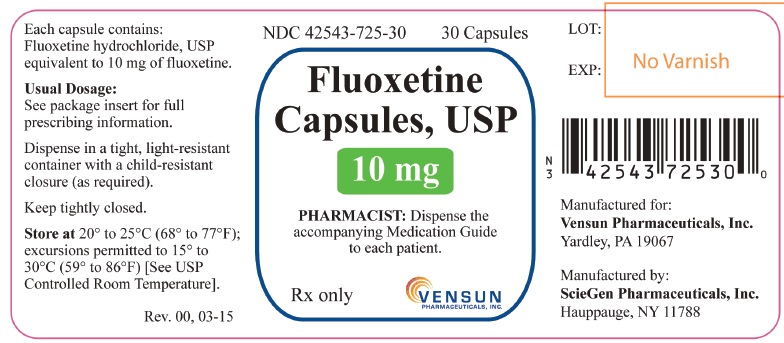
16.1How Supplied Fluoxetine Capsules, USP 10 mg** are white to off white powder filled in size “4” hard gelatin capsules with opaque light blue colored cap and opaque light orange colored body imprinted “SG” on cap and “113” on body with black ink. NDC 42543-725-30: Bottles of 30 capsules NDC 42543-725-01: Bottles of 100 capsules NDC 42543-725-05: Bottles of 500 capsules NDC 42543-725-10: Bottles of 1000 capsules Fluoxetine Capsules USP, 20 mg** are white to off white powder filled in size “2” hard gelatin capsules with opaque light blue colored cap and opaque light green colored body imprinted “SG” on cap and “114” on body with black ink.
NDC 42543-726-30: Bottles of 30 capsules NDC 42543-726-01: Bottles of 100 capsules NDC 42543-726-05: Bottles of 500 capsules NDC 42543-726-10: Bottles of 1000 capsules Fluoxetine Capsules USP, 40 mg** are white to off white powder filled in size “0” hard gelatin capsules with opaque light blue colored cap and opaque white colored body imprinted “SG” on cap and “115” on body with black ink. NDC 42543-727-30: Bottles of 30 capsules NDC 42543-727-01: Bottles of 100 capsules NDC 42543-727-05: Bottles of 500 capsules **Fluoxetine base equivalent.
16.2Storage and Handling Store at 20° to 25°C (68° to 77°F); excursions permitted to 15° to 30°C (59° to 86°F) [see USP Controlled Room Temperature].
16.1How Supplied Fluoxetine Capsules, USP 10 mg** are white to off white powder filled in size “4” hard gelatin capsules with opaque light blue colored cap and opaque light orange colored body imprinted “SG” on cap and “113” on body with black ink. NDC 42543-725-30: Bottles of 30 capsules NDC 42543-725-01: Bottles of 100 capsules NDC 42543-725-05: Bottles of 500 capsules NDC 42543-725-10: Bottles of 1000 capsules Fluoxetine Capsules USP, 20 mg** are white to off white powder filled in size “2” hard gelatin capsules with opaque light blue colored cap and opaque light green colored body imprinted “SG” on cap and “114” on body with black ink.
NDC 42543-726-30: Bottles of 30 capsules NDC 42543-726-01: Bottles of 100 capsules NDC 42543-726-05: Bottles of 500 capsules NDC 42543-726-10: Bottles of 1000 capsules Fluoxetine Capsules USP, 40 mg** are white to off white powder filled in size “0” hard gelatin capsules with opaque light blue colored cap and opaque white colored body imprinted “SG” on cap and “115” on body with black ink. NDC 42543-727-30: Bottles of 30 capsules NDC 42543-727-01: Bottles of 100 capsules NDC 42543-727-05: Bottles of 500 capsules **Fluoxetine base equivalent.
📦 Storage and Handling ▾
16.2Storage and Handling Store at 20° to 25°C (68° to 77°F); excursions permitted to 15° to 30°C (59° to 86°F) [see USP Controlled Room Temperature].
📋 Description ▾
11 DESCRIPTION Fluoxetine capsules, USP are a selective serotonin reuptake inhibitor for oral administration. It is also marketed for the treatment of premenstrual dysphoric disorder (Sarafem ® , fluoxetine hydrochloride). It is designated (±)-N-methyl-3-phenyl-3-[(α,α,α-trifluoro- p -tolyl)oxy]propylamine hydrochloride and has the empirical formula of C 17 H 18 F 3 NO•HCl.
Its molecular weight is 345.79. The structural formula is: Fluoxetine hydrochloride, USP is a white to off-white crystalline powder with a solubility of 14 mg/mL in water. Each capsule contains fluoxetine hydrochloride equivalent to 10 mg (32.3 μmol), 20 mg (64.7 μmol), or 40 mg (129.3 μmol) of fluoxetine.
The capsules also contain the following inactive ingredients: pregelatinized starch (maize [corn]), colloidal silicon dioxide, gelatin, sodium lauryl sulphate, FD&C Blue #1, FD&C Red #3, and titanium dioxide. In addition, 20 mg capsules also contains D&C Yellow #10 and 10 mg capsules also contains FD&C Yellow #6. The capsules are printed with edible ink containing black iron oxide, potassium hydroxide, propylene glycol, shellac and strong ammonia solution.
Chemical Structure
💬 Information for Patients ▾
17 PATIENT COUNSELING INFORMATION See the FDA-approved Medication Guide . Patients should be advised of the following issues and asked to alert their prescriber if these occur while taking fluoxetine as monotherapy or in combination with olanzapine. When using fluoxetine and olanzapine in combination, also refer to the Patient Counseling Information section of the package insert for Symbyax.
17.1General Information Healthcare providers should instruct their patients to read the Medication Guide before starting therapy with fluoxetine and to reread it each time the prescription is renewed. Healthcare providers should inform patients, their families, and their caregivers about the benefits and risks associated with treatment with fluoxetine and should counsel them in its appropriate use. Healthcare providers should instruct patients, their families, and their caregivers to read the Medication Guide and should assist them in understanding its contents.
Patients should be given the opportunity to discuss the contents of the Medication Guide and to obtain answers to any questions they may have. Patients should be advised of the following issues and asked to alert their healthcare provider if these occur while taking fluoxetine. When using fluoxetine and olanzapine in combination, also refer to the Medication Guide for Symbyax.
17.2Suicidal Thoughts and Behaviors in Children, Adolescents, and Young Adults Patients, their families, and their caregivers should be encouraged to be alert to the emergence of anxiety, agitation, panic attacks, insomnia, irritability, hostility, aggressiveness, impulsivity, akathisia (psychomotor restlessness), hypomania, mania, other unusual changes in behavior, worsening of depression, and suicidal ideation, especially early during antidepressant treatment and when the dose is adjusted up or down. Families and caregivers of patients should be advised to look for the emergence of such symptoms on a day-to-day basis, since changes may be abrupt.
Such symptoms should be reported to the patient’s prescriber or health professional, especially if they are severe, abrupt in onset, or were not part of the patient’s presenting symptoms. Symptoms such as these may be associated with an increased risk for suicidal thinking and behavior and indicate a need for very close monitoring and possibly changes in the medication [see Box Warning and Warnings and Precautions (5.1) ].
17.3Serotonin Syndrome Patients should be cautioned about the risk of serotonin syndrome with the concomitant use of fluoxetine and other serotonergic agents including triptans, tricyclic antidepressants, fentanyl, lithium, tramadol, buspirone, amphetamines, tryptophan, and St. John’s Wort [see Contraindications (4.1) , Warnings and Precautions (5.2) , and Drug Interactions (7.3) ] . Patients should be advised of the signs and symptoms associated with serotonin syndrome that may include mental status changes (e.g., agitation, hallucinations, delirium, and coma), autonomic instability (e.g., tachycardia, labile blood pressure, dizziness, diaphoresis, flushing, hyperthermia), neuromuscular changes (e.g., tremor, rigidity, myoclonus, hyperreflexia, incoordination), seizures, and/or gastrointestinal symptoms (e.g., nausea, vomiting, diarrhea).
Patients should be cautioned to seek medical care immediately if they experience these symptoms.
17.4Allergic Reactions and Rash Patients should be advised to notify their physician if they develop a rash or hives [see Warnings and Precautions (5.3) ]. Patients should also be advised of the signs and symptoms associated with a severe allergic reaction, including swelling of the face, eyes, or mouth, or have trouble breathing. Patients should be cautioned to seek medical care immediately if they experience these symptoms.
17.5Abnormal Bleeding Patients should be cautioned about the concomitant use of fluoxetine and NSAIDs, aspirin, warfarin, or other drugs that affect coagulation since combined use of psych… [Excerpted — this section continues on DailyMed.]
💬 Medication Guide ▾
Medication Guide Fluoxetine Capsules, USP (floo-ox-e-teen) Read the Medication Guide that comes with fluoxetine capsules before you start taking it and each time you get a refill. There may be new information. This Medication Guide does not take the place of talking to your healthcare provider about your medical condition or treatment.
Talk with your healthcare provider if there is something you do not understand or want to learn more about. What is the most important information I should know about fluoxetine capsules? Fluoxetine capsules and other antidepressant medicines may cause serious side effects, including: 1.
Suicidal thoughts or actions: Fluoxetine capsules and other antidepressant medicines may increase suicidal thoughts or actions in some children, teenagers, or young adults within the first few months of treatment or when the dose is changed. Depression or other serious mental illnesses are the most important causes of suicidal thoughts or actions. Watch for these changes and call your healthcare provider right away if you notice: New or sudden changes in mood, behavior, actions, thoughts, or feelings, especially if severe.
Pay particular attention to such changes when fluoxetine capsules is started or when the dose is changed. Keep all follow-up visits with your healthcare provider and call between visits if you are worried about symptoms. Call your healthcare provider right away if you have any of the following symptoms, or call 911 if an emergency, especially if they are new, worse, or worry you: attempts to commit suicide acting on dangerous impulses acting aggressive or violent thoughts about suicide or dying new or worse depression new or worse anxiety or panic attacks feeling agitated, restless, angry or irritable trouble sleeping an increase in activity or talking more than what is normal for you other unusual changes in behavior or mood Call your healthcare provider right away if you have any of the following symptoms, or call 911 if an emergency.
Fluoxetine capsules may be associated with these serious side effects: 2. Serotonin Syndrome. This condition can be life-threatening and may include: agitation, hallucinations, coma or other changes in mental status coordination problems or muscle twitching (overactive reflexes) racing heartbeat, high or low blood pressure sweating or fever nausea, vomiting, or diarrhea muscle rigidity dizziness flushing tremor seizures 3.
Severe allergic reactions: trouble breathing swelling of the face, tongue, eyes or mouth rash, itchy welts (hives) or blisters, alone or with fever or joint pain 4. Abnormal bleeding: Fluoxetine capsules and other antidepressant medicines may increase your risk of bleeding or bruising, especially if you take the blood thinner warfarin (Coumadin ® , Jantoven ® ), a non-steroidal anti-inflammatory drug (NSAIDs, like ibuprofen or naproxen), or aspirin. 5.
Visual problems: eye pain changes in vision swelling or redness in or around the eye Only some people are at risk for these problems. You may want to undergo an eye examination to see if you are at risk and receive preventative treatment if you are. 6.
Seizures or convulsions 7. Manic episodes: greatly increased energy severe trouble sleeping racing thoughts reckless behavior unusually grand ideas excessive happiness or irritability talking more or faster than usual 8. Changes in appetite or weight.
Children and adolescents should have height and weight monitored during treatment. 9. Low salt (sodium) levels in the blood.
Elderly people may be at greater risk for this. Symptoms may include: headache weakness or feeling unsteady confusion, problems concentrating or thinking or memory problems 10. Changes in the electrical activity of your heart (QT prolongation and ventricular arrhythmia including Torsades de Pointes).
This condition can be life threatening. The symptoms may include: fast, slow, or irregular heartbeat shortness of breath dizziness or fainting Do not stop fluoxetine capsules with… [Excerpted — this section continues on DailyMed.]
🍼 Nursing Mothers ▾
8.3Nursing Mothers Because fluoxetine is excreted in human milk, nursing while on fluoxetine is not recommended. In one breast-milk sample, the concentration of fluoxetine plus norfluoxetine was 70.4 ng/mL. The concentration in the mother’s plasma was 295.0 ng/mL.
No adverse effects on the infant were reported. In another case, an infant nursed by a mother on fluoxetine developed crying, sleep disturbance, vomiting, and watery stools. The infant’s plasma drug levels were 340 ng/mL of fluoxetine and 208 ng/mL of norfluoxetine on the second day of feeding.
🧬 Pharmacokinetics ▾
12.3Pharmacokinetics Systemic Bioavailability — In man, following a single oral 40 mg dose, peak plasma concentrations of fluoxetine from 15 to 55 ng/mL are observed after 6 to 8 hours. Food does not appear to affect the systemic bioavailability of fluoxetine, although it may delay its absorption by 1 to 2 hours, which is probably not clinically significant. Thus, fluoxetine may be administered with or without food.
Protein Binding — Over the concentration range from 200 to 1000 ng/mL, approximately 94.5% of fluoxetine is bound in vitro to human serum proteins, including albumin and α 1 -glycoprotein. The interaction between fluoxetine and other highly protein-bound drugs has not been fully evaluated, but may be important. Enantiomers — Fluoxetine is a racemic mixture (50/50) of R -fluoxetine and S -fluoxetine enantiomers.
In animal models, both enantiomers are specific and potent serotonin uptake inhibitors with essentially equivalent pharmacologic activity. The S -fluoxetine enantiomer is eliminated more slowly and is the predominant enantiomer present in plasma at steady state. Metabolism — Fluoxetine is extensively metabolized in the liver to norfluoxetine and a number of other unidentified metabolites.
The only identified active metabolite, norfluoxetine, is formed by demethylation of fluoxetine. In animal models, S -norfluoxetine is a potent and selective inhibitor of serotonin uptake and has activity essentially equivalent to R - or S -fluoxetine. R -norfluoxetine is significantly less potent than the parent drug in the inhibition of serotonin uptake.
The primary route of elimination appears to be hepatic metabolism to inactive metabolites excreted by the kidney. Variability in Metabolism — A subset (about 7%) of the population has reduced activity of the drug metabolizing enzyme cytochrome P450 2D6 (CYP2D6). Such individuals are referred to as “poor metabolizers” of drugs such as debrisoquin, dextromethorphan, and the TCAs.
In a study involving labeled and unlabeled enantiomers administered as a racemate, these individuals metabolized S -fluoxetine at a slower rate and thus achieved higher concentrations of S -fluoxetine. Consequently, concentrations of S -norfluoxetine at steady state were lower. The metabolism of R -fluoxetine in these poor metabolizers appears normal.
When compared with normal metabolizers, the total sum at steady state of the plasma concentrations of the 4 active enantiomers was not significantly greater among poor metabolizers. Thus, the net pharmacodynamic activities were essentially the same. Alternative, nonsaturable pathways (non-2D6) also contribute to the metabolism of fluoxetine.
This explains how fluoxetine achieves a steady-state concentration rather than increasing without limit. Because fluoxetine’s metabolism, like that of a number of other compounds including TCAs and other selective serotonin reuptake inhibitors (SSRIs), involves the CYP2D6 system, concomitant therapy with drugs also metabolized by this enzyme system (such as the TCAs) may lead to drug interactions [see Drug Interactions (7.7) ] . Accumulation and Slow Elimination — The relatively slow elimination of fluoxetine (elimination half-life of 1 to 3 days after acute administration and 4 to 6 days after chronic administration) and its active metabolite, norfluoxetine (elimination half-life of 4 to 16 days after acute and chronic administration), leads to significant accumulation of these active species in chronic use and delayed attainment of steady state, even when a fixed dose is used [see Warnings and Precautions (5.14) ] .
After 30 days of dosing at 40 mg/day, plasma concentrations of fluoxetine in the range of 91 to 302 ng/mL and norfluoxetine in the range of 72 to 258 ng/mL have been observed. Plasma concentrations of fluoxetine were higher than those predicted by single-dose studies, because fluoxetine’s metabolism is not proportional to dose. Norfluoxetine, however, appears to have linear pharmacokinetics.
Its mean… [Excerpted — this section continues on DailyMed.]
🧬 Pharmacodynamics ▾
12.2Pharmacodynamics Studies at clinically relevant doses in man have demonstrated that fluoxetine blocks the uptake of serotonin into human platelets. Studies in animals also suggest that fluoxetine is a much more potent uptake inhibitor of serotonin than of norepinephrine. Antagonism of muscarinic, histaminergic, and α 1 -adrenergic receptors has been hypothesized to be associated with various anticholinergic, sedative, and cardiovascular effects of classical tricyclic antidepressant (TCA) drugs.
Fluoxetine binds to these and other membrane receptors from brain tissue much less potently in vitro than do the tricyclic drugs.
🔬 Clinical Studies ▾
14 CLINICAL STUDIES Efficacy for fluoxetine was established for the: Acute and maintenance treatment of Major Depressive Disorder in adults, and children and adolescents (8 to 18 years) in 7 short-term and 2 long-term, placebo-controlled trials [see Clinical Studies 14.1 ] . Acute treatment of obsessions and compulsions in adults, and children and adolescents (7 to 17 years) with Obsessive Compulsive Disorder (OCD) in 3 short-term placebo-controlled trials [see Clinical Studies (14.2) ] . Acute and maintenance treatment of binge-eating and vomiting behaviors in adult patients with moderate to severe Bulimia Nervosa in 3 short-term and 1 long-term, placebo-controlled trials [see Clinical Studies (14.3) ] .
Acute treatment of Panic Disorder, with or without agoraphobia, in adult patients in 2 short-term, placebo-controlled trials [see Clinical Studies (14.4) ] . Efficacy for fluoxetine and olanzapine in combination was established for the: Acute treatment of depressive episodes in Bipolar I Disorder in adults, and children and adolescents (10 to 17 years) in 3 short-term, placebo-controlled trials. When using fluoxetine and olanzapine in combination, also refer to the Clinical Studies section of the package insert for Symbyax.
14.1Major Depressive Disorder Daily Dosing Adult — The efficacy of fluoxetine was studied in 5- and 6-week placebo-controlled trials with depressed adult and geriatric outpatients (≥18 years of age) whose diagnoses corresponded most closely to the DSM-III (currently DSM-IV) category of Major Depressive Disorder . Fluoxetine was shown to be significantly more effective than placebo as measured by the Hamilton Depression Rating Scale (HAM-D). Fluoxetine was also significantly more effective than placebo on the HAM-D subscores for depressed mood, sleep disturbance, and the anxiety subfactor.
Two 6-week controlled studies (N=671, randomized) comparing fluoxetine 20 mg and placebo have shown fluoxetine 20 mg daily to be effective in the treatment of elderly patients (≥60 years of age) with Major Depressive Disorder. In these studies, fluoxetine produced a significantly higher rate of response and remission as defined, respectively, by a 50% decrease in the HAM-D score and a total endpoint HAM-D score of ≤8. Fluoxetine was well tolerated and the rate of treatment discontinuations due to adverse reactions did not differ between fluoxetine (12%) and placebo (9%).
A study was conducted involving depressed outpatients who had responded (modified HAMD-17 score of ≤7 during each of the last 3 weeks of open-label treatment and absence of Major Depressive Disorder by DSM-III-R criteria) by the end of an initial 12-week open-treatment phase on fluoxetine 20 mg/day. These patients (N=298) were randomized to continuation on double-blind fluoxetine 20 mg/day or placebo. At 38 weeks (50 weeks total), a statistically significantly lower relapse rate (defined as symptoms sufficient to meet a diagnosis of Major Depressive Disorder for 2 weeks or a modified HAMD-17 score of ≥14 for 3 weeks) was observed for patients taking fluoxetine compared with those on placebo.
Pediatric (children and adolescents) — The efficacy of fluoxetine 20 mg/day in children and adolescents (N=315 randomized; 170 children ages 8 to <13, 145 adolescents ages 13 to ≤18) was studied in two 8- to 9-week placebo-controlled clinical trials in depressed outpatients whose diagnoses corresponded most closely to the DSM-III-R or DSM-IV category of Major Depressive Disorder. In both studies independently, fluoxetine produced a statistically significantly greater mean change on the Childhood Depression Rating Scale-Revised (CDRS-R) total score from baseline to endpoint than did placebo.
Subgroup analyses on the CDRS-R total score did not suggest any differential responsiveness on the basis of age or gender.
14.2Obsessive Compulsive Disorder Adult — The effectiveness of fluoxetine for the treatment of Obsessive Compulsive Disorder (OCD) was demonstrated in two 13… [Excerpted — this section continues on DailyMed.]
🔒 Drug Abuse and Dependence ▾
9 DRUG ABUSE AND DEPENDENCE
9.3Dependence Fluoxetine has not been systematically studied, in animals or humans, for its potential for abuse, tolerance, or physical dependence. While the premarketing clinical experience with fluoxetine did not reveal any tendency for a withdrawal syndrome or any drug seeking behavior, these observations were not systematic and it is not possible to predict on the basis of this limited experience the extent to which a CNS active drug will be misused, diverted, and/or abused once marketed. Consequently, physicians should carefully evaluate patients for history of drug abuse and follow such patients closely, observing them for signs of misuse or abuse of fluoxetine (e.g., development of tolerance, incrementation of dose, drug-seeking behavior).
🧪 Nonclinical Toxicology ▾
13 NONCLINICAL TOXICOLOGY
13.1Carcinogenesis, Mutagenesis, Impairment of Fertility Carcinogenicity — The dietary administration of fluoxetine to rats and mice for 2 years at doses of up to 10 and 12 mg/kg/day, respectively [approximately 1.2 and 0.7 times, respectively, the maximum recommended human dose (MRHD) of 80 mg on a mg/m 2 basis], produced no evidence of carcinogenicity. Mutagenicity — Fluoxetine and norfluoxetine have been shown to have no genotoxic effects based on the following assays: bacterial mutation assay, DNA repair assay in cultured rat hepatocytes, mouse lymphoma assay, and in vivo sister chromatid exchange assay in Chinese hamster bone marrow cells.
Impairment of Fertility — Two fertility studies conducted in adult rats at doses of up to 7.5 and 12.5 mg/kg/day (approximately 0.9 and 1.5 times the MRHD on a mg/m 2 basis) indicated that fluoxetine had no adverse effects on fertility. However, adverse effects on fertility were seen when juvenile rats were treated with fluoxetine [see Use in Specific Populations (8.4) ].
13.2Animal Toxicology and/or Pharmacology Phospholipids are increased in some tissues of mice, rats, and dogs given fluoxetine chronically. This effect is reversible after cessation of fluoxetine treatment. Phospholipid accumulation in animals has been observed with many cationic amphiphilic drugs, including fenfluramine, imipramine, and ranitidine. The significance of this effect in humans is unknown.
📄 Carcinogenesis, Mutagenesis, Impairment of Fertility ▾
13.1Carcinogenesis, Mutagenesis, Impairment of Fertility Carcinogenicity — The dietary administration of fluoxetine to rats and mice for 2 years at doses of up to 10 and 12 mg/kg/day, respectively [approximately 1.2 and 0.7 times, respectively, the maximum recommended human dose (MRHD) of 80 mg on a mg/m 2 basis], produced no evidence of carcinogenicity. Mutagenicity — Fluoxetine and norfluoxetine have been shown to have no genotoxic effects based on the following assays: bacterial mutation assay, DNA repair assay in cultured rat hepatocytes, mouse lymphoma assay, and in vivo sister chromatid exchange assay in Chinese hamster bone marrow cells.
Impairment of Fertility — Two fertility studies conducted in adult rats at doses of up to 7.5 and 12.5 mg/kg/day (approximately 0.9 and 1.5 times the MRHD on a mg/m 2 basis) indicated that fluoxetine had no adverse effects on fertility. However, adverse effects on fertility were seen when juvenile rats were treated with fluoxetine [see Use in Specific Populations (8.4) ].
📄 Recent Major Changes ▾
Warnings and Precautions: Serotonin Syndrome (5.2) 01/2017
📄 Package Label / Principal Display Panel ▾
PACKAGE LABEL - PRINCIPAL DISPLAY PANEL NDC 42543-725-30 30 Capsules Fluoxetine Capsules, USP 10 mg PHARMACIST: Dispense the accompanying Medication Guide to each patient. Rx only VENSUN PHARMACEUTICALS, INC. NDC 42543 -725- 01 100 Capsules Fluoxetine Capsules, USP 10 mg PHARMACIST: Dispense the accompanying Medication Guide to each patient.
Rx only VENSUN PHARMACEUTICALS, INC. PACKAGE LABEL - PRINCIPAL DISPLAY PANEL NDC 42543-726-30 30 Capsules Fluoxetine Capsules, USP 20 mg PHARMACIST: Dispense the accompanying Medication Guide to each patient. Rx only VENSUN PHARMACEUTICALS, INC.
PACKAGE LABEL - PRINCIPAL DISPLAY PANEL NDC 42543 -726- 01 100 Capsules Fluoxetine Capsules, USP 20 mg PHARMACIST: Dispense the accompanying Medication Guide to each patient. Rx only VENSUN PHARMACEUTICALS, INC. PACKAGE LABEL - PRINCIPAL DISPLAY PANEL NDC 42543- 727 -30 30 Capsules Fluoxetine Capsules, USP 40 mg PHARMACIST: Dispense the accompanying Medication Guide to each patient.
Rx only VENSUN PHARMACEUTICALS, INC. 10 mg - 30caps 10 mg - 100 caps 20 mg - 30caps 20 mg - 100 caps 40 mg - 30caps