
CRYSVITA Burosumab 30 mg/mL Injection, 1 mL — NDC 42747-304-01 (Billing 42747-0304-01)
This is a package of 1 mL of CRYSVITA Burosumab 30 mg/mL Injection from Kyowa Kirin, Inc., marketed since Apr 2018 and currently FDA-listed. It is this product's only package size.
NDC database record
One package, one record: these facts belong to NDC 42747-304-01 alone.
- Record
- FDA NDC Directory package listing · Human prescription drug
- Code segments
- 42747 labeler · 304 product · 01 package
- Package marketed since
- Sep 1, 2023
- Sample package
- No — commercial package
- Listing certified through
- Dec 31, 2027
- Billing quantity
- 1 mL per package
- Barcode (UPC-A, from the NDC)
- 3 4274730401 1
- Medicaid fills, this package
- 3,794 prescriptions in the last four reported quarters
- FDA record last changed
- Jul 24, 2026
Identity & classification
Regulatory identifiers FDA, NLM and CMS codes for this package
Drug-database identifiers Medi-Span GPI and First Databank GCN / HICL / AHFS classification
- GSN (GCN sequence number): 078331
- GCN: 44643
- GPI-14 (Medi-Span): 30909510602030
- HICL (First Databank): 044867
- AHFS class code: 40:92.00.00
- RxCUI (RxNorm): 2043859
Where does this data come from?
- FDA openFDA NDC Directory · synced Oct 8, 2026
- FDA label on DailyMed · label index refreshed Oct 8, 2026
- RxNorm (NLM RxNav) · catalog refreshed Oct 1, 2026
- Medi-Span GPI (licensed)
- First Databank (licensed) · refreshed Oct 8, 2026
RxNorm drug class
This medicine belongs to the Other drugs affecting bone structure and mineralization class.
Where does this data come from?
- RxClass (NLM) · catalog refreshed Oct 1, 2026
Clinical
Burosumab-twza injection is used to treat X-linked hypophosphatemia (XLH; an inherited disease where the body doesn't maintain phosphorus and that leads to weak bones) in adults and children 6 months of age and older. It is also used to treat tumor-induced osteomalacia (a tumor that causes a loss of phosphorus in the body that leads to weak bones) that cannot be surgically removed in adults and children 2 years of age and older, Burosumab-twza injection is in a class of medications called fibroblast growth factor 23 (FGF23) blocking antibodies. It works by blocking the action of a certain natu...
Read the full MedlinePlus article ↗Patient education
Supplement & herbal interactions
Where does this data come from?
- MedlinePlus (NLM) · refreshed Oct 8, 2026
- FDA label on DailyMed · label index refreshed Oct 8, 2026
Ask a licensed pharmacist directly — free, answered by our team.
Pricing
A drug doesn't have one price. Each row is a different public payment system, and none is what you'd pay at the counter — that depends on your insurance. The ⓘ on each row explains what it measures.
| Price system | Per each | Per package |
|---|---|---|
| Retail pharmacies payNADAC · weekly | Not in the retail survey — common for institutional, discontinued, or low-volume packs. | |
| Medicaid paysCMS SDUD · 12 mo | $14,567.29 | $14,567.29 / 1 vial |
| Medicare drug plans payPart D · quarterly | No Part D plan price is available for this NDC in our data. | |
| Medicare Part B allowsASP · J0584 | $513.371 / J0584 unit | — |
Where does this data come from?
- CMS NADAC weekly file
- CMS ASP pricing files · refreshed Sep 20, 2026
- CMS Medicaid State Drug Utilization Data · through Q1 2026
- CMS Part D plan pricing files · refreshed Sep 24, 2026
- VA National Acquisition Center price file
Billing & reimbursement
Where does this data come from?
- CMS ASP NDC-HCPCS crosswalk · refreshed Sep 22, 2026
- DMEPDAC NDC-HCPCS crosswalk
- openFDA NSDE billing units · refreshed Oct 7, 2026
Packaging — all sizes for this product
| Package NDC | Description | Marketing start | Marketing end | Status |
|---|---|---|---|---|
| 42747-0304-01 You're viewing this Main listing | 1 mL in 1 VIAL, SINGLE-USE | 2023-09-01 | — | Active |
Therapeutic equivalents
| Product | Labeler | Pack | NADAC/unit | TE | Status | Price vs. this |
|---|---|---|---|---|---|---|
| Crysvita 30 mg/mLthis 42747-0304-01 | Kyowa | 1 ml | — | — | FDA listed | — |
Where does this data come from?
- FDA openFDA NDC Directory · synced Oct 8, 2026
- FDA Purple Book · refreshed Oct 5, 2026
- CMS NADAC weekly file
Availability & biosimilar status
Biologics have no small-molecule generics; biosimilar competition is tracked in the FDA Purple Book.
Why the date isn’t exact: Biosimilar timing can change because patents may be challenged, settled, licensed, added or removed, and litigation can move the real date earlier or later.
🛈 What do these terms mean?
- Biologic patent
- A patent the reference product’s maker has publicly listed. A biosimilar generally can’t launch until these expire — unless they’re invalidated or resolved in a settlement.
- Reference-product exclusivity
- A flat 12 years of FDA market protection from the biologic’s first licensure (the BPCIA). No biosimilar can be licensed before it ends, regardless of patents.
- Interchangeable exclusivity
- The first interchangeable biosimilar can earn a period as the only interchangeable version (pharmacists can substitute it without the prescriber).
- Earliest biosimilar (LOE)
- The latest of all the dates above — the soonest a biosimilar can realistically reach the market. Litigation and settlements can move it earlier.
Biologics have no small-molecule “generics” — competition comes from FDA-licensed biosimilars, tracked in the FDA Purple Book.
| Code | What it grants | Expires |
|---|---|---|
| RefProduct | Reference-product exclusivity (12-year, BPCIA) — no biosimilar can be licensed before this date | Apr 17, 2030 |
Is there a biosimilar for CRYSVITA 30 MG/ML VIAL?
Why do different websites show different biosimilar dates?
Can a biosimilar launch before the last patent expires?
What does “current Purple Book estimate” mean?
What does “FDA listed” mean?
What does a patent or protection date mean here?
Where does this data come from?
- FDA Purple Book · refreshed Oct 5, 2026
Inactive Ingredients / Excipients
Inactive ingredients, also called excipients, are components of the drug product other than the active ingredient. They may include fillers, dyes, coatings, preservatives, flavors, or other formulation ingredients.
💡 Tap an ingredient (hover on desktop) to see what it is and why it’s used.
-
1.55 mg / 1 mL
UNII 4QD397987E
An amino acid used as a buffer and stabilizer in medications. It helps maintain the pH balance and protects the active drug from breaking down during storage and use.
-
1.49 mg / 1 mL
UNII AE28F7PNPL
Methionine is an amino acid used as a nutrient supplement and pH buffer in medicines. It helps stabilize the formulation and supports the product's overall composition.
-
0.50 mg / 1 mL
UNII 6OZP39ZG8H
Polysorbate 80 is a synthetic emulsifier derived from sorbitol and oleic acid. It helps mix oil and water-based ingredients together in medications and improves how the product disperses in the body.
-
45.91 mg / 1 mL
UNII 506T60A25R
Sorbitol is a natural sugar alcohol derived from glucose. It serves as a sweetener, humectant, and bulking agent in medications to improve taste and help maintain moisture in the product.
-
UNII 059QF0KO0R
Water is a liquid solvent that dissolves and mixes ingredients together in liquid medicines, syrups, and injections. It helps distribute the active drug evenly throughout the product.
5 inactive ingredients listed in the exact product block matched to this NDC.
Where does this data come from?
ingredient classCode="IACT" elements from the exact product block matched by this NDC. Label-section narrative from DailyMed / the openFDA label index is shown separately when available.- FDA label on DailyMed · label index refreshed Oct 8, 2026
- FDA openFDA NDC Directory · synced Oct 8, 2026
Inactive ingredient FAQ
Are inactive ingredients the same for every manufacturer?
Why might an inactive ingredient be missing?
Can inactive ingredients matter?
Manufacturer & labeler
More NDCs from Kyowa Kirin, Inc. labeler code 42747
- CRYSVITA Burosumab 10 mg/mL Injection NDC 42747-102-01
- CRYSVITA Burosumab 20 mg/mL Injection NDC 42747-203-01
- Fareston toremifene citrate 60 mg Tablet NDC 42747-327-30
- Nourianz istradefylline 20 mg Tablet, Film Coated NDC 42747-602-07
- Nourianz istradefylline 40 mg Tablet, Film Coated NDC 42747-604-07
- POTELIGEO mogamulizumab-kpkc 4 mg/mL Injection NDC 42747-761-01
Where does this data come from?
- FDA openFDA NDC Directory · synced Oct 8, 2026
- Drugs@FDA
Full prescribing information FDA SPL
🎯 Indications and Usage ▾
1 INDICATIONS AND USAGE CRYSVITA is a fibroblast growth factor 23 (FGF23) blocking antibody indicated for: The treatment of X-linked hypophosphatemia (XLH) in adult and pediatric patients 6 months of age and older. ( 1.1 ) The treatment of FGF23-related hypophosphatemia in tumor-induced osteomalacia (TIO) associated with phosphaturic mesenchymal tumors that cannot be curatively resected or localized in adult and pediatric patients 2 years of age and older. ( 1.2 )
1.1X-linked Hypophosphatemia CRYSVITA is indicated for the treatment of X-linked hypophosphatemia (XLH) in adult and pediatric patients 6 months of age and older.
1.2Tumor-induced Osteomalacia CRYSVITA is indicated for the treatment of FGF23-related hypophosphatemia in tumor-induced osteomalacia (TIO) associated with phosphaturic mesenchymal tumors that cannot be curatively resected or localized in adult and pediatric patients 2 years of age and older.
⏱️ Dosage and Administration ▾
2 DOSAGE AND ADMINISTRATION For subcutaneous use only ( 2 ) Prior to starting CRYSVITA, discontinue oral phosphate and/or active vitamin D analogs for one week ( 2.1 ) Pediatric XLH (6 months and older): For patients who weigh less than 10 kg, starting dose regimen is 1 mg/kg of body weight rounded to the nearest 1 mg, administered every two weeks ( 2.2 ) For patients who weigh 10 kg and greater, starting dose regimen is 0.8 mg/kg of body weight rounded to the nearest 10 mg, administered every two weeks. The minimum starting dose is 10 mg up to a maximum dose of 90 mg.
( 2.2 ) Dose may be increased up to approximately 2 mg/kg (maximum 90 mg), administered every two weeks to achieve normal serum phosphorus. ( 2.2 ) Adult XLH: Starting dose is 1 mg/kg body weight rounded to the nearest 10 mg up to a maximum dose of 90 mg administered every four weeks. Dose may be increased up to 1 mg/kg rounded to the nearest 10 mg up to a maximum dose of 90 mg administered every two weeks.
( 2.3 ) Pediatric TIO (2 years and older): Starting dose is 0.4 mg/kg of body weight rounded to the nearest 10 mg every 2 weeks. Dose may be increased up to 2 mg/kg not to exceed 180 mg, administered every two weeks. ( 2.4 ) Adult TIO: Starting dose is 0.5 mg/kg every four weeks.
Dose may be increased up to 2 mg/kg not to exceed 180 mg, administered every two weeks. ( 2.5 )
2.1Important Information Prior to Initiation of CRYSVITA Prior to starting CRYSVITA, discontinue oral phosphate and/or active vitamin D analogs (e.g. calcitriol, paricalcitol, doxercalciferol, calcifediol) for one week [see Contraindications (4) , Warnings and Precautions (5.3) ] . Prior to starting CRYSVITA, fasting serum phosphorus concentration should be below the reference range for age [see Contraindications (4) ]. In patients at high risk for hypercalcemia (e.g., pre-existing hyperparathyroidism, prolonged immobilization, dehydration, hypervitaminosis D, or renal impairment) assess serum calcium and parathyroid hormone levels prior to starting CRYSVITA [see Warnings and Precautions (5.3) ] .
CRYSVITA is administered by subcutaneous injection and should be administered by a healthcare provider. The maximum volume of CRYSVITA per injection is 1.5 mL. If multiple injections are required, administer at different injection sites.
2.2Recommended Dosage for Pediatric Patients with X-linked Hypophosphatemia (6 months to less than 18 years of age) For patients who weigh less than 10 kg, the recommended starting dosage is 1 mg/kg of body weight, rounded to the nearest 1 mg, administered every two weeks. For patients who weigh 10 kg and greater, the recommended starting dose regimen is 0.8 mg/kg of body weight, rounded to the nearest 10 mg, administered every two weeks. The minimum starting dose is 10 mg up to a maximum dose of 90 mg.
After initiation of treatment with CRYSVITA, measure fasting serum phosphorus every 4 weeks for the first 3 months of treatment, and thereafter as appropriate. If serum phosphorus is above the lower limit of the reference range for age and below 5 mg/dL, continue treatment with the same dose. Follow dose adjustment schedule below to maintain serum phosphorus within the reference range for age.
Dose Adjustment Reassess fasting serum phosphorus level 4 weeks after dose adjustment. Do not adjust CRYSVITA more frequently than every 4 weeks. Dose Increase : For patients who weigh less than 10 kg, if serum phosphorus is below the reference range for age, the dose may be increased to 1.5 mg/kg, rounded to the nearest 1 mg, administered every two weeks.
If additional dose increases are needed, the dose may be increased to the maximum dose of 2 mg/kg, rounded to the nearest 1 mg, administered every two weeks. For patients who weigh 10 kg or greater, if serum phosphorus is below the reference range for age, the dose may be increased stepwise up to approximately 2 mg/kg, administered every two weeks (maximum dose of 90 mg) according to the dosing schedule shown in Table 1.… [Excerpted — this section continues on DailyMed.]
💊 Dosage Forms and Strengths ▾
3 DOSAGE FORMS AND STRENGTHS Injection: 10 mg/mL, 20 mg/mL, or 30 mg/mL clear to slightly opalescent and colorless to pale brown-yellow solution in a single-dose vial. Injection: 10 mg/mL, 20 mg/mL, or 30 mg/mL in a single-dose vial ( 3 )
⛔ Contraindications ▾
4 CONTRAINDICATIONS CRYSVITA is contraindicated: In concomitant use with oral phosphate and/or active vitamin D analogs (e.g. calcitriol, paricalcitol, doxercalciferol, calcifediol) due to the risk of hyperphosphatemia [see Warnings and Precautions (5.2) and Drug Interactions (7.1) ] . When serum phosphorus is within or above the normal range for age [see Warnings and Precautions (5.2) ] . In patients with severe renal impairment or end stage renal disease because these conditions are associated with abnormal mineral metabolism [see Use In Specific Population (8.6) ] .
With oral phosphate and/or active vitamin D analogs. ( 4 ) When serum phosphorus is within or above the normal range for age. ( 4 ) In patients with severe renal impairment or end stage renal disease.
( 4 )
⚠️ Warnings and Cautions ▾
5 WARNINGS AND PRECAUTIONS Hypersensitivity : Discontinue CRYSVITA if serious hypersensitivity reactions occur and initiate appropriate medical treatment. ( 5.1 ) Hyperphosphatemia and Risk of Nephrocalcinosis : For patients already taking CRYSVITA, dose interruption and/or dose reduction may be required based on a patient's serum phosphorus levels. ( 5.2 , 6.1 ) Hypercalcemia : Increases in serum calcium have been reported.
Monitor serum calcium and parathyroid hormone levels in patients at high risk for hypercalcemia before and during treatment. ( 5.3 ) Injection Site Reactions : Administration of CRYSVITA may result in local injection site reactions. Discontinue CRYSVITA if severe injection site reactions occur and administer appropriate medical treatment.
( 5.4 , 6.1 )
5.1Hypersensitivity Hypersensitivity reactions (e.g. rash, urticaria) have been reported in patients with CRYSVITA. Discontinue CRYSVITA if serious hypersensitivity reactions occur and initiate appropriate medical treatment [see Adverse Reactions (6.1) ] .
5.2Hyperphosphatemia and Risk of Nephrocalcinosis Increases in serum phosphorus to above the upper limit of normal may be associated with an increased risk of nephrocalcinosis. For patients already taking CRYSVITA, dose interruption and/or dose reduction may be required based on a patient's serum phosphorus levels. Patients with tumor-induced osteomalacia who undergo treatment of the underlying tumor should have dosing interrupted and adjusted to prevent hyperphosphatemia [see Dosage and Administration (2) and Adverse Reactions (6.1) ] .
5.3Hypercalcemia Increases in serum calcium have been reported in patients treated with CRYSVITA. Patients with risk factors such as, pre-existing hyperparathyroidism, prolonged immobilization, dehydration, hypervitaminosis D, or renal impairment, are at higher risk of hypercalcemia. Monitor these patients for serum calcium and parathyroid hormone levels before and during CRYSVITA treatment for moderate to severe hypercalcemia.
In patients with moderate to severe hypercalcemia, CRYSVITA should not be administered until hypercalcemia is adequately managed.
5.4Injection Site Reactions Administration of CRYSVITA may result in local injection site reactions. Discontinue CRYSVITA if severe injection site reactions occur and administer appropriate medical treatment [see Adverse Reactions (6.1) ] .
🤒 Adverse Reactions ▾
6 ADVERSE REACTIONS The following adverse reactions are described below and elsewhere in the labeling: Hypersensitivity [see Warnings and Precautions (5.1) ] Hyperphosphatemia and Risk of Nephrocalcinosis [see Warnings and Precautions (5.2) ] Hypercalcemia [see Warnings and Precautions (5.3) Injection Site Reactions [see Warnings and Precautions (5.4) ] Most common adverse reactions (≥25% in the CRYSVITA group and > Active Control) in pediatric XLH patients are: pyrexia, injection site reaction, cough, vomiting, pain in extremity, headache, tooth abscess, dental caries.
( 6.1 ) Most common adverse reactions (>5% and in at least 2 patients more than placebo) in adult XLH patients are: back pain, headache, tooth infection, restless legs syndrome, vitamin D decreased, dizziness, constipation, muscle spasms, blood phosphorus increased. ( 6.1 ) Most common adverse reactions (>10%) in TIO patients are: tooth abscess, muscle spasms, dizziness, constipation, injection site reaction, rash, and headache. ( 6.1 ) To report SUSPECTED ADVERSE REACTIONS, contact Kyowa Kirin, Inc. at 1-844-768-3544 or FDA at 1-800-FDA-1088 or www.fda.gov/medwatch .
6.1Clinical Trials Experience Because clinical trials are conducted under widely varying conditions, adverse reaction rates observed in the clinical trials of a drug cannot be directly compared to rates in the clinical trials of another drug and may not reflect the rates observed in practice. Adverse Reactions in Pediatric Patients with XLH CRYSVITA was studied in three pediatric XLH studies. Study 1 is a randomized, open-label phase 3 study in XLH patients ages 1 to 12 years, who were randomized to treatment with CRYSVITA or treatment with active control of oral phosphate and active vitamin D (CRYSVITA N = 29, Active Control N = 32).
Study 2 is an open-label phase 2 study in XLH patients ages 5 to 12 years (N = 52). Study 3 is an open-label phase 2 study in XLH patients ages 1 to less than 5 years (N = 13). Overall, the patient population was 1-12 years (mean age 7.0 years), 49% male, and 88% white.
In Study 1, patients randomized to CRYSVITA received a mean dose of approximately 0.90 mg/kg (range 0.8-1.2 mg/kg) every 2 weeks. All patients in this group and the active control group completed 64 weeks of treatment. Adverse reactions occurring in ≥ 10% of subjects in the CRYSVITA group, with higher frequency than in the subjects in the active control group, through the 64-week treatment period in Study 1 are shown in Table 6 .
Table 6: Adverse Reactions Reported in 10% or More of CRYSVITA-Treated Pediatric Patients and with Higher Frequency Than the Active Control Group in Study 1 Adverse Reaction CRYSVITA (N=29) n (%) Active Control (N=32) n (%) n = number of patients with an event; N = total number of patients who received at least one dose of CRYSVITA or active control Pyrexia 16 (55) 6 (19) Injection site reaction Injection site reaction includes: injection site reaction, injection site erythema, injection site pruritus, injection site swelling, injection site pain, injection site rash, injection site bruising, injection site discoloration, injection site discomfort, injection site hematoma, injection site hemorrhage, injection site induration, injection site macule, and injection site urticaria 15 (52) 0 (0) Cough Cough includes: cough and productive cough 15 (52) 6 (19) Vomiting 12 (41) 8 (25) Pain in extremity 11 (38) 10 (31) Headache 10 (34) 6 (19) Tooth abscess Tooth abscess includes: tooth abscess, tooth infection, toothache 10 (34) 4 (13) Dental caries 9 (31) 2 (6) Diarrhea 7 (24) 2 (6) Vitamin D decreased Vitamin D decreased includes: vitamin D deficiency, blood 25-hydroxycholecalciferol decreased, and vitamin D decreased 7 (24) 1 (3) Constipation 5 (17) 0 (0) Rash Rash includes: rash, rash pruritic, rash maculopapular, rash erythematous, rash generalized and rash pustular 4 (14) 2 (6) Nausea 3 (10) 1 (3) In Study 2, 26 of the patients received CRYSVITA at a mean dose of 1.05 mg/kg (ra… [Excerpted — this section continues on DailyMed.]
🔄 Drug Interactions ▾
7 DRUG INTERACTIONS
7.1Oral Phosphate and Active Vitamin D Analogs Concomitant use of CRYSVITA with oral phosphate and/or active vitamin D analogs will increase phosphate concentrations greater than expected with CRYSVITA alone. This increase may result in hyperphosphatemia which can induce nephrocalcinosis. Concomitant use of CRYSVITA with oral phosphate and/or active vitamin D analogs is contraindicated.
👥 Use in Specific Populations ▾
8 USE IN SPECIFIC POPULATIONS
8.1Pregnancy Risk Summary There are no available data on CRYSVITA use in pregnant women to inform a drug-associated risk of adverse developmental outcomes. In utero, burosumab-twza exposure in cynomolgus monkeys did not result in teratogenic effects. Adverse effects such as late fetal loss and preterm birth were observed in pregnant cynomolgus monkeys, however, these effects are unlikely to indicate clinical risk because they occurred at a drug exposure that was 15-fold higher, by AUC, than the human exposure at the maximum recommended human dose (MRHD) of 2 mg/kg every 2 weeks and were accompanied by maternal hyperphosphatemia and placental mineralization ( see Data ).
Serum phosphorus levels should be monitored throughout pregnancy [see Dosage and Administration (2.2) ]. Report pregnancies to the Kyowa Kirin, Inc. Adverse Event reporting line at 1-844-768-3544.
The background risk of major birth defects and miscarriage for the indicated population is unknown; however, the estimated background risk in the U.S. general population of major birth defects is 2% to 4% and of miscarriage is 15% to 20% of clinically recognized pregnancies. Data Animal Data In a reproductive toxicity study in pregnant cynomolgus monkeys, burosumab-twza was administered intravenously once every two weeks from Day 20 of pregnancy to parturition or cesarean section on Day 133, which includes the period of organogenesis, at doses of 0.2-, 2- and 15-fold human exposure at the adult MRHD of 2 mg/kg every 2 weeks.
The treatment did not result in teratogenic effects in fetuses or offspring. An increase in late fetal loss, a shortened gestation period, and an increased incidence of preterm births were observed at 15-fold human exposure at the adult MRHD of 2 mg/kg every 2 weeks, concomitant with maternal hyperphosphatemia and placental mineralization. Burosumab-twza was detected in serum from fetuses indicating transport across the placenta.
Hyperphosphatemia but no ectopic mineralization was present in fetuses and offspring of dams exposed to 15-fold human exposure at the MRHD of 2 mg/kg dose every 2 weeks. Burosumab-twza did not affect pre- and postnatal growth including survivability of the offspring.
8.2Lactation Risk Summary There is no information regarding the presence of burosumab-twza in human milk, or the effects of burosumab-twza on milk production or the breastfed infant. Maternal IgG is present in breast milk. However, the effects of local gastrointestinal exposure and limited systemic exposure to burosumab-twza in the breastfed infant are unknown.
The lack of clinical data during lactation precludes a clear determination of the risk of CRYSVITA to an infant during lactation. Therefore, the developmental and health benefits of breastfeeding should be considered along with the mother's clinical need for CRYSVITA and any potential adverse effects on the breastfed infant from CRYSVITA or from the underlying maternal condition.
8.4Pediatric Use Safety and effectiveness of CRYSVITA have been established in pediatric patients 6 months and older. Safety and effectiveness in pediatric patients 1 year and older with XLH are based on one phase 3, open-label, active control study [61 patients 1-12 years of age (Study 1)] and two open-label studies [52 patients 5 to 12 years of age (Study 2), and 13 patients 1 to 4 years of age (Study 3)] evaluating serum phosphorus and radiographic findings. Safety and effectiveness in patients 6 months to 1 year and adolescents are supported by evidence from the studies in pediatric patients 1 year to less than 13 years of age with additional modeling and simulation of adult and pediatric pharmacokinetic (PK) and pharmacodynamic (PD) data to inform dosing [see Adverse Reactions (6.1) and Clinical Studies (14) ] .
Safety and effectiveness for CRYSVITA in pediatric patients with XLH below the age of 6 months have not been established . Safety and effectiveness of CRYSVITA in pediatric patient… [Excerpted — this section continues on DailyMed.]
🤰 Pregnancy ▾
8.1Pregnancy Risk Summary There are no available data on CRYSVITA use in pregnant women to inform a drug-associated risk of adverse developmental outcomes. In utero, burosumab-twza exposure in cynomolgus monkeys did not result in teratogenic effects. Adverse effects such as late fetal loss and preterm birth were observed in pregnant cynomolgus monkeys, however, these effects are unlikely to indicate clinical risk because they occurred at a drug exposure that was 15-fold higher, by AUC, than the human exposure at the maximum recommended human dose (MRHD) of 2 mg/kg every 2 weeks and were accompanied by maternal hyperphosphatemia and placental mineralization ( see Data ).
Serum phosphorus levels should be monitored throughout pregnancy [see Dosage and Administration (2.2) ]. Report pregnancies to the Kyowa Kirin, Inc. Adverse Event reporting line at 1-844-768-3544.
The background risk of major birth defects and miscarriage for the indicated population is unknown; however, the estimated background risk in the U.S. general population of major birth defects is 2% to 4% and of miscarriage is 15% to 20% of clinically recognized pregnancies. Data Animal Data In a reproductive toxicity study in pregnant cynomolgus monkeys, burosumab-twza was administered intravenously once every two weeks from Day 20 of pregnancy to parturition or cesarean section on Day 133, which includes the period of organogenesis, at doses of 0.2-, 2- and 15-fold human exposure at the adult MRHD of 2 mg/kg every 2 weeks.
The treatment did not result in teratogenic effects in fetuses or offspring. An increase in late fetal loss, a shortened gestation period, and an increased incidence of preterm births were observed at 15-fold human exposure at the adult MRHD of 2 mg/kg every 2 weeks, concomitant with maternal hyperphosphatemia and placental mineralization. Burosumab-twza was detected in serum from fetuses indicating transport across the placenta.
Hyperphosphatemia but no ectopic mineralization was present in fetuses and offspring of dams exposed to 15-fold human exposure at the MRHD of 2 mg/kg dose every 2 weeks. Burosumab-twza did not affect pre- and postnatal growth including survivability of the offspring.
🧒 Pediatric Use ▾
8.4Pediatric Use Safety and effectiveness of CRYSVITA have been established in pediatric patients 6 months and older. Safety and effectiveness in pediatric patients 1 year and older with XLH are based on one phase 3, open-label, active control study [61 patients 1-12 years of age (Study 1)] and two open-label studies [52 patients 5 to 12 years of age (Study 2), and 13 patients 1 to 4 years of age (Study 3)] evaluating serum phosphorus and radiographic findings. Safety and effectiveness in patients 6 months to 1 year and adolescents are supported by evidence from the studies in pediatric patients 1 year to less than 13 years of age with additional modeling and simulation of adult and pediatric pharmacokinetic (PK) and pharmacodynamic (PD) data to inform dosing [see Adverse Reactions (6.1) and Clinical Studies (14) ] .
Safety and effectiveness for CRYSVITA in pediatric patients with XLH below the age of 6 months have not been established . Safety and effectiveness of CRYSVITA in pediatric patients 2 years and older with TIO are supported by evidence from the studies in adult patients with TIO with additional modeling and simulation of PK data from adult and pediatric XLH patients and adult TIO patients to inform dosing. Safety and effectiveness for CRYSVITA in pediatric patients with TIO below the age of 2 years have not been established.
🧓 Geriatric Use ▾
8.5Geriatric Use Clinical studies of CRYSVITA did not include sufficient numbers of patients aged 65 and over to determine whether they respond differently from younger patients. Other reported clinical experience has not identified differences in responses between the elderly and younger patients. In general, dose selection for an elderly patient should be cautious, usually starting at the low end of the dosing range, reflecting the greater frequency of decreased hepatic, renal, or cardiac function, and of concomitant disease or other drug therapy.
🆘 Overdosage ▾
10 OVERDOSAGE There have been no reports of overdose with CRYSVITA. CRYSVITA has been administered in pediatric clinical trials without dose limiting toxicity using doses up to 2 mg/kg body weight with a maximal dose of 90 mg, administered every two weeks. In XLH adult clinical trials, no dose limiting toxicity has been observed using doses up to 1 mg/kg or a maximal total dose of 128 mg every 4 weeks.
In non-XLH rabbits and cynomolgus monkeys, ectopic mineralization in multiple tissues and organs was observed at doses of burosumab-twza that resulted in supra-physiologic serum phosphate levels. Adverse effects on bone including reductions in bone mineral density, bone mineralization and bone strength were also observed at exposure greater than human exposure [ see Nonclinical Toxicology (13.2) ]. In case of overdose, it is recommended that serum phosphorus levels, serum calcium levels and renal function be measured immediately and monitored periodically until resolution to normal/baseline levels.
In case of hyperphosphatemia, withhold CRYSVITA and initiate appropriate medical treatment.
🧬 Clinical Pharmacology ▾
12 CLINICAL PHARMACOLOGY
12.1Mechanism of Action X-linked hypophosphatemia is caused by excess fibroblast growth factor 23 (FGF23) which suppresses renal tubular phosphate reabsorption and the renal production of 1,25 dihydroxy vitamin D. Burosumab-twza binds to and inhibits the biological activity of FGF23 restoring renal phosphate reabsorption and increasing the serum concentration of 1,25 dihydroxy vitamin D.
12.2Pharmacodynamics Following SC administration in XLH and TIO patients, higher burosumab-twza concentrations were associated with greater increase of serum phosphorus levels. The increase in serum phosphorus was reversible and returned to baseline with elimination of systemic burosumab-twza . Ratio of renal tubular maximum reabsorption rate of phosphate to glomerular filtration rate (TmP/GFR) showed dose-dependent increases from baseline [see Clinical Studies (14) ].
Elevation in serum total FGF23 was observed after initiation of burosumab-twza treatment, however, the clinical implication is unknown.
12.3Pharmacokinetics The following pharmacokinetic parameters were observed in patients with XLH administered the approved recommended starting dosage based on a 70 kg patient, unless otherwise specified. Based on the population PK analysis, the PK characteristics of burosumab-twza were similar between patients with XLH and TIO. Burosumab-twza exhibited linear pharmacokinetics following SC injections within the dose range of 0.1 to 1 mg/kg (0.08 to 0.8 times the maximum approved recommended dosage based on a 70 kg patient with XLH).
The steady-state trough mean (± SD) concentration of burosumab-twza was 5.8 (± 3.4) mcg/mL in adult XLH patients. Absorption The burosumab-twza mean T max values ranged from 8 to 11 days. Distribution The apparent volume of distribution of burosumab-twza is 8 L.
Elimination The apparent clearance is 0.290 L/day. The half-life of burosumab-twza is approximately 19 days. Metabolism The exact pathway for burosumab-twza metabolism has not been characterized.
Burosumab-twza is expected to be degraded into small peptides and amino acids via catabolic pathways. Specific Populations No clinical significant difference in burosumab-twza pharmacokinetics was observed based on age. The effect of renal or hepatic impairment on the pharmacokinetics of burosumab-twza is unknown.
Pediatric Patients The steady-state trough concentration was 15.8 (± 9.4) mcg/mL in XLH patients aged 5-12 years, and 11.2 (± 4.6) mcg/mL in XLH patients aged 1-4 years. Body Weight Clearance and volume of distribution of burosumab-twza increases with body weight. Drug Interaction Studies No drug interaction studies have been conducted with CRYSVITA.
12.6Immunogenicity As with all therapeutic proteins, there is potential for immunogenicity. The detection of antibody formation is highly dependent on the sensitivity and specificity of the assay. Additionally, the observed incidence of antibody (including neutralizing antibody) positivity in an assay may be influenced by several factors including assay methodology, sample handling, timing of sample collection, concomitant medications, and underlying disease.
For these reasons, comparison of the incidence of antibodies to CRYSVITA in the studies described below with the incidence of antibodies in other studies or to other products may be misleading. In XLH clinical studies, none (0/13) of the 1- to 4-year-old patients, 19% (10/52) of the 5- to 12-year- old patients, and 15% (20/131) of the adult patients tested positive for anti-drug antibodies (ADA) after receiving CRYSVITA. Among these, three 5- to 12-year-old patients tested positive for neutralizing antibodies.
The presence of ADA was not associated with clinically relevant changes in pharmacokinetics, pharmacodynamics, efficacy, and safety of CRYSVITA in patients with XLH. In one TIO clinical study, 14% (2/14) of the adult patients tested positive for ADA after receiving CRYSVITA. None of the ADA positive patients tested positi… [Excerpted — this section continues on DailyMed.]
🧬 Mechanism of Action ▾
12.1Mechanism of Action X-linked hypophosphatemia is caused by excess fibroblast growth factor 23 (FGF23) which suppresses renal tubular phosphate reabsorption and the renal production of 1,25 dihydroxy vitamin D. Burosumab-twza binds to and inhibits the biological activity of FGF23 restoring renal phosphate reabsorption and increasing the serum concentration of 1,25 dihydroxy vitamin D.
📦 How Supplied / Storage and Handling ▾
16 HOW SUPPLIED/STORAGE AND HANDLING CRYSVITA (burosumab-twza) injection for subcutaneous administration is supplied as a sterile, preservative-free, clear to slightly opalescent and colorless to pale brown-yellow solution. The product is available as one single-dose vial per carton in the following strengths: 10 mg/mL (NDC# 42747-102-01) 20 mg/mL (NDC# 42747-203-01) 30 mg/mL (NDC# 42747-304-01) CRYSVITA vials must be stored in the original carton until the time of use under refrigerated conditions at 36°F to 46°F (2°C to 8°C).
Keep CRYSVITA vial in the original carton to protect from light until time of use. Do not freeze or shake CRYSVITA. Do not use CRYSVITA beyond the expiration date stamped on the carton.
CRYSVITA vials are single-dose only. Discard any unused product.
📦 Storage and Handling ▾
CRYSVITA vials must be stored in the original carton until the time of use under refrigerated conditions at 36°F to 46°F (2°C to 8°C). Keep CRYSVITA vial in the original carton to protect from light until time of use. Do not freeze or shake CRYSVITA. Do not use CRYSVITA beyond the expiration date stamped on the carton. CRYSVITA vials are single-dose only. Discard any unused product.
📋 Description ▾
11 DESCRIPTION Burosumab-twza is a human immunoglobulin G subclass 1 (IgG1), anti-human fibroblast growth factor 23 (FGF23) antibody produced by recombinant DNA technology using Chinese hamster ovary cells. Burosumab-twza is composed of two heavy chain (γ1-chain) molecules and two light chain (κ-chain) molecules. Each heavy chain has an N-linked carbohydrate moiety at asparagine 297 (Asn297).
The molecular weight of burosumab-twza determined by mass spectrometry is approximately 147,000. CRYSVITA (burosumab-twza) injection for subcutaneous administration is supplied as a sterile, preservative-free, clear to slightly opalescent and colorless to pale brown-yellow solution in a single-dose vial. Each 1 mL of solution contains 10 mg, 20 mg or 30 mg of burosumab-twza, L-histidine (1.55 mg), L-methionine (1.49 mg), polysorbate 80 (0.5 mg), D-sorbitol (45.91 mg) in Water for Injection, USP.
Hydrochloric acid may be used to adjust to a pH of 6.25.
💬 Information for Patients ▾
17 PATIENT COUNSELING INFORMATION Drug Interactions Advise patients not to use any oral phosphate and/or active vitamin D analog products [see Contraindications (4) ]. Hypersensitivity Reactions Advise patients that CRYSVITA may cause hypersensitivity events such as rash, injection site rash and urticaria. Instruct the patients to contact their physician if such reactions occur [ see Adverse Reactions (6.1) ].
Injection Site Reactions Inform patients that injection site reactions (e.g. erythema, rash, swelling, bruising, pain, pruritus, urticaria, and hematoma) have occurred at the site of CRYSVITA injection. Instruct the patients to contact their physician if such reactions occur [ see Adverse Reactions (6.1) ]. Restless Legs Syndrome Advise patients that CRYSVITA can induce RLS or worsen the symptoms of existing RLS.
Instruct the patients to contact their physician if such a reaction occurs [ see Adverse Reactions (6.1) ] . Pregnancy Report pregnancies to the Kyowa Kirin, Inc. Adverse Event reporting line at 1-844-768-3544 [see Use in Specific Populations (8.1) ].
Manufactured by: Kyowa Kirin, Inc. Princeton, NJ 08540 U.S. License No.
2077
🧬 Pharmacokinetics ▾
12.3Pharmacokinetics The following pharmacokinetic parameters were observed in patients with XLH administered the approved recommended starting dosage based on a 70 kg patient, unless otherwise specified. Based on the population PK analysis, the PK characteristics of burosumab-twza were similar between patients with XLH and TIO. Burosumab-twza exhibited linear pharmacokinetics following SC injections within the dose range of 0.1 to 1 mg/kg (0.08 to 0.8 times the maximum approved recommended dosage based on a 70 kg patient with XLH).
The steady-state trough mean (± SD) concentration of burosumab-twza was 5.8 (± 3.4) mcg/mL in adult XLH patients. Absorption The burosumab-twza mean T max values ranged from 8 to 11 days. Distribution The apparent volume of distribution of burosumab-twza is 8 L.
Elimination The apparent clearance is 0.290 L/day. The half-life of burosumab-twza is approximately 19 days. Metabolism The exact pathway for burosumab-twza metabolism has not been characterized.
Burosumab-twza is expected to be degraded into small peptides and amino acids via catabolic pathways. Specific Populations No clinical significant difference in burosumab-twza pharmacokinetics was observed based on age. The effect of renal or hepatic impairment on the pharmacokinetics of burosumab-twza is unknown.
Pediatric Patients The steady-state trough concentration was 15.8 (± 9.4) mcg/mL in XLH patients aged 5-12 years, and 11.2 (± 4.6) mcg/mL in XLH patients aged 1-4 years. Body Weight Clearance and volume of distribution of burosumab-twza increases with body weight. Drug Interaction Studies No drug interaction studies have been conducted with CRYSVITA.
🧬 Pharmacodynamics ▾
12.2Pharmacodynamics Following SC administration in XLH and TIO patients, higher burosumab-twza concentrations were associated with greater increase of serum phosphorus levels. The increase in serum phosphorus was reversible and returned to baseline with elimination of systemic burosumab-twza . Ratio of renal tubular maximum reabsorption rate of phosphate to glomerular filtration rate (TmP/GFR) showed dose-dependent increases from baseline [see Clinical Studies (14) ].
Elevation in serum total FGF23 was observed after initiation of burosumab-twza treatment, however, the clinical implication is unknown.
🔬 Clinical Studies ▾
14 CLINICAL STUDIES
14.1Pediatric X-linked Hypophosphatemia CRYSVITA has been evaluated in three studies enrolling a total of 126 pediatric patients with XLH. Study 1 (NCT 02915705) is a 64-week randomized, open-label study in 61 pediatric XLH patients, 1 to 12 years old that compared treatment with CRYSVITA to active control (oral phosphate and active vitamin D). At time of first dose the mean age of patients was 6.3 years and 44% were male.
All patients had radiographic evidence of rickets at baseline, with an RSS score of ≥ 2.0 and had received oral phosphate and active vitamin D analogs for a mean (SD) duration of 4 (3.1) years. Oral phosphate and active vitamin D analogs were discontinued prior to study enrollment for a 7-day washout period and then reinitiated for patients in the active control group. Patients were randomized to receive either CRYSVITA at a starting dose of 0.8 mg/kg every two weeks or oral phosphate (recommended dose 20-60 mg/kg/day) and active vitamin D (recommended doses calcitriol 20-30 ng/kg/day or alfacalcidol 40-60 ng/kg/day).
Patients randomized to active control received a mean oral phosphate dose of approximately 41 mg/kg/day (range 18 to 110 mg/kg/day) at Week 40 and approximately 46 mg/kg/day (range 18 mg/kg/day to 166 mg/kg/day) at Week 64. They also received either a mean oral calcitriol dose of 26 ng/kg/day at Week 40 and 27 ng/kg/day at Week 64 or a therapeutically equivalent amount of alfacalcidol. Eight patients in the CRYSVITA arm titrated up to 1.2 mg/kg based on serum phosphorus measurements.
All patients completed at least 64 weeks on study. Serum Phosphorus In Study 1, CRYSVITA increased mean (SD) serum phosphorus levels from 2.4 (0.24) mg/dL at baseline to 3.3 (0.43) mg/dL at Week 40 and to 3.3 (0.42) mg/dL at Week 64. In the active control group, mean (SD) serum phosphorus concentrations increased from 2.3 (0.26) mg/dL at baseline to 2.5 (0.34) mg/dL at Week 40 and to 2.5 (0.39) mg/dL at Week 64.
The renal phosphate reabsorptive capacity as assessed by TmP/GFR increased in the CRYSVITA-treated patients from a mean (SD) of 2.2 (0.37) mg/dL at baseline to 3.4 (0.67) mg/dL and 3.3 (0.65) mg/dL at Week 40 and Week 64, respectively. In the active control group, mean (SD) TmP/GFR decreased from 2.0 (0.33) mg/dL at Baseline to 1.8 (0.35) mg/dL at Week 40, and remained below baseline at Week 64 at 1.9 (0.49) mg/dL. Figure 1: Serum Phosphorus Concentration and Change from Baseline (mg/dL) (Mean ± SD) by Treatment Group in Children 1-12 Years in Study 1 The dotted line represents the lower limit of normal (3.2 mg/dL) for patients in Study 1.
Radiographic Evaluation of Rickets Radiographs were examined to assess XLH-related rickets using the 10-point Thacher Rickets Severity Score (RSS) and the 7-point Radiographic Global Impression of Change (RGI-C). The RSS score is assigned based on images of the wrist and knee from a single timepoint, with higher scores indicating greater rickets severity. The RGI-C score is assigned based on side-by-side comparisons of wrist and knee radiographs from two timepoints, with higher scores indicating greater improvement in radiographic evidence of rickets.
A RGI-C score of +2.0 was defined as radiographic evidence of substantial healing. In Study 1, baseline mean (SD) total RSS was 3.2 (0.98) in the CRYSVITA group and 3.2 (1.14) in the active control group. After 40 weeks of treatment with CRYSVITA, mean total RSS decreased from 3.2 to 1.1 (0.72) and from 3.2 to 2.5 (1.09) in the active control group.
LS mean (SE) RGI-C Global score was +1.9 (0.11) in the CRYSVITA group and +0.8 (0.11) in the active control group at Week 40 (see Table 10 ). At Week 40, 21 of the 29 patients in the CRYSVITA group and 2 of the 32 patients in the active control arm achieved a RGI-C global score ≥ +2.0. These findings were maintained at Week 64 as shown in Table 10 .
Table 10: Rickets Response in Children 1-12 Years Receiving CRYSVITA Every 2 Weeks in Study 1 Endpoint Timepoin… [Excerpted — this section continues on DailyMed.]
🧪 Nonclinical Toxicology ▾
13 NONCLINICAL TOXICOLOGY
13.1Carcinogenesis, Mutagenesis, Impairment of Fertility The carcinogenic potential of burosumab-twza has not been evaluated in long term animal studies. Studies have not been performed to evaluate the mutagenic potential of burosumab-twza. No specific fertility studies have been performed in animals to evaluate the effects of burosumab-twza.
Toxicology studies with burosumab-twza of up to 40 weeks duration in cynomolgus monkeys did not show significant adverse effects on female reproductive organs at doses up to 16-fold human exposure at the maximum recommended human dose (MRHD) of 2 mg/kg every 2 weeks. In male monkeys, minimal mineralization of the rete testis or seminiferous tubules associated with hyperphosphatemia was observed at 3- to 9-fold human exposure at the MRHD of 2 mg/kg every 2 weeks, but semen analysis did not show any adverse effects.
13.2Animal Toxicology and/or Pharmacology In rabbits and cynomolgus monkeys, inhibition of FGF23 signaling by burosumab-twza increased serum phosphate and 1,25 dihydroxy vitamin D. Ectopic mineralization in multiple tissues and organs was observed at doses of burosumab-twza that resulted in supra-physiologic serum phosphate levels. In a study in wild type (WT) and hypophosphatemic Hyp mice, a murine model of XLH, ectopic mineralization was markedly less in Hyp mice.
In adult cynomolgus monkeys, burosumab-twza increased bone turnover, mineral content and/or mineral density and cortical thickness at 9- to 16-fold human exposure at the MRHD of 2 mg/kg every 2 weeks. Adverse effects on bone, including reductions in bone mineral density, bone mineralization and bone strength were observed in adult male monkeys at 9- to 11-fold human exposure at the MRHD of 2 mg/kg every 2 weeks. In juvenile cynomolgus monkeys, burosumab-twza increased bone turnover, mineral content and/or mineral density and/or cortical thickness at 0.2- to 2-fold clinical pediatric exposure.
Bone mineralization was decreased in a male monkey at 2-fold pediatric exposure but there was no effect on bone strength. Burosumab-twza did not affect bone development in juvenile monkeys at doses up to 2-fold pediatric exposure.
📄 Carcinogenesis, Mutagenesis, Impairment of Fertility ▾
13.1Carcinogenesis, Mutagenesis, Impairment of Fertility The carcinogenic potential of burosumab-twza has not been evaluated in long term animal studies. Studies have not been performed to evaluate the mutagenic potential of burosumab-twza. No specific fertility studies have been performed in animals to evaluate the effects of burosumab-twza.
Toxicology studies with burosumab-twza of up to 40 weeks duration in cynomolgus monkeys did not show significant adverse effects on female reproductive organs at doses up to 16-fold human exposure at the maximum recommended human dose (MRHD) of 2 mg/kg every 2 weeks. In male monkeys, minimal mineralization of the rete testis or seminiferous tubules associated with hyperphosphatemia was observed at 3- to 9-fold human exposure at the MRHD of 2 mg/kg every 2 weeks, but semen analysis did not show any adverse effects.
📄 Recent Major Changes ▾
Dosage and Administration ( 2.3 ) 4/2026 Warnings and Precautions, Hypercalcemia ( 5.3 ) 8/2025
📄 Package Label / Principal Display Panel ▾
PRINCIPAL DISPLAY PANEL - 10 mg/mL Vial NDC 42747-102-01 CRYSViTA ® (burosumab-twza) Injection 10 mg/mL 1 mL single-dose vial Kyowa Kirin, Inc. U.S. License No. 2077 PRINCIPAL DISPLAY PANEL - 10 mg/mL Vial
PRINCIPAL DISPLAY PANEL - 10 mg/mL Vial Carton NDC 42747-102-01 CRYSViTA ® (burosumab-twza) Injection 10 mg/mL For Subcutaneous Use Only Single-Dose Vial Discard Unused Portion Rx only 1 vial PRINCIPAL DISPLAY PANEL - 10 mg/mL Vial Carton
PRINCIPAL DISPLAY PANEL - 20 mg/mL Vial NDC 42747-203-01 CRYSViTA ® (burosumab-twza) Injection 20 mg/mL 1 mL single-dose vial Kyowa Kirin, Inc. U.S. License No. 2077 PRINCIPAL DISPLAY PANEL - 20 mg/mL Vial
PRINCIPAL DISPLAY PANEL - 20 mg/mL Vial Carton NDC 42747-203-01 CRYSViTA ® (burosumab-twza) Injection 20 mg/mL For Subcutaneous Use Only Single-Dose Vial Discard Unused Portion Rx only 1 vial PRINCIPAL DISPLAY PANEL - 20 mg/mL Vial Carton
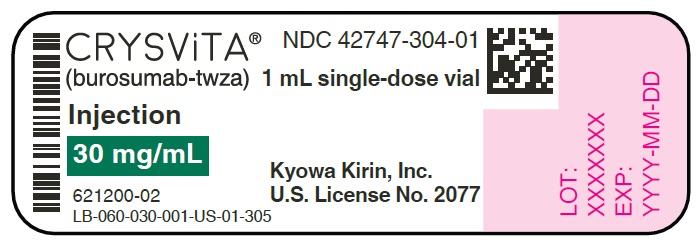
PRINCIPAL DISPLAY PANEL - 30 mg/mL Vial NDC 42747-304-01 CRYSViTA ® (burosumab-twza) Injection 30 mg/mL 1 mL single-dose vial Kyowa Kirin, Inc. U.S. License No. 2077 PRINCIPAL DISPLAY PANEL - 30 mg/mL Vial
PRINCIPAL DISPLAY PANEL - 30 mg/mL Vial Carton NDC 42747-304-01 CRYSViTA ® (burosumab-twza) Injection 30 mg/mL For Subcutaneous Use Only Single-Dose Vial Discard Unused Portion Rx only 1 vial PRINCIPAL DISPLAY PANEL - 30 mg/mL Vial Carton
Medicaid utilization & spend
Medicare Part D spend CMS · PART D · 2026 (Q1)
Reported adverse events (FAERS)
Top reported reactions
Age at onset
Reporter sex
Serious outcomes
Where does this data come from?
About this NDC listing & data coverage
What data is (and isn’t) available for this NDC — tap to expand
| NDC identity (package / product / labeler codes) | ✓ Available |
| Labeler | ✓ Available |
| Product & package description | ✓ Available |
| Marketing category & status | ✓ Available |
| Active ingredient / dosage form / route | ✓ Available |
| FDA label (SPL via DailyMed) | ✓ Available |
| Package photos | ✓ Available |
| Inactive ingredients (structured) | ✓ Available |
| NADAC pharmacy acquisition price (CMS) | — Not published for this NDC CMS publishes NADAC only for NDCs reported in its retail-pharmacy survey. |
| Orange Book / therapeutic-equivalence data | ✓ Available |
| HCPCS J-code billing crosswalk | ✓ Available |
| Medicaid utilization (CMS SDUD) | ✓ Available |