
Gabapentin 600 mg Tablet, 90-count — NDC 42806-657-09 (Billing 42806-0657-09)
This is a package of 90 tablets of Gabapentin 600 mg Tablet from Epic Pharma, LLC, marketed since Feb 2024 and currently FDA-listed; retail pharmacies pay about $1.03 per tablet (NADAC). It is this product's only package size.
NDC database record
One package, one record: these facts belong to NDC 42806-657-09 alone.
- Record
- FDA NDC Directory package listing · Human prescription drug
- Code segments
- 42806 labeler · 657 product · 09 package
- Package marketed since
- Feb 26, 2024
- Sample package
- No — commercial package
- Listing certified through
- Dec 31, 2026
- Billing quantity
- 90 EA per package
- Barcode (UPC-A, from the NDC)
- 3 4280665709 6
- Medicaid fills, this package
- 676 prescriptions in the last four reported quarters
- FDA record last changed
- Jul 24, 2026
Other active recalls for Gabapentin (different manufacturers) — 5 · tap to view
Identity & classification
Regulatory identifiers FDA, NLM and CMS codes for this package
Drug-database identifiers Medi-Span GPI and First Databank GCN / HICL / AHFS classification
- GSN (GCN sequence number): 067686
- GCN: 30296
- GPI-14 (Medi-Span): 62540030000330
- HICL (First Databank): 008831
- AHFS class code: 28:08.92.00
- RxCUI (RxNorm): 1806380
Where does this data come from?
- FDA openFDA NDC Directory · synced Oct 8, 2026
- FDA label on DailyMed · label index refreshed Oct 8, 2026
- RxNorm (NLM RxNav) · catalog refreshed Oct 1, 2026
- Medi-Span GPI (licensed)
- First Databank (licensed) · refreshed Oct 8, 2026
RxNorm drug class
This medicine belongs to the Gabapentinoids class.
Where does this data come from?
- RxClass (NLM) · catalog refreshed Oct 1, 2026
Clinical
Gabapentin capsules, tablets, and oral solution are used along with other medications to help control certain types of seizures in people who have epilepsy. Gabapentin capsules, tablets, and oral solution are also used to relieve the pain of postherpetic neuralgia (PHN; the burning, stabbing pain or aches that may last for months or years after an attack of shingles). Gabapentin extended-release tablets (Horizant) are used to treat restless legs syndrome (RLS; a condition that causes discomfort in the legs and a strong urge to move the legs, especially at night and when sitting or lying down)....
Read the full MedlinePlus article ↗- It manages nerve pain after shingles (postherpetic neuralgia). Many gabapentin products are also add-on treatment for partial seizures in epilepsy. Horizant is also used for restle...
- Be careful. Gabapentin can make you sleepy and dizzy and may impair driving. Don't drive or use heavy machinery until you know how it affects you, since it can be hard to judge you...
- Don't stop it on your own. For seizures, stopping suddenly can increase seizure frequency. Reports also describe withdrawal symptoms such as anxiety, trouble sleeping, nausea and s...
- Missed-dose advice depends on the product. With Horizant, for restless legs syndrome take the next dose the following day, and for postherpetic neuralgia skip it and take the next...
Patient education
Supplement & herbal interactions
Some supplements/herbs that may interact with Gabapentin — tap one for details:
Gabapentin may be associated with lower levels of 1 nutrient — worth a chat with your pharmacist, not a cause for alarm.
Where does this data come from?
- MedlinePlus (NLM) · refreshed Oct 8, 2026
- FDA label on DailyMed · label index refreshed Oct 8, 2026
Ask a licensed pharmacist directly — free, answered by our team.
Pricing
A drug doesn't have one price. Each row is a different public payment system, and none is what you'd pay at the counter — that depends on your insurance. The ⓘ on each row explains what it measures.
| Price system | Per ea | Per package |
|---|---|---|
| Retail pharmacies payNADAC · weekly | $1.025 | $92.25 / 90 tablets |
| Medicaid paysCMS SDUD · 12 mo | $1.99 | $179.47 / 90 tablets |
| Medicare drug plans payPart D · Q2 2026 | $3.80 | $342.18 / 90 tablets |
Where does this data come from?
- CMS NADAC weekly file · file of Oct 7, 2026
- CMS ASP pricing files · refreshed Sep 20, 2026
- CMS Medicaid State Drug Utilization Data · through Q1 2026
- CMS Part D plan pricing files · refreshed Sep 24, 2026
- VA National Acquisition Center price file
Packaging — all sizes for this product
| Package NDC | Description | Marketing start | Marketing end | Status |
|---|---|---|---|---|
| 42806-0657-09 You're viewing this Main listing | 90 TABLET in 1 BOTTLE | 2024-02-26 | — | Active |
Therapeutic equivalents
| Product | Labeler | Pack | NADAC/unit | TE | Status | Price vs. this |
|---|---|---|---|---|---|---|
| Gabapentin 600 mg 71093-0111-04 | ACI | 100 tablets | $0.064 | AB1 | Discontinued | save 94% |
| Gabapentin 600 mg 76282-0405-01 | Exelan | 100 tablets | $0.064 | — | Availability likely | save 94% |
| Gabapentin 600 mg 82009-0071-05 | QUALLENT | 500 tablets | $0.064 | AB1 | Availability likely | save 94% |
| Gabapentin 600 mg 16714-0330-01 | NorthStar | 100 tablets | $0.064 | AB1 | Availability likely | save 94% |
| Gabapentin 600 mg 68462-0126-01 | Glenmark | 100 tablets | $0.064 | AB1 | Availability likely | save 94% |
| Gabapentin 600 mg 16571-0226-01 | Rising | 100 tablets | $0.064 | AB1 | Availability likely | save 94% |
| Gabapentin 600 mg 65862-0523-01 | Aurobindo | 100 tablets | $0.064 | AB1 | Availability likely | save 94% |
| Gabapentin 600 mg 31722-0166-01 | Camber | 100 tablets | $0.064 | AB1 | Availability likely | save 94% |
| Gabapentin 600 mg 68382-0204-01 | Zydus | 100 tablets | $0.064 | AB1 | Availability likely | save 94% |
| Gabapentin 600 mg 69367-0346-05 | Westminster | 500 tablets | $0.064 | AB1 | Availability likely | save 94% |
| Gabapentin 600 mg 00904-6823-61 | Major | 1 tablet | $0.064 | AB1 | Availability likely | save 94% |
| Gabapentin 600 mg 60687-0507-01 | American | 1 tablet | $0.064 | AB1 | Availability likely | save 94% |
| Gabapentin 600 mg 83301-0001-01 | Mullan | 100 tablets | $0.064 | AB1 | Availability likely | save 94% |
| Gabapentin 600 mg 50228-0177-01 | ScieGen | 100 tablets | $0.064 | AB1 | Availability likely | save 94% |
| Gabapentin 600 mg 68001-0411-00 | BluePoint | 100 tablets | $0.064 | AB1 | Availability likely | save 94% |
| Gabapentin 600 mg 68094-0589-50 | Precision | 100 tablets | $0.064 | AB1 | Availability likely | save 94% |
| Gabapentin 600 mg 67877-0428-01 | Ascend | 100 tablets | $0.064 | AB1 | Availability likely | save 94% |
| Gabapentin 600 mg 50268-0325-15 | AvPAK | 1 tablet | $0.064 | AB1 | Availability likely | save 94% |
| Gabapentin 600 mg 70010-0227-01 | Granules | 100 tablets | $0.064 | AB1 | Availability likely | save 94% |
| Gabapentin 600 mg 64380-0727-01 | Strides | 100 tablets | $0.064 | AB1 | Availability likely | save 94% |
| Gabapentin 600 mg 76282-0706-05 | Exelan | 500 tablets | $0.064 | AB1 | Availability likely | save 94% |
| Gabapentin 600 mg 68094-0069-61 | Precision | 10 tablets | $0.064 | AB1 | Availability likely | save 94% |
| gabapentin 600 mg 62756-0202-01 | Sun | 100 tablets | $0.068 | — | FDA listed | save 93% |
| Gabapentin 600 mg 51224-0021-50 | TAGI | 100 tablets | $0.098 | AB1 | Discontinued | save 90% |
| Gabapentin 600 mg 31722-0092-90 | Camber | 90 tablets | $1.025 | AB2 | Availability likely | — |
| Gabapentin 600 mgthis 42806-0657-09 | Epic | 90 tablets | $1.025 | AB2 | Availability likely | — |
| Gralise 600 mg 52427-0806-90 | Almatica | 90 tablets | $10.153 | AB2 | Availability likely | +891% |
| Neurontin 600 mg 00071-0513-24 | Parke-Davis | 100 tablets | $14.084 | AB1 | Discontinued | +1274% |
| Neurontin 600 mg 58151-0284-01 | Viatris | 100 tablets | $14.119 | AB1 | Availability likely | +1277% |
| gabapentin 600 mg 50228-0524-05 | ScieGen | 500 tablets | — | AB2 | FDA listed | — |
| gabapentin 600 mg 68382-0607-05 | Zydus | 500 tablets | — | AB2 | FDA listed | — |
| gabapentin 600 mg 70771-1862-04 | Zydus | 100 tablets | — | AB2 | FDA listed | — |
| Gabapentin 600 mg 63187-0057-00 | Proficient | 100 tablets | — | AB1 | FDA listed | — |
| Gabapentin 600 mg 63187-0785-00 | Proficient | 100 tablets | — | — | FDA listed | — |
| Gabapentin 600 mg 71205-0457-30 | Proficient | 30 tablets | — | AB1 | FDA listed | — |
| Gabapentin 600 mg 71205-0533-30 | Proficient | 30 tablets | — | AB1 | FDA listed | — |
| Gabapentin 600 mg 71205-0931-00 | Proficient | 100 tablets | — | AB1 | FDA listed | — |
| Gabapentin 600 mg 71610-0044-30 | Aphena | 30 tablets | — | AB1 | FDA listed | — |
| gabapentin 600 mg 71610-0069-45 | Aphena | 45 tablets | — | — | FDA listed | — |
| Gabapentin 600 mg 71610-0621-15 | Aphena | 15 tablets | — | AB1 | FDA listed | — |
| Gabapentin 600 mg 76420-0235-12 | Asclemed | 120 tablets | — | AB1 | FDA listed | — |
| Gabapentin 600 mg 60760-0987-90 | St. | 90 tablets | — | AB1 | FDA listed | — |
| Gabapentin 600 mg 69097-0812-02 | Cipla | 30 tablets | — | — | FDA listed | — |
| Gabapentin 600 mg 71610-0767-30 | Aphena | 30 tablets | — | AB1 | FDA listed | — |
| Gabapentin 600 mg 72162-2141-01 | Bryant | 100 tablets | — | AB1 | FDA listed | — |
| Gabapentin 600 mg 82804-0015-30 | Proficient | 30 tablets | — | AB1 | FDA listed | — |
| Gabapentin 600 mg 82804-0193-30 | Proficient | 30 tablets | — | AB1 | FDA listed | — |
| Gabapentin 600 mg 42385-0979-01 | Laurus | 100 tablets | — | AB1 | FDA listed | — |
| Gabapentin 600 mg 50090-6854-00 | A-S | 90 tablets | — | AB1 | FDA listed | — |
| Gabapentin 600 mg 55154-8189-00 | Cardinal | 1 tablet | — | AB1 | FDA listed | — |
| Gabapentin 600 mg 63629-7307-01 | Bryant | 90 tablets | — | AB1 | FDA listed | — |
| Gabapentin 600 mg 70518-2098-00 | REMEDYREPACK | 30 tablets | — | AB1 | Discontinued | — |
| Gabapentin 600 mg 71335-1200-00 | Bryant | 28 tablets | — | AB1 | FDA listed | — |
| Gabapentin 600 mg 71610-0777-30 | Aphena | 30 tablets | — | AB1 | FDA listed | — |
| Gabapentin 600 mg 76420-0836-01 | Asclemed | 100 tablets | — | AB1 | FDA listed | — |
| Gabapentin 600 mg 82619-0145-01 | Creekwood | 100 tablets | — | AB1 | FDA listed | — |
| Gabapentin 600 mg 58118-0166-08 | Clinical | 30 tablets | — | AB1 | FDA listed | — |
| Gabapentin 600 mg 63629-8492-01 | Bryant | 100 tablets | — | AB1 | FDA listed | — |
| Gabapentin 600 mg 67046-1535-03 | Coupler | 30 tablets | — | AB1 | FDA listed | — |
| Gabapentin 600 mg 71335-2281-01 | Bryant | 500 tablets | — | AB1 | FDA listed | — |
| Gabapentin 600 mg 71335-2719-01 | Bryant | 90 tablets | — | AB1 | FDA listed | — |
| Gabapentin 600 mg 50090-7715-00 | A-S | 90 tablets | — | AB1 | FDA listed | — |
| Gabapentin 600 mg 68788-8476-01 | Preferred | 100 tablets | — | AB1 | FDA listed | — |
| Gabapentin 600 mg 68788-8488-01 | Preferred | 100 tablets | — | AB1 | FDA listed | — |
| Gabapentin 600 mg 70518-2842-00 | REMEDYREPACK | 28 tablets | — | AB1 | Discontinued | — |
| Gabapentin 600 mg 72888-0131-00 | Advagen | 1000 tablets | — | AB1 | FDA listed | — |
| Gabapentin 600 mg 80425-0097-01 | Advanced | 30 tablets | — | AB1 | FDA listed | — |
| Gabapentin 600 mg 83008-0063-60 | Quality | 60 tablets | — | AB1 | Discontinued | — |
| Gabapentin 600 mg 50090-6855-00 | A-S | 90 tablets | — | AB1 | FDA listed | — |
| Gabapentin 600 mg 55289-0959-30 | PD-Rx | 30 tablets | — | AB1 | FDA listed | — |
| Gabapentin 600 mg 65841-0705-01 | Zydus | 100 tablets | — | AB1 | FDA listed | — |
| Gabapentin 600 mg 68071-3445-03 | NuCare | 30 tablets | — | AB1 | FDA listed | — |
| Gabapentin 600 mg 70518-2616-03 | REMEDYREPACK | 30 tablets | — | AB1 | Discontinued | — |
| Gabapentin 600 mg 71335-3060-00 | Bryant | 28 tablets | — | AB1 | FDA listed | — |
| Gabapentin 600 mg 72162-1530-01 | Bryant | 100 tablets | — | AB1 | FDA listed | — |
| Gabapentin 600 mg 72189-0471-30 | Direct_Rx | 30 tablets | — | AB1 | FDA listed | — |
| Gabapentin 600 mg 72865-0255-05 | XLCare | 500 tablets | — | AB1 | FDA listed | — |
| Gabapentin 600 mg 70518-4532-00 | REMEDYREPACK | 1 tablet | — | AB1 | FDA listed | — |
| Gabapentin 600 mg 72789-0127-30 | PD-Rx | 30 tablets | — | AB1 | FDA listed | — |
| Gabapentin 600 mg 77771-0177-05 | Radha | 500 tablets | — | AB1 | FDA listed | — |
| Gabapentin 600 mg 80425-0201-01 | Advanced | 30 tablets | — | AB1 | FDA listed | — |
| Gabapentin 600 mg 55154-3357-00 | Cardinal | 1 tablet | — | AB1 | FDA listed | — |
| Gabapentin 600 mg 68071-3783-09 | NuCare | 90 tablets | — | AB1 | FDA listed | — |
| Gabapentin 600 mg 71335-3143-01 | Bryant | 90 tablets | — | AB1 | FDA listed | — |
| Gabapentin 600 mg 82804-0210-90 | Proficient | 90 tablets | — | AB1 | FDA listed | — |
| Gabapentin 600 mg 60760-0066-60 | St. | 60 tablets | — | AB1 | Discontinued | — |
| Gabapentin 600 mg 71335-1132-00 | Bryant | 28 tablets | — | AB1 | Discontinued | — |
| Gabapentin 600 mg 71335-1287-00 | Bryant | 28 tablets | — | AB1 | FDA listed | — |
| Gabapentin 600 mg 72189-0313-60 | Directrx | 60 tablets | — | AB1 | FDA listed | — |
| Gabapentin 600 mg 50090-7268-00 | A-S | 90 tablets | — | AB1 | FDA listed | — |
| Gabapentin 600 mg 63629-3063-00 | Bryant | 45 tablets | — | AB1 | FDA listed | — |
| Gabapentin 600 mg 63629-8491-01 | Bryant | 500 tablets | — | AB1 | FDA listed | — |
| Gabapentin 600 mg 70518-2356-00 | REMEDYREPACK | 30 tablets | — | AB1 | FDA listed | — |
| Gabapentin 600 mg 71335-2048-01 | Bryant | 90 tablets | — | AB1 | FDA listed | — |
| Gabapentin 600 mg 71335-2701-00 | Bryant | 28 tablets | — | AB1 | FDA listed | — |
| Gabapentin 600 mg 50090-7269-00 | A-S | 90 tablets | — | AB1 | FDA listed | — |
| Gabapentin 600 mg 50090-7714-00 | A-S | 90 tablets | — | AB1 | FDA listed | — |
| Gabapentin 600 mg 60760-0743-90 | St. | 90 tablets | — | AB1 | FDA listed | — |
| Gabapentin 600 mg 71335-1026-01 | Bryant | 90 tablets | — | AB1 | Discontinued | — |
| Gabapentin 600 mg 87441-0036-01 | Unit | 30 tablets | — | AB1 | FDA listed | — |
| Gabapentin 600 mg 85534-0009-00 | HAWAII | 30 tablets | — | AB1 | FDA listed | — |
| Gabapentin 600 mg 67046-1086-03 | Coupler | 30 tablets | — | AB1 | FDA listed | — |
| Gabapentin 600 mg 67046-1233-03 | Coupler | 30 tablets | — | AB1 | FDA listed | — |
| Gabapentin 600 mg 85509-1166-03 | PHOENIX | 30 tablets | — | AB1 | FDA listed | — |
| Gabapentin 600 mg 58118-2126-08 | Clinical | 30 tablets | — | AB1 | FDA listed | — |
Where does this data come from?
- FDA openFDA NDC Directory · synced Oct 8, 2026
- FDA Orange Book · refreshed Oct 3, 2026
- CMS NADAC weekly file · file of Oct 7, 2026
Availability & generic status
This product is an FDA-approved generic. Other versions of the same drug are listed under Therapeutic equivalents, least expensive first.
Where does this data come from?
- FDA Orange Book · refreshed Oct 3, 2026
What it looks like
Where does this data come from?
- FDA label on DailyMed · label index refreshed Oct 8, 2026
Inactive Ingredients / Excipients
Inactive ingredients, also called excipients, are components of the drug product other than the active ingredient. They may include fillers, dyes, coatings, preservatives, flavors, or other formulation ingredients.
🧪 Avoiding an ingredient? See Gabapentin inactive ingredients by manufacturer: every current product's list side by side, so you can ask your pharmacy for the version that does not list it.
💡 Tap an ingredient (hover on desktop) to see what it is and why it’s used.
-
UNII D9C330MD8B
Copovidone is a synthetic polymer made by combining two types of plastic-like molecules. It acts as a binder and film-former to help hold tablet ingredients together and improve how the medicine dissolves in your body.
-
UNII 35SW5USQ3G
A synthetic yellow dye used to color medicines. It helps make tablets, capsules, and liquids visually distinct so patients can easily identify their medication.
-
UNII WZB9127XOA
A synthetic red dye used to color medications and make them easier to identify. It serves as a colorant in tablets, capsules, and liquid formulations.
-
UNII 3NXW29V3WO
Hypromellose is a plant-based thickener made from cellulose. It's used in medicines as a binder to hold ingredients together, a coating for tablets, and a thickener for liquids.
-
UNII 70097M6I30
Magnesium stearate is a salt made from magnesium and stearic acid, a fatty substance. It's used in tablets and capsules as a lubricant and glidant to help ingredients flow smoothly during manufacturing and prevent sticking.
-
UNII 3WJQ0SDW1A
Polyethylene glycol is a synthetic liquid or solid polymer used in medicines as a solvent, lubricant, and humectant. It helps dissolve active ingredients, reduces friction during manufacturing, and retains moisture in the final product.
-
UNII 532B59J990
Polyvinyl alcohol is a synthetic polymer made from plant-derived materials. It's used as a binder to hold ingredients together, a film-former in coatings, and a thickener in liquid formulations.
-
UNII 7SEV7J4R1U
A powder made from a naturally occurring mineral. In medicines, talc works as a glidant and anti-caking agent, helping tablets and capsules flow smoothly during manufacturing and preventing clumping.
-
UNII 15FIX9V2JP
Titanium dioxide is a bright white mineral powder commonly used as a colorant and opacifying agent. It makes pills and tablets white or lighter in color and helps make coatings non-transparent.
9 inactive ingredients listed in the exact product block matched to this NDC.
Where does this data come from?
ingredient classCode="IACT" elements from the exact product block matched by this NDC. Label-section narrative from DailyMed / the openFDA label index is shown separately when available.- FDA label on DailyMed · label index refreshed Oct 8, 2026
- FDA openFDA NDC Directory · synced Oct 8, 2026
Inactive ingredient FAQ
Are inactive ingredients the same for every manufacturer?
Why might an inactive ingredient be missing?
Can inactive ingredients matter?
Manufacturer & labeler
More NDCs from Epic Pharma, LLC labeler code 42806
- Tapentadol Hydrochloride 100 mg Tablet, Film Coated NDC 42806-628-01
- Metformin Hydrochloride 500 mg Tablet, Extended Release NDC 42806-632-01
- Metformin Hydrochloride 750 mg Tablet, Extended Release NDC 42806-633-01
- Diphenhydramine Hydrochloride 25 mg Capsule NDC 42806-648-10
- Diphenhydramine Hydrochloride 50 mg Capsule NDC 42806-649-10
- Gabapentin 300 mg Tablet NDC 42806-656-09
- Entecavir .5 mg Tablet NDC 42806-658-30
- Entecavir 1 mg Tablet NDC 42806-659-30
- Buspirone hydrochloride 5 mg Tablet NDC 42806-662-01
- Buspirone hydrochloride 10 mg Tablet NDC 42806-663-01
- Buspirone hydrochloride 15 mg Tablet NDC 42806-664-01
- Buspirone hydrochloride 30 mg Tablet NDC 42806-665-60
Where does this data come from?
- FDA openFDA NDC Directory · synced Oct 8, 2026
- Drugs@FDA
Full prescribing information FDA SPL
🎯 Indications and Usage ▾
1 INDICATIONS AND USAGE Gabapentin tablets are indicated for the management of postherpetic neuralgia. Once-daily gabapentin tablets are not substitutable with other gabapentin products because of differing pharmacokinetic profiles that affect the frequency of administration. Gabapentin tablets are indicated for the management of Postherpetic Neuralgia (PHN).
Important Limitation: Once-daily gabapentin tablets are not substitutable with other gabapentin products because of differing pharmacokinetic profiles that affect the frequency of administration (See Warnings and Precautions )
⏱️ Dosage and Administration ▾
2 DOSAGE AND ADMINISTRATION • Gabapentin tablets should be titrated to an 1,800 mg dose taken orally, once-daily, with the evening meal. Gabapentin tablets should be swallowed whole. Do not crush, split, or chew the tablets.
( 2.1 ) • If gabapentin tablets dose is reduced, discontinued, or substituted with an alternative medication, this should be done gradually over a minimum of 1 week or longer (at the discretion of the prescriber). ( 2.1 ) • Renal impairment: Dose should be adjusted in patients with reduced renal function. Gabapentin tablets should not be used in patients with CrCl less than 30 or in patients on hemodialysis.
( 2.2 )
2.1Postherpetic Neuralgia Do not use once-daily gabapentin tablets as a substitute for other gabapentin products. Titrate gabapentin tablets to an 1,800 mg dose taken orally once daily with the evening meal. Gabapentin tablets should be swallowed whole.
Do not split, crush, or chew the tablets. If gabapentin tablets dosing is reduced, discontinued, or substituted with an alternative medication, this should be done gradually over a minimum of one week or longer (at the discretion of the prescriber). In adults with postherpetic neuralgia, gabapentin tablets therapy should be initiated and titrated as follows: Table 1: Gabapentin Tablets Recommended Titration Schedule Day 1 Day 2 Days 3 to 6 Days 7 to 10 Days 11 to 14 Day 15 Daily Dose 300 mg 600 mg 900 mg 1,200 mg 1,500 mg 1,800 mg
2.2Patients with Renal Impairment In patients with stable renal function, creatinine clearance (C Cr ) can be reasonably well estimated using the equation of Cockcroft and Gault: For females C Cr =(0.85)(140-age)(weight)/[(72)(S Cr )] For males C Cr =(140-age)(weight)/[(72)(S Cr )] where age is in years, weight is in kilograms and S Cr is serum creatinine in mg/dL. The dose of gabapentin tablets should be adjusted in patients with reduced renal function, according to Table 2. Patients with reduced renal function must initiate gabapentin tablets at a daily dose of 300 mg.
Gabapentin tablets should be titrated following the schedule outlined in Table 1. Daily dosing in patients with reduced renal function must be individualized based on tolerability and desired clinical benefit. Table 2: Gabapentin Tablets Dosage Based on Renal Function Once-daily dosing Creatinine Clearance (mL/min) Gabapentin Tablets Dose (once daily with evening meal) ≥ 60 1,800 mg 30 to 60 600 mg to 1,800 mg < 30 Gabapentin tablets should not be administered patients receiving hemodialysis Gabapentin tablets should not be administered
💊 Dosage Forms and Strengths ▾
3 DOSAGE FORMS AND STRENGTHS Tablets: 300 mg: white, oval-shaped, film-coated tablets debossed with “300” above “ ” on one side and plain on the other side. 600 mg: orange, oval-shaped, film-coated tablets debossed with “600” above “ ” on one side and plain on the other side. 300 and 600 mg tablets ( 3 )
⛔ Contraindications ▾
4 CONTRAINDICATIONS Gabapentin tablets are contraindicated in patients with demonstrated hypersensitivity to the drug or their ingredients. Gabapentin tablets are contraindicated in patients who have demonstrated hypersensitivity to the drug or its ingredients. ( 4 )
⚠️ Warnings and Cautions ▾
5 WARNINGS AND PRECAUTIONS Once-daily gabapentin tablets are not substitutable with other gabapentin products because of differing pharmacokinetic profiles that affect the frequency of administration. The safety and effectiveness of gabapentin tablets in patients with epilepsy has not been studied. • Once-daily gabapentin tablets are not substitutable with other gabapentin products. • Antiepileptic drugs, including gabapentin, the active ingredient in gabapentin tablets, increase the risk of suicidal thoughts or behavior.
( 5.1 ) • Abrupt or rapid discontinuation may increase the risk for seizures. Withdrawal symptoms or suicidal behavior and ideation have been observed after discontinuation. Taper gabapentin tablets gradually over a minimum of 1 week.
( 5.2 ) • Respiratory depression may occur with gabapentin tablets when used with concomitant CNS depressants or in the setting of underlying respiratory impairment. Monitor patients and adjust dosage as appropriate. ( 5.3 )
5.1Suicidal Behavior and Ideation Antiepileptic drugs (AEDs), including gabapentin, the active ingredient in gabapentin tablets, increase the risk of suicidal thoughts or behavior in patients taking these drugs for any indication. Suicidal behavior and ideation have also been reported in patients after discontinuation of gabapentin [see Warnings and Precautions (5.3) ]. Patients treated with any AED for any indication should be monitored for the emergence or worsening of depression, suicidal thoughts or behavior, and/or any unusual changes in mood or behavior.
Pooled analyses of 199 placebo-controlled clinical trials (mono- and adjunctive therapy) of 11 different AEDs showed that patients randomized to one of the AEDs had approximately twice the risk (adjusted Relative Risk 1.8, 95% CI:1.2, 2.7) of suicidal thinking or behavior compared to patients randomized to placebo. In these trials, which had a median treatment duration of 12 weeks, the estimated incidence rate of suicidal behavior or ideation among 27,863 AED-treated patients was 0.43%, compared to 0.24% among 16,029 placebo-treated patients, representing an increase of approximately one case of suicidal thinking or behavior for every 530 patients treated.
There were four suicides in drug-treated patients in the trials and none in placebo-treated patients, but the number is too small to allow any conclusion about drug effect on suicide. The increased risk of suicidal thoughts or behavior with AEDs was observed as early as one week after starting drug treatment with AEDs and persisted for the duration of treatment assessed. Because most trials included in the analysis did not extend beyond 24 weeks, the risk of suicidal thoughts or behavior beyond 24 weeks could not be assessed.
The risk of suicidal thoughts or behavior was generally consistent among drugs in the data analyzed. The finding of increased risk with AEDs of varying mechanisms of action and across a range of indications suggests that the risk applies to all AEDs used for any indication. The risk did not vary substantially by age (5-100 years) in the clinical trials analyzed.
Table 3 shows absolute and relative risk by indication for all evaluated AEDs. Table 3: Risk by Indication for Antiepileptic Drugs (including gabapentin, the active ingredient in gabapentin tablets) in the Pooled Analysis Indication Placebo Patients with Events Per 1,000 Patients Drug Patients with Events Per 1,000 Patients Relative Risk: Incidence of Events in Drug Patients/Incidence in Placebo Patients Risk Difference: Additional Drug Patients with Events Per 1,000 Patients Epilepsy 1.0 3.4 3.5
2.4Psychiatric 5.7 8.5 1.5
2.9Other 1.0 1.8 1.9
0.9Total 2.4 4.3 1.8
1.9The relative risk for suicidal thoughts or behavior was higher in clinical trials for epilepsy than in clinical trials for psychiatric or other conditions, but the absolute risk differences were similar for the epilepsy and psychiatric indications. Anyone considering prescribing gabapentin tablets must… [Excerpted — this section continues on DailyMed.]
🤒 Adverse Reactions ▾
6 ADVERSE REACTIONS The following adverse reactions are described elsewhere in the labeling: • Suicidal Behavior and Ideation [see Warnings and Precautions (5.1)] • Increased Risk of Adverse Reactions with Abrupt or Rapid Discontinuation [see Warnings and Precautions (5.2)] • Respiratory Depression [see Warnings and Precautions (5.3)] • Tumorigenic Potential [see Warnings and Precautions (5.4)] • Drug Reaction with Eosinophilia and Systemic Symptoms (DRESS) / Multiorgan Hypersensitivity [see Warnings and Precautions (5.5)] • Laboratory Tests [see Warnings and Precautions (5.6)] The most common adverse reaction (greater than or equal to 5% and twice placebo) is dizziness.
( 6.1 ) To report SUSPECTED ADVERSE REACTIONS, contact Epic Pharma, LLC at 1-888-374-2791 or FDA at 1-800-FDA-1088 or www.fda.gov/medwatch.
6.1Clinical Trials Experience Because clinical trials are conducted under widely varying conditions, adverse reaction rates observed in the clinical trials of a drug cannot be directly compared to rates in the clinical trials of another drug and may not reflect the rates observed in practice. A total of 359 patients with neuropathic pain associated with postherpetic neuralgia have received gabapentin tablets at doses up to 1,800 mg daily during placebo-controlled clinical studies. In clinical trials in patients with postherpetic neuralgia, 9.7% of the 359 patients treated with gabapentin tablets and 6.9% of 364 patients treated with placebo discontinued prematurely due to adverse reactions.
In the gabapentin tablets treatment group, the most common reason for discontinuation due to adverse reactions was dizziness. Of gabapentin tablets-treated patients who experienced adverse reactions in clinical studies, the majority of those adverse reactions were either "mild" or "moderate”. Table 4 lists all adverse reactions, regardless of causality, occurring in at least 1% of patients with neuropathic pain associated with postherpetic neuralgia in the gabapentin tablets group for which the incidence was greater than in the placebo group.
Table 4: Treatment-Emergent Adverse Reaction Incidence in Controlled Trials in Neuropathic Pain Associated with Postherpetic Neuralgia (Events in at Least 1% of all Gabapentin Tablets-Treated Patients and More Frequent Than in the Placebo Group) Body System – Preferred Term Gabapentin Tablets N = 359 % Placebo N = 364 % Ear and Labyrinth Disorders Vertigo 1.4
0.5Gastrointestinal Disorders Diarrhea Dry mouth Constipation Dyspepsia 3.3 2.8 1.4 1.4 2.7 1.4 0.3
0.8General Disorders Peripheral edema Pain 3.9 1.1 0.3
0.5Infections and Infestations Nasopharyngitis Urinary tract infection 2.5 1.7 2.2
0.5Investigations Weight increased 1.9
0.5Musculoskeletal and Connective Tissue Disorders Pain in extremity Back pain 1.9 1.7 0.5
1.1Nervous System Disorders Dizziness Somnolence Headache Lethargy 10.9 4.5 4.2 1.1 2.2 2.7 4.1
0.3In addition to the adverse reactions reported in Table 4 above, the following adverse reactions with an uncertain relationship to gabapentin tablets were reported during the clinical development for the treatment of postherpetic neuralgia. Events in more than 1% of patients but equally or more frequently in the gabapentin tablets-treated patients than in the placebo group included blood pressure increase, confusional state, gastroenteritis viral, herpes zoster, hypertension, joint swelling, memory impairment, nausea, pneumonia, pyrexia, rash, seasonal allergy, and upper respiratory infection.
6.2Postmarketing and Other Experience with other Formulations of Gabapentin In addition to the adverse experiences reported during clinical testing of gabapentin, the following adverse experiences have been reported in patients receiving other formulations of marketed gabapentin. These adverse experiences have not been listed above and data are insufficient to support an estimate of their incidence or to establish causation. The listing is alphabetized: angioedema, blood glucose fluctuati… [Excerpted — this section continues on DailyMed.]
🔄 Drug Interactions ▾
7 DRUG INTERACTIONS In vitro studies were conducted to investigate the potential of gabapentin to inhibit the major cytochrome P450 enzymes (CYP1A2, CYP2A6, CYP2C9, CYP2C19, CYP2D6, CYP2E1, and CYP3A4) that mediate drug and xenobiotic metabolism using isoform selective marker substrates and human liver microsomal preparations. Only at the highest concentration tested (171 mcg/mL; 1mM) was a slight degree of inhibition (14% to 30%) of isoform CYP2A6 observed. No inhibition of any of the other isoforms tested was observed at gabapentin concentrations up to 171 mcg/mL (approximately 15 times the C max at 3,600 mg/day).
Gabapentin is not appreciably metabolized nor does it interfere with the metabolism of commonly coadministered antiepileptic drugs. The drug interaction data described in this section were obtained from studies involving healthy adults and adult patients with epilepsy. • An increase in gabapentin AUC values have been reported when administered with hydrocodone. ( 7.6 ) • An increase in gabapentin AUC values have been reported when administered with morphine.
( 7.7 ) • An antacid containing aluminum hydroxide and magnesium hydroxide reduced the bioavailability of gabapentin immediate release by about approximately 20%, but by only 5% when gabapentin was taken 2 hours after antacids. It is recommended that gabapentin tablets be taken at least 2 hours following antacid administration. ( 7.10 )
7.1Phenytoin In a single (400 mg) and multiple dose (400 mg three times daily) study of gabapentin immediate release in epileptic patients (N=8) maintained on phenytoin monotherapy for at least 2 months, gabapentin had no effect on the steady-state trough plasma concentrations of phenytoin and phenytoin had no effect on gabapentin pharmacokinetics.
7.2Carbamazepine Steady-state trough plasma carbamazepine and carbamazepine 10, 11 epoxide concentrations were not affected by concomitant gabapentin immediate release (400 mg three times daily; N=12) administration. Likewise, gabapentin pharmacokinetics were unaltered by carbamazepine administration.
7.3Valproic Acid The mean steady-state trough serum valproic acid concentrations prior to and during concomitant gabapentin immediate release administration (400 mg three times daily; N=17) were not different and neither were gabapentin pharmacokinetic parameters affected by valproic acid.
7.4Phenobarbital Estimates of steady-state pharmacokinetic parameters for phenobarbital or gabapentin immediate release (300 mg three times daily; N=12) are identical whether the drugs are administered alone or together.
7.5Naproxen Coadministration of single doses of naproxen (250 mg) and gabapentin immediate release (125 mg) to 18 volunteers increased gabapentin absorption by 12% to 15%. Gabapentin immediate release had no effect on naproxen pharmacokinetics. The doses are lower than the therapeutic doses for both drugs. The effect of coadministration of these drugs at therapeutic doses is not known.
7.6Hydrocodone Coadministration of gabapentin immediate release (125 mg and 500 mg) and hydrocodone (10 mg) reduced hydrocodone Cmax by 3% and 21%, respectively, and AUC by 4% and 22%, respectively. The mechanism of this interaction is unknown. Gabapentin AUC values were increased by 14%; the magnitude of the interaction at other doses is not known.
7.7Morphine When a single dose (60 mg) of controlled-release morphine capsule was administered 2 hours prior to a single dose (600 mg) of gabapentin immediate release in 12 volunteers, mean gabapentin AUC values increased by 44% compared to gabapentin immediate release administered without morphine. The pharmacokinetics of morphine were not affected by administration of gabapentin immediate release 2 hours after morphine. The magnitude of this interaction at other doses is not known.
7.8Cimetidine Cimetidine 300 mg decreased the apparent oral clearance of gabapentin by 14% and creatinine clearance by 10%. The effect of gabapentin immediate release on… [Excerpted — this section continues on DailyMed.]
👥 Use in Specific Populations ▾
8 USE IN SPECIFIC POPULATIONS • Elderly: Reductions in gabapentin tablets dose should be made in patients with age-related compromised renal function. ( 8.5 ) • Renal impairment: Dosage adjustment is necessary for patients with impaired renal function. ( 8.7 )
8.1Pregnancy Risk Summary Available data from published prospective and retrospective cohort studies, and case reports over decades of use with gabapentin during pregnancy have not identified a drug-associated risk of major birth defects. The available data are insufficient to evaluate a drug-associated risk of miscarriage and other maternal or fetal outcomes. In nonclinical studies in mice, rats, and rabbits, gabapentin was developmentally toxic (increased fetal skeletal and visceral abnormalities, and increased embryofetal mortality) when administered to pregnant animals at doses similar to those used clinically (see Data ).
Postmarketing data suggest that extended gabapentin use with opioids close to delivery may increase the risk of neonatal withdrawal versus opioids alone [see Clinical Considerations] . Although there is at least one report of neonatal withdrawal syndrome in an infant exposed to gabapentin alone during pregnancy, there are no comparative epidemiologic studies evaluating this association. Therefore, it is not known whether exposure to gabapentin alone late in pregnancy may cause withdrawal signs and symptoms.
The estimated background risk of major birth defects and miscarriage for the indicated populations is unknown. All pregnancies have a background risk of birth defect, loss, or other adverse outcomes. In the U.S. general population, the estimated background risk of major birth defects and miscarriage in clinically recognized pregnancies is 2% to 4% and 15% to 20%, respectively.
Clinical Considerations Fetal/Neonatal Adverse Reactions Neonatal withdrawal syndrome has been reported in newborns exposed to gabapentin in utero for an extended period of time when also exposed to opioids close to delivery. Neonatal withdrawal signs and symptoms reported have included tachypnea, vomiting, diarrhea, hypertonia, irritability, sneezing, poor feeding, hyperactivity, abnormal sleep pattern, and tremor. Reported signs and symptoms that may also be related to withdrawal include tongue thrusting, wandering eye movements while awake, back arching, and continuous extremity movements.
Observe neonates exposed to gabapentin tablets and opioids for signs and symptoms of neonatal withdrawal and manage accordingly. Data Animal Data When pregnant mice received oral doses of gabapentin (1,000 or 3,000 mg/kg/day, approximately 3 to 8 times the maximum recommended dose of 1,800 mg on a mg/m 2 basis) during the period of organogenesis, embryofetal toxicity (increased incidences of skeletal variations) was observed. The no effect level was 500 mg/kg/day, representing approximately the maximum recommended human dose [MRHD] on a mg/m 2 basis.
When rats were dosed prior to and during mating, and throughout gestation, pups from all dose groups (500, 1,000 and 2,000 mg/kg/day) were affected. These doses are equivalent to approximately 3 to 11 times the MRHD on a mg/m 2 basis. There was an increased incidence of hydroureter and/or hydronephrosis in rats in a study of fertility and general reproductive performance at 2,000 mg/kg/day with no effect at 1,000 mg/kg/day, in a teratology study at 1,500 mg/kg/day with no effect at 300 mg/kg/day, and in a perinatal and postnatal study at all doses studied (500, 1,000 and 2,000 mg/kg/day).
The doses at which the effects occurred are approximately 3 to 11 times the maximum recommended dose of 1,800 mg on a mg/m 2 basis; the no-effect doses were approximately 5 times (Fertility and General Reproductive Performance study) and approximately equal to (Teratogenicity study) the MRHD on a mg/m 2 basis. Other than hydroureter and hydronephrosis, the etiologies of which are unclear, the incidence of malformations was not increased compared to cont… [Excerpted — this section continues on DailyMed.]
🤰 Pregnancy ▾
8.1Pregnancy Risk Summary Available data from published prospective and retrospective cohort studies, and case reports over decades of use with gabapentin during pregnancy have not identified a drug-associated risk of major birth defects. The available data are insufficient to evaluate a drug-associated risk of miscarriage and other maternal or fetal outcomes. In nonclinical studies in mice, rats, and rabbits, gabapentin was developmentally toxic (increased fetal skeletal and visceral abnormalities, and increased embryofetal mortality) when administered to pregnant animals at doses similar to those used clinically (see Data ).
Postmarketing data suggest that extended gabapentin use with opioids close to delivery may increase the risk of neonatal withdrawal versus opioids alone [see Clinical Considerations] . Although there is at least one report of neonatal withdrawal syndrome in an infant exposed to gabapentin alone during pregnancy, there are no comparative epidemiologic studies evaluating this association. Therefore, it is not known whether exposure to gabapentin alone late in pregnancy may cause withdrawal signs and symptoms.
The estimated background risk of major birth defects and miscarriage for the indicated populations is unknown. All pregnancies have a background risk of birth defect, loss, or other adverse outcomes. In the U.S. general population, the estimated background risk of major birth defects and miscarriage in clinically recognized pregnancies is 2% to 4% and 15% to 20%, respectively.
Clinical Considerations Fetal/Neonatal Adverse Reactions Neonatal withdrawal syndrome has been reported in newborns exposed to gabapentin in utero for an extended period of time when also exposed to opioids close to delivery. Neonatal withdrawal signs and symptoms reported have included tachypnea, vomiting, diarrhea, hypertonia, irritability, sneezing, poor feeding, hyperactivity, abnormal sleep pattern, and tremor. Reported signs and symptoms that may also be related to withdrawal include tongue thrusting, wandering eye movements while awake, back arching, and continuous extremity movements.
Observe neonates exposed to gabapentin tablets and opioids for signs and symptoms of neonatal withdrawal and manage accordingly. Data Animal Data When pregnant mice received oral doses of gabapentin (1,000 or 3,000 mg/kg/day, approximately 3 to 8 times the maximum recommended dose of 1,800 mg on a mg/m 2 basis) during the period of organogenesis, embryofetal toxicity (increased incidences of skeletal variations) was observed. The no effect level was 500 mg/kg/day, representing approximately the maximum recommended human dose [MRHD] on a mg/m 2 basis.
When rats were dosed prior to and during mating, and throughout gestation, pups from all dose groups (500, 1,000 and 2,000 mg/kg/day) were affected. These doses are equivalent to approximately 3 to 11 times the MRHD on a mg/m 2 basis. There was an increased incidence of hydroureter and/or hydronephrosis in rats in a study of fertility and general reproductive performance at 2,000 mg/kg/day with no effect at 1,000 mg/kg/day, in a teratology study at 1,500 mg/kg/day with no effect at 300 mg/kg/day, and in a perinatal and postnatal study at all doses studied (500, 1,000 and 2,000 mg/kg/day).
The doses at which the effects occurred are approximately 3 to 11 times the maximum recommended dose of 1,800 mg on a mg/m 2 basis; the no-effect doses were approximately 5 times (Fertility and General Reproductive Performance study) and approximately equal to (Teratogenicity study) the MRHD on a mg/m 2 basis. Other than hydroureter and hydronephrosis, the etiologies of which are unclear, the incidence of malformations was not increased compared to controls in offspring of mice, rats, or rabbits given doses up to 8 times (mice), 10 times (rats), or 16 times (rabbits) the human daily dose on a mg/m 2 basis.
When pregnant rabbits were treated with gabapentin during the period of organogenesis, an increase in em… [Excerpted — this section continues on DailyMed.]
🧒 Pediatric Use ▾
8.4Pediatric Use The safety and effectiveness of gabapentin tablets in the management of postherpetic neuralgia in patients less than 18 years of age has not been studied.
🧓 Geriatric Use ▾
8.5Geriatric Use The total number of patients treated with gabapentin tablets in controlled clinical trials in patients with postherpetic neuralgia was 359, of which 63% were 65 years of age or older. The types and incidence of adverse events were similar across age groups except for peripheral edema, which tended to increase in incidence with age. Gabapentin tablets are known to be substantially excreted by the kidney.
Reductions in gabapentin tablets dose should be made in patients with age-related compromised renal function [see Dosage and Administration (2.2) ].
🆘 Overdosage ▾
10 OVERDOSAGE Signs of acute toxicity in animals included ataxia, labored breathing, ptosis, sedation, hypoactivity, or excitation. Acute oral overdoses of gabapentin have been reported. Symptoms include double-vision, tremor, slurred speech, drowsiness, altered mental status, dizziness, lethargy, and diarrhea.
Fatal respiratory depression has been reported with gabapentin overdose, alone and in combination with other central nervous system (CNS) depressants. Gabapentin can be removed by hemodialysis. Hemodialysis has been performed in overdose cases reported, and it may be indicated by the patient’s clinical state or in patients with significant renal impairment.
🧬 Clinical Pharmacology ▾
12 CLINICAL PHARMACOLOGY
12.1Mechanism of Action The mechanism of action by which gabapentin exerts its analgesic action is unknown but in animal models of analgesia, gabapentin prevents allodynia (pain-related behavior in response to a normally innocuous stimulus) and hyperalgesia (exaggerated response to painful stimuli). Gabapentin prevents pain-related responses in several models of neuropathic pain in rats and mice (e.g., spinal nerve ligation models, spinal cord injury model, acute herpes zoster infection model). Gabapentin also decreases pain-related responses after peripheral inflammation (carrageenan footpad test, late phase of formalin test), but does not alter immediate pain-related behaviors (rat tail flick test, formalin footpad acute phase).
The relevance of these models to human pain is not known. Gabapentin is structurally related to the neurotransmitter GABA (gamma-aminobutyric acid), but it does not modify GABAA or GABAB radioligand binding, it is not converted metabolically into GABA or a GABA agonist, and it is not an inhibitor of GABA uptake or degradation. In radioligand binding assays at concentrations up to 100 μM, gabapentin did not exhibit affinity for a number of other receptor sites, including benzodiazepine, glutamate, N-methyl-D-aspartate (NMDA), quisqualate, kainate, strychnine-insensitive or strychnine-sensitive glycine; alpha 1, alpha 2, or beta adrenergic; adenosine A1 or A2; cholinergic, muscarinic, or nicotinic; dopamine D1 or D2; histamine H1; serotonin S1 or S2; opiate mu, delta, or kappa; cannabinoid 1; voltage-sensitive calcium channel sites labeled with nitrendipine or diltiazem; or at voltage-sensitive sodium channel sites labeled with batrachotoxinin A20-alpha-benzoate.
Gabapentin did not alter the cellular uptake of dopamine, noradrenaline, or serotonin. In vitro studies with radiolabeled gabapentin have revealed a gabapentin binding site in areas of rat brain including neocortex and hippocampus. A high-affinity binding protein in animal brain tissue has been identified as an auxiliary subunit of voltage-activated calcium channels.
However, functional correlates of gabapentin binding, if any, remain to be elucidated. It is hypothesized that gabapentin antagonizes thrombospondin binding to α2δ-1 as a receptor involved in excitatory synapse formation and suggested that gabapentin may function therapeutically by blocking new synapse formation.
12.2Pharmacodynamics No pharmacodynamic studies have been conducted with gabapentin tablets.
12.3Pharmacokinetics Absorption Gabapentin is absorbed from the proximal small bowel by a saturable L-amino transport system. Gabapentin bioavailability is not dose proportional; as the dose is increased, bioavailability decreases. When gabapentin tablets (1,800 mg once daily) and gabapentin immediate release (600 mg three times a day) were administered with high fat meals (50% of calories from fat), gabapentin tablets have a higher C max and lower AUC at steady state compared to gabapentin immediate release (Table 5).
Time to reach maximum plasma concentration (T max ) for gabapentin tablets is 8 hours, which is about 4 to 6 hours longer compared to gabapentin immediate release. Table 5: Mean ± SD Steady-State Pharmacokinetics for Gabapentin Tablets and Gabapentin Immediate Release in Healthy Subjects under high-fat high calorie fed state (Day 5, n = 21) Pharmacokinetic Parameter (Mean ± SD) Gabapentin Tablets 1,800 mg QD (3 X 600 mg) Gabapentin Immediate Release 600 mg TID AUC 0-24 (mcg ● hr/mL) 132.8 ± 34.7 141.3 ±
29.8C max (mcg/mL) 9.59 ± 2.33 8.54 ±
1.72C min (mcg/mL) 1.84 ± 0.65 2.6 ±
0.78T max (hr) 1 8 (3-12) 2 (1-5) * 1 T max is presented as median (range); *relative to most recent dose The single dose pharmacokinetic parameters of 900 mg strength under high fat-high calorie fed state and low fat-low calorie fed state are presented shown in Table 6. Table 6: Mean ± SD Single-Dose Pharmacokinetic parameters for Gabapentin tablets 900 mg stren… [Excerpted — this section continues on DailyMed.]
🧬 Mechanism of Action ▾
12.1Mechanism of Action The mechanism of action by which gabapentin exerts its analgesic action is unknown but in animal models of analgesia, gabapentin prevents allodynia (pain-related behavior in response to a normally innocuous stimulus) and hyperalgesia (exaggerated response to painful stimuli). Gabapentin prevents pain-related responses in several models of neuropathic pain in rats and mice (e.g., spinal nerve ligation models, spinal cord injury model, acute herpes zoster infection model). Gabapentin also decreases pain-related responses after peripheral inflammation (carrageenan footpad test, late phase of formalin test), but does not alter immediate pain-related behaviors (rat tail flick test, formalin footpad acute phase).
The relevance of these models to human pain is not known. Gabapentin is structurally related to the neurotransmitter GABA (gamma-aminobutyric acid), but it does not modify GABAA or GABAB radioligand binding, it is not converted metabolically into GABA or a GABA agonist, and it is not an inhibitor of GABA uptake or degradation. In radioligand binding assays at concentrations up to 100 μM, gabapentin did not exhibit affinity for a number of other receptor sites, including benzodiazepine, glutamate, N-methyl-D-aspartate (NMDA), quisqualate, kainate, strychnine-insensitive or strychnine-sensitive glycine; alpha 1, alpha 2, or beta adrenergic; adenosine A1 or A2; cholinergic, muscarinic, or nicotinic; dopamine D1 or D2; histamine H1; serotonin S1 or S2; opiate mu, delta, or kappa; cannabinoid 1; voltage-sensitive calcium channel sites labeled with nitrendipine or diltiazem; or at voltage-sensitive sodium channel sites labeled with batrachotoxinin A20-alpha-benzoate.
Gabapentin did not alter the cellular uptake of dopamine, noradrenaline, or serotonin. In vitro studies with radiolabeled gabapentin have revealed a gabapentin binding site in areas of rat brain including neocortex and hippocampus. A high-affinity binding protein in animal brain tissue has been identified as an auxiliary subunit of voltage-activated calcium channels.
However, functional correlates of gabapentin binding, if any, remain to be elucidated. It is hypothesized that gabapentin antagonizes thrombospondin binding to α2δ-1 as a receptor involved in excitatory synapse formation and suggested that gabapentin may function therapeutically by blocking new synapse formation.
📦 How Supplied / Storage and Handling ▾
16 HOW SUPPLIED/STORAGE AND HANDLING Once-daily Gabapentin Tablets are supplied as follows: 300 mg tablets: Gabapentin 300 mg tablets are white, oval film-coated tablet debossed with “300” above “ ” on one side and plain on the other side. NDC 42806-656-09 (Bottle of 90) 600 mg tablets: Gabapentin 600 mg tablets are orange, oval film-coated tablet debossed with “600” above “ ” on one side and plain on the other side. NDC 42806-657-09 (Bottle of 90) Storage Store at 20º to 25ºC (68º to 77ºF); excursions permitted to 15º to 30ºC (59º to 86ºF) [see USP Controlled Room Temperature].
Keep out of reach of children.
📋 Description ▾
11 DESCRIPTION Gabapentin tablets contain gabapentin, a gamma-aminobutyric acid (GABA) analogue, as the active pharmaceutical ingredient. Gabapentin’s chemical name is 1-(aminomethyl)cyclohexaneacetic acid; with a molecular formula of C 9 H 17 NO 2 and a molecular weight of 171.24 g/mol. Gabapentin chemical structural formula is: Gabapentin is a white to off-white crystalline solid with a pKa1 of 3.7 and a pKa2 of 10.7.
It is freely soluble in water and acidic and basic solutions. The log of the partition coefficient (n-octanol/ 0.05M phosphate buffer) at pH 7.4 is -1.25. Gabapentin is intended for oral administration and is supplied as tablets containing 300 mg or 600 mg of gabapentin.
Each 300 mg tablet contains the inactive ingredients copovidone, hypromellose, magnesium stearate, microcrystalline cellulose, polyethylene oxide, and Opadry ® II white. Opadry ® II white contains polyvinyl alcohol, polyethylene glycol, titanium dioxide, and talc. Each 600 mg tablet contains the inactive ingredients copovidone, hypromellose, magnesium stearate, polyethylene oxide, and Opadry ® II orange.
Opadry ® II orange contains D&C yellow #10 aluminum lake, FD&C red #40 aluminum lake, polyvinyl alcohol, polyethylene glycol, titanium dioxide, and talc. structure-formula.jpg
💬 Information for Patients ▾
17 PATIENT COUNSELING INFORMATION Advise patients of the availability of a Medication Guide, and instruct them to read the Medication Guide prior to taking gabapentin tablets. • Advise patients that once-daily gabapentin tablets are not substitutable with other formulations of gabapentin. • Advise patients to take gabapentin tablets only as prescribed. Gabapentin tablets may cause dizziness, somnolence, and other signs and symptoms of CNS depression. • Advise patients not to drive or operate other complex machinery until they have gained sufficient experience on gabapentin tablets to gauge whether or not it adversely affects their mental and/or motor performance.
Advise patients who require concomitant treatment with morphine to tell their prescriber if they develop signs of CNS depression such as somnolence. If this occurs the dose of gabapentin tablets or morphine should be reduced accordingly. • Advise patients that if they miss a dose of gabapentin tablets to take it with food as soon as they remember. If it is almost time for the next dose, just skip the missed dose and take the next dose at the regular time.
Do not take two doses at the same time. • Advise patients that if they take too much gabapentin tablets, to call their healthcare provider or poison control center, or go to the nearest emergency room right away. Suicidal Thoughts and Behavior Counsel patients, their caregivers, and families that AEDs, including gabapentin, the active ingredient in gabapentin tablets, may increase the risk of suicidal thoughts and behavior and of the need to be alert for the emergence or worsening of symptoms of depression, any unusual changes in mood or behavior, or the emergence of suicidal thoughts, behavior, or thoughts about self-harm.
Instruct patients, caregivers, and families to report behaviors of concern immediately to healthcare providers. Also inform patients who plan to or have discontinued gabapentin tablets that suicidal thoughts and behavior can appear even after the drug is stopped. [see Warnings and Precautions (5.1) ]. Respiratory Depression Inform patients about the risk of respiratory depression.
Include information that the risk is greatest for those using concomitant central nervous system (CNS) depressants (such as opioid analgesics) or in those with underlying respiratory impairment. Teach patients how to recognize respiratory depression and advise them to seek medical attention immediately if it occurs [see Warnings and Precautions (5.3) ]. Dosing and Administration Once-daily gabapentin tablets are not substitutable with other gabapentin products because of differing pharmacokinetic profiles that affect the frequency of administration.
The safety and effectiveness of gabapentin tablets in patients with epilepsy has not been studied. Advise patients that gabapentin tablets should be taken orally once daily with the evening meal. Gabapentin tablets should be swallowed whole.
Do not split, crush, or chew the tablets [see Dosage and Administration (2.1) ]. Use in Pregnancy Advise patients to notify their healthcare provider if they become pregnant or intend to become pregnant during treatment with gabapentin tablets, and to notify their physician if they are breast feeding or intend to breast feed during therapy [ see Use in Specific Populations (8.1) and (8.2) ]. Distributed by: Epic pharma, LLC Laurelton, NY 11413 LN0006 MF656REV09/25 Rev.
09-2025-00 All Product/Brand names are the trademarks of their respective owners.
💬 Medication Guide ▾
Medication Guide Gabapentin (gab" a pen' tin) Tablets (Once-Daily) Read this Medication Guide before you start taking gabapentin tablets and each time you get a refill. There may be new information. This information does not take the place of talking to your healthcare provider about your medical condition or treatment.
If you have any questions about gabapentin tablets, ask your healthcare provider or pharmacist. What is the most important information I should know about gabapentin tablets? Do not stop taking gabapentin tablets without first talking with your healthcare provider.
Stopping gabapentin tablets suddenly can cause serious problems. Like other antiepileptic drugs, gabapentin, the active ingredient in gabapentin tablets, may cause suicidal thoughts or actions in a very small number of people, about 1 in 500. This can happen while you take gabapentin tablets or after stopping.
However, it is not known if gabapentin tablets are safe and effective in people with seizure problems (epilepsy). Therefore, once-daily gabapentin tablets should not be used in place of other gabapentin products. Call a healthcare provider right away if you have any of these symptoms, especially if they are new, worse, or worry you: • thoughts about suicide or dying • attempts to commit suicide • serious breathing problems • new or worse depression • new or worse anxiety • feeling agitated or restless • panic attacks • trouble sleeping (insomnia) • new or worse irritability • acting aggressive, being angry, or violent • acting on dangerous impulses • an extreme increase in activity and talking (mania) • other unusual changes in behavior or mood How can I watch for early symptoms of suicidal thoughts and actions? • Pay attention to any changes, especially sudden changes, in mood, behaviors, thoughts, or feelings. • Keep all follow-up visits with your healthcare provider as scheduled. • Call your healthcare provider between visits as needed, especially if you are worried about symptoms.
Serious breathing problems • Serious breathing problems can occur when gabapentin tablets are taken with other medicines that can cause severe sleepiness or decreased awareness, or when it is taken by someone who already has breathing problems. Watch for increased sleepiness or decreased breathing when starting gabapentin tablets or when the dose is increased. Get help right away if breathing problems occur.
Do not stop taking gabapentin tablets without first talking with your healthcare provider. • Stopping gabapentin tablets suddenly can cause serious problems. What are gabapentin tablets? Gabapentin tablets are prescription medicine used in adults, 18 years and older, to treat: • pain from damaged nerves (neuropathic pain) that follows healing of shingles (a painful rash that comes after a herpes zoster infection).
It is not known if gabapentin tablets are safe and effective in people with seizure problems (epilepsy). It is not known if gabapentin tablets are safe and effective in children under 18 years of age with postherpetic pain. Once-daily gabapentin tablets are not substitutable with other gabapentin products.
Who should not take gabapentin tablets? Do not take gabapentin tablets if you are allergic to gabapentin or any of the ingredients in gabapentin tablets. See the end of this Medication Guide for a complete list of ingredients in gabapentin tablets.
What should I tell my healthcare provider before taking gabapentin tablets? Before taking gabapentin tablets, tell your healthcare provider if you: • have or have had depression, mood problems or suicidal thoughts or behavior • have breathing problems • have seizures • have kidney problems or get kidney dialysis • are pregnant or plan to become pregnant. It is not known if gabapentin tablets can harm your unborn baby.
Tell your healthcare provider right away if you become pregnant while taking gabapentin tablets. You and your healthcare provider will decide if you should take gabapentin tablets while you… [Excerpted — this section continues on DailyMed.]
🧬 Pharmacokinetics ▾
12.3Pharmacokinetics Absorption Gabapentin is absorbed from the proximal small bowel by a saturable L-amino transport system. Gabapentin bioavailability is not dose proportional; as the dose is increased, bioavailability decreases. When gabapentin tablets (1,800 mg once daily) and gabapentin immediate release (600 mg three times a day) were administered with high fat meals (50% of calories from fat), gabapentin tablets have a higher C max and lower AUC at steady state compared to gabapentin immediate release (Table 5).
Time to reach maximum plasma concentration (T max ) for gabapentin tablets is 8 hours, which is about 4 to 6 hours longer compared to gabapentin immediate release. Table 5: Mean ± SD Steady-State Pharmacokinetics for Gabapentin Tablets and Gabapentin Immediate Release in Healthy Subjects under high-fat high calorie fed state (Day 5, n = 21) Pharmacokinetic Parameter (Mean ± SD) Gabapentin Tablets 1,800 mg QD (3 X 600 mg) Gabapentin Immediate Release 600 mg TID AUC 0-24 (mcg ● hr/mL) 132.8 ± 34.7 141.3 ±
29.8C max (mcg/mL) 9.59 ± 2.33 8.54 ±
1.72C min (mcg/mL) 1.84 ± 0.65 2.6 ±
0.78T max (hr) 1 8 (3-12) 2 (1-5) * 1 T max is presented as median (range); *relative to most recent dose The single dose pharmacokinetic parameters of 900 mg strength under high fat-high calorie fed state and low fat-low calorie fed state are presented shown in Table 6. Table 6: Mean ± SD Single-Dose Pharmacokinetic parameters for Gabapentin tablets 900 mg strength in Healthy Subjects (n = 27) Pharmacokinetic Parameter (Mean ± SD) Gabapentin Tablets 1,800 mg (2 X 900 mg tablets) High fat- high calorie fed state Low fat- low calorie fed state C max (μg/mL) 9.49 ± 1.93 6.50 ±
2.16AUC t (μg.hr/mL) 127.2 ± 42.8 79.1 ±
39.4AUC inf (μg.hr/mL) 133.2 ± 43.2 84.8 ±
39.4T max (hr)$ 7 (4-12) 4 (3-12) $ T max is presented as median (range) Do not use once-daily gabapentin tablets substitute with other gabapentin products because of differing pharmacokinetic profiles that affect frequency of administration. Gabapentin tablets should be taken with evening meals. If it is taken on an empty stomach, the bioavailability will be substantially lower.
Administration of gabapentin tablets with food increases the rate and extent of absorption of gabapentin compared to the fasted state. C max of gabapentin increases 33-84% and AUC of gabapentin increases 33-118% with food depending on the fat content of the meal. Gabapentin tablets should be taken with food .
Distribution Gabapentin is less than 3% bound to plasma proteins. After 150 mg intravenous administration, the mean ± SD volume of distribution is 58 ± 6 L. Elimination Gabapentin is eliminated by renal excretion as unchanged drug.
In patients with normal renal function given gabapentin immediate release 1,200 to 3,000 mg/day, the drug elimination half-life (t 1/2 ) was 5 to 7 hours. Elimination kinetics do not change with dose level or multiple doses. Metabolism Gabapentin is not appreciably metabolized in humans.
Excretion Gabapentin elimination rate constant, plasma clearance, and renal clearance are directly proportional to creatinine clearance. In elderly patients and patients with impaired renal function, plasma clearance is reduced. Gabapentin can be removed from plasma by hemodialysis.
Dosage adjustment in patients with compromised renal function is necessary. In patients undergoing hemodialysis, Gabapentin tablets should not be administered [see Dosage and Administration (2.2) ].
🧬 Pharmacodynamics ▾
12.2Pharmacodynamics No pharmacodynamic studies have been conducted with gabapentin tablets.
🔬 Clinical Studies ▾
14 CLINICAL STUDIES The efficacy of gabapentin tablets for the management of postherpetic neuralgia was established in a double-blind, placebo-controlled, multicenter study. This study enrolled patients between the age of 21 to 89 with postherpetic neuralgia persisting for at least 6 months following healing of herpes zoster rash and a minimum baseline pain intensity score of at least 4 on an 11-point numerical pain rating scale ranging from 0 (no pain) to 10 (worst possible pain). This 11-week study compared gabapentin tablets 1,800 mg once daily with placebo.
A total of 221 and 231 patients were treated with gabapentin tablets or placebo, respectively. The study treatment including titration for all patients comprised a 10-week treatment period followed by 1-week of dose tapering. Double-blind treatment began with titration starting at 300 mg/day and titrated up to a total daily dose of 1,800 mg over 2 weeks, followed by 8 weeks fixed dosing at 1,800 mg once daily, and then 1 week of dose tapering.
During the 8-week stable dosing period, patients took 3 active or placebo tablets each night with the evening meal. During baseline and treatment, patients recorded their pain in a daily diary using an 11-point numeric pain rating scale. The mean baseline pain score was 6.6 and 6.5 for gabapentin tablets and placebo-treated patients, respectively.
Treatment with gabapentin tablets statistically significantly improved the endpoint mean pain score from baseline. For various degrees of improvement in pain from baseline to study endpoint, Figure 1 shows the fraction of patients achieving that degree of improvement. The figure is cumulative, so that patients whose change from baseline is, for example, 50%, are also included at every level of improvement below 50%.
Patients who did not complete the study were assigned 0% improvement. figure-1.jpg
🔒 Drug Abuse and Dependence ▾
9 DRUG ABUSE AND DEPENDENCE
9.1Controlled Substance Gabapentin tablets contains gabapentin, which is not a controlled substance.
9.3Dependence Physical dependence is a state that develops as a result of physiological adaptation in response to repeated drug use, manifested by withdrawal signs and symptoms after abrupt discontinuation or a significant dose reduction of a drug. After discontinuation of short-term and long-term treatment with gabapentin, withdrawal symptoms have been observed in some patients. Withdrawal symptoms may occur shortly after discontinuation, usually within 48 hours.
In the postmarketing setting, reported adverse reactions have included, but not been limited to, seizures, depression, suicidal ideation and behavior, agitation, confusion, disorientation, psychotic symptoms, anxiety, insomnia, nausea, pain, sweating, tremor, headache, dizziness, and malaise. The abuse and dependence potential of gabapentin tablets has not been evaluated in human studies.
🧪 Nonclinical Toxicology ▾
13 NONCLINICAL TOXICOLOGY
13.1Carcinogenesis, Mutagenesis, Impairment of Fertility Carcinogenesis Gabapentin was given in the diet to mice at 200, 600, and 2,000 mg/kg/day and to rats at 250, 1,000, and 2,000 mg/kg/day for 2 years. A statistically significant increase in the incidence of pancreatic acinar cell adenoma and carcinomas was found in male rats receiving the high dose; the no-effect dose for the occurrence of carcinomas was 1,000 mg/kg/day. Peak plasma concentrations of gabapentin in rats receiving the high dose of 2,000 mg/kg/day were more than 10 times higher than plasma concentrations in humans receiving 1,800 mg per day and in rats receiving 1,000 mg/kg/day peak plasma concentrations were more than 6.5 times higher than in humans receiving 1,800 mg/day.
The pancreatic acinar cell carcinomas did not affect survival, did not metastasize and were not locally invasive. The relevance of this finding to carcinogenic risk in humans is unclear. Studies designed to investigate the mechanism of gabapentin-induced pancreatic carcinogenesis in rats indicate that gabapentin stimulates DNA synthesis in rat pancreatic acinar cells in vitro and, thus, may be acting as a tumor promoter by enhancing mitogenic activity.
It is not known whether gabapentin has the ability to increase cell proliferation in other cell types or in other species, including humans. Mutagenesis Gabapentin did not demonstrate mutagenic or genotoxic potential in 3 in vitro and 4 in vivo assays. It was negative in the Ames test and the in vitro HGPRT forward mutation assay in Chinese hamster lung cells; it did not produce significant increases in chromosomal aberrations in the in vitro Chinese hamster lung cell assay; it was negative in the in vivo chromosomal aberration assay and in the in vivo micronucleus test in Chinese hamster bone marrow; it was negative in the in vivo mouse micronucleus assay; and it did not induce unscheduled DNA synthesis in hepatocytes from rats given gabapentin.
Impairment of Fertility No adverse effects on fertility or reproduction were observed in rats at doses up to 2,000 mg/kg (approximately 11 times the maximum recommended human dose on an mg/m 2 basis).
📄 Carcinogenesis, Mutagenesis, Impairment of Fertility ▾
13.1Carcinogenesis, Mutagenesis, Impairment of Fertility Carcinogenesis Gabapentin was given in the diet to mice at 200, 600, and 2,000 mg/kg/day and to rats at 250, 1,000, and 2,000 mg/kg/day for 2 years. A statistically significant increase in the incidence of pancreatic acinar cell adenoma and carcinomas was found in male rats receiving the high dose; the no-effect dose for the occurrence of carcinomas was 1,000 mg/kg/day. Peak plasma concentrations of gabapentin in rats receiving the high dose of 2,000 mg/kg/day were more than 10 times higher than plasma concentrations in humans receiving 1,800 mg per day and in rats receiving 1,000 mg/kg/day peak plasma concentrations were more than 6.5 times higher than in humans receiving 1,800 mg/day.
The pancreatic acinar cell carcinomas did not affect survival, did not metastasize and were not locally invasive. The relevance of this finding to carcinogenic risk in humans is unclear. Studies designed to investigate the mechanism of gabapentin-induced pancreatic carcinogenesis in rats indicate that gabapentin stimulates DNA synthesis in rat pancreatic acinar cells in vitro and, thus, may be acting as a tumor promoter by enhancing mitogenic activity.
It is not known whether gabapentin has the ability to increase cell proliferation in other cell types or in other species, including humans. Mutagenesis Gabapentin did not demonstrate mutagenic or genotoxic potential in 3 in vitro and 4 in vivo assays. It was negative in the Ames test and the in vitro HGPRT forward mutation assay in Chinese hamster lung cells; it did not produce significant increases in chromosomal aberrations in the in vitro Chinese hamster lung cell assay; it was negative in the in vivo chromosomal aberration assay and in the in vivo micronucleus test in Chinese hamster bone marrow; it was negative in the in vivo mouse micronucleus assay; and it did not induce unscheduled DNA synthesis in hepatocytes from rats given gabapentin.
Impairment of Fertility No adverse effects on fertility or reproduction were observed in rats at doses up to 2,000 mg/kg (approximately 11 times the maximum recommended human dose on an mg/m 2 basis).
📄 Recent Major Changes ▾
Warnings and Precautions (5.1, 5.2) 04/2025
📄 Package Label / Principal Display Panel ▾
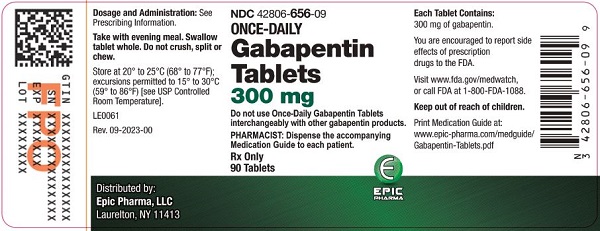
PACKAGE/LABEL PRINCIPAL DISPLAY PANEL Gabapentin Tablets, USP 300mg 90 Tablets Rx Only C:\Users\i4iuser\Desktop\Amy\300 mg.jpeg
PACKAGE/LABEL PRINCIPAL DISPLAY PANEL Gabapentin Tablets, USP 600 mg 90 Tablets Rx Only C:\Users\i4iuser\Desktop\Amy\600 mg.jpeg