
Primaquine Phosphate 15 mg Tablet, 14-count — NDC 43063-721-14 (Billing 43063-0721-14)
This is a package of 14 tablets of Primaquine Phosphate 15 mg Tablet from PD-Rx Pharmaceuticals, Inc., marketed since Aug 2014 and currently FDA-listed. It is the main listing for this product, which comes in 2 package sizes.
NDC database record
One package, one record: these facts belong to NDC 43063-721-14 alone.
- Record
- FDA NDC Directory package listing · Human prescription drug
- Code segments
- 43063 labeler · 721 product · 14 package
- Package marketed since
- Oct 17, 2016
- Sample package
- No — commercial package
- Listing certified through
- Dec 31, 2027
- Billing quantity
- 14 EA per package
- Barcode (UPC)
- 0343063721285
- FDA record last changed
- Jul 24, 2026
Identity & classification
Regulatory identifiers FDA, NLM and CMS codes for this package
Drug-database identifiers Medi-Span GPI and First Databank GCN / HICL / AHFS classification
- GSN (GCN sequence number): 009577
- GCN: 42910
- GPI-14 (Medi-Span): 13000030100310
- HICL (First Databank): 004148
- AHFS class code: 08:30.08.00
- RxCUI (RxNorm): 904170
Where does this data come from?
- FDA openFDA NDC Directory · synced Oct 8, 2026
- FDA label on DailyMed · label index refreshed Oct 8, 2026
- RxNorm (NLM RxNav) · catalog refreshed Oct 1, 2026
- Medi-Span GPI (licensed)
- First Databank (licensed) · refreshed Oct 8, 2026
RxNorm drug class
This medicine belongs to the Antimalarial class.
Where does this data come from?
- RxClass (NLM) · catalog refreshed Oct 1, 2026
Clinical
Primaquine is used to treat malaria (a serious infection spread by mosquitoes in some parts of the world) and to prevent the disease from coming back. Primaquine is in a class of medications called antimalarials. It works by killing the organisms that cause malaria.
Read the full MedlinePlus article ↗- Great question. The chloroquine you may also be taking clears the malaria parasites from your blood and stops the current attack. But with vivax malaria, there are also dormant par...
- What exactly is primaquine doing that my other malaria medicine isn't?
- Primaquine can cause your body to break down red blood cells — a reaction called hemolytic anemia — and this risk is much higher in people with a common genetic condition called G6...
- Why did my doctor order a blood test before prescribing this?
Patient education
Supplement & herbal interactions
Some supplements/herbs that may interact with Primaquine Phosphate — tap one for details:
Where does this data come from?
- MedlinePlus (NLM) · refreshed Oct 8, 2026
- FDA label on DailyMed · label index refreshed Oct 8, 2026
Ask a licensed pharmacist directly — free, answered by our team.
Pricing
A drug doesn't have one price. Each row is a different public payment system, and none is what you'd pay at the counter — that depends on your insurance. The ⓘ on each row explains what it measures.
| Price system | Per each | Per package |
|---|---|---|
| Retail pharmacies payNADAC · weekly | Not in the retail survey — common for institutional, discontinued, or low-volume packs. | |
| Medicaid paysCMS SDUD · 12 mo | No recent Medicaid claims on file for this NDC — rare and low-volume NDCs are suppressed in the public data. | |
| Medicare drug plans payPart D · Q2 2026 | $1.96 | $27.43 / 14 tablets |
Where does this data come from?
- CMS NADAC weekly file
- CMS ASP pricing files · refreshed Sep 20, 2026
- CMS Medicaid State Drug Utilization Data · refreshed Oct 8, 2026
- CMS Part D plan pricing files · refreshed Sep 24, 2026
- VA National Acquisition Center price file
Packaging — all sizes for this product
| Package NDC | Description | Marketing start | Marketing end | Status |
|---|---|---|---|---|
| 43063-0721-14 You're viewing this Main listing | 14 TABLET in 1 BOTTLE, PLASTIC | 2016-10-17 | — | Active |
| 43063-0721-28 43063-721-28 | 28 TABLET in 1 BOTTLE, PLASTIC | 2016-10-17 | — | Active |
You're viewing the smallest of 2 pack sizes for this product.
Pack size FAQ
What quantity is in this package?
How does this package differ from NDC 43063-0721-28?
What NDC number is used to bill for this package of Primaquine Phosphate 15 mg Tablet?
Therapeutic equivalents
| Product | Labeler | Pack | NADAC/unit | TE | Status | Price vs. this |
|---|---|---|---|---|---|---|
| Primaquine Phosphate 15 mg 00024-1596-01 | Sanofi-Aventis | 100 tablets | $1.964 | AB | Availability likely | — |
| Primaquine Phosphate 15 mg 76385-0102-01 | Unichem | 100 tablets | $1.964 | AB | Availability likely | — |
| Primaquine Phosphate 15 mg 42291-0510-01 | AvKARE | 100 tablets | — | AB | FDA listed | — |
| Primaquine Phosphate 15 mgthis 43063-0721-14 | PD-Rx | 14 tablets | — | AB | FDA listed | — |
| Primaquine Phosphate 15 mg 50742-0191-01 | Ingenus | 100 tablets | — | AB | FDA listed | — |
Where does this data come from?
- FDA openFDA NDC Directory · synced Oct 8, 2026
- FDA Orange Book · refreshed Oct 3, 2026
- CMS NADAC weekly file
Availability & generic status
This product is an FDA-approved generic. Other versions of the same drug are listed under Therapeutic equivalents, least expensive first.
Where does this data come from?
- FDA Orange Book · refreshed Oct 3, 2026
What it looks like
Where does this data come from?
- FDA label on DailyMed · label index refreshed Oct 8, 2026
Inactive Ingredients / Excipients
Inactive ingredients, also called excipients, are components of the drug product other than the active ingredient. They may include fillers, dyes, coatings, preservatives, flavors, or other formulation ingredients.
🧪 Avoiding an ingredient? See Primaquine inactive ingredients by manufacturer: every current product's list side by side, so you can ask your pharmacy for the version that does not list it.
💡 Tap an ingredient (hover on desktop) to see what it is and why it’s used.
-
UNII OP1R32D61U
Microcrystalline cellulose is a purified form of cellulose, a natural fiber from plant sources. It acts as a binder and filler in tablets and capsules, helping hold ingredients together and give the medicine its shape and size.
-
UNII L06K8R7DQK
A synthetic blue dye approved by the FDA for use in medications and foods. It serves as a colorant to make pills and liquids visually distinct and easier to identify.
-
UNII WZB9127XOA
A synthetic red dye used to color medications and make them easier to identify. It serves as a colorant in tablets, capsules, and liquid formulations.
-
UNII 3NXW29V3WO
Hypromellose is a plant-based thickener made from cellulose. It's used in medicines as a binder to hold ingredients together, a coating for tablets, and a thickener for liquids.
-
UNII EWQ57Q8I5X
Lactose monohydrate is a natural sugar derived from milk. It serves as a filler and binder in tablets and capsules, helping create the proper size, texture, and consistency of the medicine.
-
UNII 70097M6I30
Magnesium stearate is a salt made from magnesium and stearic acid, a fatty substance. It's used in tablets and capsules as a lubricant and glidant to help ingredients flow smoothly during manufacturing and prevent sticking.
-
UNII B697894SGQ
Polyethylene glycol 400 is a clear, thick liquid made from petroleum-derived polymers. It acts as a solvent and humectant in medicines, helping dissolve active ingredients and retain moisture in the formulation.
-
UNII O8232NY3SJ
A plant-based carbohydrate derived from corn kernels. It acts as a filler to add bulk, a binder to hold ingredients together, and a disintegrant to help the tablet break apart in your stomach for absorption.
-
UNII 15FIX9V2JP
Titanium dioxide is a bright white mineral powder commonly used as a colorant and opacifying agent. It makes pills and tablets white or lighter in color and helps make coatings non-transparent.
-
UNII 059QF0KO0R
Water is a liquid solvent that dissolves and mixes ingredients together in liquid medicines, syrups, and injections. It helps distribute the active drug evenly throughout the product.
10 inactive ingredients listed in the exact product block matched to this NDC.
Where does this data come from?
ingredient classCode="IACT" elements from the exact product block matched by this NDC. Label-section narrative from DailyMed / the openFDA label index is shown separately when available.- FDA label on DailyMed · label index refreshed Oct 8, 2026
- FDA openFDA NDC Directory · synced Oct 8, 2026
Inactive ingredient FAQ
Are inactive ingredients the same for every manufacturer?
Why might an inactive ingredient be missing?
Can inactive ingredients matter?
Manufacturer & labeler
More NDCs from PD-Rx Pharmaceuticals, Inc. labeler code 43063
- Furosemide 20 mg Tablet NDC 43063-702-21
- Penicillin V Potassium 250 mg Tablet, Film Coated NDC 43063-704-06
- Ergocalciferol 1.25 mg Capsule, Liquid Filled NDC 43063-711-12
- Fluoxetine 20 mg Capsule NDC 43063-712-21
- Furosemide 40 mg Tablet NDC 43063-716-01
- Metronidazole 250 mg Tablet, Film Coated NDC 43063-719-06
- Nortriptyline Hydrochloride 25 mg Capsule NDC 43063-722-30
- Aspirin 81 mg Tablet, Delayed Release NDC 43063-724-35
- Tamsulosin Hydrochloride .4 mg Capsule NDC 43063-725-30
- simvastatin 40 mg Tablet, Film Coated NDC 43063-726-30
- simvastatin 10 mg Tablet, Film Coated NDC 43063-727-30
- Topiramate 100 mg Tablet NDC 43063-729-07
Where does this data come from?
- FDA openFDA NDC Directory · synced Oct 8, 2026
- Drugs@FDA
Full prescribing information FDA SPL
🎯 Indications and Usage ▾
INDICATIONS AND USAGE Primaquine phosphate Tablets are indicated for the radical cure (prevention of relapse) of vivax malaria.
⏱️ Dosage and Administration ▾
DOSAGE AND ADMINISTRATION Primaquine phosphate Tablets are recommended only for the radical cure of vivax malaria, the prevention of relapse in vivax malaria, or following the termination of chloroquine phosphate suppressive therapy in an area where vivax malaria is endemic. Patients suffering from an attack of vivax malaria or having parasitized red blood cells should receive a course of chloroquine phosphate, which quickly destroys the erythrocytic parasites and terminates the paroxysm. Primaquine phosphate Tablets should be administered concurrently to eradicate the exoerythrocytic parasites in adults at a dosage of 1 tablet (equivalent to 15 mg base) daily for 14 days.
Primaquine phosphate Tablets can be taken with or without food. Administration of Primaquine phosphate Tablets with food may reduce the incidence of gastrointestinal symptoms.
⛔ Contraindications ▾
CONTRAINDICATIONS Known hypersensitivity reactions to primaquine phosphate, other 8-aminoquinolones, or to any component in Primaquine phosphate Tablets. Severe glucose-6-phosphate dehydrogenase (G6PD) deficiency (see WARNINGS , Hemolytic Anemia ). Pregnant women (see WARNINGS , Pregnancy ).
Breastfeeding by a lactating woman when the infant is found to be G6PD deficient or if G6PD status is unknown (see WARNINGS , Nursing Mothers ). Because quinacrine hydrochloride appears to potentiate the toxicity of antimalarial compounds which are structurally related to primaquine, the use of quinacrine in patients receiving Primaquine phosphate Tablets is contraindicated. Similarly, Primaquine phosphate Tablets should not be administered to patients who have received quinacrine recently, as toxicity is increased.
⚠️ Warnings ▾
WARNINGS Hemolytic Anemia Hemolytic reactions (moderate to severe) may occur in individuals with G6PD deficiency and in individuals with a family or personal history of favism. Areas of high prevalence of G6PD deficiency are Africa, Southern Europe, Mediterranean region, Middle East, South-East Asia, and Oceania. People from these regions have a greater tendency to develop hemolytic anemia due to a congenital deficiency of erythrocytic G6PD while receiving primaquine and related drugs.
Due to the risk of hemolytic anemia in patients with G6PD deficiency, G6PD testing must be performed before using primaquine. Before initiating treatment, obtain baseline hemoglobin and hematocrit. In case of severe anemia, postpone the G6PD test and decision on treatment with primaquine until recovery.
Due to the limitations of G6PD tests, physicians need to be aware of residual risk of hemolysis and adequate medical support and follow-up to manage hemolytic risk should be available. This is of particular importance in individuals with a personal or family history of hemolytic anemia. Patients with G6PD Deficiency Primaquine phosphate Tablets are contraindicated in patients with severe G6PD deficiency (see CONTRAINDICATIONS ).
In case of mild to moderate G6PD deficiency, a decision to prescribe primaquine must be based on an assessment of the risks and benefits of using primaquine. If primaquine administration is considered, baseline hematocrit and hemoglobin must be checked before treatment and close hematological monitoring (e.g., at day 3 and 8) is required. Adequate medical support to manage hemolytic risk should be available.
Patients with Unknown G6PD Status When the G6PD status is unknown and G6PD testing is not available, a decision to prescribe primaquine must be based on an assessment of the risks and benefits of using primaquine. Risk factors for G6PD deficiency or favism must be assessed. Baseline hematocrit and hemoglobin must be checked before treatment and close hematological monitoring (e.g., at day 3 and 8) is required.
Adequate medical support to manage hemolytic risk should be available. Patients without G6PD Deficiency In G6PD normal patients it is also advisable to perform routine blood examinations (particularly blood cell counts and hemoglobin determinations) during therapy. Risk of Hemolysis with Other Drugs Avoid the concurrent administration of hemolytic agents in all patients (see CLINICAL PHARMACOLOGY , Drug Interactions ).
Warn patients to discontinue the use of Primaquine phosphate Tablets promptly if signs suggestive of hemolytic anemia occur (such as darkening of the urine, pale skin, shortness of breath, dizziness, and fatigue) and to contact their healthcare professional immediately. Pregnancy Safe usage of Primaquine phosphate Tablets in pregnancy has not been established. Primaquine is contraindicated in pregnant women.
The use of Primaquine phosphate Tablets during pregnancy may cause hemolytic anemia in a G6PD-deficient fetus. Even if a pregnant woman has normal levels of G6PD, the fetus could be G6PD-deficient (see CONTRAINDICATIONS ). Animal data show toxicity to reproduction and embryofetal development.
(See PRECAUTIONS , Animal Pharmacology and/or Animal Toxicology ). Nonclinical data from studies conducted in bacteria and in animals treated with primaquine show evidence of gene mutations and chromosomal/DNA damage, teratogenicity, and injury to embryos and developing fetuses when primaquine is administered to pregnant animals. Inform patients of the potential for adverse genetic and reproductive effects associated with primaquine treatment (see PRECAUTIONS , Carcinogenesis, Mutagenesis, and Impairment of Fertility , and Animal Pharmacology and/or Animal Toxicology ).
Use in Females and Males of Reproductive Potential Pregnancy Testing Sexually active females of reproductive potential should have a pregnancy test prior to starting treatment with primaquine. Contraception Patients should avoid pregnancy… [Excerpted — this section continues on DailyMed.]
🤒 Adverse Reactions ▾
ADVERSE REACTIONS Gastrointestinal: Nausea, vomiting, epigastric distress, abdominal cramps. Hematologic: Leukopenia, hemolytic anemia, decreased hemoglobin, methemoglobinemia. Hemolytic anemia occurs commonly in patients with G6PD deficiency and may be severe or fatal in patients with severe G6PD deficiency (see WARNINGS ).
Methemoglobin levels are usually <10%, but methemoglobinemia may be severe in nicotinamide adenine dinucleotide (NADH) methemoglobin reductase deficient individuals or in patients with other risk factors (see PRECAUTIONS ). Leukopenia was observed in patients with rheumatoid arthritis or lupus erythematosus (see PRECAUTIONS ). Cardiac: Cardiac arrhythmia and QT interval prolongation (see PRECAUTIONS , OVERDOSAGE ).
Nervous System: Dizziness. Skin and Soft Tissue: Rash, pruritus.
🔄 Drug Interactions ▾
Drug Interactions Pharmacodynamics Interactions Quinacrine Concurrent use of quinacrine (mepacrine) and Primaquine phosphate Tablets are contraindicated. Increased toxicity was seen when quinacrine was used with pamaquine, another 8-aminoquinoline (see CONTRAINDICATIONS ). Hemolytic Agents and Methemoglobinemia-Inducing Drugs The concurrent administration of hemolytic agents or methemoglobinemia-inducing drugs and primaquine should be avoided (see PRECAUTIONS ).
If the concurrent administration cannot be avoided, close blood monitoring is required. QT Interval Prolonging Drugs The pharmacodynamic interaction potential to prolong the QT interval of the electrocardiogram between Primaquine phosphate Tablets and other drugs that effect cardiac conduction is unknown. If Primaquine phosphate Tablets are used concomitantly with other drugs that prolong the QT interval, close and frequent electrocardiogram monitoring is advised (see PRECAUTIONS , ADVERSE REACTIONS , and OVERDOSAGE ).
Effects of Other Drugs on the Pharmacokinetics of Primaquine Strong CYP2D6 Inhibitors Published clinical and non-clinical reports indicate reduced CYP2D6 activity may decrease the formation of active metabolites of primaquine, which may reduce antimalarial efficacy of Primaquine phosphate Tablets (see CLINICAL PHARMACOLOGY , Pharmacogenomics ). Where possible, consider alternative medications that are not strong CYP2D6 inhibitors. If concurrent use with Primaquine phosphate Tablets is necessary, increase monitoring for possible relapse.
Concomitant use of an MAO-A inhibitor in patients with reduced or absent CYP2D6 activity (e.g., strong CYP2D6 inhibitor, CYP2D6 intermediate or poor metabolizer) is expected to increase primaquine exposure which may increase the risk of adverse reactions (see CLINICAL PHARMACOLOGY , Pharmacogenomics ). Defer initiation of MAO-A inhibitor therapy or consider alternative drug therapy in patients with reduced or absent CYP2D6 activity until primaquine treatment is completed. If concurrent use with Primaquine phosphate Tablets is necessary, increase patient monitoring for potential adverse reactions (see PRECAUTIONS ).
Effects of Primaquine on the Pharmacokinetics of Other Drugs CYP1A2 Substrates Published clinical and non-clinical reports indicate primaquine inhibits CYP1A2 enzyme activity and thus may lead to increased exposure of CYP1A2 substrate drugs (e.g., duloxetine, alosetron, theophylline and tizanidine) when co-administered with Primaquine phosphate Tablets. Since data are limited, no predictions can be made regarding the extent of the impact on CYP1A2 substrate drug exposures. Increase monitoring for adverse reactions associated with the CYP1A2 substrate drug when concurrently administered with Primaquine phosphate tablets.
CYP3A4 Substrates Refer to the Prescribing Information for a CYP3A substrate where minimal concentration changes may lead to serious adverse reactions (e.g. rivaroxaban, calcineurin inhibitors, ergot derivatives, tyrosine kinase inhibitors) for the recommended dosage modification and/or monitoring. Published clinical reports indicate primaquine may inhibit CYP3A4 enzyme activity and thus may lead to increased exposure of oral CYP3A4 substrate drugs when co-administered with Primaquine phosphate Tablets. Since data are limited, no predictions can be made regarding the extent of the impact on oral CYP3A4 substrate drug exposures.
Increase monitoring for adverse reactions associated with CYP3A4 substrate drugs that prolong the QT interval (e.g., pimozide) or where minimal concentration changes may lead to serious adverse reactions when concurrently administered with Primaquine phosphate Tablets . P-gp Substrates Refer to the Prescribing Information for a P-gp substrate where minimal concentration changes may lead to serious adverse reactions (e.g., digoxin and dabigatran) for the recommended dosage modification and/or monitoring. In vitro observations suggest that primaquine inhibits the P-gp membr… [Excerpted — this section continues on DailyMed.]
🧓 Geriatric Use ▾
Geriatric Use Clinical studies of Primaquine phosphate Tablets did not include sufficient numbers of subjects aged 65 and over to determine whether they respond differently from younger subjects. Other reported clinical experience has not identified differences in responses between the elderly and younger patients. In general, dose selection for an elderly patient should be cautious, usually starting at the low end of the dosing range, reflecting the greater frequency of decreased hepatic, renal, or cardiac function, and of concomitant disease or other drug therapy.
🆘 Overdosage ▾
OVERDOSAGE Signs and symptoms Symptoms of overdosage of primaquine phosphate include abdominal cramps, vomiting, burning epigastric distress, central nervous system disturbances including headache, insomnia, and cardiovascular disturbances, including cardiac arrhythmia and QT interval prolongation, methemoglobinemia (indicated by cyanosis), moderate leukocytosis or leukopenia, granulocytopenia, and anemia. Acute hemolysis may occur with particular severity in G6PD deficient patients. Management Treatment of overdosage consists of institution of appropriate symptomatic and/or supportive therapy.
Consider contacting a poison center or a medical toxicologist for overdosage management recommendations.
🧬 Clinical Pharmacology ▾
CLINICAL PHARMACOLOGY Microbiology Mechanism of Action Primaquine phosphate is an 8-aminoquinoline antimalarial drug. The mechanism of action has not been fully established. The major assumptions are an inhibition of the mitochondrial system of dormant parasites, and an oxidative stress generated through reactive metabolites in infected cells.
In humans, primaquine phosphate activity is probably related to hydroxylated metabolites generated intrahepatically by CYP2D6. Antimicrobial Activity Primaquine phosphate is active against the dormant liver forms of P.vivax , namely hypnozoites, as well as exoerythrocytic stages of the parasite. Thereby, it prevents the development of the blood (erythrocytic) forms of the parasite which are responsible for relapses in vivax malaria.
Primaquine phosphate is also active against gametocytes of Plasmodium falciparum. Resistance Development of resistance to primaquine phosphate in Plasmodium species has not been well studied. Pharmacokinetics Following single oral dosing, the C max and AUC of primaquine increase approximately dose-proportionally over a primaquine base dose range of 15 mg to 45 mg (3 times the approved dose).
The pharmacokinetic parameters and properties of primaquine and carboxyprimaquine (main circulating metabolite not expected to be active) in patients with P. vivax malaria following Oral Administration of Primaquine phosphate Tablets are provided in TABLE 1. TABLE 1: Summary of Pharmacokinetic Parameters and Properties (Mean ± SD) in Patients with P. vivax malaria. PK Parameter a Day Primaquine Carboxyprimaquine C max (ng/mL) 1 50.7 ± 21.2 291 ± 52 C max (ng/mL) 14 49.7 ± 14.4 432 ±112 AUC or AUC 0-24 (μg/mL*h) b 1 0.48 ± 0.26 5.15 ±
1.01AUC or AUC 0-24 (μg/mL*h) b 14 0.49 ± 0.19 7.24 ±
1.82Primaquine Absorption Bioavailability c >70 % T max 2.3 ± 1.1 hours Effect of food on Primaquine Phosphate Tablet (relative to fasting) d Geometric mean [95% confidence interval] ↑ 14% [3, 27] (AUC); ↑ 26% [12, 40] (C max ) Distribution % Bound to human plasma proteins 74% (mainly to alpha 1 acid glycoprotein) Volume of distribution (V) e 243 ± 69 L Metabolism Metabolic pathways -Oxidative deamination, MAO-A -Hydroxylation of the quinoline ring, CYP2D6 -Direct conjugations Elimination Major route of elimination Metabolism Apparent Clearance (CL/F) 37.6 ±
14.7L/hr Mean terminal half-life (t 1/2 ) f 5.6 ± 1.0 hours % of dose excreted in urine g, h 64%, (including 3.6% of primaquine, the remnant being metabolites other than carboxyprimaquine) C max =maximum plasma concentration; AUC=area under the plasma concentration-time curve from time zero up to infinity; MAO-A = monoamine oxidase A a 15 mg once daily in adult patients (18 years of age and older) with P. vivax malaria, unless otherwise specified b AUC for primaquine, AUC 0-24 for carboxyprimaquine c Healthy participants d Values refer to increase in mean systemic exposure with bread and butter: 82% fat, ~28g fat after single dose of 30 mg Primaquine in healthy participants e IV dose administration of [ 14 C]-primaquine in healthy participants f The mean terminal half-life of carboxyprimaquine is approximately 22 hours g Oral administration of [ 14 C]-primaquine in healthy participants; no data in feces h The main circulating metabolite, carboxyprimaquine is subjected to further metabolism and not eliminated through urine Specific Populations Gender and ethnicity No gender nor ethnicity effect has been evidenced in studies conducted to date.
Elderly patients There are no pharmacokinetics studies in patients older than 52 years of age. Hepatic impairment Single dose pharmacokinetics study performed in patients with mild or moderate hepatic impairment indicate that only moderate hepatic dysfunction impacted significantly the PK of primaquine with a 3-fold lower primaquine C max in patients with moderate hepatic dysfunction as compared to healthy subjects. The primaquine AUC was not significantly modified.
No data are available after r… [Excerpted — this section continues on DailyMed.]
📦 How Supplied / Storage and Handling ▾
HOW SUPPLIED Primaquine phosphate Tablets USP are solid oral formulation round purple tablet debossed "BY4" available in 26.3 mg (=15 mg base) . Bottles of 14 tablets. (NDC 43063-721-14) Bottles of 28 tablets. (NDC 43063-721-28) Store at 25° C (77° F); excursions permitted to 15° - 30° C (59° - 86° F) [see USP Controlled Room Temperature]. Dispense in tight, light-resistant container as defined in the USP/NF.
📋 Description ▾
DESCRIPTION Primaquine phosphate is 8-[(4-amino-1-methylbutyl) amino]-6-methoxyquinoline phosphate, a synthetic compound with potent antimalarial activity. The molecular formula of Primaquine phosphate is C 15 H 21 N 3 O·2H 3 PO 4 and its molecular weight is 455.34. The structural formula of Primaquine phosphate is: Figure 1: Primaquine phosphate structure.
Each Primaquine phosphate tablet contains 26.3 mg of primaquine phosphate (equivalent to 15 mg of primaquine base). The dosage is customarily expressed in terms of the base. Inactive Ingredients: Microcrystalline Cellulose, Pregelatinized Starch, Lactose Monohydrate, Magnesium Stearate, Purified Water, Hypromellose, Opadry Purple, Titanium Dioxide, Macrogol/PEG, FD&C Red #40 and FD&C Blue #2. structure
⚠️ Precautions ▾
PRECAUTIONS Methemoglobinemia Primaquine may cause a transient increase in methemoglobin levels up to 10% in patients without risk factors (see ADVERSE REACTIONS ). Methemoglobinemia may be severe in patients who are deficient in nicotinamide adenine dinucleotide (NADH), methemoglobin reductase or treated with methemoglobinemia-inducing drugs such as dapsone or sulfonamide, (see PRECAUTIONS , Drug Interactions ). Monitor methemoglobin levels closely in these cases.
Advise all patients to seek immediate medical attention if signs of methemoglobinemia occur such as bluish lips or nails. Leukopenia Primaquine may cause leukopenia in patients with established granulocytopenia, such as rheumatoid arthritis and lupus erythematosus. Avoid concurrent administration of bone-marrow depressants.
Discontinue the use of primaquine promptly if there is a sudden decrease in leukocyte count. Potential Prolongation of QT Interval Due to potential for QT interval prolongation, monitor ECG when using primaquine in patients with cardiac disease, long QT syndrome, a history of ventricular arrhythmias, uncorrected hypokalemia and/or hypomagnesemia, or bradycardia (<50 bpm), and during concomitant administration with QT interval prolonging agents (see PRECAUTIONS , Drug Interactions , ADVERSE REACTIONS , and OVERDOSAGE ).
Strong CYP2D6 Inhibitors, CYP2D6 Poor or Intermediate Metabolizers, and Treatment Failure Based on published non-clinical reports, primaquine activity likely depends on the formation of CYP2D6 metabolite(s). Therefore, CYP2D6 genetic variation or drugs that impact CYP2D6 activity may be associated with variability in clinical response to Primaquine phosphate Tablets. Limited published clinical data reported higher treatment failure rates in patients who were CYP2D6 poor or intermediate metabolizers than in patients who were CYP2D6 normal metabolizers (see CLINICAL PHARMACOLOGY ).
When possible, consider alternative medications that are not strong CYP2D6 inhibitors. Increase monitoring for possible relapse in patients with concurrent strong CYP2D6 inhibitor usage or in patients who are CYP2D6 poor or intermediate metabolizers (see PRECAUTIONS , Drug Interactions ). In case of treatment failure, after checking patient's compliance to treatment, reassess use of CYP2D6 inhibitors and assess the patient's CYP2D6 metabolizer status, if feasible.
For patients who are CYP2D6 poor or intermediate metabolizers, alternative treatment should be considered. Carcinogenesis, Mutagenesis, Impairment of Fertility No carcinogenicity studies have been conducted with primaquine. No fertility studies have been conducted with primaquine.
Primaquine is reported in the literature to be a weak genotoxic agent which elicits both gene mutations 1 , chromosomal damage and DNA strand breaks 2 . The publications reported positive results in the in vitro reverse gene mutation assays using bacteria (Ames test) 3,4 and in the in vivo studies using rodents (mouse bone marrow cell sister chromatid exchange, mouse bone marrow cell chromosome abnormality, and rat DNA strand breaks in multiple organs) 2, 5 . The genotoxicity data obtained in vitro and in rodent models are suggestive of a human risk for genotoxicity with primaquine administration (see WARNINGS , Usage in Pregnancy ).
Animal Pharmacology and/or Animal Toxicology Literature data on reproductive toxicology identified embryo-fetal development toxicity. In studies in rats, teratogenic effects on fetus were observed (see WARNINGS , Usage in Pregnancy ). In the first reproductive toxicity study 6 , primaquine was administered orally to rats between gestation day (GD) 6 and GD15 at dose levels of 10.3, 30.8 and 61.5 mg/kg/day (as base) (representing approximatively 7, 20 and 40 times the human dose [HD] on a body surface area comparison) when considering a human body weight of 60 kg).
High dose levels induced death of pregnant females in almost all cases, while lower dose levels caused maternal toxicity. At ces… [Excerpted — this section continues on DailyMed.]
🔬 Clinical Studies ▾
CLINICAL STUDIES Persons with acute attacks of vivax malaria, provoked by the release of erythrocytic forms of the parasite, respond readily to therapy, particularly to chloroquine phosphate. Primaquine eliminates tissue (exoerythrocytic) infection and prevents relapses in experimentally induced vivax malaria in human volunteers and in persons with naturally occurring infections and is a valuable adjunct to conventional therapy in vivax malaria. To report SUSPECTED ADVERSE REACTIONS, contact Unichem Pharmaceuticals (USA) Inc. at 1-866-562-4616 or FDA at 1-800-FDA-1088 or www.fda.gov/medwatch.
📚 References ▾
REFERENCES Shubber EK, Jacobson-Kram D, Williams JR. Comparison of the Ames assay and the induction of sister chromatid exchanges: results with ten pharmaceuticals and five selected agents. Cell Biol Toxicol.
1986;2:379-99. Chatterjee T, Muhkopadhyay A, Khan KA, Giri AK. Comparative mutagenic and genotoxic effects of three antimalarial drugs, chloroquine, primaquine and amodiaquine.
Mutagenesis. 1998;13:619-24. Marss TC.
Bright JE, Morris BC. Methemoglobinogenic potential of primaquine and its mutagenicity in the Ames test. Toxicol Lett.
1987;36:281-7. Ono T, Norimatsu M, Yoshimura H. Mutagenic evaluation of primaquine, pentaquine and pamaquine in the Salmonella/mammalian microsome assay.
Mutat Res. 1994;325:7-10. Giovanella F, Ferreira GK, de Prá1 SDT, et al.
Effects of primaquine and chloroquine on oxidative stress parameters in rats. An Acad Bras Cienc (Annals of the Brazilian Academy of Sciences). 2015;87:1487-1496.
Trutter JA, Reno FE, Durloo RS. Teratogenicity studies with a candidate antileishmanial drug. The Toxicologist.
1983;3:65. Beveridge E, Caldwell IC, Latter VS, Neal RA, Udall V, Waldron MM. The activity against Trypanosoma cruzi and cutaneous leishmaniasis, and toxicity, of moxipraquine (349C59).
Trans R Soc Trop Med Hyg. 1980;74:43-51. Bennett JW, Pybus BS, Yadava A, Tosh D, Sousa JC, McCarthy WF, et al.
Primaquine failure and cytochrome P-450 2D6 in Plasmodium vivax malaria. N Engl J Med.2013;369(14):1381-82. Rx Only MADE IN USA Distributed by: UNICHEM PHARMACEUTICALS (USA), INC.
East Brunswick, NJ 08816 USA. Rev. 02/2026 400038
📄 Package Label / Principal Display Panel ▾
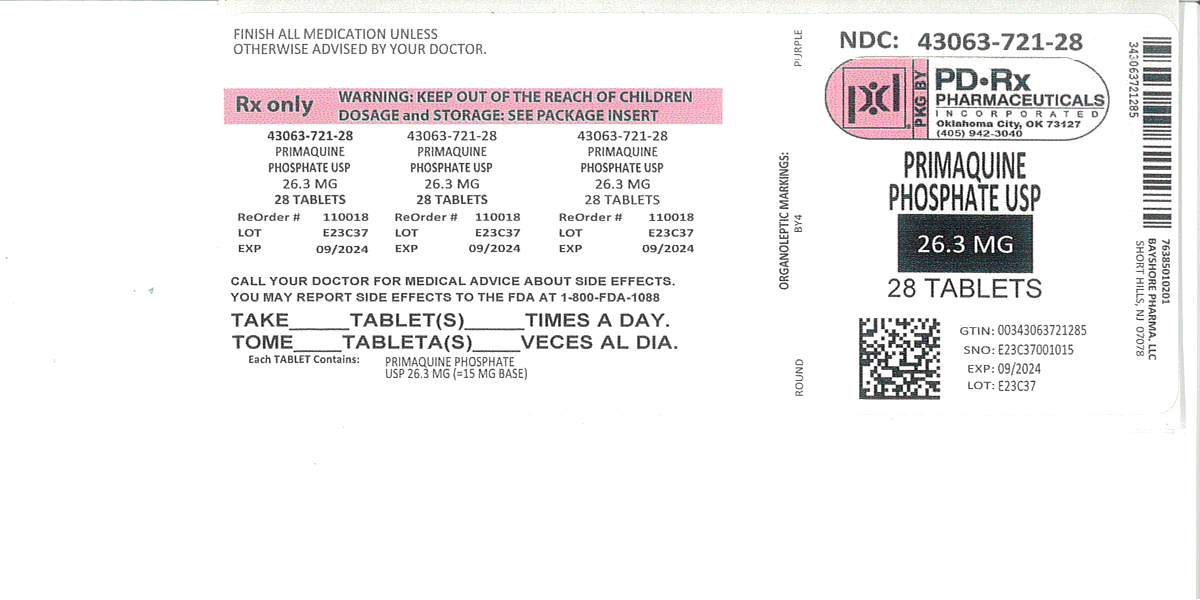
PACKAGE LABEL.PRINCIPAL DISPLAY PANEL 43063721 Label
Medicare Part D spend CMS · PART D · 2026 (Q1)
About this NDC listing & data coverage
What data is (and isn’t) available for this NDC — tap to expand
| NDC identity (package / product / labeler codes) | ✓ Available |
| Labeler | ✓ Available |
| Product & package description | ✓ Available |
| Marketing category & status | ✓ Available |
| Active ingredient / dosage form / route | ✓ Available |
| FDA label (SPL via DailyMed) | ✓ Available |
| Package photos | ✓ Available |
| Inactive ingredients (structured) | ✓ Available |
| NADAC pharmacy acquisition price (CMS) | — Not published for this NDC CMS publishes NADAC only for NDCs reported in its retail-pharmacy survey. |
| Orange Book / therapeutic-equivalence data | ✓ Available |
| HCPCS J-code billing crosswalk | — Not published for this NDC Most self-administered / retail products have no J-code — that is normal. |
| Medicaid utilization (CMS SDUD) | — Not published for this NDC CMS reports utilization only for NDCs with Medicaid claims above its privacy threshold. |