
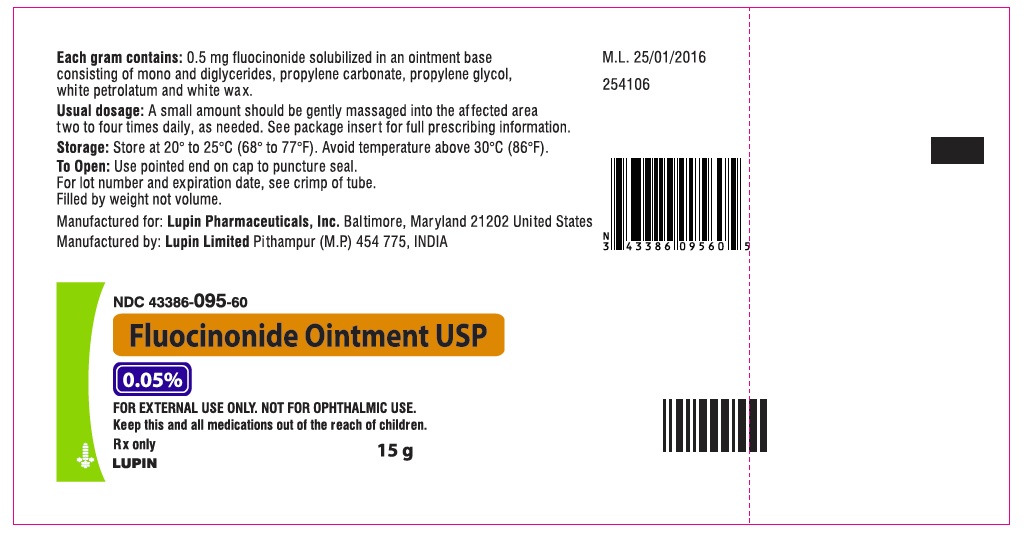
Fluocinonide 0.5 mg/g Ointment
Other active recalls for Fluocinonide (different manufacturers) — 3 · tap to view
🆔 Identity & classification
Where does this data come from?
🏭 Manufacturer & labeler
Where does this data come from?
🩺 Clinical
- Fluocinonide is used to calm inflamed, itchy skin — things like eczema (atopic dermatitis), psoriasis, and other inflammatory skin conditions that respond to steroid treatment. It...
- What skin problems does fluocinonide actually treat?
- Use a thin layer — just enough to cover the affected area — and rub it in gently. How often you apply it depends on your product and condition: some people use it once a day, other...
- That's a really common feeling with skin conditions, but with the 0.1% strength products, treatment beyond 2 consecutive weeks is generally not recommended because of the risk of t...
Patient education
Supplement & herbal interactions
Where does this data come from?
Ask a licensed pharmacist directly — free, answered by our team.
🧪 Inactive Ingredients / Excipients
Inactive ingredients, also called excipients, are components of the drug product other than the active ingredient. They may include fillers, dyes, coatings, preservatives, flavors, or other formulation ingredients.
💡 Tap an ingredient (hover on desktop) to see what it is and why it’s used.
-
UNII 230OU9XXE4
A waxy substance made from glycerin and stearic acid that acts as an emulsifier to blend oily and watery ingredients together. It also helps thicken and stabilize the medicine's texture.
-
UNII 4T6H12BN9U
Petrolatum is a purified mineral oil-based jelly derived from petroleum. In medicines, it acts as an emollient, lubricant, and moisture barrier to soften skin, reduce friction, and help prevent water loss from formulations.
-
UNII 8D08K3S51E
Propylene carbonate is a clear liquid solvent derived from propylene. It helps dissolve or suspend active ingredients in liquid medicines and can improve how well the product flows and mixes.
-
UNII 6DC9Q167V3
Propylene glycol is a clear liquid derived from petroleum or vegetable sources. It acts as a solvent, humectant, and preservative in medicines, helping dissolve active ingredients and maintain product stability.
-
UNII 7G1J5DA97F
White wax is a refined, bleached plant-based or mineral wax that serves as a coating and hardening agent in medicines. It helps control how fast the drug dissolves and improves the product's texture and appearance.
5 inactive ingredients listed in the exact product block matched to this NDC.
Where does this data come from?
ingredient classCode="IACT" elements from the exact product block matched by this NDC. Label-section narrative from DailyMed / the openFDA label index is shown separately when available.Inactive ingredient FAQ
Are inactive ingredients the same for every manufacturer?
Why might an inactive ingredient be missing?
Can inactive ingredients matter?
💲 Pricing
A drug doesn't have one price. Each row is a different public payment system, and none is what you'd pay at the counter — that depends on your insurance. The ⓘ on each row explains what it measures.
| Price system | Per g | Per package |
|---|---|---|
| Retail pharmacies payNADAC · weekly | $0.379 | $5.69 / 15 g |
| Medicaid paysCMS SDUD · 12 mo | No recent Medicaid claims on file for this NDC — rare and low-volume NDCs are suppressed in the public data. | |
| Medicare drug plans payPart D · quarterly | No Part D plan price is available for this NDC in our data. | |
Where does this data come from?
🔁 Therapeutic equivalents
| Product | Labeler | Pack | NADAC/unit | TE | Status | Price vs. this |
|---|---|---|---|---|---|---|
| Fluocinonide 0.5 mg/gthis 43386-0095-60 | Lupin | 1 tube | $0.379 | AB | Discontinued | — |
Where does this data come from?
⏳ Availability & generic status
This product is an FDA-approved generic. Other versions of the same drug are listed under Therapeutic equivalents, least expensive first.
Where does this data come from?
📊 Medicare Part D spend CMS · PART D · 2026 (Q1)
📦 Packaging — all sizes for this product
| Package NDC | Description | Per unit | Per pack | Marketing start | Status |
|---|---|---|---|---|---|
| 43386-0095-60 You're viewing this | 1 TUBE in 1 CARTON (43386-095-60) / 15 g in 1 TUBE | $0.3794 / g | $5.69 | 2017-07-31 | Inactivated by FDA |
| 43386-0095-61 | 1 TUBE in 1 CARTON (43386-095-61) / 60 g in 1 TUBE | $0.3610 / g | $21.66 | 2017-07-31 | Inactivated by FDA |
| 43386-0095-62 | 1 TUBE in 1 CARTON (43386-095-62) / 30 g in 1 TUBE | $0.4437 / g | $13.31 | 2017-07-31 | Inactivated by FDA |
Per g, this pack runs about 5% above the cheapest pack (NDC 43386-0095-61, $0.3610 vs $0.3794 NADAC).
Pack size FAQ
What quantity is in NDC 43386-0095-60?
What NDC number is used to bill for this package of Fluocinonide 0.5 mg/g Ointment?
Prices are the latest CMS NADAC pharmacy acquisition cost per NDC; per-pack figures are per-unit × pack quantity, shown only when the pack is denominated in the same measure NADAC prices.
🧭 About this NDC listing & data coverage
What data is (and isn’t) available for this NDC — tap to expand
| NDC identity (package / product / labeler codes) | ✓ Available |
| Labeler | ✓ Available |
| Product & package description | ✓ Available |
| Marketing category & status | ✓ Available |
| Active ingredient / dosage form / route | ✓ Available |
| FDA label (SPL via DailyMed) | ✓ Available |
| Package photos | ✓ Available |
| Inactive ingredients (structured) | ✓ Available |
| NADAC pharmacy acquisition price (CMS) | ✓ Available |
| Orange Book / therapeutic-equivalence data | ✓ Available |
| HCPCS J-code billing crosswalk | — Not published for this NDC Most self-administered / retail products have no J-code — that is normal. |
| Medicaid utilization (CMS SDUD) | — Not published for this NDC CMS reports utilization only for NDCs with Medicaid claims above its privacy threshold. |
Questions about this listing
What does the discontinued status mean for this NDC?
Is the NDC printed on the package the same as the 11-digit billing NDC?
What do the three segments of this NDC mean?
Does this product come in other package sizes?
Who lists this product with the FDA?
Do I need a prescription for this product?
Where does this data come from?
📄 Full prescribing information FDA SPL
🎯 Indications and Usage ▾
INDICATIONS AND USAGE Fluocinonide Ointment USP, 0.05% is indicated for the relief of the inflammatory and pruritic manifestations of corticosteroid-responsive dermatoses.
⏱️ Dosage and Administration ▾
DOSAGE AND ADMINISTRATION Fluocinonide Ointment USP, 0.05% is generally applied to the affected area as a thin film from two to four times daily depending on the severity of the condition. Occlusive dressings may be used for the management of psoriasis or recalcitrant conditions. If an infection develops, the use of the occlusive dressings should be discontinued and appropriate antimicrobial therapy instituted.
⛔ Contraindications ▾
CONTRAINDICATIONS Topical corticosteroids are contraindicated in those patients with a history of hypersensitivity to any of the components of the preparations.
🤒 Adverse Reactions ▾
ADVERSE REACTIONS The following local adverse reactions are reported infrequently with topical corticosteroids, but may occur more frequently with the use of occlusive dressings. These reactions are listed in an approximate decreasing order of occurrence: Burning Itching Irritation Dryness Folliculitis Hypertrichosis Acneiform Eruptions Hypopigmentation Perioral Dermatitis Allergic Contact Dermatitis Maceration of the Skin Secondary Infection Skin Atrophy Striae Miliaria
🆘 Overdosage ▾
OVERDOSAGE Topically applied corticosteroids can be absorbed in sufficient amounts to produce systemic effects (see PRECAUTIONS ).
🧬 Clinical Pharmacology ▾
CLINICAL PHARMACOLOGY Topical corticosteroids share anti-inflammatory, anti-pruritic and vasoconstrictive actions. The mechanism of anti-inflammatory activity of the topical corticosteroids is unclear. Various laboratory methods, including vasoconstrictor assays, are used to compare and predict potencies and/or clinical efficacies of the topical corticosteroids.
There is some evidence to suggest that a recognizable correlation exists between vasoconstrictor potency and therapeutic efficacy in man. Pharmacokinetics The extent of percutaneous absorption of topical corticosteroids is determined by many factors including the vehicle, the integrity of the epidermal barrier, and the use of occlusive dressings. Topical corticosteroids can be absorbed from normal intact skin.
Inflammation and/or other disease processes in the skin increase percutaneous absorption. Occlusive dressings substantially increase the percutaneous absorption of topical corticosteroids. Thus, occlusive dressings may be a valuable therapeutic adjunct for treatment of resistant dermatoses (see DOSAGE AND ADMINISTRATION ).
Once absorbed through the skin, topical corticosteroids are handled through pharmacokinetic pathways similar to systemically administered corticosteroids. Corticosteroids are bound to plasma proteins in varying degrees. Corticosteroids are metabolized primarily in the liver and are then excreted by the kidneys.
Some of the topical corticosteroids and their metabolites are also excreted into the bile.
📦 How Supplied / Storage and Handling ▾
HOW SUPPLIED Fluocinonide Ointment, 0.05% is supplied in 15 g Tube – NDC 43386-095-60 30 g Tube – NDC 43386-095-62 60 g Tube – NDC 43386-095-61 Store at 20°-25°C (68°-77°F). Avoid temperature over 30°C (86°F). Manufactured for: Lupin Pharmaceuticals, Inc. Baltimore, Maryland 21202 United States Manufactured by: Lupin Limited Pithampur (M.P.) 454 775, INDIA Revised: January 2018 ID#: 254172
📋 Description ▾
DESCRIPTION Fluocinonide Ointment USP, 0.05% is intended for topical administration. The active component is the corticosteroid fluocinonide, which is the 21-acetate ester of fluocinolone acetonide and has the chemical name pregna-1,4-diene-3,20-dione,21-(acetyloxy) -6,9-difluoro-11-hydroxy-16,17-[(1-methylethylidene)bis(oxy)]-,(6α,11β,16α)-. It has the following chemical structure: Fluocinonide Ointment USP, 0.05% contains fluocinonide 0.5 mg/g in a specially formulated ointment base consisting of mono and di glycerides, propylene carbonate, propylene glycol, white petrolatum and white wax.
It provides the occlusive and emollient effects desirable in an ointment. In this formulation, the active ingredient is totally in solution. 19b891ae-figure-01