
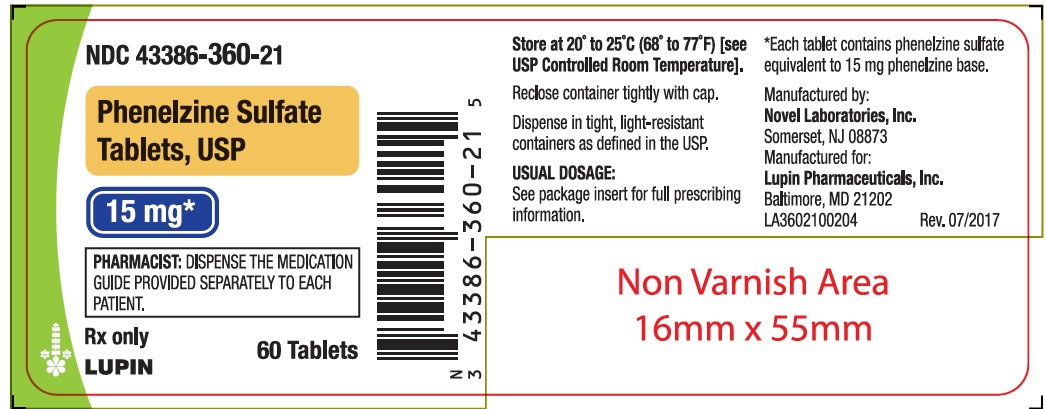
Phenelzine Sulfate 15 mg Tablet, 60-count — NDC 43386-360-21 (Billing 43386-0360-21)
This is a package of 60 tablets of Phenelzine Sulfate 15 mg Tablet from Lupin Pharmaceuticals,Inc., marketed since Dec 2010 and currently FDA-listed; retail pharmacies pay about $0.5703 per tablet (NADAC). It is this product's only package size.
NDC database record
One package, one record: these facts belong to NDC 43386-360-21 alone.
- Record
- FDA NDC Directory package listing · Human prescription drug
- Code segments
- 43386 labeler · 360 product · 21 package
- Package marketed since
- Feb 14, 2011
- Sample package
- No — commercial package
- Listing certified through
- Dec 31, 2026
- Billing quantity
- 60 EA per package
- Barcode (UPC)
- 0343386360215
- FDA record last changed
- Jul 24, 2026
Identity & classification
Regulatory identifiers FDA, NLM and CMS codes for this package
Drug-database identifiers Medi-Span GPI and First Databank GCN / HICL / AHFS classification
- GSN (GCN sequence number): 046263
- GCN: 16417
- GPI-14 (Medi-Span): 58100020100305
- HICL (First Databank): 001639
- AHFS class code: 28:16.04.12
- RxCUI (RxNorm): 312347
Where does this data come from?
- FDA openFDA NDC Directory · synced Oct 8, 2026
- FDA label on DailyMed · label index refreshed Oct 8, 2026
- RxNorm (NLM RxNav) · catalog refreshed Oct 1, 2026
- Medi-Span GPI (licensed)
- First Databank (licensed) · refreshed Oct 8, 2026
RxNorm drug class
This medicine belongs to the Monoamine Oxidase Inhibitor class.
Where does this data come from?
- RxClass (NLM) · catalog refreshed Oct 1, 2026
Clinical
Phenelzine is used to treat depression in people who have not been helped by other medications. Phenelzine is in a class of medications called monoamine oxidase inhibitors (MAOIs). It works by increasing the amounts of certain natural substances that are needed to maintain mental balance.
Read the full MedlinePlus article ↗- It treats certain types of depression, especially those with mixed anxiety and depression, phobias, or health-related worries. It is usually tried after other antidepressants haven...
- Be patient. Many people don't notice a real benefit until they've been at the full treatment dose for at least 4 weeks. Keep taking it as prescribed and keep in touch with your pre...
- Yes. Avoid aged cheeses, pickled herring, beer, wine, liver, yeast extract, dry sausages like pepperoni and salami, fava bean pods, and yogurt. Large amounts of caffeine and chocol...
- Check with me first. Many cough and cold products, stimulants, and other antidepressants can cause dangerous reactions. Dextromethorphan, meperidine, bupropion, buspirone, and sero...
Patient education
Supplement & herbal interactions
Some supplements/herbs that may interact with Phenelzine Sulfate — tap one for details:
Phenelzine Sulfate may be associated with lower levels of 1 nutrient — worth a chat with your pharmacist, not a cause for alarm.
Where does this data come from?
- MedlinePlus (NLM) · refreshed Oct 8, 2026
- FDA label on DailyMed · label index refreshed Oct 8, 2026
Ask a licensed pharmacist directly — free, answered by our team.
Pricing
A drug doesn't have one price. Each row is a different public payment system, and none is what you'd pay at the counter — that depends on your insurance. The ⓘ on each row explains what it measures.
| Price system | Per ea | Per package |
|---|---|---|
| Retail pharmacies payNADAC · weekly | $0.570 | $34.22 / 60 tablets |
| Medicaid paysCMS SDUD · 12 mo | No recent Medicaid claims on file for this NDC — rare and low-volume NDCs are suppressed in the public data. | |
| Medicare drug plans payPart D · Q2 2026 | $0.5812 | $34.87 / 60 tablets |
Where does this data come from?
- CMS NADAC weekly file · file of Feb 21, 2024
- CMS ASP pricing files · refreshed Sep 20, 2026
- CMS Medicaid State Drug Utilization Data · refreshed Oct 8, 2026
- CMS Part D plan pricing files · refreshed Sep 24, 2026
- VA National Acquisition Center price file
Packaging — all sizes for this product
| Package NDC | Description | Marketing start | Marketing end | Status |
|---|---|---|---|---|
| 43386-0360-21 You're viewing this Main listing | 60 TABLET in 1 BOTTLE | 2011-02-14 | — | Active |
Therapeutic equivalents
| Product | Labeler | Pack | NADAC/unit | TE | Status | Price vs. this |
|---|---|---|---|---|---|---|
| Phenelzine Sulfate 15 mgthis 43386-0360-21 | Lupin | 60 tablets | $0.570 | AB | FDA listed | — |
| phenelzine sulfate 15 mg 59762-0119-01 | Mylan | 60 tablets | $0.586 | AB | Availability likely | +3% |
| Nardil 15 mg 00071-0350-60 | Parke-Davis | 60 tablets | $2.534 | AB | FDA listed | +344% |
Where does this data come from?
- FDA openFDA NDC Directory · synced Oct 8, 2026
- FDA Orange Book · refreshed Oct 3, 2026
- CMS NADAC weekly file · file of Feb 21, 2024
Availability & generic status
This product is an FDA-approved generic. Other versions of the same drug are listed under Therapeutic equivalents, least expensive first.
Where does this data come from?
- FDA Orange Book · refreshed Oct 3, 2026
What it looks like
Where does this data come from?
- FDA label on DailyMed · label index refreshed Oct 8, 2026
Inactive Ingredients / Excipients
Inactive ingredients, also called excipients, are components of the drug product other than the active ingredient. They may include fillers, dyes, coatings, preservatives, flavors, or other formulation ingredients.
🧪 Avoiding an ingredient? See Phenelzine inactive ingredients by manufacturer: every current product's list side by side, so you can ask your pharmacy for the version that does not list it.
💡 Tap an ingredient (hover on desktop) to see what it is and why it’s used.
-
UNII 7FLD91C86K
Edetate disodium is a chemical compound that binds and removes certain metal ions. In medicines, it acts as a preservative and stabilizer by preventing metals like calcium from interfering with the product's shelf life and consistency.
-
UNII H77VEI93A8
A synthetic yellow dye used to color medications. It helps identify the drug and make it visually distinctive, with no effect on how the medicine works.
-
UNII 70097M6I30
Magnesium stearate is a salt made from magnesium and stearic acid, a fatty substance. It's used in tablets and capsules as a lubricant and glidant to help ingredients flow smoothly during manufacturing and prevent sticking.
-
UNII 3OWL53L36A
A natural sugar alcohol derived from seaweed or synthesized in the lab. It's used as a filler to add bulk, a sweetener in sugar-free formulas, and a disintegrant to help tablets break apart in the stomach.
-
UNII G2M7P15E5P
Polyethylene glycol 3350 is a synthetic polymer used as a solvent, humectant, and thickening agent in medicines. It helps dissolve other ingredients, retain moisture in the product, and achieve the desired consistency.
-
UNII 532B59J990
Polyvinyl alcohol is a synthetic polymer made from plant-derived materials. It's used as a binder to hold ingredients together, a film-former in coatings, and a thickener in liquid formulations.
-
UNII FZ989GH94E
Povidone is a synthetic polymer made from a plastic-like material. It acts as a binder to hold tablet ingredients together and as a disintegrant to help the tablet break apart in your stomach so the medicine can be absorbed.
-
UNII ETJ7Z6XBU4
Silicon dioxide is a naturally occurring mineral used as a glidant and anti-caking agent. It helps powder ingredients flow smoothly and prevents clumping during manufacturing and storage.
-
UNII 7SEV7J4R1U
A powder made from a naturally occurring mineral. In medicines, talc works as a glidant and anti-caking agent, helping tablets and capsules flow smoothly during manufacturing and preventing clumping.
-
UNII 15FIX9V2JP
Titanium dioxide is a bright white mineral powder commonly used as a colorant and opacifying agent. It makes pills and tablets white or lighter in color and helps make coatings non-transparent.
10 inactive ingredients listed in the exact product block matched to this NDC.
Where does this data come from?
ingredient classCode="IACT" elements from the exact product block matched by this NDC. Label-section narrative from DailyMed / the openFDA label index is shown separately when available.- FDA label on DailyMed · label index refreshed Oct 8, 2026
- FDA openFDA NDC Directory · synced Oct 8, 2026
Inactive ingredient FAQ
Are inactive ingredients the same for every manufacturer?
Why might an inactive ingredient be missing?
Can inactive ingredients matter?
Manufacturer & labeler
More NDCs from Lupin Pharmaceuticals,Inc. labeler code 43386
- Hydrocodone Bitartrate and Acetaminophen 5 mg; 300 mg Tablet NDC 43386-351-01
- Hydrocodone Bitartrate and Acetaminophen 7.5 mg; 300 mg Tablet NDC 43386-352-01
- Hydrocodone Bitartrate and Acetaminophen 10 mg; 300 mg Tablet NDC 43386-353-01
- Hydrocodone Bitartrate and Acetaminophen 5 mg; 325 mg Tablet NDC 43386-356-01
- Hydrocodone Bitartrate and Acetaminophen 7.5 mg; 325 mg Tablet NDC 43386-357-01
- Hydrocodone Bitartrate and Acetaminophen 10 mg; 325 mg Tablet NDC 43386-358-01
- Oxycodone Hydrochloride 15 mg Tablet NDC 43386-430-01
- Oxycodone Hydrochloride 30 mg Tablet NDC 43386-431-01
- Oxycodone Hydrochloride 5 mg Tablet NDC 43386-432-01
- Oxycodone Hydrochloride 10 mg Tablet NDC 43386-433-01
- Oxycodone Hydrochloride 20 mg Tablet NDC 43386-434-01
- Nitrofurantoin 25 mg/5mL Suspension NDC 43386-450-11
Where does this data come from?
- FDA openFDA NDC Directory · synced Oct 8, 2026
- Drugs@FDA
Full prescribing information FDA SPL
🚨 Boxed Warning ▾
Suicidality and Antidepressant Drugs Antidepressants increased the risk compared to placebo of suicidal thinking and behavior (suicidality) in children, adolescents, and young adults in short-term studies of major depressive disorder (MDD) and other psychiatric disorders. Anyone considering the use of Phenelzine Sulfate Tablets or any other antidepressant in a child, adolescent, or young adult must balance this risk with the clinical need. Short-term studies did not show an increase in the risk of suicidality with antidepressants compared to placebo in adults beyond age 24; there was a reduction in risk with antidepressants compared to placebo in adults aged 65 and older.
Depression and certain other psychiatric disorders are themselves associated with increases in the risk of suicide. Patients of all ages who are started on antidepressant therapy should be monitored appropriately and observed closely for clinical worsening, suicidality, or unusual changes in behavior. Families and caregivers should be advised of the need for close observation and communication with the prescriber.
Phenelzine Sulfate Tablets is not approved for use in pediatric patients. (See Warnings: Clinical Worsening and Suicide Risk , Precautions: Information for Patients , and Precautions: Pediatric Use )
🎯 Indications and Usage ▾
INDICATIONS AND USAGE Phenelzine Sulfate Tablets, USP has been found to be effective in depressed patients clinically characterized as "atypical," "nonendogenous," or "neurotic." These patients often have mixed anxiety and depression and phobic or hypochondriacal features. There is less conclusive evidence of its usefulness with severely depressed patients with endogenous features. Phenelzine Sulfate Tablets should rarely be the first antidepressant drug used.
Rather, it is more suitable for use with patients who have failed to respond to the drugs more commonly used for these conditions.
⏱️ Dosage and Administration ▾
DOSAGE AND ADMINISTRATION Initial dose The usual starting dose of Phenelzine Sulfate Tablets is one tablet (15 mg) three times a day. Early phase treatment Dosage should be increased to at least 60 mg per day at a fairly rapid pace consistent with patient tolerance. It may be necessary to increase dosage up to 90 mg per day to obtain sufficient MAO inhibition.
Many patients do not show a clinical response until treatment at 60 mg has been continued for at least 4 weeks. Maintenance dose After maximum benefit from Phenelzine Sulfate Tablets is achieved, dosage should be reduced slowly over several weeks. Maintenance dose may be as low as one tablet, 15 mg, a day or every other day, and should be continued for as long as is required.
⛔ Contraindications ▾
CONTRAINDICATIONS Phenelzine Sulfate Tablets should not be used in patients who are hypersensitive to the drug or its ingredients, with pheochromocytoma, congestive heart failure, severe renal impairment or renal disease, a history of liver disease, or abnormal liver function tests. The potentiation of sympathomimetic substances and related compounds by MAO inhibitors may result in hypertensive crises (see WARNINGS ). Therefore, patients being treated with Phenelzine Sulfate Tablets should not take sympathomimetic drugs (including amphetamines, cocaine, methylphenidate, dopamine, epinephrine, and norepinephrine) or related compounds (including methyldopa, L-dopa, L-tryptophan, L-tyrosine, and phenylalanine).
Hypertensive crises during Phenelzine Sulfate Tablets therapy may also be caused by the ingestion of foods with a high concentration of tyramine or dopamine. Therefore, patients being treated with Phenelzine Sulfate Tablets should avoid high protein food that has undergone protein breakdown by aging, fermentation, pickling, smoking, or bacterial contamination. Patients should also avoid cheeses (especially aged varieties), pickled herring, beer, wine, liver, yeast extract (including brewer's yeast in large quantities), dry sausage (including Genoa salami, hard salami, pepperoni, and Lebanon bologna), pods of broad beans (fava beans), and yogurt.
Excessive amounts of caffeine and chocolate may also cause hypertensive reactions. Phenelzine Sulfate Tablets should not be used in combination with dextromethorphan or with CNS depressants such as alcohol and certain narcotics. Excitation, seizures, delirium, hyperpyrexia, circulatory collapse, coma, and death have been reported in patients receiving MAOI therapy who have been given a single dose of meperidine.
Phenelzine Sulfate Tablets should not be administered together with or in rapid succession to other MAO inhibitors because HYPERTENSIVE CRISES and convulsive seizures, fever, marked sweating, excitation, delirium, tremor, coma, and circulatory collapse may occur. Concomitant use with meperidine is contraindicated (see WARNINGS ). A List of MAO Inhibitors by Generic Name Follows: pargyline hydrochloride pargyline hydrochloride and methylclothiazide furazolidone isocarboxazid procarbazine tranylcypromine Phenelzine Sulfate Tablets should also not be used in combination with buspirone HCl, since several cases of elevated blood pressure have been reported in patients taking MAO inhibitors who were then given buspirone HCl.
At least 14 days should elapse between the discontinuation of Phenelzine Sulfate Tablets and the institution of another antidepressant or buspirone HCl, or the discontinuation of another MAO inhibitor and the institution of Phenelzine Sulfate Tablets. There have been reports of serious reactions (including hyperthermia, rigidity, myoclonic movements and death) when serotoninergic drugs (e.g., dexfenfluramine, fluoxetine, fluvoxamine, paroxetine, sertraline, citalopram, venlafaxine) have been combined with an MAO inhibitor.
Therefore, the concomitant use of Phenelzine Sulfate Tablets with serotoninergic agents is contraindicated (see PRECAUTIONS Drug Interactions ). At least 14 days should elapse between the discontinuation of an MAO inhibitor and the start of a serotonin re-uptake inhibitor or vice-versa, with the exception of fluoxetine. Allow at least five weeks between discontinuation of fluoxetine and initiation of Phenelzine Sulfate Tablets and at least 14 days between discontinuation of Phenelzine Sulfate Tablets and initiation of fluoxetine, or other serotoninergic agents.
Before initiating Phenelzine Sulfate Tablets after using other serotoninergic agents, a sufficient amount of time must be allowed for clearance of the serotoninergic agent and its active metabolites. The combination of MAO inhibitors and tryptophan has been reported to cause behavioral and neurologic syndromes including disorientation, confusion, amnesia, delirium, agitation, hypoman… [Excerpted — this section continues on DailyMed.]
⚠️ Warnings ▾
WARNINGS Clinical Worsening and Suicide Risk Patients with major depressive disorder (MDD), both adult and pediatric, may experience worsening of their depression and/or the emergence of suicidal ideation and behavior (suicidality) or unusual changes in behavior, whether or not they are taking antidepressant medications, and this risk may persist until significant remission occurs. Suicide is a known risk of depression and certain other psychiatric disorders, and these disorders themselves are the strongest predictors of suicide.
There has been a long-standing concern, however, that antidepressants may have a role in inducing worsening of depression and the emergence of suicidality in certain patients during the early phases of treatment. Pooled analyses of short term placebo-controlled trials of antidepressant drugs (SSRIs and others) showed that these drugs increase the risk of suicidal thinking and behavior (suicidality) in children, adolescents, and young adults (ages 18–24) with major depressive disorder (MDD) and other psychiatric disorders.
Short-term studies did not show an increase in the risk of suicidality with antidepressants compared to placebo in adults beyond age 24; there was a reduction with antidepressants compared to placebo in adults aged 65 and older. The pooled analyses of placebo-controlled trials in children and adolescents with MDD, obsessive compulsive disorder (OCD), or other psychiatric disorders included a total of 24 short-term trials of 9 antidepressant drugs in over 4400 patients. The pooled analyses of placebo-controlled trials in adults with MDD or other psychiatric disorders included a total of 295 short-term trials (median duration of 2 months) of 11 antidepressant drugs in over 77,000 patients.
There was considerable variation in risk of suicidality among drugs, but a tendency toward an increase in the younger patients for almost all drugs studied. There were differences in absolute risk of suicidality across the different indications, with the highest incidence in MDD. The risk differences (drug vs placebo), however, were relatively stable within age strata and across indications.
These risk differences (drug-placebo difference in the number of cases of suicidality per 1000 patients treated) are provided in Table 1. Table 1 Age Range Drug-Placebo Difference in Number of Cases of Suicidality per 1000 Patients Treated Increases Compared to Placebo <18 14 additional cases 18–24 5 additional cases Decreases Compared to Placebo 25–64 1 fewer case ≥65 6 fewer cases No suicides occurred in any of the pediatric trials. There were suicides in the adult trials, but the number was not sufficient to reach any conclusion about drug effect on suicide.
It is unknown whether the suicidality risk extends to longer-term use, i.e., beyond several months. However, there is substantial evidence from placebo-controlled maintenance trials in adults with depression that the use of antidepressants can delay the recurrence of depression. All patients being treated with antidepressants for any indication should be monitored appropriately and observed closely for clinical worsening, suicidality, and unusual changes in behavior, especially during the initial few months of a course of drug therapy, or at times of dose changes, either increases or decreases.
The following symptoms, anxiety, agitation, panic attacks, insomnia, irritability, hostility, aggressiveness, impulsivity, akathisia (psychomotor restlessness), hypomania, and mania, have been reported in adult and pediatric patients being treated with antidepressants for major depressive disorder as well as for other indications, both psychiatric and nonpsychiatric. Although a causal link between the emergence of such symptoms and either the worsening of depression and/or the emergence of suicidal impulses has not been established, there is concern that such symptoms may represent precursors to emerging suicidality.
Consideration should be given to changing the the… [Excerpted — this section continues on DailyMed.]
🤒 Adverse Reactions ▾
ADVERSE REACTIONS Phenelzine Sulfate Tablets is a potent inhibitor of monoamine oxidase. Because this enzyme is widely distributed throughout the body, diverse pharmacologic effects can be expected to occur. When they occur, such effects tend to be mild or moderate in severity (see below), often subside as treatment continues, and can be minimized by adjusting dosage; rarely is it necessary to institute counteracting measures or to discontinue Phenelzine Sulfate Tablets.
Common side effects include: Nervous System —Dizziness, headache, drowsiness, sleep disturbances (including insomnia and hypersomnia), fatigue, weakness, tremors, twitching, myoclonic movements, hyperreflexia. Gastrointestinal —Constipation, dry mouth, gastrointestinal disturbances, elevated serum transaminases (without accompanying signs and symptoms). Metabolic —Weight gain.
Cardiovascular —Postural hypotension, edema. Genitourinary —Sexual disturbances, eg, anorgasmia and ejaculatory disturbances and impotence. Less common mild to moderate side effects (some of which have been reported in a single patient or by a single physician) include: Nervous System —Jitteriness, palilalia, euphoria, nystagmus, paresthesias.
Genitourinary —Urinary retention. Metabolic —Hypernatremia. Dermatologic —Pruritus, skin rash, sweating.
Special Senses —Blurred vision, angle-closure glaucoma. Although reported less frequently, and sometimes only once, additional severe side effects include: Nervous System —Ataxia, shock-like coma, toxic delirium, manic reaction, convulsions, acute anxiety reaction, precipitation of schizophrenia, transient respiratory and cardiovascular depression following ECT. Gastrointestinal —To date, fatal progressive necrotizing hepatocellular damage has been reported in very few patients.
Reversible jaundice. Hematologic —Leukopenia. Immunologic —Lupus-like syndrome Metabolic —Hypermetabolic syndrome (which may include, but is not limited to, hyperpyrexia, tachycardia, tachypnea, muscular rigidity, elevated CK levels, metabolic acidosis, hypoxia, coma and may resemble an overdose).
Respiratory —Edema of the glottis. General —Fever associated with increased muscle tone. Withdrawal may be associated with nausea, vomiting, and malaise.
An uncommon withdrawal syndrome following abrupt withdrawal of Phenelzine Sulfate Tablets has been infrequently reported. Signs and symptoms of this syndrome generally commence 24 to 72 hours after drug discontinuation and may range from vivid nightmares with agitation to frank psychosis and convulsions. This syndrome generally responds to reinstitution of low-dose Phenelzine Sulfate Tablets therapy followed by cautious downward titration and discontinuation.
🔄 Drug Interactions ▾
Drug Interactions In patients receiving nonselective monoamine oxidase (MAO) inhibitors in combination with serotoninergic agents (e.g., dexfenfluramine, fluoxetine, fluvoxamine, paroxetine, sertraline, citalopram, venlafaxine) there have been reports of serious, sometimes fatal, reactions. Because Phenelzine Sulfate Tablets is a monoamine oxidase (MAO) inhibitor, Phenelzine Sulfate Tablets should not be used concomitantly with a serotoninergic agent (See CONTRAINDICATIONS ). Administration of guanethidine to patients receiving an MAO inhibitor can produce moderate to severe hypertension due to release of catecholamines.
At least two weeks should elapse between withdrawal of the MAO inhibitor and the initiation of guanethidine. (see CONTRAINDICATIONS ) Geriatric Use Clinical studies of Phenelzine Sulfate Tablets did not include sufficient numbers of subjects aged 65 and over to determine whether they respond differently from younger subjects. Other reported clinical experience has not identified differences in responses between the elderly and younger patients.
In general, dose selection for an elderly patient should be cautious, usually starting at the low end of the dosing range, reflecting the greater frequency of decreased hepatic, renal, or cardiac function, and of concomitant disease or other drug therapy.
🆘 Overdosage ▾
OVERDOSAGE Note —For management of hypertensive crises see WARNINGS section. Accidental or intentional overdosage may be more common in patients who are depressed. It should be remembered that multiple drugs and/or alcohol may have been ingested.
Depending on the amount of overdosage with Phenelzine Sulfate Tablets, a varying and mixed clinical picture may develop, including signs and symptoms of central nervous system and cardiovascular stimulation and/or depression. Signs and symptoms may be absent or minimal during the initial 12-hour period following ingestion and may develop slowly thereafter, reaching a maximum in 24–48 hours. Death has been reported following overdosage.
Therefore, immediate hospitalization, with continuous patient observation and monitoring throughout this period, is essential. Signs and symptoms of overdosage may include, alone or in combination, any of the following: drowsiness, dizziness, faintness, irritability, hyperactivity, agitation, severe headache, hallucinations, trismus, opisthotonus, rigidity, convulsions, and coma; rapid and irregular pulse, hypertension, hypotension, and vascular collapse; precordial pain, respiratory depression and failure, hyperpyrexia, diaphoresis, and cool, clammy skin.
Treatment Intensive symptomatic and supportive treatment may be required. Induction of emesis or gastric lavage with instillation of charcoal slurry may be helpful in early poisoning, provided the airway has been protected against aspiration. Signs and symptoms of central nervous system stimulation, including convulsions, should be treated with diazepam, given slowly intravenously.
Phenothiazine derivatives and central nervous system stimulants should be avoided. Hypotension and vascular collapse should be treated with intravenous fluids and, if necessary, blood pressure titration with an intravenous infusion of dilute pressor agent. It should be noted that adrenergic agents may produce a markedly increased pressor response.
Respiration should be supported by appropriate measures, including management of the airway, use of supplemental oxygen, and mechanical ventilatory assistance, as required. Body temperature should be monitored closely. Intensive management of hyperpyrexia may be required.
Maintenance of fluid and electrolyte balance is essential. There are no data on the lethal dose in man. The pathophysiologic effects of massive overdosage may persist for several days, since the drug acts by inhibiting physiologic enzyme systems.
With symptomatic and supportive measures, recovery from mild overdosage may be expected within 3 to 4 days. Hemodialysis, peritoneal dialysis, and charcoal hemoperfusion may be of value in massive overdosage, but sufficient data are not available to recommend their routine use in these cases. Toxic blood levels of phenelzine have not been established, and assay methods are not practical for clinical or toxicological use.
🧬 Clinical Pharmacology ▾
CLINICAL PHARMACOLOGY Monoamine oxidase is a complex enzyme system, widely distributed throughout the body. Drugs that inhibit monoamine oxidase in the laboratory are associated with a number of clinical effects. Thus, it is unknown whether MAO inhibition per se, other pharmacologic actions, or an interaction of both is responsible for the clinical effects observed.
Therefore, the physician should become familiar with all the effects produced by drugs of this class. Pharmacokinetics Absorption Following a single 30 mg dose of Phenelzine Sulfate Tablets (2 × 15 mg tablets), a mean peak plasma concentration (C max ) of 19.8 ng/mL occurred at a time (T max ) of 43 minutes postdose. Metabolism Phenelzine Sulfate Tablets is extensively metabolized, primarily by oxidation via monoamine oxidase.
After oral administration of 13 C 6 -phenelzine, 73% of the administered dose was recovered in urine as phenylacetic acid and parahydroxyphenylacetic acid within 96 hours. Acetylation to N 2 -acetylphenelzine is a minor pathway. Elimination The mean elimination half-life after a single 30 mg dose is 11.6 hours.
Multiple dose pharmacokinetics have not been studied in man.
📦 How Supplied / Storage and Handling ▾
HOW SUPPLIED Each Phenelzine Sulfate Tablets is orange, biconvex, film-coated tablets, debossed with "NL" on one side and "360" on the other side. Contains phenelzine sulfate equivalent to 15 mg of phenelzine base. NDC 43386-360-21.
Bottle of 60 Storage Store at 20° to 25°C (68° to 77°F) [see USP Controlled Room Temperature] . Preserve in tight containers, protected from heat and light. Rx only Manufactured by: Novel Laboratories Inc, Somerset, NJ 08873 Manufactured for: Lupin Pharmaceuticals, Inc.
Baltimore, MD 21202 PI3600000204 Rev. 05/2016
📋 Description ▾
DESCRIPTION Phenelzine Sulfate Tablets, USP (phenelzine sulfate) is a potent inhibitor of monoamine oxidase (MAO). Phenelzine sulfate is a hydrazine derivative. It has a molecular weight of 234.27 and is chemically described as C 8 H 12 N 2 • H 2 SO 4 .
Its chemical structure is shown below: Each Phenelzine Sulfate Tablets film-coated for oral administration contains phenelzine sulfate equivalent to 15 mg of phenelzine base and the following inactive ingredients: mannitol, USP; colloidal silicon dioxide, NF; povidone, USP; edetate disodium, USP; magnesium stearate, NF; purified water, USP; polyvinyl alcohol part hydrolyzed USP, polyethylene glycol-3350 NF, FD&C yellow # 6, talc USP and titanium dioxide USP. 4e68c327-figure-01
💬 Medication Guide ▾
MEDICATION GUIDE Antidepressant Medicines, Depression and other Serious Mental Illnesses, And Suicidal Thoughts or Actions Read the Medication Guide that comes with you or your family member's antidepressant medicine. This Medication Guide is only about the risk of suicidal thoughts and actions with antidepressant medicines. Talk to your, or your family member's, healthcare provider about: all risks and benefits of treatment with antidepressant medicines all treatment choices for depression or other serious mental illness What is the most important information I should know about antidepressant medicines, depression and other serious mental illnesses, and suicidal thoughts or actions?
Antidepressant medicines may increase suicidal thoughts or actions in some children, teenagers, and young adults within the first few months of treatment. Depression and other serious mental illnesses are the most important causes of suicidal thoughts and actions. Some people may have a particularly high risk of having suicidal thoughts or actions.
These include people who have (or have a family history of) bipolar illness (also called manic-depressive illness) or suicidal thoughts or actions. How can I watch for and try to prevent suicidal thoughts and actions in myself or a family member? Pay close attention to any changes, especially sudden changes, in mood, behaviors, thoughts, or feelings.
This is very important when an antidepressant medicine is started or when the dose is changed. Call the healthcare provider right away to report new or sudden changes in mood, behavior, thoughts, or feelings. Keep all follow-up visits with the healthcare provider as scheduled.
Call the healthcare provider between visits as needed, especially if you have concerns about symptoms. Call a healthcare provider right away if you or your family member has any of the following symptoms, especially if they are new, worse, or worry you: thoughts about suicide or dying attempts to commit suicide new or worse depression new or worse anxiety feeling very agitated or restless panic attacks an extreme increase in activity and talking (mania) trouble sleeping (insomnia) new or worse irritability acting aggressive, being angry, or violent acting on dangerous impulses other unusual changes in behavior or mood Visual problems: eye pain, changes in vision, swelling or redness in or around the eye.
What else do I need to know about antidepressant medicines? Never stop an antidepressant medicine without first talking to a healthcare provider. Stopping an antidepressant medicine suddenly can cause other symptoms.
Visual problems: Only some people are at risk for these problems. You may want to undergo an eye examination to see if you are at risk and receive preventative treatment if you are. Antidepressants are medicines used to treat depression and other illnesses.
It is important to discuss all the risks of treating depression and also the risks of not treating it. Patients and their families or other caregivers should discuss all treatment choices with the healthcare provider, not just the use of antidepressants. Antidepressant medicines have other side effects.
Talk to the healthcare provider about the side effects of the medicine prescribed for you or your family member. Antidepressant medicines can interact with other medicines. Know all of the medicines that you or your family member takes.
Keep a list of all medicines to show the healthcare provider. Do not start new medicines without first checking with your healthcare provider. Not all antidepressant medicines prescribed for children are FDA approved for use in children.
Talk to your child's healthcare provider for more information. Call your doctor for medical advice about side effects, You may report side effects to FDA at 1-800- FDA-1088 Medication Guide revised on May 2016 This Medication Guide has been approved by the U.S. Food and Drug Administration for all antidepressants.
Manufactured by: Novel Laboratories, In… [Excerpted — this section continues on DailyMed.]
⚠️ Precautions ▾
PRECAUTIONS Information for Patients Prescribers or other health professionals should inform patients, their families, and their caregivers about the benefits and risks associated with treatment with Phenelzine Sulfate Tablets and should counsel them in its appropriate use. A patient Medication Guide about "Antidepressant Medicines, Depression and other Serious Mental Illness, and Suicidal Thoughts or Actions" is available for Phenelzine Sulfate Tablets. The prescriber or health professional should instruct patients, their families, and their caregivers to read the Medication Guide and should assist them in understanding its contents.
Patients should be given the opportunity to discuss the contents of the Medication Guide and to obtain answers to any questions they may have. The complete text of the Medication Guide is reprinted at the end of this document. Patients should be advised of the following issues and asked to alert their prescriber if these occur while taking Phenelzine Sulfate Tablets.
Patients should be advised that taking Phenelzine Sulfate Tablets can cause mild pupillary dilation, which in susceptible individuals, can lead to an episode of angle-closure glaucoma. Pre-existing glaucoma is almost always open-angle glaucoma because angle-closure glaucoma, when diagnosed, can be treated definitively with iridectomy. Open-angle glaucoma is not a risk factor for angle closure glaucoma.
Patients may wish to be examined to determine whether they are susceptible to angle closure, and have a prophylactic procedure (e.g., iridectomy), if they are susceptible. Clinical Worsening and Suicide Risk Patients, their families, and their caregivers should be encouraged to be alert to the emergence of anxiety, agitation, panic attacks, insomnia, irritability, hostility, aggressiveness, impulsivity, akathisia (psychomotor restlessness), hypomania, mania, other unusual changes in behavior, worsening of depression, and suicidal ideation, especially early during antidepressant treatment and when the dose is adjusted up or down.
Families and caregivers of patients should be advised to look for the emergence of such symptoms on a day-to-day basis, since changes may be abrupt. Such symptoms should be reported to the patient's prescriber or health professional, especially if they are severe, abrupt in onset, or were not part of the patient's presenting symptoms. Symptoms such as these may be associated with an increased risk for suicidal thinking and behavior and indicate a need for very close monitoring and possibly changes in the medication.
Pediatric Use Safety and effectiveness in the pediatric population have not been established (see BOX WARNING and WARNINGS—Clinical Worsening and Suicide Risk ) Anyone considering the use of Phenelzine Sulfate Tablets in a child or adolescent must balance the potential risks with the clinical need. Phenelzine Sulfate Tablets, as with other hydrazine derivatives, has been reported to induce pulmonary and vascular tumors in an uncontrolled lifetime study in mice. In depressed patients, the possibility of suicide should always be considered and adequate precautions taken.
It is recommended that careful observations of patients undergoing Phenelzine Sulfate Tablets treatment be maintained until control of depression is achieved. If necessary, additional measures (ECT, hospitalization, etc) should be instituted. All patients undergoing treatment with Phenelzine Sulfate Tablets should be closely followed for symptoms of postural hypotension.
Hypotensive side effects have occurred in hypertensive as well as normotensive and hypotensive patients. Blood pressure usually returns to pretreatment levels rapidly when the drug is discontinued or the dosage is reduced. Because the effect of Phenelzine Sulfate Tablets on the convulsive threshold may be variable, adequate precautions should be taken when treating epileptic patients.
Of the more severe side effects that have been reported with any consistency, hypoma… [Excerpted — this section continues on DailyMed.]
🧬 Pharmacokinetics ▾
Pharmacokinetics Absorption Following a single 30 mg dose of Phenelzine Sulfate Tablets (2 × 15 mg tablets), a mean peak plasma concentration (C max ) of 19.8 ng/mL occurred at a time (T max ) of 43 minutes postdose. Metabolism Phenelzine Sulfate Tablets is extensively metabolized, primarily by oxidation via monoamine oxidase. After oral administration of 13 C 6 -phenelzine, 73% of the administered dose was recovered in urine as phenylacetic acid and parahydroxyphenylacetic acid within 96 hours.
Acetylation to N 2 -acetylphenelzine is a minor pathway. Elimination The mean elimination half-life after a single 30 mg dose is 11.6 hours. Multiple dose pharmacokinetics have not been studied in man.
📄 Package Label / Principal Display Panel ▾
PACKAGE LABEL.PRINCIPAL DISPLAY PANEL Phenelzine Sulfate Tablets, USP NDC 43386-360-21 60 Tablets C:\Users\kvyas\Desktop\SPL Components\60 ct-gavis.jpg