
Cyclobenzaprine Hydrochloride 10 mg Tablet, Film Coated, 10-count — NDC 43547-400-01 (Billing 43547-0400-01)
This is a package of 10 tablets of Cyclobenzaprine Hydrochloride 10 mg Tablet, Film Coated from Solco Healthcare U.S., LLC, marketed since Mar 2017 and currently FDA-listed.
Other active recalls for Cyclobenzaprine Hydrochloride (different manufacturers) — 1 · tap to view
Identity & classification
Regulatory identifiers FDA, NLM and CMS codes for this package
Drug-database identifiers Medi-Span GPI and First Databank GCN / HICL / AHFS classification
- GSN (GCN sequence number): 004681
- GCN: 18020
- GPI-14 (Medi-Span): 75100050100305
- HICL (First Databank): 001950
- AHFS class code: 12:20.04.00
- RxCUI (RxNorm): 828320
Where does this data come from?
- FDA openFDA NDC Directory · synced Oct 1, 2026
- FDA label on DailyMed · label index refreshed Oct 1, 2026
- RxNorm (NLM RxNav) · catalog refreshed Oct 1, 2026
- Medi-Span GPI (licensed)
- First Databank (licensed) · refreshed Oct 1, 2026
RxNorm drug class
This medicine belongs to the Muscle Relaxant class.
Where does this data come from?
- RxClass (NLM) · catalog refreshed Oct 1, 2026
Clinical
Cyclobenzaprine is used to treat muscle spasms. Cyclobenzaprine is in a class of medications called skeletal muscle relaxants. It works by acting in the brain and nervous system to allow the muscles to relax.
Read the full MedlinePlus article ↗- Cyclobenzaprine tablets and extended-release capsules ease muscle spasm from recent, painful muscle or joint problems. You use them with rest and physical therapy. Tonmya, a differ...
- For muscle spasm, it's meant for short-term use only, about two or three weeks. Spasms usually improve in that time, and there's no good evidence it works longer.
- Dry mouth, drowsiness, dizziness, tiredness, constipation and nausea are the most common. Be careful driving until you know how it affects you. Call your doctor if side effects bot...
- Alcohol and other sedating medicines can make it stronger, so avoid mixing them. Tell me about any antidepressants, tramadol or other related medicines, because of the risk of sero...
Patient education
Supplement & herbal interactions
Where does this data come from?
- MedlinePlus (NLM) · refreshed Oct 1, 2026
- FDA label on DailyMed · label index refreshed Oct 1, 2026
Ask a licensed pharmacist directly — free, answered by our team.
Pricing
A drug doesn't have one price. Each row is a different public payment system, and none is what you'd pay at the counter — that depends on your insurance. The ⓘ on each row explains what it measures.
| Price system | Per each | Per package |
|---|---|---|
| Retail pharmacies payNADAC · weekly | Not in the retail survey — common for institutional, discontinued, or low-volume packs. | |
| Medicaid paysCMS SDUD · 12 mo | No recent Medicaid claims on file for this NDC — rare and low-volume NDCs are suppressed in the public data. | |
| Medicare drug plans payPart D · Q2 2026 | $0.1547 | $1.55 / 10 tablets |
Where does this data come from?
- CMS NADAC weekly file
- CMS ASP pricing files · refreshed Sep 20, 2026
- CMS Medicaid State Drug Utilization Data · refreshed Oct 2, 2026
- CMS Part D plan pricing files · refreshed Sep 24, 2026
- VA National Acquisition Center price file
Packaging — all sizes for this product
| Package NDC | Description | Per unit | Per pack | Marketing start | Marketing end | Status |
|---|---|---|---|---|---|---|
| 43547-0400-01 You're viewing this | 10 TABLET, FILM COATED in 1 BOTTLE, PLASTIC | — | — | 2017-03-30 | — | Active |
| 43547-0400-09 43547-400-09 | 90 TABLET, FILM COATED in 1 BOTTLE, PLASTIC | — | — | 2017-03-30 | — | Active |
| 43547-0400-10 43547-400-10 | 100 TABLET, FILM COATED in 1 BOTTLE, PLASTIC | $0.0171 / ea | $1.71 | 2017-03-30 | — | Active |
| 43547-0400-11 43547-400-11 Main listing | 1000 TABLET, FILM COATED in 1 BOTTLE, PLASTIC | $0.0171 / ea | $17.12 | 2017-03-30 | — | Active |
| 43547-0400-18 43547-400-18 | 180 TABLET, FILM COATED in 1 BOTTLE, PLASTIC | — | — | 2017-03-30 | — | Active |
| 43547-0400-27 43547-400-27 | 270 TABLET, FILM COATED in 1 BOTTLE, PLASTIC | — | — | 2017-03-30 | — | Active |
| 43547-0400-50 43547-400-50 | 500 TABLET, FILM COATED in 1 BOTTLE, PLASTIC | $0.0171 / ea | $8.56 | 2017-03-30 | — | Active |
| 43547-0400-51 43547-400-51 | 5000 TABLET, FILM COATED in 1 BOTTLE, PLASTIC | — | — | 2017-03-30 | — | Active |
You're viewing the smallest of 8 pack sizes for this product.
This pack shows little to no recent Medicaid volume — the 1000 tablets pack carries most fills. See all packs ↓
Pack size FAQ
What quantity is in this package?
How does this package differ from NDC 43547-0400-09?
What NDC number is used to bill for this package of Cyclobenzaprine Hydrochloride 10 mg Tablet, Film Coated?
Prices are the latest CMS NADAC pharmacy acquisition cost per NDC; per-pack figures are per-unit × pack quantity, shown only when the pack is denominated in the same measure NADAC prices.
Therapeutic equivalents
| Product | Labeler | Pack | NADAC/unit | TE | Status | Price vs. this |
|---|---|---|---|---|---|---|
| Cyclobenzaprine Hydrochloride 10 mg 00093-3422-01 | Teva | 100 tablets | $0.017 | AB | Availability likely | — |
| Cyclobenzaprine Hydrochloride 10 mg 00904-7401-61 | Major | 1 tablet | $0.017 | AB | Availability likely | — |
| Cyclobenzaprine Hydrochloride 10 mg 16571-0783-01 | Rising | 100 tablets | $0.017 | AB | Availability likely | — |
| Cyclobenzaprine hydrochloride 10 mg 29300-0415-01 | Unichem | 100 tablets | $0.017 | AB | Availability likely | — |
| Cyclobenzaprine Hydrochloride 10 mg 50268-0191-15 | AvPAK | 1 tablet | $0.017 | AB | Availability likely | — |
| Cyclobenzaprine Hydrochloride 10 mg 52817-0332-00 | TruPharma | 1000 tablets | $0.017 | AB | Availability likely | — |
| Cyclobenzaprine Hydrochloride 10 mg 59746-0177-06 | Jubilant | 100 tablets | $0.017 | AB | Availability likely | — |
| Cyclobenzaprine Hydrochloride 10 mg 60687-0558-01 | American | 1 tablet | $0.017 | AB | Availability likely | — |
| Cyclobenzaprine Hydrochloride 10 mg 64980-0657-01 | Rising | 100 tablets | $0.017 | AB | Availability likely | — |
| Cyclobenzaprine Hydrochloride 10 mg 69097-0846-07 | Cipla | 100 tablets | $0.017 | AB | Availability likely | — |
| Cyclobenzaprine Hydrochloride 10 mg 70512-0872-10 | SOLA | 100 tablets | $0.017 | AB | Availability likely | — |
| Cyclobenzaprine Hydrochloride 10 mg 72603-0312-01 | NORTHSTAR | 100 tablets | $0.017 | AB | Availability likely | — |
| Cyclobenzaprine Hydrochloride 10 mg 72888-0014-00 | Advagen | 1000 tablets | $0.017 | AB | Availability likely | — |
| Cyclobenzaprine Hydrochloride 10 mg 76282-0283-10 | EXELAN | 1000 tablets | $0.017 | AB | Availability likely | — |
| Cyclobenzaprine Hydrochloride 10 mg 10702-0007-01 | KVK-TECH, | 100 tablets | $0.022 | AB | FDA listed | — |
| Cyclobenzaprine Hydrochloride 10 mg 00615-8084-05 | NCS | 15 tablets | — | AB | FDA listed | — |
| Cyclobenzaprine Hydrochloride 10 mg 42291-0154-10 | AvKARE | 1000 tablets | — | AB | FDA listed | — |
| Cyclobenzaprine Hydrochloride 10 mgthis 43547-0400-01 | Solco | 10 tablets | — | AB | FDA listed | — |
| Cyclobenzaprine Hydrochloride 10 mg 45865-0244-14 | Medsource | 14 tablets | — | AB | FDA listed | — |
| Cyclobenzaprine Hydrochloride 10 mg 50090-4722-00 | A-S | 15 tablets | — | AB | FDA listed | — |
| Cyclobenzaprine Hydrochloride 10 mg 50090-4727-00 | A-S | 15 tablets | — | AB | FDA listed | — |
| Cyclobenzaprine Hydrochloride 10 mg 50090-4729-01 | A-S | 12 tablets | — | AB | FDA listed | — |
| Cyclobenzaprine Hydrochloride 10 mg 50090-4730-00 | A-S | 90 tablets | — | AB | FDA listed | — |
| Cyclobenzaprine hydrochloride 10 mg 50090-5711-00 | A-S | 15 tablets | — | AB | FDA listed | — |
| Cyclobenzaprine hydrochloride 10 mg 50090-5712-00 | A-S | 3 tablets | — | AB | FDA listed | — |
| Cyclobenzaprine hydrochloride 10 mg 50090-5713-00 | A-S | 90 tablets | — | AB | FDA listed | — |
| Cyclobenzaprine hydrochloride 10 mg 50090-5772-00 | A-S | 15 tablets | — | AB | FDA listed | — |
| Cyclobenzaprine Hydrochloride 10 mg 50090-6864-00 | A-S | 90 tablets | — | AB | FDA listed | — |
| Cyclobenzaprine Hydrochloride 10 mg 51655-0539-20 | Northwind | 20 tablets | — | AB | FDA listed | — |
| Cyclobenzaprine Hydrochloride 10 mg 51655-0592-20 | Northwind | 20 tablets | — | AB | FDA listed | — |
| Cyclobenzaprine Hydrochloride 10 mg 51655-0973-87 | Northwind | 6 tablets | — | AB | FDA listed | — |
| Cyclobenzaprine Hydrochloride 10 mg 53746-0541-01 | Amneal | 100 tablets | — | AB | FDA listed | — |
| Cyclobenzaprine Hydrochloride 10 mg 55154-0190-00 | Cardinal | 1 tablet | — | AB | FDA listed | — |
| Cyclobenzaprine Hydrochloride 10 mg 60760-0767-04 | ST. | 4 tablets | — | AB | FDA listed | — |
| Cyclobenzaprine Hydrochloride 10 mg 62332-0647-31 | Alembic | 100 tablets | — | AB | FDA listed | — |
| Cyclobenzaprine Hydrochloride 10 mg 63187-0157-10 | Proficient | 10 tablets | — | AB | FDA listed | — |
| Cyclobenzaprine Hydrochloride 10 mg 63187-0812-07 | Proficient | 7 tablets | — | AB | FDA listed | — |
| Cyclobenzaprine Hydrochloride 10 mg 63629-1209-01 | Bryant | 1000 tablets | — | AB | Discontinued | — |
| Cyclobenzaprine Hydrochloride 10 mg 63629-1210-01 | Bryant | 500 tablets | — | AB | FDA listed | — |
| Cyclobenzaprine Hydrochloride 10 mg 63629-1211-01 | Bryant | 100 tablets | — | AB | FDA listed | — |
| Cyclobenzaprine Hydrochloride 10 mg 63629-9297-01 | Bryant | 1000 tablets | — | AB | FDA listed | — |
| Cyclobenzaprine Hydrochloride 10 mg 65162-0541-10 | Amneal | 100 tablets | — | AB | FDA listed | — |
| Cyclobenzaprine Hydrochloride 10 mg 65862-0191-01 | Aurobindo | 100 tablets | — | — | FDA listed | — |
| Cyclobenzaprine Hydrochloride 10 mg 67046-1566-03 | Coupler | 30 tablets | — | AB | FDA listed | — |
| Cyclobenzaprine Hydrochloride 10 mg 67046-1645-03 | Coupler | 30 tablets | — | AB | FDA listed | — |
| Cyclobenzaprine hydrochloride 10 mg 67296-1441-01 | Redpharm | 10 tablets | — | AB | FDA listed | — |
| Cyclobenzaprine Hydrochloride 10 mg 67296-1893-03 | Redpharm | 30 tablets | — | AB | FDA listed | — |
| Cyclobenzaprine Hydrochloride 10 mg 67296-2084-01 | Redpharm | 15 tablets | — | AB | FDA listed | — |
| Cyclobenzaprine Hydrochloride 10 mg 68071-2659-03 | NuCare | 30 tablets | — | AB | FDA listed | — |
| Cyclobenzaprine Hydrochloride 10 mg 68071-3150-01 | NuCare | 21 tablets | — | AB | FDA listed | — |
| Cyclobenzaprine Hydrochloride 10 mg 68071-3154-01 | NuCare | 10 tablets | — | AB | FDA listed | — |
| Cyclobenzaprine Hydrochloride 10 mg 68071-3404-03 | NuCare | 30 tablets | — | AB | FDA listed | — |
| Cyclobenzaprine Hydrochloride 10 mg 68071-3462-02 | NuCare | 20 tablets | — | AB | FDA listed | — |
| Cyclobenzaprine Hydrochloride 10 mg 68071-3561-04 | NuCare | 4 tablets | — | AB | FDA listed | — |
| Cyclobenzaprine Hydrochloride 10 mg 68071-3627-05 | NuCare | 15 tablets | — | AB | FDA listed | — |
| Cyclobenzaprine Hydrochloride 10 mg 68071-3973-07 | NuCare | 14 tablets | — | AB | FDA listed | — |
| Cyclobenzaprine Hydrochloride 10 mg 68071-3981-06 | NuCare | 6 tablets | — | AB | FDA listed | — |
| Cyclobenzaprine Hydrochloride 10 mg 68071-4935-06 | NuCare | 6 tablets | — | AB | FDA listed | — |
| Cyclobenzaprine Hydrochloride 10 mg 68071-4951-02 | NuCare | 20 tablets | — | AB | FDA listed | — |
| Cyclobenzaprine Hydrochloride 10 mg 68788-8167-02 | Preferred | 20 tablets | — | AB | FDA listed | — |
| Cyclobenzaprine Hydrochloride 10 mg 68788-8474-02 | Preferred | 20 tablets | — | AB | FDA listed | — |
| Cyclobenzaprine hydrochloride 10 mg 68788-8637-02 | Preferred | 20 tablets | — | AB | FDA listed | — |
| Cyclobenzaprine Hydrochloride 10 mg 69306-0872-03 | Doc | 30 tablets | — | AB | FDA listed | — |
| Cyclobenzaprine Hydrochloride 10 mg 70518-3415-00 | REMEDYREPACK | 30 tablets | — | AB | Discontinued | — |
| Cyclobenzaprine Hydrochloride 10 mg 70518-3474-00 | REMEDYREPACK | 1 tablet | — | AB | Discontinued | — |
| Cyclobenzaprine hydrochloride 10 mg 70518-3702-00 | REMEDYREPACK | 60 tablets | — | AB | Discontinued | — |
| Cyclobenzaprine Hydrochloride 10 mg 70518-3764-00 | REMEDYREPACK | 12 tablets | — | AB | FDA listed | — |
| Cyclobenzaprine Hydrochloride 10 mg 71205-0065-10 | Proficient | 10 tablets | — | AB | FDA listed | — |
| Cyclobenzaprine Hydrochloride 10 mg 71205-0201-10 | Proficient | 10 tablets | — | AB | FDA listed | — |
| Cyclobenzaprine Hydrochloride 10 mg 71335-1266-00 | Bryant | 40 tablets | — | AB | FDA listed | — |
| Cyclobenzaprine hydrochloride 10 mg 71335-1962-00 | Bryant | 40 tablets | — | AB | FDA listed | — |
| Cyclobenzaprine Hydrochloride 10 mg 71335-2110-00 | Bryant | 40 tablets | — | AB | FDA listed | — |
| Cyclobenzaprine Hydrochloride 10 mg 71335-2492-00 | Bryant | 40 tablets | — | AB | FDA listed | — |
| Cyclobenzaprine Hydrochloride 10 mg 71335-2666-00 | Bryant | 40 tablets | — | AB | FDA listed | — |
| Cyclobenzaprine Hydrochloride 10 mg 71335-2678-01 | Bryant | 5 tablets | — | AB | FDA listed | — |
| Cyclobenzaprine Hydrochloride 10 mg 71335-2686-01 | Bryant | 5 tablets | — | AB | FDA listed | — |
| Cyclobenzaprine Hydrochloride 10 mg 71610-0016-30 | Aphena | 30 tablets | — | AB | FDA listed | — |
| Cyclobenzaprine Hydrochloride 10 mg 71610-0428-45 | Aphena | 45 tablets | — | AB | FDA listed | — |
| Cyclobenzaprine Hydrochloride 10 mg 71610-0907-45 | Aphena | 45 tablets | — | AB | FDA listed | — |
| Cyclobenzaprine Hydrochloride 10 mg 71610-0933-45 | Aphena | 45 tablets | — | AB | FDA listed | — |
| Cyclobenzaprine Hydrochloride 10 mg 72162-1359-00 | Bryant | 1000 tablets | — | AB | FDA listed | — |
| Cyclobenzaprine Hydrochloride 10 mg 72189-0080-07 | DIRECT | 7 tablets | — | AB | FDA listed | — |
| Cyclobenzaprine Hydrochloride 10 mg 72189-0545-15 | Direct_Rx | 15 tablets | — | AB | FDA listed | — |
| Cyclobenzaprine Hydrochloride 10 mg 72789-0036-01 | PD-Rx | 100 tablets | — | AB | FDA listed | — |
| Cyclobenzaprine Hydrochloride 10 mg 72789-0046-03 | PD-Rx | 3 tablets | — | AB | FDA listed | — |
| Cyclobenzaprine Hydrochloride 10 mg 72789-0156-15 | PD-Rx | 15 tablets | — | AB | FDA listed | — |
| Cyclobenzaprine Hydrochloride 10 mg 76420-0011-01 | Asclemed | 1 tablet | — | AB | FDA listed | — |
| Cyclobenzaprine Hydrochloride 10 mg 76420-0033-01 | Asclemed | 1 tablet | — | AB | FDA listed | — |
| Cyclobenzaprine Hydrochloride 10 mg 76420-0271-01 | Asclemed | 1 tablet | — | AB | FDA listed | — |
| Cyclobenzaprine Hydrochloride 10 mg 76420-0599-02 | Asclemed | 2 tablets | — | AB | FDA listed | — |
| Cyclobenzaprine Hydrochloride 10 mg 76420-0830-00 | Asclemed | 1000 tablets | — | AB | FDA listed | — |
| Cyclobenzaprine hydrochloride 10 mg 76420-0841-00 | Asclemed | 1000 tablets | — | AB | FDA listed | — |
| Cyclobenzaprine HCL 10 mg 80425-0018-01 | Advanced | 30 tablets | — | AB | FDA listed | — |
| Cyclobenzaprine Hydrochloride 10 mg 80425-0019-01 | Advanced | 30 tablets | — | AB | FDA listed | — |
| Cyclobenzaprine Hydrochloride 10 mg 80425-0498-01 | Advanced | 30 tablets | — | AB | FDA listed | — |
| Cyclobenzaprine Hydrochloride 10 mg 80425-0547-01 | Advanced | 30 tablets | — | AB | FDA listed | — |
| Cyclobenzaprine Hydrochloride 10 mg 82461-0716-90 | Medcore | 90 tablets | — | AB | FDA listed | — |
| Cyclobenzaprine Hydrochloride 10 mg 82804-0259-30 | Proficient | 30 tablets | — | AB | FDA listed | — |
| Cyclobenzaprine Hydrochloride 10 mg 85509-1014-03 | PHOENIX | 30 tablets | — | AB | FDA listed | — |
| Cyclobenzaprine hydrochloride 10 mg 85509-1415-03 | PHOENIX | 30 tablets | — | AB | FDA listed | — |
| Cyclobenzaprine Hydrochloride 10 mg 85766-0003-00 | Sportpharm | 1000 tablets | — | AB | FDA listed | — |
| Cyclobenzaprine Hydrochloride 10 mg 85766-0041-00 | Sportpharm | 1000 tablets | — | AB | FDA listed | — |
| Cyclobenzaprine Hydrochloride 10 mg 87441-0010-01 | Unit | 30 tablets | — | AB | FDA listed | — |
| Cyclobenzaprine Hydrochloride 10 mg 85534-0086-00 | HAWAII | 30 tablets | — | AB | FDA listed | — |
| Cyclobenzaprine Hydrochloride 10 mg 70518-4692-00 | REMEDYREPACK | 30 tablets | — | AB | FDA listed | — |
| Cyclobenzaprine Hydrochloride 10 mg 68788-4154-02 | Preferred | 20 tablets | — | AB | FDA listed | — |
| Cyclobenzaprine Hydrochloride 10 mg 67296-2306-02 | Redpharm | 6 tablets | — | AB | FDA listed | — |
| Cyclobenzaprine Hydrochloride 10 mg 00615-8665-05 | NCS | 15 tablets | — | AB | FDA listed | — |
| Cyclobenzaprine hydrochloride 10 mg 85766-0274-01 | Sportpharm | 100 tablets | — | AB | FDA listed | — |
Where does this data come from?
- FDA openFDA NDC Directory · synced Oct 1, 2026
- FDA Orange Book · refreshed Sep 3, 2026
- CMS NADAC weekly file
Availability & generic status
This product is an FDA-approved generic. Other versions of the same drug are listed under Therapeutic equivalents, least expensive first.
Where does this data come from?
- FDA Orange Book · refreshed Sep 3, 2026
What it looks like
Where does this data come from?
- FDA label on DailyMed · label index refreshed Oct 1, 2026
Inactive Ingredients / Excipients
Inactive ingredients, also called excipients, are components of the drug product other than the active ingredient. They may include fillers, dyes, coatings, preservatives, flavors, or other formulation ingredients.
💡 Tap an ingredient (hover on desktop) to see what it is and why it’s used.
-
UNII M28OL1HH48
Croscarmellose sodium is a plant-based substance derived from cellulose. It acts as a disintegrant, helping tablets and capsules break down quickly in the digestive system so the medicine can be absorbed.
-
UNII 35SW5USQ3G
A synthetic yellow dye used to color medicines. It helps make tablets, capsules, and liquids visually distinct so patients can easily identify their medication.
-
UNII H77VEI93A8
A synthetic yellow dye used to color medications. It helps identify the drug and make it visually distinctive, with no effect on how the medicine works.
-
UNII 3NXW29V3WO
Hypromellose is a plant-based thickener made from cellulose. It's used in medicines as a binder to hold ingredients together, a coating for tablets, and a thickener for liquids.
-
UNII EWQ57Q8I5X
Lactose monohydrate is a natural sugar derived from milk. It serves as a filler and binder in tablets and capsules, helping create the proper size, texture, and consistency of the medicine.
-
UNII 70097M6I30
Magnesium stearate is a salt made from magnesium and stearic acid, a fatty substance. It's used in tablets and capsules as a lubricant and glidant to help ingredients flow smoothly during manufacturing and prevent sticking.
-
UNII OP1R32D61U
Microcrystalline cellulose is a purified form of cellulose, a natural fiber from plant sources. It acts as a binder and filler in tablets and capsules, helping hold ingredients together and give the medicine its shape and size.
-
UNII 3WJQ0SDW1A
Polyethylene glycol is a synthetic liquid or solid polymer used in medicines as a solvent, lubricant, and humectant. It helps dissolve active ingredients, reduces friction during manufacturing, and retains moisture in the final product.
-
UNII 6OZP39ZG8H
Polysorbate 80 is a synthetic emulsifier derived from sorbitol and oleic acid. It helps mix oil and water-based ingredients together in medications and improves how the product disperses in the body.
-
UNII 15FIX9V2JP
Titanium dioxide is a bright white mineral powder commonly used as a colorant and opacifying agent. It makes pills and tablets white or lighter in color and helps make coatings non-transparent.
10 inactive ingredients listed in the exact product block matched to this NDC.
Where does this data come from?
ingredient classCode="IACT" elements from the exact product block matched by this NDC. Label-section narrative from DailyMed / the openFDA label index is shown separately when available.- FDA label on DailyMed · label index refreshed Oct 1, 2026
- FDA openFDA NDC Directory · synced Oct 1, 2026
Inactive ingredient FAQ
Are inactive ingredients the same for every manufacturer?
Why might an inactive ingredient be missing?
Can inactive ingredients matter?
Manufacturer & labeler
Where does this data come from?
- FDA openFDA NDC Directory · synced Oct 1, 2026
- Drugs@FDA
Full prescribing information FDA SPL
🎯 Indications and Usage ▾
INDICATIONS AND USAGE Cyclobenzaprine hydrochloride tablets are indicated as an adjunct to rest and physical therapy for relief of muscle spasm associated with acute, painful musculoskeletal conditions. Improvement is manifested by relief of muscle spasm and its associated signs and symptoms, namely, pain, tenderness, limitation of motion, and restriction in activities of daily living. Cyclobenzaprine hydrochloride tablets should be used only for short periods (up to two or three weeks) because adequate evidence of effectiveness for more prolonged use is not available and because muscle spasm associated with acute, painful musculoskeletal conditions is generally of short duration and specific therapy for longer periods is seldom warranted.
Cyclobenzaprine hydrochloride tablets have not been found effective in the treatment of spasticity associated with cerebral or spinal cord disease, or in children with cerebral palsy.
⏱️ Dosage and Administration ▾
DOSAGE AND ADMINISTRATION For most patients, the recommended dose of cyclobenzaprine hydrochloride tablets is 5 mg three times a day. Based on individual patient response, the dose may be increased to 10 mg three times a day. Use of cyclobenzaprine hydrochloride tablets for periods longer than two or three weeks is not recommended (see INDICATIONS AND USAGE ).
Less frequent dosing should be considered for hepatically impaired or elderly patients (see PRECAUTIONS, Impaired Hepatic Function , and Use in the Elderly ).
⛔ Contraindications ▾
CONTRAINDICATIONS Hypersensitivity to any component of this product. Concomitant use of monoamine oxidase (MAO) inhibitors or within 14 days after their discontinuation. Hyperpyretic crisis seizures, and deaths have occurred in patients receiving cyclobenzaprine (or structurally similar tricyclic antidepressants) concomitantly with MAO inhibitor drugs.
Acute recovery phase of myocardial infarction, and patients with arrhythmias, heart block or conduction disturbances, or congestive heart failure. Hyperthyroidism.
⚠️ Warnings ▾
WARNINGS Serotonin Syndrome The development of a potentially life-threatening serotonin syndrome has been reported with Cyclobenzaprine Hydrochloride when used in combination with other drugs, such as selective serotonin reuptake inhibitors (SSRIs), serotonin norepinephrine reuptake inhibitors (SNRIs), tricyclic antidepressants (TCAs), tramadol, bupropion, meperidine, verapamil, or monoamine oxidase (MAO) inhibitors. The concomitant use of Cyclobenzaprine Hydrochloride with MAO inhibitors is contraindicated (see CONTRAINDICATIONS ).
Serotonin syndrome symptoms may include mental status changes (e.g., confusion, agitation, hallucinations), autonomic instability (e.g., diaphoresis, tachycardia, labile blood pressure, hyperthermia), neuromuscular abnormalities (e.g., tremor, ataxia, hyperreflexia, clonus, muscle rigidity), and/or gastrointestinal symptoms (e.g., nausea, vomiting, diarrhea). Treatment with Cyclobenzaprine Hydrochloride and any concomitant serotonergic agents should be discontinued immediately if the above reactions occur and supportive symptomatic treatment should be initiated.
If concomitant treatment with Cyclobenzaprine Hydrochloride and other serotonergic drugs is clinically warranted, careful observation is advised, particularly during treatment initiation or dose increases (see PRECAUTIONS, Drug Interactions ). Cyclobenzaprine is closely related to the tricyclic antidepressants, e.g., amitriptyline and imipramine. In short term studies for indications other than muscle spasm associated with acute musculoskeletal conditions, and usually at doses somewhat greater than those recommended for skeletal muscle spasm, some of the more serious central nervous system reactions noted with the tricyclic antidepressants have occurred (see WARNINGS , below, and ADVERSE REACTIONS ).
Tricyclic antidepressants have been reported to produce arrhythmias, sinus tachycardia, prolongation of the conduction time leading to myocardial infarction and stroke. Cyclobenzaprine may enhance the effects of alcohol, barbiturates, and other CNS depressants.
🤒 Adverse Reactions ▾
ADVERSE REACTIONS Incidence of most common adverse reactions in the 2 double-blind ‡ , placebo-controlled 5 mg studies (incidence of > 3% on cyclobenzaprine hydrochloride tablets 5 mg): Cyclobenzaprine Hydrochloride Tablets 5 mg N=464 Cyclobenzaprine Hydrochloride Tablets 10 mg N=249 Placebo N=469 Drowsiness 29% 38% 10% Dry Mouth 21% 32% 7% Fatigue 6% 6% 3% Headache 5% 5% 8% Adverse reactions which were reported in 1% to 3% of the patients were: abdominal pain, acid regurgitation, constipation, diarrhea, dizziness, nausea, irritability, mental acuity decreased, nervousness, upper respiratory infection, and pharyngitis.
The following list of adverse reactions is based on the experience in 473 patients treated with cyclobenzaprine hydrochloride tablets 10 mg in additional controlled clinical studies, 7607 patients in the post-marketing surveillance program, and reports received since the drug was marketed. The overall incidence of adverse reactions among patients in the surveillance program was less than the incidence in the controlled clinical studies. The adverse reactions reported most frequently with cyclobenzaprine hydrochloride were drowsiness, dry mouth and dizziness.
The incidence of these common adverse reactions was lower in the surveillance program than in the controlled clinical studies: ‡ Note: Cyclobenzaprine hydrochloride tablets 10 mg data are from one clinical trial. Cyclobenzaprine hydrochloride tablets 5 mg and placebo data are from two studies. Clinical Studies with Cyclobenzaprine Hydrochloride Tablets 10 mg Surveillance Program with Cyclobenzaprine Hydrochloride Tablets 10 mg Drowsiness 39% 16% Dry Mouth 27% 7% Dizziness 11% 3% Among the less frequent adverse reactions, there was no appreciable difference in incidence in controlled clinical studies or in the surveillance program.
Adverse reactions which were reported in 1% to 3% of the patients were: fatigue/tiredness, asthenia, nausea, constipation, dyspepsia, unpleasant taste, blurred vision, headache, nervousness, and confusion. The following adverse reactions have been reported in post-marketing experience or with an incidence of less than 1% of patients in clinical trials with the 10 mg tablet: Body as a Whole: Syncope; malaise. Cardiovascular: Tachycardia; arrhythmia; vasodilatation; palpitation; hypotension.
Digestive: Vomiting; anorexia; diarrhea; gastrointestinal pain; gastritis; thirst; flatulence; edema of the tongue; abnormal liver function and rare reports of hepatitis, jaundice and cholestasis. Hypersensitivity: Anaphylaxis; angioedema; pruritus; facial edema; urticaria; rash. Musculoskeletal: Local weakness.
Nervous System and Psychiatric: Seizures, ataxia; vertigo; dysarthria; tremors; hypertonia; convulsions; muscle twitching; disorientation; insomnia; depressed mood; abnormal sensations; anxiety; agitation; psychosis, abnormal thinking and dreaming; hallucinations; excitement; paresthesia; diplopia, serotonin syndrome. Skin: Sweating. Special Senses: Ageusia; tinnitus.
Urogenital: Urinary frequency and/or retention. Causal Relationship Unknown Other reactions, reported rarely for cyclobenzaprine hydrochloride under circumstances where a causal relationship could not be established or reported for other tricyclic drugs, are listed to serve as alerting information to physicians: Body as a Whole: Chest pain; edema. Cardiovascular: Hypertension; myocardial infarction; heart block; stroke.
Digestive: Paralytic ileus; tongue discoloration; stomatitis; parotid swelling. Endocrine: Inappropriate ADH syndrome. Hematic and Lymphatic: Purpura; bone marrow depression; leukopenia; eosinophilia; thrombocytopenia.
Metabolic, Nutritional and Immune: Elevation and lowering of blood sugar levels; weight gain or loss. Musculoskeletal: Myalgia. Nervous System and Psychiatric: Decreased or increased libido; abnormal gait; delusions; aggressive behavior; paranoia; peripheral neuropathy; Bell's palsy; alteration in EEG patterns; extrapyramidal symptoms.
Respirat… [Excerpted — this section continues on DailyMed.]
🔄 Drug Interactions ▾
Drug Interactions Cyclobenzaprine may have life threatening interactions with MAO inhibitors (see CONTRAINDICATIONS ). Postmarketing cases of serotonin syndrome have been reported during combined use of Cyclobenzaprine Hydrochloride and other drugs, such as selective serotonin reuptake inhibitors (SSRIs), serotonin norepinephrine reuptake inhibitors (SNRIs), tricyclic antidepressants (TCAs), tramadol, bupropion, meperidine, verapamil, or monoamine oxidase (MAO) inhibitors. If concomitant treatment with Cyclobenzaprine Hydrochloride and other serotonergic drugs is clinically warranted, careful observation is advised, particularly during treatment initiation or dose increases (see WARNINGS ).
Cyclobenzaprine may enhance the effects of alcohol, barbiturates, and other CNS depressants. Tricyclic antidepressants may block the antihypertensive action of guanethidine and similarly acting compounds. Tricyclic antidepressants may enhance the seizure risk in patients taking tramadol.
🤰 Pregnancy ▾
Pregnancy
🧒 Pediatric Use ▾
Pediatric Use Safety and effectiveness of cyclobenzaprine hydrochloride in pediatric patients below 15 years of age have not been established.
🧓 Geriatric Use ▾
Use in the Elderly The plasma concentration of cyclobenzaprine is increased in the elderly (see CLINICAL PHARMACOLOGY, Pharmacokinetics, Elderly ). The elderly may also be more at risk for CNS adverse events such as hallucinations and confusion, cardiac events resulting in falls or other sequelae, drug-drug and drug-disease interactions. For these reasons, in the elderly, cyclobenzaprine should be used only if clearly needed.
In such patients cyclobenzaprine should be initiated with a 5 mg dose and titrated slowly upward.
🆘 Overdosage ▾
OVERDOSAGE Although rare, deaths may occur from overdosage with cyclobenzaprine hydrochloride. Multiple drug ingestion (including alcohol) is common in deliberate cyclobenzaprine overdose. As management of overdose is complex and changing, it is recommended that the physician contact a poison control center for current information on treatment.
Signs and symptoms of toxicity may develop rapidly after cyclobenzaprine overdose; therefore, hospital monitoring is required as soon as possible. The acute oral LD 50 of cyclobenzaprine hydrochloride is approximately 338 and 425 mg/kg in mice and rats, respectively. MANIFESTATIONS The most common effects associated with cyclobenzaprine overdose are drowsiness and tachycardia.
Less frequent manifestations include tremor, agitation, coma, ataxia, hypertension, slurred speech, confusion, dizziness, nausea, vomiting, and hallucinations. Rare but potentially critical manifestations of overdose are cardiac arrest, chest pain, cardiac dysrhythmias, severe hypotension, seizures, and neuroleptic malignant syndrome. Changes in the electrocardiogram, particularly in QRS axis or width, are clinically significant indicators of cyclobenzaprine toxicity.
Other potential effects of overdosage include any of the symptoms listed under ADVERSE REACTIONS . MANAGEMENT General As management of overdose is complex and changing, it is recommended that the physician contact a poison control center for current information on treatment. In order to protect against the rare but potentially critical manifestations described above, obtain an ECG and immediately initiate cardiac monitoring.
Protect the patient's airway, establish an intravenous line and initiate gastric decontamination. Observation with cardiac monitoring and observation for signs of CNS or respiratory depression, hypotension, cardiac dysrhythmias and/or conduction blocks, and seizures is necessary. If signs of toxicity occur at any time during this period, extended monitoring is required.
Monitoring of plasma drug levels should not guide management of the patient. Dialysis is probably of no value because of low plasma concentrations of the drug. Gastrointestinal Decontamination All patients suspected of an overdose with cyclobenzaprine hydrochloride should receive gastrointestinal decontamination.
This should include large volume gastric lavage followed by activated charcoal. If consciousness is impaired, the airway should be secured prior to lavage and emesis is contraindicated. Cardiovascular A maximal limb-lead QRS duration of ≥0.10 seconds may be the best indication of the severity of the overdose.
Serum alkalinization, to a pH of 7.45 to 7.55, using intravenous sodium bicarbonate and hyperventilation (as needed), should be instituted for patients with dysrhythmias and/or QRS widening. A pH >7.60 or a pCO 2 <20 mmHg is undesirable. Dysrhythmias unresponsive to sodium bicarbonate therapy/hyperventilation may respond to lidocaine, bretylium or phenytoin.
Type 1A and 1C antiarrhythmics are generally contraindicated (e.g., quinidine, disopyramide, and procainamide). CNS In patients with CNS depression, early intubation is advised because of the potential for abrupt deterioration. Seizures should be controlled with benzodiazepines or, if these are ineffective, other anticonvulsants (e.g., phenobarbital, phenytoin).
Physostigmine is not recommended except to treat life-threatening symptoms that have been unresponsive to other therapies, and then only in close consultation with a poison control center. PSYCHIATRIC FOLLOW-UP Since overdosage is often deliberate, patients may attempt suicide by other means during the recovery phase. Psychiatric referral may be appropriate.
PEDIATRIC MANAGEMENT The principles of management of child and adult overdosages are similar. It is strongly recommended that the physician contact the local poison control center for specific pediatric treatment.
MANIFESTATIONS The most common effects associated with cyclobenzaprine… [Excerpted — this section continues on DailyMed.]
🧬 Clinical Pharmacology ▾
CLINICAL PHARMACOLOGY Cyclobenzaprine HCl relieves skeletal muscle spasm of local origin without interfering with muscle function. It is ineffective in muscle spasm due to central nervous system disease. Cyclobenzaprine reduced or abolished skeletal muscle hyperactivity in several animal models.
Animal studies indicate that cyclobenzaprine does not act at the neuromuscular junction or directly on skeletal muscle. Such studies show that cyclobenzaprine acts primarily within the central nervous system at brain stem as opposed to spinal cord levels, although its action on the latter may contribute to its overall skeletal muscle relaxant activity. Evidence suggests that the net effect of cyclobenzaprine is a reduction of tonic somatic motor activity, influencing both gamma (γ) and alpha (α) motor systems.
Pharmacological studies in animals showed a similarity between the effects of cyclobenzaprine and the structurally related tricyclic antidepressants, including reserpine antagonism, norepinephrine potentiation, potent peripheral and central anticholinergic effects, and sedation. Cyclobenzaprine caused slight to moderate increase in heart rate in animals. Pharmacokinetics Estimates of mean oral bioavailability of cyclobenzaprine range from 33% to 55%.
Cyclobenzaprine exhibits linear pharmacokinetics over the dose range 2.5 mg to 10 mg, and is subject to enterohepatic circulation. It is highly bound to plasma proteins. Drug accumulates when dosed three times a day, reaching steady state within 3-4 days at plasma concentrations about four-fold higher than after a single dose.
At steady state in healthy subjects receiving 10 mg t.i.d. (n=18), peak plasma concentration was 25.9 ng/mL (range, 12.8-46.1 ng/mL), and area under the concentration-time (AUC) curve over an 8-hour dosing interval was 177 ng•hr/mL (range, 80-319 ng•hr/mL). Cyclobenzaprine is extensively metabolized, and is excreted primarily as glucuronides via the kidney.
Cytochromes P-450 3A4, 1A2, and, to a lesser extent, 2D6, mediate N -demethylation, one of the oxidative pathways for cyclobenzaprine. Cyclobenzaprine is eliminated quite slowly, with an effective half-life of 18 hours (range 8-37 hours; n=18); plasma clearance is
0.7L/min. The plasma concentration of cyclobenzaprine is generally higher in the elderly and in patients with hepatic impairment (see PRECAUTIONS, Use in the Elderly and PRECAUTIONS, Impaired Hepatic Function ). Elderly In a pharmacokinetic study in elderly individuals (≥65 yrs old), mean (n=10) steady state cyclobenzaprine AUC values were approximately 1.7-fold (171.0 ng•hr/mL, range 96.1-255.3) higher than those seen in a group of eighteen younger adults (101.4 ng•hr/mL, range 36.1-182.9) from another study.
Elderly male subjects had the highest observed mean increase, approximately 2.4-fold (198.3 ng•hr/mL, range 155.6-255.3 versus 83.2 ng•hr/mL, range 41.1-142.5 for younger males) while levels in elderly females were increased to a much lesser extent, approximately 1.2-fold (143.8 ng•hr/mL, range 96.1-196.3 versus 115.9 ng•hr/mL, range 36.1-182.9 for younger females). In light of these findings, therapy with cyclobenzaprine hydrochloride tablets in the elderly should be initiated with a 5 mg dose and titrated slowly upward.
Hepatic Impairment In a pharmacokinetic study of sixteen subjects with hepatic impairment (15 mild, 1 moderate per Child-Pugh score), both AUC and C max were approximately double the values seen in the healthy control group. Based on the findings, cyclobenzaprine hydrochloride tablets should be used with caution in subjects with mild hepatic impairment starting with the 5 mg dose and titrating slowly upward. Due to the lack of data in subjects with more severe hepatic insufficiency, the use of cyclobenzaprine hydrochloride tablets in subjects with moderate to severe impairment is not recommended.
No significant effect on plasma levels or bioavailability of cyclobenzaprine hydrochloride tablets or aspirin was noted when sing… [Excerpted — this section continues on DailyMed.]
📦 How Supplied / Storage and Handling ▾
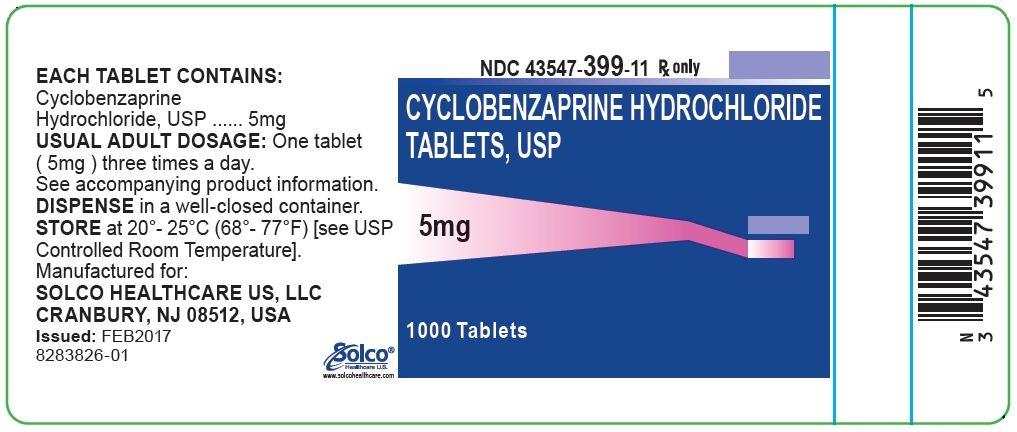
HOW SUPPLIED Cyclobenzaprine Hydrochloride Tablets, USP 5 mg round, orange film-coated tablets, debossed "2631" on one side and debossed "V" on the reverse side. They are supplied as follows: • Bottles of 10: NDC 43547-399-01 • Bottles of 100: NDC 43547-399-10 • Bottles of 500: NDC 43547-399-50 • Bottles of 1000: NDC 43547-399-11 Cyclobenzaprine Hydrochloride Tablets, USP 10 mg round, yellow film-coated tablets, debossed "2632" on one side and debossed "V" on the reverse side. They are supplied as follows: • Bottles of 10: NDC 43547-400-01 • Bottles of 90: NDC 43547-400-09 • Bottles of 100: NDC 43547-400-10 • Bottles of 180: NDC 43547-400-18 • Bottles of 270: NDC 43547-400-27 • Bottles of 500: NDC 43547-400-50 • Bottles of 1000: NDC 43547-400-11 • Bottles of 5000: NDC 43547-400-51 You may report side effects to Solco Healthcare US, LLC at 1-866-257-2597 or FDA at 1-800-FDA-1088 or www.fda.gov/medwatch.
📦 Storage and Handling ▾
Store at 20°-25°C (68°-77°F) [see USP Controlled Room Temperature].
📋 Description ▾
DESCRIPTION Cyclobenzaprine hydrochloride is a white, crystalline tricyclic amine salt with the empirical formula C 20 H 21 N • HCl and a molecular weight of 311.9. It has a melting point of 217°C, and a pK a of 8.47 at 25°C. It is freely soluble in water and alcohol, sparingly soluble in isopropanol, and insoluble in hydrocarbon solvents.
If aqueous solutions are made alkaline, the free base separates. Cyclobenzaprine HCl is designated chemically as 3-( 5H -dibenzo[ a,d ]cyclohepten-5-ylidene)- N , N -dimethyl-1-propanamine hydrochloride, and has the following structural formula: Cyclobenzaprine Hydrochloride Tablets, USP are supplied as 5 mg and 10 mg tablets for oral administration. Each tablet contains the following inactive ingredients: croscarmellose sodium, FD&C Yellow #6, hypromellose, lactose monohydrate, magnesium stearate, microcrystalline cellulose, polyethylene glycol, and titanium dioxide; 5 mg tablets also contain FD&C Red #40 and 10 mg tablets contain D&C Yellow #10 and polysorbate.
1
💬 Information for Patients ▾
Information for Patients Cyclobenzaprine hydrochloride tablets, especially when used with alcohol or other CNS depressants, may impair mental and/or physical abilities required for performance of hazardous tasks, such as operating machinery or driving a motor vehicle. In the elderly, the frequency and severity of adverse events associated with the use of cyclobenzaprine, with or without concomitant medications, is increased. In elderly patients, cyclobenzaprine hydrochloride tablets should be initiated with a 5 mg dose and titrated slowly upward.
Patients should be cautioned about the risk of serotonin syndrome with the concomitant use of Cyclobenzaprine Hydrochloride and other drugs, such as selective serotonin reuptake inhibitors (SSRIs), serotonin norepinephrine reuptake inhibitors (SNRIs), tricyclic antidepressants (TCAs), tramadol, bupropion, meperidine, verapamil, or monoamine oxidase (MAO) inhibitors. Patients should be advised of the signs and symptoms of serotonin syndrome, and be instructed to seek medical care immediately if they experience these symptoms (see WARNINGS , and see PRECAUTIONS, Drug Interactions ).
⚠️ Precautions ▾
PRECAUTIONS General Because of its atropine-like action, cyclobenzaprine hydrochloride should be used with caution in patients with a history of urinary retention, angle-closure glaucoma, increased intraocular pressure, and in patients taking anticholinergic medication. Impaired Hepatic Function The plasma concentration of cyclobenzaprine is increased in patients with hepatic impairment (see CLINICAL PHARMACOLOGY, Pharmacokinetics, Hepatic Impairment ). These patients are generally more susceptible to drugs with potentially sedating effects, including cyclobenzaprine.
Cyclobenzaprine hydrochloride tablets should be used with caution in subjects with mild hepatic impairment starting with a 5 mg dose and titrating slowly upward. Due to the lack of data in subjects with more severe hepatic insufficiency, the use of cyclobenzaprine hydrochloride tablets in subjects with moderate to severe impairment is not recommended. Information for Patients Cyclobenzaprine hydrochloride tablets, especially when used with alcohol or other CNS depressants, may impair mental and/or physical abilities required for performance of hazardous tasks, such as operating machinery or driving a motor vehicle.
In the elderly, the frequency and severity of adverse events associated with the use of cyclobenzaprine, with or without concomitant medications, is increased. In elderly patients, cyclobenzaprine hydrochloride tablets should be initiated with a 5 mg dose and titrated slowly upward. Patients should be cautioned about the risk of serotonin syndrome with the concomitant use of Cyclobenzaprine Hydrochloride and other drugs, such as selective serotonin reuptake inhibitors (SSRIs), serotonin norepinephrine reuptake inhibitors (SNRIs), tricyclic antidepressants (TCAs), tramadol, bupropion, meperidine, verapamil, or monoamine oxidase (MAO) inhibitors.
Patients should be advised of the signs and symptoms of serotonin syndrome, and be instructed to seek medical care immediately if they experience these symptoms (see WARNINGS , and see PRECAUTIONS, Drug Interactions ). Drug Interactions Cyclobenzaprine may have life threatening interactions with MAO inhibitors (see CONTRAINDICATIONS ). Postmarketing cases of serotonin syndrome have been reported during combined use of Cyclobenzaprine Hydrochloride and other drugs, such as selective serotonin reuptake inhibitors (SSRIs), serotonin norepinephrine reuptake inhibitors (SNRIs), tricyclic antidepressants (TCAs), tramadol, bupropion, meperidine, verapamil, or monoamine oxidase (MAO) inhibitors.
If concomitant treatment with Cyclobenzaprine Hydrochloride and other serotonergic drugs is clinically warranted, careful observation is advised, particularly during treatment initiation or dose increases (see WARNINGS ). Cyclobenzaprine may enhance the effects of alcohol, barbiturates, and other CNS depressants. Tricyclic antidepressants may block the antihypertensive action of guanethidine and similarly acting compounds.
Tricyclic antidepressants may enhance the seizure risk in patients taking tramadol. Carcinogenesis, Mutagenesis, Impairment of Fertility In rats treated with cyclobenzaprine hydrochloride for up to 67 weeks at doses of approximately 5 to 40 times the maximum recommended human dose, pale, sometimes enlarged, livers were noted and there was a dose-related hepatocyte vacuolation with lipidosis. In the higher dose groups this microscopic change was seen after 26 weeks and even earlier in rats which died prior to 26 weeks; at lower doses, the change was not seen until after 26 weeks.
Cyclobenzaprine did not affect the onset, incidence or distribution of neoplasia in an 81-week study in the mouse or in a 105-week study in the rat. At oral doses of up to 10 times the human dose, cyclobenzaprine did not adversely affect the reproductive performance or fertility of male or female rats. Cyclobenzaprine did not demonstrate mutagenic activity in the male mouse at dose levels of up to 20 times the human dose.
Pregnancy Pre… [Excerpted — this section continues on DailyMed.]
🍼 Nursing Mothers ▾
Nursing Mothers It is not known whether this drug is excreted in human milk. Because cyclobenzaprine is closely related to the tricyclic antidepressants, some of which are known to be excreted in human milk, caution should be exercised when cyclobenzaprine hydrochloride is administered to a nursing woman.
🧬 Pharmacokinetics ▾
Pharmacokinetics Estimates of mean oral bioavailability of cyclobenzaprine range from 33% to 55%. Cyclobenzaprine exhibits linear pharmacokinetics over the dose range 2.5 mg to 10 mg, and is subject to enterohepatic circulation. It is highly bound to plasma proteins.
Drug accumulates when dosed three times a day, reaching steady state within 3-4 days at plasma concentrations about four-fold higher than after a single dose. At steady state in healthy subjects receiving 10 mg t.i.d. (n=18), peak plasma concentration was 25.9 ng/mL (range, 12.8-46.1 ng/mL), and area under the concentration-time (AUC) curve over an 8-hour dosing interval was 177 ng•hr/mL (range, 80-319 ng•hr/mL).
Cyclobenzaprine is extensively metabolized, and is excreted primarily as glucuronides via the kidney. Cytochromes P-450 3A4, 1A2, and, to a lesser extent, 2D6, mediate N -demethylation, one of the oxidative pathways for cyclobenzaprine. Cyclobenzaprine is eliminated quite slowly, with an effective half-life of 18 hours (range 8-37 hours; n=18); plasma clearance is
0.7L/min. The plasma concentration of cyclobenzaprine is generally higher in the elderly and in patients with hepatic impairment (see PRECAUTIONS, Use in the Elderly and PRECAUTIONS, Impaired Hepatic Function ). Elderly In a pharmacokinetic study in elderly individuals (≥65 yrs old), mean (n=10) steady state cyclobenzaprine AUC values were approximately 1.7-fold (171.0 ng•hr/mL, range 96.1-255.3) higher than those seen in a group of eighteen younger adults (101.4 ng•hr/mL, range 36.1-182.9) from another study.
Elderly male subjects had the highest observed mean increase, approximately 2.4-fold (198.3 ng•hr/mL, range 155.6-255.3 versus 83.2 ng•hr/mL, range 41.1-142.5 for younger males) while levels in elderly females were increased to a much lesser extent, approximately 1.2-fold (143.8 ng•hr/mL, range 96.1-196.3 versus 115.9 ng•hr/mL, range 36.1-182.9 for younger females). In light of these findings, therapy with cyclobenzaprine hydrochloride tablets in the elderly should be initiated with a 5 mg dose and titrated slowly upward.
Hepatic Impairment In a pharmacokinetic study of sixteen subjects with hepatic impairment (15 mild, 1 moderate per Child-Pugh score), both AUC and C max were approximately double the values seen in the healthy control group. Based on the findings, cyclobenzaprine hydrochloride tablets should be used with caution in subjects with mild hepatic impairment starting with the 5 mg dose and titrating slowly upward. Due to the lack of data in subjects with more severe hepatic insufficiency, the use of cyclobenzaprine hydrochloride tablets in subjects with moderate to severe impairment is not recommended.
No significant effect on plasma levels or bioavailability of cyclobenzaprine hydrochloride tablets or aspirin was noted when single or multiple doses of the two drugs were administered concomitantly. Concomitant administration of cyclobenzaprine hydrochloride tablets and naproxen or diflunisal was well tolerated with no reported unexpected adverse effects. However combination therapy of cyclobenzaprine hydrochloride tablets with naproxen was associated with more side effects than therapy with naproxen alone, primarily in the form of drowsiness.
No well-controlled studies have been performed to indicate that cyclobenzaprine hydrochloride tablets enhance the clinical effect of aspirin or other analgesics, or whether analgesics enhance the clinical effect of cyclobenzaprine hydrochloride tablets in acute musculoskeletal conditions.
Elderly In a pharmacokinetic study in elderly individuals (≥65 yrs old), mean (n=10) steady state cyclobenzaprine AUC values were approximately 1.7-fold (171.0 ng•hr/mL, range 96.1-255.3) higher than those seen in a group of eighteen younger adults (101.4 ng•hr/mL, range 36.1-182.9) from another study. Elderly male subjects had the highest observed mean increase, approximately 2.4-fold (198.3 ng•hr/mL, range 155.6-255.3 versus 83.2 ng•hr/mL, range 41.1-… [Excerpted — this section continues on DailyMed.]
🔬 Clinical Studies ▾
Clinical Studies Eight double-blind controlled clinical studies were performed in 642 patients comparing cyclobenzaprine hydrochloride 10 mg, diazepam, and placebo. Muscle spasm, local pain and tenderness, limitation of motion, and restriction in activities of daily living were evaluated. In three of these studies there was a significantly greater improvement with cyclobenzaprine than with diazepam, while in the other studies the improvement following both treatments was comparable.
Although the frequency and severity of adverse reactions observed in patients treated with cyclobenzaprine were comparable to those observed in patients treated with diazepam, dry mouth was observed more frequently in patients treated with cyclobenzaprine and dizziness more frequently in those treated with diazepam. The incidence of drowsiness, the most frequent adverse reaction, was similar with both drugs. The efficacy of cyclobenzaprine hydrochloride tablets 5 mg was demonstrated in two seven-day, double-blind, controlled clinical trials enrolling 1405 patients.
One study compared cyclobenzaprine hydrochloride tablets 5 and 10 mg t.i.d. to placebo; and a second study compared cyclobenzaprine hydrochloride tablets 5 and 2.5 mg t.i.d. to placebo. Primary endpoints for both trials were determined by patient-generated data and included global impression of change, medication helpfulness, and relief from starting backache. Each endpoint consisted of a score on a 5-point rating scale (from 0 or worst outcome to 4 or best outcome).
Secondary endpoints included a physician's evaluation of the presence and extent of palpable muscle spasm. Comparisons of cyclobenzaprine hydrochloride tablets 5 mg and placebo groups in both trials established the statistically significant superiority of the 5 mg dose for all three primary endpoints at day 8 and, in the study comparing 5 and 10 mg, at day 3 or 4 as well. A similar effect was observed with cyclobenzaprine hydrochloride tablets 10 mg (all endpoints).
Physician-assessed secondary endpoints also showed that cyclobenzaprine hydrochloride tablets 5 mg was associated with a greater reduction in palpable muscle spasm than placebo. Analysis of the data from controlled studies shows that cyclobenzaprine produces clinical improvement whether or not sedation occurs. Surveillance Program A post-marketing surveillance program was carried out in 7607 patients with acute musculoskeletal disorders, and included 297 patients treated with cyclobenzaprine hydrochloride tablets 10 mg for 30 days or longer.
The overall effectiveness of cyclobenzaprine was similar to that observed in the double-blind controlled studies; the overall incidence of adverse effects was less (see ADVERSE REACTIONS ).
Surveillance Program A post-marketing surveillance program was carried out in 7607 patients with acute musculoskeletal disorders, and included 297 patients treated with cyclobenzaprine hydrochloride tablets 10 mg for 30 days or longer. The overall effectiveness of cyclobenzaprine was similar to that observed in the double-blind controlled studies; the overall incidence of adverse effects was less (see ADVERSE REACTIONS ).
🔒 Drug Abuse and Dependence ▾
DRUG ABUSE AND DEPENDENCE Pharmacologic similarities among the tricyclic drugs require that certain withdrawal symptoms be considered when cyclobenzaprine hydrochloride is administered, even though they have not been reported to occur with this drug. Abrupt cessation of treatment after prolonged administration rarely may produce nausea, headache, and malaise. These are not indicative of addiction.
📄 Carcinogenesis, Mutagenesis, Impairment of Fertility ▾
Carcinogenesis, Mutagenesis, Impairment of Fertility In rats treated with cyclobenzaprine hydrochloride for up to 67 weeks at doses of approximately 5 to 40 times the maximum recommended human dose, pale, sometimes enlarged, livers were noted and there was a dose-related hepatocyte vacuolation with lipidosis. In the higher dose groups this microscopic change was seen after 26 weeks and even earlier in rats which died prior to 26 weeks; at lower doses, the change was not seen until after 26 weeks. Cyclobenzaprine did not affect the onset, incidence or distribution of neoplasia in an 81-week study in the mouse or in a 105-week study in the rat.
At oral doses of up to 10 times the human dose, cyclobenzaprine did not adversely affect the reproductive performance or fertility of male or female rats. Cyclobenzaprine did not demonstrate mutagenic activity in the male mouse at dose levels of up to 20 times the human dose.
📄 Package Label / Principal Display Panel ▾
PRINCIPAL DISPLAY PANEL 5mg
PRINCIPAL DISPLAY PANEL 10mg
Medicaid utilization by pack size
About this NDC listing & data coverage
What data is (and isn’t) available for this NDC — tap to expand
| NDC identity (package / product / labeler codes) | ✓ Available |
| Labeler | ✓ Available |
| Product & package description | ✓ Available |
| Marketing category & status | ✓ Available |
| Active ingredient / dosage form / route | ✓ Available |
| FDA label (SPL via DailyMed) | ✓ Available |
| Package photos | ✓ Available |
| Inactive ingredients (structured) | ✓ Available |
| NADAC pharmacy acquisition price (CMS) | — Not published for this NDC CMS publishes NADAC only for NDCs reported in its retail-pharmacy survey. |
| Orange Book / therapeutic-equivalence data | ✓ Available |
| HCPCS J-code billing crosswalk | — Not published for this NDC Most self-administered / retail products have no J-code — that is normal. |
| Medicaid utilization (CMS SDUD) | — Not published for this NDC CMS reports utilization only for NDCs with Medicaid claims above its privacy threshold. |