
Pioglitazone 15 mg Tablet, 500-count — NDC 43547-426-50 (Billing 43547-0426-50)
This is a package of 500 tablets of Pioglitazone 15 mg Tablet from Solco Healthcare LLC, marketed since May 2018 and currently FDA-listed; retail pharmacies pay about $0.0866 per tablet (NADAC).
NDC database record
One package, one record: these facts belong to NDC 43547-426-50 alone.
- Record
- FDA NDC Directory package listing · Human prescription drug
- Code segments
- 43547 labeler · 426 product · 50 package
- Package marketed since
- May 20, 2018
- Sample package
- No — commercial package
- Listing certified through
- Dec 31, 2026
- Billing quantity
- 500 EA per package
- Barcode (UPC)
- 0343547428099, 0343547426095
- FDA record last changed
- Jul 24, 2026
Identity & classification
Regulatory identifiers FDA, NLM and CMS codes for this package
Drug-database identifiers Medi-Span GPI and First Databank GCN / HICL / AHFS classification
- GSN (GCN sequence number): 042943
- GCN: 92991
- GPI-14 (Medi-Span): 27607050100320
- HICL (First Databank): 020324
- AHFS class code: 68:20.28.00
- RxCUI (RxNorm): 312440
Where does this data come from?
- FDA openFDA NDC Directory · synced Oct 1, 2026
- FDA label on DailyMed · label index refreshed Oct 5, 2026
- RxNorm (NLM RxNav) · catalog refreshed Oct 1, 2026
- Medi-Span GPI (licensed)
- First Databank (licensed) · refreshed Oct 1, 2026
RxNorm drug class
This medicine belongs to the Peroxisome Proliferator-activated Receptor alpha Agonist class.
Where does this data come from?
- RxClass (NLM) · catalog refreshed Oct 1, 2026
Clinical
Pioglitazone is used with a diet and exercise program and sometimes with other medications, to treat type 2 diabetes (condition in which the body does not use insulin normally and therefore cannot control the amount of sugar in the blood). Pioglitazone is in a class of medications called thiazolidinediones. It works by increasing the body's sensitivity to insulin, a natural substance that helps control blood sugar levels. Pioglitazone is not used to treat type 1 diabetes (condition in which the body does not produce insulin and, therefore, cannot control the amount of sugar in the blood) or d...
Read the full MedlinePlus article ↗- It helps lower blood sugar in adults with type 2 diabetes, along with diet and exercise. It works by helping your body use its own insulin better. It is not for type 1 diabetes or...
- Take it by mouth once a day. Food doesn't matter, so take it whenever is easiest to remember. Follow your prescriber's directions and the pharmacy label.
- Colds, headache, sinus trouble, muscle aches and a sore throat are common. Some swelling and weight gain can happen too. Call me or your doctor right away about fast weight gain, s...
- What side effects are normal, and what should I call about?
Patient education
Supplement & herbal interactions
Some supplements/herbs that may interact with Pioglitazone — tap one for details:
Pioglitazone may be associated with lower levels of 1 nutrient — worth a chat with your pharmacist, not a cause for alarm.
Where does this data come from?
- MedlinePlus (NLM) · refreshed Oct 1, 2026
- FDA label on DailyMed · label index refreshed Oct 5, 2026
Ask a licensed pharmacist directly — free, answered by our team.
Pricing
A drug doesn't have one price. Each row is a different public payment system, and none is what you'd pay at the counter — that depends on your insurance. The ⓘ on each row explains what it measures.
| Price system | Per ea | Per package |
|---|---|---|
| Retail pharmacies payNADAC · weekly | $0.087 | $43.30 / 500 tablets |
| Medicaid paysCMS SDUD · 12 mo | No recent Medicaid claims on file for this NDC — rare and low-volume NDCs are suppressed in the public data. | |
| Medicare drug plans payPart D · Q2 2026 | $0.1886 | $94.30 / 500 tablets |
Where does this data come from?
- CMS NADAC weekly file · file of Nov 23, 2022
- CMS ASP pricing files · refreshed Sep 20, 2026
- CMS Medicaid State Drug Utilization Data · refreshed Oct 5, 2026
- CMS Part D plan pricing files · refreshed Sep 24, 2026
- VA National Acquisition Center price file
Packaging — all sizes for this product
| Package NDC | Description | Per unit | Per pack | Marketing start | Marketing end | Status |
|---|---|---|---|---|---|---|
| 43547-0426-03 43547-426-03 Main listing | 30 TABLET in 1 BOTTLE | $0.0866 / ea | $2.60 | 2018-05-20 | — | Active |
| 43547-0426-09 43547-426-09 | 90 TABLET in 1 BOTTLE | $0.0866 / ea | $7.79 | 2018-05-20 | — | Active |
| 43547-0426-50 You're viewing this | 500 TABLET in 1 BOTTLE | $0.0866 / ea | $43.30 | 2018-05-20 | — | Active |
You're viewing the largest of 3 pack sizes for this product.
This pack effectively ties for the lowest per-ea cost of the 3 priced pack sizes ($0.0866 NADAC).
Pack size FAQ
What quantity is in this package?
How does this package differ from NDC 43547-0426-03?
What NDC number is used to bill for this package of Pioglitazone 15 mg Tablet?
Prices are the latest CMS NADAC pharmacy acquisition cost per NDC; per-pack figures are per-unit × pack quantity, shown only when the pack is denominated in the same measure NADAC prices.
Therapeutic equivalents
| Product | Labeler | Pack | NADAC/unit | TE | Status | Price vs. this |
|---|---|---|---|---|---|---|
| Pioglitazone 15 mg 00093-7271-05 | Teva | 500 tablets | $0.067 | AB | Availability likely | save 22% |
| Pioglitazone 15 mg 00904-7090-61 | Major | 100 tablets | $0.067 | AB | Availability likely | save 22% |
| Pioglitazone 15 mg 16714-0645-01 | NorthStar | 30 tablets | $0.067 | AB | Availability likely | save 22% |
| Pioglitazone 15 mg 33342-0054-07 | Macleods | 30 tablets | $0.067 | AB | Availability likely | save 22% |
| Pioglitazone 15 mg 57237-0219-05 | Rising | 500 tablets | $0.067 | AB | Availability likely | save 22% |
| Pioglitazone 15 mg 60687-0391-01 | American | 100 tablets | $0.067 | AB | Availability likely | save 22% |
| Pioglitazone Hydrochloride 15 mg 62135-0804-30 | Chartwell | 30 tablets | $0.067 | AB | Availability likely | save 22% |
| Pioglitazone Hydrochloride 15 mg 65862-0512-05 | Aurobindo | 500 tablets | $0.067 | AB | Availability likely | save 22% |
| Pioglitazone Hydrochloride 15 mg 82009-0103-05 | QUALLENT | 500 tablets | $0.067 | AB | Availability likely | save 22% |
| Pioglitazone 15 mgthis 43547-0426-50 | Solco | 500 tablets | $0.087 | AB | FDA listed | — |
| Pioglitazone 15 mg 42291-0959-30 | AvKARE | 30 tablets | — | AB | FDA listed | — |
| Pioglitazone 15 mg 50090-4605-00 | A-S | 30 tablets | — | AB | FDA listed | — |
| Pioglitazone Hydrochloride 15 mg 50090-6386-00 | A-S | 30 tablets | — | AB | FDA listed | — |
| Actos 15 mg 64764-0151-02 | Takeda | 42 tablets | — | AB | FDA listed | — |
| Pioglitazone 15 mg 68071-5199-03 | NuCare | 30 tablets | — | AB | FDA listed | — |
| Pioglitazone 15 mg 68071-5245-03 | NuCare | 30 tablets | — | AB | FDA listed | — |
| Pioglitazone 15 mg 68788-7511-01 | Preferred | 100 tablets | — | AB | FDA listed | — |
| Pioglitazone 15 mg 70518-2609-00 | REMEDYREPACK | 90 tablets | — | AB | FDA listed | — |
| Pioglitazone 15 mg 71335-1343-01 | Bryant | 30 tablets | — | AB | Discontinued | — |
| Pioglitazone 15 mg 71610-0495-60 | Aphena | 90 tablets | — | AB | FDA listed | — |
| Pioglitazone Hydrochloride 15 mg 76385-0178-10 | Unichem | 1000 tablets | — | AB | FDA listed | — |
| Pioglitazone Hydrochloride 15 mg 84677-0026-05 | GSMS, | 500 tablets | — | AB | FDA listed | — |
Where does this data come from?
- FDA openFDA NDC Directory · synced Oct 1, 2026
- FDA Orange Book · refreshed Oct 3, 2026
- CMS NADAC weekly file · file of Nov 23, 2022
Availability & generic status
This product is an FDA-approved generic. Other versions of the same drug are listed under Therapeutic equivalents, least expensive first.
Where does this data come from?
- FDA Orange Book · refreshed Oct 3, 2026
What it looks like
Where does this data come from?
- FDA label on DailyMed · label index refreshed Oct 5, 2026
Inactive Ingredients / Excipients
Inactive ingredients, also called excipients, are components of the drug product other than the active ingredient. They may include fillers, dyes, coatings, preservatives, flavors, or other formulation ingredients.
💡 Tap an ingredient (hover on desktop) to see what it is and why it’s used.
-
UNII UTY7PDF93L
A plant-derived thickening agent made from cellulose. It acts as a binder to hold tablet ingredients together and as a disintegrant to help the tablet break apart in your stomach so the medicine can be absorbed.
-
UNII RFW2ET671P
Hydroxypropyl cellulose is a plant-derived thickening agent made from cellulose. It acts as a binder to hold tablet ingredients together and as a film-former to coat tablets or control how fast the medicine releases.
-
UNII EWQ57Q8I5X
Lactose monohydrate is a natural sugar derived from milk. It serves as a filler and binder in tablets and capsules, helping create the proper size, texture, and consistency of the medicine.
-
UNII 70097M6I30
Magnesium stearate is a salt made from magnesium and stearic acid, a fatty substance. It's used in tablets and capsules as a lubricant and glidant to help ingredients flow smoothly during manufacturing and prevent sticking.
4 inactive ingredients listed in the exact product block matched to this NDC.
Where does this data come from?
ingredient classCode="IACT" elements from the exact product block matched by this NDC. Label-section narrative from DailyMed / the openFDA label index is shown separately when available.- FDA label on DailyMed · label index refreshed Oct 5, 2026
- FDA openFDA NDC Directory · synced Oct 1, 2026
Inactive ingredient FAQ
Are inactive ingredients the same for every manufacturer?
Why might an inactive ingredient be missing?
Can inactive ingredients matter?
Manufacturer & labeler
More NDCs from Solco Healthcare LLC labeler code 43547
- Lisinopril and Hydrochlorothiazide 10 mg; 12.5 mg Tablet NDC 43547-420-10
- Lisinopril and Hydrochlorothiazide 20 mg; 12.5 mg Tablet NDC 43547-421-10
- Lisinopril and Hydrochlorothiazide 20 mg; 25 mg Tablet NDC 43547-422-10
- Losartan Potassium and Hydrochlorothiazide 50 mg; 12.5 mg Tablet, Film Coated NDC 43547-423-03
- Losartan Potassium and Hydrochlorothiazide 100 mg; 25 mg Tablet, Film Coated NDC 43547-424-03
- Losartan Potassium and Hydrochlorothiazide 100 mg; 12.5 mg Tablet, Film Coated NDC 43547-425-03
- Pioglitazone 30 mg Tablet NDC 43547-427-03
- Pioglitazone 45 mg Tablet NDC 43547-428-03
- Fenofibrate 48 mg Tablet NDC 43547-430-09
- Fenofibrate 145 mg Tablet NDC 43547-431-09
- Clonidine Hydrochloride .1 mg Tablet, Extended Release NDC 43547-435-06
- Entecavir .5 mg Tablet, Film Coated NDC 43547-436-03
Where does this data come from?
- FDA openFDA NDC Directory · synced Oct 1, 2026
- Drugs@FDA
Full prescribing information FDA SPL
🚨 Boxed Warning ▾
WARNING: CONGESTIVE HEART FAILURE • Thiazolidinediones, including pioglitazone tablets, cause or exacerbate congestive heart failure in some patients [see Warnings and Precautions (5.1) ] . • After initiation of pioglitazone tablets, and after dose increases, monitor patients carefully for signs and symptoms of heart failure (e.g., excessive, rapid weight gain, dyspnea, and/or edema). If heart failure develops, it should be managed according to current standards of care and discontinuation or dose reduction of pioglitazone tablets must be considered. • Pioglitazone tablets are not recommended in patients with symptomatic heart failure. • Initiation of pioglitazone tablets in patients with established New York Heart Association (NYHA) Class III or IV heart failure is contraindicated [see Contraindications (4) and Warnings and Precautions (5.1) ] .
WARNING: CONGESTIVE HEART FAILURE See full prescribing information for complete boxed warning. • Thiazolidinediones, including pioglitazone tablets, cause or exacerbate congestive heart failure in some patients. (5.1) • After initiation of pioglitazone tablets, and after dose increases, monitor patients carefully for signs and symptoms of heart failure (e.g., excessive, rapid weight gain, dyspnea, and/or edema). If heart failure develops, it should be managed according to current standards of care and discontinuation or dose reduction of pioglitazone tablets must be considered.
(5.1) • Pioglitazone tablets are not recommended in patients with symptomatic heart failure. (5.1) • Initiation of pioglitazone tablets in patients with established New York Heart Association (NYHA) Class III or IV heart failure is contraindicated. ( 4 , 5.1 )
🎯 Indications and Usage ▾
1 INDICATIONS AND USAGE Monotherapy and Combination Therapy Pioglitazone tablets are indicated as adjuncts to diet and exercise to improve glycemic control in adults with type 2 diabetes mellitus in multiple clinical settings [see Clinical Studies (14) ] . Important Limitations of Use Pioglitazone tablets exert their antihyperglycemic effects only in the presence of endogenous insulin. Pioglitazone tablets should not be used to treat type 1 diabetes or diabetic ketoacidosis, as it would not be effective in these settings.
Use caution in patients with liver disease [see Warnings and Precautions (5.3) ] . Pioglitazone is a thiazolidinedione and an agonist for peroxisome proliferator-activated receptor (PPAR) gamma indicated as an adjunct to diet and exercise to improve glycemic control in adults with type 2 diabetes mellitus in multiple clinical settings. ( 1 , 14 ) Important Limitations of Use: • Not for treatment of type 1 diabetes or diabetic ketoacidosis.
(1)
⏱️ Dosage and Administration ▾
2 DOSAGE AND ADMINISTRATION • Initiate pioglitazone tablets at 15 mg or 30 mg once daily. Limit initial dose to 15 mg once daily in patients with NYHA Class I or II heart failure. (2.1) • If there is inadequate glycemic control, the dose can be increased in 15 mg increments up to a maximum of 45 mg once daily.
(2.1) • Obtain liver tests before starting pioglitazone tablets. If abnormal, use caution when treating with pioglitazone tablets, investigate the probable cause, treat (if possible) and follow appropriately. Monitoring liver tests while on pioglitazone tablets are not recommended in patients without liver disease.
(5.3)
2.1Recommendations for All Patients Pioglitazone tablets should be taken once daily and can be taken without regard to meals. The recommended starting dose for patients without congestive heart failure is 15 mg or 30 mg once daily. The recommended starting dose for patients with congestive heart failure (NYHA Class I or II) is 15 mg once daily.
The dose can be titrated in increments of 15 mg up to a maximum of 45 mg once daily based on glycemic response as determined by HbA1c. After initiation of pioglitazone tablets or with dose increase, monitor patients carefully for adverse reactions related to fluid retention such as weight gain, edema, and signs and symptoms of congestive heart failure [see Boxed Warning and Warnings and Precautions (5.5) ] . Liver tests (serum alanine and aspartate aminotransferases, alkaline phosphatase, and total bilirubin) should be obtained prior to initiating pioglitazone tablets.
Routine periodic monitoring of liver tests during treatment with pioglitazone tablets is not recommended in patients without liver disease. Patients who have liver test abnormalities prior to initiation of pioglitazone tablets or who are found to have abnormal liver tests while taking pioglitazone tablets should be managed as described under Warnings and Precautions [see Warnings and Precautions (5.3) and Clinical Pharmacology (12.3) ] .
2.2Concomitant Use with an Insulin Secretagogue or Insulin If hypoglycemia occurs in a patient co-administered pioglitazone tablets and an insulin secretagogue (e.g., sulfonylurea), the dose of the insulin secretagogue should be reduced. If hypoglycemia occurs in a patient co-administered pioglitazone tablets and insulin, the dose of insulin should be decreased by 10% to 25%. Further adjustments to the insulin dose should be individualized based on glycemic response.
2.3Concomitant Use with Strong CYP2C8 Inhibitors Coadministration of pioglitazone tablets and gemfibrozil, a strong CYP2C8 inhibitor, increases pioglitazone exposure approximately 3-fold. Therefore, the maximum recommended dose of pioglitazone tablets is 15 mg daily when used in combination with gemfibrozil or other strong CYP2C8 inhibitors [see Drug Interactions (7.1) and Clinical Pharmacology (12.3) ] .
💊 Dosage Forms and Strengths ▾
3 DOSAGE FORMS AND STRENGTHS Round tablet contains pioglitazone as follows: • 15 mg: White to off-white, debossed with “295” on one side and “S” on the other • 30 mg: White to off-white, debossed with “293” on one side and “S” on the other • 45 mg: White to off-white, debossed with “294” on one side and “S” on the other Tablets: 15 mg, 30 mg, and 45 mg (3)
⛔ Contraindications ▾
4 CONTRAINDICATIONS • Initiation in patients with established NYHA Class III or IV heart failure [see Boxed Warning ] . • Use in patients with known hypersensitivity to pioglitazone or any other component of pioglitazone tablets. • Initiation in patients with established New York Heart Association (NYHA) Class III or IV heart failure [see Boxed Warning ] . (4) • Use in patients with known hypersensitivity to pioglitazone or any other component of pioglitazone tablets. (4)
⚠️ Warnings and Cautions ▾
5 WARNINGS AND PRECAUTIONS • Congestive heart failure: Fluid retention may occur and can exacerbate or lead to congestive heart failure. Combination use with insulin and use in congestive heart failure NYHA Class I and II may increase risk. Monitor patients for signs and symptoms.
(5.1) • Hypoglycemia: When used with insulin or an insulin secretagogue, a lower dose of the insulin or insulin secretagogue may be needed to reduce the risk of hypoglycemia. (5.2) • Hepatic effects: Postmarketing reports of hepatic failure, sometimes fatal. Causality cannot be excluded.
If liver injury is detected, promptly interrupt pioglitazone tablets and assess patient for probable cause, then treat cause if possible, to resolution or stabilization. Do not restart pioglitazone tablets if liver injury is confirmed and no alternate etiology can be found. (5.3) • Bladder cancer: May increase the risk of bladder cancer.
Do not use in patients with active bladder cancer. Use caution when using in patients with a prior history of bladder cancer. (5.4) • Edema: Dose-related edema may occur.
(5.5) • Fractures: Increased incidence in female patients. Apply current standards of care for assessing and maintaining bone health. (5.6) • Macular edema: Postmarketing reports.
Recommend regular eye exams in all patients with diabetes according to current standards of care with prompt evaluation for acute visual changes. (5.7) • Macrovascular outcomes: There have been no clinical studies establishing conclusive evidence of macrovascular risk reduction with pioglitazone tablets. (5.8)
5.1Congestive Heart Failure Pioglitazone tablets, like other thiazolidinediones, can cause dose-related fluid retention when used alone or in combination with other antidiabetic medications and is most common when pioglitazone tablets are used in combination with insulin. Fluid retention may lead to or exacerbate congestive heart failure. Patients should be observed for signs and symptoms of congestive heart failure.
If congestive heart failure develops, it should be managed according to current standards of care and discontinuation or dose reduction of pioglitazone tablets must be considered [see Boxed Warning , Contraindications (4) , and Adverse Reactions (6.1) ] .
5.2Hypoglycemia Patients receiving pioglitazone tablets in combination with insulin or other antidiabetic medications (particularly insulin secretagogues such as sulfonylureas) may be at risk for hypoglycemia. A reduction in the dose of the concomitant antidiabetic medication may be necessary to reduce the risk of hypoglycemia [see Dosage and Administration (2.2) ] .
5.3Hepatic Effects There have been postmarketing reports of fatal and non-fatal hepatic failure in patients taking pioglitazone tablets, although the reports contain insufficient information necessary to establish the probable cause. There has been no evidence of drug-induced hepatotoxicity in the pioglitazone tablets controlled clinical trial database to date [see Adverse Reactions (6.1) ] . Patients with type 2 diabetes may have fatty liver disease or cardiac disease with episodic congestive heart failure, both of which may cause liver test abnormalities, and they may also have other forms of liver disease, many of which can be treated or managed.
Therefore, obtaining a liver test panel (serum alanine aminotransferase [ALT], aspartate aminotransferase [AST], alkaline phosphatase, and total bilirubin) and assessing the patient is recommended before initiating pioglitazone tablets therapy. In patients with abnormal liver tests, pioglitazone tablets should be initiated with caution. Measure liver tests promptly in patients who report symptoms that may indicate liver injury, including fatigue, anorexia, right upper abdominal discomfort, dark urine or jaundice.
In this clinical context, if the patient is found to have abnormal liver tests (ALT greater than 3 times the upper limit of the reference range), pioglitazone tablets treatment should be interrupted… [Excerpted — this section continues on DailyMed.]
🤒 Adverse Reactions ▾
6 ADVERSE REACTIONS The following serious adverse reactions are discussed elsewhere in the labeling: • Congestive heart failure [see Boxed Warning and Warnings and Precautions (5.1) ] • Edema [see Warnings and Precautions (5.5) ] • Fractures [see Warnings and Precautions (5.6) ] Most common adverse reactions (≥5%) are upper respiratory tract infection, headache, sinusitis, myalgia, and pharyngitis. (6.1) To report SUSPECTED ADVERSE REACTIONS, contact Solco Healthcare LLC at 1-866-257-2597 or FDA at 1-800-FDA-1088 or www.fda.gov/medwatch.
6.1Clinical Trials Experience Because clinical trials are conducted under widely varying conditions, adverse reaction rates observed in the clinical trials of a drug cannot be directly compared to rates in the clinical trials of another drug and may not reflect the rates observed in practice. Over 8500 patients with type 2 diabetes have been treated with pioglitazone tablets in randomized, double-blind, controlled clinical trials, including 2605 patients with type 2 diabetes and macrovascular disease treated with pioglitazone tablets in the PROactive clinical trial.
In these trials, over 6000 patients have been treated with pioglitazone tablets for six months or longer, over 4500 patients have been treated with pioglitazone tablets for one year or longer, and over 3000 patients have been treated with pioglitazone tablets for at least two years. In six pooled 16-to 26-week placebo-controlled monotherapy and 16-to 24-week add-on combination therapy trials, the incidence of withdrawals due to adverse events was 4.5% for patients treated with pioglitazone tablets and 5.8% for comparator-treated patients.
The most common adverse events leading to withdrawal were related to inadequate glycemic control, although the incidence of these events was lower (1.5%) with pioglitazone tablets than with placebo (3.0%). In the PROactive trial, the incidence of withdrawals due to adverse events was 9.0% for patients treated with pioglitazone tablets and 7.7% for placebo-treated patients. Congestive heart failure was the most common serious adverse event leading to withdrawal occurring in 1.3% of patients treated with pioglitazone tablets and 0.6% of patients treated with placebo.
Common Adverse Events: 16-to 26-Week Monotherapy Trials A summary of the incidence and type of common adverse events reported in three pooled 16-to 26-week placebo-controlled monotherapy trials of pioglitazone tablets is provided in Table 1 . Terms that are reported represent those that occurred at an incidence of >5% and more commonly in patients treated with pioglitazone tablets than in patients who received placebo. None of these adverse events were related to pioglitazone tablets dose.
Table 1. Three Pooled 16- to 26-Week Placebo-Controlled Clinical Trials of Pioglitazone Tablets Monotherapy: Adverse Events Reported at an Incidence >5% and More Commonly in Patients Treated with Pioglitazone Tablets than in Patients Treated with Placebo % of Patients Placebo Pioglitazone Tablets N=259 N=606 Upper Respiratory Tract Infection 8.5
13.2Headache 6.9
9.1Sinusitis 4.6
6.3Myalgia 2.7
5.4Pharyngitis 0.8
5.1Common Adverse Events: 16-to 24-Week Add-on Combination Therapy Trials A summary of the overall incidence and types of common adverse events reported in trials of pioglitazone tablets add-on to sulfonylurea is provided in Table 2 . Terms that are reported represent those that occurred at an incidence of >5% and more commonly with the highest tested dose of pioglitazone tablets. Table 2.
16- to 24-Week Clinical Trials of Pioglitazone Tablets Add-on to Sulfonylurea 16-Week Placebo-Controlled Trial Adverse Events Reported in >5% of Patients and More Commonly in Patients Treated with Pioglitazone Tablets 30 mg + Sulfonylurea than in Patients Treated with Placebo + Sulfonylurea % of Patients Placebo Pioglitazone Tablets 15 mg Pioglitazone Tablets 30 mg + Sulfonylurea + Sulfonylurea + Sulfonylurea N=187 N=184 N=189 Note: The preferred terms… [Excerpted — this section continues on DailyMed.]
🔄 Drug Interactions ▾
7 DRUG INTERACTIONS • Strong CYP2C8 inhibitors (e.g., gemfibrozil) increase pioglitazone concentrations. Limit pioglitazone tablets dose to 15 mg daily. ( 2.3 , 7.1 ) • CYP2C8 inducers (e.g., rifampin) may decrease pioglitazone concentrations. (7.2) • Topiramate may decrease pioglitazone concentrations. (7.3)
7.1Strong CYP2C8 Inhibitors An inhibitor of CYP2C8 (e.g., gemfibrozil) significantly increases the exposure (area under the serum concentration-time curve or AUC) and half-life (t ½ ) of pioglitazone. Therefore, the maximum recommended dose of pioglitazone tablets is 15 mg daily if used in combination with gemfibrozil or other strong CYP2C8 inhibitors [see Dosage and Administration (2.3) and Clinical Pharmacology (12.3) ].
7.2CYP2C8 Inducers An inducer of CYP2C8 (e.g., rifampin) may significantly decrease the exposure (AUC) of pioglitazone. Therefore, if an inducer of CYP2C8 is started or stopped during treatment with pioglitazone tablets, changes in diabetes treatment may be needed based on clinical response without exceeding the maximum recommended daily dose of 45 mg for pioglitazone tablets [see Clinical Pharmacology (12.3) ] .
7.3Topiramate A decrease in the exposure of pioglitazone and its active metabolites were noted with concomitant administration of pioglitazone and topiramate [see Clinical Pharmacology ( 12.3 )] . The clinical relevance of this decrease is unknown; however, when pioglitazone tablets and topiramate are used concomitantly, monitor patients for adequate glycemic control.
🔄 Drug / Laboratory Test Interactions ▾
7.3Topiramate A decrease in the exposure of pioglitazone and its active metabolites were noted with concomitant administration of pioglitazone and topiramate [see Clinical Pharmacology ( 12.3 )] . The clinical relevance of this decrease is unknown; however, when pioglitazone tablets and topiramate are used concomitantly, monitor patients for adequate glycemic control.
👥 Use in Specific Populations ▾
8 USE IN SPECIFIC POPULATIONS • Females and Males of Reproductive Potential: Advise premenopausal females of the potential for an unintended pregnancy. (8.3) • Pediatrics: Not recommended for use in pediatric patients. (8.4)
8.1Pregnancy Risk Summary Limited data with pioglitazone tablets in pregnant women are not sufficient to determine a drug-associated risk for major birth defects or miscarriage. There are risks to the mother and fetus associated with poorly controlled diabetes in pregnancy [see Clinical Considerations]. In animal reproduction studies, no adverse developmental effects were observed when pioglitazone was administered to pregnant rats and rabbits during organogenesis at exposures up to 5-and 35-times the 45 mg clinical dose, respectively, based on body surface area [see Data].
The estimated background risk of major birth defects is 6-10% in women with pre-gestational diabetes with a HbA1c >7 and has been reported to be as high as 20-25% in women with a HbA1c >10. The estimated background risk of miscarriage for the indicated population is unknown. In the U.S. general population, the estimated background risk of major birth defects and miscarriage in clinically recognized pregnancies is 2-4% and 15-20%, respectively.
Clinical Considerations Disease-associated maternal and/or embryo/fetal risk Poorly controlled diabetes in pregnancy increases the maternal risk for diabetic ketoacidosis, pre-eclampsia, spontaneous abortions, preterm delivery, still birth and delivery complications. Poorly controlled diabetes increases the fetal risk for major birth defects, still birth, and macrosomia related morbidity. Data Animal Data Pioglitazone administered to pregnant rats during organogenesis did not cause adverse developmental effects at a dose of 20 mg/kg (~5-times the 45 mg clinical dose), but delayed parturition and reduced embryofetal viability at 40 and 80 mg/kg, or ≥9-times the 45 mg clinical dose, by body surface area.
In pregnant rabbits administered pioglitazone during organogenesis, no adverse developmental effects were observed at 80 mg/kg (~35-times the 45 mg clinical dose), but reduced embryofetal viability at 160 mg/kg, or ~69-times the 45 mg clinical dose, by body surface area. When pregnant rats received pioglitazone during late gestation and lactation, delayed postnatal development, attributed to decreased body weight, occurred in offspring at maternal doses of 10 mg/kg and above or ≥2 times the 45 mg clinical dose, by body surface area.
8.2Lactation Risk Summary There is no information regarding the presence of pioglitazone in human milk, the effects on the breastfed infant, or the effects on milk production. Pioglitazone is present in rat milk; however due to species-specific differences in lactation physiology, animal data may not reliably predict drug levels in human milk. The developmental and health benefits of breastfeeding should be considered along with the mother’s clinical need for pioglitazone tablets and any potential adverse effects on the breastfed infant from pioglitazone tablets or from the underlying maternal condition.
8.3Females and Males of Reproductive Potential Discuss the potential for unintended pregnancy with premenopausal women as therapy with pioglitazone tablets, like other thiazolidinediones, may result in ovulation in some anovulatory women.
8.4Pediatric Use Safety and effectiveness of pioglitazone tablets in pediatric patients have not been established. Pioglitazone tablets are not recommended for use in pediatric patients based on adverse effects observed in adults, including fluid retention and congestive heart failure, fractures, and urinary bladder tumors [see Warnings and Precautions ( 5.1 , 5.4 , 5.5 and 5.6 )] .
8.5Geriatric Use A total of 92 patients (15.2%) treated with pioglitazone tablets in the three pooled 16- to 26-week double-blind, placebo-controlled, monotherapy trials were ≥65 years old and two patients (0.3%) were ≥75 years old. In the two pooled 16… [Excerpted — this section continues on DailyMed.]
🆘 Overdosage ▾
10 OVERDOSAGE During controlled clinical trials, one case of overdose with pioglitazone tablets was reported. A male patient took 120 mg per day for four days, then 180 mg per day for seven days. The patient denied any clinical symptoms during this period. In the event of overdosage, appropriate supportive treatment should be initiated according to the patient’s clinical signs and symptoms.
🧬 Clinical Pharmacology ▾
12 CLINICAL PHARMACOLOGY
12.1Mechanism of Action Pioglitazone is a thiazolidinedione that depends on the presence of insulin for its mechanism of action. Pioglitazone tablets decrease insulin resistance in the periphery and in the liver resulting in increased insulin-dependent glucose disposal and decreased hepatic glucose output. Pioglitazone is not an insulin secretagogue.
Pioglitazone is an agonist for peroxisome proliferator-activated receptor-gamma (PPARγ). PPAR receptors are found in tissues important for insulin action such as adipose tissue, skeletal muscle, and liver. Activation of PPARγ nuclear receptors modulates the transcription of a number of insulin responsive genes involved in the control of glucose and lipid metabolism.
In animal models of diabetes, pioglitazone reduces the hyperglycemia, hyperinsulinemia, and hypertriglyceridemia characteristic of insulin-resistant states such as type 2 diabetes. The metabolic changes produced by pioglitazone result in increased responsiveness of insulin-dependent tissues and are observed in numerous animal models of insulin resistance. Because pioglitazone enhances the effects of circulating insulin (by decreasing insulin resistance), it does not lower blood glucose in animal models that lack endogenous insulin.
12.2Pharmacodynamics Clinical studies demonstrate that pioglitazone tablets improve insulin sensitivity in insulin-resistant patients. Pioglitazone tablets enhance cellular responsiveness to insulin, increase insulin-dependent glucose disposal and improve hepatic sensitivity to insulin. In patients with type 2 diabetes, the decreased insulin resistance produced by pioglitazone tablets results in lower plasma glucose concentrations, lower plasma insulin concentrations, and lower HbA1c values.
In controlled clinical trials, pioglitazone tablets had an additive effect on glycemic control when used in combination with a sulfonylurea, metformin, or insulin [see Clinical Studies (14.2) ] . Patients with lipid abnormalities were included in clinical trials with pioglitazone tablets. Overall, patients treated with pioglitazone tablets had mean decreases in serum triglycerides, mean increases in HDL cholesterol, and no consistent mean changes in LDL and total cholesterol.
There is no conclusive evidence of macrovascular benefit with pioglitazone tablet [see Warnings and Precautions (5.8) and Adverse Reactions (6.1) ] . In a 26-week, placebo-controlled, dose-ranging monotherapy study, mean serum triglycerides decreased in the 15 mg, 30 mg, and 45 mg pioglitazone tablets dose groups compared to a mean increase in the placebo group. Mean HDL cholesterol increased to a greater extent in patients treated with pioglitazone tablets than in the placebo-treated patients.
There were no consistent differences for LDL and total cholesterol in patients treated with pioglitazone tablets compared to placebo (see Table 14 ) . Table 14. Lipids in a 26-Week Placebo-Controlled Monotherapy Dose-Ranging Study Placebo Pioglitazone Tablets 15 mg Once Daily Pioglitazone Tablets 30 mg Once Daily Pioglitazone Tablets 45 mg Once Daily * Adjusted for baseline, pooled center, and pooled center by treatment interaction † p<0.05 versus placebo Triglycerides (mg/dL) N=79 N=79 N=84 N=77 Baseline (mean) 263 284 261 260 Percent change from baseline (adjusted mean * ) 4.8% -9.0% † -9.6% † -9.3% † HDL Cholesterol (mg/dL) N=79 N=79 N=83 N=77 Baseline (mean) 42 40 41 41 Percent change from baseline (adjusted mean * ) 8.1% 14.1% † 12.2% 19.1% † LDL Cholesterol (mg/dL) N=65 N=63 N=74 N=62 Baseline (mean) 139 132 136 127 Percent change from baseline (adjusted mean * ) 4.8% 7.2% 5.2% 6.0% Total Cholesterol (mg/dL) N=79 N=79 N=84 N=77 Baseline (mean) 225 220 223 214 Percent change from baseline (adjusted mean * ) 4.4% 4.6% 3.3% 6.4% In the two other monotherapy studies (16 weeks and 24 weeks) and in combination therapy studies with sulfonylurea (16 weeks and 24 weeks), metformin (16 weeks and 24 weeks) or insulin (16… [Excerpted — this section continues on DailyMed.]
📦 How Supplied / Storage and Handling ▾
16 HOW SUPPLIED/STORAGE AND HANDLING Pioglitazone tablets, USP, are available in 15 mg, 30 mg, and 45 mg tablets as follows: 15 mg tablet: White to off-white, round, convex, nonscored tablet with “295” on one side, and “S” on the other, available in: NDC 43547-426-03 Bottles of 30 NDC 43547-426-09 Bottles of 90 NDC 43547-426-50 Bottles of 500 30 mg tablet: White to off-white, round, flat, nonscored tablet with “293” on one side, and “S” on the other, available in: NDC 43547-427-03 Bottles of 30 NDC 43547-427-09 Bottles of 90 NDC 43547-427-50 Bottles of 500 45 mg tablet: White to off-white, round, flat, nonscored tablet with “294” on one side, and “S” on the other, available in: NDC 43547-428-03 Bottles of 30 NDC 43547-428-09 Bottles of 90 NDC 43547-428-50 Bottles of 500 Storage Store at 20-25 o C (68-77 o F); excursions permitted to 15-30°C (59-86°F) [see USP Controlled Room Temperature].
Keep container tightly closed, and protect from light, moisture and humidity.
📋 Description ▾
11 DESCRIPTION Pioglitazone tablets are a thiazolidinedione and an agonist for peroxisome proliferator-activated receptor (PPAR) gamma that contains an oral antidiabetic medication: pioglitazone. Pioglitazone [(±)-5-[[4-[2-(5-ethyl-2-pyridinyl) ethoxy] phenyl] methyl]-2,4-] thiazolidinedione monohydrochloride contains one asymmetric carbon, and the compound is synthesized and used as the racemic mixture. The two enantiomers of pioglitazone interconvert in vivo .
No differences were found in the pharmacologic activity between the two enantiomers. The structural formula is as shown: Pioglitazone hydrochloride is an odorless white crystalline powder that has a molecular formula of C 19 H 20 N 2 O 3 S•HCl and a molecular weight of 392.90 daltons. It is soluble in N,N -dimethylformamide, slightly soluble in anhydrous ethanol, very slightly soluble in acetone and acetonitrile, practically insoluble in water, and insoluble in ether.
Pioglitazone tablets, USP, are available as tablets for oral administration containing 15 mg, 30 mg, or 45 mg of pioglitazone, USP, (as the base) formulated with the following excipients: lactose monohydrate NF, hydroxypropyl cellulose NF, carboxymethylcellulose calcium NF, and magnesium stearate NF. Structural Formula
💬 Information for Patients ▾
17 PATIENT COUNSELING INFORMATION See FDA-Approved Patient Labeling (Medication Guide). • It is important to instruct patients to adhere to dietary instructions and to have blood glucose and glycosylated hemoglobin tested regularly. During periods of stress such as fever, trauma, infection, or surgery, medication requirements may change and patients should be reminded to seek medical advice promptly. • Patients who experience an unusually rapid increase in weight or edema or who develop shortness of breath or other symptoms of heart failure while on pioglitazone tablets should immediately report these symptoms to a physician. • Tell patients to promptly stop taking pioglitazone tablets and seek immediate medical advice if there is unexplained nausea, vomiting, abdominal pain, fatigue, anorexia, or dark urine as these symptoms may be due to hepatotoxicity. • Tell patients to promptly report any sign of macroscopic hematuria or other symptoms such as dysuria or urinary urgency that develop or increase during treatment as these may be due to bladder cancer. • Tell patients to take pioglitazone tablets once daily.
Pioglitazone tablets can be taken with or without meals. If a dose is missed on one day, the dose should not be doubled the following day. • When using combination therapy with insulin or other antidiabetic medications, the risks of hypoglycemia, its symptoms and treatment, and conditions that predispose to its development should be explained to patients and their family members. • Inform female patients that treatment with pioglitazone tablets, like other thiazolidinediones, may result in an unintended pregnancy in some premenopausal anovulatory females due to its effect on ovulation [see Use in Specific Populations (8.3) ] .
Distributed by: Solco Healthcare US, LLC Cranbury, NJ 08512, USA Manufactured by: Zhejiang Huahai Pharmaceutical Co., Ltd. Xunqiao, Linhai, Zhejiang 317024, China Revised: 02/2018 17748-02
💬 Medication Guide ▾
MEDICATION GUIDE Pioglitazone Tablets, USP (pie-oh-GLIT-ah-zohn) Read this Medication Guide carefully before you start taking pioglitazone tablets and each time you get a refill. There may be new information. This information does not take the place of talking with your doctor about your medical condition or your treatment.
If you have any questions about pioglitazone tablets, ask your doctor or pharmacist. What is the most important information I should know about pioglitazone tablets? Pioglitazone tablets can cause serious side effects, including new or worse heart failure. • Pioglitazone tablets can cause your body to keep extra fluid (fluid retention), which leads to swelling (edema) and weight gain.
Extra body fluid can make some heart problems worse or lead to heart failure. Heart failure means your heart does not pump blood well enough • Do not take pioglitazone tablets if you have severe heart failure • If you have heart failure with symptoms (such as shortness of breath or swelling), even if these symptoms are not severe, pioglitazone tablets may not be right for you Call your doctor right away if you have any of the following: • swelling or fluid retention, especially in the ankles or legs • shortness of breath or trouble breathing, especially when you lie down • an unusually fast increase in weight • unusual tiredness Pioglitazone tablets can have other serious side effects.
See “What are the possible side effects of pioglitazone tablets?” What are pioglitazone tablets? Pioglitazone tablets are prescription medicines used with diet and exercise to improve blood sugar (glucose) control in adults with type 2 diabetes. Pioglitazone tablets are diabetes medicines called pioglitazone that may be taken alone or with other diabetes medicines.
It is not known if pioglitazone tablets are safe and effective in children under the age of 18. Pioglitazone tablets are not recommended for use in children. Pioglitazone tablets are not for people with type 1 diabetes.
Pioglitazone tablets are not for people with diabetic ketoacidosis (increased ketones in your blood or urine). Who should not take pioglitazone tablets? See “What is the most important information I should know about pioglitazone tablets?” Do not take pioglitazone tablets if you: • have severe heart failure • are allergic to any of the ingredients in pioglitazone tablets.
See the end of this Medication Guide for a complete list of ingredients in pioglitazone tablets Talk to your doctor before taking pioglitazone tablets if you have either of these conditions. What should I tell my doctor before taking pioglitazone tablets? Before you take pioglitazone tablets, tell your doctor if you: • have heart failure • have type 1 (“juvenile”) diabetes or had diabetic ketoacidosis • have a type of diabetic eye disease that causes swelling in the back of the eye (macular edema) • have liver problems • have or have had cancer of the bladder • are pregnant or plan to become pregnant.
It is not known if pioglitazone tablets can harm your unborn baby. Talk to your doctor if you are pregnant or plan to become pregnant about the best way to control your blood glucose levels while pregnant • are a premenopausal woman (before the “change of life”) who does not have periods regularly or at all. Pioglitazone tablets may increase your chance of becoming pregnant.
Talk to your doctor about birth control choices while taking pioglitazone tablets. Tell your doctor right away if you become pregnant while taking pioglitazone tablets • are breastfeeding or plan to breastfeed. It is not known if pioglitazone passes into your milk and if it can harm your baby.
Talk to your doctor about the best way to control your blood glucose levels while breastfeeding Tell your doctor about all the medicines you take including prescription and over the counter medicines, vitamins, and herbal supplements. Pioglitazone tablets and some of your other medicines can affect each other. You may need to have your dose of… [Excerpted — this section continues on DailyMed.]
🔬 Clinical Studies ▾
14 CLINICAL STUDIES
14.1Monotherapy Three randomized, double-blind, placebo-controlled trials with durations from 16 to 26 weeks were conducted to evaluate the use of pioglitazone tablets as monotherapy in patients with type 2 diabetes. These trials examined pioglitazone tablets at doses up to 45 mg or placebo once daily in a total of 865 patients. In a 26-week dose-ranging monotherapy trial, 408 patients with type 2 diabetes were randomized to receive 7.5 mg, 15 mg, 30 mg, or 45 mg of pioglitazone tablets, or placebo once daily.
Therapy with any previous antidiabetic agent was discontinued eight weeks prior to the double-blind period. Treatment with 15 mg, 30 mg, and 45 mg of pioglitazone tablets produced statistically significant improvements in HbA1c and fasting plasma glucose (FPG) at endpoint compared to placebo (see Figure 1, Table 17 ) . Figure 1 shows the time course for changes in HbA1c in this 26-week study.
Figure 1. Mean Change from Baseline for HbA1c in a 26-Week Placebo-Controlled Dose-Ranging Study (Observed Values) Table 17. Glycemic Parameters in a 26-Week Placebo-Controlled Dose-Ranging Monotherapy Trial Table 17.
Glycemic Parameters in a 26-Week Placebo-Controlled Dose-Ranging Monotherapy Trial Placebo Pioglitazone Tablets 15 mg Once Daily Pioglitazone Tablets 30 mg Once Daily Pioglitazone Tablets 45 mg Once Daily * Adjusted for baseline, pooled center, and pooled center by treatment interaction † p≤0.05 vs. placebo Total Population HbA1c (%) N=79 N=79 N=85 N=76 Baseline (mean) 10.4 10.2 10.2
10.3Change from baseline (adjusted mean * ) 0.7 -0.3 -0.3 -0.9 Difference from placebo (adjusted mean * ) -1.0 † -1.0 † -1.6 † 95% Confidence Interval (-1.6, -0.4) (-1.6, -0.4) (-2.2, -1.0) Fasting Plasma Glucose (mg/dL) N=79 N=79 N=84 N=77 Baseline (mean) 268 267 269 276 Change from baseline (adjusted mean * ) 9 -30 -32 -56 Difference from placebo (adjusted mean * ) -39 † -41 † -65 † 95% Confidence Interval (-63, -16) (-64, -18) (-89, -42) In a 24-week placebo-controlled monotherapy trial, 260 patients with type 2 diabetes were randomized to one of two forced-titration pioglitazone tablets treatment groups or a mock-titration placebo group.
Therapy with any previous antidiabetic agent was discontinued six weeks prior to the double-blind period. In one pioglitazone tablets treatment group, patients received an initial dose of 7.5 mg once daily. After four weeks, the dose was increased to 15 mg once daily and after another four weeks, the dose was increased to 30 mg once daily for the remainder of the trial (16 weeks).
In the second pioglitazone tablets treatment group, patients received an initial dose of 15 mg once daily and were titrated to 30 mg once daily and 45 mg once daily in a similar manner. Treatment with pioglitazone tablets, as described, produced statistically significant improvements in HbA1c and FPG at endpoint compared to placebo (see Table 18 ) . Table 18.
Glycemic Parameters in a 24-Week Placebo-Controlled Forced-Titration Monotherapy Trial Placebo Pioglitazone Tablets 30 mg* Once Daily Pioglitazone Tablets 45 mg * Once Daily * Final dose in forced titration † Adjusted for baseline, pooled center, and pooled center by treatment interaction ‡ p≤0.05 vs. placebo Total Population HbA1c (%) N=83 N=85 N=85 Baseline (mean) 10.8 10.3
10.8Change from baseline (adjusted mean † ) 0.9 -0.6 -0.6 Difference from placebo (adjusted mean † ) -1.5 ‡ -1.5 ‡ 95% Confidence Interval (-2.0, -1.0) (-2.0, -1.0) Fasting Plasma Glucose (mg/dL) N=78 N=82 N=85 Baseline (mean) 279 268 281 Change from baseline (adjusted mean † ) 18 -44 -50 Difference from placebo (adjusted mean † ) -62 ‡ -68 ‡ 95% Confidence Interval (-82, -0.41) (-88, -0.48) In a 16-week monotherapy trial, 197 patients with type 2 diabetes were randomized to treatment with 30 mg of pioglitazone tablets or placebo once daily.
Therapy with any previous antidiabetic agent was discontinued six weeks prior to the double-blind period. Treatment with 30 mg of pioglit… [Excerpted — this section continues on DailyMed.]
🧪 Nonclinical Toxicology ▾
13 NONCLINICAL TOXICOLOGY
13.1Carcinogenesis, Mutagenesis, Impairment of Fertility A two-year carcinogenicity study was conducted in male and female rats at oral doses up to 63 mg/kg (approximately 14 times the maximum recommended human oral dose of 45 mg based on mg/m 2 ). Drug-induced tumors were not observed in any organ except for the urinary bladder of male rats. Benign and/or malignant transitional cell neoplasms were observed in male rats at 4 mg/kg/day and above (approximately equal to the maximum recommended human oral dose based on mg/m 2 ).
Urinary calculi with subsequent irritation and hyperplasia were postulated as the mechanism for bladder tumors observed in male rats. A two-year mechanistic study in male rats utilizing dietary acidification to reduce calculi formation was completed in 2009. Dietary acidification decreased but did not abolish the hyperplastic changes in the bladder.
The presence of calculi exacerbated the hyperplastic response to pioglitazone but was not considered the primary cause of the hyperplastic changes. The relevance to humans of the bladder findings in the male rat cannot be excluded. A two-year carcinogenicity study was also conducted in male and female mice at oral doses up to 100 mg/kg/day (approximately 11 times the maximum recommended human oral dose based on mg/m 2 ).
No drug-induced tumors were observed in any organ. Pioglitazone hydrochloride was not mutagenic in a battery of genetic toxicology studies, including the Ames bacterial assay, a mammalian cell forward gene mutation assay (CHO/HPRT and AS52/XPRT), an in vitro cytogenetics assay using CHL cells, an unscheduled DNA synthesis assay, and an in vivo micronucleus assay. No adverse effects upon fertility were observed in male and female rats at oral doses up to 40 mg/kg pioglitazone hydrochloride daily prior to and throughout mating and gestation (approximately nine times the maximum recommended human oral dose based on mg/m 2 ).
13.2Animal Toxicology and/or Pharmacology Heart enlargement has been observed in mice (100 mg/kg), rats (4 mg/kg and above) and dogs (3 mg/kg) treated orally with pioglitazone hydrochloride (approximately 11, 1, and 2 times the maximum recommended human oral dose for mice, rats, and dogs, respectively, based on mg/m 2 ). In a one-year rat study, drug-related early death due to apparent heart dysfunction occurred at an oral dose of 160 mg/kg/day (approximately 35 times the maximum recommended human oral dose based on mg/m 2 ).
Heart enlargement was seen in a 13-week study in monkeys at oral doses of 8.9 mg/kg and above (approximately four times the maximum recommended human oral dose based on mg/m 2 ), but not in a 52-week study at oral doses up to 32 mg/kg (approximately 13 times the maximum recommended human oral dose based on mg/m 2 ).
📄 Recent Major Changes ▾
Warnings and Precautions Urinary bladder tumors ( 5.4 ) 12/2016
📄 Package Label / Principal Display Panel ▾
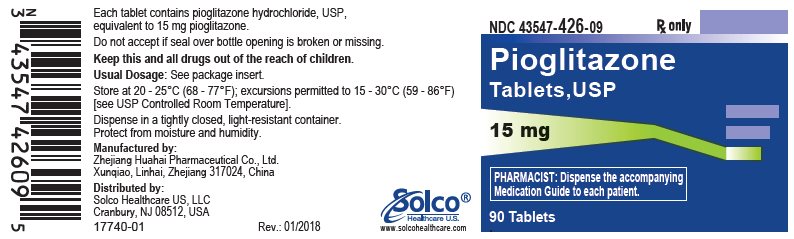
Container Label - 15 mg - 90 tablets NDC 43547-426-09 Rx only Pioglitazone Tablets, USP 15 mg PHARMACIST: Dispense the accompanying Medication Guide to each patient. 90 Tablets Each tablet contains pioglitazone hydrochloride USP, equivalent to 15 mg pioglitazone. Do not accept if seal over bottle opening is broken or missing.
Keep this and all drugs out of the reach of children. Usual Dosage: See package insert. Store at 20 - 25°C (68 - 77°F); excursions permitted to 15 - 30°C (59 - 86°F) [see USP Controlled Room Temperature].
Dispense in a tightly closed, light-resistant container. Protect from moisture and humidity. Manufactured by: Zhejiang Huahai Pharmaceutical Co., Ltd.
Xunqiao, Linhai, Zhejiang 317024, China Distributed by: Solco Healthcare US, LLC Cranbury, NJ 08512, USA 17740-01 Rev.: 01/2018 Pioglitazone Tablets, 15 mg - 90 tablets
Container Label - 30 mg - 90 tablets NDC 43547-427-09 Rx only Pioglitazone Tablets, USP 30 mg PHARMACIST: Dispense the accompanying Medication Guide to each patient. 90 Tablets Each tablet contains pioglitazone hydrochloride USP, equivalent to 30 mg pioglitazone. Do not accept if seal over bottle opening is broken or missing.
Keep this and all drugs out of the reach of children. Usual Dosage: See package insert. Store at 20 - 25°C (68 - 77°F); excursions permitted to 15 - 30°C (59 - 86°F) [see USP Controlled Room Temperature].
Dispense in a tightly closed, light-resistant container. Protect from moisture and humidity. Manufactured by: Zhejiang Huahai Pharmaceutical Co., Ltd.
Xunqiao, Linhai, Zhejiang 317024, China Distributed by: Solco Healthcare US, LLC Cranbury, NJ 08512, USA 17743-01 Rev.: 01/2018 Pioglitazone Tablets, 30 mg - 90 tablets
Container Label - 45 mg - 90 tablets NDC 43547-428-09 Rx only Pioglitazone Tablets, USP 45 mg PHARMACIST: Dispense the accompanying Medication Guide to each patient. 90 Tablets Each tablet contains pioglitazone hydrochloride USP, equivalent to 45 mg pioglitazone. Do not accept if seal over bottle opening is broken or missing.
Keep this and all drugs out of the reach of children. Usual Dosage: See package insert. Store at 20 - 25°C (68 - 77°F); excursions permitted to 15 - 30°C (59 - 86°F) [see USP Controlled Room Temperature].
Dispense in a tightly closed, light-resistant container. Protect from moisture and humidity. Manufactured by: Zhejiang Huahai Pharmaceutical Co., Ltd.
Xunqiao, Linhai, Zhejiang 317024, China Distributed by: Solco Healthcare US, LLC Cranbury, NJ 08512, USA 17746-01 Rev.: 01/2018 Pioglitazone Tablets, 45 mg - 90 tablets