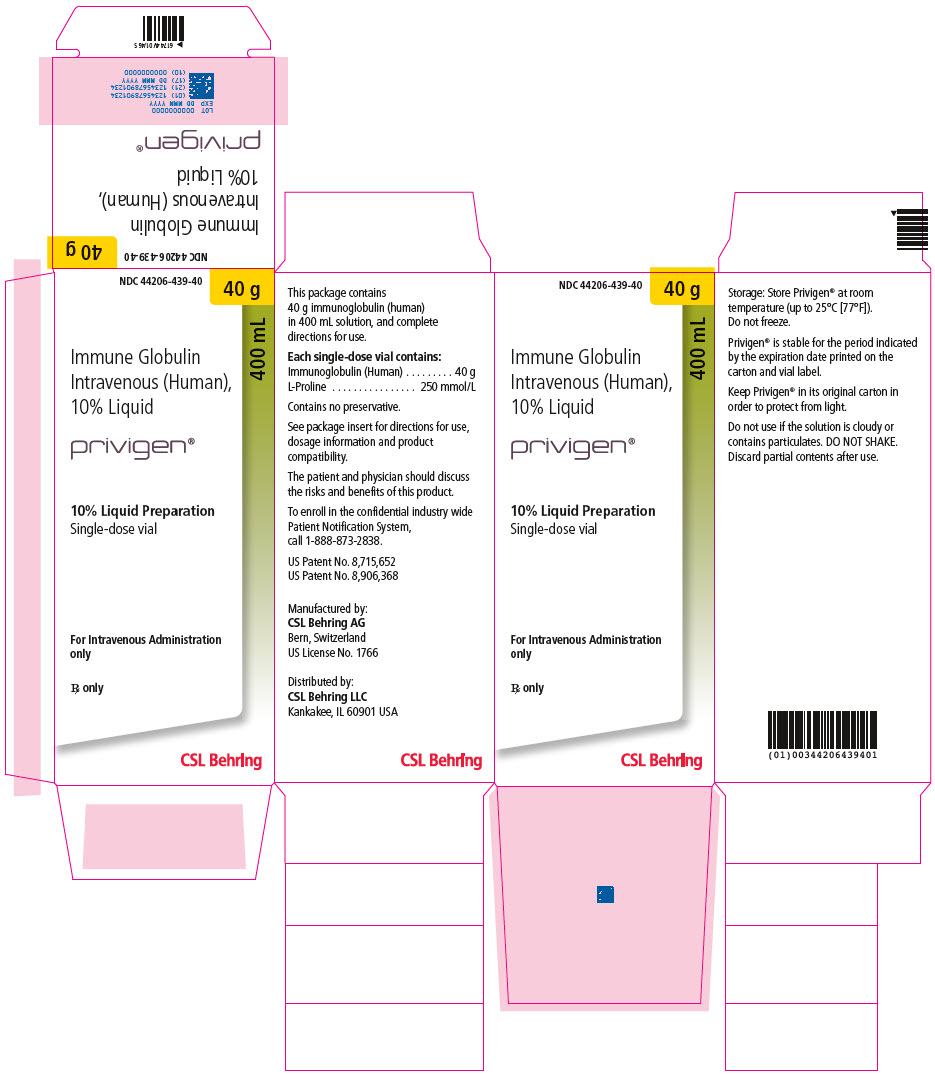
Privigen Human Immunoglobulin G 40 g/400mL Liquid
🆔 Identity & classification
Where does this data come from?
🏭 Manufacturer & labeler
Where does this data come from?
🩺 Clinical
- Think of it as a collection of protective proteins — called antibodies — that healthy donors have built up against many different germs. If your immune system can't make enough of...
- What exactly is human immunoglobulin G and why do I need it?
- It depends on the specific product your doctor prescribed. The IV versions — like Privigen, Asceniv, Qivigy, and Gammaplex — are infused into a vein, usually every 3 to 4 weeks. Hi...
- How is it given, and how often will I need infusions?
Patient education
Supplement & herbal interactions
Where does this data come from?
Ask a licensed pharmacist directly — free, answered by our team.
🧪 Inactive Ingredients / Excipients
Inactive ingredients, also called excipients, are components of the drug product other than the active ingredient. They may include fillers, dyes, coatings, preservatives, flavors, or other formulation ingredients.
💡 Tap an ingredient (hover on desktop) to see what it is and why it’s used.
-
UNII ZIF514RVZR
A protein derived from human blood plasma. In medicines, it acts as a stabilizer and binder, helping maintain drug potency and form, and may improve how the medication disperses or dissolves in the body.
-
UNII 741C1PWQ88
Human immunoglobulin A is an antibody protein naturally found in the human body. In medicines, it's used as an active therapeutic component to help the immune system fight infections and disease, rather than as a typical inactive filler or binder.
-
UNII 9DLQ4CIU6V
Proline is an amino acid used in pharmaceutical formulations as a bulking agent and stabilizer. It helps maintain product stability and can improve the texture or consistency of medicines, particularly in powders and freeze-dried products.
3 inactive ingredients listed in the exact product block matched to this NDC.
Where does this data come from?
ingredient classCode="IACT" elements from the exact product block matched by this NDC. Label-section narrative from DailyMed / the openFDA label index is shown separately when available.Inactive ingredient FAQ
Are inactive ingredients the same for every manufacturer?
Why might an inactive ingredient be missing?
Can inactive ingredients matter?
💲 Pricing
A drug doesn't have one price. Each row is a different public payment system, and none is what you'd pay at the counter — that depends on your insurance. The ⓘ on each row explains what it measures.
| Price system | Per mL | Per package |
|---|---|---|
| Retail pharmacies payNADAC · weekly | Not in the retail survey — common for institutional, discontinued, or low-volume packs. | |
| Medicaid paysCMS SDUD · 12 mo | $3,974.69 | $1,589,875.20 / 400 ml |
| Medicare drug plans payPart D · quarterly | No Part D plan price is available for this NDC in our data. | |
| Medicare Part B allowsASP · J1459 | $51.218 / J1459 unit | — |
Where does this data come from?
🧾 Billing & reimbursement
Where does this data come from?
🔁 Therapeutic equivalents
| Product | Labeler | Pack | NADAC/unit | TE | Status | Price vs. this |
|---|---|---|---|---|---|---|
| Privigen 40 g/400mLthis 44206-0439-40 | CSL | 1 vial | — | — | FDA listed | — |
Where does this data come from?
⏳ Availability & biosimilar status
Biologics have no small-molecule generics; biosimilar competition is tracked in the FDA Purple Book.
Where does this data come from?
🗺️ Medicaid utilization & spend
📊 Medicare Part D spend CMS · PART D · 2026 (Q1)
🔬 Reported adverse events (FAERS)
Top reported reactions
Age at onset
Reporter sex
Serious outcomes
Where does this data come from?
📦 Packaging — all sizes for this product
| Package NDC | Description | Marketing start | Status |
|---|---|---|---|
| 44206-0439-40 You're viewing this | 1 VIAL, GLASS in 1 CARTON (44206-439-40) / 400 mL in 1 VIAL, GLASS (44206-439-93) | 2009-01-20 | Active |
🧭 About this NDC listing & data coverage
What data is (and isn’t) available for this NDC — tap to expand
| NDC identity (package / product / labeler codes) | ✓ Available |
| Labeler | ✓ Available |
| Product & package description | ✓ Available |
| Marketing category & status | ✓ Available |
| Active ingredient / dosage form / route | ✓ Available |
| FDA label (SPL via DailyMed) | ✓ Available |
| Package photos | ✓ Available |
| Inactive ingredients (structured) | ✓ Available |
| NADAC pharmacy acquisition price (CMS) | — Not published for this NDC CMS publishes NADAC only for NDCs reported in its retail-pharmacy survey. |
| Orange Book / therapeutic-equivalence data | — Not published for this NDC Applies only to products approved under an NDA/ANDA; many listings are out of scope. |
| HCPCS J-code billing crosswalk | ✓ Available |
| Medicaid utilization (CMS SDUD) | ✓ Available |
Questions about this listing
Why is there no price listed?
Is the NDC printed on the package the same as the 11-digit billing NDC?
What do the three segments of this NDC mean?
Is this package still being marketed?
Who lists this product with the FDA?
Does this product have a billing J-code?
Where does this data come from?
📄 Full FDA label FDA SPL
🚨 Boxed Warning ▾
WARNING: ACUTE RENAL DYSFUNCTION/FAILURE Use of Immune Globulin Intravenous (IGIV) products, particularly those containing sucrose, have been reported to be associated with renal dysfunction, acute renal failure, osmotic nephropathy, and death. 1 Patients at risk of acute renal failure include those with any degree of pre-existing renal insufficiency, diabetes mellitus, advanced age (above 65 years of age), volume depletion, sepsis, paraproteinemia, or receiving known nephrotoxic drugs ( see Warnings and Precautions [5.2] ).
Privigen does not contain sucrose. For patients at risk of renal dysfunction or failure, administer Privigen at the minimum infusion rate practicable ( see Dosage and Administration [2.3] , Warnings and Precautions [5.2] ). WARNING: ACUTE RENAL DYSFUNCTION/FAILURE See full prescribing information for complete boxed warning.
Renal dysfunction, acute renal failure, osmotic nephropathy, and death may occur with the administration of human immune globulin intravenous (IGIV) products. Renal dysfunction and acute renal failure occur more commonly in patients receiving IGIV products that contain sucrose. Privigen does not contain sucrose.
For patients at risk of renal dysfunction or renal failure, administer Privigen at the minimum infusion rate practicable.
🎯 Indications and Usage ▾
1 INDICATIONS AND USAGE Privigen is an Immune Globulin Intravenous (Human), 10% Liquid indicated for the treatment of the following conditions. Privigen is an Immune Globulin Intravenous (Human), 10% Liquid indicated for the treatment of: Primary humoral immunodeficiency (PI) ( 1.1 ) Chronic immune thrombocytopenic purpura (ITP) ( 1.2 )
1.1Primary Humoral Immunodeficiency Privigen is indicated as replacement therapy for primary humoral immunodeficiency (PI). This includes, but is not limited to, the humoral immune defect in congenital agammaglobulinemia, common variable immunodeficiency (CVID), X-linked agammaglobulinemia, Wiskott-Aldrich syndrome, and severe combined immunodeficiencies.
1.2Chronic Immune Thrombocytopenic Purpura Privigen is indicated for the treatment of patients with chronic immune thrombocytopenic purpura (ITP) to raise platelet counts.
⏱️ Dosage and Administration ▾
2 DOSAGE AND ADMINISTRATION Intravenous Use Only Indication Dose ( 2.2 ) Initial Infusion Rate ( 2.3 ) Maintenance Infusion Rate (if tolerated) ( 2.3 ) PI 200-800 mg/kg (2-8 mL/kg) every 3-4 weeks 0.5 mg/kg/min (0.005 mL/kg/min) Increase to 8 mg/kg/min (0.08 mL/kg/min) ITP 1 g/kg (10 mL/kg) for 2 consecutive days 0.5 mg/kg/min (0.005 mL/kg/min) Increase to 4 mg/kg/min (0.04 mL/kg/min) Ensure that patients with pre-existing renal insufficiency are not volume depleted, and discontinue Privigen if renal function deteriorates ( 2.3 , 5.2 ).
For patients at risk of renal dysfunction or thrombotic events, administer Privigen at the minimum infusion rate practicable ( 2.3 , 5.2 , 5.4 ).
2.1Preparation and Handling Privigen is a clear or slightly opalescent, colorless to pale yellow solution. Inspect parenteral drug products visually for particulate matter and discoloration prior to administration, whenever solution and container permit. Do not use if the solution is cloudy, turbid, or if it contains particulate matter.
DO NOT SHAKE. Do not freeze. Do not use if Privigen has been frozen.
Privigen should be at room temperature (up to 25ºC [77ºF]) at the time of administration. Do not use Privigen beyond the expiration date on the product label. The Privigen vial is for single-use only.
Promptly use any vial that has been entered. Privigen contains no preservative. Discard partially used vials or unused product in accordance with local requirements.
Infuse Privigen using a separate infusion line. Prior to use, the infusion line may be flushed with Dextrose Injection, USP (D5W) or 0.9% Sodium Chloride for Injection, USP. Do not mix Privigen with other IGIV products or other intravenous medications.
However, Privigen may be diluted with Dextrose Injection, USP (D5W). An infusion pump may be used to control the rate of administration. If large doses of Privigen are to be administered, several vials may be pooled using aseptic technique.
Begin infusion within 8 hours of pooling.
2.2Dosage Treatment of Primary Humoral Immunodeficiency As there are significant differences in the half-life of IgG among patients with PI, the frequency and amount of immunoglobulin therapy may vary from patient to patient. The proper amount can be determined by monitoring clinical response. The recommended dose of Privigen for patients with PI is 200 to 800 mg/kg (2 to 8 mL/kg), administered every 3 to 4 weeks.
If a patient misses a dose, administer the missed dose as soon as possible, and then resume scheduled treatments every 3 or 4 weeks, as applicable. Adjust the dosage over time to achieve the desired serum IgG trough levels and clinical responses. No randomized, controlled trial data are available to determine an optimal trough level in patients receiving immune globulin therapy.
Treatment of Chronic Immune Thrombocytopenic Purpura The recommended dose of Privigen for patients with chronic ITP is 1 g/kg (10 mL/kg) administered daily for 2 consecutive days, resulting in a total dosage of 2 g/kg. The high-dose regimen (2 g/kg divided over 2 days) is not recommended for individuals with expanded fluid volumes or where fluid volume may be a concern ( see Warnings and Precautions [5.8] ).
2.3Administration Privigen is for intravenous administration only. Monitor the patient's vital signs throughout the infusion. Slow or stop the infusion if adverse reactions occur.
If symptoms subside promptly, the infusion may be resumed at a lower rate that is comfortable for the patient. Ensure that patients with pre-existing renal insufficiency are not volume depleted. For patients judged to be at risk for renal dysfunction or thrombotic events, administer Privigen at the minimum infusion rate practicable, and discontinue Privigen administration if renal function deteriorates ( see Boxed Warning , Warnings and Precautions [5.2, 5.4] ).
Table 1 provides the recommended infusion rates for Privigen. Table 1: Recommended Infusion Rates for Privigen Indication Dose Initial inf…
💊 Dosage Forms and Strengths ▾
3 DOSAGE FORMS AND STRENGTHS Privigen is a liquid solution containing 10% IgG (0.1 g/mL) for intravenous infusion. Privigen is a liquid solution containing 10% IgG (0.1 g/mL) ( 3 ).
⛔ Contraindications ▾
4 CONTRAINDICATIONS Privigen is contraindicated in patients who have a history of anaphylactic or severe systemic reaction to the administration of human immune globulin. Privigen is contraindicated in patients with hyperprolinemia because it contains the stabilizer L-proline ( see Description [11] ). Privigen is contraindicated in IgA-deficient patients with antibodies to IgA and a history of hypersensitivity ( see Warnings and Precautions [5.1] ).
History of anaphylactic or severe systemic reactions to human immune globulin ( 4 ) Hyperprolinemia (Privigen contains the stabilizer L-proline) ( 4 ) IgA-deficient patients with antibodies to IgA and a history of hypersensitivity ( 4 ).
⚠️ Warnings and Cautions ▾
5 WARNINGS AND PRECAUTIONS IgA-deficient patients with antibodies to IgA are at greater risk of developing severe hypersensitivity and anaphylactic reactions ( 5.1 ). Monitor renal function, including blood urea nitrogen and serum creatinine, and urine output in patients at risk of developing acute renal failure ( 5.2 ). Hyperproteinemia, increased serum viscosity, and hyponatremia may occur ( 5.3 ).
Thrombotic events may occur. Monitor patients with known risk factors for thrombotic events; consider baseline assessment of blood viscosity for those at risk of hyperviscosity ( 5.4 ). Aseptic meningitis syndrome (AMS) may occur, especially with high doses or rapid infusion ( 5.5 ).
Hemolysis can develop subsequent to Privigen treatments due to enhanced red blood cell sequestration. Monitor patients for hemolysis and hemolytic anemia ( 5.6 ). Monitor patients for pulmonary adverse reactions (transfusion-related acute lung injury [TRALI]) ( 5.7 ).
Avoid use of the high-dose regimen (for chronic ITP) in patients with expanded fluid volume or where fluid volume is of concern ( 5.8 ). Privigen is made from human blood and may contain infectious agents, e.g., viruses and, theoretically, the Creutzfeldt-Jakob disease (CJD) agent ( 5.9 ).
5.1Hypersensitivity Severe hypersensitivity reactions may occur ( see Contraindications [4] ). In case of hypersensitivity, discontinue the Privigen infusion immediately and institute appropriate treatment. Medications such as epinephrine should be available for immediate treatment of acute hypersensitivity reactions.
Privigen contains trace amounts of IgA (≤25 mcg/mL) ( see Description [11] ) . Individuals with IgA deficiency can develop anti-IgA antibodies and anaphylactic reactions (including anaphylaxis and shock) after administration of blood components containing IgA. Patients with known antibodies to IgA may have a greater risk of developing potentially severe hypersensitivity and anaphylactic reactions with administration of Privigen.
Privigen is contraindicated in patients with antibodies against IgA and a history of hypersensitivity.
5.2Renal Dysfunction/Failure Acute renal dysfunction/failure, osmotic nephropathy, and death may occur with the use of IGIV products, including Privigen. Ensure that patients are not volume depleted and assess renal function, including measurement of blood urea nitrogen (BUN) and serum creatinine, before the initial infusion of Privigen and at appropriate intervals thereafter. Periodic monitoring of renal function and urine output is particularly important in patients judged to be at increased risk of developing acute renal failure.
1 If renal function deteriorates, consider discontinuing Privigen. For patients judged to be at risk of developing renal dysfunction because of pre-existing renal insufficiency, or predisposition to acute renal failure (such as those with diabetes mellitus or hypovolemia, those who are overweight, those who use concomitant nephrotoxic medicinal products, or those who are over 65 years of age), administer Privigen at the minimum rate of infusion practicable ( see Boxed Warning , Dosage and Administration [2.3] ).
5.3Hyperproteinemia, Increased Serum Viscosity, and Hyponatremia Hyperproteinemia, increased serum viscosity, and hyponatremia may occur following treatment with IGIV products, including Privigen. The hyponatremia is likely to be a pseudohyponatremia, as demonstrated by a decreased calculated serum osmolality or elevated osmolar gap. It is critical to distinguish true hyponatremia from pseudohyponatremia, as treatment aimed at decreasing serum free water in patients with pseudohyponatremia may lead to volume depletion, a further increase in serum viscosity, and a possible predisposition to thromboembolic events.
2
5.4Thrombotic Events Thrombotic events may occur following treatment with IGIV products, including Privigen. 3-5 Patients at risk include those with a history of atherosclerosis, multiple cardiovascular risk fact…
🤒 Adverse Reactions ▾
6 ADVERSE REACTIONS The most serious adverse reactions observed in clinical study subjects receiving Privigen for PI was hypersensitivity in one subject. The most common adverse reactions observed in >5% of clinical study subjects with PI were headache, pain, nausea, fatigue, chills, vomiting, joint swelling/effusion, pyrexia, and urticaria. The most serious adverse reactions observed in clinical study subjects receiving Privigen for chronic ITP were aseptic meningitis syndrome in one subject and hemolysis in two subjects.
Six other subjects in the ITP study experienced hemolysis as documented from clinical laboratory data. The most common adverse reactions observed in >5% of clinical study subjects with chronic ITP were headache, pyrexia/hyperthermia, positive DAT, anemia, vomiting, nausea, hyperthermia, bilirubin conjugated increased, bilirubin unconjugated increased, hyperbilirubinemia, and blood lactate dehydrogenase increased. PI – The most common adverse reactions, observed in >5% of study subjects, were headache, pain, nausea, fatigue, chills, vomiting, joint swelling/effusion, pyrexia, and urticaria.
Serious adverse reactions were hypersensitivity, chills, fatigue, dizziness, and increased body temperature ( 6 ). Chronic ITP – The most common adverse reactions, observed in >5% of study subjects, were headache, pyrexia/hyperthermia, positive direct antiglobulin test (DAT), anemia, vomiting, nausea, bilirubin conjugated increased, bilirubin unconjugated increased, hyperbilirubinemia, and blood lactate dehydrogenase increased. A serious adverse reaction was aseptic meningitis ( 6 ).
To report SUSPECTED ADVERSE REACTIONS, contact CSL Behring Pharmacovigilance at 1-866-915-6958 or FDA at 1-800-FDA-1088 or www.fda.gov/medwatch.
6.1Clinical Trials Experience Because different clinical trials are conducted under widely varying conditions, adverse reaction rates observed in the clinical trials of a drug cannot be directly compared to rates in the clinical trials of another drug and may not reflect the rates observed in clinical practice. Treatment of Primary Humoral Immunodeficiency In a prospective, open-label, single-arm, multicenter clinical study (pivotal study), 80 subjects with PI (with a diagnosis of XLA or CVID) received Privigen every 3 or 4 weeks for up to 12 months ( see Clinical Studies [14.1] ).
All subjects had been on regular IGIV replacement therapy for at least 6 months prior to participating in the study. Subjects ranged in age from 3 to 69; 46 (57.5%) were male and 34 (42.5%) were female. The safety analysis included all 80 subjects, 16 (20%) on the 3-week schedule and 64 (80%) on the 4-week schedule.
The median dose of Privigen administered was 428.3 mg/kg (3-week schedule) or 440.6 mg/kg (4-week schedule) and ranged from 200 to 888 mg/kg. A total of 1038 infusions of Privigen were administered, 272 in the 3-week schedule and 766 in the 4-week schedule Routine premedication was not allowed. However, subjects who experienced two consecutive infusion-related adverse events (AEs) that were likely to be prevented by premedication were permitted to receive antipyretics, antihistamines, NSAIDs, or antiemetic agents.
During the study, 8 (10%) subjects received premedication prior to 51 (4.9%) of the 1038 infusions administered. Temporally associated AEs are those occurring during an infusion or within 72 hours after the end of an infusion, irrespective of causality . In this study, the upper bound of the 1-sided 97.5% confidence interval for the proportion of Privigen infusions temporally associated with one or more AEs was 23.8% (actual proportion: 20.8%).
The total number of temporally associated AEs was 397 (a rate of
0.38AEs per infusion), reflecting that some subjects experienced more than one AE during the observation period. Table 2 lists the temporally associated AEs that occurred in >5% of subjects, irrespective of causality . Table 2: PI Pivotal Study – Adverse Events Excluding infections. Occurring in…
🔄 Drug Interactions ▾
7 DRUG INTERACTIONS The passive transfer of antibodies may: Lead to misinterpretation of the results of serological testing ( 5.10 , 7.2 ). Interfere with the response to live virus vaccines ( 7.1 ).
7.1Live Virus Vaccines The passive transfer of antibodies with immunoglobulin administration may interfere with the response to live virus vaccines such as measles, mumps, rubella, and varicella ( see Patient Counseling Information [17] ). 13 Inform the immunizing physician of recent therapy with Privigen so that appropriate measures can be taken.
7.2Serological Testing Various passively transferred antibodies in immunoglobulin preparation may lead to misinterpretation of the results of serological testing.
👥 Use in Specific Populations ▾
8 USE IN SPECIFIC POPULATIONS Pregnancy: No human or animal data. Use only if clearly needed ( 8.1 ). In patients over age 65 or in any patient at risk of developing renal insufficiency, do not exceed the recommended dose, and infuse Privigen at the minimum rate practicable ( 8.5 ).
8.1Pregnancy Pregnancy Category C. Animal reproduction studies have not been conducted with Privigen. It is not known whether Privigen can cause fetal harm when administered to a pregnant woman or can affect reproduction capacity. Privigen should be given to pregnant women only if clearly needed. Immunoglobulins cross the placenta from maternal circulation increasingly after 30 weeks of gestation. 14,15
8.3Nursing Mothers Use of Privigen in nursing mothers has not been evaluated.
8.4Pediatric Use Treatment of Primary Humoral Immunodeficiency Privigen was evaluated in 31 pediatric subjects (19 children and 12 adolescents) with PI (pivotal study). There were no apparent differences in the safety and efficacy profiles as compared to those in adult subjects. No pediatric-specific dose requirements were necessary to achieve the desired serum IgG levels.
The safety and effectiveness of Privigen have not been established in pediatric patients with PI who are under the age of 3. Treatment of Chronic Immune Thrombocytopenic Purpura The safety and effectiveness of Privigen have not been established in pediatric patients with chronic ITP who are under the age of 15.
8.5Geriatric Use Clinical studies of Privigen did not include sufficient numbers of subjects age 65 and over to determine whether they respond differently from younger subjects. Use caution when administering Privigen to patients age 65 and over who are judged to be at increased risk of developing acute renal insufficiency and thrombotic events ( see Boxed Warning , Warnings and Precautions [5.2 , 5.4] ). Do not exceed recommended doses, and administer Privigen at the minimum infusion rate practicable.
🤰 Pregnancy ▾
8.1Pregnancy Pregnancy Category C. Animal reproduction studies have not been conducted with Privigen. It is not known whether Privigen can cause fetal harm when administered to a pregnant woman or can affect reproduction capacity. Privigen should be given to pregnant women only if clearly needed. Immunoglobulins cross the placenta from maternal circulation increasingly after 30 weeks of gestation. 14,15
🧒 Pediatric Use ▾
8.4Pediatric Use Treatment of Primary Humoral Immunodeficiency Privigen was evaluated in 31 pediatric subjects (19 children and 12 adolescents) with PI (pivotal study). There were no apparent differences in the safety and efficacy profiles as compared to those in adult subjects. No pediatric-specific dose requirements were necessary to achieve the desired serum IgG levels.
The safety and effectiveness of Privigen have not been established in pediatric patients with PI who are under the age of 3. Treatment of Chronic Immune Thrombocytopenic Purpura The safety and effectiveness of Privigen have not been established in pediatric patients with chronic ITP who are under the age of 15.
🧓 Geriatric Use ▾
8.5Geriatric Use Clinical studies of Privigen did not include sufficient numbers of subjects age 65 and over to determine whether they respond differently from younger subjects. Use caution when administering Privigen to patients age 65 and over who are judged to be at increased risk of developing acute renal insufficiency and thrombotic events ( see Boxed Warning , Warnings and Precautions [5.2 , 5.4] ). Do not exceed recommended doses, and administer Privigen at the minimum infusion rate practicable.
🆘 Overdosage ▾
10 OVERDOSAGE Overdose may lead to fluid overload and hyperviscosity, particularly in the elderly and in patients with impaired renal function.
🧬 Clinical Pharmacology ▾
12 CLINICAL PHARMACOLOGY
12.1Mechanism of Action Treatment of Primary Humoral Immunodeficiency Privigen is a replacement therapy for primary humoral immunodeficiency, and supplies a broad spectrum of opsonic and neutralizing IgG antibodies against bacterial, viral, parasitic and mycoplasma agents and their toxins. The mechanism of action in PI has not been fully elucidated. Treatment of Chronic Immune Thrombocytopenic Purpura The mechanism of action of high doses of immunoglobulins in the treatment of chronic ITP has not been fully elucidated.
12.3Pharmacokinetics Treatment of Primary Humoral Immunodeficiency In the clinical study (pivotal study) assessing the efficacy and safety of Privigen in 80 subjects with PI ( see Clinical Studies [14.1] ), serum concentrations of total IgG and IgG subclasses were measured in 25 subjects (ages 13 to 69) following the 7 th infusion for the 3 subjects on the 3-week dosing interval and following the 5 th infusion for the 22 subjects on the 4-week dosing interval. The dose of Privigen used in these subjects ranged from 200.0 mg/kg to 714.3 mg/kg.
After the infusion, blood samples were taken until Day 21 and Day 28 for the 3-week and 4-week dosing intervals, respectively. Table 9 summarizes the pharmacokinetic parameters of Privigen, based on serum concentrations of total IgG. Table 9: PI Pivotal Study -- Pharmacokinetic Parameters of Privigen in Subjects Parameter 3-Week Dosing Interval (n=3) 4-Week Dosing Interval (n=22) Mean (SD) Median (Range) Mean (SD) Median (Range) C max , maximum serum concentration; C min, trough (minimum level) serum concentration; t ½ , elimination half-life; AUC 0-t , area under the curve from 0 hour to last sampling time; AUC 0-∞ , area under the curve from 0 hour to infinite time.
C max (peak, mg/dL) 2,550 (400) 2,340 (2,290-3,010) 2,260 (530) 2,340 (1,040-3,460) C min (trough, mg/dL) 1,230 (230) 1,200 (1,020-1,470) 1,000 (200) 1,000 (580-1,360) t ½ (days) 27.6 (5.9) 27.8 (21.6-33.4) 45.4 (18.5) 37.3 (20.6-96.6) AUC 0-t (day × mg/dL) Calculated by log-linear trapezoidal rule. 32,820 (6,260) 29,860 (28,580-40,010) 36,390 (5,950) 36,670 (19,680-44,340) AUC 0-∞ (day × mg/dL) 79,315 (20,170) 78,748 (59,435-99,762) 104,627 (33,581) 98,521 (64,803-178,600) Clearance (mL/day/kg) 1.3 (0.1) 1.3 (1.1-1.4) 1.3 (0.3) 1.3 (0.9-2.1) Mean residence time (days) 38.6 (8.1) 39.5 (30.1-46.2) 65.2 (24.7) 59.0 (33.2-129.6) Volume of distribution at steady state (mL/kg) 50 (13) 44 (40-65) 84 (35) 87 (40-207) The median half-life of Privigen was 36.6 days for the 25 subjects in the pharmacokinetic subgroup.
Although no systematic study was conducted to evaluate the effect of gender and age on the pharmacokinetics of Privigen, based on the small sample size (11 males and 14 females) it appears that clearance of Privigen is comparable in males (1.27 ± 0.35 mL/day/kg) and females (1.34 ± 0.22 mL/day/kg). In six subjects between 13 and 15 years of age, the clearance of Privigen (1.35 ± 0.44 mL/day/kg) is comparable to that observed in 19 adult subjects 19 years of age or older (1.29 ± 0.22 mL/day/kg). The IgG subclass levels observed in the pharmacokinetic study were consistent with a physiologic distribution pattern (mean trough values): IgG 1 , 564.91 mg/dL; IgG 2 , 394.15 mg/dL; IgG 3 , 30.16 mg/dL; IgG 4 , 10.88 mg/dL.
Treatment of Chronic Immune Thrombocytopenic Purpura Pharmacokinetic studies with Privigen were not performed in subjects with chronic ITP.
🧬 Mechanism of Action ▾
12.1Mechanism of Action Treatment of Primary Humoral Immunodeficiency Privigen is a replacement therapy for primary humoral immunodeficiency, and supplies a broad spectrum of opsonic and neutralizing IgG antibodies against bacterial, viral, parasitic and mycoplasma agents and their toxins. The mechanism of action in PI has not been fully elucidated. Treatment of Chronic Immune Thrombocytopenic Purpura The mechanism of action of high doses of immunoglobulins in the treatment of chronic ITP has not been fully elucidated.
📦 How Supplied / Storage and Handling ▾
16 HOW SUPPLIED/STORAGE AND HANDLING Privigen is supplied in a single-use, tamper-evident vial containing the labeled amount of functionally active IgG. The components used in the packaging for Privigen are latex-free. The following presentations of Privigen are available: NDC Number Fill Size (mL) Grams Protein 44206-436-05 50 5 44206-437-10 100 10 44206-438-20 200 20 Each vial has an integral suspension band and a label with two peel-off strips showing the product name, lot number, and expiration date.
When stored at room temperature (up to 25ºC [77ºF]), Privigen is stable for up to 36 months, as indicated by the expiration date printed on the outer carton and vial label. Keep Privigen in its original carton to protect it from light. Do not freeze.
📦 Storage and Handling ▾
When stored at room temperature (up to 25ºC [77ºF]), Privigen is stable for up to 36 months, as indicated by the expiration date printed on the outer carton and vial label. Keep Privigen in its original carton to protect it from light. Do not freeze.
📋 Description ▾
11 DESCRIPTION Privigen is a ready-to-use, sterile, 10% protein liquid preparation of polyvalent human immunoglobulin G (IgG) for intravenous administration. Privigen has a purity of at least 98% IgG, consisting primarily of monomers. The balance consists of IgG dimers (≤12%), small amounts of fragments and polymers, and albumin.
Privigen contains ≤25 mcg/mL IgA. The IgG subclass distribution (approximate mean values) is IgG 1 , 67.8%; IgG 2 , 28.7%; IgG 3 , 2.3%; and IgG 4 , 1.2%. Privigen has an osmolality of approximately 320 mOsmol/kg (range: 240 to 440) and a pH of 4.8 (range: 4.6 to 5.0).
Privigen contains approximately 250 mmol/L (range: 210 to 290) of L-proline (a nonessential amino acid) as a stabilizer and trace amounts of sodium. Privigen contains no carbohydrate stabilizers (e.g., sucrose, maltose) and no preservative. Privigen is prepared from large pools of human plasma by a combination of cold ethanol fractionation, octanoic acid fractionation, and anion exchange chromatography.
The IgG proteins are not subjected to heating or to chemical or enzymatic modification. The Fc and Fab functions of the IgG molecule are retained. Fab functions tested include antigen binding capacities, and Fc functions tested include complement activation and Fc-receptor-mediated leukocyte activation (determined with complexed IgG).
Privigen does not activate the complement system or prekallikrein in an unspecific manner. All plasma units used in the manufacture of Privigen have been tested and approved for manufacture using FDA-licensed serological assays for hepatitis B surface antigen and antibodies to HCV and HIV-1/2 as well as FDA-licensed Nucleic Acid Testing (NAT) for HCV and HIV-1 and found to be nonreactive (negative). For HBV, an investigational NAT procedure is used and the plasma units found to be negative; however, the significance of a negative result has not been established.
In addition, the plasma has been tested for B19 virus (B19V) DNA by NAT. Only plasma that passed virus screening is used for production, and the limit for B19V in the fractionation pool is set not to exceed 10 4 IU of B19V DNA per mL. The manufacturing process for Privigen includes three steps to reduce the risk of virus transmission.
Two of these are dedicated virus clearance steps: pH 4 incubation to inactivate enveloped viruses and virus filtration to remove, by size exclusion, both enveloped and non-enveloped viruses as small as approximately 20 nanometers. In addition, a depth filtration step contributes to the virus reduction capacity. These steps have been independently validated in a series of in vitro experiments for their capacity to inactivate and/or remove both enveloped and non-enveloped viruses.
Table 8 shows the virus clearance during the manufacturing process for Privigen, expressed as the mean log 10 reduction factor (LRF). Table 8: Virus Inactivation/Removal in Privigen The virus clearance of human parvovirus B19 was investigated experimentally at the pH 4 incubation step. The estimated LRF obtained was ≥5.3.
HIV-1 PRV BVDV WNV EMCV MVM HIV-1, human immunodeficiency virus type 1, a model for HIV-1 and HIV-2; PRV, pseudorabies virus, a nonspecific model for large enveloped DNA viruses (e.g., herpes virus); BVDV, bovine viral diarrhea virus, a model for hepatitis C virus; WNV, West Nile virus; EMCV, encephalomyocarditis virus, a model for hepatitis A virus; MVM, minute virus of mice, a model for a small highly resistant non-enveloped DNA virus (e.g., parvovirus); LRF, log 10 reduction factor; nt, not tested. Virus property Genome RNA DNA RNA RNA RNA DNA Envelope Yes Yes Yes Yes No No Size (nm) 80-100 120-200 50-70 50-70 25-30 18-24 Manufacturing step Mean LRF pH 4 incubation ≥5.4 ≥5.9 4.6 ≥7.8 nt nt Depth filtration ≥5.3 ≥6.3 2.1 3.0 4.2
2.3Virus filtration ≥5.3 ≥5.5 ≥5.1 ≥5.9 ≥5.4 ≥5.5 Overall reduction (log 10 units) ≥16.0 ≥17.7 ≥11.8 ≥16.7 ≥9.6 ≥7.8 The manufacturing process was also investigated for its capacity to decrease the…
💬 Information for Patients ▾
17 PATIENT COUNSELING INFORMATION Inform patients of the early signs of hypersensitivity reactions to Privigen (including hives, generalized urticaria, tightness of the chest, wheezing, hypotension, and anaphylaxis), and advise them to notify their physician if they experience any of these symptoms. Inform patients to immediately report the following signs and symptoms to their physician: Decreased urine output, sudden weight gain, fluid retention/edema, and/or shortness of breath, which may suggest kidney problems Shortness of breath, changes in mental status, chest pain, and other manifestations of thrombotic events Severe headache, neck stiffness, drowsiness, fever, sensitivity to light, painful eye movements, nausea, and vomiting, which may suggest aseptic meningitis syndrome Fatigue, increased heart rate, yellowing of skin or eyes, and dark-colored urine, which may suggest hemolysis Severe breathing problems, lightheadedness, drops in blood pressure, and fever, which may suggest TRALI (a condition typically occurring within 1 to 6 hours following transfusion) Inform patients that Privigen is made from human blood and may contain infectious agents that can cause disease (e.g., viruses and, theoretically the CJD agent).
Explain that the risk that Privigen may transmit an infectious agent has been reduced by screening the plasma donors, by testing donated plasma for certain virus infections, and by inactivating or removing certain viruses during manufacturing, and counsel patients to report any symptoms that concern them. Inform patients that administration of IgG may interfere with the response to live virus vaccines (e.g., measles, mumps, rubella, and varicella), and instruct them to notify their immunizing physician of recent therapy with Privigen.