
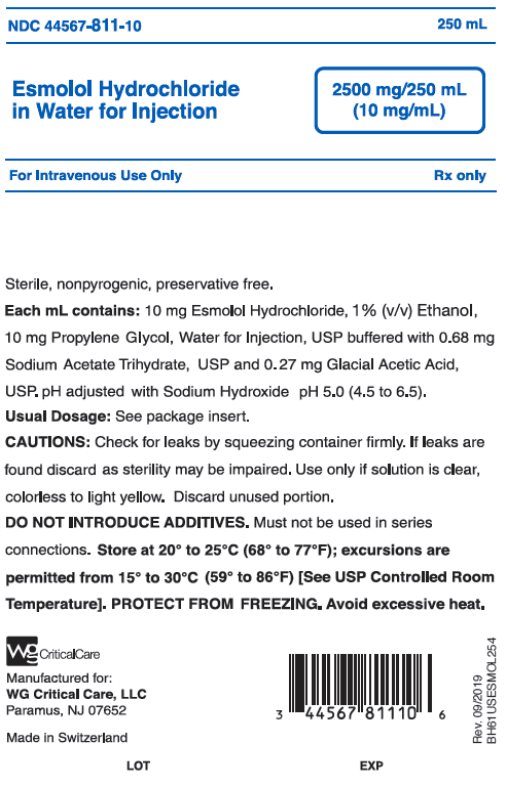
Esmolol Hydrochloride in Water 10 mg/mL Injection — NDC 44567-811-10 (Billing 44567-0811-10)
This is a package of Esmolol Hydrochloride in Water 10 mg/mL Injection from WG Critical Care, LLC, marketed since Dec 2017 and currently FDA-listed. It is this product's only package size.
NDC database record
One package, one record: these facts belong to NDC 44567-811-10 alone.
- Record
- FDA NDC Directory package listing · Human prescription drug
- Code segments
- 44567 labeler · 811 product · 10 package
- Package marketed since
- Dec 4, 2017
- Sample package
- No — commercial package
- Listing certified through
- Dec 31, 2027
- Barcode (UPC-A, from the NDC)
- 3 4456781110 6
- Medicaid fills, this package
- 36 prescriptions in the last four reported quarters
- FDA record last changed
- Oct 8, 2026
Identity & classification
Regulatory identifiers FDA, NLM and CMS codes for this package
Drug-database identifiers Medi-Span GPI and First Databank GCN / HICL / AHFS classification
- GSN (GCN sequence number): 075966
- GCN: 41175
- HICL (First Databank): 043347
- AHFS class code: 12:16.08.08
Where does this data come from?
- FDA openFDA NDC Directory · synced Oct 8, 2026
- FDA label on DailyMed · label index refreshed Oct 6, 2026
- RxNorm (NLM RxNav) · catalog refreshed Oct 1, 2026
- Medi-Span GPI (licensed)
- First Databank (licensed) · refreshed Oct 8, 2026
Clinical
- It slows a racing heart for a short time. Doctors use it for atrial fibrillation, atrial flutter and other fast heart rhythms. They also use it for fast heart rate and high blood p...
- You will get it through an IV from a healthcare professional, usually as a steady infusion. The team adjusts the speed based on your heart rate or blood pressure.
- The most common are low blood pressure, sweating, dizziness, nausea, sleepiness and irritation where the IV goes in. Tell your nurse right away if you feel faint, have trouble brea...
- Quickly. Its half-life is about 9 minutes, and its effects largely fade within 10 to 20 minutes after the infusion stops. Low blood pressure usually improves within about 30 minute...
Patient education
Supplement & herbal interactions
Esmolol may be associated with lower levels of 1 nutrient — worth a chat with your pharmacist, not a cause for alarm.
Where does this data come from?
- MedlinePlus (NLM) · refreshed Oct 1, 2026
- FDA label on DailyMed · label index refreshed Oct 6, 2026
Ask a licensed pharmacist directly — free, answered by our team.
Pricing
A drug doesn't have one price. Each row is a different public payment system, and none is what you'd pay at the counter — that depends on your insurance. The ⓘ on each row explains what it measures.
| Price system | Per each | Per package |
|---|---|---|
| Retail pharmacies payNADAC · weekly | Not in the retail survey — common for institutional, discontinued, or low-volume packs. | |
| Medicaid paysCMS SDUD · 12 mo | $2.19 | $21.89 / 10 bags |
| Medicare drug plans payPart D · quarterly | No Part D plan price is available for this NDC in our data. | |
| Medicare Part B allowsASP · J1806 | $0.196 / J1806 unit | — |
Where does this data come from?
- CMS NADAC weekly file
- CMS ASP pricing files · refreshed Sep 20, 2026
- CMS Medicaid State Drug Utilization Data · through Q1 2026
- CMS Part D plan pricing files · refreshed Sep 24, 2026
- VA National Acquisition Center price file
Billing & reimbursement
Where does this data come from?
- CMS ASP NDC-HCPCS crosswalk · refreshed Sep 22, 2026
- DMEPDAC NDC-HCPCS crosswalk
- openFDA NSDE billing units · refreshed Oct 7, 2026
Packaging — all sizes for this product
| Package NDC | Description | Marketing start | Marketing end | Status |
|---|---|---|---|---|
| 44567-0811-10 You're viewing this Main listing | 10 BAG in 1 CARTON / 250 mL in 1 BAG | 2017-12-04 | — | Active |
Therapeutic equivalents
| Product | Labeler | Pack | NADAC/unit | TE | Status | Price vs. this |
|---|---|---|---|---|---|---|
| Brevibloc 10 mg/mL 10019-0055-61 | Baxter | 250 ml | — | AP | FDA listed | — |
| Brevibloc 10 mg/mL 10019-0670-10 | Baxter | 250 ml | — | AP | FDA listed | — |
| Brevibloc 10 mg/mL 10019-0672-10 | Baxter | 250 ml | — | AP | FDA listed | — |
| esmolol hydrochloride 10 mg/mL 25021-0308-84 | Sagent | 250 ml | — | AP | FDA listed | — |
| Esmolol Hydrochloride 10 mg/mL 44567-0450-10 | WG | 250 ml | — | AP | FDA listed | — |
| Esmolol Hydrochloride in Water 10 mg/mLthis 44567-0811-10 | WG | 250 ml | — | — | FDA listed | — |
| Esmolol Hydrochloride 10 mg/mL 51662-1427-01 | HF | 250 ml | — | AP | FDA listed | — |
| esmolol hydrochloride 10 mg/mL 55150-0420-10 | Eugia | 10 pouches | — | AP | FDA listed | — |
| esmolol hydrochloride in sodium chloride 10 mg/mL 67457-0657-25 | Mylan | 1 pouch | — | AP | FDA listed | — |
| Esmolol Hydrochloride 10 mg/mL 70121-1716-07 | Amneal | 10 pouches | — | AP | FDA listed | — |
| Esmolol Hydrochloride 10 mg/mL 51662-1371-01 | HF | 10 ml | — | — | FDA listed | — |
| Esmolol Hydrochloride 10 mg/mL 68083-0211-25 | Gland | 25 vials | — | AP | FDA listed | — |
| Esmolol Hydrochloride 10 mg/mL 71872-7136-01 | Medical | 1 vial | — | AP | FDA listed | — |
| Esmolol Hydrochloride 10 mg/mL 63323-0652-10 | Fresenius | 25 vials | — | — | FDA listed | — |
| Esmolol Hydrochloride 10 mg/mL 63323-0661-14 | Fresenius | 25 vials | — | — | FDA listed | — |
| Esmolol Hydrochloride 10 mg/mL 00404-9785-10 | Henry | 1 vial | — | AP | FDA listed | — |
| Brevibloc 10 mg/mL 00404-9825-10 | Henry | 1 vial | — | AP | FDA listed | — |
| Esmolol Hydrochloride 10 mg/mL 51662-1322-01 | HF | 10 ml | — | AP | FDA listed | — |
| Brevibloc 10 mg/mL 10019-0115-01 | Baxter | 25 vials | — | AP | FDA listed | — |
| Esmolol Hydrochloride 10 mg/mL 10019-0120-01 | Baxter | 25 vials | — | AP | FDA listed | — |
| Esmolol Hydrochloride 10 mg/mL 67457-0182-10 | Mylan | 10 vials | — | AP | FDA listed | — |
Where does this data come from?
- FDA openFDA NDC Directory · synced Oct 8, 2026
- FDA Orange Book · refreshed Oct 3, 2026
- CMS NADAC weekly file
Availability & generic status
The FDA lists approved generic versions of this medicine, but that does not always mean a pharmacy can get one today. Patent rules, launch agreements, supply and pricing can affect when generics actually arrive.
Why the date isn’t exact: Generic timing can change because patents may be challenged, settled, licensed, added, removed, or worked around with a narrower label — and FDA approval does not always mean a pharmacy can get the generic today.
🛈 What do these terms mean?
- Patent
- Legal protection listed in the Orange Book that may delay generic approval or launch. Issued by the U.S. Patent & Trademark Office.
- Substance patent
- Covers the active drug molecule itself — the hardest to design around. A generic generally can’t launch until it expires.
- Formulation (product) patent
- Covers a specific formulation or dosage form. A generic can sometimes work around it with a different formulation.
- Method-of-use patent
- A patent covering one specific approved use of the drug — not necessarily the whole molecule. A generic can sometimes launch with a “skinny label” that carves out the protected use and keeps the others.
- Skinny label
- A generic label that omits a still-patented use when the FDA allows it — letting a generic reach the market for the unprotected uses.
- Exclusivity
- FDA-granted marketing protection, separate from patents — e.g. 5-yr new chemical entity, 7-yr orphan drug, or a +6-month pediatric extension.
- Paragraph IV
- A generic applicant’s formal challenge to a listed patent. It can potentially lead to earlier generic entry, but often involves litigation or a settlement.
- RLD / RS
- Reference Listed Drug — the brand product the FDA uses as the reference for generic applications. Reference Standard — the product the FDA expects generics to compare against in bioequivalence testing.
- TE / AB rating
- FDA therapeutic-equivalence rating. An AB rating generally means the FDA considers a generic therapeutically equivalent to — and substitutable for — the brand.
- LOE (loss of exclusivity)
- The latest patent or exclusivity currently listed — the loss-of-exclusivity / latest-listed-protection date shown on this page. Paragraph-IV challenges and settlements can move the real date earlier; FDA approval and a manufacturer’s decision to market can move it later.
Built from the FDA Orange Book. The bars above are scaled to each protection’s expiry; the red LOE marker is the last one to lapse.
| Patent | Type | Use code | Expires |
|---|---|---|---|
| US 8829054 ↗ | Drug product | — | Mar 15, 2033 |
| US 8835505 ↗ | Drug product | — | Mar 15, 2033 |
| US 8835505 ↗ | Drug product | — | Mar 15, 2033 |
| US 8829054 ↗ | Drug product | — | Mar 15, 2033 |
Is there a generic version of ESMOLOL-WATER 2,500 MG/250 ML?
The FDA approved a generic — why can’t I get it at my pharmacy yet?
Why do different websites show different generic release dates?
What does “FDA listed” mean?
What does a patent or protection date mean here?
What does “current Orange Book estimate” mean?
Can a generic come out before the last patent expires?
Can a generic come out after the listed dates?
What is the difference between patents and exclusivity?
Why are there multiple patent dates?
Where does this data come from?
- FDA Orange Book · refreshed Oct 3, 2026
Inactive Ingredients / Excipients
Inactive ingredients, also called excipients, are components of the drug product other than the active ingredient. They may include fillers, dyes, coatings, preservatives, flavors, or other formulation ingredients.
🧪 Avoiding an ingredient? See Esmolol inactive ingredients by manufacturer: every current product's list side by side, so you can ask your pharmacy for the version that does not list it.
Where does this data come from?
IACT rows and label-wide narrative are kept separate; availability and product-level specificity depend on the submitted label.- FDA label on DailyMed · label index refreshed Oct 6, 2026
- FDA openFDA NDC Directory · synced Oct 8, 2026
Inactive ingredient FAQ
Are inactive ingredients the same for every manufacturer?
Why might an inactive ingredient be missing?
Can inactive ingredients matter?
Manufacturer & labeler
More NDCs from WG Critical Care, LLC labeler code 44567
- Cefazolin 10 g Injection, Powder, For Solution NDC 44567-708-10
- Metronidazole 500 mg/100mL Injection, Solution NDC 44567-750-24
- Piperacillin and Tazobactam 2 g; .25 g Injection, Powder, For Solution NDC 44567-801-10
- Piperacillin and Tazobactam 3 g; .375 g Injection, Powder, For Solution NDC 44567-802-10
- Piperacillin and Tazobactam 4 g; .5 g Injection, Powder, For Solution NDC 44567-803-10
- Piperacillin and Tazobactam 36 g; 4.5 g Injection, Powder, For Solution NDC 44567-804-01
- Esmolol Hydrochloride in Water 20 mg/mL Injection NDC 44567-812-10
- ertapenem 1 g Injection, Powder, Lyophilized, For Solution NDC 44567-820-10
- Cefazolin 2 g Injection, Powder, For Solution NDC 44567-840-25
- Cefazolin 3 g Injection, Powder, For Solution NDC 44567-845-25
- Nicardipine Hydrochloride in Sodium Chloride .1 mg/mL Injection, Solution NDC 44567-850-12
- Nicardipine Hydrochloride in Sodium Chloride .2 mg/mL Injection, Solution NDC 44567-851-12
Where does this data come from?
- FDA openFDA NDC Directory · synced Oct 8, 2026
- Drugs@FDA
Full prescribing information FDA SPL
🎯 Indications and Usage ▾
1 INDICATIONS AND USAGE Esmolol Hydrochloride is a beta-adrenergic blocker indicated for the short-term treatment of: • Control of ventricular rate in supraventricular tachycardia including atrial fibrillation and atrial flutter and control of heart rate in noncompensatory sinus tachycardia ( 1.1 ) • Control of perioperative tachycardia and hypertension ( 1.2 )
1.1Supraventricular Tachycardia or Noncompensatory Sinus Tachycardia Esmolol hydrochloride is indicated for the rapid control of ventricular rate in patients with atrial fibrillation or atrial flutter in perioperative, postoperative, or other emergent circumstances where short term control of ventricular rate is desirable. Esmolol hydrochloride is also indicated in noncompensatory sinus tachycardia where, in the physician’s judgment, the rapid heart rate requires specific intervention. Esmolol hydrochloride is intended for short-term use.
1.2Intraoperative and Postoperative Tachycardia and Hypertension Esmolol hydrochloride is indicated for the short-term treatment of tachycardia and hypertension that occur during induction and tracheal intubation, during surgery, on emergence from anesthesia and in the postoperative period, when in the physician’s judgment such specific intervention is considered indicated. Use of esmolol hydrochloride to prevent such events is not recommended.
⏱️ Dosage and Administration ▾
2 DOSAGE AND ADMINISTRATION • Administer intravenously ( 2.1 , 2.2 ) • Titrate using ventricular rate or blood pressure at ≥ 4-minute intervals ( 2.1 , 2.2 ) • Supraventricular tachycardia (SVT) or noncompensatory sinus tachycardia ( 2.1 ) Optional loading dose: 500 mcg/kg infused over one minute Then 50 mcg/kg/min for the next 4 minutes Titrate as needed to a maximum of 200 mcg/kg/min Additional loading doses may be administered • Perioperative tachycardia and hypertension ( 2.2 ) Loading dose: 500 mcg/kg over 1 minute for gradual control (1 mg/kg over 30 seconds for immediate control) Then 50 mcg/kg/min for gradual control (150 mcg/kg/min for immediate control) adjusted to a maximum of 200 (tachycardia) or 300 (hypertension) mcg/kg/min
2.1Dosing for the Treatment of Supraventricular Tachycardia or Noncompensatory Sinus Tachycardia Esmolol hydrochloride is administered by continuous intravenous infusion with or without a loading dose. Additional loading doses and/or titration of the maintenance infusion (stepwise dosing) may be necessary based on desired ventricular response. Table 1.
Step-Wise Dosing Step Action 1 Optional loading dose (500 mcg/kg over 1 minute), then 50 mcg/kg/min for 4 min 2 Optional loading dose if necessary, then 100 mcg/kg/min for 4 min 3 Optional loading dose if necessary, then 150 mcg/kg/min for 4 min 4 If necessary increase dose to 200 mcg/kg/min In the absence of loading doses, continuous infusion of a single concentration of esmolol reaches pharmacokinetic and pharmacodynamic steady-state in about 30 minutes. The effective maintenance dose for continuous and step-wise dosing is 50 to 200 mcg/kg/min, although doses as low as 25 mcg/kg/min have been adequate.
Dosages greater than 200 mcg/kg/min provide little added heart-rate lowering effect, and the rate of adverse reactions increases. Maintenance infusions may be continued for up to 48 hours.
2.2Intraoperative and Postoperative Tachycardia and Hypertension In this setting it is not always advisable to slowly titrate to a therapeutic effect. Therefore, two dosing options are presented: immediate control and gradual control. Immediate Control • Administer 1 mg/kg as a bolus dose over 30 seconds followed by an infusion of 150 mcg/kg/min if necessary. • Adjust the infusion rate as required to maintain desired heart rate and blood pressure.
Refer to Maximum Recommended Doses below. Gradual Control • Administer 500 mcg/kg as a bolus dose over 1 minute followed by a maintenance infusion of 50 mcg/kg/min for 4 minutes. • Depending on the response obtained, continue dosing as outlined for supraventricular tachycardia (refer to Figure 1). Refer to Maximum Recommended Doses below.
Maximum Recommended Doses • For the treatment of tachycardia, maintenance infusion dosages greater than 200 mcg/kg/min are not recommended; dosages greater than 200 mcg/kg/min provide little additional heart rate-lowering effect, and the rate of adverse reactions increases. • For the treatment of hypertension, higher maintenance infusion dosages (250 to 300 mcg/kg/min) may be required. The safety of doses above 300 mcg/kg/min has not been studied.
2.3Transition from Esmolol Hydrochloride Injection Therapy to Alternative Drugs After patients achieve adequate control of the heart rate and a stable clinical status, transition to alternative antiarrhythmic drugs may be accomplished. When transitioning from esmolol hydrochloride to alternative drugs, consider the labeling instructions of the alternative drug selected and reduce the dosage of esmolol hydrochloride as follows: 1. Thirty minutes following the first dose of the alternative drug, reduce the esmolol hydrochloride infusion rate by one-half (50%).
2. After administration of the second dose of the alternative drug, monitor the patient's response, and, if satisfactory control is maintained for the first hour, discontinue the esmolol hydrochloride infusion.
2.4Directions for Use Avoid infusions into small veins or through butte… [Excerpted — this section continues on DailyMed.]
💊 Dosage Forms and Strengths ▾
3 DOSAGE FORMS AND STRENGTHS Table 2. Esmolol Hydrochloride in Water for Injection Presentations Presentations Product Name Esmolol Hydrochloride Esmolol Hydrochloride DOUBLE STRENGTH Total Dose 2500 mg/250 mL 2000 mg/100 mL Esmolol Hydrochloride Concentration 10 mg/mL 20 mg/mL Packaging 250 mL Bag 100 mL Bag • Injection: 2500 mg/250 mL (10 mg/mL) in 250 mL Premixed Injection bag ( 3 ) • Injection: 2000 mg/100 mL (20 mg/mL) in 100 mL DOUBLE STRENGTH Premixed Injection bag ( 3 )
⛔ Contraindications ▾
4 CONTRAINDICATIONS Esmolol hydrochloride is contraindicated in patients with: • Severe sinus bradycardia, heart block greater than first degree, sick sinus syndrome: May precipitate or worsen bradycardia resulting in cardiogenic shock and cardiac arrest [see Warnings and Precautions ( 5.2 )] . • Decompensated heart failure: May worsen heart failure and cause cardiogenic shock • Concomitant use of IV cardiodepressant calcium-channel antagonists (e.g., verapamil): May cause cardiovascular collapse. • Hypersensitivity reactions, including anaphylaxis, to esmolol or any of the inactive ingredients of the product (cross-sensitivity between beta-blockers is possible). • Severe sinus bradycardia ( 4 ) • Heart block greater than first degree ( 4 ) • Sick sinus syndrome ( 4 ) • Decompensated heart failure ( 4 ) • Cardiogenic shock ( 4 ) • Coadministration of IV cardiodepressant calcium-channel antagonists (e.g. verapamil) in close proximity to esmolol ( 4 , 7 ) • Pulmonary hypertension ( 4 ) • Known hypersensitivity to esmolol ( 4 )
⚠️ Warnings and Cautions ▾
5 WARNINGS AND PRECAUTIONS • Risk of hypotension, bradycardia, and cardiac failure: Monitor for signs and symptoms of cardiovascular adverse effects. Reduce dose or discontinue use ( 5.1 , 5.2 , 5.3 , 5.8 ) • Risk of exacerbating reactive airway disease ( 5.4 ) • Diabetes mellitus: May mask symptoms of hypoglycemia and alter glucose levels; monitor ( 5.5 ) • Risk of unopposed alpha-agonism and severe hypertension in untreated pheochromocytoma ( 5.7 ) • Risk of myocardial ischemia when abruptly discontinued in patients with coronary artery disease ( 5.10 , 5.11 )
5.1Hypotension Hypotension can occur at any dose but is dose-related. Patients with hemodynamic compromise or on interacting medications are at particular risk. Severe reactions may include loss of consciousness, cardiac arrest, and death.
For control of ventricular heart rate, maintenance doses greater than 200 mcg/kg/min are not recommended. Monitor patients closely, especially if pretreatment blood pressure is low. In case of an unacceptable drop in blood pressure, reduce or stop esmolol hydrochloride.
Reduction of dose or termination of infusion reverses hypotension, usually within 30 minutes.
5.2Bradycardia Bradycardia, including sinus pause, heart block, severe bradycardia, and cardiac arrest have occurred with the use of esmolol hydrochloride. Patients with first-degree atrioventricular block, sinus node dysfunction, or conduction disorders may be at increased risk. Monitor heart rate and rhythm in patients receiving esmolol hydrochloride [see Contraindications ( 4 )] . If severe bradycardia develops, reduce or stop esmolol hydrochloride.
5.3Cardiac Failure Beta-blockers, like esmolol hydrochloride, can cause depression of myocardial contractility and may precipitate heart failure and cardiogenic shock. If the patient develops signs or symptoms of cardiac failure, stop esmolol hydrochloride and start supportive therapy.
5.4Reactive Airways Disease Patients with reactive airways disease should, in general, not receive beta-blockers. Because of its relative beta 1 selectivity and titratability, titrate esmolol to the lowest possible effective dose. In the event of bronchospasm, stop the infusion immediately; a beta 2 stimulating agent may be administered with appropriate monitoring of ventricular rate.
5.5Hypoglycemia Beta-blockers may prevent early warning signs of hypoglycemia, such as tachycardia, and increase the risk for severe or prolonged hypoglycemia at any time during treatment, especially in patients with diabetes mellitus or children and patients who are fasting (i.e., surgery, not eating regularly, or are vomiting). If severe hypoglycemia occurs, patients should be instructed to seek emergency treatment.
5.6Use in Patients with Prinzmetal’s Angina Beta-blockers may exacerbate anginal attacks in patients with Prinzmetal’s angina because of unopposed alpha receptor–mediated coronary artery vasoconstriction. Do not use nonselective beta-blockers.
5.7Use in Patients with Pheochromocytoma If esmolol hydrochloride is used in the setting of pheochromocytoma, give it in combination with an alpha-blocker, and only after the alpha-blocker has been initiated. Administration of beta-blockers alone in the setting of pheochromocytoma has been associated with a paradoxical increase in blood pressure from the attenuation of beta-mediated vasodilation in skeletal muscle.
5.8Use in Hypovolemic Patients In hypovolemic patients, esmolol hydrochloride can attenuate reflex tachycardia and increase the risk of hypotension.
5.9Use in Patients with Peripheral Circulatory Disorders In patients with peripheral circulatory disorders (including Raynaud’s disease or syndrome, and peripheral occlusive vascular disease), esmolol hydrochloride may aggravate peripheral circulatory disorders.
5.10Abrupt Discontinuation of Esmolol Hydrochloride Severe exacerbations of angina, myocardial infarction, and ventricular arrhythmias have been reported in patients with coronary artery… [Excerpted — this section continues on DailyMed.]
🤒 Adverse Reactions ▾
6 ADVERSE REACTIONS • Most common adverse reactions (incidence> 10%) are symptomatic hypotension (hyperhidrosis, dizziness) and asymptomatic hypotension ( 6 ) To report SUSPECTED ADVERSE REACTIONS, contact WG Critical Care, LLC at 1-866-562-4708 or FDA at 1-800-FDA-1088 or www.fda.gov/medwatch.
6.1Clinical Trials Experience Because clinical trials are conducted under widely varying conditions, adverse reaction rates observed in the clinical trials of a drug cannot be directly compared to rates in the clinical trials of another drug and may not reflect the rates observed in clinical practice. The following adverse reaction rates are based on use of esmolol hydrochloride in clinical trials involving 369 patients with supraventricular tachycardia and over 600 intraoperative and postoperative patients enrolled in clinical trials.
Most adverse effects observed in controlled clinical trial settings have been mild and transient. The most important and common adverse effect has been hypotension [see Warnings and Precautions ( 5.3 )] . Deaths have been reported in post-marketing experience occurring during complex clinical states where esmolol hydrochloride was presumably being used simply to control ventricular rate [see Warnings and Precautions ( 5.5 )].
Table 3. Clinical Trial Adverse Reactions (Frequency ≥3%) (Frequency ≥3%) System Organ Class (SOC) Preferred MedDRA Term Frequency Vascular Disorders Hypotension* Asymptomatic hypotension Symptomatic hypotension (hyperhidrosis, dizziness) 25% 12% General Disorders and Administration Site Conditions Infusion site reactions (inflammation and induration) 8% Gastrointestinal Disorders Nausea 7% Nervous System Disorders Dizziness 3% Somnolence 3% * Hypotension resolved during Esmolol Hydrochloride infusion in 63% of patients.
In 80% of the remaining patients, hypotension resolved within 30 minutes following discontinuation of infusion. Clinical Trial Adverse Reactions (Frequency <3%) Psychiatric Disorders Confusional state and agitation (~2%) Anxiety, depression and abnormal thinking (<1%) Nervous System Disorders Headache (~ 2%) Paresthesia, syncope, speech disorder, and lightheadedness (<1%) Convulsions (<1%), with one death Vascular Disorders Peripheral ischemia (~1%) Pallor and flushing (<1%) Gastrointestinal Disorders Vomiting (~1%) Dyspepsia, constipation, dry mouth, and abdominal discomfort have (<1%) Renal and Urinary Disorders Urinary retention (<1%)
6.2Post-Marketing Experience In addition to the adverse reactions reported in clinical trials, the following adverse reactions have been reported in the post-marketing experience. Because these reactions are reported voluntarily from a population of uncertain size, it is not always possible to estimate reliably their frequency or to establish a causal relationship to drug exposure. Cardiac Disorders Cardiac arrest, Coronary arteriospasm Skin and Subcutaneous Tissue Disorders Angioedema, Urticaria, Psoriasis
🔄 Drug Interactions ▾
7 DRUG INTERACTIONS Concomitant use of esmolol hydrochloride with other drugs that can lower blood pressure, reduce myocardial contractility, or interfere with sinus node function or electrical impulse propagation in the myocardium can exaggerate esmolol hydrochloride’s effects on blood pressure, contractility, and impulse propagation. Severe interactions with such drugs can result in, for example, severe hypotension, cardiac failure, severe bradycardia, sinus pause, sinoatrial block, atrioventricular block, and/or cardiac arrest. • Digitalis glycosides: Concomitant administration of digoxin and esmolol hydrochloride leads to an approximate 10% to 20% increase of digoxin blood levels at some time points.
Digoxin does not affect esmolol hydrochloride pharmacokinetics. Both digoxin and beta-blockers slow atrioventricular conduction and decrease heart rate. Concomitant use increases the risk of bradycardia. • Anticholinesterases: Esmolol hydrochloride prolonged the duration of succinylcholine-induced neuromuscular blockade and moderately prolonged clinical duration and recovery index of mivacurium. • Antihypertensive agents clonidine or guanfacine: Beta-blockers also increase the risk of clonidine-, or guanfacine-withdrawal rebound hypertension.
If, during concomitant use of a beta-blocker, antihypertensive therapy needs to be interrupted or discontinued, discontinue the beta-blocker first, and the discontinuation should be gradual. • Calcium channel antagonists: In patients with depressed myocardial function, use of esmolol hydrochloride with cardiodepressant calcium channel antagonists (e.g., verapamil) can lead to fatal cardiac arrests. • Sympathomimetic drugs: Sympathomimetic drugs having beta-adrenergic agonist activity will counteract effects of esmolol hydrochloride. • Vasoconstrictive and positive inotropic agents: Because of the risk of reducing cardiac contractility in presence of high systemic vascular resistance, do not use esmolol hydrochloride to control tachycardia in patients receiving drugs that are vasoconstrictive and have positive inotropic effects, such as epinephrine, norepinephrine, and dopamine. • Digitalis glycosides: Risk of bradycardia ( 7 ) • Anticholinesterases: Prolongs neuromuscular blockade ( 7 ) • Antihypertensive agents: Risk of rebound hypertension ( 7 ) • Sympathomimetic drugs: Dose adjustment needed ( 7 ) • Vasoconstrictive and positive inotropic effect substances: Avoid concomitant use ( 7 )
👥 Use in Specific Populations ▾
8 USE IN SPECIFIC POPULATIONS
8.1Pregnancy Risk Summary Available data from published case reports, case series and clinical studies over decades of use with Esmolol during pregnancy are insufficient to identify a drug-associated risk of major birth defects, miscarriage, or adverse maternal outcomes. Esmolol use in the last trimester of pregnancy or during labor or delivery has been reported to cause fetal bradycardia, which continued after termination of the drug infusion (see Clinical Considerations) . In animal reproductive studies, administration of esmolol hydrochloride to pregnant rats during the period of organogenesis did not demonstrate embryotoxicity or teratogenicity at doses up to approximately 1.6 times the maximum human maintenance dose (300 mcg/kg/min).
In rabbits, intravenous administration of esmolol hydrochloride at approximately 2.7 times the maximum human maintenance dose (300 mcg/kg/min) during organogenesis produced minimal maternal toxicity and increased fetal resorptions (see Data) . The background risk of major birth defects and miscarriage for the indicated population is unknown. In the U.S. general population, the estimated background risk of major birth defects and miscarriage in clinically recognized pregnancies is 2 to 4% and 15 to 20%, respectively.
Clinical Considerations Fetal/Neonatal Adverse Reactions Esmolol use in the last trimester of pregnancy or during labor or delivery has been reported to cause fetal bradycardia, which continued after termination of the drug infusion. Because of hypotension to the mother, monitor the pregnant woman for decreased uterine blood flow and resulting fetal hypoxia. Data Animal Data In animal reproduction studies, administration of esmolol during organogenesis, in the rat study did not demonstrate embryotoxicity or teratogenicity in doses up to 3,000 mcg (3 mg)/kg/min for 30 min.
Based on body surface area, this dose is approximately 1.6 times the maximum human maintenance dose (300 mcg/kg/min). In rabbits, intravenous dosage of 2,500 mcg (2.5 mg)/kg/min during organogenesis, produced minimal maternal toxicity and increased fetal resorptions, which is approximately 2.7 times the maximum human maintenance dose (300 mcg/kg/min).
8.2Lactation Risk Summary There are no data on the presence of esmolol or its metabolite in either human or animal milk, the effects of the drug on the breastfed infant, or the effects of the drug on milk production. Consider the developmental and health benefits of breastfeeding along with the mother’s clinical need for esmolol and any potential adverse effects on the breastfed infant from esmolol hydrochloride or from the underlying maternal condition.
8.4Pediatric Use The safety and effectiveness of esmolol hydrochloride in pediatric patients have not been established.
8.5Geriatric Use Clinical studies of esmolol hydrochloride did not include sufficient numbers of subjects aged 65 and over to determine whether they responded differently from younger subjects. Other reported clinical experience has not identified differences in responses between the elderly and younger patients. In general, dose selection for an elderly patient should usually start at the low end of the dosing range, reflecting greater frequency of decreased renal or cardiac function and of concomitant disease or other drug therapy.
8.6Hepatic Impairment No special precautions are necessary in patients with hepatic impairment because esmolol hydrochloride is metabolized by red-blood cell esterases [see Clinical Pharmacology ( 12.3 )] .
8.7Renal Impairment No dosage adjustment is required for esmolol in patients with renal impairment receiving a maintenance infusion of esmolol 150 mcg/kg for 4 hours. There is no information on the tolerability of maintenance infusions of esmolol using rates in excess of 150 mcg/kg or maintained longer than 4 hours [see Clinical Pharmacology ( 12.3 )] .
🤰 Pregnancy ▾
8.1Pregnancy Risk Summary Available data from published case reports, case series and clinical studies over decades of use with Esmolol during pregnancy are insufficient to identify a drug-associated risk of major birth defects, miscarriage, or adverse maternal outcomes. Esmolol use in the last trimester of pregnancy or during labor or delivery has been reported to cause fetal bradycardia, which continued after termination of the drug infusion (see Clinical Considerations) . In animal reproductive studies, administration of esmolol hydrochloride to pregnant rats during the period of organogenesis did not demonstrate embryotoxicity or teratogenicity at doses up to approximately 1.6 times the maximum human maintenance dose (300 mcg/kg/min).
In rabbits, intravenous administration of esmolol hydrochloride at approximately 2.7 times the maximum human maintenance dose (300 mcg/kg/min) during organogenesis produced minimal maternal toxicity and increased fetal resorptions (see Data) . The background risk of major birth defects and miscarriage for the indicated population is unknown. In the U.S. general population, the estimated background risk of major birth defects and miscarriage in clinically recognized pregnancies is 2 to 4% and 15 to 20%, respectively.
Clinical Considerations Fetal/Neonatal Adverse Reactions Esmolol use in the last trimester of pregnancy or during labor or delivery has been reported to cause fetal bradycardia, which continued after termination of the drug infusion. Because of hypotension to the mother, monitor the pregnant woman for decreased uterine blood flow and resulting fetal hypoxia. Data Animal Data In animal reproduction studies, administration of esmolol during organogenesis, in the rat study did not demonstrate embryotoxicity or teratogenicity in doses up to 3,000 mcg (3 mg)/kg/min for 30 min.
Based on body surface area, this dose is approximately 1.6 times the maximum human maintenance dose (300 mcg/kg/min). In rabbits, intravenous dosage of 2,500 mcg (2.5 mg)/kg/min during organogenesis, produced minimal maternal toxicity and increased fetal resorptions, which is approximately 2.7 times the maximum human maintenance dose (300 mcg/kg/min).
🧒 Pediatric Use ▾
8.4Pediatric Use The safety and effectiveness of esmolol hydrochloride in pediatric patients have not been established.
🧓 Geriatric Use ▾
8.5Geriatric Use Clinical studies of esmolol hydrochloride did not include sufficient numbers of subjects aged 65 and over to determine whether they responded differently from younger subjects. Other reported clinical experience has not identified differences in responses between the elderly and younger patients. In general, dose selection for an elderly patient should usually start at the low end of the dosing range, reflecting greater frequency of decreased renal or cardiac function and of concomitant disease or other drug therapy.
🆘 Overdosage ▾
10 OVERDOSAGE
10.1Signs and Symptoms of Overdose Overdoses of esmolol hydrochloride can cause cardiac and central nervous system effects. These effects may precipitate severe signs, symptoms, sequelae, and complications (for example, severe cardiac and respiratory failure, including shock and coma), and may be fatal. Continuous monitoring of the patient is required. • Cardiac effects include bradycardia, atrioventricular block (1 st -, 2 nd -, 3 rd degree), junctional rhythms, intraventricular conduction delays, decreased cardiac contractility, hypotension, cardiac failure (including cardiogenic shock), cardiac arrest/asystole, and pulseless electrical activity. • Central nervous system effects include respiratory depression, seizures, sleep and mood disturbances, fatigue, lethargy, and coma. • In addition, bronchospasm, mesenteric ischemia, peripheral cyanosis, hyperkalemia, and hypoglycemia (especially in children) may occur.
10.2Treatment Recommendations Because of its approximately 9-minute elimination half-life, the first step in the management of toxicity should be to discontinue the esmolol hydrochloride infusion. Then, based on the observed clinical effects, consider the following general measures . Bradycardia Consider intravenous administration of atropine or another anticholinergic drug or cardiac pacing.
Cardiac Failure Consider intravenous administration of a diuretic or digitalis glycoside. In shock resulting from inadequate cardiac contractility, consider intravenous administration of dopamine, dobutamine, isoproterenol, or inamrinone. Glucagon has been reported to be useful.
Symptomatic hypotension Consider intravenous administration of fluids or vasopressor agents such as dopamine or norepinephrine. Bronchospasm Consider intravenous administration of a beta 2 stimulating agent or a theophylline derivative.
🧬 Clinical Pharmacology ▾
12 CLINICAL PHARMACOLOGY
12.1Mechanism of Action Esmolol hydrochloride is a beta 1 -selective (cardioselective) adrenergic receptor blocking agent with rapid onset, a very short duration of action, and no significant intrinsic sympathomimetic or membrane stabilizing activity at therapeutic dosages. Its elimination half-life after intravenous infusion is approximately 9 minutes. Esmolol hydrochloride inhibits the beta 1 receptors located chiefly in cardiac muscle, but this preferential effect is not absolute and at higher doses it begins to inhibit beta 2 receptors located chiefly in the bronchial and vascular musculature.
12.2Pharmacodynamics Clinical pharmacology studies in normal volunteers have confirmed the beta-blocking activity of esmolol hydrochloride showing reduction in heart rate at rest and during exercise, and attenuation of isoproterenol-induced increases in heart rate. Blood levels of esmolol hydrochloride have been shown to correlate with extent of beta-blockade. After termination of infusion, substantial recovery from beta-blockade is observed in 10 to 20 minutes.
The acid metabolite of esmolol exhibits negligible pharmacological activity. In human electrophysiology studies, esmolol hydrochloride produced effects typical of a beta-blocker; a decrease in heart rate, increase in sinus cycle length, prolongation of the sinus node recovery time, prolongation of the AH interval during normal sinus rhythm and during atrial pacing, and an increase in antegrade Wenckebach cycle length. In patients undergoing radionuclide angiography, esmolol hydrochloride, at dosages of 200 mcg/kg/min, produced reductions in heart rate, systolic blood pressure, rate pressure product, left and right ventricular ejection fraction and cardiac index at rest, which were similar in magnitude to those produced by intravenous propranolol (4 mg).
During exercise, esmolol hydrochloride produced reductions in heart rate, rate pressure product and cardiac index that were also similar to those produced by propranolol, but esmolol hydrochloride produced a significantly larger fall in systolic blood pressure. In patients undergoing cardiac catheterization, the maximum therapeutic dose of 300 mcg/kg/min of esmolol hydrochloride produced similar effects and, in addition, there were small, clinically insignificant increases in the left ventricular end diastolic pressure and pulmonary capillary wedge pressure.
At 30 minutes after the discontinuation of esmolol hydrochloride infusion, all of the hemodynamic parameters had returned to pretreatment levels. The relative cardioselectivity of esmolol hydrochloride was demonstrated in 10 mildly asthmatic patients. Infusions of esmolol hydrochloride 100, 200 and 300 mcg/kg/min produced no significant increases in specific airway resistance compared to placebo.
At 300 mcg/kg/min, esmolol hydrochloride produced slightly enhanced bronchomotor sensitivity to dry air stimulus. These effects were not clinically significant, and esmolol hydrochloride was well tolerated by all patients. Six of the patients also received intravenous propranolol, and at a dosage of 1 mg, two experienced significant, symptomatic bronchospasm requiring bronchodilator treatment.
One other propranolol-treated patient also experienced dry air-induced bronchospasm. No adverse pulmonary effects were observed in patients with COPD who received therapeutic dosages of esmolol hydrochloride for treatment of supraventricular tachycardia (51 patients) or in perioperative settings (32 patients).
12.3Pharmacokinetics Esmolol is rapidly metabolized by hydrolysis of the ester linkage, chiefly by the esterases in the cytosol of red blood cells and not by plasma cholinesterases or red cell membrane acetylcholinesterase. Total body clearance in man was found to be about 20 L/kg/hr, which is greater than cardiac output; thus the metabolism of esmolol is not limited by the rate of blood flow to metabolizing tissues such as the liver or affected by hepatic o… [Excerpted — this section continues on DailyMed.]
📦 How Supplied / Storage and Handling ▾
16 HOW SUPPLIED/STORAGE AND HANDLING
16.1How Supplied Esmolol Hydrochloride is a clear, colorless to light yellow, sterile, non-pyrogenic solution that is available in a single-dose 250 mL dual port bag with an aluminum overwrap. The container closure is not made with natural rubber latex. It is available in the following presentation: Strength Package NDC Number 2500 mg (10 mg/mL) 10 bags per carton 44567-811-10 Esmolol Hydrochloride DOUBLE STRENGTH is a clear, colorless to light yellow, sterile, non-pyrogenic solution that is available in a single-dose 100 mL dual port bag with an aluminum overwrap.
The container closure is not made with natural rubber latex. It is available in the following presentation: Strength Package NDC Number 2000 mg (20 mg/mL) 10 bags per carton 44567-812-10
16.2Storage Store at 20° to 25°C (68° to 77°F); excursions are permitted from 15° to 30°C (59° to 86°F) [See USP Controlled Room Temperature]. PROTECT FROM FREEZING. Avoid excessive heat. Do not remove unit from overwrap until ready to use. Do not use if overwrap has been previously opened or damaged. The overwrap is a moisture barrier. The inner bag maintains sterility of the solution. Tear overwrap at notch and remove premixed bag.
📋 Description ▾
11 DESCRIPTION Esmolol Hydrochloride is a beta-adrenergic receptor blocker with a very short duration of action (elimination half-life is approximately 9 minutes). Esmolol hydrochloride is: • (±)-Methyl p-[2-hydroxy-3-(isopropylamino) propoxy] hydrocinnamate hydrochloride and has the following structure: • Esmolol hydrochloride has the empirical formula C 16 H 26 NO 4 Cl and a molecular weight of 331.8. It has one asymmetric center and exists as an enantiomeric pair. • Esmolol hydrochloride is a white to off-white crystalline powder.
It is a relatively hydrophilic compound which is very soluble in water and freely soluble in alcohol. Its partition coefficient (octanol/water) at pH 7.0 is 0.42 compared to 17.0 for propranolol. Esmolol Hydrochloride is a clear, colorless to light yellow, sterile, non-pyrogenic solution of esmolol hydrochloride.
The formulations for Esmolol Hydrochloride are described in the table below: Table 4. Esmolol Hydrochloride Formulations Esmolol Hydrochloride Esmolol Hydrochloride DOUBLE STRENGTH Esmolol Hydrochloride 10 mg/mL 20 mg/mL Ethanol 1% v/v 1% v/v Propylene Glycol 10 mg/mL 10 mg/mL Water for Injection, USP Q.S. to volume of 250 mL Q.S. to volume of 100 mL Sodium Acetate Trihydrate , USP 0.68 mg/mL 0.68 mg/mL Glacial Acetic Acid, USP 0.27 mg/mL 0.27 mg/mL Osmolarity 320 to 450 mOsmol/L 440 to 500 mOsmol/L Sodium Hydroxide Q.S. to adjust pH to 5.0 (4.5 to 6.5) Q.S. = Quantity sufficient The 250 mL and 100 mL dual port bags have an aluminum overwrap and the container closure is not made with natural rubber latex.
Solutions in contact with the plastic container leach out certain chemical compounds from the plastic in very small amounts; however, biological testing was supportive of the safety of the plastic container materials. structural formula
💬 Information for Patients ▾
17 PATIENT COUNSELING INFORMATION Inform patients of the risks associated with Esmolol Hydrochloride: • The most common adverse reactions are symptomatic hypotension (hyperhidrosis, dizziness) and asymptomatic hypotension. • Inform patients or caregivers that there is a risk of hypoglycemia when esmolol hydrochloride is given to patients who are fasting or who are vomiting. Instruct patients or caregivers how to monitor for signs of hypoglycemia [see Warnings and Precautions ( 5.5 )] . Rx only Manufactured for: WG Critical Care, LLC Paramus, NJ 07652 Made in Switzerland U.S.
Patent Numbers 8,829,054 and 8,835,505
🔬 Clinical Studies ▾
14 CLINICAL STUDIES Supraventricular Tachycardia In two multicenter, randomized, double-blind, controlled comparisons of esmolol hydrochloride with placebo and propranolol, maintenance doses of 50 to 300 mcg/kg/min of esmolol hydrochloride were found to be more effective than placebo and about as effective as propranolol, 3 to 6 mg given by bolus injections, in the treatment of supraventricular tachycardia, principally atrial fibrillation and atrial flutter. The majority of these patients developed their arrhythmias postoperatively.
About 60 to 70% of the patients treated with esmolol hydrochloride developed either a 20% reduction in heart rate, a decrease in heart rate to less than 100 bpm, or, rarely, conversion to normal sinus rhythm and about 95% of these patients did so at a dosage of 200 mcg/kg/min or less. The average effective dosage of esmolol hydrochloride was approximately 100 mcg/kg/min in the two studies. Other multicenter baseline-controlled studies gave similar results.
In the comparison with propranolol, about 50% of patients in both the esmolol hydrochloride and propranolol groups were on concomitant digoxin. Response rates were slightly higher with both beta-blockers in the digoxin-treated patients. In all studies, significant decreases of blood pressure occurred in 20 to 50% of patients, identified either as adverse reaction reports by investigators, or by observation of systolic pressure less than 90 mmHg or diastolic pressure less than 50 mmHg.
The hypotension was symptomatic (mainly hyperhidrosis or dizziness) in about 12% of patients, and therapy was discontinued in about 11% of patients, about half of whom were symptomatic. Hypotension was more common with esmolol hydrochloride (53%) than with propranolol (17%). The hypotension was rapidly reversible with decreased infusion rate or after discontinuation of therapy with esmolol hydrochloride.
For both esmolol hydrochloride and propranolol, hypotension was reported less frequently in patients receiving concomitant digoxin.
🧪 Nonclinical Toxicology ▾
13 NONCLINICAL TOXICOLOGY Mutagenicity studies were conducted with Esmolol Hydrochloride using the Ames Test. Mutagenicity was not observed with esmolol. Because of its short term usage no carcinogenicity or reproductive performance studies have been conducted with esmolol.
📄 Package Label / Principal Display Panel ▾
PRINCIPAL DISPLAY PANEL - 2000 MG/100 ML NDC 44567-812-10 Esmolol Hydrochloride in Water for Injection 2000 mg/100 mL (20 mg/mL) Esmolol HCl in WFI 2000 mg/100 mL Bag label image
PRINCIPAL DISPLAY PANEL - 2500 MG/250 ML NDC 44567-811-10 Esmolol Hydrochloride in Water for Injection 2500 mg/250 mL (10 mg/mL) Esmolol HCl in WFI 2500 mg/250 mL Bag label image
Medicaid utilization & spend
About this NDC listing & data coverage
What data is (and isn’t) available for this NDC — tap to expand
| NDC identity (package / product / labeler codes) | ✓ Available |
| Labeler | ✓ Available |
| Product & package description | ✓ Available |
| Marketing category & status | ✓ Available |
| Active ingredient / dosage form / route | ✓ Available |
| FDA label (SPL via DailyMed) | ✓ Available |
| Package photos | ✓ Available |
| Inactive ingredients (structured) | — Not published for this NDC The labeler did not submit a structured excipient list, or no SPL is available. |
| NADAC pharmacy acquisition price (CMS) | — Not published for this NDC CMS publishes NADAC only for NDCs reported in its retail-pharmacy survey. |
| Orange Book / therapeutic-equivalence data | ✓ Available |
| HCPCS J-code billing crosswalk | ✓ Available |
| Medicaid utilization (CMS SDUD) | ✓ Available |