
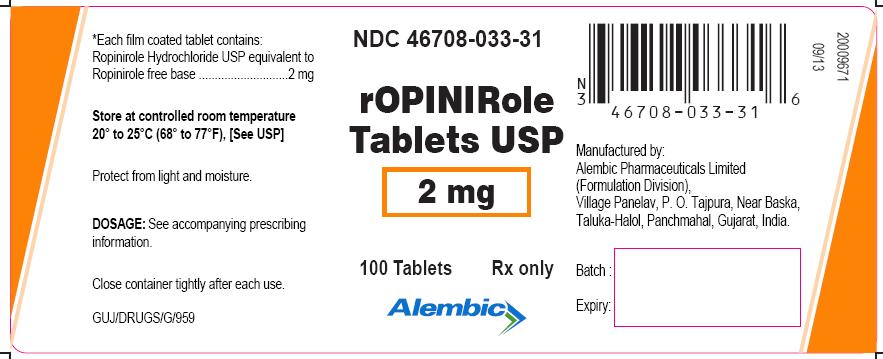
ROPINIROLE 2 mg Tablet, Film Coated, 30-count
🆔 Identity & classification
Where does this data come from?
🏷️ RxNorm drug class
This medicine belongs to the Nonergot Dopamine Agonist class.
Where does this data come from?
🏭 Manufacturer & labeler
Where does this data come from?
🩺 Clinical
- Ropinirole treats two different conditions. The regular tablets are approved for Parkinson's disease and for moderate-to-severe Restless Legs Syndrome — that uncomfortable, irresis...
- Yes, and it's one of the most important things to know. Some people taking ropinirole have fallen asleep suddenly during everyday activities — including while driving — sometimes w...
- I heard this medication can make you fall asleep out of nowhere. Is that true?
- It can, and this is something to watch for carefully. Some people develop strong, hard-to-control urges — like gambling, overeating, compulsive shopping, or increased sexual intere...
Patient education
Supplement & herbal interactions
Some supplements/herbs that may interact with Ropinirole — tap one for details:
Where does this data come from?
Ask a licensed pharmacist directly — free, answered by our team.
💊 What it looks like
Where does this data come from?
🧪 Inactive Ingredients / Excipients
Inactive ingredients, also called excipients, are components of the drug product other than the active ingredient. They may include fillers, dyes, coatings, preservatives, flavors, or other formulation ingredients.
💡 Tap an ingredient (hover on desktop) to see what it is and why it’s used.
-
UNII M28OL1HH48
Croscarmellose sodium is a plant-based substance derived from cellulose. It acts as a disintegrant, helping tablets and capsules break down quickly in the digestive system so the medicine can be absorbed.
-
UNII 1K09F3G675
Ferric oxide red is an inorganic iron compound used as a colorant in medicines. It gives tablets, capsules, or other dosage forms a red or reddish tint for identification and appearance.
-
UNII EX438O2MRT
Ferric oxide yellow is a naturally occurring iron compound used as a colorant in medications. It gives tablets, capsules, and other forms a yellow or golden hue for identification and appearance.
-
UNII 3NXW29V3WO
Hypromellose is a plant-based thickener made from cellulose. It's used in medicines as a binder to hold ingredients together, a coating for tablets, and a thickener for liquids.
-
UNII EWQ57Q8I5X
Lactose monohydrate is a natural sugar derived from milk. It serves as a filler and binder in tablets and capsules, helping create the proper size, texture, and consistency of the medicine.
-
UNII 70097M6I30
Magnesium stearate is a salt made from magnesium and stearic acid, a fatty substance. It's used in tablets and capsules as a lubricant and glidant to help ingredients flow smoothly during manufacturing and prevent sticking.
-
UNII OP1R32D61U
Microcrystalline cellulose is a purified form of cellulose, a natural fiber from plant sources. It acts as a binder and filler in tablets and capsules, helping hold ingredients together and give the medicine its shape and size.
-
UNII 3WJQ0SDW1A
Polyethylene glycol is a synthetic liquid or solid polymer used in medicines as a solvent, lubricant, and humectant. It helps dissolve active ingredients, reduces friction during manufacturing, and retains moisture in the final product.
-
UNII 15FIX9V2JP
Titanium dioxide is a bright white mineral powder commonly used as a colorant and opacifying agent. It makes pills and tablets white or lighter in color and helps make coatings non-transparent.
9 inactive ingredients listed in the exact product block matched to this NDC.
Where does this data come from?
ingredient classCode="IACT" elements from the exact product block matched by this NDC. Label-section narrative from DailyMed / the openFDA label index is shown separately when available.Inactive ingredient FAQ
Are inactive ingredients the same for every manufacturer?
Why might an inactive ingredient be missing?
Can inactive ingredients matter?
💲 Pricing
A drug doesn't have one price. Each row is a different public payment system, and none is what you'd pay at the counter — that depends on your insurance. The ⓘ on each row explains what it measures.
| Price system | Per each | Per package |
|---|---|---|
| Retail pharmacies payNADAC · weekly | Not in the retail survey — common for institutional, discontinued, or low-volume packs. | |
| Medicaid paysCMS SDUD · 12 mo | No recent Medicaid claims on file for this NDC — rare and low-volume NDCs are suppressed in the public data. | |
| Medicare drug plans payPart D · quarterly | No Part D plan price is available for this NDC in our data. | |
Where does this data come from?
🔁 Therapeutic equivalents
| Product | Labeler | Pack | NADAC/unit | TE | Status | Price vs. this |
|---|---|---|---|---|---|---|
| ropinirole hydrochloride 2 mg 43547-0271-10 | SOLCO | 100 tablets | $0.066 | AB | Availability likely | — |
| ropinirole hydrochloride 2 mg 50268-0744-15 | AvPAK | 1 tablet | $0.066 | AB | Availability likely | — |
| ropinirole 2 mg 68462-0256-01 | Glenmark | 100 tablets | $0.066 | AB | Availability likely | — |
| Ropinirole 2 mg 69452-0359-20 | Bionpharma | 100 tablets | $0.066 | AB | Availability likely | — |
| ropinirole 2 mg 16729-0235-01 | Accord | 100 tablets | $0.070 | AB | FDA listed | — |
| Ropinirole Hydrochloride 2 mg 00615-8191-39 | NCS | 30 tablets | — | AB | FDA listed | — |
| Ropinirole 2 mg 10135-0676-01 | Marlex | 100 tablets | — | AB | FDA listed | — |
| ropinirole hydrochloride 2 mg 43547-0598-10 | SOLCO | 100 tablets | — | AB | FDA listed | — |
| Ropinirole 2 mgthis 46708-0033-30 | Alembic | 30 tablets | — | AB | FDA listed | — |
| Ropinirole 2 mg 62332-0033-30 | Alembic | 30 tablets | — | AB | FDA listed | — |
| Ropinirole 2 mg 67046-1489-03 | Coupler | 30 tablets | — | AB | FDA listed | — |
| ropinirole 2 mg 70518-3618-00 | REMEDYREPACK | 180 tablets | — | AB | FDA listed | — |
| ropinirole 2 mg 71335-0631-01 | Bryant | 30 tablets | — | AB | Discontinued | — |
| ropinirole 2 mg 71335-1167-01 | Bryant | 30 tablets | — | AB | FDA listed | — |
| ropinirole hydrochloride 2 mg 71335-1626-01 | Bryant | 30 tablets | — | AB | FDA listed | — |
| Ropinirole 2 mg 71335-2515-01 | Bryant | 30 tablets | — | AB | FDA listed | — |
| Ropinirole 2 mg 87063-0201-01 | ASCLEMED | 100 tablets | — | AB | FDA listed | — |
| ropinirole 2 mg 68788-4138-03 | Preferred | 30 tablets | — | AB | FDA listed | — |
Where does this data come from?
⏳ Availability & generic status
This product is an FDA-approved generic. Other versions of the same drug are listed under Therapeutic equivalents, least expensive first.
Where does this data come from?
🔬 Reported adverse events (FAERS)
Top reported reactions
Age at onset
Reporter sex
Serious outcomes
Where does this data come from?
📦 Packaging — all sizes for this product
| Package NDC | Description | Marketing start | Status |
|---|---|---|---|
| 46708-0033-30 You're viewing this | 30 TABLET, FILM COATED in 1 BOTTLE (46708-033-30) | 2013-09-12 | Active |
| 46708-0033-31 | 100 TABLET, FILM COATED in 1 BOTTLE (46708-033-31) | 2013-09-12 | Active |
You're viewing the smallest of 2 pack sizes for this product.
Pack size FAQ
What quantity is in NDC 46708-0033-30?
What is the difference between NDC 46708-0033-30 and NDC 46708-0033-31?
What NDC number is used to bill for this package of ROPINIROLE 2 mg Tablet, Film Coated?
🧭 About this NDC listing & data coverage
What data is (and isn’t) available for this NDC — tap to expand
| NDC identity (package / product / labeler codes) | ✓ Available |
| Labeler | ✓ Available |
| Product & package description | ✓ Available |
| Marketing category & status | ✓ Available |
| Active ingredient / dosage form / route | ✓ Available |
| FDA label (SPL via DailyMed) | ✓ Available |
| Package photos | ✓ Available |
| Inactive ingredients (structured) | ✓ Available |
| NADAC pharmacy acquisition price (CMS) | — Not published for this NDC CMS publishes NADAC only for NDCs reported in its retail-pharmacy survey. |
| Orange Book / therapeutic-equivalence data | ✓ Available |
| HCPCS J-code billing crosswalk | — Not published for this NDC Most self-administered / retail products have no J-code — that is normal. |
| Medicaid utilization (CMS SDUD) | — Not published for this NDC CMS reports utilization only for NDCs with Medicaid claims above its privacy threshold. |
Questions about this listing
Why is there no price listed?
Is the NDC printed on the package the same as the 11-digit billing NDC?
What do the three segments of this NDC mean?
Is this package still being marketed?
Does this product come in other package sizes?
Who lists this product with the FDA?
Do I need a prescription for this product?
Where does this data come from?
📄 Full prescribing information FDA SPL
🎯 Indications and Usage ▾
INDICATIONS & USAGE Parkinson’s Disease Ropinirole Tablets are indicated for the treatment of the signs and symptoms of idiopathic Parkinson’s disease. The effectiveness of Ropinirole Tablets were demonstrated in randomized, controlled trials in patients with early Parkinson’s disease who were not receiving concomitant L-dopa therapy as well as in patients with advanced disease on concomitant L-dopa (see CLINICAL PHARMACOLOGY: Clinical Trials). Restless Legs Syndrome Ropinirole Tablets are indicated for the treatment of moderate-to-severe primary Restless Legs Syndrome (RLS).
Key diagnostic criteria for RLS are: an urge to move the legs usually accompanied or caused by uncomfortable and unpleasant leg sensations; symptoms begin or worsen during periods of rest or inactivity such as lying or sitting; symptoms are partially or totally relieved by movement such as walking or stretching at least as long as the activity continues; and symptoms are worse or occur only in the evening or night. Difficulty falling asleep may frequently be associated with moderate-to-severe RLS.
⏱️ Dosage and Administration ▾
DOSAGE & ADMINISTRATION General Dosing Considerations for Parkinson's Disease and RLS Ropinirole Tablets can be taken with or without food. Patients may be advised that taking Ropinirole Tablets with food may reduce the occurrence of nausea. However, this has not been established in controlled clinical trials.
If a significant interruption in therapy with Ropinirole Tablets has occurred, retitration of therapy may be warranted. Geriatric Use Pharmacokinetic studies demonstrated a reduced clearance of ropinirole in the elderly (see CLINICAL PHARMACOLOGY). Dose adjustment is not necessary since the dose is individually titrated to clinical response.
Renal Impairment The pharmacokinetics of ropinirole were not altered in patients with moderate renal impairment (see CLINICAL PHARMACOLOGY). Therefore, no dosage adjustment is necessary in patients with moderate renal impairment. The use of Ropinirole Tablets in patients with severe renal impairment has not been studied.
Hepatic Impairment The pharmacokinetics of ropinirole have not been studied in patients with hepatic impairment. Since patients with hepatic impairment may have higher plasma levels and lower clearance, Ropinirole Tablets should be titrated with caution in these patients. Dosing for Parkinson’s Disease In all clinical studies, dosage was initiated at a subtherapeutic level and gradually titrated to therapeutic response.
The dosage should be increased to achieve a maximum therapeutic effect, balanced against the principal side effects of nausea, dizziness, somnolence, and dyskinesia. The recommended starting dose for Parkinson’s disease is 0.25 mg 3 times daily. Based on individual patient response, dosage should then be titrated with weekly increments as described in Table 5.
After week 4, if necessary, daily dosage may be increased by 1.5 mg/day on a weekly basis up to a dose of 9 mg/day, and then by up to 3 mg/day weekly to a total dose of 24 mg/day. Doses greater than 24 mg/day have not been tested in clinical trials. Table 5.
Ascending-Dose Schedule of Ropinirole Tablets for Parkinson’s Disease Week Dosage Total Daily Dose 1 0.25 mg 3 times daily 0.75 mg 2 0.5 mg 3 times daily 1.5 mg 3 0.75 mg 3 times daily 2.25 mg 4 1 mg 3 times daily 3 mg When Ropinirole Tablets are administered as adjunct therapy to L-dopa, the concurrent dose of L-dopa may be decreased gradually as tolerated. L-dopa dosage reduction was allowed during the advanced Parkinson’s disease (with L-dopa) study if dyskinesias or other dopaminergic effects occurred. Overall, reduction of L-dopa dose was sustained in 87% of patients treated with Ropinirole Tablets and in 57% of patients on placebo.
On average the L-dopa dose was reduced by 31% in patients treated with Ropinirole Tablets. Ropinirole Tablets for Parkinson’s disease patients should be discontinued gradually over a 7-day period. The frequency of administration should be reduced from 3 times daily to twice daily for 4 days.
For the remaining 3 days, the frequency should be reduced to once daily prior to complete withdrawal of Ropinirole Tablets. Dosing for Restless Legs Syndrome In all clinical trials, the dose for Ropinirole Tablets was initiated at 0.25 mg once daily, 1 to 3 hours before bedtime. Patients were titrated based on clinical response and tolerability.
The recommended adult starting dosage for RLS is 0.25 mg once daily, 1 to 3 hours before bedtime. After 2 days, the dosage can be increased to 0.5 mg once daily and to 1 mg once daily at the end of the first week of dosing, then as shown in Table 6 as needed to achieve efficacy. For RLS, the safety and effectiveness of doses greater than 4 mg once daily have not been established.
Table 6. Dose Titration Schedule for RLS Day/Week Dosage to be taken once daily, 1 to 3 hours before bedtime Days 1 and 2 0.25 mg Days 3-7 0.5 mg Week 2 1 mg Week 3 1.5 mg Week 4 2 mg Week 5 2.5 mg Week 6 3 mg Week 7 4 mg In clinical trials of patients being treated for RLS with doses up to 4 mg once dai…
⛔ Contraindications ▾
CONTRAINDICATIONS Ropinirole Tablets are contraindicated for patients known to have hypersensitivity to the product.
⚠️ Warnings ▾
WARNINGS Falling Asleep During Activities of Daily Living Patients treated with Ropinirole Tablets have reported falling asleep while engaged in activities of daily living, including the operation of motor vehicles, which sometimes resulted in accidents. Although many of these patients reported somnolence while on Ropinirole Tablets, some perceived that they had no warning signs such as excessive drowsiness, and believed that they were alert immediately prior to the event. Some of these events have been reported as late as 1 year after initiation of treatment.
In controlled clinical trials, somnolence was a common occurrence in patients receiving Ropinirole Tablets and is more frequent in Parkinson's disease (up to 40% Ropinirole Tablets, 6% placebo) than in Restless Legs Syndrome (12% Ropinirole Tablets, 6% placebo). Many clinical experts believe that falling asleep while engaged in activities of daily living always occurs in a setting of preexisting somnolence, although patients may not give such a history. For this reason, prescribers should continually reassess patients for drowsiness or sleepiness, especially since some of the events occur well after the start of treatment.
Prescribers should also be aware that patients may not acknowledge drowsiness or sleepiness until directly questioned about drowsiness or sleepiness during specific activities. Before initiating treatment with Ropinirole Tablets, patients should be advised of the potential to develop drowsiness and specifically asked about factors that may increase the risk with Ropinirole Tablets such as concomitant sedating medications, the presence of sleep disorders (other than Restless Legs Syndrome), and concomitant medications that increase ropinirole plasma levels (e.g., ciprofloxacin - see PRECAUTIONS: Drug Interactions).
If a patient develops significant daytime sleepiness or episodes of falling asleep during activities that require active participation (e.g., conversations, eating, etc.), Ropinirole Tablets should ordinarily be discontinued. (See DOSAGE AND ADMINISTRATION for guidance in discontinuing Ropinirole Tablets.) If a decision is made to continue Ropinirole Tablets, patients should be advised to not drive and to avoid other potentially dangerous activities. There is insufficient information to establish that dose reduction will eliminate episodes of falling asleep while engaged in activities of daily living.
Syncope Syncope, sometimes associated with bradycardia, was observed in association with ropinirole in both Parkinson’s disease patients and RLS patients. In the 2 double-blind, placebo-controlled studies of Ropinirole Tablets in patients with Parkinson’s disease who were not being treated with L-dopa, 11.5% (18 of 157) of patients on Ropinirole Tablets had syncope compared to 1.4% (2 of 147) of patients on placebo. Most of these cases occurred more than 4 weeks after initiation of therapy with Ropinirole Tablets, and were usually associated with a recent increase in dose.
Of 208 patients being treated with both L-dopa and Ropinirole Tablets in placebo-controlled advanced Parkinson’s disease trials, there were reports of syncope in 6 (2.9%) compared to 2 of 120 (1.7%) of placebo/L-dopa patients. In patients with RLS, of 496 patients treated with Ropinirole Tablets in 12-week placebo-controlled trials, there were reports of syncope in 5 (1.0%) compared with 1 of 500 (0.2%) patients treated with placebo. Because the studies of Ropinirole Tablets excluded patients with significant cardiovascular disease, it is not known to what extent the estimated incidence figures apply to either Parkinson’s disease or RLS patients in clinical practice.
Therefore, patients with severe cardiovascular disease should be treated with caution. Two of 47 Parkinson’s disease patient volunteers enrolled in phase 1 studies had syncope following a 1-mg dose. In 2 studies in RLS patients that used a forced titration regimen and orthostatic challenge with intensive blood pre…
🤒 Adverse Reactions ▾
ADVERSE REACTIONS Parkinson’s Disease During the premarketing development of Ropinirole Tablets, patients received Ropinirole Tablets either without L-dopa (early Parkinson’s disease studies) or as concomitant therapy with L-dopa (advanced Parkinson’s disease studies). Because these 2 populations may have differential risks for various adverse events, this section will, in general, present adverse event data for these 2 populations separately. Early Parkinson’s Disease (Without L-dopa) The most commonly observed adverse events (>5%) in the double-blind, placebo-controlled early Parkinson’s disease trials associated with the use of Ropinirole Tablets (n = 157) not seen at an equivalent frequency among the placebo-treated patients (n = 147) were, in order of decreasing incidence: nausea, dizziness, somnolence, headache, vomiting, syncope, fatigue, dyspepsia, viral infection, constipation, pain, increased sweating, asthenia, dependent/leg edema, orthostatic symptoms, abdominal pain, pharyngitis, confusion, hallucinations, urinary tract infections, and abnormal vision.
Approximately 24% of 157 patients treated with Ropinirole Tablets who participated in the double-blind, placebo-controlled early Parkinson’s disease (without L-dopa) trials discontinued treatment due to adverse events compared to 13% of 147 patients who received placebo. The adverse events most commonly causing discontinuation of treatment by patients treated with Ropinirole Tablets were: nausea (6.4%), dizziness (3.8%), aggravated Parkinson’s disease (1.3%), hallucinations (1.3%), somnolence (1.3%), vomiting (1.3%), and headache (1.3%).
Of these, hallucinations appear to be dose-related. While other adverse events leading to discontinuation may be dose-related, the titration design utilized in these trials precluded an adequate assessment of the dose response. For example, in the larger of the 2 trials described in CLINICAL PHARMACOLOGY: Clinical Trials, the difference in the rate of discontinuations emerged only after 10 weeks of treatment, suggesting, although not proving, that the effect could be related to dose.
Adverse Event Incidence in Controlled Clinical Studies Table 2 lists treatment-emergent adverse events that occurred in ≥2% of patients with early Parkinson’s disease (without L-dopa) treated with Ropinirole Tablets participating in the double-blind, placebo-controlled studies and were numerically more common in the group treated with Ropinirole Tablets. In these studies, either Ropinirole Tablets or placebo was used as early therapy (i.e., without L-dopa). The prescriber should be aware that these figures cannot be used to predict the incidence of adverse events in the course of usual medical practice where patient characteristics and other factors differ from those that prevailed in the clinical studies.
Similarly, the cited frequencies cannot be compared with figures obtained from other clinical investigations involving different treatments, uses, and investigators. However, the cited figures do provide the prescribing physician with some basis for estimating the relative contribution of drug and non-drug factors to the adverse-events incidence rate in the population studied. Table 2.
Treatment-Emergent Adverse Event * Incidence in Double-Blind, Placebo-Controlled Early Parkinson’s Disease (Without L-dopa) Trials (Events ≥2% of Patients Treated With Ropinirole Tablets and Numerically More Frequent Than the Placebo Group) Adverse Experience Ropinirole Tablets (n = 157) (%) Placebo (n = 147) (%) Autonomic nervous system Flushing 3 1 Dry mouth 5 3 Increased sweating 6 4 Body as a whole Asthenia 6 1 Chest pain 4 2 Dependent edema 6 3 Leg edema 7 1 Fatigue 11 4 Malaise 3 1 Pain 8 4 Cardiovascular general Hypertension 5 3 Hypotension 2 0 Orthostatic symptoms 6 5 Syncope 12 1 Central/peripheral nervous system Dizziness 40 22 Hyperkinesia 2 1 Hypesthesia 4 2 Vertigo 2 0 Gastrointestinal system Abdominal pain 6 3 Anorexia 4 1 Dyspepsia 10 5 Flatulence 3 1 Nau…
🔄 Drug Interactions ▾
DRUG INTERACTIONS P 450 Interaction In vitro metabolism studies showed that CYP1A2 was the major enzyme responsible for the metabolism of ropinirole. There is thus the potential for substrates or inhibitors of this enzyme when coadministered with ropinirole to alter its clearance. Therefore, if therapy with a drug known to be a potent inhibitor of CYP1A2 is stopped or started during treatment with Ropinirole Tablets, adjustment of the dose of Ropinirole Tablets may be required.
L-dopa Co-administration of carbidopa + L-dopa (SINEMET® 10/100 mg twice daily) with ropinirole (2 mg 3 times daily) had no effect on the steady-state pharmacokinetics of ropinirole (n = 28 patients). Oral administration of Ropinirole Tablets 2 mg 3 times daily increased mean steady state Cmax of L-dopa by 20%, but its AUC was unaffected (n = 23 patients). Digoxin Co-administration of Ropinirole Tablets (2 mg 3 times daily) with digoxin (0.125 to 0.25 mg once daily) did not alter the steady-state pharmacokinetics of digoxin in 10 patients.
Theophylline Administration of theophylline (300 mg twice daily, a substrate of CYP1A2) did not alter the steady-state pharmacokinetics of ropinirole (2 mg 3 times daily) in 12 patients with Parkinson’s disease. Ropinirole (2 mg 3 times daily) did not alter the pharmacokinetics of theophylline (5 mg/kg IV) in 12 patients with Parkinson’s disease. Ciprofloxacin Co-administration of ciprofloxacin (500 mg twice daily), an inhibitor of CYP1A2, with ropinirole (2 mg 3 times daily) increased ropinirole AUC by 84% on average and Cmax by 60% (n = 12 patients).
Estrogens Population pharmacokinetic analysis revealed that estrogens (mainly ethinyl estradiol: intake 0.6 to 3 mg over 4-month to 23-year period) reduced the oral clearance of ropinirole by 36% in 16 patients. Dosage adjustment may not be needed for Ropinirole Tablets in patients on estrogen therapy because patients must be carefully titrated with ropinirole to tolerance or adequate effect. However, if estrogen therapy is stopped or started during treatment with Ropinirole Tablets, then adjustment of the dose of Ropinirole Tablets may be required.
Dopamine Antagonists Since ropinirole is a dopamine agonist, it is possible that dopamine antagonists such as neuroleptics (phenothiazines, butyrophenones, thioxanthenes) or metoclopramide may diminish the effectiveness of Ropinirole Tablets. Patients with major psychotic disorders treated with neuroleptics should only be treated with dopamine agonists if the potential benefits outweigh the risks. Population analysis showed that commonly administered drugs, e.g., selegiline, amantadine, tricyclic antidepressants, benzodiazepines, ibuprofen, thiazides, antihistamines, and anticholinergics, did not affect the oral clearance of ropinirole.
🤰 Pregnancy ▾
PREGNANCY Pregnancy Category C. In animal reproduction studies, ropinirole has been shown to have adverse effects on embryo-fetal development, including teratogenic effects. Ropinirole given to pregnant rats during organogenesis (20 mg/kg on gestation days 6 and 7 followed by 20, 60, 90, 120, or 150 mg/kg on gestation days 8 through 15) resulted in decreased fetal body weight at 60 mg/kg/day, increased fetal death at 90 mg/kg/day, and digital malformations at 150 mg/kg/day (24, 36, and 60 times the maximum recommended human dose on a mg/m2 basis, respectively).
The combined administration of ropinirole (10 mg/kg/day, 8 times the maximum recommended human dose on a mg/m2 basis) and L-dopa (250 mg/kg/day) to pregnant rabbits during organogenesis produced a greater incidence and severity of fetal malformations (primarily digit defects) than were seen in the offspring of rabbits treated with L-dopa alone. No indication of an effect on development of the conceptus was observed in rabbits when a maternally toxic dose of ropinirole was administered alone (20 mg/kg/day, 16 times the maximum recommended human dose on a mg/m2 basis).
In a perinatal-postnatal study in rats, 10 mg/kg/day (4 times the maximum recommended human dose on a mg/m2 basis) of ropinirole impaired growth and development of nursing offspring and altered neurological development of female offspring. There are no adequate and well-controlled studies using Ropinirole Tablets in pregnant women. Ropinirole Tablets should be used during pregnancy only if the potential benefit outweighs the potential risk to the fetus.
🧒 Pediatric Use ▾
PEDIATRIC USE Safety and effectiveness in the pediatric population have not been established.
🆘 Overdosage ▾
OVERDOSAGE In the Parkinson's disease program, there have been patients who accidentally or intentionally took more than their prescribed dose of ropinirole. The largest overdose reported in the Parkinson's disease clinical trials was 435 mg taken over a 7-day period (62.1 mg/day). Of patients who received a dose greater than 24 mg/day, reported symptoms included adverse events commonly reported during dopaminergic therapy (nausea, dizziness), as well as visual hallucinations, hyperhidrosis, claustrophobia, chorea, palpitations, asthenia, and nightmares.
Additional symptoms reported for doses of 24 mg or less or for overdoses of unknown amount included vomiting, increased coughing, fatigue, syncope, vasovagal syncope, dyskinesia, agitation, chest pain, orthostatic hypotension, somnolence, and confusional state. Overdose Management It is anticipated that the symptoms of overdose with Ropinirole Tablets will be related to its dopaminergic activity. General supportive measures are recommended.
Vital signs should be maintained, if necessary. Removal of any unabsorbed material (e.g., by gastric lavage) should be considered.
🧬 Clinical Pharmacology ▾
CLINICAL PHARMACOLOGY Mechanism of Action Ropinirole Hydrochloride is a non-ergoline dopamine agonist with high relative in vitro specificity and full intrinsic activity at the D2 and D3 dopamine receptor subtypes, binding with higher affinity to D3 than to D2 or D4 receptor subtypes. Ropinirole has moderate in vitro affinity for opioid receptors. Ropinirole and its metabolites have negligible in vitro affinity for dopamine D1, 5-HT1, 5-HT2, benzodiazepine, GABA, muscarinic, alpha1-, alpha2-, and beta-adrenoreceptors.
Parkinson’s Disease The precise mechanism of action of Ropinirole Hydrochloride as a treatment for Parkinson’s disease is unknown, although it is believed to be due to stimulation of postsynaptic dopamine D2-type receptors within the caudate-putamen in the brain. This conclusion is supported by studies that show that ropinirole improves motor function in various animal models of Parkinson’s disease. In particular, ropinirole attenuates the motor deficits induced by lesioning the ascending nigrostriatal dopaminergic pathway with the neurotoxin 1-methyl-4-phenyl-1,2,3,6-tetrahydropyridine (MPTP) in primates.
The relevance of D3 receptor binding in Parkinson’s disease is unknown. Restless Legs Syndrome (RLS) The precise mechanism of action of Ropinirole Hydrochloride as a treatment for Restless Legs Syndrome (also known as Ekbom Syndrome) is unknown. Although the pathophysiology of RLS is largely unknown, neuropharmacological evidence suggests primary dopaminergic system involvement.
Positron emission tomographic (PET) studies suggest that a mild striatal presynaptic dopaminergic dysfunction may be involved in the pathogenesis of RLS. Clinical Pharmacology Studies In healthy normotensive subjects, single oral doses of Ropinirole Tablets in the range 0.01 to 2.5 mg had little or no effect on supine blood pressure and pulse rates. Upon standing, Ropinirole Tablets caused decreases in systolic and diastolic blood pressure at doses above 0.25 mg.
In some subjects, these changes were associated with the emergence of orthostatic symptoms, bradycardia, and, in one case, transient sinus arrest with syncope. With repeat dosing and slow titration up to 4 mg once daily in healthy volunteers, postural hypotension or hypotension-related adverse events were noted in 13% of subjects on Ropinirole Tablets and none of the subjects on placebo. The mechanism of postural hypotension induced by Ropinirole Hydrochloride is presumed to be due to a D2-mediated blunting of the noradrenergic response to standing and subsequent decrease in peripheral vascular resistance.
Nausea is a common concomitant symptom of orthostatic signs and symptoms. At oral doses as low as 0.2 mg, Ropinirole Tablets suppressed serum prolactin concentrations in healthy male volunteers. Ropinirole Tablets had no dose-related effect on ECG wave form and rhythm in young, healthy, male volunteers in the range of 0.01 to 2.5 mg.
Ropinirole Tablets had no dose- or exposure-related effect on mean QT intervals in healthy male and female volunteers titrated to doses up to 4 mg/day. The effect of Ropinirole Tablets on QT intervals at higher exposures achieved either due to drug interactions or at doses used in Parkinson’s disease has not been systematically evaluated. Pharmacokinetics Absorption, Distribution, Metabolism, and Elimination The pharmacokinetics of ropinirole are similar in Parkinson's disease patients and patients with Restless Legs Syndrome.
Ropinirole is rapidly absorbed after oral administration, reaching peak concentration in approximately 1-2 hours. In clinical studies, over 88% of a radiolabeled dose was recovered in urine and the absolute bioavailability was 55%, indicating a first-pass effect. Relative bioavailability from a tablet compared to an oral solution is 85%.
Food does not affect the extent of absorption of ropinirole, although its Tmax is increased by 2.5 hours and its Cmaxis decreased by approximately 25% when the drug is taken with a high-fat…
📦 How Supplied / Storage and Handling ▾
HOW SUPPLIED Tablets Each circular, biconvex, film-coated tablet contains ropinirole as follows: 0.25 mg: white tablets debossed with “H” on one side and “121” on other side NDC 46708-030-31 bottle of 100 tablets 0.5 mg: yellow tablets debossed with “H” on one side and “122” on other side NDC 46708-031-31 bottle of 100 tablets 1 mg: green tablets debossed with “H” on one side and “123” on other side NDC 46708-032-31 bottle of 100 tablets 2 mg: Peach tablets debossed with “H” on one side and “124” on other side NDC 46708-033-31 bottle of 100 tablets 3 mg: Purple tablets debossed with “H” on one side and “125” on other side NDC 46708-034-31 bottle of 100 tablets 4 mg: Pale brown tablets debossed with “H” on one side and “126” on other side NDC 46708-035-31 bottle of 100 tablets 5 mg: Blue tablets debossed with “H” on one side and “127” on other side NDC 46708-036-31 bottle of 100 tablets STORAGE: Protect from light and moisture.
Close container tightly after each use. Store at controlled room temperature 20°-25°C (68°-77°F) [see USP]. Alembic Pharmaceuticals Limited Manufactured in India Revision Date: 08/2024
📋 Description ▾
DESCRIPTION Ropinirole is an orally administered non-ergoline dopamine agonist. It is the hydrochloride salt of 4-[2-(dipropylamino) ethyl]-1,3-dihydro-2H-indol-2-one monohydrochloride and has an empirical formula of C16H24N2O•HCl. The molecular weight is 296.84 (260.38 as the free base).
The structural formula is: Ropinirole Hydrochloride, USP is a white to yellow solid with a melting range of 243° to 250°C and a solubility of 133 mg/mL in water. Each circular, biconvex, film-coated tablet contains ropinirole hydrochloride USP equivalent to ropinirole free base, 0.25 mg, 0.5 mg, 1 mg, 2 mg, 3 mg, 4 mg, or 5 mg. Inactive ingredients consist of: croscarmellose sodium, lactose monohydrate, magnesium stearate, microcrystalline cellulose, and one or more of the following: carmine, FD&C Blue No.
2 aluminum lake, FD&C Yellow No. 6 aluminum lake, hypromellose, iron oxides (iron oxide yellow, iron oxide red and iron oxide black), polyethylene glycol, polysorbate 80 and titanium dioxide. Structure
💬 Information for Patients ▾
INFORMATION FOR PATIENTS Physicians should instruct their patients to read the Patient Information leaflet before starting therapy with Ropinirole Tablets and to reread it upon prescription renewal for new information regarding the use of Ropinirole Tablets. Patients should be instructed to take Ropinirole Tablets only as prescribed. If a dose is missed, patients should be advised not to double their next dose.
Ropinirole Tablets can be taken with or without food. Patients may be advised that taking Ropinirole Tablets with food may reduce the occurrence of nausea. However, this has not been established in controlled clinical trials.
Patients should be advised that they may develop postural (orthostatic) hypotension with or without symptoms such as dizziness, nausea, syncope, and sometimes sweating. Hypotension and/or orthostatic symptoms may occur more frequently during initial therapy or with an increase in dose at any time (cases have been seen after weeks of treatment). Accordingly, patients should be cautioned against rising rapidly after sitting or lying down, especially if they have been doing so for prolonged periods, and especially at the initiation of treatment with Ropinirole Tablets.
Patients should be alerted to the potential sedating effects associated with Ropinirole Tablets, including somnolence and the possibility of falling asleep while engaged in activities of daily living. Since somnolence is a frequent adverse event with potentially serious consequences, patients should neither drive a car nor engage in other potentially dangerous activities until they have gained sufficient experience with Ropinirole Tablets to gauge whether or not it affects their mental and/or motor performance adversely.
Patients should be advised that if increased somnolence or episodes of falling asleep during activities of daily living (e.g., watching television, passenger in a car, etc.) are experienced at any time during treatment, they should not drive or participate in potentially dangerous activities until they have contacted their physician. Because of possible additive effects, caution should be advised when patients are taking other sedating medications or alcohol in combination with Ropinirole Tablets and when taking concomitant medications that increase plasma levels of ropinirole (e.g., ciprofloxacin).
Because of the possible additive sedative effects, caution should also be used when patients are taking alcohol or other CNS depressants (e.g., benzodiazepines, antipsychotics, antidepressants, etc.) in combination with Ropinirole Tablets. Patients should be informed they may experience hallucinations (unreal visions, sounds, or sensations) while taking Ropinirole Tablets. These were uncommon in patients taking Ropinirole Tablets for Restless Legs Syndrome.
The risk is greater in patients with Parkinson's disease; the elderly are at greater risk than younger patients with Parkinson's disease; and the risk is greater in patients who are taking Ropinirole Tablets with L-dopa, or taking higher doses of Ropinirole Tablets. Impulse Control Symptoms Including Compulsive Behaviors: There have been reports of patients experiencing intense urges to gamble, increased sexual urges, and other intense urges and the inability to control these urges while taking one or more of the medications that increase central dopaminergic tone, that are generally used for the treatment of Parkinson’s disease, including Ropinirole Tablets.
Although it is not proven that the medications caused these events, these urges were reported to have stopped in some cases when the dose was reduced or the medication was stopped. Prescribers should ask patients about the development of new or increased gambling urges, sexual urges or other urges while being treated with Ropinirole Tablets. Patients should inform their physician if they experience new or increased gambling urges, increased sexual urges or other intense urges while taking Ropinirole Tablets.
Physicia…