
Ecolab Benzalkonium chloride 5.5 mg/mL Solution, 500 mL — NDC 47593-521-38 (Billing 47593-0521-38)
This is a package of 500 mL of Ecolab Benzalkonium chloride 5.5 mg/mL Solution from Ecolab Inc., no longer marketed (first marketed Sep 2014), no longer in the FDA NDC Directory. It is the main listing for this product, which comes in 6 package sizes.
NDC database record
One package, one record: these facts belong to NDC 47593-521-38 alone.
- Record
- FDA NDC Directory package listing · Human OTC drug
- Code segments
- 47593 labeler · 521 product · 38 package
- Listing certified through
- Dec 31, 2026
- Barcode (UPC-A, from the NDC)
- 3 4759352138 4
- FDA record last changed
- Jul 24, 2026
Other active recalls for Benzalkonium Chloride (different manufacturers) — 6 · tap to view
Identity & classification
Regulatory identifiers FDA, NLM and CMS codes for this package
- RxCUI (RxNorm): 1549867
Where does this data come from?
- FDA openFDA NDC Directory · synced Oct 8, 2026
- FDA label on DailyMed · label index refreshed Oct 8, 2026
- RxNorm (NLM RxNav) · catalog refreshed Oct 8, 2026
- Medi-Span GPI (licensed)
- First Databank (licensed) · refreshed Oct 8, 2026
RxNorm drug class
This medicine belongs to the Quaternary ammonium compounds class.
Where does this data come from?
- RxClass (NLM) · catalog refreshed Oct 8, 2026
Clinical
Ecolab Benzalkonium Chloride 5.5 mg/mL Solution is a topical liquid product containing benzalkonium chloride, a type of antimicrobial agent. This product is marketed as an over-the-counter monograph drug, meaning it follows FDA's established safety and use rules for its product category rather than being individually approved. Benzalkonium chloride is typically used in topical solutions as an antiseptic or disinfectant to help reduce bacteria on skin and surfaces.
Patient education
Supplement & herbal interactions
Some supplements/herbs that may interact with Benzalkonium Chloride — tap one for details:
Where does this data come from?
- MedlinePlus (NLM) · refreshed Oct 8, 2026
- FDA label on DailyMed · label index refreshed Oct 8, 2026
Ask a licensed pharmacist directly — free, answered by our team.
Pricing
A drug doesn't have one price. Each row is a different public payment system, and none is what you'd pay at the counter — that depends on your insurance. The ⓘ on each row explains what it measures.
| Price system | Per mL | Per package |
|---|---|---|
| Retail pharmacies payNADAC · weekly | Not in the retail survey — common for institutional, discontinued, or low-volume packs. | |
| Medicaid paysCMS SDUD · 12 mo | No recent Medicaid claims on file for this NDC — rare and low-volume NDCs are suppressed in the public data. | |
| Medicare drug plans payPart D · quarterly | No Part D plan price is available for this NDC in our data. | |
Where does this data come from?
- CMS NADAC weekly file
- CMS ASP pricing files · refreshed Sep 20, 2026
- CMS Medicaid State Drug Utilization Data · refreshed Oct 9, 2026
- CMS Part D plan pricing files · refreshed Sep 24, 2026
- VA National Acquisition Center price file
Packaging — all sizes for this product
| Package NDC | Description | Marketing start | Marketing end | Status |
|---|---|---|---|---|
| 47593-0521-38 You're viewing this Main listing | 500 mL in 1 BOTTLE, PLASTIC | 2014-09-15 | — | Discontinued by firm |
| 47593-0521-41 47593-521-41 | 750 mL in 1 BOTTLE, PLASTIC | 2014-09-15 | — | Active |
| 47593-0521-56 47593-521-56 | 1200 mL in 1 BOTTLE, PLASTIC | 2014-09-15 | — | Active |
| 47593-0521-57 47593-521-57 | 535 mL in 1 BOTTLE, PLASTIC | 2014-09-15 | — | Active |
| 47593-0521-59 47593-521-59 | 1250 mL in 1 BOTTLE, PLASTIC | 2014-09-15 | — | Active |
| 47593-0521-70 47593-521-70 | 1200 mL in 1 BOTTLE, PLASTIC | 2025-03-19 | — | Active |
Pack size FAQ
What quantity is in this package?
How does this package differ from NDC 47593-0521-57?
What NDC number is used to bill for this package of Ecolab Benzalkonium chloride 5.5 mg/mL Solution?
Therapeutic equivalents
| Product | Labeler | Pack | NADAC/unit | TE | Status | Price vs. this |
|---|---|---|---|---|---|---|
| Ecolab 5.5 mg/mLthis 47593-0521-38 | Ecolab | 500 ml | — | — | Discontinued | — |
| Ecolab 5.5 mg/mL 47593-0532-41 | Ecolab | 750 ml | — | — | FDA listed | — |
| Facilipro 5.5 mg/mL 47593-0565-59 | Ecolab | 1250 ml | — | — | FDA listed | — |
| Ecolab 5.5 mg/mL 47593-0593-41 | Ecolab | 750 ml | — | — | FDA listed | — |
Where does this data come from?
- FDA openFDA NDC Directory · synced Oct 8, 2026
- FDA Orange Book · refreshed Oct 3, 2026
- CMS NADAC weekly file
Availability & generic status
We did not find an FDA-approved generic match for this exact strength, form and route.
Where does this data come from?
- FDA Orange Book · refreshed Oct 3, 2026
Inactive Ingredients / Excipients
Inactive ingredients, also called excipients, are components of the drug product other than the active ingredient. They may include fillers, dyes, coatings, preservatives, flavors, or other formulation ingredients.
💡 Tap an ingredient (hover on desktop) to see what it is and why it’s used.
-
UNII 9E8X80D2L0
A synthetic form of vitamin E used as an antioxidant and preservative in medications. It helps prevent the active ingredients from degrading when exposed to oxygen or light.
-
UNII 3K9958V90M
A liquid solvent derived from fermentation or chemical synthesis. In medicines, alcohol dissolves active ingredients, helps preserve the product, and improves how the body absorbs certain drugs.
-
UNII XF417D3PSL
Anhydrous citric acid is a sour, crystalline powder derived from citric acid with water removed. In medicines, it acts as a buffer to control pH, adds tartness to improve taste, and helps tablets disintegrate.
-
UNII H2KVQ74JM4
A compound derived from coconut oil that acts as a conditioning agent and surfactant. It helps stabilize and thicken liquid formulations while reducing static and improving texture in topical products.
-
UNII QWA2IZI6FI
A surfactant derived from coconut oil, cocamine oxide helps reduce surface tension and improves how ingredients mix together in liquid formulations, enhancing product stability and texture.
-
UNII PDC6A3C0OX
Glycerin is a clear, thick liquid derived from plant oils or fats. It acts as a humectant to retain moisture, a sweetener, and a solvent in medications.
-
UNII U72Q2I8C85
A mixture of fats derived from coconut oil that acts as an emulsifier and solubilizer. It helps blend oil and water-based ingredients together and improves how the body absorbs certain drugs.
-
UNII E89I1637KE
Guar gum is a natural thickener made from guar bean seeds. It's used in medicines as a binder and thickening agent to hold ingredients together and create the right texture and consistency.
-
UNII KEH0A3F75J
Hexylene glycol is a clear liquid alcohol used as a solvent and preservative in medicines. It helps dissolve other ingredients and keeps the product stable during storage.
-
UNII J3QD0LD11P
A synthetic compound made by combining glucose with methyl alcohol and polyethylene glycol. It acts as an emulsifier and solvent to help blend water and oil-based ingredients and improve how the medicine dissolves or spreads.
-
UNII 17DN142CTK
A synthetic fatty acid derivative used in medicines as an emulsifier and thickening agent. It helps blend oil and water-based ingredients together and gives the product a smooth, uniform texture.
-
UNII ZEL54N6W95
A silicone-based compound that helps oils and water mix together. Used in medicines as an emulsifier and anti-foaming agent to improve texture and prevent bubbles in liquids and creams.
-
UNII HIE492ZZ3T
Phenoxyethanol is a synthetic preservative and antimicrobial agent used to prevent bacterial and fungal growth in medicines and cosmetic products, extending shelf life and maintaining product safety.
-
UNII Q662QK8M3B
Polyethylene glycol 8000 is a synthetic polymer made from ethylene oxide. It acts as a binder and filler in tablets and capsules, helping hold ingredients together and add bulk to the medicine.
-
UNII WZH3C48M4T
Potassium hydroxide is a strong alkaline chemical used in medicines to adjust and maintain the pH level of liquid formulations, helping keep the product stable and the active ingredients effective.
-
UNII 059QF0KO0R
Water is a liquid solvent that dissolves and mixes ingredients together in liquid medicines, syrups, and injections. It helps distribute the active drug evenly throughout the product.
16 inactive ingredients listed in the exact product block matched to this NDC.
Label-section wording can be broader than the structured product block and may mention additional formulation ingredients.
Where does this data come from?
ingredient classCode="IACT" elements from the exact product block matched by this NDC. Label-section narrative from DailyMed / the openFDA label index is shown separately when available.- FDA label on DailyMed · label index refreshed Oct 8, 2026
- FDA openFDA NDC Directory · synced Oct 8, 2026
Inactive ingredient FAQ
Are inactive ingredients the same for every manufacturer?
Why might an inactive ingredient be missing?
Can inactive ingredients matter?
Manufacturer & labeler
More NDCs from Ecolab Inc. labeler code 47593
- Ecolab Alcohol 700 mg/mL Liquid NDC 47593-509-41
- Ecolab Inc. Benzalkonium chloride 8.9 mg/mL Solution NDC 47593-511-61
- Ecolab Inc. Benzalkonium chloride 8.9 mg/mL Solution NDC 47593-512-61
- Ecolab Inc. Benzalkonium chloride 8.9 mg/mL Solution NDC 47593-513-62
- Ecolab Inc. Benzalkonium chloride 8.9 mg/mL Solution NDC 47593-514-62
- Ecolab Clean Force Chloroxylenol 5 mg/mL Solution NDC 47593-515-25
- Ecolab Benzalkonium chloride 5.5 mg/mL Solution NDC 47593-532-41
- Advanced Antibacterial Foaming Hand Soap Benzalkonium Chloride 5 mg/mL Solution NDC 47593-543-41
- Keystone Benzalkonium Chloride 5 mg/mL Solution NDC 47593-561-41
- Facilipro Ethyl Alcohol 620 mg/mL Solution NDC 47593-563-56
- Facilipro Benzalkonium chloride 5.5 mg/mL Solution NDC 47593-565-59
- Facilipro Benzalkonium Chloride 5 mg/mL Solution NDC 47593-566-59
Where does this data come from?
- FDA openFDA NDC Directory · synced Oct 8, 2026
- Drugs@FDA
FDA label — Drug Facts FDA SPL
🎯 Indications and Usage ▾
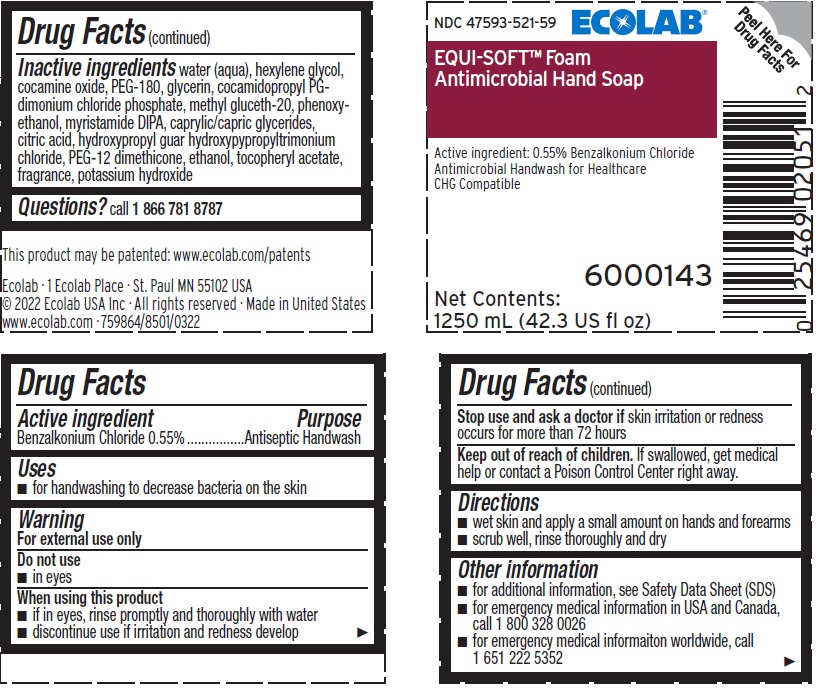
Uses for handwashing to decrease bacteria on the skin
⏱️ Dosage and Administration ▾
Directions wet skin and spread a small amount on hands and forearms scrub well, rinse thoroughly and dry
⚠️ Warnings ▾
Warnings For external use only Do not use In eyes When using this product if in eyes, rinse promptly and thoroughly with water. discontinue use if irritation and redness develop. Stop use and ask a doctor if skin irritation or redness occurs for more than 72 hours Keep out of reach of children. If swallowed, get medical help or contact a Poison Control Center right away.
🧪 Inactive Ingredients ▾
Inactive ingredients water (aqua), hexylene glycol, cocamine oxide, PEG-180, glycerin, cocamidopropyl PG-dimonium chloride phosphate, methyl gluceth-20, phenoxyethanol, myristamide DIPA, caprylic/capric glycerides, citric acid, hydroxypropyl guar hydroxypypropyltrimonium chloride, PEG-12 dimethicone, ethanol, tocopheryl acetate, fragrance, potassium hydroxide
🎯 Purpose ▾
Purpose Antiseptic handwash
📄 Do Not Use ▾
Do not use In eyes
📄 Ask a Doctor Before Use If ▾
Stop use and ask a doctor if skin irritation or redness occurs for more than 72 hours
📄 When Using This Product ▾
When using this product if in eyes, rinse promptly and thoroughly with water. discontinue use if irritation and redness develop.
📄 Keep Out of Reach of Children ▾
Keep out of reach of children. If swallowed, get medical help or contact a Poison Control Center right away.
📄 Questions or Comments ▾
Questions? call 1 866 781 8787
📚 References ▾
Other information for additional information, see Safety Data Sheet (SDS) for emergency medical information in USA and Canada, call 1 800 328 0026 for emergency medical information worldwide, call 1 651 222 5352
📄 Package Label / Principal Display Panel ▾
Representative Label and Principal Display Panel 47593-521-59 ECOLAB ® EQUI-SOFT ™ Foam ANTIMICROBIAL HAND SOAP Active Ingredient: 0.55% Benzalkonium Chloride Antimicrobial Handwash for Healthcare CHG Compatible 6000143 1250 mL (42.3 US fl oz) Ecolab · 1 Ecolab Place · St. Paul MN 55102 USA © 2022 Ecolab USA Inc · All rights reserved · Made in United States www.ecolab.com · 759864/8501/0322 representative label
Reported adverse events (FAERS)
Top reported reactions
Age at onset
Reporter sex
Serious outcomes
Where does this data come from?
About this NDC listing & data coverage
What data is (and isn’t) available for this NDC — tap to expand
| NDC identity (package / product / labeler codes) | ✓ Available |
| Labeler | ✓ Available |
| Product & package description | ✓ Available |
| Marketing category & status | ✓ Available |
| Active ingredient / dosage form / route | ✓ Available |
| FDA label (SPL via DailyMed) | ✓ Available |
| Package photos | ✓ Available |
| Inactive ingredients (structured) | ✓ Available |
| NADAC pharmacy acquisition price (CMS) | — Not published for this NDC CMS publishes NADAC only for NDCs reported in its retail-pharmacy survey. |
| Orange Book / therapeutic-equivalence data | — Not published for this NDC Applies only to products approved under an NDA/ANDA; many listings are out of scope. |
| HCPCS J-code billing crosswalk | — Not published for this NDC Most self-administered / retail products have no J-code — that is normal. |
| Medicaid utilization (CMS SDUD) | — Not published for this NDC CMS reports utilization only for NDCs with Medicaid claims above its privacy threshold. |