
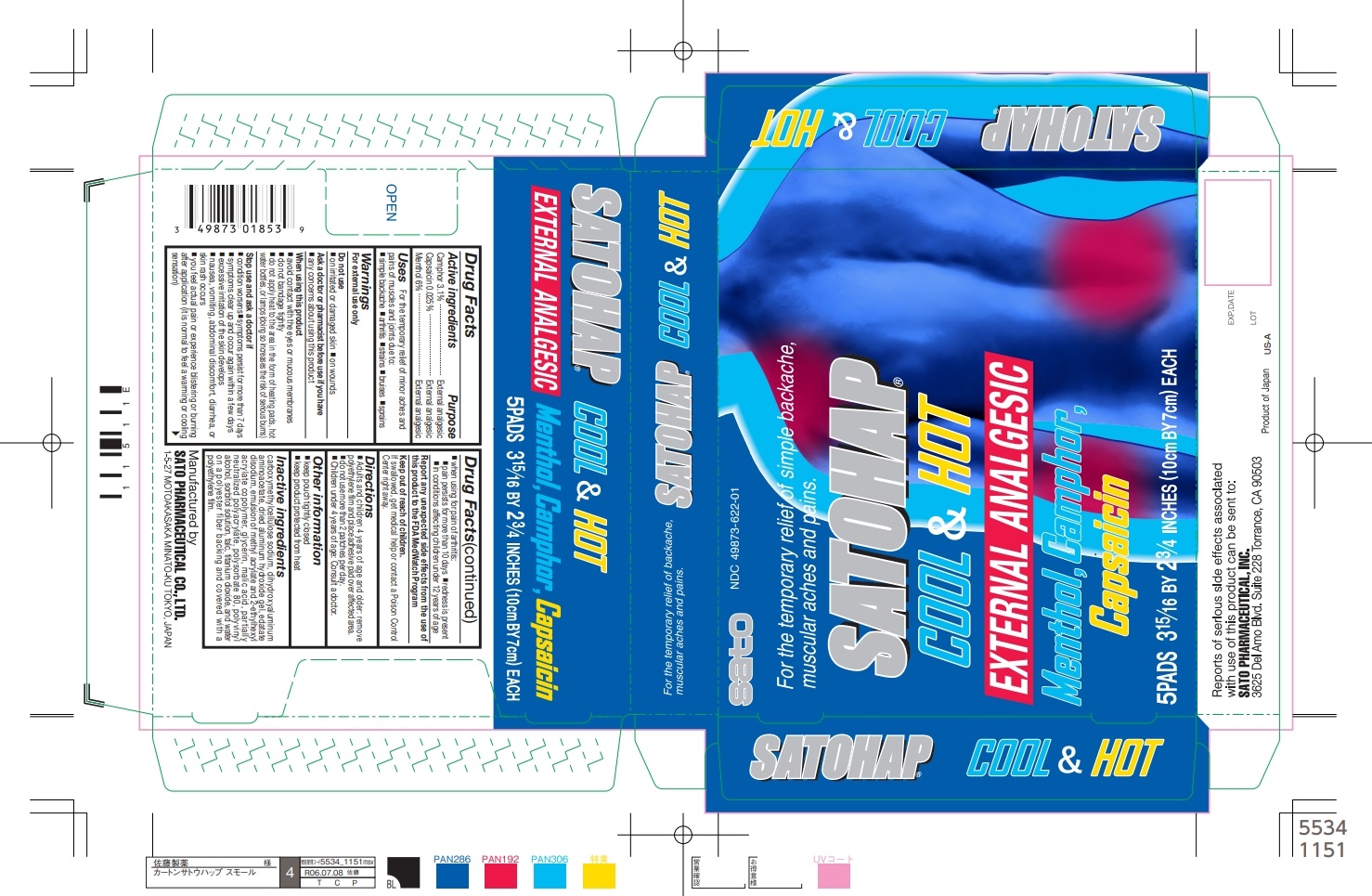
SATOHAP COOL and HOT Camphor, Capsaicin, Menthol .025 g/100g; 3.1 g/100g; 6 g/100g Patch, 5 patches — NDC 49873-622-01 (Billing 49873-0622-01)
This is a package of 5 patches of SATOHAP COOL and HOT Camphor, Capsaicin, Menthol .025 g/100g; 3.1 g/100g; 6 g/100g Patch from Sato Pharmaceuticals Co., Ltd., marketed since Sep 2024 and currently FDA-listed. It is this product's only package size.
NDC database record
One package, one record: these facts belong to NDC 49873-622-01 alone.
- Record
- FDA NDC Directory package listing · Human OTC drug
- Code segments
- 49873 labeler · 622 product · 01 package
- Package marketed since
- Sep 1, 2024
- Sample package
- No — commercial package
- Listing certified through
- Dec 31, 2027
- Barcode (UPC-A, from the NDC)
- 3 4987362201 9
- FDA record last changed
- Aug 27, 2026
Identity & classification
Regulatory identifiers FDA, NLM and CMS codes for this package
- RxCUI (RxNorm): 2694729
Where does this data come from?
- FDA openFDA NDC Directory · synced Oct 8, 2026
- FDA label on DailyMed · label index refreshed Oct 8, 2026
- RxNorm (NLM RxNav) · catalog refreshed Oct 8, 2026
- Medi-Span GPI (licensed)
- First Databank (licensed) · refreshed Oct 8, 2026
Clinical
SATOHAP COOL and HOT is an over-the-counter topical patch, meaning it is applied to the outer skin and is sold under FDA's OTC monograph rules for its category. Its three active ingredients are capsaicin, camphor, and levomenthol. Capsaicin, the compound that gives chili peppers their heat, and camphor and menthol are commonly used as skin-acting counterirritants, which produce warming or cooling sensations that are typically used to provide temporary relief of minor muscle and joint aches.
Patient education
Supplement & herbal interactions
Where does this data come from?
- MedlinePlus (NLM) · refreshed Oct 8, 2026
- FDA label on DailyMed · label index refreshed Oct 8, 2026
Ask a licensed pharmacist directly — free, answered by our team.
Pricing
A drug doesn't have one price. Each row is a different public payment system, and none is what you'd pay at the counter — that depends on your insurance. The ⓘ on each row explains what it measures.
| Price system | Per each | Per package |
|---|---|---|
| Retail pharmacies payNADAC · weekly | Not in the retail survey — common for institutional, discontinued, or low-volume packs. | |
| Medicaid paysCMS SDUD · 12 mo | No recent Medicaid claims on file for this NDC — rare and low-volume NDCs are suppressed in the public data. | |
| Medicare drug plans payPart D · quarterly | No Part D plan price is available for this NDC in our data. | |
Where does this data come from?
- CMS NADAC weekly file
- CMS ASP pricing files · refreshed Sep 20, 2026
- CMS Medicaid State Drug Utilization Data · refreshed Oct 9, 2026
- CMS Part D plan pricing files · refreshed Sep 24, 2026
- VA National Acquisition Center price file
Packaging — all sizes for this product
| Package NDC | Description | Marketing start | Marketing end | Status |
|---|---|---|---|---|
| 49873-0622-01 You're viewing this Main listing | 1 POUCH in 1 BOX / 5 PATCH in 1 POUCH / 6.3 g in 1 PATCH | 2024-09-01 | — | Active |
Therapeutic equivalents
| Product | Labeler | Pack | NADAC/unit | TE | Status | Price vs. this |
|---|---|---|---|---|---|---|
| Satohap Cool and Hot Pads 3.1 g/100g; 6 g/100g; .025 g/100g 49873-0621-01 | Sato | 1 pouch | — | — | FDA listed | — |
| SATOHAP COOL and HOT .025 g/100g; 3.1 g/100g; 6 g/100gthis 49873-0622-01 | Sato | 5 patches | — | — | FDA listed | — |
Where does this data come from?
- FDA openFDA NDC Directory · synced Oct 8, 2026
- FDA Orange Book · refreshed Oct 9, 2026
- CMS NADAC weekly file
Availability & generic status
We did not find an FDA-approved generic match for this exact strength, form and route.
Where does this data come from?
- FDA Orange Book · refreshed Oct 9, 2026
Inactive Ingredients / Excipients
Inactive ingredients, also called excipients, are components of the drug product other than the active ingredient. They may include fillers, dyes, coatings, preservatives, flavors, or other formulation ingredients.
💡 Tap an ingredient (hover on desktop) to see what it is and why it’s used.
-
UNII HR49R9S6XG
A synthetic polymer ingredient used as a film-former and binder in tablet coatings and sustained-release formulations. It helps create a protective layer around the medication to control how and when the drug releases in the body.
-
UNII M4PPW69Y4H
A synthetic polymer made from acrylic acid and sodium acrylate that acts as a binder and thickener. It helps hold tablet ingredients together and controls how quickly the medicine dissolves in the body.
-
UNII 5QB0T2IUN0
Aluminum hydroxide is a white powder mineral compound used as an antacid ingredient in some formulations. It works as a buffer and pH regulator to help neutralize stomach acid in the medicine.
-
UNII K679OBS311
Carboxymethylcellulose sodium is a plant-derived thickening agent made from cellulose. In medicines, it acts as a binder to hold ingredients together, a disintegrant to help the tablet break apart, or a thickener in liquids.
-
UNII DO250MG0W6
A mineral compound containing aluminum that acts as an antacid and buffering agent. It helps neutralize stomach acid and is used as a pH buffer to stabilize the medicine's formulation.
-
UNII 7FLD91C86K
Edetate disodium is a chemical compound that binds and removes certain metal ions. In medicines, it acts as a preservative and stabilizer by preventing metals like calcium from interfering with the product's shelf life and consistency.
-
UNII PDC6A3C0OX
Glycerin is a clear, thick liquid derived from plant oils or fats. It acts as a humectant to retain moisture, a sweetener, and a solvent in medications.
-
UNII 817L1N4CKP
Malic acid is a naturally occurring organic acid found in fruits. It works as a buffer and flavor agent to maintain the medicine's pH balance and add tartness to the product.
-
UNII WC487PR91H
A synthetic plastic polymer used as a film-coating agent. It forms a protective layer around tablets or capsules to control how quickly the medicine dissolves and to improve appearance and stability.
-
UNII 6OZP39ZG8H
Polysorbate 80 is a synthetic emulsifier derived from sorbitol and oleic acid. It helps mix oil and water-based ingredients together in medications and improves how the product disperses in the body.
-
UNII 532B59J990
Polyvinyl alcohol is a synthetic polymer made from plant-derived materials. It's used as a binder to hold ingredients together, a film-former in coatings, and a thickener in liquid formulations.
-
UNII 506T60A25R
Sorbitol is a natural sugar alcohol derived from glucose. It serves as a sweetener, humectant, and bulking agent in medications to improve taste and help maintain moisture in the product.
-
UNII 7SEV7J4R1U
A powder made from a naturally occurring mineral. In medicines, talc works as a glidant and anti-caking agent, helping tablets and capsules flow smoothly during manufacturing and preventing clumping.
-
UNII 15FIX9V2JP
Titanium dioxide is a bright white mineral powder commonly used as a colorant and opacifying agent. It makes pills and tablets white or lighter in color and helps make coatings non-transparent.
-
UNII 059QF0KO0R
Water is a liquid solvent that dissolves and mixes ingredients together in liquid medicines, syrups, and injections. It helps distribute the active drug evenly throughout the product.
15 inactive ingredients listed in the exact product block matched to this NDC.
Label-section wording can be broader than the structured product block and may mention additional formulation ingredients.
Where does this data come from?
ingredient classCode="IACT" elements from the exact product block matched by this NDC. Label-section narrative from DailyMed / the openFDA label index is shown separately when available.- FDA label on DailyMed · label index refreshed Oct 8, 2026
- FDA openFDA NDC Directory · synced Oct 8, 2026
Inactive ingredient FAQ
Are inactive ingredients the same for every manufacturer?
Why might an inactive ingredient be missing?
Can inactive ingredients matter?
Manufacturer & labeler
More NDCs from Sato Pharmaceuticals Co., Ltd. labeler code 49873
- Sankaijo docusate sodium, sennosides 8.33 mg; 1.36 mg Tablet NDC 49873-404-01
- Satogesic Hot capsaicin .25 mg Patch NDC 49873-608-01
- Satohap Lidocaine Hydrochloride 4 Percent Pain Relieving 4 g/100mL Lotion NDC 49873-618-01
- Satohap Lidocaine 4% Menthol 1% Pain Relieving Cream 4 g/100g; 1 g/100g Cream NDC 49873-619-01
- Satohap Cool Type Camphor, Menthol, Methyl Salicylate 5 g/100mL; 6 g/100mL; 10 g/100mL Lotion NDC 49873-620-01
- Satohap Cool and Hot Pads Camphor, Capsaicin, Menthol 3.1 g/100g; 6 g/100g; .025 g/100g Patch NDC 49873-621-01
- Poli-A hydrocortisone acetate 1 g/100g Ointment NDC 49873-703-01
- Tact Cool Jelly diphenhydramine hydrochloride, levomenthol 2 g/100g; 1 g/100g Gel NDC 49873-704-01
- Tact diphenhydramine hydrochloride, menthol 2 g/100g; 1 g/100g Cream NDC 49873-705-01
- Airmit Ace dimenhydrinate 25 mg Tablet NDC 49873-802-01
- ZenTrip Motion Sickness Meclizine Hydrochloride 25 mg Tablet NDC 49873-805-01
Where does this data come from?
- FDA openFDA NDC Directory · synced Oct 8, 2026
- Drugs@FDA
FDA label — Drug Facts FDA SPL
🎯 Indications and Usage ▾
Uses For the temporary relief of minor aches and pains of muscles and joints due to: simple backache arthritis strains bruises sprains
⏱️ Dosage and Administration ▾
Directions Adults and children 4 years of age and older: remove polyethylene film and place adhesive pad over affected area. Do not use more than 2 patches per day. Children under 4 years of age: Consult a doctor.
⚠️ Warnings ▾
Warnings For external use only Do not use on irritated or damaged skin on wounds Ask a doctor or pharmacist before use if you have any concerns about using this product When using this product avoid contact with the eyes or mucus membranes do not bandage tightly do not apply heat to the area in the form of heating pads, hot water bottles, or lamps (doing so increases the risk of serious burns) Stop use and ask a doctor if condition worsens symptoms persist for more than 7 days symptoms clear up and occur again within a few days excessive irritation of the skin develops nausea, vomiting, abdominal discomfort, diarrhea, or skin rash occurs you feel actual pain or experience blistering or burning after application (it is normal to feel a warming or cooling sensation) when using for pain of arthritis: pain persists for more than 10 days redness is present in conditions affecting children under 12 years of age Report any unexpected side effects from the use of this product to the FDA MedWatch Program Keep out of reach of children.
If swallowed, get medical help or contact a Poison Control Center right away.
🤒 Adverse Reactions ▾
Report any unexpected side effects from the use of this product to the FDA MedWatch Program
🧪 Active Ingredient ▾
Active ingredients Camphor 3.1% Capsaicin 0.025% Menthol 6%
🧪 Inactive Ingredients ▾
Inactive ingredients carboxymethylcellulose sodium, dihydroxyaluminum aminoacetate, dried aluminum hydroxide gel, edetate disodium, emulsion of methyl acrylate and 2-ethylhexyl acrylate copolymer, glycerin, malic acid, partially neutralized polyacrylate, polysorbate 80, polyvinyl alcohol, sorbitol solution, talc, titanium dioxide, and water on a polyester fiber backing and covered with a polyethylene film.
🎯 Purpose ▾
Purpose External analgesic External analgesic External analgesic
📄 Do Not Use ▾
Do not use on irritated or damaged skin on wounds
📄 Ask a Doctor or Pharmacist Before Use If ▾
Ask a doctor or pharmacist before use if you have any concerns about using this product
📄 When Using This Product ▾
When using this product avoid contact with the eyes or mucus membranes do not bandage tightly do not apply heat to the area in the form of heating pads, hot water bottles, or lamps (doing so increases the risk of serious burns)
📄 Stop Use and Ask a Doctor If ▾
Stop use and ask a doctor if condition worsens symptoms persist for more than 7 days symptoms clear up and occur again within a few days excessive irritation of the skin develops nausea, vomiting, abdominal discomfort, diarrhea, or skin rash occurs you feel actual pain or experience blistering or burning after application (it is normal to feel a warming or cooling sensation) when using for pain of arthritis: pain persists for more than 10 days redness is present in conditions affecting children under 12 years of age
📄 Keep Out of Reach of Children ▾
Keep out of reach of children. If swallowed, get medical help or contact a Poison Control Center right away.
📄 Other Information ▾
Other information keep pouch tightly closed keep product protected from heat
📄 Package Label / Principal Display Panel ▾
SATOHAP COOL & HOT 10cm BY 7cm SATOHAP COOL & HOT 10cm BY 7CM
Reported adverse events (FAERS)
Top reported reactions
Age at onset
Reporter sex
Serious outcomes
Where does this data come from?
About this NDC listing & data coverage
What data is (and isn’t) available for this NDC — tap to expand
| NDC identity (package / product / labeler codes) | ✓ Available |
| Labeler | ✓ Available |
| Product & package description | ✓ Available |
| Marketing category & status | ✓ Available |
| Active ingredient / dosage form / route | ✓ Available |
| FDA label (SPL via DailyMed) | ✓ Available |
| Package photos | ✓ Available |
| Inactive ingredients (structured) | ✓ Available |
| NADAC pharmacy acquisition price (CMS) | — Not published for this NDC CMS publishes NADAC only for NDCs reported in its retail-pharmacy survey. |
| Orange Book / therapeutic-equivalence data | — Not published for this NDC Applies only to products approved under an NDA/ANDA; many listings are out of scope. |
| HCPCS J-code billing crosswalk | — Not published for this NDC Most self-administered / retail products have no J-code — that is normal. |
| Medicaid utilization (CMS SDUD) | — Not published for this NDC CMS reports utilization only for NDCs with Medicaid claims above its privacy threshold. |