
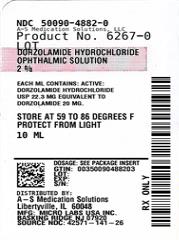
Dorzolamide Hydrochloride Ophthalmic 20 mg/mL Solution/ Drops — NDC 50090-4882-0 (Billing 50090-4882-00)
This is a package of Dorzolamide Hydrochloride Ophthalmic 20 mg/mL Solution/ Drops from A-S Medication Solutions, marketed since Nov 2019 and currently FDA-listed. It is this product's only package size.
NDC database record
One package, one record: these facts belong to NDC 50090-4882-0 alone.
- Record
- FDA NDC Directory package listing · Human prescription drug
- Code segments
- 50090 labeler · 4882 product · 0 package
- Package marketed since
- Feb 11, 2020
- Sample package
- No — commercial package
- Listing certified through
- Dec 31, 2026
- Barcode (UPC-A, from the NDC)
- 3 5009048820 3
- FDA record last changed
- Jul 24, 2026
Identity & classification
Regulatory identifiers FDA, NLM and CMS codes for this package
Drug-database identifiers Medi-Span GPI and First Databank GCN / HICL / AHFS classification
- GSN (GCN sequence number): 023513
- GCN: 33380
- HICL (First Databank): 009896
- AHFS class code: 52:40.12.00
- RxCUI (RxNorm): 310015
Where does this data come from?
- FDA openFDA NDC Directory · synced Oct 8, 2026
- FDA label on DailyMed · label index refreshed Oct 6, 2026
- RxNorm (NLM RxNav) · catalog refreshed Oct 1, 2026
- Medi-Span GPI (licensed)
- First Databank (licensed) · refreshed Oct 8, 2026
RxNorm drug class
This medicine belongs to the Carbonic Anhydrase Inhibitor class.
Where does this data come from?
- RxClass (NLM) · catalog refreshed Oct 1, 2026
Clinical
- Your eye constantly makes a fluid that keeps it properly pressurized — but in some people, that pressure gets too high, which can damage the optic nerve over time. Dorzolamide bloc...
- What exactly does dorzolamide do for my eyes?
- Yes, that's very common with dorzolamide — about one in four people notice it. Eye drops can drain into the back of your throat through a small channel between your eye and nose, w...
- I always get a bitter taste after using my eye drops — is that normal?
Patient education
Supplement & herbal interactions
Where does this data come from?
- MedlinePlus (NLM) · refreshed Oct 1, 2026
- FDA label on DailyMed · label index refreshed Oct 6, 2026
Ask a licensed pharmacist directly — free, answered by our team.
Pricing
A drug doesn't have one price. Each row is a different public payment system, and none is what you'd pay at the counter — that depends on your insurance. The ⓘ on each row explains what it measures.
| Price system | Per mL | Per package |
|---|---|---|
| Retail pharmacies payNADAC · weekly | Not in the retail survey — common for institutional, discontinued, or low-volume packs. | |
| Medicaid paysCMS SDUD · 12 mo | No recent Medicaid claims on file for this NDC — rare and low-volume NDCs are suppressed in the public data. | |
| Medicare drug plans payPart D · quarterly | No Part D plan price is available for this NDC in our data. | |
Where does this data come from?
- CMS NADAC weekly file
- CMS ASP pricing files · refreshed Sep 20, 2026
- CMS Medicaid State Drug Utilization Data · refreshed Oct 8, 2026
- CMS Part D plan pricing files · refreshed Sep 24, 2026
- VA National Acquisition Center price file
Packaging — all sizes for this product
| Package NDC | Description | Marketing start | Marketing end | Status |
|---|---|---|---|---|
| 50090-4882-00 You're viewing this Main listing | 1 BOTTLE in 1 CARTON / 10 mL in 1 BOTTLE | 2020-02-11 | — | Active |
Therapeutic equivalents
| Product | Labeler | Pack | NADAC/unit | TE | Status | Price vs. this |
|---|---|---|---|---|---|---|
| Dorzolamide HCl 20 mg/mL 24208-0485-10 | Bausch | 1 bottle | $0.835 | AT | Availability likely | — |
| Dorzolamide Hydrochloride 20 mg/mL 25021-0006-10 | Sagent | 1 bottle | $0.835 | AT | Availability likely | — |
| Dorzolamide Hydrochloride Ophthalmic Solution 20 mg/mL 42571-0141-26 | Micro | 1 bottle | $0.835 | AT | Availability likely | — |
| Dorzolamide Hydrochloride 20 mg/mL 61314-0019-10 | Sandoz | 10 ml | $0.835 | AT | Availability likely | — |
| Dorzolamide Hydrochloride 20 mg/mL 62332-0519-10 | Alembic | 1 bottle | $0.835 | AT | Availability likely | — |
| Dorzolamide Hydrochloride 20 mg/mL 70069-0501-01 | Somerset | 1 bottle | $0.835 | AT | Availability likely | — |
| Dorzolamide Hydrochloride Ophthalmic 20 mg/mL 71921-0400-10 | Florida | 10 ml | $0.835 | AT | Availability likely | — |
| Dorzolamide Hydrochloride 20 mg/mL 72266-0197-01 | FOSUN | 1 bottle | $0.835 | AT | Availability likely | — |
| Dorzolamide Hydrochloride 20 mg/mL 72888-0077-15 | Advagen | 1 bottle | $0.835 | AT | Availability likely | — |
| Dorzolamide Hydrochloride 20 mg/mL 14445-0404-10 | Indoco | 1 bottle | — | AT | FDA listed | — |
| Dorzolamide Hydrochloride 20 mg/mL 46708-0519-10 | Alembic | 1 bottle | — | AT | FDA listed | — |
| Dorzolamide HCl 20 mg/mL 50090-2406-00 | A-S | 1 bottle | — | AT | FDA listed | — |
| Dorzolamide Hydrochloride Ophthalmic 20 mg/mLthis 50090-4882-00 | A-S | 1 bottle | — | AT | FDA listed | — |
| Dorzolamide Hydrochloride 20 mg/mL 68083-0489-01 | Gland | 1 bottle | — | AT | FDA listed | — |
| Dorzolamide hydrochloride 20 mg/mL 69315-0304-05 | Leading | 1 bottle | — | AT | FDA listed | — |
Where does this data come from?
- FDA openFDA NDC Directory · synced Oct 8, 2026
- FDA Orange Book · refreshed Oct 3, 2026
- CMS NADAC weekly file
Availability & generic status
This product is an FDA-approved generic. Other versions of the same drug are listed under Therapeutic equivalents, least expensive first.
Where does this data come from?
- FDA Orange Book · refreshed Oct 3, 2026
Inactive Ingredients / Excipients
Inactive ingredients, also called excipients, are components of the drug product other than the active ingredient. They may include fillers, dyes, coatings, preservatives, flavors, or other formulation ingredients.
🧪 Avoiding an ingredient? See Dorzolamide Ophthalmic inactive ingredients by manufacturer: every current product's list side by side, so you can ask your pharmacy for the version that does not list it.
💡 Tap an ingredient (hover on desktop) to see what it is and why it’s used.
-
UNII F5UM2KM3W7
Benzalkonium chloride is a chemical compound that works as a preservative and antimicrobial agent in medications. It prevents bacterial and fungal growth in liquid formulations to keep the product safe during storage and use.
-
UNII ZYD53NBL45
Hydroxyethyl cellulose is a plant-based thickening agent derived from cellulose. It helps control the texture and consistency of liquid or semi-solid medicines, and may also help keep ingredients evenly mixed throughout the product.
-
UNII 3OWL53L36A
A natural sugar alcohol derived from seaweed or synthesized in the lab. It's used as a filler to add bulk, a sweetener in sugar-free formulas, and a disintegrant to help tablets break apart in the stomach.
-
UNII 55X04QC32I
A strong alkaline chemical used to adjust and maintain the pH balance of liquid medicines. It helps keep the medicine stable and ensures it stays effective during storage.
-
UNII B22547B95K
A salt derived from citric acid that helps maintain the proper acid-base balance in the medicine. It's used as a buffer to keep the product stable and at the right pH level.
-
UNII 059QF0KO0R
Water is a liquid solvent that dissolves and mixes ingredients together in liquid medicines, syrups, and injections. It helps distribute the active drug evenly throughout the product.
6 inactive ingredients listed in the exact product block matched to this NDC.
Where does this data come from?
ingredient classCode="IACT" elements from the exact product block matched by this NDC. Label-section narrative from DailyMed / the openFDA label index is shown separately when available.- FDA label on DailyMed · label index refreshed Oct 6, 2026
- FDA openFDA NDC Directory · synced Oct 8, 2026
Inactive ingredient FAQ
Are inactive ingredients the same for every manufacturer?
Why might an inactive ingredient be missing?
Can inactive ingredients matter?
Manufacturer & labeler
More NDCs from A-S Medication Solutions labeler code 50090
- fluconazole 200 mg Tablet NDC 50090-4864-1
- Venlafaxine 37.5 mg Tablet NDC 50090-4865-0
- Valsartan and Hydrochlorothiazide 160 mg; 25 mg Tablet, Film Coated NDC 50090-4872-0
- Promethazine Hydrochloride 25 mg Tablet NDC 50090-4875-0
- Clotrimazole and Betamethasone Dipropionate 10 mg/g; .5 mg/g Cream NDC 50090-4876-0
- MONO-LINYAH norgestimate and ethinyl estradiol Kit NDC 50090-4881-0
- Lisinopril 10 mg Tablet NDC 50090-4885-0
- Lisinopril 20 mg Tablet NDC 50090-4887-0
- Metformin HCl 500 mg Tablet NDC 50090-4891-0
- Metformin HCl 1000 mg Tablet NDC 50090-4892-0
- Gabapentin 300 mg Capsule NDC 50090-4893-0
- meloxicam 15 mg Tablet NDC 50090-4896-0
Where does this data come from?
- FDA openFDA NDC Directory · synced Oct 8, 2026
- Drugs@FDA
Full prescribing information FDA SPL
🎯 Indications and Usage ▾
1 INDICATIONS AND USAGE Dorzolamide hydrochloride ophthalmic solution is indicated in the treatment of elevated intraocular pressure in patients with ocular hypertension or open-angle glaucoma. Dorzolamide hydrochloride ophthalmic solution is a carbonic anhydrase inhibitor indicated for the treatment of elevated intraocular pressure in patients with ocular hypertension or open-angle glaucoma. ( 1 )
⏱️ Dosage and Administration ▾
2 DOSAGE AND ADMINISTRATION The dose is one drop of dorzolamide hydrochloride ophthalmic solution in the affected eye(s) three times daily. Dorzolamide hydrochloride ophthalmic solution may be used concomitantly with other topical ophthalmic drug products to lower intraocular pressure. If more than one topical ophthalmic drug is being used, the drugs should be administered at least five minutes apart.
The dose is one drop of dorzolamide hydrochloride ophthalmic solution in the affected eye(s) three times daily. Dorzolamide hydrochloride ophthalmic solution may be used concomitantly with other topical ophthalmic drug products to lower intraocular pressure. ( 2 )
💊 Dosage Forms and Strengths ▾
3 DOSAGE FORMS AND STRENGTHS Ophthalmic solution containing dorzolamide 2% (20 mg/mL) equivalent to 22.3 mg/mL of dorzolamide hydrochloride. Ophthalmic solution containing dorzolamide 2% (20 mg/mL). ( 3 )
⛔ Contraindications ▾
4 CONTRAINDICATIONS Dorzolamide hydrochloride ophthalmic solution is contraindicated in patients who are hypersensitive to any component of this product [see Warnings and Precautions (5.1) ]. Dorzolamide hydrochloride ophthalmic solution is contraindicated in patients who are hypersensitive to any component of this product. ( 4 , 5.1 )
⚠️ Warnings and Cautions ▾
5 WARNINGS AND PRECAUTIONS Sulfonamide Hypersensitivity ( 5.1 ) Bacterial Keratitis ( 5.2 ) Corneal Endothelium ( 5.3 ) Allergic Reactions ( 5.4 ) Acute Angle-Closure Glaucoma ( 5.5 )
5.1Sulfonamide Hypersensitivity Dorzolamide hydrochloride ophthalmic solution contains dorzolamide, a sulfonamide; and although administered topically, it is absorbed systemically. Therefore, the same types of adverse reactions that are attributable to sulfonamides may occur with topical administration of dorzolamide hydrochloride ophthalmic solution. Fatalities have occurred, although rarely, due to severe reactions to sulfonamides including Stevens-Johnson syndrome, toxic epidermal necrolysis, fulminant hepatic necrosis, agranulocytosis, aplastic anemia, and other blood dyscrasias.
Sensitization may recur when a sulfonamide is readministered irrespective of the route of administration. If signs of serious reactions or hypersensitivity occur, discontinue the use of this preparation [see Contraindications (4) ].
5.2Bacterial Keratitis There have been reports of bacterial keratitis associated with the use of multiple-dose containers of topical ophthalmic products. These containers had been inadvertently contaminated by patients who, in most cases, had a concurrent corneal disease or a disruption of the ocular epithelial surface.
5.3Corneal Endothelium Carbonic anhydrase activity has been observed in both the cytoplasm and around the plasma membranes of the corneal endothelium. There is an increased potential for developing corneal edema in patients with low endothelial cell counts. Caution should be used when prescribing dorzolamide hydrochloride ophthalmic solution to this group of patients.
5.4Allergic Reactions In clinical studies, local ocular adverse effects, primarily conjunctivitis and lid reactions, were reported with chronic administration of dorzolamide hydrochloride ophthalmic solution. Many of these reactions had the clinical appearance and course of an allergic-type reaction that resolved upon discontinuation of drug therapy. If such reactions are observed, dorzolamide hydrochloride ophthalmic solution should be discontinued and the patient evaluated before considering restarting the drug [see Adverse Reactions (6) ].
5.5Acute Angle-Closure Glaucoma The management of patients with acute angle-closure glaucoma requires therapeutic interventions in addition to ocular hypotensive agents.
🤒 Adverse Reactions ▾
6 ADVERSE REACTIONS The most frequently reported adverse reactions associated with dorzolamide hydrochloride ophthalmic solution were ocular burning, stinging, or discomfort immediately following ocular administration (approximately one-third of patients). Approximately one-quarter of patients noted a bitter taste following administration. Superficial punctate keratitis occurred in 10 to 15% of patients and signs and symptoms of ocular allergic reaction in approximately 10%.
( 6 ) To report SUSPECTED ADVERSE REACTIONS, contact Micro Labs USA, Inc. at 1-855-839-8195 or FDA at 1-800-332-1088 or www.fda.gov/medwatch.
6.1Clinical Trials Experience Because clinical trials are conducted under widely varying conditions, adverse reaction rates observed in the clinical trials of a drug cannot be directly compared to rates in the clinical trials of another drug and may not reflect the rates observed in practice. Controlled Clinical Trials: The most frequent adverse reactions associated with dorzolamide hydrochloride ophthalmic solution were ocular burning, stinging, or discomfort immediately following ocular administration (approximately one-third of patients).
Approximately one-quarter of patients noted a bitter taste following administration. Superficial punctate keratitis occurred in 10 to 15% of patients and signs and symptoms of ocular allergic reaction in approximately 10%. Reactions occurring in approximately 1 to 5% of patients were conjunctivitis and lid reactions [see Warnings and Precautions (5.4) ], blurred vision, eye redness, tearing, dryness, and photophobia.
Other ocular reactions and systemic reactions were reported infrequently, including headache, nausea, asthenia/fatigue; and, rarely, skin rashes, urolithiasis, and iridocyclitis. In a 3-month, double-masked, active-treatment-controlled, multicenter study in pediatric patients, the adverse reactions profile of dorzolamide hydrochloride ophthalmic solution was comparable to that seen in adult patients.
6.2Postmarketing Experience The following adverse reactions have been identified during post-approval use of dorzolamide hydrochloride ophthalmic solution. Because these reactions are reported voluntarily from a population of uncertain size, it is not always possible to reliably estimate their frequency or establish a causal relationship to drug exposure: signs and symptoms of systemic allergic reactions including angioedema, bronchospasm, pruritus, and urticaria; Stevens-Johnson syndrome and toxic epidermal necrolysis; dizziness, paresthesia; ocular pain, transient myopia, choroidal detachment following filtration surgery, eyelid crusting; dyspnea; contact dermatitis, epistaxis, dry mouth and throat irritation.
🔄 Drug Interactions ▾
7 DRUG INTERACTIONS Potential additive effect of oral carbonic anhydrase inhibitor with dorzolamide hydrochloride ophthalmic solution. ( 7.1 ) Potential acid-base and electrolyte disturbances. ( 7.2 )
7.1Oral Carbonic Anhydrase Inhibitors There is a potential for an additive effect on the known systemic effects of carbonic anhydrase inhibition in patients receiving an oral carbonic anhydrase inhibitor and dorzolamide hydrochloride ophthalmic solution. The concomitant administration of dorzolamide hydrochloride ophthalmic solution and oral carbonic anhydrase inhibitors is not recommended.
7.2High-Dose Salicylate Therapy Although acid-base and electrolyte disturbances were not reported in the clinical trials with dorzolamide hydrochloride ophthalmic solution, these disturbances have been reported with oral carbonic anhydrase inhibitors and have, in some instances, resulted in drug interactions (e.g., toxicity associated with high-dose salicylate therapy). Therefore, the potential for such drug interactions should be considered in patients receiving dorzolamide hydrochloride ophthalmic solution.
👥 Use in Specific Populations ▾
8 USE IN SPECIFIC POPULATIONS
8.1Pregnancy Risk Summary There are no adequate and well-controlled studies in pregnant women with dorzolamide hydrochloride ophthalmic solution. Dorzolamide caused fetal vertebral malformations when administered orally to rabbits at 2.5 mg/kg/day (37 times the clinical exposure). Dorzolamide administered during the period of organogenesis was not teratogenic in rabbits dosed up to 1 mg/kg/day (15 times the clinical exposure).
Dorzolamide hydrochloride administered orally to rats during late gestation and lactation caused growth delays in offspring at 7.5 mg/kg/day (52 times the clinical exposure). Growth was not delayed at 1 mg/kg/day (8.0 times the clinical exposure). The background risk of major birth defects and miscarriage for the indicated population is unknown.
In the U.S. general population, the estimated background risk of major birth defects and miscarriage in clinically recognized pregnancies is 2 to 4% and 15 to 20%, respectively. Data Animal Data Developmental toxicity studies were conducted in pregnant rabbits administered dorzolamide hydrochloride orally during the period of organogenesis from gestation days 6 through 18 at doses of 0.2, 1, 2.5, 5, and 10 mg/kg/day. The developmental lowest observed adverse effect level (LOAEL) was 2.5 mg/kg/day, based on vertebral malformations and decreased fetal body weight.
The maternal LOAEL was 2.5 mg/kg/day, based on metabolic acidosis and reduced weight gain. The maternal and developmental no adverse effect levels (NOAELs) were 1 mg/kg/day. The rabbit doses of 1 and 2.5 mg/kg/day represent estimated plasma Cmax levels in rabbits 15 and 37 times higher than the lower limit of detection in human plasma following ocular administration, respectively.
Dorzolamide hydrochloride was administered orally to rats during late gestation and lactation (gestation day 17 through postpartum day 20) at doses of 0.1, 1, or 7.5 mg/kg/day. The developmental LOAEL was 7.5 mg/kg/day, based on reduced birth weight, reduced weight gain, and a slight delay in postnatal development (incisor eruption, vaginal canalization and eye openings) secondary to lower offspring body weight. This 7.5 mg/kg/day dose represents an estimated plasma Cmax level in rats 52 times higher than the lower limit of detection in human plasma following ocular administration.
The developmental NOAEL was 1 mg/kg/day. The maternal LOAEL was 1 mg/kg/day, based on reduced body weight gain. The maternal NOAEL was 0.1 mg/kg/day.
The rat doses of 1 and 0.1 mg/kg/day represent estimated plasma Cmax levels in rats approximately 8.0 times and approximately equal (1x), respectively to the lower limit of detection in human plasma following ocular administration.
8.2Lactation Risk Summary There are no data on the presence of dorzolamide hydrochloride ophthalmic solution in human milk, the effects on the breastfed infant, or the effects on milk production. The developmental and health benefits of breastfeeding should be considered along with the mother's clinical need for dorzolamide hydrochloride ophthalmic solution and any potential adverse effects on the breast-fed child from dorzolamide hydrochloride ophthalmic solution. Dorzolamide is present in the milk of lactating rats (see Data).
Data Animal Data Lactating rats were dosed orally with 7.5 mg/kg/day of dorzolamide hydrochloride; dorzolamide and the N-desethyl metabolite were detected in the milk.
8.4Pediatric Use Safety and effectiveness of dorzolamide hydrochloride ophthalmic solution have been demonstrated in pediatric patients in a 3-month, multicenter, double-masked, active-treatment-controlled trial.
8.5Geriatric Use No overall differences in safety or effectiveness have been observed between elderly and younger patients.
8.6Renal and Hepatic Impairment Dorzolamide has not been studied in patients with severe renal impairment (CrCl < 30 mL/min). Because dorzolamide and its metabolite are excreted predominantly by the kidney, dorzolamide hyd… [Excerpted — this section continues on DailyMed.]
🤰 Pregnancy ▾
8.1Pregnancy Risk Summary There are no adequate and well-controlled studies in pregnant women with dorzolamide hydrochloride ophthalmic solution. Dorzolamide caused fetal vertebral malformations when administered orally to rabbits at 2.5 mg/kg/day (37 times the clinical exposure). Dorzolamide administered during the period of organogenesis was not teratogenic in rabbits dosed up to 1 mg/kg/day (15 times the clinical exposure).
Dorzolamide hydrochloride administered orally to rats during late gestation and lactation caused growth delays in offspring at 7.5 mg/kg/day (52 times the clinical exposure). Growth was not delayed at 1 mg/kg/day (8.0 times the clinical exposure). The background risk of major birth defects and miscarriage for the indicated population is unknown.
In the U.S. general population, the estimated background risk of major birth defects and miscarriage in clinically recognized pregnancies is 2 to 4% and 15 to 20%, respectively. Data Animal Data Developmental toxicity studies were conducted in pregnant rabbits administered dorzolamide hydrochloride orally during the period of organogenesis from gestation days 6 through 18 at doses of 0.2, 1, 2.5, 5, and 10 mg/kg/day. The developmental lowest observed adverse effect level (LOAEL) was 2.5 mg/kg/day, based on vertebral malformations and decreased fetal body weight.
The maternal LOAEL was 2.5 mg/kg/day, based on metabolic acidosis and reduced weight gain. The maternal and developmental no adverse effect levels (NOAELs) were 1 mg/kg/day. The rabbit doses of 1 and 2.5 mg/kg/day represent estimated plasma Cmax levels in rabbits 15 and 37 times higher than the lower limit of detection in human plasma following ocular administration, respectively.
Dorzolamide hydrochloride was administered orally to rats during late gestation and lactation (gestation day 17 through postpartum day 20) at doses of 0.1, 1, or 7.5 mg/kg/day. The developmental LOAEL was 7.5 mg/kg/day, based on reduced birth weight, reduced weight gain, and a slight delay in postnatal development (incisor eruption, vaginal canalization and eye openings) secondary to lower offspring body weight. This 7.5 mg/kg/day dose represents an estimated plasma Cmax level in rats 52 times higher than the lower limit of detection in human plasma following ocular administration.
The developmental NOAEL was 1 mg/kg/day. The maternal LOAEL was 1 mg/kg/day, based on reduced body weight gain. The maternal NOAEL was 0.1 mg/kg/day.
The rat doses of 1 and 0.1 mg/kg/day represent estimated plasma Cmax levels in rats approximately 8.0 times and approximately equal (1x), respectively to the lower limit of detection in human plasma following ocular administration.
🧒 Pediatric Use ▾
8.4Pediatric Use Safety and effectiveness of dorzolamide hydrochloride ophthalmic solution have been demonstrated in pediatric patients in a 3-month, multicenter, double-masked, active-treatment-controlled trial.
🧓 Geriatric Use ▾
8.5Geriatric Use No overall differences in safety or effectiveness have been observed between elderly and younger patients.
🆘 Overdosage ▾
10 OVERDOSAGE Electrolyte imbalance, development of an acidotic state, and possible central nervous system effects may occur. Serum electrolyte levels (particularly potassium) and blood pH levels should be monitored.
🧬 Clinical Pharmacology ▾
12 CLINICAL PHARMACOLOGY
12.1Mechanism of Action Carbonic anhydrase (CA) is an enzyme found in many tissues of the body including the eye. It catalyzes the reversible reaction involving the hydration of carbon dioxide and the dehydration of carbonic acid. In humans, carbonic anhydrase exists as a number of isoenzymes, the most active being carbonic anhydrase II (CA-II), found primarily in red blood cells (RBCs), but also in other tissues.
Inhibition of carbonic anhydrase in the ciliary processes of the eye decreases aqueous humor secretion, presumably by slowing the formation of bicarbonate ions with subsequent reduction in sodium and fluid transport. The result is a reduction in intraocular pressure (IOP). Dorzolamide hydrochloride ophthalmic solution contains dorzolamide hydrochloride, an inhibitor of human carbonic anhydrase II.
Following topical ocular administration, dorzolamide hydrochloride ophthalmic solution reduces elevated intraocular pressure. Elevated intraocular pressure is a major risk factor in the pathogenesis of optic nerve damage and glaucomatous visual field loss.
12.3Pharmacokinetics When topically applied, dorzolamide reaches the systemic circulation. To assess the potential for systemic carbonic anhydrase inhibition following topical administration, drug and metabolite concentrations in RBCs and plasma and carbonic anhydrase inhibition in RBCs were measured. Dorzolamide accumulates in RBCs during chronic dosing as a result of binding to CA-II.
The parent drug forms a single N-desethyl metabolite, which inhibits CA-II less potently than the parent drug but also inhibits CA-I. The metabolite also accumulates in RBCs where it binds primarily to CA-I. Plasma concentrations of dorzolamide and metabolite are generally below the assay limit of quantitation (15nM).
Dorzolamide binds moderately to plasma proteins (approximately 33%). Dorzolamide is primarily excreted unchanged in the urine; the metabolite also is excreted in urine. After dosing is stopped, dorzolamide washes out of RBCs nonlinearly, resulting in a rapid decline of drug concentration initially, followed by a slower elimination phase with a half-life of about four months.
To simulate the systemic exposure after long-term topical ocular administration, dorzolamide was given orally to eight healthy subjects for up to 20 weeks. The oral dose of 2 mg twice daily closely approximates the amount of drug delivered by topical ocular administration of dorzolamide 2% three times daily. Steady state was reached within 8 weeks.
The inhibition of CA-II and total carbonic anhydrase activities was below the degree of inhibition anticipated to be necessary for a pharmacological effect on renal function and respiration in healthy individuals.
🧬 Mechanism of Action ▾
12.1Mechanism of Action Carbonic anhydrase (CA) is an enzyme found in many tissues of the body including the eye. It catalyzes the reversible reaction involving the hydration of carbon dioxide and the dehydration of carbonic acid. In humans, carbonic anhydrase exists as a number of isoenzymes, the most active being carbonic anhydrase II (CA-II), found primarily in red blood cells (RBCs), but also in other tissues.
Inhibition of carbonic anhydrase in the ciliary processes of the eye decreases aqueous humor secretion, presumably by slowing the formation of bicarbonate ions with subsequent reduction in sodium and fluid transport. The result is a reduction in intraocular pressure (IOP). Dorzolamide hydrochloride ophthalmic solution contains dorzolamide hydrochloride, an inhibitor of human carbonic anhydrase II.
Following topical ocular administration, dorzolamide hydrochloride ophthalmic solution reduces elevated intraocular pressure. Elevated intraocular pressure is a major risk factor in the pathogenesis of optic nerve damage and glaucomatous visual field loss.
📦 How Supplied / Storage and Handling ▾
16 HOW SUPPLIED/STORAGE AND HANDLING Product: 50090-4882 NDC: 50090-4882-0 10 mL in a BOTTLE / 1 in a CARTON
📋 Description ▾
11 DESCRIPTION Dorzolamide hydrochloride ophthalmic solution, USP is a carbonic anhydrase inhibitor formulated for topical ophthalmic use. Dorzolamide hydrochloride USP is described chemically as: (4 S-trans )-4-(ethylamino)-5,6-dihydro-6-methyl-4 H -thieno[2,3- b ]thiopyran-2-sulfonamide 7,7-dioxide monohydrochloride. Dorzolamide hydrochloride is optically active.
The specific rotation is α 25° (C=1, water) = ~ -17°. 405 Its molecular formula is C 10 H 16 N 2 O 4 S 3 •HCl and its structural formula is: Dorzolamide hydrochloride USP has a molecular weight of 360.9 and a melting point of about 264°C. It is a white to off-white, crystalline powder, which is soluble in water and slightly soluble in methanol and ethanol.
Dorzolamide hydrochloride ophthalmic solution USP is supplied as a sterile, isotonic, buffered, clear, colorless to nearly colorless and slightly viscous solution. The pH of the solution is approximately 5.6, and the osmolarity is 260 to 330 mOsM. Each mL of dorzolamide hydrochloride ophthalmic solution 2% contains 20 mg dorzolamide (22.3 mg of dorzolamide hydrochloride USP).
Inactive ingredients are Mannitol, Hydroxyethyl cellulose, Sodium hydroxide, Tri Sodium citrate dihydrate, and water for injection. Benzalkonium chloride 0.0075% is added as a preservative. structure
💬 Information for Patients ▾
17 PATIENT COUNSELING INFORMATION Advise the patient to read the FDA-approved patient labeling (Instructions for Use). Sulfonamide Reactions Dorzolamide hydrochloride ophthalmic solution is a sulfonamide and although administered topically is absorbed systemically. Therefore the same types of adverse reactions that are attributable to sulfonamides may occur with topical administration.
Advise patients that if serious or unusual reactions including severe skin reactions or signs of hypersensitivity occur, they should discontinue the use of the product [see Warnings and Precautions (5.1) ]. Intercurrent Ocular Conditions Advise patients that if they have ocular surgery or develop an intercurrent ocular condition (e.g., trauma or infection), they should immediately seek their physician's advice concerning the continued use of the present multidose container. Handling Ophthalmic Solutions Instruct patients to avoid allowing the tip of the dispensing container to contact the eye or surrounding structures.
Instruct patients that ocular solutions, if handled improperly or if the tip of the dispensing container contacts the eye or surrounding structures, can become contaminated by common bacteria known to cause ocular infections. Serious damage to the eye and subsequent loss of vision may result from using contaminated solutions. Concomitant Topical Ocular Therapy If more than one topical ophthalmic drug is being used, the drugs should be administered at least five minutes apart.
Contact Lens Use Advise patients that dorzolamide hydrochloride ophthalmic solution contains benzalkonium chloride which may be absorbed by soft contact lenses. Contact lenses should be removed prior to administration of the solution. Lenses may be reinserted 15 minutes following dorzolamide hydrochloride ophthalmic solution administration.
When to Seek Physician Advice Advise patients that if they develop any ocular reactions, particularly conjunctivitis and lid reactions, they should discontinue use and seek their physician's advice. Manufactured by: Micro Labs Limited Bangalore – 560 099, INDIA. Manufactured for: Micro Labs USA Inc.
Somerset, NJ 08873 Rev.10/2021
🧬 Pharmacokinetics ▾
12.3Pharmacokinetics When topically applied, dorzolamide reaches the systemic circulation. To assess the potential for systemic carbonic anhydrase inhibition following topical administration, drug and metabolite concentrations in RBCs and plasma and carbonic anhydrase inhibition in RBCs were measured. Dorzolamide accumulates in RBCs during chronic dosing as a result of binding to CA-II.
The parent drug forms a single N-desethyl metabolite, which inhibits CA-II less potently than the parent drug but also inhibits CA-I. The metabolite also accumulates in RBCs where it binds primarily to CA-I. Plasma concentrations of dorzolamide and metabolite are generally below the assay limit of quantitation (15nM).
Dorzolamide binds moderately to plasma proteins (approximately 33%). Dorzolamide is primarily excreted unchanged in the urine; the metabolite also is excreted in urine. After dosing is stopped, dorzolamide washes out of RBCs nonlinearly, resulting in a rapid decline of drug concentration initially, followed by a slower elimination phase with a half-life of about four months.
To simulate the systemic exposure after long-term topical ocular administration, dorzolamide was given orally to eight healthy subjects for up to 20 weeks. The oral dose of 2 mg twice daily closely approximates the amount of drug delivered by topical ocular administration of dorzolamide 2% three times daily. Steady state was reached within 8 weeks.
The inhibition of CA-II and total carbonic anhydrase activities was below the degree of inhibition anticipated to be necessary for a pharmacological effect on renal function and respiration in healthy individuals.
🔬 Clinical Studies ▾
14 CLINICAL STUDIES The efficacy of dorzolamide hydrochloride ophthalmic solution was demonstrated in clinical studies in the treatment of elevated intraocular pressure in patients with glaucoma or ocular hypertension (baseline IOP ≥23 mmHg). The IOP-lowering effect of dorzolamide hydrochloride ophthalmic solution was approximately 3 to 5 mmHg throughout the day and this was consistent in clinical studies of up to one year duration. The efficacy of dorzolamide hydrochloride ophthalmic solution when dosed less frequently than three times a day (alone or in combination with other products) has not been established.
In a one year clinical study, the effect of dorzolamide hydrochloride ophthalmic solution 2% three times daily on the corneal endothelium was compared to that of betaxolol ophthalmic solution twice daily and timolol maleate ophthalmic solution 0.5% twice daily. There were no statistically significant differences between groups in corneal endothelial cell counts or in corneal thickness measurements. There was a mean loss of approximately 4% in the endothelial cell counts for each group over the one year period.
🧪 Nonclinical Toxicology ▾
13 NONCLINICAL TOXICOLOGY
13.1Carcinogenesis, Mutagenesis, Impairment of Fertility In a two-year study of dorzolamide hydrochloride administered orally to male and female Sprague- Dawley rats, urinary bladder papillomas were seen in male rats in the highest dosage group of 20 mg/kg/day. Papillomas were not seen in rats given oral doses of 1 mg/kg/day. These doses represent estimated plasma C ma x levels in rats, 138 and 7 times higher than the lower limit of detection in human plasma following ocular administration, respectively.
No treatment-related tumors were seen in a 21-month study in female and male mice given oral doses up to 75 mg/kg/day. This dose represents an estimated plasma C max level in mice, 582 times higher than the lower limit of detection in human plasma following ocular administration. The increased incidence of urinary bladder papillomas seen in the high-dose male rats is a class- effect of carbonic anhydrase inhibitors in rats.
Rats are particularly prone to developing papillomas in response to foreign bodies, compounds causing crystalluria, and diverse sodium salts. No changes in bladder urothelium were seen in dogs given oral dorzolamide hydrochloride for one year at 2 mg/kg/day or monkeys dosed topically to the eye for one year. An oral dose of 2 mg/kg/day in dogs represents an estimated plasma C max level, 137 times higher than the lower limit of detection in human plasma following ocular administration.
The topical ophthalmic dose in monkeys was approximately equivalent to the human topical ophthalmic dose. The following tests for mutagenic potential were negative: (1) in vivo (mouse) cytogenetic assay; (2) in vitro chromosomal aberration assay; (3) alkaline elution assay; (4) V-79 assay; and (5) Ames test. In fertility studies of dorzolamide hydrochloride in rats, there were no adverse effects on the reproductive capacity of males or females at doses of 15 and 7.5 mg/kg/day, respectively.
These doses represent estimated plasma Cmax levels in rats, 103 and 52 times higher than the lower limit of detection in human plasma following ocular administration, respectively.
📄 Carcinogenesis, Mutagenesis, Impairment of Fertility ▾
13.1Carcinogenesis, Mutagenesis, Impairment of Fertility In a two-year study of dorzolamide hydrochloride administered orally to male and female Sprague- Dawley rats, urinary bladder papillomas were seen in male rats in the highest dosage group of 20 mg/kg/day. Papillomas were not seen in rats given oral doses of 1 mg/kg/day. These doses represent estimated plasma C ma x levels in rats, 138 and 7 times higher than the lower limit of detection in human plasma following ocular administration, respectively.
No treatment-related tumors were seen in a 21-month study in female and male mice given oral doses up to 75 mg/kg/day. This dose represents an estimated plasma C max level in mice, 582 times higher than the lower limit of detection in human plasma following ocular administration. The increased incidence of urinary bladder papillomas seen in the high-dose male rats is a class- effect of carbonic anhydrase inhibitors in rats.
Rats are particularly prone to developing papillomas in response to foreign bodies, compounds causing crystalluria, and diverse sodium salts. No changes in bladder urothelium were seen in dogs given oral dorzolamide hydrochloride for one year at 2 mg/kg/day or monkeys dosed topically to the eye for one year. An oral dose of 2 mg/kg/day in dogs represents an estimated plasma C max level, 137 times higher than the lower limit of detection in human plasma following ocular administration.
The topical ophthalmic dose in monkeys was approximately equivalent to the human topical ophthalmic dose. The following tests for mutagenic potential were negative: (1) in vivo (mouse) cytogenetic assay; (2) in vitro chromosomal aberration assay; (3) alkaline elution assay; (4) V-79 assay; and (5) Ames test. In fertility studies of dorzolamide hydrochloride in rats, there were no adverse effects on the reproductive capacity of males or females at doses of 15 and 7.5 mg/kg/day, respectively.
These doses represent estimated plasma Cmax levels in rats, 103 and 52 times higher than the lower limit of detection in human plasma following ocular administration, respectively.
📄 Package Label / Principal Display Panel ▾
Dorzolamide Hydrochloride Label Image
Reported adverse events (FAERS)
Top reported reactions
Age at onset
Reporter sex
Serious outcomes
Where does this data come from?
About this NDC listing & data coverage
What data is (and isn’t) available for this NDC — tap to expand
| NDC identity (package / product / labeler codes) | ✓ Available |
| Labeler | ✓ Available |
| Product & package description | ✓ Available |
| Marketing category & status | ✓ Available |
| Active ingredient / dosage form / route | ✓ Available |
| FDA label (SPL via DailyMed) | ✓ Available |
| Package photos | ✓ Available |
| Inactive ingredients (structured) | ✓ Available |
| NADAC pharmacy acquisition price (CMS) | — Not published for this NDC CMS publishes NADAC only for NDCs reported in its retail-pharmacy survey. |
| Orange Book / therapeutic-equivalence data | ✓ Available |
| HCPCS J-code billing crosswalk | — Not published for this NDC Most self-administered / retail products have no J-code — that is normal. |
| Medicaid utilization (CMS SDUD) | — Not published for this NDC CMS reports utilization only for NDCs with Medicaid claims above its privacy threshold. |