
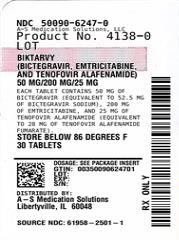
Biktarvy bictegravir sodium, emtricitabine, and tenofovir alafenamide fumarate 50 mg; 200 mg; 25 mg Tablet, 30-count — NDC 50090-6247-0 (Billing 50090-6247-00)
This is a package of 30 tablets of Biktarvy bictegravir sodium, emtricitabine, and tenofovir alafenamide fumarate 50 mg; 200 mg; 25 mg Tablet from A-S Medication Solutions, marketed since Feb 2018 and currently FDA-listed. It is this product's only package size.
NDC database record
One package, one record: these facts belong to NDC 50090-6247-0 alone.
- Record
- FDA NDC Directory package listing · Human prescription drug
- Code segments
- 50090 labeler · 6247 product · 0 package
- Package marketed since
- Nov 28, 2022
- Sample package
- No — commercial package
- Listing certified through
- Dec 31, 2026
- Billing quantity
- 30 EA per package
- Barcode (UPC-A, from the NDC)
- 3 5009062470 0
- FDA record last changed
- Oct 8, 2026
Identity & classification
Regulatory identifiers FDA, NLM and CMS codes for this package
Drug-database identifiers Medi-Span GPI and First Databank GCN / HICL / AHFS classification
- GSN (GCN sequence number): 078146
- GCN: 44426
- HICL (First Databank): 044765
- AHFS class code: 08:18.08.12
- RxCUI (RxNorm): 1999667
Where does this data come from?
- FDA openFDA NDC Directory · synced Oct 8, 2026
- FDA label on DailyMed · label index refreshed Oct 6, 2026
- RxNorm (NLM RxNav) · catalog refreshed Oct 1, 2026
- Medi-Span GPI (licensed)
- First Databank (licensed) · refreshed Oct 8, 2026
RxNorm drug class
This medicine belongs to the Nucleoside and nucleotide reverse transcriptase inhibitors class.
Where does this data come from?
- RxClass (NLM) · catalog refreshed Oct 1, 2026
Clinical
- It treats HIV-1 infection as a complete regimen. Biktarvy is approved for adults and children weighing at least 14 kg, whether they are new to treatment or switching from a stable...
- Take one tablet by mouth once a day, with or without food. Try to take it at the same time each day. Follow your prescriber’s directions.
- The most common are diarrhea, nausea, headache, fatigue, and unusual dreams. Call your doctor if you notice kidney or liver problems, a skin reaction, or swelling.
- Stopping Biktarvy can cause a severe hepatitis B flare. Do not stop on your own. Your doctor will need to monitor your liver for several months if you stop.
Patient education
Supplement & herbal interactions
Where does this data come from?
- MedlinePlus (NLM) · refreshed Oct 1, 2026
- FDA label on DailyMed · label index refreshed Oct 6, 2026
Ask a licensed pharmacist directly — free, answered by our team.
Pricing
A drug doesn't have one price. Each row is a different public payment system, and none is what you'd pay at the counter — that depends on your insurance. The ⓘ on each row explains what it measures.
| Price system | Per each | Per package |
|---|---|---|
| Retail pharmacies payNADAC · weekly | Not in the retail survey — common for institutional, discontinued, or low-volume packs. | |
| Medicaid paysCMS SDUD · 12 mo | No recent Medicaid claims on file for this NDC — rare and low-volume NDCs are suppressed in the public data. | |
| Medicare drug plans payPart D · Q2 2026 | $135.82 | $4,074.70 / 30 tablets |
Where does this data come from?
- CMS NADAC weekly file
- CMS ASP pricing files · refreshed Sep 20, 2026
- CMS Medicaid State Drug Utilization Data · refreshed Oct 8, 2026
- CMS Part D plan pricing files · refreshed Sep 24, 2026
- VA National Acquisition Center price file
Packaging — all sizes for this product
| Package NDC | Description | Marketing start | Marketing end | Status |
|---|---|---|---|---|
| 50090-6247-00 You're viewing this Main listing | 30 TABLET in 1 BOTTLE, PLASTIC | 2022-11-28 | — | Active |
Therapeutic equivalents
| Product | Labeler | Pack | NADAC/unit | TE | Status | Price vs. this |
|---|---|---|---|---|---|---|
| Biktarvy 50 mg/1; 200 mg/1; 25 mg 61958-2501-01 | Gilead | 30 tablets | $136.728 | — | Availability likely | — |
| Biktarvy 50 mg/1; 200 mg/1; 25 mgthis 50090-6247-00 | A-S | 30 tablets | — | — | FDA listed | — |
Where does this data come from?
- FDA openFDA NDC Directory · synced Oct 8, 2026
- FDA Orange Book · refreshed Oct 3, 2026
- CMS NADAC weekly file
Availability & generic status
We did not find an FDA-approved generic match for this exact strength, form and route. Patent/protection dates below may affect future generic timing.
Why the date isn’t exact: Generic timing can change because patents may be challenged, settled, licensed, added, removed, or worked around with a narrower label — and FDA approval does not always mean a pharmacy can get the generic today.
🛈 What do these terms mean?
- Patent
- Legal protection listed in the Orange Book that may delay generic approval or launch. Issued by the U.S. Patent & Trademark Office.
- Substance patent
- Covers the active drug molecule itself — the hardest to design around. A generic generally can’t launch until it expires.
- Formulation (product) patent
- Covers a specific formulation or dosage form. A generic can sometimes work around it with a different formulation.
- Method-of-use patent
- A patent covering one specific approved use of the drug — not necessarily the whole molecule. A generic can sometimes launch with a “skinny label” that carves out the protected use and keeps the others.
- Skinny label
- A generic label that omits a still-patented use when the FDA allows it — letting a generic reach the market for the unprotected uses.
- Exclusivity
- FDA-granted marketing protection, separate from patents — e.g. 5-yr new chemical entity, 7-yr orphan drug, or a +6-month pediatric extension.
- Paragraph IV
- A generic applicant’s formal challenge to a listed patent. It can potentially lead to earlier generic entry, but often involves litigation or a settlement.
- RLD / RS
- Reference Listed Drug — the brand product the FDA uses as the reference for generic applications. Reference Standard — the product the FDA expects generics to compare against in bioequivalence testing.
- TE / AB rating
- FDA therapeutic-equivalence rating. An AB rating generally means the FDA considers a generic therapeutically equivalent to — and substitutable for — the brand.
- LOE (loss of exclusivity)
- The latest patent or exclusivity currently listed — the loss-of-exclusivity / latest-listed-protection date shown on this page. Paragraph-IV challenges and settlements can move the real date earlier; FDA approval and a manufacturer’s decision to market can move it later.
Built from the FDA Orange Book. The bars above are scaled to each protection’s expiry; the red LOE marker is the last one to lapse.
| Patent | Type | Use code | Expires |
|---|---|---|---|
| US 9296769 ↗ | Drug substance | U-257 | Aug 15, 2032 |
| US 8754065 ↗ | Drug substance | U-257 | Aug 15, 2032 |
| US 10385067 ↗ | Method of use | U-257 | Jun 19, 2035 |
| US 9296769 ↗ | Drug substance | U-257 | Aug 15, 2032 |
| US 8754065 ↗ | Drug substance | U-257 | Aug 15, 2032 |
| US 10385067 ↗ | Method of use | U-257 | Jun 19, 2035 |
| US 12594244 ↗ | Method of use | U-257 | Nov 8, 2036 |
| US 12594244 ↗ | Method of use | U-257 | Nov 8, 2036 |
| US 9216996 ↗ | Drug substance | — | Dec 19, 2033 |
| US 11744802 ↗ | Drug product | — | Nov 8, 2036 |
| US 9732092 ↗ | Drug substance | — | Dec 19, 2033 |
| US 10548846 ↗ | Drug product | — | Nov 8, 2036 |
| US 9216996 ↗ | Drug substance | — | Dec 19, 2033 |
| US 9732092 ↗ | Drug substance | — | Dec 19, 2033 |
| US 9708342 ↗ | Drug substance | — | Jun 19, 2035 |
| US 9708342 ↗ | Drug substance | — | Jun 19, 2035 |
| US 9296769*PED ↗ | Drug product | — | Feb 15, 2033 |
| US 8754065*PED ↗ | Drug product | — | Feb 15, 2033 |
| US 9296769*PED ↗ | Drug product | — | Feb 15, 2033 |
| US 8754065*PED ↗ | Drug product | — | Feb 15, 2033 |
| Code | What it grants | Expires |
|---|---|---|
| I-942 | New indication (3-year) | Feb 23, 2027 |
| M-305 | New indication / labeling change (3-year) | Apr 24, 2027 |
| ODE-256 | Orphan Drug Exclusivity (7-year) | Jun 18, 2026 |
| ODE-468 | Orphan Drug Exclusivity (7-year) | Feb 23, 2031 |
| ODE-540 | Orphan Drug Exclusivity (7-year) | Jul 30, 2032 |
| I-942 | New indication (3-year) | Feb 23, 2027 |
| ODE-378 | Orphan Drug Exclusivity (7-year) | Oct 7, 2028 |
| ODE-468 | Orphan Drug Exclusivity (7-year) | Feb 23, 2031 |
| ODE-540 | Orphan Drug Exclusivity (7-year) | Jul 30, 2032 |
Is there a generic version of BIKTARVY 50-200-25 MG TABLET?
The FDA approved a generic — why can’t I get it at my pharmacy yet?
Why do different websites show different generic release dates?
What does “FDA listed” mean?
What does a patent or protection date mean here?
What does “current Orange Book estimate” mean?
Can a generic come out before the last patent expires?
Can a generic come out after the listed dates?
What is the difference between patents and exclusivity?
Why are there multiple patent dates?
Where does this data come from?
- FDA Orange Book · refreshed Oct 3, 2026
Inactive Ingredients / Excipients
Inactive ingredients, also called excipients, are components of the drug product other than the active ingredient. They may include fillers, dyes, coatings, preservatives, flavors, or other formulation ingredients.
🧪 Avoiding an ingredient? See Bictegravir, Emtricitabine, and Tenofovir Alafenamide inactive ingredients by manufacturer: every current product's list side by side, so you can ask your pharmacy for the version that does not list it.
💡 Tap an ingredient (hover on desktop) to see what it is and why it’s used.
-
UNII M28OL1HH48
Croscarmellose sodium is a plant-based substance derived from cellulose. It acts as a disintegrant, helping tablets and capsules break down quickly in the digestive system so the medicine can be absorbed.
-
UNII 1K09F3G675
Ferric oxide red is an inorganic iron compound used as a colorant in medicines. It gives tablets, capsules, or other dosage forms a red or reddish tint for identification and appearance.
-
UNII XM0M87F357
A dark iron oxide compound that gives medicines their black or dark color. It's used as a colorant in tablets and capsules to help identify the product and make it visually distinctive.
-
UNII 70097M6I30
Magnesium stearate is a salt made from magnesium and stearic acid, a fatty substance. It's used in tablets and capsules as a lubricant and glidant to help ingredients flow smoothly during manufacturing and prevent sticking.
-
UNII OP1R32D61U
Microcrystalline cellulose is a purified form of cellulose, a natural fiber from plant sources. It acts as a binder and filler in tablets and capsules, helping hold ingredients together and give the medicine its shape and size.
-
UNII 3WJQ0SDW1A
Polyethylene glycol is a synthetic liquid or solid polymer used in medicines as a solvent, lubricant, and humectant. It helps dissolve active ingredients, reduces friction during manufacturing, and retains moisture in the final product.
-
UNII 532B59J990
Polyvinyl alcohol is a synthetic polymer made from plant-derived materials. It's used as a binder to hold ingredients together, a film-former in coatings, and a thickener in liquid formulations.
-
UNII 7SEV7J4R1U
A powder made from a naturally occurring mineral. In medicines, talc works as a glidant and anti-caking agent, helping tablets and capsules flow smoothly during manufacturing and preventing clumping.
-
UNII 15FIX9V2JP
Titanium dioxide is a bright white mineral powder commonly used as a colorant and opacifying agent. It makes pills and tablets white or lighter in color and helps make coatings non-transparent.
-
UNII 059QF0KO0R
Water is a liquid solvent that dissolves and mixes ingredients together in liquid medicines, syrups, and injections. It helps distribute the active drug evenly throughout the product.
10 inactive ingredients listed in the exact product block matched to this NDC.
Where does this data come from?
ingredient classCode="IACT" elements from the exact product block matched by this NDC. Label-section narrative from DailyMed / the openFDA label index is shown separately when available.- FDA label on DailyMed · label index refreshed Oct 6, 2026
- FDA openFDA NDC Directory · synced Oct 8, 2026
Inactive ingredient FAQ
Are inactive ingredients the same for every manufacturer?
Why might an inactive ingredient be missing?
Can inactive ingredients matter?
Manufacturer & labeler
More NDCs from A-S Medication Solutions labeler code 50090
- CREST CAVITY PROTECTION COOL MINT Sodium Fluoride 1.5 mg/g Gel, Dentifrice NDC 50090-6233-0
- Simvastatin 10 mg Tablet, Film Coated NDC 50090-6236-0
- Selzentry maraviroc 150 mg Tablet, Film Coated NDC 50090-6238-0
- Oseltamivir Phosphate 75 mg Capsule NDC 50090-6239-0
- GOOD SENSE Nicotine Polacrilex 4 mg Gum, Chewing NDC 50090-6240-0
- Atenolol 25 mg Tablet NDC 50090-6241-0
- Moxifloxacin Ophthalmic 5 mg/mL Solution/ Drops NDC 50090-6248-0
- Potassium Chloride 1500 mg Tablet, Extended Release NDC 50090-6253-0
- Atomoxetine 60 mg Capsule NDC 50090-6254-0
- prednisone 20 mg Tablet NDC 50090-6259-0
- Metoprolol succinate 100 mg Tablet, Extended Release NDC 50090-6260-0
- Terconazole 4 mg/g Cream NDC 50090-6266-0
Where does this data come from?
- FDA openFDA NDC Directory · synced Oct 8, 2026
- Drugs@FDA
Full prescribing information FDA SPL
🚨 Boxed Warning ▾
WARNING: POST TREATMENT ACUTE EXACERBATION OF HEPATITIS B Severe acute exacerbations of hepatitis B have been reported in patients who are coinfected with HIV-1 and HBV and have discontinued products containing emtricitabine (FTC) and/or tenofovir disoproxil fumarate (TDF), and may occur with discontinuation of BIKTARVY. Closely monitor hepatic function with both clinical and laboratory follow-up for at least several months in patients who are coinfected with HIV-1 and HBV and discontinue BIKTARVY. If appropriate, anti-hepatitis B therapy may be warranted [see Warnings and Precautions (5.1) ] .
WARNING: POST TREATMENT ACUTE EXACERBATION OF HEPATITIS B See full prescribing information for complete boxed warning. Severe acute exacerbations of hepatitis B have been reported in patients who are coinfected with HIV-1 and HBV and have discontinued products containing emtricitabine (FTC) and/or tenofovir disoproxil fumarate (TDF), and may occur with discontinuation of BIKTARVY. Closely monitor hepatic function in these patients.
If appropriate, anti-hepatitis B therapy may be warranted. ( 5.1 )
🎯 Indications and Usage ▾
1 INDICATIONS AND USAGE BIKTARVY is indicated as a complete regimen for the treatment of human immunodeficiency virus type 1 (HIV-1) infection in adults and pediatric patients weighing at least 14 kg: who have no antiretroviral treatment history or to replace the current antiretroviral regimen in those who are virologically-suppressed (HIV-1 RNA less than 50 copies per mL) on a stable antiretroviral regimen with no known or suspected substitutions associated with resistance to bictegravir or tenofovir. BIKTARVY is a three-drug combination of bictegravir (BIC), a human immunodeficiency virus type 1 (HIV-1) integrase strand transfer inhibitor (INSTI), and emtricitabine (FTC) and tenofovir alafenamide (TAF), both HIV-1 nucleoside analog reverse transcriptase inhibitors (NRTIs), and is indicated as a complete regimen for the treatment of HIV-1 infection in adults and pediatric patients weighing at least 14 kg: who have no antiretroviral treatment history or to replace the current antiretroviral regimen in those who are virologically suppressed (HIV-1 RNA less than 50 copies per mL) on a stable antiretroviral regimen with no known or suspected substitutions associated with resistance to bictegravir or tenofovir.
( 1 )
⏱️ Dosage and Administration ▾
2 DOSAGE AND ADMINISTRATION Testing: Prior to or when initiating BIKTARVY test for hepatitis B virus infection. Prior to or when initiating BIKTARVY, and during treatment, assess serum creatinine, estimated creatinine clearance, urine glucose, and urine protein in all patients as clinically appropriate. In patients with chronic kidney disease, also assess serum phosphorus.
( 2.1 ) Recommended dosage in adults and pediatric patients weighing at least 25 kg: One tablet containing 50 mg BIC, 200 mg FTC, and 25 mg TAF taken once daily with or without food. ( 2.2 ) Recommended dosage in pediatric patients weighing at least 14 kg to less than 25 kg: One tablet containing 30 mg BIC, 120 mg FTC, and 15 mg TAF taken once daily with or without food. ( 2.3 ) Renal impairment: BIKTARVY is not recommended in patients with estimated creatinine clearance of 15 to below 30 mL/min, or below 15 mL/min who are not receiving chronic hemodialysis, or below 15 mL/min who have no antiretroviral treatment history.
( 2.4 ) Hepatic impairment: BIKTARVY is not recommended in patients with severe hepatic impairment. ( 2.5 )
2.1Testing When Initiating and During Treatment with BIKTARVY Prior to or when initiating BIKTARVY, test patients for hepatitis B virus infection [see Warnings and Precautions (5.1) ] . Prior to or when initiating BIKTARVY, and during treatment with BIKTARVY, assess serum creatinine, estimated creatinine clearance, urine glucose and urine protein in all patients as clinically appropriate. In patients with chronic kidney disease, also assess serum phosphorus [see Warnings and Precautions (5.4) ].
2.2Recommended Dosage in Adults and Pediatric Patients Weighing at Least 25 kg BIKTARVY is a three-drug fixed dose combination product containing bictegravir (BIC), emtricitabine (FTC), and tenofovir alafenamide (TAF). The recommended dosage of BIKTARVY is one tablet containing 50 mg of BIC, 200 mg of FTC, and 25 mg of TAF taken orally once daily with or without food in: adults and pediatric patients weighing at least 25 kg with an estimated creatinine clearance greater than or equal to 30 mL/min; or virologically-suppressed adults with an estimated creatinine clearance below 15 mL/min who are receiving chronic hemodialysis.
On days of hemodialysis, administer the daily dose of BIKTARVY after completion of hemodialysis treatment [see Use in Specific Populations (8.4 , 8.6) , and Clinical Pharmacology (12.3) ] .
2.3Recommended Dosage in Pediatric Patients Weighing at Least 14 kg to Less than 25 kg The recommended dosage of BIKTARVY is one tablet containing 30 mg of BIC, 120 mg of FTC, and 15 mg of TAF taken orally once daily with or without food in: pediatric patients weighing at least 14 kg to less than 25 kg with an estimated creatinine clearance greater than or equal to 30 mL/min [see Use in Specific Populations (8.4 , 8.6) , and Clinical Pharmacology (12.3) ] . For children unable to swallow a whole tablet, the tablet can be split and each part taken separately as long as all parts are ingested within approximately 10 minutes.
2.4Not Recommended in Patients with Severe Renal Impairment BIKTARVY is not recommended in patients with [see Dosage and Administration (2.2 , 2.3) , and Use in Specific Populations (8.6) ] : severe renal impairment (estimated creatinine clearance of 15 to below 30 mL/min); or end stage renal disease (ESRD; estimated creatinine clearance below 15 mL/min who are not receiving chronic hemodialysis; or no antiretroviral treatment history and ESRD who are receiving chronic hemodialysis.
2.5Not Recommended in Patients with Severe Hepatic Impairment BIKTARVY is not recommended in patients with severe hepatic impairment (Child-Pugh Class C) [see Use in Specific Populations (8.7) , and Clinical Pharmacology (12.3) ].
💊 Dosage Forms and Strengths ▾
3 DOSAGE FORMS AND STRENGTHS BIKTARVY tablets are available in two dose strengths: 50 mg/200 mg/25 mg tablets: 50 mg of bictegravir (BIC) (equivalent to 52.5 mg of bictegravir sodium), 200 mg of emtricitabine (FTC), and 25 mg of tenofovir alafenamide (TAF) (equivalent to 28 mg of tenofovir alafenamide fumarate). These tablets are purplish brown, capsule-shaped, film-coated, and debossed with "GSI" on one side and "9883" on the other side. 30 mg/120 mg/15 mg tablets: 30 mg of BIC (equivalent to 31.5 mg of bictegravir sodium), 120 mg of FTC, and 15 mg of TAF (equivalent to 16.8 mg of tenofovir alafenamide fumarate).
These tablets are pink, capsule-shaped, film-coated, and debossed with "GSI" on one side and "B" on the other side. Tablets: 50 mg of BIC, 200 mg of FTC, and 25 mg of TAF. ( 3 ) Tablets: 30 mg of BIC, 120 mg of FTC, and 15 mg of TAF.
( 3 )
⛔ Contraindications ▾
4 CONTRAINDICATIONS BIKTARVY is contraindicated to be co-administered with: dofetilide due to the potential for increased dofetilide plasma concentrations and associated serious and/or life-threatening events [see Drug Interactions (7.5) ] . rifampin due to decreased BIC plasma concentrations, which may result in the loss of therapeutic effect and development of resistance to BIKTARVY [see Drug Interactions (7.5) ] . BIKTARVY is contraindicated to be co-administered with: dofetilide. ( 4 ) rifampin.
( 4 )
⚠️ Warnings and Cautions ▾
5 WARNINGS AND PRECAUTIONS Immune reconstitution syndrome: May necessitate further evaluation and treatment. ( 5.3 ) New onset or worsening renal impairment: Assess serum creatinine, estimated creatinine clearance, urine glucose and urine protein when initiating BIKTARVY and during therapy as clinically appropriate in all patients. Also assess serum phosphorus in patients with chronic kidney disease.
( 5.4 ) Lactic acidosis/severe hepatomegaly with steatosis: Discontinue treatment in patients who develop symptoms or laboratory findings suggestive of lactic acidosis or pronounced hepatotoxicity. ( 5.5 )
5.1Severe Acute Exacerbation of Hepatitis B in Patients Coinfected with HIV-1 and HBV Patients with HIV-1 should be tested for the presence of chronic hepatitis B virus (HBV) infection before or when initiating antiretroviral therapy [see Dosage and Administration (2.1) ] . Severe acute exacerbations of hepatitis B (e.g., liver decompensation and liver failure) have been reported in patients who are coinfected with HIV-1 and HBV and have discontinued products containing FTC and/or tenofovir disoproxil fumarate (TDF), and may occur with discontinuation of BIKTARVY.
Patients coinfected with HIV-1 and HBV who discontinue BIKTARVY should be closely monitored with both clinical and laboratory follow-up for at least several months after stopping treatment. If appropriate, anti-hepatitis B therapy may be warranted, especially in patients with advanced liver disease or cirrhosis, since post-treatment exacerbation of hepatitis may lead to hepatic decompensation and liver failure.
5.2Risk of Adverse Reactions or Loss of Virologic Response Due to Drug Interactions The concomitant use of BIKTARVY with certain other drugs may result in known or potentially significant drug interactions, some of which may lead to [see Contraindications (4) , and Drug Interactions (7.5) ]: Loss of therapeutic effect of BIKTARVY and possible development of resistance. Possible clinically significant adverse reactions from greater exposures of concomitant drugs. See Table 3 for steps to prevent or manage these possible and known significant drug interactions, including dosing recommendations.
Consider the potential for drug interactions prior to and during BIKTARVY therapy; review concomitant medications during BIKTARVY therapy; and monitor for the adverse reactions associated with the concomitant drugs.
5.3Immune Reconstitution Syndrome Immune reconstitution syndrome has been reported in patients treated with combination antiretroviral therapy. During the initial phase of combination antiretroviral treatment, patients whose immune system responds may develop an inflammatory response to indolent or residual opportunistic infections [such as Mycobacterium avium infection, cytomegalovirus, Pneumocystis jirovecii pneumonia (PCP), or tuberculosis], which may necessitate further evaluation and treatment. Autoimmune disorders (such as Graves' disease, polymyositis, Guillain-Barré syndrome, and autoimmune hepatitis) have also been reported to occur in the setting of immune reconstitution; however, the time to onset is more variable, and can occur many months after initiation of treatment.
5.4New Onset or Worsening Renal Impairment Postmarketing cases of renal impairment, including acute renal failure, proximal renal tubulopathy (PRT), and Fanconi syndrome, have been reported with TAF-containing products; while most of these cases were characterized by potential confounders that may have contributed to the reported renal events, it is also possible these factors may have predisposed patients to tenofovir-related adverse events [see Adverse Reactions (6.1 , 6.2) ]. BIKTARVY is not recommended in patients with severe renal impairment (estimated creatinine clearance of 15 to below 30 mL/min), or patients with ESRD (estimated creatinine clearance below 15 mL/min) who are not receiving chronic hemodialysis, or patients with no antiretroviral treatment history and ESRD wh… [Excerpted — this section continues on DailyMed.]
🤒 Adverse Reactions ▾
6 ADVERSE REACTIONS The following adverse reactions are discussed in other sections of the labeling: Severe Acute Exacerbations of Hepatitis B [see Warnings and Precautions (5.1) ] . Immune Reconstitution Syndrome [see Warnings and Precautions (5.3) ] . New Onset or Worsening Renal Impairment [see Warnings and Precautions (5.4) ].
Lactic Acidosis/Severe Hepatomegaly with Steatosis [see Warnings and Precautions (5.5) ]. Most common adverse reactions (incidence greater than or equal to 5%, all grades) are diarrhea, nausea, and headache. ( 6.1 ) To report SUSPECTED ADVERSE REACTIONS, contact Gilead Sciences, Inc. at 1-800-GILEAD-5 or FDA at 1-800-FDA-1088 or www.fda.gov/medwatch.
6.1Clinical Trials Experience Because clinical trials are conducted under widely varying conditions, adverse reaction rates observed in the clinical trials of a drug cannot be directly compared to rates in the clinical trials of another drug and may not reflect the rates observed in practice. Clinical Trials in Adults with No Antiretroviral Treatment History The primary safety assessment of BIKTARVY was based on data from two randomized, double-blind, active-controlled trials, Trial 1489 and Trial 1490, that enrolled 1274 HIV-1 infected adult subjects with no antiretroviral treatment history through Week 144.
After Week 144, subjects received open-label BIKTARVY in an optional extension phase for an additional 96 weeks (end of study). A total of 634 and 1025 subjects received one tablet of BIKTARVY once daily during the double-blind (Week 144) and extension phases, respectively [see Clinical Studies (14.2) ] . The most common adverse reactions (all Grades) reported in at least 5% of subjects in the BIKTARVY group in either Trial 1489 or Trial 1490 were diarrhea, nausea, and headache.
The proportion of subjects who discontinued treatment through Week 144 with BIKTARVY, abacavir [ABC]/dolutegravir [DTG]/ lamivudine [3TC]), or DTG + FTC/TAF, due to adverse events, regardless of severity, was 1%, 2%, and 2%, respectively. Table 1 displays the frequency of adverse reactions (all Grades) greater than or equal to 2% in the BIKTARVY group. Table 1 Adverse Reactions Frequencies of adverse reactions are based on all adverse events attributed to trial drugs by the investigator.
No adverse reactions of Grade 2 or higher occurred in > 1% of subjects treated with BIKTARVY. (All Grades) Reported in ≥ 2% of HIV-1 Infected Adults with No Antiretroviral Treatment History Receiving BIKTARVY in Trials 1489 or 1490 (Week 144 analysis) Trial 1489 Trial 1490 Adverse Reactions BIKTARVY N=314 ABC/DTG/3TC N=315 BIKTARVY N=320 DTG + FTC/TAF N=325 Diarrhea 6% 4% 3% 3% Nausea 6% 18% 3% 5% Headache 5% 5% 4% 3% Fatigue 3% 4% 2% 2% Abnormal dreams 3% 3% <1% 1% Dizziness 2% 3% 2% 1% Insomnia 2% 3% 2% <1% Abdominal distention 2% 2% 1% 2% Additional adverse reactions (all Grades) occurring in less than 2% of subjects administered BIKTARVY in Trials 1489 and 1490 included vomiting, flatulence, dyspepsia, abdominal pain, rash, and depression.
Suicidal ideation, suicide attempt, and depression suicidal occurred in 2% of subjects administered BIKTARVY; these events occurred primarily in subjects with a preexisting history of depression, prior suicide attempt or psychiatric illness. The majority (84%) of adverse events associated with BIKTARVY were Grade 1. Adverse reactions in the open-label extension phases of Trials 1489 and 1490 were similar to those observed in subjects administered BIKTARVY in the Week 144 analysis.
Clinical Trials in Virologically Suppressed Adults The safety of BIKTARVY in virologically-suppressed adults was based on Week 48 data from 282 subjects in a randomized, double-blind, active-controlled trial (Trial 1844) in which virologically-suppressed subjects were switched from either DTG + ABC/3TC or ABC/DTG/3TC to BIKTARVY; Week 48 data from 290 subjects in an open-label, active-controlled trial in which virologically-suppressed subjects were switched from a regimen co… [Excerpted — this section continues on DailyMed.]
🔄 Drug Interactions ▾
7 DRUG INTERACTIONS Because BIKTARVY is a complete regimen, coadministration with other antiretroviral medications for the treatment of HIV-1 infection is not recommended. ( 7.1 ) Consult the Full Prescribing Information prior to and during treatment for important drug interactions. ( 4 , 5.2 , 7 , 12.3 )
7.1Other Antiretroviral Medications Because BIKTARVY is a complete regimen, coadministration with other antiretroviral medications for the treatment of HIV-1 infection is not recommended [see Indications and Usage (1) ] . Comprehensive information regarding potential drug-drug interactions with other antiretroviral medications is not provided because the safety and efficacy of concomitant HIV-1 antiretroviral therapy is unknown.
7.2Potential for BIKTARVY to Affect Other Drugs BIC inhibits organic cation transporter 2 (OCT2) and multidrug and toxin extrusion transporter 1 (MATE1) in vitro . Coadministration of BIKTARVY with drugs that are substrates of OCT2 and MATE1 (e.g., dofetilide) may increase their plasma concentrations (see Table 3 ).
7.3Potential Effect of Other Drugs on One or More Components of BIKTARVY BIC is a substrate of CYP3A and UGT1A1. A drug that is a strong inducer of CYP3A and also an inducer of UGT1A1 can substantially decrease the plasma concentrations of BIC which may lead to loss of therapeutic effect of BIKTARVY and development of resistance [see Clinical Pharmacology (12.3) ] . The use of BIKTARVY with a drug that is a strong inhibitor of CYP3A and also an inhibitor of UGT1A1 may significantly increase the plasma concentrations of BIC.
TAF is a substrate of P-glycoprotein (P-gp) and breast cancer resistance protein (BCRP). Co-administration of drugs that inhibit P-gp and BCRP may increase the absorption and plasma concentrations of TAF [see Clinical Pharmacology (12.3) ] . Co-administration of drugs that induce P-gp activity are expected to decrease the absorption of TAF, resulting in decreased plasma concentration of TAF, which may lead to loss of therapeutic effect of BIKTARVY and development of resistance (see Table 3 ).
7.4Drugs Affecting Renal Function Because FTC and tenofovir are primarily excreted by the kidneys by a combination of glomerular filtration and active tubular secretion, coadministration of BIKTARVY with drugs that reduce renal function or compete for active tubular secretion may increase concentrations of FTC, tenofovir, and other renally eliminated drugs and this may increase the risk of adverse reactions. Some examples of drugs that are eliminated by active tubular secretion include, but are not limited to, acyclovir, cidofovir, ganciclovir, valacyclovir, valganciclovir, aminoglycosides (e.g., gentamicin), and high-dose or multiple NSAIDs [see Warnings and Precautions (5.4) ] .
7.5Established and Potentially Significant Drug Interactions Table 3 provides a listing of established or potentially clinically significant drug interactions with recommended prevention or management strategies. The drug interactions described are based on studies conducted with either BIKTARVY, the components of BIKTARVY (BIC, FTC, and TAF) as individual agents, or are drug interactions that may occur with BIKTARVY [see Contraindications (4) , Warnings and Precautions (5.2) , and Clinical Pharmacology (12.3) ] . Table 3 Established and Potentially Significant Table is not all inclusive.
Drug Interactions: Alteration in Regimen May be Recommended Concomitant Drug Class: Drug Name Effect on Concentration ↑ = Increase, ↓ = Decrease. Clinical Comment Antiarrhythmics: dofetilide ↑ Dofetilide Coadministration is contraindicated due to the potential for serious and/or life-threatening events associated with dofetilide therapy [see Contraindications (4) ] . Anticonvulsants: carbamazepine Drug-drug interaction study was conducted with either BIKTARVY or its components as individual agents. oxcarbazepine phenobarbital phenytoin ↓ BIC ↓ TAF Coadministration with alternative anticonvulsants should be considere… [Excerpted — this section continues on DailyMed.]
👥 Use in Specific Populations ▾
8 USE IN SPECIFIC POPULATIONS Pediatrics: Not recommended for patients weighing less than 14 kg. ( 8.4 )
8.1Pregnancy Pregnancy Exposure Registry There is a pregnancy exposure registry that monitors pregnancy outcomes in women exposed to BIKTARVY during pregnancy. Healthcare providers are encouraged to register patients by calling the Antiretroviral Pregnancy Registry (APR) at 1-800-258-4263. Risk Summary There are insufficient human data on the use of BIKTARVY during pregnancy to inform a drug-associated risk of birth defects and miscarriage.
Dolutegravir, another integrase inhibitor, has been associated with neural tube defects (NTDs) (see Data ) . Discuss the benefit-risk of using BIKTARVY with individuals of childbearing potential, particularly if pregnancy is being planned. BIKTARVY use during pregnancy has been evaluated in a limited number of women reported to the APR; consequently, there are insufficient BIC data from the APR to adequately assess the risk of major birth defects.
Reports of pregnant individuals treated with other drug products containing TAF or FTC contribute to APR's overall risk assessment for these components. Available data from the APR show no statistically significant difference in the overall risk of major birth defects for FTC or TAF compared with the background rate for major birth defects of 2.7% in a U.S. reference population of the Metropolitan Atlanta Congenital Defects Program (MACDP) (see Data ) . The rate of miscarriage is not reported in the APR.
The estimated background rate of miscarriage in the clinically recognized pregnancies in the U.S. general population is 15–20%. In animal reproduction studies, no evidence of adverse developmental outcomes was observed with the components of BIKTARVY at exposures that were either not maternally toxic (rabbits) or greater than (rats and mice) those in humans at the recommended human dose (RHD) ( see Data ). During organogenesis, systemic exposures (AUC) to BIC were approximately 36 (rats) and 0.6 times (rabbits), to FTC were approximately 60 (mice) and 108 times (rabbits), and to TAF were approximately 2 (rats) and 78 times (rabbits) the exposure at the RHD of BIKTARVY.
In rat pre/postnatal development studies, maternal systemic exposures (AUC) were 30 times (BIC), 60 times (FTC), and 19 times (TDF) the exposures of each component in humans at the RHD. Data Human Data Prospective reports from the APR of overall major birth defects in pregnancies exposed to the components of BIKTARVY are compared with a U.S. background major birth defect rate. Methodological limitations of the APR include the use of MACDP as the external comparator group.
The MACDP population is not disease-specific, evaluates women and infants from a limited geographic area, and does not include outcomes for births that occurred at less than 20 weeks gestation. Bictegravir (BIC): Data from an observational study in Botswana showed that dolutegravir, another integrase inhibitor, was associated with increased risk of neural tube defects when administered at the time of conception and in early pregnancy. Data available to date from other sources including the APR, clinical trials, and postmarketing data are insufficient to address this risk with BIC.
There are an insufficient number of reports to the APR to adequately assess the risk of major birth defects associated with BIC exposure. The APR has received prospective reports of 3 birth defects among 100 (3.0%) first trimester exposures to BIC-containing regimens during pregnancy resulting in live births. No birth defects were reported among 40 exposures during the second/third trimester.
Emtricitabine (FTC): Based on prospective reports to the APR of over 5,400 exposures to FTC-containing regimens during pregnancy resulting in live births (including over 3,900 exposed in the first trimester and over 1,500 exposed in the second/third trimester), the prevalence of birth defects in live births was 2.6% (95% CI: 2.2% to 3.2%) and 2.7… [Excerpted — this section continues on DailyMed.]
🤰 Pregnancy ▾
8.1Pregnancy Pregnancy Exposure Registry There is a pregnancy exposure registry that monitors pregnancy outcomes in women exposed to BIKTARVY during pregnancy. Healthcare providers are encouraged to register patients by calling the Antiretroviral Pregnancy Registry (APR) at 1-800-258-4263. Risk Summary There are insufficient human data on the use of BIKTARVY during pregnancy to inform a drug-associated risk of birth defects and miscarriage.
Dolutegravir, another integrase inhibitor, has been associated with neural tube defects (NTDs) (see Data ) . Discuss the benefit-risk of using BIKTARVY with individuals of childbearing potential, particularly if pregnancy is being planned. BIKTARVY use during pregnancy has been evaluated in a limited number of women reported to the APR; consequently, there are insufficient BIC data from the APR to adequately assess the risk of major birth defects.
Reports of pregnant individuals treated with other drug products containing TAF or FTC contribute to APR's overall risk assessment for these components. Available data from the APR show no statistically significant difference in the overall risk of major birth defects for FTC or TAF compared with the background rate for major birth defects of 2.7% in a U.S. reference population of the Metropolitan Atlanta Congenital Defects Program (MACDP) (see Data ) . The rate of miscarriage is not reported in the APR.
The estimated background rate of miscarriage in the clinically recognized pregnancies in the U.S. general population is 15–20%. In animal reproduction studies, no evidence of adverse developmental outcomes was observed with the components of BIKTARVY at exposures that were either not maternally toxic (rabbits) or greater than (rats and mice) those in humans at the recommended human dose (RHD) ( see Data ). During organogenesis, systemic exposures (AUC) to BIC were approximately 36 (rats) and 0.6 times (rabbits), to FTC were approximately 60 (mice) and 108 times (rabbits), and to TAF were approximately 2 (rats) and 78 times (rabbits) the exposure at the RHD of BIKTARVY.
In rat pre/postnatal development studies, maternal systemic exposures (AUC) were 30 times (BIC), 60 times (FTC), and 19 times (TDF) the exposures of each component in humans at the RHD. Data Human Data Prospective reports from the APR of overall major birth defects in pregnancies exposed to the components of BIKTARVY are compared with a U.S. background major birth defect rate. Methodological limitations of the APR include the use of MACDP as the external comparator group.
The MACDP population is not disease-specific, evaluates women and infants from a limited geographic area, and does not include outcomes for births that occurred at less than 20 weeks gestation. Bictegravir (BIC): Data from an observational study in Botswana showed that dolutegravir, another integrase inhibitor, was associated with increased risk of neural tube defects when administered at the time of conception and in early pregnancy. Data available to date from other sources including the APR, clinical trials, and postmarketing data are insufficient to address this risk with BIC.
There are an insufficient number of reports to the APR to adequately assess the risk of major birth defects associated with BIC exposure. The APR has received prospective reports of 3 birth defects among 100 (3.0%) first trimester exposures to BIC-containing regimens during pregnancy resulting in live births. No birth defects were reported among 40 exposures during the second/third trimester.
Emtricitabine (FTC): Based on prospective reports to the APR of over 5,400 exposures to FTC-containing regimens during pregnancy resulting in live births (including over 3,900 exposed in the first trimester and over 1,500 exposed in the second/third trimester), the prevalence of birth defects in live births was 2.6% (95% CI: 2.2% to 3.2%) and 2.7% (95% CI: 1.9% to 3.7%) following first and second/third trimester exposure, respectively, to FTC-contai… [Excerpted — this section continues on DailyMed.]
🧒 Pediatric Use ▾
8.4Pediatric Use The safety and effectiveness of BIKTARVY have been established as a complete regimen for the treatment of human immunodeficiency virus type 1 (HIV-1) infection in pediatric patients weighing at least 14 kg: who have no antiretroviral treatment history or to replace the current antiretroviral regimen in those who are virologically-suppressed (HIV-1 RNA less than 50 copies per mL) on a stable antiretroviral regimen with no known or suspected resistance to bictegravir or tenofovir [see Indications and Usage (1) , and Dosage and Administration (2.2 , 2.3) ] .
Use of BIKTARVY in pediatric patients weighing at least 14 kg is supported by the following: trials in adults [see Clinical Studies (14.1) ] an open-label trial in three age-based cohorts of virologically-suppressed pediatric subjects [see Clinical Studies (14.4) ] Cohort 1: 12 to less than 18 years of age and weighing at least 35 kg receiving BIKTARVY through Week 48 (N=50), Cohort 2: 6 to less than 12 years of age and weighing at least 25 kg receiving BIKTARVY through Week 24 (N=50), and Cohort 3: at least 2 years of age and weighing at least 14 to less than 25 kg through Week 24 (N=22).
No pediatric subjects 2 years of age were enrolled; of the 6 pediatric subjects who were 3 years of age at enrollment, 3 subjects weighed between 14 to less than 15 kg. The safety and efficacy of BIKTARVY in these pediatric subjects were similar to that in adults, and there was no clinically significant change in exposure for the components of BIKTARVY [see Adverse Reactions (6.1) , Clinical Pharmacology (12.3) , and Clinical Studies (14.4) ] . Safety and effectiveness of BIKTARVY in pediatric patients weighing less than 14 kg have not been established.
🧓 Geriatric Use ▾
8.5Geriatric Use Clinical trials in virologically-suppressed subjects (Trials 4449, 1844, and 1878) included 111 subjects aged 65 years and over who received BIKTARVY, including 86 patients from an open-label, single-arm trial of subjects aged 65 years and over who were switched from their previous antiretroviral regimen to BIKTARVY [see Clinical Studies (14.3) ]. Of the total number of BIKTARVY-treated patients in these trials, 100 (90%) were 65 to 74 years of age, and 11 (10%) were 75 to 84 years of age. No overall differences in safety or effectiveness were observed between elderly subjects and adults between 18 and less than 65 years of age, and other reported clinical experience has not identified differences in responses between the elderly and younger patients, but greater sensitivity of some older individuals cannot be ruled out.
🆘 Overdosage ▾
10 OVERDOSAGE No data are available on overdose of BIKTARVY in patients. If overdose occurs, monitor the patient for evidence of toxicity. Treatment of overdose with BIKTARVY consists of general supportive measures including monitoring of vital signs as well as observation of the clinical status of the patient.
Hemodialysis treatment removes approximately 30% of the FTC dose over a 3-hour dialysis period starting within 1.5 hours of FTC dosing (blood flow rate of 400 mL/min and a dialysate flow rate of 600 mL/min). It is not known whether FTC can be removed by peritoneal dialysis. Tenofovir is efficiently removed by hemodialysis with an extraction coefficient of approximately 54%.
🧬 Clinical Pharmacology ▾
12 CLINICAL PHARMACOLOGY
12.1Mechanism of Action BIKTARVY is a fixed dose combination of antiretroviral drugs bictegravir (BIC), emtricitabine (FTC), and tenofovir alafenamide (TAF) [see Microbiology (12.4) ] .
12.2Pharmacodynamics Cardiac Electrophysiology In a thorough QT/QTc trial in 48 healthy subjects, BIC at doses 1.5 and 6 times the recommended dose did not affect the QT/QTc interval and did not prolong the PR interval. In a thorough QT/QTc trial in 48 healthy subjects, TAF at the recommended dose or at a dose 5 times the recommended dose, did not affect the QT/QTc interval and did not prolong the PR interval. The effect of FTC on the QT interval is not known.
Effects on Serum Creatinine Mean change from baseline in serum creatinine in healthy subjects who received BIC 75 mg (1.5 times the approved recommended dosage) once daily with food for 14 days was 0.1 mg per dL on Days 7 and 14 compared to placebo. BIC did not have a significant effect on the estimated creatinine clearance or on the actual glomerular filtration rate (determined by the clearance of probe drug, iohexol).
12.3Pharmacokinetics The pharmacokinetic (PK) properties of BIKTARVY components are provided in Table 4. The multiple dose PK parameters of BIKTARVY components (based on population pharmacokinetic analysis) are provided in Table 5. Table 4 Pharmacokinetic Properties of the Components of BIKTARVY Bictegravir (BIC) Emtricitabine (FTC) Tenofovir Alafenamide (TAF) PBMCs=peripheral blood mononuclear cells; CES1=carboxylesterase 1 Absorption T max (h) Values reflect administration of BIKTARVY with or without food.
2.0–4.0 1.5–2.0 0.5–2.0 Effect of high-fat meal (relative to fasting) Values refer to geometric mean ratio [high-fat meal/ fasting] in PK parameters and (90% confidence interval). High fat meal is approximately 800 kcal, 50% fat. AUC ratio 1.24 (1.16, 1.33) 0.96 (0.93, 0.99) 1.63 (1.43, 1.85) C max ratio 1.13 (1.06, 1.20) 0.86 (0.78, 0.93) 0.92 (0.73, 1.14) Distribution % bound to human plasma proteins >99 <4 ~80 Blood-to-plasma ratio 0.64 0.6
1.0Elimination t 1/2 (h) t 1/2 values refer to median (Q1, Q3) terminal plasma half-life. Note that the active metabolite of TAF, tenofovir diphosphate, has a half-life of 150–180 hours within PBMCs. 17.3 (14.8, 20.7) 10.4 (9.0, 12.0) 0.51 (0.45, 0.62) Metabolism Metabolic pathway(s) CYP3A UGT1A1 Not significantly metabolized Cathepsin A In vivo , TAF is hydrolyzed within cells to form tenofovir (major metabolite), which is phosphorylated to the active metabolite, tenofovir diphosphate.
In vitro studies have shown that TAF is metabolized to tenofovir by cathepsin A in PBMCs and macrophages; and by CES1 in hepatocytes. (PBMCs) CES1 (hepatocytes) Excretion Major route of elimination Metabolism Glomerular filtration and active tubular secretion Metabolism % of dose excreted in urine Dosing in mass balance studies: single dose administration of [ 14 C] BIC; single dose administration of [ 14 C] FTC after multiple dosing of FTC for ten days; single dose administration of [ 14 C] TAF. 35 70 <1 % of dose excreted in feces 60.3 13.7
31.7Table 5 Multiple Dose PK Parameters of BIC, FTC, and TAF Following Oral Administration of BIKTARVY in HIV-Infected Adults Parameter Mean (CV%) Bictegravir Emtricitabine Tenofovir Alafenamide CV=Coefficient of Variation; NA=Not Applicable C max (microgram per mL) 6.15 (22.9) 2.13 (34.7) 0.121 (15.4) AUC tau (microgram∙h per mL) 102 (26.9) 12.3 (29.2) 0.142 (17.3) C trough (microgram per mL) 2.61 (35.2) 0.096 (37.4) NA Specific Populations Patients with Renal Impairment No clinically relevant differences in the pharmacokinetics of BIC, TAF, or its metabolite tenofovir were observed between subjects with severe renal impairment (estimated creatinine clearance of 15 to less than 30 mL/min, by Cockcroft-Gault method) and healthy subjects in Phase 1 studies.
In a separate Phase 1 study of FTC alone, FTC exposures were increased in subjects with severe renal impairment. The pharmaco… [Excerpted — this section continues on DailyMed.]
🧬 Mechanism of Action ▾
12.1Mechanism of Action BIKTARVY is a fixed dose combination of antiretroviral drugs bictegravir (BIC), emtricitabine (FTC), and tenofovir alafenamide (TAF) [see Microbiology (12.4) ] .
📦 How Supplied / Storage and Handling ▾
16 HOW SUPPLIED/STORAGE AND HANDLING Product: 50090-6247 NDC: 50090-6247-0 30 TABLET in a BOTTLE, PLASTIC
📋 Description ▾
11 DESCRIPTION BIKTARVY (bictegravir, emtricitabine, and tenofovir alafenamide) is a fixed dose combination tablet containing bictegravir (BIC), emtricitabine (FTC), and tenofovir alafenamide (TAF) for oral administration. BIC is an integrase strand transfer inhibitor (INSTI). FTC, a synthetic nucleoside analog of cytidine, is an HIV nucleoside analog reverse transcriptase inhibitor (HIV NRTI).
TAF, an HIV NRTI, is converted in vivo to tenofovir, an acyclic nucleoside phosphonate (nucleotide) analog of adenosine 5′-monophosphate. BIKTARVY tablets are available in two dose strengths: 50 mg/200 mg/25 mg tablet containing 50 mg of BIC (equivalent to 52.5 mg of bictegravir sodium), 200 mg of FTC, and 25 mg of TAF (equivalent to 28 mg of tenofovir alafenamide fumarate). 30 mg/120 mg/15 mg tablet containing 30 mg of BIC (equivalent to 31.5 mg of bictegravir sodium), 120 mg of FTC, and 15 mg of TAF (equivalent to 16.8 mg of tenofovir alafenamide fumarate).
Both dose strengths of BIKTARVY tablets include the following inactive ingredients: croscarmellose sodium, magnesium stearate, and microcrystalline cellulose. The tablets for both dose strengths are film-coated with a coating material containing iron oxide black, iron oxide red, polyethylene glycol, polyvinyl alcohol, talc, and titanium dioxide. Bictegravir: The chemical name of bictegravir sodium is 2,5-Methanopyrido[1',2':4,5]pyrazino[2,1- b ][1,3]oxazepine-10-carboxamide, 2,3,4,5,7,9,13,13a-octahydro-8-hydroxy-7,9-dioxo- N -[(2,4,6-trifluorophenyl)methyl]-, sodium salt (1:1), (2 R ,5 S ,13a R )-.
Bictegravir sodium has a molecular formula of C 21 H 17 F 3 N 3 NaO 5 and a molecular weight of 471.4 and has the following structural formula: Bictegravir sodium is an off-white to yellow solid with a solubility of 0.1 mg per mL in water at 20 °C. Chemical Structure Emtricitabine: The chemical name of FTC is 4-amino-5-fluoro-1-(2 R -hydroxymethyl-1,3-oxathiolan-5 S -yl)-(1H)-pyrimidin-2-one. FTC is the (-)enantiomer of a thio analog of cytidine, which differs from other cytidine analogs in that it has a fluorine in the 5 position.
FTC has a molecular formula of C 8 H 10 FN 3 O 3 S and a molecular weight of 247.2 and has the following structural formula: FTC is a white to off-white powder with a solubility of approximately 112 mg per mL in water at 25 °C. Chemical Structure Tenofovir alafenamide: The chemical name of tenofovir alafenamide fumarate drug substance is L-alanine, N -[( S )-[[(1 R )-2-(6-amino-9 H -purin-9-yl)-1-methylethoxy]methyl]phenoxyphosphinyl]-, 1-methylethyl ester, (2 E )-2-butenedioate (2:1). Tenofovir alafenamide fumarate has an empirical formula of C 21 H 29 O 5 N 6 P∙½(C 4 H 4 O 4 ) and a formula weight of 534.5 and has the following structural formula: Tenofovir alafenamide fumarate is a white to off-white or tan powder with a solubility of 4.7 mg per mL in water at 20 °C.
Chemical Structure
💬 Information for Patients ▾
17 PATIENT COUNSELING INFORMATION Advise the patient to read the FDA-approved patient labeling (Patient Information). Post-treatment Acute Exacerbation of Hepatitis B in Patients with HBV Coinfection Severe acute exacerbations of hepatitis B have been reported in patients who are coinfected with HBV and HIV-1 and have discontinued products containing FTC and/or TDF, and may likewise occur with discontinuation of BIKTARVY [see Warnings and Precautions (5.1) ] . Advise the patient to not discontinue BIKTARVY without first informing their healthcare provider.
Drug Interactions BIKTARVY may interact with certain drugs; therefore, advise patients to report to their healthcare provider the use of any other prescription or non-prescription medication or herbal products including St. John's wort [see Contraindications (4) , and Drug Interactions (7) ] . Immune Reconstitution Syndrome Advise patients to inform their healthcare provider immediately of any symptoms of infection, as in some patients with advanced HIV infection (AIDS), signs and symptoms of inflammation from previous infections may occur soon after anti-HIV treatment is started [see Warnings and Precautions (5.3) ] .
Renal Impairment Advise patients to avoid taking BIKTARVY with concurrent or recent use of nephrotoxic agents. Postmarketing cases of renal impairment, including acute renal failure, have been reported [see Warnings and Precautions (5.4) ]. Lactic Acidosis and Severe Hepatomegaly Lactic acidosis and severe hepatomegaly with steatosis, including fatal cases, have been reported with use of drugs similar to BIKTARVY.
Advise patients that they should stop BIKTARVY if they develop clinical symptoms suggestive of lactic acidosis or pronounced hepatotoxicity [see Warnings and Precautions (5.5) ] . Missed Dosage Inform patients that it is important to take BIKTARVY on a regular dosing schedule with or without food and to avoid missing doses as it can result in development of resistance [see Dosage and Administration (2.2) ] . Tablet Splitting Advise caregivers that, for children unable to swallow a whole tablet, the tablet can be split and each part taken separately as long as all parts are ingested within approximately 10 minutes [see Dosage and Administration (2.3) ] .
Pregnancy Registry Inform patients that there is an antiretroviral pregnancy registry to monitor fetal outcomes of pregnant women exposed to BIKTARVY [see Use in Specific Populations (8.1) ]. Lactation Inform individuals with HIV-1 infection that the potential risks of breastfeeding include: (1) HIV-1 transmission to HIV-1–negative infants, (2) developing viral resistance in HIV-1–positive infants, and (3) adverse reactions in a breastfed infant similar to those seen in adults [see Use in Specific Populations (8.2) ].
🧬 Pharmacokinetics ▾
12.3Pharmacokinetics The pharmacokinetic (PK) properties of BIKTARVY components are provided in Table 4. The multiple dose PK parameters of BIKTARVY components (based on population pharmacokinetic analysis) are provided in Table 5. Table 4 Pharmacokinetic Properties of the Components of BIKTARVY Bictegravir (BIC) Emtricitabine (FTC) Tenofovir Alafenamide (TAF) PBMCs=peripheral blood mononuclear cells; CES1=carboxylesterase 1 Absorption T max (h) Values reflect administration of BIKTARVY with or without food.
2.0–4.0 1.5–2.0 0.5–2.0 Effect of high-fat meal (relative to fasting) Values refer to geometric mean ratio [high-fat meal/ fasting] in PK parameters and (90% confidence interval). High fat meal is approximately 800 kcal, 50% fat. AUC ratio 1.24 (1.16, 1.33) 0.96 (0.93, 0.99) 1.63 (1.43, 1.85) C max ratio 1.13 (1.06, 1.20) 0.86 (0.78, 0.93) 0.92 (0.73, 1.14) Distribution % bound to human plasma proteins >99 <4 ~80 Blood-to-plasma ratio 0.64 0.6
1.0Elimination t 1/2 (h) t 1/2 values refer to median (Q1, Q3) terminal plasma half-life. Note that the active metabolite of TAF, tenofovir diphosphate, has a half-life of 150–180 hours within PBMCs. 17.3 (14.8, 20.7) 10.4 (9.0, 12.0) 0.51 (0.45, 0.62) Metabolism Metabolic pathway(s) CYP3A UGT1A1 Not significantly metabolized Cathepsin A In vivo , TAF is hydrolyzed within cells to form tenofovir (major metabolite), which is phosphorylated to the active metabolite, tenofovir diphosphate.
In vitro studies have shown that TAF is metabolized to tenofovir by cathepsin A in PBMCs and macrophages; and by CES1 in hepatocytes. (PBMCs) CES1 (hepatocytes) Excretion Major route of elimination Metabolism Glomerular filtration and active tubular secretion Metabolism % of dose excreted in urine Dosing in mass balance studies: single dose administration of [ 14 C] BIC; single dose administration of [ 14 C] FTC after multiple dosing of FTC for ten days; single dose administration of [ 14 C] TAF. 35 70 <1 % of dose excreted in feces 60.3 13.7
31.7Table 5 Multiple Dose PK Parameters of BIC, FTC, and TAF Following Oral Administration of BIKTARVY in HIV-Infected Adults Parameter Mean (CV%) Bictegravir Emtricitabine Tenofovir Alafenamide CV=Coefficient of Variation; NA=Not Applicable C max (microgram per mL) 6.15 (22.9) 2.13 (34.7) 0.121 (15.4) AUC tau (microgram∙h per mL) 102 (26.9) 12.3 (29.2) 0.142 (17.3) C trough (microgram per mL) 2.61 (35.2) 0.096 (37.4) NA Specific Populations Patients with Renal Impairment No clinically relevant differences in the pharmacokinetics of BIC, TAF, or its metabolite tenofovir were observed between subjects with severe renal impairment (estimated creatinine clearance of 15 to less than 30 mL/min, by Cockcroft-Gault method) and healthy subjects in Phase 1 studies.
In a separate Phase 1 study of FTC alone, FTC exposures were increased in subjects with severe renal impairment. The pharmacokinetics of BIC, FTC and TAF were evaluated in a subset of HIV-1 infected virologically-suppressed subjects with ESRD (estimated creatinine clearance less than 15 mL/min, by Cockcroft-Gault method) receiving chronic hemodialysis in Trial 1825. The pharmacokinetics of TAF were similar between healthy subjects and subjects with ESRD receiving chronic hemodialysis; increases in FTC and tenofovir exposures in subjects with ESRD were not considered clinically relevant.
Median (minimum, maximum) BIC C trough values in subjects (n=7) with ESRD who received BIKTARVY were 846 ng/mL (288, 1810) compared to 2540 ng/mL (757, 6499) in subjects (N=584) with normal renal function. Despite significantly lower BIC C trough values in the virologically-suppressed ESRD population, virologic suppression was maintained [see Use in Specific Populations (8.6) , and Clinical Studies (14.3) ] . Patients with Hepatic Impairment Bictegravir: Clinically relevant changes in the pharmacokinetics of BIC were not observed in subjects with moderate (Child-Pugh Class B) hepatic impairment.
Emtricitabine: The pharmacokin… [Excerpted — this section continues on DailyMed.]
🧬 Pharmacodynamics ▾
12.2Pharmacodynamics Cardiac Electrophysiology In a thorough QT/QTc trial in 48 healthy subjects, BIC at doses 1.5 and 6 times the recommended dose did not affect the QT/QTc interval and did not prolong the PR interval. In a thorough QT/QTc trial in 48 healthy subjects, TAF at the recommended dose or at a dose 5 times the recommended dose, did not affect the QT/QTc interval and did not prolong the PR interval. The effect of FTC on the QT interval is not known.
Effects on Serum Creatinine Mean change from baseline in serum creatinine in healthy subjects who received BIC 75 mg (1.5 times the approved recommended dosage) once daily with food for 14 days was 0.1 mg per dL on Days 7 and 14 compared to placebo. BIC did not have a significant effect on the estimated creatinine clearance or on the actual glomerular filtration rate (determined by the clearance of probe drug, iohexol).
🔬 Clinical Studies ▾
14 CLINICAL STUDIES
14.1Description of Clinical Trials The efficacy and safety of BIKTARVY were evaluated in the trials summarized in Table 12. Table 12 Trials Conducted with BIKTARVY in Subjects with HIV-1 Infection Trial Population Trial Arms (N) Timepoint (Week) OLE = open-label extension Trial 1489 Randomized, double blind, active controlled trial. (NCT 02607930) Adults with no antiretroviral treatment history BIKTARVY (314) ABC/DTG/3TC (315) 144 + 96 (OLE) 144-week double-blind active controlled phase followed by an extension phase in which 1025 subjects from Trials 1489 and 1490 received open-label BIKTARVY for 96 weeks.
Trial 1490 (NCT 02607956) BIKTARVY (320) DTG + FTC/TAF(325) 144 + 96 (OLE) Trial 1844 (NCT 02603120) Virologically-suppressed HIV-1 RNA less than 50 copies per mL. adults BIKTARVY (282) ABC/DTG/3TC (281) 48 Trial 1878 Randomized, open-label, active controlled trial. (NCT 02603107) BIKTARVY (290) ATV or DRV (with cobicistat or ritonavir) plus either FTC/TDF or ABC/3TC (287) 48 Trial 4030 (NCT 03110380) BIKTARVY (284 [47 with M184V/I]) DTG plus FTC/TAF (281 [34 with M184V/I]) 48 Trial 1825 Open-label trial. (NCT 02600819) Virologically-suppressed adults with ESRD End stage renal disease (estimated creatinine clearance of less than 15 mL/min by Cockcroft-Gault method). receiving chronic hemodialysis FTC+TAF in combination with elvitegravir and cobicistat as a fixed-dose combination (55).
In an extension phase of Trial 1825, 10 virologically-suppressed subjects switched to BIKTARVY. 48 Subjects received FTC+TAF in combination with elvitegravir and cobicistat for 96 weeks, followed by an extension phase in which 10 subjects received BIKTARVY for 48 weeks. Trial 4449 (NCT 03405935) Virologically-suppressed adults aged 65 years and over BIKTARVY (86) 48 Trial 1474 (cohort 1) (NCT 02881320) Virologically-suppressed adolescents between the ages of 12 to less than 18 years (at least 35 kg) BIKTARVY (50) 48 Trial 1474 (cohort 2) (NCT 02881320) Virologically-suppressed children between the ages of 6 to less than 12 years (at least 25 kg) BIKTARVY (50) 24 Trial 1474 (cohort 3) (NCT 02881320) Virologically-suppressed children at least 2 years of age (at least 14 to less than 25 kg) BIKTARVY (22) 24
14.2Clinical Trial Results in Adults with HIV-1 and No Antiretroviral Treatment History In Trial 1489, adults were randomized in a 1:1 ratio to receive either BIKTARVY (containing 50 mg of BIC, 200 mg of FTC, and 25 mg of TAF) (N=314) or ABC/DTG/3TC (600 mg/50 mg/300 mg) (N=315) once daily. In Trial 1490, subjects were randomized in a 1:1 ratio to receive either BIKTARVY (N=320) or DTG + FTC/TAF (50 mg + 200 mg/25 mg) (N=325) once daily. In Trial 1489, the mean age was 34 years (range 18–71), 90% were male, 57% were White, 36% were Black, and 3% were Asian.
22% of patients identified as Hispanic/Latino. The mean baseline plasma HIV-1 RNA was 4.4 log 10 copies/mL (range 1.3–6.5). The mean baseline CD4+ cell count was 464 cells per mm 3 (range 0–1424) and 11% had CD4+ cell counts less than 200 cells per mm 3 .
16% of subjects had baseline viral loads greater than 100,000 copies per mL. In Trial 1490, the mean age was 37 years (range 18–77), 88% were male, 59% were White, 31% were Black, and 3% were Asian. 25% of patients identified as Hispanic/Latino.
The mean baseline plasma HIV-1 RNA was 4.4 log 10 copies/mL (range 2.3–6.6). The mean baseline CD4+ cell count was 456 cells per mm 3 (range 2–1636) and 12% had CD4+ cell counts less than 200 cells per mm 3 . 19% of subjects had baseline viral loads greater than 100,000 copies per mL.
In both trials, subjects were stratified by baseline HIV-1 RNA (less than or equal to 100,000 copies per mL, greater than 100,000 copies per mL to less than or equal to 400,000 copies per mL, or greater than 400,000 copies per mL), by CD4 count (less than 50 cells per mm 3 , 50–199 cells per mm 3 , or greater than or equal to 200 cells per mm 3 ), and by region (US or ex-US). Treatment outcomes o… [Excerpted — this section continues on DailyMed.]
🧪 Nonclinical Toxicology ▾
13 NONCLINICAL TOXICOLOGY
13.1Carcinogenesis, Mutagenesis, Impairment of Fertility Bictegravir BIC was not carcinogenic in a 6-month rasH2 transgenic mouse study at doses of up to 100 mg/kg/day in males and 300 mg/kg/day in females. BIC was not carcinogenic in a 2-year rat study at doses up to 300 mg/kg/day, which resulted in exposures of approximately 31 times the exposure in humans at the recommended dose of BIKTARVY. BIC was not genotoxic in the reverse mutation bacterial test (Ames test), mouse lymphoma or rat micronucleus assays.
BIC did not affect fertility, reproductive performance or embryonic viability in male and female rats at 29 times higher exposures (AUC) than in humans at the recommended dose of BIKTARVY. Emtricitabine In long-term carcinogenicity studies of FTC, no drug-related increases in tumor incidence were found in mice at doses up to 750 mg per kg per day (25 times the human systemic exposure at the recommended dose of BIKTARVY) or in rats at doses up to 600 mg per kg per day (30 times the human systemic exposure at the recommended dose of BIKTARVY).
FTC was not genotoxic in the reverse mutation bacterial test (Ames test), mouse lymphoma or mouse micronucleus assays. FTC did not affect fertility in male rats at approximately 140 times or in male and female mice at approximately 60 times higher exposures (AUC) than in humans given the recommended dose of BIKTARVY. Fertility was normal in the offspring of mice exposed daily from before birth (in utero) through sexual maturity at daily exposures (AUC) of approximately 60 times higher than human exposures at the recommended dose of BIKTARVY.
Tenofovir Alafenamide Since TAF is rapidly converted to tenofovir and a lower tenofovir exposure in rats and mice was observed after TAF administration compared to TDF administration, carcinogenicity studies were conducted only with TDF. Long-term oral carcinogenicity studies of TDF in mice and rats were carried out at exposures up to approximately 10 times (mice) and 4 times (rats) those observed in humans following a 300 mg dose of TDF. The tenofovir exposure in these studies was approximately 151 times (mice) and 51 times (rat) those observed in humans after administration of the daily recommended dose of BIKTARVY.
At the high dose in female mice, liver adenomas were increased at tenofovir exposures approximately 151 times the exposure observed in humans at the recommended dose of BIKTARVY. In rats, the study was negative for carcinogenic findings. TAF was not genotoxic in the reverse mutation bacterial test (Ames test), mouse lymphoma or rat micronucleus assays.
There were no effects on fertility, mating performance or early embryonic development when TAF was administered to male rats at a dose equivalent to 155 times the human dose of BIKTARVY based on body surface area comparisons for 28 days prior to mating and to female rats for 14 days prior to mating through Day 7 of gestation.
13.2Animal Toxicology and/or Pharmacology Minimal to slight infiltration of mononuclear cells in the posterior uvea was observed in dogs with similar severity after three and nine month administration of TAF; reversibility was seen after a three month recovery period. No eye toxicity was observed in the dog at systemic exposures of 7 (TAF) and 14 (tenofovir) times the exposure seen in humans with the recommended daily dose of BIKTARVY.
📄 Carcinogenesis, Mutagenesis, Impairment of Fertility ▾
13.1Carcinogenesis, Mutagenesis, Impairment of Fertility Bictegravir BIC was not carcinogenic in a 6-month rasH2 transgenic mouse study at doses of up to 100 mg/kg/day in males and 300 mg/kg/day in females. BIC was not carcinogenic in a 2-year rat study at doses up to 300 mg/kg/day, which resulted in exposures of approximately 31 times the exposure in humans at the recommended dose of BIKTARVY. BIC was not genotoxic in the reverse mutation bacterial test (Ames test), mouse lymphoma or rat micronucleus assays.
BIC did not affect fertility, reproductive performance or embryonic viability in male and female rats at 29 times higher exposures (AUC) than in humans at the recommended dose of BIKTARVY. Emtricitabine In long-term carcinogenicity studies of FTC, no drug-related increases in tumor incidence were found in mice at doses up to 750 mg per kg per day (25 times the human systemic exposure at the recommended dose of BIKTARVY) or in rats at doses up to 600 mg per kg per day (30 times the human systemic exposure at the recommended dose of BIKTARVY).
FTC was not genotoxic in the reverse mutation bacterial test (Ames test), mouse lymphoma or mouse micronucleus assays. FTC did not affect fertility in male rats at approximately 140 times or in male and female mice at approximately 60 times higher exposures (AUC) than in humans given the recommended dose of BIKTARVY. Fertility was normal in the offspring of mice exposed daily from before birth (in utero) through sexual maturity at daily exposures (AUC) of approximately 60 times higher than human exposures at the recommended dose of BIKTARVY.
Tenofovir Alafenamide Since TAF is rapidly converted to tenofovir and a lower tenofovir exposure in rats and mice was observed after TAF administration compared to TDF administration, carcinogenicity studies were conducted only with TDF. Long-term oral carcinogenicity studies of TDF in mice and rats were carried out at exposures up to approximately 10 times (mice) and 4 times (rats) those observed in humans following a 300 mg dose of TDF. The tenofovir exposure in these studies was approximately 151 times (mice) and 51 times (rat) those observed in humans after administration of the daily recommended dose of BIKTARVY.
At the high dose in female mice, liver adenomas were increased at tenofovir exposures approximately 151 times the exposure observed in humans at the recommended dose of BIKTARVY. In rats, the study was negative for carcinogenic findings. TAF was not genotoxic in the reverse mutation bacterial test (Ames test), mouse lymphoma or rat micronucleus assays.
There were no effects on fertility, mating performance or early embryonic development when TAF was administered to male rats at a dose equivalent to 155 times the human dose of BIKTARVY based on body surface area comparisons for 28 days prior to mating and to female rats for 14 days prior to mating through Day 7 of gestation.
📄 Patient Package Insert ▾
Patient Information BIKTARVY ® (bik-TAR-vee) (bictegravir, emtricitabine, and tenofovir alafenamide) tablets This Patient Information has been approved by the U.S. Food and Drug Administration. Revised:02/2024 Important: Ask your healthcare provider or pharmacist about medicines that should not be taken with BIKTARVY.
For more information, see " What should I tell my healthcare provider before taking BIKTARVY? " What is the most important information I should know about BIKTARVY? BIKTARVY can cause serious side effects, including: Worsening of hepatitis B virus (HBV) infection. Your healthcare provider will test you for HBV infection before or when you start treatment with BIKTARVY.
If you have HBV infection and take BIKTARVY, your HBV may get worse (flare-up) if you stop taking BIKTARVY. A "flare-up" is when your HBV infection suddenly returns in a worse way than before. Do not run out of BIKTARVY.
Refill your prescription or talk to your healthcare provider before your BIKTARVY is all gone. Do not stop taking BIKTARVY without first talking to your healthcare provider. If you stop taking BIKTARVY, your healthcare provider will need to check your health often and do blood tests regularly for several months to check your liver, and may give you a medicine to treat hepatitis B.
Tell your healthcare provider about any new or unusual symptoms you may have after you stop taking BIKTARVY. For more information about side effects, see " What are the possible side effects of BIKTARVY? " What is BIKTARVY? BIKTARVY is a prescription medicine that is used without other human immunodeficiency virus-1 (HIV-1) medicines to treat HIV-1 infection in adults and children who weigh at least 31 pounds (14 kg): who have not received HIV-1 medicines in the past, or to replace their current HIV-1 medicines for people whose healthcare provider determines that they meet certain requirements.
HIV-1 is the virus that causes Acquired Immune Deficiency Syndrome (AIDS). BIKTARVY contains the medicines bictegravir, emtricitabine, and tenofovir alafenamide. It is not known if BIKTARVY is safe and effective in children who weigh less than 31 pounds (14 kg).
Do not take BIKTARVY if you also take a medicine that contains: dofetilide rifampin What should I tell my healthcare provider before taking BIKTARVY? Before taking BIKTARVY, tell your healthcare provider about all your medical conditions, including if you: have liver problems, including HBV infection have kidney problems are pregnant or plan to become pregnant. It is not known if BIKTARVY can harm your unborn baby.
Tell your healthcare provider if you become pregnant during treatment with BIKTARVY. Pregnancy Registry: There is a pregnancy registry for women who take BIKTARVY during pregnancy. The purpose of this registry is to collect information about the health of you and your baby.
Talk with your healthcare provider about how you can take part in this registry. are breastfeeding or plan to breastfeed. At least one of the medicines in BIKTARVY can pass to your baby in your breast milk. It is not known if the other medicines in BIKTARVY can pass into your breast milk.
Talk to your healthcare provider about the following risks of breastfeeding during treatment with BIKTARVY: The HIV-1 virus may pass to your baby if your baby does not have the HIV-1 infection The HIV-1 virus may become harder to treat if your baby has HIV-1 infection. Your baby may get side effects from BIKTARVY. Tell your healthcare provider about all the medicines you take, including prescription and over-the-counter medicines, antacids, laxatives, vitamins, and herbal supplements.
Some medicines may interact with BIKTARVY. Keep a list of your medicines and show it to your healthcare provider and pharmacist when you get a new medicine. You can ask your healthcare provider or pharmacist for a list of medicines that interact with BIKTARVY.
Do not start a new medicine without telling your healthcare provider. Your healthcare provider can tell… [Excerpted — this section continues on DailyMed.]
📄 Recent Major Changes ▾
Indications and Usage ( 1 ) 02/2024
📄 Package Label / Principal Display Panel ▾
BIKTARVY Label Image
Medicare Part D spend CMS · PART D · 2026 (Q1)
About this NDC listing & data coverage
What data is (and isn’t) available for this NDC — tap to expand
| NDC identity (package / product / labeler codes) | ✓ Available |
| Labeler | ✓ Available |
| Product & package description | ✓ Available |
| Marketing category & status | ✓ Available |
| Active ingredient / dosage form / route | ✓ Available |
| FDA label (SPL via DailyMed) | ✓ Available |
| Package photos | ✓ Available |
| Inactive ingredients (structured) | ✓ Available |
| NADAC pharmacy acquisition price (CMS) | — Not published for this NDC CMS publishes NADAC only for NDCs reported in its retail-pharmacy survey. |
| Orange Book / therapeutic-equivalence data | ✓ Available |
| HCPCS J-code billing crosswalk | — Not published for this NDC Most self-administered / retail products have no J-code — that is normal. |
| Medicaid utilization (CMS SDUD) | — Not published for this NDC CMS reports utilization only for NDCs with Medicaid claims above its privacy threshold. |