
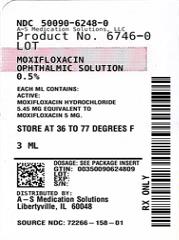
Moxifloxacin Ophthalmic 5 mg/mL Solution/ Drops
🆔 Identity & classification
Where does this data come from?
🏷️ RxNorm drug class
This medicine belongs to the Fluoroquinolone Antibacterial class.
Where does this data come from?
🏭 Manufacturer & labeler
Where does this data come from?
🩺 Clinical
Moxifloxacin ophthalmic solution is used to treat bacterial conjunctivitis (pink eye; infection of the membrane that covers the outside of the eyeballs and the inside of the eyelids). Moxifloxacin is in a class of antibiotics called fluoroquinolones. It works by killing the bacteria that cause infection.
Read the full MedlinePlus article ↗- These drops are used to treat bacterial conjunctivitis — what most people call pink eye. It's caused by bacteria, not a virus or allergies. Moxifloxacin targets the specific bacter...
- What exactly is moxifloxacin eye drops used for?
- No — you should keep your contact lenses out while you have signs or symptoms of bacterial conjunctivitis. Wearing contacts during an eye infection can make things worse and potent...
- Can I wear my contact lenses while using these drops?
Patient education
Supplement & herbal interactions
Where does this data come from?
Ask a licensed pharmacist directly — free, answered by our team.
🧪 Inactive Ingredients / Excipients
Inactive ingredients, also called excipients, are components of the drug product other than the active ingredient. They may include fillers, dyes, coatings, preservatives, flavors, or other formulation ingredients.
💡 Tap an ingredient (hover on desktop) to see what it is and why it’s used.
-
UNII R57ZHV85D4
Boric acid is a weak acid derived from boron. In medicines, it typically serves as a buffer to help maintain the product's pH level and may act as a preservative in certain formulations.
-
UNII QTT17582CB
A strong acid used to adjust and maintain the proper pH level in liquid medicines, ensuring stability and preventing breakdown of active ingredients.
-
UNII 451W47IQ8X
Sodium chloride is common table salt. It's used in medicines as a buffer to maintain proper pH, as a filler to add bulk, or to adjust the osmotic balance in liquid formulations.
-
UNII 55X04QC32I
A strong alkaline chemical used to adjust and maintain the pH balance of liquid medicines. It helps keep the medicine stable and ensures it stays effective during storage.
-
UNII 059QF0KO0R
Water is a liquid solvent that dissolves and mixes ingredients together in liquid medicines, syrups, and injections. It helps distribute the active drug evenly throughout the product.
5 inactive ingredients listed in the exact product block matched to this NDC.
Where does this data come from?
ingredient classCode="IACT" elements from the exact product block matched by this NDC. Label-section narrative from DailyMed / the openFDA label index is shown separately when available.Inactive ingredient FAQ
Are inactive ingredients the same for every manufacturer?
Why might an inactive ingredient be missing?
Can inactive ingredients matter?
💲 Pricing
A drug doesn't have one price. Each row is a different public payment system, and none is what you'd pay at the counter — that depends on your insurance. The ⓘ on each row explains what it measures.
| Price system | Per mL | Per package |
|---|---|---|
| Retail pharmacies payNADAC · weekly | Not in the retail survey — common for institutional, discontinued, or low-volume packs. | |
| Medicaid paysCMS SDUD · 12 mo | No recent Medicaid claims on file for this NDC — rare and low-volume NDCs are suppressed in the public data. | |
| Medicare drug plans payPart D · Q2 2026 | $3.70 | $11.11 / 3 ml |
Where does this data come from?
🔁 Therapeutic equivalents
| Product | Labeler | Pack | NADAC/unit | TE | Status | Price vs. this |
|---|---|---|---|---|---|---|
| Moxifloxacin Ophthalmic Solution 5 mg/mL 00781-7135-93 | Sandoz | 1 bottle | $1.539 | AT1 | Availability likely | — |
| Moxifloxacin Hydrochloride 5 mg/mL 00832-1410-03 | Upsher-Smith | 1 bottle | $1.539 | AT1 | Availability likely | — |
| Moxifloxacin 5 mg/mL 16714-0643-01 | NorthStar | 1 bottle | $1.539 | AT1 | Availability likely | — |
| Moxifloxacin 5 mg/mL 60505-0582-04 | Apotex | 1 bottle | $1.539 | AT1 | Availability likely | — |
| Moxifloxacin ophthalmic solution 5 mg/mL 62332-0505-03 | Alembic | 1 bottle | $1.539 | AT1 | Availability likely | — |
| Moxifloxacin 5 mg/mL 65862-0840-03 | Aurobindo | 1 bottle | $1.539 | AT1 | Availability likely | — |
| Moxifloxacin 5 mg/mL 68180-0422-01 | Lupin | 1 bottle | $1.539 | AT1 | Availability likely | — |
| Moxifloxacin Hydrochloride 5 mg/mL 70069-0081-01 | Somerset | 1 bottle | $1.539 | AT1 | Availability likely | — |
| Moxifloxacin ophthalmic solution 5 mg/mL 70756-0638-25 | Lifestar | 1 bottle | $1.539 | AT1 | Availability likely | — |
| Moxifloxacin Ophthalmic Solution 5 mg/mL 72266-0158-01 | Fosun | 1 bottle | $1.539 | AT1 | Availability likely | — |
| Vigamox 5 mg/mL 82667-0700-03 | Harrow | 1 bottle | $31.808 | AT1 | Availability likely | — |
| Moxifloxacin ophthalmic solution 5 mg/mL 46708-0505-03 | Alembic | 1 bottle | — | AT1 | FDA listed | — |
| Moxifloxacin ophthalmic solution 5 mg/mL 50090-4781-00 | A-S | 1 bottle | — | AT1 | FDA listed | — |
| Moxifloxacin Ophthalmic 5 mg/mLthis 50090-6248-00 | A-S | 1 bottle | — | AT1 | FDA listed | — |
| Moxifloxacin 5 mg/mL 50090-6357-00 | A-S | 1 bottle | — | AT1 | FDA listed | — |
| Moxifloxacin 5 mg/mL 51407-0321-03 | Golden | 1 bottle | — | AT1 | FDA listed | — |
| Moxifloxacin 5 mg/mL 67296-2129-03 | Redpharm | 1 bottle | — | AT1 | FDA listed | — |
| Moxifloxacin ophthalmic solution 5 mg/mL 67296-2222-03 | Redpharm | 1 bottle | — | AT1 | FDA listed | — |
| Moxifloxacin Hydrochloride 5 mg/mL 67296-2232-03 | Redpharm | 1 bottle | — | AT1 | FDA listed | — |
| Moxifloxacin Ophthalmic Solution 5 mg/mL 68083-0210-01 | Gland | 1 bottle | — | AT1 | FDA listed | — |
| Moxifloxacin 5 mg/mL 68180-0421-01 | Lupin | 3 ml | — | — | FDA listed | — |
| Moxifloxacin 5 mg/mL 72162-2107-02 | Bryant | 1 bottle | — | AT1 | FDA listed | — |
| Moxifloxacin 5 mg/mL 72189-0321-05 | Direct | 3 ml | — | AT1 | FDA listed | — |
| Moxifloxacin 5 mg/mL 72189-0334-05 | Direct | 3 ml | — | — | FDA listed | — |
| Moxifloxacin Hydrochloride 5 mg/mL 76420-0331-03 | Asclemed | 1 bottle | — | AT1 | FDA listed | — |
| Moxifloxacin 5 mg/mL 80425-0239-01 | Advanced | 1 bottle | — | AT1 | FDA listed | — |
| Moxifloxacin 5 mg/mL 80425-0379-01 | Advanced | 1 bottle | — | AT1 | FDA listed | — |
| Moxifloxacin 5 mg/mL 82804-0055-03 | Proficient | 1 bottle | — | AT1 | FDA listed | — |
Where does this data come from?
⏳ Availability & generic status
This product is an FDA-approved generic. Other versions of the same drug are listed under Therapeutic equivalents, least expensive first.
Where does this data come from?
🔬 Reported adverse events (FAERS)
Top reported reactions
Reporter sex
Serious outcomes
Where does this data come from?
📦 Packaging — all sizes for this product
| Package NDC | Description | Marketing start | Status |
|---|---|---|---|
| 50090-6248-00 You're viewing this | 1 BOTTLE in 1 CARTON (50090-6248-0) / 3 mL in 1 BOTTLE | 2022-11-29 | Active |
🧭 About this NDC listing & data coverage
What data is (and isn’t) available for this NDC — tap to expand
| NDC identity (package / product / labeler codes) | ✓ Available |
| Labeler | ✓ Available |
| Product & package description | ✓ Available |
| Marketing category & status | ✓ Available |
| Active ingredient / dosage form / route | ✓ Available |
| FDA label (SPL via DailyMed) | ✓ Available |
| Package photos | ✓ Available |
| Inactive ingredients (structured) | ✓ Available |
| NADAC pharmacy acquisition price (CMS) | — Not published for this NDC CMS publishes NADAC only for NDCs reported in its retail-pharmacy survey. |
| Orange Book / therapeutic-equivalence data | ✓ Available |
| HCPCS J-code billing crosswalk | — Not published for this NDC Most self-administered / retail products have no J-code — that is normal. |
| Medicaid utilization (CMS SDUD) | — Not published for this NDC CMS reports utilization only for NDCs with Medicaid claims above its privacy threshold. |
Questions about this listing
Why is there no price listed?
Is the NDC printed on the package the same as the 11-digit billing NDC?
What do the three segments of this NDC mean?
Is this package still being marketed?
Who lists this product with the FDA?
Do I need a prescription for this product?
Where does this data come from?
📄 Full prescribing information FDA SPL
🎯 Indications and Usage ▾
1 INDICATIONS AND USAGE Moxifloxacin ophthalmic solution is indicated for the treatment of bacterial conjunctivitis caused by susceptible strains of the following organisms: Corynebacterium species * Micrococcus luteus* Staphylococcus aureus Staphylococcus epidermidis Staphylococcus haemolyticus Staphylococcus hominis Staphylococcus warneri* Streptococcus pneumoniae Streptococcus viridans group Acinetobacter lwoffii* Haemophilus influenzae Haemophilus parainfluenzae* Chlamydia trachomatis *Efficacy for this organism was studied in fewer than 10 infections.
Moxifloxacin ophthalmic solution is a topical fluoroquinolone anti-infective indicated for the treatment of bacterial conjunctivitis caused by susceptible strains of the following organisms: Corynebacterium species* Micrococcus luteus*, Staphylococcus aureus, Staphylococcus epidermidis, Staphylococcus haemolyticus, Staphylococcus hominis, Staphylococcus warneri*, Streptococcus pneumoniae, Streptococcus viridans group , Acinetobacter lwoffii*, Haemophilus influenzae, Haemophilus parainfluenzae*, Chlamydia trachomatis. *Efficacy for this organism was studied in fewer than 10 infections.
⏱️ Dosage and Administration ▾
2 DOSAGE AND ADMINISTRATION Instill one drop in the affected eye 3 times a day for 7 days. Instill one drop in the affected eye 3 times a day for 7 days.
💊 Dosage Forms and Strengths ▾
3 DOSAGE FORMS AND STRENGTHS 5 mL bottle filled with 3 mL sterile ophthalmic solution of moxifloxacin 0.5%. 5 mL bottle filled with 3 mL sterile ophthalmic solution of moxifloxacin 0.5%.
⛔ Contraindications ▾
4 CONTRAINDICATIONS Moxifloxacin ophthalmic solution is contraindicated in patients with a history of hypersensitivity to moxifloxacin, to other quinolones, or to any of the components in this medication. Moxifloxacin ophthalmic solution is contraindicated in patients with a history of hypersensitivity to moxifloxacin, to other quinolones, or to any of the components in this medication.
⚠️ Warnings and Cautions ▾
5 WARNINGS AND PRECAUTIONS • Topical ophthalmic use only. ( 5.1 ) • Hypersensitivity and anaphylaxis have been reported with systemic use of moxifloxacin. ( 5.2 ) • Prolonged use may result in overgrowth of non-susceptible organisms, including fungi. ( 5.3 ) • Patients should not wear contact lenses if they have signs or symptoms of bacterial conjunctivitis. ( 5.4 )
5.1Topical Ophthalmic Use Only NOT FOR INJECTION. Moxifloxacin ophthalmic solution is for topical ophthalmic use only and should not be injected subconjuctivally or introduced directly into the anterior chamber of the eye.
5.2Hypersensitivity Reaction In patients receiving systemically administered quinolones, including moxifloxacin, serious and occasionally fatal hypersensitivity(anaphylactic) reactions have been reported, some following the first dose. Some reactions were accompanied by cardiovascular collapse, loss of consciousness, angioedema (including laryngeal, pharyngeal or facial edema), airway obstruction, dyspnea, urticaria, and itching. If an allergic reaction to moxifloxacin occurs, discontinue use of the drug.
Serious acute hypersensitivity reactions may require immediate emergency treatment. Oxygen and airway management should be administered as clinically indicated.
5.3Growth of Resistant Organisms with Prolonged Use As with other anti-infectives, prolonged use may result in overgrowth of non-susceptible organisms, including fungi. If superinfection occurs, discontinue use and institute alternative therapy. Whenever clinical judgment dictates, the patient should be examined with the aid of magnification, such as slit- lamp biomicroscopy, and, where appropriate, fluorescein staining.
5.4Avoidance of Contact Lens Wear Patients should be advised not to wear contact lenses if they have signs or symptoms of bacterial conjunctivitis.
🤒 Adverse Reactions ▾
6 ADVERSE REACTIONS Because clinical trials are conducted under widely varying conditions, adverse reaction rates observed in the clinical trials of a drug cannot be directly compared to the rates in the clinical trials of another drug and may not reflect the rates observed in practice. The most frequently reported ocular adverse events were conjunctivitis, decreased visual acuity, dry eye, keratitis, ocular discomfort, ocular hyperemia, ocular pain, ocular pruritus, subconjunctival hemorrhage, and tearing. These events occurred in approximately 1 to 6 % of patients.
Nonocular adverse events reported at a rate of 1 to 4 % were fever, increased cough, infection, otitis media, pharyngitis, rash, and rhinitis. The most frequently reported ocular adverse events were conjunctivitis, decreased visual acuity, dry eye, keratitis, ocular discomfort, ocular hyperemia, ocular pain, ocular pruritus, subconjunctival hemorrhage, and tearing. These events occurred in approximately 1 to 6% of patients.
( 6 ) To report SUSPECTED ADVERSE REACTIONS, contact Fosun Pharma USA Inc. at 1-866-611-3762 or FDA at 1-800-FDA-1088 or www.fda.gov/medwatch .
🔄 Drug Interactions ▾
7 DRUG INTERACTIONS Drug-drug interaction studies have not been conducted with moxifloxacin ophthalmic solution. In vitro studies indicate that moxifloxacin does not inhibit CYP3A4, CYP2D6, CYP2C9, CYP2C19, or CYP1A2, indicating that moxifloxacin is unlikely to alter the pharmacokinetics of drugs metabolized by these cytochrome P450 isozymes.
👥 Use in Specific Populations ▾
8 USE IN SPECIFIC POPULATIONS
8.1Pregnancy Pregnancy Category C. Teratogenic Effects: Moxifloxacin was not teratogenic when administered to pregnant rats during organogenesis at oral doses as high as 500 mg/kg/day (approximately 21,700 times the highest recommended total daily human ophthalmic dose); however, decreased fetal body weights and slightly delayed fetal skeletal development were observed. There was no evidence of teratogenicity when pregnant Cynomolgus monkeys were given oral doses as high as 100 mg/kg/day (approximately 4,300 times the highest recommended total daily human ophthalmic dose).
An increased incidence of smaller fetuses was observed at 100 mg/kg/day. Since there are no adequate and well-controlled studies in pregnant women, moxifloxacin ophthalmic solution should be used during pregnancy only if the potential benefit justifies the potential risk to the fetus.
8.3Nursing Mothers Moxifloxacin has not been measured in human milk, although it can be presumed to be excreted in human milk. Caution should be exercised when moxifloxacin ophthalmic solution is administered to a nursing mother.
8.4Pediatric Use The safety and effectiveness of moxifloxacin ophthalmic solution have been established in all ages. Use of moxifloxacin ophthalmic solution is supported by evidence from adequate and well controlled studies of moxifloxacin ophthalmic solution in adults, children, and neonates [see Clinical Studies (14) ]. There is no evidence that the ophthalmic administration of moxifloxacin ophthalmic solution has any effect on weight bearing joints, even though oral administration of some quinolones has been shown to cause arthropathy in immature animals.
8.5Geriatric Use No overall differences in safety and effectiveness have been observed between elderly and younger patients.
🤰 Pregnancy ▾
8.1Pregnancy Pregnancy Category C. Teratogenic Effects: Moxifloxacin was not teratogenic when administered to pregnant rats during organogenesis at oral doses as high as 500 mg/kg/day (approximately 21,700 times the highest recommended total daily human ophthalmic dose); however, decreased fetal body weights and slightly delayed fetal skeletal development were observed. There was no evidence of teratogenicity when pregnant Cynomolgus monkeys were given oral doses as high as 100 mg/kg/day (approximately 4,300 times the highest recommended total daily human ophthalmic dose).
An increased incidence of smaller fetuses was observed at 100 mg/kg/day. Since there are no adequate and well-controlled studies in pregnant women, moxifloxacin ophthalmic solution should be used during pregnancy only if the potential benefit justifies the potential risk to the fetus.
🧒 Pediatric Use ▾
8.4Pediatric Use The safety and effectiveness of moxifloxacin ophthalmic solution have been established in all ages. Use of moxifloxacin ophthalmic solution is supported by evidence from adequate and well controlled studies of moxifloxacin ophthalmic solution in adults, children, and neonates [see Clinical Studies (14) ]. There is no evidence that the ophthalmic administration of moxifloxacin ophthalmic solution has any effect on weight bearing joints, even though oral administration of some quinolones has been shown to cause arthropathy in immature animals.
🧓 Geriatric Use ▾
8.5Geriatric Use No overall differences in safety and effectiveness have been observed between elderly and younger patients.
🧬 Clinical Pharmacology ▾
12 CLINICAL PHARMACOLOGY
12.1Mechanism of Action Moxifloxacin is a member of the fluoroquinolone class of anti-infective drugs (See
12.4Microbiology ).
12.3Pharmacokinetics Plasma concentrations of moxifloxacin were measured in healthy adult male and female subjects who received bilateral topical ocular doses of moxifloxacin ophthalmic solution 3 times a day. The mean steady-state C max (2.7 ng/mL) and estimated daily exposure AUC (45ng •hr/mL) values were 1,600 and 1,000 times lower than the mean C max and AUC reported after therapeutic 400 mg doses of moxifloxacin. The plasma half-life of moxifloxacin was estimated to be 13 hours.
12.4Microbiology The antibacterial action of moxifloxacin results from inhibition of the topoisomerase II (DNA gyrase) and topoisomerase IV. DNA gyrase is an essential enzyme that is involved in the replication, transcription and repair of bacterial DNA. Topoisomerase IV is an enzyme known to play a key role in the partitioning of the chromosomal DNA during bacterial cell division.
The mechanism of action for quinolones, including moxifloxacin, is different from that of macrolides, aminoglycosides, or tetracyclines. Therefore, moxifloxacin may be active against pathogens that are resistant to these antibiotics and these antibiotics may be active against pathogens that are resistant to moxifloxacin. There is no cross-resistance between moxifloxacin and the aforementioned classes of antibiotics.
Cross resistance has been observed between systemic moxifloxacin and some other quinolones. In vitro resistance to moxifloxacin develops via multiple-step mutations. Resistance to moxifloxacin occurs in vitro at a general frequency of between 1.8 x 10 -9 to < 1 x 10 -11 for Gram-positive bacteria.
Moxifloxacin has been shown to be active against most strains of the following microorganisms, both in vitro and in clinical infections as described in the INDICATIONS AND USAGE section: Aerobic Gram-positive microorganisms: Corynebacterium species* Micrococcus luteus* Staphylococcus aureus Staphylococcus epidermidis Staphylococcus haemolyticus Staphylococcus hominis Staphylococcus warneri* Streptococcus pneumoniae Streptococcus viridans group Aerobic Gram-negative microorganisms: Acinetobacter lwoffii* Haemophilus influenza Haemophilus parainfluenzae* Other microorganisms: Chlamydia trachomatis *Efficacy for this organism was studied in fewer than 10 infections.
The following in vitro data are also available, but their clinical significance in ophthalmic infections is unknown. The safety and effectiveness of moxifloxacin ophthalmic solution in treating ophthalmological infections due to these microorganisms have not been established in adequate and well-controlled trials. The following organisms are considered susceptible when evaluated using systemic breakpoints.
However, a correlation between the in vitro systemic breakpoint and ophthalmological efficacy has not been established. The list of organisms is provided as guidance only in assessing the potential treatment of conjunctival infections. Moxifloxacin exhibits in vitro minimal inhibitory concentrations (MICs) of 2 μg/ml or less (systemic susceptible breakpoint) against most (≥ 90 %) strains of the following ocular pathogens.
Aerobic Gram-positive microorganisms: Listeria monocytogenes Staphylococcus saprophyticus Streptococcus agalactiae Streptococcus mitis Streptococcus pyogenes Streptococcus Group C, G and F Aerobic Gram-negative microorganisms: Acinetobacter baumannii Acinetobacter calcoaceticus Citrobacter freundii Citrobacter koseri Enterobacter aerogenes Enterobacter cloacae Escherichia coli Klebsiella oxytoca Klebsiella pneumoniae Moraxella catarrhalis Morganella morganii Neisseria gonorrhoeae Proteus mirabilis Proteus vulgaris Pseudomonas stutzeri Anaerobic microorganisms: Clostridium perfringens Fusobacterium species Prevotella species Propionibacterium acnes Other microorganisms: Chlamydia pneumoniae Legionella pneumophila Mycobacterium avium M…
🧬 Mechanism of Action ▾
12.1Mechanism of Action Moxifloxacin is a member of the fluoroquinolone class of anti-infective drugs (See
12.4Microbiology ).
📦 How Supplied / Storage and Handling ▾
16 HOW SUPPLIED/STORAGE AND HANDLING Product: 50090-6248 NDC: 50090-6248-0 3 mL in a BOTTLE / 1 in a CARTON
📋 Description ▾
11 DESCRIPTION Moxifloxacin ophthalmic solution USP, 0.5% is a sterile solution for topical ophthalmic use. Moxifloxacin hydrochloride is an 8-methoxy fluoroquinolone anti-infective, with a diazabicyclononyl ring at the C7 position. Moxifloxacin-Structure.jpg Chemical Name:1-Cyclopropyl-6-fluoro-1,4-dihydro-8-methoxy -7-[(4aS,7aS)-octahydro-6H-pyrrolol [3, 4-b]pyridin-6-yl]-4-oxo-3-quinolinecarboxylic acid, monohydrochloride.
Moxifloxacin hydrochloride is a slightly yellow to yellow crystalline powder. Each mL of moxifloxacin ophthalmic solution USP, 0.5% contains 5.45 mg moxifloxacin hydrochloride, equivalent to 5 mg moxifloxacin base. Contains: Active: Moxifloxacin 0.5% (5 mg/mL); Inactives: Boric acid, sodium chloride, and water for injection.
May also contain hydrochloric acid/sodium hydroxide to adjust pH to approximately 6.3 to
7.3Moxifloxacin ophthalmic solution is an isotonic solution with an osmolality of approximately 290 mOsm/kg. Moxifloxacin-Structure.jpg
💬 Information for Patients ▾
17 PATIENT COUNSELING INFORMATION Risk of Contamination: Advise patients not to touch the dropper tip to any surface to avoid contaminating the contents. Concomitant Use of Contact Lenses: Advise patients not to wear contact lenses if they have signs and symptoms of bacterial conjunctivitis. Potential for Hypersensitivity Reactions: Systemically administered quinolones including moxifloxacin have been associated with hypersensitivity reactions, even following a single dose.
Instruct patients to discontinue use immediately and contact their physician at the first sign of a rash or allergic reaction. [see Warnings and Precautions (5.2) ].