
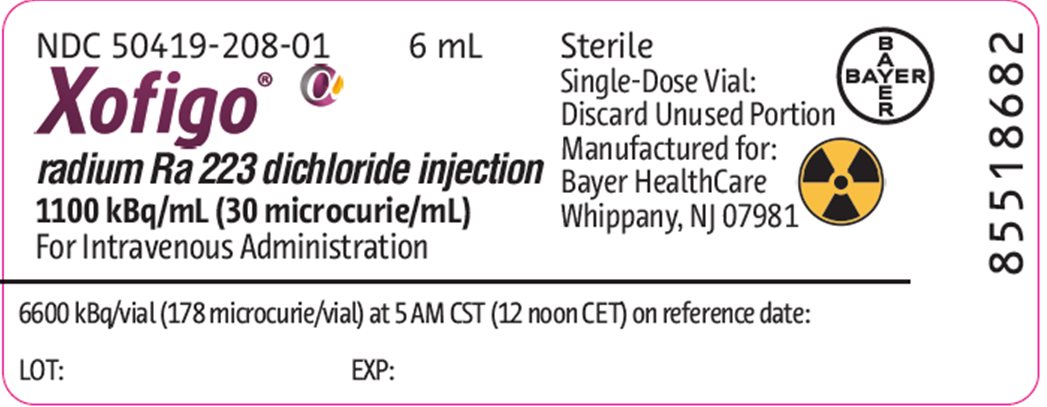
Xofigo Radium Ra 223 dichloride 30 uCi/mL Injection, 6 mL
🆔 Identity & classification
Where does this data come from?
🏷️ RxNorm drug class
This medicine belongs to the Radioactive alpha-Particle Emitting Therapeutic Agent class.
Where does this data come from?
🏭 Manufacturer & labeler
Where does this data come from?
🩺 Clinical
Radium Ra 223 is used to treat certain types of prostate cancer. Radium Ra 223 is in a class of medications called radiotherapeutic drugs. It works by killing tumor cells.
Read the full MedlinePlus article ↗Patient education
Supplement & herbal interactions
Where does this data come from?
Ask a licensed pharmacist directly — free, answered by our team.
🧪 Inactive Ingredients / Excipients
Inactive ingredients, also called excipients, are components of the drug product other than the active ingredient. They may include fillers, dyes, coatings, preservatives, flavors, or other formulation ingredients.
💡 Tap an ingredient (hover on desktop) to see what it is and why it’s used.
-
UNII QTT17582CB
A strong acid used to adjust and maintain the proper pH level in liquid medicines, ensuring stability and preventing breakdown of active ingredients.
-
UNII 451W47IQ8X
Sodium chloride is common table salt. It's used in medicines as a buffer to maintain proper pH, as a filler to add bulk, or to adjust the osmotic balance in liquid formulations.
-
UNII 1Q73Q2JULR
Sodium citrate is a salt derived from citric acid. It works as a buffer to maintain the medicine's pH level and may also help improve taste or act as a preservative in the formulation.
-
UNII 059QF0KO0R
Water is a liquid solvent that dissolves and mixes ingredients together in liquid medicines, syrups, and injections. It helps distribute the active drug evenly throughout the product.
4 inactive ingredients listed in the exact product block matched to this NDC.
Where does this data come from?
ingredient classCode="IACT" elements from the exact product block matched by this NDC. Label-section narrative from DailyMed / the openFDA label index is shown separately when available.Inactive ingredient FAQ
Are inactive ingredients the same for every manufacturer?
Why might an inactive ingredient be missing?
Can inactive ingredients matter?
💲 Pricing
A drug doesn't have one price. Each row is a different public payment system, and none is what you'd pay at the counter — that depends on your insurance. The ⓘ on each row explains what it measures.
| Price system | Per each | Per package |
|---|---|---|
| Retail pharmacies payNADAC · weekly | Not in the retail survey — common for institutional, discontinued, or low-volume packs. | |
| Medicaid paysCMS SDUD · 12 mo | No recent Medicaid claims on file for this NDC — rare and low-volume NDCs are suppressed in the public data. | |
| Medicare drug plans payPart D · quarterly | No Part D plan price is available for this NDC in our data. | |
Where does this data come from?
🔁 Therapeutic equivalents
| Product | Labeler | Pack | NADAC/unit | TE | Status | Price vs. this |
|---|---|---|---|---|---|---|
| Xofigo 30 uCi/mLthis 50419-0208-01 | Bayer | 6 ml | — | — | FDA listed | — |
Where does this data come from?
⏳ Availability & generic status
We did not find an FDA-approved generic match for this exact strength, form and route.
Where does this data come from?
📦 Packaging — all sizes for this product
| Package NDC | Description | Marketing start | Status |
|---|---|---|---|
| 50419-0208-01 You're viewing this | 6 mL in 1 VIAL, SINGLE-DOSE (50419-208-01) | 2013-05-20 | Active |
🧭 About this NDC listing & data coverage
What data is (and isn’t) available for this NDC — tap to expand
| NDC identity (package / product / labeler codes) | ✓ Available |
| Labeler | ✓ Available |
| Product & package description | ✓ Available |
| Marketing category & status | ✓ Available |
| Active ingredient / dosage form / route | ✓ Available |
| FDA label (SPL via DailyMed) | ✓ Available |
| Package photos | ✓ Available |
| Inactive ingredients (structured) | ✓ Available |
| NADAC pharmacy acquisition price (CMS) | — Not published for this NDC CMS publishes NADAC only for NDCs reported in its retail-pharmacy survey. |
| Orange Book / therapeutic-equivalence data | — Not published for this NDC Applies only to products approved under an NDA/ANDA; many listings are out of scope. |
| HCPCS J-code billing crosswalk | — Not published for this NDC Most self-administered / retail products have no J-code — that is normal. |
| Medicaid utilization (CMS SDUD) | — Not published for this NDC CMS reports utilization only for NDCs with Medicaid claims above its privacy threshold. |
Questions about this listing
Why is there no price listed?
Is the NDC printed on the package the same as the 11-digit billing NDC?
What do the three segments of this NDC mean?
Is this package still being marketed?
Who lists this product with the FDA?
Do I need a prescription for this product?
Where does this data come from?
📄 Full prescribing information FDA SPL
🎯 Indications and Usage ▾
1 INDICATIONS AND USAGE Xofigo is indicated for the treatment of patients with castration-resistant prostate cancer, symptomatic bone metastases and no known visceral metastatic disease. Xofigo is an alpha particle-emitting radioactive therapeutic agent indicated for the treatment of patients with castration-resistant prostate cancer, symptomatic bone metastases and no known visceral metastatic disease. ( 1 )
⏱️ Dosage and Administration ▾
2 DOSAGE AND ADMINISTRATION The dose regimen of Xofigo is 55 kBq (1.49 microcurie) per kg body weight, given at 4 week intervals for 6 injections. ( 2.1 )
2.1Recommended Dosage The dose regimen of Xofigo is 55 kBq (1.49 microcurie) per kg body weight, given at 4 week intervals for 6 injections. Safety and efficacy beyond 6 injections with Xofigo have not been studied. The volume to be administered to a given patient should be calculated using the: • Patient’s body weight (kg) • Dosage level 55 kBq/kg body weight or 1.49 microcurie/kg body weight • Radioactivity concentration of the product (1,100 kBq/mL; 30 microcurie/mL) at the reference date • Decay correction factor to correct for physical decay of radium-223.
The total volume to be administered to a patient is calculated as follows: Volume to be administered (mL) = Body weight in kg × 55 kBq/kg body weight Decay factor × 1,100 kBq/mL or Volume to be administered (mL) = Body weight in kg × 1.49 microcurie/kg body weight Decay factor × 30 microcurie/mL Table 1: Decay Correction Factor Table Days from Reference Date Decay Factor Days from Reference Date Decay Factor -14 2.296 0 0.982 -13 2.161 1 0.925 -12 2.034 2 0.870 -11 1.914 3 0.819 -10 1.802 4 0.771 -9 1.696 5 0.725 -8 1.596 6 0.683 -7 1.502 7 0.643 -6 1.414 8 0.605 -5 1.330 9 0.569 -4 1.252 10 0.536 -3 1.178 11 0.504 -2 1.109 12 0.475 -1 1.044 13 0.447 14 0.420 The Decay Correction Factor Table is corrected to 12 noon Central Standard Time (CST).
To determine the decay correction factor, count the number of days before or after the reference date. The Decay Correction Factor Table includes a correction to account for the 7 hour time difference between 12 noon Central European Time (CET) at the site of manufacture and 12 noon US CST, which is 7 hours earlier than CET. Immediately before and after administration, the net patient dose of administered Xofigo should be determined by measurement in an appropriate radioisotope dose calibrator that has been calibrated with a National Institute of Standards and Technology (NIST) traceable radium-223 standard (available upon request from Bayer) and corrected for decay using the date and time of calibration.
The dose calibrator must be calibrated with nationally recognized standards, carried out at the time of commissioning, after any maintenance procedure that could affect the dosimetry and at intervals not to exceed one year.
2.2Administration Administer Xofigo by slow intravenous injection over 1 minute. Flush the intravenous access line or cannula with isotonic saline before and after injection of Xofigo. Discard any unused portion, if applicable [see Dosage and Administration (2.3)].
2.3Instructions for Use/Handling General warning Xofigo (an alpha particle-emitting pharmaceutical) should be received, used and administered only by authorized persons in designated clinical settings. The receipt, storage, use, transfer and disposal of Xofigo are subject to the regulations and/or appropriate licenses of the competent official organization. Xofigo should be handled by the user in a manner which satisfies both radiation safety and pharmaceutical quality requirements.
Appropriate aseptic precautions should be taken. Radiation protection The administration of Xofigo is associated with potential risks to other persons (e.g., medical staff, caregivers and patient’s household members) from radiation or contamination from spills of bodily fluids such as urine, feces, or vomit. Therefore, radiation protection precautions must be taken in accordance with national and local regulations.
1 For drug handling Follow the normal working procedures for the handling of radiopharmaceuticals and use universal precautions for handling and administration such as gloves and barrier gowns when handling blood and bodily fluids to avoid contamination. In case of contact with skin or eyes, the affected area should be flushed immediately with water. In the event of spillage of Xofigo, the local radiatio…
💊 Dosage Forms and Strengths ▾
3 DOSAGE FORMS AND STRENGTHS Xofigo (radium Ra 223 dichloride injection) is available in single-dose vials containing 6 mL of clear, colorless solution at a concentration of 1,100 kBq/mL (30 microcurie/mL) at the reference date with a total radioactivity of 6,600 kBq/vial (178 microcurie/vial) at the reference date. Single-dose vial at a concentration of 1,100 kBq/mL (30 microcurie/mL) at the reference date with a total radioactivity of 6,600 kBq/vial (178 microcurie/vial) at the reference date. ( 3 )
⛔ Contraindications ▾
4 CONTRAINDICATIONS None. None.
⚠️ Warnings and Cautions ▾
5 WARNINGS AND PRECAUTIONS • Bone Marrow Suppression: Measure blood counts prior to treatment initiation and before every dose of Xofigo. Discontinue Xofigo if hematologic values do not recover within 6 to 8 weeks after treatment. Monitor patients with compromised bone marrow reserve closely.
Discontinue Xofigo in patients who experience life-threatening complications despite supportive care measures. ( 5.1 ) • Increased Fractures and Mortality in Combination with Abiraterone plus Prednisone/Prednisolone: Xofigo is not recommended in combination with abiraterone acetate plus prednisone/prednisolone. ( 5.2 ) • Embryo-Fetal Toxicity: Xofigo can cause fetal harm.
Advise males with female partners of reproductive potential to use effective contraception. ( 5.3 , 8.1 , 8.3 )
5.1Bone Marrow Suppression In the randomized trial, 2% of patients on the Xofigo arm experienced bone marrow failure or ongoing pancytopenia compared to no patients treated with placebo. There were two deaths due to bone marrow failure and for 7 of 13 patients treated with Xofigo, bone marrow failure was ongoing at the time of death. Among the 13 patients who experienced bone marrow failure, 54% required blood transfusions.
Four percent (4%) of patients on the Xofigo arm and 2% on the placebo arm permanently discontinued therapy due to bone marrow suppression. In the randomized trial, deaths related to vascular hemorrhage in association with myelosuppression were observed in 1% of Xofigo-treated patients compared to 0.3% of patients treated with placebo. The incidence of infection-related deaths (2%), serious infections (10%), and febrile neutropenia (<1%) were similar for patients treated with Xofigo and placebo.
Myelosuppression; notably thrombocytopenia, neutropenia, pancytopenia, and leukopenia; has been reported in patients treated with Xofigo. In the randomized trial, complete blood counts (CBCs) were obtained every 4 weeks prior to each dose and the nadir CBCs and times of recovery were not well characterized. In a separate single-dose phase 1 study of Xofigo, neutrophil and platelet count nadirs occurred 2 to 3 weeks after Xofigo administration at doses that were up to 1 to 5 times the recommended dose, and most patients recovered approximately 6 to 8 weeks after administration [see Adverse Reactions ( 6 )] .
Hematologic evaluation of patients must be performed at baseline and prior to every dose of Xofigo. Before the first administration of Xofigo, the absolute neutrophil count (ANC) should be ≥ 1.5 x 10 9 /L, the platelet count ≥ 100 x 10 9 /L and hemoglobin ≥ 10 g/dL. Before subsequent administrations of Xofigo, the ANC should be ≥ 1 x 10 9 /L and the platelet count ≥ 50 x 10 9 /L.
If there is no recovery to these values within 6 to 8 weeks after the last administration of Xofigo, despite receiving supportive care, further treatment with Xofigo should be discontinued. Patients with evidence of compromised bone marrow reserve should be monitored closely and provided with supportive care measures when clinically indicated. Discontinue Xofigo in patients who experience life-threatening complications despite supportive care for bone marrow failure.
The safety and efficacy of concomitant chemotherapy with Xofigo have not been established. Outside of a clinical trial, concomitant use with chemotherapy is not recommended due to the potential for additive myelosuppression. If chemotherapy, other systemic radioisotopes or hemibody external radiotherapy are administered during the treatment period, Xofigo should be discontinued.
5.2Increased Fractures and Mortality in Combination with Abiraterone plus Prednisone/Prednisolone Xofigo is not recommended for use in combination with abiraterone acetate plus prednisone/prednisolone outside of clinical trials. The clinical efficacy and safety of concurrent initiation of Xofigo treatment and abiraterone acetate plus prednisone/prednisolone treatment was assessed in a randomized, placebo-controlled multicenter phase…
🤒 Adverse Reactions ▾
6 ADVERSE REACTIONS The following serious adverse reactions are discussed in greater detail in another section of the label: • Bone Marrow Suppression [see Warnings and Precautions ( 5.1 )] The most common adverse drug reactions (≥ 10%) in patients receiving Xofigo were nausea, diarrhea, vomiting, and peripheral edema. The most common hematologic laboratory abnormalities (≥ 10%) were anemia, lymphocytopenia, leukopenia, thrombocytopenia, and neutropenia. ( 6.1 ) To report SUSPECTED ADVERSE REACTIONS, contact Bayer HealthCare Pharmaceuticals Inc. at 1-888-842-2937 or FDA at 1-800-FDA-1088 or www.fda.gov/medwatch.
6.1Clinical Trials Experience Because clinical trials are conducted under widely varying conditions, adverse reaction rates observed in the clinical trials of a drug cannot be directly compared to rates in the clinical trials of another drug and may not reflect the rates observed in practice. In the randomized clinical trial in patients with metastatic castration-resistant prostate cancer with bone metastases, 600 patients received intravenous injections of 55 kBq/kg (1.49 microcurie/kg) of Xofigo and best standard of care and 301 patients received placebo and best standard of care once every 4 weeks for up to 6 injections.
Prior to randomization, 58% and 57% of patients had received docetaxel in the Xofigo and placebo arms, respectively. The median duration of treatment was 20 weeks (6 cycles) for Xofigo and 18 weeks (5 cycles) for placebo. The most common adverse reactions (≥ 10%) in patients receiving Xofigo were nausea, diarrhea, vomiting, and peripheral edema (Table 3).
Grade 3 and 4 adverse events were reported among 57% of Xofigo-treated patients and 63% of placebo-treated patients. The most common hematologic laboratory abnormalities in Xofigo-treated patients (≥ 10%) were anemia, lymphocytopenia, leukopenia, thrombocytopenia, and neutropenia (Table 4). Treatment discontinuations due to adverse events occurred in 17% of patients who received Xofigo and 21% of patients who received placebo.
The most common hematologic laboratory abnormalities leading to discontinuation for Xofigo were anemia (2%) and thrombocytopenia (2%). Table 3 shows adverse reactions occurring in ≥ 2% of patients and for which the incidence for Xofigo exceeds the incidence for placebo. Table 3: Adverse Reactions in the Randomized Trial System/Organ Class Preferred Term Xofigo (n=600) Placebo (n=301) Grades 1-4 % Grades 3-4 % Grades 1-4 % Grades 3-4 % Blood and lymphatic system disorders Pancytopenia 2 1 0 0 Gastrointestinal disorders Nausea 36 2 35 2 Diarrhea 25 2 15 2 Vomiting 19 2 14 2 General disorders and administration site conditions Peripheral edema 13 2 10 1 Renal and urinary disorders Renal failure and impairment 3 1 1 1 Laboratory Abnormalities Table 4 shows hematologic laboratory abnormalities occurring in > 10% of patients and for which the incidence for Xofigo exceeds the incidence for placebo.
Table 4: Hematologic Laboratory Abnormalities Hematologic Laboratory Abnormalities Xofigo (n=600) Placebo (n=301) Grades 1-4 % Grades 3-4 % Grades 1-4 % Grades 3-4 % Anemia 93 6 88 6 Lymphocytopenia 72 20 53 7 Leukopenia 35 3 10 <1 Thrombocytopenia 31 3 22 <1 Neutropenia 18 2 5 <1 Laboratory values were obtained at baseline and prior to each 4-week cycle. As an adverse reaction, grade 3-4 thrombocytopenia was reported in 6% of patients on Xofigo and in 2% of patients on placebo. Among patients who received Xofigo, the laboratory abnormality grade 3-4 thrombocytopenia occurred in 1% of docetaxel naïve patients and in 4% of patients who had received prior docetaxel.
Grade 3-4 neutropenia occurred in 1% of docetaxel naïve patients and in 3% of patients who have received prior docetaxel. Fluid Status Dehydration occurred in 3% of patients on Xofigo and 1% of patients on placebo. Xofigo increases adverse reactions such as diarrhea, nausea, and vomiting which may result in dehydration.
Monitor patients’ oral intake and fluid status carefully a…
🔄 Drug Interactions ▾
7 DRUG INTERACTIONS No formal clinical drug interaction studies have been performed. Subgroup analyses indicated that the concurrent use of bisphosphonates or calcium channel blockers did not affect the safety and efficacy of Xofigo in the randomized clinical trial.
👥 Use in Specific Populations ▾
8 USE IN SPECIFIC POPULATIONS
8.1Pregnancy Risk Summary The safety and efficacy of Xofigo have not been established in females. Based on mechanism of action, Xofigo can cause fetal harm when administered to a pregnant female [see Clinical Pharmacology ( 12.1 )] . While there are no human or animal data on the use of Xofigo in pregnancy, maternal use of a radioactive therapeutic agent could affect development of a fetus.
Advise pregnant females and females of reproductive potential of the potential risk to a fetus.
8.2Lactation Risk Summary The safety and efficacy of Xofigo have not been established in females. There is no data on the presence of radium-223 dichloride in human milk, the effects on the breastfed child, or the effects on milk production.
8.3Females and Males of Reproductive Potential Contraception Males Because of potential effects on spermatogenesis associated with radiation, advise male patients to use condoms and their female partners of reproductive potential to use effective contraception during and for 6 months after completing treatment with Xofigo [see Use in Specific Populations ( 8.1 )] . Infertility Males Based on mechanism of action, Xofigo may impair fertility in males of reproductive potential [see Clinical Pharmacology (12.1) and Nonclinical Toxicology ( 13.1 )] .
8.4Pediatric Use The safety and efficacy of Xofigo in pediatric patients have not been established. In single- and repeat-dose toxicity studies in rats, findings in the bones (depletion of osteocytes, osteoblasts, osteoclasts, fibro-osseous lesions, disruption/disorganization of the physis/growth line) and teeth (missing, irregular growth, fibro-osseous lesions in bone socket) correlated with a reduction of osteogenesis that occurred at clinically relevant doses beginning in the range of 22 – 88 kBq (0.59 - 2.38 microcurie) per kg body weight.
8.5Geriatric Use Of the 600 patients treated with Xofigo in the randomized trial, 75% were 65 years of age and over and while 33% were 75 years of age and over. No dosage adjustment is considered necessary in elderly patients. No overall differences in safety or effectiveness were observed between these subjects and younger subjects, and other reported clinical experience has not identified differences in responses between the elderly and younger patients, but greater sensitivity of some older individuals cannot be ruled out.
8.6Patients with Hepatic Impairment No dedicated hepatic impairment trial for Xofigo has been conducted. Since radium-223 is neither metabolized by the liver nor eliminated via the bile, hepatic impairment is unlikely to affect the pharmacokinetics of radium-223 dichloride [see Clinical Pharmacology ( 12.3 )] . Based on subgroup analyses in the randomized clinical trial, dose adjustment is not needed in patients with mild hepatic impairment.
No dose adjustments can be recommended for patients with moderate or severe hepatic impairment due to lack of clinical data.
8.7Patients with Renal Impairment No dedicated renal impairment trial for Xofigo has been conducted. Based on subgroup analyses in the randomized clinical trial, dose adjustment is not needed in patients with existing mild (creatinine clearance [CrCl] 60 to 89 mL/min) or moderate (CrCl 30 to 59 mL/min) renal impairment. No dose adjustment can be recommended for patients with severe renal impairment (CrCl less than 30 mL/min) due to limited data available (n = 2) [see Clinical Pharmacology ( 12.3 )] .
🤰 Pregnancy ▾
8.1Pregnancy Risk Summary The safety and efficacy of Xofigo have not been established in females. Based on mechanism of action, Xofigo can cause fetal harm when administered to a pregnant female [see Clinical Pharmacology ( 12.1 )] . While there are no human or animal data on the use of Xofigo in pregnancy, maternal use of a radioactive therapeutic agent could affect development of a fetus.
Advise pregnant females and females of reproductive potential of the potential risk to a fetus.
🧒 Pediatric Use ▾
8.4Pediatric Use The safety and efficacy of Xofigo in pediatric patients have not been established. In single- and repeat-dose toxicity studies in rats, findings in the bones (depletion of osteocytes, osteoblasts, osteoclasts, fibro-osseous lesions, disruption/disorganization of the physis/growth line) and teeth (missing, irregular growth, fibro-osseous lesions in bone socket) correlated with a reduction of osteogenesis that occurred at clinically relevant doses beginning in the range of 22 – 88 kBq (0.59 - 2.38 microcurie) per kg body weight.
🧓 Geriatric Use ▾
8.5Geriatric Use Of the 600 patients treated with Xofigo in the randomized trial, 75% were 65 years of age and over and while 33% were 75 years of age and over. No dosage adjustment is considered necessary in elderly patients. No overall differences in safety or effectiveness were observed between these subjects and younger subjects, and other reported clinical experience has not identified differences in responses between the elderly and younger patients, but greater sensitivity of some older individuals cannot be ruled out.
🆘 Overdosage ▾
10 OVERDOSAGE There have been no reports of inadvertent overdosing of Xofigo during clinical studies. There is no specific antidote. In the event of an inadvertent overdose of Xofigo, utilize general supportive measures, including monitoring for potential hematological and gastrointestinal toxicity, and consider using medical countermeasures such as aluminum hydroxide, barium sulfate, calcium carbonate, calcium gluconate, calcium phosphate, or sodium alginate.
1 Single Xofigo doses up to 276 kBq (7.46 microcurie) per kg body weight were evaluated in a phase 1 clinical trial and no dose-limiting toxicities were observed.
🧬 Clinical Pharmacology ▾
12 CLINICAL PHARMACOLOGY
12.1Mechanism of Action The active moiety of Xofigo is the alpha particle-emitting isotope radium-223 (as radium Ra 223 dichloride), which mimics calcium and forms complexes with the bone mineral hydroxyapatite at areas of increased bone turnover, such as bone metastases (see Table 2). The high linear energy transfer of alpha particles (80 keV/micrometer) leads to a high frequency of double-strand DNA breaks in adjacent cells including tumor cells, osteoblasts and osteoclasts, resulting in an anti-tumor effect on bone metastases.
The alpha particle range from radium-223 dichloride is less than 100 micrometers (less than 10 cell diameters) which limits damage to the surrounding normal tissue.
12.2Pharmacodynamics Compared with placebo, there was a difference in favor of Xofigo for all five serum biomarkers for bone turnover studied in a phase 2 randomized study (bone formation markers: bone alkaline phosphatase [ALP], total ALP and procollagen I N propeptide [PINP], bone resorption markers: C-terminal crosslinking telopeptide of type I collagen [S-CTX-I] and type I collagen crosslinked C-telopeptide [ICTP]).
12.3Pharmacokinetics The pharmacokinetics of radium-223 dichloride in blood was linear in terms of dose proportionality and time independence in the dose range investigated (51 to 276 kBq [1.38 to 7.46 microcurie] per kg body weight). Distribution After intravenous injection, radium-223 is rapidly cleared from the blood and is distributed primarily into bone or is excreted into intestine. Fifteen minutes post-injection, about 20% of the injected radioactivity remained in blood.
At 4 hours, about 4% of the injected radioactivity remained in blood, decreasing to less than 1% at 24 hours after the injection. At 10 minutes post-injection, radioactivity was observed in bone and in intestine. At 4 hours post-injection, the percentage of the radioactive dose present in bone and intestine was approximately 61% and 49%, respectively.
No significant uptake was seen in other organs such as heart, liver, kidneys, urinary bladder, and spleen at 4 hours post-injection [see Dosage and Administration (2.3)] . Metabolism Radium-223 is an isotope that decays and is not metabolized. Elimination The whole body measurements indicated that approximately 63% of the administered radioactivity was excreted from the body within 7 days after injection (after correcting for decay).
Fecal excretion is the major route of elimination from the body. At 48 hours after injection, the cumulative fecal excretion was 13% (range 0 - 34%), and the cumulative urine excretion was 2% (range 1 - 5%). There was no evidence of hepato-biliary excretion based on imaging data.
The rate of elimination of radium-223 dichloride from the gastrointestinal tract is influenced by the high variability in intestinal transit rates across the population. Patients with a slower intestinal transit rate could potentially receive a higher intestinal radiation exposure. It is not known whether this will result in increased gastrointestinal toxicity.
Special Populations Pediatric patients Safety and effectiveness of Xofigo have not been established in children and adolescents below 18 years of age. Patients with hepatic impairment No dedicated pharmacokinetic study in patients with hepatic impairment has been conducted. However, since radium-223 is not metabolized and there is no evidence of hepato-biliary excretion based on imaging data, hepatic impairment is not expected to affect the pharmacokinetics of radium-223 dichloride.
Patients with renal impairment No dedicated pharmacokinetic study in patients with renal impairment has been conducted. However, since excretion in urine is minimal and the major route of elimination is via the feces, renal impairment is not expected to affect the pharmacokinetics of radium-223 dichloride.
12.6Cardiac Electrophysiology The effect of a single dose of 55 kBq/kg of radium-223 dichloride on the QTc interval was evaluated…
🧬 Mechanism of Action ▾
12.1Mechanism of Action The active moiety of Xofigo is the alpha particle-emitting isotope radium-223 (as radium Ra 223 dichloride), which mimics calcium and forms complexes with the bone mineral hydroxyapatite at areas of increased bone turnover, such as bone metastases (see Table 2). The high linear energy transfer of alpha particles (80 keV/micrometer) leads to a high frequency of double-strand DNA breaks in adjacent cells including tumor cells, osteoblasts and osteoclasts, resulting in an anti-tumor effect on bone metastases.
The alpha particle range from radium-223 dichloride is less than 100 micrometers (less than 10 cell diameters) which limits damage to the surrounding normal tissue.
📦 How Supplied / Storage and Handling ▾
16 HOW SUPPLIED/STORAGE AND HANDLING Xofigo (radium Ra 223 dichloride injection) is supplied in single-dose vials containing 6 mL of clear, colorless solution at a concentration of 1,100 kBq/mL (30 microcurie/mL) with a total radioactivity of 6,600 kBq/vial (178 microcurie/vial) at the reference date (NDC 50419-208-01). Store at room temperature, below 40° C (104° F). Store Xofigo in the original container or equivalent radiation shielding.
This preparation is approved for use by persons under license by the Nuclear Regulatory Commission or the relevant regulatory authority of an Agreement State. Follow procedures for proper handling and disposal of radioactive pharmaceuticals [see Dosage and Administration ( 2.3 )].
📋 Description ▾
11 DESCRIPTION Radium Ra 223 dichloride, an alpha particle-emitting pharmaceutical, is a radiotherapeutic drug. Xofigo is supplied as a clear, colorless, isotonic, and sterile solution to be administered intravenously with pH between 6 and 8. Each milliliter of solution contains 1,100 kBq radium-223 dichloride (30 microcurie), corresponding to 0.58 ng radium-223, at the reference date.
Radium is present in the solution as a free divalent cation. Each vial contains 6 mL of solution (6,600 kBq (178 microcurie) radium-223 dichloride at the reference date). The inactive ingredients are 6.3 mg/mL sodium chloride USP (tonicity agent), 7.2 mg/mL sodium citrate USP (for pH adjustment), 0.2 mg/mL hydrochloric acid USP (for pH adjustment), and water for injection USP.
The molecular weight of radium-223 dichloride, 223 RaCl 2, is 293.9 g/mol. Radium-223 has a half-life of 11.4 days. The specific activity of radium-223 is
1.9MBq (51.4 microcurie)/ng. The six-stage-decay of radium-223 to stable lead-207 occurs via short-lived daughters, and is accompanied predominantly by alpha emissions. There are also beta and gamma emissions with different energies and emission probabilities. The fraction of energy emitted from radium-223 and its daughters as alpha-particles is 95.3% (energy range of 5 -
7.5MeV). The fraction emitted as beta-particles is 3.6% (average energies are 0.445 MeV and 0.492 MeV), and the fraction emitted as gamma-radiation is 1.1% (energy range of 0.01 -
1.27MeV).
💬 Information for Patients ▾
17 PATIENT COUNSELING INFORMATION Bone Marrow Suppression Increased Fractures and Mortality in Combination with Abiraterone plus Prednisone/Prednisolone Fluid Status Instructions for Use/Handling Embryo-Fetal Toxicity Infertility • Advise patients to be compliant with blood cell count monitoring appointments while receiving Xofigo. Explain the importance of routine blood cell counts. Instruct patients to report signs of bleeding or infections [see Warnings and Precautions ( 5.1 )].
Increased Fractures and Mortality in Combination with Abiraterone plus Prednisone/Prednisolone • Advise patients that Xofigo had increased bone fractures and mortality when used in combination with abiraterone acetate and prednisone/prednisolone. Inform patients to speak with their healthcare provider about any other medications they are currently taking for prostate cancer [see Warnings and Precautions ( 5. 2)].
Fluid Status • Advise patients to stay well hydrated and to monitor oral intake, fluid status, and urine output while being treated with Xofigo. Instruct patients to report signs of dehydration, hypovolemia, urinary retention, or renal failure / insufficiency [see Adverse Reactions ( 6.1 )]. Instructions for Use/Handling • Inform patients that there are no restrictions regarding personal contact (visual or physical proximity) with other people after receiving Xofigo.
Advise patients to follow good hygiene practices while receiving Xofigo and for at least 1 week after the last injection in order to minimize radiation exposure from bodily fluids to household members and caregivers. Whenever possible, patients should use a toilet and the toilet should be flushed several times after each use. Clothing soiled with patient fecal matter or urine should be washed promptly and separately from other clothing.
Caregivers should use universal precautions for patient care such as gloves and barrier gowns when handling bodily fluids to avoid contamination. When handling bodily fluids, wearing gloves and hand washing will protect caregivers [see Dosage and Administration ( 2.3 )]. Embryo-Fetal Toxicity • Advise male patients to use condoms and their female partners of reproductive potential to use effective contraception during and for 6 months following completion of Xofigo treatment [see Use in Specific Populations ( 8.1, 8.3 )].
Infertility • Inform male patients that Xofigo may impair fertility [see Use in Specific Populations ( 8.3 )]. Manufactured for: Bayer HealthCare Pharmaceuticals Inc. Whippany, NJ 07981 Xofigo is a trademark of Bayer Aktiengesellschaft. © 2013, Bayer HealthCare Pharmaceuticals Inc.
All rights reserved.