
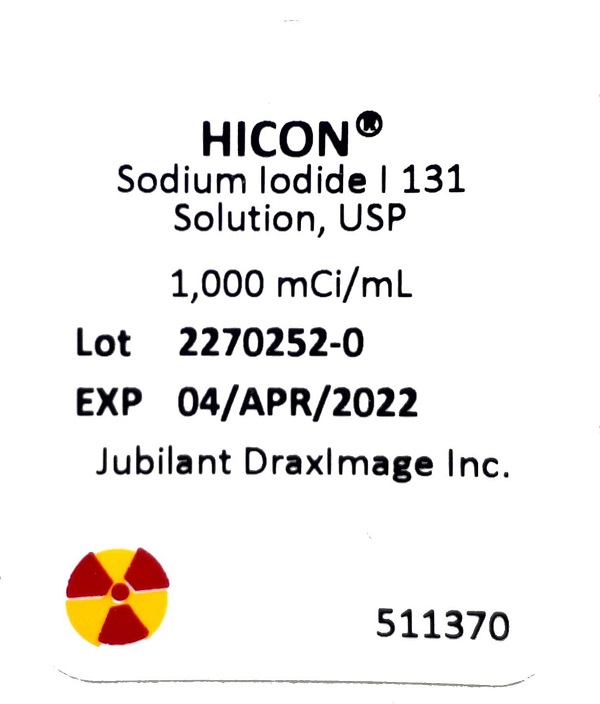
HICON Sodium Iodide I 131 1000 mCi/mL Solution, 1 vial
🆔 Identity & classification
Where does this data come from?
🏭 Manufacturer & labeler
Where does this data come from?
🩺 Clinical
Patient education
Supplement & herbal interactions
Where does this data come from?
Ask a licensed pharmacist directly — free, answered by our team.
🧪 Inactive Ingredients / Excipients
Inactive ingredients, also called excipients, are components of the drug product other than the active ingredient. They may include fillers, dyes, coatings, preservatives, flavors, or other formulation ingredients.
💡 Tap an ingredient (hover on desktop) to see what it is and why it’s used.
-
UNII 7FLD91C86K
Edetate disodium is a chemical compound that binds and removes certain metal ions. In medicines, it acts as a preservative and stabilizer by preventing metals like calcium from interfering with the product's shelf life and consistency.
-
UNII 22ADO53M6F
A mineral salt derived from phosphoric acid, used as a buffer to maintain the pH balance of the medication and help stabilize the active ingredients.
-
UNII HX1032V43M
Sodium thiosulfate is a salt compound used in medicines as a buffer and pH regulator. It helps stabilize the medication and may also serve as a preservative or antioxidant to maintain product quality.
3 inactive ingredients listed in the exact product block matched to this NDC.
Where does this data come from?
ingredient classCode="IACT" elements from the exact product block matched by this NDC. Label-section narrative from DailyMed / the openFDA label index is shown separately when available.Inactive ingredient FAQ
Are inactive ingredients the same for every manufacturer?
Why might an inactive ingredient be missing?
Can inactive ingredients matter?
💲 Pricing
A drug doesn't have one price. Each row is a different public payment system, and none is what you'd pay at the counter — that depends on your insurance. The ⓘ on each row explains what it measures.
| Price system | Per mL | Per package |
|---|---|---|
| Retail pharmacies payNADAC · weekly | Not in the retail survey — common for institutional, discontinued, or low-volume packs. | |
| Medicaid paysCMS SDUD · 12 mo | No recent Medicaid claims on file for this NDC — rare and low-volume NDCs are suppressed in the public data. | |
| Medicare drug plans payPart D · quarterly | No Part D plan price is available for this NDC in our data. | |
Where does this data come from?
🔁 Therapeutic equivalents
| Product | Labeler | Pack | NADAC/unit | TE | Status | Price vs. this |
|---|---|---|---|---|---|---|
| Hicon 1000 mCi/mLthis 65174-0880-00 | Jubilant | 1 vial | — | AA | FDA listed | — |
Where does this data come from?
⏳ Availability & generic status
The FDA lists approved generic versions of this medicine, but that does not always mean a pharmacy can get one today. Patent rules, launch agreements, supply and pricing can affect when generics actually arrive.
Where does this data come from?
📦 Packaging — all sizes for this product
| Package NDC | Description | Marketing start | Status |
|---|---|---|---|
| 65174-0880-00 You're viewing this | 1 VIAL in 1 KIT (65174-880-00) / 1 mL in 1 VIAL | 2003-04-07 | Active |
| 65174-0880-25 | 1 VIAL in 1 KIT (65174-880-25) / .25 mL in 1 VIAL | 2003-04-07 | Active |
| 65174-0880-50 | 1 VIAL in 1 KIT (65174-880-50) / .5 mL in 1 VIAL | 2003-04-07 | Active |
Pack size FAQ
What quantity is in NDC 65174-0880-00?
What is the difference between NDC 65174-0880-00 and NDC 65174-0880-25?
What NDC number is used to bill for this package of HICON Sodium Iodide I 131 1000 mCi/mL Solution?
🧭 About this NDC listing & data coverage
Kit / multi-component package
This NDC identifies a kit — a package containing more than one component. Structured data (pricing, ingredients, equivalents) is often reported per component rather than for the kit NDC itself, which can make this page look thinner than the components' own pages.
What data is (and isn’t) available for this NDC — tap to expand
| NDC identity (package / product / labeler codes) | ✓ Available |
| Labeler | ✓ Available |
| Product & package description | ✓ Available |
| Marketing category & status | ✓ Available |
| Active ingredient / dosage form / route | ✓ Available |
| FDA label (SPL via DailyMed) | ✓ Available |
| Package photos | ✓ Available |
| Inactive ingredients (structured) | ✓ Available |
| NADAC pharmacy acquisition price (CMS) | — Not published for this NDC CMS publishes NADAC only for NDCs reported in its retail-pharmacy survey. |
| Orange Book / therapeutic-equivalence data | ✓ Available |
| HCPCS J-code billing crosswalk | — Not published for this NDC Most self-administered / retail products have no J-code — that is normal. |
| Medicaid utilization (CMS SDUD) | — Not published for this NDC CMS reports utilization only for NDCs with Medicaid claims above its privacy threshold. |
Questions about this listing
Why is there no price listed?
Is the NDC printed on the package the same as the 11-digit billing NDC?
What do the three segments of this NDC mean?
Is this package still being marketed?
Does this product come in other package sizes?
Who lists this product with the FDA?
Do I need a prescription for this product?
Where does this data come from?
📄 Full prescribing information FDA SPL
🎯 Indications and Usage ▾
1 INDICATIONS AND USAGE HICON ® is indicated for the treatment of hyperthyroidism and selected cases of thyroid carcinoma. HICON ® is a radioactive therapeutic agent indicated for the treatment of hyperthyroidism and selected cases of carcinoma of the thyroid.
⏱️ Dosage and Administration ▾
2 DOSAGE AND ADMINISTRATION The concentrated sodium iodide I 131 solution USP provided with HICON ® must be diluted. ( 2.2 ) See Full Prescribing Information for important administration instructions and dilution and preparation instructions for sodium iodide l 131 capsules or oral solution. ( 2.2 , 2.4 ) The recommended dose is based on the thyroid gland uptake as well as the size of the gland: Treatment of Hyperthyroidism: Recommended dosage is 148 MBq to 370 MBq (4 mCi to 10 mCi).
( 2.3 ) Treatment of Thyroid Carcinoma: Recommended dosage is 1,110 MBq to 3,700 MBq (30 mCi to 100 mCi). ( 2.3 )
2.1Radiation Safety HICON ® is a radioactive drug. Handle with appropriate safety measures to minimize radiation exposure to the patient and healthcare workers [see Warnings and Precautions ( 5.7 )] : Use only by, or under the direction of, physicians who are qualified by specific training and experience in the safe use and handling of radioactive materials, and whose experience and training have been approved by the appropriate governmental agency authorized to license the use of radiopharmaceuticals. Use waterproof gloves when handling and administering the product.
Maintain adequate shielding during the life of the product. Measure patient dose with a suitable radioactivity calibration system immediately prior to administration.
2.2Important Administration Instructions Do not directly administer the concentrated sodium iodide I 131 solution USP provided with HICON ® to patients. The concentrated sodium iodide I 131 solution USP must be diluted and prepared prior to administration [see Dosage and Administration ( 2.4 )] . Obtain a pregnancy test in females of reproductive potential prior to administration to verify the absence of pregnancy [see Contraindications ( 4 ) and Use in Specific Populations ( 8.1 , 8.3 )] .
Instruct patients to fast at least 2 hours before and 2 hours after administration to ensure absorption. Instruct patients to hydrate before and after administration of sodium iodide I 131 and to void frequently to enhance urinary elimination of the radioiodide that is not absorbed by the thyroid gland [see Warnings and Precautions ( 5.2 )] . Instruct patients to maintain a low-iodide diet two weeks prior to radioiodide administration and continue for several days during the uptake or imaging process [see Warnings and Precautions ( 5.8 ) and Drug Interactions ( 7 )] .
Instruct patients to discontinue the anti-thyroid therapy three days before administration of sodium iodide I 131 [see Warnings and Precautions ( 5.8 ) and Drug Interactions ( 7 )] . For patients with a history of renal impairment, evaluate renal function for therapeutic planning and consider dosimetry [see Use in Specific Populations ( 8.6 )] . Obtain a complete blood count within one month of therapy.
If patients show leukopenia or thrombocytopenia, dosimetry should be used to determine a safe sodium iodide I 131 activity, while delivering less than 2 Gy to the bone marrow [see Warnings and Precautions ( 5.2 )] .
2.3Recommended Dosage and Administration Individualization of Therapy The recommended dose for orally administered sodium iodide I 131 capsules or solution is based on the thyroid gland uptake as well as the size of the gland. Thyroidal uptake and size should be determined by the physician prior to treatment and may be useful in calculating the therapeutic dose to be administered to the individual patient. Treatment of Hyperthyroidism The recommended dose is 148 MBq to 370 MBq (4 mCi to 10 mCi) administered orally.
Toxic nodular goiter may require a larger dose. Treatment of Thyroid Carcinoma The recommended dose is 1,100 MBq to 3,700 MBq (30 mCi to 100 mCi) administered orally. For subsequent ablation of metastases, the recommended dose is 3,700 MBq to 7,400 MBq (100 mCi to 200 mCi) administered orally.
2.4Dilution and Preparation Instructions Drug Handling Wear waterproof gloves throughout the entire handling and administration procedure. Ma…
💊 Dosage Forms and Strengths ▾
3 DOSAGE FORMS AND STRENGTHS HICON ® is available in 1 mL size, clear vials containing a colorless, aqueous, concentrated Sodium Iodide I 131 Solution USP [9,250 MBq (250 mCi), 18,500 MBq (500 mCi), and 37,000 MBq (1,000 mCi) at time of calibration] for the preparation of sodium iodide I 131 capsules, therapeutic or sodium iodide I 131 solution, therapeutic. Refer to Table 2 for the radioactivity and volume in each vial. Large gelatin capsules (empty) and small gelatin capsules containing approximately 300 mg of dibasic sodium phosphate anhydrous as the absorbing buffer are supplied along with HICON ® for the preparation of sodium iodide I 131 capsules, therapeutic.
Table 2 HICON ® Concentrated Sodium Iodide I 131 Solution USP Total Radioactivity At time of calibration / Via l Solution Volume (mL) / Vial 9,250 MBq (250 mCi) 0.25 18,500 MBq (500 mCi) 0.5 37,000 MBq (1,000 mCi) 1 Vials: Sodium Iodide I 131 Solution [9,250 MBq (250 mCi), 18,500 MBq (500 mCi), and 37,000 MBq (1,000 mCi) at time of calibration] for the preparation of sodium iodide I 131 capsules, therapeutic or sodium iodide I 131 solution, therapeutic.
⛔ Contraindications ▾
4 CONTRAINDICATIONS HICON ® is contraindicated in: Patients with vomiting and diarrhea [see Warnings and Precautions ( 5.7 )] . Patients with thyroid malignancies shown to have no iodide update, which include the majority of medullary or anaplastic carcinomas. Patients receiving concurrent anti-thyroid therapy [see Warnings and Precautions ( 5.1 ) and Drug Interactions ( 7 )] .
Pregnancy [see Warnings and Precautions ( 5.4 ), Use in Specific Populations ( 8.1 )] . Lactation [see Warnings and Precautions ( 5.5 ), Use in Specific Populations ( 8.2 )] . Patients with vomiting and diarrhea.
( 4 ) Patients with thyroid malignancies shown to have no iodide uptake. ( 4 ) Patients receiving concurrent anti-thyroid therapy. ( 4 ) Pregnancy.
( 4 ) Lactation. ( 4 )
⚠️ Warnings and Cautions ▾
5 WARNINGS AND PRECAUTIONS Radiation-induced thyroiditis may cause or worsen hyperthyroidism. Consider pre-treatment with anti-thyroid medications. ( 5.1 ) Multiple non-thyroid radiation toxicities, including hematopoietic suppression: Individualize dose and monitor for toxicity.
( 5.2 ) Embryo-Fetal toxicity: May cause severe and irreversible hypothyroidism in the neonate. Verify pregnancy status in females of reproductive potential prior to initiating treatment. Females and males of reproductive potential should use effective contraception.
( 5.4 , 8.1 , 8.3 ) Radiation exposure to breast tissue with lactation: Sodium iodide I 131 concentrates in the breast of lactating women. Discontinue breast feeding at least 6 weeks prior to therapy. ( 5.5 , 8.2 )
5.1Radiation-induced Thyroiditis Sodium iodide I 131 may cause thyroiditis with gland enlargement and release of thyroid hormone, which may cause or aggravate hyperthyroidism, thyroid storm and thyrotoxic cardiac disease [see Adverse Reactions (6) ] . When treating hyperthyroidism, consider pre-treatment anti-thyroid medication to help deplete the thyroid hormone content within the gland. Discontinue the anti-thyroid medication at least three days before administration of sodium iodide I 131 [see Drug Interactions (7) ].
Consider a beta-blocker pre or post-treatment to minimize the risk of hyperthyroidism and thyroid storm. Thyroiditis may cause gland enlargement resulting in tenderness and swelling of the neck, pain on swallowing, sore throat, and cough; which may occur approximately the third day after sodium iodide I 131 administration. Consider management with pain-reliever or anti-inflammatory medications.
5.2Radiation-induced Toxicities Sodium Iodide I 131 may cause radiation induced toxicities [see Adverse Reactions (6) ] : Dose-dependent fatalities (bone marrow suppression, malignancy). Dose-dependent hematopoietic suppression which manifests as a transient thrombocytopenia or neutropenia 3 to 5 weeks following sodium iodide I 131 administrations, may lead to increased susceptibility to infections or bleeding. Salivary gland toxicity: sialadenitis, xerostomia.
Lacrimal gland toxicity: conjunctivitis, xerophthalmia, and epiphora. Increased risk of developing new solid tumors and leukemias. Obtain a complete blood count within one month of therapy.
If patients show leukopenia or thrombocytopenia, dosimetry should be used to determine a safe sodium iodide I 131 activity, while delivering less than 2 Gy to the bone marrow. Advise good hydration for one week following sodium iodide I 131 administration and stimulate salivary flow via a sialagogue (e.g. sugar-free candy or gum, pilocarpine, and ascorbic acid) to reduce radiation exposure to the salivary glands. Advise patients to void frequently after administration of radioiodide to enhance excretion.
5.3Hypersensitivity Reactions Hypersensitivity reactions including anaphylaxis may occur in patients who receive sodium iodide I 131. Although iodide is not considered an allergen, hypersensitivity reactions may occur in relation with excipients or chemical component of the capsule, such as sodium thiosulfate. Obtain and document an allergy history, particularly a sulfite allergy.
Emergency resuscitation equipment and personnel should be immediately available [see Adverse Reactions (6) ] .
5.4Embryo-Fetal Toxicity HICON ® is contraindicated in pregnancy because sodium iodide I 131 crosses the placenta and fetal exposure can lead to neonatal hypothyroidism. Multiple reports in the published literature describe hypothyroidism in the neonates following in utero exposure to sodium iodide I 131. Some cases of neonatal hypothyroidism were severe and irreversible.
Verify pregnancy status of females of reproductive potential prior to initiating HICON ® treatment. Advise females and males of reproductive potential to use effective contraception during treatment with HICON ® and for at least 6 months after the last dose [see Use in S…
🤒 Adverse Reactions ▾
6 ADVERSE REACTIONS The following clinically significant adverse reactions are described below and elsewhere in labeling: Radiation-induced Thyroiditis [see Warnings and Precautions ( 5.1 )] . Radiation-induced Toxicities [see Warnings and Precautions ( 5.2 )] . Hypersensitivity Reactions [see Warnings and Precautions ( 5.3 )] .
Embryo-Fetal Toxicity [see Warnings and Precautions ( 5.4 ), Use in Specific Populations ( 8.1 )] . Increased Radiation Exposure to Breast Tissue with Lactation [see Warnings and Precautions ( 5.5 ), Use in Specific Populations ( 8.2 )] . Transient Infertility [see Warnings and Precautions ( 5.6 ), Use in Specific Populations ( 8.3 )] .
Radiation Exposure to Other Individuals [see Warnings and Precautions ( 5.7 )] . Risk of Decreased Effectiveness of Therapy [see Warnings and Precautions ( 5.8 )] . Common adverse reactions reported with therapeutic doses of sodium iodide I 131 include local swelling, radiation sickness, sialadenitis, salivary gland dysfunction, bone marrow depression, lacrimal gland dysfunction, hypothyroidism, hyperthyroidism, thyrotoxic crisis.
( 6 ) To report SUSPECTED ADVERSE REACTIONS, contact Jubilant DraxImage Inc., dba Jubilant Radiopharma TM at 1-888-633-5343 or FDA at 1-800-FDA-1088 or www.fda.gov/medwatch.
6.1Postmarketing Experience The following adverse reactions have been reported during post-approval use of sodium iodide I 131 (Table 3). Because these reactions are reported voluntarily from a population of uncertain size, it is not always possible to reliably estimate their frequency or establish a causal relationship to drug exposure. Table 3 Postmarket Adverse Reactions by System Organ Class System Organ Class In alphabetical order Symptoms Cardiac disorders Chest pain, tachycardia Congenital, familial and genetic disorders Chromosomal abnormalities, congenital hypothyroidism Endocrine disorders Hyperthyroidism, hypoparathyroidism, hypothyroidism, thyrotoxic crisis Eye disorders Lacrimal gland dysfunction Gastrointestinal disorders Gastritis, nausea, salivary gland dysfunction, sialadenitis, vomiting General disorders and administration site conditions Local swelling of thyroid or sites of iodide avid tumor Hematologic and lymphatic disorders including fatalities Anemia, blood dyscrasia, bone marrow depression, leukopenia, thrombocytopenia Immune system disorders Bronchospasm Neoplasms benign, malignant and unspecified (including cysts and polyps) Acute leukemia, solid cancer Nervous system disorders In patients with iodide-avid brain metastases Cerebral edema, headache Respiratory, thoracic and mediastinal disorders In patients with iodide-avid lung metastases Pulmonary fibrosis, radiation pneumonitis Skin and subcutaneous tissue disorders Hives, itching, rash
🔄 Drug Interactions ▾
7 DRUG INTERACTIONS Concomitant use of bone marrow depressants may enhance the depression of the hematopoietic system caused by the use of large doses of sodium iodide I 131 [see Warnings and Precautions ( 5.2 )] . Many drugs and iodide-containing foods interfere with the accumulation of radioiodide by the thyroid. Review the patient’s history, current medications, and recent diagnostic tests prior to the administration of sodium iodide I 131 [see Warnings and Precautions ( 5.8 )] .
Advise patients to maintain a low-iodide diet two weeks prior to radioiodide administration and continue for several days during the uptake or imaging process and to discontinue taking the following products before they undergo the procedure as shown in Table 4. Table 4 Pharmaceuticals / OTCs / Agents Blocking Radioiodine Uptake Type of Medication Recommended time of withdrawal Thionamide medications (e.g., propylthiouracil, methimazole, carbimazole) 3 days Multivitamins containing iodide 10 days Natural or synthetic thyroid hormones triiodothyronine thyroxine 2 weeks 4 weeks Iodide-containing foods: iodized salt, dairy products, egg yolks, seafood, turkey and liver 2 weeks Kelp, agar, carrageenan, Lugol solution 3 weeks Saturated solution of potassium iodide 3 weeks Topical iodide (e.g., surgical skin preparation) 3 weeks Intravenous radiographic contrast agents Water soluble Lipophilic 2 months 6 months Amiodarone 6 months Many pharmacologic agents are known to interact with radioiodide.
See Full Prescribing Information complete list. ( 5.8 , 7 )
👥 Use in Specific Populations ▾
8 USE IN SPECIFIC POPULATIONS Pregnancy. ( 4 ) Lactation. ( 4 ) Females and Males of Reproductive Potential: May impair fertility in females and males. ( 5.6 , 8.3 )
8.1Pregnancy Risk Summary HICON ® is contraindicated in pregnancy because fetal exposure can lead to neonatal hypothyroidism, which in some cases is severe and irreversible [See Warnings and Precautions ( 5.4 )] . Data from the published literature describe reports of neonatal thyroid abnormalities after fetal exposure; including agenesis of the thyroid and hypothyroidism (see Clinical Considerations, Data) . No animal reproductive studies have been conducted.
Clinical Considerations Fetal/ Neonatal Adverse Reactions A fetus exposed to sodium iodide I 131 can develop neonatal hypothyroidism. Delay in diagnosis of neonatal hypothyroidism after exposure to sodium iodide I 131 in utero can result in severe sequelae such as cognitive impairment and delayed bone age. Monitor thyroid function in any infant born after in utero exposure to sodium iodide I 131.
Data Human Data Sodium iodide I 131 crosses the placenta and the fetal thyroid begins to concentrate iodide during the 10 th to 12 th week of gestation. In literature reports of maternal exposures to sodium iodide I 131 at doses of 333 MBq to 8,325 MBq (9 mCi to 225 mCi) during 4 to 26 weeks gestational age, the most common adverse outcomes were hypothyroid infants and children.
8.2Lactation Risk Summary HICON ® is contraindicated during lactation because I 131 concentrates in the breast during lactation via the increased expression of the sodium iodide symporter in breast tissue and can lead to hypothyroidism in the infant through breastfeeding. If sodium iodide I 131 is administered postpartum, breastfeeding should not be restarted for the remainder of the postpartum period. In addition, to minimize the absorbed radiation dose to the breast tissue, breastfeeding and breast-pumping should be discontinued for at least 6 weeks before administration of sodium iodide I 131 [see Data and Warnings and Precautions ( 5.5 )] .
Infants exposed to sodium iodide I 131 through breast milk are at risk for development of hypothyroidism because sodium iodide I 131 is distributed into breast milk and may reach concentrations equal to or greater than concentrations in maternal plasma (see Data) . Data Published literature describes sodium iodide I 131 transfer into breast milk and uptake by the thyroid of the breastfed infant. The amount of sodium Iodide I 131 detected in the breast milk at 36 to 48 hours after administration is 1% to 27% of the injected dose (with injected doses between
1.1MBq (0,0297 mCi) to 5,143 MBq (139 mCi)).
8.3Female and Males of Reproductive Potential HICON ® is contraindicated in pregnancy because of the risk of fetal hypothyroidism [see Warnings and Precautions ( 5.4 ) and Use in Specific Populations ( 8.1 )] . Pregnancy Testing Obtain a pregnancy test in females of reproductive potential and verify the absence of pregnancy within 24 hours prior to administration of treatment [see Dosage and Administration ( 2.2 )] . Contraception Advise females and males of reproductive potential to use effective contraception during treatment with HICON ® and for at least six months after the last dose of HICON ® .
Infertility Females Fertility may be impaired with HICON ® treatment. Transient amenorrhea and ovarian insufficiency have been observed after sodium iodide I 131 therapy in females. The literature describes reports of transient menstrual cycle irregularities, including amenorrhea, and ovarian failure in females treated with cumulative doses of 1,000 MBq to 59,000 MBq (27 mCi to 1,595 mCi) sodium iodide I 131.
In a published literature analysis, the effects on fertility occurred in up to 30% of women treated with sodium iodide I 131, and may resolve 12 months after treatment. Males Fertility may be impaired with HICON ® treatment. Discuss sperm banking for males who are expected to receive a high cumulativ…
🤰 Pregnancy ▾
8.1Pregnancy Risk Summary HICON ® is contraindicated in pregnancy because fetal exposure can lead to neonatal hypothyroidism, which in some cases is severe and irreversible [See Warnings and Precautions ( 5.4 )] . Data from the published literature describe reports of neonatal thyroid abnormalities after fetal exposure; including agenesis of the thyroid and hypothyroidism (see Clinical Considerations, Data) . No animal reproductive studies have been conducted.
Clinical Considerations Fetal/ Neonatal Adverse Reactions A fetus exposed to sodium iodide I 131 can develop neonatal hypothyroidism. Delay in diagnosis of neonatal hypothyroidism after exposure to sodium iodide I 131 in utero can result in severe sequelae such as cognitive impairment and delayed bone age. Monitor thyroid function in any infant born after in utero exposure to sodium iodide I 131.
Data Human Data Sodium iodide I 131 crosses the placenta and the fetal thyroid begins to concentrate iodide during the 10 th to 12 th week of gestation. In literature reports of maternal exposures to sodium iodide I 131 at doses of 333 MBq to 8,325 MBq (9 mCi to 225 mCi) during 4 to 26 weeks gestational age, the most common adverse outcomes were hypothyroid infants and children.
🧒 Pediatric Use ▾
8.4Pediatric Use The safety and effectiveness of HICON ® have not been established in pediatric patients. Pediatric patients are at an increased lifetime risk for malignancy from radiation exposure.
🧓 Geriatric Use ▾
8.5Geriatric Use Clinical experience has not identified differences in safety or effectiveness in geriatric patients compared to younger patients. However, elderly patients are more likely to have decreased renal function and radiation exposure is greater in patients with impaired renal function [see Use in Specific Populations ( 8.6 ), Clinical Pharmacology ( 12.3 ) ].
🆘 Overdosage ▾
10 OVERDOSAGE In case of exposure to a radioactive dose of sodium iodide I 131 exceeding the intended therapeutic dose, provide general supportive care, promote frequent voiding, monitor for bone marrow and thyroid suppression. Consider administering a thyroid blocking agent (e.g. potassium iodide (KI) or perchlorate) promptly within 4 to 6 hours after the exposure. Assess the benefit of administering a thyroid blocking agent against the risk of failure of sodium iodide I 131 therapy.
Appropriate replacement therapy is recommended if hypothyroidism occurs.
🧬 Clinical Pharmacology ▾
12 CLINICAL PHARMACOLOGY
12.1Mechanism of Action Iodide is actively transported by the sodium-iodide symporter (NIS) protein, in thyroid follicular cells. Iodide is concentrated in follicular cells to levels up to 50 times higher than in the plasma. Iodide is metabolically oxidized by thyroid peroxidase to iodinium (I + ) which in turn iodinates tyrosine residues of thyroglobulin (tri or tetra-iodinated tyrosine).
The beta emission of I 131 is responsible for the therapeutic effect.
12.2Pharmacodynamics The relationship between the extent of iodide I 131 exposure and pharmacologic effects has not been explored in clinical trials.
12.3Pharmacokinetics Absorption Following oral administration of HICON ® , 90% of the administered radioactivity of sodium iodide I 131 is systemically absorbed in the first 60 minutes. Distribution Following absorption, sodium iodide I 131 is distributed within the extra-cellular space. It is actively transported by the sodium-iodide symporter (NIS) protein, and binds to thyroglobulin resulting in accumulation in the thyroid.
The thyroid uptake of iodide is usually increased in hyperthyroidism and in goiter, and is decreased in hypothyroidism. Sodium iodide I 131 also accumulates in the stomach, choroid plexus, salivary glands, breast, liver, gall bladder, and kidneys. Elimination Metabolism In thyroidal follicular cells iodide is oxidized through the action of thyroid peroxidase to iodinium (I + ) which in turn iodinates tyrosine residues of thyroglobulin.
Excretion Sodium iodide I 131 is excreted in urine and feces. The normal range of urinary excretion is 37% to 75% of the administered dose, varying with the thyroid and renal function of the patient. Fecal excretion is about 10%.
🧬 Mechanism of Action ▾
12.1Mechanism of Action Iodide is actively transported by the sodium-iodide symporter (NIS) protein, in thyroid follicular cells. Iodide is concentrated in follicular cells to levels up to 50 times higher than in the plasma. Iodide is metabolically oxidized by thyroid peroxidase to iodinium (I + ) which in turn iodinates tyrosine residues of thyroglobulin (tri or tetra-iodinated tyrosine).
The beta emission of I 131 is responsible for the therapeutic effect.
📦 How Supplied / Storage and Handling ▾
16 HOW SUPPLIED/STORAGE AND HANDLING
16.1How Supplied HICON ® provides a concentrated solution of sodium iodide I 131 with a radioconcentration of 37,000 MBq/mL (1,000 mCi/mL). It is supplied in 1 mL clear vials that contain approximately 9,250 MBq (250 mCi), 18,500 MBq (500 mCi), and 37,000 MBq (1,000 mCi) at the time of calibration. The concentrated solution is intended for use in the preparation of capsules and solutions of varying strengths for oral administration.
HICON ® NDC Volume of Concentrated Solution Total Radioactivity per Vial 65174-880-25 0.25 mL 9,250 MBq (250 mCi) 65174-880-50 0.50 mL 18,500 MBq (500 mCi) 65174-880-00 1 mL 37,000 MBq (1,000 mCi) A minimum of one blister package of 10 empty large hard gelatin capsules and a minimum of one blister package of 10 small hard gelatin capsules containing approximately 300 mg of dibasic sodium phosphate anhydrous as the absorbing buffer are supplied along with HICON ® for the preparation of sodium iodide I 131 capsules, therapeutic.
16.2Storage and Handling HICON ® should be stored between 2 °C and 25 °C (36 °F and 77 °F). Store and dispose of HICON ® in compliance with the appropriate regulations of the government agency authorized to license the use of this radionuclide. Use HICON ® solution per the expiry date on the lead pot label.
Use prepared capsules within 7 days of preparing. Discard unused capsules after all HICON ® solution has been dispensed or expired. New blister packages of hard gelatin capsules are provided with each new shipment of HICON ® .
This radiopharmaceutical is approved for use by persons under license by the Nuclear Regulatory Commission or the relevant regulatory authority of an Agreement State.
16.1How Supplied HICON ® provides a concentrated solution of sodium iodide I 131 with a radioconcentration of 37,000 MBq/mL (1,000 mCi/mL). It is supplied in 1 mL clear vials that contain approximately 9,250 MBq (250 mCi), 18,500 MBq (500 mCi), and 37,000 MBq (1,000 mCi) at the time of calibration. The concentrated solution is intended for use in the preparation of capsules and solutions of varying strengths for oral administration.
HICON ® NDC Volume of Concentrated Solution Total Radioactivity per Vial 65174-880-25 0.25 mL 9,250 MBq (250 mCi) 65174-880-50 0.50 mL 18,500 MBq (500 mCi) 65174-880-00 1 mL 37,000 MBq (1,000 mCi) A minimum of one blister package of 10 empty large hard gelatin capsules and a minimum of one blister package of 10 small hard gelatin capsules containing approximately 300 mg of dibasic sodium phosphate anhydrous as the absorbing buffer are supplied along with HICON ® for the preparation of sodium iodide I 131 capsules, therapeutic.
📦 Storage and Handling ▾
16.2Storage and Handling HICON ® should be stored between 2 °C and 25 °C (36 °F and 77 °F). Store and dispose of HICON ® in compliance with the appropriate regulations of the government agency authorized to license the use of this radionuclide. Use HICON ® solution per the expiry date on the lead pot label.
Use prepared capsules within 7 days of preparing. Discard unused capsules after all HICON ® solution has been dispensed or expired. New blister packages of hard gelatin capsules are provided with each new shipment of HICON ® .
This radiopharmaceutical is approved for use by persons under license by the Nuclear Regulatory Commission or the relevant regulatory authority of an Agreement State.
📋 Description ▾
11 DESCRIPTION
11.1Chemical Characteristics HICON ® , a radioactive therapeutic agent, provides a concentrated solution of sodium iodide I 131 with a radioconcentration of 37,000 MBq/mL (1,000 mCi/mL). Each mL of the concentrated solution contains 37,000 MBq (1,000 mCi) of no-carrier-added sodium iodide I 131, disodium edetate dihydrate USP as a stabilizer, sodium thiosulfate pentahydrate USP as a reducing agent, and dibasic sodium phosphate anhydrous USP. The pH of the concentrated solution is between 7.5 and 10.
The concentrated solution provided with HICON ® is used for the preparation of sodium iodide I 131 capsules or sodium iodide I 131 solution of varying strengths for oral administration for therapy. Sodium iodide I 131 solution is designated chemically as Na 131 I and has a molecular weight of 153.99 g/mol. Hard gelatin capsules, provided for the preparation of the sodium iodide I 131 capsules final dosage form, contain approximately 300 mg of dibasic sodium phosphate anhydrous USP as the absorbing buffer.
11.2Physical Characteristics Iodide I 131 decays by beta emission and associated gamma emission with a physical half-life of 8.02 days. The principal radiation emissions are listed in Table 5. Table 5 Principal Radiation Emission Data from Decay of Sodium Iodide I 131 Radiation Mean % per Disintegration Mean Energy (keV) Beta-1 2.1%
69.4Beta-3 7.2%
96.6Beta-4 89.4% 191.6 Gamma-7 6.1% 284.3 Gamma-14 81.2% 364.5 Gamma-18 7.1% 637.0
11.3External Radiation The specific gamma-ray constant for iodide I 131 is 4.26 × 10 -13 C•m 2 •kg -1 •MBq -1 •s -1 (2.2 R•cm 2 /mCi•hr). The first half-value thickness of lead (Pb) for iodide I 131 is 0.27 cm. A range of values for the relative attenuation of the radiation emitted by iodide I 131 that results from interposition of various thicknesses of Pb is shown in Table 6.
For example, the use of 2.59 cm of Pb will decrease the external radiation exposure by a factor of about 100. Table 6 Radiation Attenuation of Iodine I 131 by Lead Shielding Shield Thickness (Pb) cm Coefficient of Attenuation 0.27 0.5 0.56 0.25 0.99 10 -1 2.59 10 -2 4.53 10 -3 To correct for physical decay of iodine I 131, the fractions that remain at selected intervals after the time of calibration are shown in Table 7. Table 7 Physical Decay Chart: Iodine I-131 Half-Life
8.02Days Days Fraction Remaining Days Fraction Remaining Days Fraction Remaining 0 Calibration time 1.000 11 0.388 22 0.151 1 0.918 12 0.356 23 0.138 2 0.842 13 0.327 24 0.127 3 0.773 14 0.300 25 0.116 4 0.709 15 0.275 26 0.107 5 0.651 16 0.253 27 0.098 6 0.597 17 0.232 28 0.090 7 0.548 18 0.213 29 0.083 8 0.503 19 0.195 30 0.076 9 0.461 20 0.179 10 0.423 21 0.164
💬 Information for Patients ▾
17 PATIENT COUNSELING INFORMATION Radiation Safety Precautions Advise patients treated for hyperthyroidism to monitor for and seek medical care for signs and symptoms of thyrotoxicosis and thyroid storm arising during the post-treatment period. For mild radiation-induced thyroiditis, patients may be advised to consider symptomatic management with pain-relievers or anti-inflammatory medications [see Warnings and Precautions ( 5.1 )] . Advise patients to hydrate and void frequently and to use a sialagogue after administration of radioiodide to minimize radiation dose [see Warnings and Precautions ( 5.2 )] .
Advise patients to avoid close contact with others, especially pregnant women and children, and to take care to avoid contamination of other persons or the environment with body fluids [see Warnings and Precautions ( 5.7 )] . Embryo-Fetal Toxicity Advise female patients of the risk to a fetus [see Warnings and Precautions ( 5.4 ), Use in Specific Populations ( 8.1 )] . Advise females and males of reproductive potential to use effective contraception during treatment with HICON ® and for at least 6 months after the last dose [see Warnings and Precautions ( 5.4 ), Use in Specific Populations ( 8.3 )] .
Advise female patients to contact their healthcare provider with a known or suspected pregnancy. Lactation Instruct women to stop breastfeeding and breast-pumping for the remainder of the postpartum period after and for at least 6 weeks prior to HICON ® administration [see Contraindications ( 4 ), Warnings and Precautions ( 5.5 ), Use in Specific Populations ( 8.2 )] . Effects on Fertility Advise females and males of reproductive potential of the potential for impaired fertility with HICON ® treatment and possible use of sperm banking for males of reproductive potential [see Warnings and Precautions ( 5.6 ), Use in Specific Populations ( 8.3 )] Manufactured by: Jubilant DraxImage Inc., dba Jubilant Radiopharma TM 16 751 TransCanada Highway Kirkland, Quebec H9H 4J4 Canada 1-888-633-5343 www.jubilantradiopharma.com Revised: November 2021 Art Rev.: 2.1 50000000796 HICON ® is a registered trademark of Jubilant DraxImage Inc.
Jubilant Radiopharma TM is a trademark used under license by Jubilant DraxImage Inc. logo