
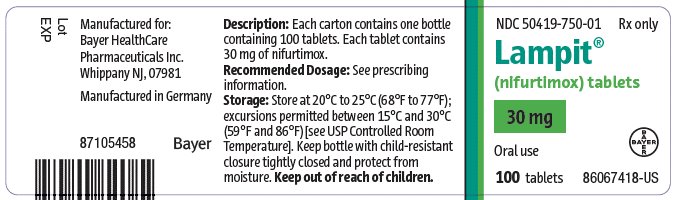
LAMPIT nifurtimox 30 mg Tablet, Film Coated, 100-count
🆔 Identity & classification
Where does this data come from?
🏷️ RxNorm drug class
This medicine belongs to the Nitrofuran derivatives class.
Where does this data come from?
🏭 Manufacturer & labeler
Where does this data come from?
🩺 Clinical
Nifurtimox is used to treat Chagas disease (an infection caused by a parasite) in children from birth to 18 years old who weigh at least 5.5 pounds (2.5 kg). Nifurtimox is in a class of medications called antiprotozoals. It works by killing the organism that can cause Chagas disease.
Read the full MedlinePlus article ↗- Chagas disease is a parasitic infection caused by a microscopic organism called Trypanosoma cruzi. It's spread mainly through insect bites in certain parts of Latin America. Withou...
- What exactly is Chagas disease, and why does my child need this medicine?
- Yes, every dose — all three times a day — must be taken with food. This isn't just a suggestion. Taking Lampit with food significantly increases the amount of medicine your child a...
- Does my child have to take this with food every single time?
Patient education
Supplement & herbal interactions
Some supplements/herbs that may interact with Nifurtimox — tap one for details:
Where does this data come from?
Ask a licensed pharmacist directly — free, answered by our team.
💊 What it looks like
Where does this data come from?
🧪 Inactive Ingredients / Excipients
Inactive ingredients, also called excipients, are components of the drug product other than the active ingredient. They may include fillers, dyes, coatings, preservatives, flavors, or other formulation ingredients.
💡 Tap an ingredient (hover on desktop) to see what it is and why it’s used.
-
UNII O7TSZ97GEP
A mineral compound that serves as a filler and binding agent in tablets and capsules. It adds bulk to the medicine and helps hold ingredients together during manufacturing.
-
UNII 70097M6I30
Magnesium stearate is a salt made from magnesium and stearic acid, a fatty substance. It's used in tablets and capsules as a lubricant and glidant to help ingredients flow smoothly during manufacturing and prevent sticking.
-
UNII ETJ7Z6XBU4
Silicon dioxide is a naturally occurring mineral used as a glidant and anti-caking agent. It helps powder ingredients flow smoothly and prevents clumping during manufacturing and storage.
-
UNII 368GB5141J
A detergent and foaming agent derived from coconut or palm oil. In medications, it helps break down and mix oil and water-based ingredients, aids in tablet disintegration, and improves how the drug dissolves and spreads in the mouth or digestive system.
-
UNII O8232NY3SJ
A plant-based carbohydrate derived from corn kernels. It acts as a filler to add bulk, a binder to hold ingredients together, and a disintegrant to help the tablet break apart in your stomach for absorption.
5 inactive ingredients listed in the exact product block matched to this NDC.
Where does this data come from?
ingredient classCode="IACT" elements from the exact product block matched by this NDC. Label-section narrative from DailyMed / the openFDA label index is shown separately when available.Inactive ingredient FAQ
Are inactive ingredients the same for every manufacturer?
Why might an inactive ingredient be missing?
Can inactive ingredients matter?
💲 Pricing
A drug doesn't have one price. Each row is a different public payment system, and none is what you'd pay at the counter — that depends on your insurance. The ⓘ on each row explains what it measures.
| Price system | Per each | Per package |
|---|---|---|
| Retail pharmacies payNADAC · weekly | Not in the retail survey — common for institutional, discontinued, or low-volume packs. | |
| Medicaid paysCMS SDUD · 12 mo | No recent Medicaid claims on file for this NDC — rare and low-volume NDCs are suppressed in the public data. | |
| Medicare drug plans payPart D · Q2 2026 | $2.50 | $250.14 / 100 tablets |
Where does this data come from?
🔁 Therapeutic equivalents
| Product | Labeler | Pack | NADAC/unit | TE | Status | Price vs. this |
|---|---|---|---|---|---|---|
| Lampit 30 mgthis 50419-0750-01 | Bayer | 100 tablets | — | — | FDA listed | — |
Where does this data come from?
⏳ Availability & generic status
We did not find an FDA-approved generic match for this exact strength, form and route. Patent/protection dates below may affect future generic timing.
Why the date isn’t exact: Generic timing can change because patents may be challenged, settled, licensed, added, removed, or worked around with a narrower label — and FDA approval does not always mean a pharmacy can get the generic today.
🛈 What do these terms mean?
- Patent
- Legal protection listed in the Orange Book that may delay generic approval or launch. Issued by the U.S. Patent & Trademark Office.
- Substance patent
- Covers the active drug molecule itself — the hardest to design around. A generic generally can’t launch until it expires.
- Formulation (product) patent
- Covers a specific formulation or dosage form. A generic can sometimes work around it with a different formulation.
- Method-of-use patent
- A patent covering one specific approved use of the drug — not necessarily the whole molecule. A generic can sometimes launch with a “skinny label” that carves out the protected use and keeps the others.
- Skinny label
- A generic label that omits a still-patented use when the FDA allows it — letting a generic reach the market for the unprotected uses.
- Exclusivity
- FDA-granted marketing protection, separate from patents — e.g. 5-yr new chemical entity, 7-yr orphan drug, or a +6-month pediatric extension.
- Paragraph IV
- A generic applicant’s formal challenge to a listed patent. It can potentially lead to earlier generic entry, but often involves litigation or a settlement.
- RLD / RS
- Reference Listed Drug — the brand product the FDA uses as the reference for generic applications. Reference Standard — the product the FDA expects generics to compare against in bioequivalence testing.
- TE / AB rating
- FDA therapeutic-equivalence rating. An AB rating generally means the FDA considers a generic therapeutically equivalent to — and substitutable for — the brand.
- LOE (loss of exclusivity)
- The latest patent or exclusivity currently listed — the loss-of-exclusivity / latest-listed-protection date shown on this page. Paragraph-IV challenges and settlements can move the real date earlier; FDA approval and a manufacturer’s decision to market can move it later.
Built from the FDA Orange Book. The bars above are scaled to each protection’s expiry; the red LOE marker is the last one to lapse.
| Code | What it grants | Expires |
|---|---|---|
| ODE-319 | Orphan Drug Exclusivity (7-year) | Aug 6, 2027 |
| ODE-319 | Orphan Drug Exclusivity (7-year) | Aug 6, 2027 |
Is there a generic version of LAMPIT 30 MG TABLET?
The FDA approved a generic — why can’t I get it at my pharmacy yet?
Why do different websites show different generic release dates?
What does “FDA listed” mean?
What does a patent or protection date mean here?
What does “current Orange Book estimate” mean?
Can a generic come out before the last patent expires?
Can a generic come out after the listed dates?
What is the difference between patents and exclusivity?
Why are there multiple patent dates?
Where does this data come from?
📦 Packaging — all sizes for this product
| Package NDC | Description | Marketing start | Status |
|---|---|---|---|
| 50419-0750-01 You're viewing this | 1 BOTTLE in 1 CARTON (50419-750-01) / 100 TABLET, FILM COATED in 1 BOTTLE | 2020-10-01 | Active |
🧭 About this NDC listing & data coverage
What data is (and isn’t) available for this NDC — tap to expand
| NDC identity (package / product / labeler codes) | ✓ Available |
| Labeler | ✓ Available |
| Product & package description | ✓ Available |
| Marketing category & status | ✓ Available |
| Active ingredient / dosage form / route | ✓ Available |
| FDA label (SPL via DailyMed) | ✓ Available |
| Package photos | ✓ Available |
| Inactive ingredients (structured) | ✓ Available |
| NADAC pharmacy acquisition price (CMS) | — Not published for this NDC CMS publishes NADAC only for NDCs reported in its retail-pharmacy survey. |
| Orange Book / therapeutic-equivalence data | ✓ Available |
| HCPCS J-code billing crosswalk | — Not published for this NDC Most self-administered / retail products have no J-code — that is normal. |
| Medicaid utilization (CMS SDUD) | — Not published for this NDC CMS reports utilization only for NDCs with Medicaid claims above its privacy threshold. |
Questions about this listing
Why is there no price listed?
Is the NDC printed on the package the same as the 11-digit billing NDC?
What do the three segments of this NDC mean?
Is this package still being marketed?
Who lists this product with the FDA?
Do I need a prescription for this product?
Where does this data come from?
📄 Full prescribing information FDA SPL
🎯 Indications and Usage ▾
1 INDICATIONS AND USAGE LAMPIT is indicated in pediatric patients (birth to less than 18 years of age and weighing at least 2.5 kg) for the treatment of Chagas disease (American Trypanosomiasis) caused by Trypanosoma cruzi [see Clinical Studies ( 14 )]. LAMPIT is a nitrofuran antiprotozoal, indicated in pediatric patients (birth to less than 18 years of age and weighing at least 2.5 kg) for the treatment of Chagas disease (American Trypanosomiasis), caused by Trypanosoma cruzi . ( 1 )
⏱️ Dosage and Administration ▾
2 DOSAGE AND ADMINISTRATION • LAMPIT tablets must be taken with food ( 2.1 ) Dosage of LAMPIT in Pediatric Patients (birth a to less than 18 years of age) (2.2) Body Weight Group Total Daily Dose of nifurtimox (mg/kg) 41 kg or greater 8 to 10 Less than 41 kg 10 to 20 a Term newborn with body weight greater than or equal to 2.5 kg • Administer LAMPIT tablets orally, three times daily with food for 60 days. ( 2.2 ) • Obtain a pregnancy test in females of reproductive potential prior to initiating treatment with LAMPIT ( 2.3 , 8.3 ) . • See Full Prescribing Information for additional important administration instructions.
( 2.1 , 2.2 , 2.4, 2.5 )
2.1Important Administration Instructions • LAMPIT (30 mg and 120 mg) tablets are for oral use and must be taken with food. • LAMPIT tablets are dosed by body weight of the patient [see Dosage and Administration ( 2.2 )] . • LAMPIT (30 mg and 120 mg) tablets are functionally scored tablets which can be split into one-half (15 mg and 60 mg respectively) at the scored lines by hand. Do not break LAMPIT tablets mechanically with a tablet splitting device [see Dosage and Administration ( 2.4 ) and Instructions for Use] . • LAMPIT 30 mg and 120 mg tablets can be made into a slurry as an alternative method of administration for patients who cannot swallow the tablets [see Dosage and Administration ( 2.5 )] . • Discontinue consumption of alcohol during treatment with LAMPIT [see Contraindications ( 4 ) and Drug Interactions ( 7 )] . • Complete the full course of treatment to prevent recurrence of the infection. • If a dose is missed, take the missed dose as soon as possible together with food.
However, if it is within 3 hours of the next scheduled dose, skip the missed dose and continue treatment as prescribed. Do not take a double dose to make up for a missed dose.
2.2Recommended Dosage in Pediatric Patients • Administer LAMPIT (30 mg and 120 mg) tablets orally three times a day with food. • Total daily recommended dosages of LAMPIT are based on the body weight of the patient (see Table 1 ). • Adjust LAMPIT dosage accordingly if body weight decreases during treatment [see Warnings and Precautions ( 5.4 )]. • The recommended duration of treatment with LAMPIT is 60 days. Table 1: Total Daily Recommended Dosages of LAMPIT Based on Body Weight Age Body weight group Total daily dose of nifurtimox (mg/kg) Birth a to less than 18 years 41 kg or greater 8 to 10 Less than 41 kg 10 to 20 a Term newborn with body weight of greater than or equal to 2.5 kg Table 2: Individual Dosages Based on Body Weight in Pediatric Patients (Birth a to Less than 18 years of age) Body weight (kg) Dose (mg) Number of LAMPIT 30 mg tablets per dose (3 x Daily) Number of LAMPIT 120 mg tablets per dose (3 x Daily) 2.5 kg to 4.5 kg 15 mg ½ tablet — 4.6 kg to less than 9 kg 30 mg 1 tablet — 9 kg to less than 13 kg 45 mg 1 ½ tablets — 13 kg to less than 18 kg 60 mg 2 tablets ½ tablet 18 kg to less than 22 kg 75 mg 2 ½ tablets — 22 kg to less than 27 kg 90 mg 3 tablets — 27 kg to less than 35 kg 120 mg 4 tablets 1 tablet 35 kg to less than 41 kg 180 mg — 1 ½ tablets 41 kg to less than 51 kg 120 mg — 1 tablet 51 kg to less than 71 kg 180 mg — 1 ½ tablets 71 kg to less than 91 kg 240 mg — 2 tablets 91 kg or greater 300 mg — 2 ½ tablets a Term newborn with body weight of greater than or equal to 2.5 kg
2.3Pregnancy Testing Prior to Initiating LAMPIT Obtain a pregnancy test in females of reproductive potential prior to initiating treatment with LAMPIT [see Warnings and Precautions ( 5.2 ) and Use in Specific Populations ( 8.3 )].
2.4Instructions for Splitting LAMPIT Tablets Do not break LAMPIT tablets mechanically with a tablet splitting device. A functional score line is used to divide the tablet by hand as follows: • To split LAMPIT tablet, place the tablet on a flat surface with the score line facing up. • With the tablet resting on the flat surface, apply enough downward pressure with the index finger centered on the top of the…
💊 Dosage Forms and Strengths ▾
3 DOSAGE FORMS AND STRENGTHS LAMPIT tablets are available as 30 mg and 120 mg tablets. • 30 mg, yellow, round, biconvex tablets, functionally scored on one side for the division of the tablet into equal doses and marked with ‘30’ on the other side. • 120 mg, yellow, round, biconvex tablets, functionally scored on one side for the division of the tablet into equal doses and marked with ‘120’ on the other side • Tablets: 30 mg (functionally scored) ( 3 ) • Tablets: 120 mg (functionally scored) ( 3 )
⛔ Contraindications ▾
4 CONTRAINDICATIONS LAMPIT tablets are contraindicated in: • Patients with known hypersensitivity to nifurtimox or any of the excipients in LAMPIT [see Warnings and Precautions ( 5.4 )]. • Patients who consume alcohol during treatment [see Drug Interactions ( 7 )] • Known hypersensitivity to nifurtimox or to any of the excipients in LAMPIT. ( 4 ) • Alcohol consumption during treatment. (4)
⚠️ Warnings and Cautions ▾
5 WARNINGS AND PRECAUTIONS • Potential for Genotoxicity and Carcinogenicity. ( 5.1 ) • Embryo-Fetal Toxicity: May cause fetal harm. Pregnancy testing is recommended for females of reproductive potential.
Advise females of reproductive potential of the potential risk to a fetus and to use effective contraception. Advise males to use condoms with female partners of reproductive potential. ( 2.3 , 5.2 , 8.1 , 8.3 ) • Worsening Neurological and Psychiatric Conditions: Patients with a history of brain injury, seizures, psychiatric disease, serious behavioral alterations may experience worsening of their conditions when receiving LAMPIT.
Administer LAMPIT under close medical supervision in these patients or if neurological disturbances or psychiatric drug reactions occur. ( 5.3 ) • Hypersensitivity: Hypersensitivity reactions including hypotension, angioedema, dyspnea, pruritus, rash or other severe skin reactions have been reported with the use of nifurtimox, discontinuation of treatment is recommended. ( 5.4 ) • Decreased Appetite and Weight Loss: Check body weight every 14 days as dosage may need to be adjusted.
( 5.5 ) • Porphyria: Treatment with nitrofuran derivatives, such as LAMPIT, may precipitate acute attacks of porphyria. Administer LAMPIT under close medical supervision in patients with porphyria. ( 5.6 )
5.1Potential for Genotoxicity and Carcinogenicity Genotoxicity Genotoxicity of LAMPIT has been demonstrated in humans, in vitro in several bacterial species and mammalian cell systems, and in vivo in rodents [see Nonclinical Toxicology ( 13.1 )] . A study evaluating the cytogenetic effect of nifurtimox in pediatric patients ranging from 7 months to 14 years of age with Chagas disease demonstrated a 13-fold increase in chromosomal aberrations. Carcinogenicity Carcinogenicity has been observed in mice and rats treated chronically with nitrofuran agents which are structurally similar to nifurtimox.
Similar data have not been reported for LAMPIT [see Nonclinical Toxicology ( 13.1 )] . It is not known whether LAMPIT is associated with carcinogenicity in humans.
5.2Embryo-Fetal Toxicity Based on findings from animal studies, LAMPIT can cause fetal harm when administered to a pregnant woman. In animal reproduction studies, nifurtimox administered orally to pregnant rats, and rabbits during organogenesis was associated with reduced maternal body weights in rats, and abortions, fetal death, and smaller litter sizes in rabbits at doses approximately equivalent to and 2-times, respectively, the maximum recommended human dose (MRHD) of 10 mg/kg/day. Fetal malformations were observed in pregnant rabbits administered nifurtimox doses less than the MRHD [see Use in Specific Populations ( 8.1 )].
Advise pregnant women of the potential risk to a fetus. Pregnancy testing is recommended for females of reproductive potential prior to initiating treatment with LAMPIT [see Dosage and Administration ( 2.3 )] . Advise females of reproductive potential to use effective contraception during treatment with LAMPIT and for 6 months after the last dose.
Advise male patients with female partners of reproductive potential to use condoms during treatment and for 3 months after the last dose of LAMPIT [see Use in Specific Populations ( 8.1 , 8.3 ) and Clinical Pharmacology ( 12.3 )].
5.3Worsening of Neurological and Psychiatric Conditions Patients with a history of brain injury, seizures, psychiatric disease, or serious behavioral alterations may experience worsening of their conditions when receiving LAMPIT. Administer LAMPIT under close medical supervision in these patients and in patients who develop neurological disturbances or psychiatric drug reactions.
5.4Hypersensitivity Cases of hypersensitivity have been reported in patients receiving therapy with nifurtimox. The hypersensitivity could be a reaction induced by nifurtimox or an immune response triggered by Chagas disease during treatment. Hypersensitivity reactions could be accompanied by h…
🤒 Adverse Reactions ▾
6 ADVERSE REACTIONS The following serious or otherwise important adverse reactions are discussed elsewhere in the labeling: • Potential for Genotoxicity, Carcinogenicity, and Mutagenicity [see Warnings and Precautions ( 5.1 )] • Worsening of Neurological and Psychiatric Conditions [see Warnings and Precautions ( 5.3 )] • Hypersensitivity [see Warnings and Precautions ( 5.4 )] • Decreased Appetite and Weight Loss [see Warnings and Precautions ( 5.5 )] • Porphyria [see Warnings and Precautions ( 5.6 )] The most frequently reported adverse reactions (≥5%) are vomiting, abdominal pain, headache, decreased appetite, nausea, pyrexia, and rash.
( 6 ) To report SUSPECTED ADVERSE REACTIONS, contact Bayer HealthCare Pharmaceuticals Inc. at 1-888-842-2937 or FDA at 1-800-FDA-1088 or www.fda.gov/medwatch.
6.1Clinical Trials Experience Because clinical trials are conducted under widely varying conditions, adverse reaction rates observed in the clinical trials of a drug cannot be directly compared to rates in the clinical trials of another drug and may not reflect the rates observed in practice. The safety data described below reflect exposure to LAMPIT in one prospective, randomized, double-blind trial (Trial 1). 330 pediatric patients with serologic evidence of T. cruzi infection and without Chagas disease-related cardiac or gastrointestinal symptoms were randomly assigned in a 2:1 fashion to a 60-day (n=219) or a 30-day (n=111) LAMPIT treatment regimen and were followed up for one year after end of treatment.
LAMPIT was administered three times a day with food using a body weight-based dosing. The median treatment duration was 61 days for subjects in the 60-day regimen. The majority (86.7%) of the study population was ≥2 to <18 years of age at randomization.
Discontinuation of LAMPIT due to adverse reactions occurred in 14 of 330 (4.2%) patients overall, 12 of 219 (5.5%) patients in the 60-day arm, and 2 of 111 (1.8%) patients in the 30-day arm. Adverse reactions were reported for 213 of 330 (64.5%) patients. The proportion of patients with adverse reactions was higher in the 60-day regimen (67.1%) compared with the 30-day regimen (59.5%).
Most patients with adverse reactions had mild (76.5%) or moderate (22.0%) reactions. The most frequently reported adverse reactions in patients treated with LAMPIT for 60 days were vomiting (14.6%), abdominal pain (13.2%), headache (12.8%), decreased appetite (10.5%), nausea (8.2%), pyrexia (7.3%), rash (5.5%). Adverse reactions occurring in ≥1% of LAMPIT-treated patients are shown in Table 3 .
Table 3 Adverse Reactions Reported in (≥1%) Pediatric Patients with Chagas Disease in Trial 1 Treated with LAMPIT for 60 days System Organ Class Adverse Reactions Incidence Blood and lymphatic system disorders Anemia Eosinophilia 2.7% 2.3% Gastrointestinal disorders Vomiting Abdominal pain a Nausea Diarrhea 14.6% 13.2% 8.2% 4.6% General disorders and administration site conditions Pyrexia 7.3% Investigations Weight decreased 2.7% Metabolism and nutrition disorders Decreased appetite 10.5% Nervous system disorders Headache Dizziness 12.8% 2.7% Skin and subcutaneous tissue disorders Rash b Urticaria 5.5% 2.3% a Abdominal pain includes abdominal pain and abdominal pain upper b Rash includes rash, rash macular, rash maculo-papular, rash morbilliform, and rash papular.
Other adverse reactions occurring in 0.1% to less than 1% of patients treated with LAMPIT for 60 days included asthenia, vertigo, arthralgia, myalgia, paresthesia, tremor, irritability, anxiety, pruritus, fatigue, somnolence, seizure, syncope, neutropenia, leukopenia.
6.2Postmarketing Experience The following safety data were derived during postmarketing surveillance of nifurtimox from outside the United States, including literature data for all age groups (pediatric and adult populations). Because these reactions are reported voluntarily from a population of uncertain size, it is not always possible to reliably estimate their frequency or establish…
🔄 Drug Interactions ▾
7 DRUG INTERACTIONS Concomitant use of LAMPIT with alcohol may increase the incidence and severity of undesirable effects similar to other nitrofurans and nitroheterocyclic compounds. LAMPIT is contraindicated in patients who consume alcohol during treatment [see Dosage and Administration ( 2.2 ) Contraindications ( 4 )].
👥 Use in Specific Populations ▾
8 USE IN SPECIFIC POPULATIONS Patients with Renal and or Hepatic Impairment: Administer LAMPIT under close medical supervision. ( 8.6 , 8. 7)
8.1Pregnancy Risk Summary Based on animal studies, LAMPIT may cause fetal harm when administered to a pregnant woman. Published postmarketing reports on nifurtimox use during pregnancy are insufficient to inform a drug-associated risk of birth defects and miscarriage. There are risks to the fetus associated with Chagas disease ( see Clinical Considerations).
Nifurtimox administered orally to pregnant rats, and rabbits during organogenesis was associated with reduced maternal body weights in rats, and abortions, reduced maternal weight gain, and reduced numbers of live fetuses in rabbits when nifurtimox was administered orally during organogenesis at doses approximately equal to the MRHD in rats and 2-times the MRHD in rabbits. An increased incidence of a fetal skeletal malformation (fusion of caudal vertebral bodies) occurred in rabbits at nifurtimox doses approximately 0.2 times the MRHD.
In a pre-postnatal study, maternal body weights and fetal body weights of first-generation offspring were reduced at doses approximately equal to or 0.5 times the MRHD, respectively, and several male offspring in the nifurtimox treatment groups exhibited slightly small testes at doses ≥0.2 times the MRHD ( see Data) . Advise pregnant women of the potential risk to a fetus. There is a pregnancy safety study for LAMPIT.
If LAMPIT is administered during pregnancy, or if a patient becomes pregnant while receiving LAMPIT or within six months following the last dose of LAMPIT, healthcare providers should report LAMPIT exposure by calling 1-888-842-2937. The estimated background risk of major birth defects and miscarriage for the indicated population is unknown. All pregnancies have a background risk of birth defect, loss, or other adverse outcomes.
In the U.S. general population, the estimated background risk of major birth defects and miscarriage in clinically recognized pregnancies is 2 to 4% and 15 to 20%, respectively. Clinical Considerations Disease-associated Maternal and/or Embryo/Fetal Risk Published data from case-control and observational studies on chronic Chagas disease during pregnancy are inconsistent in their findings. Some studies showed an increased risk of pregnancy loss, prematurity and neonatal mortality in pregnant women who have chronic Chagas disease while other studies did not demonstrate these findings.
Chronic Chagas disease is usually not immediately life-threatening. Since pregnancy findings are inconsistent, treatment of chronic Chagas disease during pregnancy is not recommended due to risk of embryo-fetal toxicity from LAMPIT. Acute symptomatic Chagas disease is rare in pregnant women; however, symptoms may be serious or life-threatening.
If a pregnant woman presents with acute symptomatic Chagas disease, the risks versus benefits of treatment with LAMPIT to the mother and the fetus should be evaluated on a case-by-case basis. Data Animal Data In an embryo-fetal toxicity study in pregnant rats, 15, 30, and 60 mg/kg/day nifurtimox were administered orally during the period of organogenesis (GD 6 to GD 17). Maternal body weights, body weight gain, and food consumption were reduced in the 60 mg/kg/day dose group.
Treatment with nifurtimox did not produce fetal toxicity and no nifurtimox-related fetal malformations were observed. No maternal toxicity was observed at 30 mg/kg/day nifurtimox (approximately 0.5 times the MRHD based on body surface area comparison) and no adverse fetal effects were observed at 60 mg/kg/day nifurtimox (approximately equivalent to the MRHD based on body surface area comparison). In pregnant rabbits orally administered 5, 15, and 60 mg/kg/day nifurtimox during the period of organogenesis (GD 6 to GD 20), the high dose was associated with maternal toxicity including reduced body weights and food consumption, and abortions in 8/20 high-dose dams.
The mean n…
🤰 Pregnancy ▾
8.1Pregnancy Risk Summary Based on animal studies, LAMPIT may cause fetal harm when administered to a pregnant woman. Published postmarketing reports on nifurtimox use during pregnancy are insufficient to inform a drug-associated risk of birth defects and miscarriage. There are risks to the fetus associated with Chagas disease ( see Clinical Considerations).
Nifurtimox administered orally to pregnant rats, and rabbits during organogenesis was associated with reduced maternal body weights in rats, and abortions, reduced maternal weight gain, and reduced numbers of live fetuses in rabbits when nifurtimox was administered orally during organogenesis at doses approximately equal to the MRHD in rats and 2-times the MRHD in rabbits. An increased incidence of a fetal skeletal malformation (fusion of caudal vertebral bodies) occurred in rabbits at nifurtimox doses approximately 0.2 times the MRHD.
In a pre-postnatal study, maternal body weights and fetal body weights of first-generation offspring were reduced at doses approximately equal to or 0.5 times the MRHD, respectively, and several male offspring in the nifurtimox treatment groups exhibited slightly small testes at doses ≥0.2 times the MRHD ( see Data) . Advise pregnant women of the potential risk to a fetus. There is a pregnancy safety study for LAMPIT.
If LAMPIT is administered during pregnancy, or if a patient becomes pregnant while receiving LAMPIT or within six months following the last dose of LAMPIT, healthcare providers should report LAMPIT exposure by calling 1-888-842-2937. The estimated background risk of major birth defects and miscarriage for the indicated population is unknown. All pregnancies have a background risk of birth defect, loss, or other adverse outcomes.
In the U.S. general population, the estimated background risk of major birth defects and miscarriage in clinically recognized pregnancies is 2 to 4% and 15 to 20%, respectively. Clinical Considerations Disease-associated Maternal and/or Embryo/Fetal Risk Published data from case-control and observational studies on chronic Chagas disease during pregnancy are inconsistent in their findings. Some studies showed an increased risk of pregnancy loss, prematurity and neonatal mortality in pregnant women who have chronic Chagas disease while other studies did not demonstrate these findings.
Chronic Chagas disease is usually not immediately life-threatening. Since pregnancy findings are inconsistent, treatment of chronic Chagas disease during pregnancy is not recommended due to risk of embryo-fetal toxicity from LAMPIT. Acute symptomatic Chagas disease is rare in pregnant women; however, symptoms may be serious or life-threatening.
If a pregnant woman presents with acute symptomatic Chagas disease, the risks versus benefits of treatment with LAMPIT to the mother and the fetus should be evaluated on a case-by-case basis. Data Animal Data In an embryo-fetal toxicity study in pregnant rats, 15, 30, and 60 mg/kg/day nifurtimox were administered orally during the period of organogenesis (GD 6 to GD 17). Maternal body weights, body weight gain, and food consumption were reduced in the 60 mg/kg/day dose group.
Treatment with nifurtimox did not produce fetal toxicity and no nifurtimox-related fetal malformations were observed. No maternal toxicity was observed at 30 mg/kg/day nifurtimox (approximately 0.5 times the MRHD based on body surface area comparison) and no adverse fetal effects were observed at 60 mg/kg/day nifurtimox (approximately equivalent to the MRHD based on body surface area comparison). In pregnant rabbits orally administered 5, 15, and 60 mg/kg/day nifurtimox during the period of organogenesis (GD 6 to GD 20), the high dose was associated with maternal toxicity including reduced body weights and food consumption, and abortions in 8/20 high-dose dams.
The mean number of live fetuses/litter and the percent of live fetuses per total implantations per group were significantly lower in the mid- and high-d…
🧒 Pediatric Use ▾
8.4Pediatric Use The safety and effectiveness of LAMPIT have been established for the treatment of Chagas disease (American Trypanosomiasis) caused by Trypanosoma cruzi in pediatric patients from birth to less than 18 years of age weighing at least 2.5 kg. The efficacy of LAMPIT was demonstrated in pediatric patients 0 to 4 years of age in Trial 1 based on seroconversion to negative on lysate ELISA, recombinant ELISA and IHA at 4 years post-treatment compared to untreated patients. The efficacy of LAMPIT in pediatric patients 5 to <18 years of age was extrapolated from efficacy established in the younger pediatric population.
Supportive evidence of efficacy was provided by seroconversion to negative on the F29 ELISA [see Clinical Studies ( 14 )]. The safety and effectiveness of LAMPIT has not been established in pediatric patients weighing less than 2.5 kg.
🧬 Clinical Pharmacology ▾
12 CLINICAL PHARMACOLOGY
12.1Mechanism of Action Nifurtimox is an antiprotozoal drug [see Microbiology ( 12.4 )] .
12.2Pharmacodynamics Nifurtimox exposure-response relationships and the time course of pharmacodynamics response are unknown. Cardiac Electrophysiology At the recommended dose, nifurtimox treatment does not result in large mean increases (>20 ms) in the QTc interval.
12.3Pharmacokinetics Absorption The mean (%CV) nifurtimox AUC estimates ranged between 1676-2670 µg∙h/L (19–32%) and C max estimates ranged between 425-568 µg/L (26–50%) following administration of single dose 120 mg nifurtimox with food in adult Chagas patients. No clinically significant differences in nifurtimox AUC or C max at the 120 mg dose were observed when using two tablet strengths (30 and 120 mg) or administered as whole or dissolved tablets under fed conditions. The median time to reach maximum concentration (T max ) of nifurtimox under fed conditions was 4 hours (range: 2 to 8 hours).
Effect of Food Following administration of a single oral dose of 120 mg LAMPIT in adult Chagas patients, nifurtimox C max increased 68%, AUC increased 71%, and T max increased by 1 hour with a high-fat meal (800–1000 calorie, approximately 60% fat) compared to fasted conditions. Distribution Nifurtimox passes the blood brain barrier as well as the placental barrier. The plasma proteins binding of nifurtimox is 42%.
Elimination The mean (%CV) estimates for elimination half-life of nifurtimox ranged between 2.4–3.6 hours (12–37%). Metabolism Metabolism of nifurtimox is primarily mediated via nitroreductases. Exploratory investigations identified two major pharmacologically inactive metabolites (M-4, M-6) and several other minor metabolites in pooled human plasma.
M-4 is a rearranged cysteine conjugate of nifurtimox with a half-life of approximately 28 hours, and M-6 is postulated to be formed by hydrolytic cleavage of the hydrazone moiety with a half-life of approximately 10 hours. Excretion Following administration of nifurtimox under fed and fasted conditions, approximately 44% and 27% of the dose was recovered in urine mainly as metabolites, respectively. Biliary and fecal elimination of nifurtimox and its metabolites has not been evaluated.
Specific Populations The effect of renal or hepatic impairment on the pharmacokinetics of nifurtimox is unknown. Blood concentrations of nifurtimox increased in patients with ESRD. Drug Interaction Studies Clinical Studies No clinical studies evaluating the drug interaction potential of nifurtimox have been conducted.
In Vitro Studies Cytochrome P450 Enzymes (CYPs): Nifurtimox is not a substrate of CYPs. Nifurtimox and its metabolites (M-4 or M-6) are not inhibitors or inducers of CYPs. Transporter Systems: Nifurtimox is not a substrate or inhibitor of P-glycoprotein (P-gp) or breast cancer resistant protein (BCRP), and is not an inhibitor of organic anion transporting polypeptide (OATPs), multidrug and toxin extrusion (MATE) proteins (MATE1/MATE2-K), organic anion transporter 1/3 (OAT1/OAT3), or organic cation transporter 2 (OCT2).
Major metabolites (M-4 or M-6) of nifurtimox are not inhibitors of P-gp, BCRP, OATPs, MATE1, MATE2K, OAT1, OAT3, or OCT2 at clinically relevant concentrations.
12.4Microbiology Mechanism of Action The mechanism of action of nifurtimox is not fully understood. Studies suggest that nifurtimox is metabolized/activated, by Type I (oxygen insensitive) and Type II (oxygen sensitive) nitoreductases (NTR) leading to production of toxic intermediate metabolites and/or reactive oxygen species that induce DNA damage and cell death of both intracellular and extracellular forms of T. cruzi . Antimicrobial Activity Nifurtimox is active against all three stages, trypomastigotes, amastigotes, and epimastigotes, of T. cruzi.
However, the sensitivity of T. cruzi strains to nifurtimox, from different geographic regions, may vary. Resistance In vitro studies suggest the potential for development of resistanc…
🧬 Mechanism of Action ▾
12.1Mechanism of Action Nifurtimox is an antiprotozoal drug [see Microbiology ( 12.4 )] .
Mechanism of Action The mechanism of action of nifurtimox is not fully understood. Studies suggest that nifurtimox is metabolized/activated, by Type I (oxygen insensitive) and Type II (oxygen sensitive) nitoreductases (NTR) leading to production of toxic intermediate metabolites and/or reactive oxygen species that induce DNA damage and cell death of both intracellular and extracellular forms of T. cruzi .
📦 How Supplied / Storage and Handling ▾
16 HOW SUPPLIED/STORAGE AND HANDLING
16.1How Supplied LAMPIT tablets are supplied as follows: • 30 mg, yellow, round, biconvex tablets, functionally scored on one side and marked with ‘30’ on the other side. • 120 mg, yellow, round, biconvex tablets, functionally scored on one side and marked with ‘120’ on the other side. LAMPIT tablets 30 mg are supplied as bottles of 100 tablets with child-resistant closures (NDC 50419-750-01). LAMPIT tablets 120 mg are supplied as bottles of 100 tablets with child-resistant closures (NDC 50419-751-01).
16.2Storage and Handling Store at controlled room temperature 20°C to 25°C (68°F to 77°F); excursions permitted to 15°C to 30°C (59°F to 86°F). [See USP Controlled Room Temperature]. Store LAMPIT tablets in the original bottle with child-resistant closures and do not remove the desiccant. Keep bottle with child-resistant closures tightly closed and protect from moisture.
📋 Description ▾
11 DESCRIPTION LAMPIT contains nifurtimox, an antiprotozoal. The chemical name is (E)-N-(3-Methyl-1,1-dioxidothiomorpholin-4-yl)-1-(5-nitro-2-furyl)methanimine. The molecular weight is 287.29 and the molecular formula is C 10 H 13 N 3 O 5 S.
The structural formula is: LAMPIT (nifurtimox) tablets are yellow round, biconvex tablets, each containing 30 mg or 120 mg of nifurtimox, intended for oral use. The 30 mg tablets are functionally scored on one side and marked with ‘30’ on the other side. The 120 mg tablets are functionally scored on one side and marked with ‘120’ on the other side.
The inactive ingredients of the tablets are as follows: calcium hydrogen phosphate dihydrate, magnesium stearate, maize starch, silica colloidal anhydrous and sodium lauryl sulfate. Chemical Structure
💬 Information for Patients ▾
17 PATIENT COUNSELING INFORMATION Advise patients to read the FDA-approved patient labeling (Patient Information and Instructions for Use). Embryo Fetal Toxicity • Advise pregnant women and females of reproductive potential of the potential risk of LAMPIT to a fetus and to inform their healthcare provider of a known or suspected pregnancy [see Warnings and Precautions ( 5.2 ), Use in Specific Populations ( 8.1 , 8.3 ) and Nonclinical Toxicology ( 13.1 )]. • Advise females of reproductive potential to use effective contraception while taking LAMPIT and for 6 months after the last dose [see Use in Specific Populations ( 8.3 ) and Nonclinical Toxicology ( 13.1 )] . • Advise male patients with female partners of reproductive potential to use condoms during treatment with LAMPIT and for 3 months after the final dose of LAMPIT [see Use in Specific Populations (8.3) and Nonclinical Toxicology ( 13.1 )] .
Lactation Advise nursing mothers to monitor infants exposed to LAMPIT through breast milk for vomiting, rash, decreased appetite, fever, and irritability [Use in Specific Populations ( 8.2 )]. Infertility Advise males of reproductive potential that LAMPIT may impair fertility [see Use in Specific Populations ( 8.3 ) and Nonclinical Toxicology ( 13.1 )] . Worsening of Neurological and Psychiatric Conditions Advise patients with a history of brain injury, seizures, psychiatric disease, serious behavioral alterations or if neurological and/or psychiatric drug reactions occur, that LAMPIT tablets should be administered only under close medical supervision [see Warnings and Precautions ( 5.1 )] .
Hypersensitivity Inform patients that hypersensitivity could be a reaction caused by LAMPIT or an immune response triggered by Chagas disease during treatment. Hypersensitivity reactions could include hypotension, angioedema (including laryngeal or facial edema), dyspnea, pruritus, rash or other severe skin reactions [see Warnings and Precautions ( 5.2 )] . Alcohol Consumption Advise patients to discontinue alcohol use during treatment with LAMPIT.
LAMPIT is contraindicated in patients who consume alcohol during treatment [see Contraindications ( 4 )] . Decreased Appetite and Weight Loss Inform patients that LAMPIT can cause decreased appetite and weight loss. Body weight should be checked every 14 days, as the dosage may have to be adjusted [see Warnings and Precautions ( 5.5 )] .
Porphyria Advise patients with porphyria that treatment with nitrofuran derivatives, such as LAMPIT, may precipitate acute attacks of porphyria. Administer LAMPIT tablets under close medical supervision in patients with porphyria. [see Warnings and Precautions ( 5.6 )] . Important Administration Instructions Advise patients to take LAMPIT with food.
Advise patients not to break LAMPIT tablets mechanically with a tablet splitting device [see Dosage and Administration ( 2.4 )] . For patients who cannot swallow tablets, LAMPIT can be dispersed in water and administered as a slurry, taken with food [see Dosage and Administration ( 2.1 , 2.2 , 2.5 )] . Ability to Operate Vehicles or Machinery Inform patients that if muscle weakness or tremors occur during treatment with LAMPIT they should not drive, cycle or use any tools or machines [see Adverse Reactions ( 6.1 ].
Manufactured for: Bayer HealthCare Pharmaceuticals Inc., Whippany, NJ 07981 USA © 2023 Bayer HealthCare Pharmaceuticals Inc. For more information, call Bayer HealthCare Pharmaceuticals Inc. at Bayer at 1-888-842-2937 or go to www.LAMPIT.com