
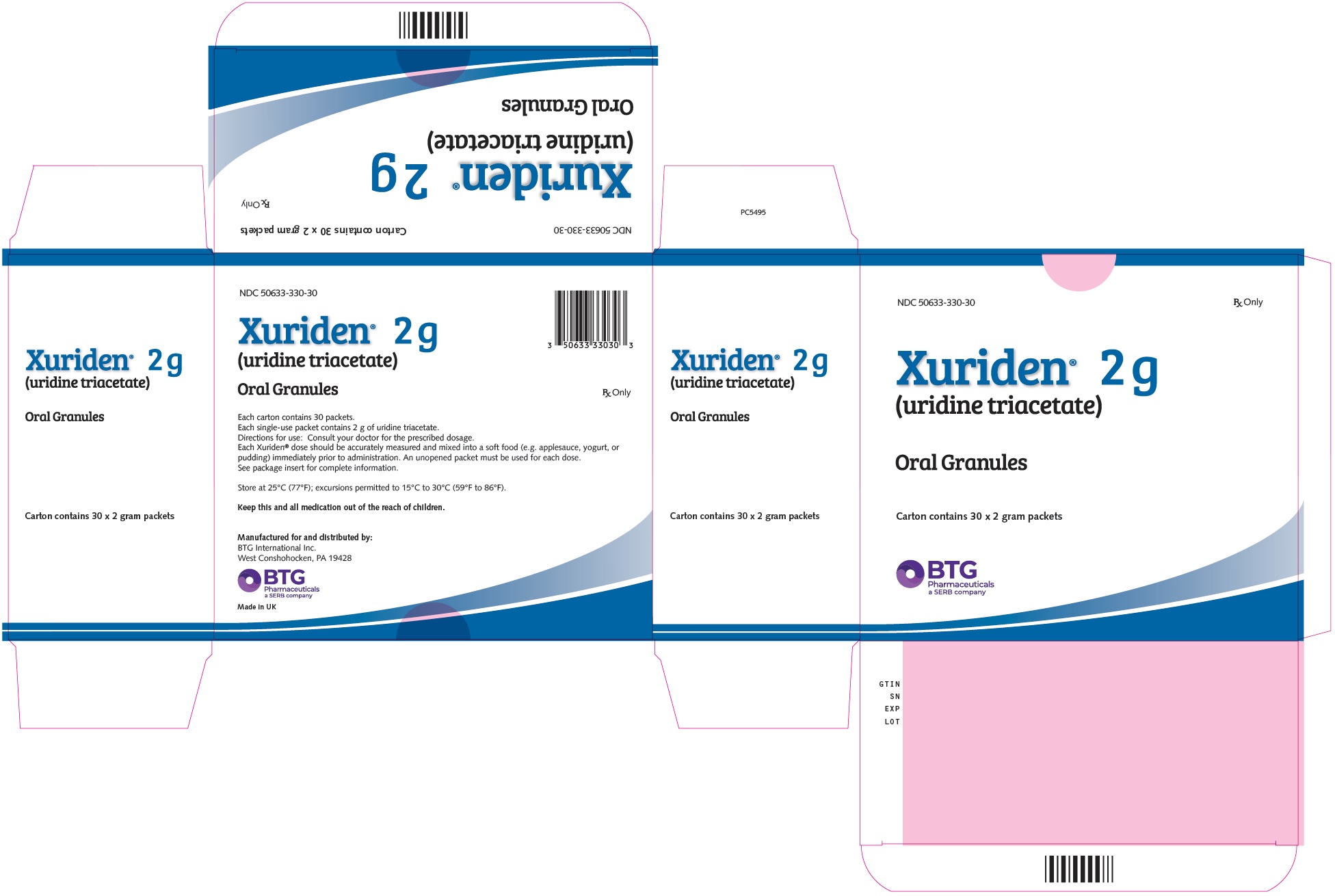
XURIDEN uridine triacetate 951 mg/g Granule
🆔 Identity & classification
Where does this data come from?
🏷️ RxNorm drug class
This medicine belongs to the Various alimentary tract and metabolism products class.
Where does this data come from?
🏭 Manufacturer & labeler
Where does this data come from?
🩺 Clinical
- Vistogard is an emergency antidote for people who have received too much of certain chemotherapy drugs — fluorouracil or capecitabine — or who develop serious, early reactions to t...
- What exactly is Vistogard and why would I need it urgently?
- Xuriden and Vistogard are actually two different products, even though both contain uridine triacetate. Xuriden is a daily medication for people with hereditary orotic aciduria, a...
- What is Xuriden used for, and is it the same as Vistogard?
Patient education
Supplement & herbal interactions
Some supplements/herbs that may interact with Uridine Triacetate — tap one for details:
Where does this data come from?
Ask a licensed pharmacist directly — free, answered by our team.
💊 What it looks like
Where does this data come from?
🧪 Inactive Ingredients / Excipients
Inactive ingredients, also called excipients, are components of the drug product other than the active ingredient. They may include fillers, dyes, coatings, preservatives, flavors, or other formulation ingredients.
💡 Tap an ingredient (hover on desktop) to see what it is and why it’s used.
-
UNII 7Z8S9VYZ4B
Ethylcellulose is a plant-derived thickener and film-former made by chemically modifying cellulose. It's used as a binder to hold tablet ingredients together, a coating to control how quickly medicine is released, or a thickener in liquid formulations.
-
UNII 3NXW29V3WO
Hypromellose is a plant-based thickener made from cellulose. It's used in medicines as a binder to hold ingredients together, a coating for tablets, and a thickener for liquids.
-
UNII 5A9KE2L9L3
A citrus fruit liquid used as a flavoring and vehicle in oral medicines. It adds natural taste, helps mask bitter drug flavors, and provides liquid volume for dissolving or suspending active ingredients.
-
UNII 3WJQ0SDW1A
Polyethylene glycol is a synthetic liquid or solid polymer used in medicines as a solvent, lubricant, and humectant. It helps dissolve active ingredients, reduces friction during manufacturing, and retains moisture in the final product.
4 inactive ingredients listed in the exact product block matched to this NDC.
Where does this data come from?
ingredient classCode="IACT" elements from the exact product block matched by this NDC. Label-section narrative from DailyMed / the openFDA label index is shown separately when available.Inactive ingredient FAQ
Are inactive ingredients the same for every manufacturer?
Why might an inactive ingredient be missing?
Can inactive ingredients matter?
💲 Pricing
A drug doesn't have one price. Each row is a different public payment system, and none is what you'd pay at the counter — that depends on your insurance. The ⓘ on each row explains what it measures.
| Price system | Per g | Per package |
|---|---|---|
| Retail pharmacies payNADAC · weekly | Not in the retail survey — common for institutional, discontinued, or low-volume packs. | |
| Medicaid paysCMS SDUD · 12 mo | No recent Medicaid claims on file for this NDC — rare and low-volume NDCs are suppressed in the public data. | |
| Medicare drug plans payPart D · quarterly | No Part D plan price is available for this NDC in our data. | |
Where does this data come from?
🔁 Therapeutic equivalents
| Product | Labeler | Pack | NADAC/unit | TE | Status | Price vs. this |
|---|---|---|---|---|---|---|
| Xuriden 951 mg/gthis 50633-0330-30 | BTG | 30 packets | — | — | FDA listed | — |
| Vistogard 951 mg/g 50633-0220-04 | BTG | 4 packets | — | — | FDA listed | — |
Where does this data come from?
⏳ Availability & generic status
We did not find an FDA-approved generic match for this exact strength, form and route.
Where does this data come from?
🔬 Reported adverse events (FAERS)
Top reported reactions
Reporter sex
Serious outcomes
Where does this data come from?
📦 Packaging — all sizes for this product
| Package NDC | Description | Marketing start | Status |
|---|---|---|---|
| 50633-0330-30 You're viewing this | 30 PACKET in 1 CARTON (50633-330-30) / 2 g in 1 PACKET (50633-330-02) | 2024-05-31 | Active |
🧭 About this NDC listing & data coverage
What data is (and isn’t) available for this NDC — tap to expand
| NDC identity (package / product / labeler codes) | ✓ Available |
| Labeler | ✓ Available |
| Product & package description | ✓ Available |
| Marketing category & status | ✓ Available |
| Active ingredient / dosage form / route | ✓ Available |
| FDA label (SPL via DailyMed) | ✓ Available |
| Package photos | ✓ Available |
| Inactive ingredients (structured) | ✓ Available |
| NADAC pharmacy acquisition price (CMS) | — Not published for this NDC CMS publishes NADAC only for NDCs reported in its retail-pharmacy survey. |
| Orange Book / therapeutic-equivalence data | — Not published for this NDC Applies only to products approved under an NDA/ANDA; many listings are out of scope. |
| HCPCS J-code billing crosswalk | — Not published for this NDC Most self-administered / retail products have no J-code — that is normal. |
| Medicaid utilization (CMS SDUD) | — Not published for this NDC CMS reports utilization only for NDCs with Medicaid claims above its privacy threshold. |
Questions about this listing
Why is there no price listed?
Is the NDC printed on the package the same as the 11-digit billing NDC?
What do the three segments of this NDC mean?
Is this package still being marketed?
Who lists this product with the FDA?
Do I need a prescription for this product?
Where does this data come from?
📄 Full prescribing information FDA SPL
🎯 Indications and Usage ▾
1 INDICATIONS AND USAGE XURIDEN ® is indicated in adult and pediatric patients for the treatment of hereditary orotic aciduria. XURIDEN is a pyrimidine analog for uridine replacement indicated in adult and pediatric patients for the treatment of hereditary orotic aciduria. ( 1 )
⏱️ Dosage and Administration ▾
2 DOSAGE AND ADMINISTRATION Recommended Dosage ( 2.1 ): The starting dosage is 60 mg/kg once daily; the dose may be increased to120 mg/kg (not to exceed 8 grams) once daily for insufficient efficacy. See the full prescribing information for 60 mg/kg and 120 mg/kg weight-based dosing tables. Preparation and Administration ( 2.2 ) Measure the dose using either a scale accurate to at least 0.1 gram, or a graduated teaspoon, accurate to the fraction of the dose to be administered.
Administer the dose with food (applesauce, pudding or yogurt) or in milk or infant formula. See full prescribing information for preparation and administration instructions.
2.1Recommended Dosage The recommended starting dosage of oral XURIDEN is 60 mg/kg once daily. Increase the dosage of XURIDEN to 120 mg/kg (not to exceed 8 grams) once daily for insufficient efficacy, such as occurrence of one of the following: Levels of orotic acid in urine remain above normal or increase above the usual or expected range for the patient Laboratory values (e.g., red blood cell or white blood cell indices) affected by hereditary orotic aciduria show evidence of worsening Worsening of other signs or symptoms of the disease The XURIDEN dose to be administered at the 60 mg/kg and 120 mg/kg dose levels by body-weight is presented in Tables 1 and 2.
A 2 gram packet of XURIDEN contains approximately ¾ teaspoon of XURIDEN. Therefore, in the tables below for patients requiring doses in multiples of 2 grams (¾ teaspoon) an entire packet(s) may be administered without weighing or measuring. XURIDEN Daily Dose Based on Body Weight (kg) Patient Weight Table 1: XURIDEN 60 mg/kg total daily dose by weight category in the tables was rounded to achieve the approximate dose level Dose Level Kilograms Dose to be Administered Using a Scale (grams) Dose in Teaspoons up to 5 0.4 ⅛ 6-10 0.4 to 0.6 ¼ 11-15 0.7 to 0.9 ½ 16-20 1 to 1.2 21-25 1.3 to 1.5 26-30 1.6 to 1.8 ¾ 31-35 1.9 to 2.1 may use 1 entire 2 gram packet without weighing or measuring 36-40 2.2 to 2.4 1 41-45 2.5 to 2.7 46-50 2.8 to 3 51-55 3.1 to 3.3 1 ¼ 56-60 3.4 to 3.6 61-65 3.7 to 3.9 may use 2 entire 2 gram packets without weighing or measuring 1 ½ 66-70 4 to 4.2 71-75 4.3 to
4.5Above 75 6 may use 3 entire 2 gram packets without weighing or measuring 2 Patient Weight Table 2: XURIDEN 120 mg/kg total daily dose by weight category in the tables was rounded to achieve the approximate dose level Dose Level Kilograms Dose to be Administered Using a Scale (grams) Dose in Teaspoons up to 5 0.8 ¼ 6-10 0.8 to 1.2 ½ 11-15 1.4 to 1.8 ¾ 16-20 2 to 2.4 1 21-25 2.6 to 3 26-30 3.2 to 3.6 1 ¼ 31-35 3.8 to 4.2 may use 2 entire 2 gram packets without weighing or measuring 1 ½ 36-40 4.4 to 4.8 1 ¾ 41-45 5 to 5.4 2 may use 3 entire 2 gram packets without weighing or measuring 46-50 5.6 to 6 51-55 6.2 to 6.6 2 ¼ 56-60 6.8 to 7.2 2 ½ 61-65 7.4 to 7.8 66-70 8 2 ¾ may use 4 entire 2 gram packets without weighing or measuring 71-75 8 Above 75 8
2.2Preparation and Administration Preparation Measure the dose using either a scale accurate to at least 0.1 gram, or a graduated teaspoon, accurate to the fraction of the dose to be administered. Once the measured dose has been removed from the XURIDEN packet, discard the unused portion of granules. Do not use any granules left in the open packet.
Administration with Food Place 3 to 4 ounces of applesauce, pudding or yogurt in a small clean container. Mix the measured amount of granules in the applesauce, pudding or yogurt Swallow applesauce/pudding/yogurt immediately. Do not chew the granules.
Do not save the applesauce/pudding/yogurt for later use. Drink at least 4 ounces of water. Administration in Milk or Infant Formula XURIDEN can be mixed with milk or infant formula instead of the soft foods described above for patients receiving up to 3/4 teaspoon (2 grams) of XURIDEN.
After weighing the dose of XURIDEN: Pour 5 mL of milk or infant formula into a 30 mL medicine cup. Insert the tip of the oral syrin…
💊 Dosage Forms and Strengths ▾
3 DOSAGE FORMS AND STRENGTHS Oral granules: 2 grams of orange-flavored oral granules (95% w/w) in single-use packets Oral granules: 2 gram packets. ( 3 )
⛔ Contraindications ▾
4 CONTRAINDICATIONS None None ( 4 )
⚠️ Warnings and Cautions ▾
5 WARNINGS AND PRECAUTIONS None
🤒 Adverse Reactions ▾
6 ADVERSE REACTIONS No adverse reactions were reported in clinical trials with XURIDEN in patients with hereditary orotic aciduria. ( 6.1 ) To report SUSPECTED ADVERSE REACTIONS, contact BTG International Inc. at (1-877-377-3784) or FDA at 1-800-FDA-1088 or www.fda.gov/medwatch.
6.1Clinical Trials Experience Because clinical trials are conducted under widely varying conditions and using a wide range of doses, adverse reaction rates observed in the clinical trials of a drug cannot be directly compared to rates in the clinical trials of another drug and may not reflect the rates observed in practice. The safety of XURIDEN was assessed in 4 patients with hereditary orotic aciduria ranging in age from 3 to 19 years (3 male, 1 female) who received 60 mg/kg of XURIDEN once daily for six weeks. All patients continued to receive XURIDEN for at least 24 months at dosages of up to 120 mg/kg once daily.
No adverse reactions were reported with XURIDEN.
👥 Use in Specific Populations ▾
8 USE IN SPECIFIC POPULATIONS
8.1Pregnancy Risk Summary There are no available data on XURIDEN use in pregnant women to inform a drug-associated risk. When administered orally to pregnant rats during the period of organogenesis, uridine triacetate at doses similar to the maximum recommended human dose (MRHD) of 120 mg/kg per day was not teratogenic and did not produce adverse effects on embryo-fetal development [see Data ] . The background risk of major birth defects and miscarriage for the indicated population are unknown.
In the U.S. general population, the estimated background risk of major birth defects and miscarriage in clinically recognized pregnancies is 2 to 4% and 15 to 20%, respectively. Data Animal Data In an embryo-fetal development study, uridine triacetate was administered orally to pregnant rats during the period of organogenesis at doses up to 2000 mg/kg per day (about 2.7 times the maximum recommended human dose (MRHD) of 120 mg/kg per day on a body surface area basis). There was no evidence of teratogenicity or harm to the fetus and no effect on maternal body weight and overall health.
8.2Lactation Risk Summary There are no data on the presence of uridine triacetate in human milk, the effect on the breastfed infant or the effect on milk production. The development and health benefits of breastfeeding should be considered along with the mother's clinical need for XURIDEN and any potential adverse effects on the breastfed infant from XURIDEN or from the underlying maternal condition.
8.4Pediatric Use The safety and effectiveness of XURIDEN have been established in pediatric patients. Use of XURIDEN is supported by a single open-label clinical trial of uridine triacetate in 4 patients and a retrospective review of the clinical course of 18 patients with hereditary orotic aciduria who were treated with uridine beginning at ages 2 months to 12 years. There are no apparent differences in clinical response between adults and pediatric patients with hereditary orotic aciduria treated with uridine, however, data are limited [see Clinical Studies (14) ] .
8.5Geriatric Use Clinical trials of XURIDEN did not include patients 65 years of age and older.
🤰 Pregnancy ▾
8.1Pregnancy Risk Summary There are no available data on XURIDEN use in pregnant women to inform a drug-associated risk. When administered orally to pregnant rats during the period of organogenesis, uridine triacetate at doses similar to the maximum recommended human dose (MRHD) of 120 mg/kg per day was not teratogenic and did not produce adverse effects on embryo-fetal development [see Data ] . The background risk of major birth defects and miscarriage for the indicated population are unknown.
In the U.S. general population, the estimated background risk of major birth defects and miscarriage in clinically recognized pregnancies is 2 to 4% and 15 to 20%, respectively. Data Animal Data In an embryo-fetal development study, uridine triacetate was administered orally to pregnant rats during the period of organogenesis at doses up to 2000 mg/kg per day (about 2.7 times the maximum recommended human dose (MRHD) of 120 mg/kg per day on a body surface area basis). There was no evidence of teratogenicity or harm to the fetus and no effect on maternal body weight and overall health.
🧒 Pediatric Use ▾
8.4Pediatric Use The safety and effectiveness of XURIDEN have been established in pediatric patients. Use of XURIDEN is supported by a single open-label clinical trial of uridine triacetate in 4 patients and a retrospective review of the clinical course of 18 patients with hereditary orotic aciduria who were treated with uridine beginning at ages 2 months to 12 years. There are no apparent differences in clinical response between adults and pediatric patients with hereditary orotic aciduria treated with uridine, however, data are limited [see Clinical Studies (14) ] .
🧓 Geriatric Use ▾
8.5Geriatric Use Clinical trials of XURIDEN did not include patients 65 years of age and older.
🧬 Clinical Pharmacology ▾
12 CLINICAL PHARMACOLOGY
12.1Mechanism of Action Uridine triacetate is an acetylated form of uridine. Following oral administration, uridine triacetate is deacetylated by nonspecific esterases present throughout the body, yielding uridine in the circulation (Figure 1). Figure 1: Uridine Triacetate Conversion to Uridine XURIDEN provides uridine in the systemic circulation of patients with hereditary orotic aciduria who cannot synthesize adequate quantities of uridine due to a genetic defect in uridine nucleotide synthesis.
Figure 1
12.2Pharmacodynamics Hereditary orotic aciduria (uridine monophosphate synthase deficiency) is a rare congenital autosomal recessive disorder of pyrimidine metabolism caused by a defect in uridine monophosphate synthase (UMPS). The UMPS gene encodes uridine 5′monophosphate synthase, a bifunctional enzyme that catalyzes the final two steps of the de novo pyrimidine biosynthetic pathway in mammalian cells. The defect in UMP synthase in hereditary orotic aciduria has two primary biochemical consequences.
First, the blockade of de novo UMP synthesis results in a systemic deficiency of pyrimidine nucleotides, accounting for most clinical consequences of the disease. Second, orotic acid from the de novo pyrimidine pathway that cannot be converted to UMP is excreted in the urine, accounting for the common name of the disorder, orotic aciduria. Orotic acid crystals in the urine can cause episodes of obstructive uropathy.
XURIDEN delivers uridine into the circulation, where it can be used by essentially all cells to make uridine nucleotides, compensating for the genetic deficiency in synthesis in patients with hereditary orotic aciduria. When intracellular uridine nucleotides are restored into the normal range, overproduction of orotic acid is reduced by feedback inhibition, so that urinary excretion of orotic acid is also reduced.
12.3Pharmacokinetics Absorption XURIDEN delivers 4- to 6-fold more uridine into the systemic circulation compared to equimolar doses of uridine itself. Maximum concentrations of uridine in plasma following oral XURIDEN are generally achieved within 2 to 3 hours, and the half-life ranges from approximately 2 to 2.5 hours. A study in patients with hereditary orotic aciduria included an assessment of plasma uridine pharmacokinetics in 4 patients.
Three of the patients were previously treated with oral uridine. On Day 0 (baseline), these three patients received their usual daily dose of oral uridine as a single dose (150 to 200 mg/kg once daily) and on Day 1, initiated oral XURIDEN treatment (60 mg/kg once daily). A fourth patient was enrolled who was naïve to uridine replacement therapy.
The dose of XURIDEN was increased on Day 116 to 120 mg/kg once daily in two patients (Patients 3 and 4) and plasma uridine concentrations were assessed on Day 160 (44 days after the dose increase). Plasma uridine levels in all four patients are depicted in Figure 2. Pharmacokinetic parameters are summarized in Table 3.
Mean exposure to plasma uridine as assessed by C max and AUC was greater after oral XURIDEN than after oral uridine (approximately 4-fold on an equiweight basis, and 6-fold on an equimolar basis), although individual differences in relative bioavailability were noted. Plasma concentrations of the uridine catabolite uracil were generally below the limit of quantitation in all patients. Table 3: Pharmacokinetic Parameters for Plasma Uridine Pharmacokinetic Parameters (Plasma Uridine) Day 0 (Baseline) (Oral Uridine, 150 to 200 mg/kg once daily) N = 3 Data shown are from patients previously treated with oral uridine Day 1 (Oral XURIDEN, 60 mg/kg once daily) N = 4 Day 28 (Oral XURIDEN, 60 mg/kg once daily) N = 4 Day 160 (Oral XURIDEN, 120 mg/kg once daily) N = 2 The dose of XURIDEN was increased on Day 116 to 120 mg/kg per day.
Serial plasma samples were taken on Day 160 (44 days after the dose increase) for plasma uridine levels. C max (µM) mean ± SD 56.0 ± 16.6 91.3 ± 32.2 88.7 ± 43.2 8…
🧬 Mechanism of Action ▾
12.1Mechanism of Action Uridine triacetate is an acetylated form of uridine. Following oral administration, uridine triacetate is deacetylated by nonspecific esterases present throughout the body, yielding uridine in the circulation (Figure 1). Figure 1: Uridine Triacetate Conversion to Uridine XURIDEN provides uridine in the systemic circulation of patients with hereditary orotic aciduria who cannot synthesize adequate quantities of uridine due to a genetic defect in uridine nucleotide synthesis.
Figure 1
📦 How Supplied / Storage and Handling ▾
16 HOW SUPPLIED/STORAGE AND HANDLING XURIDEN orange-flavored oral granules (95% w/w) are available in single-use packets (NDC 50633-330-02) containing 2 grams of uridine triacetate in cartons of 30 packets each (NDC 50633-330-30). Store at controlled room temperature, 25°C (77°F); excursions permitted to 15° to 30°C (59° to 86°F).
📦 Storage and Handling ▾
Store at controlled room temperature, 25°C (77°F); excursions permitted to 15° to 30°C (59° to 86°F).
📋 Description ▾
11 DESCRIPTION XURIDEN (uridine triacetate) oral granules is a pyrimidine analog indicated for uridine replacement therapy. Uridine triacetate has the chemical designation (2',3',5'-tri-O-acetyl-β-D-ribofuranosyl)-2,4(1H,3H)-pyrimidinedione. The molecular weight is 370.3 and it has an empirical formula of C 15 H 18 N 2 O 9 .
The structural formula is: Each single-use 2-gram packet of XURIDEN orange-flavored oral granules (95% w/w) contains 2 grams of uridine triacetate and the following inactive ingredients: ethylcellulose (0.062 grams), Opadry Clear [proprietary dispersion of hydroxypropylmethylcellulose and Macrogol] (0.015 grams), and natural orange juice flavor (0.026 grams). Chemical Structure
💬 Information for Patients ▾
17 PATIENT COUNSELING INFORMATION Advise the patient or caregiver to read the FDA-approved patient labeling (Instructions for Use) Administration Advise the patient or caregiver: To measure the prescribed dose using either a scale accurate to at least 0.1 gram, or a graduated teaspoon, accurate to the fraction of the dose to be administered. To discard the unused portion of granules in a packet after measuring out the dose. That XURIDEN can be taken mixed in food (applesauce, pudding or yogurt) or mixed in milk or infant formula.
That the XURIDEN granules should not be chewed.